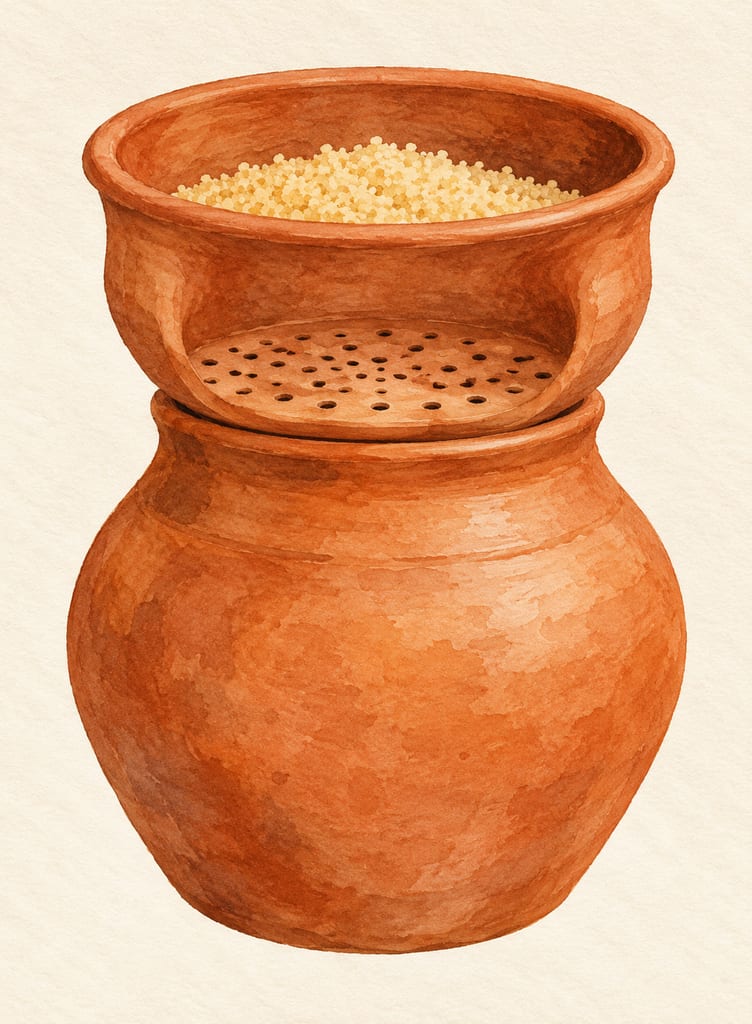
Couscous steamer
A two-part steamer for couscous: a perforated upper chamber sits over a lower pot that produces steam. Clay, basketry and metal forms are documented in different places and periods.
 FermenteaWhere food goes to change
Equipment · Skins and bladders
Prepared skins (btana container)
A historical animal-skin container for Btana, described in southern Algerian accounts as clean sheepskin or old goatskin; sources distinguish it from later cloth and plastic bags.
Btana is a date-preservation tradition documented in southern Algeria. A 2015 study describes dates compressed in cotton or plastic sheets and says clean sheepskin was used historically. The study also attributes the name Btana to that skin; this is the paper’s etymological explanation, not a date or complete history of the container.
A later Algerian study describes old goatskin as an earlier container for the indirect method, alongside plastic or linen bags. A COSTEA inventory likewise names old goat skins among animal-skin, cloth and plastic Btana containers and says goatskin is now rarely used, displaced by cloth and then plastic. These accounts document historical material choices, not one uniform practice across every oasis or household.
The sources support an animal-skin container used to hold compressed dates, with sheepskin and goatskin reported in different accounts. They do not explain how a Btana skin was cut, joined, closed, cleaned, sized, or prepared for reuse. Nor do they provide capacity, dimensions, or a technical description sufficient to reconstruct a particular artifact. This record is limited to the documented material and use; it should not be confused with water skins, cheese-making churns, or modern fabric and plastic bags.
The records describe cloth or plastic as later alternatives. These may serve a similar storage role in some accounts, but they are not the animal-skin equipment documented here. The evidence does not establish that one specific material is interchangeable in every Btana method, or that the historical skin form is available or appropriate for present-day food use.
Btana literature associates the food with southern Algeria and names several oasis regions, but does not locate historical skin containers more precisely. This record therefore places the historical use at country level and does not claim that the skins originated in Algeria or that they were used throughout the country.
The publications describe the skin form as historical or now uncommon but do not date its first use or disappearance. They give no source-backed capacity, dimensions, care method, preparation instructions, or food-safety controls for this container. Those details remain unknown rather than inferred from photographs of animal-skin bags used for other purposes.
Btana is reported in southern Algeria; no narrower location or origin of manufacture is established for the skin containers.
A two-part steamer for couscous: a perforated upper chamber sits over a lower pot that produces steam. Clay, basketry and metal forms are documented in different places and periods.
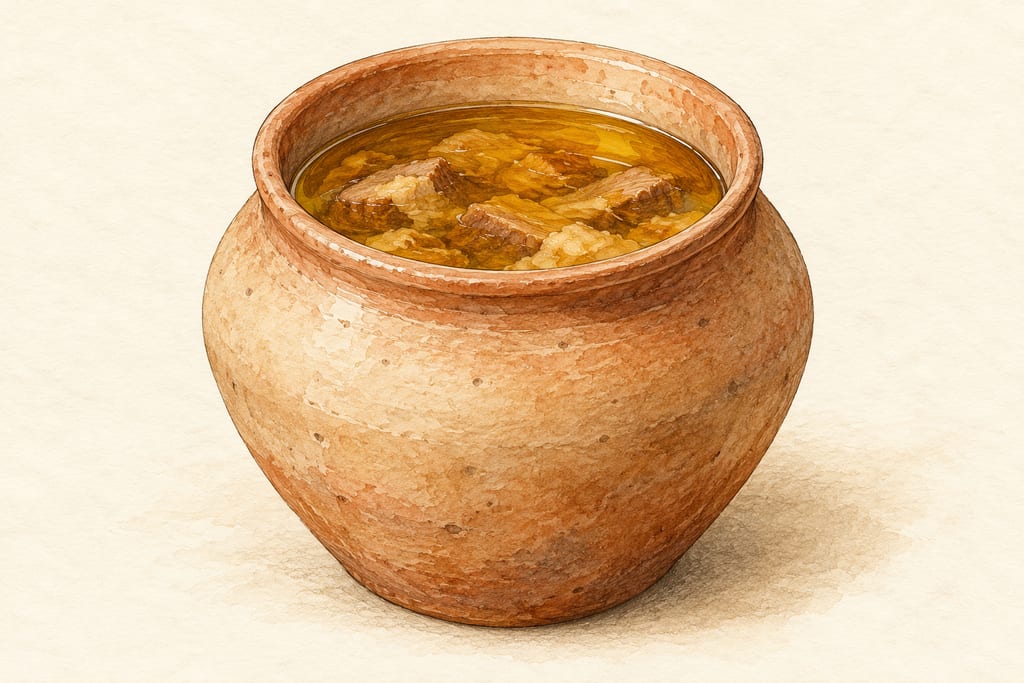
Ezir is the earthenware jar used in northeastern Algeria to ripen Khliaa ezir, a cooked meat kept in olive oil and rendered fat. Its standard shape, capacity and construction are not documented.
A ceramic Ezzir jar holds salted butter during smen maturation in Algeria; a goatskin Chekoua is documented for churning the sour milk beforehand. Sources also report animal-skin containers, but do not establish a single shared form.
No community contributions have been published for this entry yet.
Sign in to contribute. Published comments and photos are free to read.
Annals of Microbiology
Metagenomic analysis of the bacterial microbiota linked to the traditional Algerian date product ‘Btana’Reports compression in cotton or plastic sheets and historical clean sheepskin; attributes the product name to the skin.
Cited in: A documented historical material; What the sources establish about its form; Place, date and limits
Applied Biology in Saharan Areas
Identification of bacterial strains isolated from the traditional date product ‘Btana’ produced in south regions of AlgeriaDescribes historical old goatskin as a container for the indirect method, distinct from plastic or linen bags.
Cited in: A documented historical material; What the sources establish about its form; Place, date and limits
Comité scientifique et technique de l’eau agricole (COSTEA)
Inventaire des pratiques agroécologiques en AlgérieDescribes animal-skin, cloth and plastic Btana containers; old goatskin is historical and now rare, displaced by cloth and plastic.
Cited in: A documented historical material; What the sources establish about its form; Place, date and limits