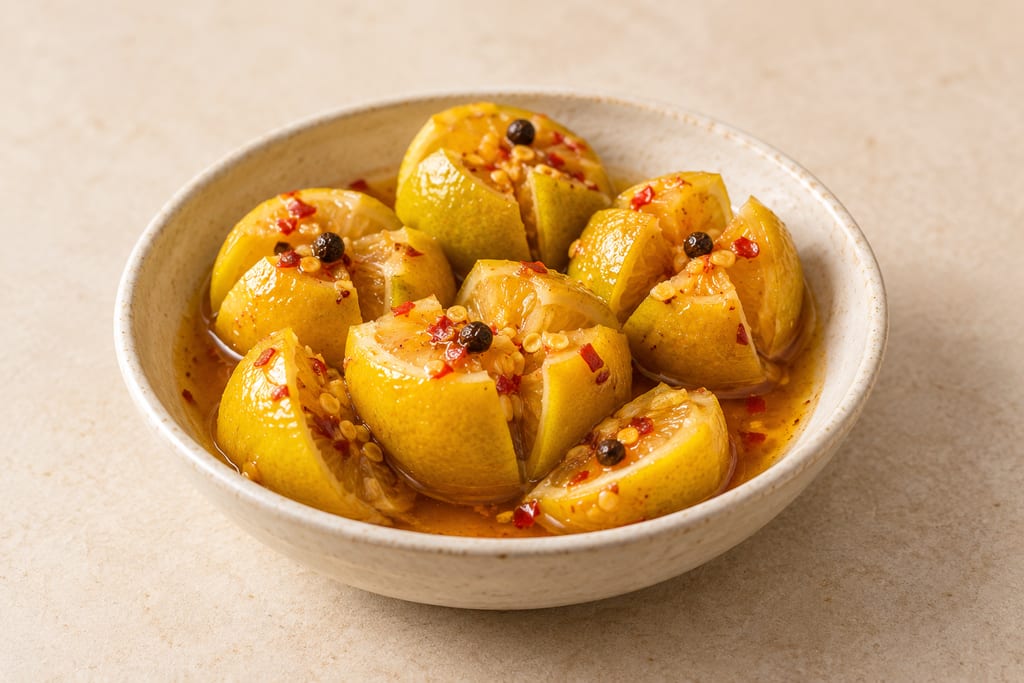
Lime pickle (Peter Kuruvita)
Peter Kuruvita’s published lime pickle stuffs 20 limes with rock salt, then simmers them in vinegar, sugar and chilli before a two-week rest.
 FermenteaWhere food goes to change
Sri Lankan achcharu · Sri Lankan mixed pickle
Achcharu is a family of Sri Lankan vinegar pickles made with mixed vegetables or seasonal fruit and a piquant spice dressing. This version is a quick, refrigerated, non-fermented mixed-vegetable pickle.

Achcharu is a family of sharply seasoned Sri Lankan pickles, not one locked recipe. The Sinhala word is used for mixed vegetables and for fruit pickles; a bowl may combine carrot, onion, green chilli, beans or capsicum, while another version is built around green mango, pineapple or the seasonal fruit veralu. Vinegar and mustard are common anchors, but sweetness, heat, vegetable mix and texture vary by household, region and product. The Export Development Board describes a typical mix of carrot, onion, beans, green chilli and capsicum seasoned with vinegar, mustard and garlic. This recipe gives one measurable mixed-vegetable version rather than claiming to define every achcharu.
This version is a quick vinegar pickle. It is not a lactic fermentation: the vegetables are dressed with vinegar and seasonings, then chilled. Fermented foods become acidic through microbial activity over time; this recipe adds an acidic ingredient directly and provides no culture or fermentation stage. The National Center for Home Food Preservation distinguishes fresh-pack vinegar pickles from fermented pickles on precisely that basis. The difference matters to both the reader's expectations and any claim about live cultures: this dish should not be described as a probiotic ferment or as proof of fermentation.
Achcharu belongs to Sri Lanka's long history of foodways shaped by migration, trade and colonial rule, but the sources do not identify one inventor or a first written recipe. A 2008 magazine account says Malay achcharu was a recipe left behind by the Dutch and describes its later adoption in different regions. That is a meaningful local account of how people tell the food's story, but it is not by itself proof of a precise transfer date. The British Library's Endangered Archives Programme documents the Sri Lankan Malay community's roots in Dutch-period exiles and convicts, and later servants and soldiers under Dutch and British rule. The community's varied origins across the Indonesian archipelago and Malay Peninsula make a single, simple origin story especially unlikely.
The record does give glimpses of achcharu in public life. A 2017 historical food article reproduces a passage about Galle Face in the 1840s, taken from an 1893 manuscript and reprinted in 1919, that names veraloo acharoo among foods sold to people visiting the area. The same article cites an 1888–89 note describing mixed-pickle vendors in Colombo, Galle and Kandy, and a 1924 report of a street seller crying out lunu miris achcharu at dinner time. These sources show that particular pickles and their sale were part of Sri Lankan urban life by the nineteenth and early twentieth centuries; they do not tell us that today's mixed-carrot formula is unchanged from those preparations.
Seasonal and festival practice is part of the living record. Explore Sri Lanka describes families making annual batches of achcharu and chutney around the Sinhala and Tamil New Year in April, with ingredients and recipes changing to suit regional tastes. Contemporary Northern Sri Lankan achaaru is also documented as a simpler mixture of carrot, silver onion and green chilli. These accounts show a broad, adaptable food tradition rather than a national standard formula.
Vinegar supplies the sourness and directly acidifies the dressing. It is not functioning as a starter for this recipe: there is no brine fermentation, inoculation, gas production or measured fermentation endpoint. Heating the vinegar with sugar, spices, ginger and garlic dissolves and disperses the seasonings; pouring the hot mixture over the vegetables starts the steeping process and softens their sharp raw edges. The five-minute boil belongs to the cited home recipe, not to a controlled canning schedule.
The vegetables remain recognizable pieces, so the finished relish has a different texture from a cooked-down chutney. The dressing clings to their cut surfaces and gathers between them in the jar. Salt seasons the mixture and sugar tempers its acidity and chilli heat; neither should be mistaken for a measured preservation hurdle here. Mustard brings a pungent, earthy aroma, garlic and ginger add their own sharp fragrance, turmeric colors the dressing, and chilli provides the heat. These are culinary roles, not a claim that any one ingredient makes the mixture shelf-stable.
The recipe's vinegar quantity is substantial relative to its other liquid ingredients because the vegetables are coated and packed with the dressing rather than cooked dry. The cited recipe does not name the vinegar type or its acidity. For pickling, Penn State Extension and the National Center for Home Food Preservation advise using commercially prepared vinegar with known acidity; their general recommendations do not validate this exact mixture for canning. Do not treat homemade vinegar or an unknown-strength product as interchangeable with labelled food vinegar, and do not dilute or reduce the recipe's vinegar if using this as a pickle.
The recipe uses whole green chillies, slit lengthwise, alongside carrot, red onion and shallot. The slit lets the dressing touch the chilli's interior while the whole pieces keep their shape. The source suggests removing chilli seeds if less heat is wanted; leaving them in produces a hotter pickle. Carrots bring sturdy pieces, while onions and shallots soften and take on the vinegar seasoning. The recipe's large cuts are part of its rustic character. A fine dice would turn the same ingredients toward a relish and change how quickly their surfaces take up dressing.
Ground black mustard seed, ginger and garlic form the aromatic backbone. Grinding mustard with a little vinegar distributes it through the dressing; the recipe does not call for a cultured mustard paste or a live starter. Turmeric adds color. White sugar balances the sourness, and salt seasons the mixture. The author of the cited recipe selected the upper end of several written ranges: three tablespoons each of ginger and garlic, two tablespoons each of chilli powder and salt. Those amounts are recorded here as the source's preferred version, not as a universal Sri Lankan ratio.
Rinse the produce, then cut the carrots and onions into substantial pieces. Peel the shallots and slit the green chillies. The source's recipe keeps the vegetables mostly whole or in large wedges; that gives the pickle a mix of crunch and softening as the pieces steep. Grinding the mustard with some of the measured vinegar breaks the seeds up and makes them easier to disperse.
Bring the full vinegar-and-seasoning mixture to a boil and hold it there for the five minutes specified in the source. This is a cooking stage that disperses flavor, not fermentation. Pour it over the vegetables, let the bowl cool, then pack vegetables with enough liquid to cover them in clean jars. The original recipe says to refrigerate overnight before serving. The refrigerator rest lets the vinegar and spices steep through the cut surfaces and lets the flavors settle; no additional maturation period is established here.
Malay achcharu is a related but distinct expression of the family. Saveur's recipe uses dates, mustard, vinegar, shallots, banana peppers, cashews, brown sugar, jaggery and chilli, then rests the mixture under refrigeration before serving. A Sri Lankan home recipe instead blends dates, garlic, mustard, coconut vinegar, sugar and chilli into a thick sauce for onions, peppers and carrots. The dates make these versions sweeter and thicker than the mixed-vegetable formula above. They are useful comparisons, not ingredients to fold into this recipe without changing its identity.
Fruit achcharu shows how seasonal produce reshapes the idea. Explore Sri Lanka describes pineapple, green mango and veralu, the small Ceylon or wild olive, in fresh pickles. It recounts a Colombo South veralu version in which large fruits are lightly boiled, pitted, filled with dates and dressed with vinegar, mustard and chilli. The same source describes biling, a small green fruit, sliced, soaked in salt liquid and sun-dried before pickling. These different preparations have their own texture and handling, and should not be collapsed into one vegetable method.
Contemporary Jaffna acharu can be simpler still: one producer describes a basic northern mixture of carrots, silver onions and fresh green chillies. The Export Development Board's broader list adds beans and capsicum to a typical mix. These regional and household differences are the point of achcharu's name as a mixed pickle; a reader should expect a recognizable family resemblance, not a single compulsory ingredient list.
Achcharu is served in small portions alongside a meal, where its vinegar sharpness, chilli and mustard cut through richer or blander foods. The Export Development Board specifically pairs Sri Lankan pickle with biriyani. The historical street accounts show another role: small servings sold directly to passers-by, including veraloo acharoo and lunu miris achcharu. These records make the pickle both a household side and a snack with its own street-food history.
Festival cooking, household recipes and street sellers all give achcharu a different scale. A small serving turns up as a bright counterpoint on a rice-and-curry table; fruit versions can be eaten more like a snack. The same word can also describe a mixture of things, a meaning noted in the historical article. This semantic breadth matches the culinary one: the name points to a family of pickled combinations rather than only to one jar.
The serving context also helps explain why some versions have more sweet-sour dressing than the fresh crunch of a vegetable pickle. With biriyani or rice and curry, a small spoonful brightens a meal; at a street stall, a fruit version may be offered as a snack on its own. Pineapple, green mango and veralu give different juiciness, tartness and bite, so a seller's choice of fruit changes the eating experience without making the product a new universal recipe. A household may prepare a batch for a festival table and still serve it in small bowls. These patterns are documented uses, not a fixed etiquette or one mandatory serving size.
Expect a sour, spicy dressing, visible mustard and distinct vegetable pieces. The cut size, chilli variety and the source's flexible quantities affect heat and texture. The recipe gives a five-minute boil and an overnight chill but no measured acidity, pH endpoint or tested storage duration. A separate historical account calls fresh pickles short-lived but supplies no validated time. This page therefore gives no shelf-life claim and does not tell readers that a sealed jar can sit unrefrigerated.
Treat this as a refrigerated culinary pickle: chill it once it has cooled, keep it refrigerated, and serve it with a clean utensil. The proportions and method have not been tested as a shelf-stable canning recipe. The National Center for Home Food Preservation warns that the acidity and ingredient proportions matter and that tested recipes should not have their vinegar, food or water ratios changed. For a shelf-stable jar, use a research-tested recipe written for the exact produce and preparation rather than extrapolating from this achcharu formula.
Smell, taste, bubbling and appearance cannot establish that a preserved food is safe. If the ingredients, vinegar or method are changed, the result is a different preparation and this account does not establish its preservation behavior. The recipe's purpose is to document a Sri Lankan mixed vinegar pickle and its culinary context, not to stand in for a tested canning schedule.
A 2017 account reproduces a report about Galle Face in the 1840s, drawn from a manuscript written in 1893 and reprinted in 1919, which names veraloo acharoo among foods sold there. The same account cites an 1888–89 note about vendors selling mixed pickles in Colombo, Galle and Kandy. These are dated attestations of particular achcharu products and street trade, not proof of the first recipe, a single origin, or the exact method used here. A magazine account attributes Malay achcharu to the Dutch period, while archival work documents a Sri Lankan Malay community formed under Dutch and British colonial rule; the available evidence here does not establish when this particular pickle recipe travelled or who first made it.
Yield 2 32-ounce bottles · Scaling: not established
The cited home recipe provides no tested canning process or measured acidity for the mixed vegetables; its directions include refrigeration before serving.
Hazard sourceTreat this version as a refrigerated pickle. Refrigerate after it has cooled; do not store it at room temperature or use this method for shelf-stable jars.
Control sourceUse commercially prepared food vinegar with a labelled acidity. Do not dilute or substitute the acid source when adapting a pickling recipe; a general vinegar recommendation does not make this exact mixed-vegetable recipe canning-tested.
Control sourceThe sources do not establish a validated storage life for this exact mixture; no duration is claimed.
Do not infer safety from smell, taste, bubbles or appearance.
The source describes achcharu as a Sri Lankan pickle family; this country-level record does not claim a single origin or recipe.
The account names veraloo acharoo in the Galle Face food scene; it does not attest this exact mixed-vegetable formula or its origin.
Peter Kuruvita’s published lime pickle stuffs 20 limes with rock salt, then simmers them in vinegar, sugar and chilli before a two-week rest.

Lunu dehi is Sri Lankan salted lime pickle. This version sun-dries cut, salt-stuffed ripe limes, then packs them with dried lime juice, chillies, spices and vinegar.

Appam, or hoppers, are South Indian and Sri Lankan rice pancakes made from a fermented coconut-and-rice batter and cooked in a curved pan to a crisp lacy rim and a soft, spongy centre.
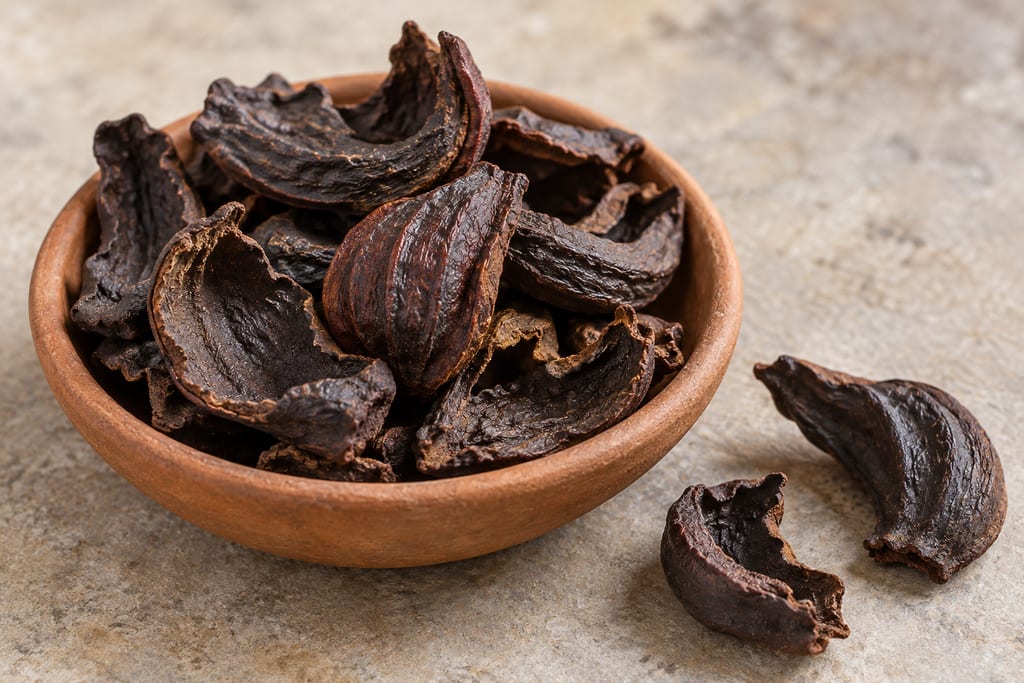
Goraka is the dried rind of Garcinia quaesita, a souring ingredient for Sri Lankan curries. Its drying is documented, but no complete household method is.
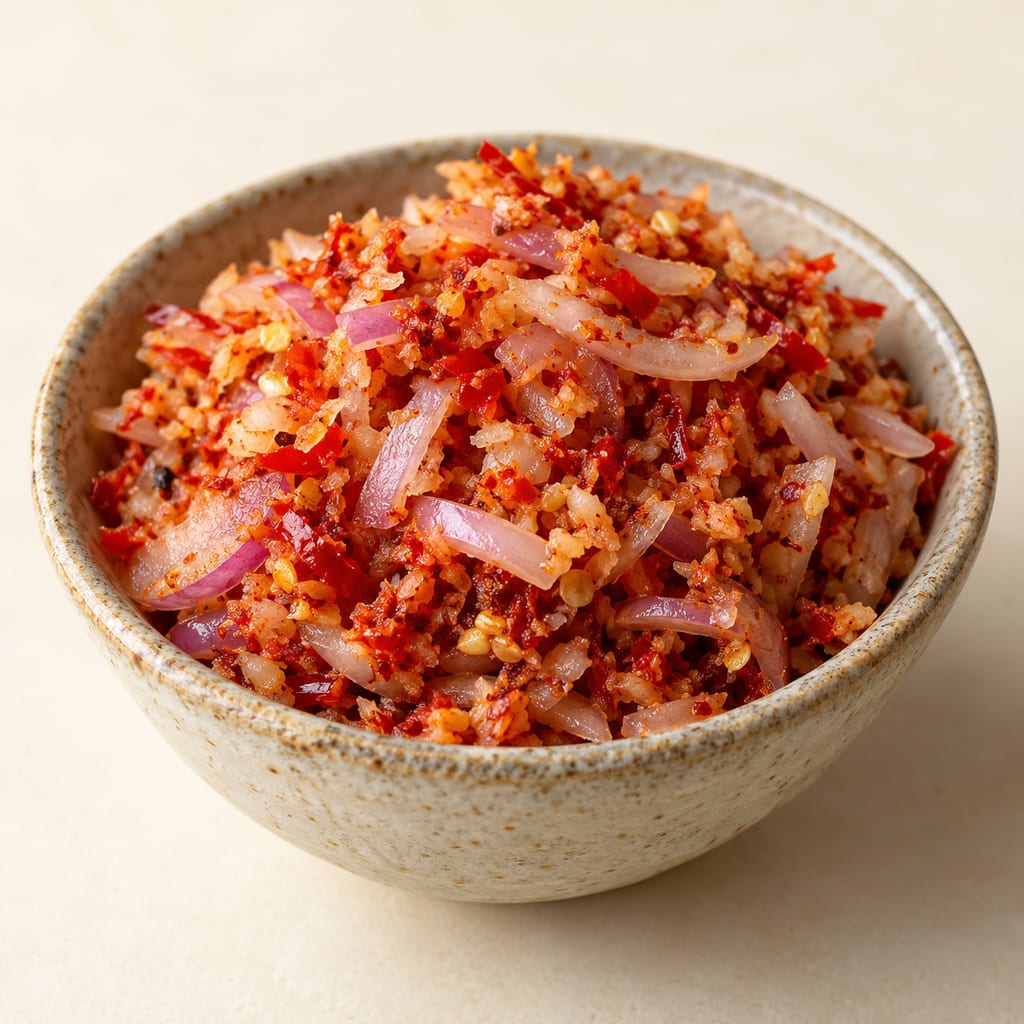
A Sri Lankan lunu miris made by pounding onion and chilli flakes with lime; Maldive fish is optional.
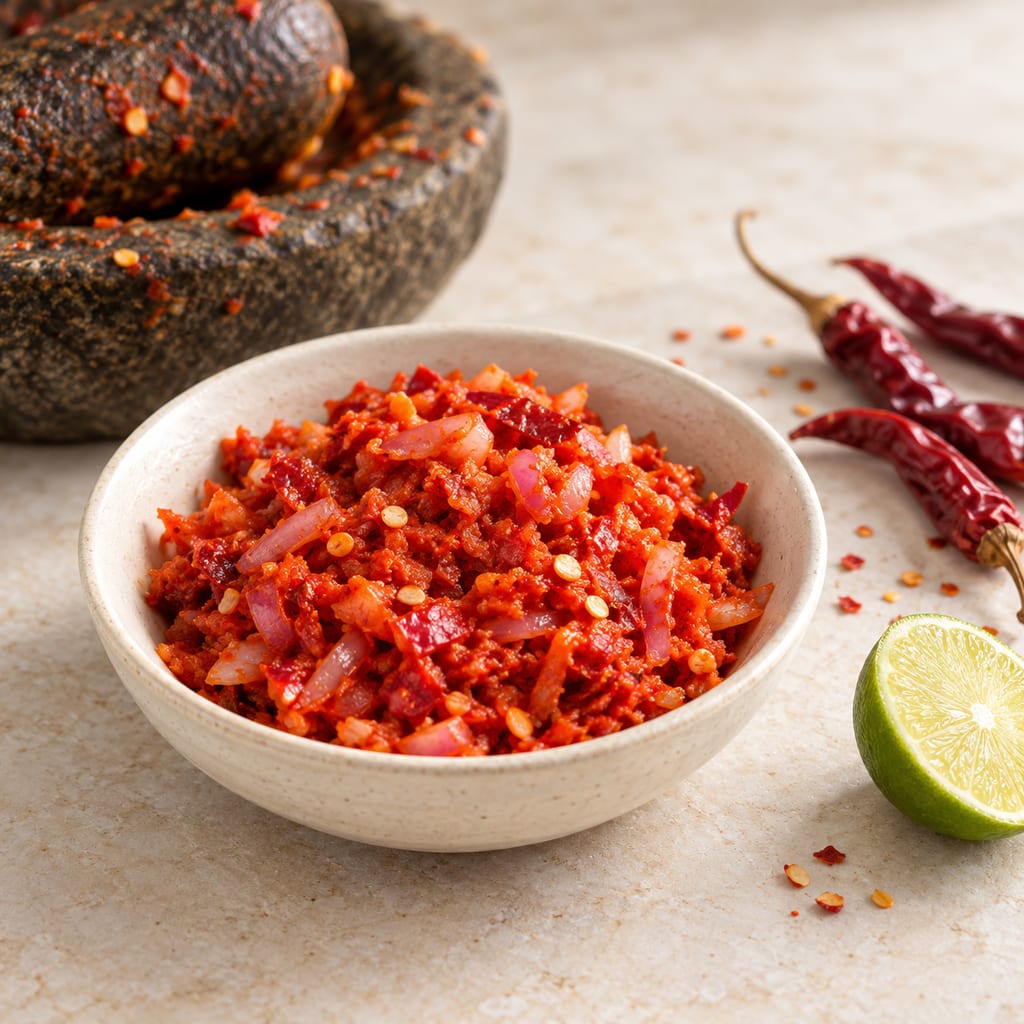
Lunu miris is Sri Lanka's pounded onion and chilli sambol: chilli flakes and red onion crushed with salt and lime, often with Maldive fish, eaten in small amounts with hoppers, pol roti and kiribath.
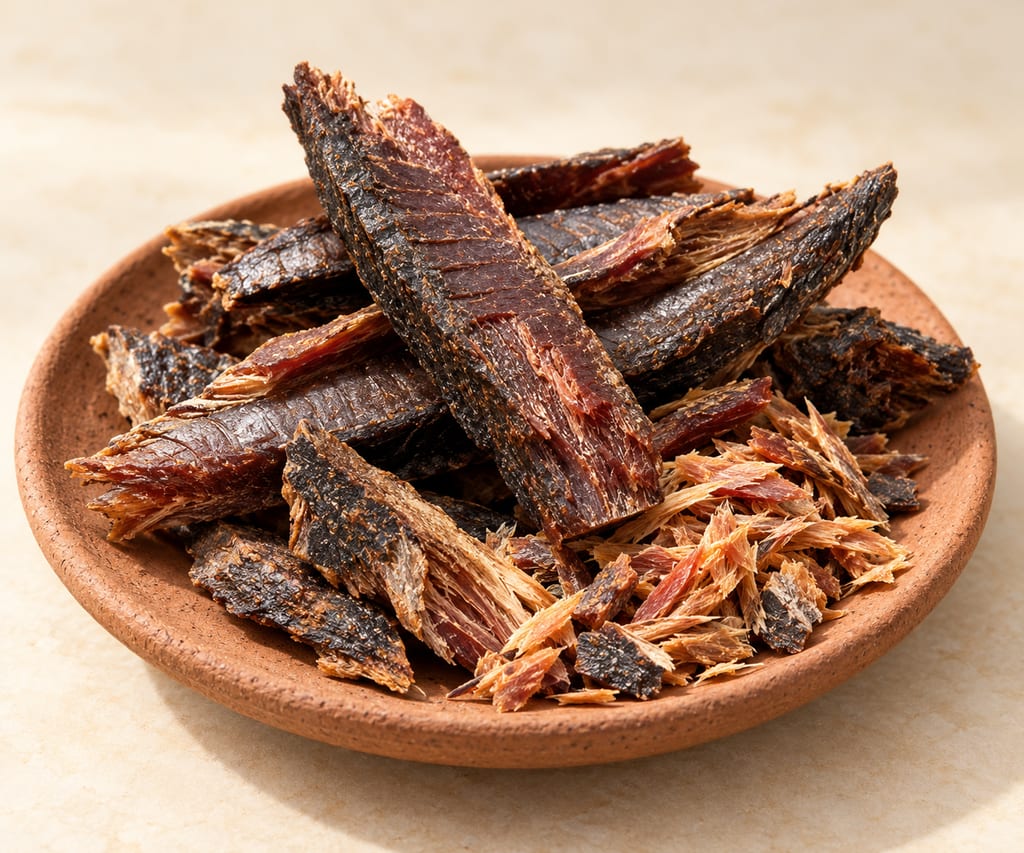
Maldive fish is a hard, smoke-dried tuna product made in the Maldives and traded especially to Sri Lanka, where it is known as umbalakada. Cooks shave or pound it into a concentrated savory seasoning for sambols, curries and other dishes.
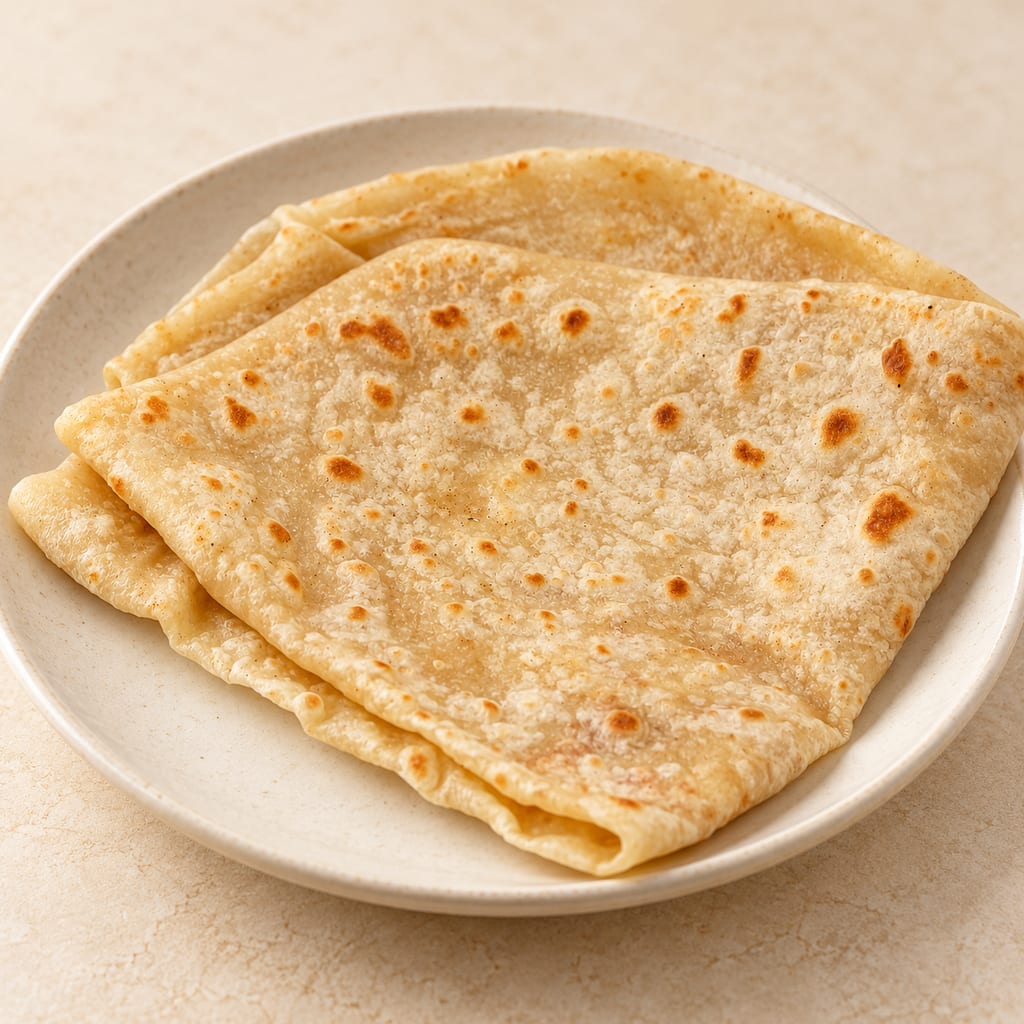
A Sri Lankan wheat flatbread made from thinly stretched, oil-rested dough and cooked briefly on a dry griddle until soft.
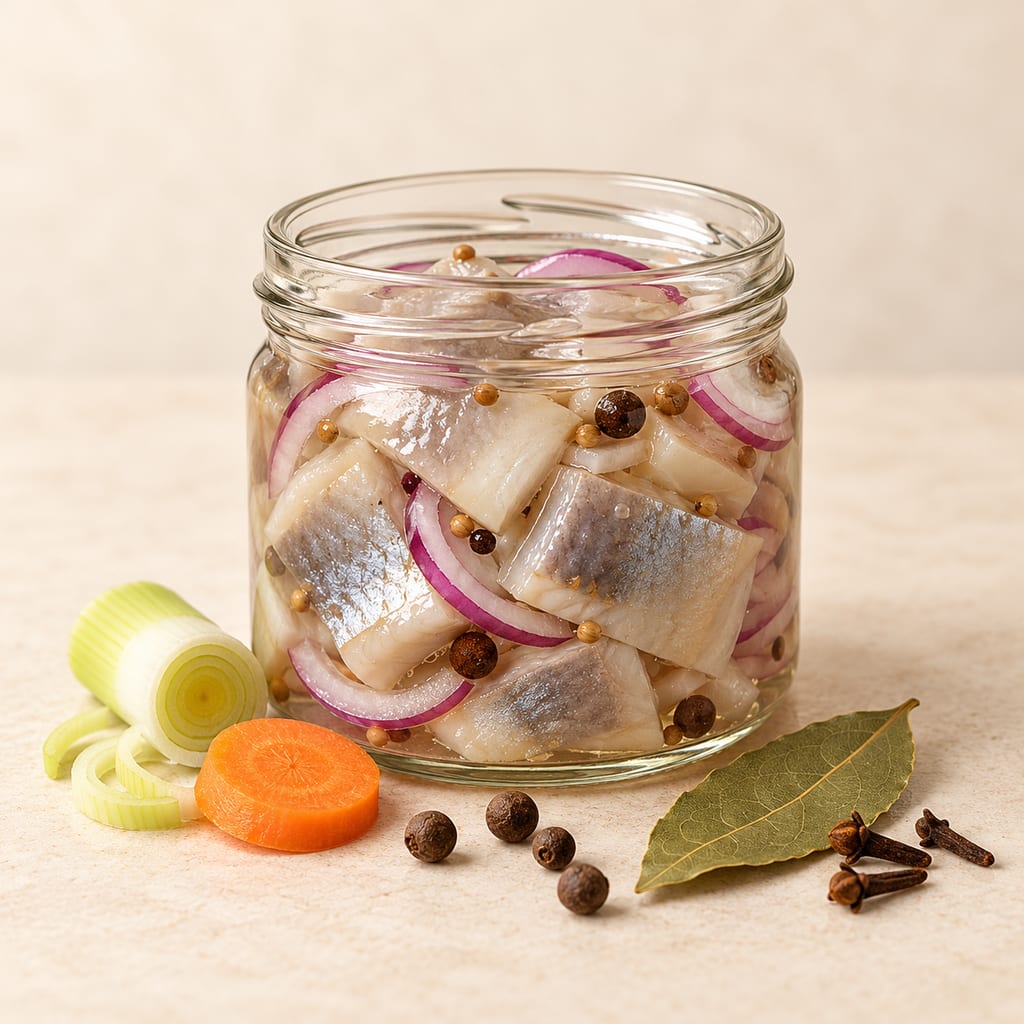
A Swedish ready-to-dress herring preparation: add the classic sliced aromatics and spices to already prepared herring, then serve or chill for fuller flavour.
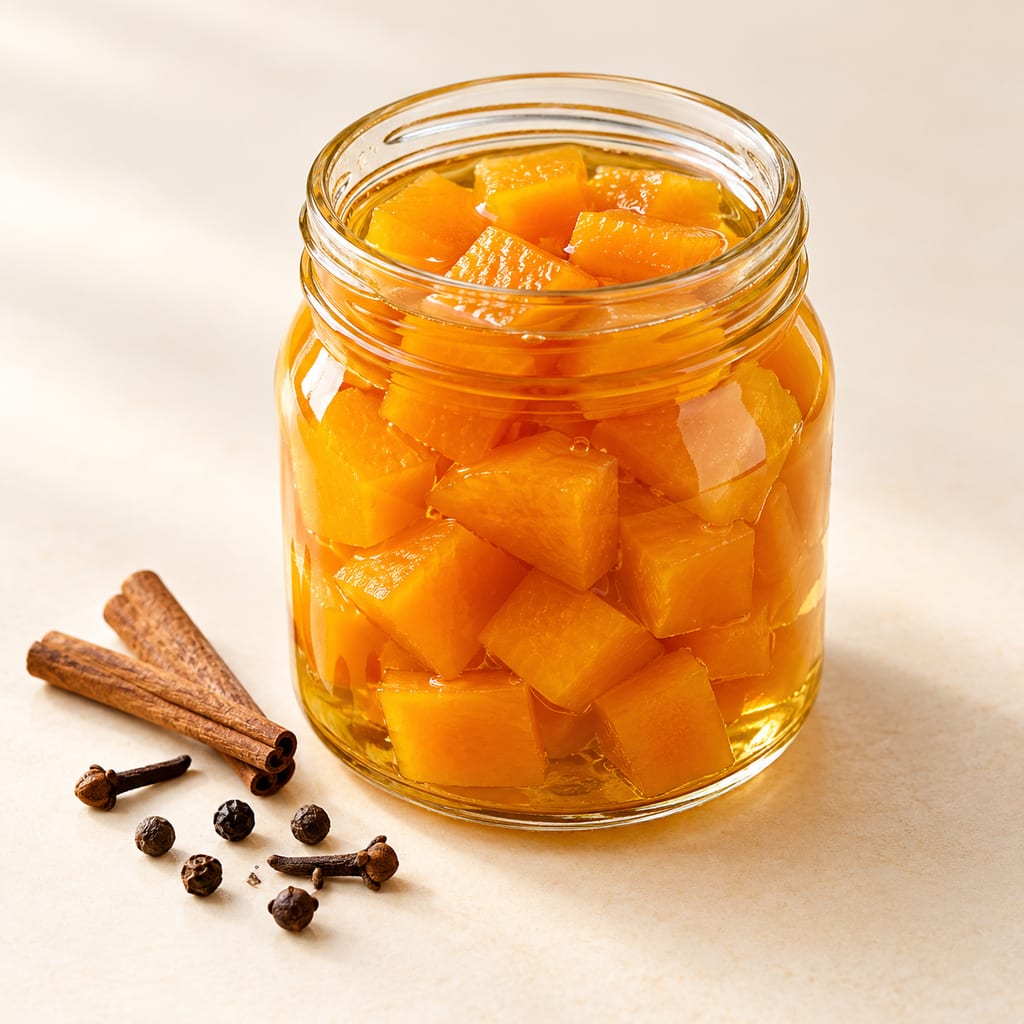
Ball sweet pumpkin pickles: Cupboard: exact published Ball formulation and water-bath process.
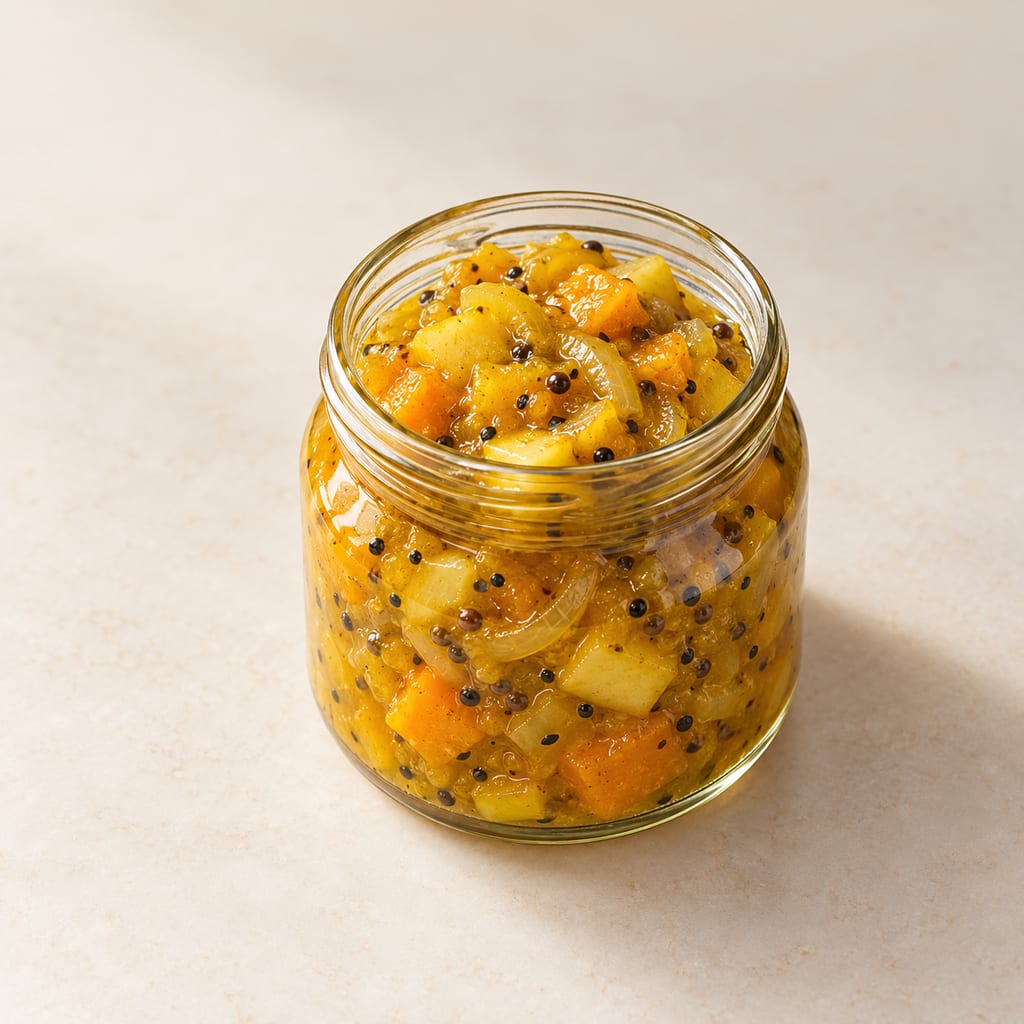
British pumpkin, apple and mustard pickle: Freeze for winter; small fresh portion refrigerated up to 48 hours.
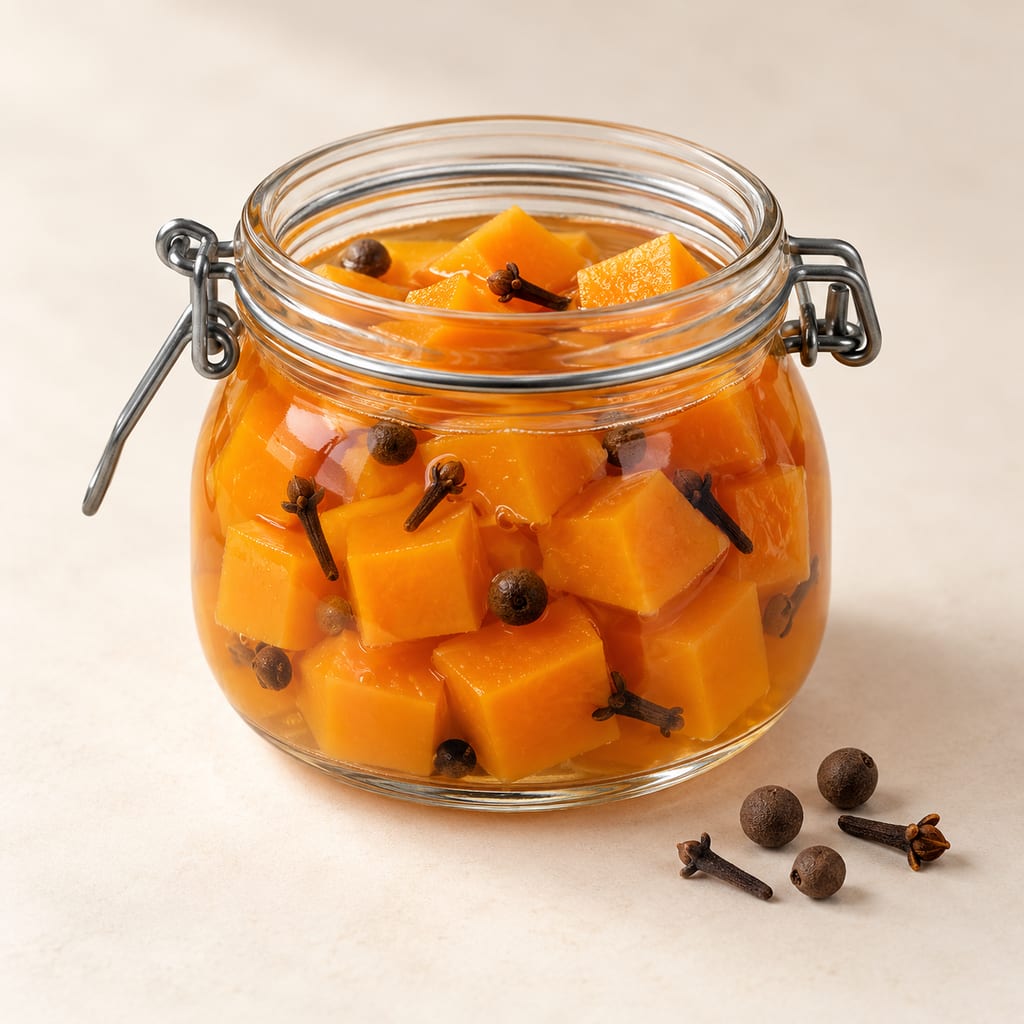
Dynia marynowana: Freeze for winter; small fresh portion refrigerated up to 48 hours.
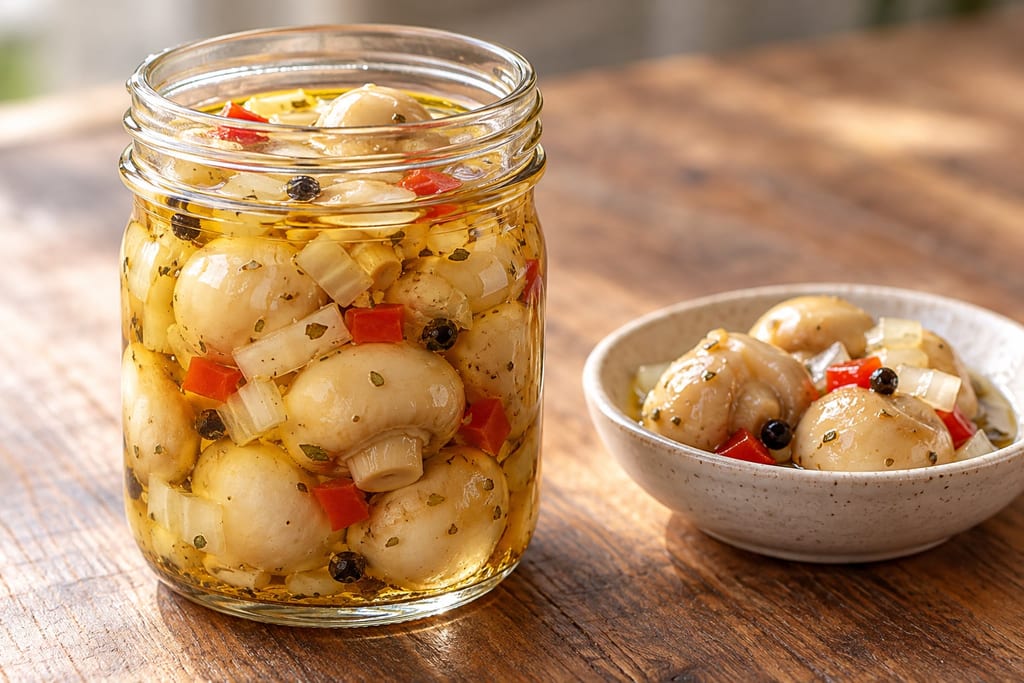
Small edible mushrooms are briefly cooked and packed in a seasoned vinegar marinade, a sweet-sour preserve served cold in Poland and neighbouring cuisines.

Fried or cooked food covered in a vinegar-based preparation, the heat and the externally supplied acid working together; a family of methods whose early form is a Roman instruction for treating fried fish with hot vinegar.
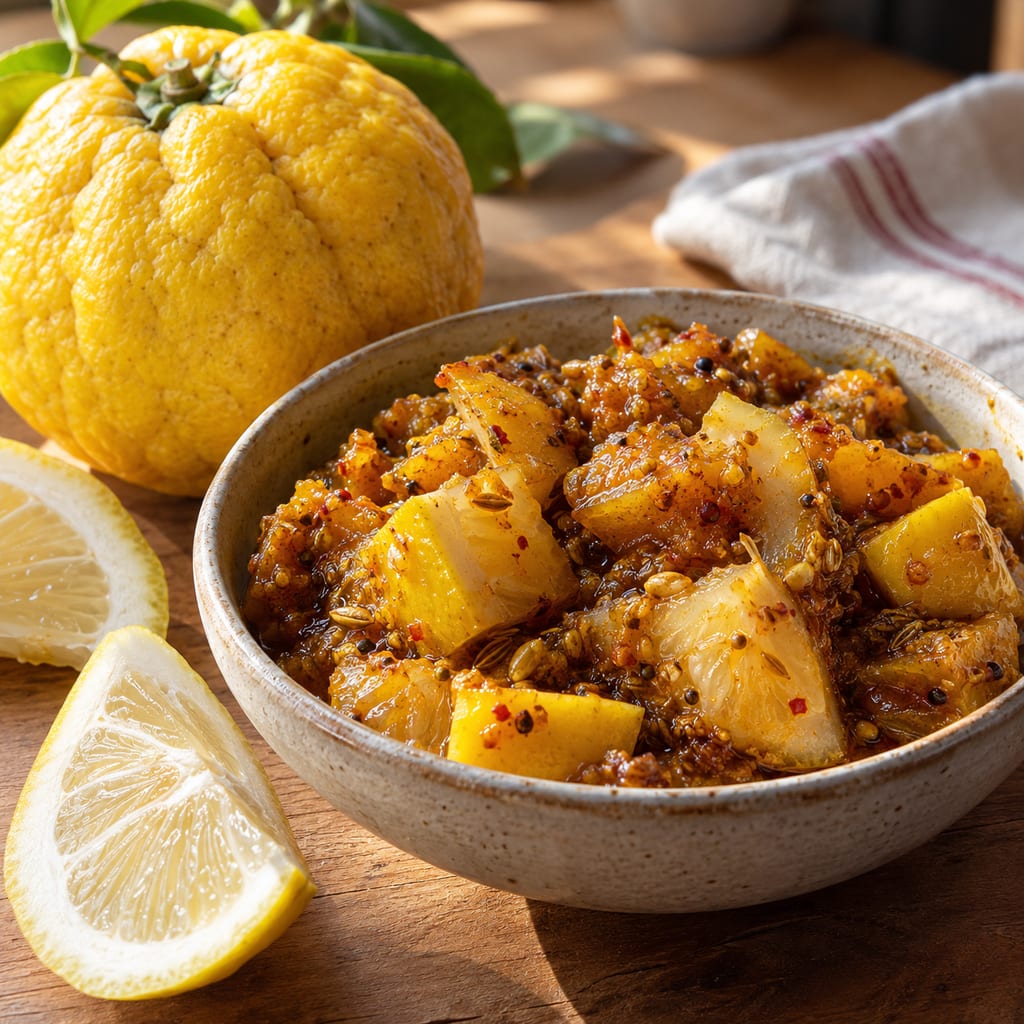
Ripe Himalayan galgal is boiled, sun-dried and cooked with mustard oil, spices and jaggery before a further rest in a ceramic jar.
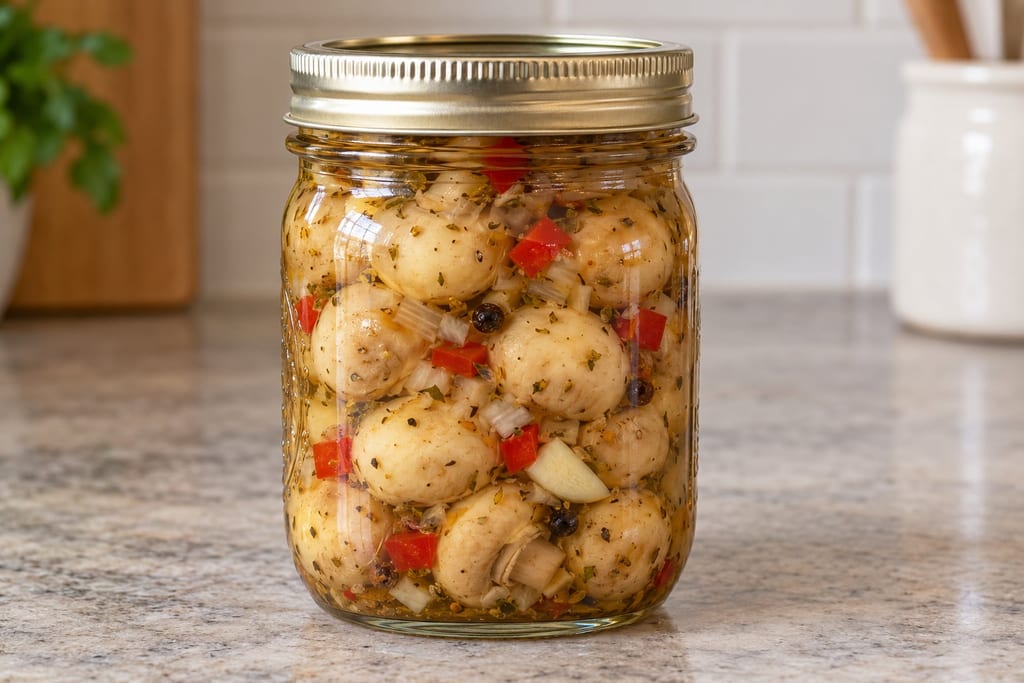
Small whole button mushrooms cooked in an acid and oil marinade and sealed in half-pint jars for shelf storage, using the tested US home-canning method.

A Cap-Pelé boucanière is an Acadian herring-smoking building. The documented Willie Niles example is a one-storey wood-frame structure with a ridge smoke vent and interior bays for hanging fish-bearing cannes.

The acocote is a long, hollowed and dried gourd used to draw aguamiel from a mature maguey. It is a harvesting tool: the sap is transferred to a separate vessel before it ferments into pulque.

Adrak murabba preserves young ginger in sugar syrup, a sweet South Asian preparation recorded in Indian cookery and food-processing sources.

Parkia biglobosa seeds are fermented into regional West African seasonings, including nététou, iru, dawadawa and soumbala. The yellow fruit pulp is a separate food, and names and methods vary by place.

Japanese reddish-brown vinegar from sake lees matured about three years, turned to vinegar by acetic bacteria; the vinegar of Handa and Edomae sushi rice.

A refined common-wheat flour blended for a broad range of baking; its protein and behavior vary with wheat, milling and market.

The almond mushroom, Agaricus subrufescens, was cultivated in eastern North America in the 1800s, lost its market, and returned as a cultivated mushroom from Brazil, where it is grown under several names.

Anpan is a soft wheat bun filled with sweet red-bean paste and finished with egg wash and black sesame. This dough rises with commercial instant yeast.
No community contributions have been published for this entry yet.
Sign in to contribute. Published comments and photos are free to read.
Sri Lanka Export Development BoardIdentity · Ingredients · Use
Ready to Eat Food Products from Sri LankaThe Board identifies achcharu as the Sinhala term for Sri Lankan pickles and describes a usual mixture of carrot, onion, beans, green chilli and capsicum.
The Board notes vinegar and mustard with garlic as characteristic seasonings and names biriyani as an accompaniment. Its health claims are not used.
Cited in: A Sri Lankan pickle, not a single formula; What the vinegar method does; Malay achcharu and other regional directions; How it is eaten
Roar Media ArchiveHistory · Use
Straight From The (Ceylonese) StreetThe article reproduces an account of Galle Face in the 1840s, based on an 1893 manuscript printed in 1919, that names veraloo acharoo.
It cites an 1888–89 note on mixed-pickle vendors in Colombo, Galle and Kandy and a 1924 account of a street cry for lunu miris achcharu.
The article describes vinegar-seasoned fruit pickles and explains the historical limits of the cited evidence.
Cited in: A layered history, with a clear limit to what is known; How it is eaten
British Library Endangered Archives ProgrammeHistory · Context
Manuscripts of the Sri Lankan Malays (EAP450)The Sri Lankan Malay community's history includes exiles, convicts, servants and soldiers associated with Dutch and later British colonial rule, with ancestry across the Indonesian archipelago and Malay Peninsula.
This supports community context only; it does not independently establish achcharu's recipe history.
Cited in: A layered history, with a clear limit to what is known
Explore Sri LankaHistory · Variations · Use
Tastes to LastThe magazine describes annual Sinhala and Tamil New Year batches, regional adaptation of Malay achcharu, and ingredients such as carrot, small red onions, green chillies, vinegar, mustard, ginger and garlic.
It describes biling achcharu with salt soaking and sun drying and distinguishes fruit chutneys from mixed pickle. The magazine's Dutch-origin account is reported as a tradition, not settled origin evidence.
Cited in: A layered history, with a clear limit to what is known; Malay achcharu and other regional directions; How it is eaten
Explore Sri LankaVariations · Use
Relishing Chutneys, Pickles and SambolsA regional culinary account describes pineapple achcharu sold by street vendors and variants using green mango and seasonal veralu.
It characterizes fresh pickles as having limited viability but does not give a tested storage period for this recipe.
Cited in: Malay achcharu and other regional directions; How it is eaten; Practical interpretation and safe storage
Select Sri LankaMethod · Ingredients · Yield
Sri Lankan Achcharu (Spicy Pickled Vegetables)The source provides the ingredient amounts used here, including four cups vinegar, one cup sugar, mustard, ginger, garlic, chilli powder, turmeric, salt, green chillies, carrot, red onion and shallots.
The method boils the vinegar mixture for five minutes, covers the prepared vegetables, cools, jars, and refrigerates overnight; it states two 32-ounce bottles.
The source also lists optional cauliflower, beans and green papaya, which are not included in this base formula. Its storage-duration claim is not repeated.
Cited in: What the vinegar method does; Why the ingredients matter; The stages of this mixed-vegetable version; Practical interpretation and safe storage
National Center for Home Food Preservation, University of GeorgiaMethod · Safety · Classification
General Information on PicklingFresh-pack or quick-process vinegar pickles are not fermented; acid level and recipe proportions matter to safety.
The Center advises against altering vinegar, food or water proportions and distinguishes tested shelf-stable recipes from other preparations.
Cited in: A Sri Lankan pickle, not a single formula; What the vinegar method does; Why the ingredients matter; Practical interpretation and safe storage
Penn State ExtensionSafety · Ingredients
Advice about VinegarThe extension advises checking vinegar labels and using commercially prepared vinegar with stated acidity for pickling; homemade vinegar has variable acidity.
This general advice does not validate this achcharu formula for canning.
Cited in: Why the ingredients matter; Practical interpretation and safe storage
SaveurVariations · Method · Use
Malay PickleThe recipe's Malay pickle uses dates, mustard, vinegar, shallots and banana peppers and rests under refrigeration before serving.
The article describes the pickle as a feast and wedding-buffet side and attributes it to Sri Lanka's Malay community.
Cited in: Malay achcharu and other regional directions
Sri Lankan Food: Malay AchcharuVariations · Method
Malay AchcharuThis home recipe combines shallots, onion, peppers, carrots and dates with a thick vinegar-mustard sauce, documenting one date-rich Malay variation.
Its room-temperature staging and shelf-life claims are not adopted here.
Cited in: Malay achcharu and other regional directions
anillGeography · Variations · Use
Acharu // Mixed PicklesThe Jaffna-based contemporary product description identifies carrot, silver onion and green chilli as a basic Northern achaaru mixture and describes serving it with rice and curry or as a snack.
Cited in: A layered history, with a clear limit to what is known; Malay achcharu and other regional directions

