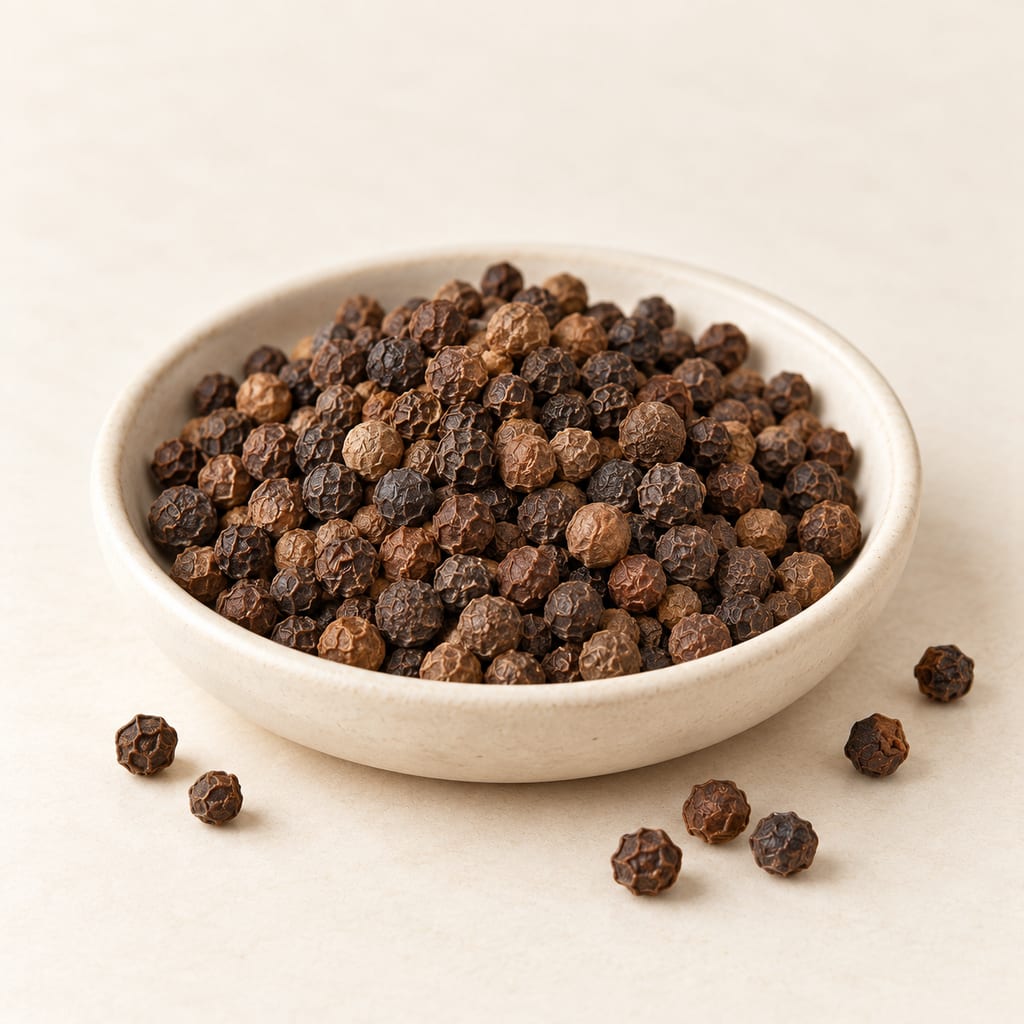
Black peppercorns
Black peppercorns are dried fruits of Piper nigrum, valued for piperine pungency and volatile aroma; whole peppercorns season Peter Kuruvita's lime pickle.
 FermenteaWhere food goes to change
Modern method
Lime pickle
Peter Kuruvita’s published lime pickle stuffs 20 limes with rock salt, then simmers them in vinegar, sugar and chilli before a two-week rest.
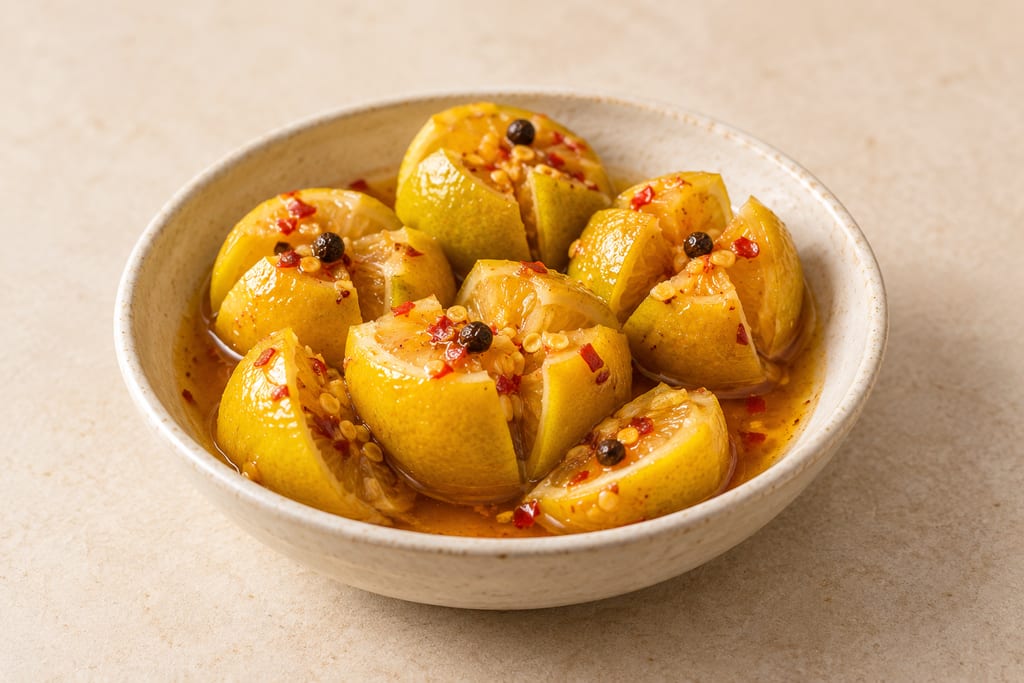
Peter Kuruvita’s 2009 cookbook places this recipe among Sri Lankan chutneys, sambals and pickles. A Gourmet Traveller editorial page credits Kuruvita and Flying Fish but changes two listed amounts. Neither publication dates the food’s origin.
Yield 2 1 L jars · Scaling: source batch only
The book directs jars to stand in a cool, dark place for at least two weeks and says the liquid may not initially cover the limes. It specifies no jar-closure step, validated storage process, acidity endpoint or after-opening guidance.
Hazard sourceThe book’s two-week rest and cool-dark storage directions are not a validated shelf life or room-temperature safety claim.
No numerical acidity endpoint, measured simmer temperature, after-opening guidance, or qualified process review is established.
Broader lunu dehi context; the article does not locate Kuruvita's exact formula.
Murdoch Books' 2009 publication place, not where the pickle originated or was prepared.
Black peppercorns are dried fruits of Piper nigrum, valued for piperine pungency and volatile aroma; whole peppercorns season Peter Kuruvita's lime pickle.
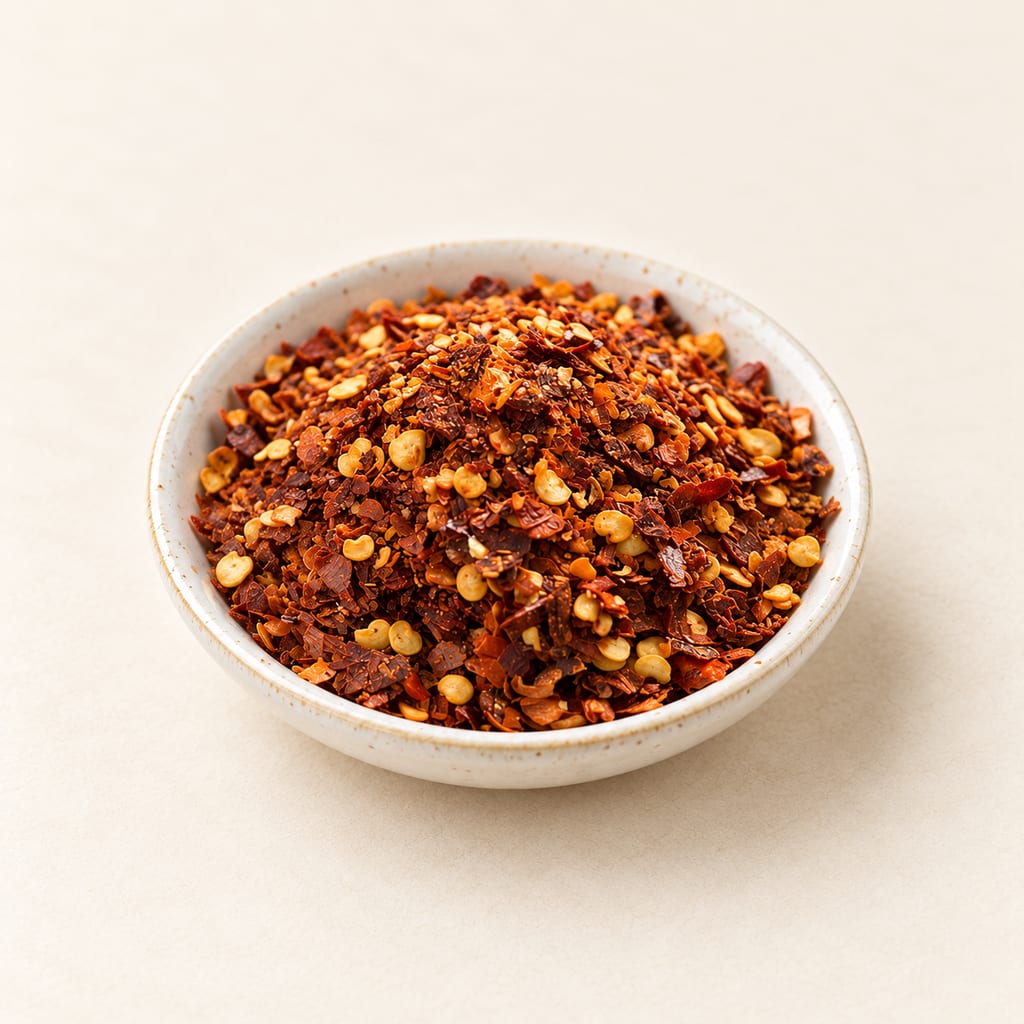
Dried chilli flakes are broken dried Capsicum fruit used for dispersed heat, colour and flavour; Peter Kuruvita's lime pickle includes one teaspoon.
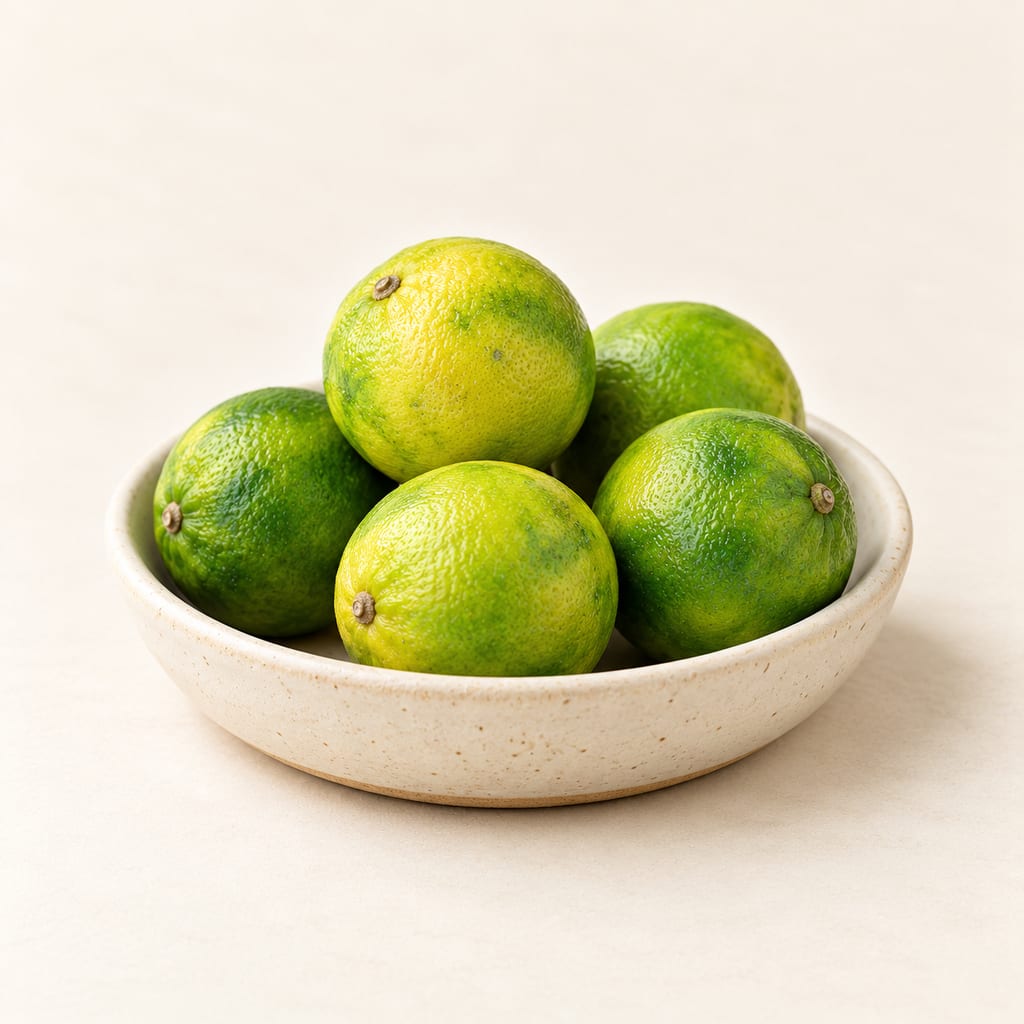
Lime brings sour juice, fragrant peel and firm rind to fresh food and preserved condiments; the fruit named in a recipe may belong to several citrus types.
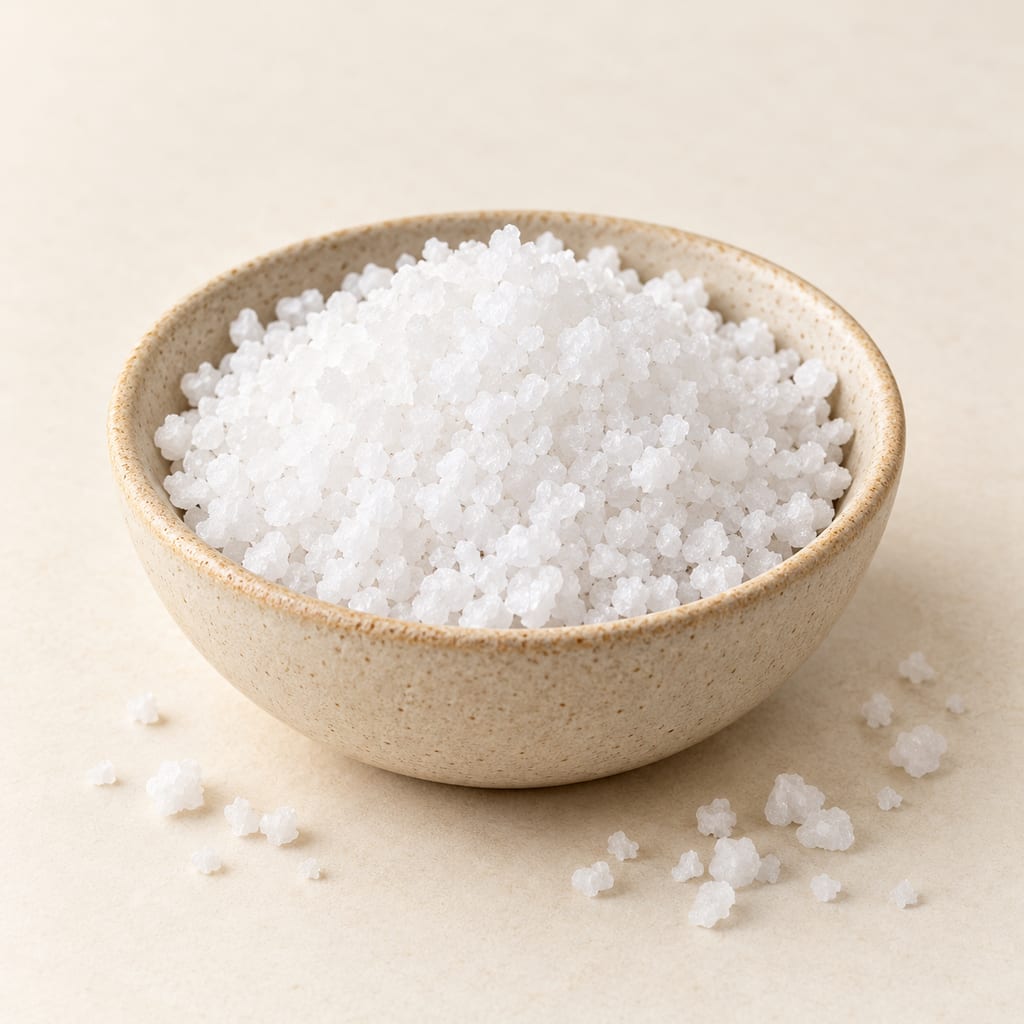
Food-grade sodium chloride seasons food and changes water movement in brines and cures; crystal size and the recipe's measurement method matter.

Lunu dehi is Sri Lankan salted lime pickle. This version sun-dries cut, salt-stuffed ripe limes, then packs them with dried lime juice, chillies, spices and vinegar.

Achcharu is a family of Sri Lankan vinegar pickles made with mixed vegetables or seasonal fruit and a piquant spice dressing. This version is a quick, refrigerated, non-fermented mixed-vegetable pickle.

Appam, or hoppers, are South Indian and Sri Lankan rice pancakes made from a fermented coconut-and-rice batter and cooked in a curved pan to a crisp lacy rim and a soft, spongy centre.
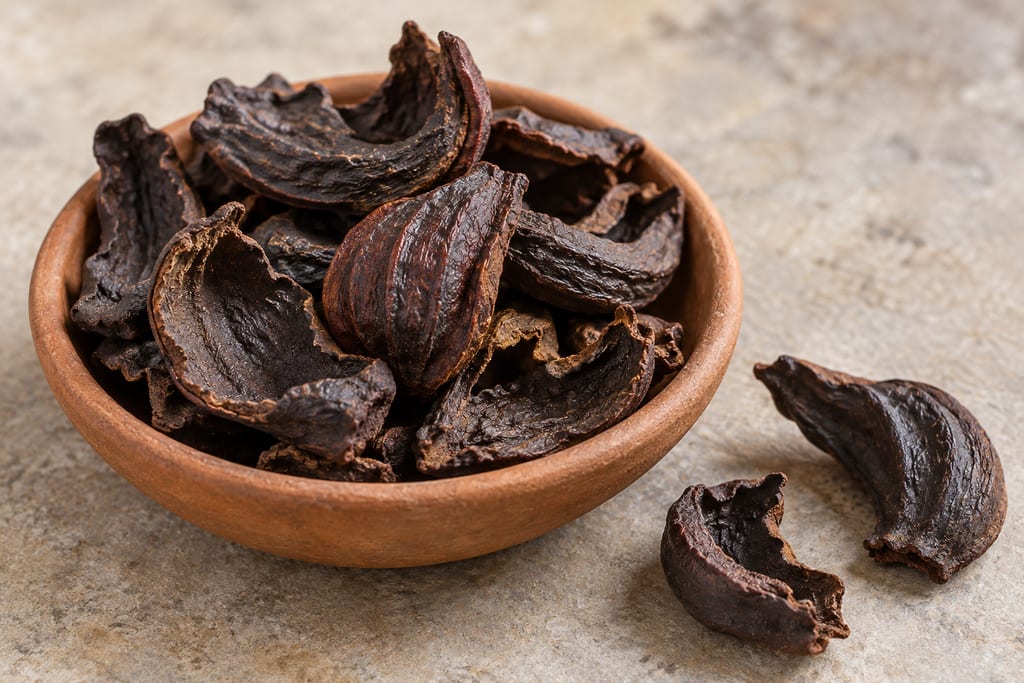
Goraka is the dried rind of Garcinia quaesita, a souring ingredient for Sri Lankan curries. Its drying is documented, but no complete household method is.
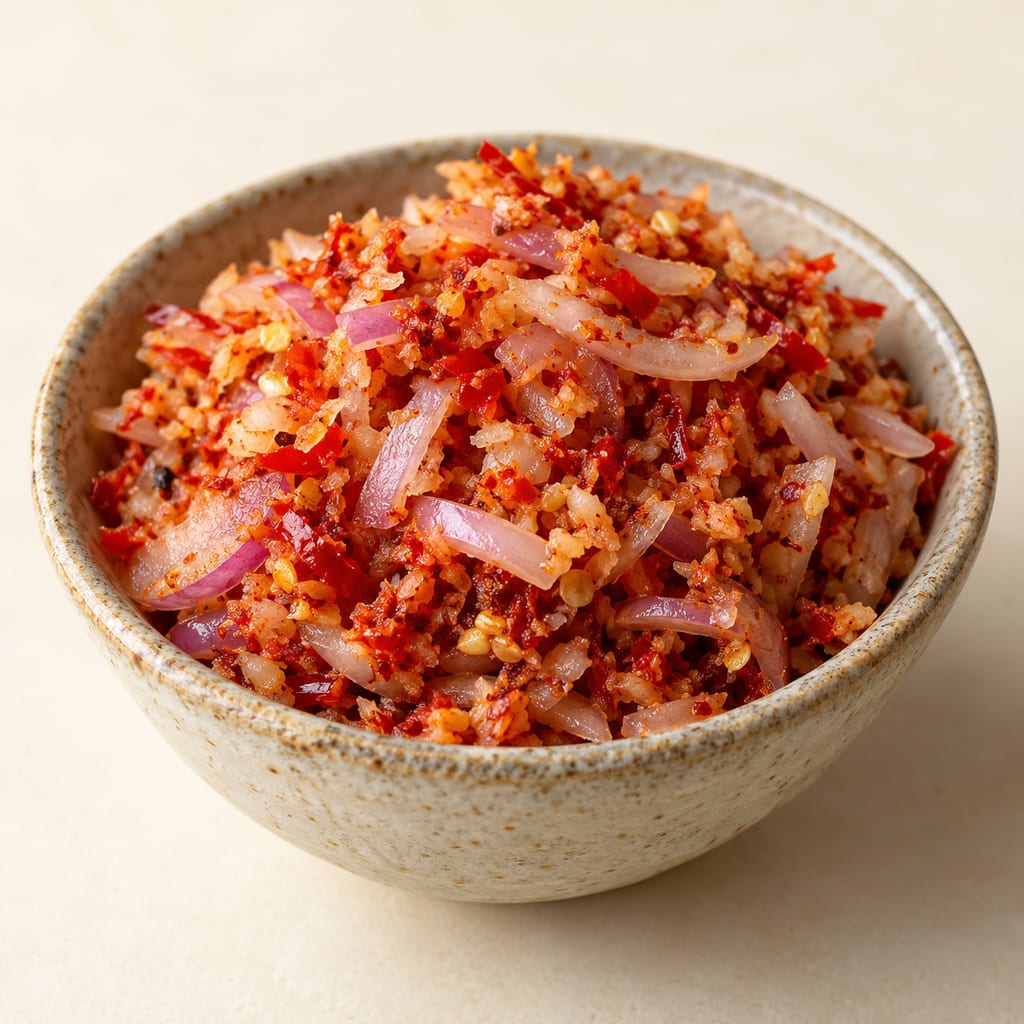
A Sri Lankan lunu miris made by pounding onion and chilli flakes with lime; Maldive fish is optional.
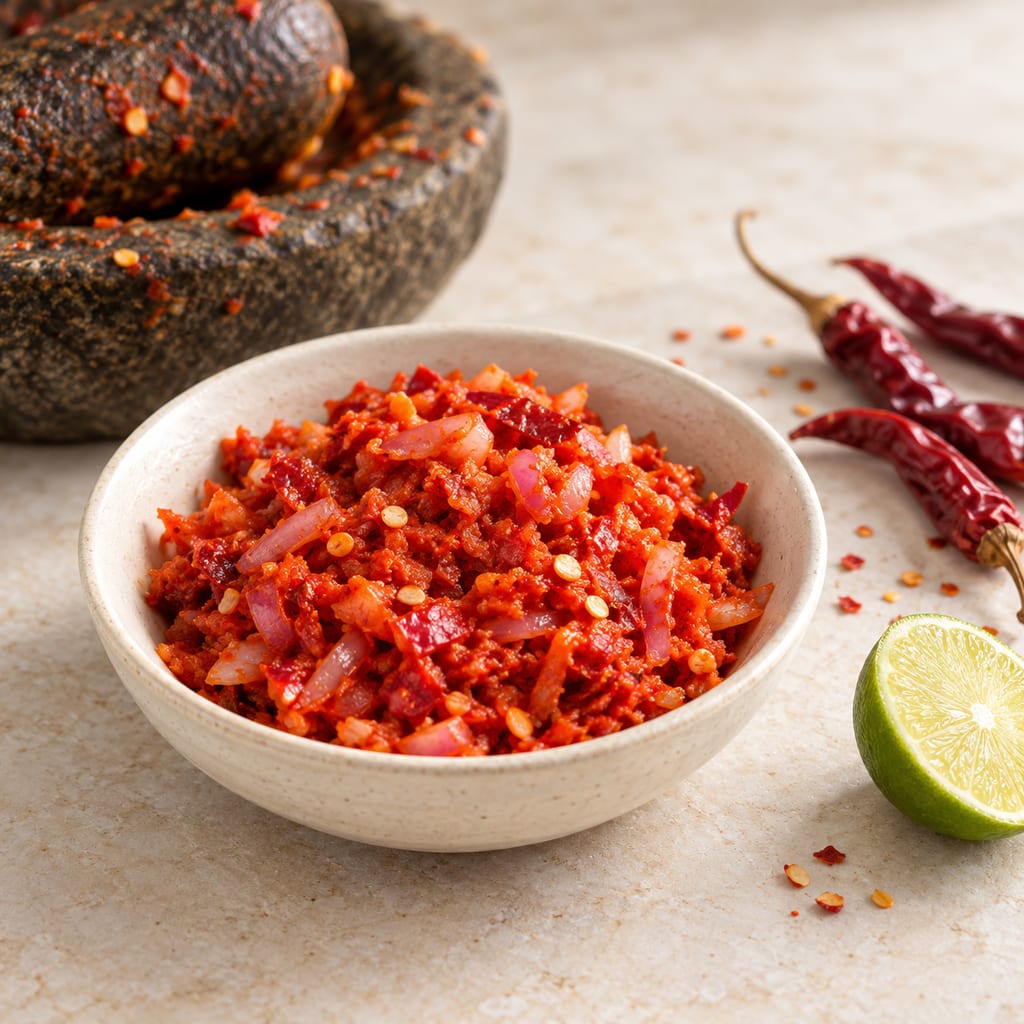
Lunu miris is Sri Lanka's pounded onion and chilli sambol: chilli flakes and red onion crushed with salt and lime, often with Maldive fish, eaten in small amounts with hoppers, pol roti and kiribath.
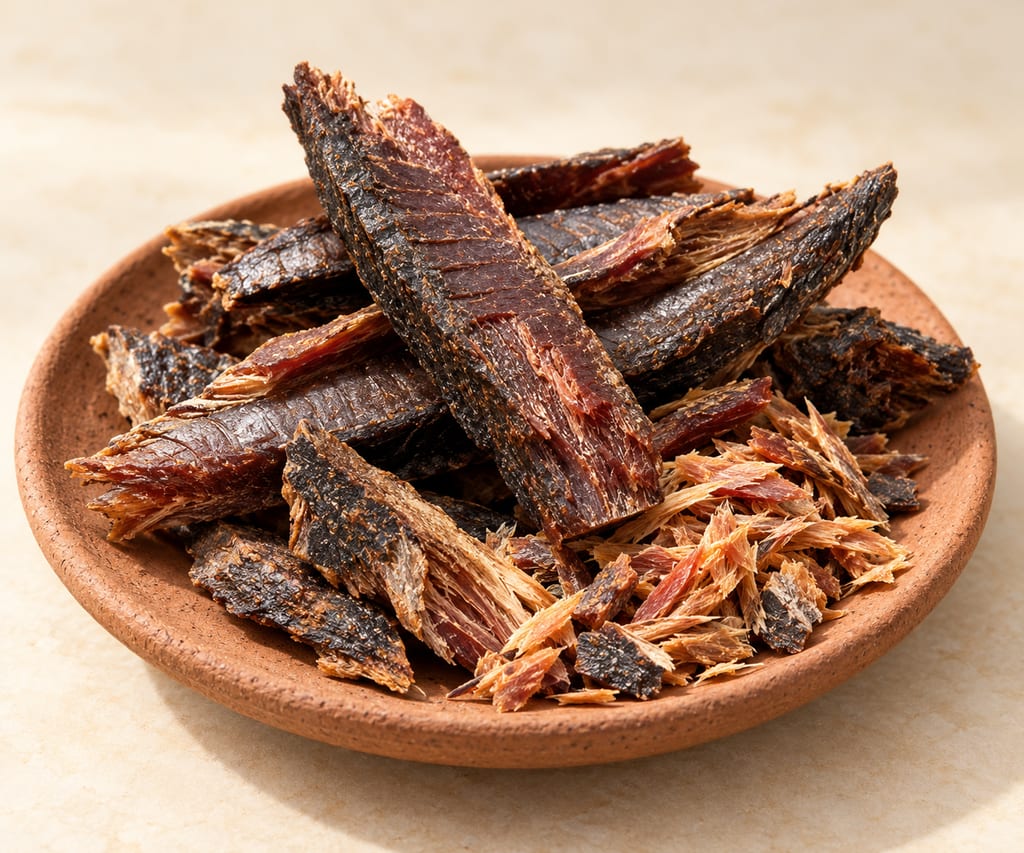
Maldive fish is a hard, smoke-dried tuna product made in the Maldives and traded especially to Sri Lanka, where it is known as umbalakada. Cooks shave or pound it into a concentrated savory seasoning for sambols, curries and other dishes.
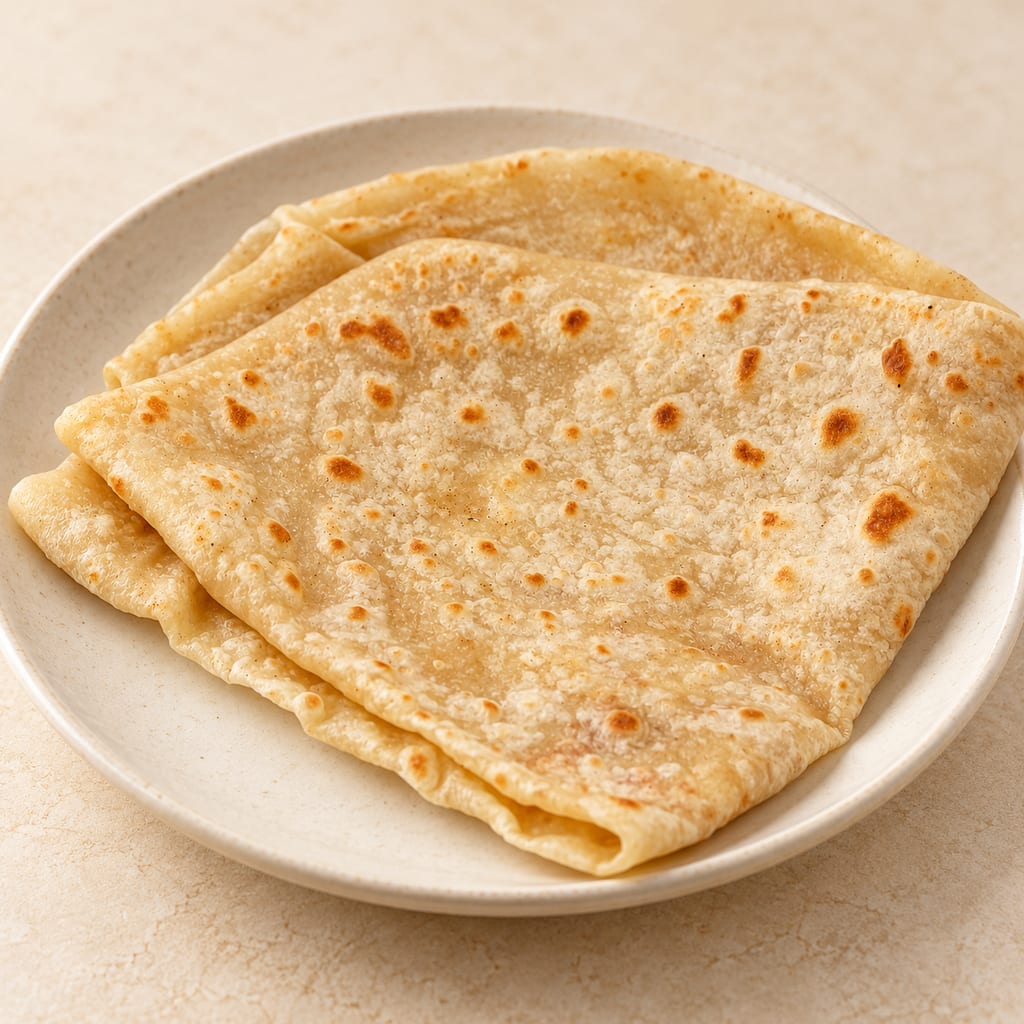
A Sri Lankan wheat flatbread made from thinly stretched, oil-rested dough and cooked briefly on a dry griddle until soft.
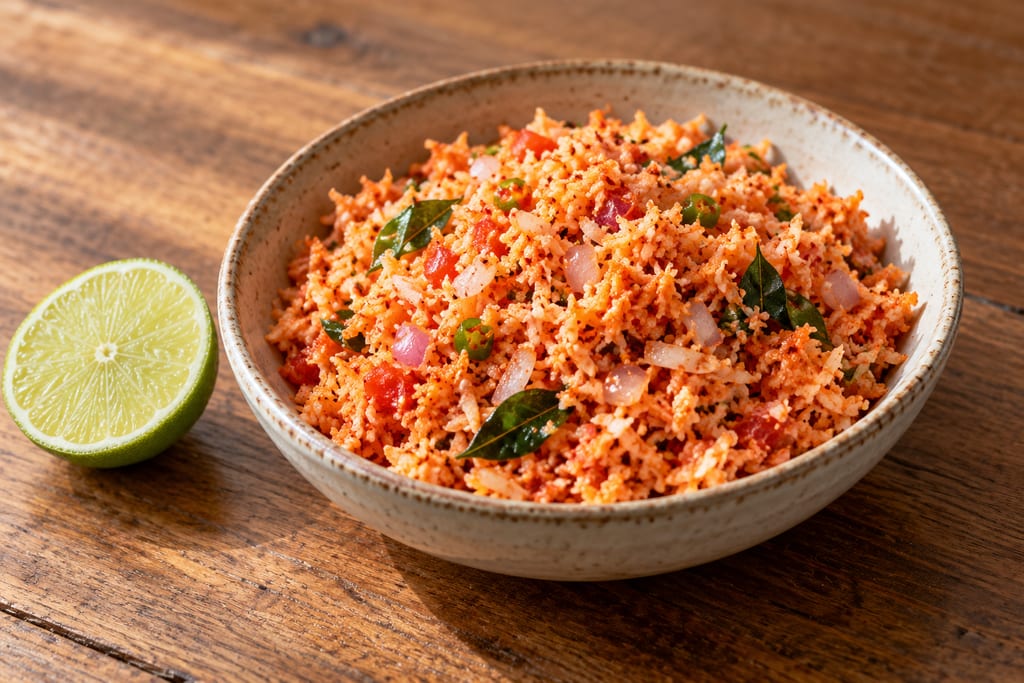
A Sri Lankan coconut relish made from grated coconut, aromatics, chilli, lime and optional Maldive fish; a seasoned paste is folded through the coconut by hand.
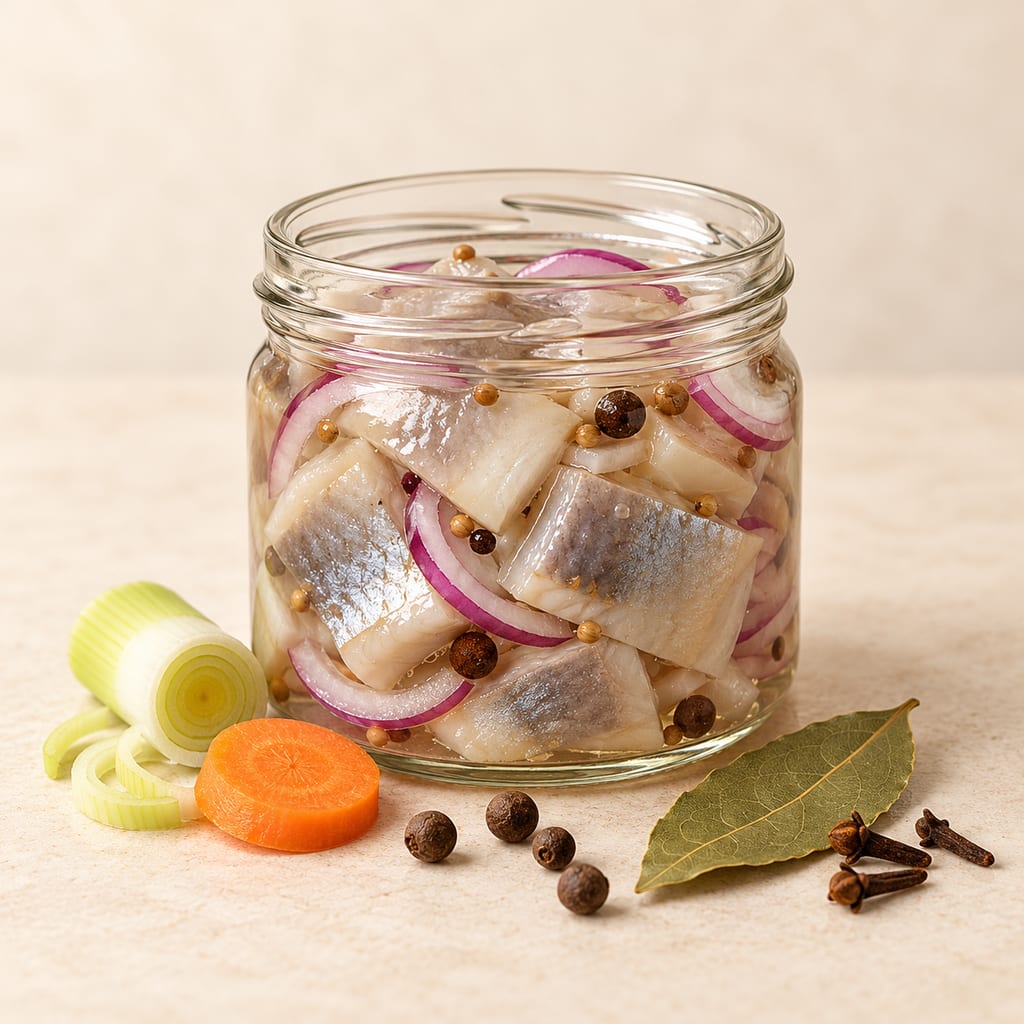
A Swedish ready-to-dress herring preparation: add the classic sliced aromatics and spices to already prepared herring, then serve or chill for fuller flavour.
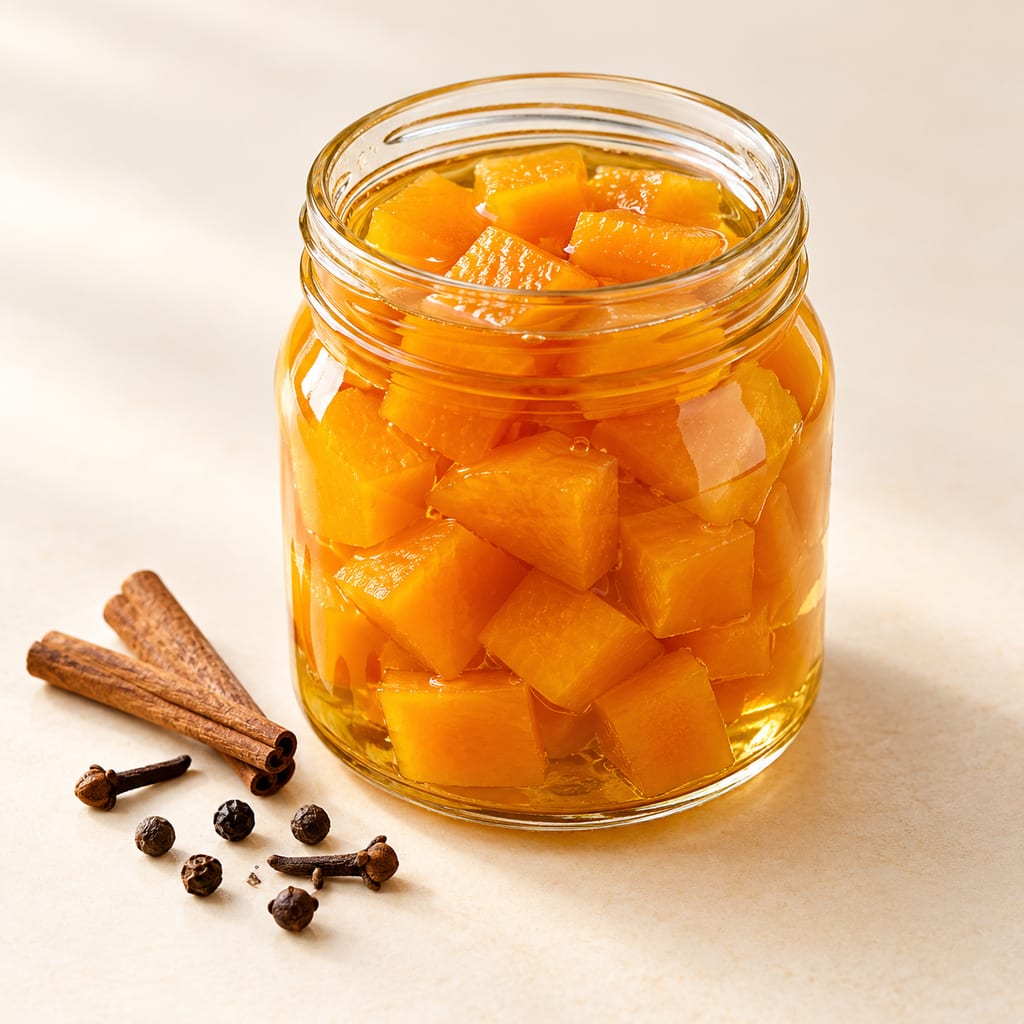
Ball sweet pumpkin pickles: Cupboard: exact published Ball formulation and water-bath process.
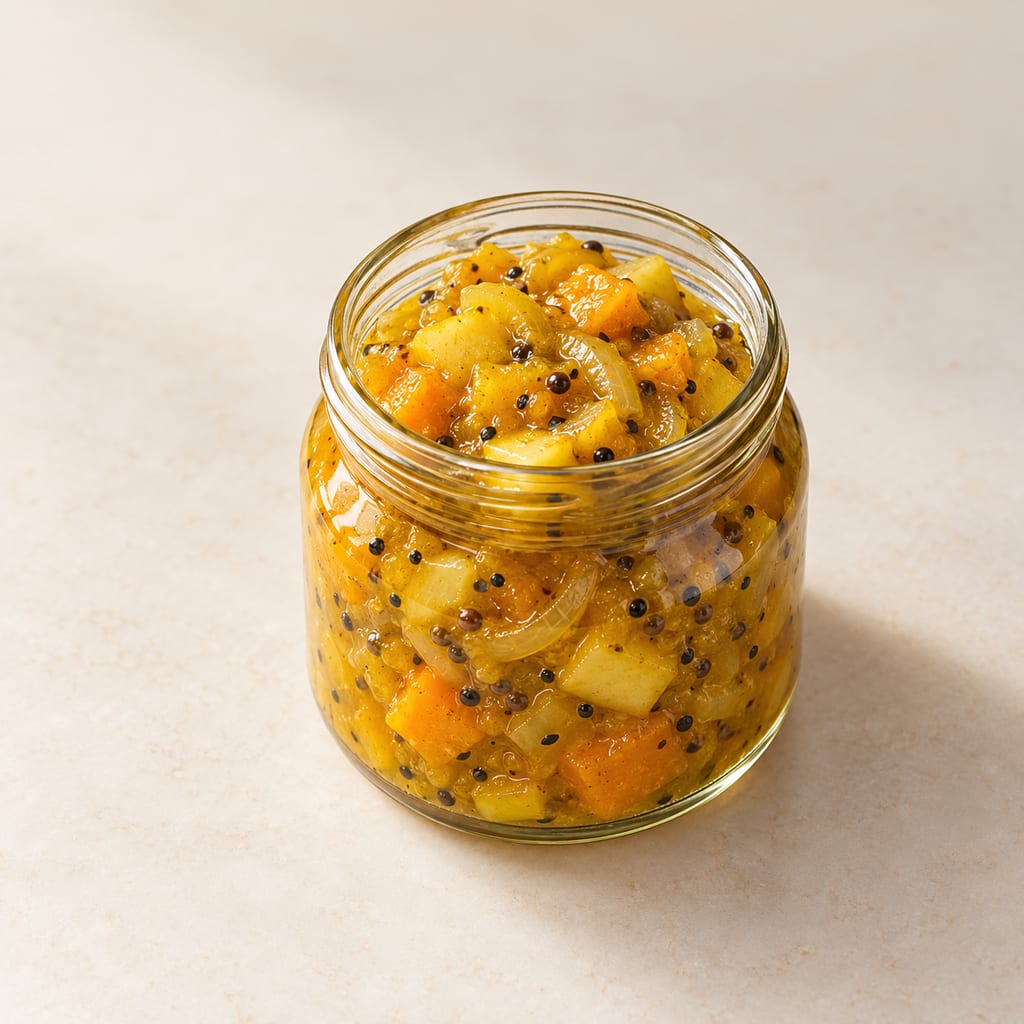
British pumpkin, apple and mustard pickle: Freeze for winter; small fresh portion refrigerated up to 48 hours.
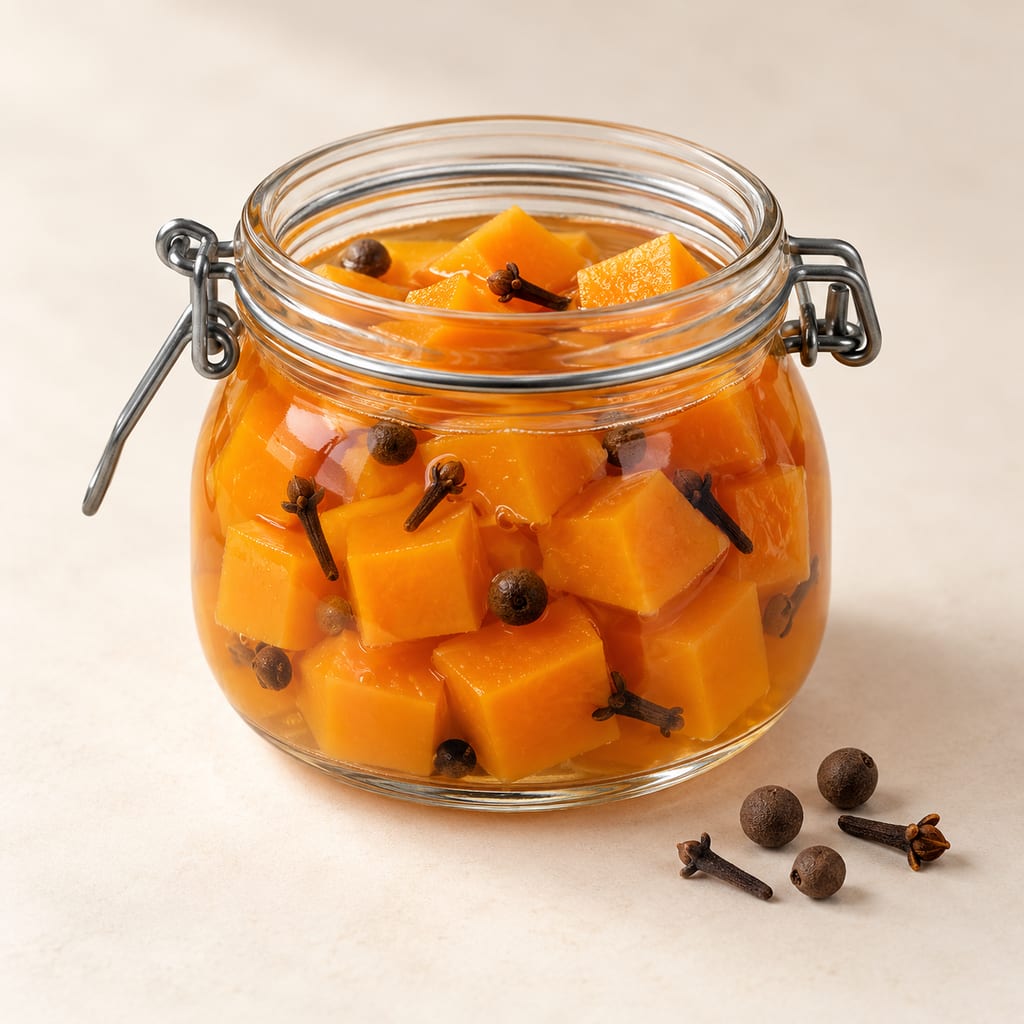
Dynia marynowana: Freeze for winter; small fresh portion refrigerated up to 48 hours.
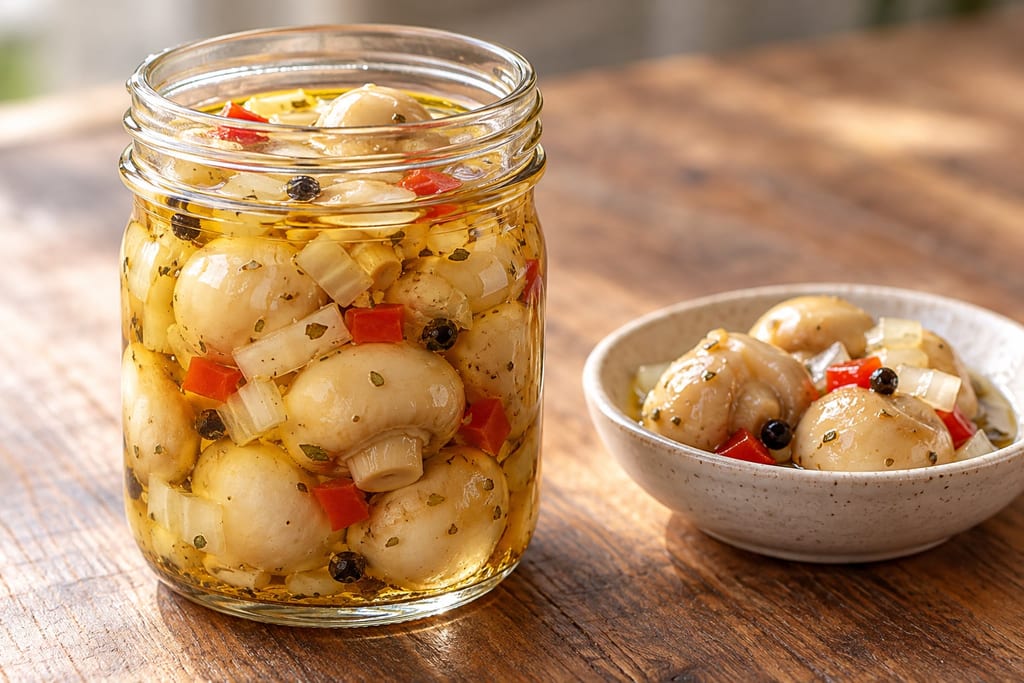
Small edible mushrooms are briefly cooked and packed in a seasoned vinegar marinade, a sweet-sour preserve served cold in Poland and neighbouring cuisines.

Fried or cooked food covered in a vinegar-based preparation, the heat and the externally supplied acid working together; a family of methods whose early form is a Roman instruction for treating fried fish with hot vinegar.
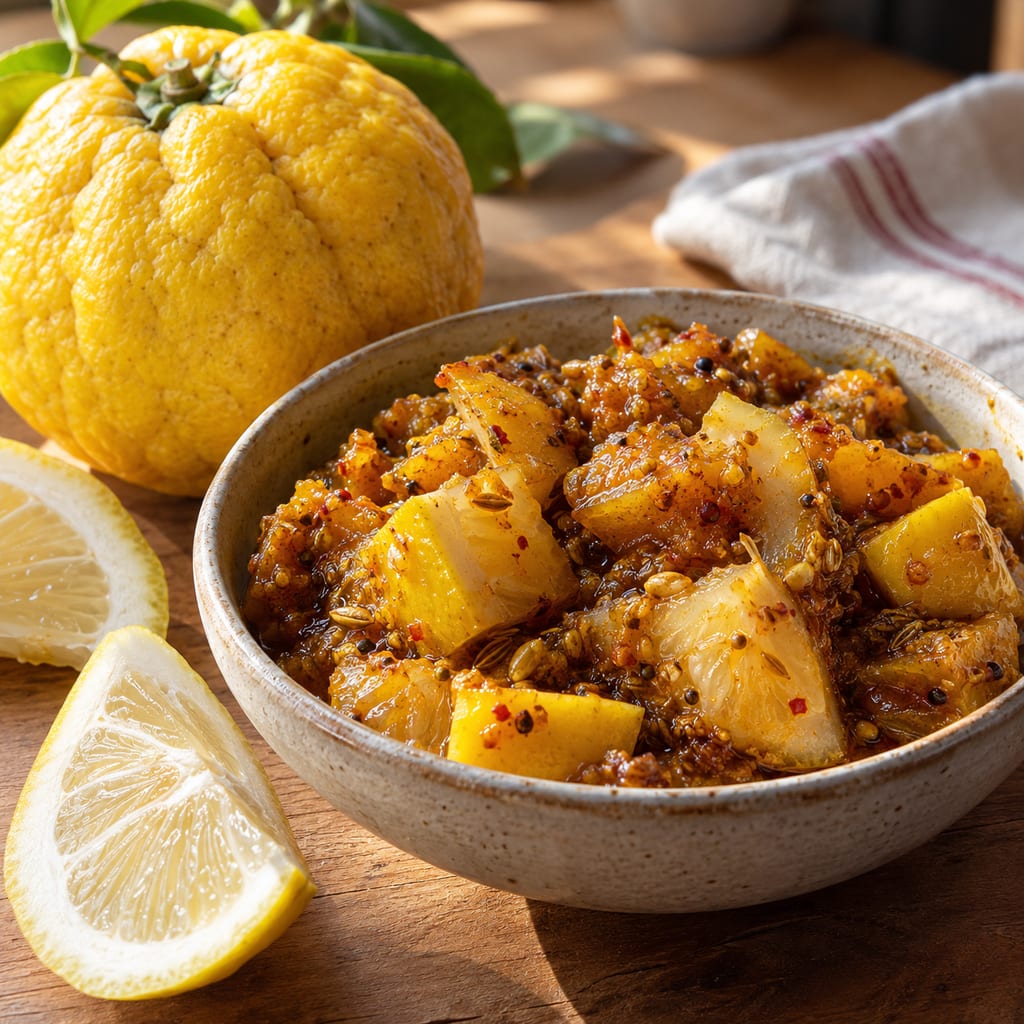
Ripe Himalayan galgal is boiled, sun-dried and cooked with mustard oil, spices and jaggery before a further rest in a ceramic jar.
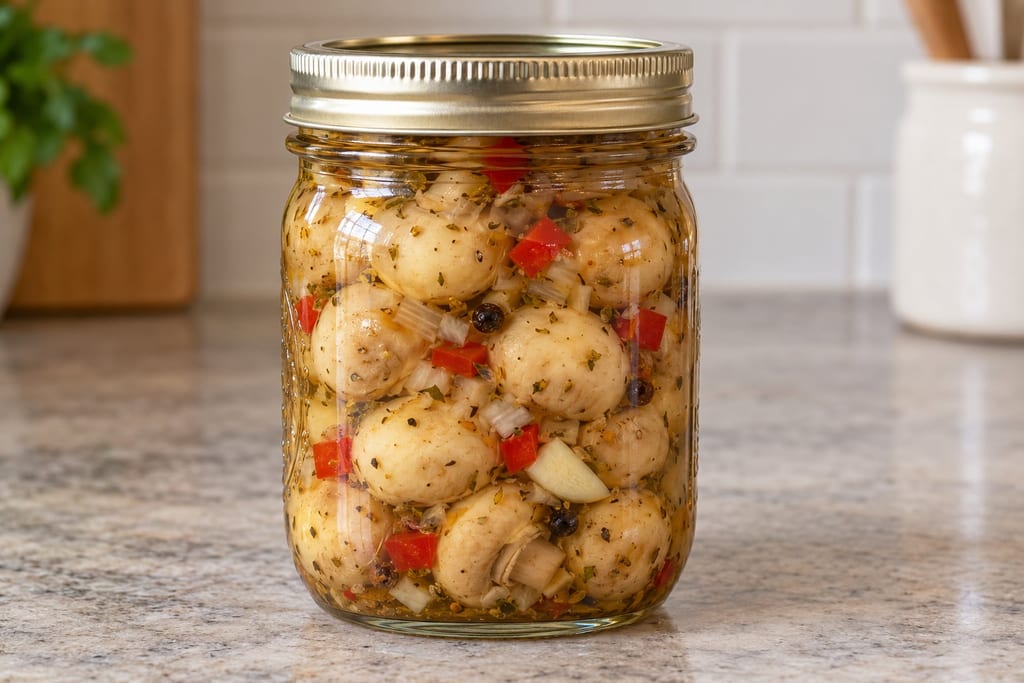
Small whole button mushrooms cooked in an acid and oil marinade and sealed in half-pint jars for shelf storage, using the tested US home-canning method.

Soft, spreadable Calabrian pork sausage made with a great deal of red chilli and fatty pork, stuffed into natural casings, sometimes smoked and matured while staying soft.

A way to add independent temperature logging to an existing food dehydrator without changing its built-in controls or protections. It is a monitoring method, not a rewiring plan.

Pleurotus cystidiosus is the abalone mushroom, a cultivated oyster-type fungus with dark brown caps that grows more slowly and is more demanding than other Pleurotus species.

A dark, balanced vinegar from Emilia-Romagna made by combining cooked or concentrated grape must with wine vinegar, then acetifying and refining it in wood under a protected specification.

A living dairy inoculum that starts controlled cream fermentation, developing acidity and aroma before sour cream or cultured butter is finished.

A small electric incubator holds jars at a selected temperature for yogurt and other documented warm food preparations. Controls, capacity and vessel arrangement vary by model.

Adygean salt is a seasoned table salt associated with Adygea and the wider North Caucasian culinary tradition. Salt is blended with garlic and a variable selection of herbs and spices; the exact mix depends on the named style and maker.

The African Caesar-group mushroom, Amanita masasiensis, is a wild ectomycorrhizal species of central and southern African woodlands, eaten locally. The genus contains deadly poisonous species, so identification needs care.
No community contributions have been published for this entry yet.
Sign in to contribute. Published comments and photos are free to read.
Murdoch Books; sample hosted by BooktopiaProcess · History · Use
Serendip: My Sri Lankan Journey (publisher sample)Directly read sample PDF, publication sheet and recipe on PDF page 6. Murdoch Books, Sydney, April 2009. Recipe gives 20 limes, 250 g rock salt, 20 whole black peppercorns, 500 mL white vinegar, 400 g caster sugar and 1 tsp chilli flakes. It fills two 1 L jars, simmers fruit 10 minutes, and rests at least two weeks in a cool dark place; it specifies no closure process.
Independently re-inspected 29 October 2026: direct HTTP download succeeded after browser timeout. Eight-page publisher sales sample; recipe on PDF page 6, printed page 11. Its measured formula and seven saved stages are supported; the book specifies no sealing or other jar-closure instruction. Preserve unspecified closure rather than borrowing sealing from the separate Gourmet Traveller adaptation.
The source does not specify vinegar strength, measured final acidity, a validated preservation or shelf-life process, or after-opening controls. Its initial incomplete liquid coverage and at-least-two-week cool-dark rest are recorded culinary directions, not established safe storage limits. Privately preserved PDF: 1357387 bytes, SHA-256 1abf1a6877ec4329b790c945898f16610f40a10c5a9d0c7173600554a43c1b26; no PD/CC0 reuse permission established.
Gourmet TravellerProcess · History
Peter Kuruvita’s lime pickleFull webpage directly opened; published 23 April 2009. This edited version credits Kuruvita and Flying Fish and gives the same overall method, but lists 1/2 tsp peppercorns and 500 g sugar instead of the book excerpt’s 20 peppercorns and 400 g sugar. These amounts are not merged.
Explore Sri LankaHistory · Context
Lunu Dehi: a Friendly ZestSri Lankan lunu dehi encompasses salt-and-sun-dried limes as well as a distinct boiled vinegar variation; the methods are not interchangeable.
National Center for Home Food PreservationSafety
Equipment and Methods Not RecommendedFilling and sealing jars hot without a tested post-fill process is not recommended for home canning.