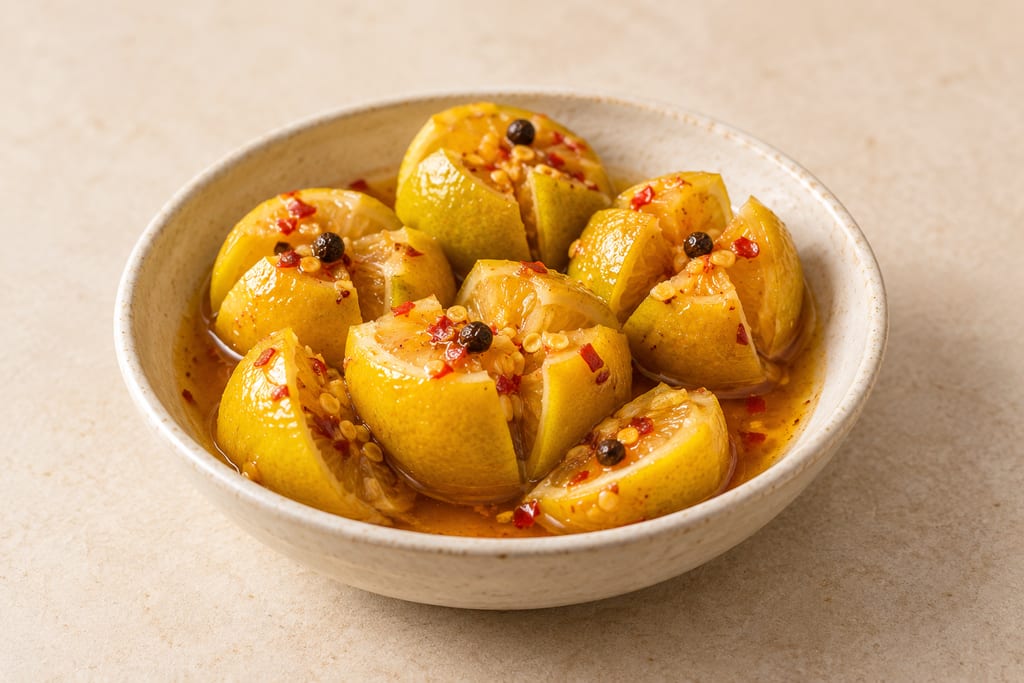
Lime pickle (Peter Kuruvita)
Peter Kuruvita’s published lime pickle stuffs 20 limes with rock salt, then simmers them in vinegar, sugar and chilli before a two-week rest.
 FermenteaWhere food goes to change
Spices and aromatics
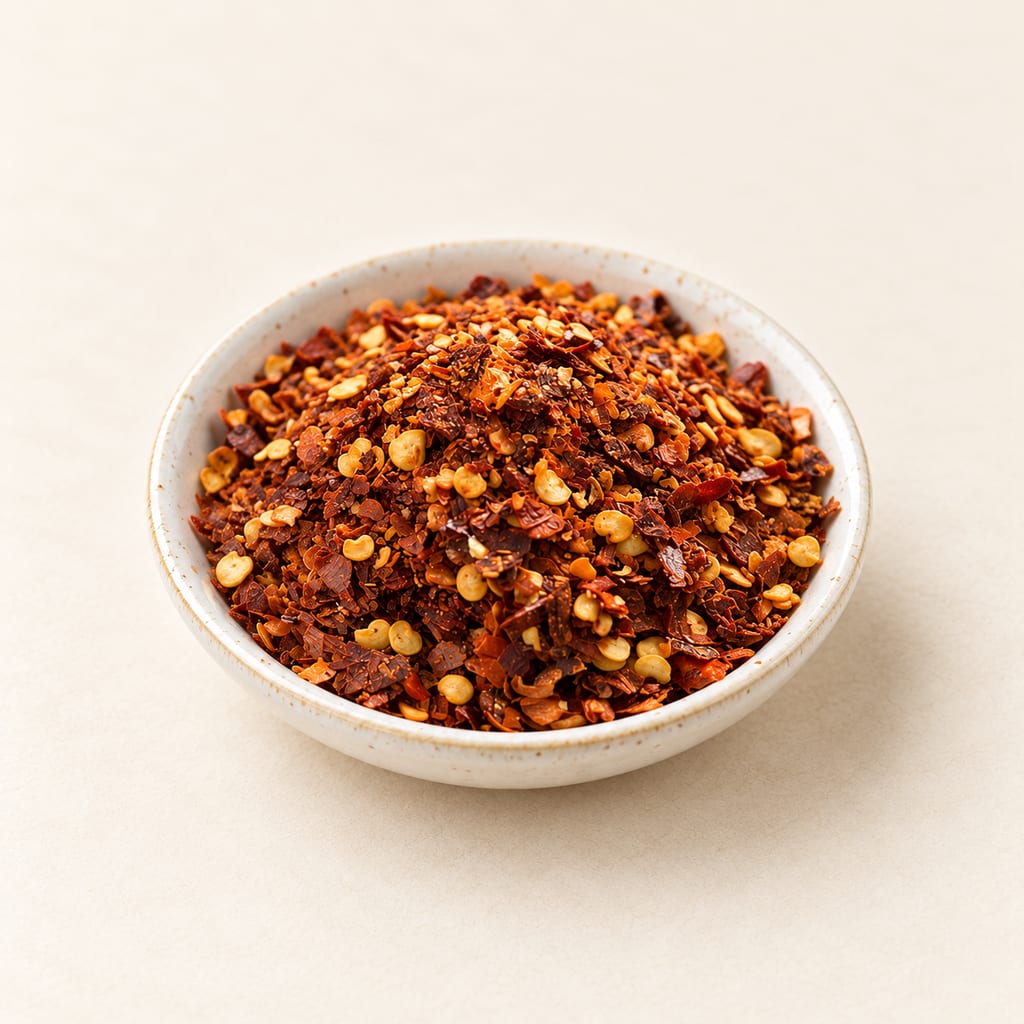
Dried chilli flakes are broken dried Capsicum fruit used for dispersed heat, colour and flavour; Peter Kuruvita's lime pickle includes one teaspoon.
Peter Kuruvita’s 2009 lime-pickle recipe asks for one teaspoon of dried chilli flakes among twenty limes, rock salt, black peppercorns, white vinegar and caster sugar. The limes are slit into quarters but kept joined at the base, packed with salt and pepper, then simmered in vinegar, sugar, chilli and their reserved juice. The fruits are jarred in the liquid and left for at least two weeks. In this version the flakes season the cooking liquid; they are not packed into the lime cuts with the salt and pepper. That distinction is part of the method.
The printed ingredient line does not identify chilli species, cultivar, country of origin, heat grade, flake size or seed inclusion. The uncertainty is substantive: “dried chilli flakes” names a form, not a botanical variety or a guaranteed pungency. A reader should not infer that the flakes are a particular Sri Lankan landrace simply because the pickle is in a Sri Lankan cookbook. Nor can a teaspoon promise identical heat across brands or batches. The published measure is exact; its sensory result is not standardized.
Flakes are irregular fragments of dried pepper, often showing red skin or flesh, pale seeds and smaller particles. Their coarse form is different from fine chilli powder: visible fragments disperse less uniformly and may be met directly in a bite. A cook can see their distribution in the pickle liquid while stirring. A jar’s appearance can suggest its cut and composition but cannot identify a cultivar or establish the proportion of seeds. Some commercial flakes are made from one kind of pepper; others are mixtures. Without a named specification, neither can be assigned here.
In the pickle, the chilli joins a liquid that combines lime juice, vinegar and sugar. The flakes can add colour and heat to that liquid and to the fruit resting in it. They do not supply the recipe’s main structure: lime is the principal fruit, with salt, vinegar, sugar, cooking and resting shaping the preserve. The recipe does not provide an acidity measurement, a validated preservation study or a shelf-life after opening. Its directions should be described as this author’s method, not converted into a universal pickle formula or safety guarantee.
Capsicum chillies originated in the Americas. They are members of the nightshade family, Solanaceae, and are botanically distinct from black pepper, Piper nigrum. The shared English word “pepper” records a history of naming and comparison, not kinship. Long before Europeans arrived in the Americas, Indigenous communities cultivated and used Capsicum. Following European voyages, seeds and fruits travelled through Atlantic and Indian Ocean routes. The broad movement is well documented, while precise dates and local adoption stories differ among historical accounts.
Capsicum’s spread was not just a story of spice merchants moving a commodity. Pepper plants could be grown in many climates, and seeds could travel and be replanted. This made the crop easier to reproduce locally than spices dependent on a narrow growing region or tightly controlled trade. Historians have argued that scholarship on global spice commerce has often centered black pepper and missed the rapid diffusion of Capsicum through household cultivation, gardens and ordinary food. Chilli also entered cuisines in different forms: green, ripe, dried, pounded, powdered, or incorporated into pastes. These are related uses, not one standard preparation.
The pepper's names also travelled. European writers used labels such as “Indian pepper” for plants brought from the Americas, even though the names did not identify their botanical origin. A 2024 historical study follows those names through early modern British food writing and the wider movement of Capsicum. It traces a British piccalilli tradition in which a later recipe replaced long pepper with fresh Capsicum and a nineteenth-century version included cayenne. The pickle's pungency changed while its borrowed “Indian” label endured across published recipe versions. This record cannot give a date for chilli's adoption in a Sri Lankan household or tell us how the dried flakes in this particular pickle were made.
The plant’s movement mattered for everyday cooking because seed could be replanted and the fruit could be used at several stages. Green pods gave a fresh vegetable-like seasoning; ripe pods could be dried to carry flavour beyond the harvest and later crushed for quick use. The available sources do not describe a single historical flaking practice in Sri Lanka, so this is a distinction among possible material forms rather than a claim about one local tradition. The recipe’s short ingredient name leaves that history open: it calls for the dried, broken form without specifying who grew or prepared it. By the present day, chilli is a major crop and everyday seasoning in Sri Lanka. A Sri Lankan agrarian research report describes it as essential to meals and records changes in the country’s production, including a decline in dried chilli production while green chilli remains important in traditional growing districts. Such contemporary evidence explains why fresh green peppers and dried ripe ones may coexist in markets and kitchens. It does not establish how a given household cooked in an earlier century, and it cannot identify the chilli Kuruvita used.
The particular lime pickle is a modern published recipe. The magazine version credits Kuruvita and the Flying Fish restaurant, with the underlying cookbook Serendip published in Australia in 2009. That publication context documents a chef’s rendition and its route to readers. It does not give the recipe an ancient date, establish a single national formula, or specify the pepper’s supplier. Sri Lankan lime pickle itself has multiple documented preparations, including salted and sun-dried forms, but those should remain distinct from this briefly simmered sweet-vinegar version.
Drying removes water from the pepper. With less available water, many microorganisms cannot actively grow, which is why drying helps preserve food. Yet a dry pepper is not sterile: microbes can survive low-moisture conditions. Sun, shade and hot-air drying expose peppers to differing combinations of light, oxygen, temperature and time. These conditions affect colour, aroma and chilli compounds. A laboratory study of one red pepper variety found changes in capsaicinoids and volatile compounds during its tested thermal-drying schedules. That result belongs to the sample and conditions studied; it does not prove that all dried peppers become hotter or milder than fresh ones.
Water loss can concentrate compounds when compared by weight, while heat and oxidation can also degrade pungent and aromatic compounds. The balance depends on pepper variety and drying conditions. Aroma can shift as volatile compounds change, and red colour can fade with exposure and storage. Flaking is another physical operation: crushing dried pods produces smaller pieces, increases exposed surface and makes the spice easier to measure or scatter through food. Flaking itself is not fermentation. The Kuruvita recipe contains no culture or microbial transformation of the chilli.
The chilli’s pungency comes chiefly from capsaicinoids such as capsaicin and dihydrocapsaicin. These are associated with the placenta, the pale internal ribs where the seeds attach. Seeds can carry capsaicinoid residue from nearby tissue, but should not be described as the source of heat in their own right. Cultivar genetics and growing environment influence pungency. A coarse flake therefore varies for reasons beyond the number of visible seeds: the pepper tissue, cultivar, drying and storage all matter.
Capsaicinoids stimulate heat-sensitive receptors, which is why chilli feels hot even though pungency is not a basic taste like sourness or sweetness. In the pickle, that sensation is layered with lime and vinegar acidity and sugar’s sweetness. Those elements create a balance in the dish; they do not make the capsaicin disappear. Since the recipe provides no pepper identity or measured pungency, the reader can understand the intended role—chilli seasoning—without assigning a heat score.
Whole dried chillies can be toasted, soaked, ground or broken depending on the dish. Flakes are already portionable and distribute more readily than whole pods while retaining more visible texture than powder. Added to simmering liquid, they soften and release colour and flavour unevenly. Added at the end, they remain more distinct. When heated in oil they can colour and flavour the fat, but excessive heat may scorch the fragments and turn them bitter.
Coarse chilli forms appear in many culinary traditions, but similar appearance does not make them interchangeable. Thai phrik pon, Turkish pul biber, Korean gochugaru and South Asian crushed chilli may differ in pepper type, drying, particle size, seed content and customary use. A Wikimedia Commons photograph of Thai flakes, for example, identifies their use in lap and nam chim chaeo. It is a useful visual reference for irregular dried fragments, not evidence that the Sri Lankan pickle uses the same preparation.
The original book sample places one teaspoon of dried chilli flakes in a batch with 400 g caster sugar; the magazine adaptation retains the teaspoon of flakes but lists 500 g sugar. Both specify 500 ml white vinegar. The magazine says it made minor editorial changes, and its altered sugar amount belongs to that version. The difference may change the sweet-sour balance, but it does not tell us whether the chilli itself changed. Kuruvita suggests tearing a small piece off with each mouthful of curry, so the flakes season a condiment meant to be eaten in small bites rather than as a bowl of chilli preserve.
Flakes also make heat visible at the table. A diner can see and choose a fragment, while fine powder disappears into sauce. This can help a cook distribute seasoning or serve a condiment with adjustable bites. Still, no rule says flakes belong to one national cuisine or that every pickle should contain them. Here the choice is simply part of Kuruvita’s published formula.
Low moisture restrains growth but does not guarantee that dried spices are free from pathogens. A review by researchers affiliated with USDA and FDA describes the survival of foodborne pathogens in desiccated spices and discusses outbreaks and recalls associated with spice products. A separate survey tested fifty-four samples across six dried spices, including red-pepper flakes, and detected pathogens in some samples. Neither source means that any individual jar is contaminated; the survey’s findings cannot be applied as prevalence for every market or country. They do establish why a dry spice should not be treated as sterile solely because it looks and smells normal.
Store flakes dry, sealed and protected from condensation, following the product label. Discard material that has become wet or is visibly mouldy; these signs are warnings, not a way to certify the safety of a normal-looking spice. The Codex code on mycotoxin prevention in spices addresses controls across production, drying, handling and storage. It does not supply a universal household shelf-life or moisture limit for every jar of chilli flakes. No invented duration or “safe if it smells fine” assurance belongs in this ingredient account.
Although the recipe briefly simmers the flakes, it provides no validated microbial-reduction data for them.
Documented recipe association; not a claim of the ingredient's origin.
Peter Kuruvita’s published lime pickle stuffs 20 limes with rock salt, then simmers them in vinegar, sugar and chilli before a two-week rest.
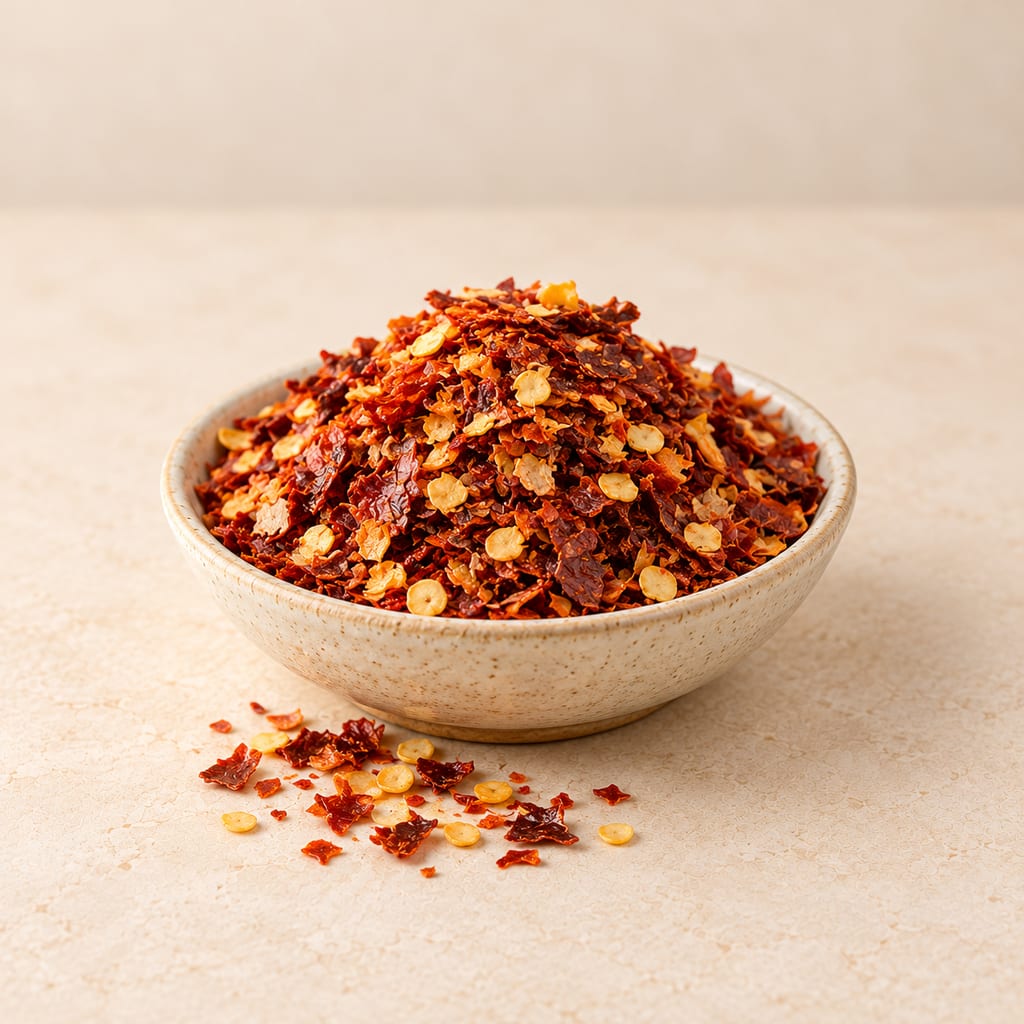
Calabrian pepper flakes are dried red Capsicum annuum from Calabria, crushed into coarse pieces; Peperoncino di Calabria is a protected geographical indication.
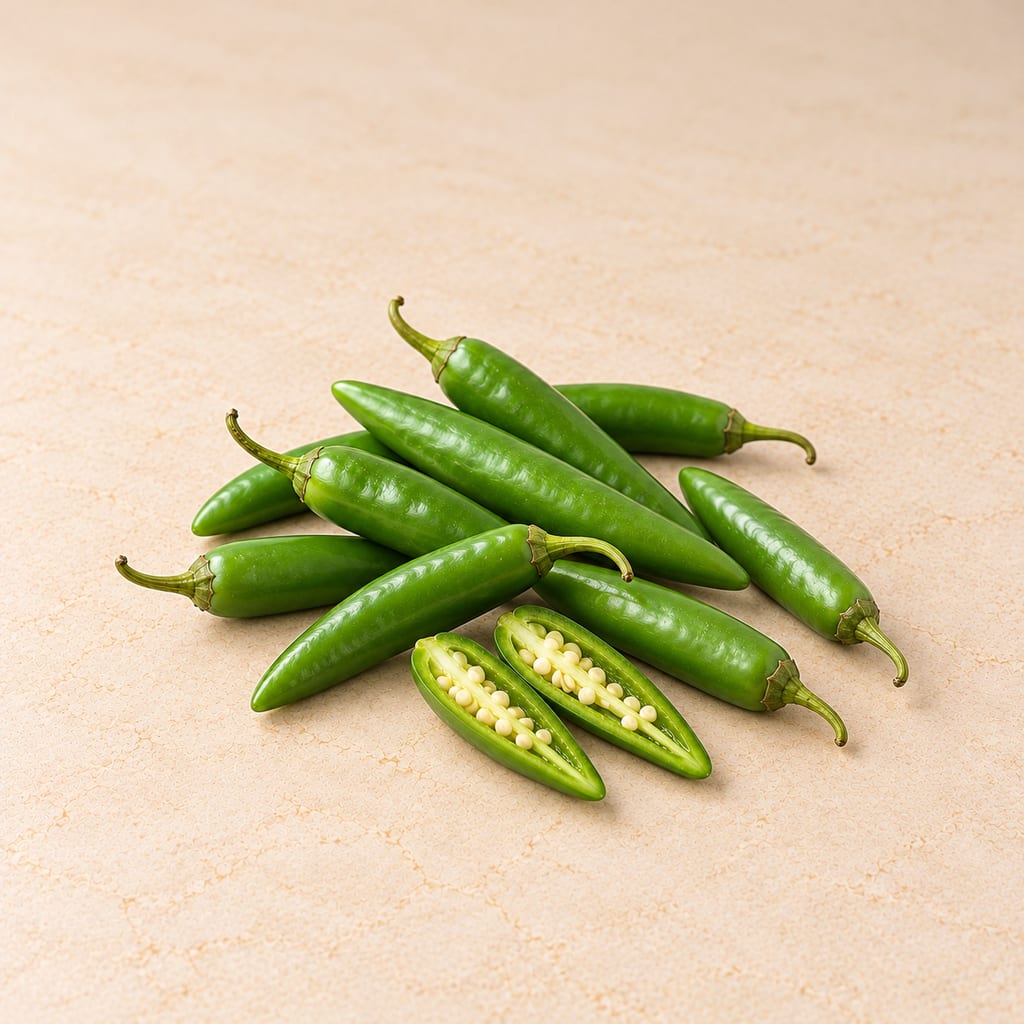
Chilli is the pungent fruit of Capsicum plants, native to the Americas and eaten fresh, dried, ground or fermented in cuisines around the world.
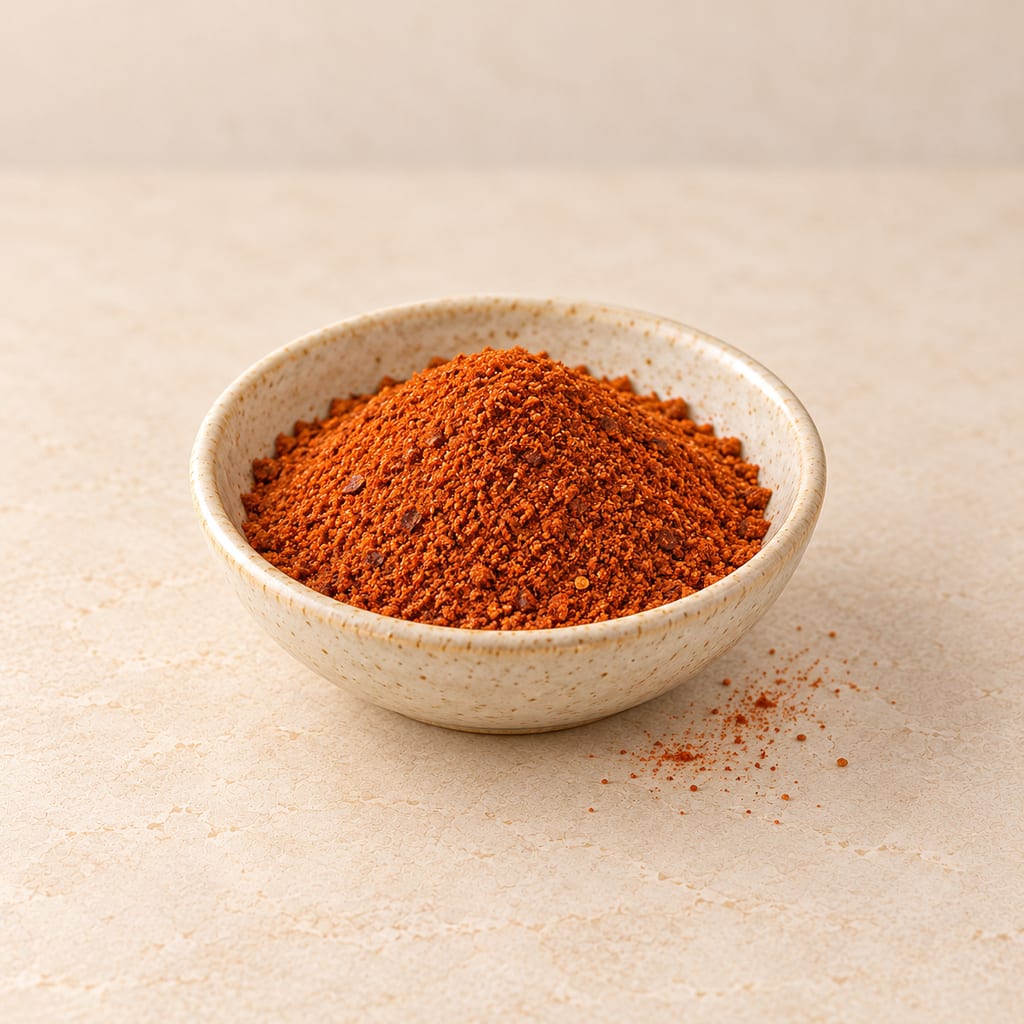
Chilli powder is dried chilli fruit ground fine, sold either as plain ground chillies or, in the United States, as a seasoning blend with salt, garlic and cumin.
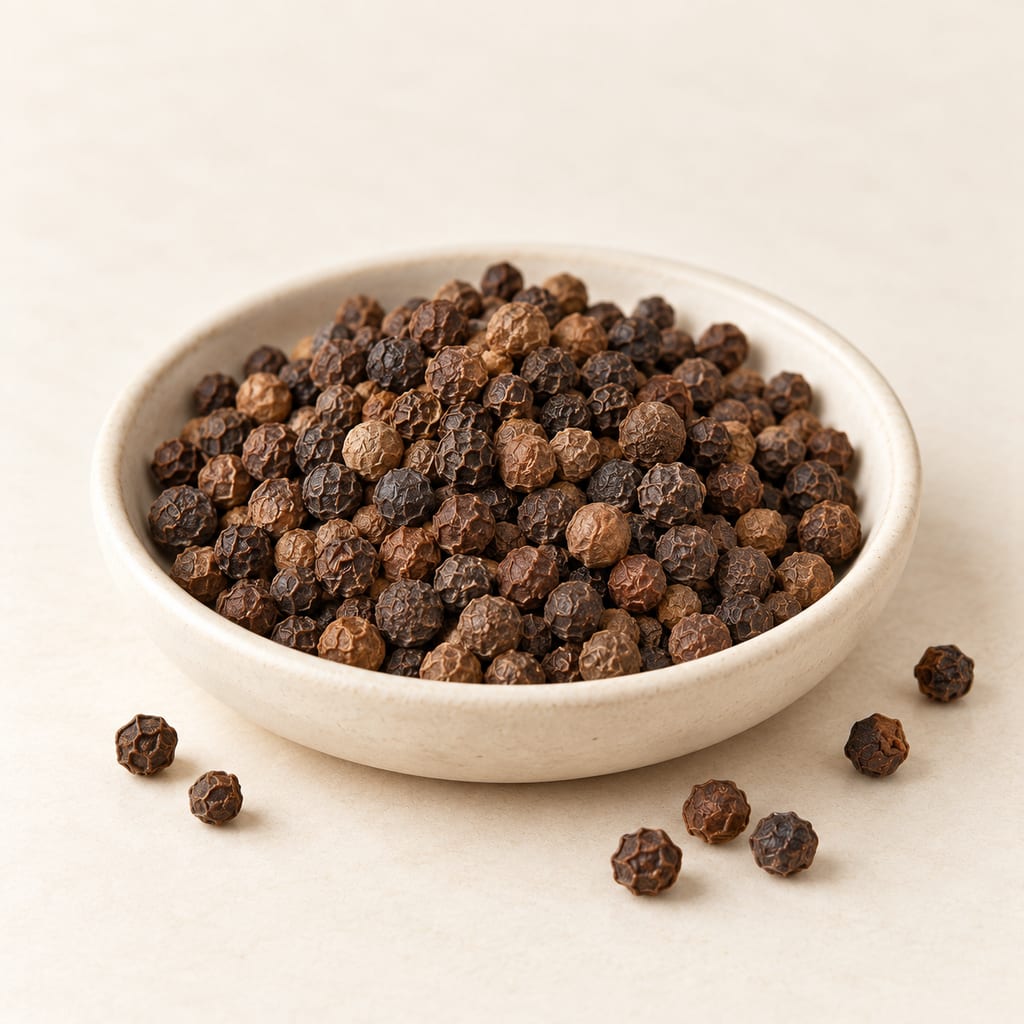
Black peppercorns are dried fruits of Piper nigrum, valued for piperine pungency and volatile aroma; whole peppercorns season Peter Kuruvita's lime pickle.
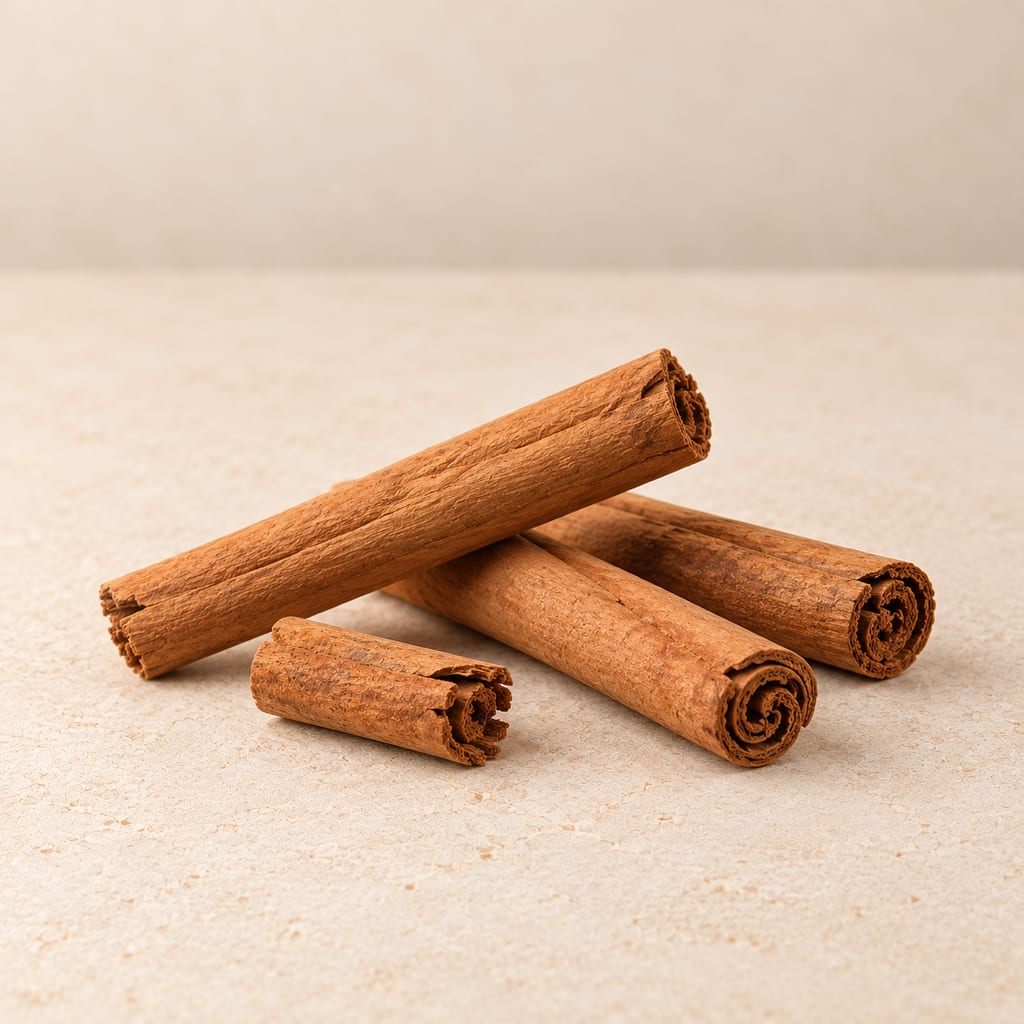
Cinnamon is the dried inner bark of Cinnamomum trees, rolled into quills or ground; Ceylon cinnamon comes from C. verum of Sri Lanka and cassia from related species.
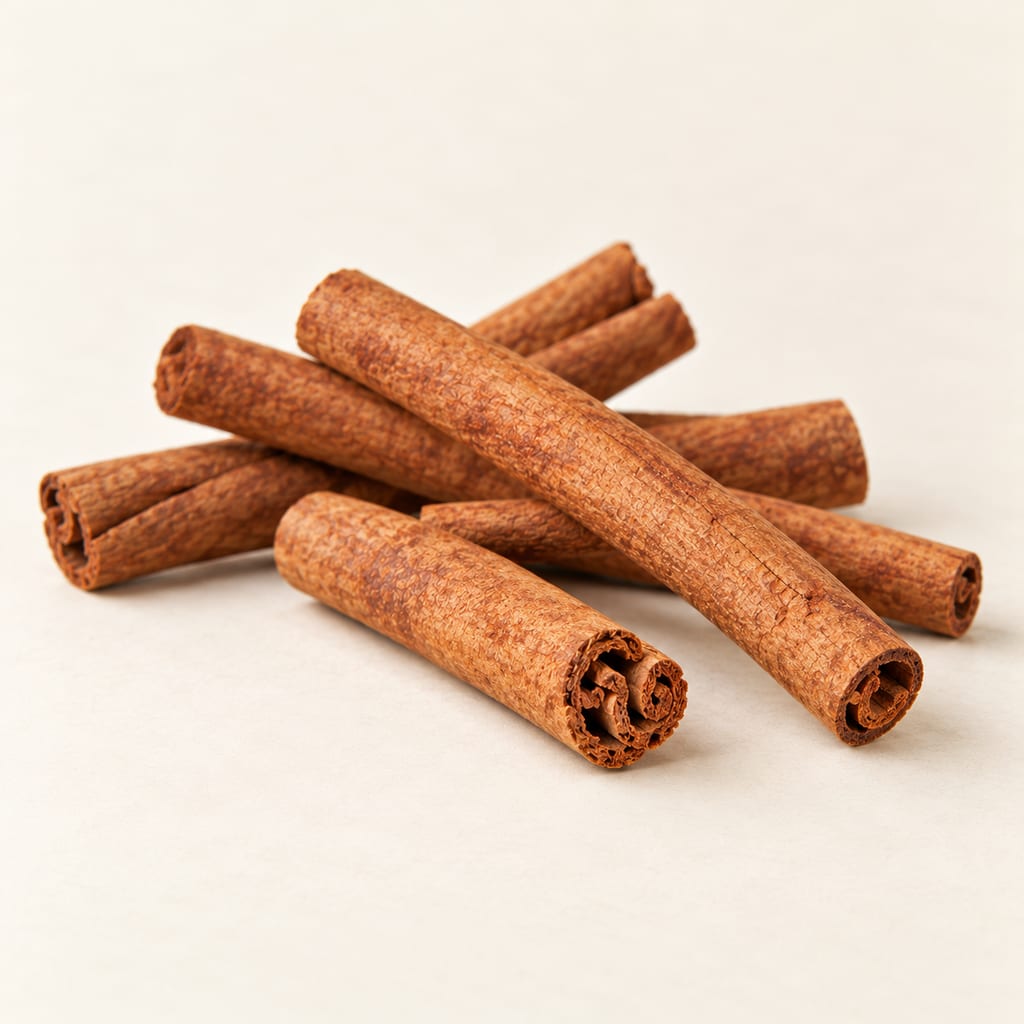
Cinnamon sticks are dried inner bark curled or layered into quills. The common name covers several Cinnamomum species; whole bark perfumes food and drink.
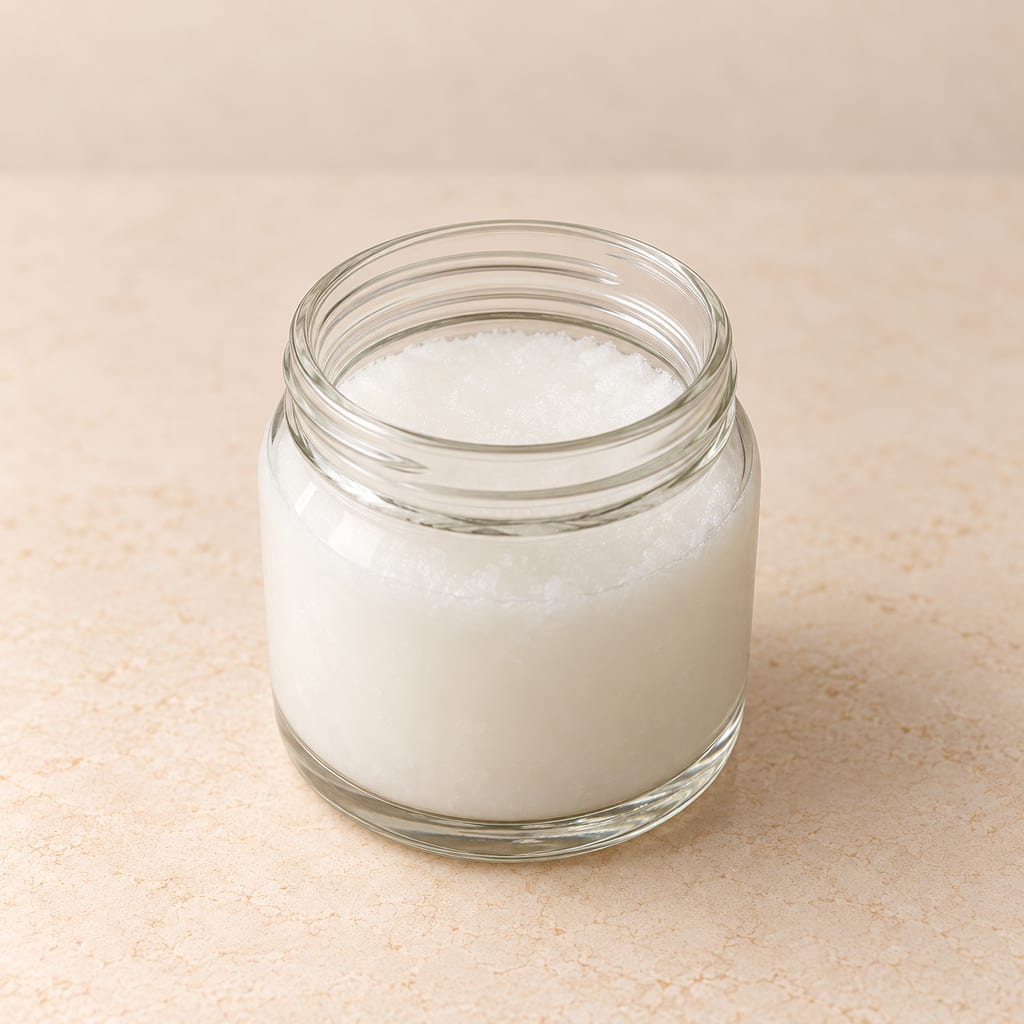
Fat pressed or separated from the kernel of a mature coconut: solid below about 25 °C, mostly saturated and half lauric acid, sold virgin, refined or hydrogenated.
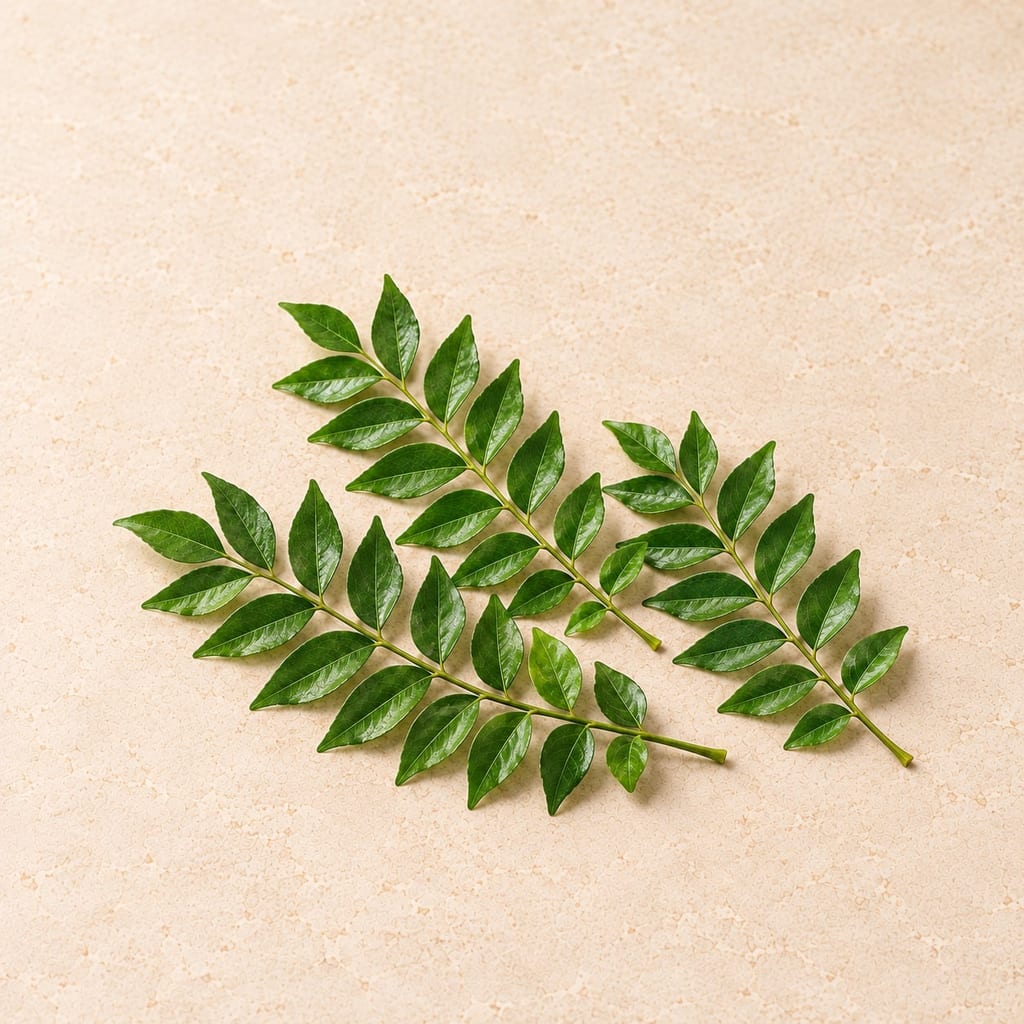
Curry leaves are the glossy compound leaves of the curry tree, Bergera koenigii, used fresh across southern India and Sri Lanka. Fried in hot oil they give a citrusy, nutty, faintly smoky note.
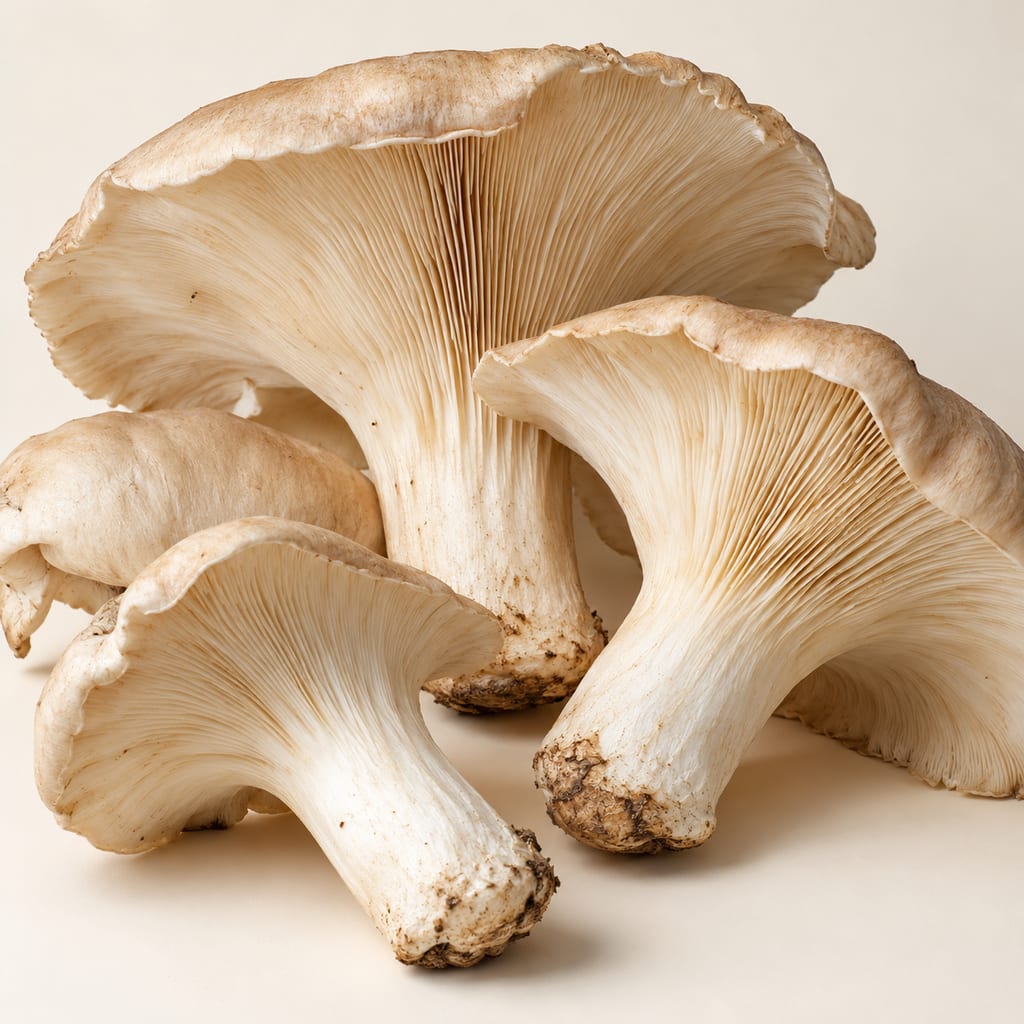
The giant oyster, Pleurotus giganteus, is a large tropical wild mushroom that was once named Lentinus giganteus and is now placed in the oyster genus, eaten in Thailand and Sri Lanka and only recently grown on purpose.
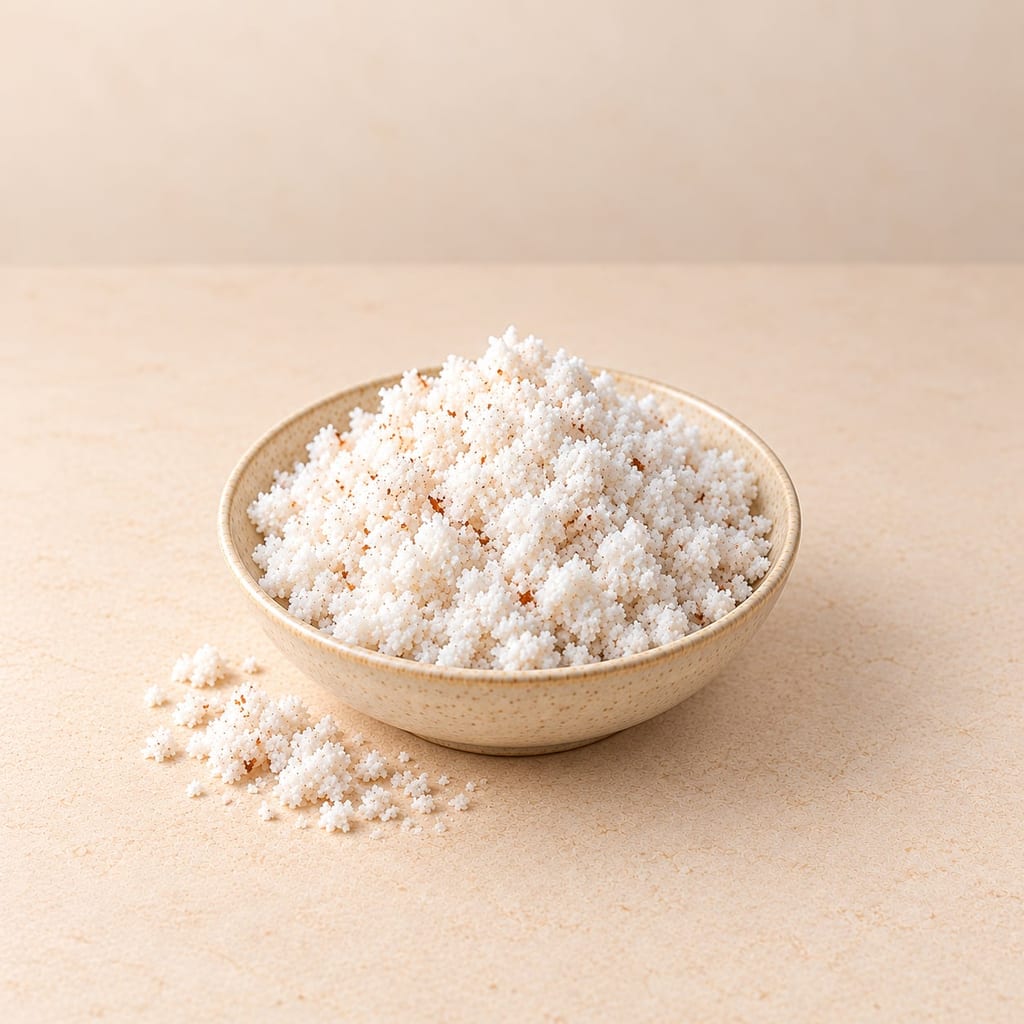
The shredded white kernel of a mature coconut, used fresh or thawed from frozen in sambols and chutneys; its lauric-acid fat is rich and the moist meat is perishable.
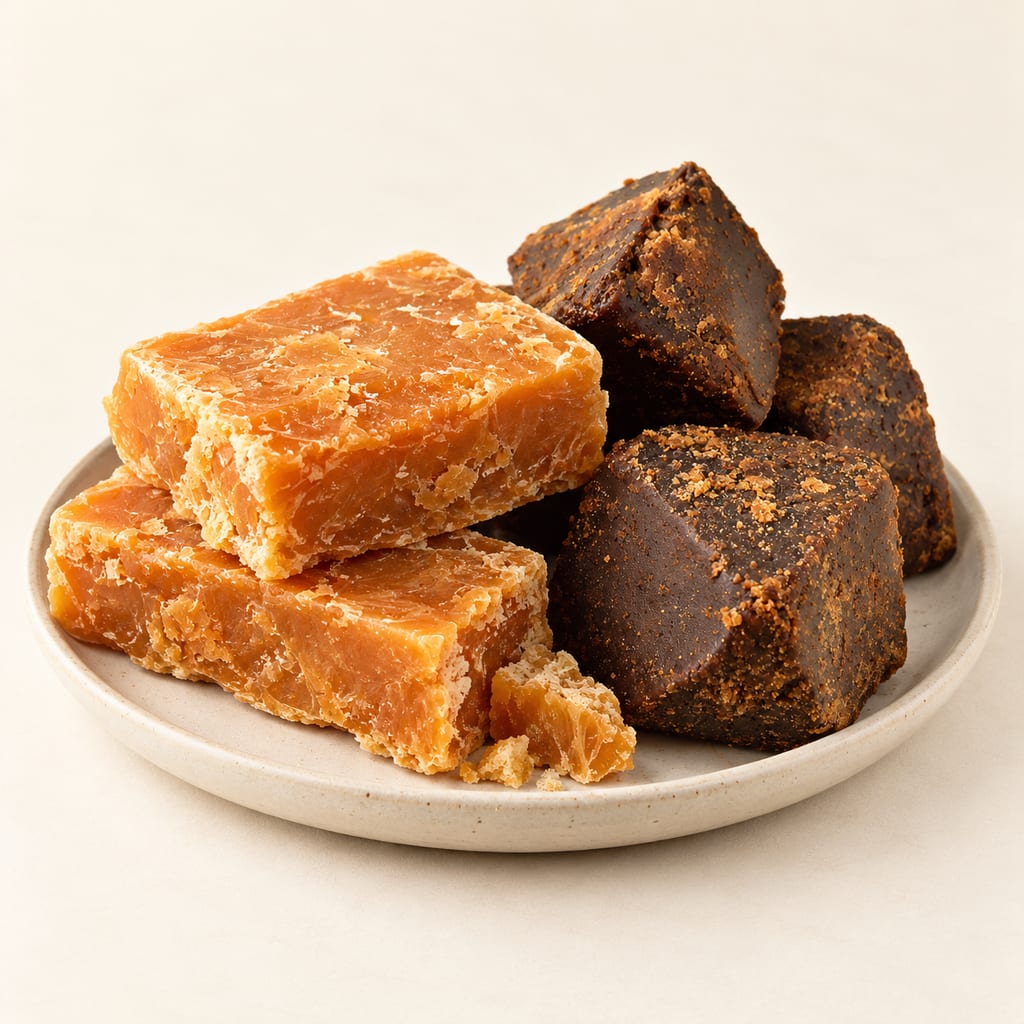
Jaggery is a family of concentrated, non-centrifugal sweeteners made from cane juice or palm sap. Plant source and form shape its flavour and use.
No community contributions have been published for this entry yet.
Sign in to contribute. Published comments and photos are free to read.
Wikimedia CommonsEditorial
2014 Dried chilli flakes.jpgPhotograph shows coarse dried chilli flakes in a saucer; page caption identifies Thai phrik pon use and provenance as uploader's own work
Cited in: A form suited to seasoning
Global Food History, Taylor & FrancisEditorial
Colonizing Condiments: Culinary Experimentation and the Politics of Disgust in Early Modern BritainHistorical discussion of Capsicum in early modern British condiments
Early modern names and reception show origin confusion
Cited in: An American fruit crosses the Indian Ocean
Annual Review of Food Science and Technology, Annual ReviewsEditorial
Microbiological Safety of Dried SpicesPathogens can survive desiccated spice conditions
Reviews spice-associated outbreaks, recalls and interventions
Cited in: Dry spices and microbial context
Hector Kobbekaduwa Agrarian Research and Training Institute, Sri LankaEditorial
Research Report No. 235, chapter 11: ChiliContemporary crop and meal context in Sri Lanka
Reports decline in dried chilli production and continuing green chilli production in traditional districts
Cited in: An American fruit crosses the Indian Ocean
Foods / MDPI (PubMed Central full text)Editorial
Alterations in physico-chemical properties, microstructure, sensory characteristics, and volatile compounds of red pepper (Capsicum annuum var. conoides) during various thermal drying durationsStudy reports process-related changes in capsaicinoids and volatile compounds under tested thermal drying durations
Cited in: Drying and breaking are physical changes
University of Kentucky Cooperative Extension, CCD-CP-101Editorial
Hot Peppers and Specialty Sweet PeppersCapsaicin causes most chilli pungency
Capsaicin concentrated in fruit cross walls and around developing seeds
Genetics and environment influence pungency
Cited in: Drying and breaking are physical changes
Murdoch Books (publisher sample hosted by Booktopia)Editorial
Serendip: My Sri Lankan JourneyRecipe appears under “Chutneys, sambals and pickles” in the sample
1 teaspoon dried chilli flakes and 400 g caster sugar
500 ml white vinegar; two 1-litre jars; cool-dark rest at least two weeks; curry and tomato-chutney serving suggestions
Cited in: In Kuruvita’s lime pickle; A form suited to seasoning
Codex Alimentarius Commission, FAO/WHOEditorial
Code of Practice for the Prevention and Reduction of Mycotoxins in Spices (CXC 78-2017)General mycotoxin prevention guidance across spice production and supply chain
Cited in: Dry spices and microbial context
Australian Gourmet Traveller / Are MediaEditorial
Peter Kuruvita’s lime pickleRecipe author/context: Peter Kuruvita, Flying Fish
1 tsp dried chilli flakes
20 limes, 250 g rock salt, 1/2 tsp black peppercorns, 500 ml white vinegar, 500 g caster sugar
Two litre yield, lime-slitting and stuffing, simmering, cooling, jar rest at least two weeks, curry accompaniment
Cited in: In Kuruvita’s lime pickle; A form suited to seasoning
Brazilian Archives of Biology and Technology, SciELOEditorial
Microbiological Quality and Safety of Some Dried Spices Obtained from Markets, Spice Shops and HomesStudy sampled 54 samples across six dried spices including red pepper flakes
Reports several microbial groups and Salmonella in tested samples
Cited in: Dry spices and microbial context