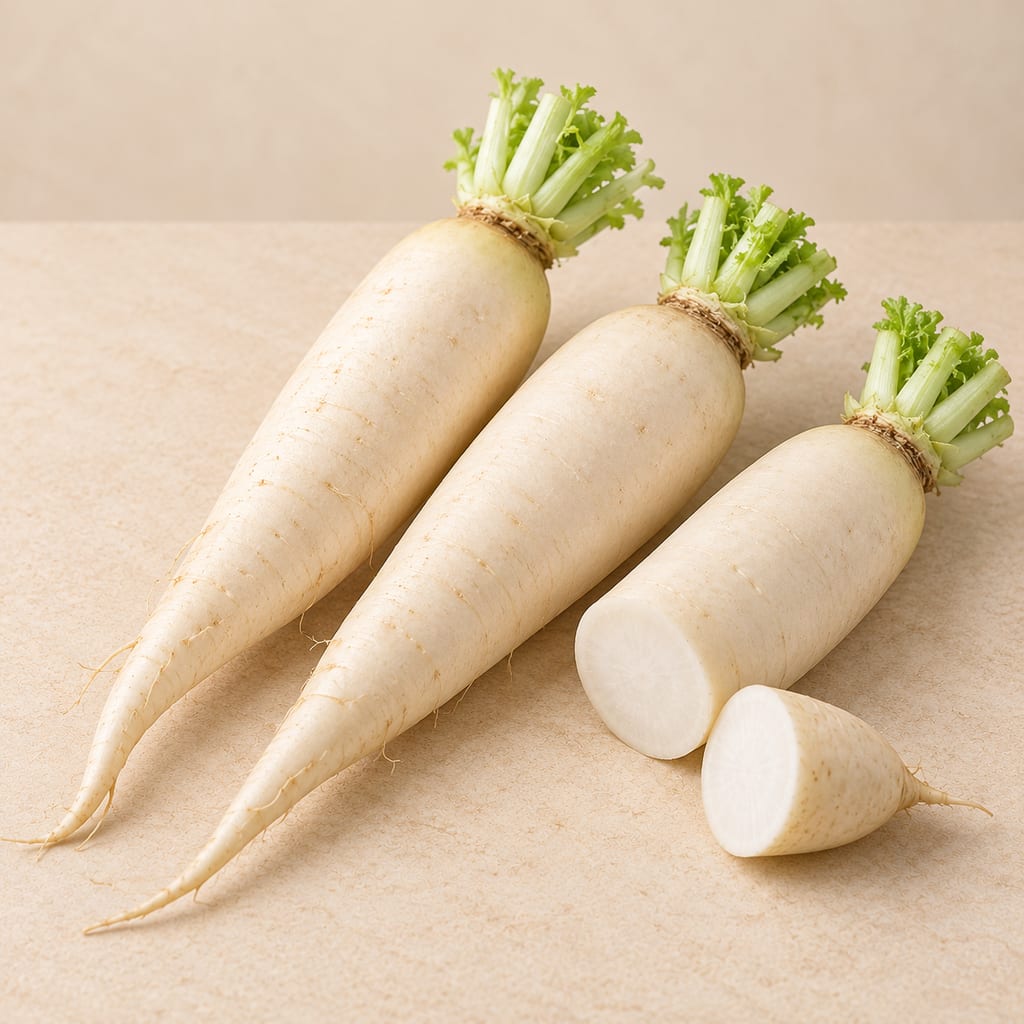
Radish and daikon
Radish and daikon are the crisp, peppery roots, leaves and seed pods of Raphanus sativus, fermented as kimchi, takuan and sinki and eaten raw across Asia and Europe.
 FermenteaWhere food goes to change
Traditional method
나박김치 (nabak-kimchi)
Napa cabbage and radish ferment in a rose-coloured broth with cucumber, apple, pear, alliums and chile.
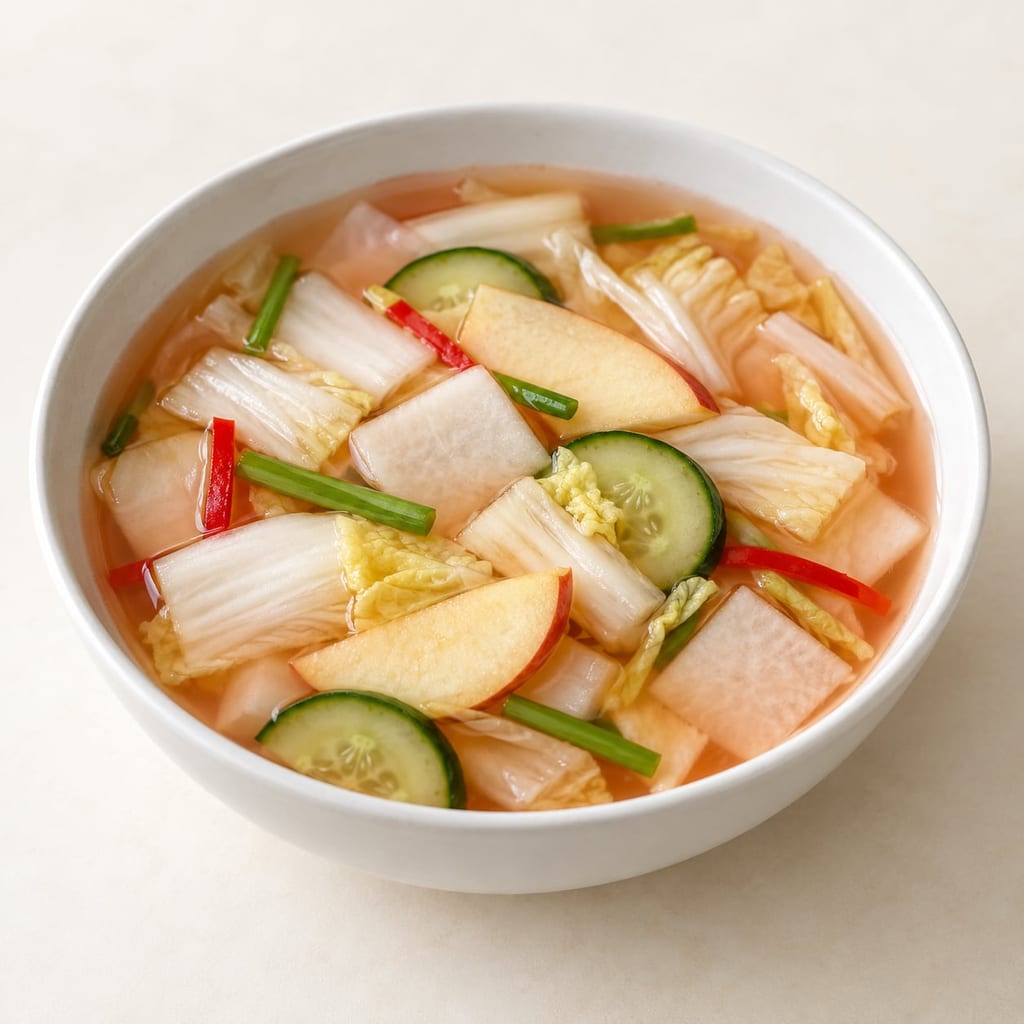
Nabak-kimchi is a Korean water kimchi made from thin pieces of vegetables and fruit in a lightly spicy, pink or rose-coloured broth.
It belongs to the same broad water-kimchi family as dongchimi, but it is not simply dongchimi with additional ingredients.
Dongchimi frequently emphasises whole or substantial pieces of radish and a relatively clear broth.
Nabak-kimchi uses smaller, thinly cut vegetables with a more colourful liquid.
The recipe combines napa cabbage, Korean radish, cucumber, apple, pear, onion, garlic, ginger and chilli.
The resulting dish is crisp, sweet, sour and refreshing, with some heat but not the dense seasoning paste of conventional red cabbage kimchi.
Both the solids and the liquid are eaten.
The broth is an essential part of the dish rather than a liquid used merely to preserve vegetables.
Nabak refers to the style of cutting vegetables into thin, relatively flat pieces.
That cutting style distinguishes the dish from whole-radish water kimchi and heavily stuffed cabbage preparations.
The dish belongs to Korean food culture and can accompany rice, porridge and rice cakes.
It is not restricted to a single modern regional restaurant or a particular festival.
The documented preparation is associated with seasonal vegetable availability, particularly cabbage and radish during cooler harvesting periods.
The exact date when this form of kimchi first appeared is not established in the supplied research.
It would therefore be inappropriate to describe the present formula as identical to a named premodern court recipe.
Napa cabbage — 3 lb
Korean radish — 1 lb
English cucumber — 1
Onion — ½ cup, sliced
Green onions — 5
Green chillies — 2
Red chilli — 1
Sweet apple — 1
Korean pear — 1 large, approximately 2 cups
Red radishes — 3, optional
Garlic — 3 cloves
Ginger — 1 tablespoon
Water for cabbage — 3 cups
Salt for cabbage — 3 tablespoons
Salt for radish — 1 teaspoon
Cold water — 10 cups
Korean chilli flakes, gochugaru — 2 tablespoons
The recorded method does not provide a finished total volume or drained weight.
The substantial quantity of vegetables and liquid requires a suitably large food-grade container or several smaller jars.
Napa cabbage contributes tender leaves and crisp white ribs.
Korean radish provides a firm, peppery vegetable component.
Cucumber supplies fresh flavour and a softer texture that changes relatively quickly during storage.
Apple and Korean pear provide sweetness, fragrance and soluble sugars.
Onion and green onion add savoury allium notes.
Garlic and ginger provide aromatic compounds characteristic of many Korean ferments.
Green and red chillies contribute heat and fresh pepper flavour.
Gochugaru gives the broth its warm pink or red tint.
The spice is held in a pouch and squeezed into the liquid rather than leaving all the solid pepper flakes in the finished dish.
Salt controls the initial treatment of the vegetables and influences the subsequent microbial environment.
Cut the napa cabbage lengthwise into quarters.
Remove the stem ends.
Cut the quarters crosswise into pieces approximately 1½ inches across.
Place in a large basin.
The relatively small, flat pieces distinguish this recipe from a stuffed quarter-cabbage kimchi.
Add 3 cups water and 3 tablespoons salt.
Mix gently.
Leave for 30 minutes.
Turn the cabbage and leave for another 30 minutes.
The total initial cabbage-salting period is therefore 1 hour.
This draws out some moisture and begins softening the vegetable tissues.
Peel the Korean radish.
Cut into thin, bite-sized pieces.
Mix with 1 teaspoon kosher salt.
Leave for 1 hour.
Unlike the cabbage, the radish and its accumulated liquid are retained together in the documented method.
This distinction should not be lost when converting the recipe into structured preparation steps.
Rinse the cabbage in cold water.
Change the water as necessary to remove excess surface salt and remaining dirt.
Drain thoroughly.
Transfer to a large clean basin.
Cut the cucumber into approximately ¼-inch slices.
Slice the onion.
Cut green onions into approximately 1½-inch pieces.
Slice the green and red chillies.
Core and slice the apple.
Peel, core and slice the Korean pear.
Cut the garlic into thin slices.
Slice the ginger.
Prepare optional red radishes.
The aim is a mixture of relatively thin, recognisable vegetable and fruit pieces.
Add the salted radish and its liquid to the cabbage.
Add the cucumber, onion, green onion, chillies, apple, pear, garlic and ginger.
Mix gently.
The ingredients should remain structurally intact rather than being crushed.
Place 2 tablespoons gochugaru in cheesecloth.
Tie securely.
Immerse the pouch in the water and squeeze repeatedly until the liquid becomes pink.
Remove the pouch.
This produces a coloured, seasoned liquid without retaining all the chilli-powder solids.
Pour the pink broth over the prepared fruit and vegetables.
Transfer the mixture to suitable fermentation containers.
Press the solids gently so they are covered by liquid.
Avoid unnecessary crushing of the fruit.
Use appropriate closures that accommodate fermentation gas.
The documented recipe permits immediate serving as a fresh water kimchi.
For a sourer fermented version, leave the mixture at room temperature for 1–2 days.
No numeric temperature range is supplied.
The broth may develop mild acidity and slight effervescence.
These signs are not a substitute for safety assessment.
Refrigerate once fermentation has developed appropriately.
Serve cold in individual bowls or a shared serving bowl.
The original recipe recommends consuming the finished product relatively soon because fruit and cucumber soften.
Its culinary guidance describes eating the refrigerated kimchi within approximately one to two weeks.
This is not a laboratory-validated shelf-life determination.
In a conventional thickly seasoned red kimchi, chilli flakes and other seasonings coat the vegetable surfaces.
Nabak-kimchi places the vegetables in a comparatively large quantity of seasoned water.
The broth becomes a principal vehicle for acidity and flavour.
Organic acids produced during fermentation dissolve into the liquid.
Soluble sugars and aromatic substances from the fruit and vegetables also enter it.
This produces a highly drinkable savoury-sour liquid rather than a thick coating of seasoning paste.
The size and shape of the vegetable pieces influence the rate at which compounds move between the solids and the liquid.
Thin radish pieces exchange salt and flavour more quickly than whole radishes.
Lactic-acid bacteria associated with cabbage, radish, garlic and other raw ingredients can metabolise soluble carbohydrates.
Common groups involved in Korean kimchi fermentations include Leuconostoc, Weissella and Lactobacillus sensu lato.
The actual community changes during fermentation.
Some organisms perform heterofermentative metabolism, generating products such as lactate, acetate, carbon dioxide, ethanol or mannitol.
Other organisms produce predominantly lactic acid.
The balance affects flavour, sourness and gas production.
The fruits contribute sugars that can influence microbial growth.
However, their presence does not guarantee faster or safer fermentation.
The process depends on all the ingredients and conditions.
Apple and pear are pleasant additions because they provide fresh aroma and sweetness.
They also soften during storage.
Their cut surfaces contain exposed plant tissue and enzymes capable of continuing chemical changes.
Their sugars can be metabolised by microorganisms.
Cucumber has a high water content and a texture that can become soft relatively quickly.
These ingredients make nabak-kimchi different from long-aged kimchi intended for prolonged fermentation.
The ideal culinary endpoint is often relatively fresh and crisp.
A jar that continues fermenting for a long period may lose the qualities that make this particular dish attractive.
Gochugaru contains red pigments, principally carotenoid compounds, that contribute to chilli colour.
The pouch method transfers fine coloured material and soluble flavour into the liquid while retaining much of the solid powder.
The resulting broth may vary from pale pink to a more pronounced orange-red depending on the chilli product and preparation.
This colour is not a pH indicator.
A red or pink broth is not evidence that the mixture has reached a safe acidity.
The optional red radishes can also contribute colour.
The two products belong to the water-kimchi family but differ significantly.
Dongchimi often uses whole radishes and a preliminary refrigerated salting stage.
Nabak-kimchi uses thinly cut cabbage and radish, plus a broader mixture of fruit and vegetables.
Dongchimi tends to have a clear, lightly seasoned broth.
Nabak-kimchi is recognisable by its pink liquid and mixed ingredients.
Their different preparation methods influence texture, fermentation and intended storage.
They should remain separate records in the Fermentea database.
Serve nabak-kimchi cold with steamed rice.
It is also suitable alongside Korean rice cakes, porridge and steamed sweet potatoes.
The broth can provide a refreshing contrast to rich dishes.
The vegetables may be eaten with chopsticks while the liquid is spooned separately.
Because the product contains fruit, its flavour may be noticeably sweeter than other vegetable kimchi preparations.
The acidity should balance that sweetness.
Do not discard the liquid unless a particular recipe specifically requires only the vegetables.
The fruit becomes soft: Common during longer storage and one reason this kimchi is best eaten relatively young.
The broth becomes cloudy: Can occur during fermentation.
Colour is paler than expected: Chilli variety and the amount of colour extracted from the pouch affect appearance.
Vegetables float: Maintain appropriate coverage and prevent contamination.
Very strong sourness develops: The dish may have fermented beyond its preferred culinary character.
Unpleasant putrid odour, slime or mould: Reject the batch.
No sour flavour after the documented time: Check acidity and conditions instead of assuming the batch is safe.
The recipe's measured salt additions occur at different stages.
These must not be merged into one simplified salt quantity.
No numeric ambient fermentation temperature is supplied.
The original method has not been independently validated as a universal preservation schedule.
Refrigerate after fermentation and use within the source's relatively short culinary storage period, without treating that period as a safety guarantee.
The source names nabak-kimchi as Korean vegetable-and-fruit water kimchi and documents its use with rice, rice cakes and other foods.
Scaling: source batch only
Contaminated equipment or uncontrolled fermentation can compromise the batch; the recipe is not professionally validated.
Hazard sourceUse clean food-grade equipment and follow the source method. Recipe-specific validated limits are not supplied; do not treat taste or appearance as proof of safety.
Control sourceSource names the Korean dish and says it is served as a side dish with rice, rice cakes, porridge or sweet potatoes.
Radish and daikon are the crisp, peppery roots, leaves and seed pods of Raphanus sativus, fermented as kimchi, takuan and sinki and eaten raw across Asia and Europe.
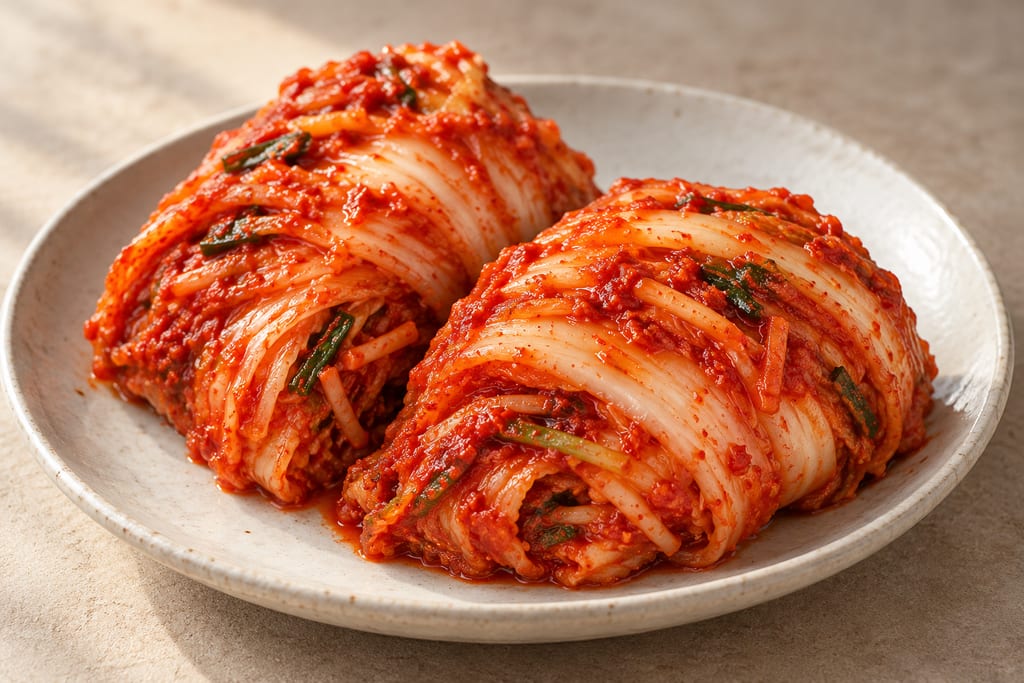
Napa cabbage salted, seasoned with a paste of gochugaru, garlic, ginger and salted seafood, and left to sour through lactic fermentation; Korea's everyday winter preserve.
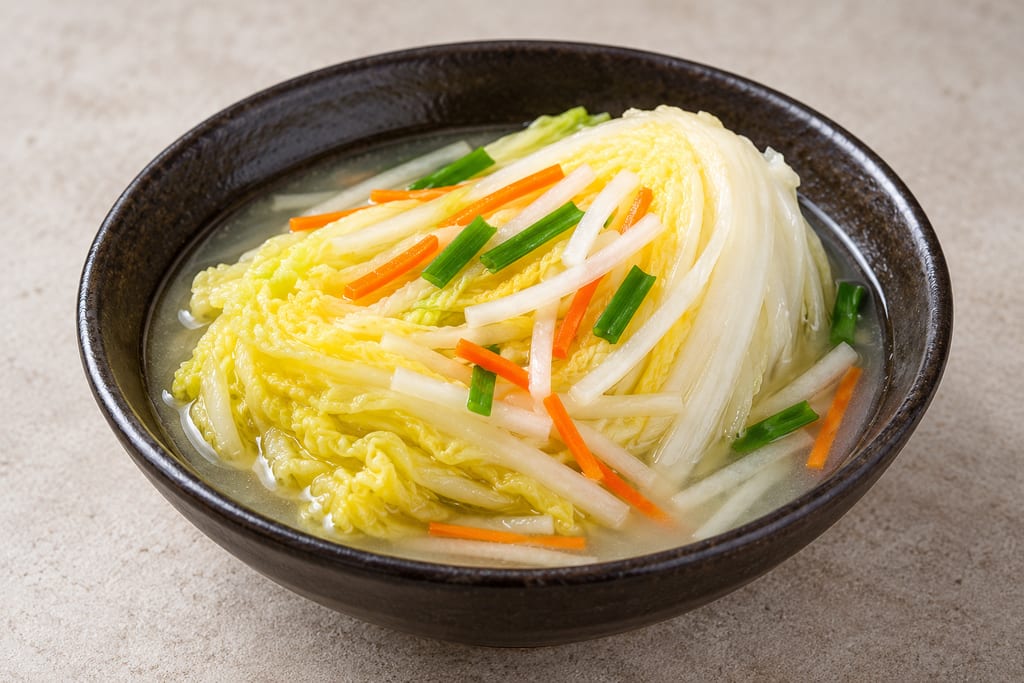
Napa cabbage is brined and filled with pear, radish, alliums, chives and fruit; this Korean kimchi omits red pepper flakes.
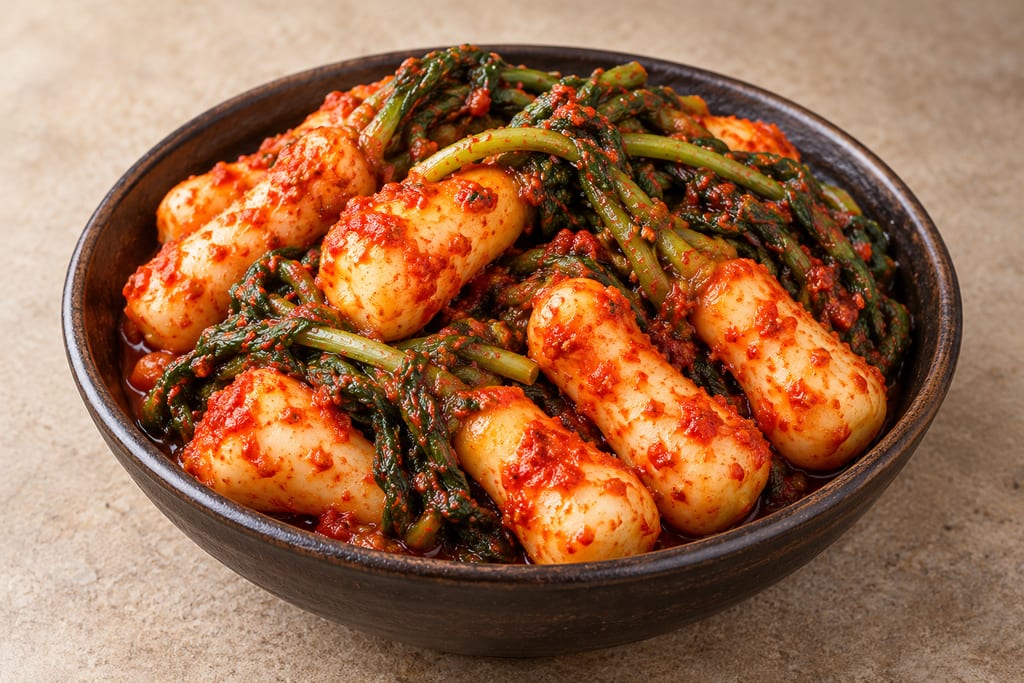
Small ponytail radishes keep their greens attached and ferment in a flour-and-chile seasoning paste.
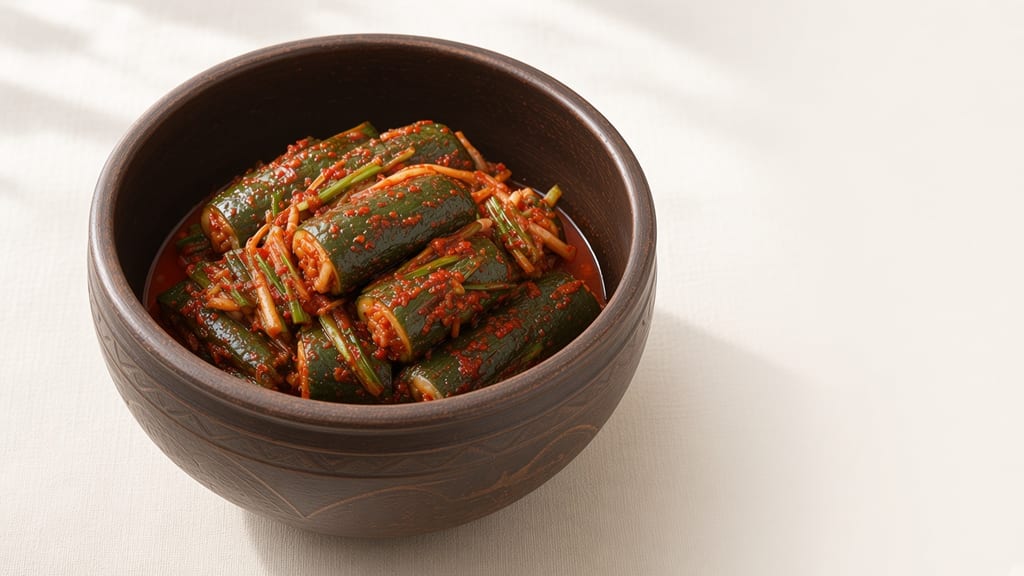
Hwanggwa damjeo is a cucumber kimchi from Yu Jung-rim's Jeungbo sallim gyeongje of 1766. Slit cucumbers are packed with chilli powder and garlic, scalded with hot salted water and sealed overnight.
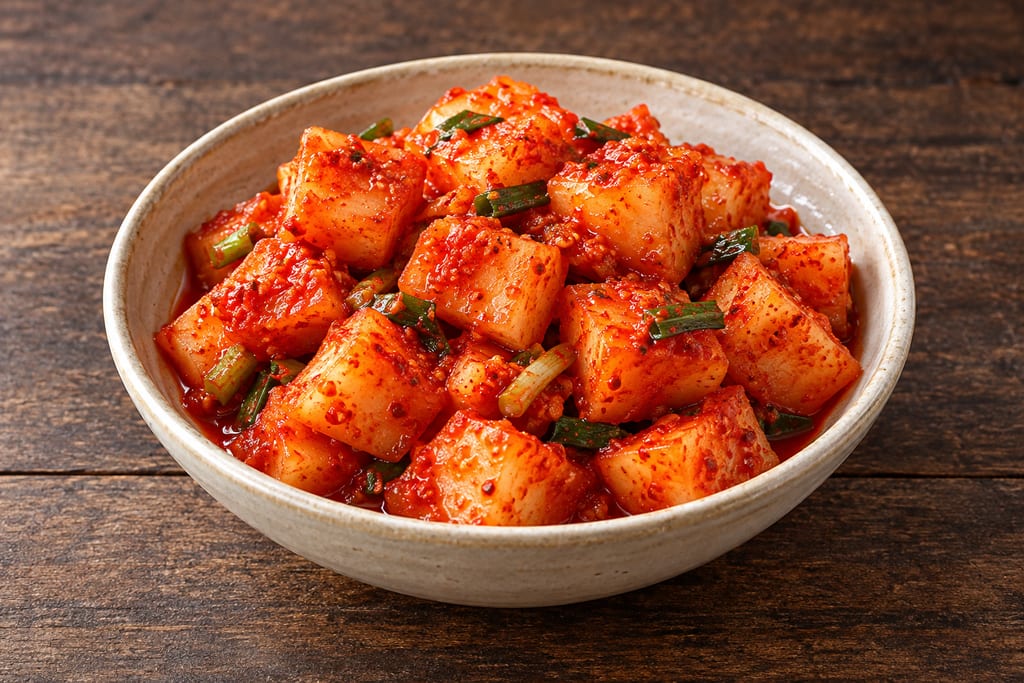
A radish kimchi cut into cubes and seasoned with gochugaru, fish sauce, garlic and ginger, eaten fresh or fermented a few days at room temperature.
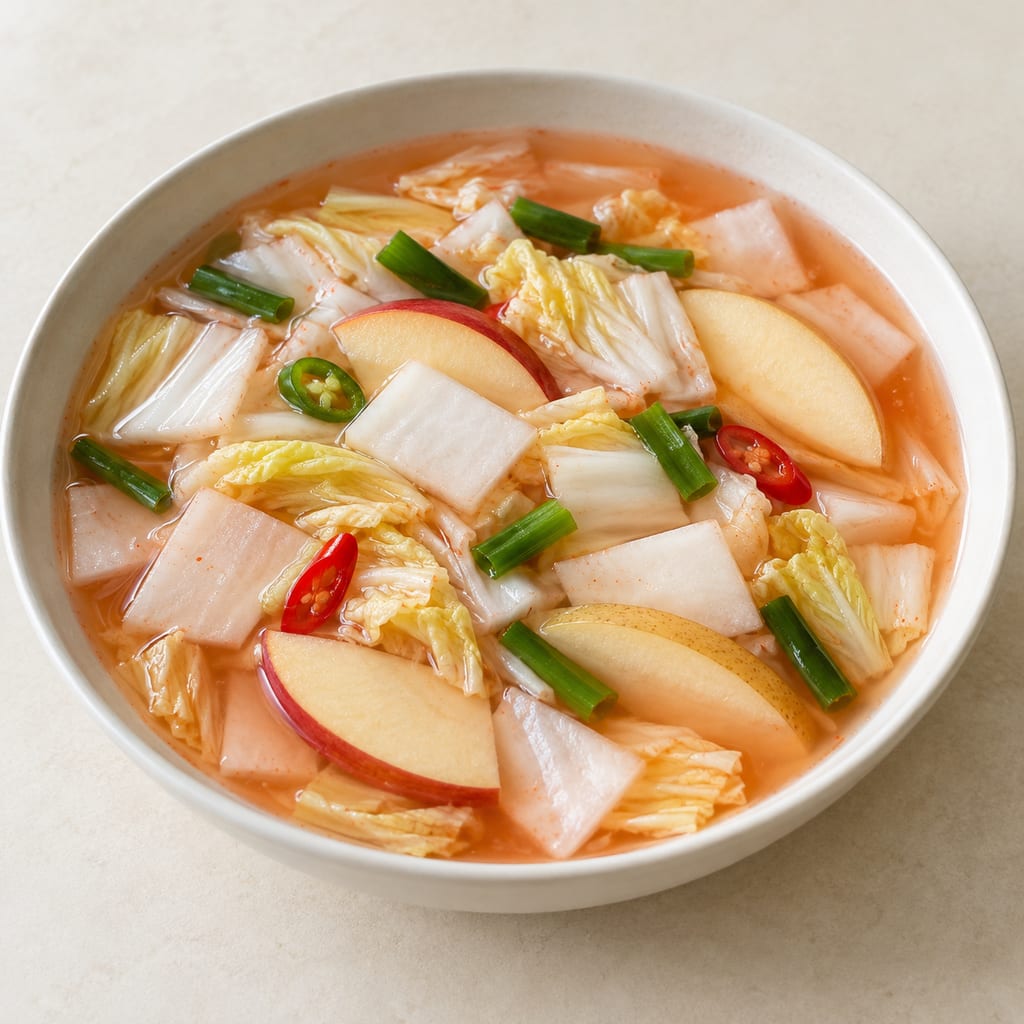
Cabbage-and-radish water kimchi with pear, apple and strained chili broth, following one Korean creator’s batch.
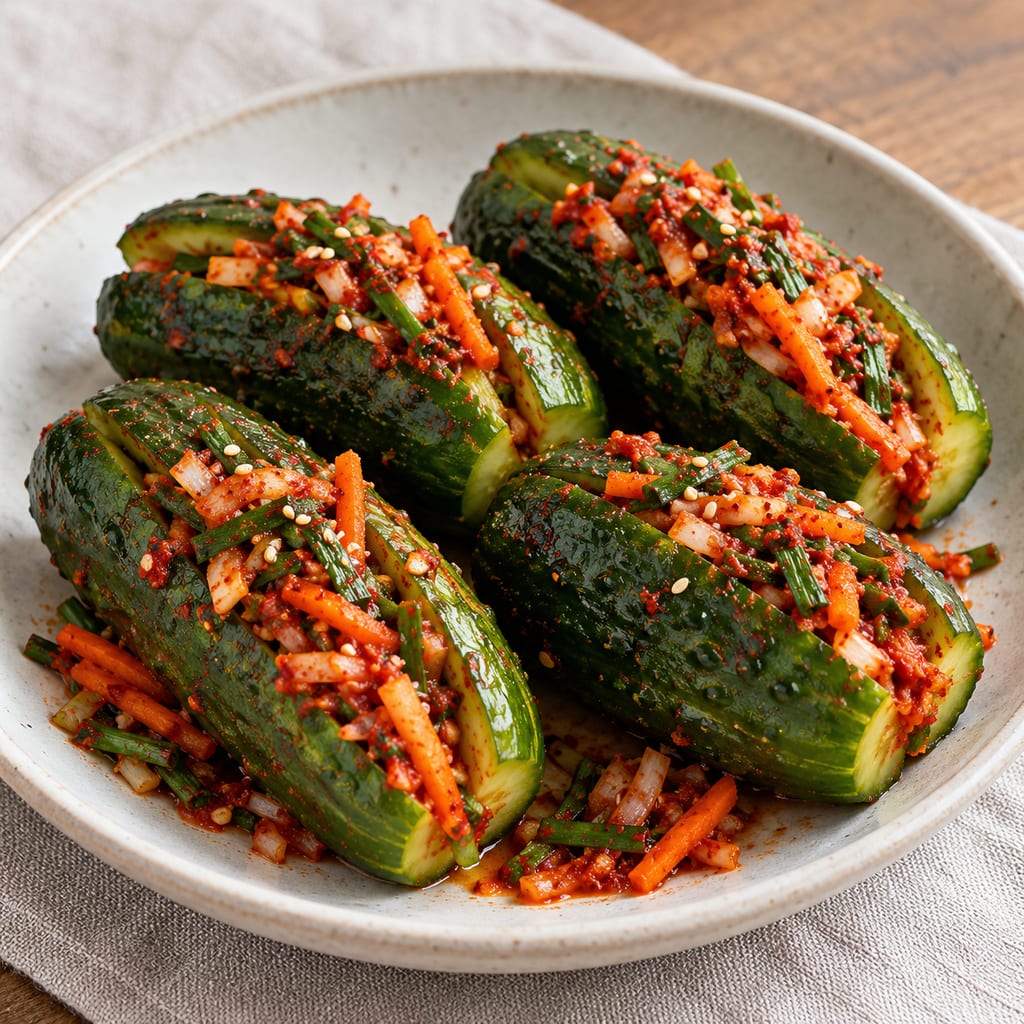
Oi-sobagi is a Korean stuffed cucumber kimchi: salted cucumbers slit and filled with a chive-and-chilli seasoning, eaten fresh or left to ferment.
Kimchi of salted napa cabbage and daikon with garlic, green onion and red pepper, kept at room temperature one to four days, then refrigerated.
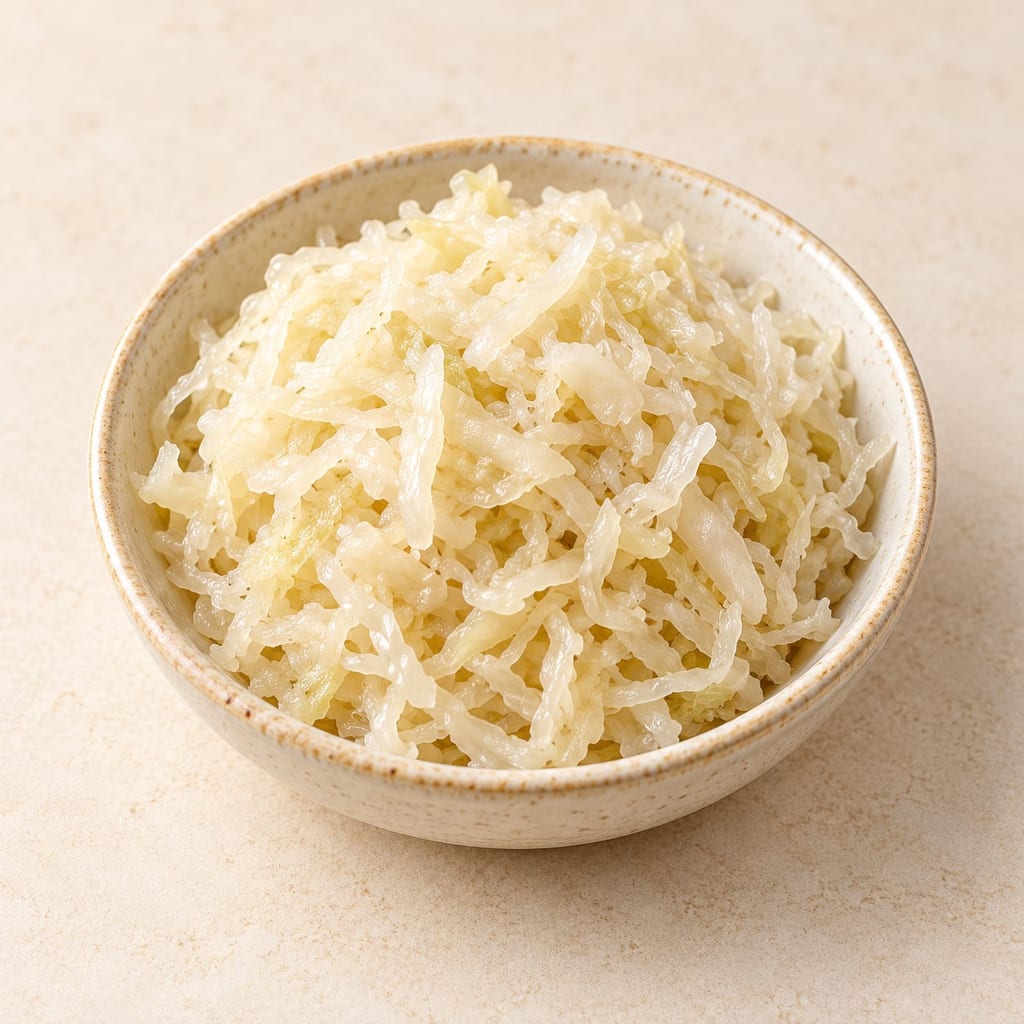
Finely cut cabbage fermented with salt in vats by natural lactic fermentation, a protected Alsatian product sold raw or cooked after fermentation.
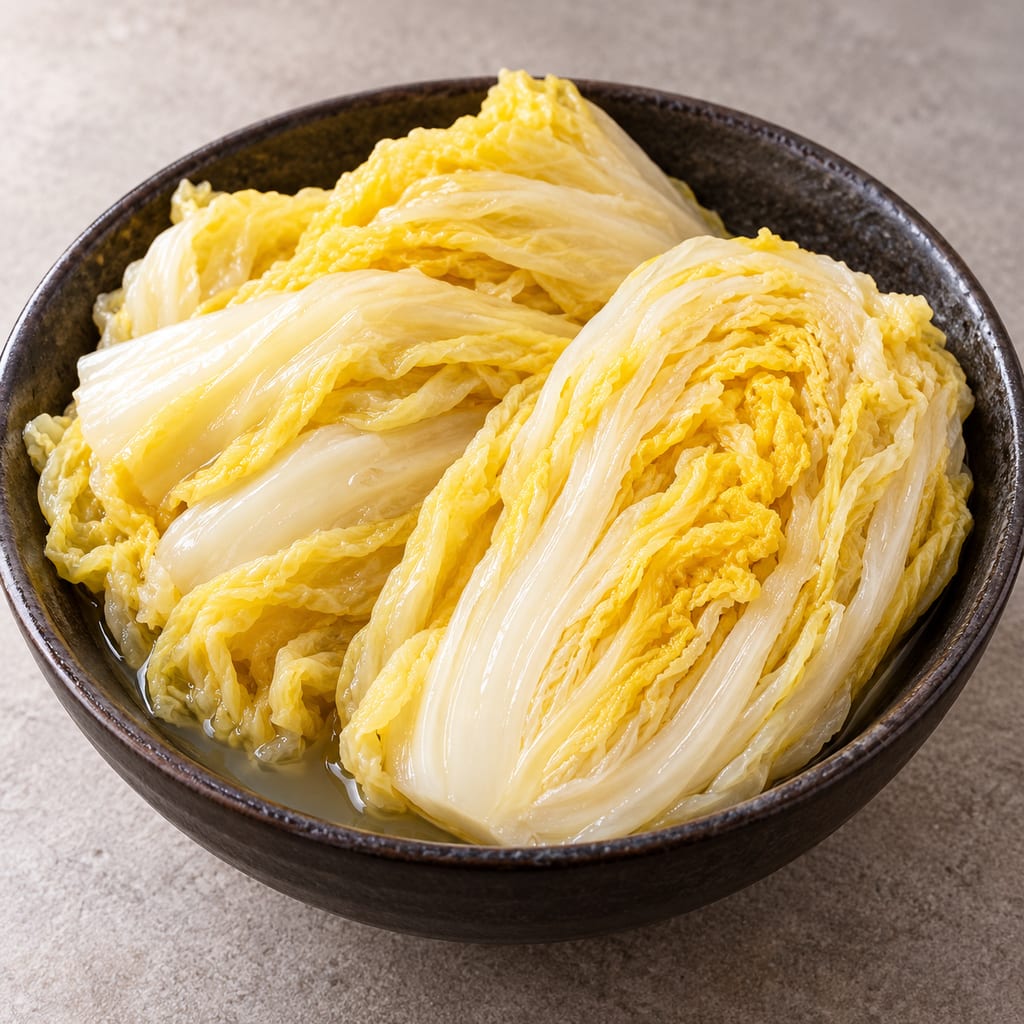
Napa cabbage fermented in a salt brine in Northeast China, traditionally in large ceramic or glass jars, until it turns sour.
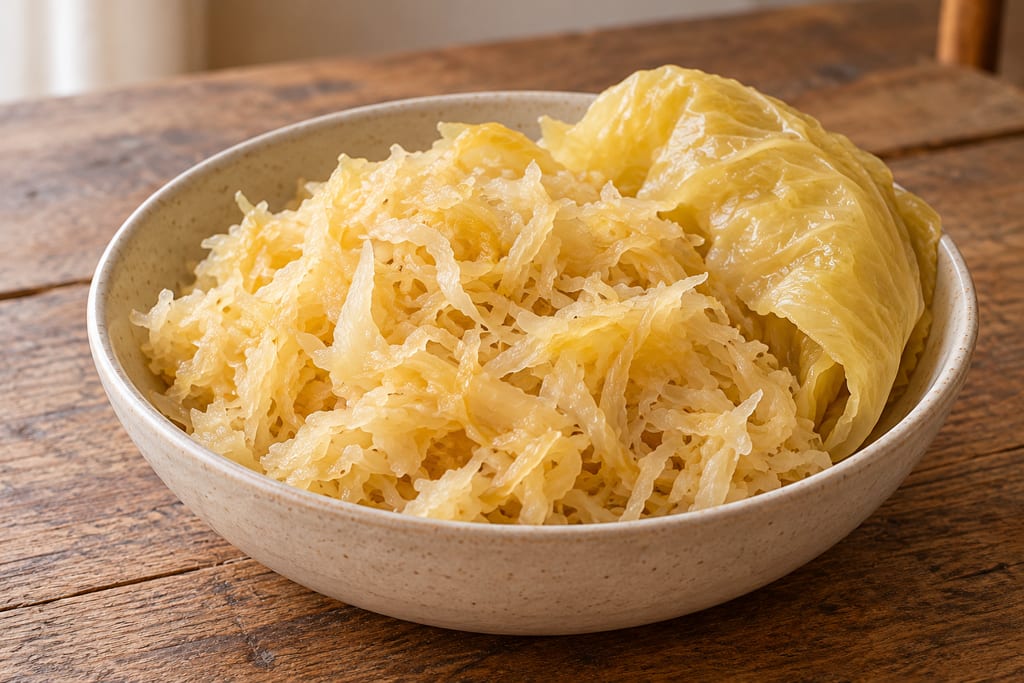
Serbian sour cabbage from the Futog area, made from the autochthonous Futoški cabbage population and registered as a protected product in 2008. It is a subset of general Serbian kiseli kupus.
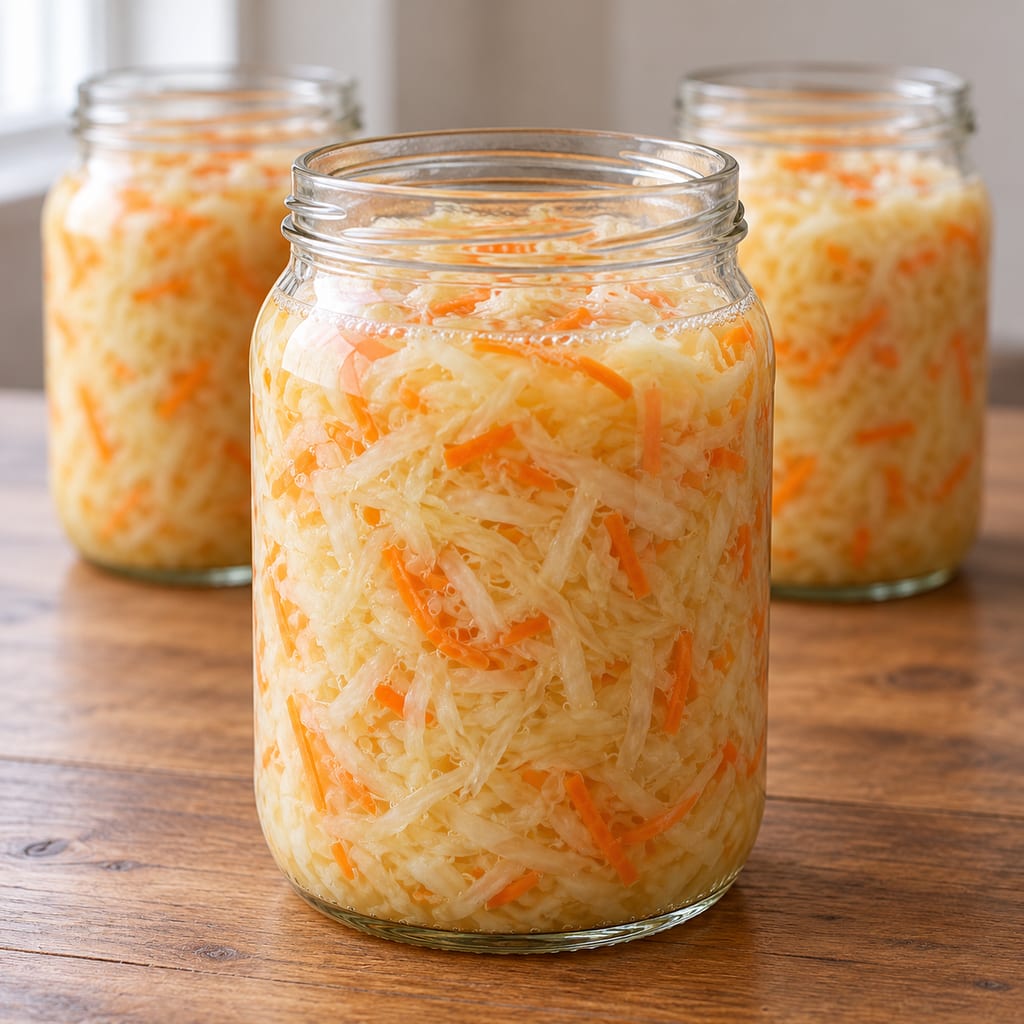
Shredded cabbage and grated carrot are salted to 20 g/kg, rested, packed into three jars and monitored during a creator-reported eight-day fermentation; measured temperature is not given.
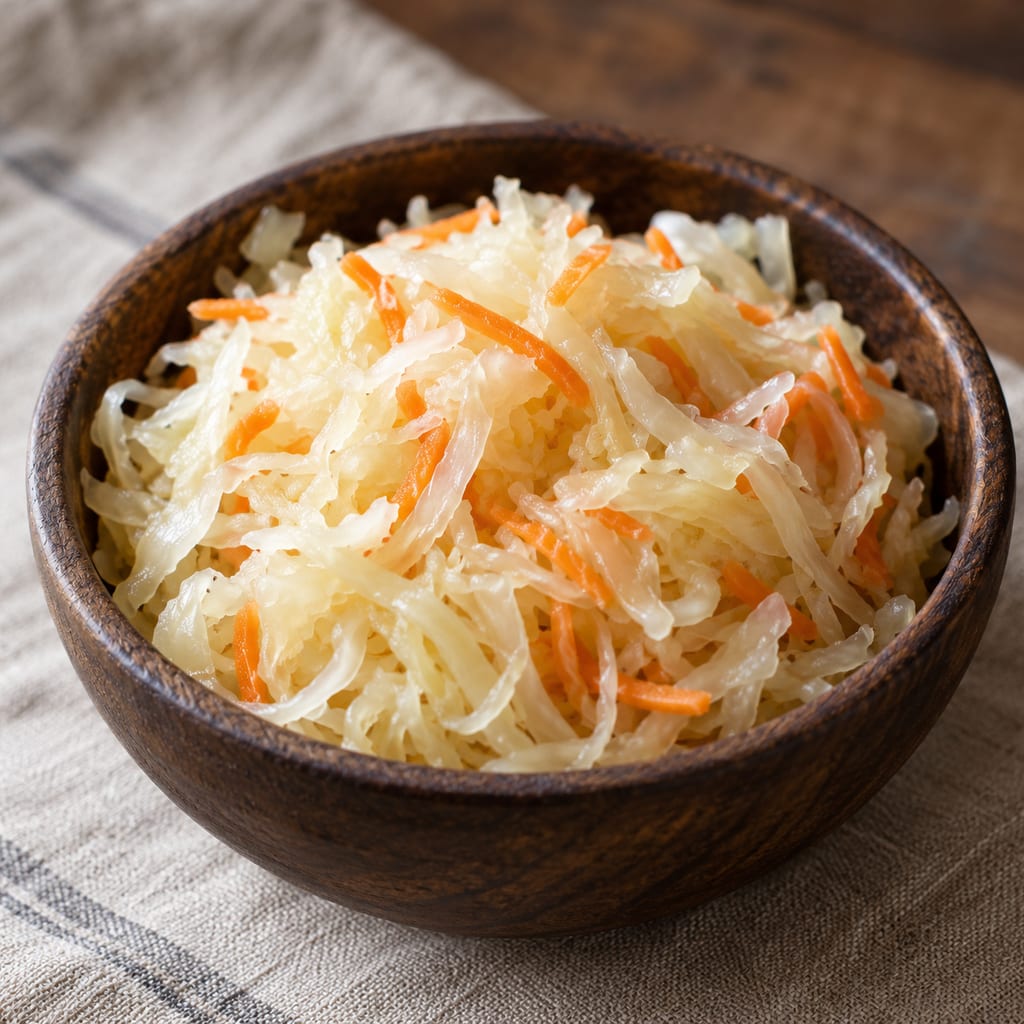
Kapusta kiszona z beczki is barrel-fermented cabbage from the Kołobrzeg area, entered on Poland’s List of Traditional Products in 2008. It is salted and fermented, with raw grated carrot added after souring.
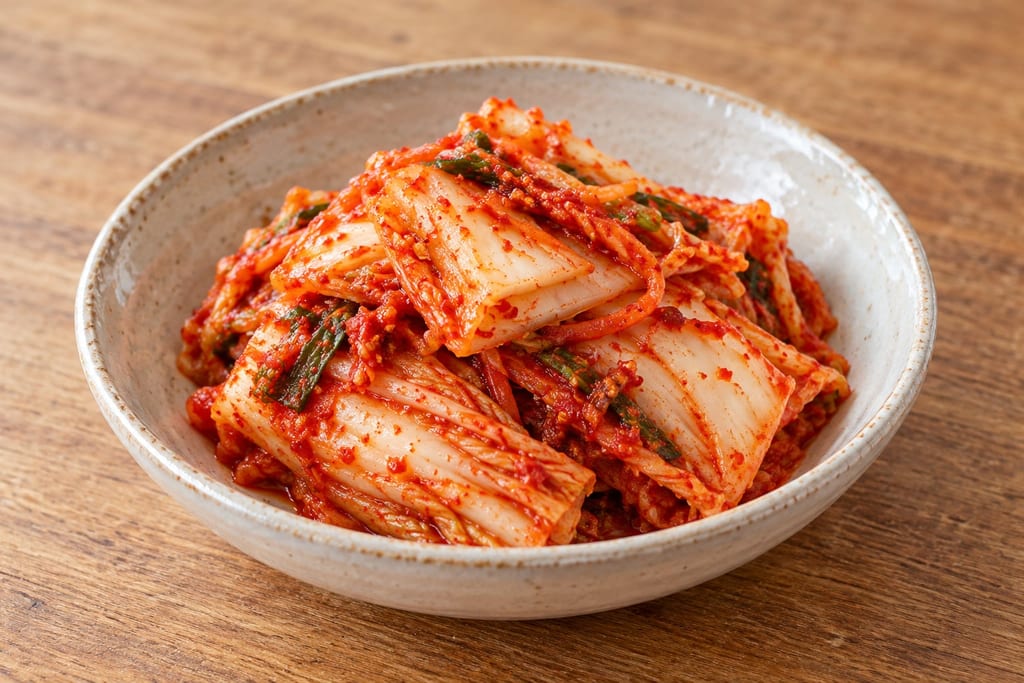
Kimchi is a Korean preserved vegetable food, most often cabbage, salted and seasoned, then fermented by the lactic acid bacteria that arrive with the vegetables. Some studies test added starter cultures, but a home jar is usually spontaneous.
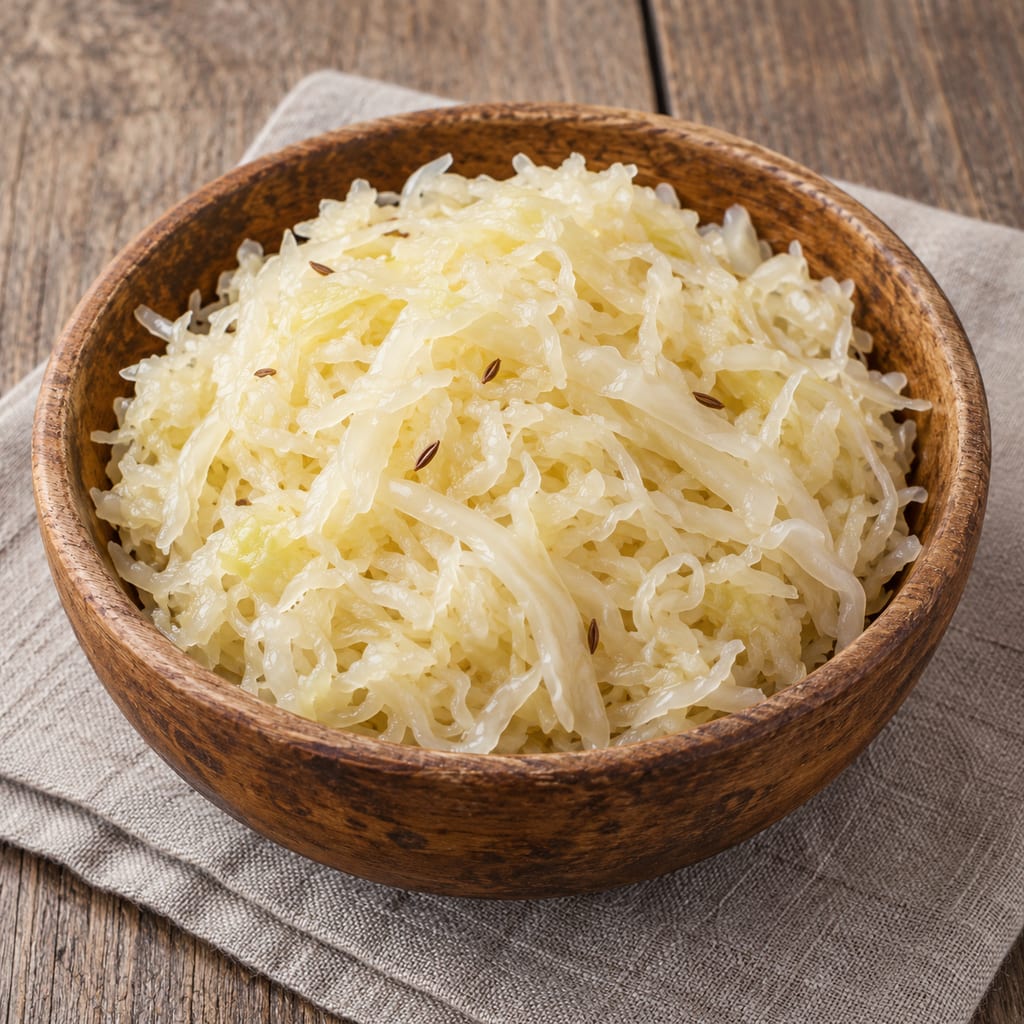
Kysané zeľí is Czech sour cabbage: shredded cabbage layered with salt and caraway and pressed in a wooden barrel. The regional account is descriptive and gives no validated salt ratio or endpoint.
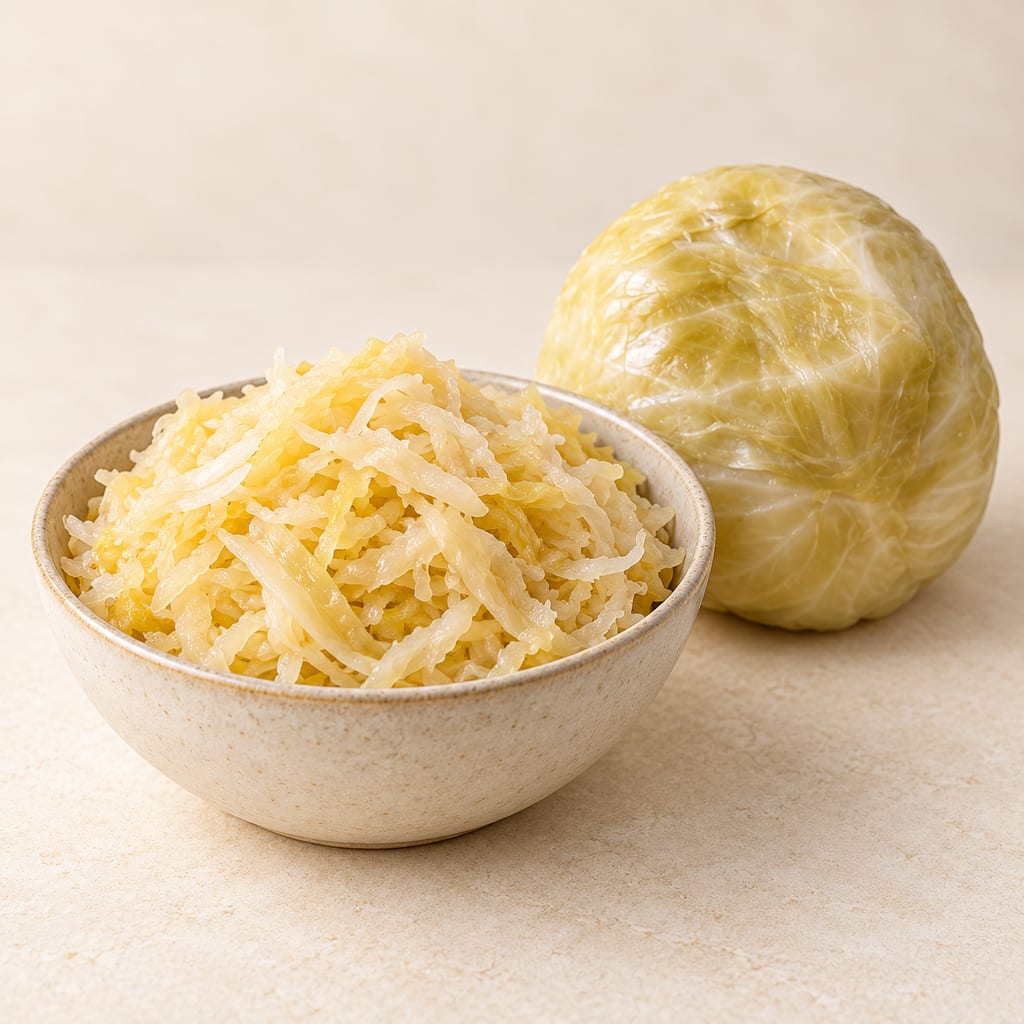
Protected Croatian sauerkraut from the Ogulin area: fresh white cabbage naturally lactic-fermented without preservatives, sold whole or shredded, from registered establishments.
No community contributions have been published for this entry yet.
Sign in to contribute. Published comments and photos are free to read.
MaangchiInspiration · Geography
Nabak-kimchi (Vegetable and Fruit Water Kimchi)Korean dish context; measured ingredient quantities, two salting stages, pink brine and fermentation duration.
Cited in: What is nabak-kimchi?; The name and its context; Main vegetables and fruit; Initial salting; Main broth; Ingredient choices and their purpose; Stage 1 — Cut the cabbage; Stage 2 — Salt the cabbage; Stage 3 — Salt the radish; Stage 4 — Rinse the cabbage; Stage 5 — Prepare the remaining vegetables; Stage 6 — Combine the ingredients; Stage 7 — Make the pink broth; Stage 8 — Pack; Stage 9 — Ferment; Stage 10 — Refrigerate and serve; What makes this a water kimchi?; Why fruit changes the storage life; Why the broth is pink; Nabak-kimchi versus dongchimi; Serving suggestions
University of Minnesota ExtensionSafety
Preserving food at home: FermentationGeneral advice on equipment, brine coverage and acidity monitoring; not validation of this recipe.
Cited in: Initial salting; Main broth; Ingredient choices and their purpose; Stage 1 — Cut the cabbage; Stage 2 — Salt the cabbage; Stage 3 — Salt the radish; Stage 4 — Rinse the cabbage; Stage 5 — Prepare the remaining vegetables; Stage 6 — Combine the ingredients; Stage 7 — Make the pink broth; Stage 8 — Pack; Stage 9 — Ferment; Stage 10 — Refrigerate and serve; Why fruit changes the storage life; Why the broth is pink; Serving suggestions; Troubleshooting; Safety
pmc.ncbi.nlm.nih.govReference
Kimchi Fermentation MicrobiologyCited by the written account of this record.
Cited in: Fermentation microbiology; Why fruit changes the storage life; Why the broth is pink
pubmed.ncbi.nlm.nih.govReference
Microbial Origins in Kimchi IngredientsCited by the written account of this record.
Cited in: Fermentation microbiology; Why fruit changes the storage life; Why the broth is pink