
Tradiční valašská kyselica
A Valašsko sauerkraut soup with smoked bones, cream and seasonings. The meat is simmered, removed from the bone and returned to the soup after frying with onion.
 FermenteaWhere food goes to change
Czech sour cabbage
Kysané zeľí is Czech sour cabbage: shredded cabbage layered with salt and caraway and pressed in a wooden barrel. The regional account is descriptive and gives no validated salt ratio or endpoint.
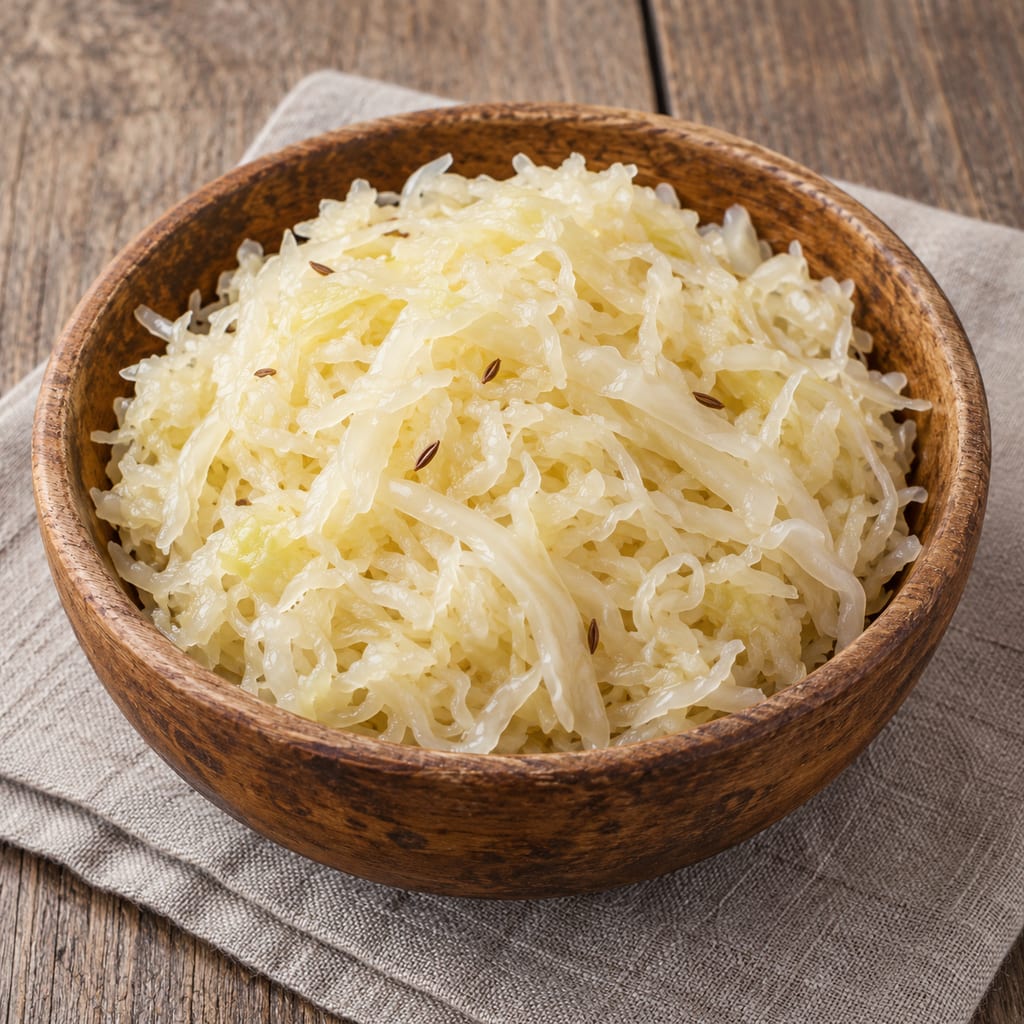
Kysané zeľí, or Czech sour cabbage, is cabbage salted and fermented in a barrel. The Czech museum catalogue that describes it places it in rural kitchens of Moravia and Silesia, where it was a household winter provision. The sourness comes from lactic acid formed as the sugars in the cabbage ferment.
The catalogue describes shredded cabbage layered with salt and caraway in a wooden barrel and compressed under a weighted board. A tube lets the cabbage liquid drain into a vessel. Fermentation takes two to four weeks in the account. In less fertile mountain areas, the catalogue says, cooks added turnip after a poor harvest. In Valasko that turnip is called kvaka.
Kyselica is a confusing name. In this account it refers to the cabbage liquid, which was drunk or used in cooking. The same catalogue also describes soups called kyselica, including a Valasko soup made with sour cabbage and other ingredients. Those are finished dishes and are not the brine itself.
The record places the practice in Moravia and Silesia, with Valasko named as a regional association. It does not give a single village or a single originating family. The catalogue also records a historical claim that cabbage liquid had medicinal value. That is a description of past belief and not evidence of effect.
No salt ratio, fermentation temperature, measured acidity or validated endpoint is given. Home makers who want to try the method should use a tested sauerkraut procedure and the general container guidance from the National Center for Home Food Preservation, both listed in the sources. Taste, smell and appearance do not show a batch is safe.
The source is a 2021 scholarly catalogue of the National Museum of Agriculture, based on museum collections and older ethnographic writing. It documents rural practice in Moravia and Silesia, including a Valašsko association for cabbage liquid and the soup called kyselica. It does not establish when kysané zeľí began, an exclusive birthplace, or an unchanged recipe.
Scaling: source batch only
The catalogue describes barrel practice without a salt ratio, temperature, measured acidity or endpoint.
Hazard sourceUse a separately validated fermentation method for salt rate, endpoint and storage. Smell, taste and appearance do not establish safety.
Control sourceDo not infer completion or safety from sour taste, the appearance of the liquid or a photograph.
The catalogue’s note on cabbage liquid as a remedy is a historical description only and is not a medical claim.
The museum catalogue places the practice in Moravian and Silesian rural food and names Valašsko as one setting. It does not establish a single origin.
A Valašsko sauerkraut soup with smoked bones, cream and seasonings. The meat is simmered, removed from the bone and returned to the soup after frying with onion.

A mild, creamy Czech-style table mustard made from ground seed, vinegar, water, salt and a little sweetness. This home version follows a Czech Television formula and is not a copy of SPAK’s proprietary product.

Czech houskové knedlíky are yeast-raised flour dumplings studded with stale white roll cubes, shaped as logs and steamed until tender for serving with sauce.
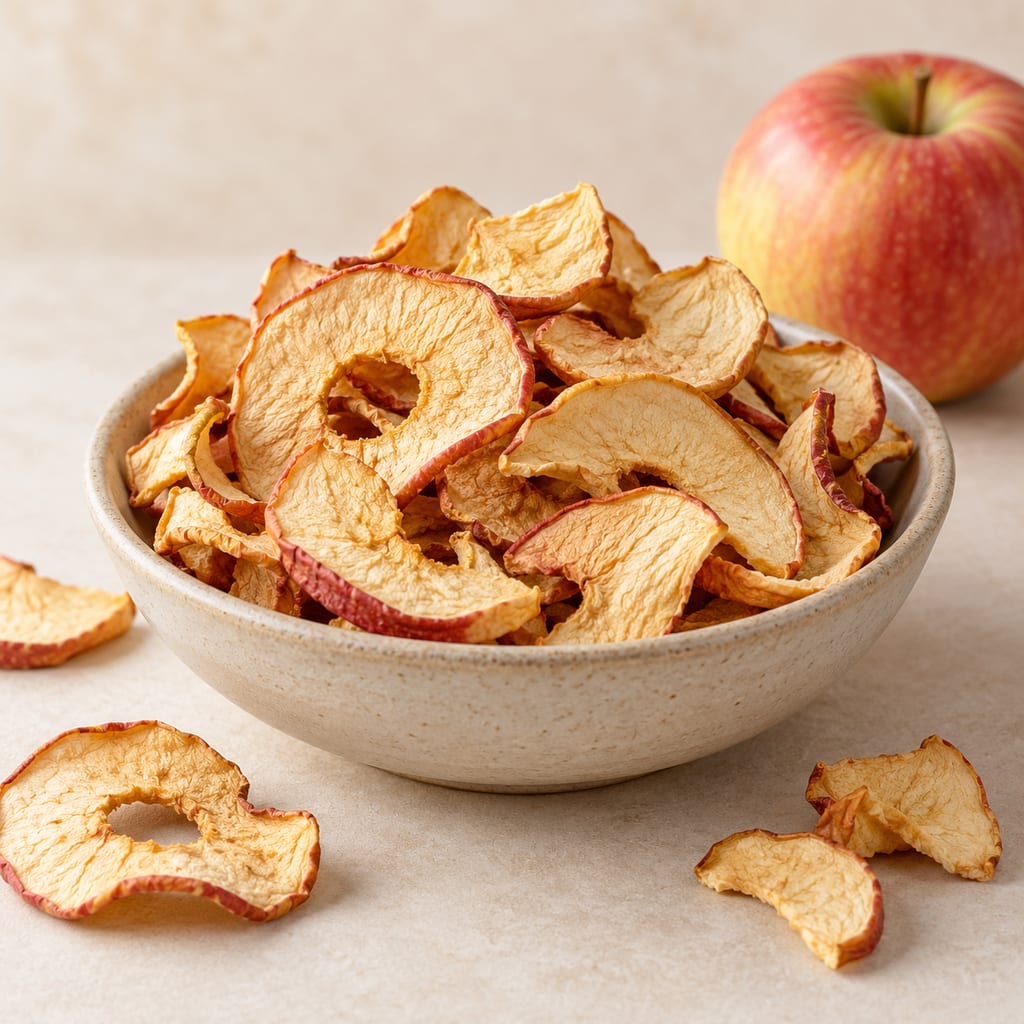
Křížaly are Czech dried apple or pear pieces. The name has regional meanings beyond apple slices, and drying practice varies by place and dryer.

Meat-trim koji garum is a savoury liquid seasoning made by holding meat scraps with rice koji, salt and water at steady warmth before straining the mash.
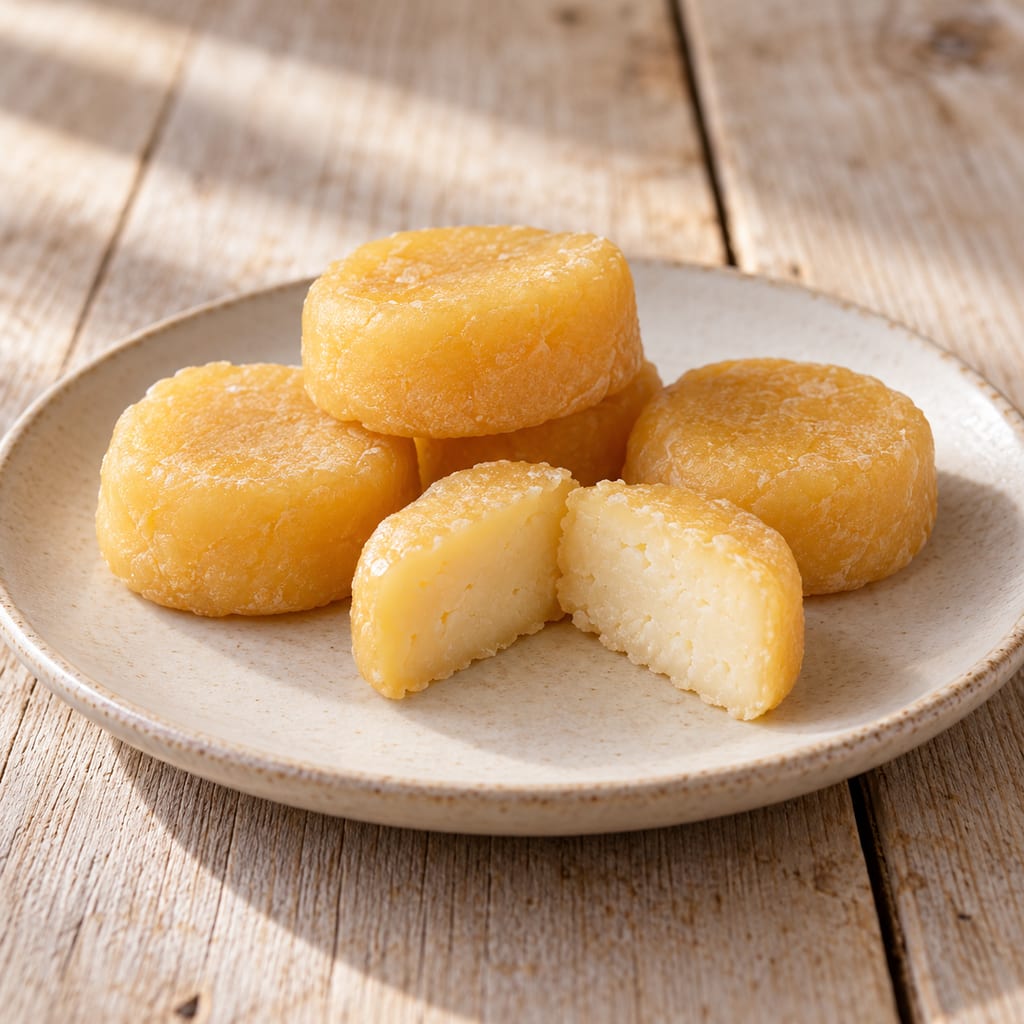
A ripened Czech table cheese made from skimmed acid-set curd, salted, cultured and ripened from the surface inward, with a golden smear and a paler centre.

Pracharanda is finely reduced dried pear used as a topping on porridge, dumplings and cakes in Czech sources. Accounts of its preparation differ.
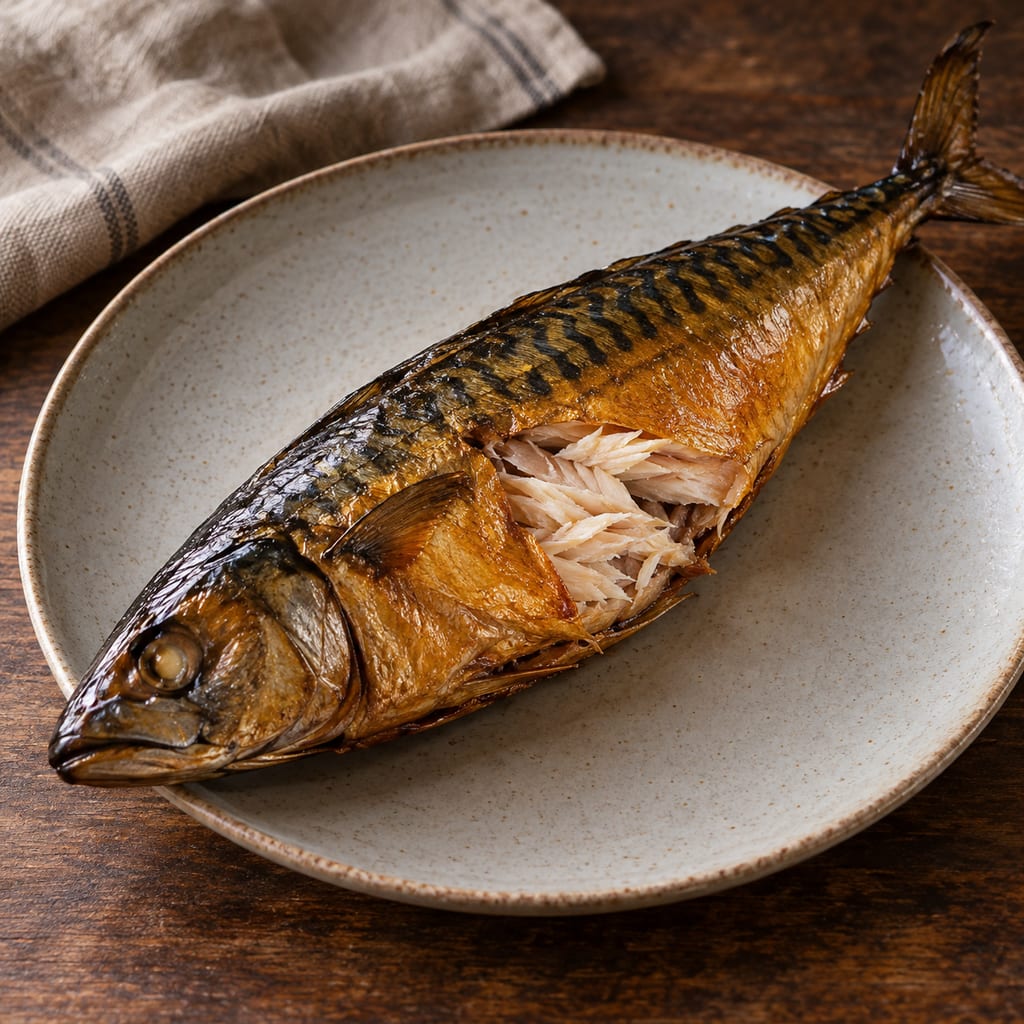
Whole mackerel brined for up to a day, then hot-smoked over beech and alder until the oily flesh takes colour and smoke, in a Czech smokehouse recipe.
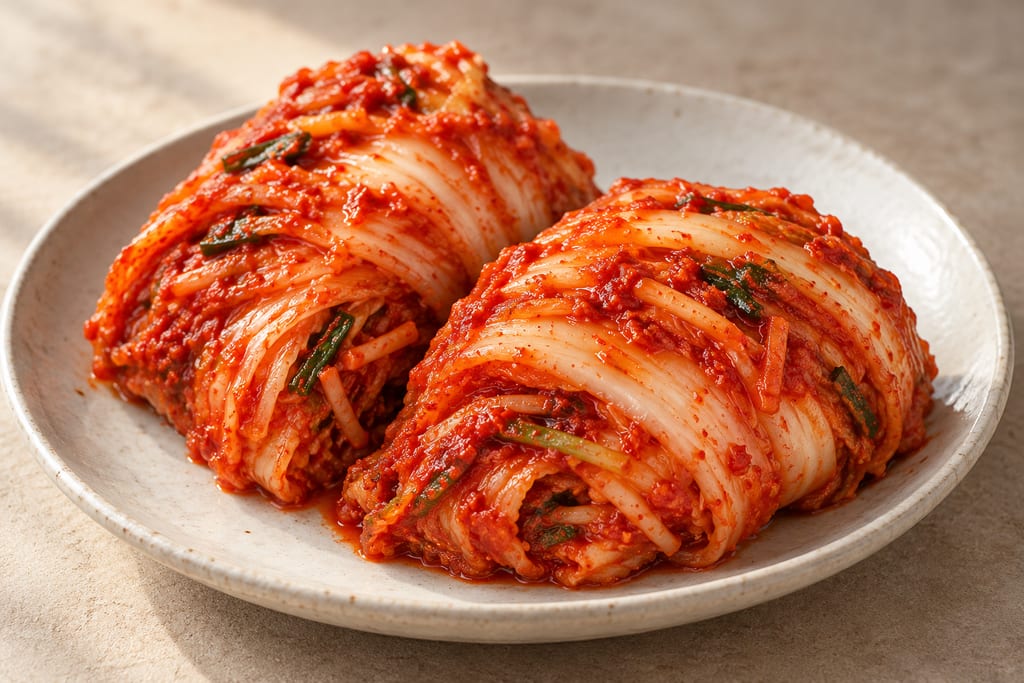
Napa cabbage salted, seasoned with a paste of gochugaru, garlic, ginger and salted seafood, and left to sour through lactic fermentation; Korea's everyday winter preserve.
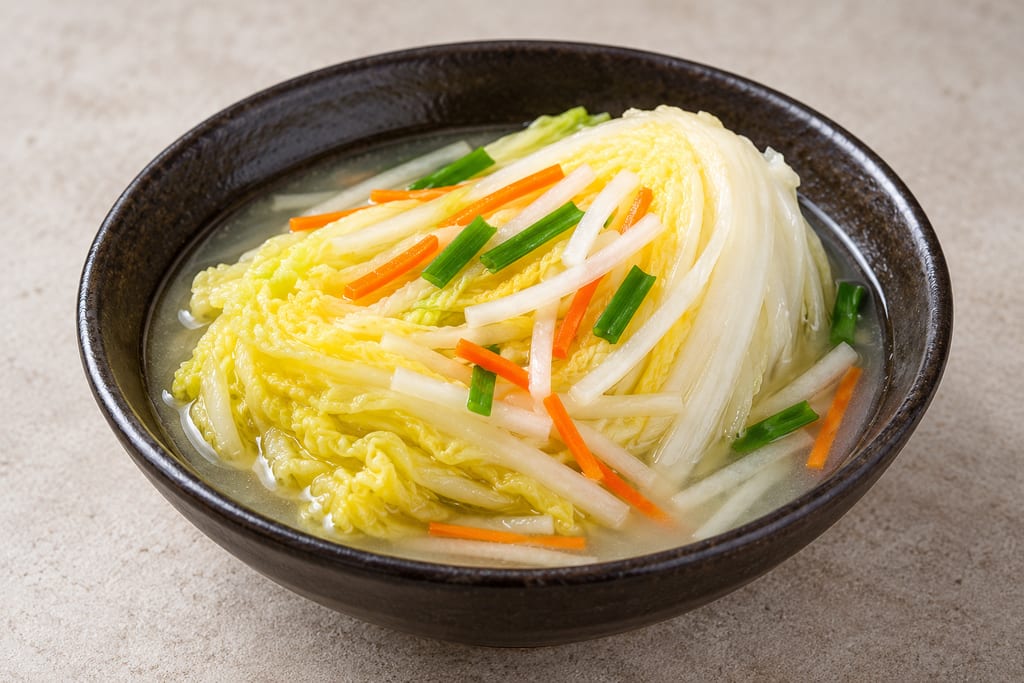
Napa cabbage is brined and filled with pear, radish, alliums, chives and fruit; this Korean kimchi omits red pepper flakes.
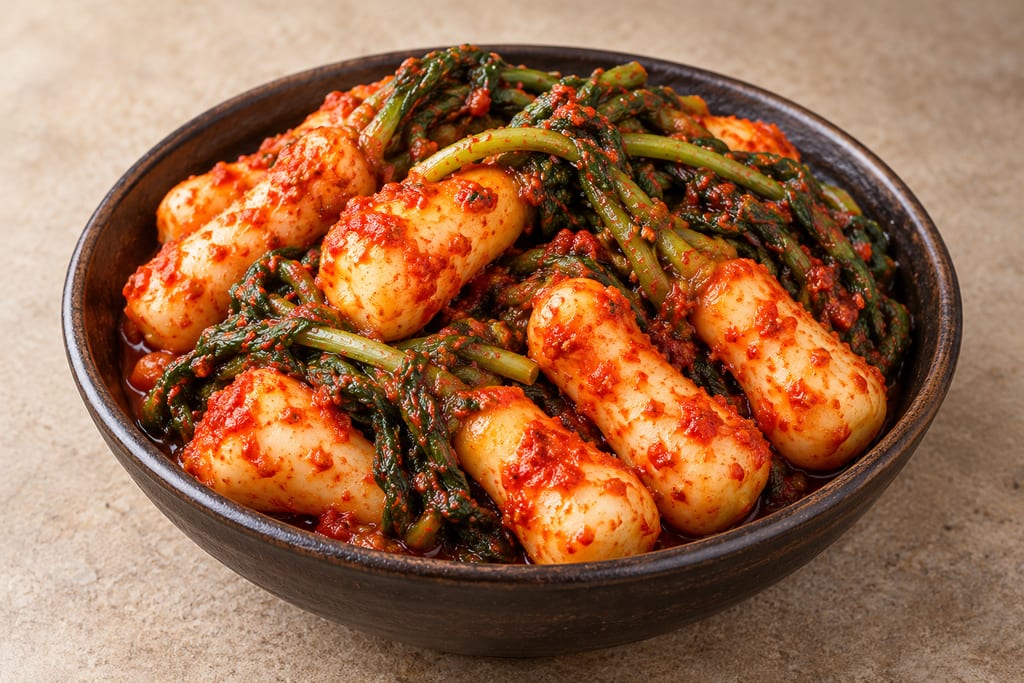
Small ponytail radishes keep their greens attached and ferment in a flour-and-chile seasoning paste.
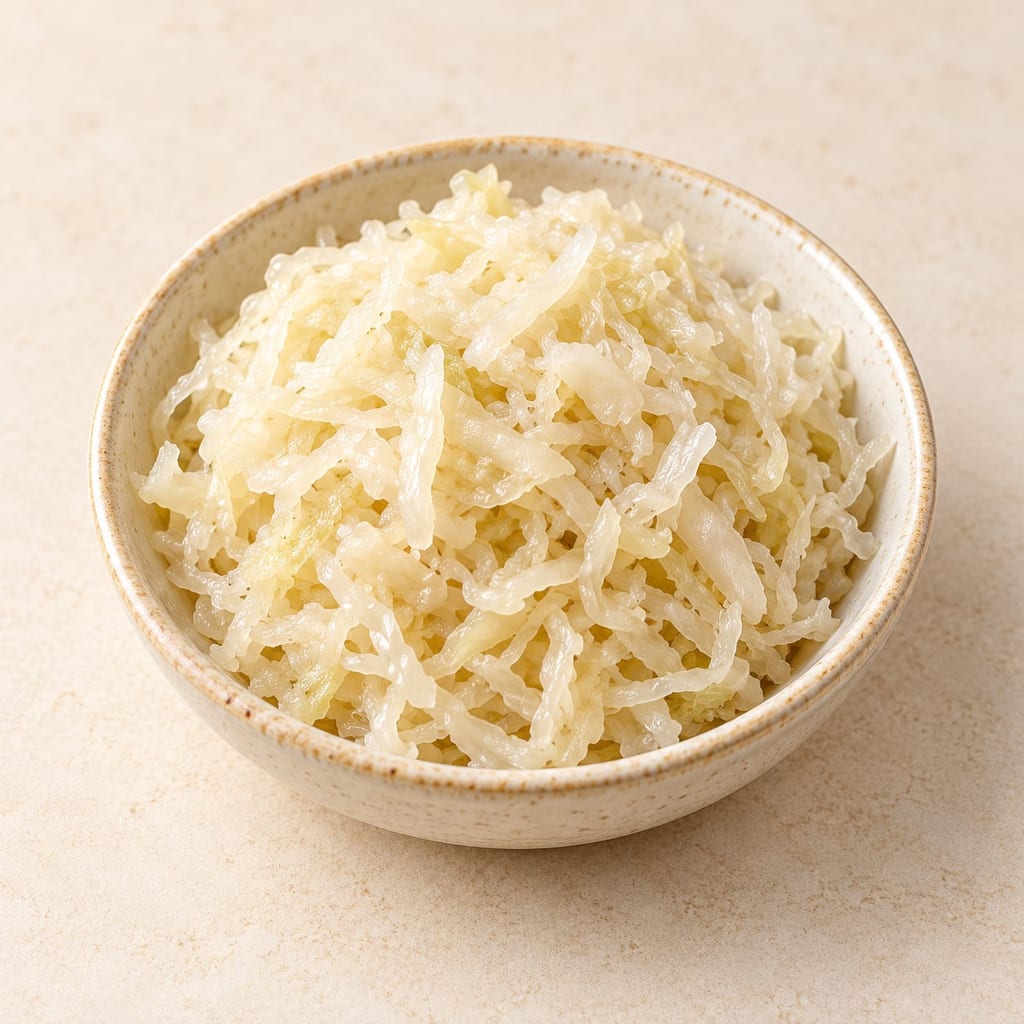
Finely cut cabbage fermented with salt in vats by natural lactic fermentation, a protected Alsatian product sold raw or cooked after fermentation.
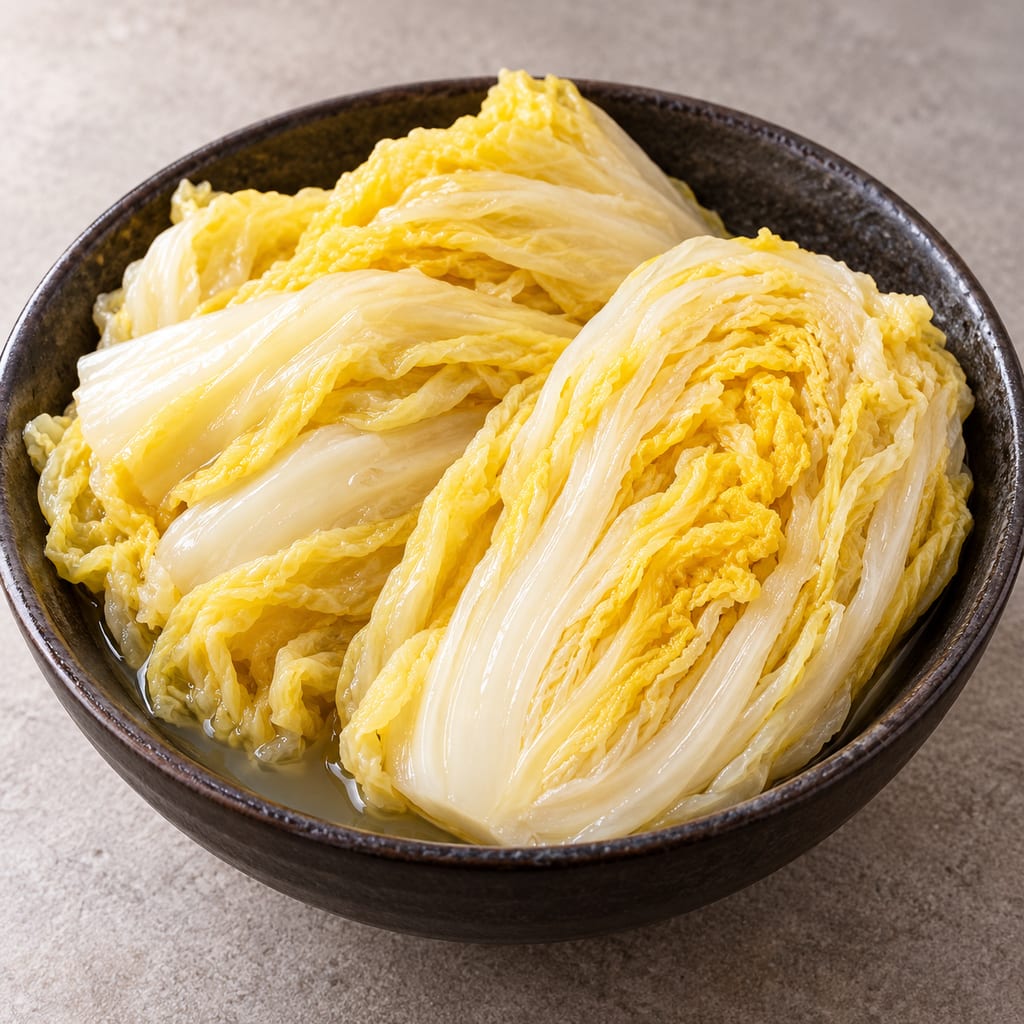
Napa cabbage fermented in a salt brine in Northeast China, traditionally in large ceramic or glass jars, until it turns sour.
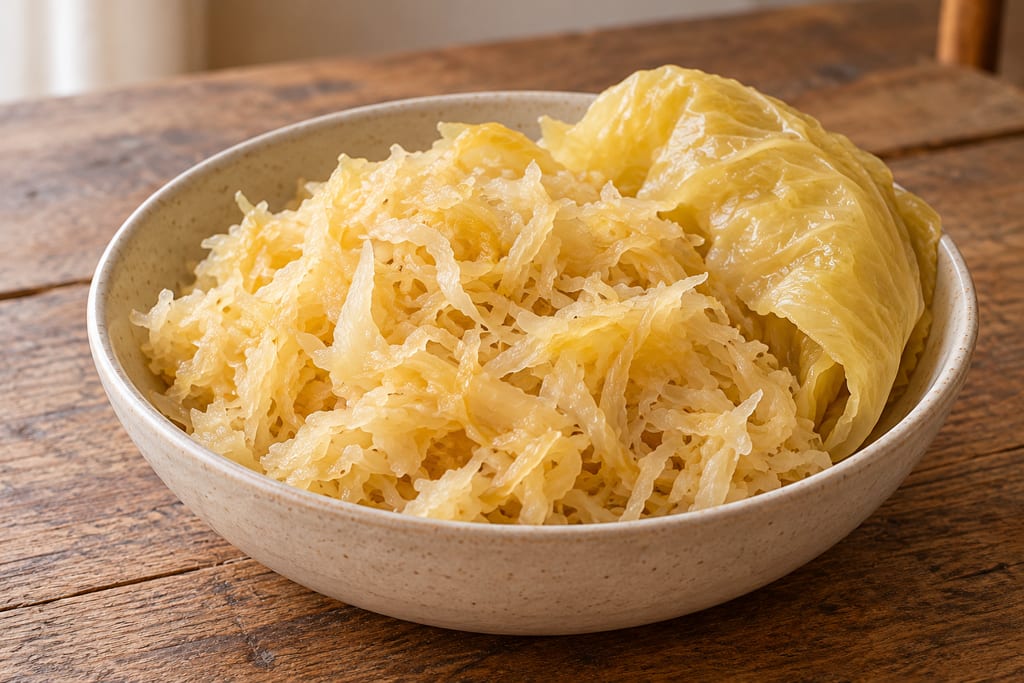
Serbian sour cabbage from the Futog area, made from the autochthonous Futoški cabbage population and registered as a protected product in 2008. It is a subset of general Serbian kiseli kupus.
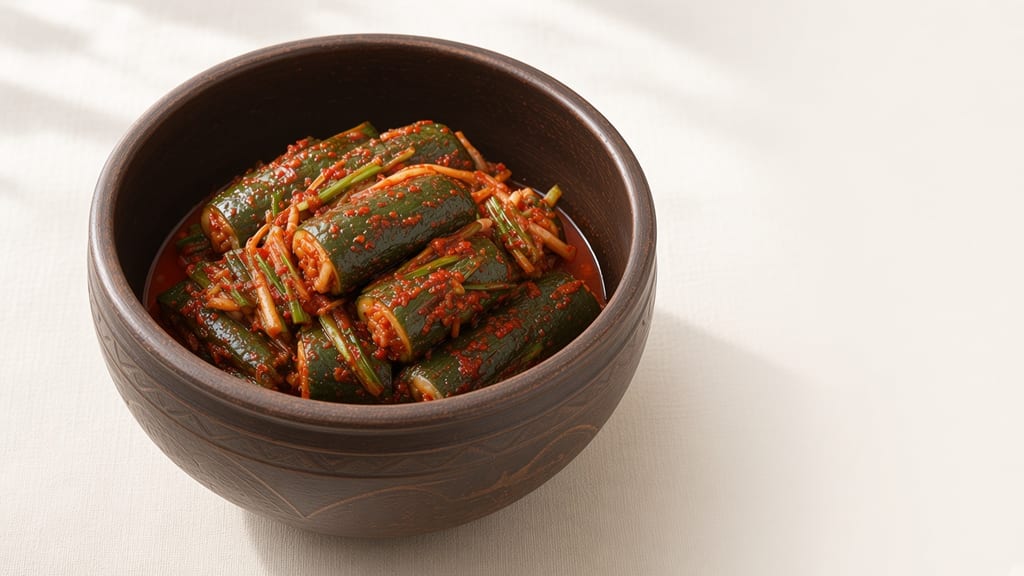
Hwanggwa damjeo is a cucumber kimchi from Yu Jung-rim's Jeungbo sallim gyeongje of 1766. Slit cucumbers are packed with chilli powder and garlic, scalded with hot salted water and sealed overnight.
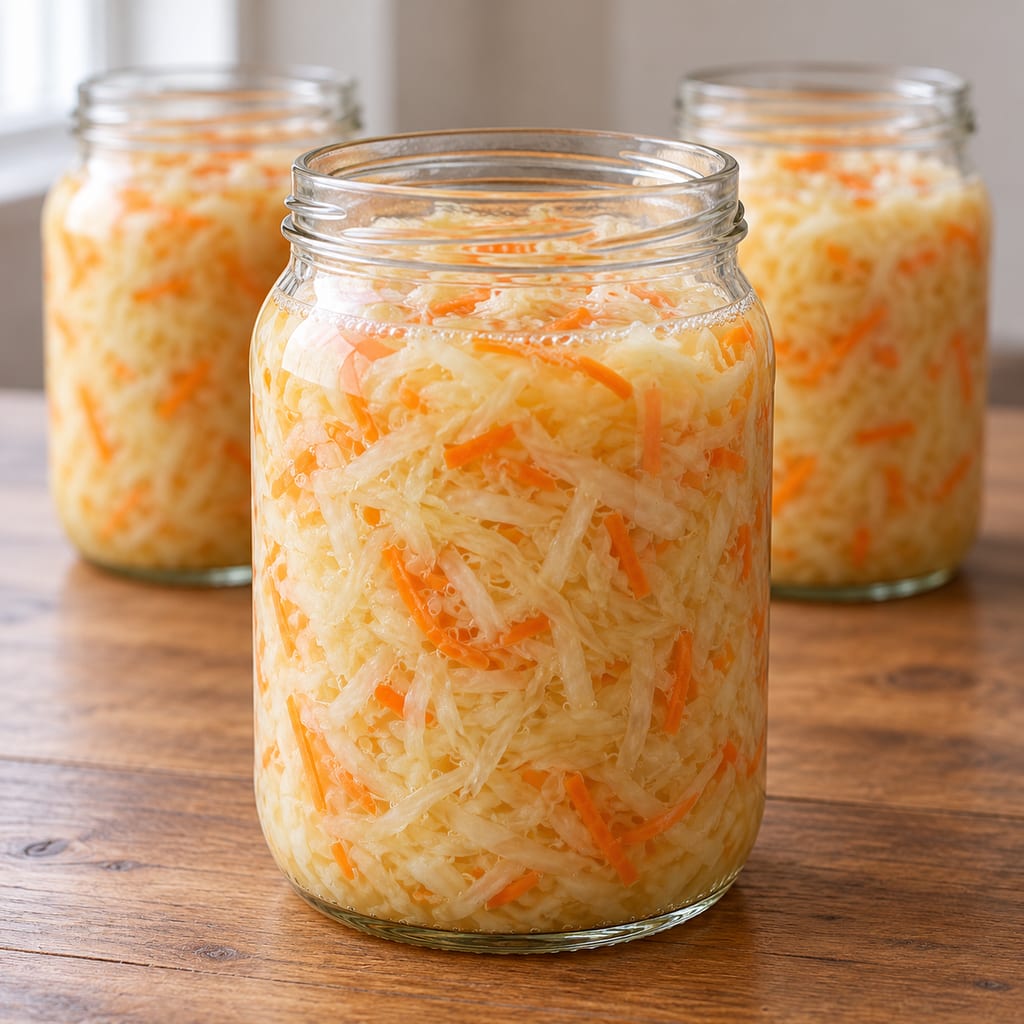
Shredded cabbage and grated carrot are salted to 20 g/kg, rested, packed into three jars and monitored during a creator-reported eight-day fermentation; measured temperature is not given.
No community contributions have been published for this entry yet.
Sign in to contribute. Published comments and photos are free to read.
Národní zemědělské muzeum (National Museum of Agriculture, Czech Republic)Method · History · Geography
Kulinární tradice moravškých a slezských regionůBarrel cabbage layered with salt and caraway under a weighted board
Cabbage liquid drained by tube and called kyselica or zelná voda
Two to four weeks for the described fermentation
Cited in: Overview; The barrel method as described; The liquid and the name kyselica; Where it is documented
National Center for Home Food Preservation, University of GeorgiaSafety
SauerkrautGeneral fermentation guidance; a tested method is required for home sauerkraut
Cited in: Limits and safety
National Center for Home Food Preservation, University of GeorgiaEquipment
Suitable Containers, Covers, and Weights for Fermenting FoodGeneral guidance on containers, covers and weights
Cited in: Limits and safety