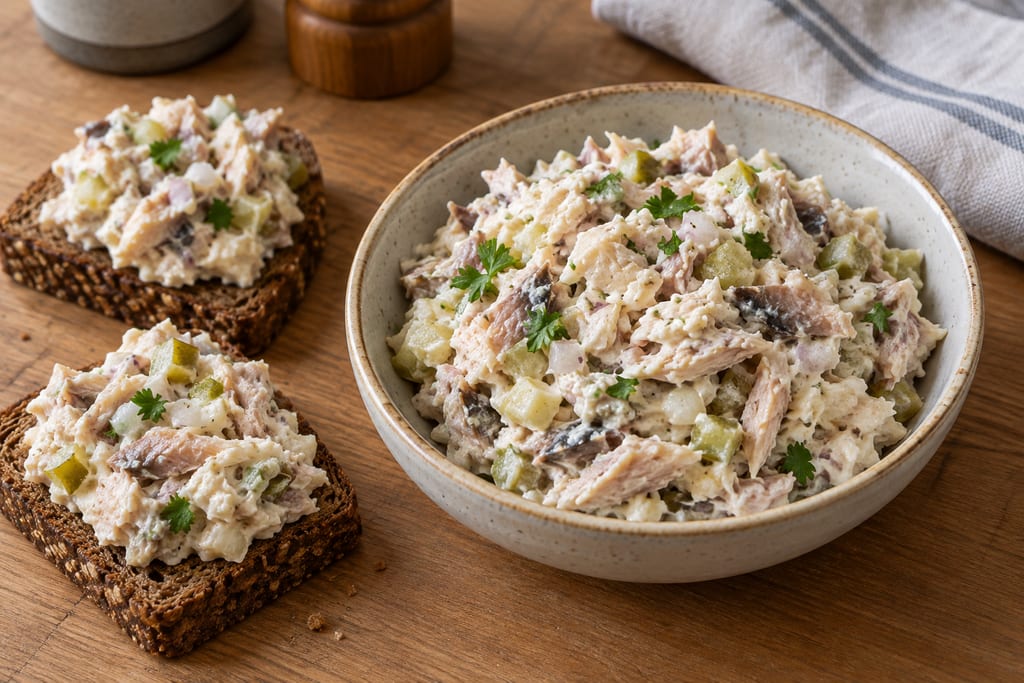
Smoked mackerel spread
A quick Czech spread folds ready-smoked mackerel into quark, pickles, onion, mustard and lemon for serving with bread.
 FermenteaWhere food goes to change
Modern method
Johannova uzená makrela
Whole mackerel brined for up to a day, then hot-smoked over beech and alder until the oily flesh takes colour and smoke, in a Czech smokehouse recipe.
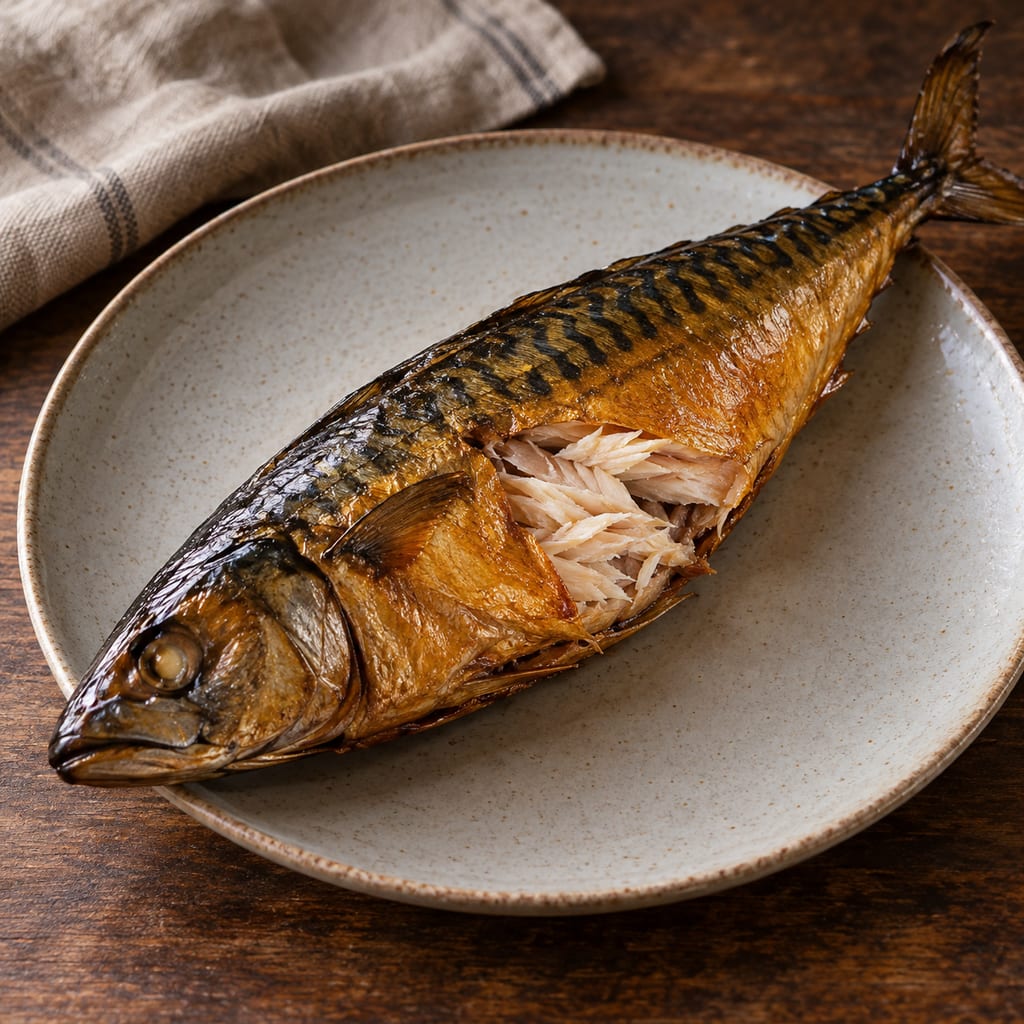
Uzená makrela is Czech for smoked mackerel.
The preparation combines salting in brine with smoke and heat to create a fish with a rich, savoury taste and characteristic golden-to-brown exterior.
The specific recipe recorded here is Johannova uzená makrela, a Czech smokehouse method published by Udírny.cz.
It begins with whole mackerel that are cleaned and brined.
The fish are then hung in a heated smoking chamber, where beech and alder wood produce smoke.
The method describes hot smoking, not cold smoking.
There is no microbial fermentation stage in the recipe.
The principal fish is mackerel, commonly Atlantic mackerel, Scomber scombrus L. Other mackerel species exist, so an exact fish identification should be obtained from the supplier rather than assumed from the common name alone.
Czech uzená means smoked, while makrela means mackerel.
The Polish equivalent is makrela wędzona, and the German is geräucherte Makrele.
These names describe similar preserved-food categories, but regional recipes can differ.
Fish smoking is a longstanding preservation and flavouring practice in European coastal and inland communities.
Its development reflects the need to handle perishable fish before modern refrigeration.
Smoking methods vary between regions and fish species.
Hot smoking combines exposure to smoke with cooking temperatures.
Cold smoking uses lower temperatures and generally depends on a different combination of preservation controls.
The Czech Republic has a strong tradition of home and small-scale smoking, including fish, meat and sausages.
Mackerel is particularly well suited to hot smoking because it is an oily fish with substantial flavour and a texture that remains appealing when cooked.
However, the current recipe is a contemporary named preparation.
Its exact creation date is not established, and it should not be presented as a historical Czech method with a specific ancient origin.
The original article documents one modern Czech smokehouse approach.
Mackerel is relatively rich in fat.
Its muscle contains proteins, water and lipids, including omega-3 fatty acids.
The higher fat content contributes richness and helps produce a moist eating texture when the fish is appropriately cooked.
However, fat also creates oxidation considerations.
Unsaturated fatty acids can react with oxygen during handling and storage.
The resulting compounds can produce stale or rancid flavours.
Fish freshness is therefore particularly important.
Smoking should not be used to conceal deterioration in raw fish.
The size of the fish also matters because heat must penetrate from the exterior toward the centre.
Two fish of different thicknesses may reach different internal temperatures after the same period in the smoker.
That is why smoker-air temperature and finished-fish core temperature are not interchangeable measurements.
Brining exposes fish tissues to dissolved salt.
Salt changes the distribution of water and influences flavour and protein behaviour.
The precise effect depends on salt concentration, temperature, duration and fish geometry.
The original recipe provides two brining options.
One uses a branded Johann seasoning mixture.
The other uses ordinary salt at a specified concentration.
Those should remain distinct options rather than be silently combined.
The branded packet may contain salt, spices and other ingredients in a proprietary ratio.
Its salt concentration cannot be reconstructed merely from the amount of water used.
Original Czech producer's method
Alternative plain-salt brine: 50–60 g salt per litre of water.
That concentration belongs specifically to the plain-salt alternative.
It should not be assumed that the branded packet contains an identical amount of salt.
No exact final salt concentration in the fish was measured.
No specific fish weights or dimensions were supplied.
Mackerel — 4–6 whole fish — Main ingredient
Johann's branded pickling-brine mixture — 1 sachet — Brine seasoning; composition determined by packet
Water for preparing the seasoning mixture — 1 L — Dissolves and extracts ingredients
Additional cold water — 5 L — Dilutes and cools the brine
Beech wood — Quantity unspecified — Smoking fuel
Alder wood — Quantity unspecified — Smoking fuel
The preparation requires a container suitable for refrigerated brining, a pot for preparing the seasoning liquid, a smokehouse or smoker capable of sustained hot smoking, and suitable hooks or racks.
A reliable thermometer is needed for the smoking chamber.
For safe preparation, an internal-temperature measurement is also important, although the original recipe does not provide one.
The producer uses hooks designed to support fish through the head and backbone region.
This allows the fish to hang without falling as the flesh softens during heating.
A drip tray is placed beneath the hanging fish.
The source also describes using sand and foil in the tray to simplify cleaning.
These details belong to the original smokehouse setup and are not fundamental requirements of every hot-smoked fish process.
The original method places the full seasoning sachet into 1 L water.
The mixture is heated gently for several minutes.
It is then transferred to the brining container and combined with another 5 L cold water.
The entire liquid is cooled to refrigerator temperature before the fish are introduced.
The document does not provide a numerical refrigerator temperature.
The important practical distinction is that the fish should not be placed into hot brine.
For the plain-salt alternative, the concentration is 50–60 g salt per litre of water.
This is a recipe quantity, not a validated preservation requirement for all fish species and storage situations.
Brining: minimum 12 hours, preferably 24 hours · Smoker: approximately 70°C · Smoking: about 3 hours
The producer also suggests leaving the fish for approximately one hour at room temperature before smoking. Because mackerel is susceptible to histamine formation when temperature control is inadequate, this should be recognised as a documented practice requiring safety assessment, not an automatically safe universal instruction.
Hot smoking combines heat and smoke exposure.
As fish heats, its proteins denature and its flesh becomes more opaque and firm.
The connective tissue and other structural components change, influencing how the fish flakes.
At the same time, the surface absorbs smoke-related flavour compounds.
Wood smoke contains phenolic compounds, carbonyls and other substances formed during combustion and thermal breakdown.
These contribute flavour and surface colour.
The amount deposited depends on wood type, airflow, humidity, combustion conditions and smoking duration.
The wood itself is therefore a meaningful recipe ingredient.
Beech is a widely used smoking wood in Central Europe.
Alder is particularly associated with fish smoking in several European traditions.
Combining the two produces a characteristic smoke profile, although the original source does not specify the exact weight or proportion of each wood.
Smoking may inhibit some microorganisms at the surface under certain conditions.
However, the presence of smoke does not establish that the fish has reached a safe internal temperature.
Nor does it guarantee that toxins formed before smoking have been eliminated.
A hot smoker set to 70°C provides a controlled chamber environment, but the fish centre may be cooler, particularly early in the process.
The thermal behaviour depends on fish size, starting temperature, hanging arrangement and actual airflow.
For ordinary fish cooking, US food-safety guidance commonly specifies 145°F (approximately 63°C) internal temperature.
That general cooking value is not a complete commercial smoked-fish HACCP validation.
A professional smoked-fish process needs control of its specific hazards and subsequent storage conditions.
Mackerel is associated with the hazard known as scombrotoxin or histamine fish poisoning.
If fish are mishandled before processing, certain microorganisms can convert histidine in the tissue into histamine.
Once histamine has formed, ordinary cooking or smoking does not reliably eliminate it.
This makes temperature control before and during processing particularly important.
Freshness cannot be established solely by the fish's smell or appearance.
A fish may contain hazardous histamine without showing the level of decomposition a consumer expects.
The FDA's seafood guidance treats time-temperature control and appropriate handling as central elements in managing this hazard.
The original recipe's one-hour room-temperature stage should therefore be reviewed in the context of the fish's earlier handling and the total time outside refrigeration.
Smoked mackerel is widespread in northern and central Europe.
The Czech recipe uses beech and alder.
Other regional methods may use different woods, brines or smokehouse arrangements.
Some products are hot-smoked, while others are cold-smoked.
These are different manufacturing processes and should not be combined without explicit description.
The type of mackerel and whether it is smoked whole, split or as fillets can also affect the cooking and drying behaviour.
A fillet has a different geometry from a whole fish.
The source here is specifically a whole-fish Czech hot-smoking method.
Smoked mackerel is usually served as a savoury fish dish.
It may be eaten warm after smoking or chilled and served later where appropriate storage controls are in place.
Bread, boiled potatoes, lemon and simple salads are familiar accompaniments.
The rich fish flesh contrasts well with acidic ingredients.
It can also be flaked into spreads and salads, although bones must be removed carefully.
Its strong flavour makes it suitable for relatively simple serving arrangements.
The fish should have a recognisable smoky aroma without an aggressively bitter or acrid character.
A well-prepared hot-smoked mackerel typically has a browned or golden exterior and moist, cooked flesh.
Excessive heat can dry the fish and cause significant fat loss.
Poor hanging arrangements can cause fish to fall into the drip tray.
An overly dense smoke environment may produce harsh flavours.
Uneven heating may leave fish at different levels of doneness.
However, colour and flaking texture cannot replace an internal-temperature measurement.
An unpleasant spoilage odour is a reason to reject the fish, but the absence of odour does not exclude histamine or other hazards.
The raw fish must be of suitable quality and properly chilled.
Brining does not make spoiled fish safe.
Hot-smoking conditions must be evaluated in relation to internal temperature and relevant food-safety controls.
After smoking, cooling and refrigerated storage are important.
Vacuum packaging introduces separate concerns, including the control of Clostridium botulinum in certain seafood products.
The original Czech recipe does not specify validated post-smoking cooling, vacuum-packing conditions or shelf life.
For a commercial smoked-fish product, those omissions must be addressed through an appropriate process-specific HACCP plan.
The recipe is therefore a useful documented traditional-style hot-smoking preparation, but its stated chamber temperature and duration should not be represented as a complete safety validation.
The page is a contemporary retailer recipe with no publication date; it does not establish when or where smoked mackerel originated.
Scaling: not applicable
The retailer page gives approximate brining/smoking conditions but no fish size, measured internal endpoint, cooling, packaging or storage; FDA processor guidance cannot validate this recipe.
Hazard sourceWhether the seller product is cold-smoked, hot-smoked or otherwise ready to eat is not established. FDA consumer advice should be applied to the product category and label, not inferred from the word smoked.
Hazard sourceUse the actual product label and current local consumer advice. The FDA processor chapter is technical guidance, not a home process, and this record supplies no validated smoking endpoint.
Control sourceDo not use the retailer’s approximately one-hour room-temperature rest as food-handling advice. No process endpoint or storage duration is established.
A source-specific documented preparation, not a claim of origin.
A quick Czech spread folds ready-smoked mackerel into quark, pickles, onion, mustard and lemon for serving with bread.

Japanese skipjack tuna cooked, then repeatedly smoked and dried over a wood fire by the hand-fired tebiyama method into a hard block for shaving into dashi: the first stage of katsuobushi.
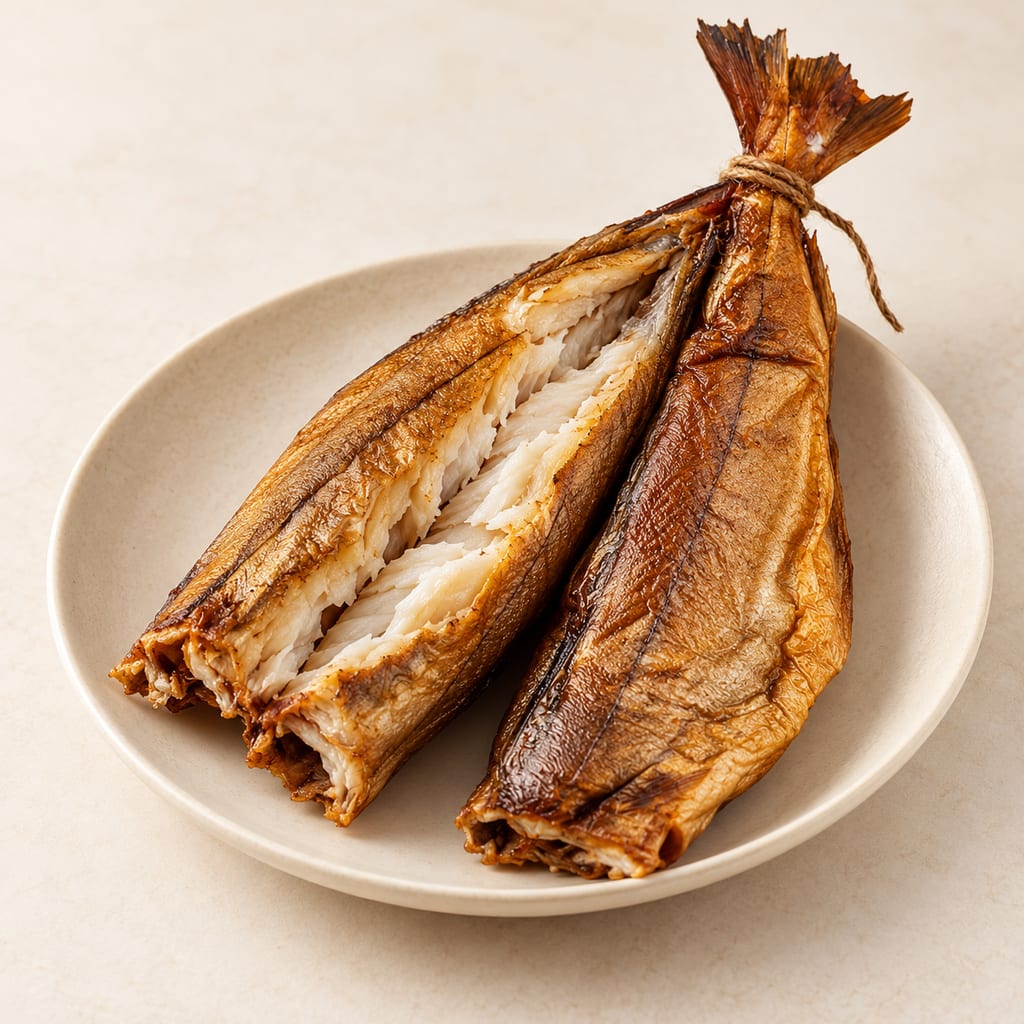
Arbroath smokies are whole haddock dry-salted, paired by the tail and hot-smoked in a protected coastal area. Their recorded history links Auchmithie and Arbroath, though the exact origin is unsettled.
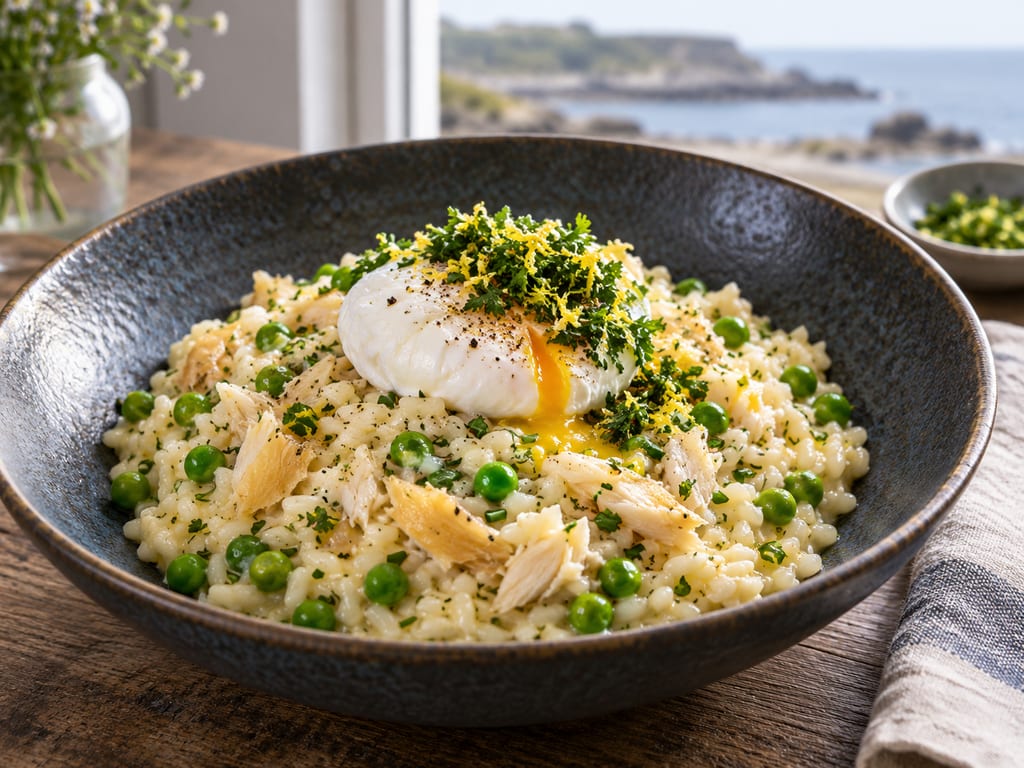
A four-serving risotto published in the 2014 Arbroath Smokie Trail booklet and credited to Hayley Wilkes. It cooks with finished Arbroath smokies; it does not describe smoking fish.
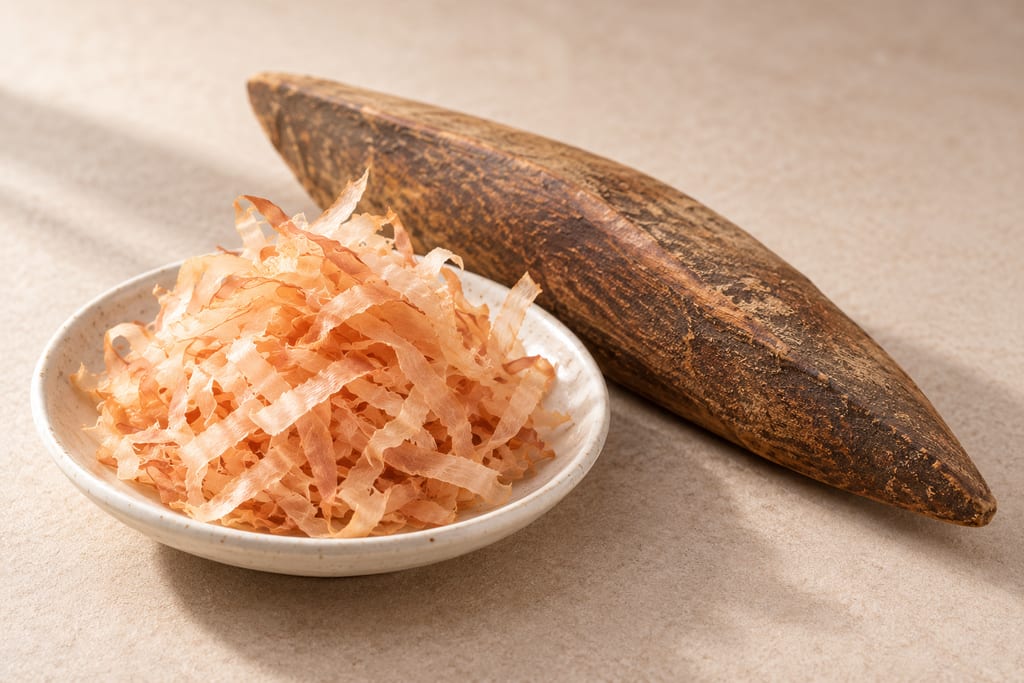
Katsuobushi is skipjack tuna cooked, smoked and dried into a hard block that is shaved into flakes for dashi and toppings. Some styles stop at the smoke-dried stage; others receive carefully managed mold maturation.
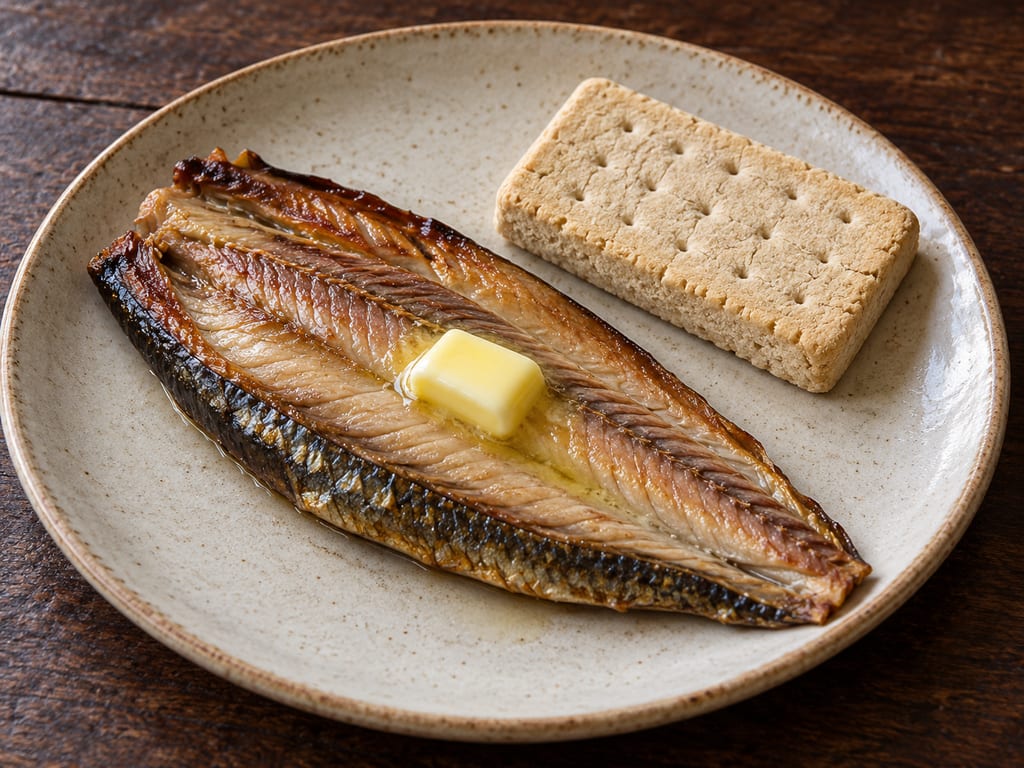
A Victorian way with Great Yarmouth bloaters: the lightly salted, cold-smoked whole herring is broiled and served with fresh butter and a warmed captain's biscuit.
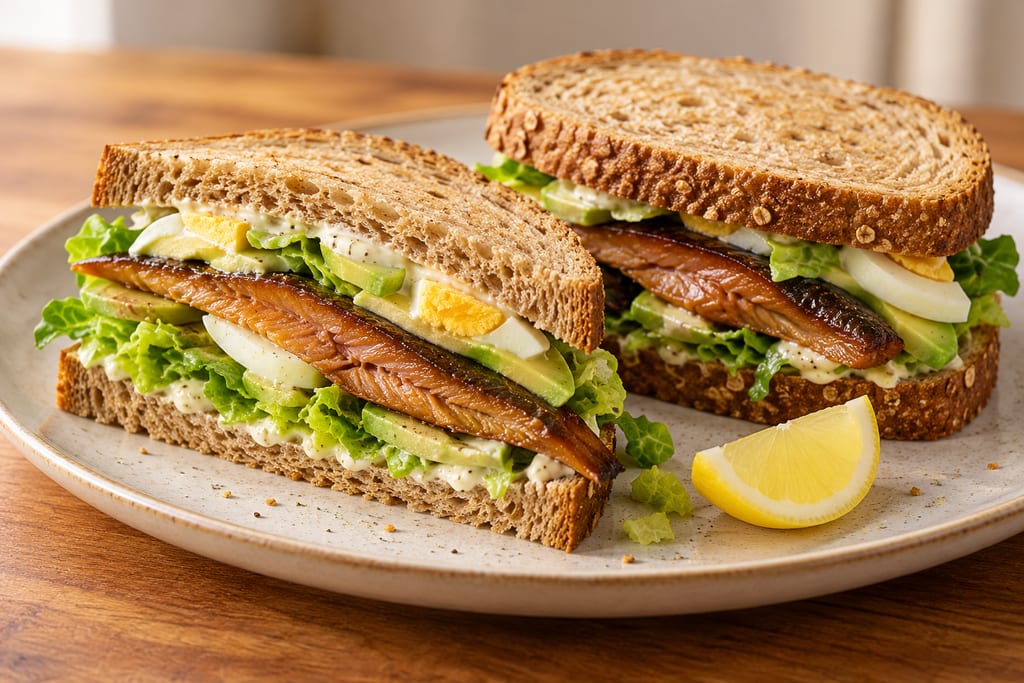
A warm club sandwich of oak-smoked Craster kipper fillets layered with soft-boiled egg, romaine, avocado and lemon mayonnaise on brown bread.
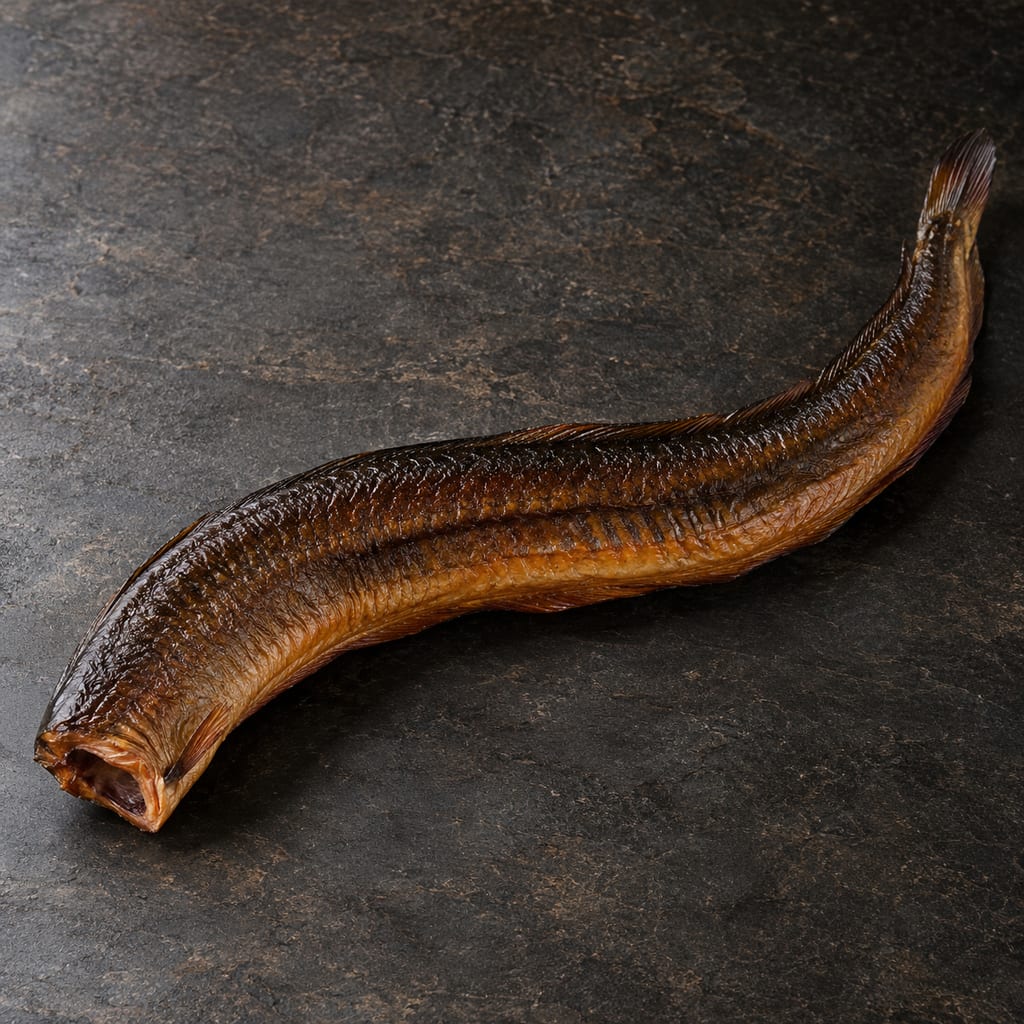
Short-finned eels, kooyang, smoked for a sustained period in the hollows of large trees at Budj Bim in south-western Victoria, a combined heat, smoke and drying method of the Gunditjmara people.
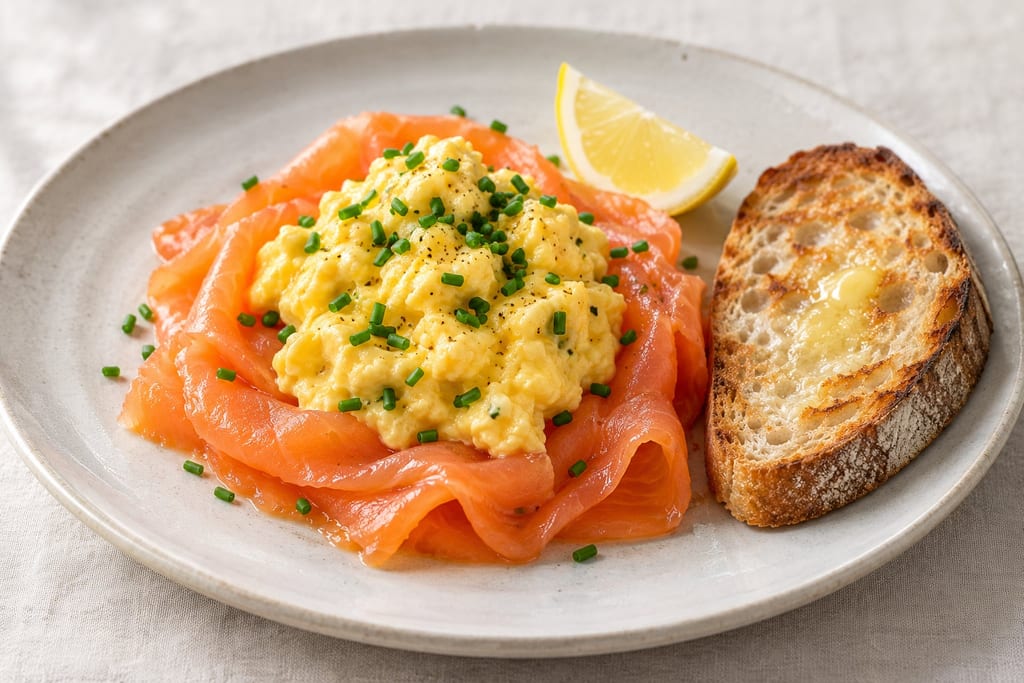
Softly scrambled eggs enriched with cream and butter, served with cold-smoked salmon, chives, lemon and sourdough toast as a British breakfast dish.
No community contributions have been published for this entry yet.
Sign in to contribute. Published comments and photos are free to read.
Udírny.cz / KAISER retailer; recipe attributed to “Johann”Inspiration · Process context
Johannova uzená makrela – jednoduchý receptThe retailer recipe lists four to six mackerel, one brine sachet, 1 L water to heat the sachet and 5 L cold dilution water; it offers 50–60 g salt/L as a separate alternative and names beech or alder wood.
The seller method reports brining for 12–24 hours, rinsing, about one hour at room temperature, then smoking around 70°C for about three hours while avoiding excursions above 80°C. These are source statements, not validated home controls.
Cited in: What is uzená makrela?; Historical context; Why mackerel behaves differently from lean fish; The role of brining; Ingredients; Equipment; Preparing the brine; Method; How hot smoking works; Smoke flavour is not sterilisation; Histamine in mackerel; Regional variations; How smoked mackerel is eaten; Quality and common problems; Food safety and storage
U.S. Food and Drug AdministrationSafety guidance
Selecting and Serving Fresh and Frozen Seafood SafelyU.S. consumer advice for seafood handling, refrigeration and raw/ready-to-eat separation; product-specific smoked-fish type is not established.
U.S. Food and Drug AdministrationTechnical safety guidance
Fish and Fishery Products Hazards and Controls Guidance, Chapter 13: Clostridium botulinum Toxin FormationU.S. processor guidance addresses C. botulinum toxin formation in fishery products and process-specific controls; this is not a home recipe or validation of the Czech seller method.
U.S. Food and Drug AdministrationSafety
Fish and Fishery Products Hazards and Controls GuidanceHazard and control framework for smoked fishery products, including Clostridium botulinum and histamine.
Cited in: Why mackerel behaves differently from lean fish; The role of brining; Smoke flavour is not sterilisation; Histamine in mackerel; Food safety and storage
Food Standards AgencySafety
ListeriaListeria guidance relevant to ready-to-eat smoked fish and its refrigerated storage.
Cited in: Smoke flavour is not sterilisation; Histamine in mackerel; Quality and common problems; Food safety and storage