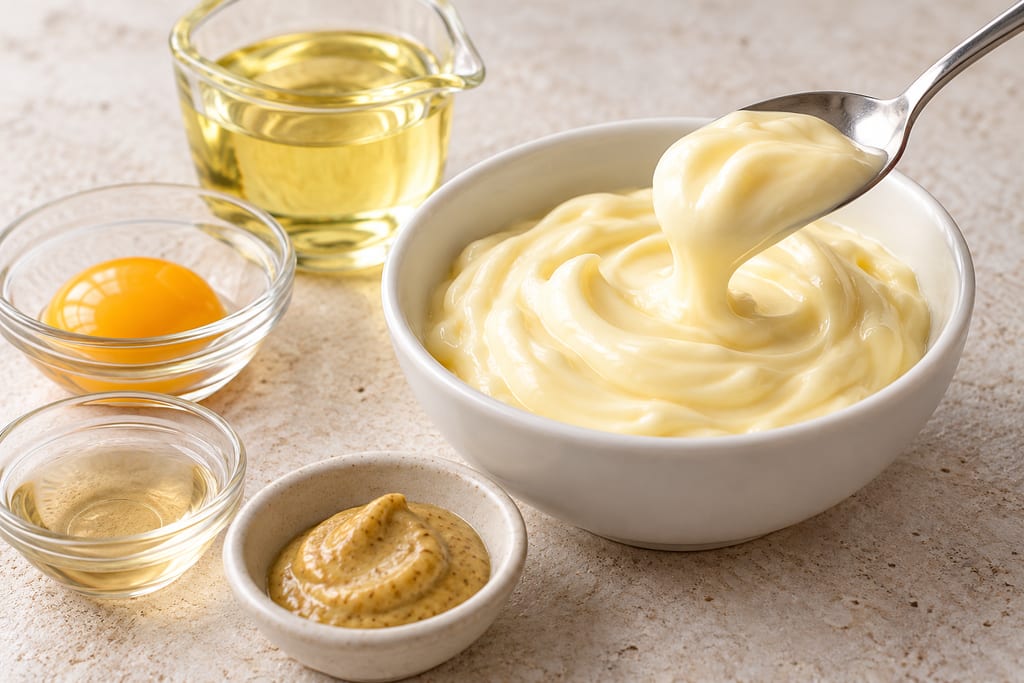
Neutral classic mayonnaise
A plain mayonnaise of 200 g refined neutral oil emulsified into pasteurised yolk, vinegar, water and a little Dijon mustard: a clean base for tasting, comparing and flavouring.
 FermenteaWhere food goes to change
Modern adaptation
Pomazánka z uzené makrely
A quick Czech spread folds ready-smoked mackerel into quark, pickles, onion, mustard and lemon for serving with bread.
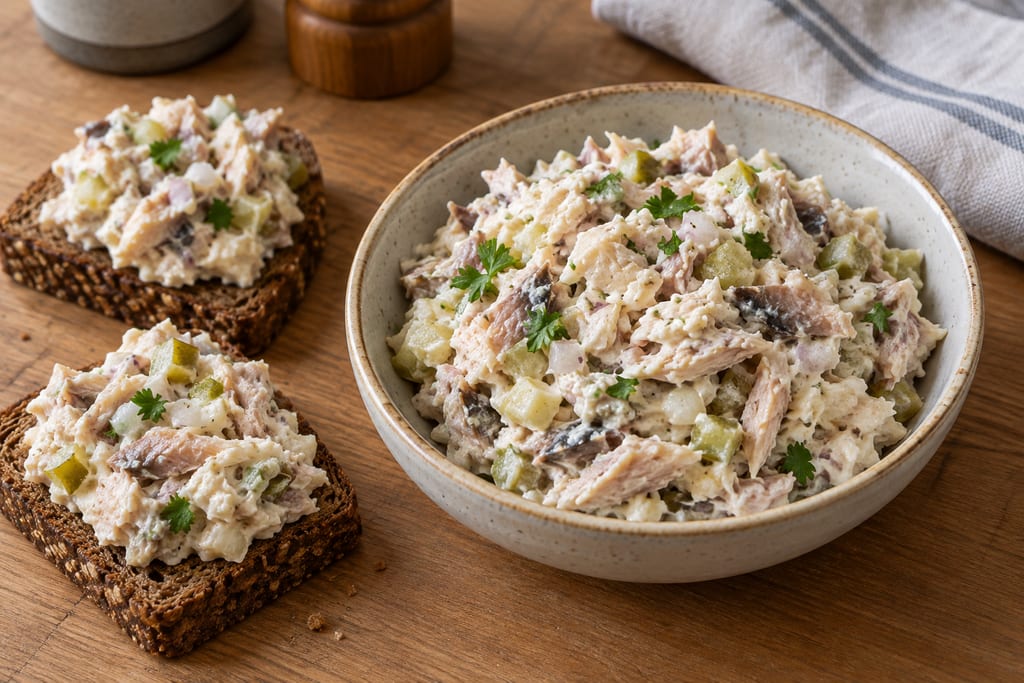
Pomazánka z uzené makrely is a Czech smoked-mackerel spread made by combining flaked fish with a creamy dairy base, chopped pickles, onion, mustard and lemon.
The name is descriptive. Pomazánka means a spread, uzené means smoked, and makrela is mackerel. Czech households prepare many types of pomazánka, using ingredients such as cheese, eggs, legumes, vegetables, meat and fish.
This particular version relies on ready-smoked mackerel rather than smoking fresh fish as part of the recipe.
It is designed to be assembled quickly and served with bread, often as a cold snack, light supper, party food or accompaniment to drinks.
The fish is the dominant ingredient. The quark and mayonnaise bind the flakes, while the pickled cucumbers, mustard and lemon supply acidity that cuts through the relatively rich, oily flesh.
The result is different from a smooth fish pâté. Its most characteristic texture comes from recognizable pieces of smoked mackerel folded into a creamy mixture.
The documented version uses kremžská hořčice, a sweet-sharp, often coarse mustard popular in Czech cooking. Its flavor differs from both mild yellow mustard and strongly pungent English mustard.
Mackerel sold in central Europe is commonly Atlantic mackerel, Scomber scombrus, although the commercial name may also cover other related fish depending on the country and supplier.
The recipe does not identify a particular fish species beyond the market name mackerel.
The fish should therefore be identified from the actual product label rather than assigned a species that the source does not establish.
Mackerel belongs to the family Scombridae. Its flesh contains relatively substantial amounts of oil and has a pronounced flavor, making it well suited to smoking.
The original Czech recipe uses tvaroh, a fresh cultured dairy product generally translated as quark. It has an acidic flavor and a different texture from ordinary cream cheese.
Full-fat quark produces a softer, richer spread than dry curd cheese. It also contributes a lightly tangy background that complements the fish.
Pickled cucumbers are kyselé okurky or nakládané okurky in Czech, depending on the product and its preparation.
They may be vinegar-pickled or fermented, but the spread recipe does not establish which kind is required.
That matters for Fermentea's classification: the pickles might have undergone fermentation during their own production, yet the assembled spread is not itself a fermented food.
Smoking fish has a long history in Europe, including the Baltic and North Sea regions.
The technology enabled fish catches to be preserved and distributed beyond their immediate landing places.
Cold smoking, hot smoking, drying and salting served different purposes. The appearance of a smoked fish does not, by itself, reveal exactly how it was processed.
Modern ready-smoked mackerel is often sold as a refrigerated, fully cooked product, but the original recipe does not specify the smoking regime of the purchased fish.
Fish spreads form part of a wider central European tradition of cold bread toppings.
Czech cuisine includes numerous pomazánky, eaten on open-faced sandwiches, rye bread, rolls and party canapés.
The precise origin of smoked-mackerel pomazánka is not established.
There is no reliable evidence that the measured version was invented in a particular Czech region or during a particular historical period.
The existing source is a contemporary Czech retail recipe. It establishes the actual ingredients, method, preparation time and serving count.
It does not claim to document an ancient recipe.
The spread also illustrates the way inexpensive preserved ingredients have been incorporated into ordinary everyday cooking.
Rather than requiring fresh fish to be filleted and cooked for every meal, a household can open a prepared smoked fish, remove the bones and combine the edible flesh with ingredients already available in the refrigerator.
Smoked mackerel provides the principal flavor, protein and fat.
Its oily flesh carries the smoke aroma particularly well. Smoke compounds interact with the fish's surface, while salt and heat processing influence texture.
Flaking the fish distributes its flavor through the spread without destroying every recognizable piece.
Quark provides a dairy body. Its cultured acidity adds some freshness without making the finished spread taste strongly of lemon.
The proteins and water in quark contribute a creamy structure, while its fat content affects richness.
Mayonnaise contributes a separate emulsion of oil and water, traditionally stabilized by egg-yolk components.
The two dairy-and-emulsion ingredients do not behave identically. Quark provides a thicker cultured base; mayonnaise adds smoothness and lubrication.
The pickled cucumbers bring acidity, texture and additional salt.
Their crisp pieces contrast with the softer fish.
Onion provides fresh pungency from sulfur-containing compounds released when its cells are cut.
Chopping it finely prevents large raw-onion pieces from dominating individual bites.
Kremžská mustard contributes acidity, spice and a recognizably central European flavor profile. It can contain whole or partly crushed mustard seeds.
Lemon juice brightens the mixture and makes the oiliness of the mackerel less heavy on the palate.
The one-tablespoon quantity contributes flavor but should not be assumed to preserve the completed spread.
Parsley adds a fresh aromatic note and visual contrast.
Bread is not simply a vehicle for presentation. Its mild cereal flavor and relatively dry crumb balance the concentrated smoked fish.
A small cutting board, sharp knife, fork, mixing bowl and spoon are sufficient.
Fish-bone tweezers are useful but not explicitly required by the source.
A sieve is unnecessary unless the quark is unusually wet.
The original method does not call for a food processor. Mixing by hand better preserves the textured character of the spread.
Inspect the smoked fish. Check the product label, use-by date and storage instructions. The recipe assumes purchased, ready-to-eat smoked mackerel.
Remove the fish from its packaging only when ready to assemble the dish.
Keep it chilled until preparation. Remove the skin and bones.
Peel away the skin, open the fish and carefully separate the edible flesh from the backbone, ribs and smaller pin bones.
Work through the fish with a fork or clean fingers to identify remaining bones.
This matters particularly when serving the spread to children.
Flake the mackerel. Break the 200 g prepared fish into small pieces.
Avoid grinding it into a completely uniform paste.
The original recipe does not specify a particle size. Small, recognizable flakes make the mixture easier to distribute over bread.
Chop the vegetables. Finely chop 6 pickled cucumbers and ½ onion.
If the pickles release substantial liquid, avoid transferring unnecessary free brine into the bowl.
The original instructions do not specify squeezing or pressing the pickles.
Prepare the creamy base. Place 100 g full-fat quark and 1 tablespoon mayonnaise into a clean bowl.
Stir until they can be mixed evenly with the fish.
Do not add water or milk unless making a separately tested adaptation.
Introduce the mustard and lemon. Add 1 tablespoon Kremžská mustard and 1 tablespoon lemon juice.
Mix to distribute the acidity and spice.
The source gives no standing time for these ingredients.
Combine the spread. Fold in the smoked mackerel, cucumbers and onion.
Mix gently until the ingredients are distributed throughout the quark base.
The finished mixture should remain spreadable and textured.
Season carefully. Add salt and pepper to taste.
There is no measured salt quantity because the smoked fish, mustard and pickles already contribute variable amounts.
Adding a fixed amount without tasting the particular ingredients could easily oversalt the dish.
Serve. Spread over bread and garnish with parsley.
The documented batch makes 4 portions and takes up to 15 minutes.
Serve promptly or keep chilled according to appropriate ready-to-eat food-handling guidance.
This is a mechanical and culinary transformation, not fermentation.
The fish has already been preserved and flavored through an earlier processing operation.
Its muscle proteins have been altered by salting, smoking and possibly cooking, depending on the purchased product.
The quark has also undergone earlier dairy processing, commonly including microbial acidification.
The mayonnaise is a prepared emulsion.
Mixing the three ingredients does not create a new controlled fermentation.
Instead, the mixture combines distinct physical structures.
Mackerel flakes form discrete protein-rich particles. Quark forms a moist, cohesive dairy base. Mayonnaise contributes oil dispersed through an aqueous phase.
The chopped pickles and onion introduce pieces with different moisture contents and textures.
When stirred, the creamy ingredients surround the fish and vegetables.
Too much mixing can destroy the larger flakes, producing a denser, more homogeneous paste.
There is no inherent problem with a smooth spread, but that is a textural variation rather than the original method's most distinctive result.
The acidic components do not sterilize the food.
Although quark, mustard, pickles and lemon are individually acidic, the final mixture has a combined pH that is not established by the recipe.
It would be unsafe to infer a shelf-stable condition from the presence of sour-tasting ingredients.
Mackerel contains more fat than many lean white fish.
This influences its taste and the way smoke flavor is perceived.
Smoke contains compounds derived from the thermal breakdown of wood components, including lignin and cellulose.
Phenolic compounds contribute recognizable smoky aromas, while carbonyl compounds influence flavor and color.
Hot smoking additionally changes the fish's muscle proteins through heat.
The result is a firmer, flaky structure compared with raw fish.
Cold smoking produces a different texture and may not fully cook the fish.
Because the original recipe does not identify the type of smoked mackerel, it cannot be used to establish a smoking temperature, curing salt percentage or internal cooking endpoint.
Those belong to the producer's process.
For this spread, the appropriate choice is a ready-to-eat product with suitable handling and storage instructions.
Czech smoked-fish spreads often vary in their dairy base.
Some use cream cheese, fresh cheese, butter, sour cream or different types of tvaroh.
Others replace the pickled cucumbers with capers or use different combinations of lemon, mustard and onion.
Dill or chives can appear in place of parsley.
A version made with horseradish would taste considerably sharper, while one using more mayonnaise would be richer and less tangy.
These are recognizable variations of a smoked-fish pomazánka rather than separate historical recipes that require independent origin claims.
The original Kaufland version is distinctive because it combines full-fat tvaroh, Kremžská mustard and six pickled cucumbers.
That formulation should be retained as the primary batch.
The spread is particularly suited to rye bread, wheat-rye bread and ordinary Czech rolls.
It can be served on open-faced slices as a light meal.
Smaller portions may be used for party sandwiches or chlebíčky, Czech open-faced sandwiches.
A garnish of parsley supplies color, but the spread's main visual character is the pale creamy base dotted with onion, cucumber and darker fish flakes.
A crisp bread base gives an especially pronounced textural contrast.
The spread also works with fresh vegetables such as cucumber or radish, although those are serving suggestions rather than ingredients in the original formulation.
It should be served as a cold prepared food rather than held for extended periods at room temperature.
The finished spread should be creamy but not watery.
Its fish flakes should be distributed evenly.
The pickles and onion should remain recognizable in small pieces.
Its aroma should reflect the purchased smoked fish, with mustard and lemon providing contrast.
A wet layer appearing immediately after mixing may indicate unusually watery quark or pickles.
The original recipe gives no procedure for thickening such a mixture.
Avoid interpreting an unexpectedly sour or unpleasant odor as evidence of desirable fermentation.
The dish is not intended to ferment after assembly.
If the purchased fish shows signs of spoilage, the solution is not to cover the smell with lemon or mustard. Reject the ingredient.
The principal hazards concern ready-to-eat smoked seafood, dairy, mayonnaise and contamination during assembly.
Listeria monocytogenes is particularly relevant to some refrigerated ready-to-eat smoked fish products.
Risk depends on the smoking process and the specific product. Cold-smoked or cured fish has additional concerns because it may not have undergone a full cooking step.
For pregnant people, older adults and those with weakened immune systems, the exact fish category matters.
Use the product's storage instructions and established local advice.
The recipe contains fish, milk, mustard and potentially egg, depending on the mayonnaise. Bread adds gluten if made from wheat, rye or related grains.
The original source gives no storage duration for the assembled spread.
It should not be assigned a fabricated three-day or five-day shelf life.
Keep the mixture chilled, maintain clean utensils and avoid cross-contamination.
If preparing it in a catering or pub environment, a documented food-safety procedure should establish preparation, service and disposal controls.
Kaufland’s undated Czech-language page documents a contemporary spread using ready-smoked mackerel; it does not establish a historic origin.
Yield 4 portions · Scaling: source batch only
The Kaufland recipe uses ready-smoked mackerel but does not identify cold- versus hot-smoked state or give storage life. Apply consumer advice to the actual package and product category.
Hazard sourceThe dish combines ready-to-eat fish with chopped ingredients, and no leftover storage duration is stated.
Hazard sourceKeep the packaged fish within its label instructions and keep raw seafood separate from ready-to-eat ingredients. FDA advice is consumer handling guidance, not validation of the fish smoking process.
Control sourceUse product-label storage directions; the source gives no assembled-spread storage period.
A source-specific documented preparation, not a claim of origin.
A plain mayonnaise of 200 g refined neutral oil emulsified into pasteurised yolk, vinegar, water and a little Dijon mustard: a clean base for tasting, comparing and flavouring.
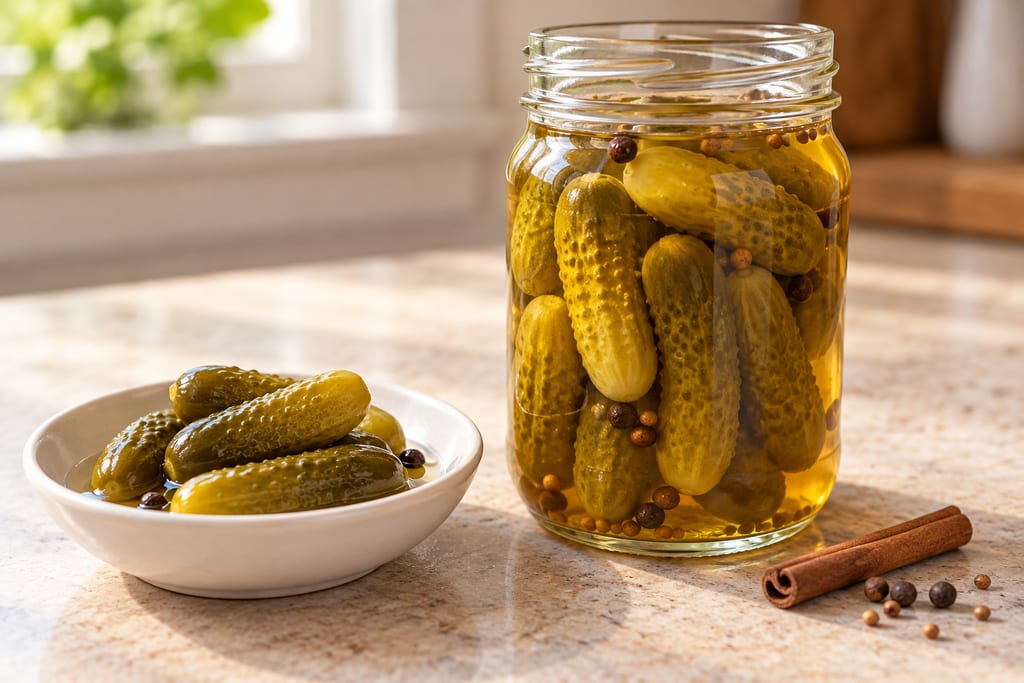
Sweet gherkin pickles are small whole cucumbers preserved in a spiced, sweet vinegar syrup. This four-day U.S. canning method uses repeated hot-water soaks, staged syrup additions, and a boiling-water process.
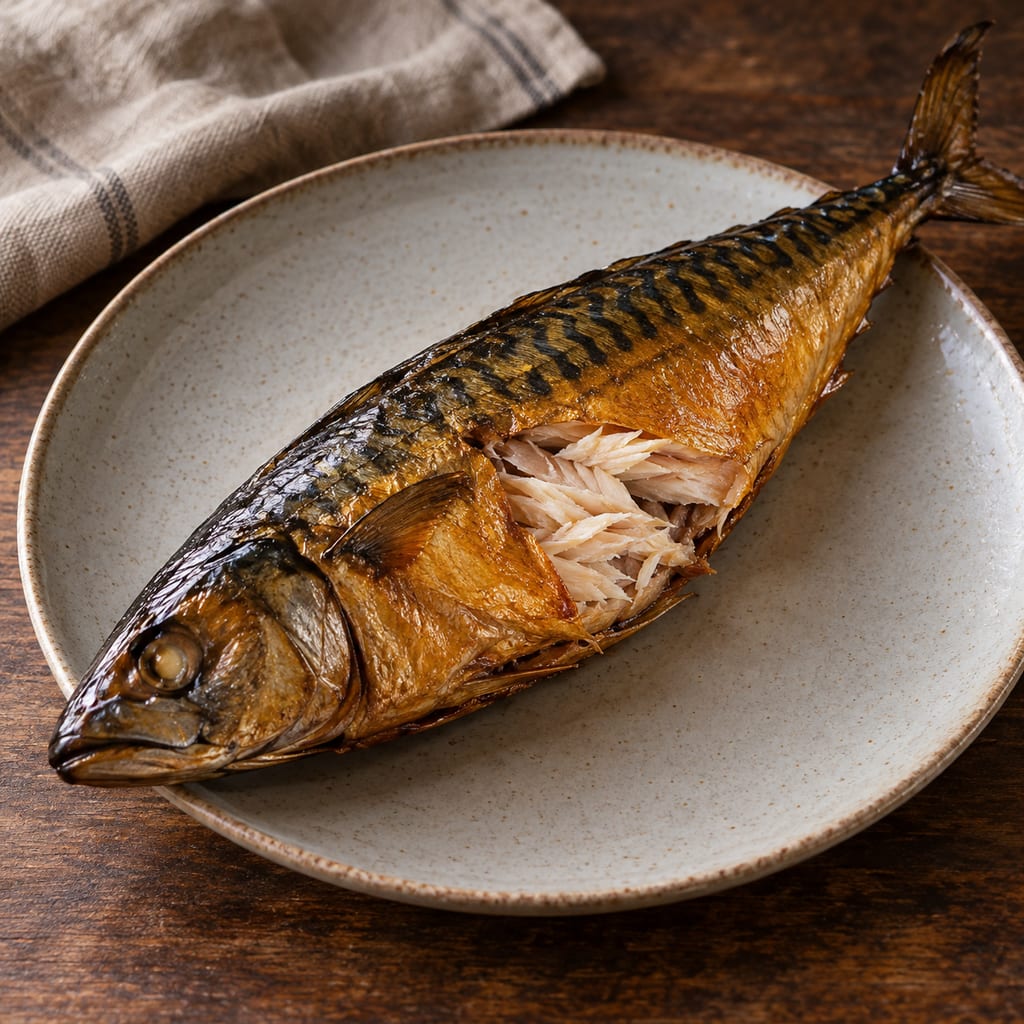
Whole mackerel brined for up to a day, then hot-smoked over beech and alder until the oily flesh takes colour and smoke, in a Czech smokehouse recipe.

Japanese skipjack tuna cooked, then repeatedly smoked and dried over a wood fire by the hand-fired tebiyama method into a hard block for shaving into dashi: the first stage of katsuobushi.
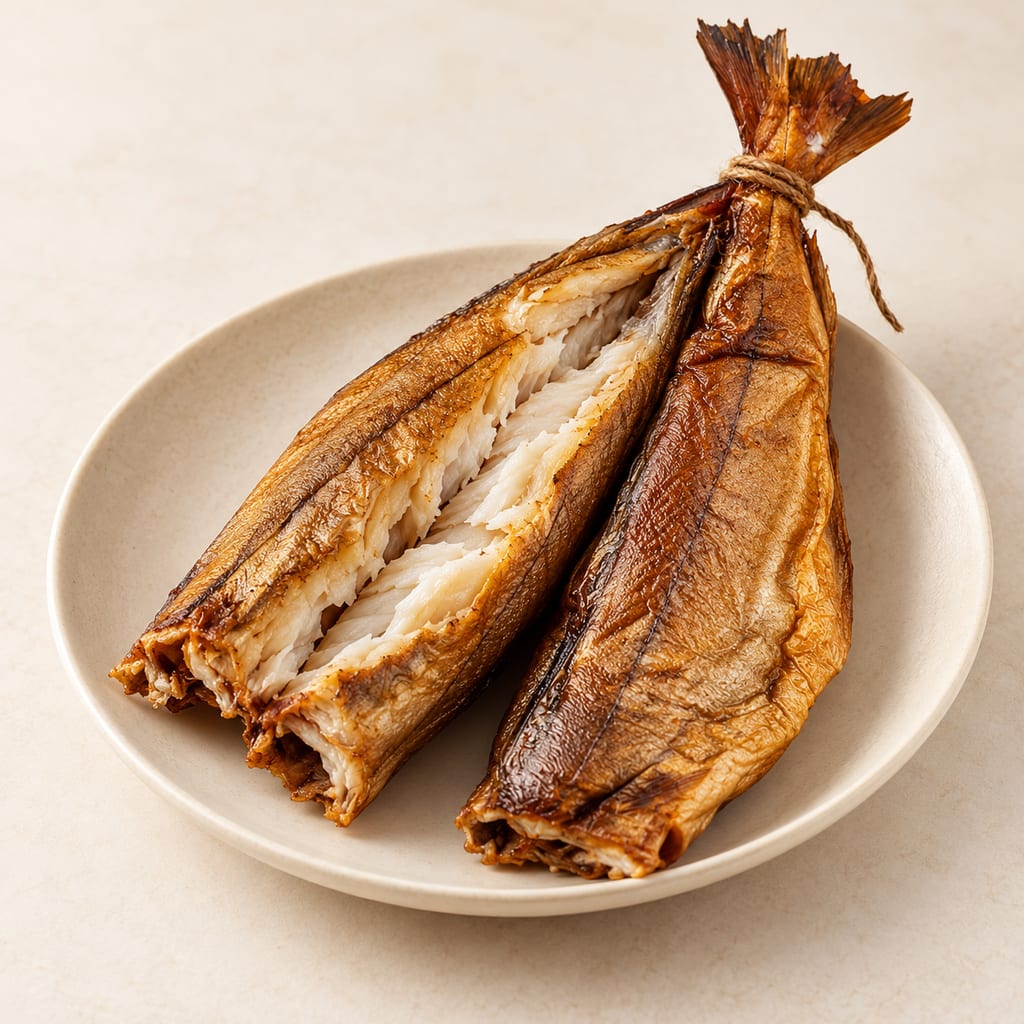
Arbroath smokies are whole haddock dry-salted, paired by the tail and hot-smoked in a protected coastal area. Their recorded history links Auchmithie and Arbroath, though the exact origin is unsettled.
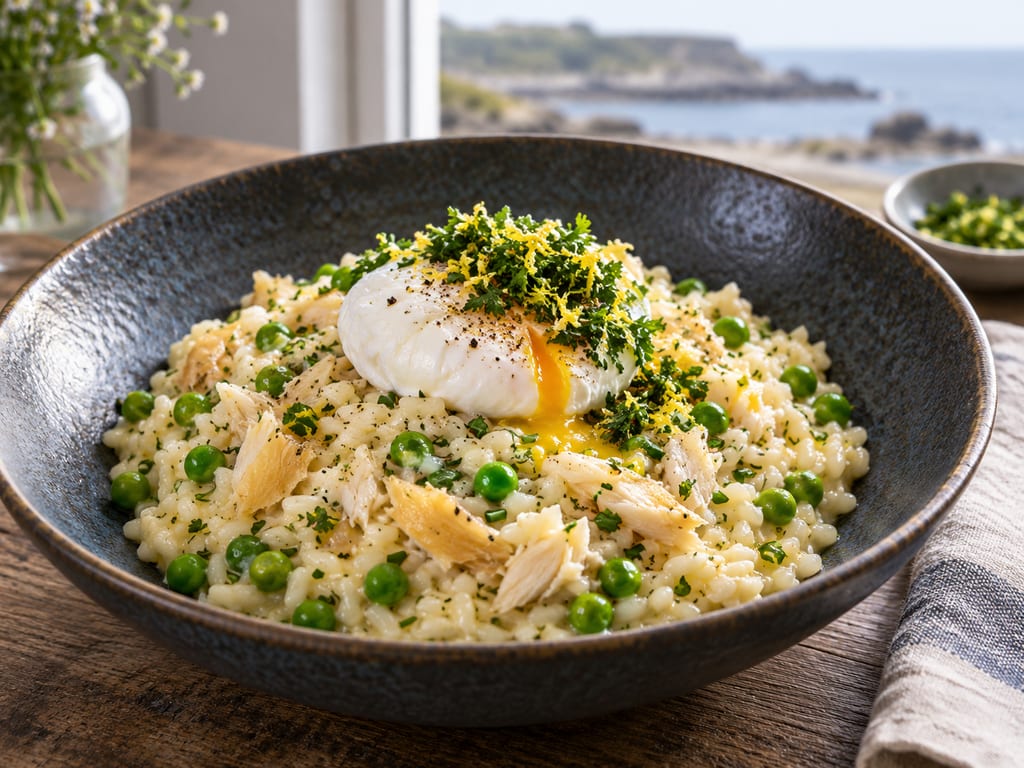
A four-serving risotto published in the 2014 Arbroath Smokie Trail booklet and credited to Hayley Wilkes. It cooks with finished Arbroath smokies; it does not describe smoking fish.
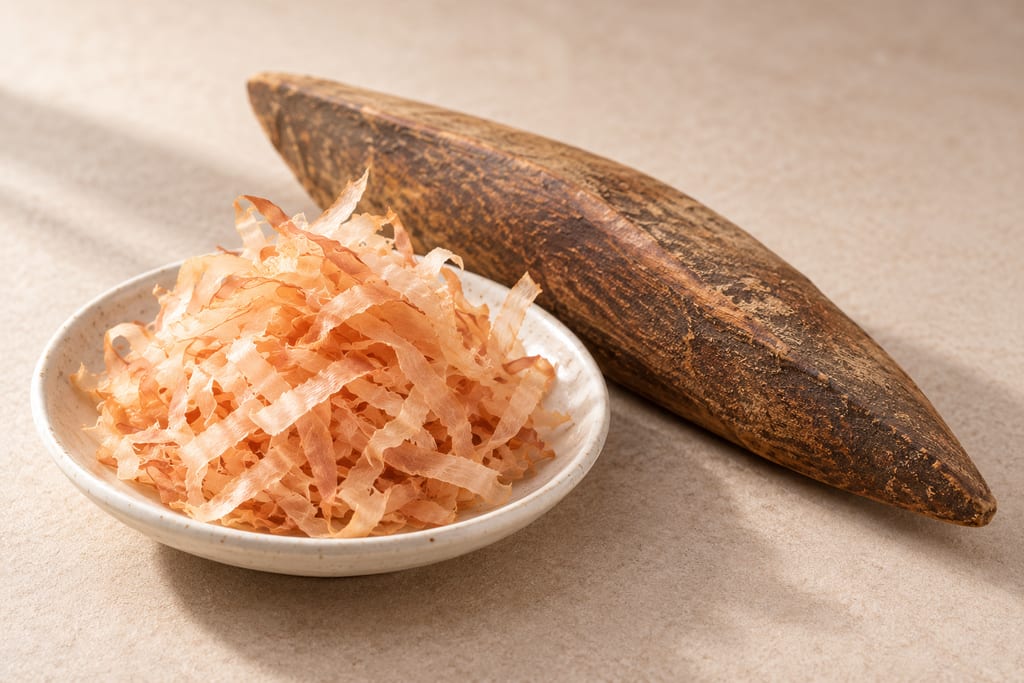
Katsuobushi is skipjack tuna cooked, smoked and dried into a hard block that is shaved into flakes for dashi and toppings. Some styles stop at the smoke-dried stage; others receive carefully managed mold maturation.
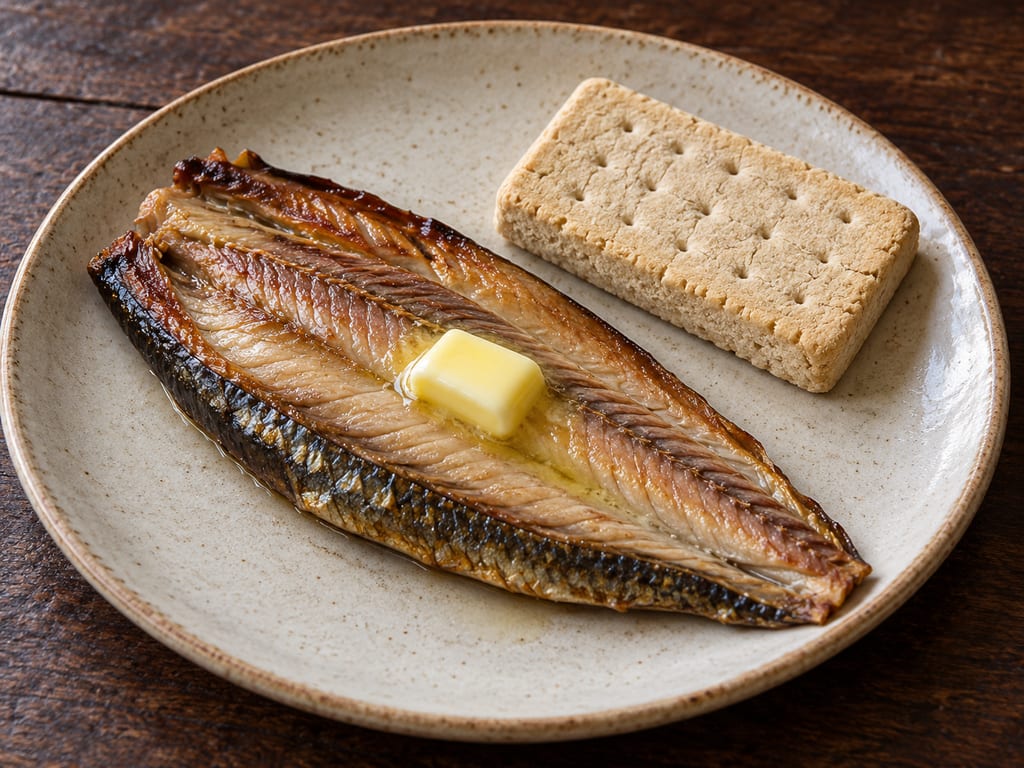
A Victorian way with Great Yarmouth bloaters: the lightly salted, cold-smoked whole herring is broiled and served with fresh butter and a warmed captain's biscuit.
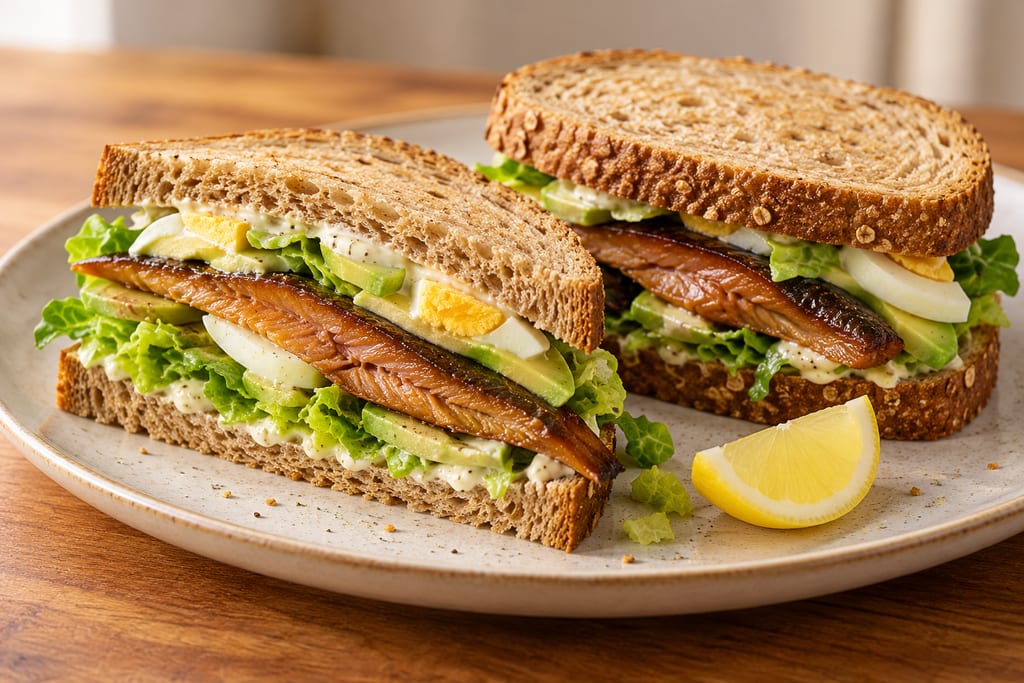
A warm club sandwich of oak-smoked Craster kipper fillets layered with soft-boiled egg, romaine, avocado and lemon mayonnaise on brown bread.
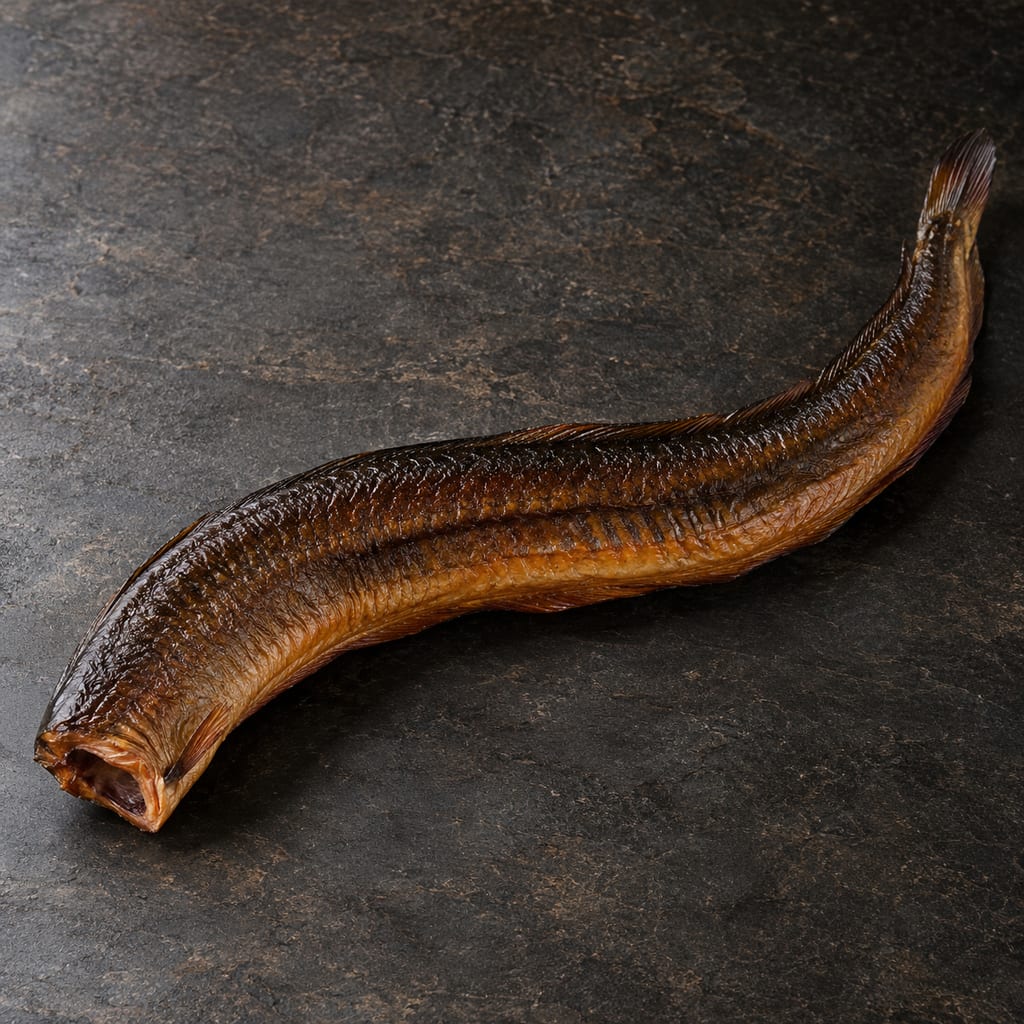
Short-finned eels, kooyang, smoked for a sustained period in the hollows of large trees at Budj Bim in south-western Victoria, a combined heat, smoke and drying method of the Gunditjmara people.
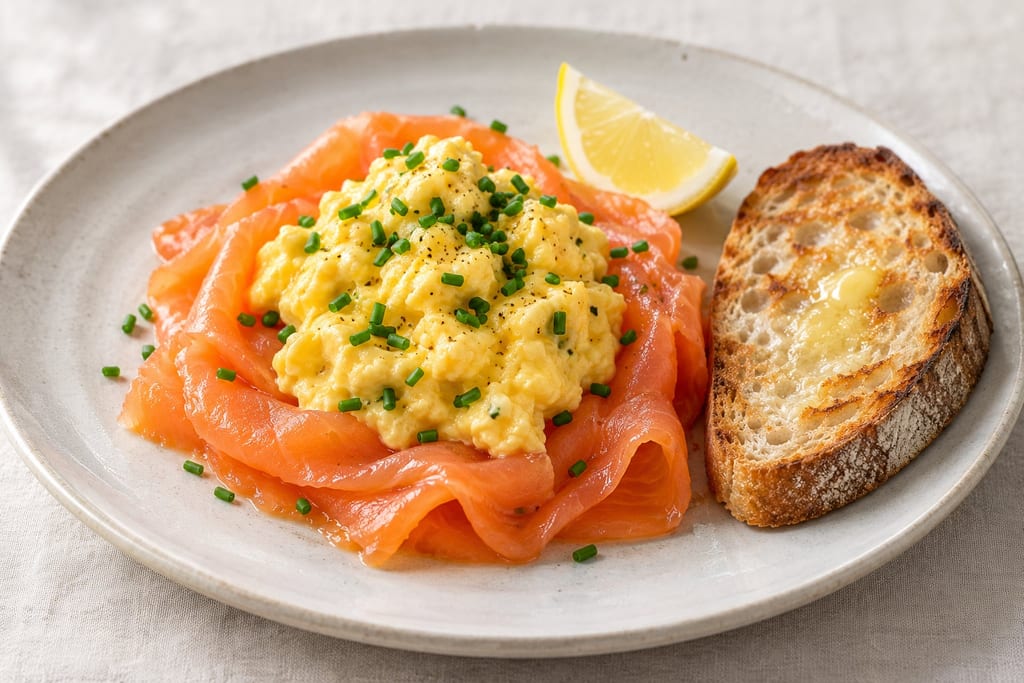
Softly scrambled eggs enriched with cream and butter, served with cold-smoked salmon, chives, lemon and sourdough toast as a British breakfast dish.
No community contributions have been published for this entry yet.
Sign in to contribute. Published comments and photos are free to read.
Kaufland Czech Republic recipe siteInspiration
Pomazánka z uzené makrelyFour portions; ingredients and steps directly inspected. Uses purchased smoked fish and says serve with bread; no storage duration stated.
Cited in: A Czech spread built around smoked fish; Species and terminology; Historical context; Why each ingredient belongs; Equipment; Preparation method; What actually happens when the spread is mixed?; Why smoked mackerel is so distinctive; Regional and household variations; Serving traditions; Recognizing a good result
U.S. Food and Drug AdministrationSafety guidance
Selecting and Serving Fresh and Frozen Seafood SafelyU.S. consumer guidance on seafood selection, refrigeration, separation of raw and ready-to-eat foods, and handling; it does not validate the seller smoking method.
Cited in: Safety and storage
COOP MoravaCulinary background
COOP Morava — Pomazánka z uzené makrelyRelated Czech preparation demonstrating a different dairy base.
Cited in: Species and terminology; Historical context; Regional and household variations; Serving traditions
Food Standards Agency and Food Standards ScotlandSafety guidance
Food Standards Agency and Food Standards Scotland — Cold-smoked and cured fish adviceCited in: Safety and storage
NHSSafety guidance
NHS — ListeriosisRefrigeration and handling guidance.
Cited in: Safety and storage