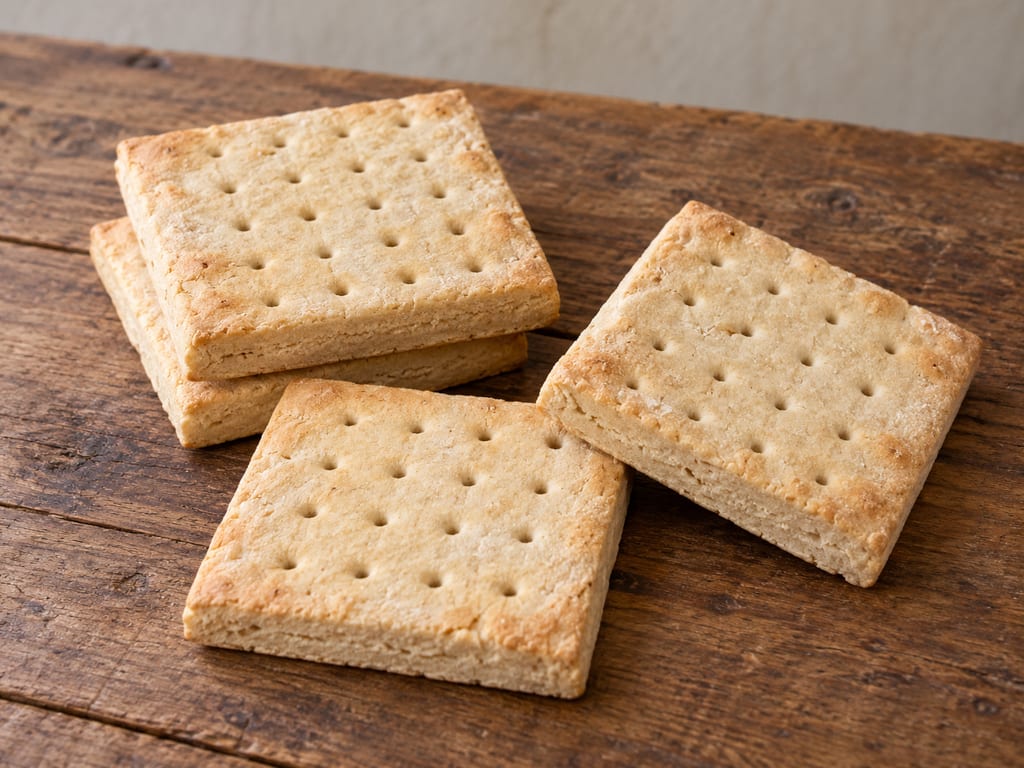
Hardtack
A flour-and-water biscuit baked hard for transport; this home version follows the measured National Park Service Manassas interpretation.
 FermenteaWhere food goes to change
Historical attestation
Yarmouth Bloaters
A Victorian way with Great Yarmouth bloaters: the lightly salted, cold-smoked whole herring is broiled and served with fresh butter and a warmed captain's biscuit.
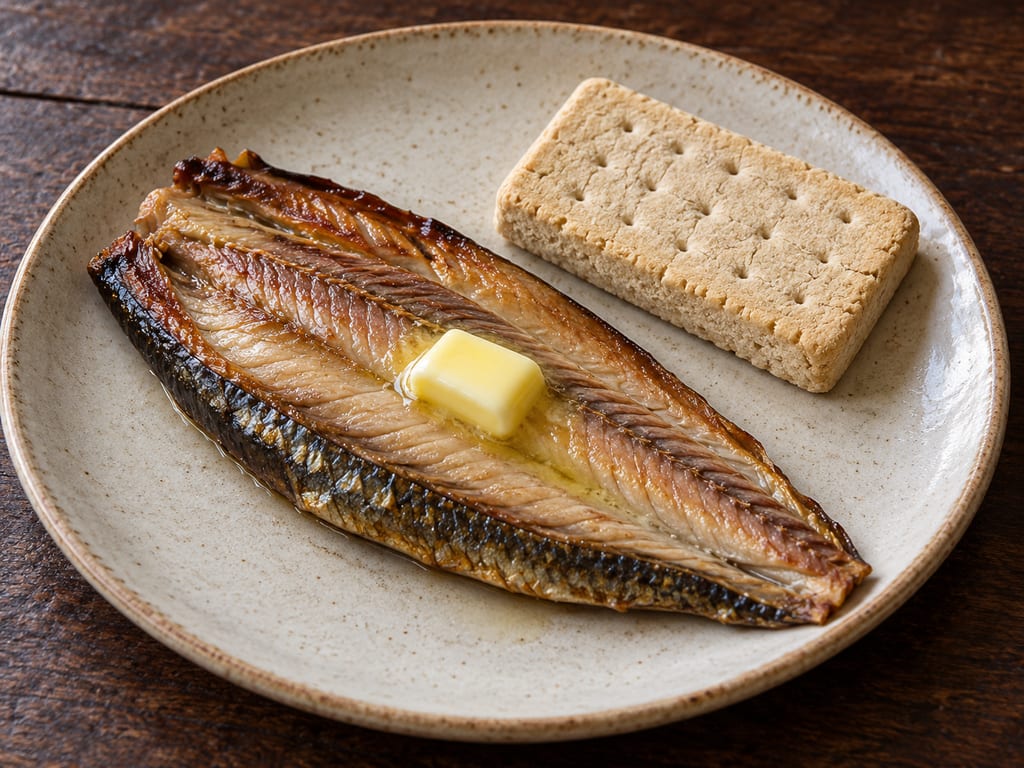
A broiled Yarmouth bloater is a whole, traditionally smoked herring that is prepared for cooking by removing its head and tail, splitting it open along the back and grilling it over strong heat. It is served with fresh butter and a warmed captain's biscuit.
The recipe is strikingly simple, but it brings together two historically significant foods: East Anglian smoked herring and the hard, dry biscuits associated with maritime provisioning.
Its historical foundation is unusually strong. The dish appears as recipe number 329, Yarmouth Bloaters, in Charles Elmé Francatelli's The Cook's Guide and Housekeeper's and Butler's Assistant, published in London in 1861.
Unlike a modern reinterpretation of an old ingredient, this is a documented nineteenth-century cooking method.
The recipe does not specify a weight for the fish, a cooking temperature, a grilling duration or a fixed quantity of butter. Those omissions must remain visible rather than being filled with invented Victorian measurements.
Yarmouth bloater — Whole, lightly cured and smoked herring associated with Great Yarmouth
Bloater — Traditional smoked-herring product
Kipper — Related but differently prepared split and smoked herring
Buckling — Herring traditionally subjected to hot smoking
Red herring — More heavily cured and smoked product
Captain's biscuit — Hard, dry biscuit associated with naval and maritime food
Atlantic herring — Clupea harengus
The fish belongs to the species Clupea harengus.
The name bloater describes its processing and appearance, not a separate species.
Great Yarmouth became one of England's major herring ports.
Fishing, curing, smoking and packing supported a substantial local economy.
The town's commercial importance was tied to seasonal herring movements in the North Sea.
Large catches created a practical problem: fresh herring is highly perishable.
Fish had to be eaten, sold or preserved quickly.
Smoking and salting allowed part of the catch to be marketed beyond its immediate landing place.
By the nineteenth century, bloaters were sufficiently familiar to appear in metropolitan cookbooks.
That is significant because Francatelli was writing for a readership extending well beyond the fishing communities of Norfolk.
His recipe assumed readers could recognise or obtain a Yarmouth bloater.
The bloater had therefore become a named regional product with a wider commercial identity.
Women formed a major part of the seasonal herring-processing workforce. Fish workers travelled to coastal ports as the fishing season progressed, undertaking tasks essential to the curing and distribution industries.
The historic scale of this economy contrasts with the present-day rarity of traditionally produced bloaters.
Changes in fish stocks, fishing practices, consumer preferences and industrial organisation contributed to the decline of the East Anglian bloater trade during the twentieth century.
A traditional bloater is generally smoked whole, without first removing its internal organs.
A kipper is normally split, gutted, salted and smoked in an opened form.
This difference changes the product.
The intact bloater retains more of its original moisture during processing, and its flavour can be stronger and more distinctive.
Traditional descriptions sometimes call the result gamey.
A bloater may appear rounded or swollen, helping explain its familiar name.
The original Victorian recipe removes the head and tail and splits the smoked fish before broiling, rather than beginning with a commercially prepared split kipper.
That sequence is important.
Substituting a kipper may produce an enjoyable grilled fish dish, but it no longer reproduces the precise named product in Francatelli's recipe.
Buckling and red herring are also distinct.
Buckling is associated with hot smoking, while red herring involves a more strongly preserved product.
Names are not always used consistently in commercial or historical writing, but the underlying processes should not be collapsed into one category.
Bloaters begin with sound herring.
The fish is exposed to salt or brine and then smoked.
Slow Food UK's description of the traditional product identifies whole, ungutted fish that undergo cold smoking for approximately 18 hours.
That is one documented traditional production description.
FAO technical material describes several industrial smoking schedules for bloaters, including processes with different salting and smoking times.
These differences do not establish that one schedule is universally correct.
Smoker construction, fish size, salt treatment and intended finished product all influence the operation.
The relevant point for this recipe is that the cook begins with an already smoked bloater.
The recipe does not describe the manufacture of that preserved fish.
Cold smoking may develop flavour and reduce moisture without fully cooking the fish.
Consequently, the subsequent broiling stage is important both for eating quality and for food safety.
Herring contains protein, water and a significant proportion of fat.
Its oil content contributes richness but also makes quality management important.
Fats can undergo oxidation, producing undesirable flavours during poor handling or storage.
Salt affects the fish by changing the distribution and availability of water.
It also alters the environment available to microorganisms.
Smoke introduces aromatic compounds generated through the heating and partial combustion of wood.
Phenolic compounds are particularly important contributors to smoky aroma.
Carbonyl compounds and other components contribute to colour and flavour development.
The exact composition of smoke depends on fuel, temperature, airflow and smoking equipment.
Cold-smoked fish should not be assumed to have undergone a lethal cooking treatment merely because its surface is darkened.
Traditional flavour and microbiological safety are related but separate questions.
Broiling exposes the fish to intense direct or radiant heat.
The flesh heats rapidly from its surface inward.
Muscle proteins denature, and the flesh becomes more opaque and easier to separate.
Fat warms and may move towards the surface.
The heat also intensifies the aroma released from the smoke-treated flesh.
The Victorian instruction to spread the bloater flat makes practical sense.
Opening the fish increases the surface exposed to the fire.
It also permits the cook to turn the fish and inspect its interior.
Compared with leaving the fish whole, a flattened preparation allows more direct heating of the flesh.
However, the source's phrase clear sharp fire does not correspond to a measured modern grill setting.
The appropriate heating requirements must be determined using food-safety guidance and the supplier's instructions for the particular bloater.
Original 1861 formulation. Measurements that do not appear in the historical recipe are deliberately unspecified.
There are no additional sauces, vegetables, herbs or spices in the original method.
The source does not state a serving yield.
One fish may be presented as a portion, but that should not be elevated into an explicitly measured serving specification.
Use a commercially prepared bloater from a reputable fish supplier.
The fish should have been stored according to the producer's instructions.
Avoid products with damaged packaging, abnormal odours or other evidence of deterioration.
The characteristic strong aroma of smoked fish does not justify ignoring possible spoilage.
The recipe specifically calls for fresh butter.
Butter supplies fat and a relatively mild dairy flavour.
When it meets the hot fish, it softens or melts and coats the surface.
No salt is separately prescribed.
Because the bloater has already undergone curing, extra seasoning may be unnecessary.
Captain's biscuit is a hard, dry biscuit associated with shipboard provisions and nineteenth-century food culture.
It is related to the broader family of hard maritime breads designed to keep better than ordinary moist loaves.
The captain's biscuit mentioned in the recipe is a food accompaniment, not a sweet dessert biscuit.
Its restrained flavour provides a contrast to strongly smoked herring.
Warming it makes the biscuit a more suitable companion to the hot fish, although the original method does not specify that it should be softened with water or another liquid.
The historical method assumes an open fire or equivalent broiling arrangement.
A grill or broiler can provide a contemporary cooking environment.
Use suitable fish-handling utensils, a clean cutting board, a sharp knife and a reliable food thermometer.
A baking tray or appropriate oven surface is needed to heat the biscuit.
Because a bloater contains bones and internal organs, preparation requires more attention than simply placing a boneless fillet under a grill.
Check the commercially smoked bloater for quality.
Ensure it has been held and transported under appropriate conditions.
Do not use a fish that appears spoiled.
Place the bloater on a clean board.
Cut off the head.
The historical recipe begins by removing this part.
Cut off the tail.
The source does not specify a particular cutting distance.
Split the fish down the back.
Spread the two sides open to create a flatter cooking surface.
Because traditional bloaters may be smoked ungutted, remove the internal organs during preparation and avoid contaminating the edible flesh.
The original text does not describe a separate gutting procedure in detail.
Check the exposed flesh for the backbone and smaller bones.
Further bone removal may be performed as appropriate.
This is particularly important if the fish will be served to children.
Bring the cooking fire or grill to a condition suitable for broiling.
The original specifies a strong, clear fire.
It does not provide a temperature.
Do not interpret the phrase as permission to scorch the surface while leaving the centre insufficiently heated.
Place the flattened bloater under or over the heat using appropriate equipment.
Allow the flesh to cook.
The historical source gives no time.
Turn the fish carefully.
Broil the second side.
The instruction explicitly requires cooking both sides.
Where the smoked fish requires cooking, follow the supplier's instructions.
For a conservative fully cooked result, UK food-safety guidance provides 70°C for two minutes, or an equivalent time-temperature combination.
The Victorian recipe does not itself give a measured internal endpoint.
Warm a thick captain's biscuit in the oven or before the fire.
The original permits either arrangement.
It does not specify an oven temperature or duration.
Transfer the cooked bloater to a serving plate.
Add a pat of fresh butter.
Its quantity is not stated.
Serve the hot fish with the warmed biscuit.
Eat while the fish is freshly cooked and the butter remains soft.
The simplicity is deliberate.
A bloater is already strongly flavoured.
It contains smoke-derived aromas, salt and naturally rich herring flesh.
Adding a complicated sauce could obscure the character of the fish.
Butter provides richness without introducing a competing spice profile.
Captain's biscuit offers starch and texture.
Together, the ingredients create a complete, restrained plate.
The cooking method is also efficient.
The fish has already undergone its principal flavour development during curing and smoking.
The domestic cook needs to prepare, heat and serve it rather than construct an elaborate stew.
Hard biscuits were important in historic maritime provisioning because ordinary bread deteriorated relatively rapidly.
Reducing moisture helped make stored cereal products less susceptible to spoilage.
Their hard texture was a consequence of that processing.
The pairing with smoked fish connects two foods designed for transport and keeping quality.
However, Francatelli's recipe does not establish that sailors specifically ate this precise combination during voyages.
The biscuit is a historically plausible accompaniment, but the documented recipe belongs to a nineteenth-century cookbook intended for domestic service.
A traditionally produced bloater is the correct ingredient for this recipe.
When unavailable, a kipper may offer a related smoked-herring experience.
That substitution should be labelled honestly.
Hot-smoked herring, buckling and other fish products also differ.
A modern cracker or crispbread can serve in place of captain's biscuit, but it may have a different thickness, texture and flavour.
Fresh white bread is another possible accompaniment in a contemporary adaptation, though it is not the original.
The source contains no lemon, parsley or mustard.
Such additions belong to modern reinterpretations rather than the 1861 formulation.
The fish can be presented opened flat on a plate.
The butter is added immediately before serving.
The warmed biscuit is placed alongside rather than incorporated into the fish.
Because the bloater is richly flavoured, small bites of biscuit provide useful contrast.
The edible flesh should be separated carefully from bones.
In a modern setting, additional vegetables might create a more substantial meal, but they are not part of the historical recipe.
Bloater paste, made from the flesh of smoked herring, became another well-known British use of this ingredient.
It belongs to a separate preparation and should not be confused with broiled bloaters.
The fish should be thoroughly heated according to its processing status.
The flesh should separate from the bones without excessive difficulty.
A characteristic smoky aroma is expected.
Freshly added butter should melt or soften against the warm surface.
The biscuit should be warmed without becoming charred.
The fish may retain a stronger flavour than a kipper because of its traditional whole-fish smoking process.
That distinctive intensity is normal, but it must not be used to excuse abnormal spoilage odours.
The surface burns before the centre is hot. The heat may be excessively intense or uneven. Adjust the cooking arrangement and verify internal cooking.
The fish becomes very dry. Extended broiling can remove moisture from the already smoked flesh.
Bones remain in the serving portion. More careful preparation is needed before eating.
The flavour is unusually powerful. Bloaters can have a distinctive strong flavour. A kipper may be milder but is a different product.
The biscuit is too hard. Captain's biscuit is naturally firm. Warming does not transform it into soft bread.
The fish tastes rancid or smells rotten. Reject it. Butter or additional heat should not be used to disguise spoilage.
Traditionally produced cold-smoked fish may contain viable microorganisms.
Listeria monocytogenes is an important concern with ready-to-eat cold-smoked seafood.
Pregnant people and those with weakened immune systems should avoid cold-smoked fish unless it is thoroughly cooked, following current UK food-safety guidance.
Commercial cold smoking does not guarantee that fish is fully cooked.
Check the producer's instructions.
Keep the fish refrigerated as directed before preparation.
Use clean equipment when removing the head, tail and internal organs.
Avoid spreading material from the gut cavity onto ready-to-eat foods.
Herring is a recognised fish allergen.
The butter also contains milk.
The strongest historical evidence is the printed 1861 recipe itself.
The fishing and smoking traditions of Great Yarmouth are also well documented.
What cannot be established is the exact temperature of Francatelli's fire, the mass of butter used by every Victorian cook or the time required to broil every bloater.
The recipe is therefore preserved as a historical culinary document with modern safety interpretation clearly separated.
Its importance lies in showing how a named regional smoked fish entered wider British domestic cooking.
The inspected text is a selected OCR passage from a University of Leeds Library copy catalogued as an 1862 London edition. The page image was not visually checked; the modern transcription’s 1861 first-publication statement has not been confirmed.
Scaling: source batch only
Francatelli’s historical passage identifies a finished “Yarmouth bloater” but does not establish its present-day product classification or whether it is a ready-to-eat cold-smoked/cured fish product. FSS guidance is relevant only if a current product is in that category; the historical source does not resolve this.
Hazard sourceFor any present-day fish product, check its label and manufacturer instructions. If it is ready-to-eat cold-smoked or cured fish, follow current FSS advice for higher-risk consumers; the historical broiling instruction supplies no measurable modern safety endpoint and does not establish that the product meets FSS guidance.
Control sourceThis is a historical cooking passage for a finished bloater, not a method for curing or smoking fish. The 1862 wording is not current food-safety guidance.
The source gives no time, temperature, measurable endpoint, storage advice, yield or quantities for butter and biscuit.
Francatelli’s historical passage identifies a finished “Yarmouth bloater” but does not establish its present-day product classification or whether it is a ready-to-eat cold-smoked/cured fish product. FSS guidance is relevant only if a current product is in that category; the historical source does not resolve this.
Yarmouth appears in the recipe title. The text does not establish where the fish was caught, cured or the recipe first originated.
A flour-and-water biscuit baked hard for transport; this home version follows the measured National Park Service Manassas interpretation.
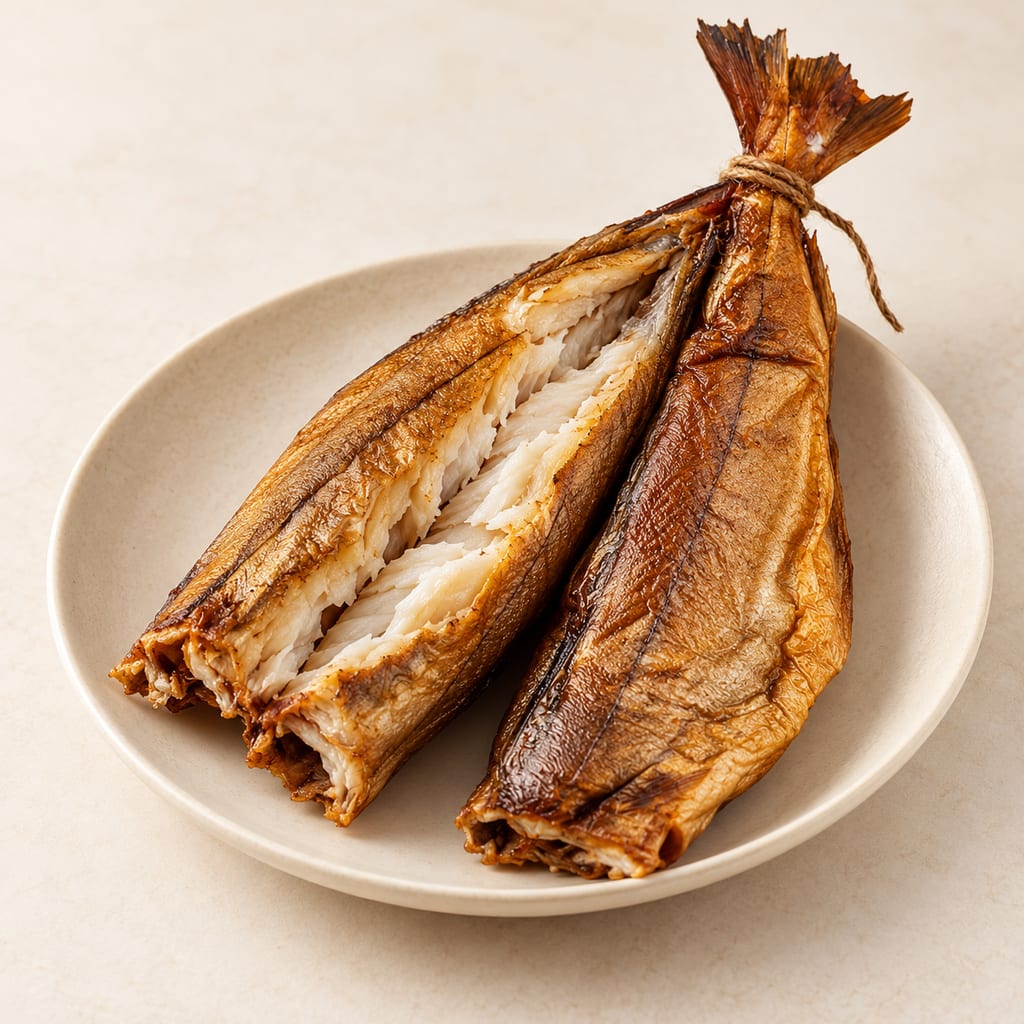
Arbroath smokies are whole haddock dry-salted, paired by the tail and hot-smoked in a protected coastal area. Their recorded history links Auchmithie and Arbroath, though the exact origin is unsettled.
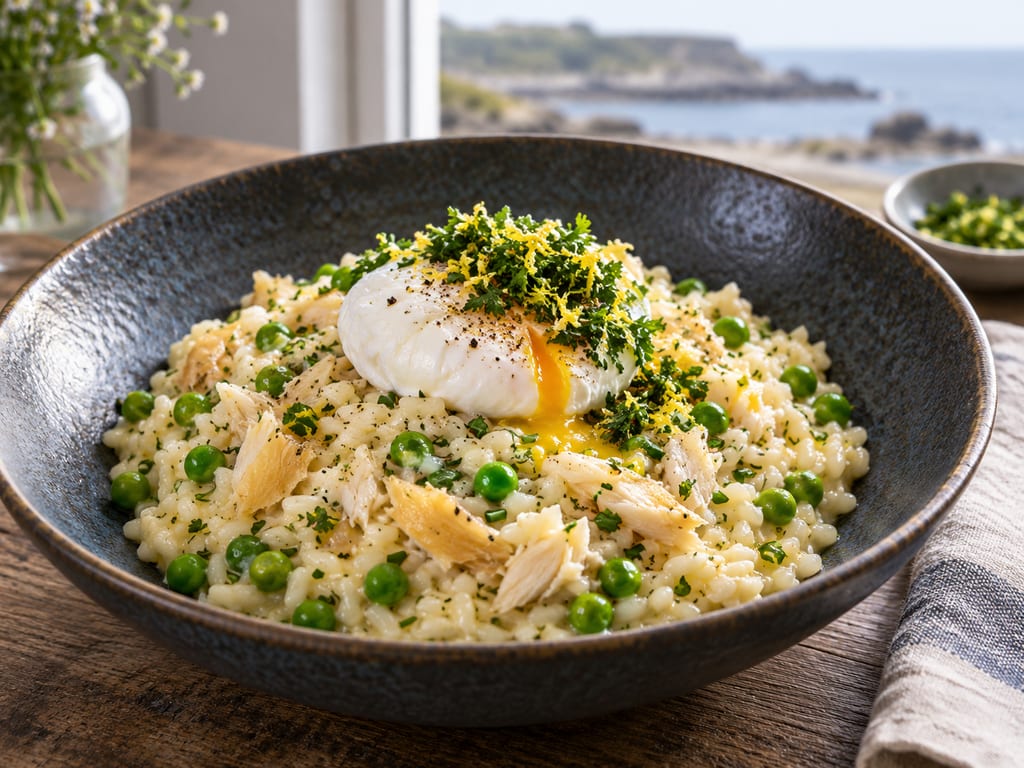
A four-serving risotto published in the 2014 Arbroath Smokie Trail booklet and credited to Hayley Wilkes. It cooks with finished Arbroath smokies; it does not describe smoking fish.
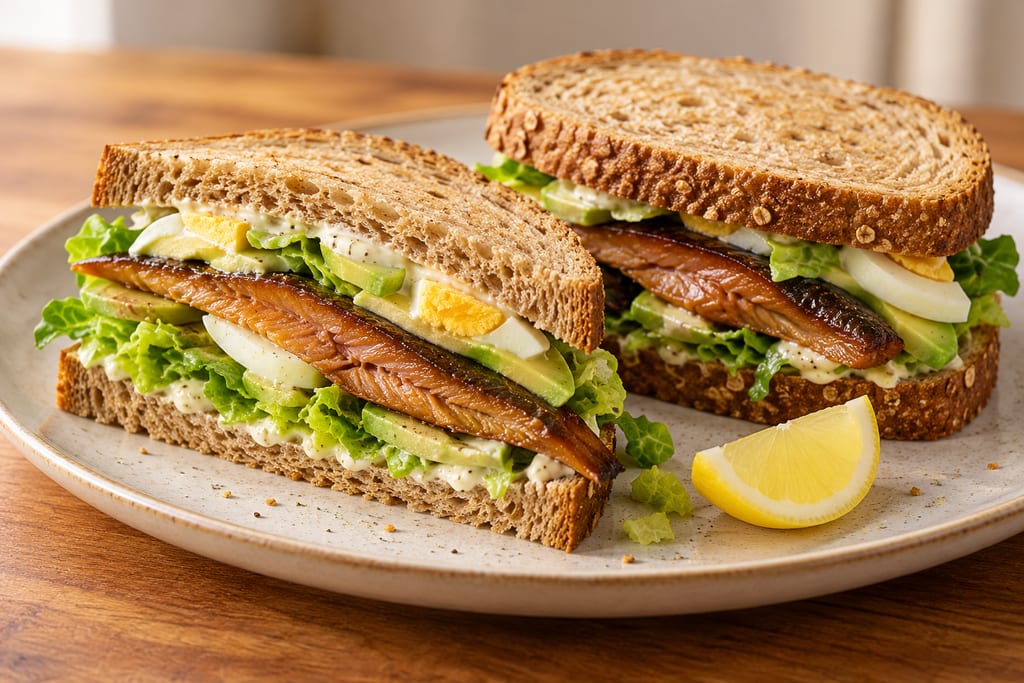
A warm club sandwich of oak-smoked Craster kipper fillets layered with soft-boiled egg, romaine, avocado and lemon mayonnaise on brown bread.
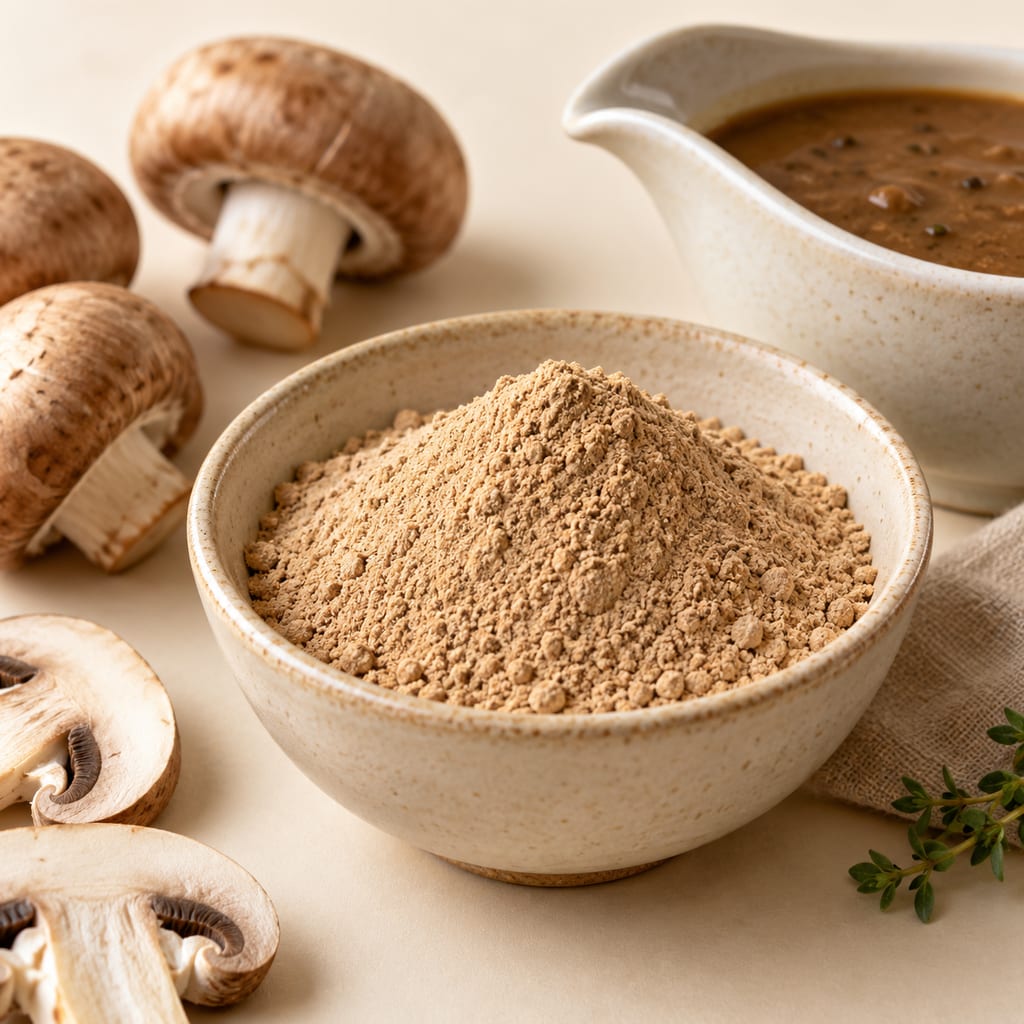
Mushroom powder is dried mushroom tissue ground to a fine powder and added to gravies and sauces. Victorian cooks made it from fresh cultivated mushrooms when fresh ones were not to hand.
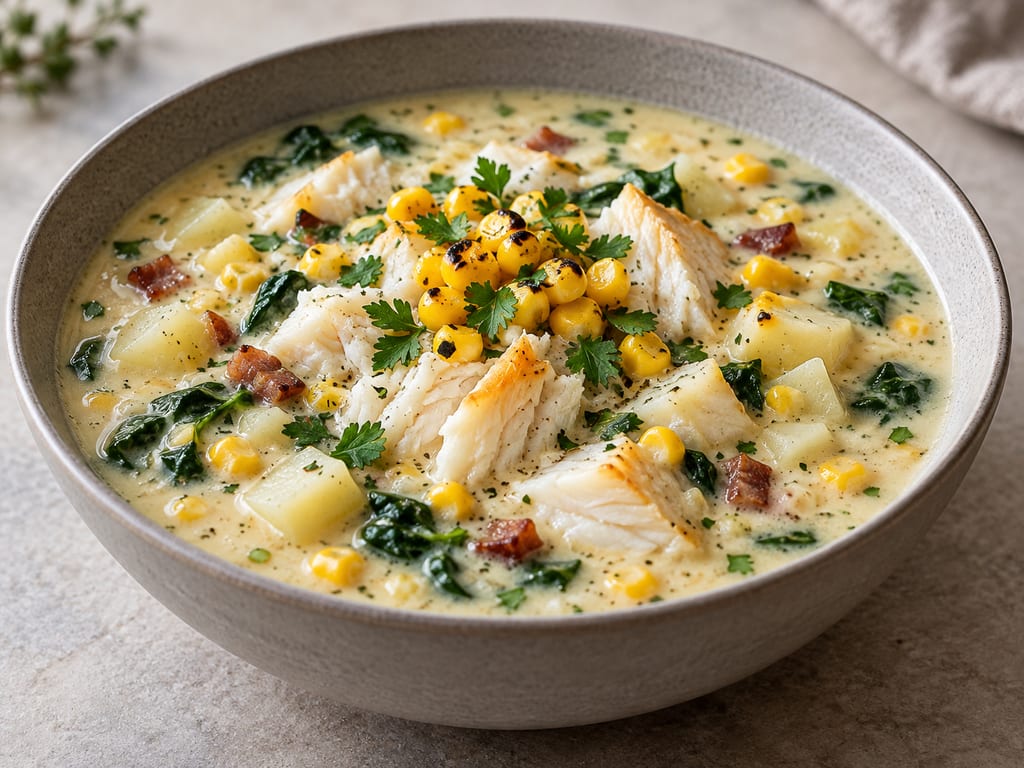
Alfred Enderby’s chowder combines smoked haddock with potato, sweetcorn and spinach in a milk-and-stock broth.
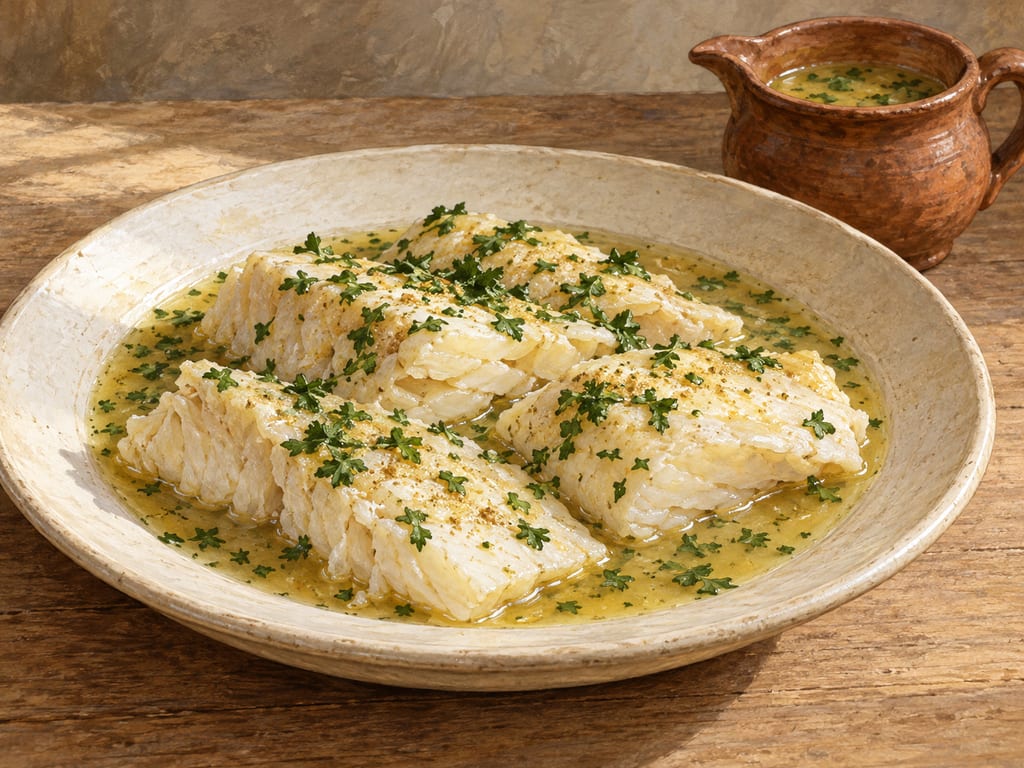
A fifteenth-century English way to serve cooked stockfish: strained fish broth boiled with chopped parsley, powdered ginger and a little verjuice, then poured hot over the fish.
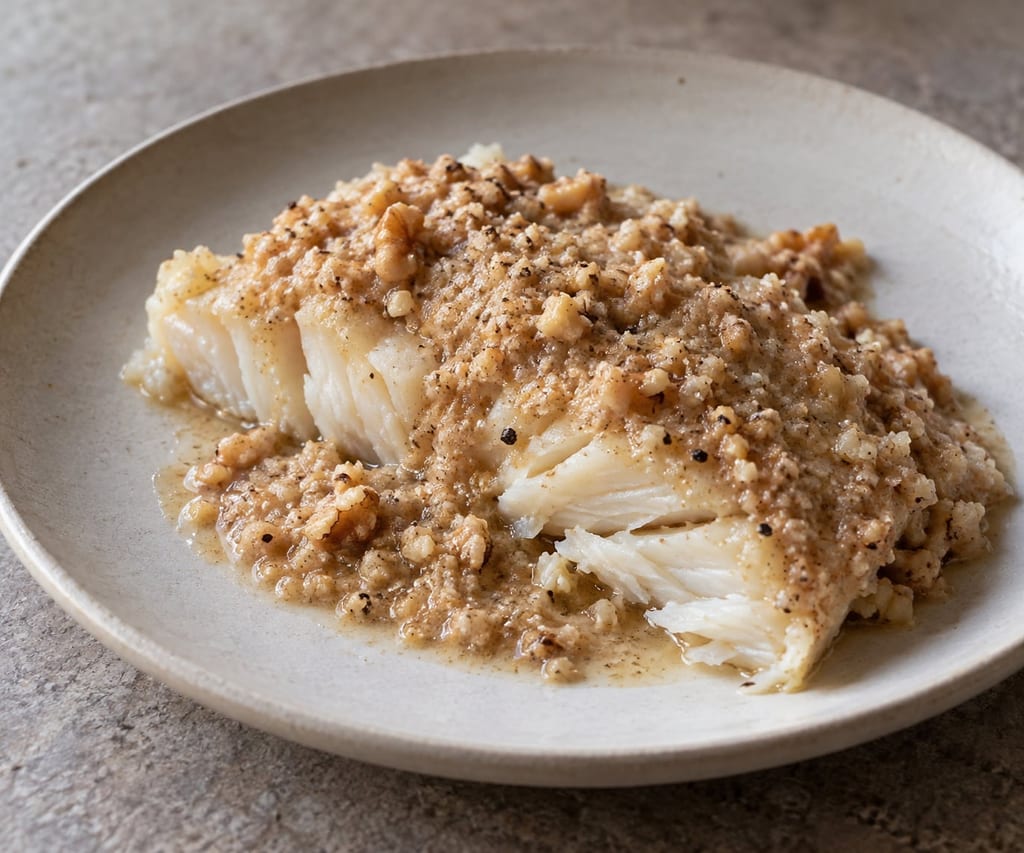
The second stockfish sauce from a fifteenth-century English manuscript: walnuts, garlic, bread, pepper and salt ground in a mortar and loosened with the fish's own broth.
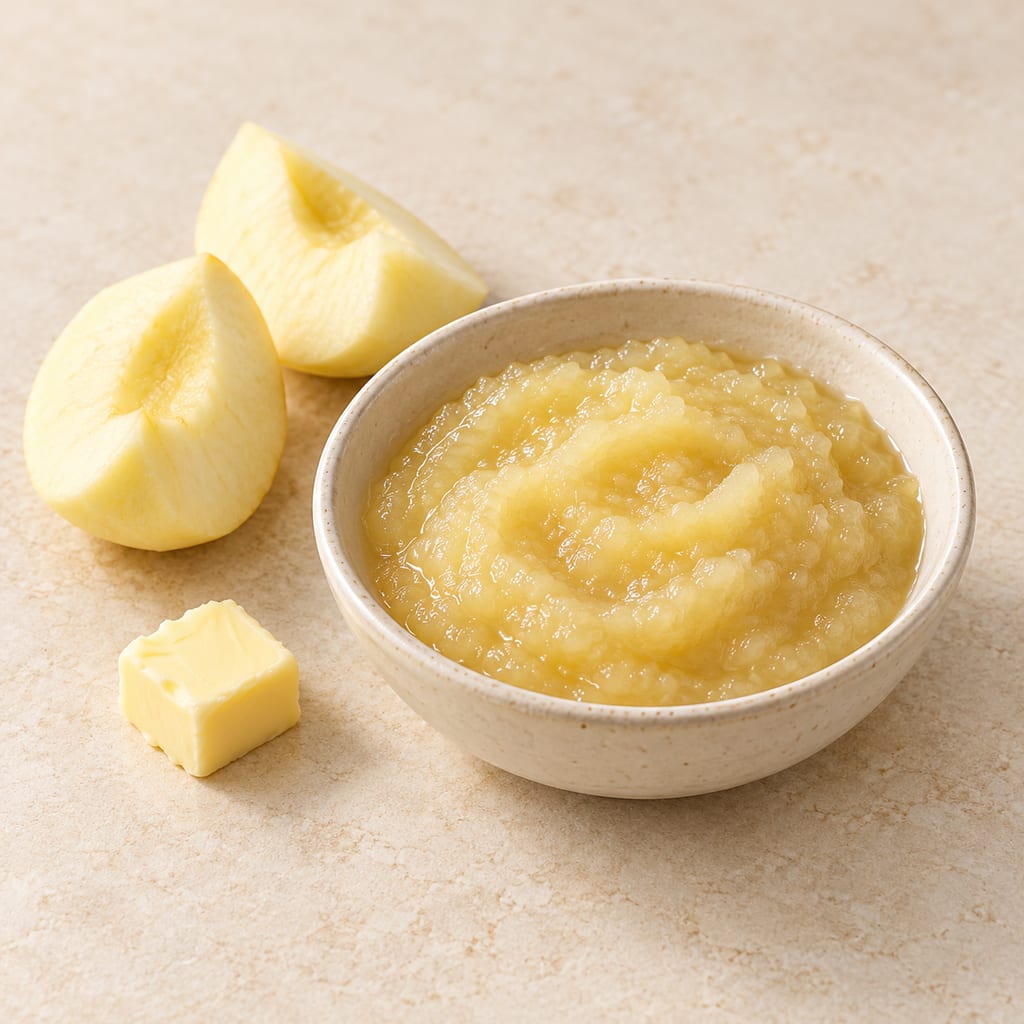
Apple sauce for goose and pork is a plain English accompaniment: cooked apples pulped with water, then sweetened with sugar and finished with a little butter.

Japanese skipjack tuna cooked, then repeatedly smoked and dried over a wood fire by the hand-fired tebiyama method into a hard block for shaving into dashi: the first stage of katsuobushi.
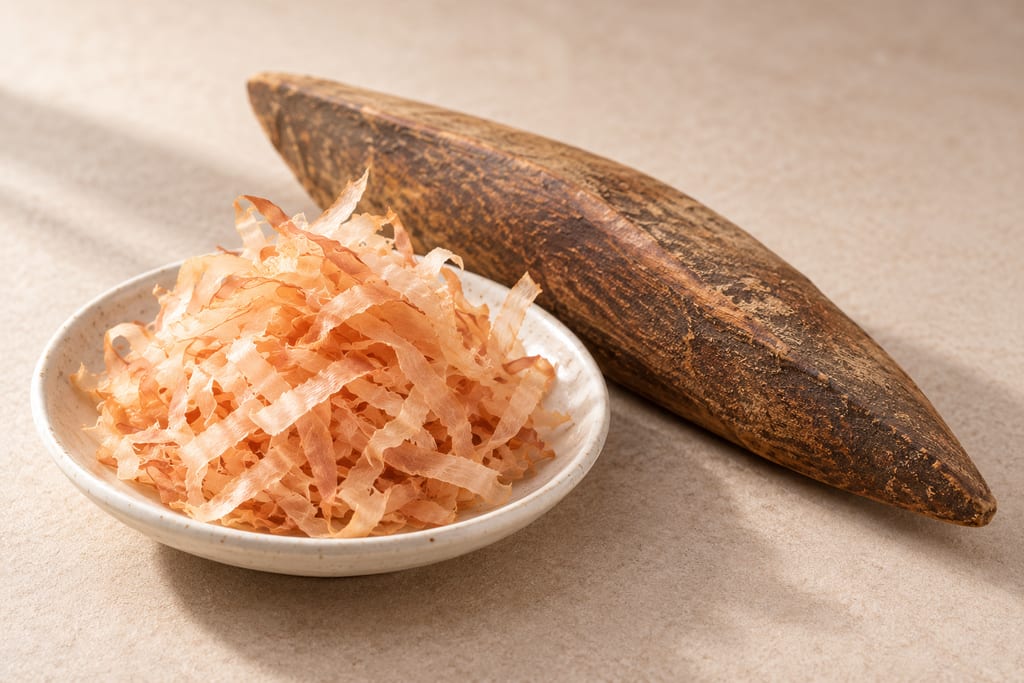
Katsuobushi is skipjack tuna cooked, smoked and dried into a hard block that is shaved into flakes for dashi and toppings. Some styles stop at the smoke-dried stage; others receive carefully managed mold maturation.
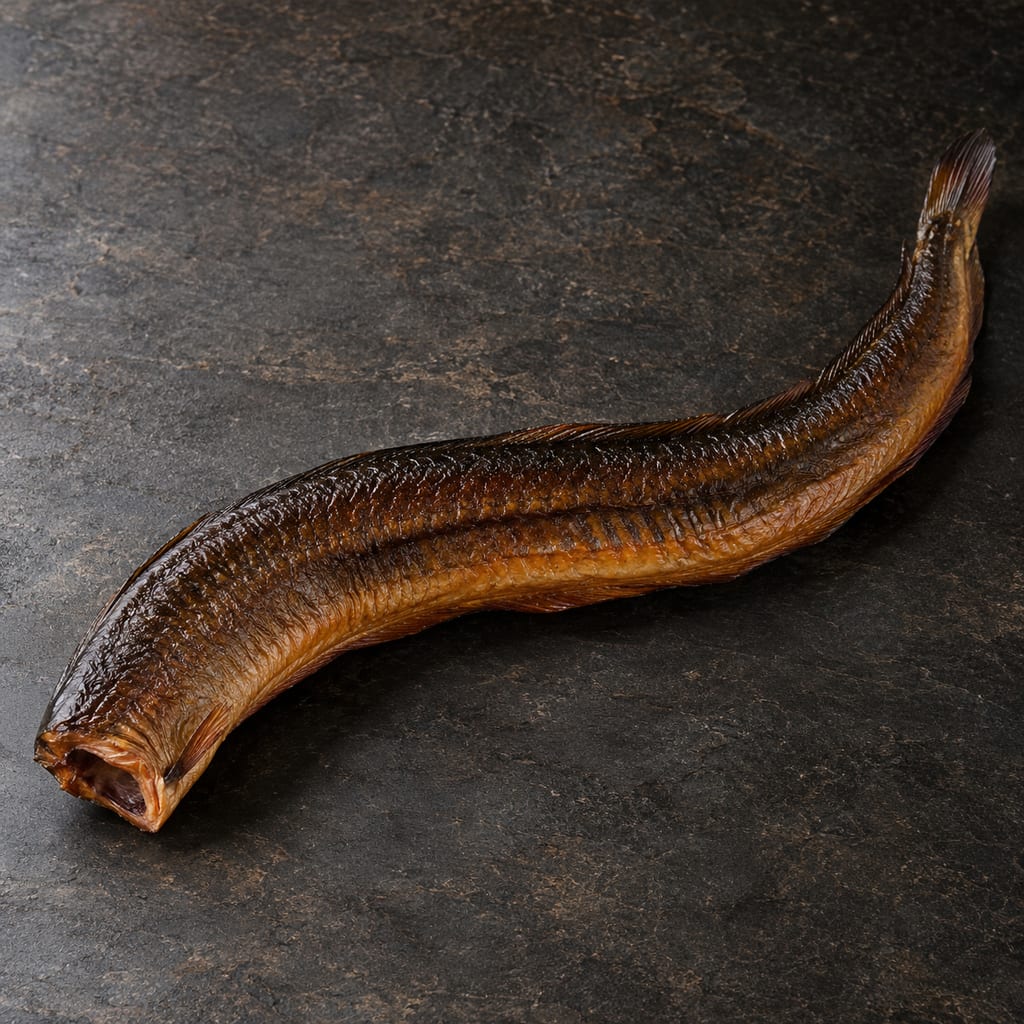
Short-finned eels, kooyang, smoked for a sustained period in the hollows of large trees at Budj Bim in south-western Victoria, a combined heat, smoke and drying method of the Gunditjmara people.
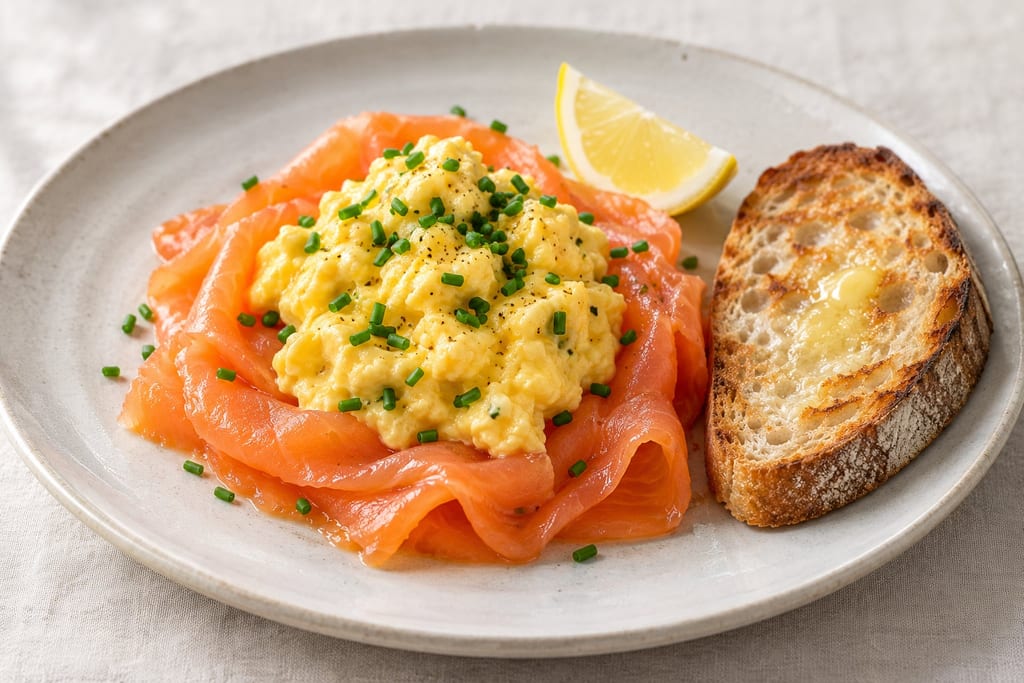
Softly scrambled eggs enriched with cream and butter, served with cold-smoked salmon, chives, lemon and sourdough toast as a British breakfast dish.
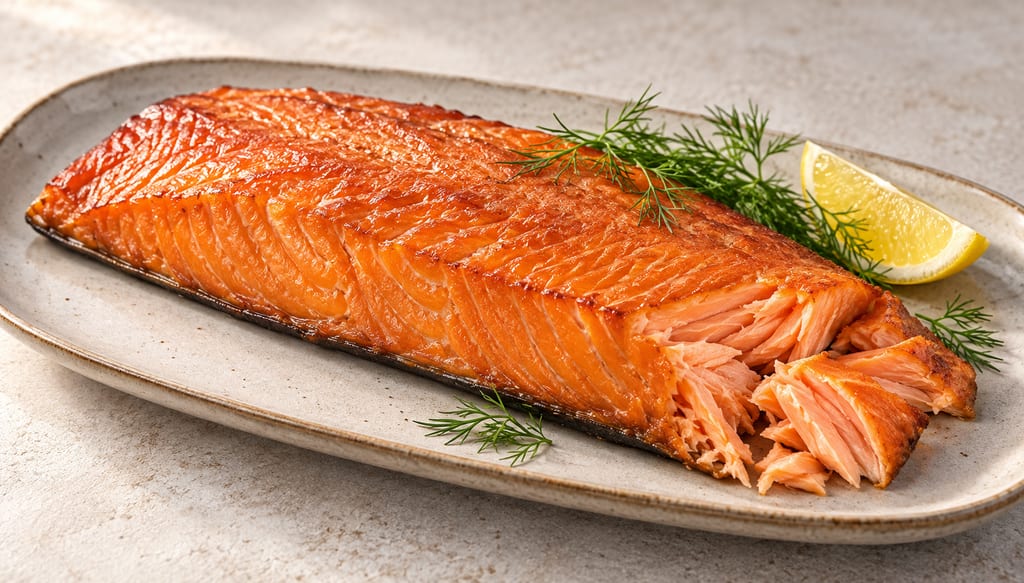
Salmon fillets salted or dry-brined, rested, then cooked and flavoured in a smoker. The method is a cooking process, and the endpoint decides its safety.
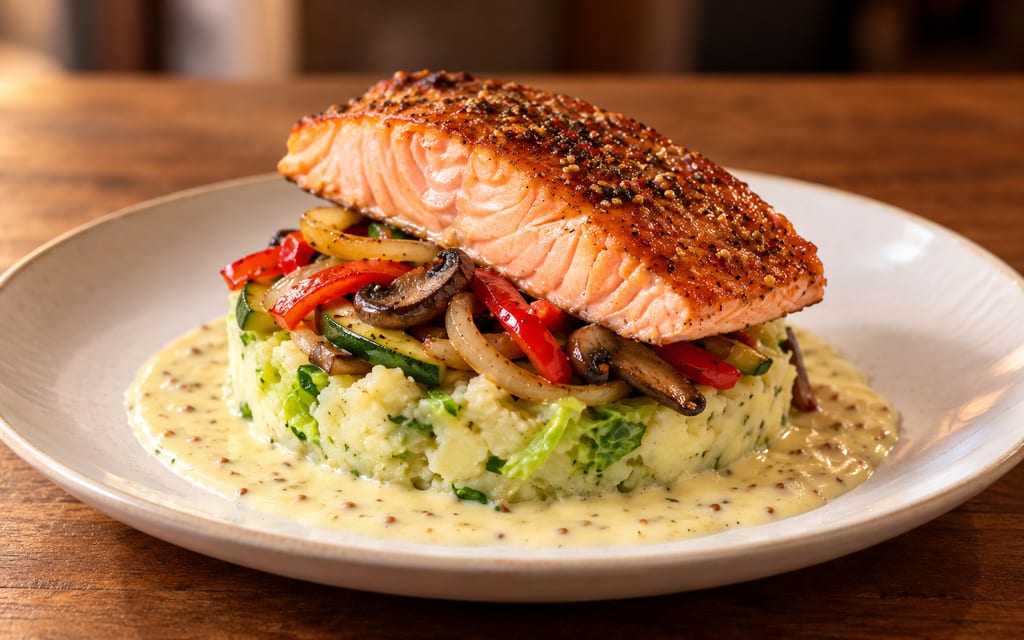
Burren Smokehouse’s colcannon dish serves hot-smoked salmon with mashed potatoes, cabbage, stir-fried vegetables and mustard cream.
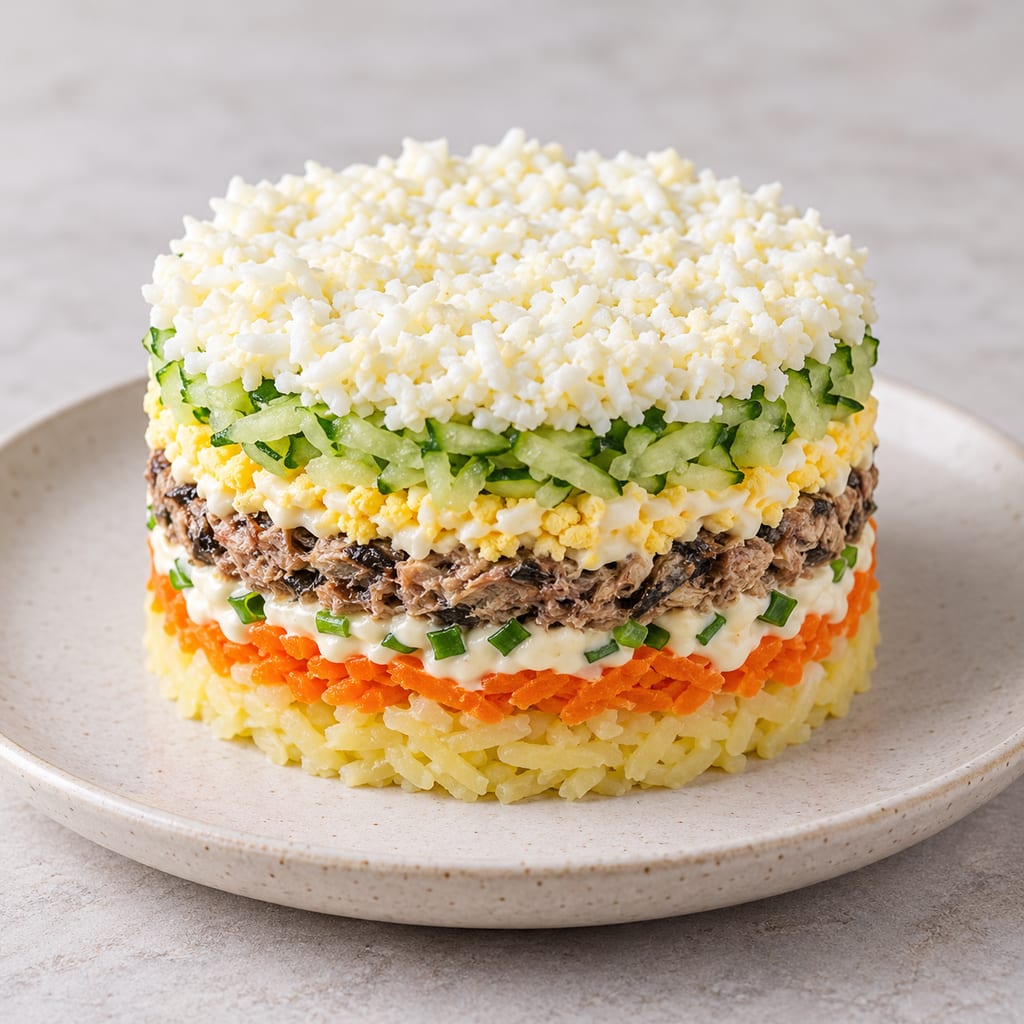
A Latvian Šprotes page’s layered salad uses one can of sprats in oil, grated vegetables and eggs with mayonnaise. The page gives no serving yield, can size or complete vegetable-cooking method.
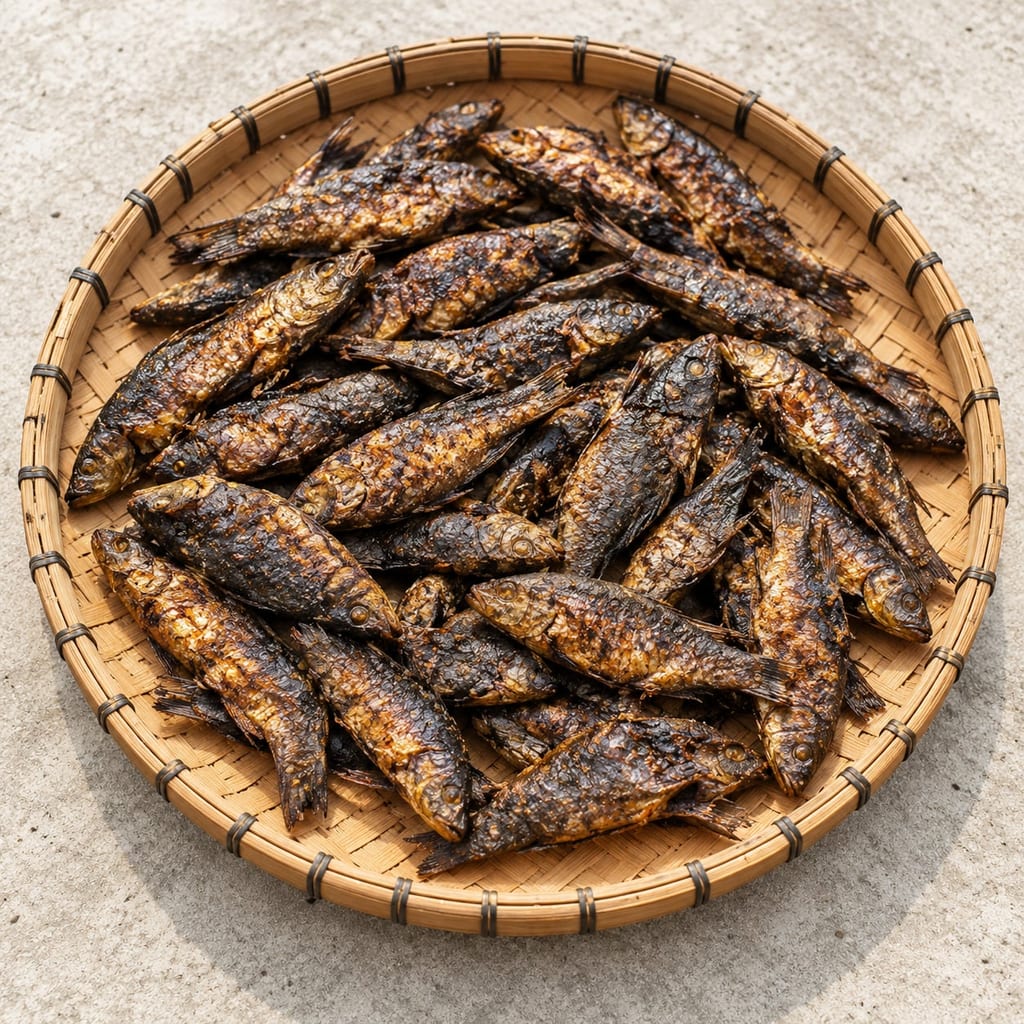
Leirou is fish smoked in a prepared kiln or room by processors around Loktak Lake in Manipur, India, a method the local survey keeps apart from open-flame ngaphak.

A Cap-Pelé boucanière is an Acadian herring-smoking building. The documented Willie Niles example is a one-storey wood-frame structure with a ridge smoke vent and interior bays for hanging fish-bearing cannes.

Achcharu is a family of Sri Lankan vinegar pickles made with mixed vegetables or seasonal fruit and a piquant spice dressing. This version is a quick, refrigerated, non-fermented mixed-vegetable pickle.

The acocote is a long, hollowed and dried gourd used to draw aguamiel from a mature maguey. It is a harvesting tool: the sap is transferred to a separate vessel before it ferments into pulque.

Adrak murabba preserves young ginger in sugar syrup, a sweet South Asian preparation recorded in Indian cookery and food-processing sources.

Parkia biglobosa seeds are fermented into regional West African seasonings, including nététou, iru, dawadawa and soumbala. The yellow fruit pulp is a separate food, and names and methods vary by place.

Japanese reddish-brown vinegar from sake lees matured about three years, turned to vinegar by acetic bacteria; the vinegar of Handa and Edomae sushi rice.

A refined common-wheat flour blended for a broad range of baking; its protein and behavior vary with wheat, milling and market.

The almond mushroom, Agaricus subrufescens, was cultivated in eastern North America in the 1800s, lost its market, and returned as a cultivated mushroom from Brazil, where it is grown under several names.
No community contributions have been published for this entry yet.
Sign in to contribute. Published comments and photos are free to read.
Charles Elmé Francatelli; digitized University of Leeds Library copy, London: Richard BentleyPrimary text · Historical recipe
The Cook’s Guide and Housekeeper’s & Butler’s AssistantInternet Archive OCR file for the 1862 catalogued edition, selected Chapter VI, recipe No. 329, “Yarmouth Bloaters,” printed p. 113 / scan p. 141; 1,051,581-byte OCR SHA-256 061c6f753d892ccc109af9b035fd17946f16221d17b64a2c3bbec473b4a2a01f. Selected OCR only, not visually verified against the page image.
Fabulous Fusion Food; modern transcription attributed to Charles Elmé FrancatelliTranscription cross check
Yarmouth BloatersDirectly opened page lines 28–42 prints No. 329’s original wording and a separate modern redaction. The page claims 1861; the inspected catalogue copy is 1862, so first-publication year is unresolved. The modern serving count and grill redaction are not adopted as Francatelli’s source instructions.
Cited in: Names and identification; How traditional bloaters are made; Historical limits
Food Standards ScotlandSafety context
Listeria monocytogenesLines 25–44 describe present-day cold-smoked/cured fish guidance for specified consumers; this is not a classification of Francatelli’s historical bloater or a validation of the broiling passage.
Cited in: Food safety
Charles Elmé FrancatelliMethod · History
Charles Elmé Francatelli — The Cook's Guide and Housekeeper's and Butler's Assistant, 1861, recipe 329original historical recipe
Cited in: What is a broiled Yarmouth bloater?; Names and identification; Great Yarmouth and the herring industry; How a bloater differs from a kipper; How traditional bloaters are made; The chemistry of smoked herring; What broiling does; Ingredients; Choosing the bloater; Choosing the butter; What is captain's biscuit?; Equipment; Stage 1 — Inspect the fish; Stage 2 — Remove the head; Stage 3 — Remove the tail; Stage 4 — Open along the back; Stage 5 — Inspect for bones; Stage 6 — Prepare the heat; Stage 7 — Broil the first side; Stage 8 — Turn; Stage 9 — Verify thorough cooking; Stage 10 — Heat the captain's biscuit; Stage 11 — Add butter; Stage 12 — Serve; Why the recipe uses so few ingredients; The maritime significance of biscuit; Modern substitutions; Serving and eating; Quality indicators; Troubleshooting; Food safety; Historical limits
Slow Food UKMethod · History · Context
Slow Food UK — Bloaterstraditional production, geographic identity and decline
Cited in: Names and identification; Great Yarmouth and the herring industry; How traditional bloaters are made; Ingredients; Equipment; Stage 1 — Inspect the fish; Stage 2 — Remove the head; Stage 3 — Remove the tail; Stage 4 — Open along the back; Stage 5 — Inspect for bones; Stage 6 — Prepare the heat; Stage 7 — Broil the first side; Stage 8 — Turn; Stage 9 — Verify thorough cooking; Stage 10 — Heat the captain's biscuit; Stage 11 — Add butter; Stage 12 — Serve; Why the recipe uses so few ingredients; Modern substitutions; Serving and eating; Quality indicators; Troubleshooting; Historical limits
FAOMethod
FAO — Fish smoking and curingcommercial preservation methods
Cited in: Great Yarmouth and the herring industry; Ingredients; Equipment; Stage 1 — Inspect the fish; Stage 2 — Remove the head; Stage 3 — Remove the tail; Stage 4 — Open along the back; Stage 5 — Inspect for bones; Stage 6 — Prepare the heat; Stage 7 — Broil the first side; Stage 8 — Turn; Stage 9 — Verify thorough cooking; Stage 10 — Heat the captain's biscuit; Stage 11 — Add butter; Stage 12 — Serve; Why the recipe uses so few ingredients; Modern substitutions; Serving and eating; Quality indicators; Troubleshooting
Fishing NewsHistory · Context
Fishing News — Great Yarmouth boats, bloaters and red herringsregional fishery history
Cited in: Names and identification; How traditional bloaters are made; Historical limits