
Avocado (ripe flesh)
Ripe avocado flesh is the soft, buttery, fat-rich pulp of Persea americana, eaten raw. It is low in acid, so it is a fresh ingredient that needs care in chilled dishes.
 FermenteaWhere food goes to change
Modern method
Craster Kipper Club Sandwich
A warm club sandwich of oak-smoked Craster kipper fillets layered with soft-boiled egg, romaine, avocado and lemon mayonnaise on brown bread.
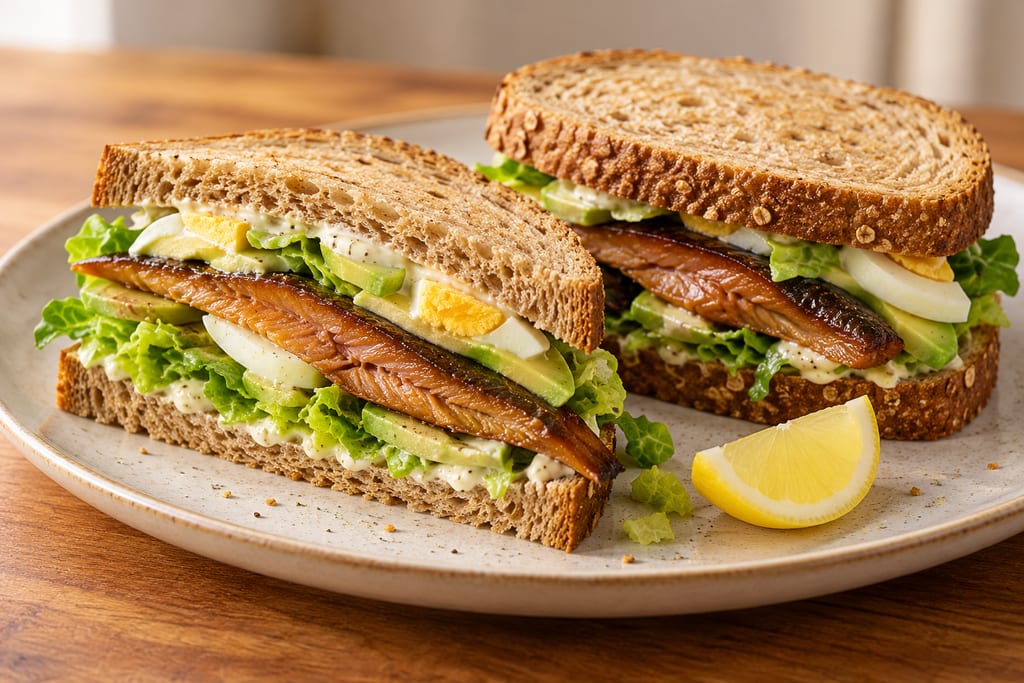
The Craster kipper club sandwich is a substantial fish sandwich built around warm oak-smoked herring, boiled egg, shredded lettuce, avocado and lemon mayonnaise.
It combines a traditional Northumberland preserved fish with ingredients associated with modern sandwich cookery.
The smoked fish is the central element.
A Craster kipper is a split and smoked herring, prepared using a distinctive local smoking tradition. Its rich aroma and savoury flavour contrast with the freshness of lettuce and avocado.
Boiled egg adds substance, while lemon mayonnaise provides acidity and a creamy texture.
The sandwich is served while the fish and melted butter remain warm.
Despite its name, it is not necessarily a traditional three-decker club sandwich. The published version uses two slices of bread per portion.
The recipe was published in March 2021 in Living North and comes from Jenny Jeffries's cookbook For the Love of the Sea: A Cook Book to Celebrate the British Seafood.
It is a contemporary dish using an historically established local ingredient.
Craster kipper — Traditionally smoked herring associated with Craster
Kipper — Split, cured and smoked herring
Northumberland — English county containing Craster
Club sandwich — Layered sandwich, with considerable stylistic variation
Atlantic herring — Clupea harengus
The fish is Atlantic herring, Clupea harengus.
The term kipper describes a processed fish, not a separate biological species.
Craster is a coastal village in Northumberland, northeast England.
Fishing and fish curing shaped its local economy.
By the eighteenth and nineteenth centuries, Craster was strongly associated with the herring trade.
Smokehouses processed fish that could be sold beyond the village.
The best-known surviving business is L. Robson & Sons.
Historic England records that James William Robson worked in the local fish-curing industry before the family acquired the smokehouse in 1906.
The business subsequently became associated with the traditional production of Craster kippers.
The smokehouse was added to the National Heritage List for England in 2023.
This recognition reflects the building's architectural and historical importance as part of the coastal fish-processing industry.
The business is not simply a modern brand using an old village name.
It represents a continuing tradition of fish curing connected with a surviving industrial building.
A traditional kipper begins with herring.
The fish is split, cleaned and prepared for curing.
Salt is applied through an appropriate commercial curing process.
The fish is then exposed to smoke.
Historic England describes the Robson smokehouse using whitewood shavings and oak sawdust in fires beneath hanging fish.
Its documented smoking process lasts approximately 16 hours.
This is a description of the commercial smokehouse, not a validated household fish-smoking recipe.
The choice of fuel affects the smoke's chemical composition and the flavour of the finished fish.
The fish also loses some moisture during the process.
The result is a deeply coloured herring with concentrated savoury flavour.
The precise curing salt concentration and processing temperature are not given in the public heritage description.
They should not be invented.
Wood smoke contains a complex mixture of volatile compounds.
Phenolic compounds contribute characteristic smoky aroma.
Carbonyl compounds participate in colour and flavour development.
Organic acids and other components also contribute.
Smoking can inhibit some microbial activity, but smoking alone does not establish shelf stability.
A kipper may still require refrigeration and further cooking.
Traditional cold-smoking and modern hot-smoking produce different products.
Cold-smoked fish may remain insufficiently cooked for immediate consumption, whereas correctly hot-smoked fish has undergone a cooking stage.
The source recipe warms the kipper fillets before serving.
The exact processing status of an individual purchased fillet must be checked from its supplier.
Herring contains substantial fat compared with many white fish.
That fat contributes to flavour and mouthfeel.
Smoking produces strong aromatic compounds that can persist even when the fish is combined with bread and vegetables.
The flesh can be separated into fillets after cooking.
Its pronounced flavour makes it suitable as the principal protein component rather than a minor garnish.
However, herring also contains numerous small bones.
Careful preparation is essential when serving a sandwich that diners are likely to bite directly into.
The original recipe uses fillets rather than whole fish.
Exact published formulation for four sandwiches.
The recipe recommends quality brown bread.
Rye sourdough or Irish soda bread are specifically mentioned as suitable choices.
No additional salt is listed.
This is sensible because kippers may already contain substantial salt from curing.
The fish supplies smoke, salt, fat and savoury flavour.
Butter enriches the hot fish and carries aroma.
Eggs provide protein and a soft contrasting texture.
Avocado contributes additional fat and a smooth mouthfeel.
Lettuce supplies freshness and crunch.
Mayonnaise acts as a creamy dressing.
Lemon juice counterbalances the fat of the fish, avocado, egg and mayonnaise.
Brown bread provides the structure needed to contain the filling.
A very delicate bread might become overwhelmed by the butter and mayonnaise.
The stronger texture of rye or substantial brown bread works particularly well.
Prepare a saucepan for eggs, oven or grill for the fish, foil for forming a parcel, knife, cutting board, mixing cup and serving utensils.
A food thermometer is advisable when verifying that fish requiring cooking has been thoroughly heated.
The source does not specify an exact oven temperature.
“Hot oven” describes the cooking environment but is not a numerical setting.
The fish may alternatively be heated under a grill or on a barbecue.
Check the four fillets for remaining bones.
Inspect the supplier's instructions to determine whether the product is ready to eat or requires thorough cooking.
Keep refrigerated until preparation.
Place the fillets on a suitable piece of cooking foil.
Add 1 tablespoon butter.
Fold the foil to enclose the fish.
The parcel retains moisture and melted butter.
Cook in a hot oven, under a grill or on a barbecue for 4–6 minutes, as stated in the published recipe.
The intended result is hot fish.
The time alone does not establish safety for every thickness and type of smoked fish.
Follow supplier cooking instructions and verify thorough cooking where required.
Bring water to boiling in a saucepan.
Add 4 eggs.
The source gives 4–5 minutes of cooking.
This produces a relatively soft egg in many ordinary cooking conditions, although the outcome varies with egg size and starting temperature.
Wash the 6 romaine leaves.
Drain and dry them.
Shred finely.
Excess free water can cause the bread to become soggy.
Peel and slice the ripe avocado.
Work carefully to avoid bruising.
The avocado is added fresh rather than cooked.
Mix 4 tablespoons mayonnaise with the juice of 1 lemon.
Season with black pepper.
The source does not specify an exact pepper quantity.
Remove the eggs from their shells.
Slice or chop them according to preference.
The published method permits either.
For people requiring fully cooked eggs, use an appropriately cooked egg instead of a soft-boiled one.
Arrange four slices of bread as sandwich bases.
The original recipe does not require toasting, although good-quality brown bread is specified.
Divide the shredded lettuce equally over the four base slices.
It creates the first fresh layer.
Place avocado slices on the lettuce.
Distribute them so each sandwich contains a similar amount.
Open the hot foil parcel carefully.
Remove the skin from the kipper fillets if necessary.
Place one fillet over the vegetable layers in each sandwich.
Pour the melted butter over the fish.
Place the boiled egg over the kipper.
The soft egg contrasts with the fish's firm flesh.
Spread lemon mayonnaise over the remaining four bread slices.
Use these slices to complete the sandwiches.
Eat while the fish and butter remain warm.
The source does not supply a holding time for assembled sandwiches.
The freshness of the vegetables is best preserved by preparing the sandwiches shortly before serving.
Mayonnaise is an emulsion.
It contains oil dispersed through an aqueous phase and stabilised by emulsifying ingredients.
Lemon juice adds acidity and citrus aroma.
The dressing lubricates the layers and carries flavour.
Its acidity also counterbalances the richness of the fish.
However, mayonnaise is not a safety treatment for smoked fish.
Adding lemon juice does not reliably kill pathogens present in undercooked or contaminated seafood.
Nor does it convert the assembled sandwich into a shelf-stable food.
Avocado contains a comparatively large proportion of fat for a fruit.
Its soft flesh provides a creamy sensation.
This contrasts with the denser fish and crisp lettuce.
The fruit also oxidises after cutting.
Polyphenol oxidase can contribute to browning when damaged tissue contacts oxygen.
The lemon dressing may limit some visible browning where it contacts the avocado, but this is mainly a quality consideration.
Prepare the avocado near serving time for the best appearance.
Soft-boiled eggs create a different sandwich from hard-boiled ones.
Their yolks can contribute a rich, soft centre.
The degree of cooking changes how the egg interacts with the mayonnaise and fish.
However, egg safety must be considered.
Food Standards Scotland advises that people in certain higher-risk groups should select suitable British Lion or Laid in Britain eggs when consuming lightly cooked eggs, and some vulnerable individuals may need fully cooked eggs.
The source's 4–5-minute duration should therefore be understood as a culinary instruction rather than a universal safety guarantee.
The use of Craster kippers gives the dish a specific Northumberland identity.
A Manx kipper or another traditional British kipper might produce a related sandwich with a different flavour.
The smoking method, salt level and herring quality vary among producers.
Substituting hot-smoked mackerel creates a different fish sandwich.
Likewise, using cold-smoked salmon changes both flavour and safety considerations.
Other sandwich versions may use toast, mustard dressing or additional lettuce.
These can be useful culinary variations, but the measured original remains the two-slice sandwich with avocado, egg and lemon mayonnaise.
Kippers are strongly associated with British breakfast foods.
Historically, smoked fish provided a strongly flavoured component of the morning meal.
The preserved fish could be served with bread, butter or eggs.
The modern club sandwich draws on that pairing but creates a more substantial assembled dish.
It reflects contemporary British cookery's interest in reusing traditional ingredients in new formats.
The exact sandwich was published in the twenty-first century.
It should not be presented as a Victorian Craster recipe.
The bread should retain its structure.
The lettuce should remain fresh.
The avocado should be soft but not completely crushed.
The fish should be hot and properly cooked as required.
The lemon mayonnaise should coat rather than flood the filling.
The eggs should have the chosen degree of doneness.
The result should balance smoke, acidity, fat and freshness.
The kipper should remain the dominant flavour.
The bread becomes soggy: Excess liquid from lettuce, lemon mayonnaise or the hot fish may be responsible.
The filling falls apart: The layers may be too thick or unevenly arranged.
The sandwich is excessively salty: Some kippers contain more salt than others. The original recipe does not require additional salt.
The fish is dry: Excessive heating can remove moisture.
The avocado browns: It may have been prepared too far ahead of serving.
The fish has many bones: The fillets require further inspection before serving.
The fish smells spoiled: Discard it rather than using lemon or heat to conceal deterioration.
Cold-smoked seafood may contain Listeria monocytogenes.
Smoking does not necessarily destroy this organism.
Food Standards Scotland advises pregnant people and individuals with weakened immune systems to avoid ready-to-eat cold-smoked or cured fish unless thoroughly cooked.
For smoked fish requiring cooking, ensure that it is steaming hot throughout and follow supplier instructions.
Check the eggs' suitability for the intended diners.
Keep the lettuce, avocado, mayonnaise and eggs refrigerated as appropriate until preparation.
Do not leave completed sandwiches at room temperature for extended periods.
Fish, eggs and mayonnaise ingredients also raise allergen considerations.
The history of the Craster kipper is well documented.
The exact club sandwich is a modern cookbook recipe.
The original does not specify an oven temperature or a separate internal cooking endpoint.
Those figures should not be invented.
The dish is a useful example of how an old regional preservation method can remain relevant through contemporary cooking.
Living North published the recipe in March 2021 and credits it to Jenny Jeffries’s For the Love of the Sea. This is a modern serving recipe, not an attestation of when Craster kippers began.
Yield 4 sandwiches · Scaling: source batch only
Robson’s product and recipe sources do not establish whether the fish is cold-smoked or otherwise fully cooked. If a kipper is a ready-to-eat cold-smoked or cured fish product, FSS’s product-category guidance applies; the record does not determine that classification.
Hazard sourceCheck the product label and its own storage/preparation directions. If it is ready-to-eat cold-smoked or cured fish, follow current FSS advice: pregnant people and people with weakened immune systems should avoid it; older adults should follow use-by dates, keep it refrigerated below 5°C and consider safer alternatives. FSS says cold-smoked/cured fish added to pasta or scrambled eggs should be cooked first because warming in the dish may not be enough. The sandwich source’s 4–6 minute “hot throughout” cue is not evidence that FSS’s “steaming hot all the way through” advice has been met.
Control sourceRobson’s product and recipe sources do not establish whether the fish is cold-smoked or otherwise fully cooked. If a kipper is a ready-to-eat cold-smoked or cured fish product, FSS’s product-category guidance applies; the record does not determine that classification.
No product-specific process endpoint or general storage period is inferred.
The recipe names Craster kipper fillets as its ingredient; it does not say the sandwich was invented or first made in Craster.
Ripe avocado flesh is the soft, buttery, fat-rich pulp of Persea americana, eaten raw. It is low in acid, so it is a fresh ingredient that needs care in chilled dishes.
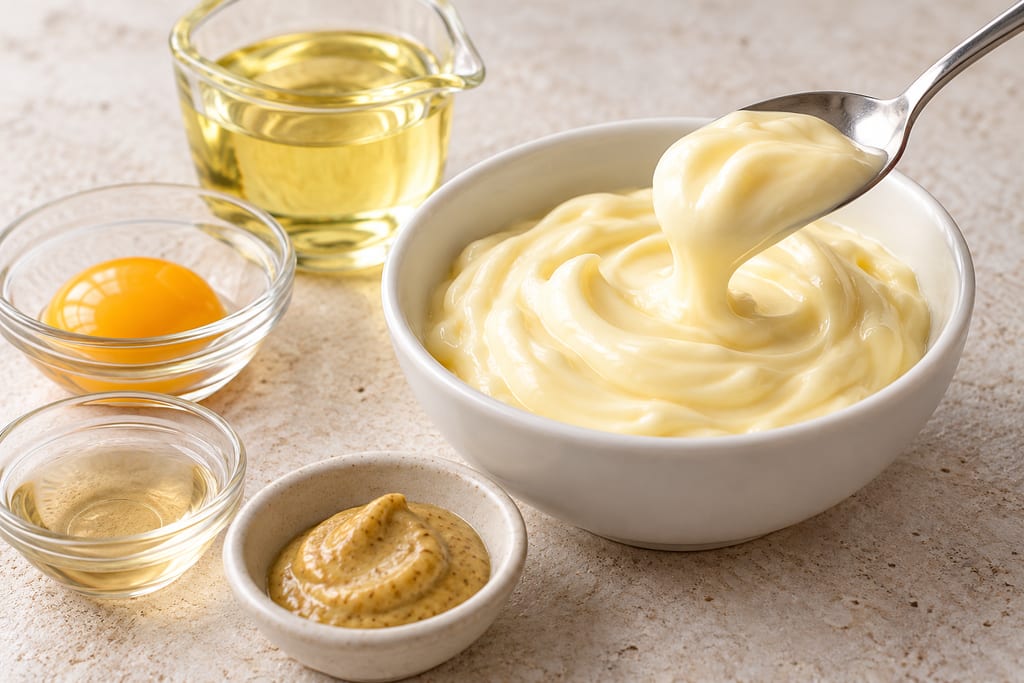
A plain mayonnaise of 200 g refined neutral oil emulsified into pasteurised yolk, vinegar, water and a little Dijon mustard: a clean base for tasting, comparing and flavouring.
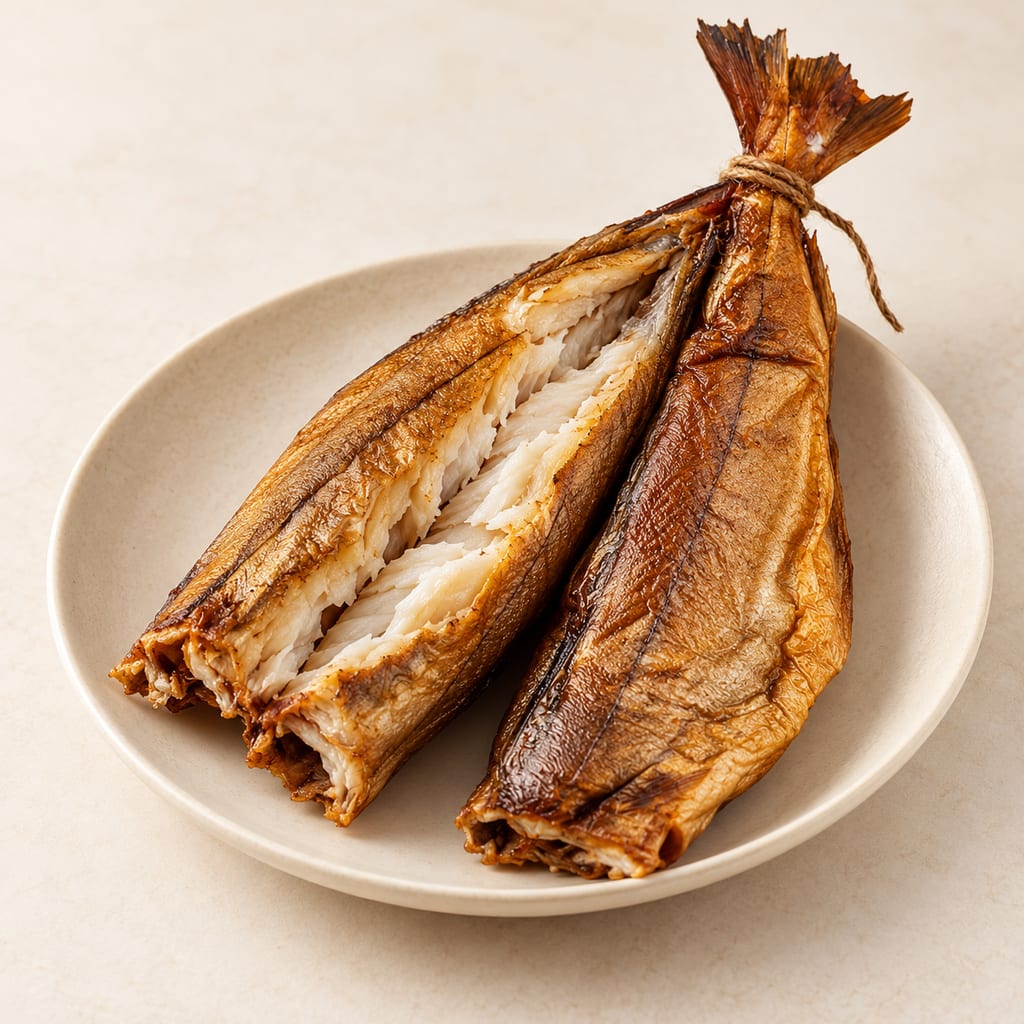
Arbroath smokies are whole haddock dry-salted, paired by the tail and hot-smoked in a protected coastal area. Their recorded history links Auchmithie and Arbroath, though the exact origin is unsettled.
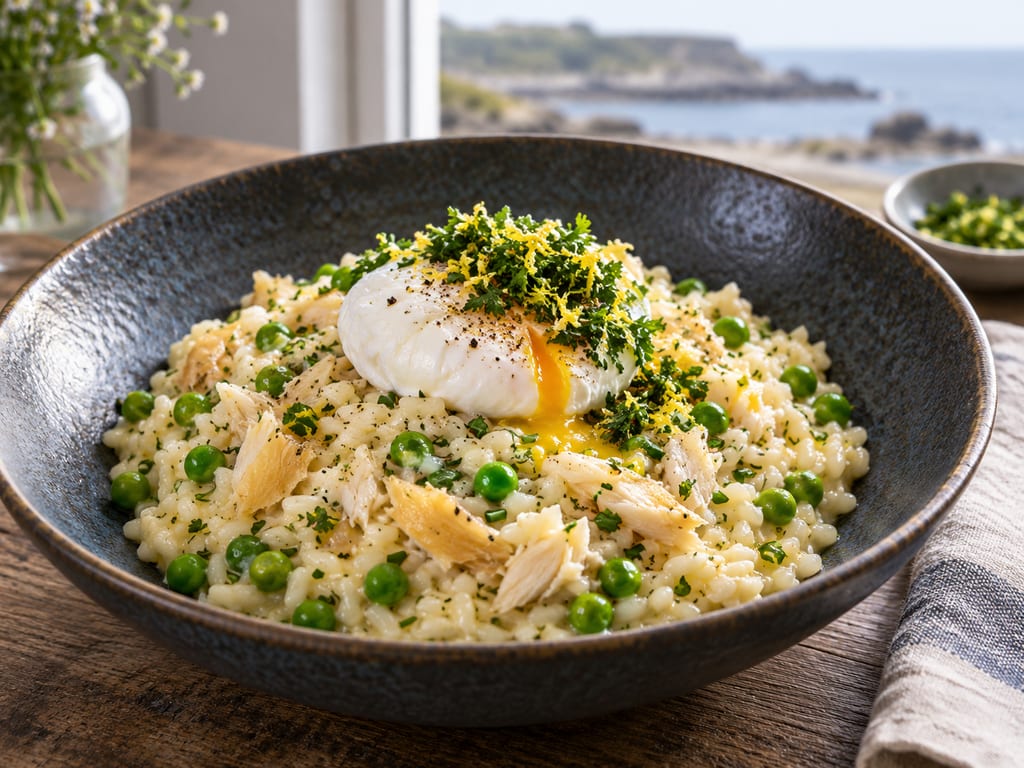
A four-serving risotto published in the 2014 Arbroath Smokie Trail booklet and credited to Hayley Wilkes. It cooks with finished Arbroath smokies; it does not describe smoking fish.
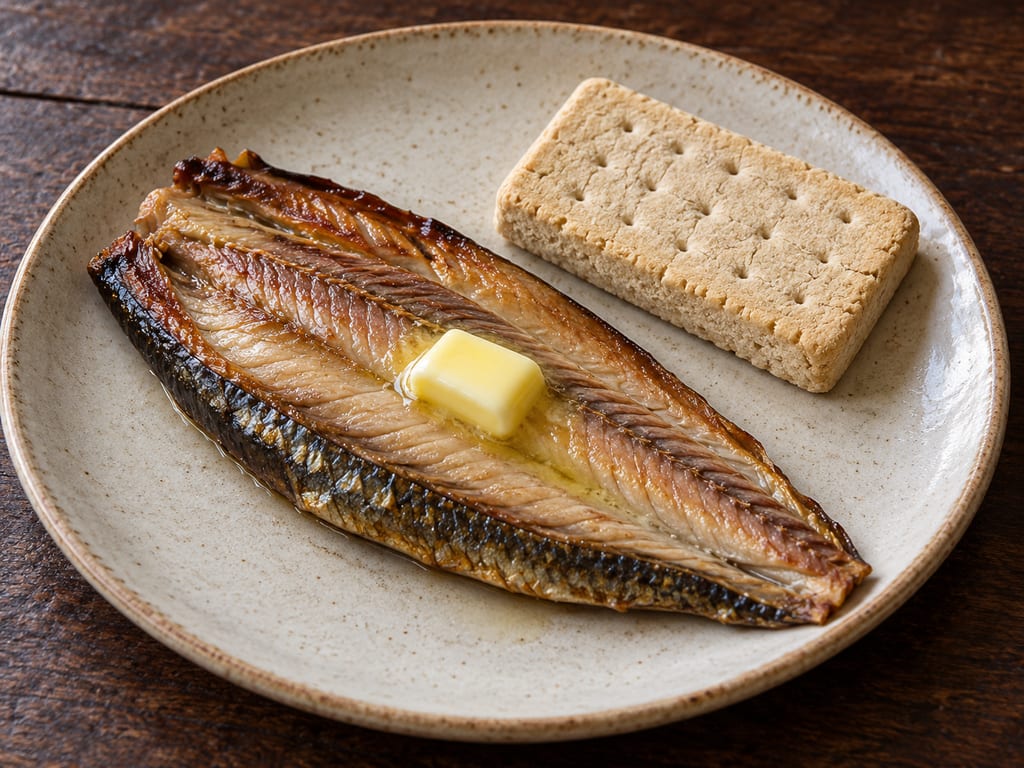
A Victorian way with Great Yarmouth bloaters: the lightly salted, cold-smoked whole herring is broiled and served with fresh butter and a warmed captain's biscuit.
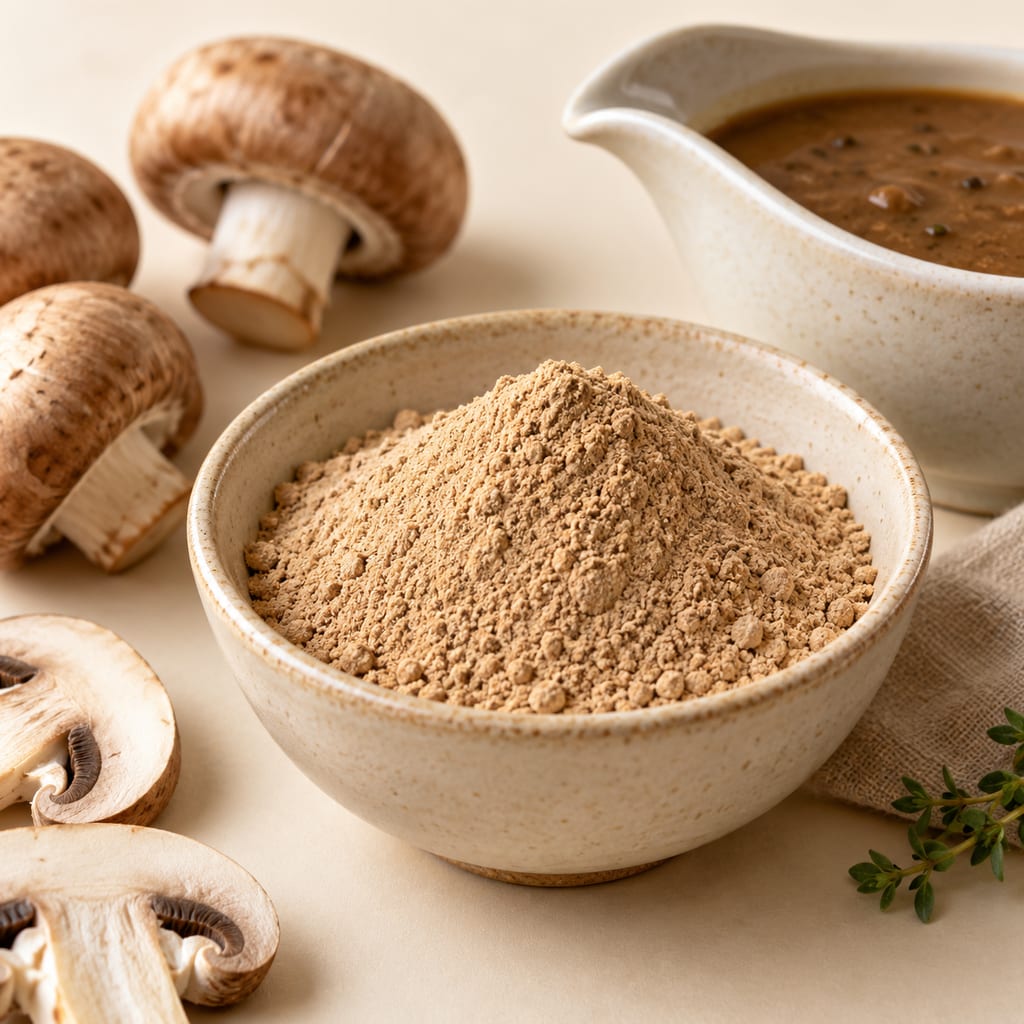
Mushroom powder is dried mushroom tissue ground to a fine powder and added to gravies and sauces. Victorian cooks made it from fresh cultivated mushrooms when fresh ones were not to hand.
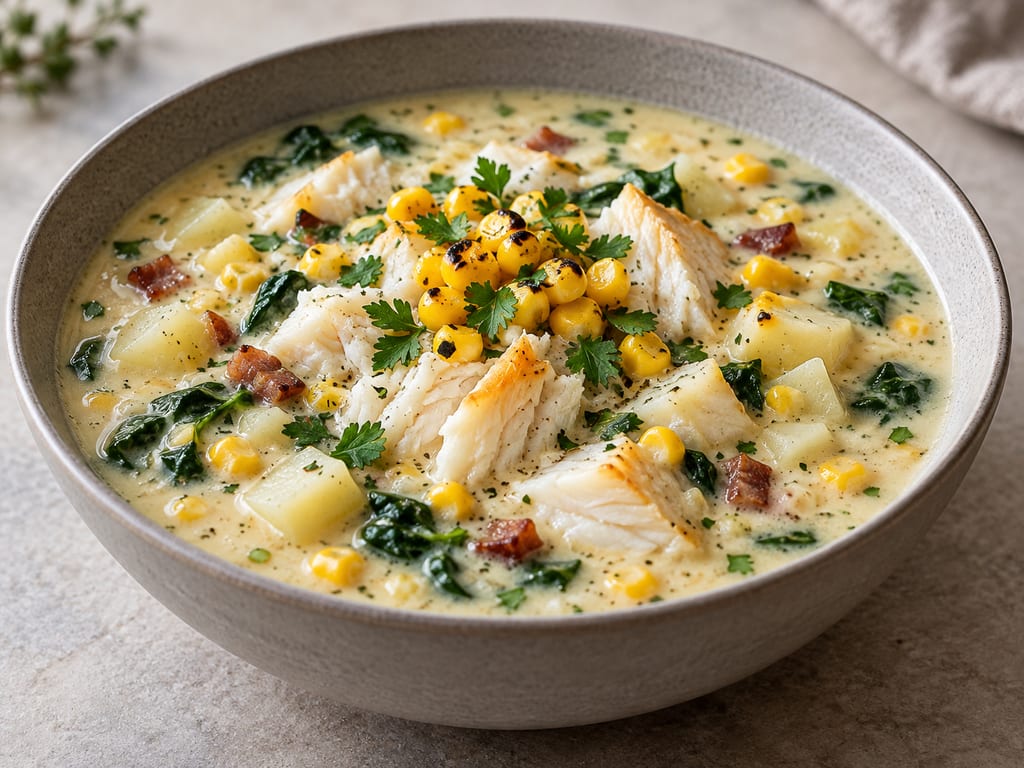
Alfred Enderby’s chowder combines smoked haddock with potato, sweetcorn and spinach in a milk-and-stock broth.
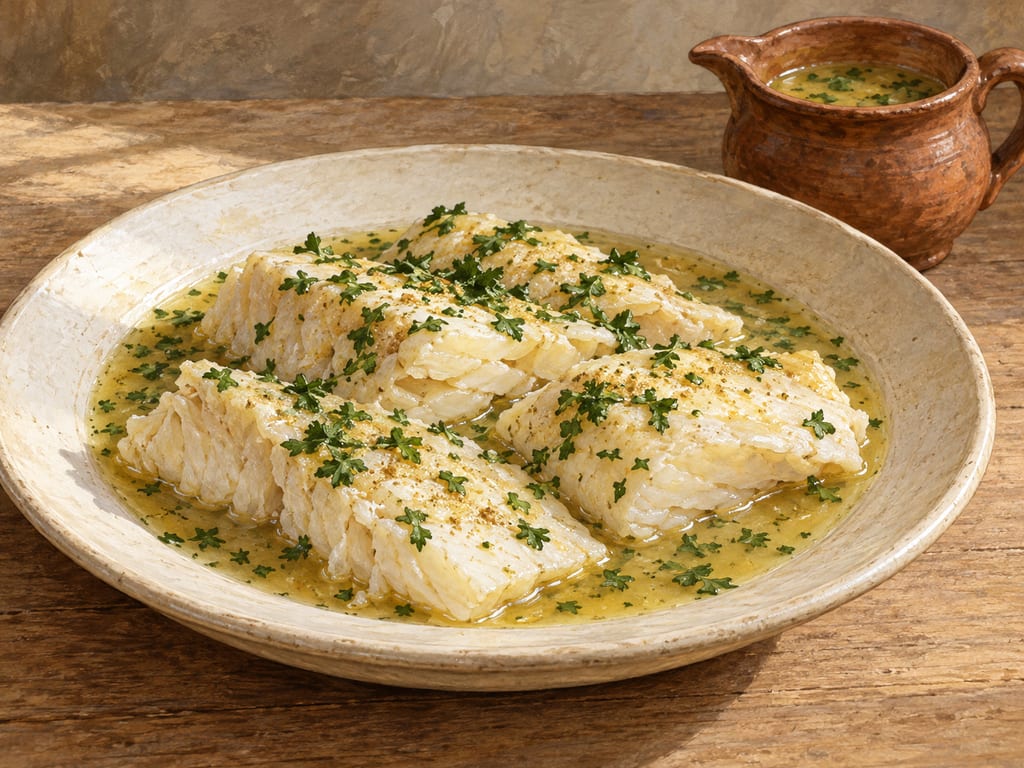
A fifteenth-century English way to serve cooked stockfish: strained fish broth boiled with chopped parsley, powdered ginger and a little verjuice, then poured hot over the fish.
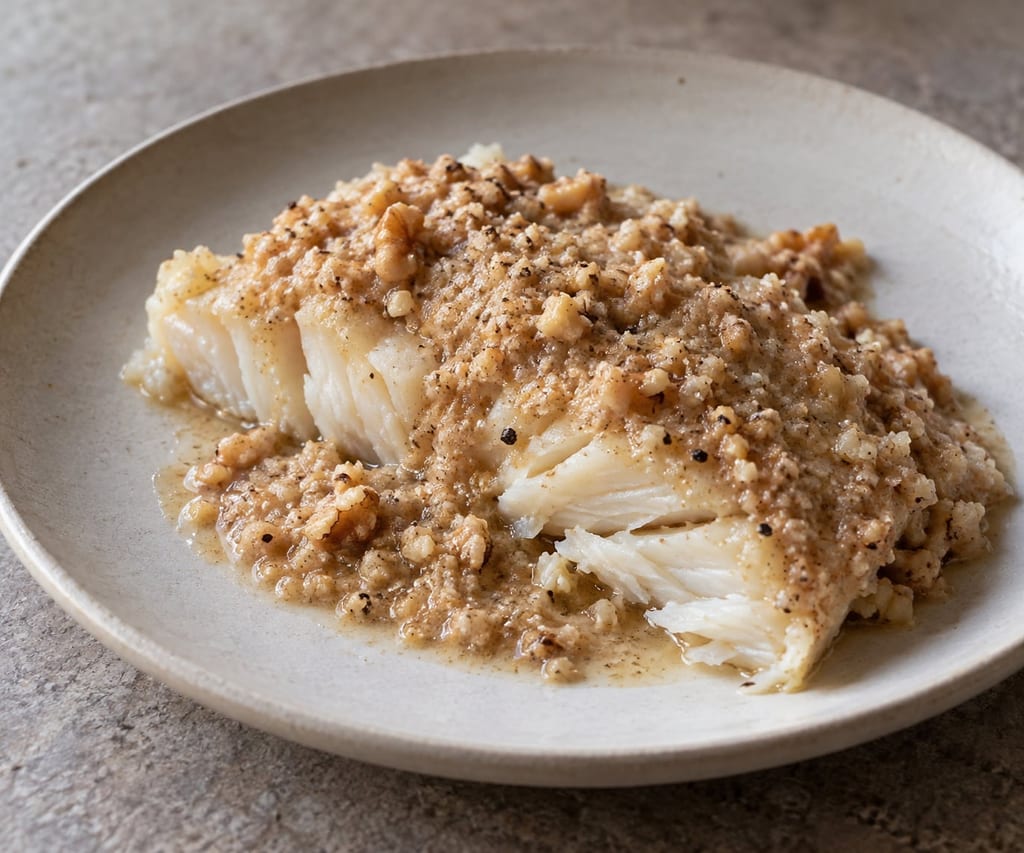
The second stockfish sauce from a fifteenth-century English manuscript: walnuts, garlic, bread, pepper and salt ground in a mortar and loosened with the fish's own broth.
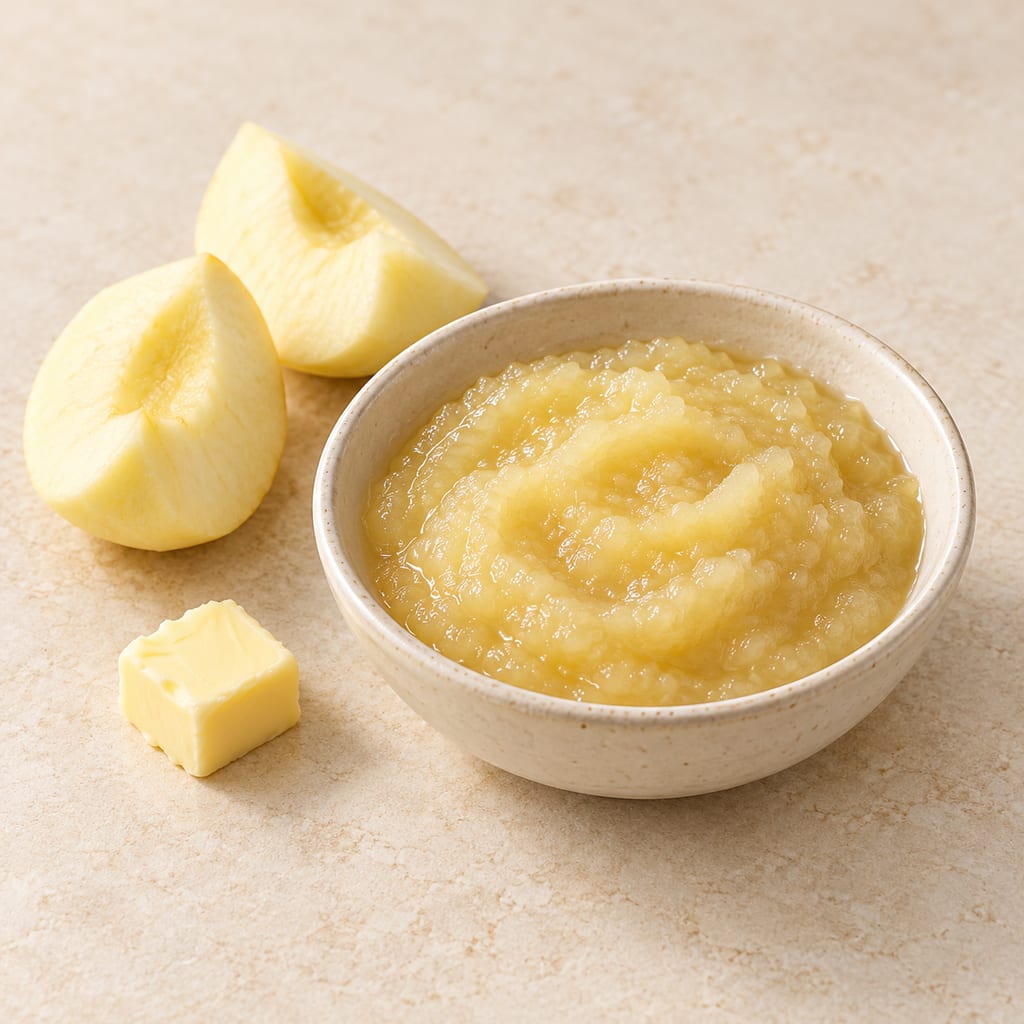
Apple sauce for goose and pork is a plain English accompaniment: cooked apples pulped with water, then sweetened with sugar and finished with a little butter.

Japanese skipjack tuna cooked, then repeatedly smoked and dried over a wood fire by the hand-fired tebiyama method into a hard block for shaving into dashi: the first stage of katsuobushi.
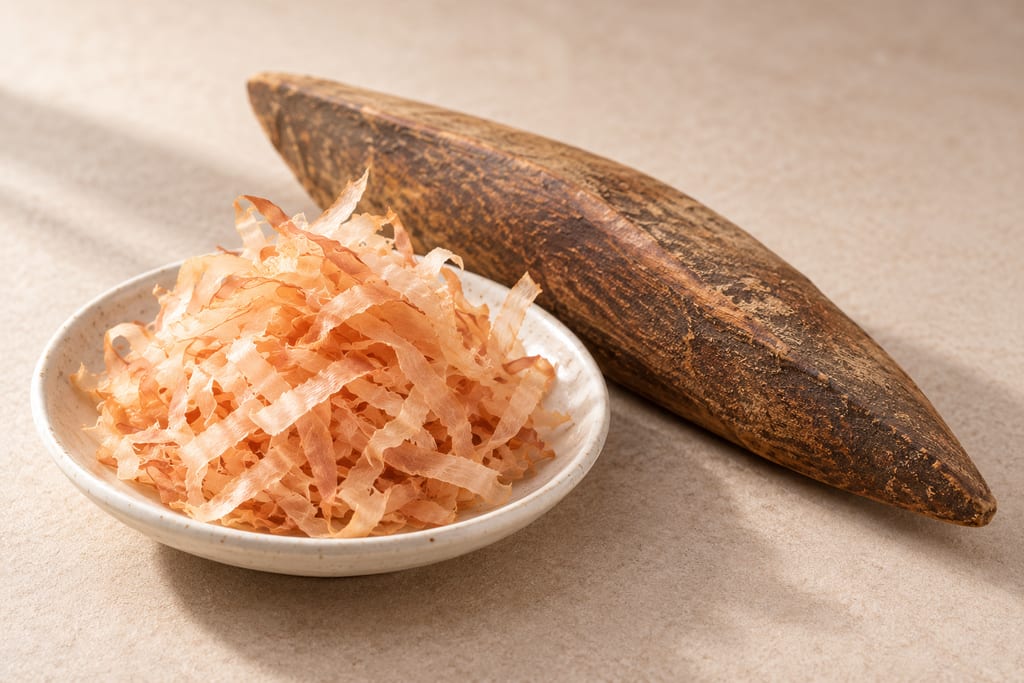
Katsuobushi is skipjack tuna cooked, smoked and dried into a hard block that is shaved into flakes for dashi and toppings. Some styles stop at the smoke-dried stage; others receive carefully managed mold maturation.
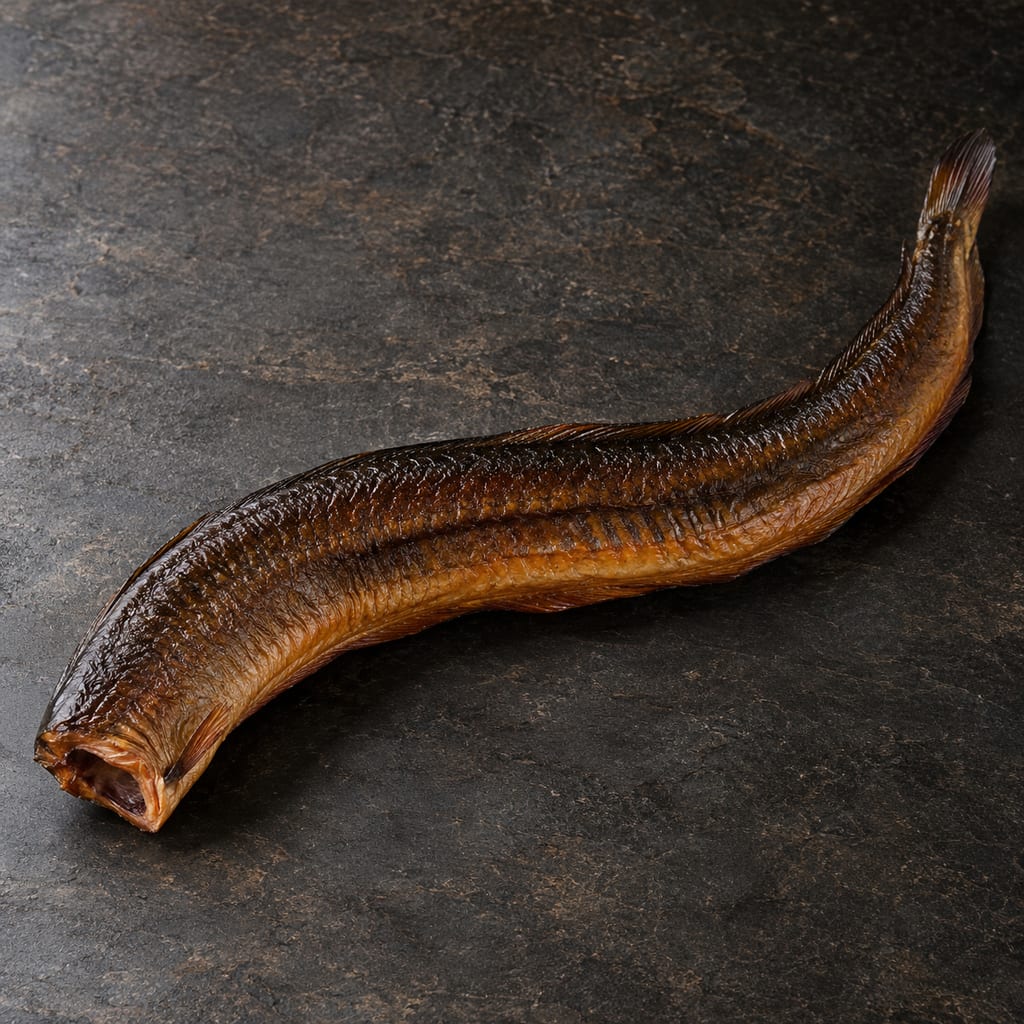
Short-finned eels, kooyang, smoked for a sustained period in the hollows of large trees at Budj Bim in south-western Victoria, a combined heat, smoke and drying method of the Gunditjmara people.
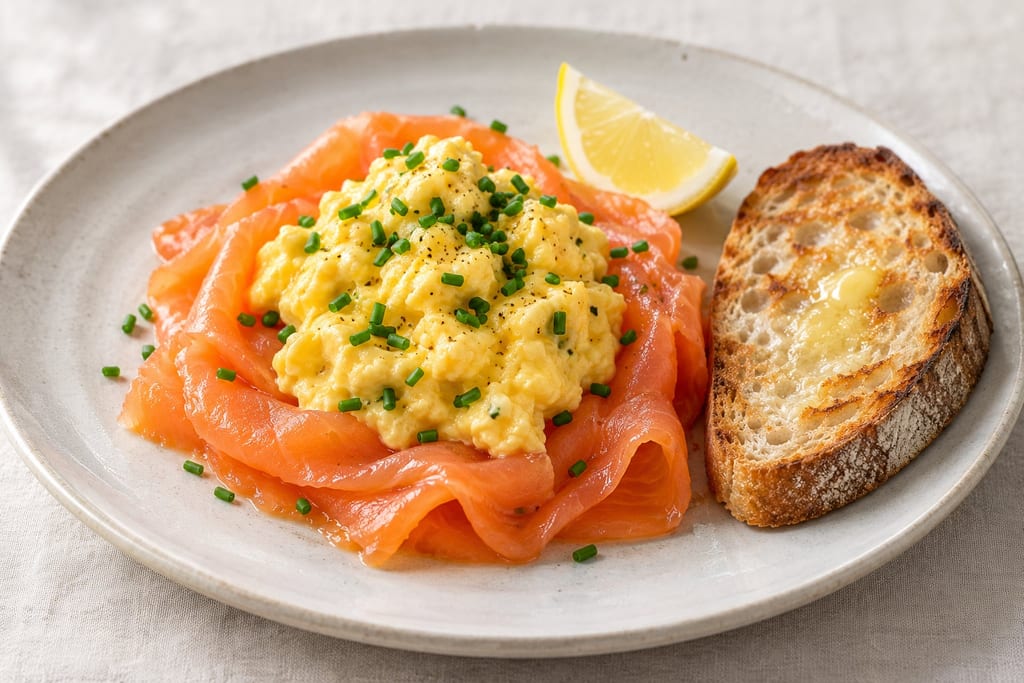
Softly scrambled eggs enriched with cream and butter, served with cold-smoked salmon, chives, lemon and sourdough toast as a British breakfast dish.
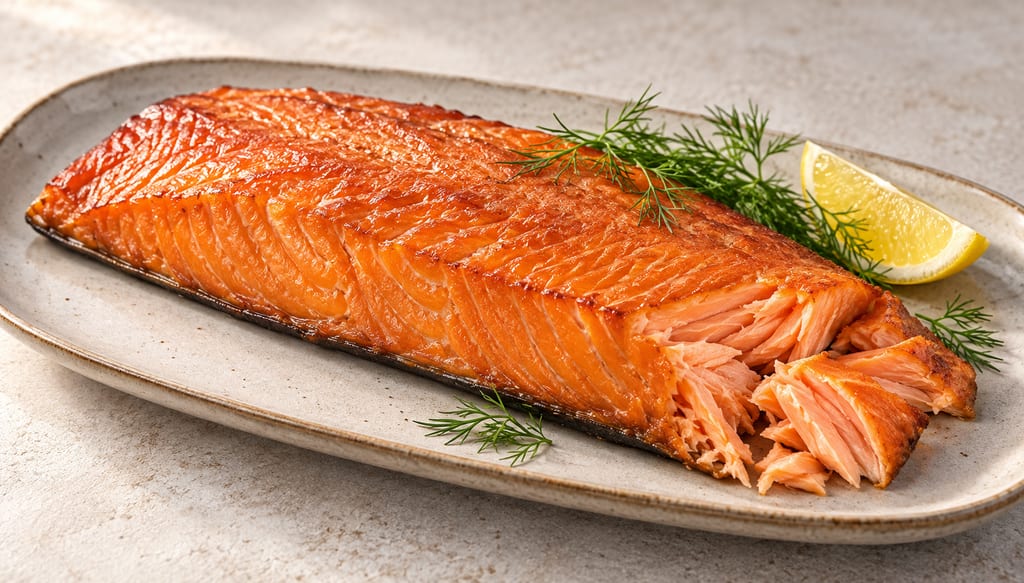
Salmon fillets salted or dry-brined, rested, then cooked and flavoured in a smoker. The method is a cooking process, and the endpoint decides its safety.
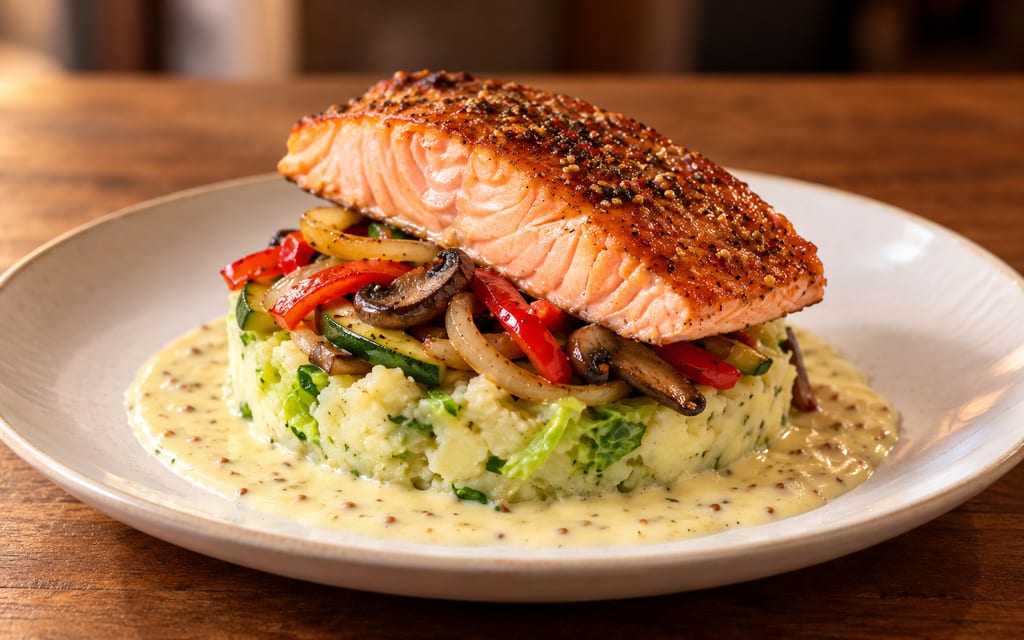
Burren Smokehouse’s colcannon dish serves hot-smoked salmon with mashed potatoes, cabbage, stir-fried vegetables and mustard cream.
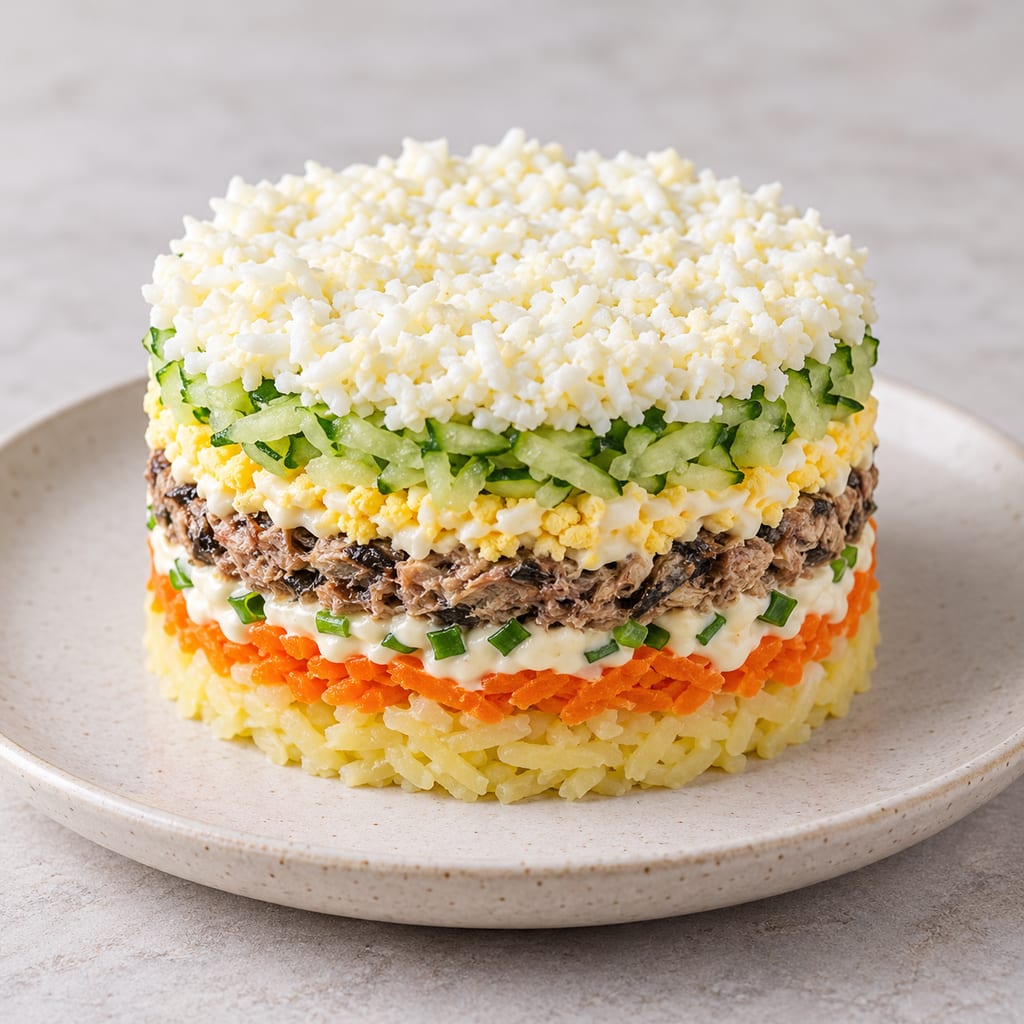
A Latvian Šprotes page’s layered salad uses one can of sprats in oil, grated vegetables and eggs with mayonnaise. The page gives no serving yield, can size or complete vegetable-cooking method.
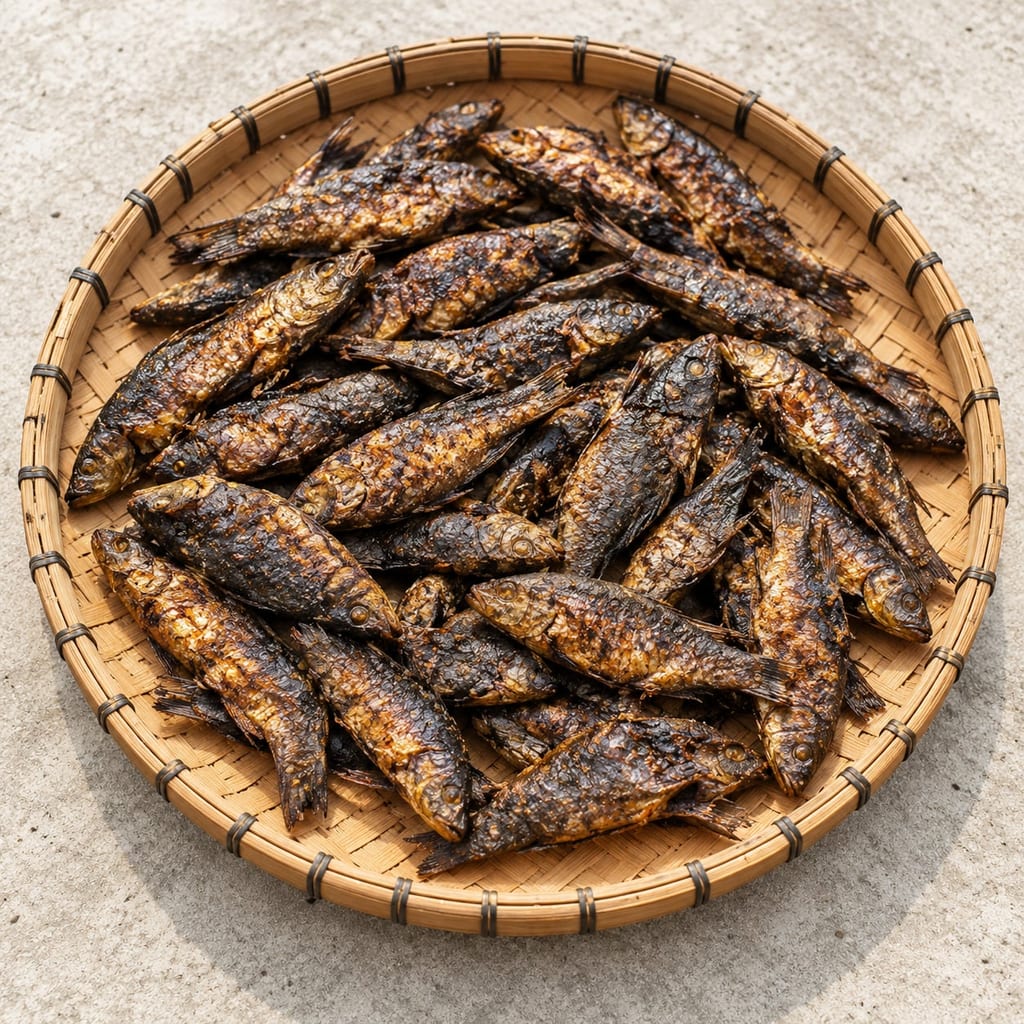
Leirou is fish smoked in a prepared kiln or room by processors around Loktak Lake in Manipur, India, a method the local survey keeps apart from open-flame ngaphak.
No community contributions have been published for this entry yet.
Sign in to contribute. Published comments and photos are free to read.
Living North; recipe credited to Jenny Jeffries, For the Love of the SeaInspiration · Recipe
Craster Kipper Club SandwichPage lines 63–96, published March 2021; four servings, full ingredient list and six method stages.
Cited in: What is a Craster kipper club sandwich?; Names and fish identification; The village of Craster; How Craster kippers are made; What smoke contributes; Why herring works well in a sandwich; Ingredients; Why these ingredients belong together; Equipment; Stage 1 — Prepare the kipper fillets; Stage 2 — Make a foil parcel; Stage 3 — Heat the fish; Stage 4 — Prepare the eggs; Stage 5 — Prepare the lettuce; Stage 6 — Prepare the avocado; Stage 7 — Make lemon mayonnaise; Stage 8 — Prepare the eggs for assembly; Stage 9 — Prepare the bread; Stage 10 — Add lettuce; Stage 11 — Add avocado; Stage 12 — Add the fish; Stage 13 — Add eggs; Stage 14 — Dress and close; Stage 15 — Serve immediately; The chemistry of the lemon mayonnaise; Avocado and texture; Why soft eggs are part of the dish; Regional variations; Kippers and the wider British breakfast tradition; What a successful sandwich looks like; Troubleshooting; Safety; Historical limits
L. Robson & SonsProduct identity
Oak Smoked KippersCurrent producer page identifies its own Craster product as herring, salt and oak smoke. It does not establish that Living North’s recipe uses a specific Robson pack.
Food Standards ScotlandSafety context
Listeria monocytogenesLines 25–44: FSS advises pregnant people and people with weakened immune systems to avoid ready-to-eat cold-smoked or cured fish; older adults should observe use-by dates, keep products refrigerated below 5°C and consider safer alternatives. Lines 34–40 describe cooked smoked fish and warn that simply warming cold-smoked/cured fish in pasta or scrambled eggs may not heat it enough. Lines 61–70 give general chilled ready-to-eat food handling advice. This guidance applies only if the product is in the stated cold-smoked/cured category; it does not validate a recipe or identify an unspecified product.
Cited in: Safety
Historic EnglandMethod
Historic England — Smokehouse, Crasterhistoric smokehouse and curing methods
Cited in: Ingredients; Why these ingredients belong together; Equipment; Stage 1 — Prepare the kipper fillets; Stage 2 — Make a foil parcel; Stage 3 — Heat the fish; Stage 4 — Prepare the eggs; Stage 5 — Prepare the lettuce; Stage 6 — Prepare the avocado; Stage 7 — Make lemon mayonnaise; Stage 8 — Prepare the eggs for assembly; Stage 9 — Prepare the bread; Stage 10 — Add lettuce; Stage 11 — Add avocado; Stage 12 — Add the fish; Stage 13 — Add eggs; Stage 14 — Dress and close; Stage 15 — Serve immediately; Regional variations; Troubleshooting
Historic EnglandHistory
Historic England — Northumberland Smokehouse Listedlocal industry history
Cited in: Names and fish identification; The village of Craster; Regional variations; Kippers and the wider British breakfast tradition; Historical limits
Craster Parish CouncilHistory
Craster Parish Council — Village historyhistorical background
Cited in: Names and fish identification; The village of Craster; Regional variations; Kippers and the wider British breakfast tradition; Historical limits
Food Standards ScotlandSafety
Food Standards Scotland — Higher-risk consumersegg and smoked-fish advice
Cited in: Safety