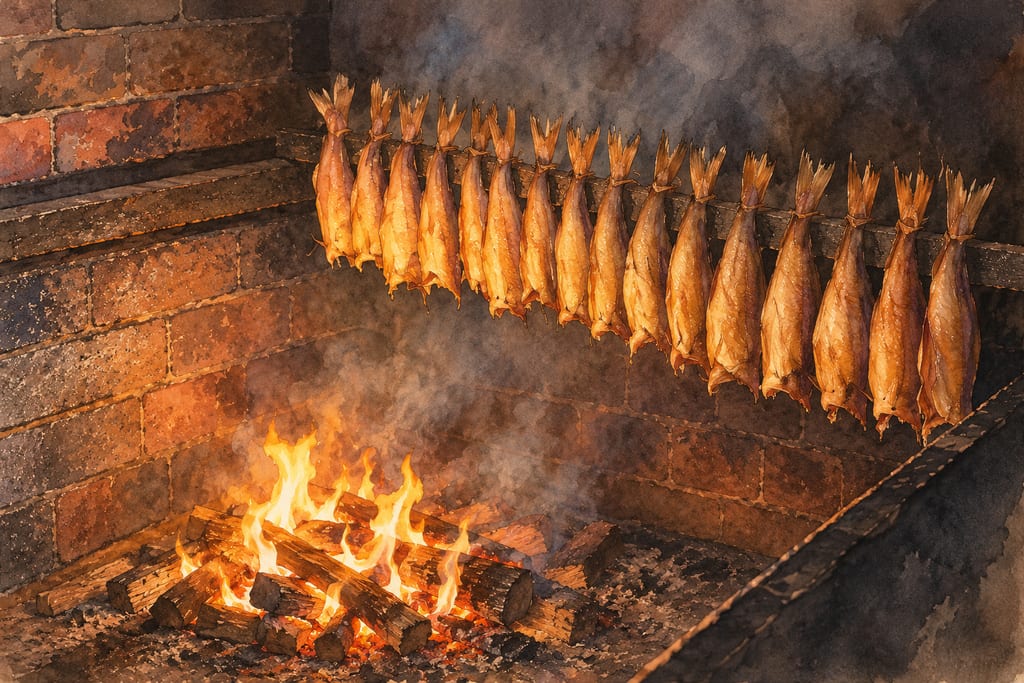
Arbroath smoking barrel
The Arbroath “barrel” is a hardwood-fired smoking pit with triangular rails and a cover. Its documented form belongs to the traditional hot-smoking of haddock around Arbroath and Auchmithie, Scotland.
 FermenteaWhere food goes to change
Traditional method
Arbroath Smokie
Arbroath smokies are whole haddock dry-salted, paired by the tail and hot-smoked in a protected coastal area. Their recorded history links Auchmithie and Arbroath, though the exact origin is unsettled.
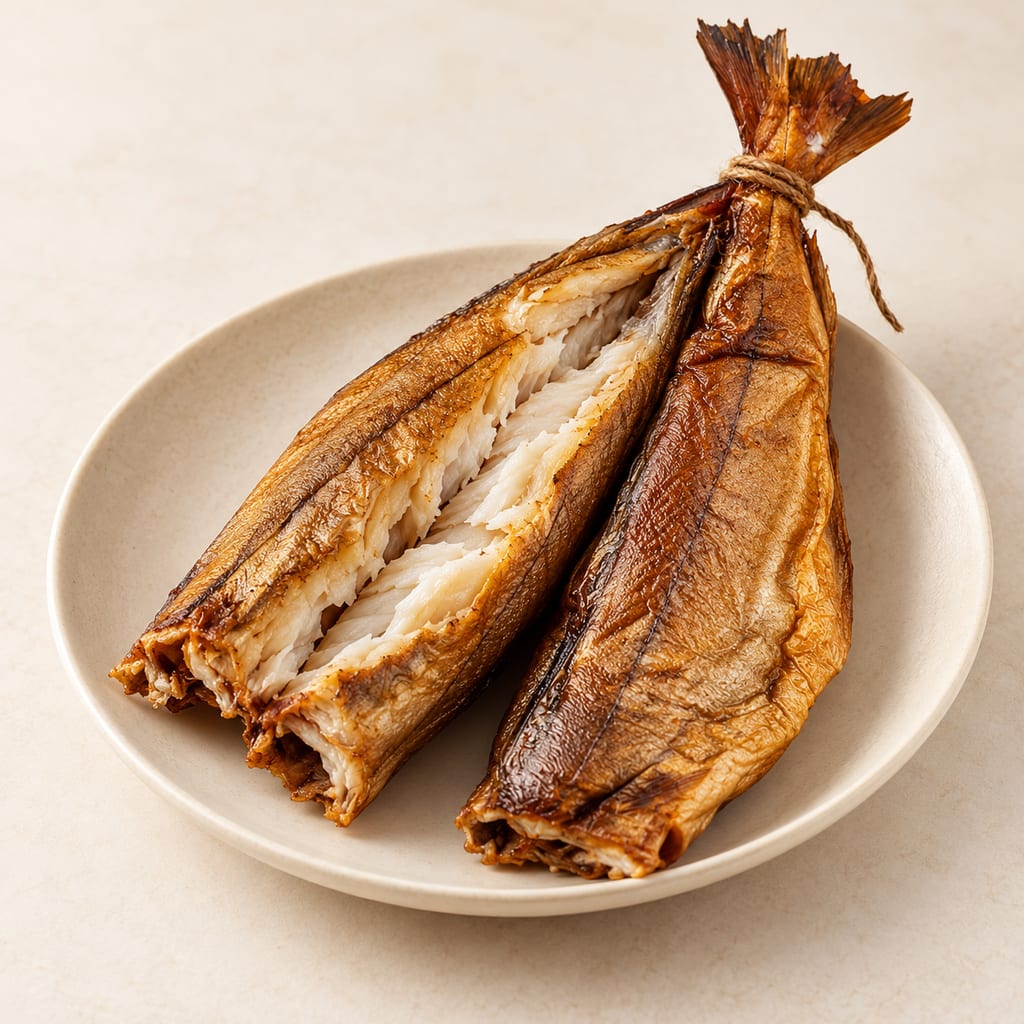
An Arbroath smokie is not simply any smoked haddock sold near the Angus coast. The protected name describes a whole haddock that has been headed and gutted, salted, paired by the tail and hot-smoked within the specified Arbroath production area. The fish is sold as a pair tied with jute string. The official product description gives a weight range of 350–550 g for each fish, a deep-golden to mid-brown exterior and creamy-white flesh. The outside is dry while the inside stays moist and juicy; the flakes separate readily from the backbone. Its intended flavour is mild and fish-like, with a light smoke note and a little salt.
The finished fish is cooked during smoking and ready to eat once it has cooled. This distinguishes it from fish that is salted and cold-smoked, then still needs cooking. “Smokie” therefore names a product made by a particular sequence and skill, not a style that can be recreated by applying smoke flavour to any white fish. Its colour, tied shape, texture and heat-smoked state are part of the identity that buyers and producers recognise.
That distinction matters because the fish itself can come from beyond the immediate town. The specification says the haddock is normally sourced from Scottish seas and bought at Scottish ports, but allows supply from outside Scotland in exceptional conditions such as extreme weather or a chronic shortage. The protected connection is the preparation and production area, together with the skills and reputation tied to it; the name does not claim that every fish was caught in Arbroath’s waters.
The story begins along this stretch of Angus coast, with the fishing village of Auchmithie a few miles north of Arbroath. The product specification describes Auchmithie as the place where the smokie was first recognised, and Angus’s local heritage account remembers the village as the earlier fishing settlement before the smokie industry became associated with Arbroath. The name now points to the larger town, but the food’s local history includes both communities: Auchmithie as the antecedent fishing village and Arbroath as the harbour town where production and trade became concentrated.
An exact invention date is not established. The product specification traces documentary evidence for the process to the late nineteenth century while allowing that it may be older. It links local hot-smoking knowledge to Norse settlement, but that connection is a tradition rather than proof of a single migration or transmission event. The official heritage trail says that fishers began moving from Auchmithie to Arbroath after 1830; the designation application says movement began earlier, in 1705, and grew over time. These accounts do not agree on a single turning point, so the secure history is gradual movement and an established local smoking trade by the later nineteenth century, not a precise founding year.
Arbroath’s harbour long predates the food’s modern name. Angus’s heritage trail dates the first harbour to 1394 and describes a later harbour built in 1725. By the eighteenth and nineteenth centuries, the port and textile industries were changing the town. The designation account places fisher families in the Fit o’ the Toon, the lower harbour quarter, where they brought boats, households and work skills. It connects local jute spinning with the string used to bind smokies, a practical link between the fish trade and the town’s other industries.
Before refrigeration and reliable ice were widely available, salting, drying and smoking gave coastal communities ways to preserve perishable fish. The designation account describes fishers and their families as poor and closely dependent on land and sea, selling surplus catch to supplement income. Fishwives carried baskets of fish to markets as far away as Dundee, helping the product’s reputation travel beyond its home coast. Nineteenth-century photographs cited in the designation record support the presence and importance of fish smoking in the area; they do not settle how much earlier the technique began.
The accidental-fire story sometimes told about salted haddock being smoked in a ruined cottage is a local origin legend, not a documented event. It is an appealing explanation for a useful preservation technique, but it cannot take the place of dated evidence. The older Norse story is similarly best kept as a possible cultural connection. What can be followed more clearly is the local fishing trade, the migration of fishing families, and the later continuity of smokehouse skills.
“Arbroath Smokies” has Protected Geographical Indication status. The United Kingdom register records the original European registration on 2 March 2004 and the UK scheme registration on 31 December 2020. The product specification defines the production area as a coastal corridor with an inland boundary within an 8 km radius of Arbroath Town House, extending north to West Mains and south to East Haven. This is more precise than saying only that smokies are made somewhere in Angus, and it differs from popular shorthand that describes the protected area as a five-mile radius.
The geographical link rests on the combination of a named local method, the reputation of the fish, and skills passed between producers. The specification requires the processing to take place in the defined area and requires registered producers to keep purchase records for haddock landed at designated Scottish fish markets. The fish’s point of capture and the smokie’s place of production are related but separate facts. When Scottish fish supplies are exceptionally disrupted, the specification permits haddock from elsewhere; the protected name still depends on where and how the product is processed.
That boundary also helps a reader distinguish a local smokie from a lookalike. A hot-smoked haddock made elsewhere may be delicious and may share colour or texture, but it cannot use the protected name unless it meets the specification. Conversely, a smokie need not be made from haddock caught immediately offshore from Arbroath. The name describes a geographically bounded product and craft, rather than a claim about one individual fish’s origin.
The protected specification describes a trade process, not a weighed household recipe. Fresh haddock arrives packed in ice after sale at coastal fish-market auctions. At the processing premises it is headed by hand, gutted and cleaned. The fish is then layered in dry salt. Salt reduces moisture, adds flavour and firms the outer skin; the time depends on the fish’s weight rather than a single universal clock. Fish of similar size are paired partway through the salting stage and tied by their tails with locally produced jute string.
Once salting is complete, the pairs are washed to remove remaining surface salt and hung to dry on rails with a triangular cross-section. Drying firms the skin further so it is less likely to split when exposed to the fire’s heat. The paired fish and the tied tails are not decorative: they are part of the way the traditional work is organised and of the product’s recognisable form. The specification does not give a single salt dose, soak duration or dry time that a reader could apply to a home batch.
The smoking pit, traditionally called a barrel, is prepared with blocks of beech or oak hardwood at the bottom. The wood is ignited and allowed to burn fiercely. The rails of paired fish are set above the fire, then covered to restrict oxygen and let the flames die down. The specification describes moisture released by the fish falling onto the open fire and creating a hot, humid environment. That combination of heat and humidity cooks the fish and colours it.
The specification gives 45–60 minutes for the fish to become fully cooked, while noting that weather and wood dryness affect the duration and that the smoker’s judgement is decisive. When cooking is complete, the fish are lifted away on their rails and allowed to cool; at that point the finished smokies are ready to eat. Those timings belong to this described commercial process. They are not a validated home-smoking schedule, and the source does not give the monitored limits that would be needed to turn the description into a safe household production procedure.
Each stage has a physical job. Dry salting draws out some moisture, seasons the fish and toughens its outer layer. Washing removes loose salt from the surface after the cure, while hanging lets the skin dry and firm before the high heat arrives. The specification says these steps reduce splitting; it does not say that every fish needs the same exposure, which is why fish size and the smoker’s experience matter.
The burning hardwood supplies both heat and smoke. The fish cooks above the fire rather than being left raw to acquire a smoke aroma, and the damp, covered environment helps the interior remain moist while the exterior colours. A commercial smoker interviewed by Borough Market describes the hot, humid barrel environment as the source of the smokie’s crisped outside and creamy texture. He also reports using a purpose-built smokehouse designed to recreate those conditions when a larger batch is needed. That account describes one producer’s practice; it does not rewrite the protected specification into a single piece of equipment.
The name “smoked” can obscure how different this is from a microbial ferment. The defining changes described here are salting, moisture loss, drying, smoke exposure and cooking by heat. The designation record does not identify a starter culture or a fermenting stage, so the product is placed among smoked foods rather than treated as a fermented fish sauce or fish ferment. The fish’s savoury character comes from the combination of salt, smoke and cooked haddock, not from an undocumented fermentation.
Wood choice is described as beech or oak in the protected specification. The interviewed smoker says that a whisky barrel’s own flavour is negligible in his operation; he attributes most of the flavour to burning wood and to material accumulated on the interior of his long-used barrel and smokehouse. That observation belongs to his equipment and should not be generalized to every barrel or every producer. It does explain why “whisky barrel” is a useful description of the traditional pit’s form without implying that the smokie is whisky-flavoured.
Arbroath smokies sit beside other Scottish smoked fish, but their process is distinct. The protected specification contrasts them with kippers and Finnan haddock, which it describes as cold-smoked and needing further cooking. Smokies are hot-smoked and cooked through before sale. These foods share a preservation vocabulary and can sometimes substitute for one another in a dish, but they are not interchangeable names for the same fish or method.
Within the Arbroath tradition, the protected specification allows that skill and judgement shape the result: fish size, changing weather and the dryness of the fuel affect the process. The local producer interviewed by Borough Market describes both whisky-barrel pits and a smokehouse built to reproduce their hot, damp conditions. The method is therefore defined by its result and process, not by one exact barrel model. His smokehouse handles more fish than the barrel method, but he says it still produces much smaller batches than large commercial smokery ovens.
Family practice can vary in small ways while staying inside the protected form. The account from Borough Market describes one maker’s covering cloth, fire management and use of beech and oak. Other documented process details come from the registered specification: fish are paired by similar size, salted according to size, and watched until the smoker judges them ready. The sources do not establish a list of named household variants or authorize alternative species, cold-smoking, arbitrary curing times or a different region under the Arbroath name.
A smokie may be eaten as sold or used as the smoked fish component in a dish. Once the flesh is flaked from the bone, it can be incorporated into soups, pies, fishcakes and spreads. These are culinary uses of the finished product, not alternate smokie-production methods. A cook can alter the serving without changing what the protected name means on the original fish.
Arbroath’s local food trail treats the smokie as both a food to taste and a reason to visit the harbour quarter and nearby Auchmithie. The finished fish is sold in pairs, and the specified process leaves it cooked and ready to eat once it has cooled. Local menus include a Smokie Supper, while local recipe collections show the fish flaked into Cullen skink, pie, fishcakes and pâté. These examples reflect contemporary serving practice; they do not prove that every dish is ancient or that every local household prepares it in the same way.
Smokie flesh has enough smoke and salt to carry through a mixed dish. In a soup such as Cullen skink it contributes the fish’s savoury, smoky character alongside milk, potatoes or other ingredients in a recipe. In fishcakes or pie, flaked fish is mixed with other ingredients and cooked again; in pâté it is combined with a soft dairy base and seasonings. Producers also publish dishes such as crepes filled with smokie sauce, tomato flan and savoury ramekins. Each turns the same prepared fish into a different meal without changing the production identity of the smokie itself.
People who buy the fish can remove its skin and pick the flesh from its backbone before using it, as the local recipes specify. Its characteristic moist flakes are useful in recipes where a softer, more delicate smoked fish is wanted; its saltiness also means a cook should taste before adding more salt. That is a practical culinary observation, not a measurement or a storage recommendation.
The food’s cultural meaning is tied to work as much as flavour. The designation account connects its early reputation to fishers and fishwives taking catch to outlying markets, and Angus’s trail now invites visitors to follow the coast between Arbroath and Auchmithie, meet the local history and try the product. The smokie continues to function as a regional food, a source of income for local producers and a recognisable part of the town’s food identity.
The product specification gives a detailed account of registered commercial production, but it is not a validated household batch formula. It leaves salt amounts and durations dependent on fish size, describes smoking by reference to fire, weather and a skilled operator, and supplies no household endpoint checks. For that reason this page explains the method and its purpose without turning it into step-by-step home instructions or inventing a curing ratio, temperature target, storage life or safety assurance.
Food Standards Scotland’s Listeria guidance discusses risk and handling advice for chilled ready-to-eat foods and for particular cold-smoked or cured fish. It does not classify Arbroath smokies or validate the commercial process in the product specification. The two products must not be collapsed into one safety instruction. Buyers should follow the product’s current label and handling advice; the presence of smoke, a golden colour or a pleasant smell does not establish safety.
The reliable picture is a named, hot-smoked haddock with a protected production area, a traceable local trade and a documented manual method. Its earliest beginnings remain uncertain; some local stories reach further back than the documentary evidence. The account is strongest when that difference remains visible: the food’s place in the Angus fishing economy is well documented, while the precise first maker, first year and Norse link are not settled.
The Arbroath smokie’s documented local tradition links the earlier fishing village of Auchmithie with later production in Arbroath. The protected specification traces the smoking trade to the late nineteenth century; local accounts differ on the earlier migration date and do not settle an exact invention year.
Scaling: not applicable
The protected specification describes commercial preparation and calls the finished product ready to eat; this note does not reproduce or validate that process.
Current FSS consumer advice concerns cold-smoked/cured fish and does not validate the hot-smoked commercial process described in the applicant specification.
Auchmithie is the earlier fishing community associated with the product; the record does not claim an exact invention date or proven Norse origin.
The protected production area is a coastal corridor within an 8 km radius of Arbroath Town House, extending from West Mains to East Haven; haddock may come from outside Scotland in exceptional supply conditions.
The Arbroath “barrel” is a hardwood-fired smoking pit with triangular rails and a cover. Its documented form belongs to the traditional hot-smoking of haddock around Arbroath and Auchmithie, Scotland.
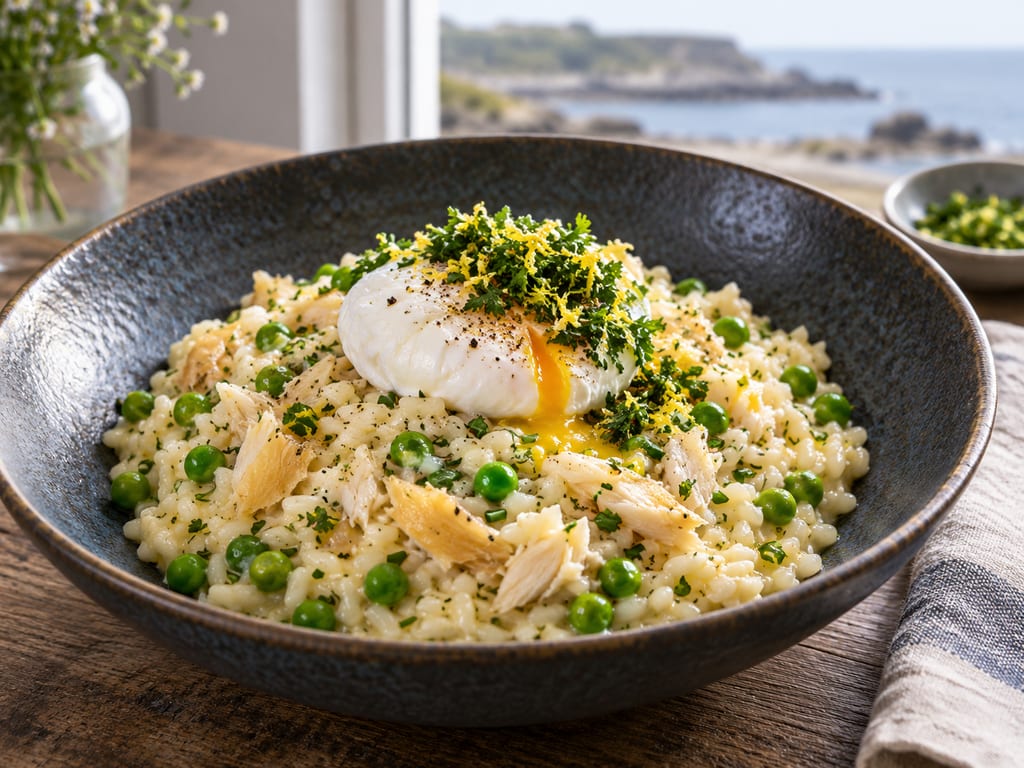
A four-serving risotto published in the 2014 Arbroath Smokie Trail booklet and credited to Hayley Wilkes. It cooks with finished Arbroath smokies; it does not describe smoking fish.
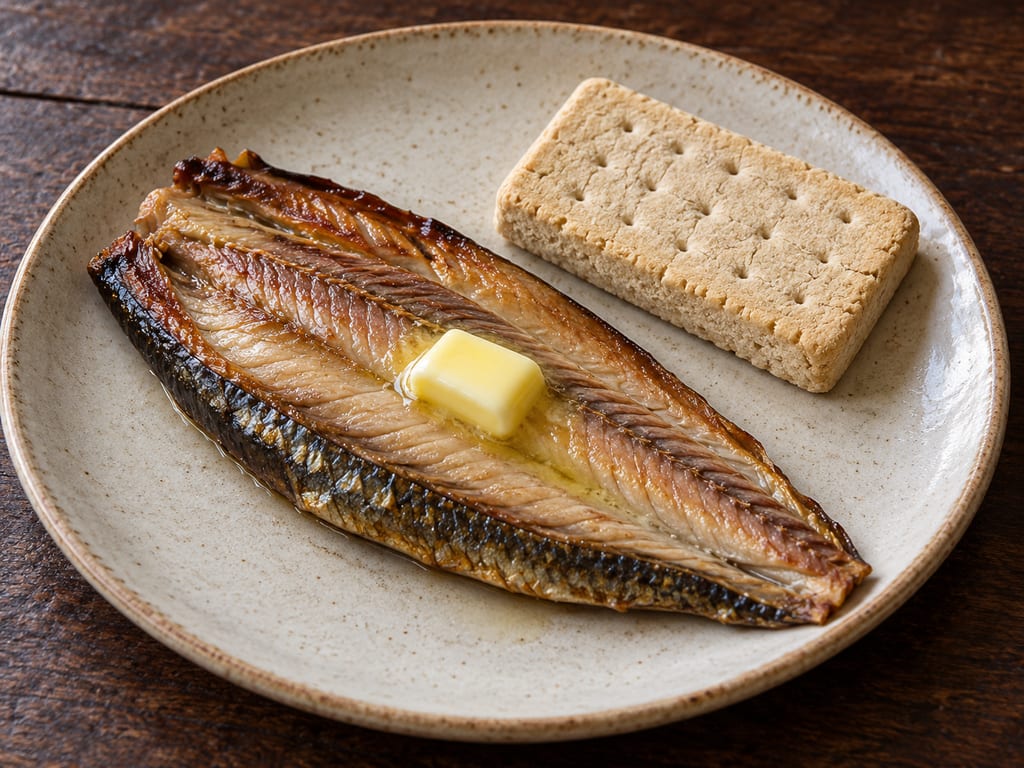
A Victorian way with Great Yarmouth bloaters: the lightly salted, cold-smoked whole herring is broiled and served with fresh butter and a warmed captain's biscuit.
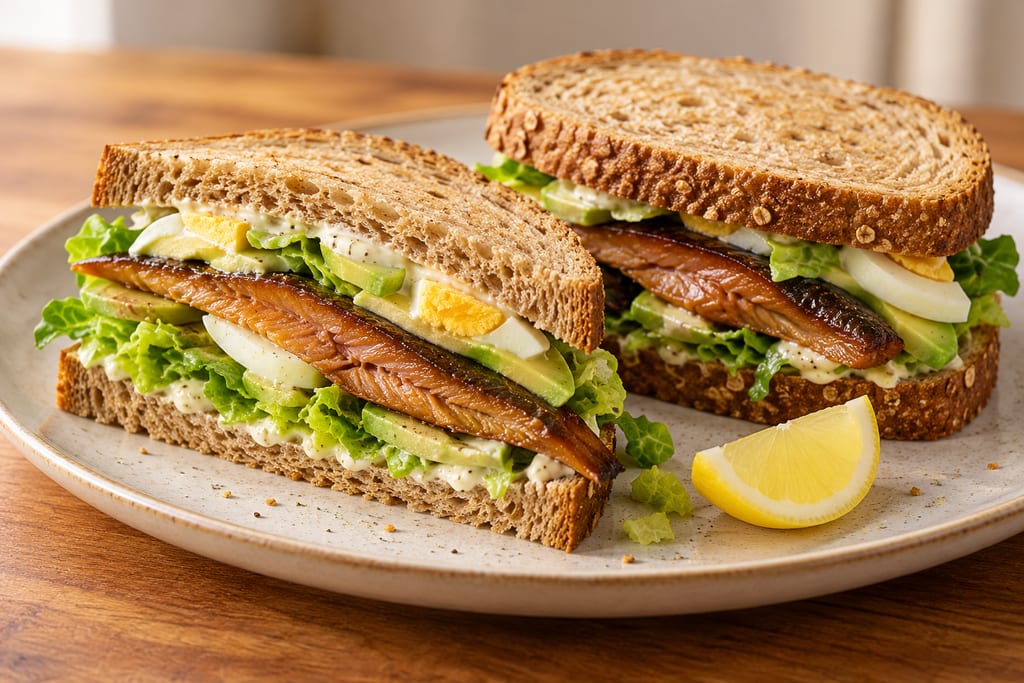
A warm club sandwich of oak-smoked Craster kipper fillets layered with soft-boiled egg, romaine, avocado and lemon mayonnaise on brown bread.
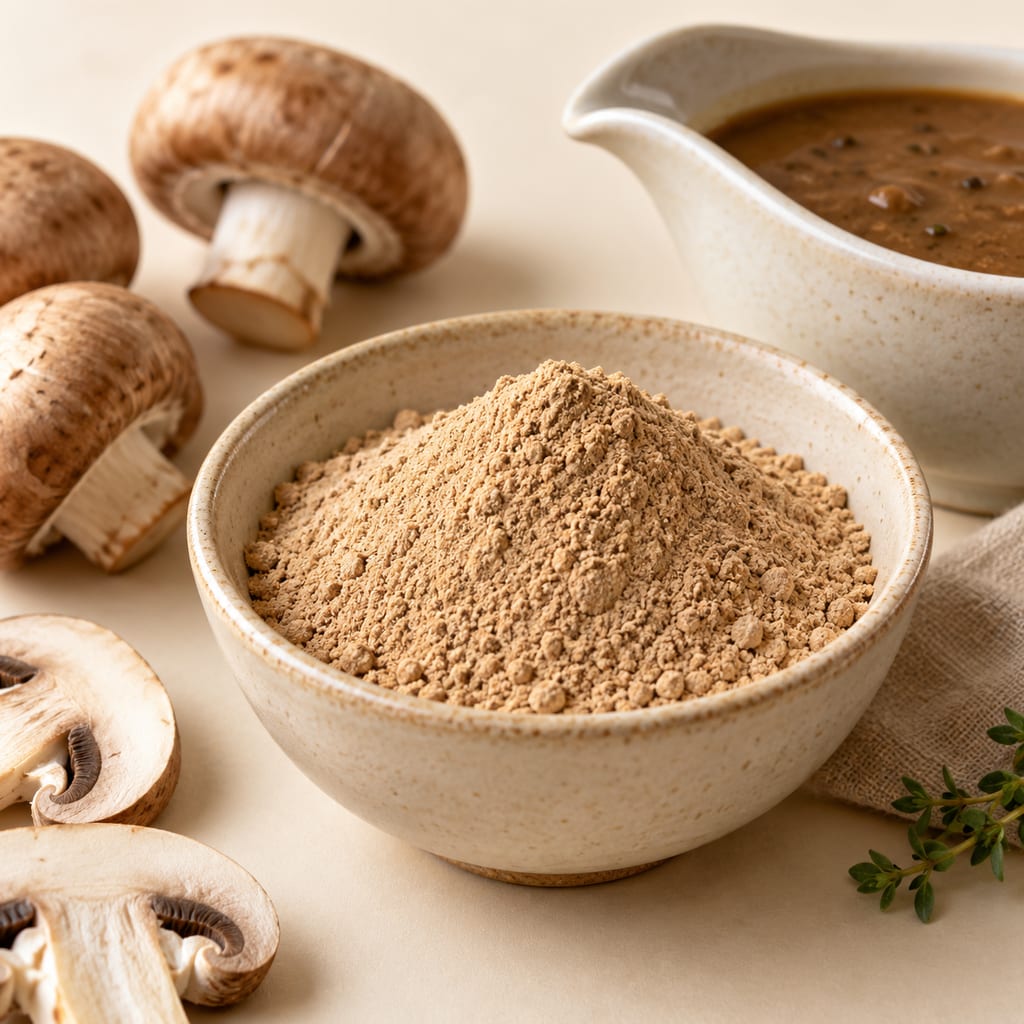
Mushroom powder is dried mushroom tissue ground to a fine powder and added to gravies and sauces. Victorian cooks made it from fresh cultivated mushrooms when fresh ones were not to hand.
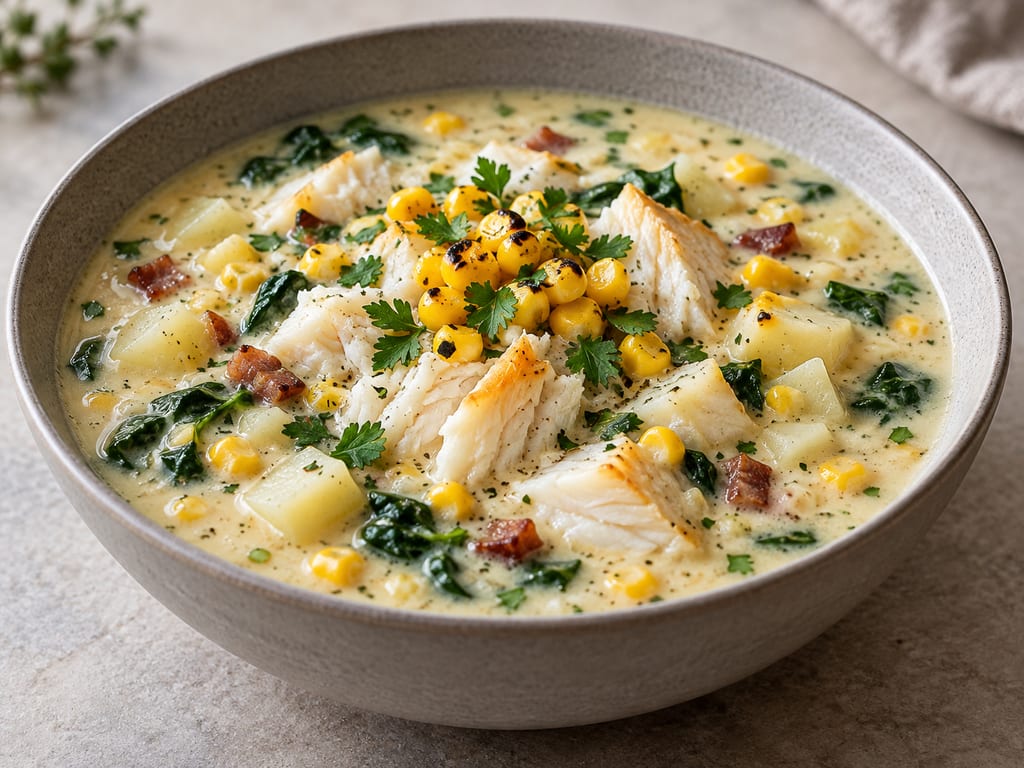
Alfred Enderby’s chowder combines smoked haddock with potato, sweetcorn and spinach in a milk-and-stock broth.
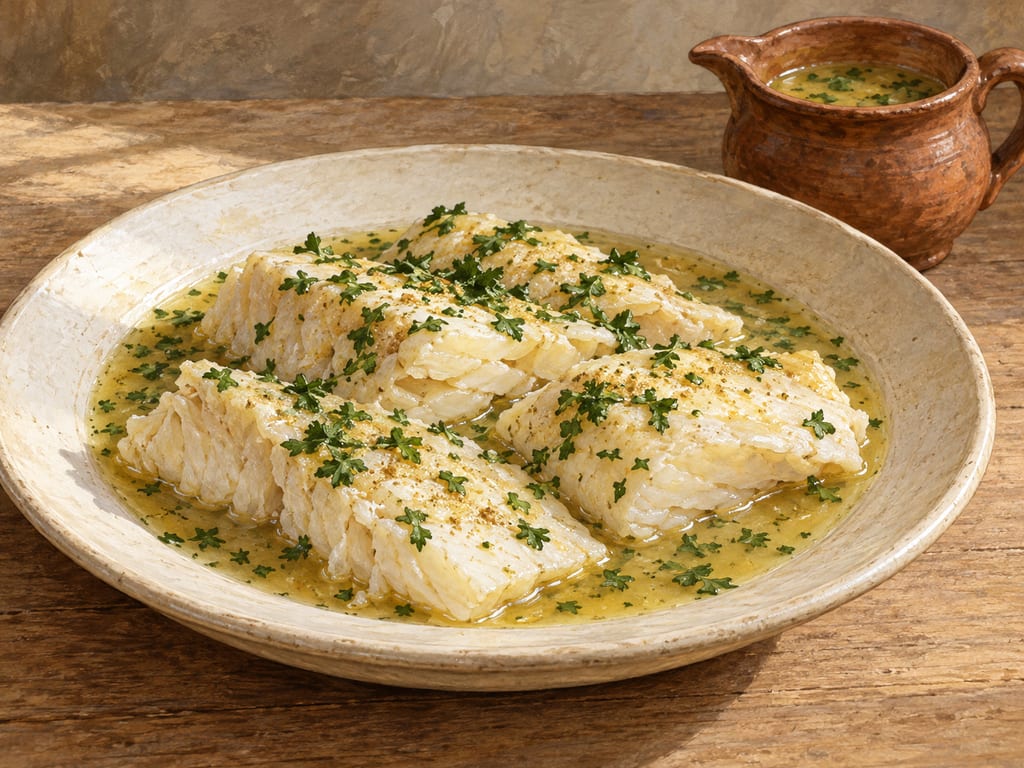
A fifteenth-century English way to serve cooked stockfish: strained fish broth boiled with chopped parsley, powdered ginger and a little verjuice, then poured hot over the fish.
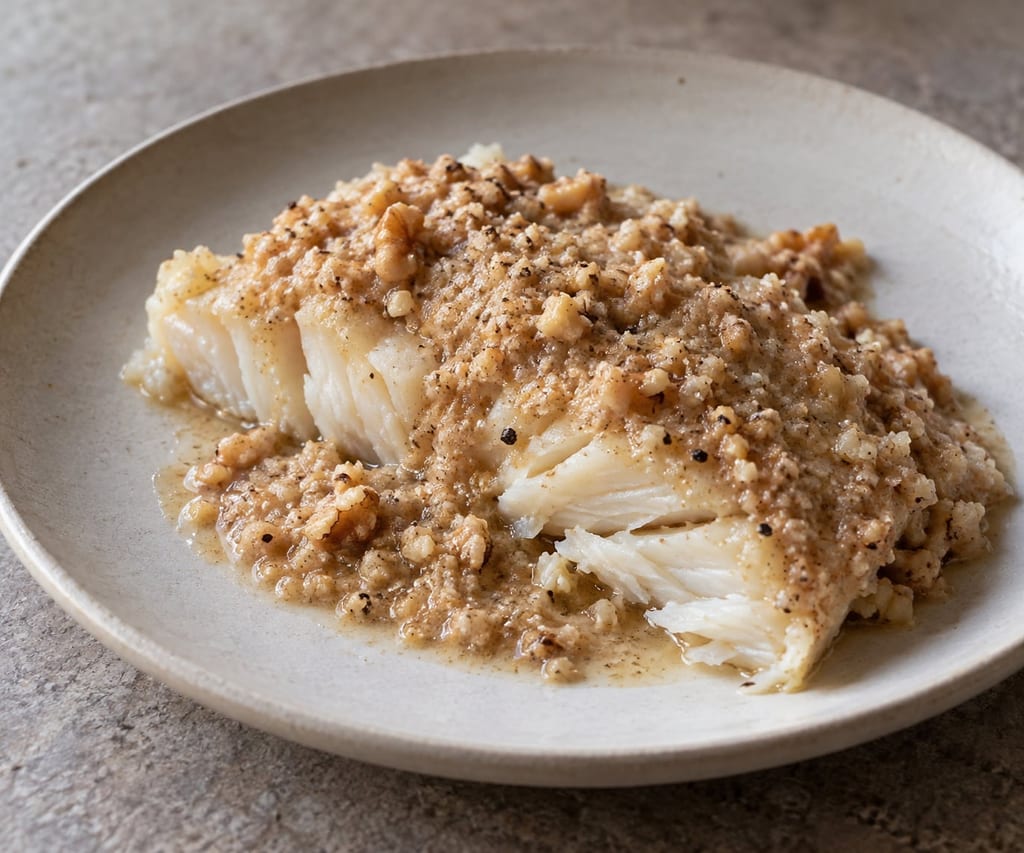
The second stockfish sauce from a fifteenth-century English manuscript: walnuts, garlic, bread, pepper and salt ground in a mortar and loosened with the fish's own broth.
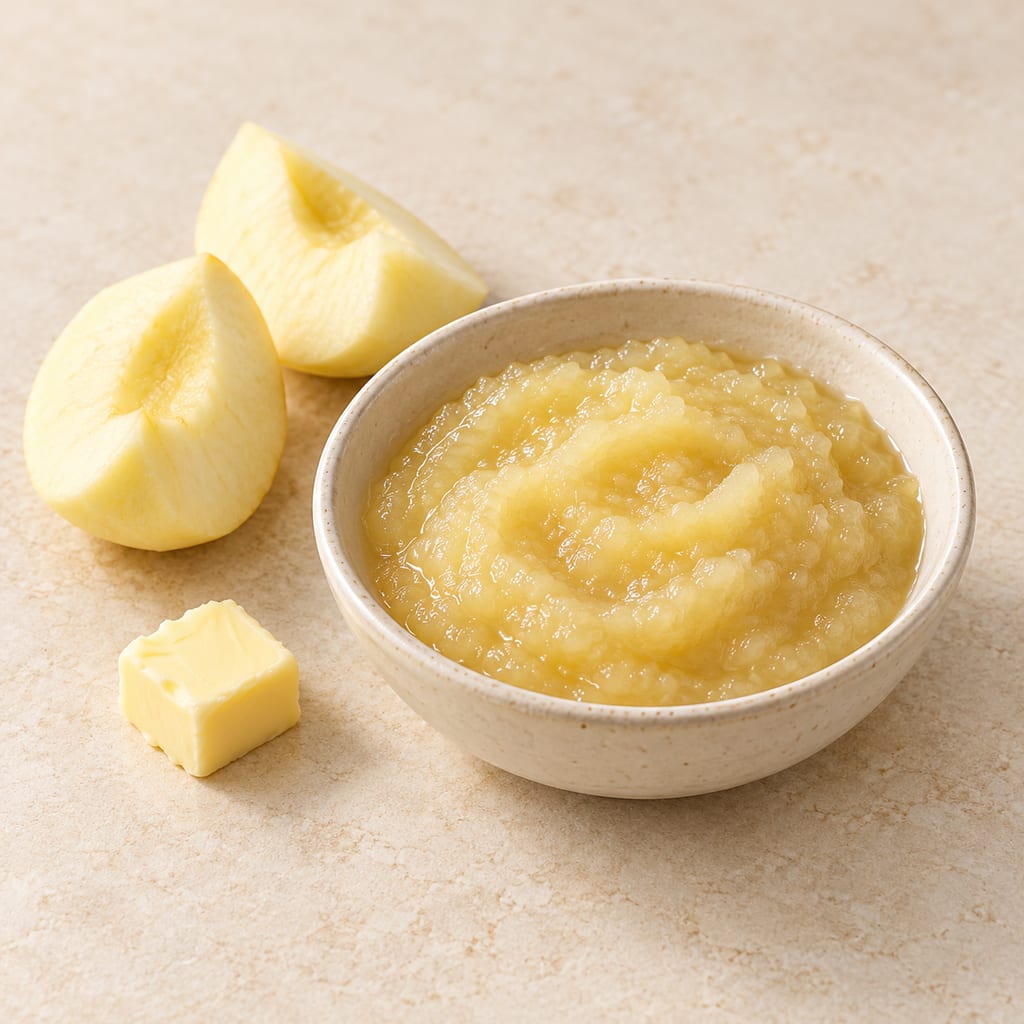
Apple sauce for goose and pork is a plain English accompaniment: cooked apples pulped with water, then sweetened with sugar and finished with a little butter.

Japanese skipjack tuna cooked, then repeatedly smoked and dried over a wood fire by the hand-fired tebiyama method into a hard block for shaving into dashi: the first stage of katsuobushi.
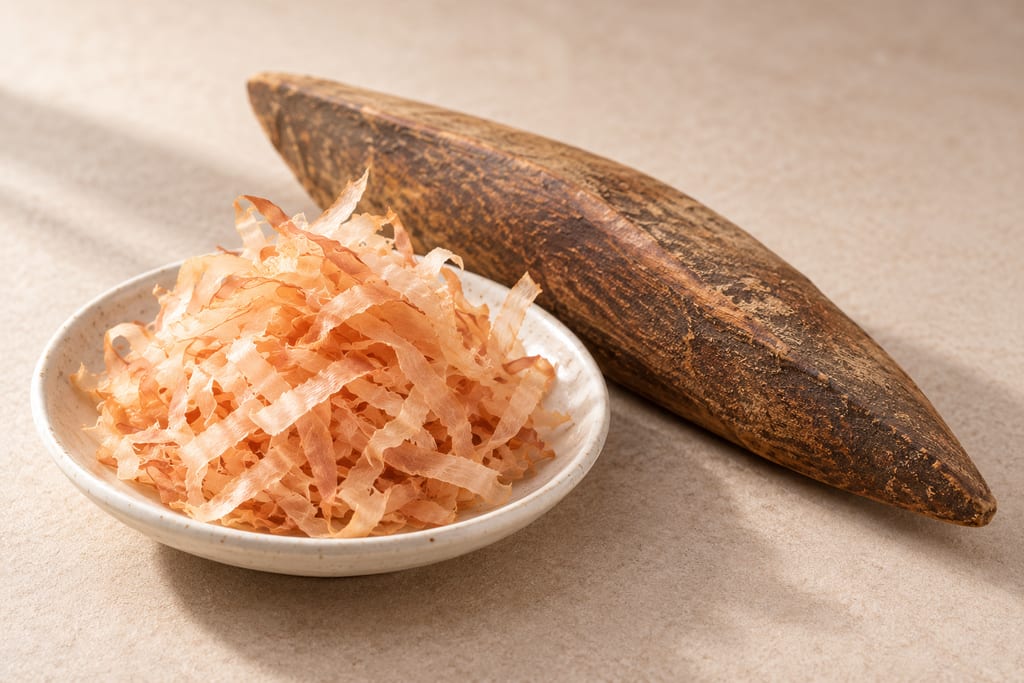
Katsuobushi is skipjack tuna cooked, smoked and dried into a hard block that is shaved into flakes for dashi and toppings. Some styles stop at the smoke-dried stage; others receive carefully managed mold maturation.
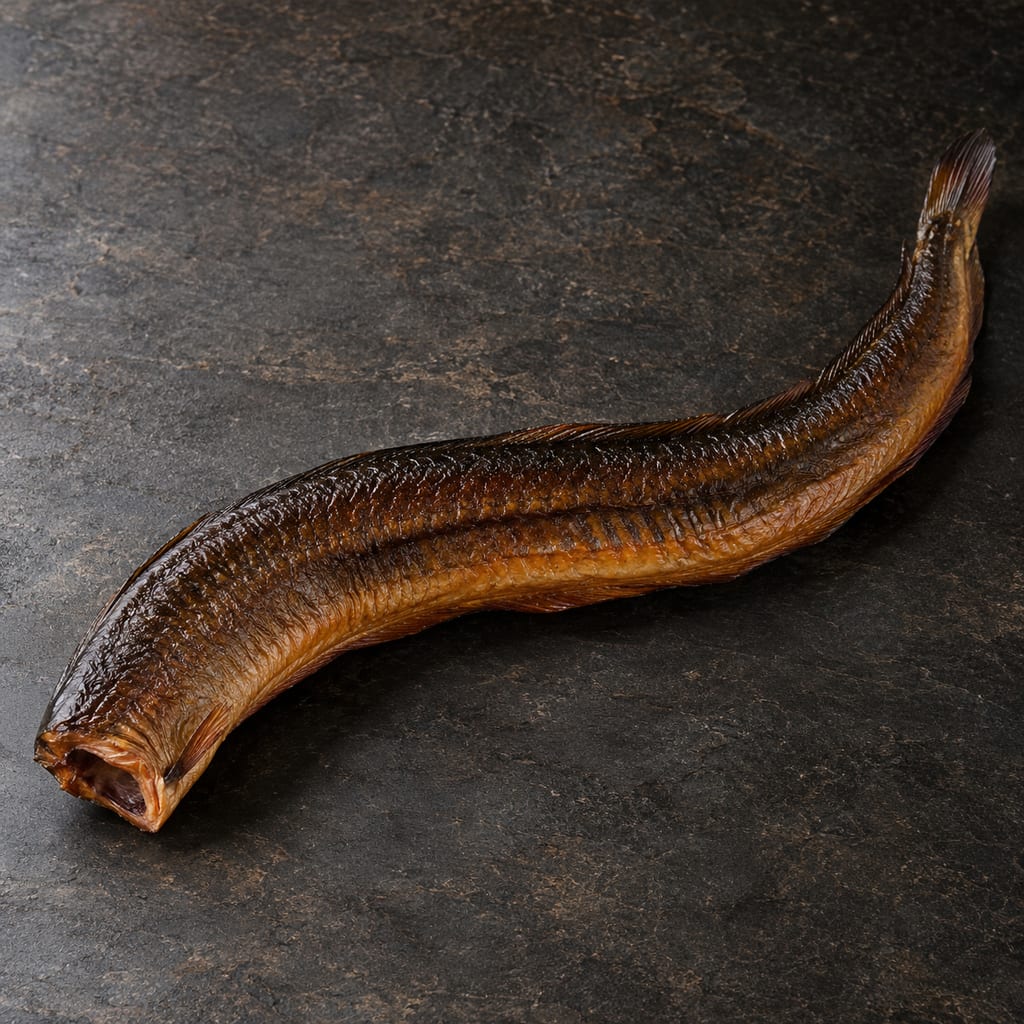
Short-finned eels, kooyang, smoked for a sustained period in the hollows of large trees at Budj Bim in south-western Victoria, a combined heat, smoke and drying method of the Gunditjmara people.
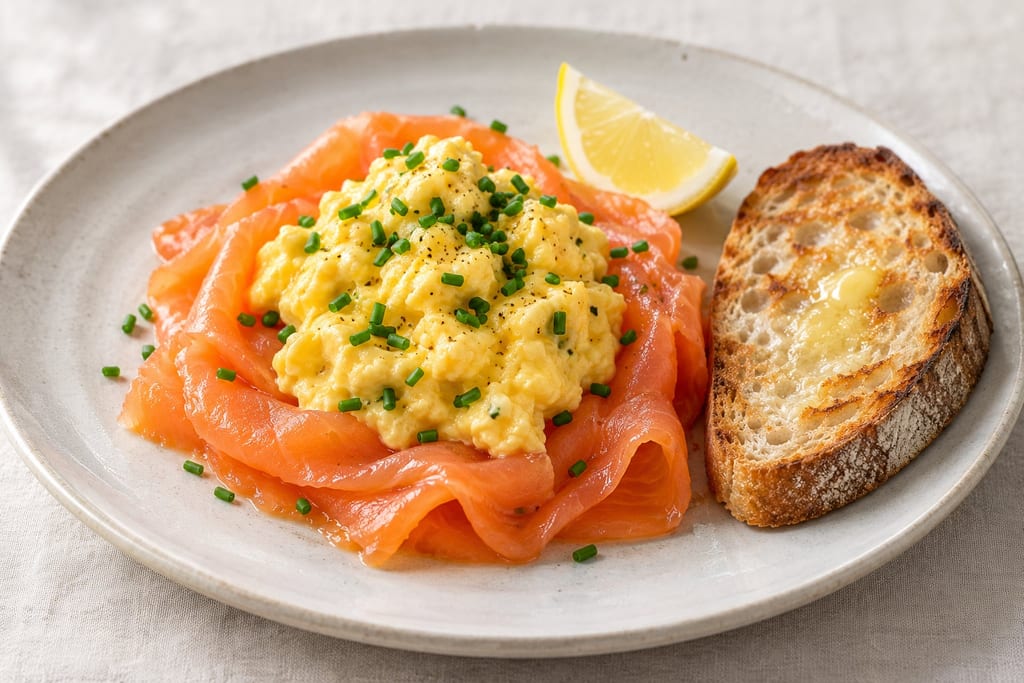
Softly scrambled eggs enriched with cream and butter, served with cold-smoked salmon, chives, lemon and sourdough toast as a British breakfast dish.
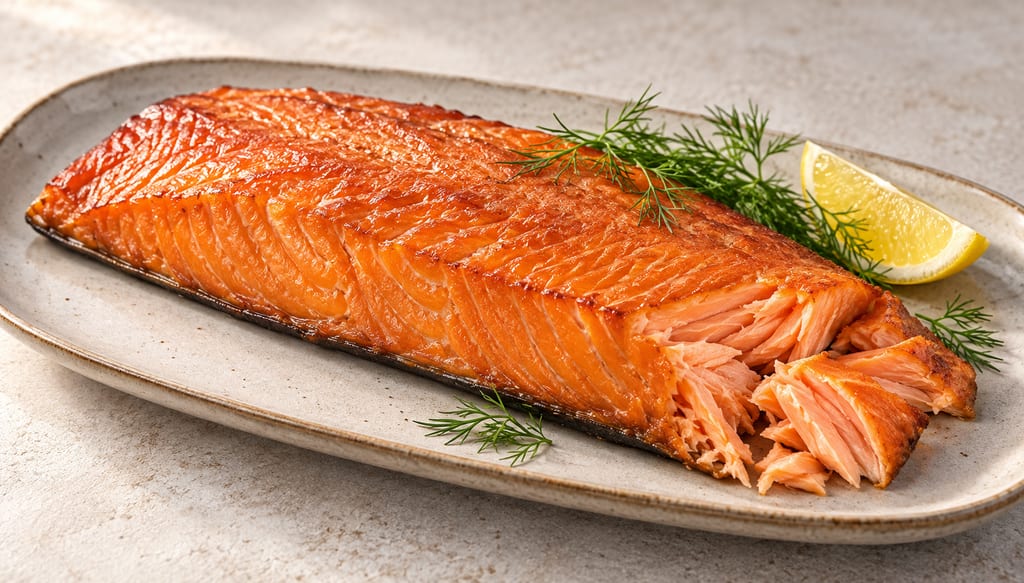
Salmon fillets salted or dry-brined, rested, then cooked and flavoured in a smoker. The method is a cooking process, and the endpoint decides its safety.
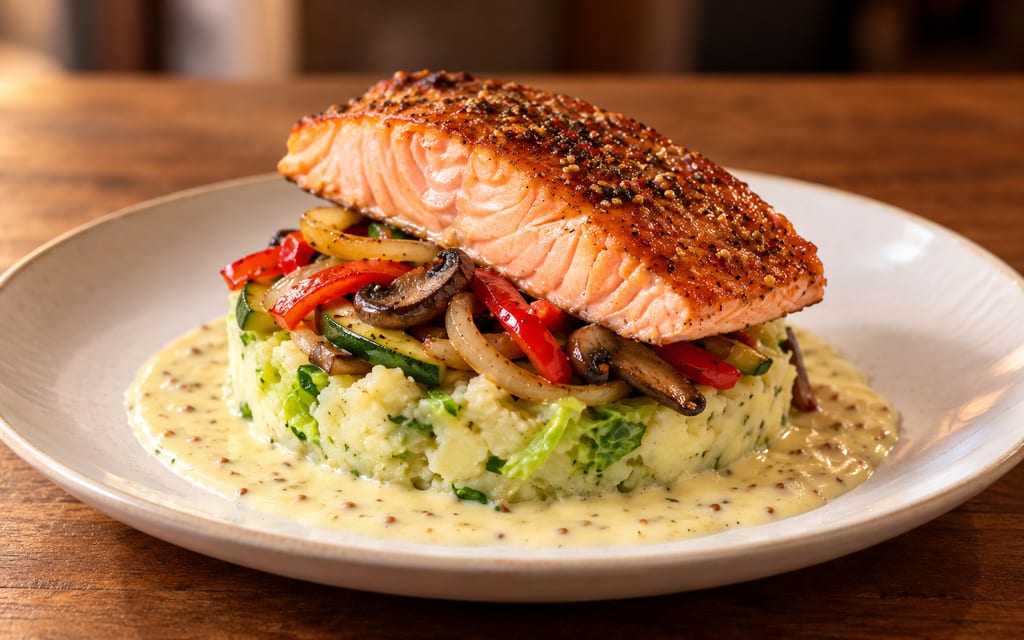
Burren Smokehouse’s colcannon dish serves hot-smoked salmon with mashed potatoes, cabbage, stir-fried vegetables and mustard cream.
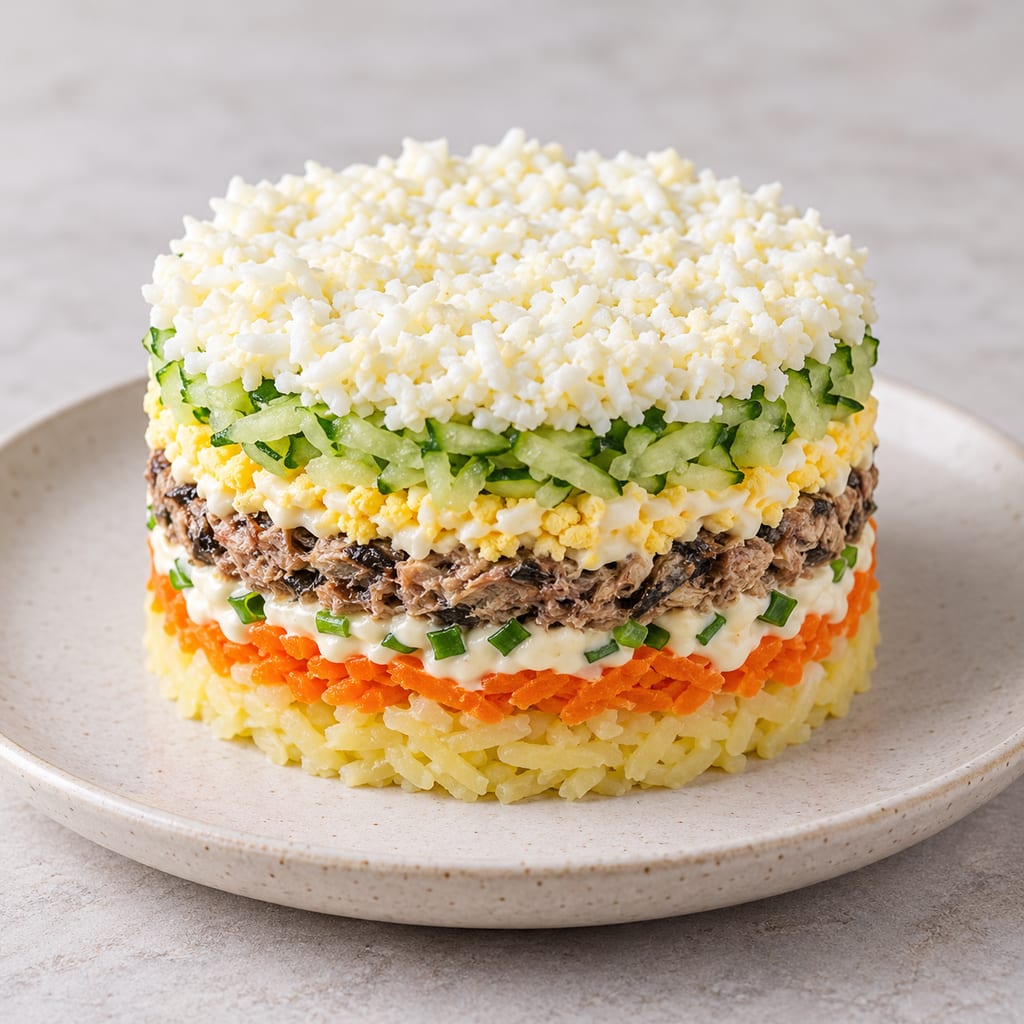
A Latvian Šprotes page’s layered salad uses one can of sprats in oil, grated vegetables and eggs with mayonnaise. The page gives no serving yield, can size or complete vegetable-cooking method.
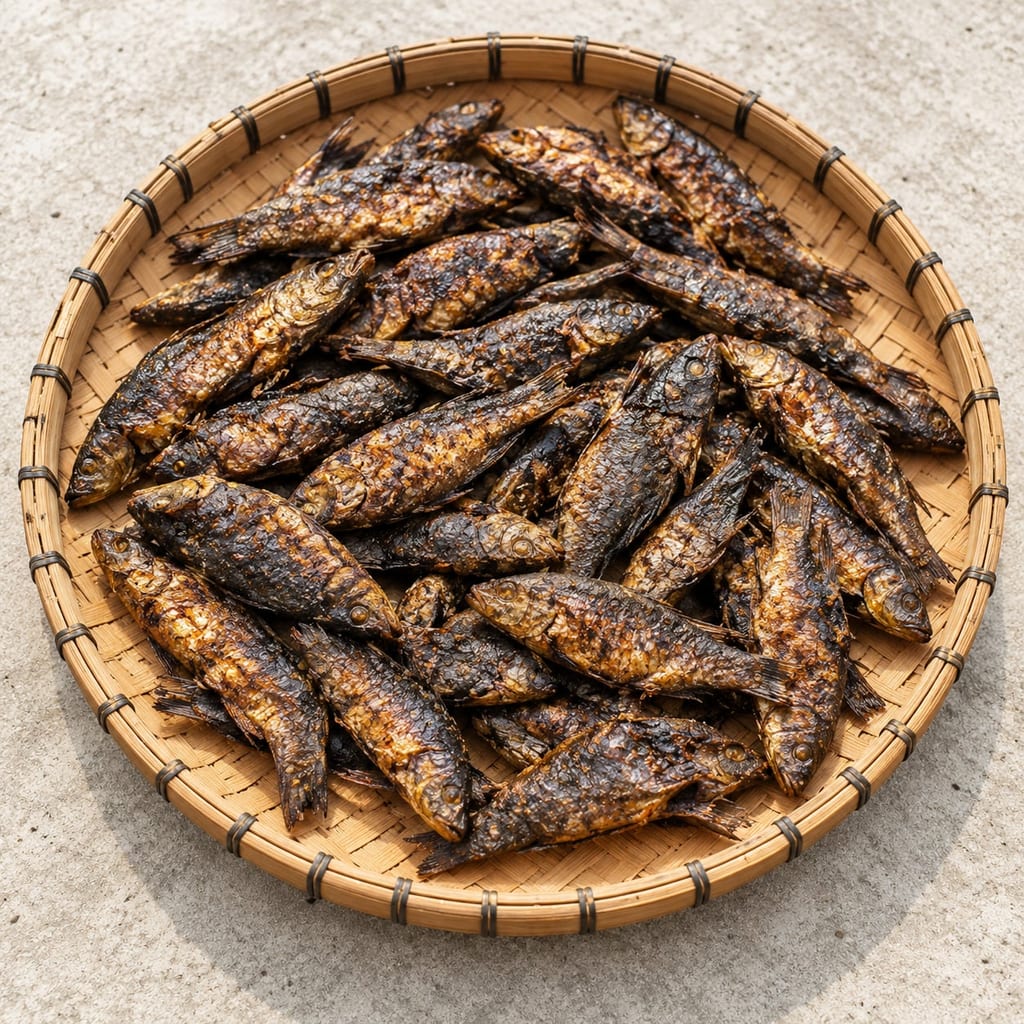
Leirou is fish smoked in a prepared kiln or room by processors around Loktak Lake in Manipur, India, a method the local survey keeps apart from open-flame ngaphak.

A Cap-Pelé boucanière is an Acadian herring-smoking building. The documented Willie Niles example is a one-storey wood-frame structure with a ridge smoke vent and interior bays for hanging fish-bearing cannes.

Achcharu is a family of Sri Lankan vinegar pickles made with mixed vegetables or seasonal fruit and a piquant spice dressing. This version is a quick, refrigerated, non-fermented mixed-vegetable pickle.

The acocote is a long, hollowed and dried gourd used to draw aguamiel from a mature maguey. It is a harvesting tool: the sap is transferred to a separate vessel before it ferments into pulque.

Adrak murabba preserves young ginger in sugar syrup, a sweet South Asian preparation recorded in Indian cookery and food-processing sources.

Parkia biglobosa seeds are fermented into regional West African seasonings, including nététou, iru, dawadawa and soumbala. The yellow fruit pulp is a separate food, and names and methods vary by place.

Japanese reddish-brown vinegar from sake lees matured about three years, turned to vinegar by acetic bacteria; the vinegar of Handa and Edomae sushi rice.

A refined common-wheat flour blended for a broad range of baking; its protein and behavior vary with wheat, milling and market.

The almond mushroom, Agaricus subrufescens, was cultivated in eastern North America in the 1800s, lost its market, and returned as a cultivated mushroom from Brazil, where it is grown under several names.
No community contributions have been published for this entry yet.
Sign in to contribute. Published comments and photos are free to read.
Department for Environment, Food & Rural Affairs; applicant group: The Arbroath Fish Processors AssociationIdentity · Method · Geography · History
Protected food names: Arbroath smokies — product specificationDefines the whole, headless and gutted hot-smoked haddock product, pair size, weight and sensory description.
Specifies the protected production area, source-market requirements, dry-salt and drying stages, hardwood barrel process and 45–60-minute hot-smoking stage.
Describes the Auchmithie–Arbroath history, local jute use, late nineteenth-century documentary evidence, market sales and distinction from cold-smoked kippers and Finnan haddock.
Cited in: A named hot-smoked haddock; Auchmithie, Arbroath and the record of a fishing trade; A protected coastline, not a birthplace claim; How the commercial method builds the finished fish; Salt, fire, smoke and texture; Close neighbours and meaningful variations; What the record does not supply
Department for Environment, Food & Rural Affairs, GOV.UKProtected status
Arbroath SmokiesRecords Protected Geographical Indication status, original EU registration on 2 March 2004 and UK scheme registration on 31 December 2020.
Cited in: A named hot-smoked haddock; A protected coastline, not a birthplace claim; What the record does not supply
Visit AngusHistory · Geography
Arbroath Heritage TrailDescribes Arbroath’s harbour history, the Fit o’ the Toon as the heartland of the smokie industry and the smokie as arriving from Auchmithie after 1830.
Cited in: Auchmithie, Arbroath and the record of a fishing trade; From the harbour to the table
Visit AngusGeography · Use
The Arbroath Smokie TrailDescribes the protected production area, the route between Arbroath and Auchmithie, local fishmongers and the Smokie Supper as a local menu item.
Cited in: Auchmithie, Arbroath and the record of a fishing trade; A protected coastline, not a birthplace claim; From the harbour to the table
Borough Market; interview with Matthew Parr of Oak & SmokeMethod · Variation
What it takes: fish smokingDescribes one producer’s salting and paired-tail method, wet cloth, hardwood barrel fire and hot, humid smoking conditions.
Reports that the producer uses a smokehouse designed to recreate barrel conditions and considers barrel wood flavour negligible in his operation.
Cited in: How the commercial method builds the finished fish; Salt, fire, smoke and texture; Close neighbours and meaningful variations
Arbroath Smokies / local fish producerUse
RecipesLists local uses of Arbroath smokies in fishcakes, pâté, Cullen skink and pie.
Cited in: Close neighbours and meaningful variations; From the harbour to the table
Food Standards ScotlandSafety context
Listeria monocytogenesGives consumer guidance about Listeria in chilled ready-to-eat foods and specified cold-smoked or cured fish; does not validate Arbroath smokie production.
Cited in: What the record does not supply