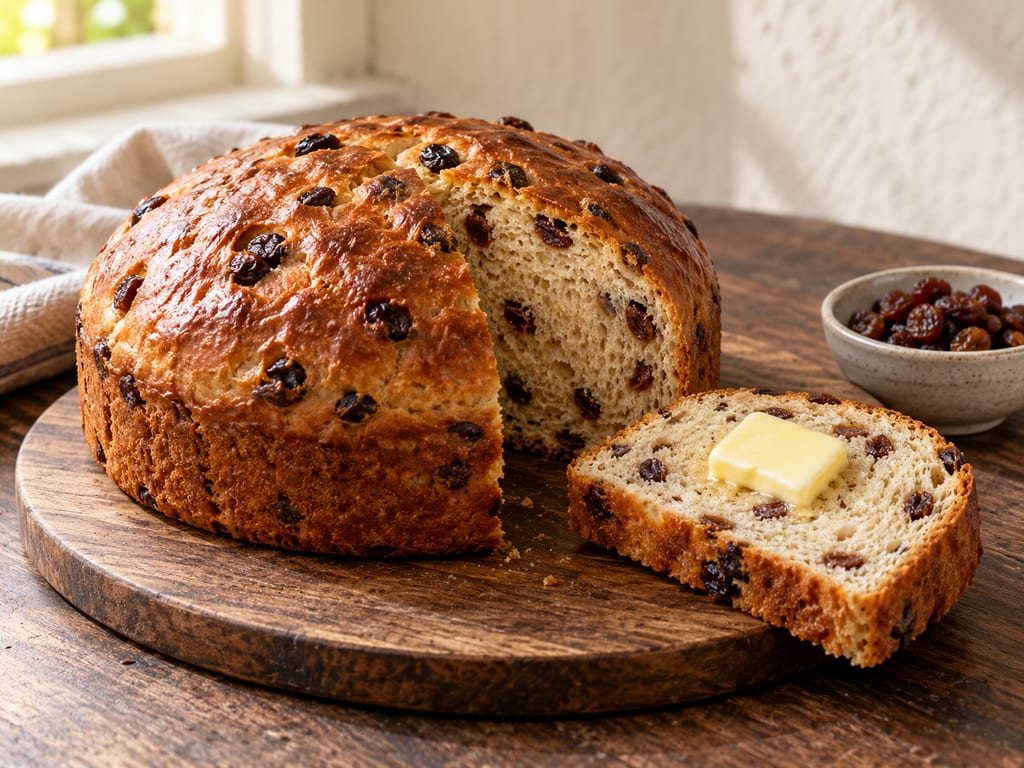
Barmbrack
An Irish fruit-studded yeast loaf, associated in a contemporary cultural account with Halloween and often served fresh or toasted with butter.
 FermenteaWhere food goes to change
Modern method
Burren Hot Smoked Irish Organic Salmon on Colcannon
Burren Smokehouse’s colcannon dish serves hot-smoked salmon with mashed potatoes, cabbage, stir-fried vegetables and mustard cream.
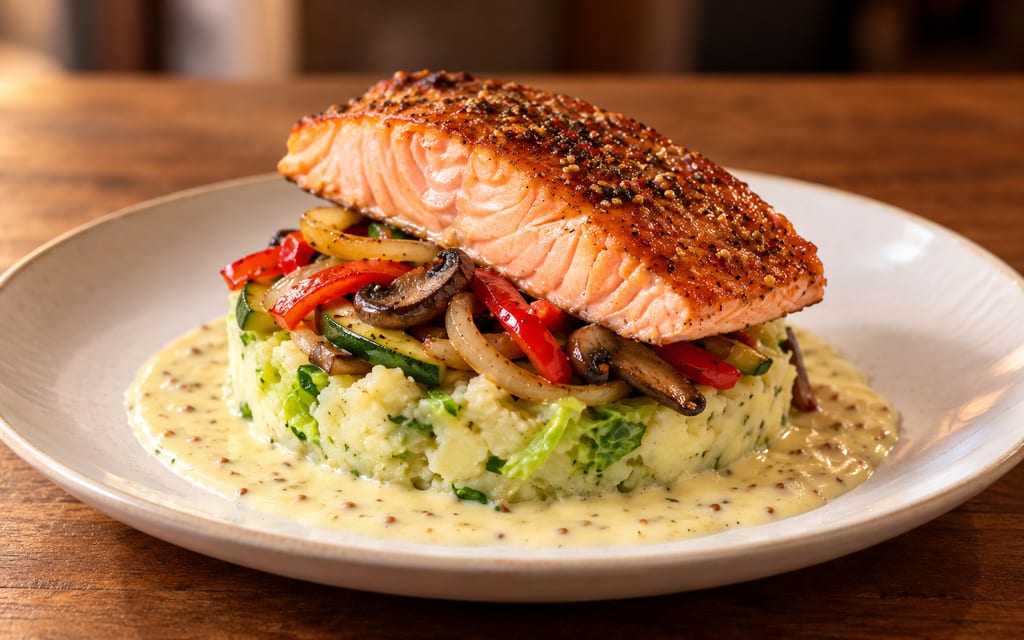
Hot-smoked salmon on colcannon is a substantial Irish main course combining cooked smoked fish, mashed potatoes, cabbage, spring onions, stir-fried vegetables and a warm wholegrain-mustard cream sauce.
The recorded name is Burren Hot Smoked Irish Organic Salmon on Colcannon. It is associated with the Roadside Tavern and Burren Smokehouse in Lisdoonvarna, County Clare, on the western coast of Ireland.
The dish combines an established Irish potato preparation with a contemporary smoked-salmon restaurant presentation. The salmon is not smoked during the recipe; a commercially prepared hot-smoked fillet is reheated immediately before serving.
The result has several deliberately contrasting elements: creamy potato, softened cabbage, brightly coloured vegetables, rich salmon and a sharp mustard sauce. It is more elaborate than a traditional standalone plate of colcannon, but retains the defining characteristics of the Irish dish.
In Irish, colcannon is cál ceannann, a name connected with cabbage or kale and mashed potato. There is no distinct Irish-language historical name established for the complete salmon-and-colcannon restaurant preparation.
The salmon is Atlantic salmon, Salmo salar. The exact farm or fish-stock provenance of any individual purchased fillet depends on its supplier documentation.
Colcannon has a firmly established place in Irish food culture, although the precise date and circumstances of its invention cannot be established from the modern restaurant recipe.
Its ingredients reflect Ireland's agricultural and culinary history. Potatoes became a central part of Irish diets following their introduction from the Americas, while cabbage and kale were already familiar European vegetables.
Mashed potato mixed with cooked greens became a practical dish that combined a filling starchy staple with leafy vegetables and dairy fat. In many households, butter and milk supplied richness, while onions or scallions contributed flavour.
Colcannon became associated particularly with autumn and Halloween. In some historical household customs, small objects were concealed in the dish as part of games involving predictions about marriage or fortune. These customs belong to colcannon's wider cultural history, not to the smoked-salmon version.
Fish smoking is another substantial part of Ireland's food heritage. The use of smoke to preserve fish predated refrigeration, but the exact equipment, salt levels and temperature regimes used historically differed substantially from modern commercial smokehouses.
Modern hot-smoking commonly combines salt treatment, controlled smoke exposure and cooking. The result is distinct from cold-smoked salmon, which normally retains a more translucent, uncooked-looking texture.
Burren Smokehouse was established in 1989 by Peter and Birgitta Curtin. The associated Roadside Tavern has been an important local hospitality venue in Lisdoonvarna.
The present dish was developed as a signature preparation of the Roadside Tavern. Its combination of traditional colcannon, stir-fried vegetables and mustard cream reflects modern restaurant cooking rather than a documented historic farmhouse recipe.
The association with the Burren therefore identifies the restaurant and product context. It does not establish that people in the Burren traditionally served salmon on colcannon in this precise form.
DOCUMENTED FOUR-PERSON FORMULATION
Component — Ingredient — Quantity
Salmon — Burren hot-smoked organic salmon, spiced and unsliced — 800 g
Colcannon — Floury potatoes — 500 g
Shredded cabbage leaves — 4 cups
Chopped scallions — 2 tbsp
Butter — 2 tbsp
Heated milk — 50 mL
Salt and black pepper — To taste
Vegetables — Red pepper — 1
Onion — 1
Courgette — 1
Mushrooms — 8
Soy sauce — 1 tsp
Olive oil — 1 tbsp
Sauce — Wholegrain mustard — 1 tbsp
Cream — 500 mL
White wine — 2 tbsp
The original salmon recipe specifies the spiced, unsliced product. A separate publication of the restaurant dish uses plain hot-smoked salmon. These are documented product variants rather than grounds to replace the ingredient in this record.
The source also prints 1 lb for the potatoes and ¼ cup for the milk. Those are retained as source expressions, without treating them as necessarily exact equivalents to the metric quantities.
There is an ingredient-allocation ambiguity: one onion appears in the stir-fry list, while the method also instructs cooking onion with the cabbage. No second onion or division is specified.
The soy sauce likewise appears in the ingredients but has no explicitly assigned addition stage.
Hot-smoked salmon provides the major protein and fat component. Salmon flesh contains water, proteins and oil, including omega-3 fatty acids. During hot-smoking, muscle proteins denature and coagulate, producing the characteristic opaque, flaky texture. Smoke compounds contribute distinctive aromas and surface colour.
Floury potatoes, Solanum tuberosum, are suitable for mashing because their structure breaks down readily after cooking. Their starch contributes the bulk and body of the colcannon.
Cabbage, Brassica oleracea Capitata Group, contributes leafy texture and a mild brassica flavour. It prevents the mashed potatoes from becoming a uniform mass of starch.
Scallions, Allium fistulosum or young onions depending on the product, add a fresher allium note than long-cooked onion.
Butter and milk contribute fat and moisture to the potato mixture, improving its creamy texture.
Pepper, courgette, mushrooms and onion provide colour, varying degrees of sweetness and savoury flavour. Mushrooms contain compounds associated with umami, while the vegetables also contribute water and structural contrast.
Soy sauce supplies salt and savoury compounds. Its exact use is not specified by the main recipe, but it is retained as an ingredient rather than silently discarded.
Wholegrain mustard provides acidity, pungency and texture. The mustard seeds contrast with the smooth cream sauce.
Cream forms the principal sauce body. White wine contributes additional acidity and wine-derived flavour, although the recipe does not specify wine style.
The recipe requires a potato saucepan, another vessel for cabbage, a frying pan, a small saucepan for sauce and an oven suitable for reheating the salmon.
A potato masher, knife, cutting board and stirring utensils are needed.
A thermometer may be useful when handling fish, but the original recipe gives no measured internal fish temperature.
The total stated preparation time is 45 minutes. It does not separate active work, boiling time and waiting time.
The salmon should already be a finished commercial hot-smoked product. The process does not begin with raw salmon and does not provide instructions for salting or smoking fish.
Stage 1 — Prepare the potatoes
Peel 500 g floury potatoes.
Place them in lightly salted water and boil until tender.
The original does not specify the water volume, boiling temperature beyond ordinary boiling, or number of minutes required.
Drain the cooked potatoes.
Stage 2 — Cook the cabbage
Boil 4 cups shredded cabbage leaves with onion for approximately five minutes.
Drain thoroughly.
The recipe does not specify what proportion of the listed onion, if any, is intended for this stage.
Stage 3 — Mash
Warm 50 mL milk.
Mash the drained potatoes with the warm milk and 2 tablespoons butter.
Season with salt and black pepper according to taste.
Stage 4 — Finish the colcannon
Fold in 2 tablespoons chopped scallions and the cooked cabbage mixture.
Mix until the vegetables are distributed through the potatoes.
The colcannon should retain some distinction between soft mash and leafy vegetable material.
Stage 5 — Prepare the vegetables
Cut the red pepper, onion, courgette and eight mushrooms into strips.
Use the documented vegetables without changing their proportions.
Stage 6 — Stir-fry
Heat 1 tablespoon olive oil in a suitable pan.
Stir-fry the prepared vegetables until soft.
The source does not specify the temperature or exact duration of this stage.
It lists 1 teaspoon soy sauce but does not state when to add it. If documenting a practical implementation, its allocation must be marked as an editorial decision rather than a verified original instruction.
Stage 7 — Make the mustard sauce
Combine 1 tablespoon wholegrain mustard, 500 mL cream and 2 tablespoons white wine.
Heat the mixture.
The original does not specify whether it should simmer, reduce or reach a particular temperature. It also gives no required finished viscosity.
Stage 8 — Portion the salmon
Cut the 800 g prepared hot-smoked salmon into four pieces.
The recipe assumes that the salmon has already undergone commercial smoking and is suitable for the supplier's recommended use.
Stage 9 — Reheat
Preheat the oven to 175°C (350°F).
Warm the salmon pieces for five minutes.
This is the source's reheating instruction, not a validated internal-temperature target or a manufacturing smoking schedule.
Stage 10 — Assemble
Place colcannon on each serving plate.
Arrange stir-fried vegetables over the potato base.
Pour mustard cream sauce over the vegetables.
Place a piece of warm hot-smoked salmon on top.
Serve as a complete main course.
This is not a fermentation recipe. Its chemistry is primarily concerned with starch gelatinisation, protein denaturation, fat emulsification and the flavour compounds generated during smoking and cooking.
When potatoes are boiled, starch granules absorb water, swell and gelatinise. The surrounding cell structure softens, allowing the potatoes to be mashed.
Overworking cooked potatoes can release substantial starch and create an excessively gluey texture. Floury varieties generally mash more readily than waxy potatoes.
The addition of butter and warm milk changes the distribution of moisture and fat within the mash. Butter contributes richness and lubrication, while milk helps disperse the potato solids.
Cooking cabbage softens its cell walls and changes its sulphur-containing flavour compounds. Short cooking retains more structural distinction than prolonged boiling.
Stir-frying vegetables drives off some surface water and develops flavour as heating changes sugars and other compounds.
The salmon's texture has already been transformed during hot-smoking. Heat denatures muscle proteins and reduces the translucent appearance associated with raw fish. Depending on the smoking process, moisture is also lost and salt becomes distributed through the flesh.
Smoke contains numerous volatile compounds, including phenols, carbonyls and organic acids. These contribute aromas and colours, although their exact composition depends on wood, combustion conditions and the smoking equipment.
The mustard sauce is rich in dispersed dairy fat. Mustard contains emulsifying constituents and pungent compounds formed when plant material is disrupted and exposed to water.
None of these chemical changes constitutes microbial fermentation in the finished dish.
The white wine is already an alcoholic fermented ingredient, and soy sauce may also have undergone fermentation during manufacture, but the salmon-and-colcannon meal itself does not require fermentation.
Traditional colcannon may use kale instead of cabbage. The two vegetables give different textures and flavours.
Kale tends to retain more individual leaf texture and can have a stronger green vegetable flavour. Cabbage generally softens more readily.
Some colcannon recipes use leek or different onions. The recorded salmon version specifies scallions and cabbage, and these should remain its principal ingredients.
Irish smoked-salmon producers offer plain and spiced preparations. The source's spiced product introduces additional flavour that a plain fillet may lack.
Cold-smoked salmon is not a direct substitute for hot-smoked salmon in this procedure. The two products differ in texture, water distribution and processing.
The recipe's stir-fried vegetable mixture is a contemporary restaurant element, rather than an essential feature of colcannon itself.
The mustard sauce could be presented separately in a restaurant, but the original plate assembly explicitly pours it over the vegetables before adding the salmon.
This is a main-course restaurant dish, served hot or warm.
The potato mash forms a substantial base. The vegetables provide contrasting texture, while the salmon is intended as the main visual and protein component.
The mustard cream ties the elements together and counterbalances the richness of the salmon and butter.
The recipe is particularly suited to plated service, where each of the four components can be prepared separately and assembled shortly before eating.
There is no evidence that it traditionally requires an additional vegetable, bread or alcoholic beverage.
For service quality, the salmon should not be allowed to dry out through excessive reheating, and the colcannon should retain its creamy body.
Dry salmon: Excessive heat or reheating can expel moisture and toughen the fish. The five-minute oven instruction should not be extended automatically.
Gluey colcannon: Overworking potato starch can create a sticky, elastic texture rather than a light mash.
Watery colcannon: Poorly drained cabbage contributes additional moisture. Excess water can make the mash loose.
Scorched vegetables: High heat without adequate movement can burn thinner vegetable pieces before thicker pieces soften.
Separated sauce: Excessive heating or poor mixing may cause cream-based sauces to separate.
Excess salt: The salmon, soy sauce, mustard and any additional salt all contribute. The original leaves seasoning to taste.
Uneven portions: Four salmon pieces are specified, but the source does not give individual plated weights or a sauce-allocation standard.
Commercial hot-smoked salmon should be used according to its product label, including refrigeration, use-by date and instructions following opening.
Smoked fish can be contaminated after processing. Listeria monocytogenes is particularly relevant to chilled ready-to-eat fish because it can survive and grow at refrigeration temperatures.
The original five-minute oven warming stage has no measured internal fish endpoint. It should not be interpreted as a universal safety treatment.
Raw-fish handling and finished smoked-fish handling are distinct operations. This dish begins with a finished product.
Cream and other perishable ingredients require appropriate chilled storage.
The assembled dish has no tested storage period. Its 45-minute recipe time is unrelated to safe leftover storage.
This is a contemporary producer-published meal recipe. Its signature-dish attribution does not date the food or establish an origin.
Yield 4 people · Scaling: source batch only
FDA Chapter18 discusses pathogenic bacteria introduced after pasteurization and specialized cooking processes. This is general industry context; it does not establish the producer’s product classification, evaluate this salmon package or validate this meal.
Hazard sourceUse the supplier’s package instructions for the finished salmon. This meal source gives no storage advice or internal fish endpoint, and does not validate the salmon’s production process.
No maturation stage is described in the cited preparation.
The recipe page credits a Roadside Tavern signature dish and the producer story places the businesses in Lisdoonvarna; this is a documented local association, not an origin claim.
An Irish fruit-studded yeast loaf, associated in a contemporary cultural account with Halloween and often served fresh or toasted with butter.
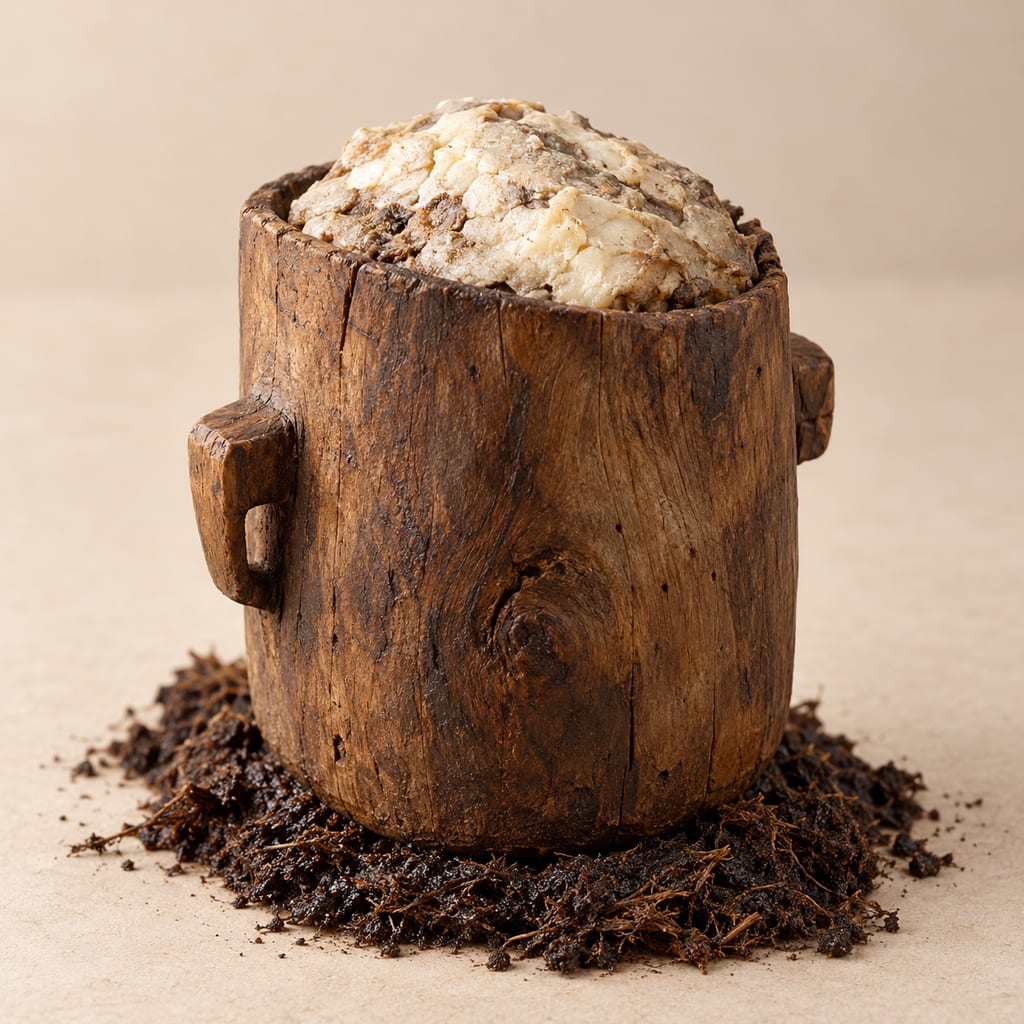
Butter packed into wooden containers and buried in cool, wet peat in Ireland and Scotland, a practice known from finds that may reflect storage, concealment or ritual.
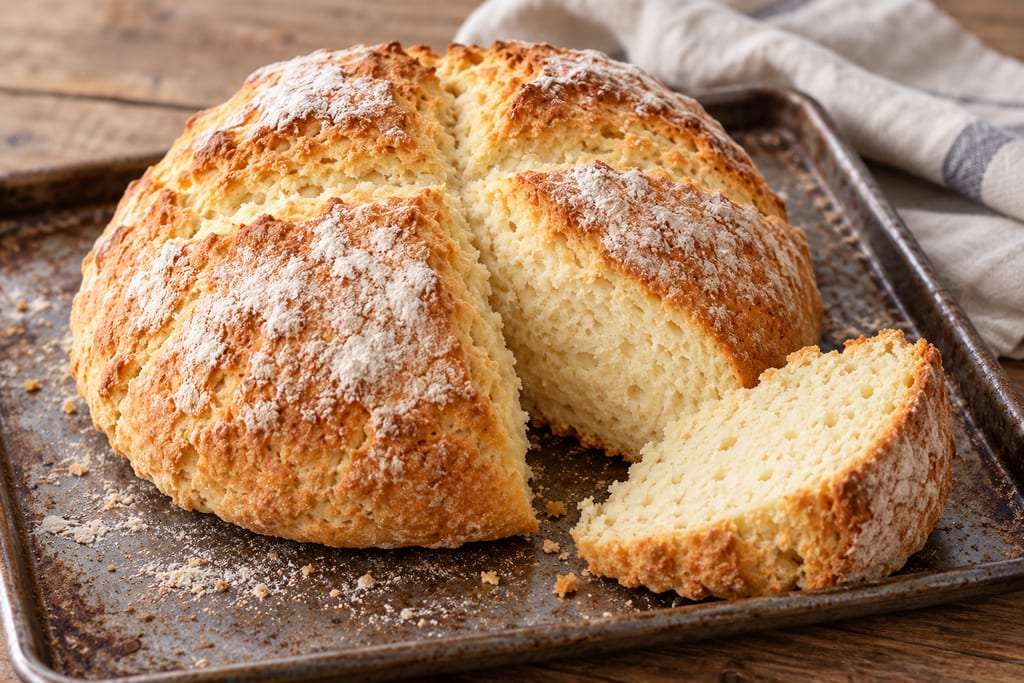
A source-specific Irish quick loaf of plain flour, bicarbonate of soda, buttermilk, egg and butter, mixed briefly and baked as a cross-marked round.
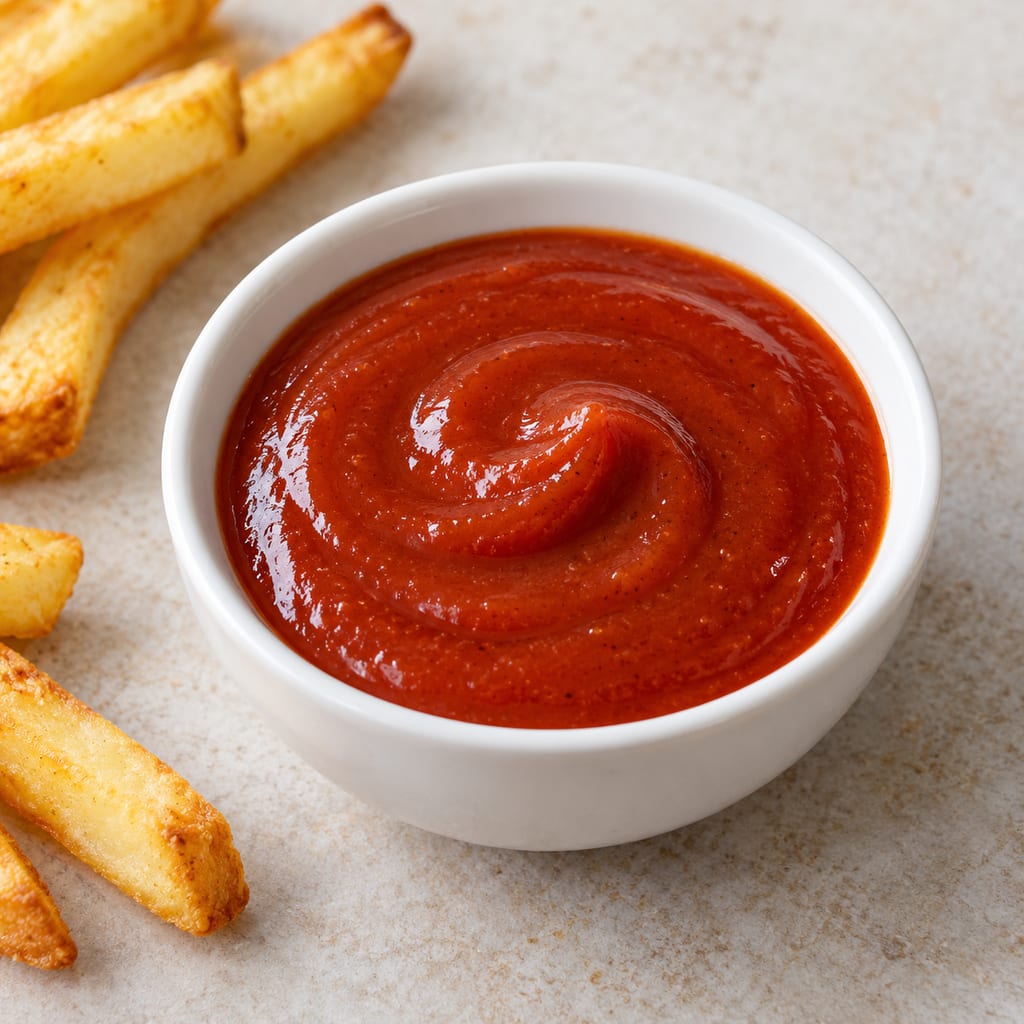
A modern tomato condiment sharpened with the spicy, savoury tang associated with kimchi; this measured version whisk-mixes prepared ketchup and commercial kimchi seasoning.
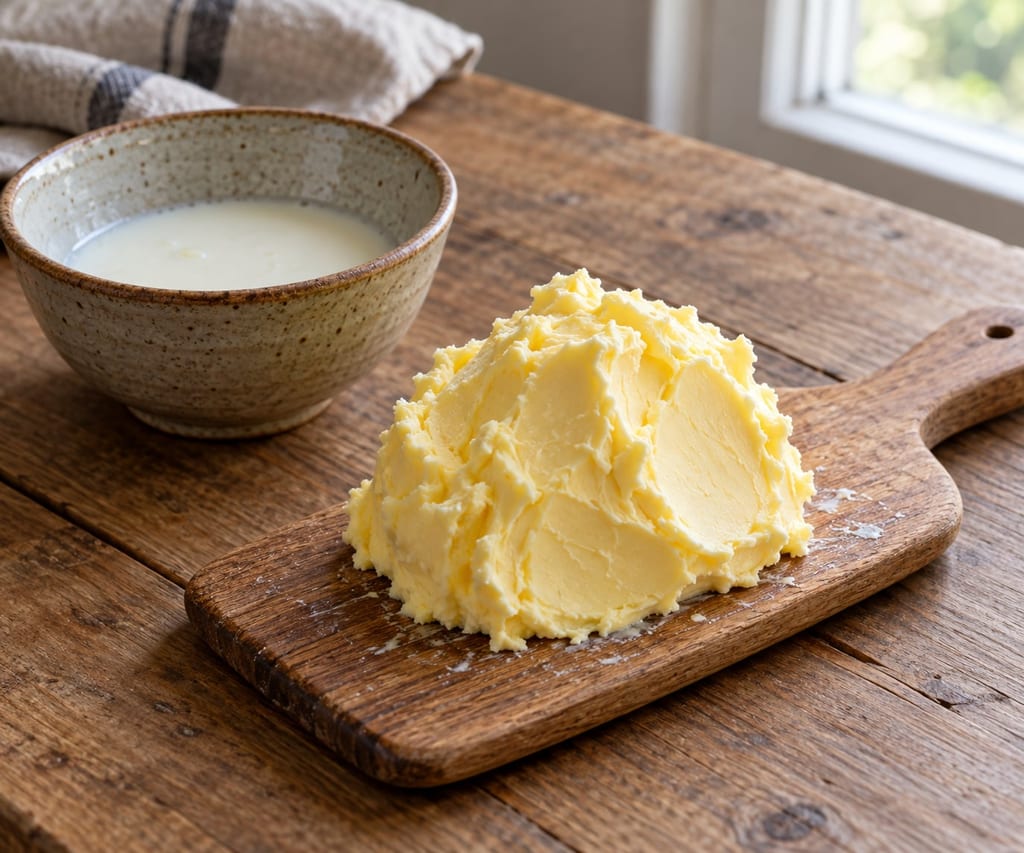
Cream agitated until its fat globules join into a solid mass and release buttermilk, the dairy fat a northern household could concentrate, salt and keep when milk itself would not last.
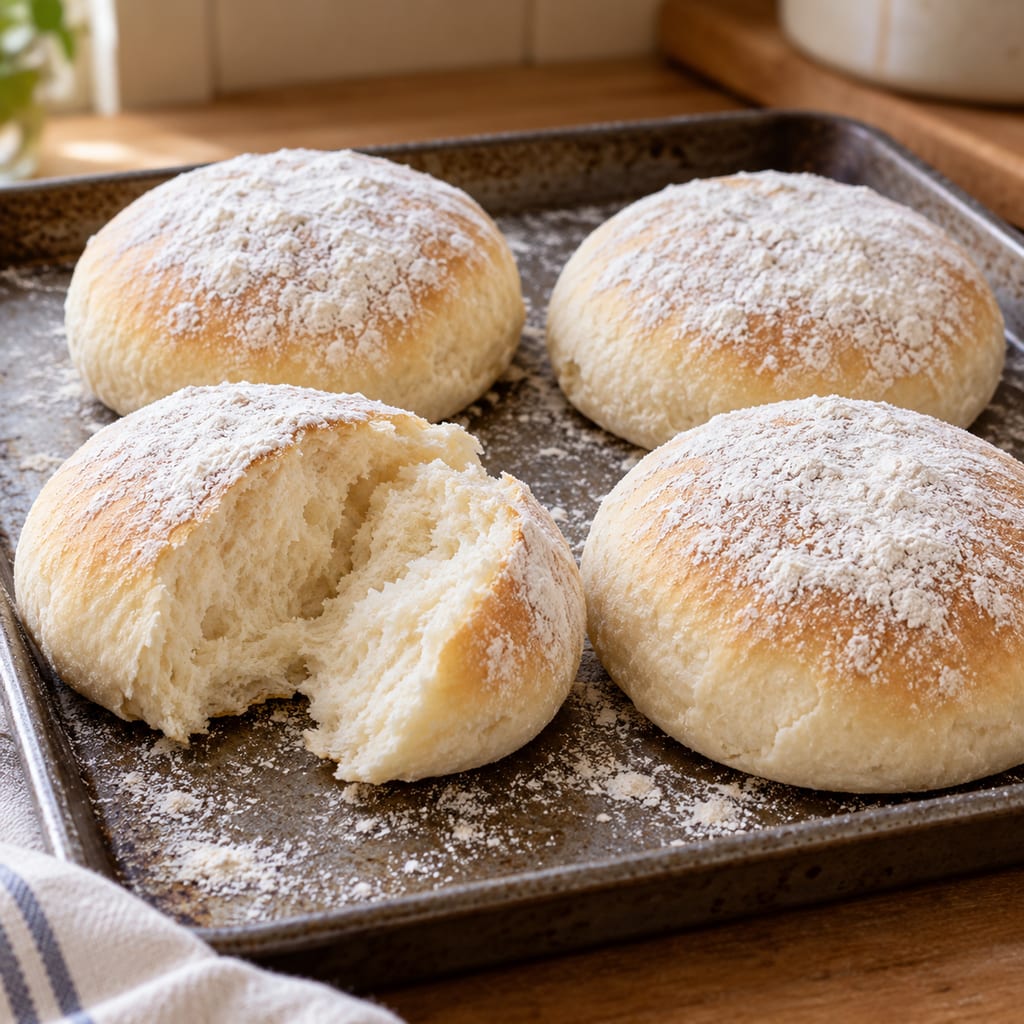
A home adaptation of a measured blaa recipe attributed to Waterford baker Dermot Walsh: plain yeast dough, rounded portions flattened on a tray, generously dusted with flour and baked. Home baking does not confer Waterford Blaa PGI status.

Japanese skipjack tuna cooked, then repeatedly smoked and dried over a wood fire by the hand-fired tebiyama method into a hard block for shaving into dashi: the first stage of katsuobushi.
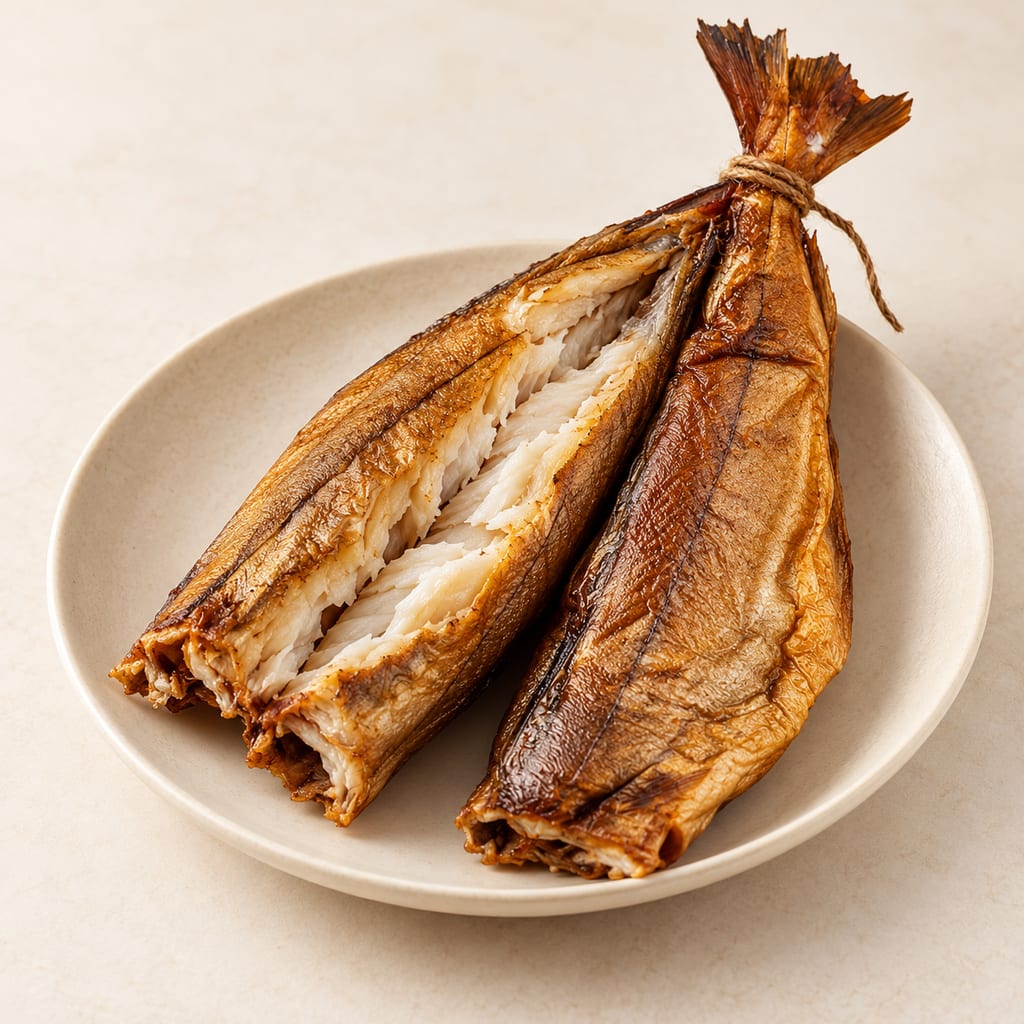
Arbroath smokies are whole haddock dry-salted, paired by the tail and hot-smoked in a protected coastal area. Their recorded history links Auchmithie and Arbroath, though the exact origin is unsettled.
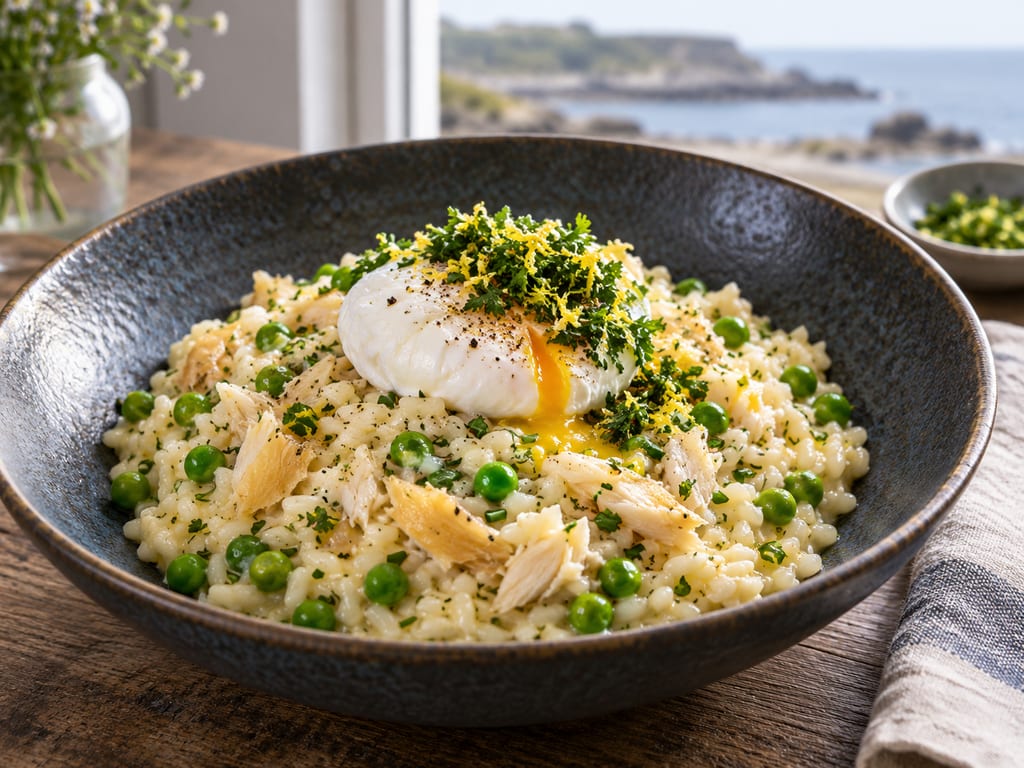
A four-serving risotto published in the 2014 Arbroath Smokie Trail booklet and credited to Hayley Wilkes. It cooks with finished Arbroath smokies; it does not describe smoking fish.
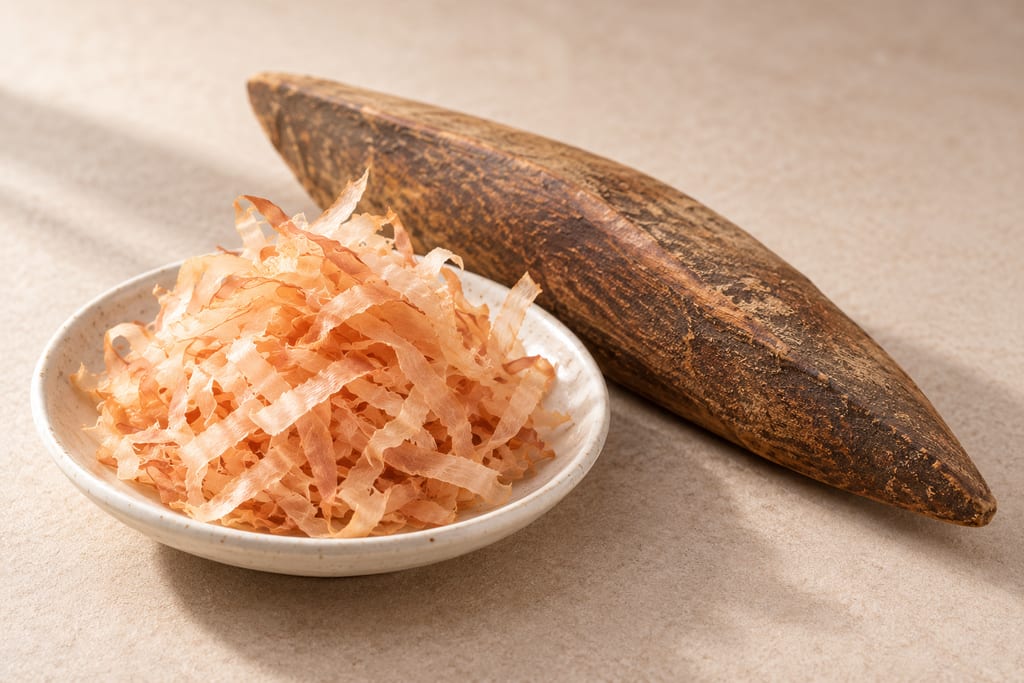
Katsuobushi is skipjack tuna cooked, smoked and dried into a hard block that is shaved into flakes for dashi and toppings. Some styles stop at the smoke-dried stage; others receive carefully managed mold maturation.
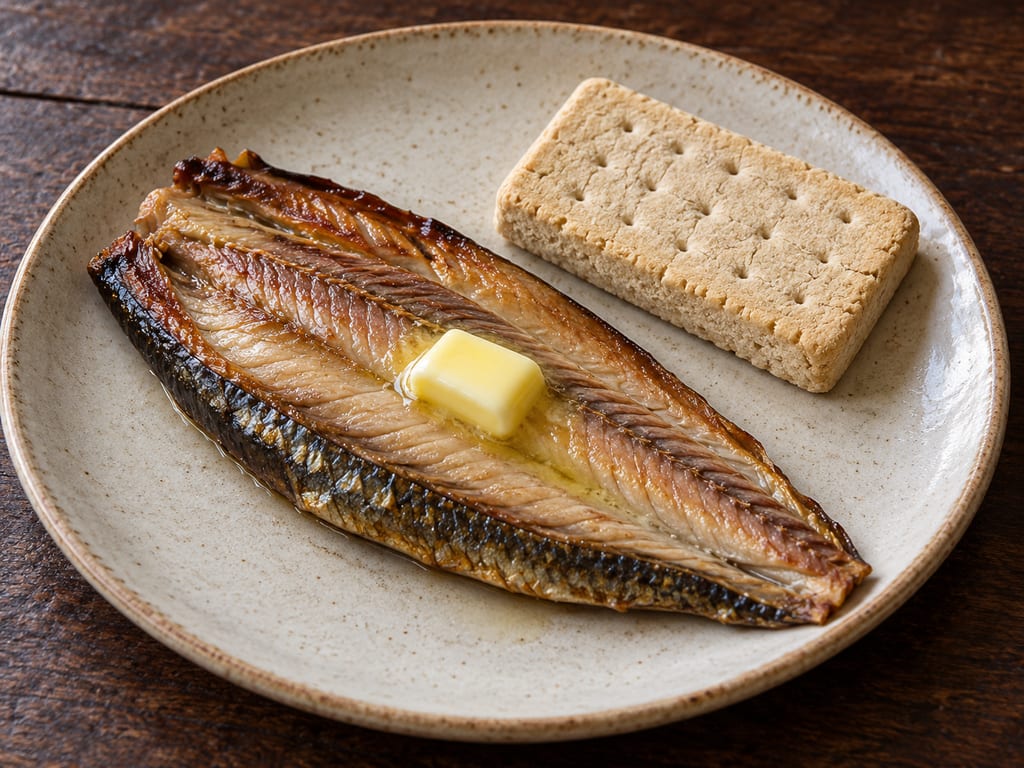
A Victorian way with Great Yarmouth bloaters: the lightly salted, cold-smoked whole herring is broiled and served with fresh butter and a warmed captain's biscuit.
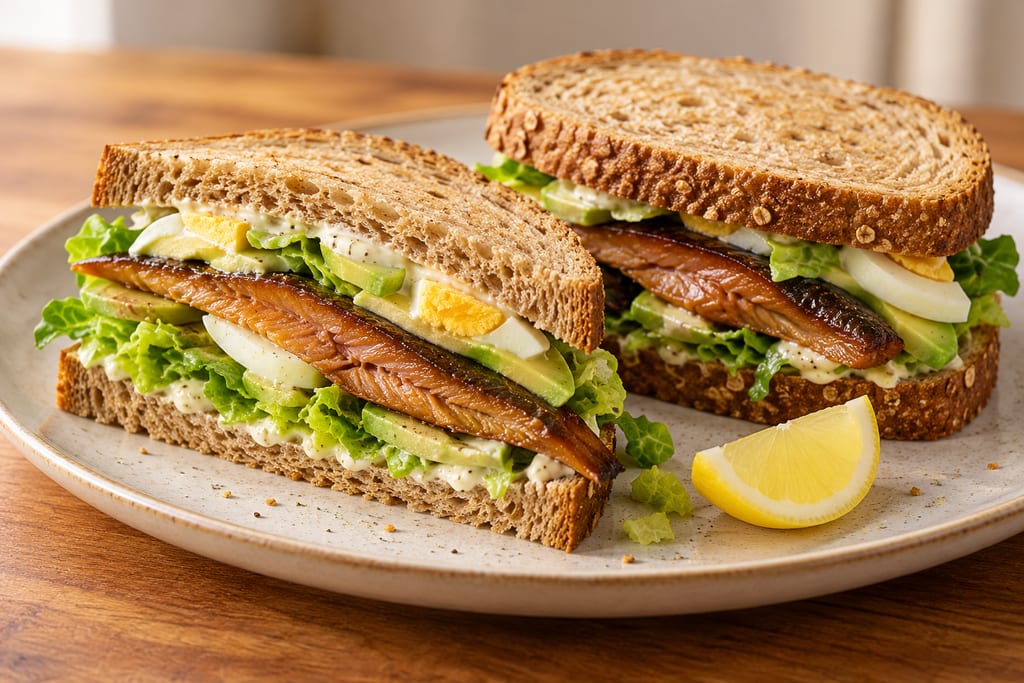
A warm club sandwich of oak-smoked Craster kipper fillets layered with soft-boiled egg, romaine, avocado and lemon mayonnaise on brown bread.
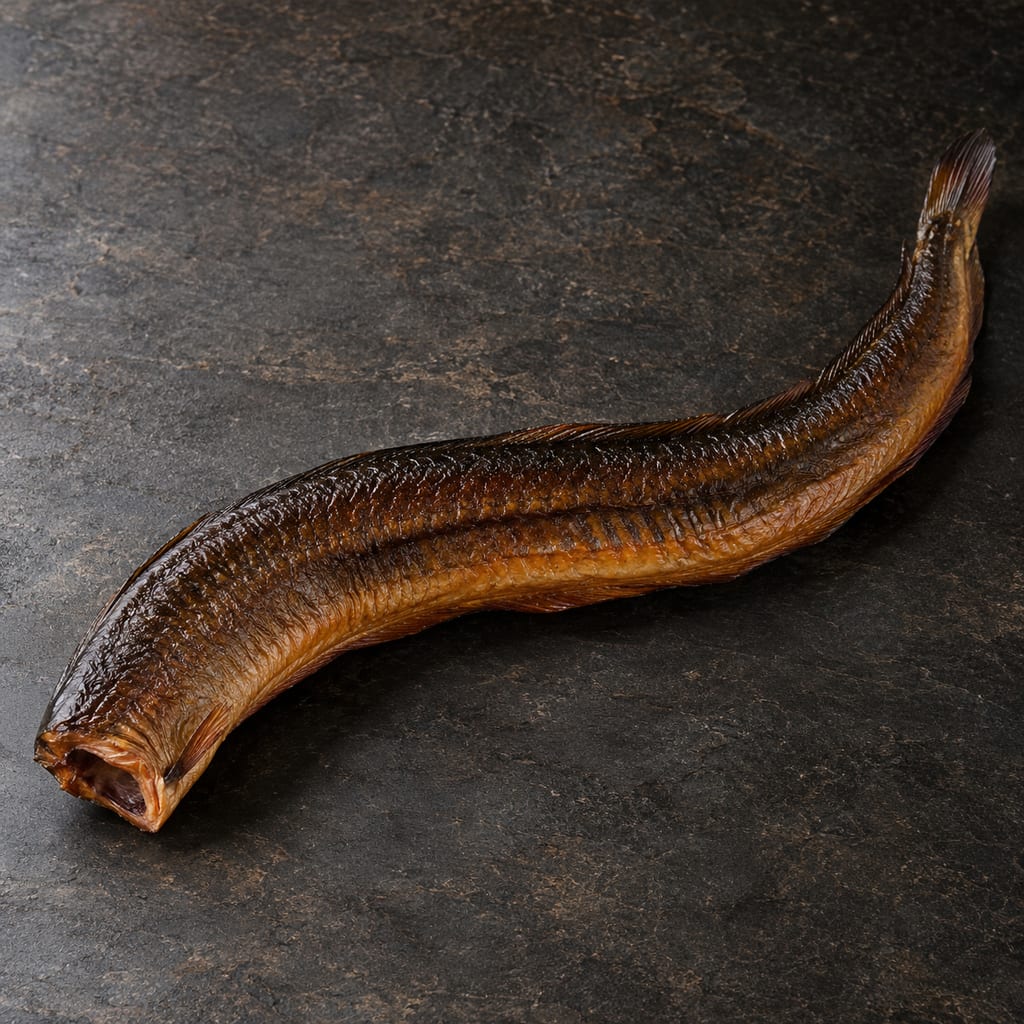
Short-finned eels, kooyang, smoked for a sustained period in the hollows of large trees at Budj Bim in south-western Victoria, a combined heat, smoke and drying method of the Gunditjmara people.
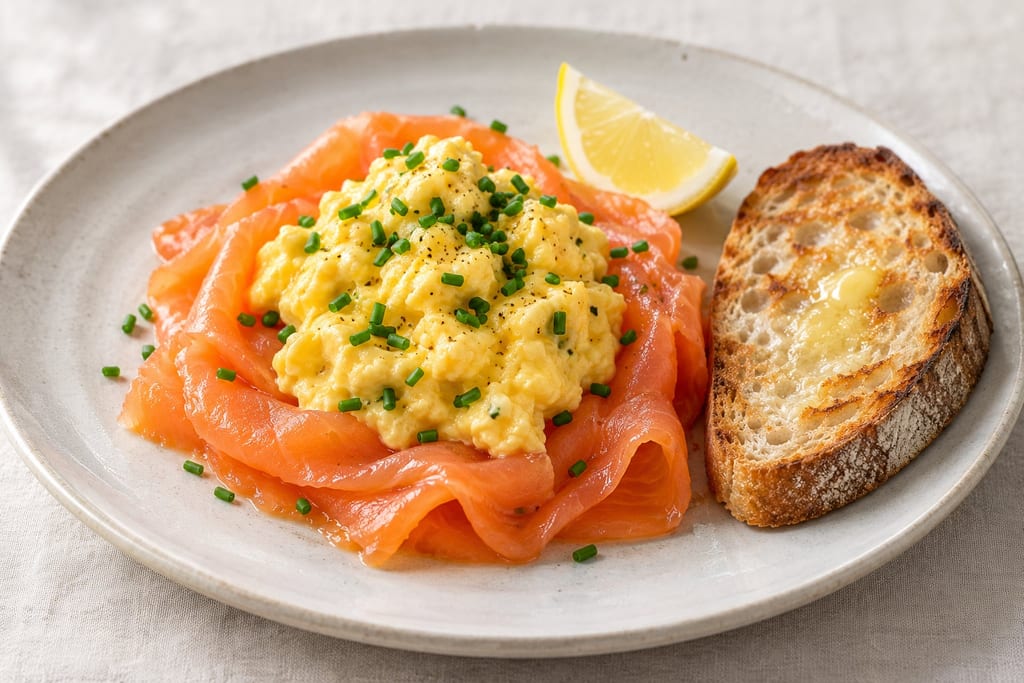
Softly scrambled eggs enriched with cream and butter, served with cold-smoked salmon, chives, lemon and sourdough toast as a British breakfast dish.
No community contributions have been published for this entry yet.
Sign in to contribute. Published comments and photos are free to read.
Burren Smokehouse; page credits a Roadside Tavern signature dishSource recipe
Burren Hot Smoked Irish Organic Salmon on ColcannonThe page gives a four-person meal, lists ingredients, states a 45-minute overall time and describes the cooking stages. Its HTML also identifies a separately linked recipe video; this record uses the page text only, not video-derived steps or timestamps.
Cited in: What it is; History and origin; Ingredients; Why the ingredients matter; Equipment and preparation; Method; The food science; Regional and practical variations; How it is eaten; Recognising problems
Burren SmokehousePlace and producer context
Our StoryThe producer places the Roadside Tavern and smokehouse in Lisdoonvarna, County Clare; the page distinguishes pub history from the later salmon business.
Cited in: What it is; History and origin
U.S. Food and Drug Administration, Center for Food Safety and Applied NutritionSafety
Fish and Fishery Products Hazards and Controls Guidance, June 2022 EditionFDA Chapter18, printed345–346 / physical396–397, discusses recontamination after pasteurization and specialized cooking processes. It does not identify or evaluate this producer’s hot-smoked salmon or this meal.
Cited in: Food safety and storage
Good Food IrelandVariation
Hot Smoked Salmon on ColcannonProducer association and variant.
Cited in: What it is; Ingredients; Regional and practical variations
Tourism IrelandHistory
Roadside Tavern's smoked salmon and colcannonCultural context.
Cited in: History and origin; How it is eaten
FDASafety · Product identity context
Fish and Fishery Products Hazards and Controls GuidanceGeneral smoked-fish safety reference.
Cited in: The food science; Food safety and storage