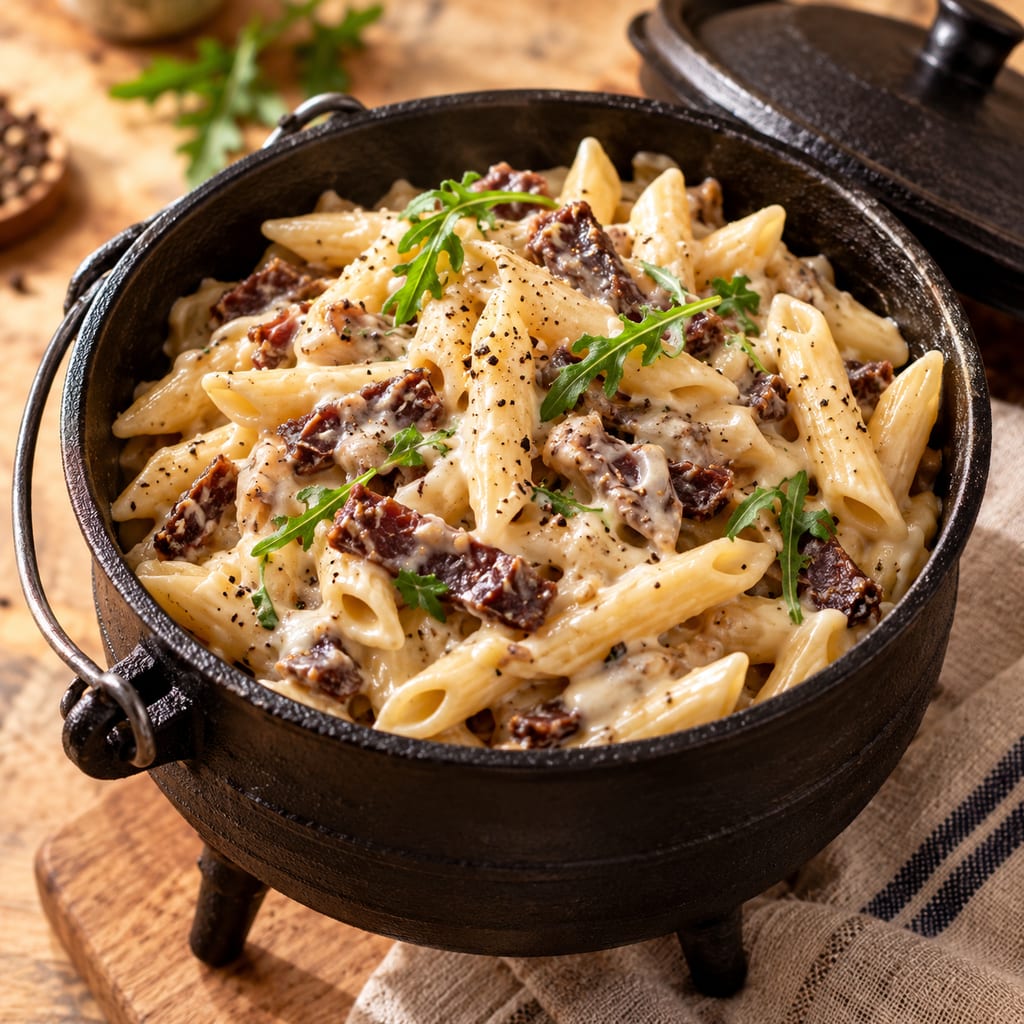
Biltong potjie with creamy pasta
Biltong, bacon and vegetables simmer in tomato-herb stock, then join cooked pasta, milk, cream and Cheddar in this outdoor potjie.
 FermenteaWhere food goes to change
Mushrooms
Mushrooms are the edible fruiting bodies of fungi, cultivated or gathered, and each species has its own texture, aroma and handling needs. Fresh, dried and roasted forms differ in water and in flavour compounds.
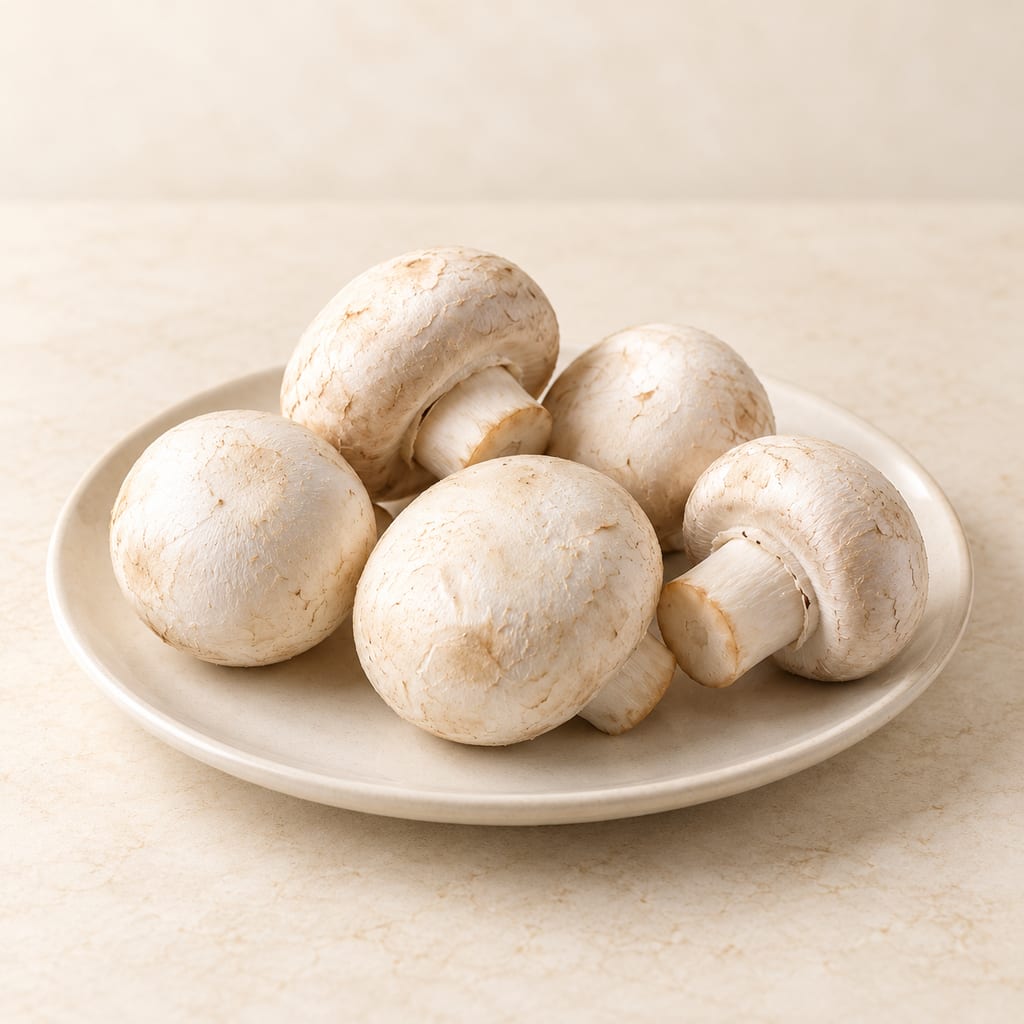
A mushroom is the part of a fungus that rises into the air. Below it, fine branching threads called hyphae spread through soil, wood or compost as a mycelium, and when conditions suit, the mycelium produces the caps and stems that people pick. The mushroom is therefore the fungus's reproductive structure, much as an apple is the tree's, and it differs from mushroom spawn, the living culture used to start a crop. Fungi form their own kingdom and are not plants. Their cell walls are built of chitin and beta-glucans, the same chitin found in insect shells and crab shells, which is why mushroom tissue cooks and chews differently from vegetable tissue.
The word "mushroom" covers a wide field. A fresh mushroom is about 85 to 95 percent water, and the rest is protein, carbohydrate, fibre and minerals in proportions that depend on the species. The edible ones differ as much from each other as a carrot does from a cabbage: a button mushroom, an oyster mushroom and a shiitake have different forms, growing habits and cooking behaviour, and naming the species is the first step in knowing what a recipe asks for.
Most of the mushrooms on sale are grown. The button mushroom, Agaricus bisporus, is the commodity mushroom of Europe and North America and is sold in white, off-white and brown strains; the brown strain is the one marketed as cremini or, when it is grown large and mature, as portobello. The oyster mushrooms are Pleurotus ostreatus and its relatives, and the king oyster is Pleurotus eryngii. Shiitake is Lentinula edodes. Together, shiitake and the Pleurotus species make up more than 40 percent of the world supply of cultivated edible mushrooms.
Gathered mushrooms form a second group, and several are valuable enough to travel the world. Boletus edulis (porcini, cep) is picked wild in places such as British Columbia and Turkey and traded mostly dried or frozen. The chanterelle, Cantharellus cibarius, is exported by the thousand tonnes from eastern Europe. Morels, Morchella species, go to market fresh for only about two weeks of their season. The matsutake, Tricholoma matsutake, is a luxury food exported to Japan, and truffles, Tuber species such as the black Perigord T. melanosporum and the white Piedmont T. magnatum, are underground fungi. The FAO notes that around 6 percent of edible species also carry medicinal reputations.
Form matters as much as species. Fresh, dried, sliced, powdered and roasted mushrooms are different materials, because water, structure and aroma change with each step. A dried boletus keeps for years and rehydrates into something firm and concentrated in flavour; a fresh one is mild and soft. A recipe that names a species and a form is asking for exactly that, and the two are not exchanged by weight.
People gathered mushrooms long before anyone grew them, and wild fungi are still collected, eaten and sold in more than 85 countries. They bring two things, food and income, and the balance varies greatly. A wild mushroom meal is a luxury in Switzerland or the United States and a necessity in Malawi, where roadside markets near Liwonde sold around 5 tonnes in a four-month season. Poorer households are the more likely collectors.
The harvest can reach large numbers. Poland exported 9,179 tonnes of chanterelles in 1984. Turkey exported 730 tonnes of Boletus edulis in 1990. North Korea earned about 150 million US dollars over five years from matsutake exported to Japan. In the Himalayan foothills of India, morel collecting provided 20 to 30 percent of annual cash income in 140 villages. Wild fungi spoil quickly, so gathering communities have long preserved them: in Russia and China they are commonly kept in brine, Russians also freeze them, and in Europe boletes were dried on strings for winter use.
The written record is old and varied. Hippocrates mentioned the medicinal value of mushrooms around 400 BC. The shiitake has the longest documented link to people: it is recorded in Japan as early as AD 199, and its cultivation began in China during the Song dynasty, between AD 960 and 1127, before the technique passed to Japan, where it was refined. The method used live hardwood logs, beech, chestnut, oak or hornbeam, cut in the dormant season and either left near naturally infected wood or drilled and inoculated with spawn; the logs spent months in a laying yard before the first crop in the following spring, and they went on producing in spring and autumn for up to about six years.
In thirteenth-century China, Chen Renyu compiled the Junpu, the Fungus Catalogue, drawing on the fungi of Xianju in present-day Zhejiang. He recorded where mushrooms appeared, when they could be gathered, what they looked like and how they tasted, and the text sits in a world in which food, landscape, medicine and religion overlapped. The Ming-period Expansion of the Fungus Catalogue, associated with Pan Zhiheng, drew on earlier writing and widened the range of places. The old names do not always map onto modern species, and scholars propose different identifications for the same description, so the catalogues establish what was valued and eaten more securely than they identify particular mushrooms.
The button mushroom took longer to be tamed in Europe. The first mention of cultivating Agaricus, as opposed to finding it in the wild, dates from 1652, and in 1780 a French gardener began producing mushrooms all year in underground quarries near Paris. Growers carried the practice to North America after the Civil War, using the dark space under greenhouse benches, and in 1894 a building put up in Chester County, Pennsylvania, became the first designed for mushrooms.
The commercial button mushroom grows on compost, in phases. In the first, ingredients are conditioned for 3 to 15 days and turned; the heap heats above 70 degrees C (155 F) and ends dark brown, pliable and sharp with ammonia. In the second, which takes 7 to 18 days, the compost is pasteurised at about 60 degrees C (140 F) for at least 2 hours and conditioned so microbes convert the ammonia, because ammonia above 0.05 percent inhibits the spawn. The compost is then spawned and held at 24 to 25 degrees C (75 to 77 F) for 14 to 21 days while the mycelium runs through it, and a layer of limed peat called casing triggers fruiting. Picking begins 15 to 21 days after casing, with the air kept at roughly 15 to 17 degrees C (60 to 66 F), and the crop comes in flushes over a 7 to 10 day cycle. At the fast stage of growth they double in size every 24 hours.
Other species need other media. Shiitake takes wood, in logs or in prepared sawdust blocks; oyster mushrooms are grown on straw and other lignocellulosic wastes such as winery and olive-mill residues. A compost system is the recipe for button mushrooms and for nothing else, and the growing medium shapes the final taste as much as the strain.
Mushroom texture comes from living tissue full of water, held in cells whose walls of chitin and beta-glucan are strong yet dynamic. Because so much of the weight is water, equal masses of fresh and dried mushroom are different amounts of mushroom. A dry-weight analysis, with the water taken out, describes protein at 5 to 49 percent depending on species in the FAO survey, with Boletus edulis around 38 percent and Termitomyces highest; the same species would show a fraction of those values in the fresh state.
Protein figures need care for a second reason. Nitrogen-based methods count the nitrogen in chitin as protein, so estimates can run high unless chitin is excluded, and digestibility is a separate question again. Roasting shows the water effect directly: oyster mushrooms roasted at 180 degrees C for 10 minutes lost weight as water left, and their volatile profile changed as well.
Mushroom aroma is a mixture of volatile compounds. In a comparison of eight strains of Pleurotus ostreatus and Pleurotus eryngii grown on straw, grape marc and olive wastes, more than 80 volatiles were identified. Fresh king oyster showed more of them than fresh oyster, 56 against 36, though oyster had the higher total, about 1,684 micrograms per gram fresh weight against 965. The species and strain separated the aroma profiles; the growing substrate did not. One compound, 1-octen-3-ol, forms from linoleic acid by oxygenation and cleavage and carries the earthy, green, fungal note that people call mushroom-like, but it works alongside many others.
Roasting made a different material. At 180 degrees C for 10 minutes, the oven drove off some existing volatiles and created 24 compounds found only in roasted samples, among them pyrazines, Strecker aldehydes and sulfur compounds from Maillard browning and amino acid breakdown. Roasted mushrooms enter a recipe with a different aroma from raw ones.
Savouriness is carried by non-volatile compounds. Free glutamic acid and aspartic acid, and nucleotides such as guanosine monophosphate (GMP) and inosine monophosphate (IMP), give umami. Dried shiitake, hot-air dried at 80 degrees C for 20 hours to 8 to 10 percent moisture, held 467 mg glutamic acid per 100 g dry weight and 53 mg GMP. When the dried mushroom was aged for 20 days at 50 to 80 degrees C, glutamic acid fell steadily to 90 mg and GMP to under 9 mg at the highest temperature, and the equivalent umami concentration dropped by more than 90 percent. More heat did not mean more flavour in that test.
Mushrooms contribute to fermented foods as raw material and as flavour. In a koji-driven garum, for example, a mass of mushrooms is broken down by the enzymes of the koji mould; proteases cut protein into peptides and free amino acids, the same enzyme functions that drive soy sauce, so the mushrooms supply protein, nucleotides and aroma precursors for the enzymes to work on. Whether the mushrooms are fresh, dried or roasted changes where the process starts, because each form carries different water, flavour compounds and structure.
Preservation is older than fermentation as a use. Drying concentrates flavour and gives the long keeping of dried boletes and shiitake, which keep for years, and brining in Russia and China holds wild mushrooms through the season. The preparations on this site that use mushrooms are listed with the ingredient.
Good fresh mushrooms are firm and plump with a dry, smooth surface that is not shrivelled. Veil position tells you about flavour: a closed veil over the gills signals a delicate taste and an open veil a deeper, meatier one, and in Agaricus the opening of the veil indicates maturity, not size alone.
At home, mushrooms keep best in their original packaging or a porous paper bag in the refrigerator, up to about a week. Fresh raw mushrooms should not be frozen; sauteed mushrooms freeze for up to a month. Mushrooms keep respiring after harvest, and Health Canada's guidance explains why airtight packs are a concern: low oxygen in a sealed package can let Clostridium botulinum, whose spores mushrooms can carry, make toxin before the food looks spoiled. The same guidance asks for packaging that allows air exchange and for refrigerated handling. Dried boletes, by contrast, keep for several years.
The edible ones are edible only after correct identification and, for some, only when cooked. In March and April 2023, 51 people fell ill after eating at a restaurant in Bozeman, Montana, and two died. Investigators traced the illness to morels identified by DNA as Morchella sextelata in a sushi roll, with the strongest association for the day the morels were served uncooked. No toxin was confirmed. Morels are therefore cooked thoroughly and kept refrigerated at or below 4.4 degrees C (40 F) in a paper bag. A page about the ingredient cannot serve as a foraging guide, and a wild mushroom needs a reliable expert identification.
Allergy to mushrooms is documented. Immunologists describe a fungus-food allergy syndrome in which people sensitised to airborne moulds react to edible fungi, including Agaricus bisporus and Pleurotus ostreatus, with reactions ranging from an itchy mouth to anaphylaxis. Heating can destroy some of the cross-reacting proteins, though a person with a known reaction should follow a clinician's advice.
mushrooms (rare fungus-food allergy; cross-reactivity with mould allergy)
Chen Renyu's local mushroom catalogue and culinary observations; not an origin for mushrooms as a whole.
Where shiitake log cultivation began; no locality is given.
Earliest record of shiitake and the place where its cultivation was refined.
Year-round commercial production of Agaricus in underground quarries near Paris.
Site of the first building built specifically for mushroom growing in the sources.
Biltong, bacon and vegetables simmer in tomato-herb stock, then join cooked pasta, milk, cream and Cheddar in this outdoor potjie.
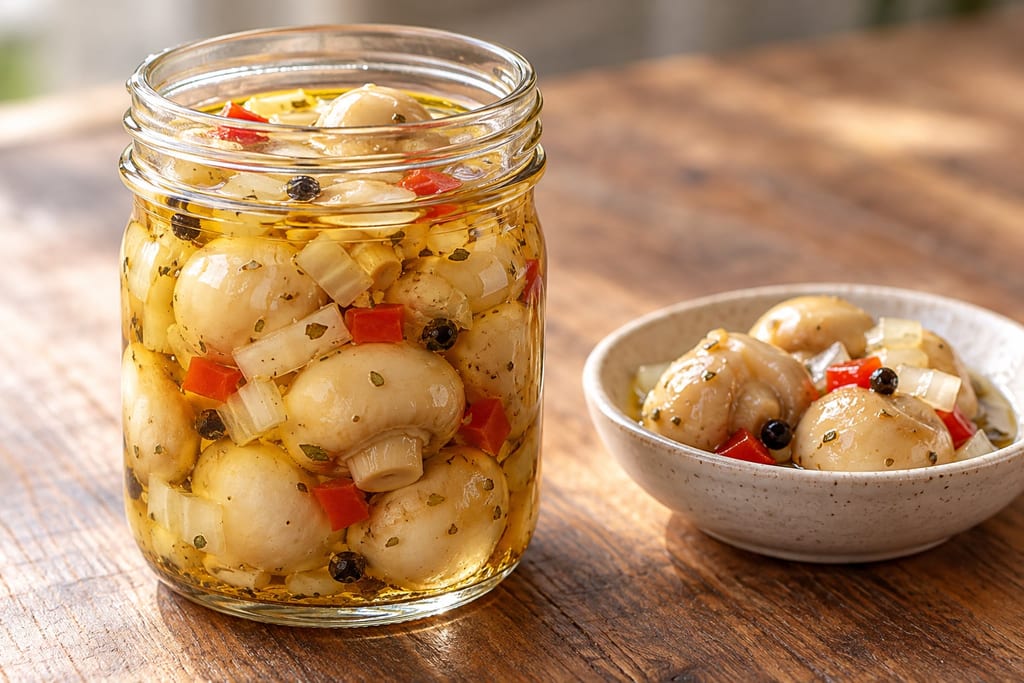
Small edible mushrooms are briefly cooked and packed in a seasoned vinegar marinade, a sweet-sour preserve served cold in Poland and neighbouring cuisines.
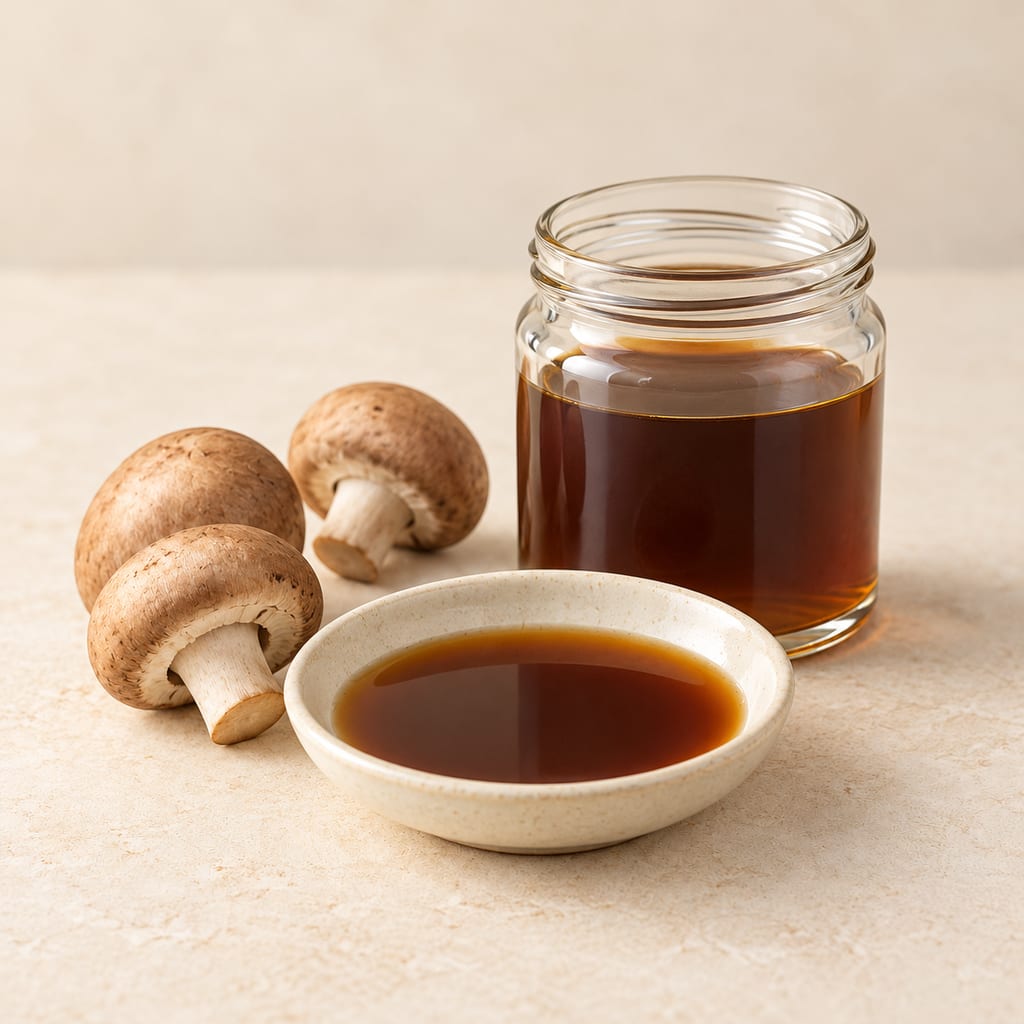
Mushroom garum turns mushrooms, rice koji, salt and water into a dark savoury seasoning. A sustained warm hold lets koji enzymes break down the mixture before straining.
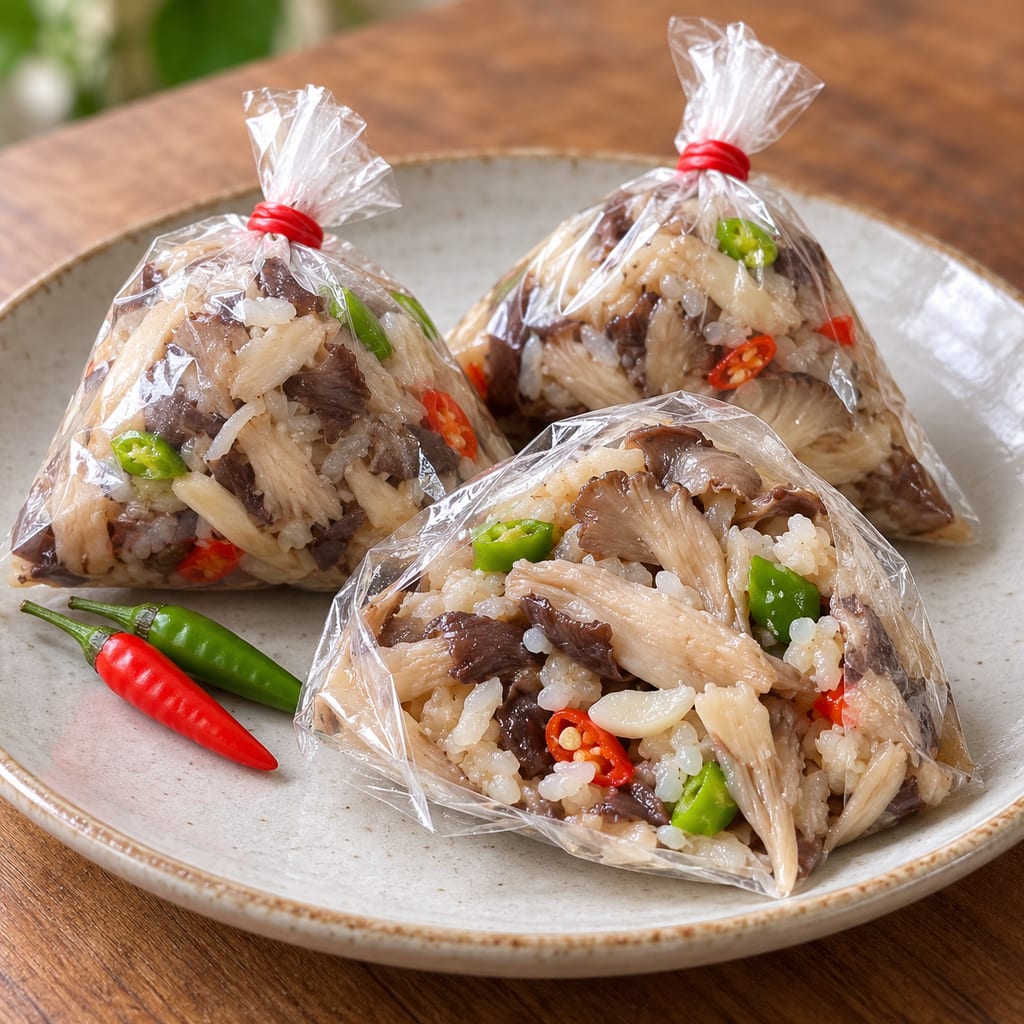
A Thai sour mushroom preparation: shredded steamed oyster mushrooms, cooked rice, garlic and salt packed into small parcels and soured by lactic acid bacteria over a few days.
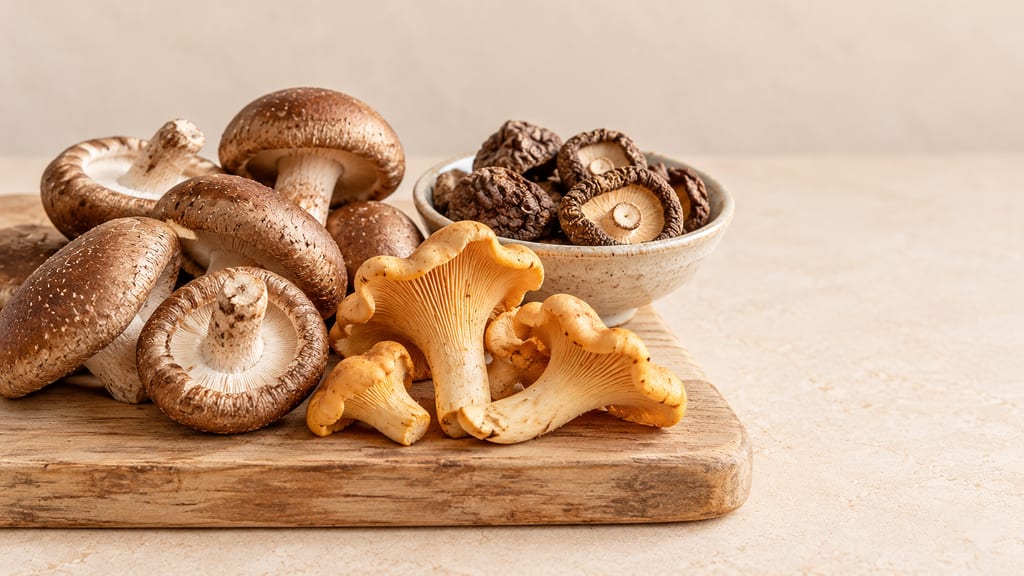
Mushrooms can be a meal, a broth's flavour, a forest harvest or an indoor crop. This survey follows edible fungi across East Asia, Africa, the Americas and desert regions, their kitchen roles and how harvests are kept.
Cantharellus magnus is a large Chinese chanterelle recorded in five provinces. A national scientific catalogue lists it as edible, but evidence here does not establish preparation or local food traditions.
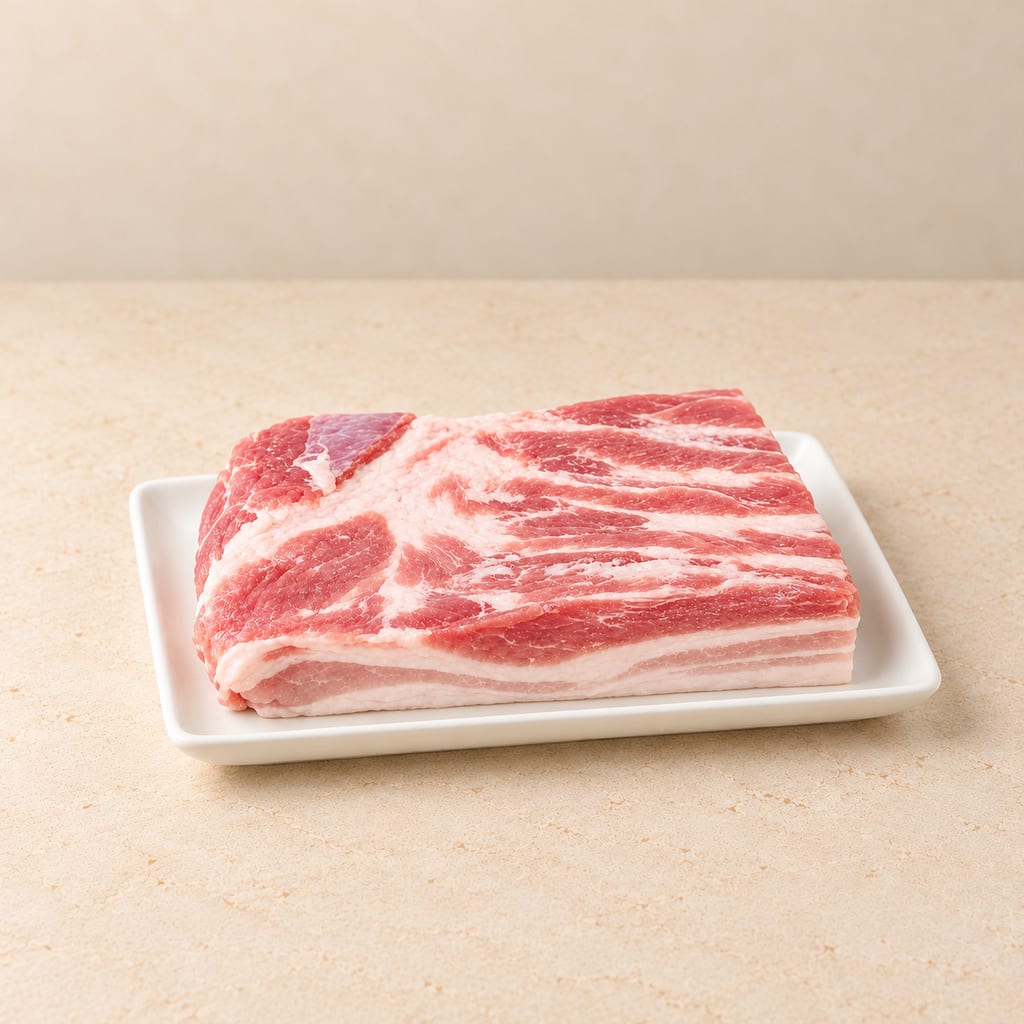
Raw pork belly combines muscle and adipose tissue in layers. Its fat content varies, and a recipe weight of belly is not a measured weight of pure fat.
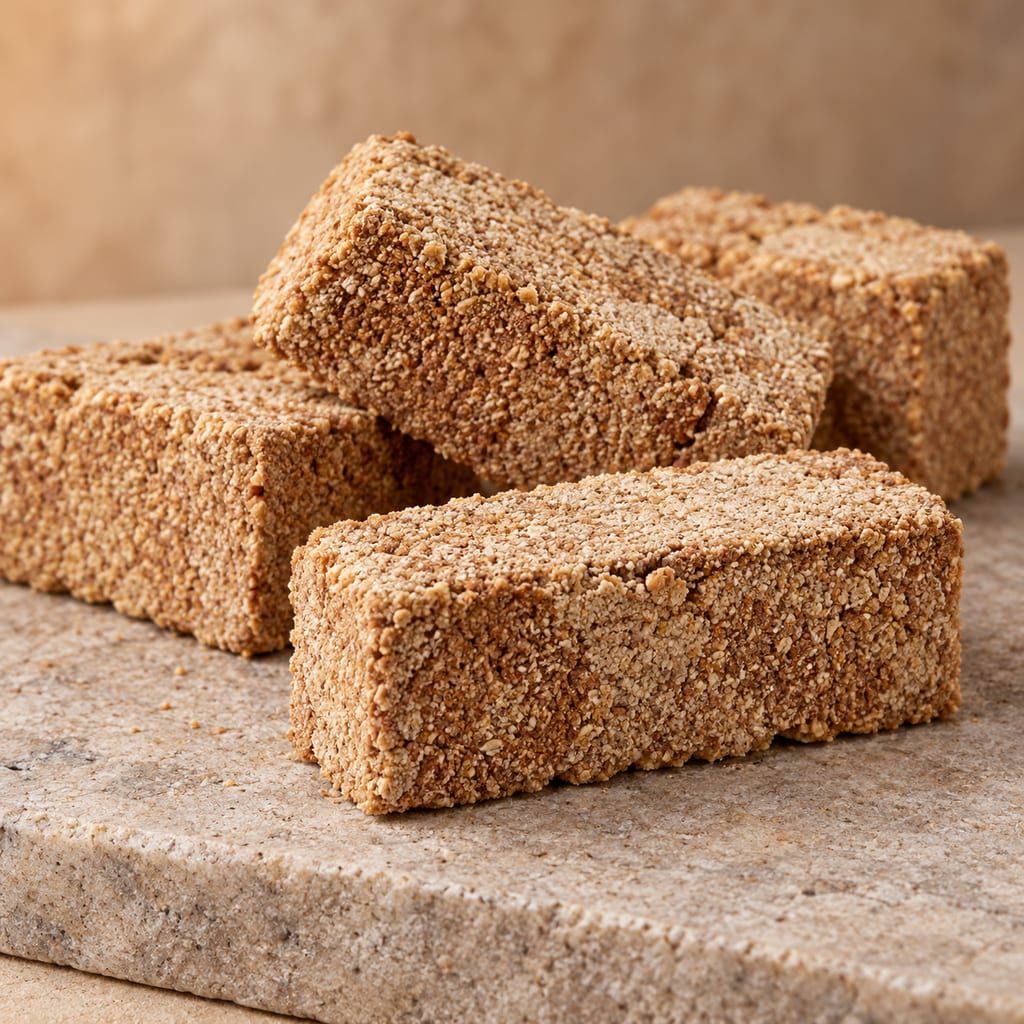
Maiqu (麦曲, wheat qu) is a wheat-based enzyme starter used in Chinese huangjiu such as Shaoxing wine; it is a starter category, not one defined strain.
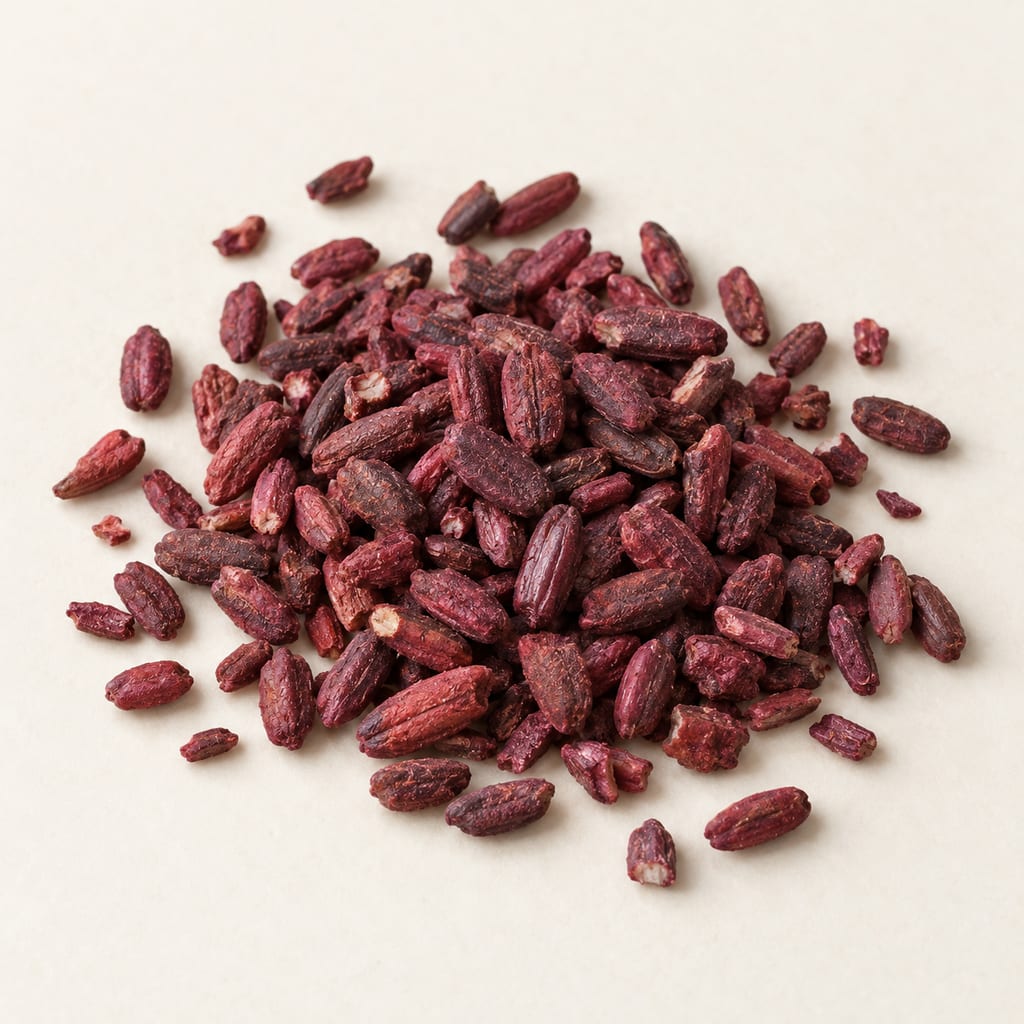
Wuyi hongqu is a regional red rice starter from the Wuyi area of Fujian, described as a mixed Monascus and Aspergillus culture used in rice wine and, in one report, cereal vinegar.
No community contributions have been published for this entry yet.
Sign in to contribute. Published comments and photos are free to read.
Modernist Food | FermentedPreparation that uses mushrooms
Quick Garum (Koji-Driven)The koji garum ingredient table lists mushrooms (400 g) without naming a species or fresh/dried form; a roasted mushroom-and-trim variation is described separately.
Cited in: In fermentation and preservation
Food and Agriculture Organization of the United NationsHistory · Cultivation · Drying
Non-Wood Products from Organisms Associated with Temperate Broad-Leaved Trees, Chapter 9Shiitake (Lentinula edodes): earliest record AD 199 in Japan; cultivation began in China in the Song dynasty, AD 960 to 1127; log hosts, inoculation, cropping for up to about six years; dried forms. Dried Boletus edulis keeps for several years; Morchella, Tuber and matsutake as traded wild fungi.
Cited in: The principal forms; Gathering and the wild harvest; Mushrooms in history and the first cultivation; How cultivated mushrooms are grown; In fermentation and preservation; Choosing and storing mushrooms
Penn State ExtensionCultivation · History · Forms
Basic Procedures for Agaricus Mushroom GrowingHippocrates around 400 BC; first mention of cultivation 1652; Paris quarries from 1780; first purpose-built mushroom house 1894; white, off-white and brown strains (brown sold as portabella or crimini); composting, spawn run, casing and cropping temperatures and times; veil opening as maturity.
Cited in: The principal forms; Mushrooms in history and the first cultivation; How cultivated mushrooms are grown; Choosing and storing mushrooms
Journal of Chinese History 10, 434-452, Cambridge University PressHistory
Mycological Mania: Foraging the Mushroom Catalogues of Imperial China for Recipes, Remedies, and RitualsChen Renyu's Junpu and later catalogues such as Pan Zhiheng's Ming-period expansion, with food, medical and religious contexts and uncertain modern taxonomic identifications.
Cited in: Mushrooms in history and the first cultivation
Food and Agriculture Organization of the United NationsUse · Trade · Nutrition · Preservation
Wild edible fungi: a global overview of their use and importance to people, Chapter 4Use in more than 85 countries; trade and income examples (Poland chanterelles 1984, Turkey Boletus edulis 1990, matsutake exports, Himalayan morels, Malawi markets); brine, freezing and drying; 85 to 95 percent water in fresh mushrooms; dry-weight protein range; chitin and protein estimates.
Cited in: The fruiting body of a fungus; The principal forms; Gathering and the wild harvest; Water and structure; In fermentation and preservation
Nature Reviews Microbiology 21, 248-259Structure
Architecture of the dynamic fungal cell wallFungal cell walls are built of chitin and beta-glucan in a strong, dynamic structure.
Cited in: The fruiting body of a fungus; Water and structure
Foods / MDPIAroma chemistry · Species
Volatile Profiling of Pleurotus eryngii and Pleurotus ostreatus Mushrooms Cultivated on Agricultural and Agro-Industrial By-ProductsEight strains of Pleurotus ostreatus and P. eryngii on three substrates; more than 80 volatiles, 24 found only after roasting at 180 C for 10 minutes; fresh P. eryngii 56 volatiles against 36 for P. ostreatus; total volatiles about 1,684 against 965 micrograms per gram fresh weight; 1-octen-3-ol; Lentinula edodes and Pleurotus make up over 40 percent of cultivated supply.
Cited in: The principal forms; How cultivated mushrooms are grown; Water and structure; Aroma, roasting and umami
Foods / MDPIUmami compounds
Changes in Physicochemical Characteristics and Antioxidant Activities of Dried Shiitake Mushroom in Dry-Moist-Heat Aging ProcessShiitake hot-air dried at 80 C for 20 h to 8 to 10 percent moisture; glutamic acid 467 mg and 5-GMP 53 mg per 100 g dry basis; falls on aging at 50 to 80 C for 20 days; equivalent umami concentration down by more than 90 percent at the highest temperature.
Cited in: Aroma, roasting and umami
Journal of Food Science and Technology56,2888–2898Enzyme mechanism
Desired soy sauce characteristics and autolysis of Aspergillus oryzae induced by low temperature conditions during initial moromi fermentationEndo- and exoproteases release peptides and free amino acids in koji-driven moromi; the general mechanism, not a mushroom endpoint.
Cited in: In fermentation and preservation
Health CanadaSafety · Storage
Health Canada Guidance concerning the Packaging of Fresh MushroomsMushrooms respire after harvest; Clostridium botulinum spores and toxin formation in sealed low-oxygen packs, before visible spoilage; breathable packaging and refrigerated handling.
Cited in: Choosing and storing mushrooms
Centers for Disease Control and Prevention, MMWRSafety
Outbreak Linked to Morel Mushroom Exposure - Montana, 202351 ill and 2 deaths after a Montana restaurant served morels (Morchella sextelata) raw or partly cooked; toxin not identified; cook thoroughly and refrigerate at or below 40 F in breathable packaging.
Cited in: Hazards, identification and allergy
Food and Agriculture Organization of the United Nations, Plant Production and Protection DivisionDefinition
FungiHyphae, mycelium and the visible fungal fruiting body.
Cited in: The fruiting body of a fungus
Mushroom CouncilSelection · Storage
Mushrooms 101: select and store mushroomsFirm, dry, plump mushrooms; closed versus open veil and flavour; original packaging or paper bag; up to one week; fresh mushrooms not frozen, sauteed ones frozen up to a month.
Cited in: Choosing and storing mushrooms
Journal of Immunology Research, 2022 (Xing, Wang, Sun, Wang)Allergen · Scientific names
Recent Advances in the Allergic Cross-Reactivity between Fungi and FoodsFungus food allergy syndrome; Agaricus bisporus (button mushroom) and Pleurotus ostreatus (oyster mushroom) named as cross-reactive foods; reactions from oral allergy syndrome to anaphylaxis; heat can denature some cross-reactive proteins.
Cited in: The principal forms; Hazards, identification and allergy