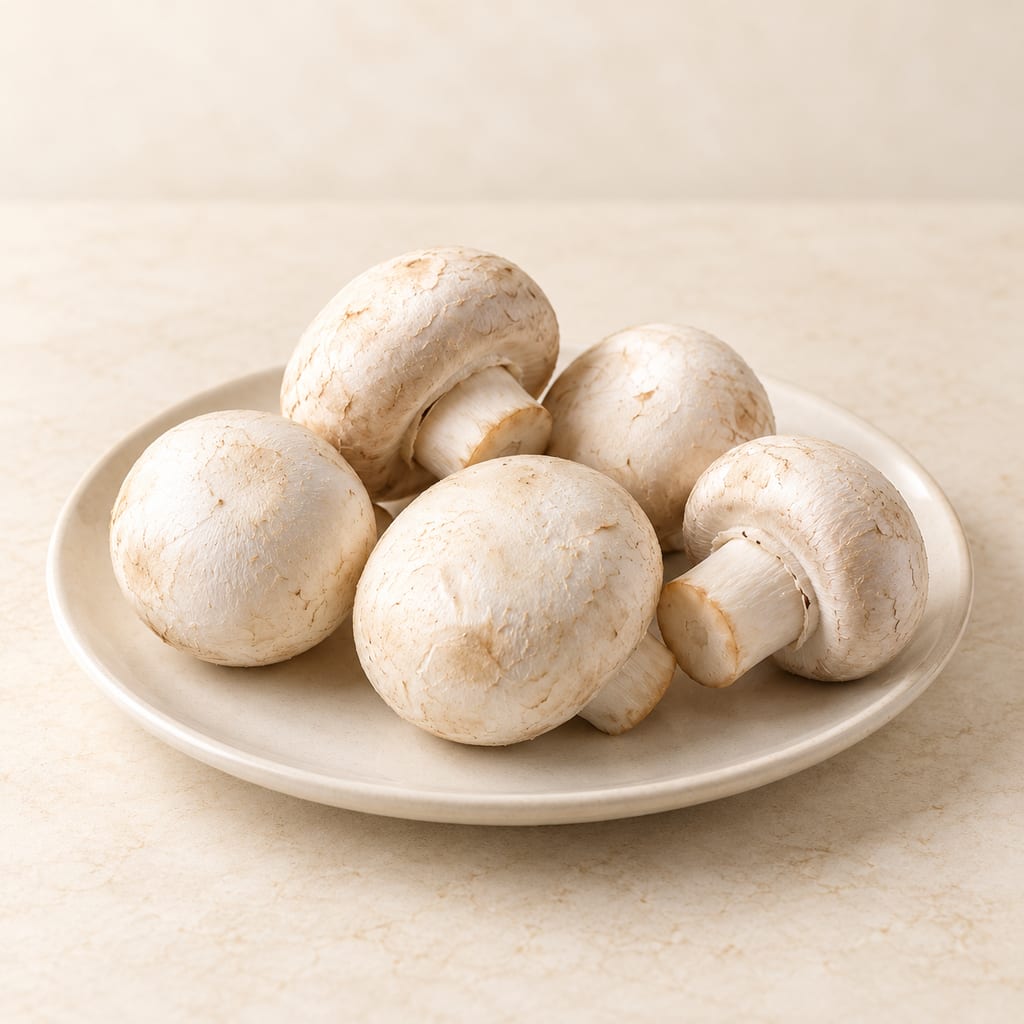
Mushrooms
Mushrooms are the edible fruiting bodies of fungi, cultivated or gathered, and each species has its own texture, aroma and handling needs. Fresh, dried and roasted forms differ in water and in flavour compounds.
 FermenteaWhere food goes to change
Modern method
แหนมเห็ด · nham hed · naem hed · naem het · nham het · แหนมเห็ดนางฟ้า · แหนมเห็ดนางรม · แหนมเห็ดมังสวิรัติ · Thai fermented mushroom · Thai sour fermented mushrooms · fermented oyster mushroom naem · vegetarian naem · mushroom naem
A Thai sour mushroom preparation: shredded steamed oyster mushrooms, cooked rice, garlic and salt packed into small parcels and soured by lactic acid bacteria over a few days.
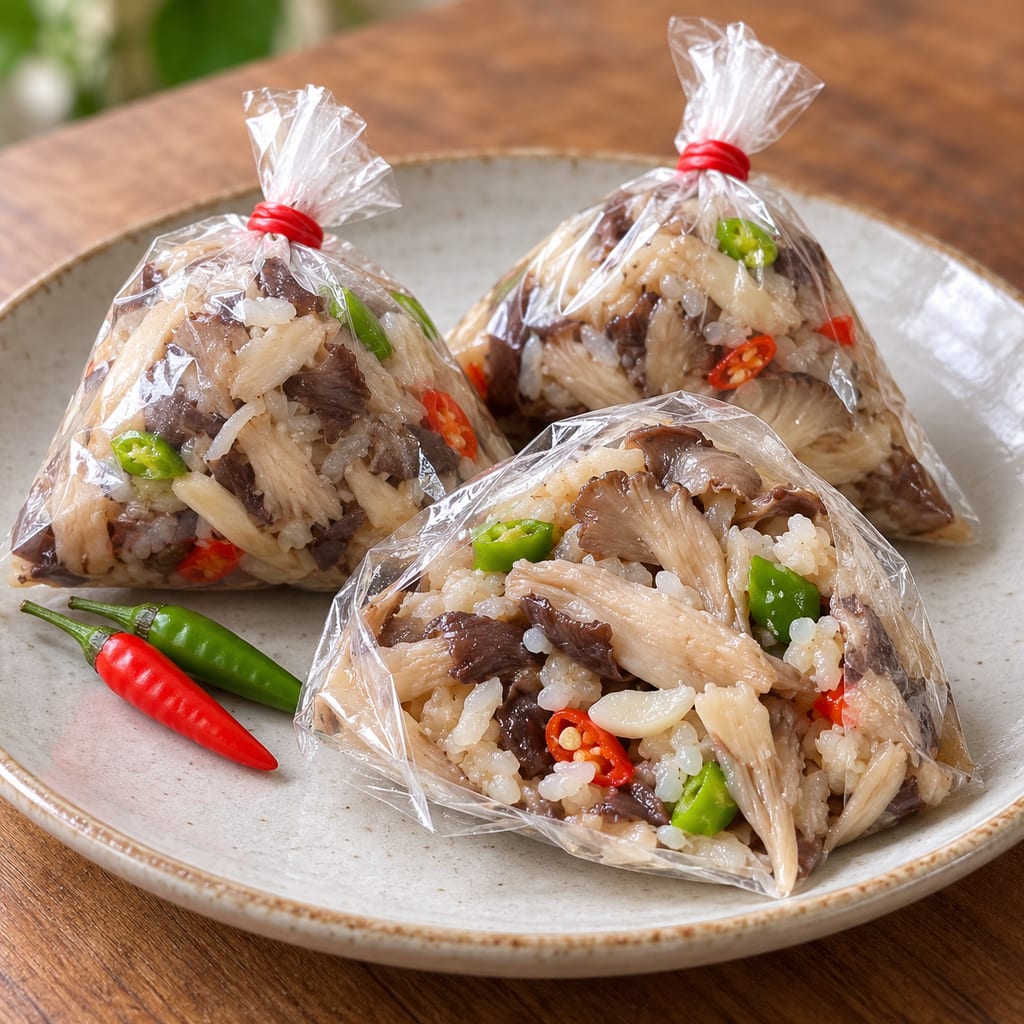
Nham hed, แหนมเห็ด, is a sour fermented Thai food made mainly from mushrooms, cooked rice, garlic and salt. The mixture is pressed firmly into small portions and left until it turns as sour as naem, the Thai fermented sausage it imitates. It is usually made with oyster-type mushrooms sold as het nang fa, เห็ดนางฟ้า. The finished parcel is moist and compact, with visible mushroom strands, grains of rice and a strong garlic smell, and fresh chilli is often packed in with it. The sourness is salty and lactic, not vinegary.
The name ties it to naem, แหนม, the family of sour fermented meat products associated with northern and north-eastern Thailand. Nham hed keeps the same logic of rice, garlic, salt, tight packing and lactic fermentation and replaces most or all of the meat with mushroom. It is best read as a mushroom adaptation of the naem family, though nobody has traced its exact relationship to any particular regional meat recipe.
Thailand's Community Product Standard 472/2547 defines it as a product made mainly from edible mushrooms mixed with salt, cooked rice and garlic, optionally with sugar, cooked pork skin, fresh chilli or pepper, and fermented until sour. Oyster, shiitake, abalone and black wood-ear mushrooms are among those it names. The pork skin matters: nham hed is not automatically vegetarian, and some official Thai recipes contain pork. A vegetarian label has to be checked against the actual formula.
The typical modern parcel uses shredded, steamed mushroom and cooked rice, packed tightly into small plastic bags or banana leaves, often as a small triangle, although elongated bundles and sausage shapes also exist. The tight pack gives the mixture its shape and leaves few air pockets. It is eaten as a sour snack or cooked into other dishes.
Lactic acid bacteria do the main work. They turn available carbohydrate into organic acids, the pH falls and the sour taste develops. In traditional batches the bacteria come from the ingredients and the kitchen, while experimental and commercial work increasingly adds selected starters. The difference matters, because the organisms found in a laboratory batch cannot be assumed to live in every spontaneous one.
Nham hed belongs to the wider Thai tradition of sour fermented foods, but the age of that tradition is not the age of this product. Meat naem is tied especially to the north and north-east, and Thai government and scientific writing describes it as a traditional means of preservation relying on microbes already present. Mushroom naem follows the same method, yet nothing dates the moment mushrooms first stood in for meat.
The earliest dated official record verified is Community Product Standard 472/2547, issued in the Buddhist year 2547, which is 2004. A dedicated national specification shows that fermented mushroom parcels were a recognised product category by then. It does not show that the dish began in 2004, name an inventor or place it in a particular province.
Later records show the product being taught. A 2022 knowledge-management project supported by the National Research Council of Thailand documents a community enterprise in Kho Wang, Yasothon, in the north-east, that grows oyster mushrooms and processes them, with mushroom naem among its products. The record is evidence of preparation in Isan and does not say the dish was invented there. A government technology-transfer recipe credited to Natnicha Thaweesaeng of Kanchanaburi Rajabhat University, in western Thailand, gives a fully weighed formula, which is the one recorded on this page.
Scientific work then moved towards identifying the responsible organisms and controlling them. The National Science and Technology Development Agency describes pure starter cultures for naem generally. A 2023 study examined mushroom naem made with indigenous rice varieties of Thailand's southern border provinces, and a 2025 study from Walailak University tested a bacterial and yeast co-starter on nham hed made with oyster mushrooms from Phatthalung.
Taken together, these show a modern, widely documented preparation. They do not support a precise ancient origin, and the north-eastern link of the naem family should be kept separate from a claim that the dish began in the north-east for nham hed itself.
Nham hed is a lactic fermentation. Suitable bacteria use accessible carbohydrate and make lactic acid, and the pH falls. In the homolactic route, glycolysis turns glucose into pyruvate, lactate dehydrogenase reduces it to lactate, and that reduction regenerates the NAD+ glycolysis needs. Other organisms can also make acetate, ethanol, carbon dioxide and aroma compounds, in proportions that depend on who is present and what they have to eat.
The rice is not decoration. Cooked mushroom alone offers little fermentable sugar, and cooking gelatinises rice starch so that its granules can be broken down. The starch has to be hydrolysed into smaller sugars before ordinary lactic bacteria can use it well. That amylase activity may come from other organisms in the mix or from certain cultures, and it should not be assumed that every Lactiplantibacillus plantarum strain digests raw starch itself. The rate of fermentation depends on the sugars on offer as much as on the bacteria.
The 2025 Walailak study shows what a starter changes. Using L. plantarum NH48/12, a strain isolated from fermented oyster mushrooms, treated batches fell from pH 6.4 to 6.5 to between 3.2 and 3.7 within 24 hours, while spontaneous batches acidified far more slowly. Packing mushrooms with garlic and rice does not by itself promise fast protective acidity.
The same team added the yeast Saccharomyces cerevisiae TISTR 5110. Yeast reached about 8 log CFU/g in two days, with no marked change in pH or lactic bacteria counts but a different aroma that included ethyl butanoate and benzeneacetaldehyde, and better sensory scores. That is an experimental variant, not proof that ordinary nham hed is mainly an alcoholic ferment. Free glutamic acid, which carries savoury taste, measured 516.24 mg per 100 g in spontaneous samples and 547.56 mg per 100 g in the co-starter ones, though other amino acids moved differently, so this is not a general finding that fermentation improves nutrition.
Salt shifts water and microbial competition. Garlic gives the sharp sulphur aroma and may have some antimicrobial effect, but it cannot replace acidification. The compact pack limits air pockets and holds the shape. What preserves the food is acid accumulating before harmful organisms can grow, and neither rice nor tight packing guarantees that.
Preparation starts with fresh cultivated mushrooms, usually het nang fa, an oyster-type mushroom that tears into long strips. The tough stem bases come off, the mushrooms are washed and the flesh is shredded. The strands echo the fibrous texture of meat naem and help spread the rice, garlic and salt evenly.
Next the mushrooms are steamed or briefly cooked. Heat softens the tissue, reduces the starting microbial load and drives out moisture. After cooling they are squeezed, often in a clean cloth, to remove liquid. That squeeze is a defining step: the aim is a compact mix that holds together in a small parcel, not a pile of mushrooms in brine.
The government technology-transfer recipe uses 1,000 g oyster mushrooms, 120 g crushed garlic, 120 g cooked rice, 18 g salt and 6 g sugar. It steams for five minutes, cools, squeezes, mixes and packs about 15 g into each bag, and leaves the bags two to three days at room temperature or until sour. It gives no room temperature in degrees, no finished pH and no microbiological check, so it is a documented teaching formula and not a validated schedule.
A Wongnai recipe differs: 1 kg of oyster mushrooms with 200 g cooked sticky rice, 100 g garlic and 25 g salt, again for two to three days. The KRUA.CO recipe uses a mixture of Riceberry and sticky rice, steams for 15 minutes and ferments for seven days, with a one-month refrigeration claim that nobody validated. These differences are real variation and should not be averaged into an invented standard.
Each ingredient has a role. Rice provides carbohydrate or the means to release it, garlic defines the aroma, salt shapes flavour, moisture and microbial selection, and sugar is the quickest fuel. Fresh chilli adds heat and often goes into each parcel. Banana leaf or plastic shapes and protects the mix. None of these, including garlic's antimicrobial properties and the lack of air, replaces a fermentation that has actually acidified.
The 2025 study gives a laboratory reference. It steamed Pleurotus pulmonarius from Phatthalung for 15 minutes, squeezed out the water and mixed 1 kg of cooked mushroom with 150 g cooked rice, 100 g crushed garlic and 25 g salt. Portions received measured bacterial or bacterial-and-yeast inocula and were incubated at 30 plus or minus 2 C, and the team compared them with spontaneous batches by measurement, not by taste. The recipe below follows the government formula because it is the fully weighed traditional-style one, and times from other sources stay with those sources. Elapsed time is only the period in which acid may form; the endpoint is acidity.
Nham hed's regional identity is less secure than that of older meat naem. Northern and north-eastern Thailand are repeatedly named as the home of traditional naem, and mushroom versions are now documented in several regions, from Yasothon to Kanchanaburi to the south. It is fair to say the dish relates to northern and Isan fermentation traditions. There is not enough evidence to assign its invention to a province, community or era.
Oyster mushroom is the commonest base in the household and training recipes. The standard also allows shiitake, abalone mushroom and black wood ear, each giving a different texture: oyster mushroom shreds into long strands, while wood ear and shiitake have other structures and flavours. A commercial maker, Arin Food, sells mushroom naem made from several cultivated mushrooms in triangular parcels. The definition permits these variations, but it does not show that each species has been validated under the same fermentation conditions.
Rice varies. Common formulas use ordinary cooked rice or sticky rice, and the KRUA.CO recipe adds Riceberry, which colours the mixture dark. A 2023 study from the southern border provinces compared four local rice varieties, Hom Kradungnga, Lerd Pla Lai, Seebukantrang and Maajanuu, for colour, acidity, lactic bacteria and sensory acceptance. Its products reached pH 4.04 to 4.07 after three days at 27 C, held 7.74 to 8.01 log CFU/g of lactic bacteria, and fell to pH 3.74 to 3.78 after four weeks at 4 C, when liking dropped because they had become more sour. It is a product-development project, not an old regional recipe.
Some versions contain animal ingredients. The standard allows cooked pork skin, and some training formulas add minced pork. These are not vegetarian. Vegan suitability also depends on seasonings and on whether a laboratory starter uses a dairy carrier.
Packaging varies between small triangular plastic parcels, banana-leaf bundles and cylindrical bundles tied with rubber bands. These are commercial and domestic adaptations of one broad preparation, and they are no evidence that every region used the same ingredients or microbes.
Nham hed comes as small individual parcels, each a compact portion of sour fermented mushroom with garlic, salt and the savour of the mushroom itself. Chilli goes in the parcel or on the side. It is eaten as a sour snack or appetiser, often with fresh vegetables, or inside a larger meal.
Thai recipe sources also describe frying it, making it into a spicy salad or adding it to stir-fries. A Wongnai contributor suggests serving it with fresh chilli, spring onion, coriander and peanuts or with fried rice, and KRUA.CO lists stir-frying, frying and spicy salads. These are contemporary serving suggestions and not a historical record of regional eating.
Frying browns the surface, changes the garlic and drives off moisture, and it reduces or kills many live lactic bacteria. The acidity stays in the flavour, but a fried nham hed dish should not be sold as a source of live cultures.
It is often presented as a vegetarian stand-in for fermented sausage. The mushroom supplies body and savour while the rice and garlic ferment supplies the sourness of naem. It is lower in fat and has a different protein profile than pork naem, so calling it a mushroom alternative is fair, and calling it nutritionally equivalent to meat is not supported.
A mushroom parcel should not be called probiotic or given a health claim just because it contains lactic bacteria. Probiotic claims need the strain, its viability and the evidence for a benefit. As a food it works as a sour appetiser and a souring ingredient in dishes that want acidity without vinegar or lime.
A well-fermented parcel smells sour and holds together as its formula intends. Thailand's standard asks for a reasonably firm product with ingredients evenly spread and no large air pockets, a little fermentation liquid at most, recognisable natural colours and no musty, rotten or bitter notes. Those are quality criteria and not a replacement for microbiological testing.
The product standard sets a pH no higher than 4.6, Salmonella absent from a 25 g sample, Staphylococcus aureus and Clostridium perfringens absent from 0.1 g, Escherichia coli below 3 MPN/g, and yeasts and moulds below 10 CFU/g. These are 2004 product criteria, not a promise that household batches reach them. Co-starter products with deliberately high yeast numbers raise a question about compliance with the low yeast-and-mould limit.
Speed matters. In the 2025 work selected L. plantarum treatments dropped the pH quickly while spontaneous fermentation fell slowly, and a low-acid mushroom and rice mix packed tight gives competing organisms more time. The 2023 study reached pH 4.04 to 4.07 in three days at 27 C, which is a measured result and not a target. Household recipes call for two or three days, three or four, or seven, and ambient temperature, mushroom, rice, salt, starter activity and parcel size all change the rate.
Cooked rice brings its own hazard. Bacillus cereus spores survive cooking, and rice held badly can allow growth and toxin formation before the lactic bacteria have made the mix inhospitable. The UK Food Standards Agency advises cooling cooked rice quickly, ideally within an hour. That is general rice guidance and does not validate fermenting rice at room temperature.
Clostridium botulinum is the other concern. The WHO names improperly preserved or fermented low-acid foods, mushrooms included, as a botulism risk. The organism does not grow below pH 4.6, but a low reading later does not destroy toxin formed earlier, and steaming mushrooms does not reliably destroy spores. Smell and taste do not show safety; the CDC says toxin cannot be detected by sight, smell or taste.
The 2025 study tested its fermented samples for E. coli, S. aureus, C. perfringens, B. cereus and Salmonella and found none, which says something about those experimental batches and nothing about every spontaneous recipe. Souring can continue in the fridge: the 2023 team saw further pH decline over four weeks at 4 C and less liking as the food grew more acid. No universal shelf life is established, and the KRUA.CO claim of a month is unvalidated.
Pork or pork skin versions need controls suitable for animal ingredients. The traditional recipes here are records of how Thai cooks make nham hed, not proof of a validated consumer process. A safe product has to meet the microbiological requirements, not just look compact and smell pleasantly sour.
Thailand's Community Product Standard 472/2547, issued in 2004, defines nham hed as mushrooms with cooked rice, garlic and salt. That fixes the named product by 2004 but not its origin. Later records include a 2022 community enterprise in Yasothon, a 2023 study with southern Thai rice varieties and a 2025 controlled co-starter study. Nothing dates the first mushroom naem or names its place of origin.
Scaling: source batch only
Cooked mushroom and rice are low-acid. Tightly packed parcels hold little oxygen, and delayed acidification could allow growth and toxin; steaming does not reliably kill spores.
Hazard sourceSpores survive cooking rice, and badly held rice can make toxin before the ferment has acidified the mix.
Hazard sourceA spontaneous batch depends on an unpredictable starting flora; a defined L. plantarum starter acidified much faster in the 2025 study.
Hazard sourceContamination can come from ingredients, water and handling. The Thai standard sets absence or count limits for each in the finished product.
Hazard sourceFungal growth spoils the product and the 2004 standard sets a low count; deliberate yeast co-starters need separate interpretation.
Hazard sourceThe standard allows cooked pork skin and some recipes contain pork; these are not vegetarian and need controls for animal ingredients.
Hazard sourceMeet the standard's acidity limit
Control sourceTest for Salmonella
Control sourceTest for Staphylococcus aureus and Clostridium perfringens
Control sourceTest for E. coli
Control sourceTest yeasts and moulds
Control sourceUse clean, sealable food-contact packaging
Control sourceCool cooked rice quickly
Control sourceConsider a defined starter for a validated process
Control sourceReject uncertain product
Control sourceThis is a documented traditional-style formula and not a validated home fermentation process.
The formula gives no starter, no temperature in degrees, no acidification rate and no final pH.
Two to three days until sour is a record of the method, not a safety endpoint. Reaching pH 4.6 eventually does not show that growth or toxin formation was prevented earlier.
The salt and garlic in the recipe are not validated controls against botulism, and a tight plastic parcel does not prevent every hazard.
Cooked rice adds a Bacillus cereus concern; ordinary leftover-rice advice does not validate deliberate room-temperature fermentation.
No shelf life was established. The seven days and one month in the KRUA.CO recipe do not transfer to this formula.
Starter-culture results from the 2025 study do not apply to spontaneous batches.
This formula has no meat; versions with pork or pork skin need separate assessment.
The 2004 standard names the product; it is not an origin claim.
Naem tradition is tied to the north-east; nham hed's origin there is not verified.
A community enterprise documented making mushroom naem.
Source of the technology-transfer formula on this page.
Product development with local rice varieties.
Mushrooms for the 2025 controlled study.
Mushrooms are the edible fruiting bodies of fungi, cultivated or gathered, and each species has its own texture, aroma and handling needs. Fresh, dried and roasted forms differ in water and in flavour compounds.
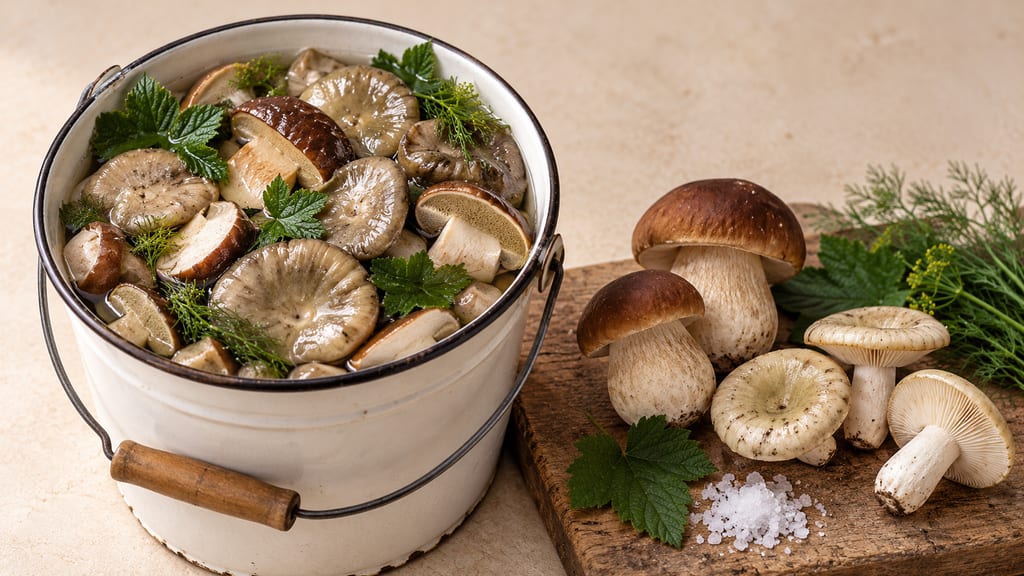
Seto and Russian foragers on the Estonian border still salt russulas and ceps and let them ferment for weeks. What grows in the jar, why it varies, and why the tradition is fading.
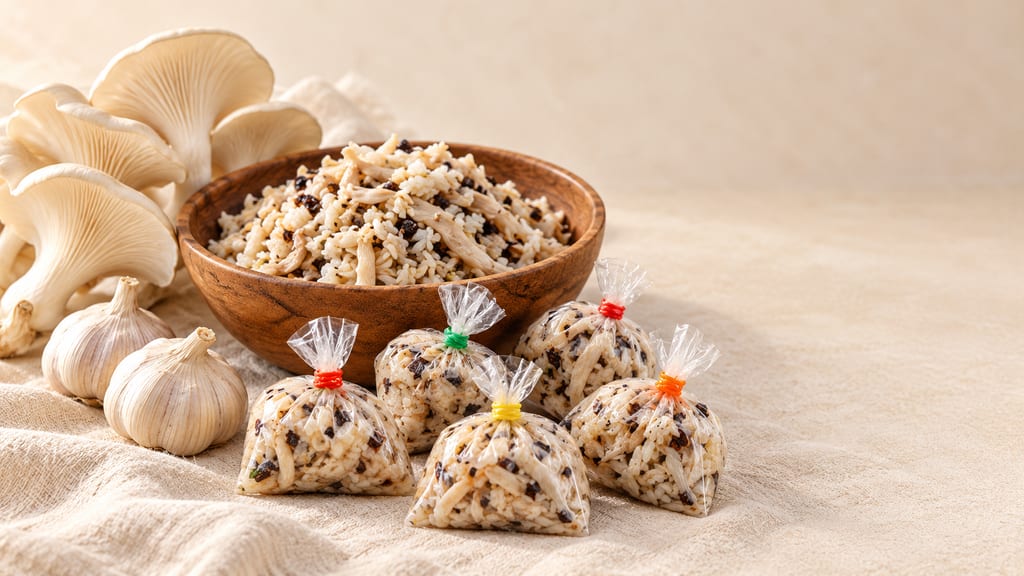
Lactic acid bacteria make a mushroom ferment sour and safe to keep. Add a yeast beside them and the smell changes. A Thai study of Nham Hed shows what the yeast does, and what it cannot do.
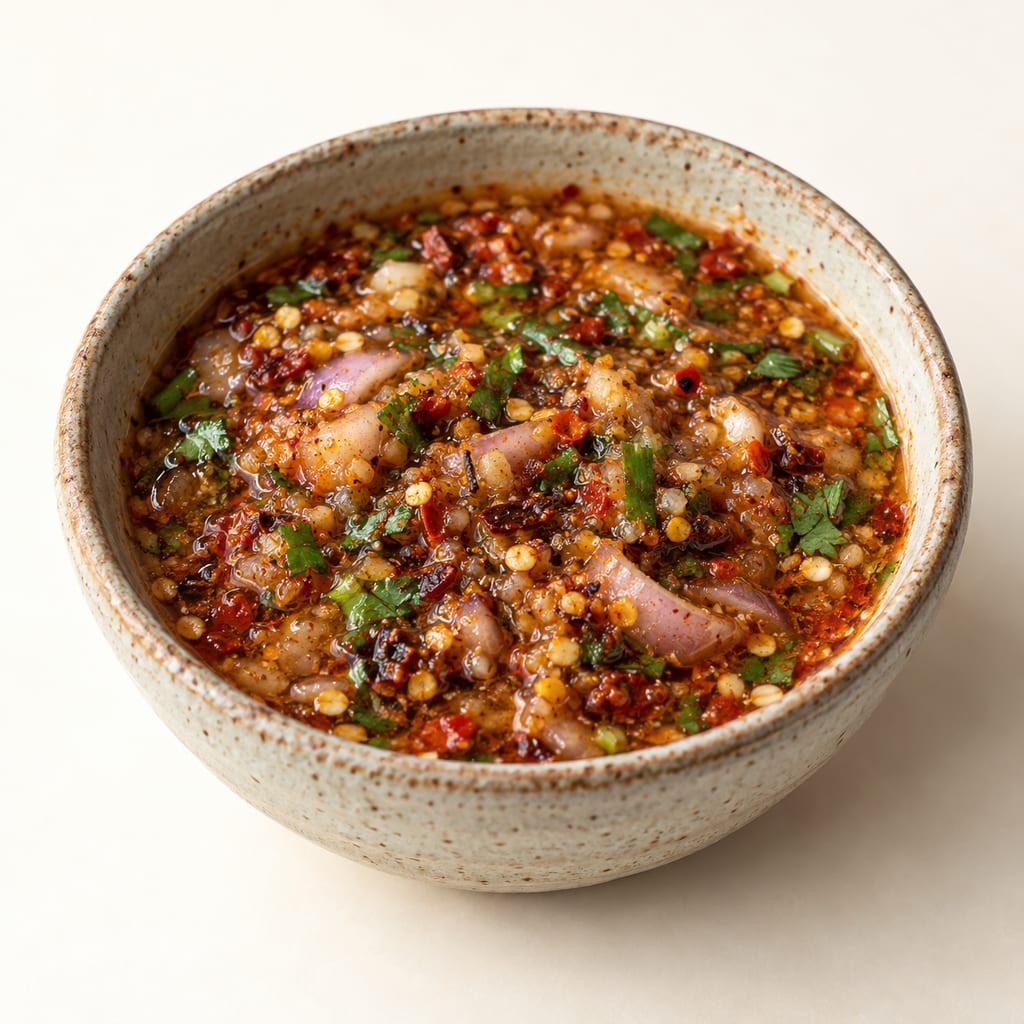
Roasted chillies, shallot and garlic are pounded and loosened with fermented and plain fish sauce, boiled water and lime into a sharp Isan dip for grilled meat and fish.
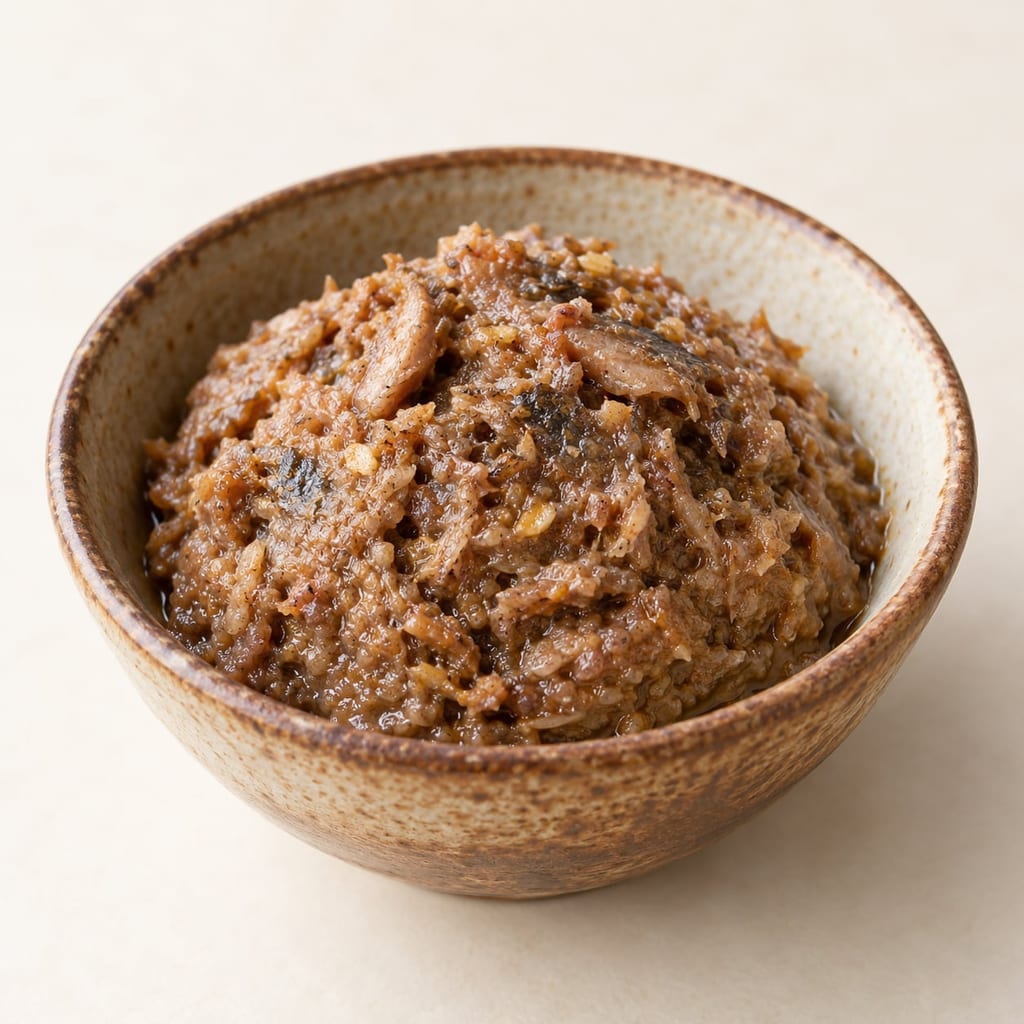
Thai salt-fermented fish paste, matured with rice bran or roasted rice and used as a seasoning in the Northeast and across Thailand. Raw pla ra must be cooked before eating.
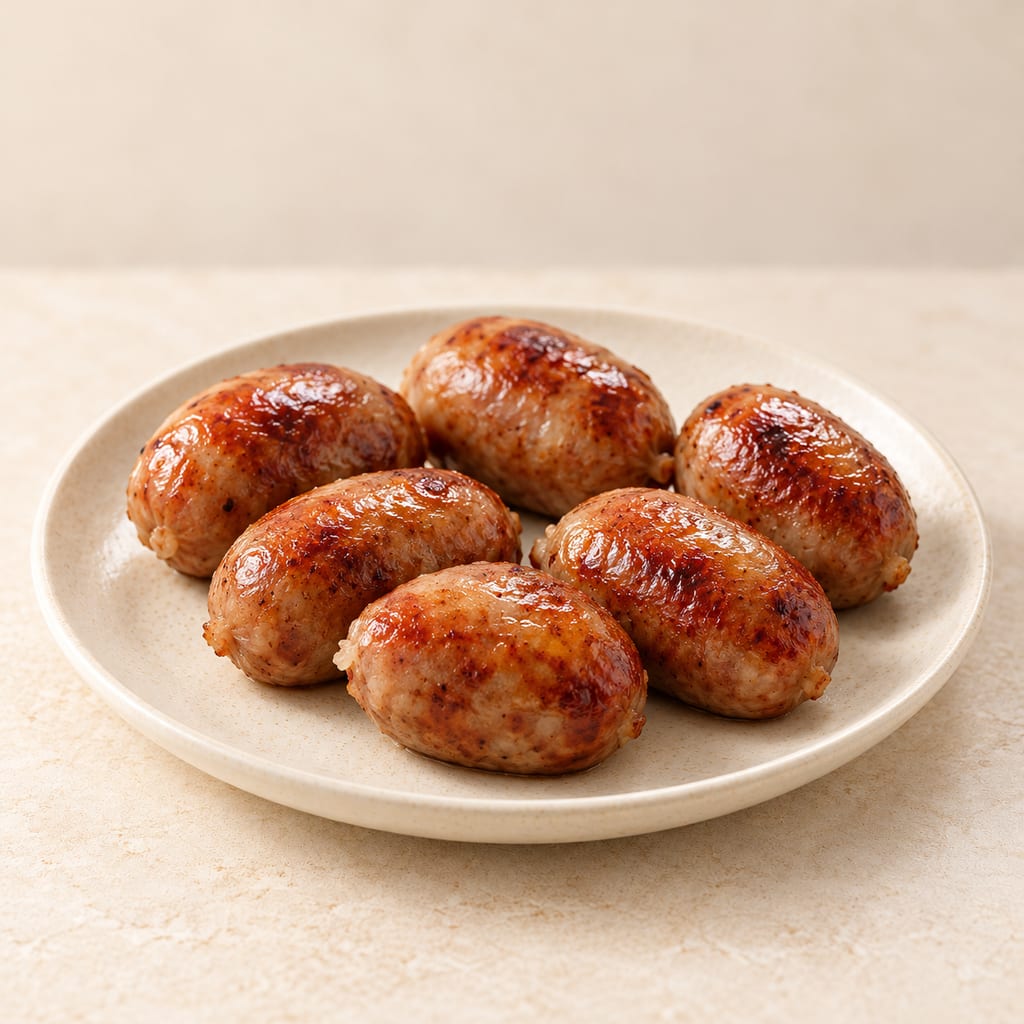
Sai krok Isan is a sour pork-and-rice sausage from northeastern Thailand. This garlic-rich version uses LHP-Dry starter and is cooked after fermentation.
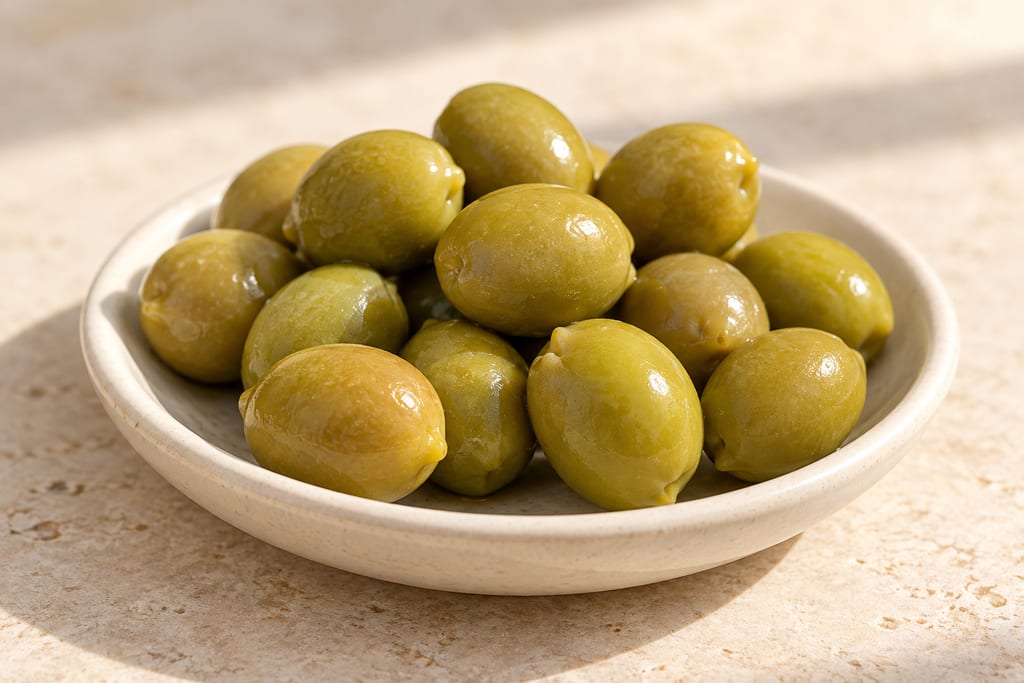
A Portuguese table-olive product from the Negrinha cultivar in northeastern Portugal, sold in three commercial styles, two of them brined fermentations and one oxidised to black.
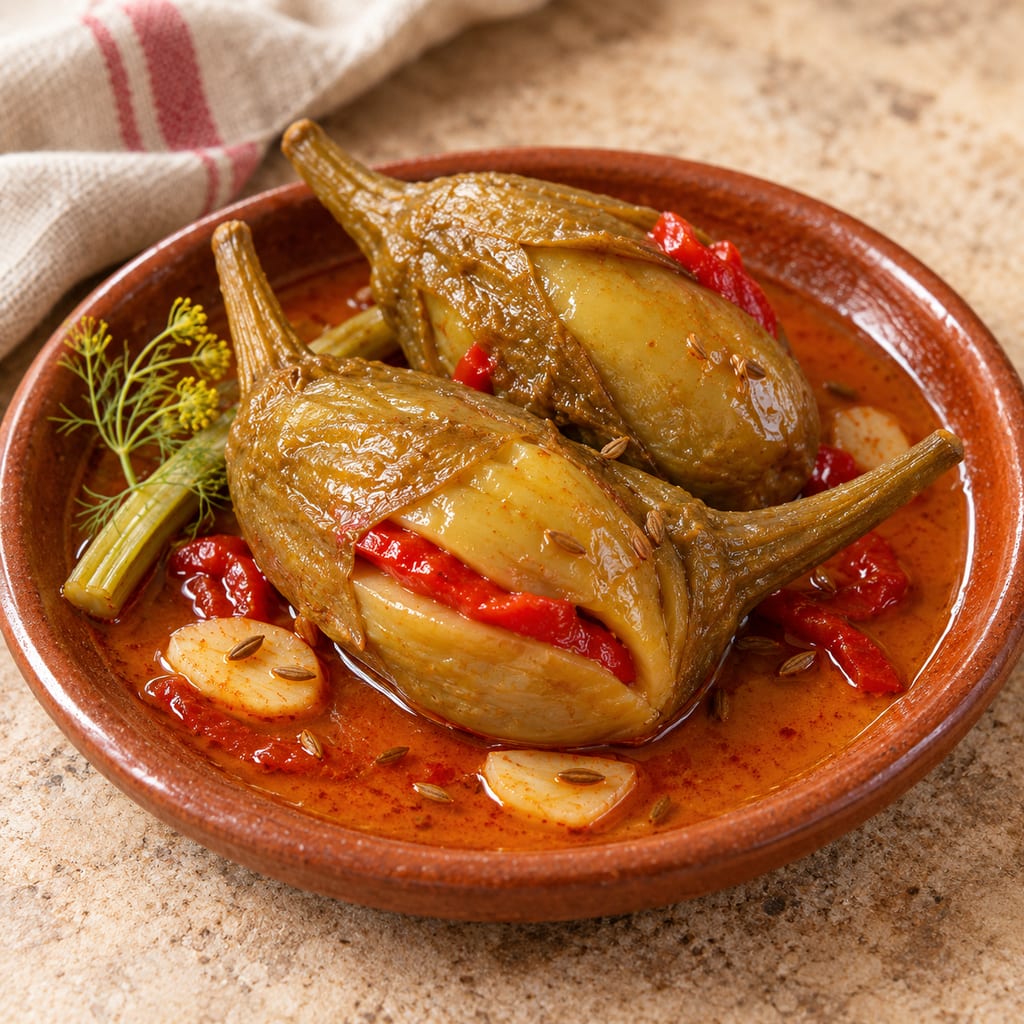
A protected aubergine preserve from Ciudad Real in Spain: tender fruit of the local Dealmagro variety, cooked briefly and then fermented in a vinegared, paprika-seasoned dressing.
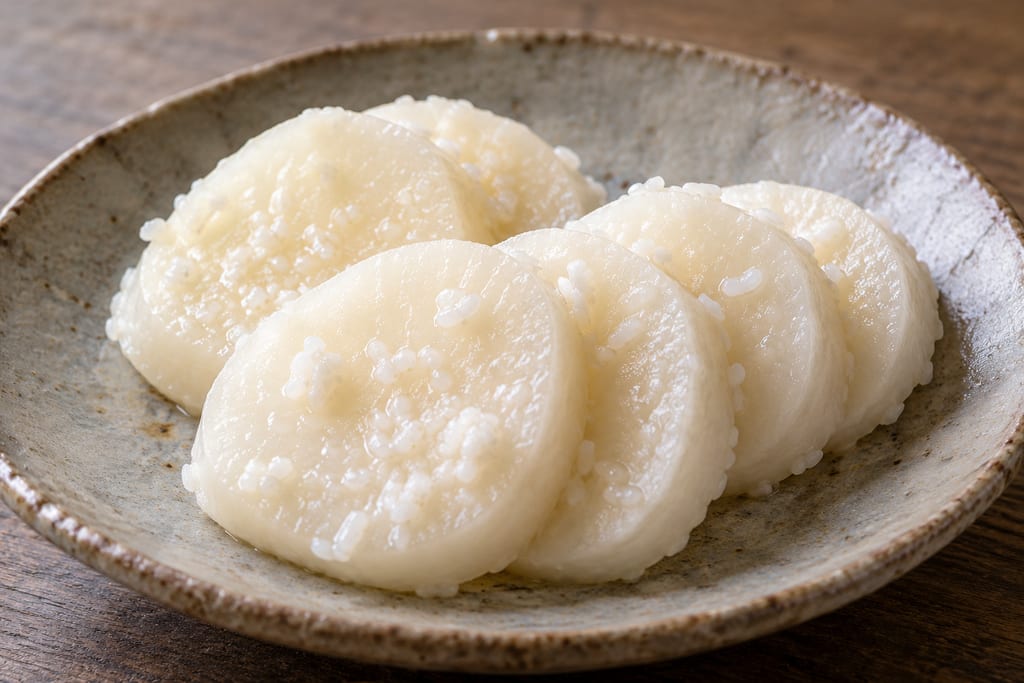
A sweet, crisp Japanese daikon pickle from Tokyo's Nihonbashi district, made by salting fresh radish and dressing it in rice koji, sugar or koji amazake without the heavy drying used for takuan.
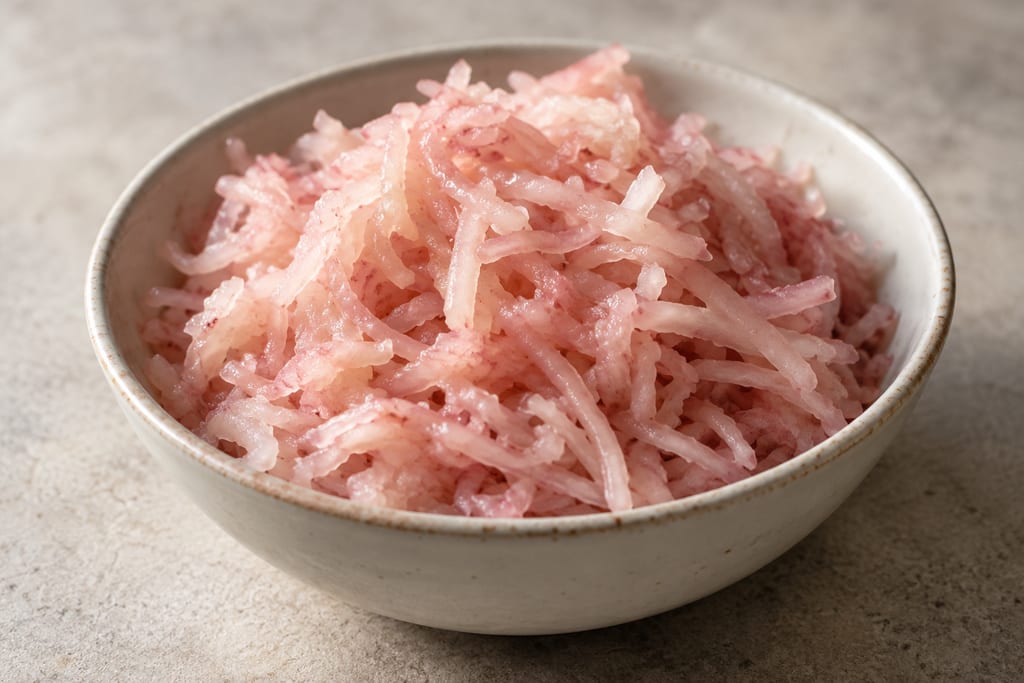
Source-specific Brovada DOP producer method for Friuli Venezia Giulia turnips and red-grape marc. This records a regulated producer process; it is not a validated home-scale recipe.
An industrial fermentation patio places factory-made fiberglass-reinforced polyester olive tanks below floor level, with drainage and transfer infrastructure arranged around the buried vessels.
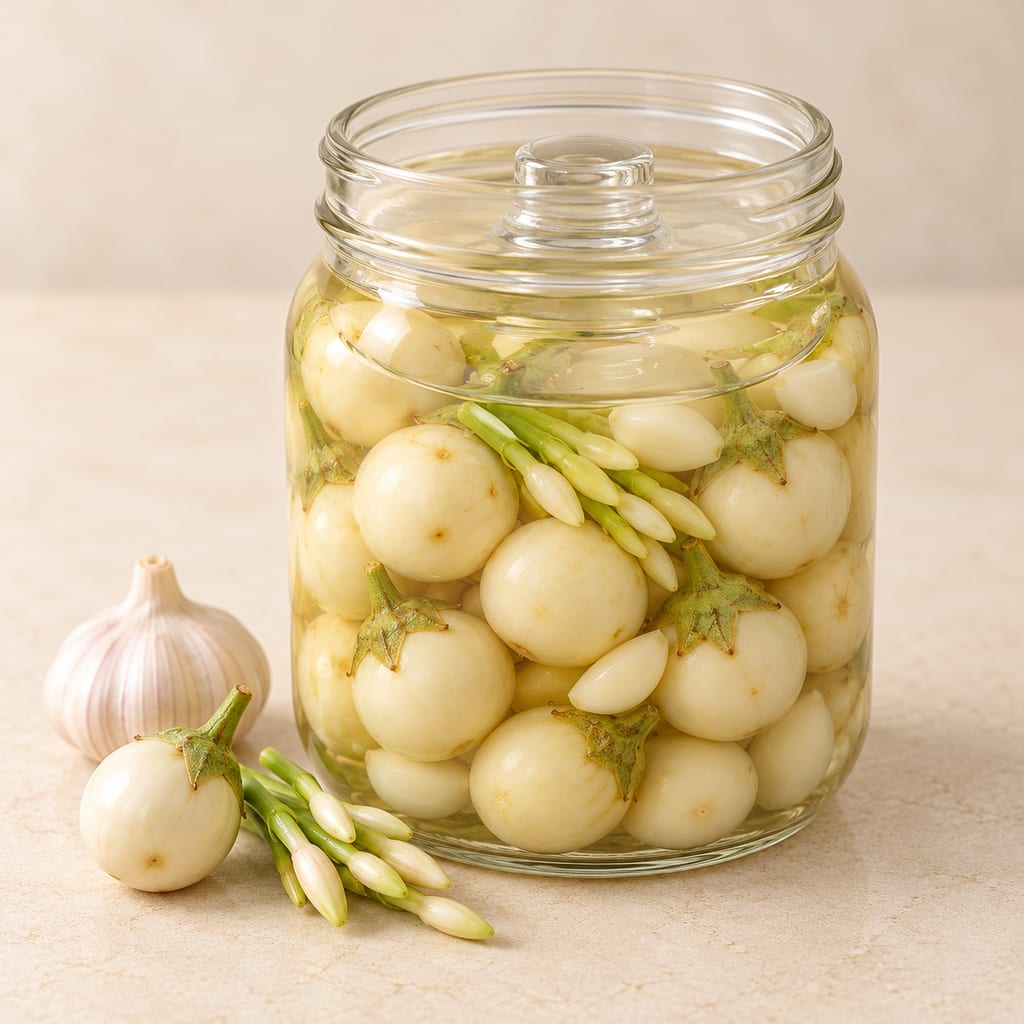
Vietnamese salted and fermented small eggplant, dried on the day of purchase, then held submerged in warm salty water with garlic and galingale flower for a week or longer.
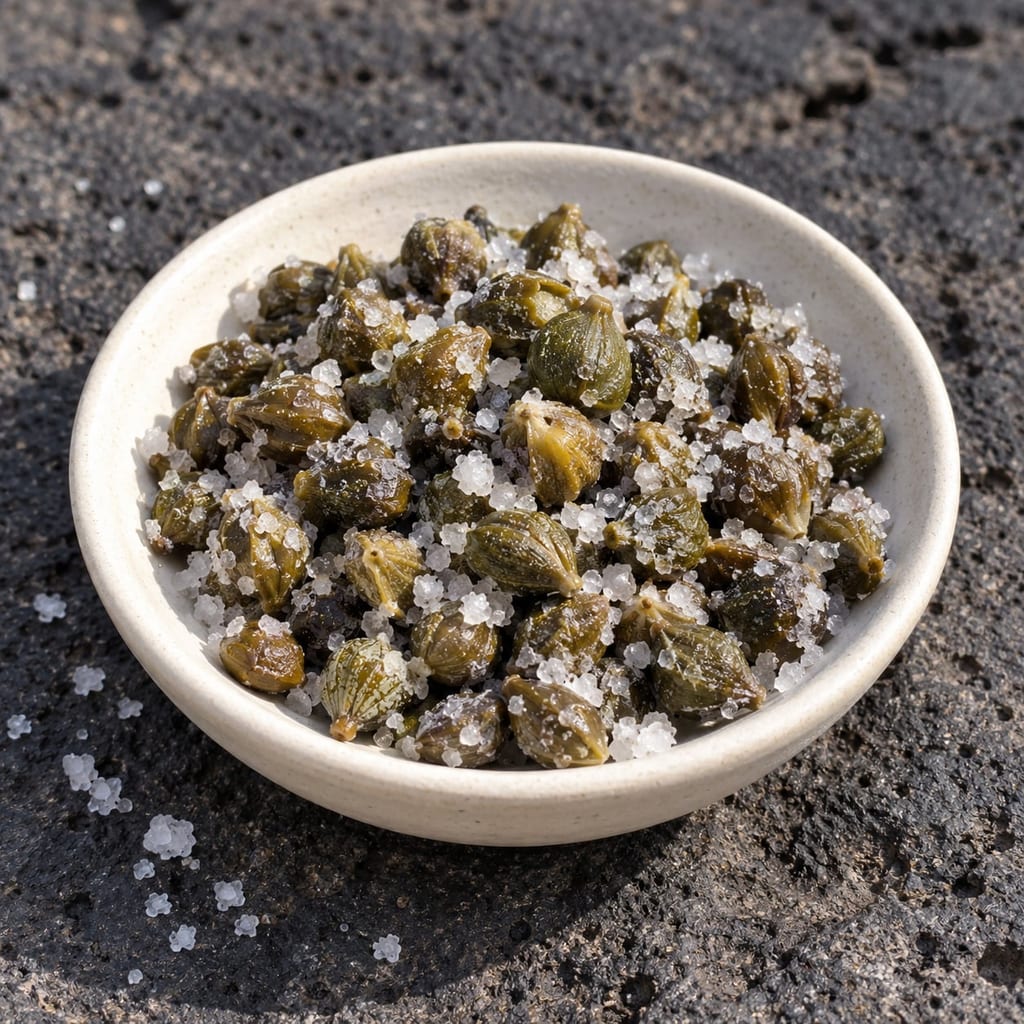
A protected Sicilian product: unopened caper buds from the island of Pantelleria, dry-salted with sea salt in a two-stage process that encourages lactic fermentation.
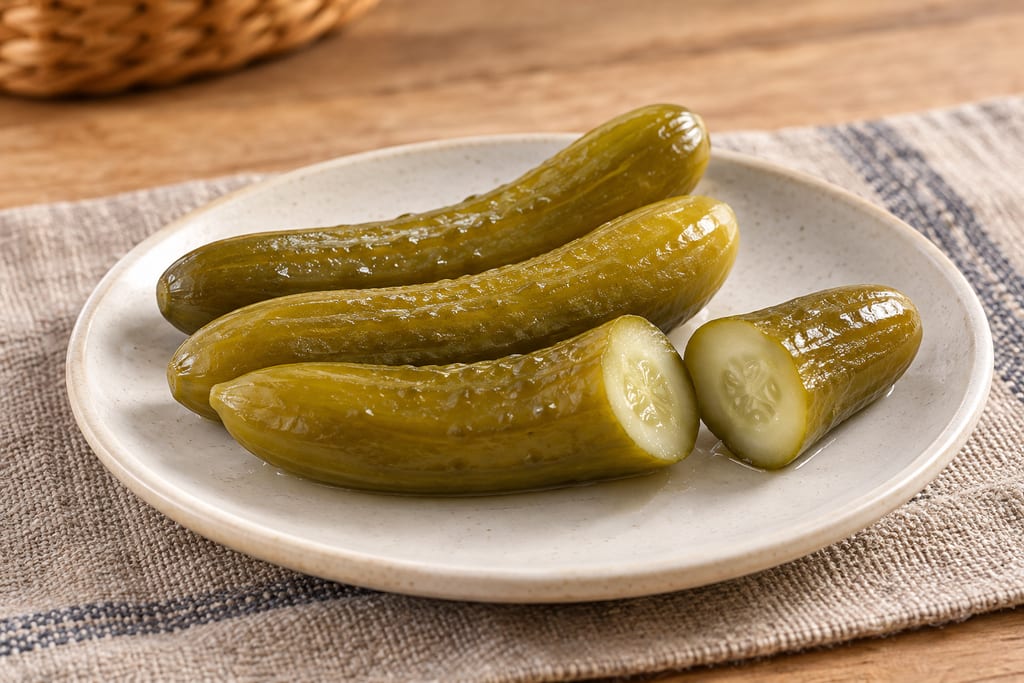
Çubuk turşusu is a registered pickle from Çubuk district in Ankara. Its cucumber variant is sold as Salatalık Turşusu, and a commercial specification sets its brine and room-temperature period.

Soft, spreadable Calabrian pork sausage made with a great deal of red chilli and fatty pork, stuffed into natural casings, sometimes smoked and matured while staying soft.

A way to add independent temperature logging to an existing food dehydrator without changing its built-in controls or protections. It is a monitoring method, not a rewiring plan.

Pleurotus cystidiosus is the abalone mushroom, a cultivated oyster-type fungus with dark brown caps that grows more slowly and is more demanding than other Pleurotus species.

A dark, balanced vinegar from Emilia-Romagna made by combining cooked or concentrated grape must with wine vinegar, then acetifying and refining it in wood under a protected specification.

A living dairy inoculum that starts controlled cream fermentation, developing acidity and aroma before sour cream or cultured butter is finished.

A small electric incubator holds jars at a selected temperature for yogurt and other documented warm food preparations. Controls, capacity and vessel arrangement vary by model.

Adygean salt is a seasoned table salt associated with Adygea and the wider North Caucasian culinary tradition. Salt is blended with garlic and a variable selection of herbs and spices; the exact mix depends on the named style and maker.

The African Caesar-group mushroom, Amanita masasiensis, is a wild ectomycorrhizal species of central and southern African woodlands, eaten locally. The genus contains deadly poisonous species, so identification needs care.
No community contributions have been published for this entry yet.
Sign in to contribute. Published comments and photos are free to read.
Ministry of Higher Education, Science, Research and Innovation, Thailand; Clinic Technology programmeMethod
แหนมเห็ด (technology-transfer recipe)Quantities: 1 kg oyster mushrooms, 120 g garlic, 120 g cooked rice, 18 g salt, 6 g sugar
Five-minute steaming, cooling and squeezing
About 15 g per bag
Two to three days at room temperature until sour
No pH, numerical temperature or shelf life
Cited in: Story and history; How it is made and why each step is there
Thai Industrial Standards Institute (copy hosted by the National Food Institute of Thailand)History · Safety · Identity
มาตรฐานผลิตภัณฑ์ชุมชน แหนมเห็ด มผช. 472/2547Community product standard for nham hed issued 2004
Mushrooms, cooked rice, garlic and salt; optional sugar, cooked pork skin, chilli
Permitted mushrooms include oyster, shiitake, abalone and black wood ear
pH 4.6 or lower; Salmonella absent in 25 g; S. aureus and C. perfringens absent in 0.1 g; E. coli under 3 MPN/g; yeasts and moulds under 10 CFU/g
Cited in: What it is; Story and history; Regional and historical variations; Reading results and problems
Trends in Sciences (Walailak University)Science · Method · Safety
Improving Nham Hed Quality and Safety through Co-Starter Fermentation with Lactiplantibacillus plantarum NH48/12 and Saccharomyces cerevisiae TISTR 5110Starter treatments cut pH from about 6.4 to 6.5 to 3.2 to 3.7 within 24 hours; spontaneous batches were slower
Yeast reached about 8 log CFU/g in two days and changed aroma, not pH
Glutamic acid 516.24 and 547.56 mg per 100 g
Pleurotus pulmonarius steamed 15 minutes; 1 kg mushroom, 150 g rice, 100 g garlic, 25 g salt; 30 plus or minus 2 C
No E. coli, S. aureus, C. perfringens, B. cereus or Salmonella detected
Cited in: What it is; Story and history; How it works; How it is made and why each step is there; How it is eaten; Reading results and problems
Journal of Food Technology, Siam UniversityScience · Variation
Product Development of Fermented Mushroom (Nham-Hed) with Local Rice Varieties of Three Southern Border ProvincesFour southern Thai rice varieties
Three days at 27 C reached pH 4.04 to 4.07
Lactic acid bacteria 7.74 to 8.01 log CFU/g
pH 3.74 to 3.78 after four weeks at 4 C and falling liking
Cited in: Story and history; How it works; Regional and historical variations; Reading results and problems
KRUA.COMethod · Use · Variation
แหนมเห็ด (KRUA.CO recipe)Oyster mushrooms with Riceberry and sticky rice
Fifteen-minute steaming
Seven days at room temperature and a one-month refrigeration claim, not validated
Triangular plastic parcels; frying and spicy salads
Cited in: What it is; How it is made and why each step is there; Regional and historical variations; How it is eaten; Reading results and problems
Wongnai CookingMethod · Use
แหนมเห็ดมังสวิรัติ (Wongnai recipe)1 kg oyster mushrooms, 200 g sticky rice, 100 g garlic, 25 g salt
Two to three days
Tight parcels and cylinders
Fried appetiser or spicy salad
Cited in: How it is made and why each step is there; Regional and historical variations; How it is eaten
Open Government Data of ThailandMethod · Use
แหนมเห็ด (Thai open data)Cooking and seasoning before packing
Banana leaves or plastic bags
Eaten as is or in further cooked dishes
Cited in: How it is eaten
National Research Council of Thailand, Digital Knowledge MapHistory
Knowledge Management for Oyster Mushroom Cultivation and Processing in Kho Wang, YasothonCommunity enterprise in Kho Wang, Yasothon
Mushroom naem among its processed products
Cited in: Story and history
National Science and Technology Development Agency, ThailandScience · History
เทคโนโลยีการผลิตต้นเชื้อบริสุทธิ์สำหรับหมักแหนม (Pure starter culture technology for naem)Selected starter cultures for traditional naem
Controlled acidification
Context of the wider naem tradition
Cited in: What it is; Story and history; How it works; Regional and historical variations
World Health OrganizationSafety
BotulismC. botulinum does not grow below pH 4.6
Acidity does not destroy preformed toxin
Spores survive heat
Cited in: Reading results and problems
US Centers for Disease Control and PreventionSafety
Botulism PreventionToxin cannot be seen, smelled or tasted
Discard food of uncertain safety
Cited in: Reading results and problems
Food Standards Agency, United KingdomSafety
Home Food Fact CheckerBacillus cereus spores survive cooking rice
Cool cooked rice quickly, ideally within one hour
Cited in: Reading results and problems
Arin Food, ThailandUse · Variation
Thai Fermented Mushroom Sausage: Arin Naem HetCommercial mushroom naem from several cultivated mushrooms
Triangular plastic parcels
Cited in: Regional and historical variations