What it is
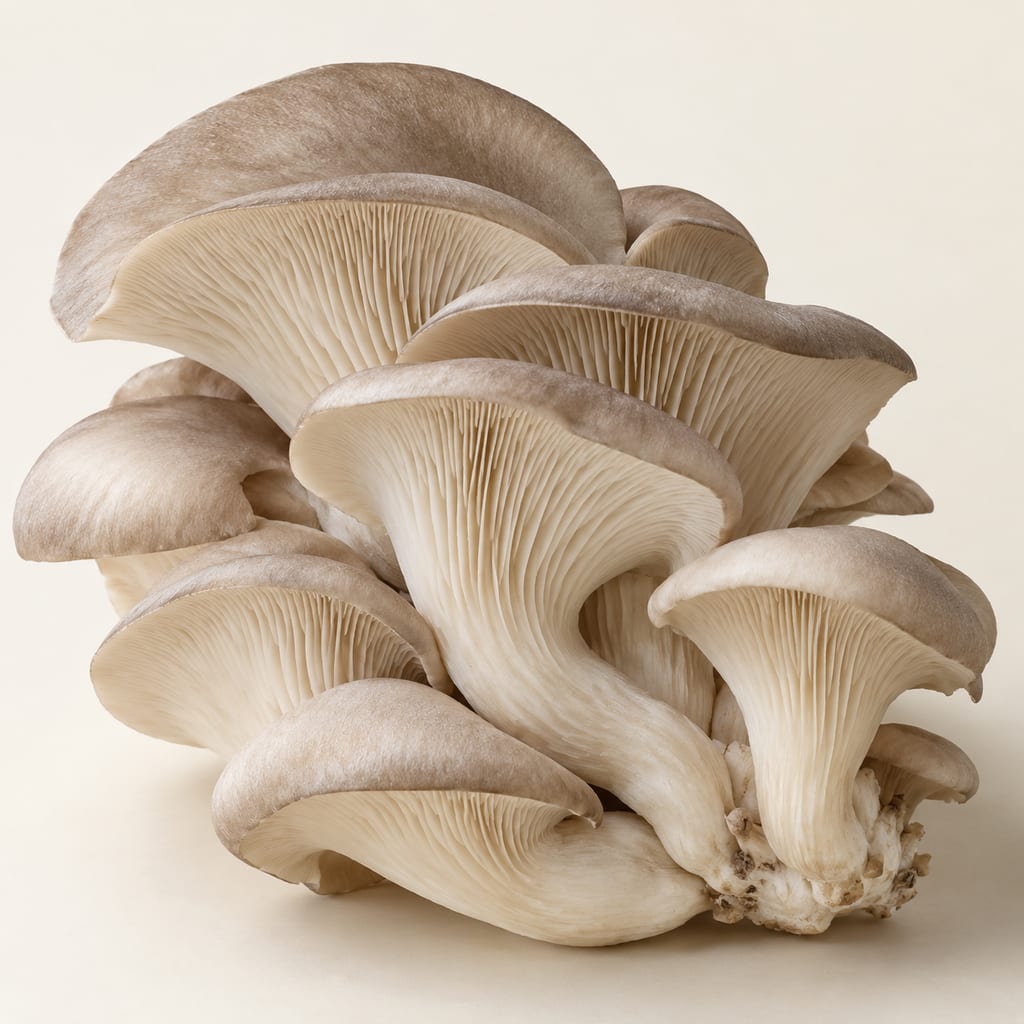
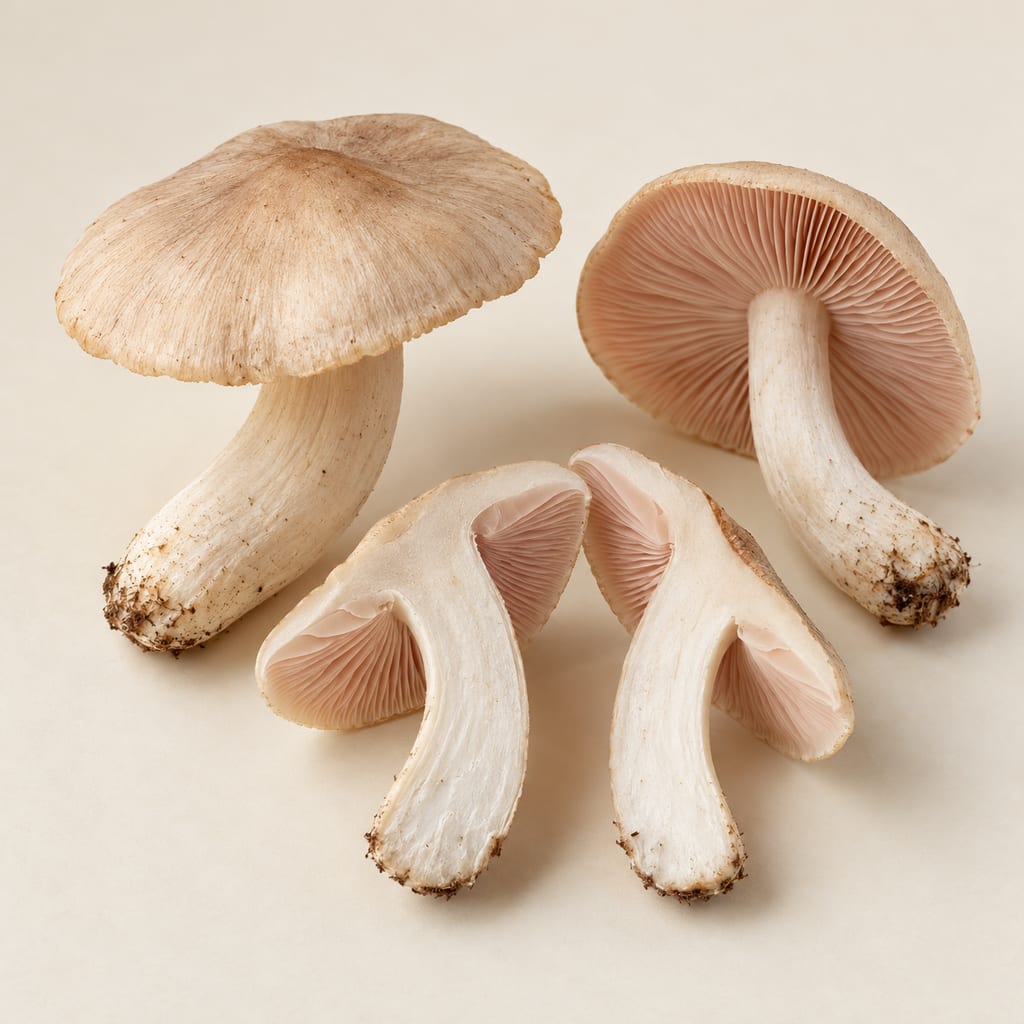
Pleurotus ostreatus is a shelf-shaped mushroom that grows on dead wood. It is called the oyster mushroom in English and is sold in many countries under local names. Its fruiting bodies form overlapping shelves or fans, and the cultivated forms are the commercial product that most buyers meet.
The Indian and Korean reviews consulted for this page describe the species as the most widely cultivated Pleurotus species, with many commercial strains developed for it. The sources do not describe the differences between those strains, so this page does not claim any.
Sources for this section
Its history as a crop
The history of cultivation is disputed in the sources. One source says cultivation of Pleurotus ostreatus was started on an experimental basis in Germany in 1917 on tree stumps and wood logs, and another gives the first documented cultivation to a different researcher, Kaufert. The same account notes that the mushroom was grown in Germany as a subsistence measure during the First World War. The attributions should be checked against primary literature before they are repeated as fact.
The taxonomic name came from the German mycologist Paul Kummer, who placed it in the genus Pleurotus in 1871, according to the Indian report consulted. The technique of straw-based cultivation is recorded in the Korean review as first developed in the early 1970s. A different source credits the perfection of the growing technology in the United States to researchers named Block, Tsao and Hau. The sources do not reconcile these accounts, and this page reports them as given.
Cultivation spread in India from the early 1960s, according to an Indian project report. Production statistics in the sources are old and mostly concern East Asia, with an older Indian report giving China as the leading producer, and another listing Japan, Taiwan and Italy among leading producers.
Sources for this section
How it is grown
The Indian cultivation reports consulted list paddy straw, wheat straw, banana pseudostems, sawdust and compost prepared from straw among the substrates used for Pleurotus. One Indian study found that paddy straw supplemented with wheat bran gave the highest biological efficiency for P. pulmonarius, a related species, and this page does not treat that result as a figure for P. ostreatus.
The Indonesian study in the record describes white oyster mushroom cultivation on bagged substrate blocks called baglogs. The Korean review records cotton waste as a substrate from the 1980s. These are substrate and method observations, not validated household directions. The sources reviewed do not give temperatures, humidity levels or timings for P. ostreatus, so this page gives none.
Sources for this section
Cooking and eating
The sources reviewed give cultivation history and production but do not describe the cooking behaviour or flavour of the oyster mushroom in enough detail to support a culinary account, so this page does not make such a claim. Where a dish or preparation uses it, that page should carry the method and its sources.
The mushroom is a cultivated food mushroom sold fresh in most markets where it is grown. The sources reviewed do not describe it as a starter culture or a fermentation organism.
Sources for this section
Safety and handling
The cultivated product is the reference for cooking, and the sources reviewed give no storage life, so this page gives none. Buy from a supplier who names the species and grows the mushroom under controlled conditions.
Safety wording: the sources reviewed describe the cultivated oyster mushroom as a food. They do not give an assessment for picking wild Pleurotus, and the species resembles other shelf fungi. This page gives no identification or edibility verdict for wild material, and a wild mushroom should be identified by an expert before it is eaten.
Sources for this section
Open questions
The origin of commercial cultivation is disputed, and the production statistics are old. A next research pass should read the primary German and US accounts, and a current production source for East Asia.
Sources for this section
Places
Germany
Historical attestation · Country evidenceCountry-level. One source places the first experimental cultivation in Germany in 1917 on tree stumps and logs; the attribution is disputed and should be checked against primary literature.
South Korea
Documented use · Country evidenceCountry-level. A Korean review describes oyster mushroom as the most-produced mushroom grown for industrial purposes there.
China
Documented use · Country evidenceCountry-level. One Indian report gives China as the leading producer, with about 85 per cent of world production; the figure is older and secondary.