
Techniques
One known microbe: steering a mushroom ferment with a defined starter
Blanched mushrooms do not sour easily on their own. Polish researchers found that a lactic bacterium taken from fermented mushrooms does the job fastest, and measured what fermenting does to the food.
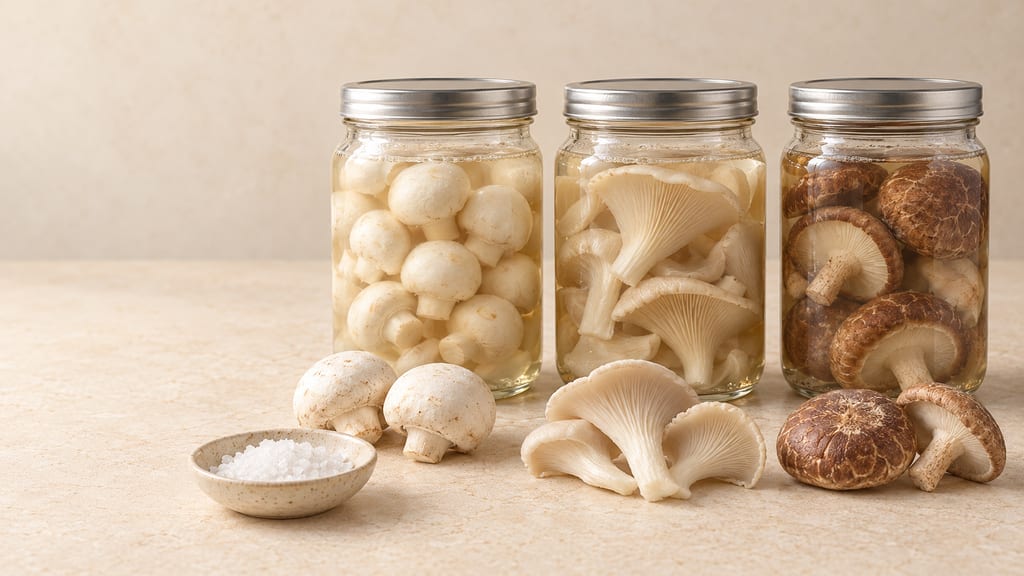
Button, oyster and shiitake mushrooms after a week at 21–22 °C with one lactic starter.
Why mushrooms do not sour on their own
Cabbage left in salt will usually sour by itself. The lactic acid bacteria living on its leaves wake up within a day or two, eat the sugars that the salt draws out, and turn them into acid. Mushrooms are different, and the reason is in how they are prepared. Most mushroom ferments start with blanching, a short dip in boiling water, and that dip kills most of the bacteria that would otherwise start the ferment.
The sugars are not what a bacterium expects either. In one Polish study, button mushrooms checked after blanching held no measurable glucose, fructose or sucrose, the sugars that drive most vegetable ferments. What they did contain was mannitol, a sugar alcohol, at about 738 mg per 100 g, along with ribose and trehalose. Left alone, such a mushroom does not ferment readily, and a vegetable ferment that relies on chance already carries a high risk of failing in its first day or two.
A starter changes that. A starter is a culture of one known bacterium added at the start in large numbers, so that it takes control of the jar before anything else can. The aims are simple to state: acid that comes quickly, a process that finishes sooner, and a product that tastes the same from one batch to the next.
A strain that came from a mushroom
At the University of Life Sciences in Lublin, Ewa Jabłońska-Ryś and her colleagues have spent several years on one idea: the best starter for fermenting mushrooms may be a bacterium that already lives in fermented mushrooms. In a 2022 study they compared two strains of Lactiplantibacillus plantarum on button mushrooms. One was 299v, a well-known probiotic strain. The other was EK3, which they had isolated from fermented button mushrooms.
Their method is a useful template for what a defined mushroom ferment looks like. The mushrooms were processed within four hours of harvest and blanched in boiling water for two minutes. They were packed, 380 g at a time, into 500 ml jars with 2% salt and 1% sucrose by weight, topped with 120 ml of brine of the same strength, and inoculated with about ten million bacteria per gram. The jars fermented at 21–22 °C for seven days and were then kept at 5 °C for five weeks.
Both strains did the job. The pH, which started at about 6.8, fell below 4 by the fourth day. EK3 grew faster, peaking on day two rather than day four, used the added sucrose more quickly and more completely, and produced more lactic acid. The finished EK3 mushrooms reached pH 3.55 against 3.68 for 299v, carried more live bacteria at the end, and scored higher with the tasting panel for aroma, the one difference the panel found significant.
Three mushrooms, one starter
In 2025 the Lublin group, working with a food biotechnology institute in Poznań, tested a second home-grown strain, EK11, also isolated from button mushrooms that had fermented spontaneously. This time they fermented three species: button mushrooms (Agaricus bisporus), oyster mushrooms (Pleurotus ostreatus) and shiitake (Lentinula edodes).
The method was the same in outline. The mushrooms were rinsed in cold tap water at about 15 °C, blanched for three minutes, packed with 2% salt and 1% sucrose, inoculated with about ten million bacteria per gram, fermented at 21–22 °C for a week and stored at 5 °C for five weeks. By day seven the pH had fallen from about 6.7 to between 3.6 and 3.75, and in cold storage it drifted further down, to between 3.51 and 3.6. The bacteria peaked in the first week at 8.62, 8.26 and 8.14 log units per millilitre of brine for button, oyster and shiitake, roughly 140 to 420 million cells per millilitre, and were still above 10 million per millilitre after six weeks.
The starter also passed a test that matters for any fermented food. Some bacteria make biogenic amines, compounds such as cadaverine and putrescine, and a starter culture is expected not to produce them. EK11 did not raise the amine content of any sample, and cadaverine and putrescine were not detected in any of them.
What fermentation does to the food
A fermented mushroom is not the same food as a fresh one, and the 2025 study measured how far it moves. Counted on dry weight, the digestible carbohydrate almost disappears: in button mushrooms it fell from 17.2% to 2.3%, in oyster mushrooms from 8.5% to 1.9%, and in shiitake from 10.6% to 1.2%. The bacteria eat it. Energy fell with it, from 309 to 258.5 kcal per 100 g of dry matter in button mushrooms and by similar amounts in the other two.
Ash, the mineral part of the food, roughly doubled or tripled, from about 7–10% to 22–24% of dry weight, which reflects the salt taken up from the brine. Protein held steady in button mushrooms but fell in oyster mushrooms, from 29.5% to 25.5%, and sharply in shiitake, from 37.5% to 26.0%. B vitamins did not survive well: riboflavin fell in all three species, and thiamine fell in button and oyster mushrooms while staying unchanged in shiitake.
Tasting was done by 23 untrained consumers, without spices, on a nine-point scale. Button mushrooms scored best for taste and texture, at 7.91 and 8.04, shiitake best for aroma, at 7.78, and oyster mushrooms sat a little lower across the board. All three landed in the range people describe as liked.
Oyster mushrooms in China
The idea is not only a Polish one. Another team used Lactobacillus pentosus as a starter for three oyster mushrooms, Pleurotus cornucopiae, Pleurotus sajor-caju and Pleurotus ostreatus. The bacteria stayed above 7.5 log units per millilitre throughout the ferment, quickly brought spoilage and disease organisms under control, and no Enterobacteriaceae, the family that includes Escherichia coli and Salmonella, were found in the finished products. Nitrite stayed below the regulatory limit and the mushrooms were judged acceptable to eat.
The case for a local strain
The Lublin researchers make a pointed argument about which bacterium to use. Most earlier mushroom studies, they note, used strains taken from other sources. A strain that already lives in the food it is meant to ferment is better adapted to that food, and they expect it to work faster and more predictably. Their own results lean that way: the mushroom-born EK3 outpaced the probiotic 299v.
They also name the cost of any defined starter. A spontaneous ferment carries a crowd of microbes, each adding a little to the flavour. One strain makes a cleaner, more uniform product, and some of what made the traditional version distinctive can be lost. A starter taken from a traditional ferment is a way of keeping some of that character while gaining control.
What a starter does not settle
These studies show that a known strain can sour blanched mushrooms quickly and cleanly. They do not show that the result is safe in every kitchen. Neither Polish study ran a pathogen challenge, in which harmful bacteria are added on purpose to see whether the ferment stops them, and the conditions behind every figure here are specific: the salt, the sugar, the dose of bacteria, the temperature and the time.
For anyone fermenting mushrooms at home, the lesson is in the method rather than the strain: blanch, salt and sweeten the brine as measured, ferment warm for a short time, then keep the jars cold. A sour smell or a low pH reading on its own does not prove the jar is safe. The research has shown what a well-chosen bacterium can do; turning that into a tested home recipe is work still to be done.
Related
Read more
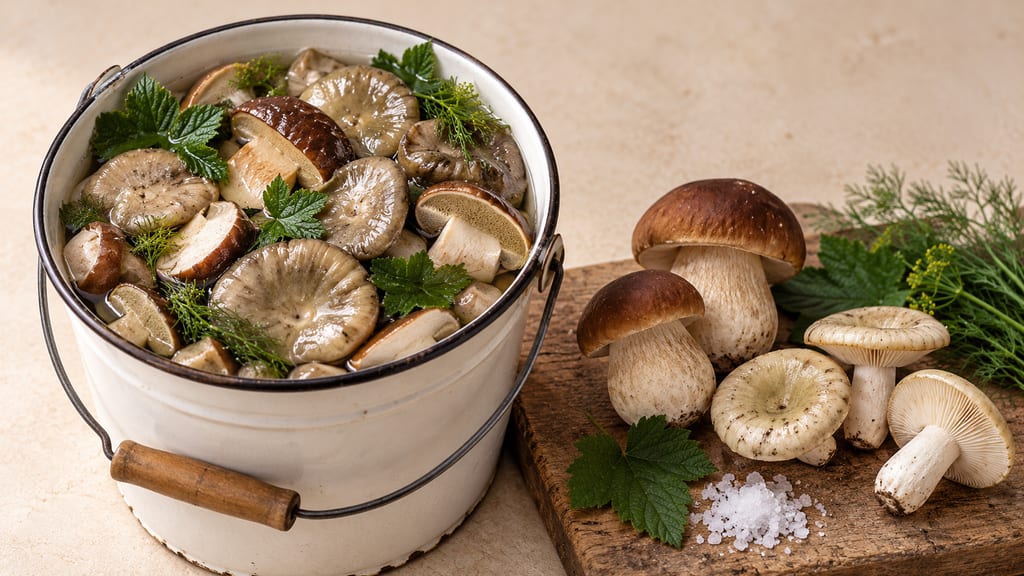
Not the red ones: fermenting wild mushrooms without a starter
Seto and Russian foragers on the Estonian border still salt russulas and ceps and let them ferment for weeks. What grows in the jar, why it varies, and why the tradition is fading.
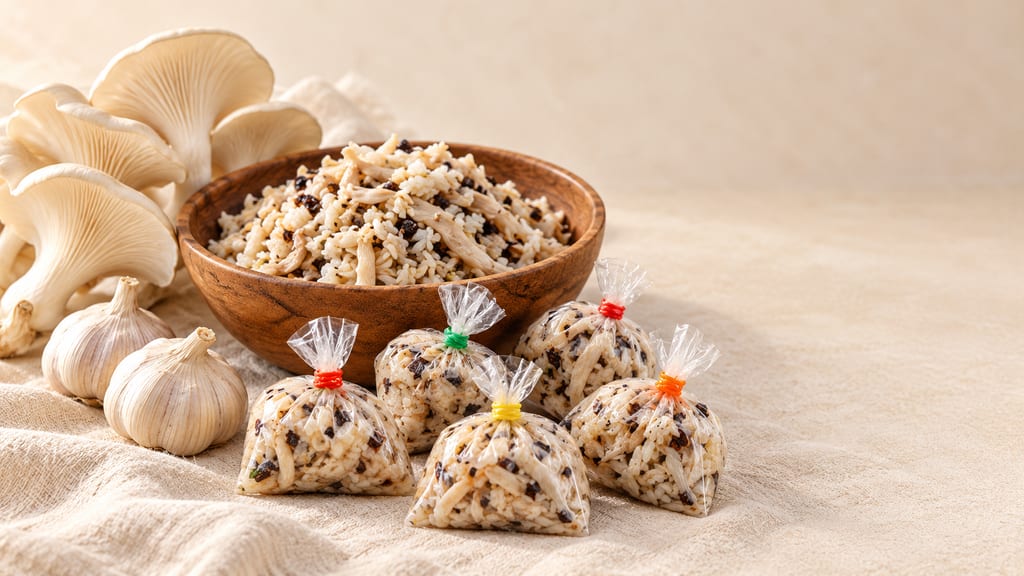
Two microbes, one ferment: what a yeast adds to Thai Nham Hed
Lactic acid bacteria make a mushroom ferment sour and safe to keep. Add a yeast beside them and the smell changes. A Thai study of Nham Hed shows what the yeast does, and what it cannot do.
Discussed in this article
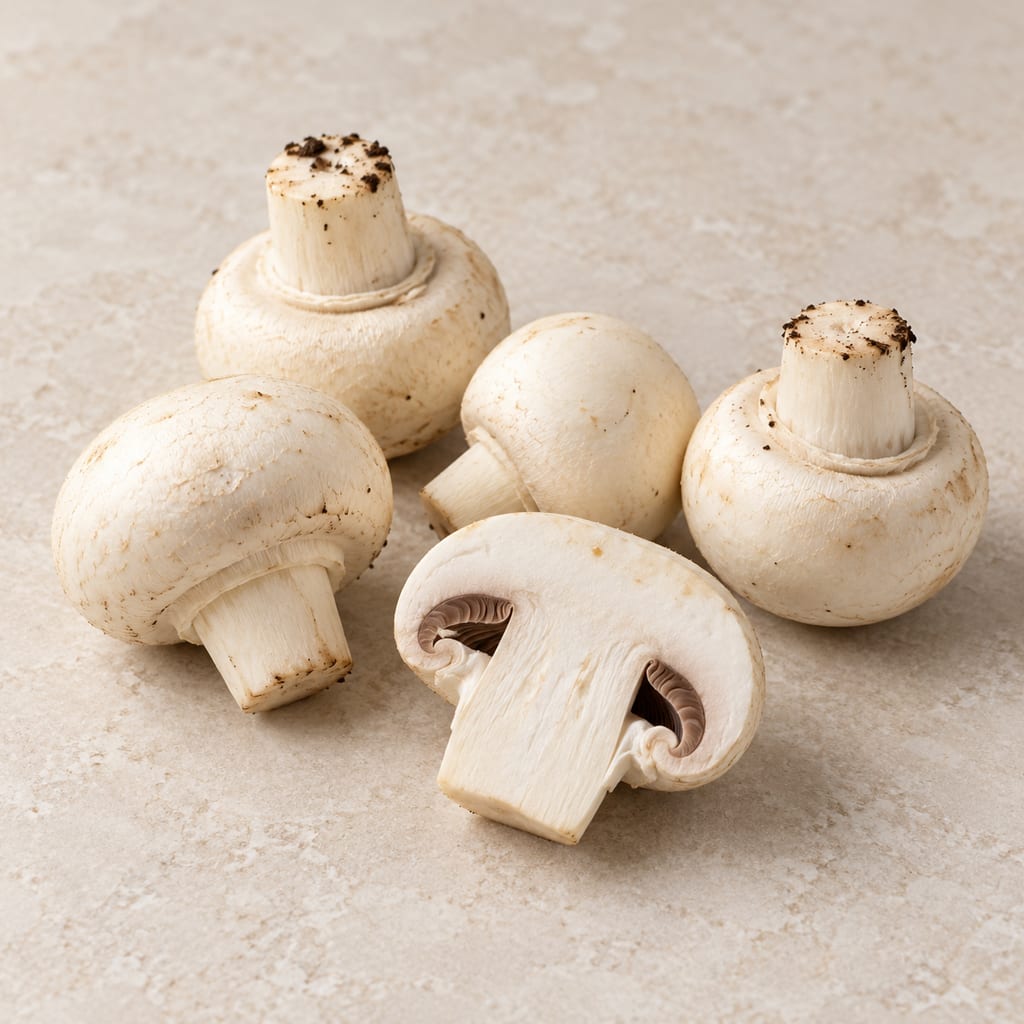
Button mushroom
A cultivated form of Agaricus bisporus sold young as a button and at more mature stages as cremini or portobello, used fresh or preserved in everyday cooking.
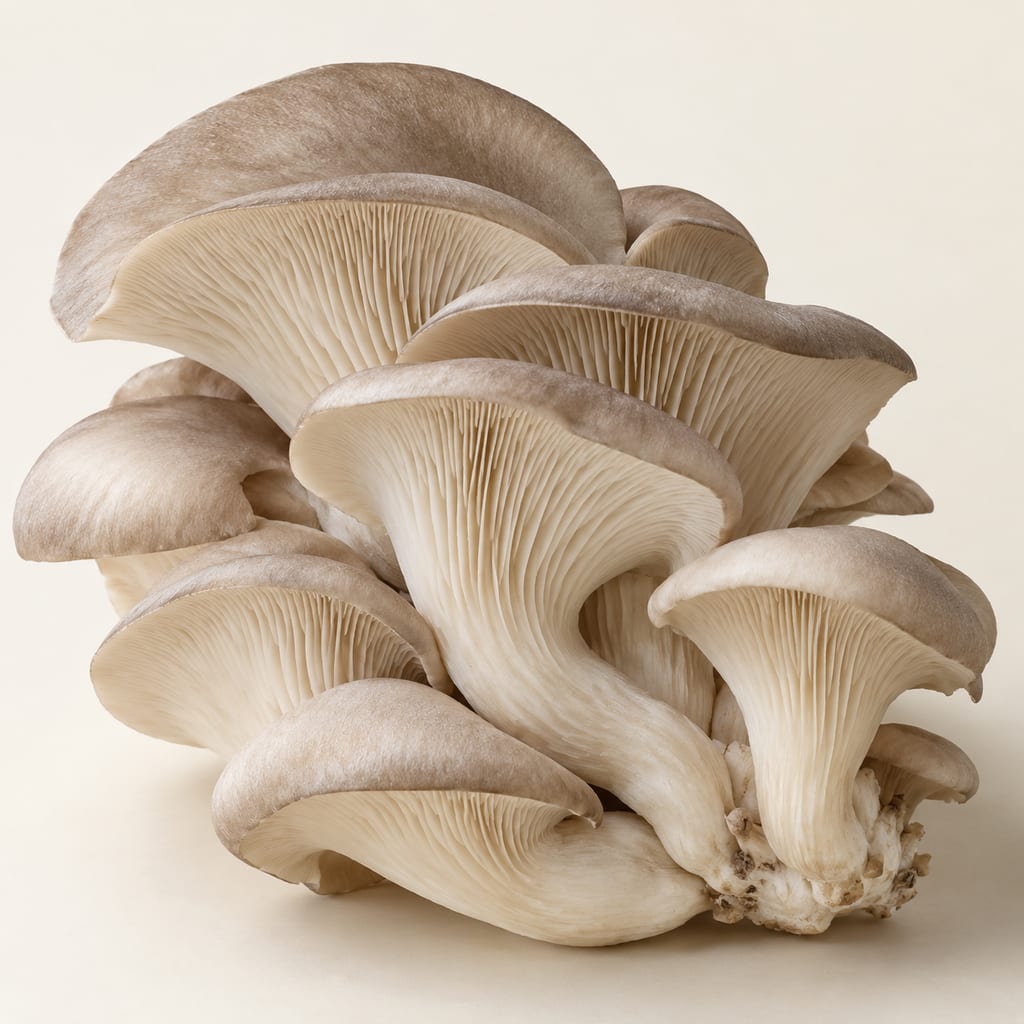
Oyster mushroom
The oyster mushroom, Pleurotus ostreatus, is the most widely grown Pleurotus species, cultivated on straw, sawdust and agricultural waste, and its commercial history is shorter and less settled than its reputation suggests.
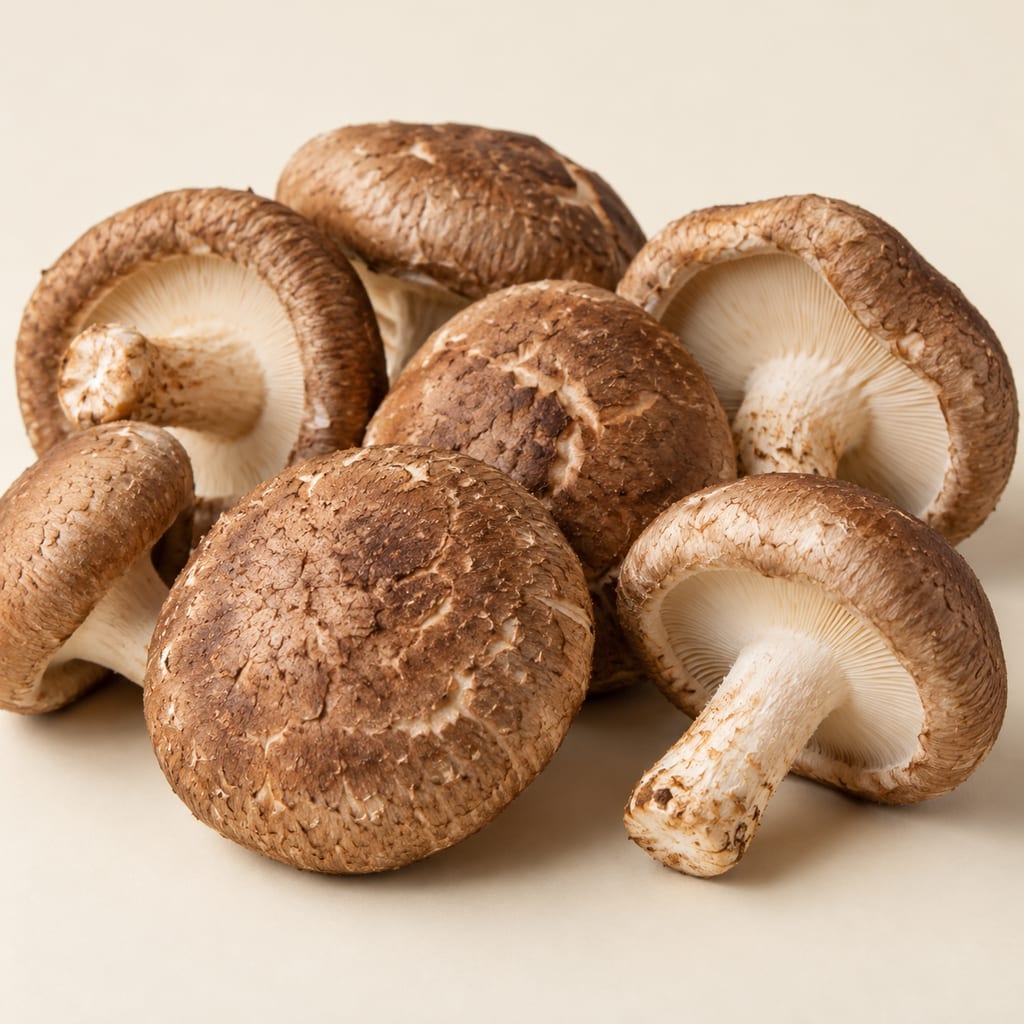
Shiitake
Shiitake, Lentinula edodes, is a wood-rotting mushroom cultivated in East Asia for centuries on logs and sawdust, and dried for storage and stock.
Community
No community contributions have been published for this entry yet.
Share what you made
Sign in to contribute. Published comments and photos are free to read.
Sources
Foods
Possibilities of using the new Lactiplantibacillus plantarum EK11 strain as a starter culture for the fermentation of the fruiting bodies of edible mushrooms (Jabłońska-Ryś and Przygoński, 2025)Cited in: Three mushrooms, one starter; What fermentation does to the food; The case for a local strain; What a starter does not settle
Foods
Dynamics of changes in pH and the contents of free sugars, organic acids and LAB in button mushrooms during controlled lactic fermentation (Jabłońska-Ryś, Sławińska, Skrzypczak and Goral, 2022)Cited in: Why mushrooms do not sour on their own; A strain that came from a mushroom; The case for a local strain; What a starter does not settle
LWT – Food Science and Technology
Characterization of Lactobacillus pentosus as a starter culture for the fermentation of edible oyster mushrooms (Pleurotus spp.) (Liu et al., 2016)Cited in: Oyster mushrooms in China; What a starter does not settle
Gaps
- Neither Polish study ran a pathogen challenge test.
- No tested home recipe for a starter-fermented mushroom is available from these sources.
Updated 2026-10-29