One cultivated species, several market forms
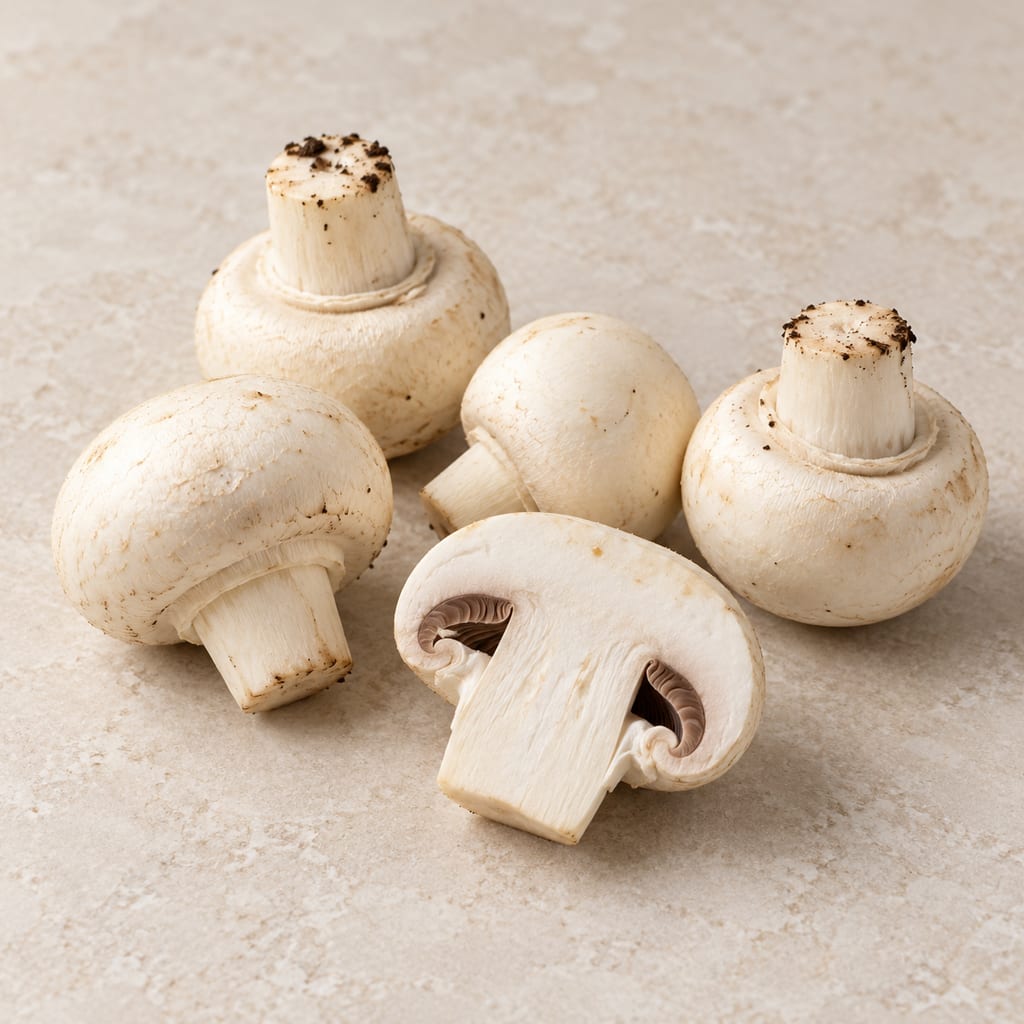
The familiar button mushroom is Agaricus bisporus, a gilled fungus in the family Agaricaceae. Shops sell its young, closed-cap form as a white or brown button. As the fruit body matures, the cap expands and its gills darken; brown selections may be sold as cremini or, at a larger open-cap stage, portobello. These names describe market forms and maturity, not three separate species. The proportions, color and cap size vary by strain and grower, so labels are commercial descriptions rather than a botanical classification.
The species name is widely used in modern horticultural and taxonomic records. NCBI lists Agaricus brunnescens among its synonyms; older horticultural writing also uses Agaricus hortensis. Those names are useful search terms, though older names do not always map neatly onto today's commercial strains. EPPO records common names including champignon de Paris and champignon cultivé in French, champiñón in Spanish, prataiolo in Italian and Champignon in German. Local usage varies, and a common name may refer more broadly to cultivated mushrooms.
Sources for this section
A crop shaped by cultivation
Historical evidence places mushroom cultivation around Paris and London by the eighteenth century. The Encyclopédie describes garden beds prepared with horse manure and earth and refers readers to Tournefort's account presented to the French Academy in 1707. This documents an established cultivation practice; it does not identify the wild origin of the modern crop or prove when domestication began.
Modern genomic work compares hundreds of global strains to examine the domesticated history and spread of A. bisporus. The commercial crop is best understood through its cultivated lineages and movement of strains, rather than a single simple origin story. A study that samples wild mushrooms from the Tibetan Plateau, for example, documents a wild collection site; it should not be mistaken for evidence that commercial button mushrooms originated there.
A 1912 horticultural history gives a useful but qualified date for this cultivation story: its author says he found no record of champignon de couche cultivation before the start of the seventeenth century and cites Olivier de Serres's 1600 agricultural book. The same account describes Paris market gardeners reproducing mushrooms that appeared on spent melon beds and horse-manure-rich compost. It calls the cultivated mushroom Agaricus campestris, an older identification that does not by itself settle how every historical crop maps to the modern species Agaricus bisporus. This date records cultivation evidence, not the wild origin of the species or the first time people ate a wild mushroom.
Sources for this section
Compost, casing and controlled harvests
Commercial mushrooms are grown indoors on prepared compost. Growers condition the compost, introduce spawn (the living fungal culture), and allow it to colonise the substrate. A moist casing layer is then applied at the surface. Casing is not simply more compost: it helps maintain the surface conditions required for fruit bodies to form. Growers manage moisture, air exchange, temperature and carbon dioxide to coordinate mycelial growth and cropping.
Penn State Extension describes commercial production as a sequence of composting, spawning, casing and harvesting. Fruit bodies emerge in successive flushes rather than ripening like fruit on a tree. The crop schedule depends on strain and growing conditions; commercial production does not have a fixed outdoor season. Composting is a microbial process used to prepare the growing medium, but the mushroom is not itself a fermented food.
Sources for this section
Where it is grown and when it is available
Indoor cultivation supports a year-round retail supply in many markets, though production volumes and costs vary by place and crop year. USDA reports U.S. Agaricus production annually and groups crimini and portobello among brown Agaricus market forms. These statistics describe the U.S. crop and its reporting categories, not world production totals.
India's National Horticulture Board describes button mushroom as a major cultivated mushroom and records production across several states, including Himachal Pradesh, Punjab, Haryana, Uttar Pradesh, Maharashtra, Andhra Pradesh, Tamil Nadu and Karnataka. It notes a shift from winter-season cropping in northern plains and longer seasonal production in hill areas toward year-round cropping in controlled houses. The account documents production regions and systems; it is not a complete current census.
China is another documented cultivation region. Research on germplasm and strain history distinguishes cultivated material from wild collections. Together, these records show a crop grown in diverse regions under managed conditions. Fresh buttons can therefore be available through the year even though local harvest calendars, facility schedules and supply chains differ.
France's agriculture ministry reports 75,400 tonnes of champignon de Paris produced nationally in 2024 and identifies Pays de la Loire and Centre-Val de Loire as the main producing regions. It traces the move from Paris-area quarries to Pays de la Loire after Metro construction. This modern regional pattern explains why the market name still points to Paris even though most French production is now concentrated farther west; it does not claim that those present-day regions are the mushroom's biological origin.
Sources for this section
Choosing, storing and preparing
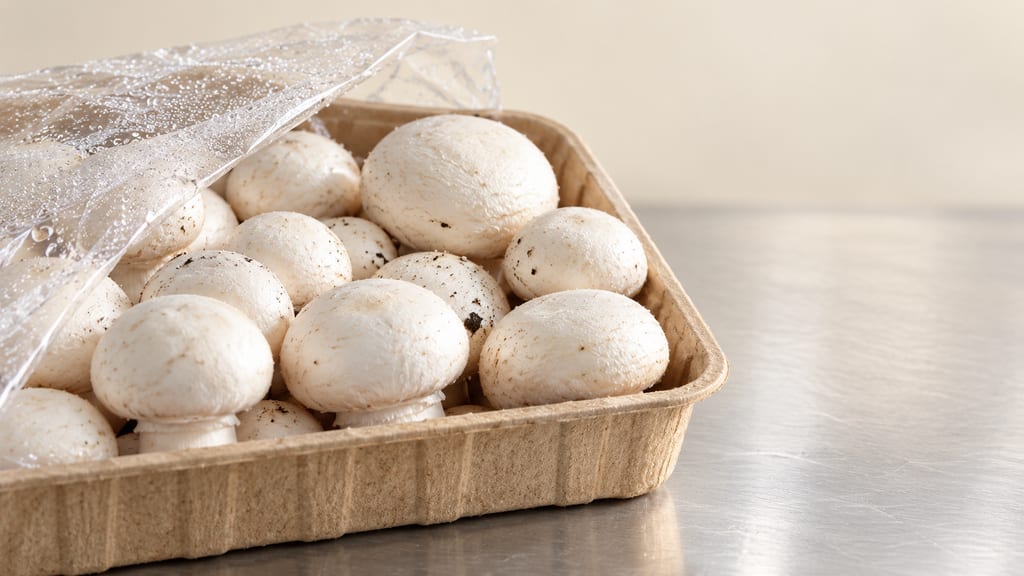
Choose mushrooms that are firm and look fresh, without slime, mould or extensive decay. Health Canada advises buying fresh, firm mushrooms, refrigerating them promptly and cleaning shortly before use. Follow the package directions and use condition as the guide; a universal storage duration would ignore the effects of harvest age, packaging and refrigeration.
Brush away visible growing medium or rinse briefly under clean running water, then dry the mushrooms if browning is important. Keep raw produce separate from ready-to-eat food and clean hands, knives and boards after handling. These routine steps do not make spoiled mushrooms suitable to eat.
Sources for this section
From mild fresh mushroom to savoury cooking
Fresh buttons are sold whole or sliced, loose or packaged. Their mild, earthy flavour suits soups, stews, sauces, omelettes, pasta and vegetable dishes. They can be sautéed, roasted or cooked in a sauce. Larger open portobello caps may be cooked whole or filled, while small buttons are convenient for quick cooking. These are culinary uses for market forms of the species, not different mushrooms.
In a hot pan, mushrooms first release moisture. Once it evaporates, the surface can brown and their savoury aroma becomes more concentrated. A crowded pan tends to steam the mushrooms in their own liquid, so cooks seeking browning often use a broad pan and work in batches. White and brown strains differ in appearance and can vary in flavour, while size and maturity change texture and cooking time.
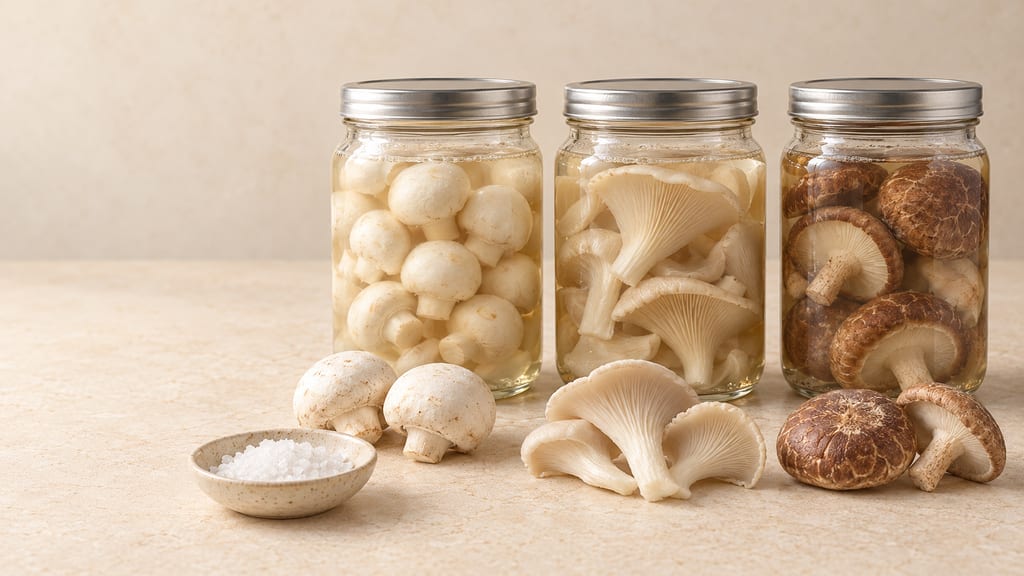
Button mushrooms are also sold dried and commercially canned. Drying concentrates flavour and requires rehydration before some uses; canned mushrooms are already heat-treated and have a softer texture. Fresh, dried and canned forms are not automatically interchangeable in a recipe. The source catalogue records use in sauces and commercial preservation, while its FAO source context reflects broad commercial importance rather than one regional preparation tradition.
A trained sensory panel comparing raw and roasted white, crimini and portobello mushrooms found overlapping mushroom, earthy, hay, soybean, potato and woody notes in the raw samples. Crimini and portobello had stronger mushroom, earthy, dark-meat, woody and cabbage flavour ratings, as well as higher umami and bitterness, than white mushrooms in the tested samples. Roasting shifted all three toward dark-meat, roasted and fried aromas and flavours while hay, woody and earthy notes declined. These are measured differences among the samples in that study, not a guarantee that every cultivar or harvest will taste alike.
Sources for this section
A named substrate in a controlled ferment
Agaricus bisporus is a food ingredient, not a starter culture. Fermentea's published preparation Lacto-Fermented Mushrooms names fresh white button mushrooms and specifies a controlled laboratory protocol using a defined Lactiplantibacillus plantarum culture, measured salt and sugar, temperature control and acidity monitoring. It is a specific documented use of this species. It does not establish that every mushroom can be fermented by the same method or that a household variation is safe.
The preparation's research conditions should be followed as written, including its cautions, rather than improvised from a general ingredient description. Mushroom tissue, salt uptake and acidification differ from cabbage and cucumber ferments. Do not infer a safe salt percentage, time, shelf life or room-temperature storage from the species name alone.
Sources for this section
Food-use records are not foraging instructions
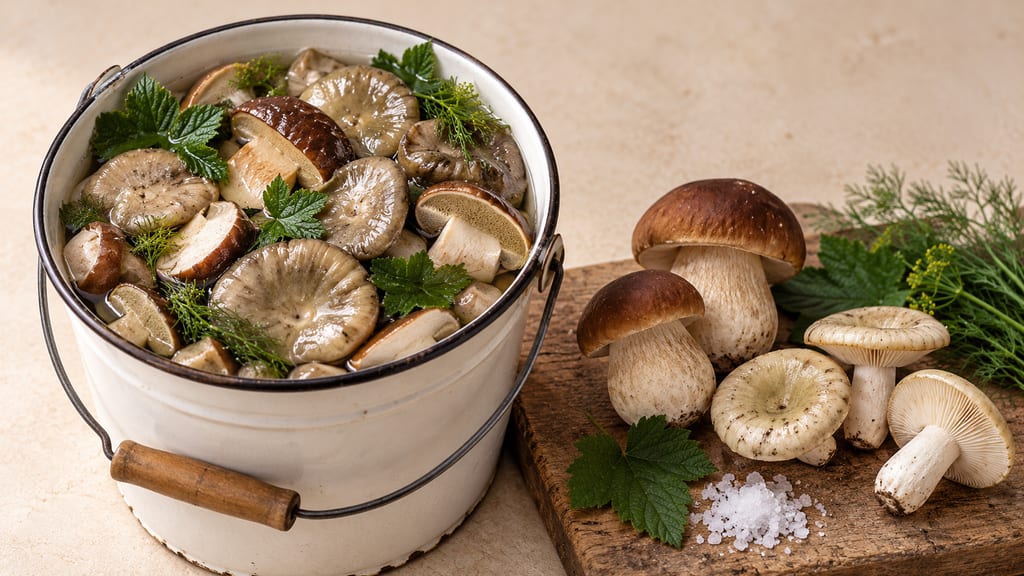
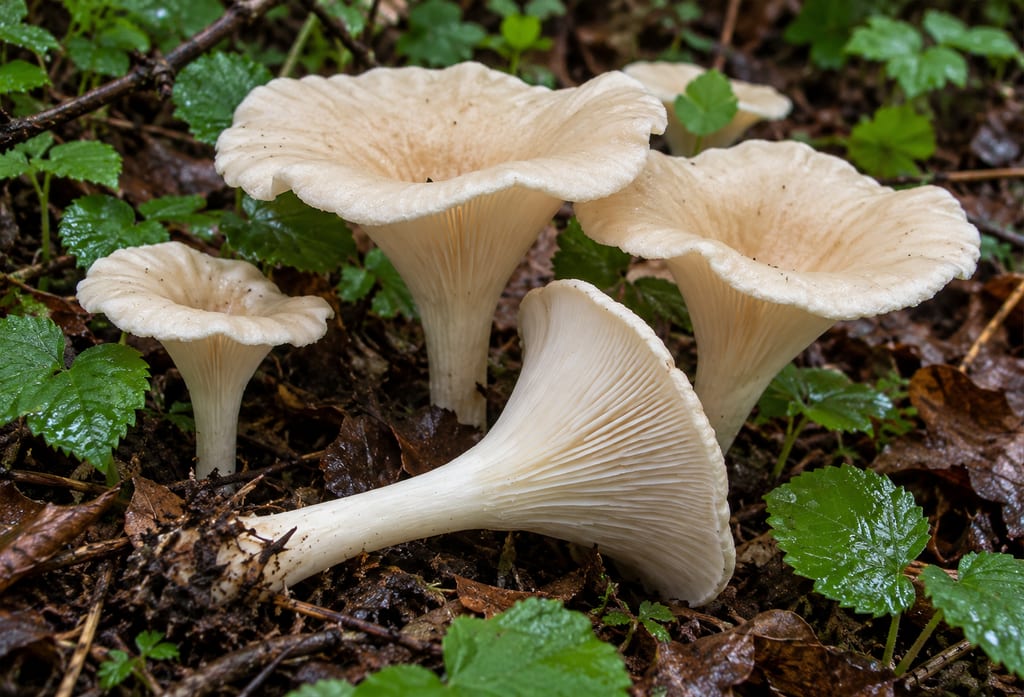
The word button refers to a familiar cultivated food, not a field identification rule. Wild Agaricus species can be difficult to distinguish and some lookalikes are harmful. Never eat a wild mushroom because it resembles a shop-bought button. Use an expert identification service and follow local guidance. Cooking, drying, pickling or fermenting cannot establish the identity of an unknown wild mushroom or guarantee that it is safe.
Sources for this section
Places
France
Historical attestation · Country evidenceThis is evidence about cultivation associated with Paris, not the wild origin of A. bisporus; the older account uses the name A. campestris.
United Kingdom
Historical attestation · Country evidenceHistorical cultivation around London; no more precise locality is assigned.
United States
Manufacture · Country evidenceUSDA reports commercial Agaricus production; this row records cultivation, not the species' complete range.
India
Manufacture · Country evidenceNational Horticulture Board describes production in named states and seasonal and controlled-house systems.
China
Manufacture · Country evidenceStudy distinguishes cultivated germplasm from wild collection strains; this country-level row reflects reported cultivation material, not crop-origin claims.
Pays de la Loire
Manufacture · Region evidenceA current production association, not an origin claim.
Centre-Val de Loire
Manufacture · Region evidenceA current production association, not an origin claim.