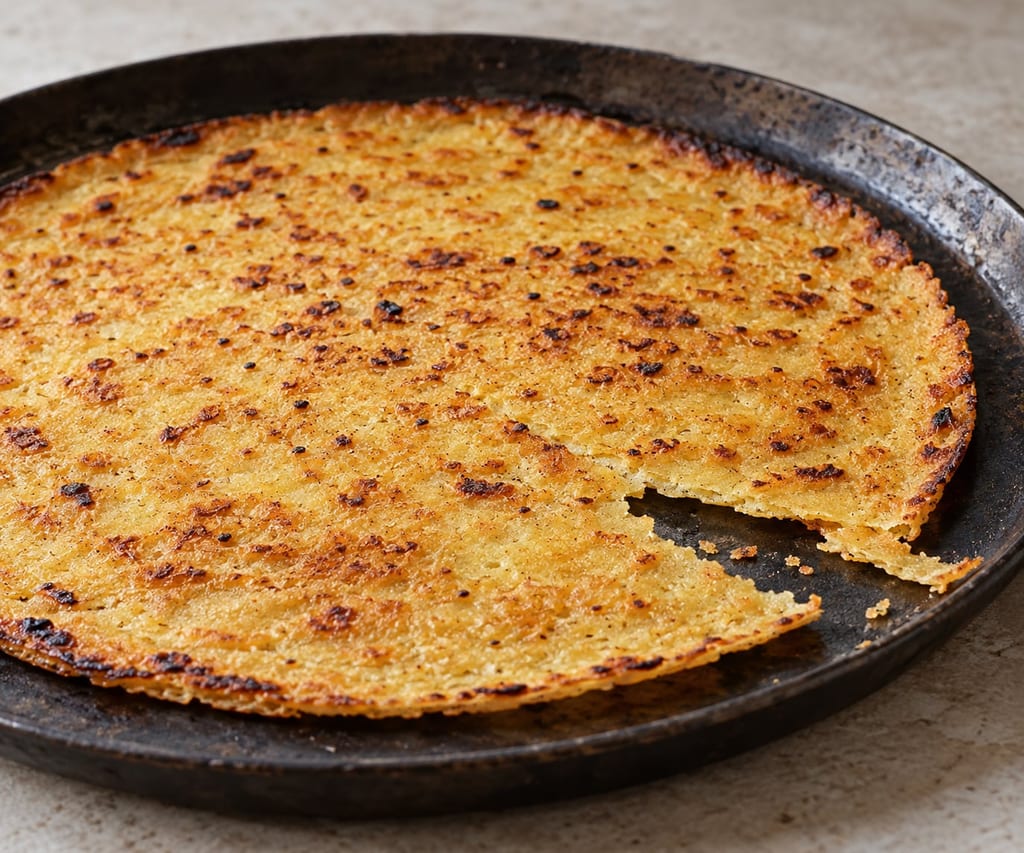
Socca niçoise
A Nice socca batter of chickpea flour, water, olive oil and salt, spread thin on a 50-centimetre copper plate and baked very hot. This formula is distinct from the Genoese farinata page.
 FermenteaWhere food goes to change
Substrates
Chickpea flour is milled Cicer arietinum, used as besan in many Indian dishes and as the base of breads such as socca and farinata.
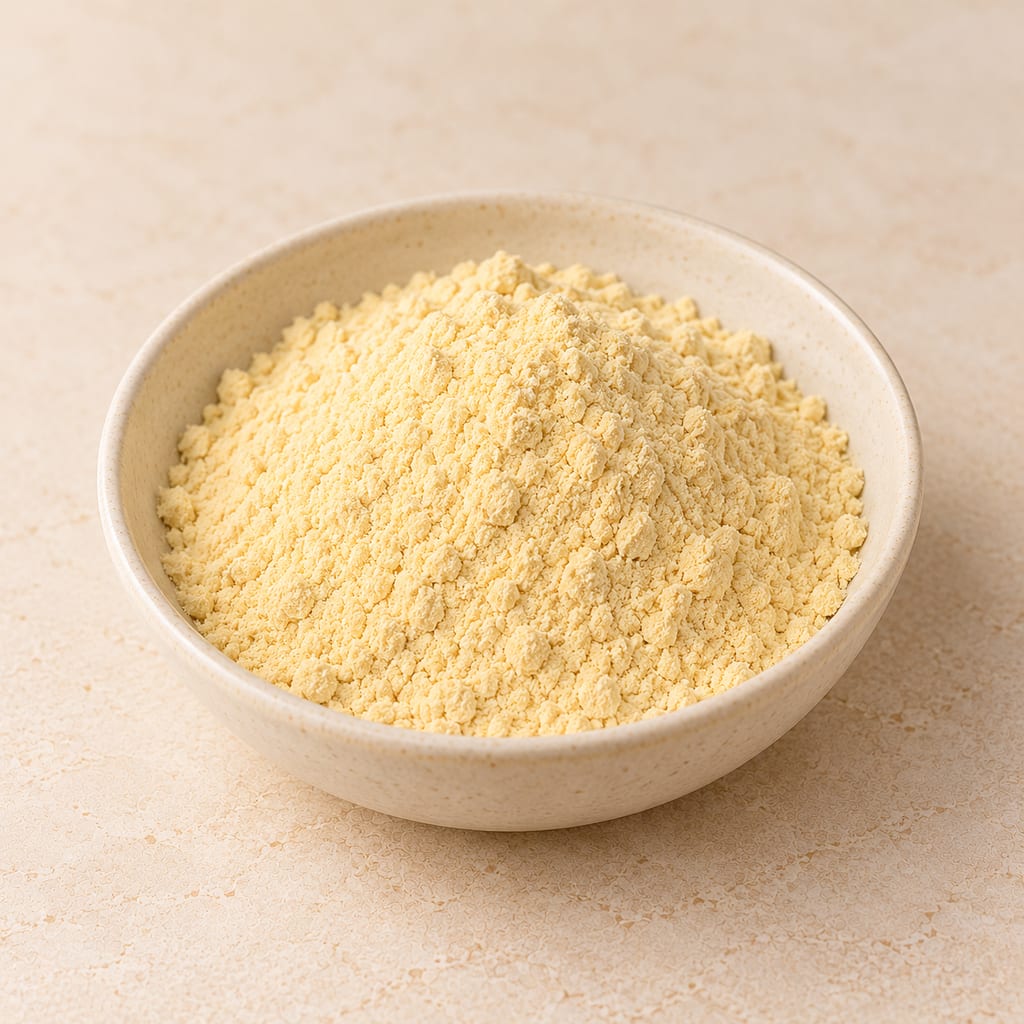
Chickpea flour is made by milling chickpea seeds (Cicer arietinum). In India, FSSAI guidance defines besan as flour of Bengal gram and notes its use in culinary dishes. The Grains & Legumes Nutrition Council describes desi chickpeas as a traditional source of besan; these seeds are often sold split or dehulled. The sources do not establish one universal grind or seed form for every product sold as chickpea flour.
Names overlap across markets. Besan and gram flour often refer to chickpea flour, while some labels use chickpea flour or garbanzo bean flour. Read the package's ingredient statement when a particular seed form, roast or allergen distinction matters; the name alone does not establish the miller's process.
The flour is a milled, dry ingredient; the chickpea page covers the intact seed and its crop history. Milling changes how it is used: flour disperses in water to make batters and can be mixed into dough. It does not make the finished food a fermented preparation.
A besan-based dish can include other ingredients. The cited missi-roti home recipe mixes besan with wheat flour, so that recipe is not wheat-free. Chickpea flour on its own contains no wheat, but products and recipes may be blended or cross-contacted; use the label and recipe rather than assuming the dish's contents from its name.
Nice socca and Genoese farinata both use chickpea flour in thin batters that are rested and baked. Each tourist-office page gives its own method; those formulae should stay separate rather than being combined into a universal ratio. The Grains & Legumes Nutrition Council also names Indian bhajji and pakoras among besan uses. Canada's Grain Commission says chickpeas can be milled to flour for roti or chapatti, without assigning that use to one region.
At home, follow the exact recipe for its flour amount, liquid and cooking method. A batter for socca or farinata is not interchangeable with a dough for missi roti. The sources here do not establish a single home-milling method, preferred mesh, or a universal flour-to-water ratio.
Besan has documented use in India, while local sources document chickpea-flour preparations in Nice and Genoa. These are associations for particular uses, not proof that the flour or every chickpea bread began in those places.
The sources reviewed here do not date the first production of chickpea flour as a distinct ingredient. An ancient history for the chickpea plant cannot by itself date flour-making, so the flour's period is recorded as unknown.
FSSAI guidance discusses adulteration risks affecting pulses and besan. That is a reason to buy from a traceable source and read the label; it is not evidence that a particular packet is adulterated. Home appearance or a simple household test cannot establish purity or safety.
A review reports chickpea allergy, including severe reactions, and possible cross-reactivity among legumes. Related-pulse sensitization does not mean that every person will react to every legume. People managing diagnosed food allergy should follow clinician advice and product labeling.
FDA flour guidance is general rather than chickpea-specific, but warns that raw flour and batter should not be tasted and that cooking matters. Treat chickpea flour as an uncooked ingredient until its recipe's cooking step is complete. The sources reviewed here do not provide a chickpea-flour storage duration or a validated process limit; follow the product label and recipe.
chickpea
FSSAI describes besan as Bengal-gram flour used in Indian dishes; this does not identify a narrower region.
The tourist-office recipe documents chickpea flour in socca; it does not establish an origin date.
The local source documents chickpea flour in farinata; its historical origin story is not primary proof.
A Nice socca batter of chickpea flour, water, olive oil and salt, spread thin on a 50-centimetre copper plate and baked very hot. This formula is distinct from the Genoese farinata page.
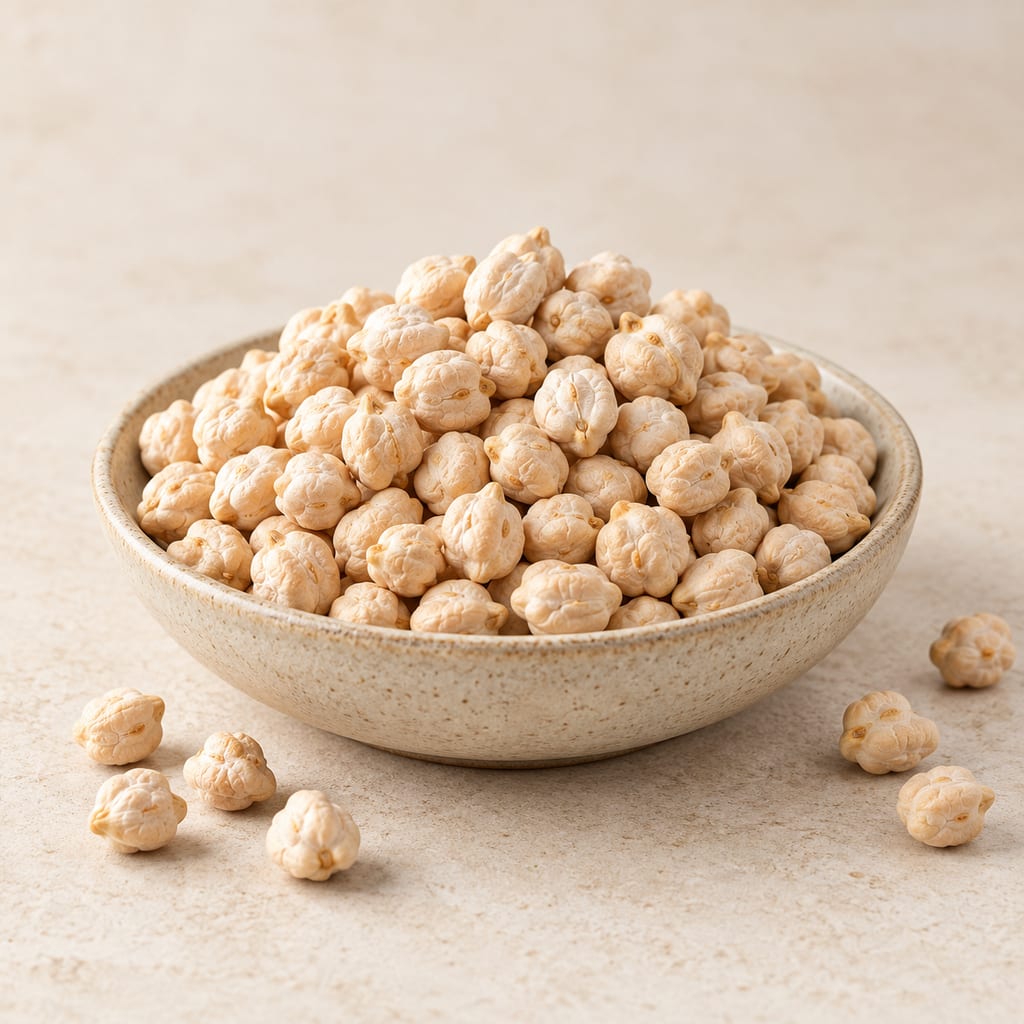
Chickpeas (Cicer arietinum) are dry pulses eaten whole or milled into flour, which gives socca, farinata and other breads a dense, nutty batter or dough.
No community contributions have been published for this entry yet.
Sign in to contribute. Published comments and photos are free to read.
Food Safety and Standards Authority of IndiaIdentity · Forms · Safety · Geography
Guidance Note on Pulses and BesanFSSAI guidance identifies besan as flour of Bengal gram (chickpea) and notes its use in Indian dishes.
The guidance describes quality and adulteration concerns for pulses and besan; it discusses standards for pulses and besan.
Cited in: Flour from chickpeas; Geography and history; Buying, storage and safety
Grains & Legumes Nutrition CouncilForms · Uses · Geography
ChickpeasDesi chickpeas are commonly split or dehulled; the source says they are traditionally ground into flour (besan).
It names bhajji, pakoras, socca and farinata as uses and distinguishes the customary uses of desi and kabuli chickpeas.
Cited in: Flour from chickpeas; Flatbreads and home uses; Geography and history
Canadian Grain Commission, Government of CanadaUses · Forms
Canadian chick peasThe Commission says chickpeas may be milled into flour for roti or chapatti and also lists other food uses.
Cited in: Flatbreads and home uses
Nice Côte d'Azur Tourist OfficeTraditional preparation · Home method
La soccaNice socca uses chickpea flour in a thin batter with water, olive oil and salt; the local method rests and bakes it on a large copper plate at high heat.
Cited in: Flatbreads and home uses; Geography and history
VisitGenoa, Comune di GenovaTraditional preparation · Home method
Farinata di ceciGenoese farinata is described as a thin baked chickpea-flour preparation; source-specific formula details differ from the Nice socca recipe.
Cited in: Flatbreads and home uses; Geography and history
Dassana's Veg RecipesHome method · Uses
Missi Roti RecipeThe home recipe mixes besan with wheat flour; it is not wheat-free and is a modern recipe, not historical proof.
Cited in: Different from the whole seed; Flatbreads and home uses
Nutrients, via PubMed CentralSafety
Legume Allergens Pea, Chickpea, Lentil, Lupine and BeyondReview reports IgE-mediated chickpea allergy, sometimes severe, and possible cross-reactivity among legumes.
Cited in: Buying, storage and safety
U.S. Food and Drug AdministrationSafety
Handling Flour Safely: What You Need to KnowFDA's general flour guidance warns that raw flour may carry pathogens, advises against tasting raw flour or batter, and emphasizes cooking foods made with flour. It does not specifically evaluate chickpea flour.
Cited in: Buying, storage and safety