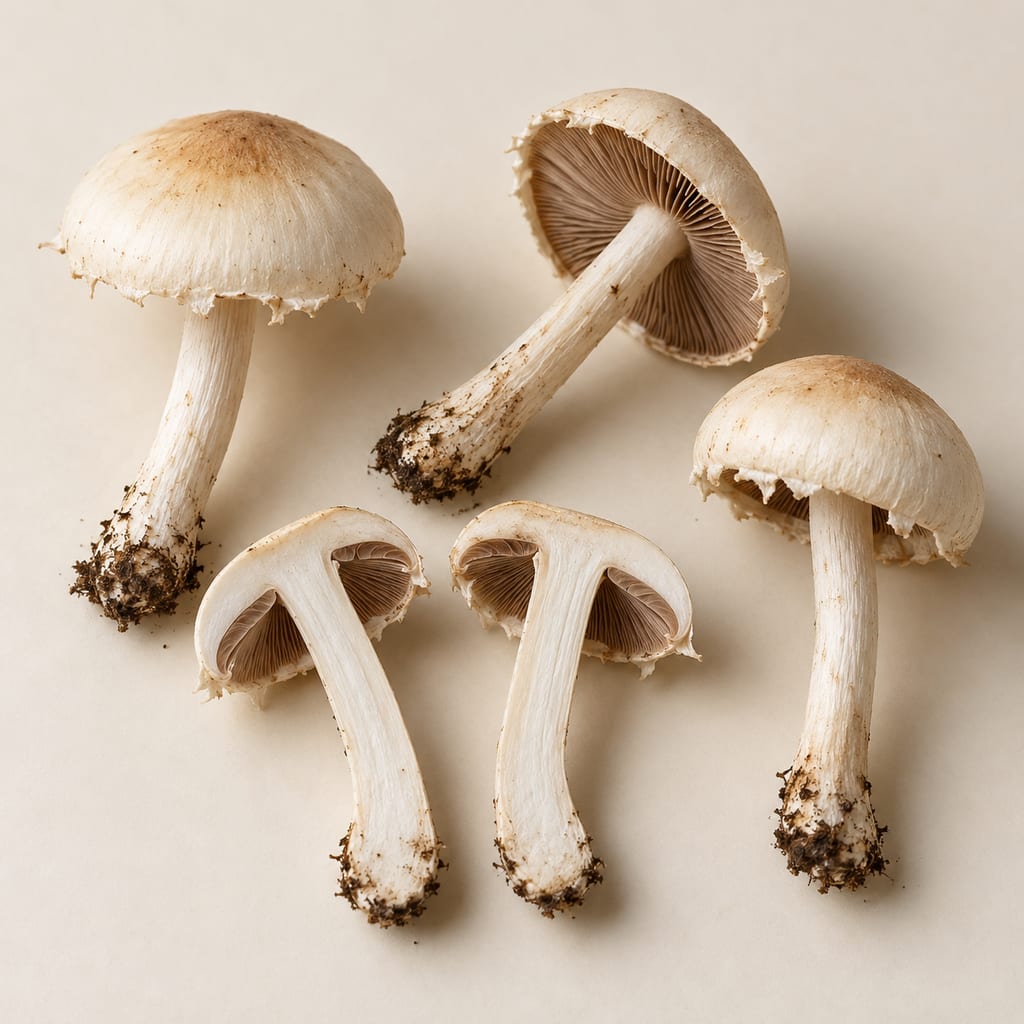
Agrocybe dura
A grassland agaric listed as edible in historical and scientific catalogues for Hong Kong and China. Taxonomic concepts and practical food value vary; the listings do not establish safe identification or culinary practice.
 FermenteaWhere food goes to change
Mushrooms
A pale funnel mushroom listed as edible in one Chinese scientific catalogue, but with unsettled taxonomy, uncertain Brazilian records and dangerous lookalikes. The evidence does not support a foraging or preparation recommendation.
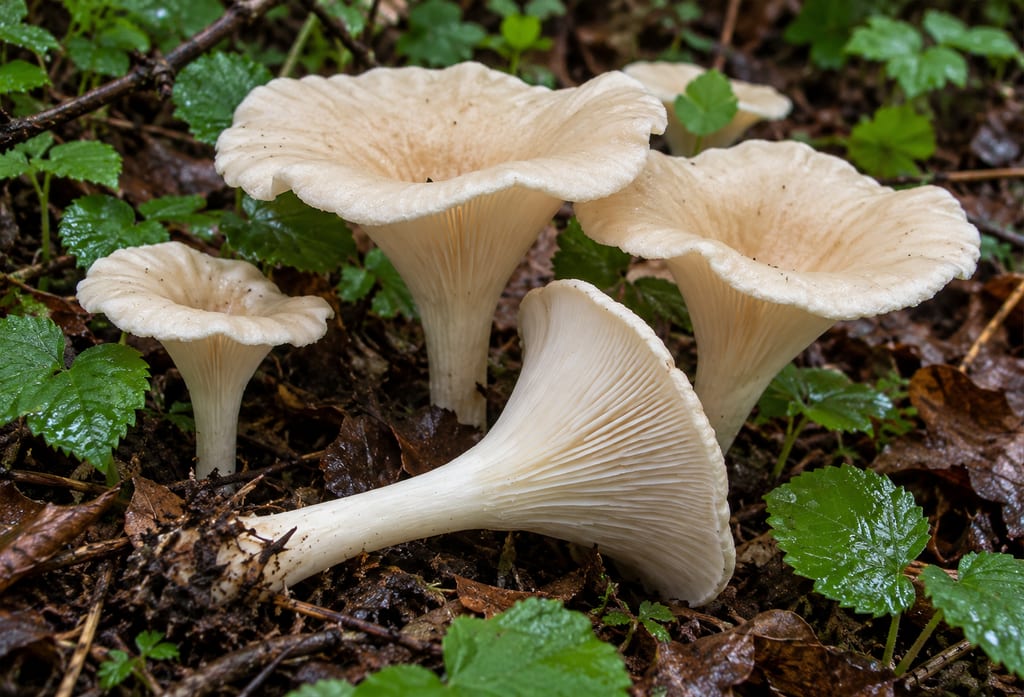
Clitocybe catinus is the checklist name used here, but it is not the only name under which the mushroom appears. The Natural History Museum accepts Infundibulicybe catinus, while Species Fungorum's record points the combination back to Clitocybe catinus. The nomenclatural history includes Agaricus catinus and the later Infundibulicybe combination; older literature also contains names such as Omphalia catina and Clitocybe infundibuliformis var. catinus. These names are useful for searching, not proof that every old record represents the same biological species.
Identification limits go beyond a disagreement over genus. A 2022 Italian checklist notes that pale specimens historically called C. catinus have been treated by some authors as pale forms of Infundibulicybe gibba. A photographed cap or a checklist name cannot settle that boundary. The supplied global index lists the name from a Chinese edible-fungi catalogue and a Brazilian audit, but explicitly says it has not been independently assessed.
European descriptions characterize the mushroom as a pale cream to nearly white funnel or bowl, with crowded whitish gills running down the stem and a slender pale stem. Published accounts differ on cap surface, size and habitat, and similar pale funnels occur in the same broad settings. These are features used in published descriptions, not a diagnostic key for a specimen. The sources reviewed do not provide a single modern, voucher-backed description that reconciles the competing concepts.
The local descriptions range from mountain conifer woodland and occasional grassy or sandy ground in Slovenia, to mixed woods, parks and hedges in a German guide, and mixed broad-leaved trees on calcareous ground in a French regional record. An older British and Irish summary describes saprobic growth on dead conifer litter. That spread may reflect ecological flexibility, broad historical identifications, or both; no single tree or substrate is established here as diagnostic.
The dated European records and regional guides place fruiting mainly from summer into autumn: the Slovenian society gives June to October, a Polish atlas September to November, and labelled photographs are dated in August, September and October. These are local reports and observations, not a range-wide calendar. The Chinese edible catalogue supplies no season, and the Brazilian occurrence itself is doubtful.
China's 2026 scientific catalogue lists Clitocybe catinus (亚白杯伞) as edible. This supports a country-scoped catalogue classification. The entry does not establish how frequently people gather it, a community's traditional preparation, a recipe, a medicinal use, or a safe serving method. It gives no species-specific handling or storage advice.
European culinary judgements are not consistent: a Slovenian society calls it edible and mentions drying; a Polish atlas calls it conditionally edible; a French mycological association marks edibility unknown; and a German page discourages eating because dangerous pale funnels can be confused with it. These reports document the sources' classifications, not a shared culinary practice or a reliable identification safeguard. No species-specific fermentation method or validated preservation schedule was found. Drying is mentioned by one guide, but without a safe process or a way to resolve mistaken identity.
The supplied index cross-references a 2024 Brazilian audit and flags source-occurrence confidence as variable. That audit separates a source's edibility classification, occurrence evidence and evidence of consumption; a checklist inclusion should not be recast as proof that people eat a mushroom locally. A 2025 Brazilian Tricholomataceae review is more specific: for historical Rio Grande do Sul citations under C. catinus, it reports that no authentic material was cited or located and calls the country's occurrence doubtful. It also notes an old Clitocybe tuba citation assigned to C. catinus without preserved material. Brazil therefore belongs in the research trail as uncertain, not as a confirmed growing or food-use location.
Some regional guides warn that dangerous pale funnel mushrooms can resemble this taxon, and the taxonomy itself remains unsettled. A country-level edible-list entry, website photograph, cap colour, smell or taste cannot identify a wild specimen or establish safety. This account records the disagreement in the sources; it is not advice to gather or eat wild mushrooms. Do not use fermentation or drying as a way to make an uncertain specimen safe.
Scientific edible-fungi catalogue entry only; it does not document actual gathering or consumption. No season is given.
Single Commons/Mushroom Observer photograph; uploader says identification recognized by sight. Occurrence record only, not use evidence.
Species-labeled photograph on a field page; identification and rights are not independently authenticated. Occurrence lead only.
Species-labeled photograph on a field page; occurrence lead only, not food-use evidence.
Historical checklist trail only. The supplied index warns source confidence varies; a 2025 Brazilian review reports no authentic material and calls occurrence doubtful. Not confirmed range or food use.
A grassland agaric listed as edible in historical and scientific catalogues for Hong Kong and China. Taxonomic concepts and practical food value vary; the listings do not establish safe identification or culinary practice.

Akahatsu, Lactarius akahatsu, is a wild milkcap of East Asian pine and mixed forests that is sold in Yunnan markets, with its edibility and identity still needing species-level review.
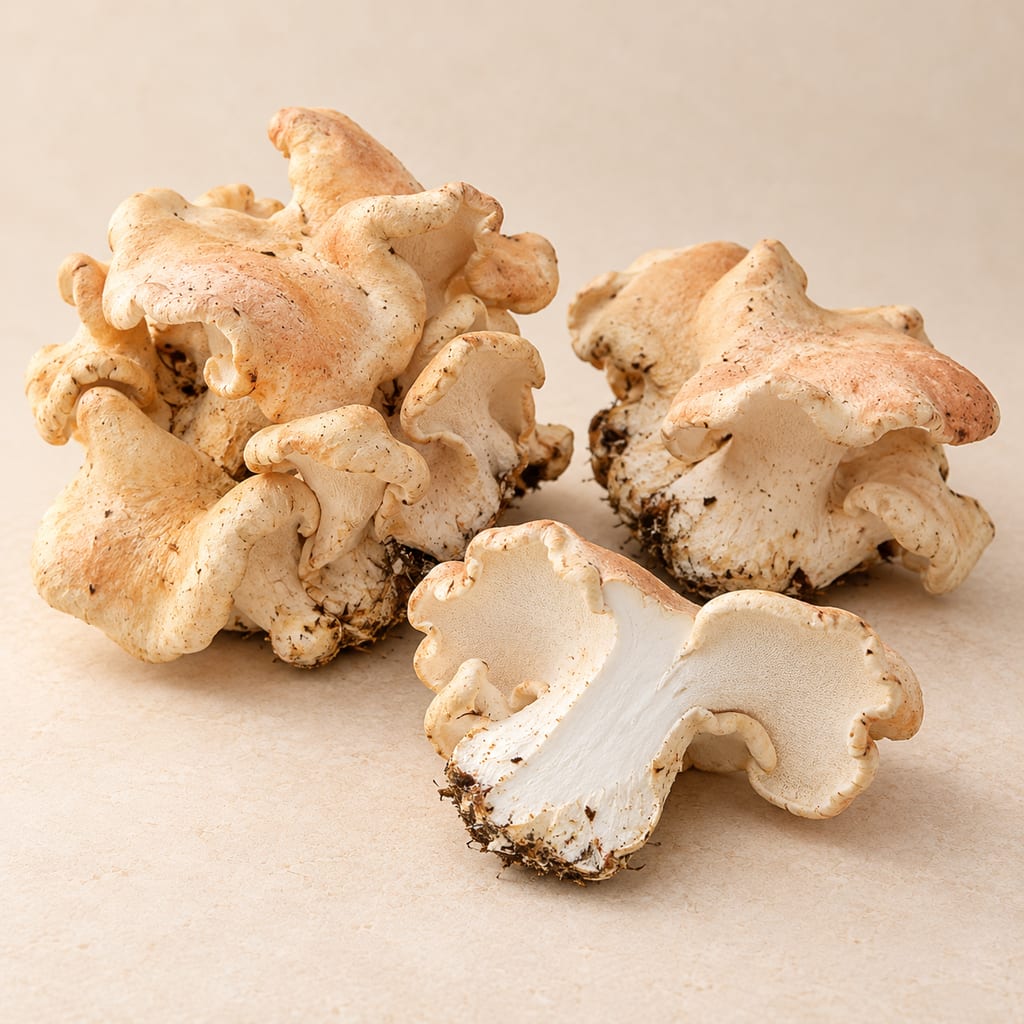
Albatrellus confluens is a ground-growing polypore with fused buff-orange caps. Sources document Chinese market use and regional edibility, but others reject it as too bitter; taxonomy also varies between Albatrellus and Albatrellopsis.
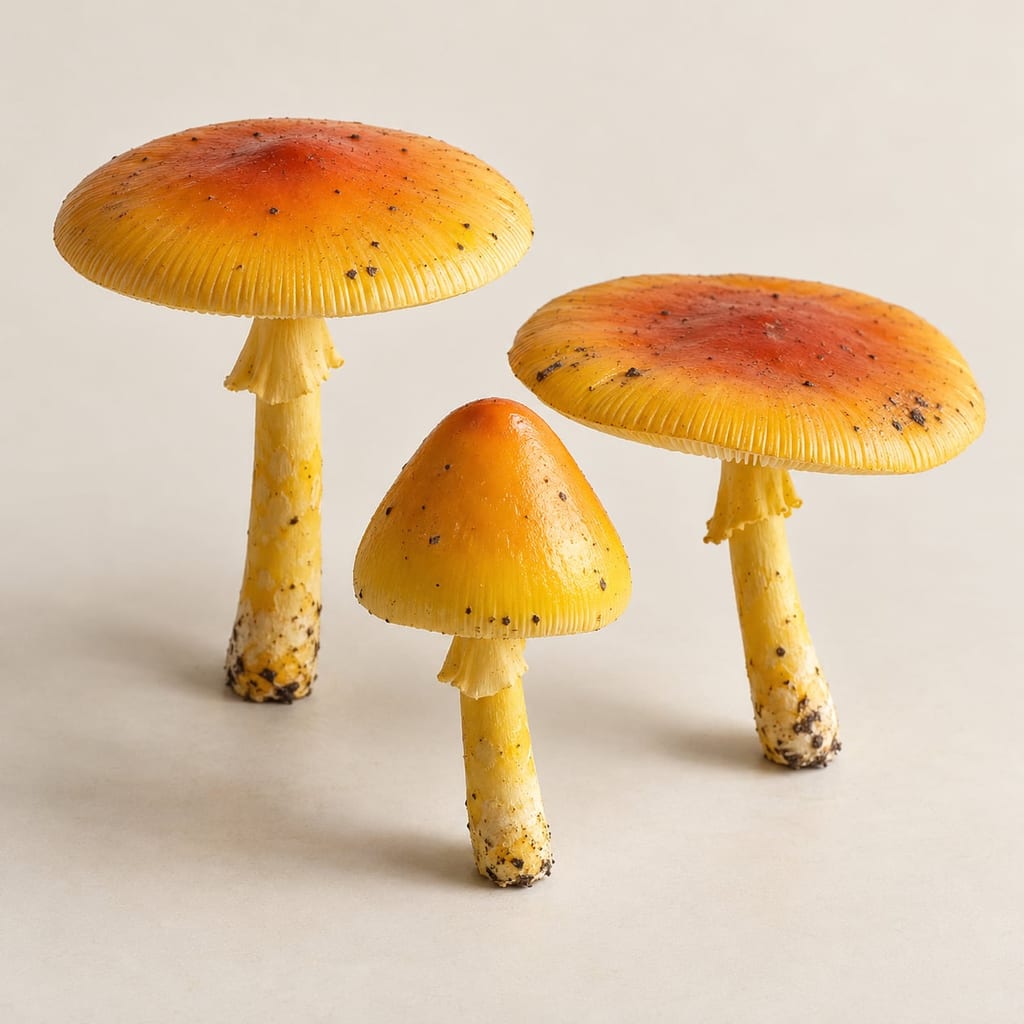
A wild Amanita recorded from China in a 2026 checklist of edible and medicinal fungi. The genus holds deadly species, so this page gives no identification or edibility verdict.
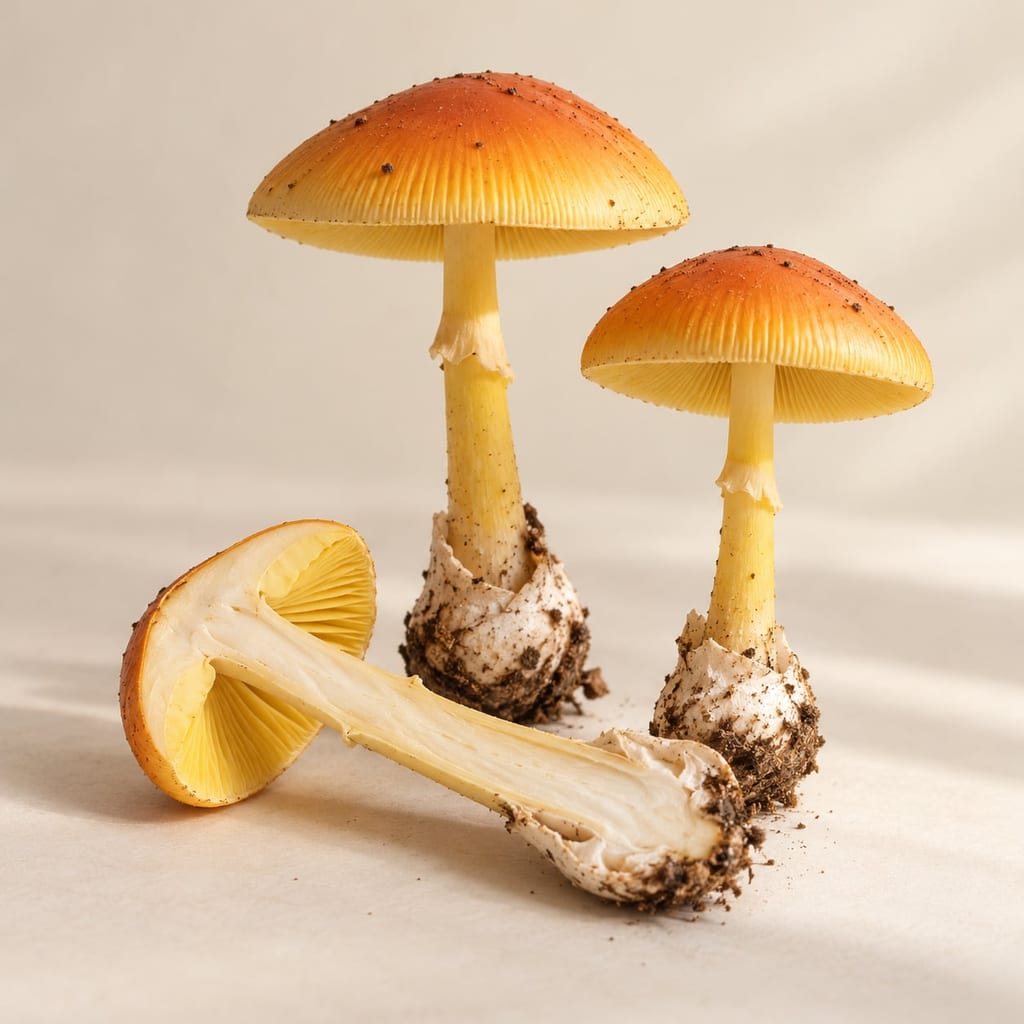
A wild Amanita of China, first reported there and listed as edible in a Yunnan ethnomycology study. The genus contains deadly species, so this page does not support identifying or eating it.
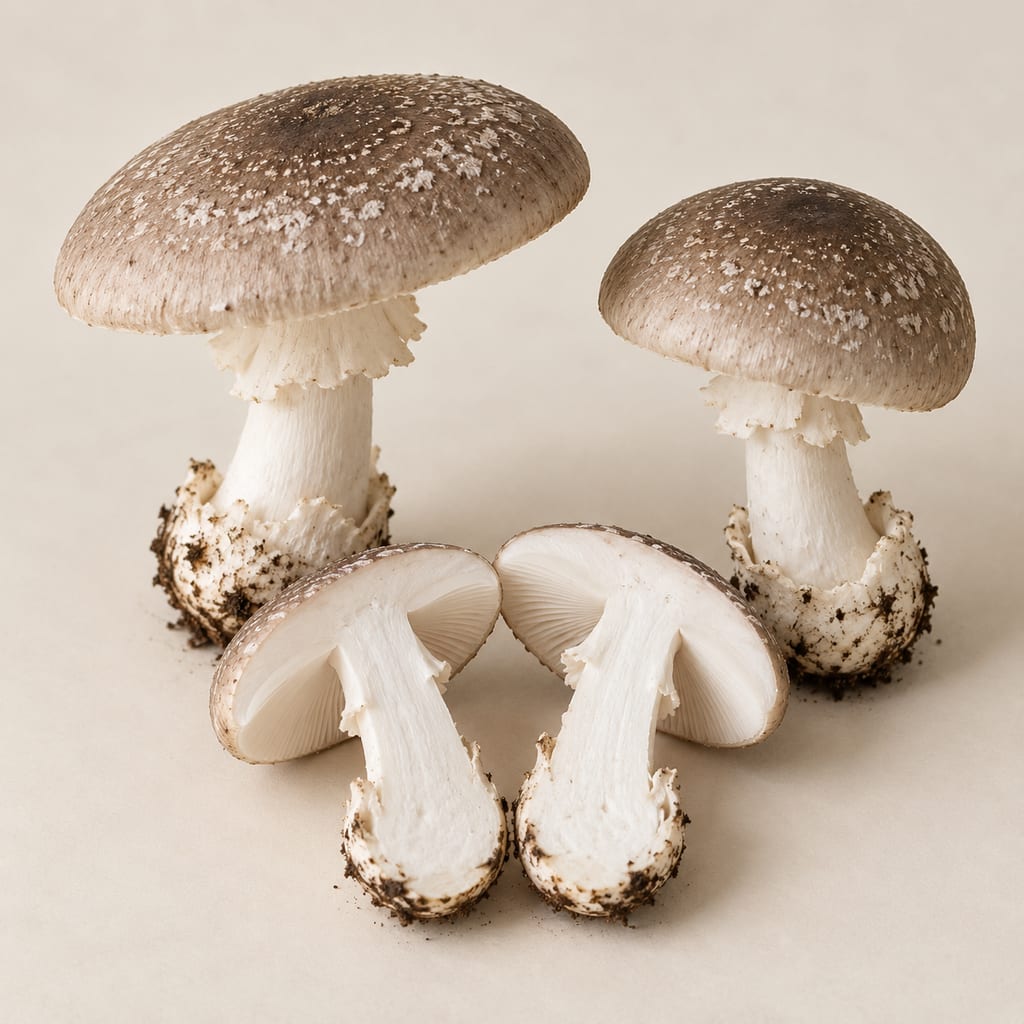
Amanita yuaniana is a Chinese Amanita that a 2023 Yanshan survey and a Yunnan ethnomycology survey list among edible species. No source tests it for safety, and the genus holds the most lethal mushrooms.
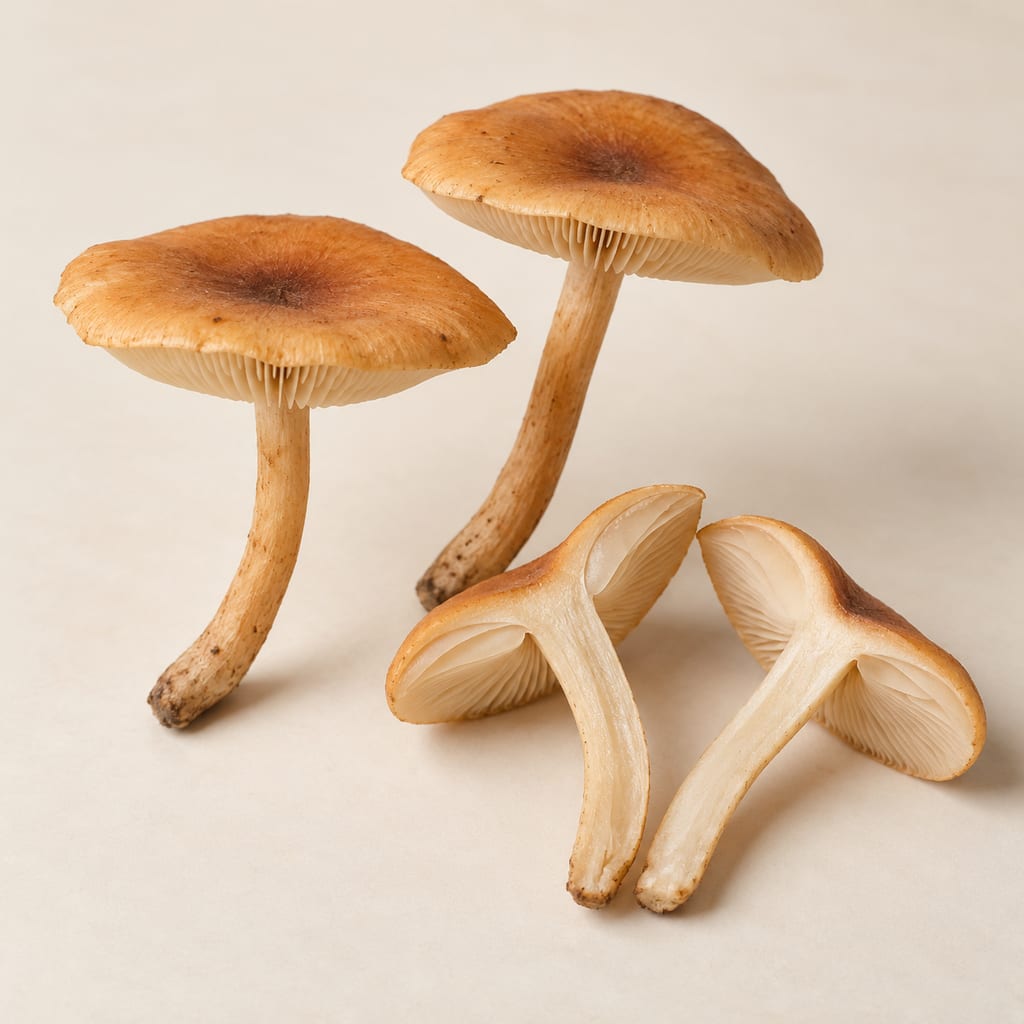
A wood-associated Armillaria recorded in Yunnan and Sichuan, China, and listed as edible in a 2026 Chinese catalogue.
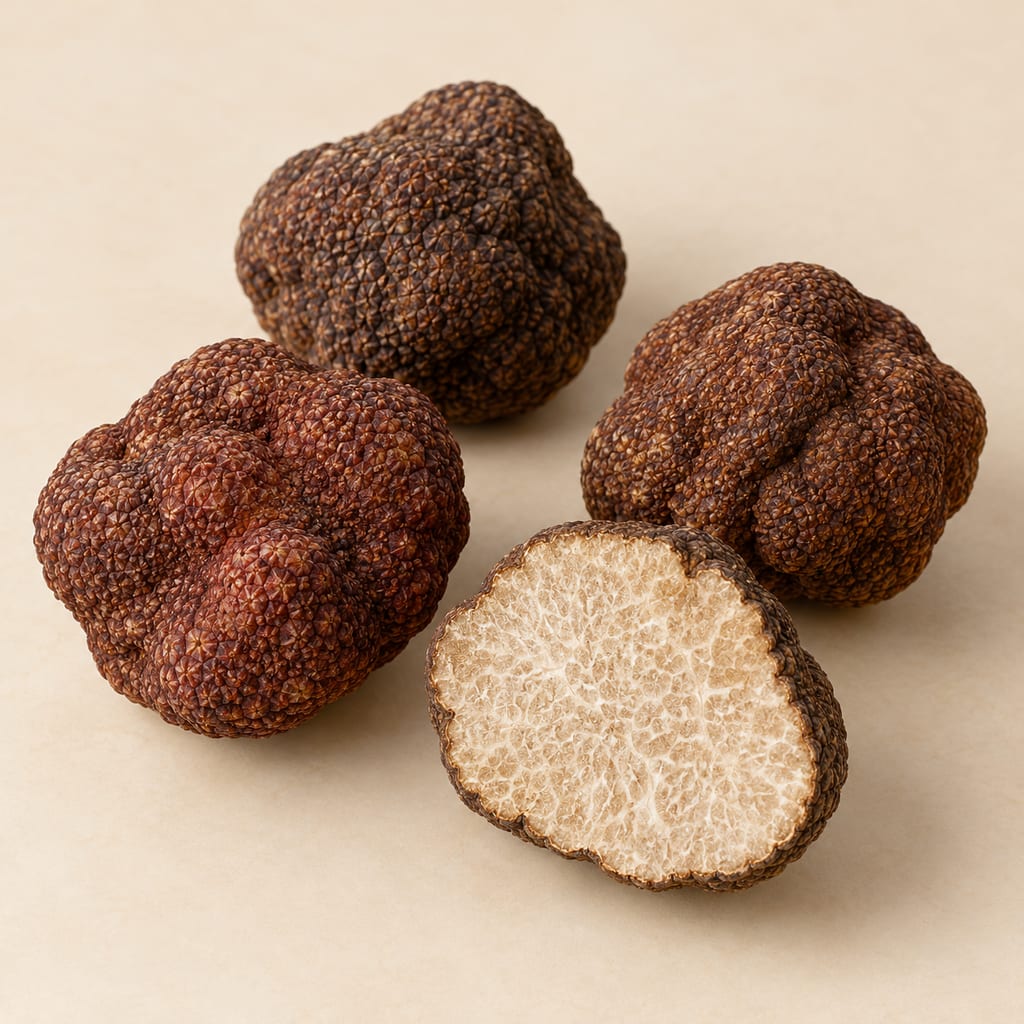
Tuber pseudohimalayense is a wild black truffle from Yunnan, China, listed as edible in a Chinese species catalogue. No independent assessment of its culinary use or safety is available.
No community contributions have been published for this entry yet.
Sign in to contribute. Published comments and photos are free to read.
MycosystemaIdentity · Use
Species cataloging of edible and medicinal fungi in ChinaEntry 264 lists 亚白杯伞 / Clitocybe catinus as edible in a scientific China catalogue; it gives no recipe or season.
Cited in: What the edible listings establish
Royal Botanic Gardens, KewNomenclature
Species Fungorum name record 487943Records the nomenclatural relation for Infundibulicybe catinus and the name Clitocybe catinus.
Cited in: A name with competing taxonomic treatments
Natural History Museum, LondonNomenclature · Identity
Infundibulicybe catinus species dictionary entryAccepts Infundibulicybe catinus and lists Clitocybe catinus among synonyms.
Cited in: A name with competing taxonomic treatments
Annales Botanici FenniciNomenclature
New combinations in InfundibulicybePublishes the combination Infundibulicybe catinus.
Cited in: A name with competing taxonomic treatments
MycotaxonIdentity · Geography
Basidiomycetes of Grosseto Province (Italy)Authors note that some historical pale Clitocybe catinus material may be treated as a pale form of Infundibulicybe gibba.
Cited in: A name with competing taxonomic treatments
IMA FungusUse · Geography
Over 400 food resources from Brazil: evidence-based records of wild edible mushroomsBrazil audit distinguishes edibility classifications, occurrence records and evidence of consumption; the supplied index flags variable occurrence confidence for this name.
Cited in: Brazil remains an unresolved historical report
Self-published monographIdentity · Geography
Cogumelos no Brasil: Tricholomataceae lato sensu, Parte 1Volume III, pages 60–61 discuss historical Clitocybe catinus records in Rio Grande do Sul, report no located authentic material and call occurrence doubtful.
Cited in: Brazil remains an unresolved historical report
Gobarsko društvo LisičkaIdentity · Ecology · Season · Use · Safety
Clitocybe catinusDescribes pale funnel form, some habitats, June–October season, calls it edible and notes drying, but warns about dangerous pale lookalikes.
Cited in: A pale funnel form, not a field identification; Habitat and season vary across European accounts; What the edible listings establish; Food safety and identification boundary
123pilzeIdentity · Ecology · Season · Safety
Schüsselförmiger TrichterlingReports summer–autumn in woodland, parks and hedges; its page discourages food use because of dangerous lookalikes.
Cited in: A pale funnel form, not a field identification; Habitat and season vary across European accounts; What the edible listings establish; Food safety and identification boundary
GrzybariumSeason · Use · Safety
Lejkówka miseczkowataGives a conditional edible classification, a September–November season and a poisonous-lookalike warning.
Cited in: Habitat and season vary across European accounts; What the edible listings establish; Food safety and identification boundary
Association Mycologique de Fontainebleau et environsIdentity · Geography · Ecology · Safety
Infundibulicybe catinusRecords the taxon in France under Infundibulicybe and marks edibility unknown; describes a mixed broadleaf/calcareous setting.
Cited in: A pale funnel form, not a field identification; Habitat and season vary across European accounts; What the edible listings establish
PharmanaturGeography · Season · Identity
Clitocybe catinusLabels two photographs as the species, one from Houtaud, France, 18 October 2020 and one from Timrå, Sweden, 11 September 2014; rights are unstated.
Cited in: Habitat and season vary across European accounts
Wikimedia Commons / Mushroom ObserverGeography · Identity · Image provenance
Infundibulicybe catinus 52206Mushroom Observer observation 52206, seen at Hörnefors, Västerbotten, Sweden, 1 August 2009; uploader reports identification recognized by sight. File is licensed CC BY-SA 3.0 on Wikimedia Commons.
British and Irish Fungi DatabaseEcology
Infundibulicybe catinusSummarizes an older source describing the species as saprobic on dead or rotting conifer litter.
Cited in: Habitat and season vary across European accounts