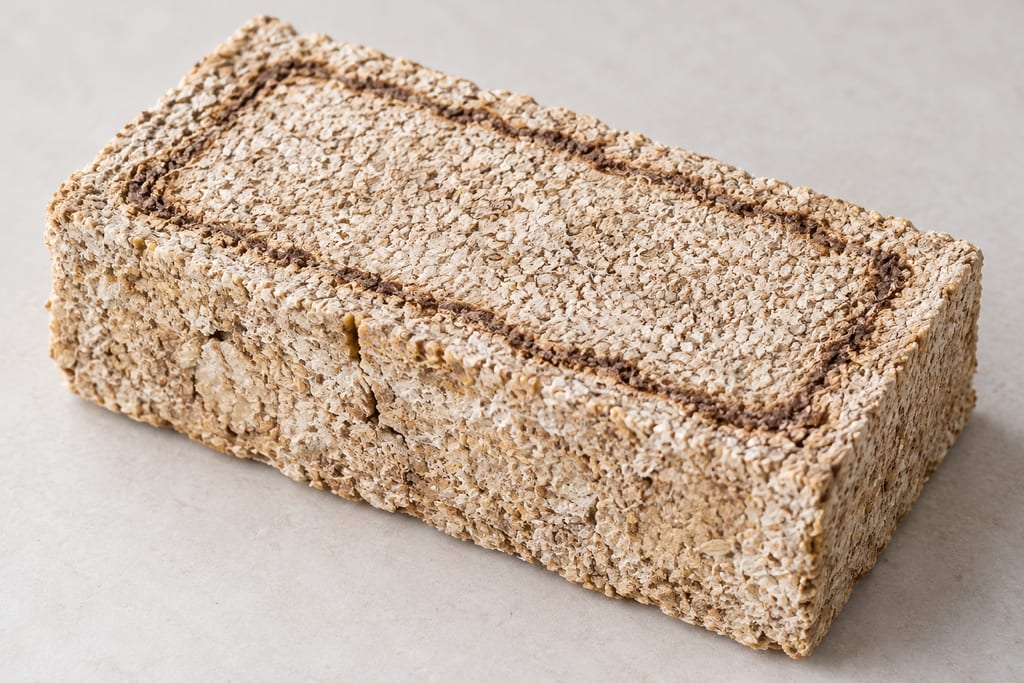
Medium-temperature daqu
A formed grain starter (daqu) for Chinese baijiu, classed as medium-temperature because its bricks reach a higher peak than low-temperature daqu; used mainly for strong-flavor baijiu.
 FermenteaWhere food goes to change
Mushrooms
A wood-associated Armillaria recorded in Yunnan and Sichuan, China, and listed as edible in a 2026 Chinese catalogue.
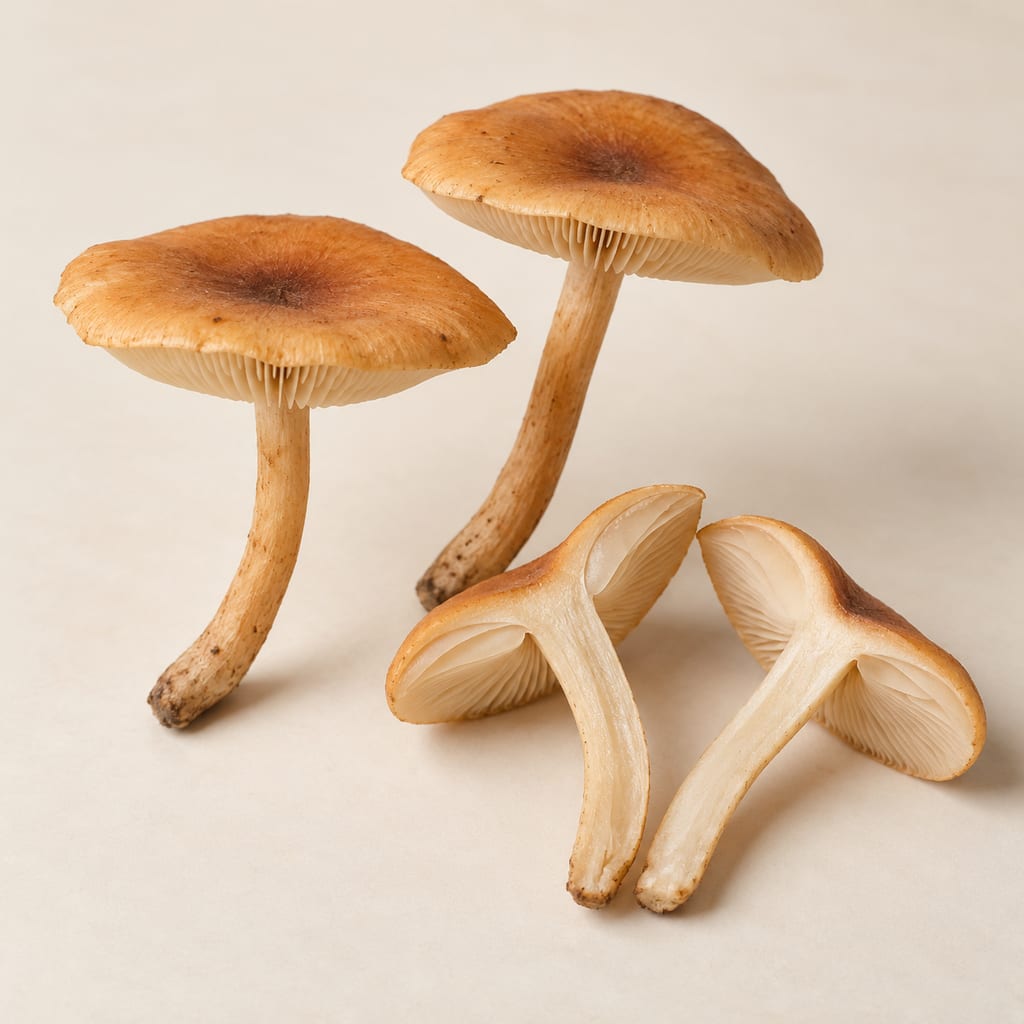
Armillaria bruneocystidia Han C. Wang, G.F. Qin, Jun Zhao & Y.C. Dai is treated as an accepted species by Species Fungorum (MycoBank MB 831857). The 2025 taxonomic study distinguishes it using morphology, mating tests and phylogenetic evidence. Its name refers to brown cystidia.
The same study notes that A. bruneocystidia can be confused with related Chinese Armillaria, including A. tibetica and A. mellea; distinctions rely on microscopy and broader taxonomic evidence. This is not a lay field-identification account.
The documented range in the taxonomic treatment is Sichuan and Yunnan, China. Listed material includes Emei Mountain in Sichuan and Yulong Snow Mountains/Naxi County and Tianshengqiao/Shangri-La in Yunnan. The collections were recorded on stumps, fallen trunks, dead standing trees, rotten wood and woody debris, consistent with wood-associated ecology.
The cited material includes June collections in Yunnan, a September collection at Tianshengqiao, and October collections in the Emei Mountains. The authors state that fruiting peaks in June. This is a regional pattern in the cited specimens, not a universal calendar.
The 2026 Chinese catalogue of edible and medicinal fungi lists A. bruneocystidia as edible. That is a scientific checklist classification; the sources reviewed do not document a named community, traditional preparation, commercial cultivation, or an actual recipe for this species.
No species-specific clinical or toxicological safety evaluation was located. Edibility in a checklist does not resolve individual identification, preparation, tolerance, or lookalike risks. Do not use this entry as foraging advice or as proof that a visually similar wild Armillaria is safe to eat.
Occurrence in taxonomic specimens only; no regional food-use claim.
Occurrence in taxonomic specimens only; no regional food-use claim.
A formed grain starter (daqu) for Chinese baijiu, classed as medium-temperature because its bricks reach a higher peak than low-temperature daqu; used mainly for strong-flavor baijiu.
Tuber huidongense is a subterranean truffle of pine forests in south-western China, known from Sichuan and Yunnan. A recent Chinese catalogue lists it as edible, but no culinary tradition for it has been documented.
No community contributions have been published for this entry yet.
Sign in to contribute. Published comments and photos are free to read.
Species FungorumTaxonomy
Species Fungorum search record for Armillaria bruneocystidiaAccepted name and authorship; name record identifies MycoBank registration.
MycologyTaxonomy · Geography · Habitat · Season · Images
Phylogeny and species diversity of Armillaria in China based on morphological, mating test, and GCPSR criteriaSpecies description and distinguishing evidence; Figure 7a photograph of QZ00123; distribution in Yunnan and Sichuan; specimen localities/substrates/dates; June fruiting peak.
MycosystemaUse
Species cataloging of edible and medicinal fungi in China2026 catalogue lists Armillaria bruneocystidia as edible; it is a national species checklist, not a species-specific food-use or safety study.