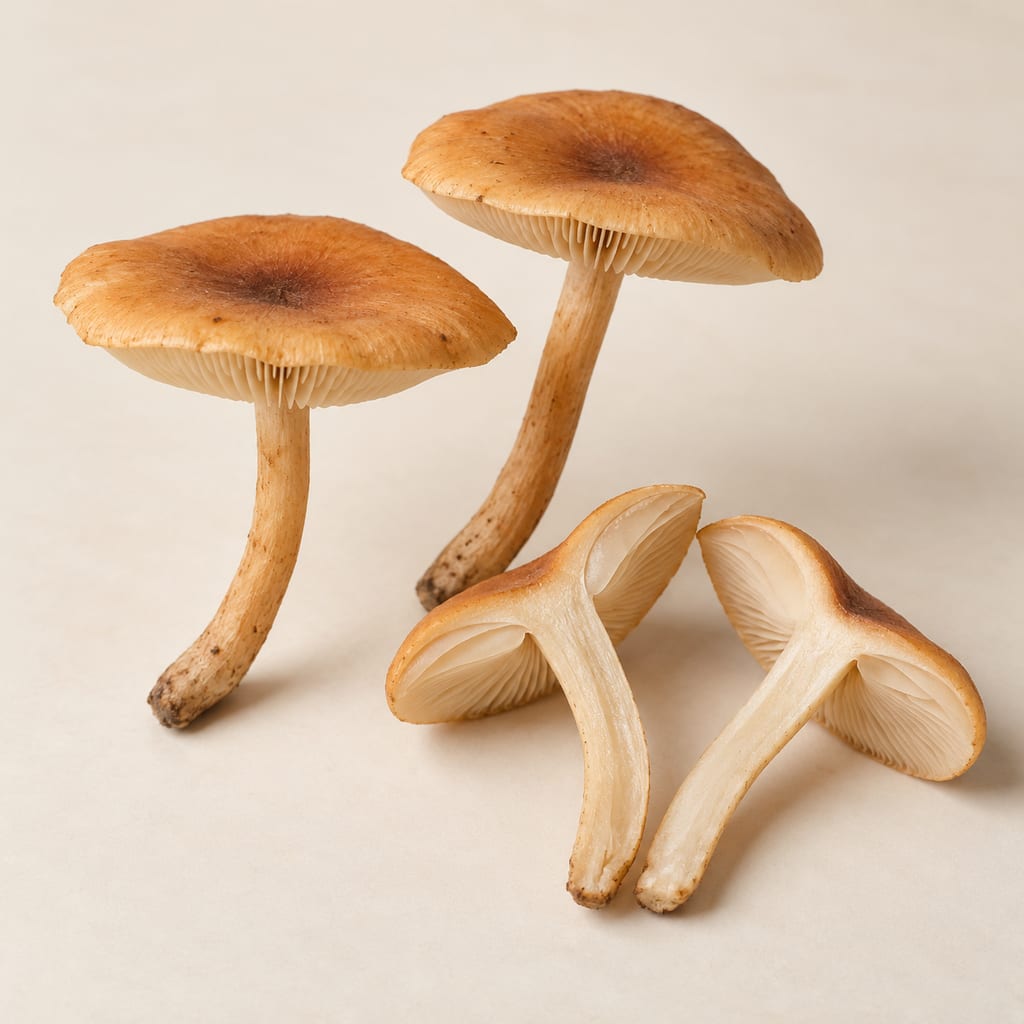
Armillaria bruneocystidia
A wood-associated Armillaria recorded in Yunnan and Sichuan, China, and listed as edible in a 2026 Chinese catalogue.
 FermenteaWhere food goes to change
Mushrooms
Tuber huidongense is a subterranean truffle of pine forests in south-western China, known from Sichuan and Yunnan. A recent Chinese catalogue lists it as edible, but no culinary tradition for it has been documented.
Tuber huidongense is a truffle, the fruiting body of an underground fungus that lives in association with the roots of trees. Like other truffles it forms a fruiting body beneath the soil and is found by people who dig or by animals that smell it out. Its fruit bodies are described as smooth and whitish to ochreous, which separates them in the field from the darker, warted truffles of European markets.
The name honours Huidong County in Sichuan, where the species was first collected. Two collections were made there in November 1989, under Pinus yunnanensis and Pinus armandii at about 2070 metres. Those collections became the basis of the description published in 2002 by Wang and He.
A 2009 re-description based on material from Yunnan and Sichuan treated Tuber furfuraceum as a synonym of T. huidongense. Molecular analysis places the species in the T. rufum clade of the genus, which is a different group from the Melanosporum clade that contains the Périgord and Italian truffles.
The catalogue gives the common name Chinese truffle. That name is shared with other Chinese truffles, so records should be kept under the scientific name.
The species is ectomycorrhizal, meaning it exchanges nutrients with tree roots. The catalogue describes it as a forest fungus, but the host association has not been confirmed in the sources reviewed here; the catalogue itself says the exact host needs verification.
Its range is given as Sichuan and Yunnan. Records from other regions would need their own evidence.
The 2026 Chinese catalogue lists the species as edible or edible-and-medicinal. That listing is the only food record found. It does not say which dishes use the truffle, how it is prepared, or whether local people gather it.
Nothing reviewed here establishes a culinary tradition, a preparation or a safety assessment for this species. The catalogue marks it as a checklist lead that needs direct food-use evidence. Until that evidence exists, the species should be read as a documented listing with unknown culinary use, and no preparation or identification advice should be drawn from the listing.
Open points: the host tree association, the local food names, the preparations and the basis of the catalogue edibility listing are all unknown from the sources reviewed. The truffle should not be confused with the European black truffles that share its common name.
The species was described from Huidong collections; this records the type area, not a documented food area.
Distribution as one source gives it. The catalogue lists the species as edible or edible-and-medicinal; it does not describe how it is eaten.
A wood-associated Armillaria recorded in Yunnan and Sichuan, China, and listed as edible in a 2026 Chinese catalogue.
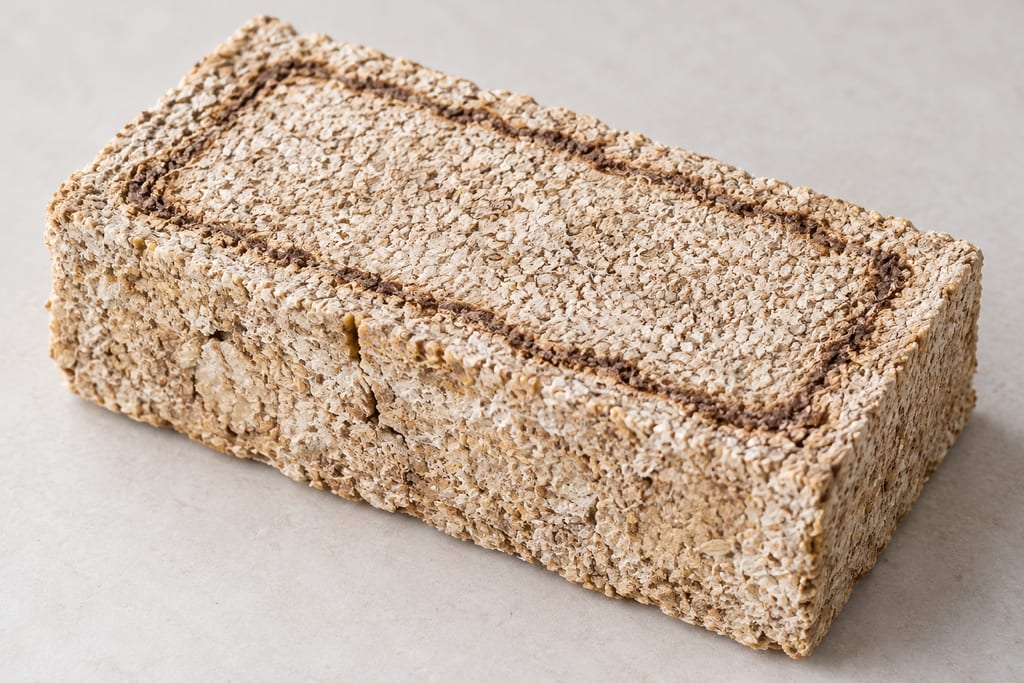
A formed grain starter (daqu) for Chinese baijiu, classed as medium-temperature because its bricks reach a higher peak than low-temperature daqu; used mainly for strong-flavor baijiu.
No community contributions have been published for this entry yet.
Sign in to contribute. Published comments and photos are free to read.
MycotaxonIdentity · Taxonomy
Notes on Tuber huidongense (Tuberaceae, Ascomycota), an endemic species from ChinaSpecies described by Wang and He in 2002; re-described in 2009 from Yunnan and Sichuan material; T. furfuraceum treated as a synonym; molecular placement in the T. rufum clade (from search summary, full text not read).
Cited in: What it is; Naming and relationships
CAST journalFood listing · Safety
Chinese species catalogue (supplied catalogue record)Listed as edible or edible-and-medicinal in the 2026 Chinese species catalogue; the listing is a research lead, not an independent safety assessment; direct food-use evidence is still needed.
Cited in: Ecology; Food use, and what is not yet known; Notes