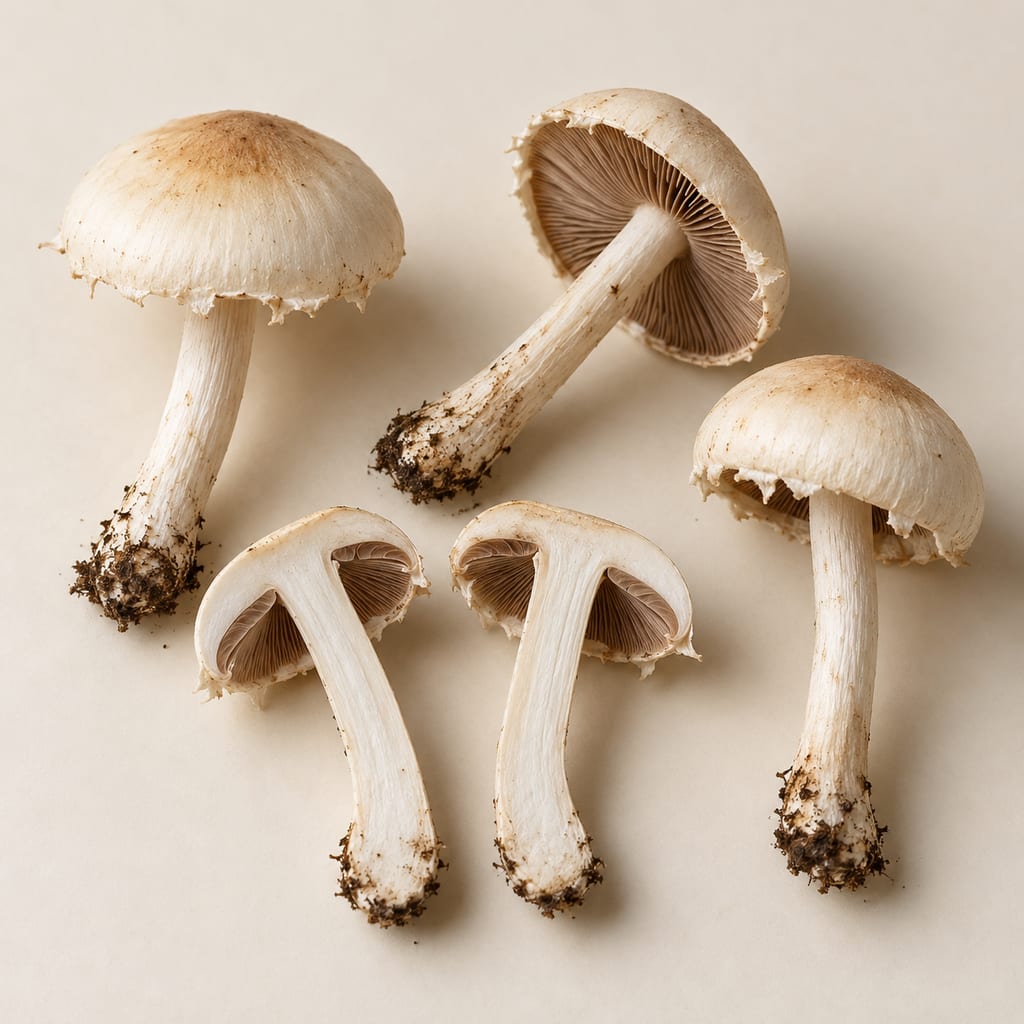
Agrocybe dura
A grassland agaric listed as edible in historical and scientific catalogues for Hong Kong and China. Taxonomic concepts and practical food value vary; the listings do not establish safe identification or culinary practice.
 FermenteaWhere food goes to change
Other
Amanita yuaniana is a Chinese Amanita that a 2023 Yanshan survey and a Yunnan ethnomycology survey list among edible species. No source tests it for safety, and the genus holds the most lethal mushrooms.
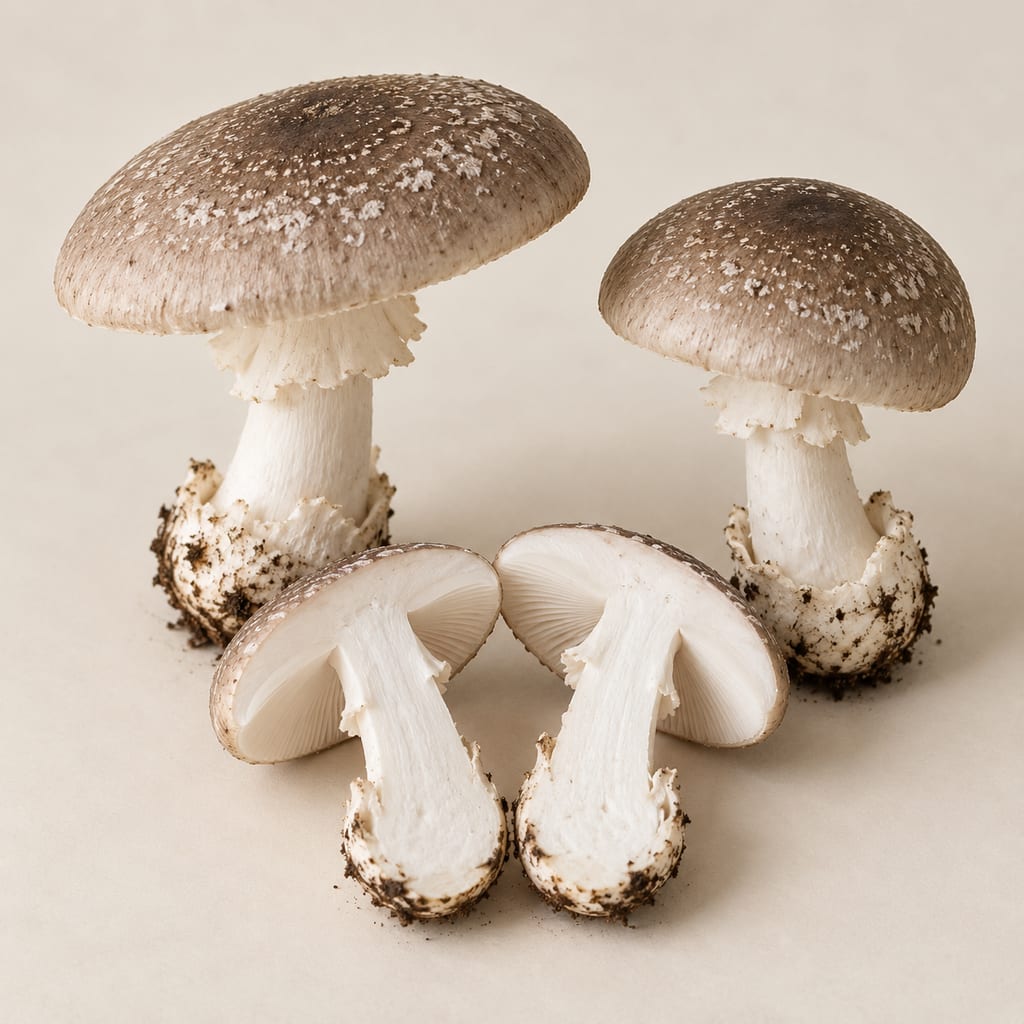
Amanita yuaniana is a mushroom of the genus Amanita from southwest China. The genus includes some of the most toxic mushrooms known, and the Frontiers study notes that deaths from poisonous Amanita are common in China.
Recent surveys in Yunnan and northern China list Amanita yuaniana as edible. Those listings come from taxonomic and market surveys. No source found tests its toxicity or describes how it is cooked.
The species was described by Zhu L. Yang and colleagues. The catalogue records the scientific name as a research label rather than a reconciled accepted name, so records should be checked against current taxonomy. Its identity in the field is established by morphology and DNA, not by appearance alone: the 2023 northern Chinese study used cap, stalk, volva remnants, spore size and clamp connections with multi-locus DNA phylogeny.
The sequence data used in that study include a specimen from Lijiang, Yunnan. The study does not record a local name.
The sources record A. yuaniana in Yunnan, with a voucher and a market record in the Pu'er survey, and it is named among the commonly known edible fungi in China. The Frontiers study notes that China has a high diversity of Amanita species.
The Pu'er survey lists the species as edible, and the northern Chinese study names it among commonly known edible fungi. Neither source records how it is prepared, how much is eaten, or whether it is sold by name in markets beyond the survey.
The main risk in the genus is confusion with lethal species. The Frontiers study names Amanita subjunquillea as deadly poisonous, and A. virosa and A. tenuifolia as poisonous.
The edible listing for Amanita yuaniana is taxonomic and market evidence, not a toxicity test. The sources give no safe quantity, no cooking method and no record of whether the species is confused with toxic relatives in the field.
The Frontiers study states that deaths from poisonous Amanita are common in China. Do not eat this species on the strength of this page. Identify any wild Amanita with a qualified mycologist, and follow official food safety advice before eating any wild mushroom.
The sources do not give a field key for this species, a documented cooking method, a local name, or a toxicity assessment. The catalogue records a checklist lead, and direct local consumption evidence is still to be found. These are unknown, not negative findings.
Listed as edible in a Yunnan wild-mushroom survey with a voucher and a market record, and named among commonly known edible fungi in a northern Chinese study. The local culinary tradition is not recorded in the sources reviewed.
A grassland agaric listed as edible in historical and scientific catalogues for Hong Kong and China. Taxonomic concepts and practical food value vary; the listings do not establish safe identification or culinary practice.

Akahatsu, Lactarius akahatsu, is a wild milkcap of East Asian pine and mixed forests that is sold in Yunnan markets, with its edibility and identity still needing species-level review.
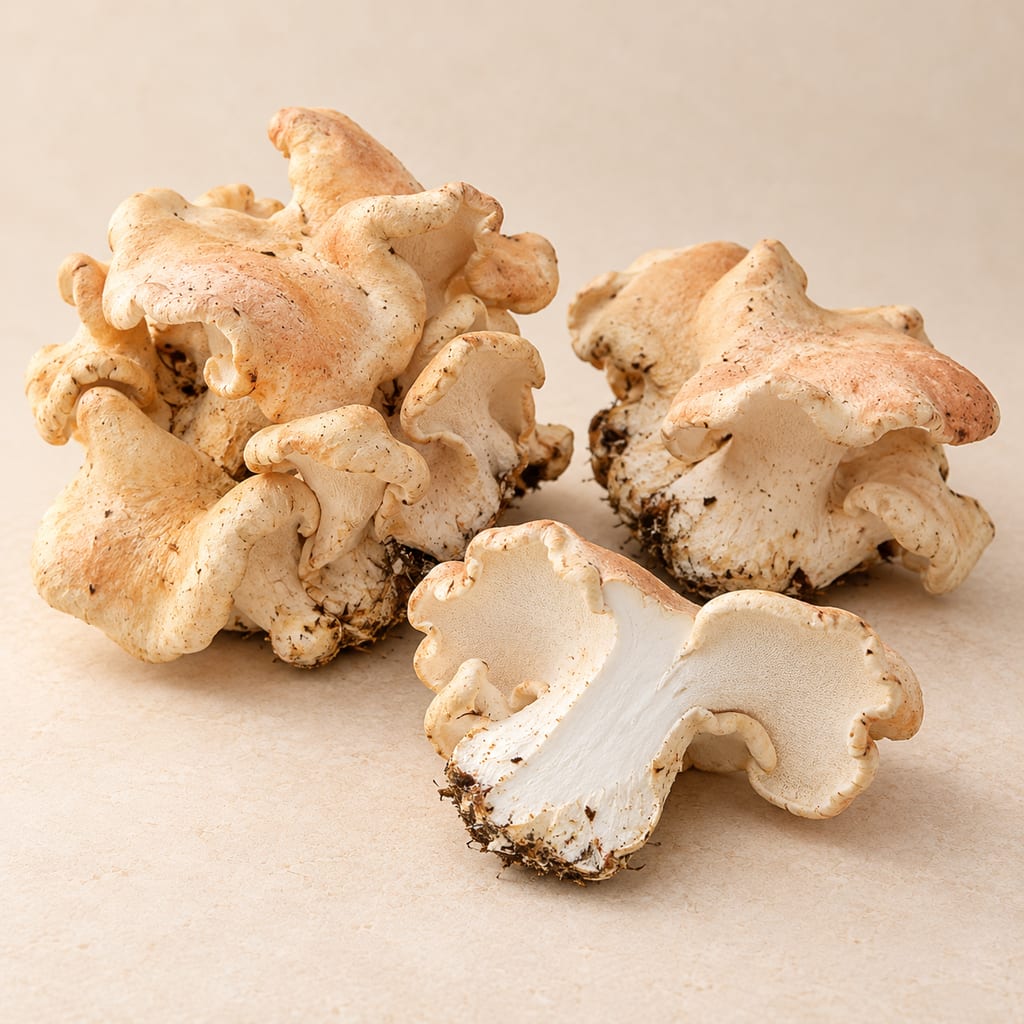
Albatrellus confluens is a ground-growing polypore with fused buff-orange caps. Sources document Chinese market use and regional edibility, but others reject it as too bitter; taxonomy also varies between Albatrellus and Albatrellopsis.
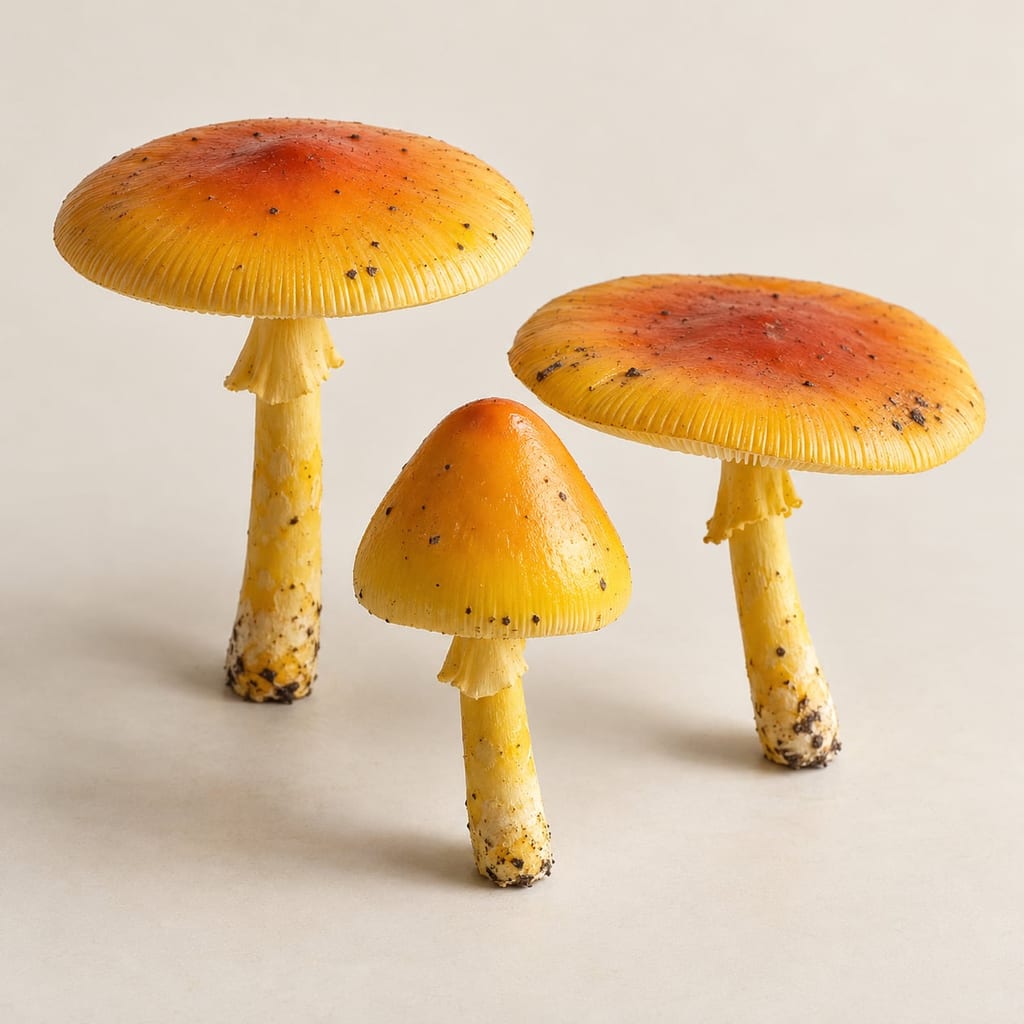
A wild Amanita recorded from China in a 2026 checklist of edible and medicinal fungi. The genus holds deadly species, so this page gives no identification or edibility verdict.
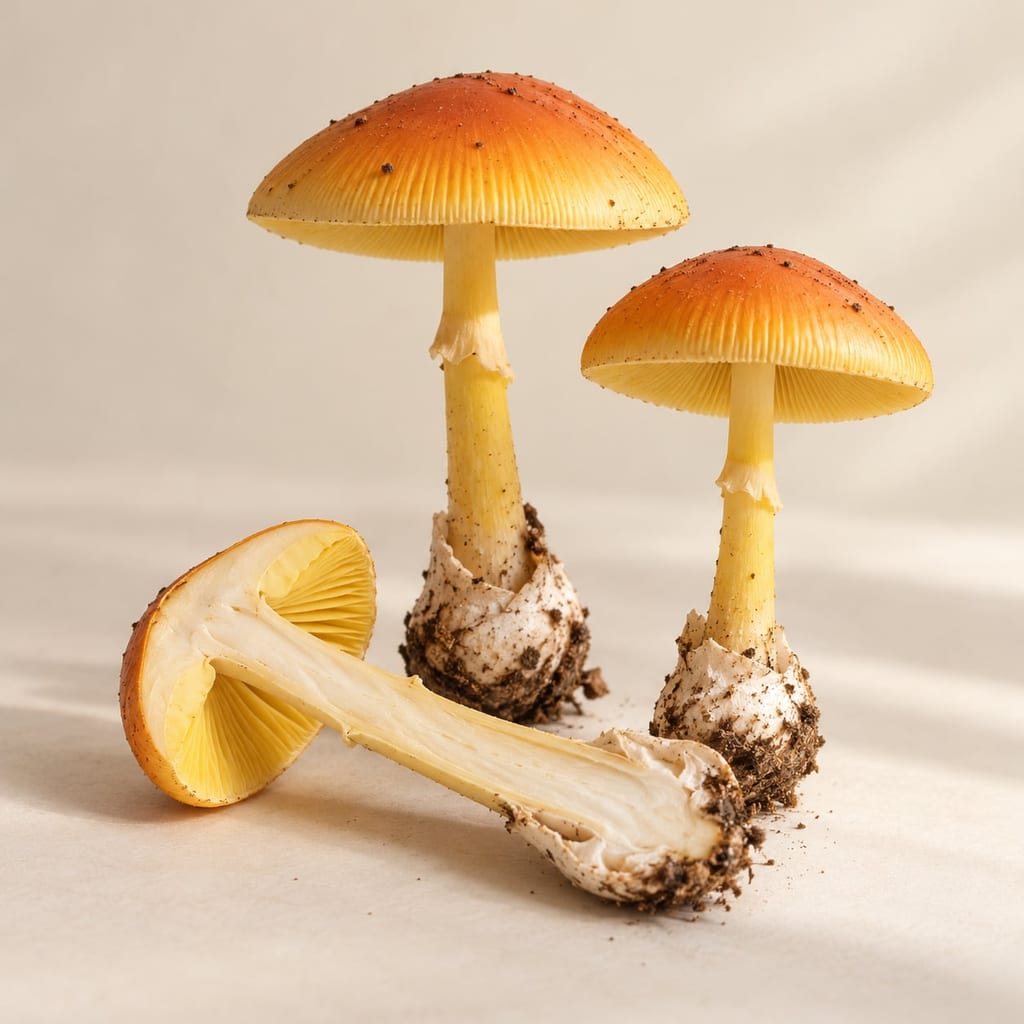
A wild Amanita of China, first reported there and listed as edible in a Yunnan ethnomycology study. The genus contains deadly species, so this page does not support identifying or eating it.
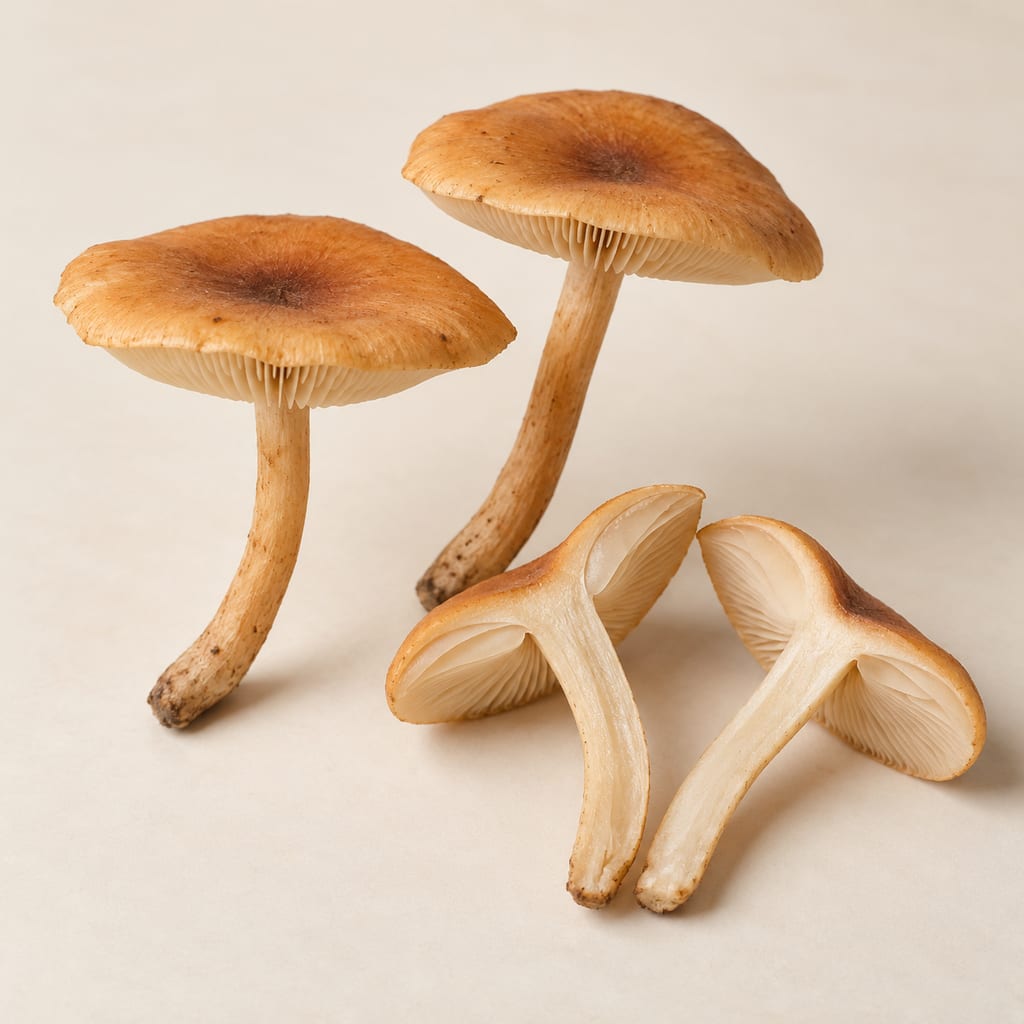
A wood-associated Armillaria recorded in Yunnan and Sichuan, China, and listed as edible in a 2026 Chinese catalogue.
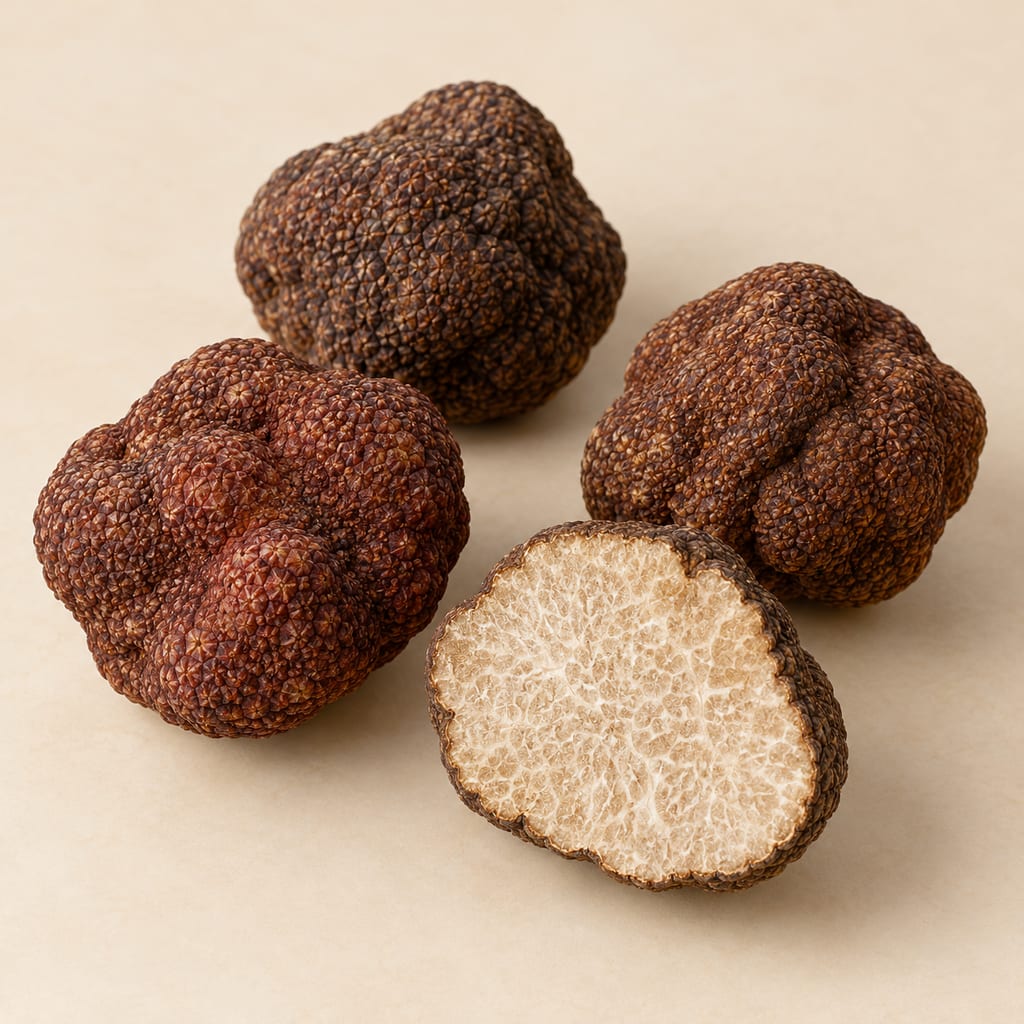
Tuber pseudohimalayense is a wild black truffle from Yunnan, China, listed as edible in a Chinese species catalogue. No independent assessment of its culinary use or safety is available.
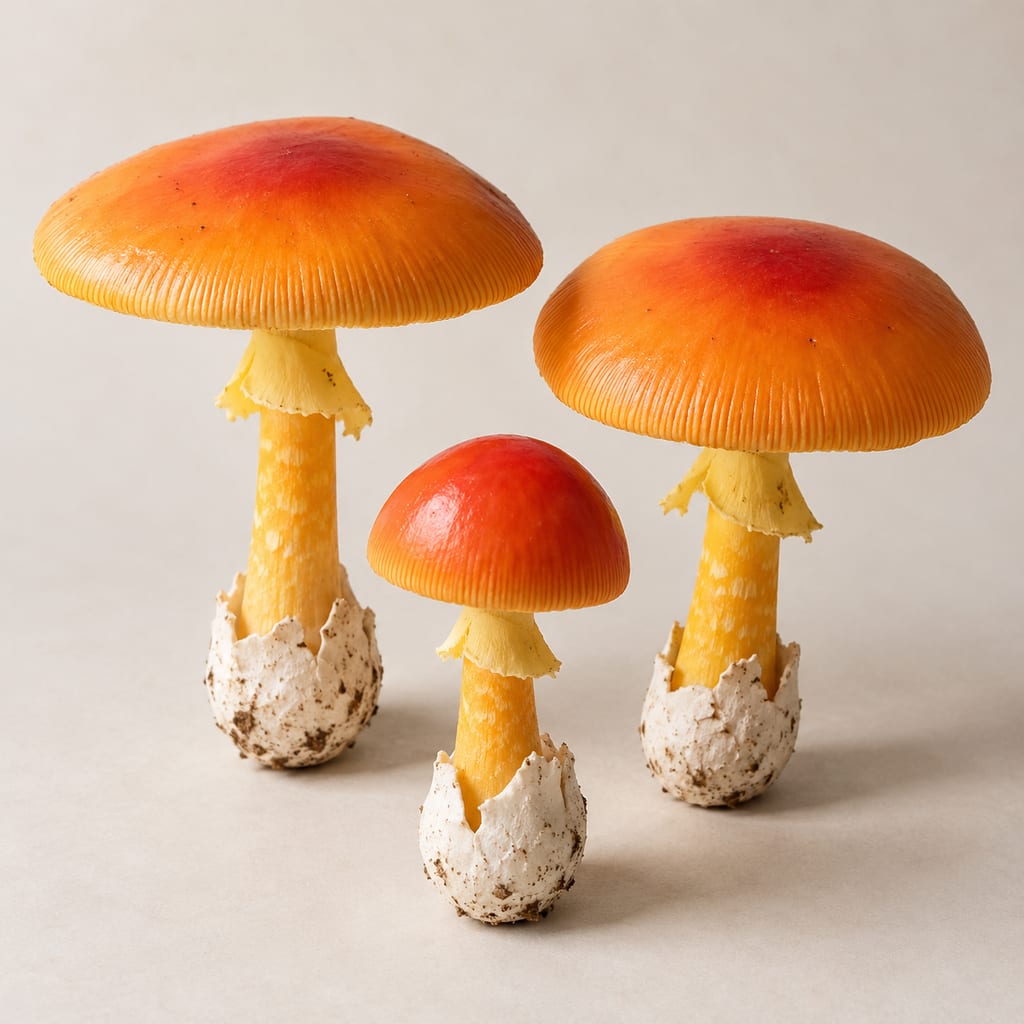
A wild Asian Amanita reported as food in regional literature and listed in China’s edible-fungi catalogue. Lookalikes include lethal species; this record is not a guide to identifying wild mushrooms.
No community contributions have been published for this entry yet.
Sign in to contribute. Published comments and photos are free to read.
Frontiers in Plant ScienceTaxonomy · Safety · Edibility
Diversity and taxonomy of the genus Amanita (Amanitaceae, Agaricales) in the Yanshan Mountains, Northern ChinaChina has high Amanita diversity; deaths from poisonous Amanita are common in China
Amanita caesarea, A. sinensis and A. yuaniana described as commonly known edible fungi
A. subjunquillea is deadly poisonous; A. virosa and A. tenuifolia are poisonous
Identification combined morphology with multi-locus DNA phylogeny; A. yuaniana listed in the sequence table from Lijiang, Yunnan
Cited in: Overview; Names and taxonomy; Distribution; Food use and edibility; Safety; Open questions
Ethnobiology and BiomedicineUse · Market
Ethnomycological study on wild mushrooms in Pu'er Prefecture, Southwest Yunnan, ChinaTable lists Amanita yuaniana as edible, with a voucher specimen (HKAS-122505) and a market record
Cited in: Overview; Distribution; Food use and edibility; Safety