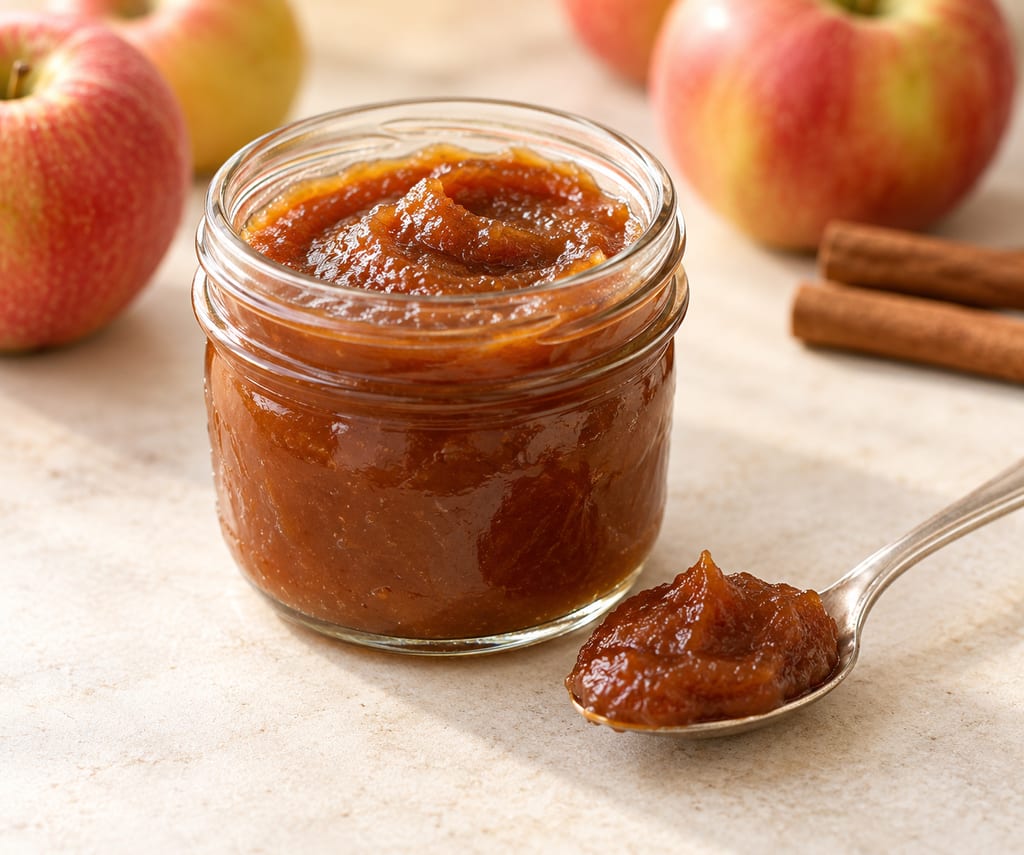
Apple butter, tested canning method
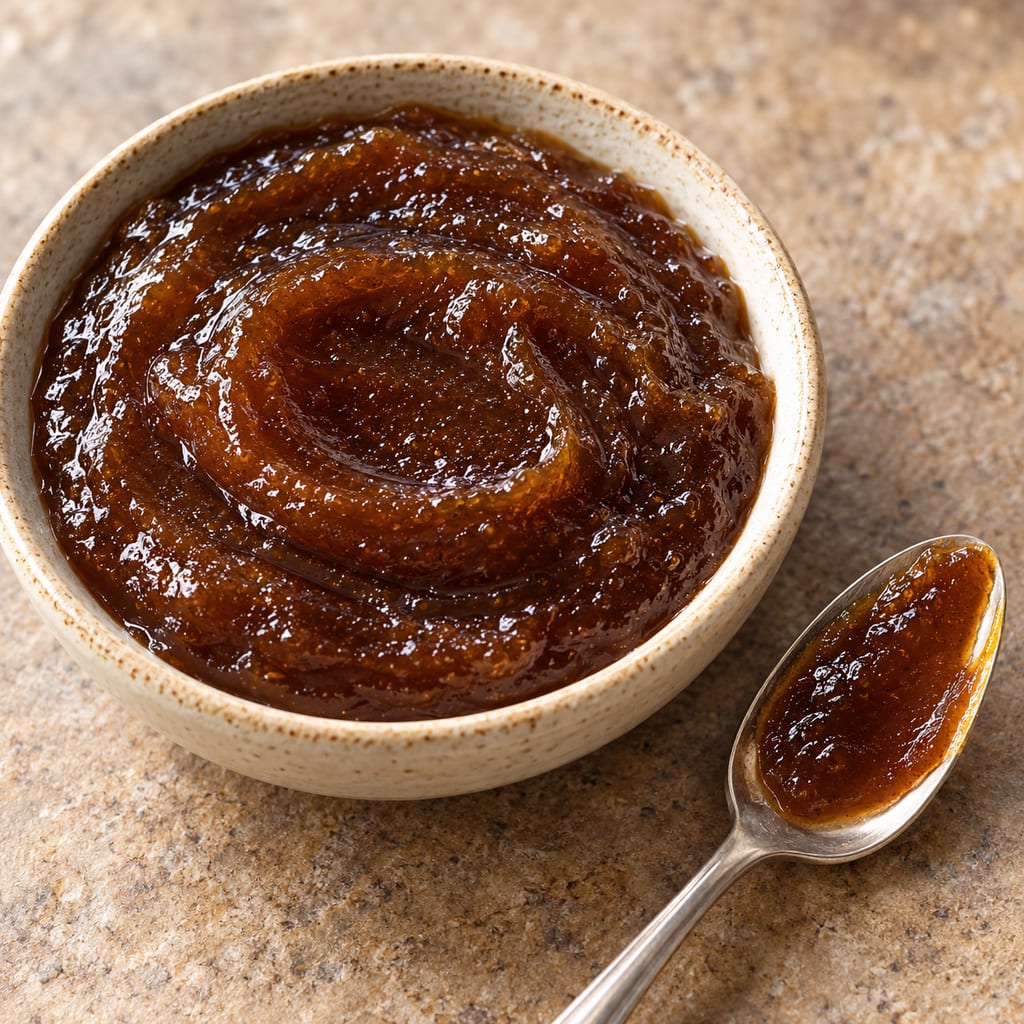
Apple butter is a smooth, concentrated apple preserve cooked with cider, vinegar, two sugars and spices, then hot-filled and processed in a boiling-water canner using the published jar-size and elevation schedule.
 FermenteaWhere food goes to change
Pressure canning of the specified domestic mushrooms · Home pressure-canned whole or sliced mushrooms
Whole or sliced domestic mushrooms packed hot in jars with fresh water and processed in a pressure canner, the tested home method for a low-acid vegetable.
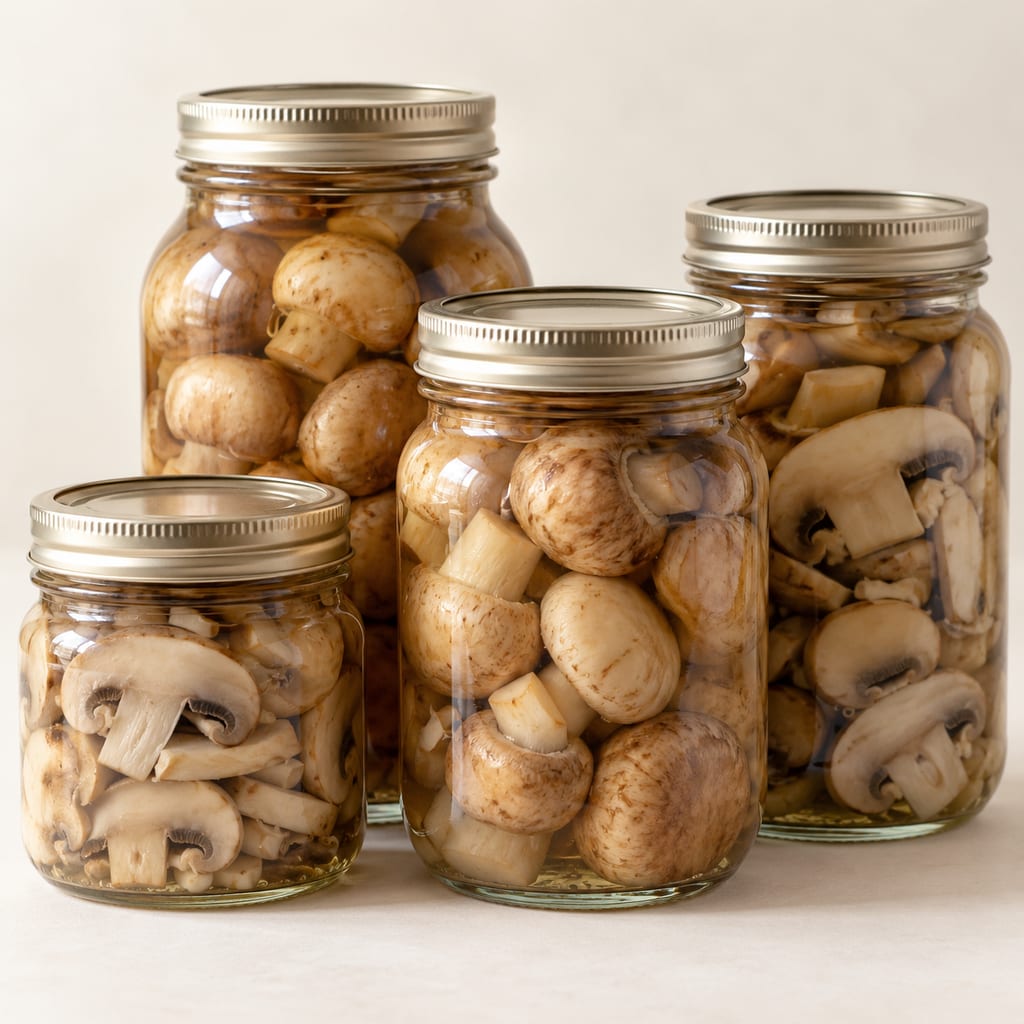
Pressure-canned mushrooms are domestic mushrooms packed hot into jars with fresh water and processed in a pressure canner. Mushrooms are a low-acid vegetable, so the water-bath method used for acidified products does not make them safe; the process needs the pressure canner and its time.
This entry covers the tested home method for whole or sliced domestic mushrooms. It is a method description, not a preserved-food tradition.
Mushrooms are chosen small to medium, with short stems, closed caps and bright colour. Stems and discoloured parts are trimmed, and the mushrooms are soaked in cold water for 10 minutes and washed. Small mushrooms are left whole and large ones are cut. They are boiled in water for 5 minutes, packed hot into jars, and covered with fresh hot water, leaving 1 inch of headspace in each case.
Salt and a colour agent are optional. Half a teaspoon of salt per pint and an eighth of a teaspoon of ascorbic acid powder, or one 500 mg vitamin C tablet, are the stated amounts.
The source gives a 45-minute process at pressure for hot-packed half-pint or pint jars. The pressure depends on the gauge: a dial-gauge canner runs at 11 lb from sea level to 2,000 ft, 12 lb to 4,000 ft, 13 lb to 6,000 ft and 14 lb to 8,000 ft; a weighted-gauge canner runs at 10 lb up to 1,000 ft and 15 lb above that.
The procedure asks the cook to read the NCHFP guidance on pressure canners and the principles of home canning before a first attempt.
The source excludes wild mushrooms in the same sentence that sets out the procedure. It gives no quart times, no raw-pack method and no brine ratio, so those are not offered here.
Oregon State University Extension scopes its home-canning advice to domestically cultivated button mushrooms. Other species, purees, pates and different jar sizes or pack densities are outside the tested procedure.
Appearance, smell and taste cannot show that a sealed jar is safe. The source gives no storage duration, and none is stated here.
Yield 9 half-pint jars or pints per canner load · Scaling: use the stated load sizes; the source gives no quart times and no raw pack method.
Mushrooms are low-acid, so the botulism risk is controlled only by a full pressure-canning process.
Hazard sourceThe source states: Do not can wild mushrooms.
Hazard sourcePressure canner at the stated pressure for the altitude and gauge type, 45 minutes process time for hot-packed half-pints or pints
Control sourceDo not can wild mushrooms.
The source does not cover quart jars, raw packing or brine recipes; use a current tested source for those.
Purees, pates, other species and other pack densities cannot be substituted without validation.
Tested home-preservation procedure from the National Center for Home Food Preservation; a country-level source, not a precise origin.
Apple butter is a smooth, concentrated apple preserve cooked with cider, vinegar, two sugars and spices, then hot-filled and processed in a boiling-water canner using the published jar-size and elevation schedule.
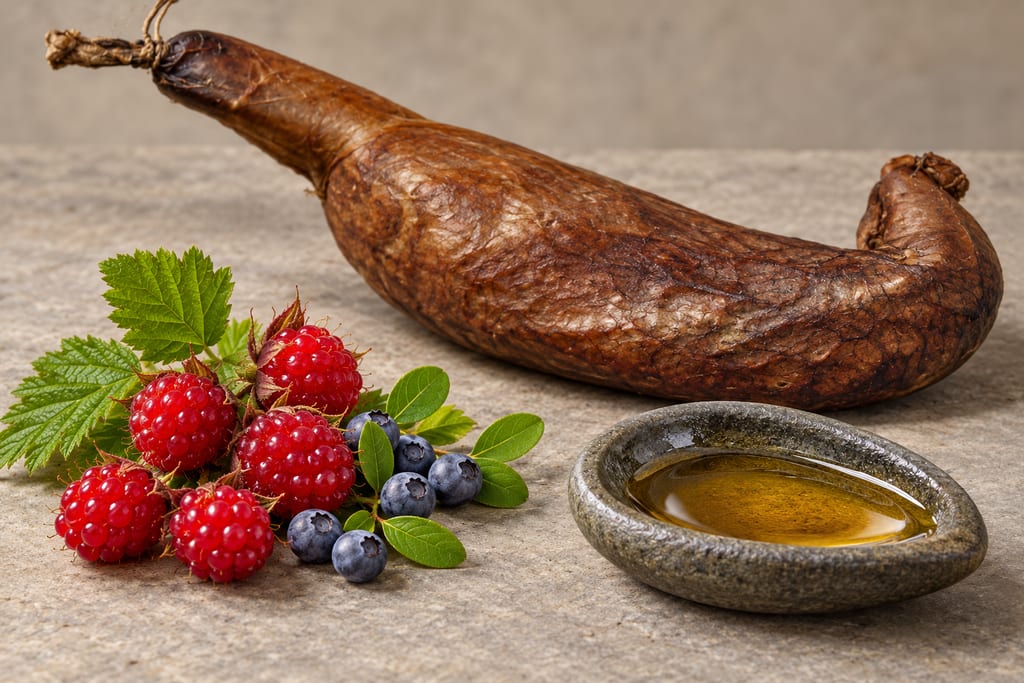
Berries, greens and fish eggs were kept in seal oil by Indigenous Alaskan communities. The oil seals the food from air, and the result depends on preparation and the surrounding conditions.
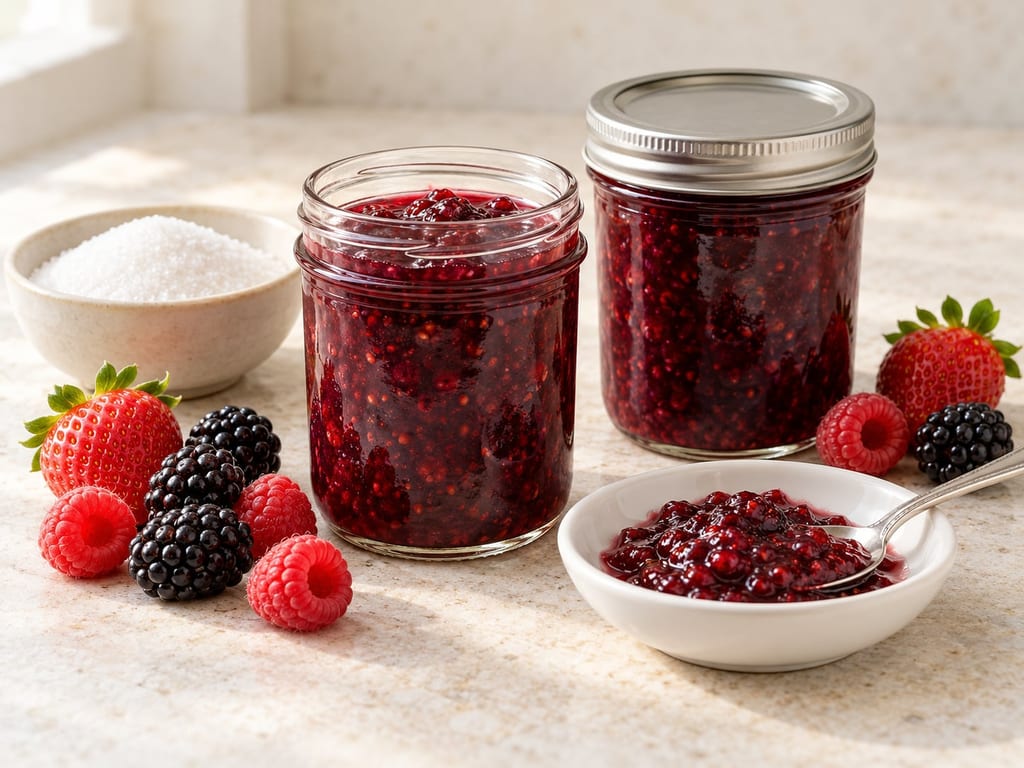
A NCHFP berry jam made without added pectin: crushed berries and sugar are cooked to the desired gel point, hot-filled into sterile half-pint or pint jars, and processed in a boiling-water canner.
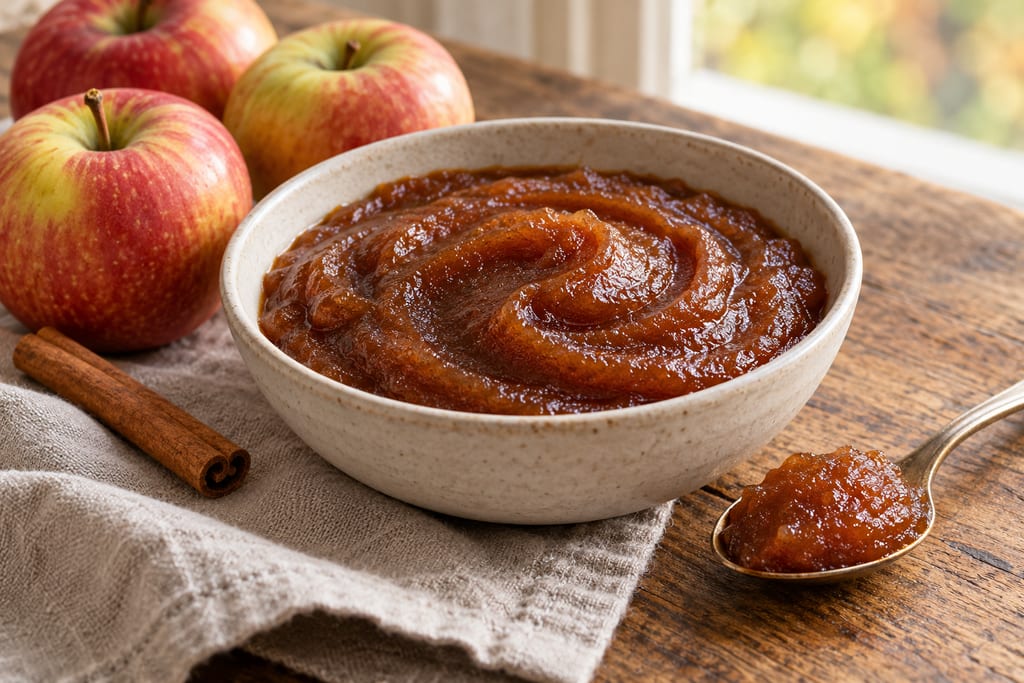
A smooth fruit pulp cooked down with sugar and spice until it holds its shape on a spoon, made by three documented routes in a slow cooker, a microwave or an electric multicooker.
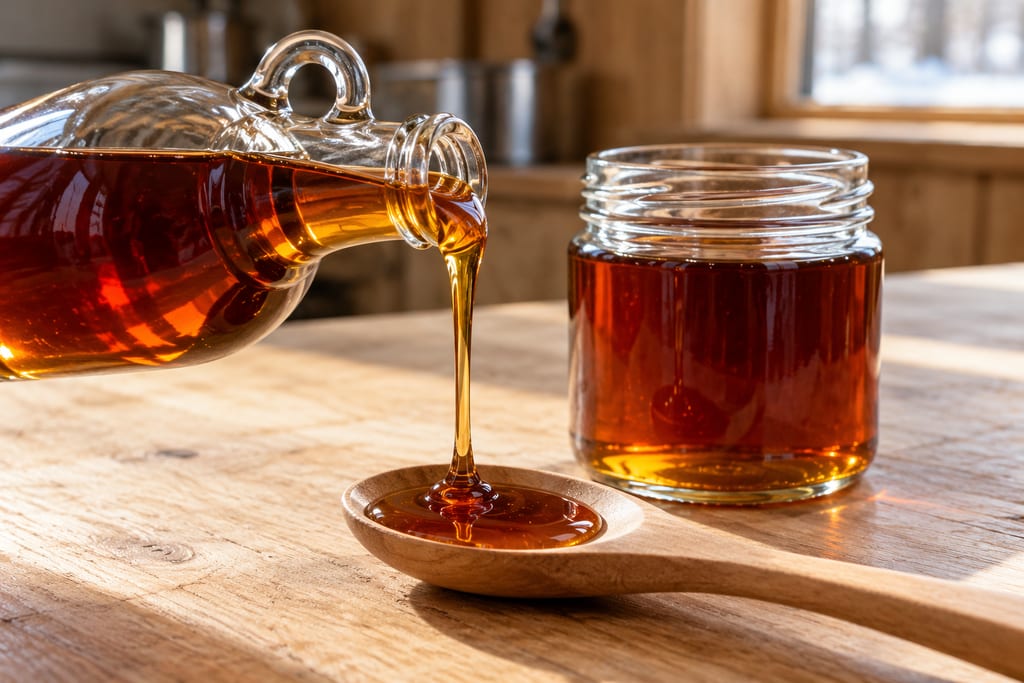
Maple sap of about two percent sugar boiled down in a shallow pan until it reaches syrup density, the sugar concentration the standard defines, then filtered hot and packed hot.
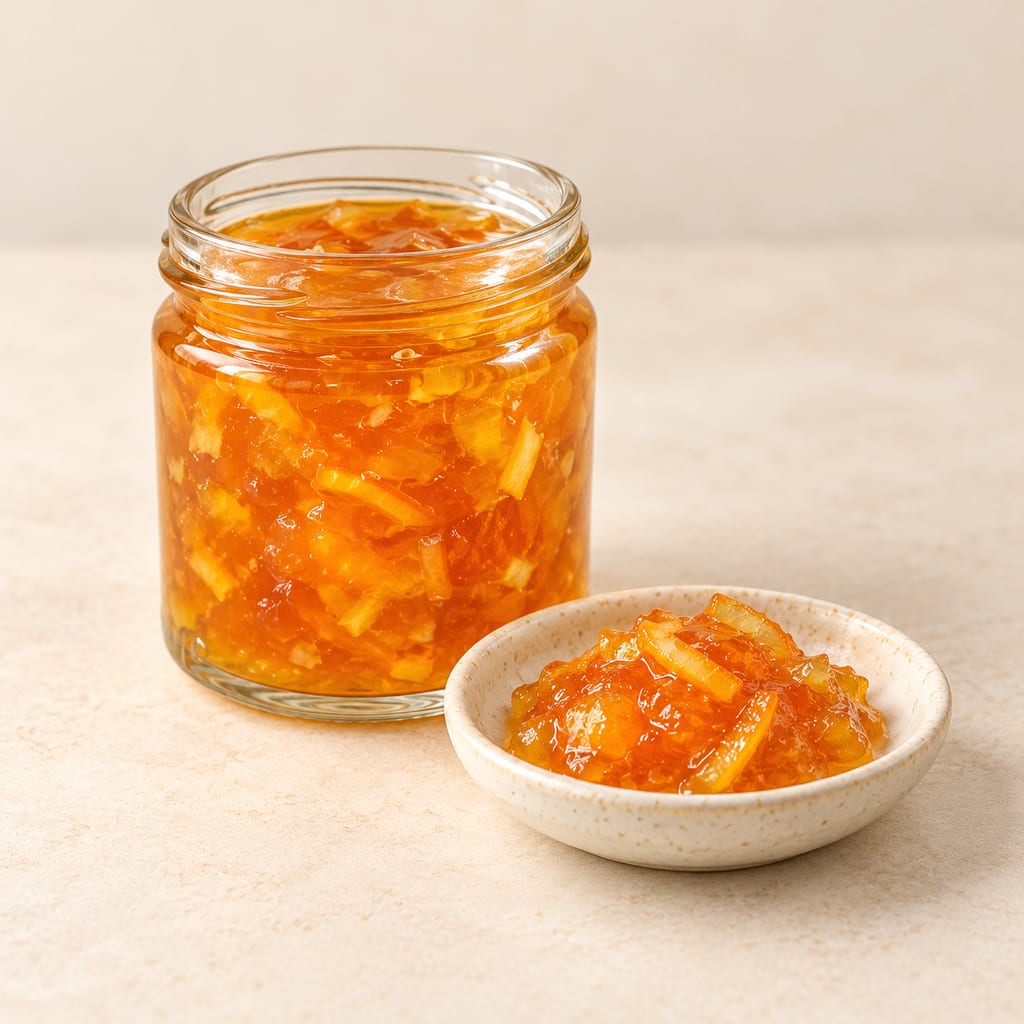
Orange marmalade suspends thin strips of citrus peel in a sweet gel. This navel-orange batch includes pulp and lemon and is preserved in a boiling-water canner.
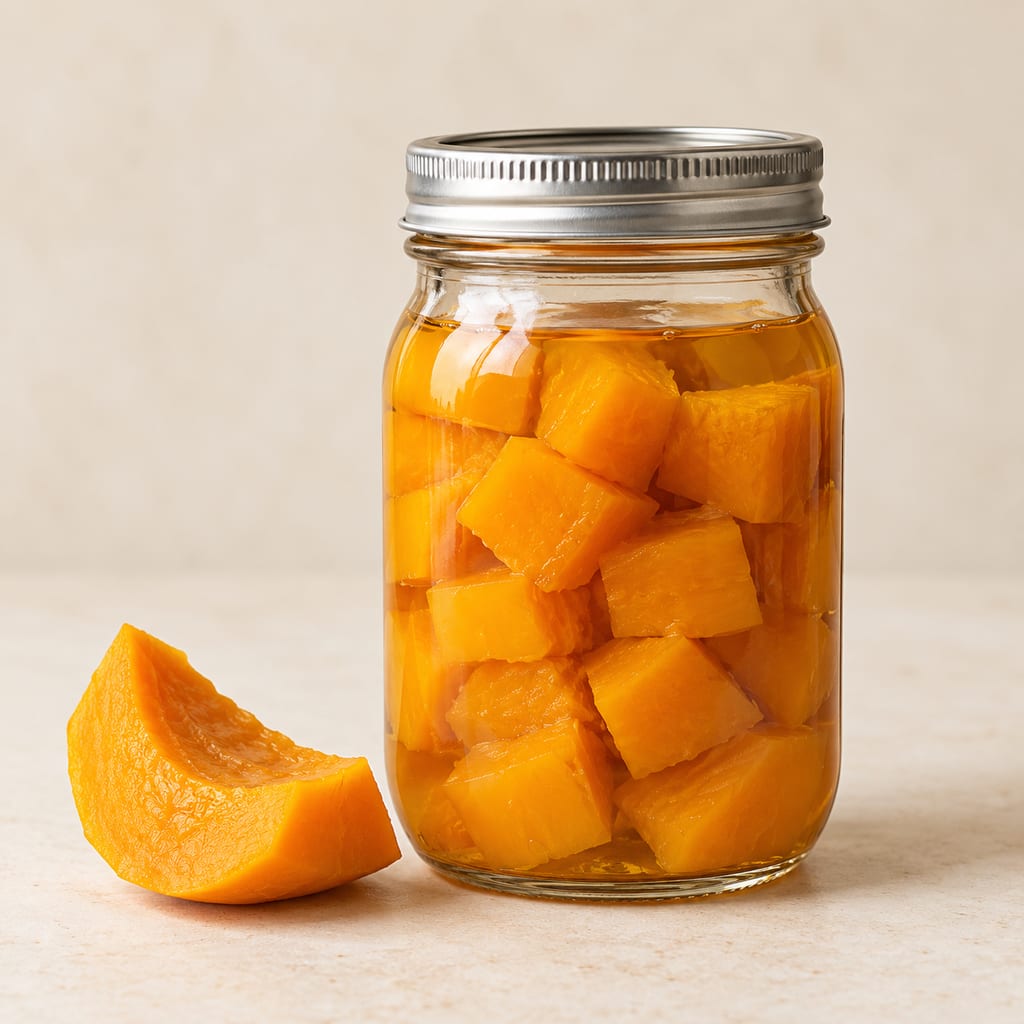
Plain pumpkin cubes hot-packed in water and pressure-canned for later cooking. The pieces stay intact during canning; mash them only after opening.
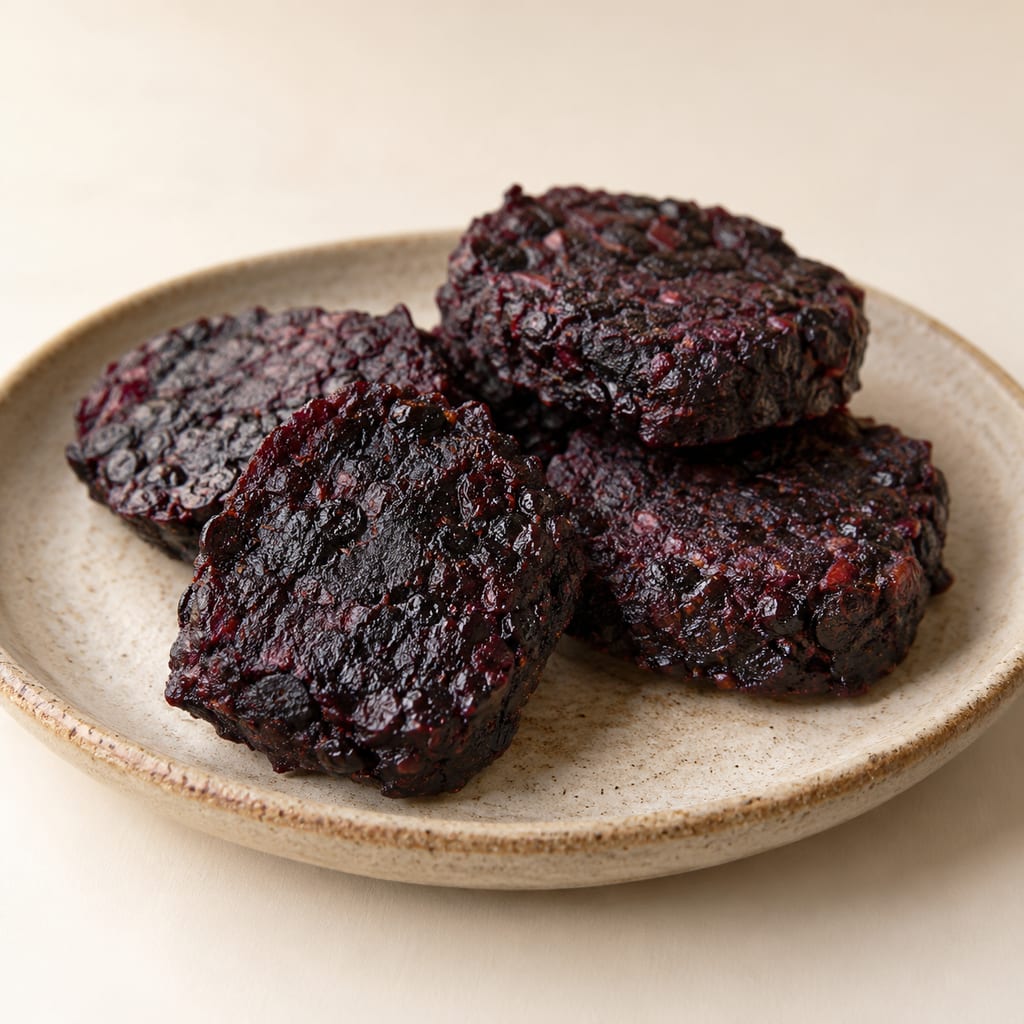
Salal berries pulped, formed into cakes and dried, a compact berry reserve of the northwestern American coast.
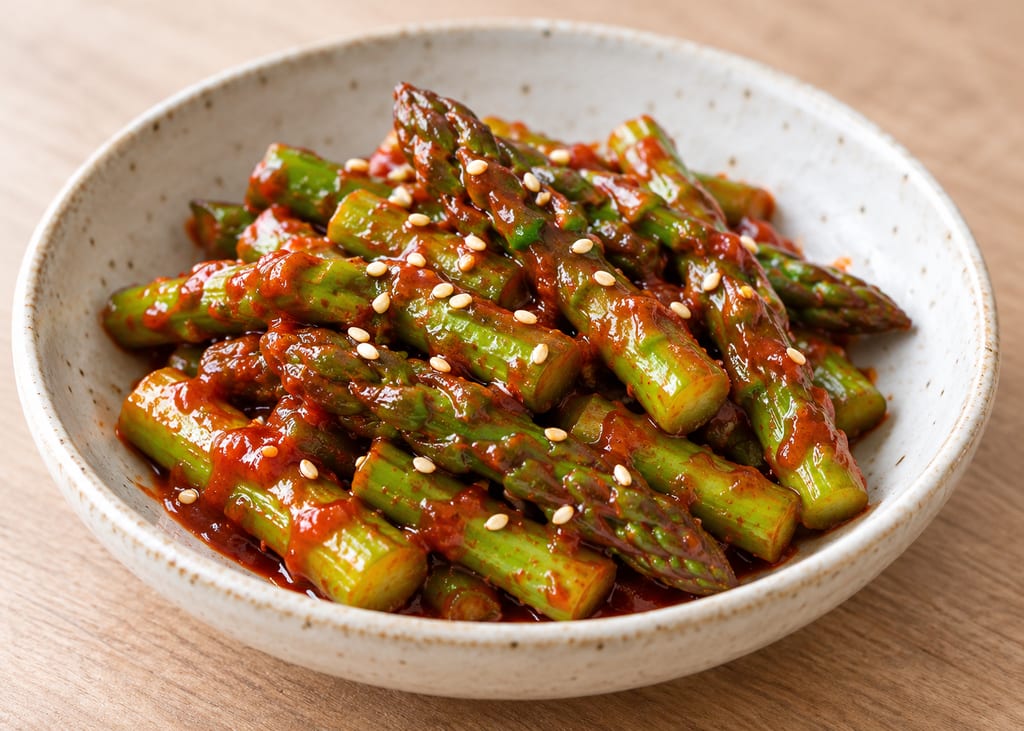
A Korean banchan of blanched asparagus dressed with a sweet-sour cho-gochujang sauce; Hyosun's version cools the spears in ice water before tossing.
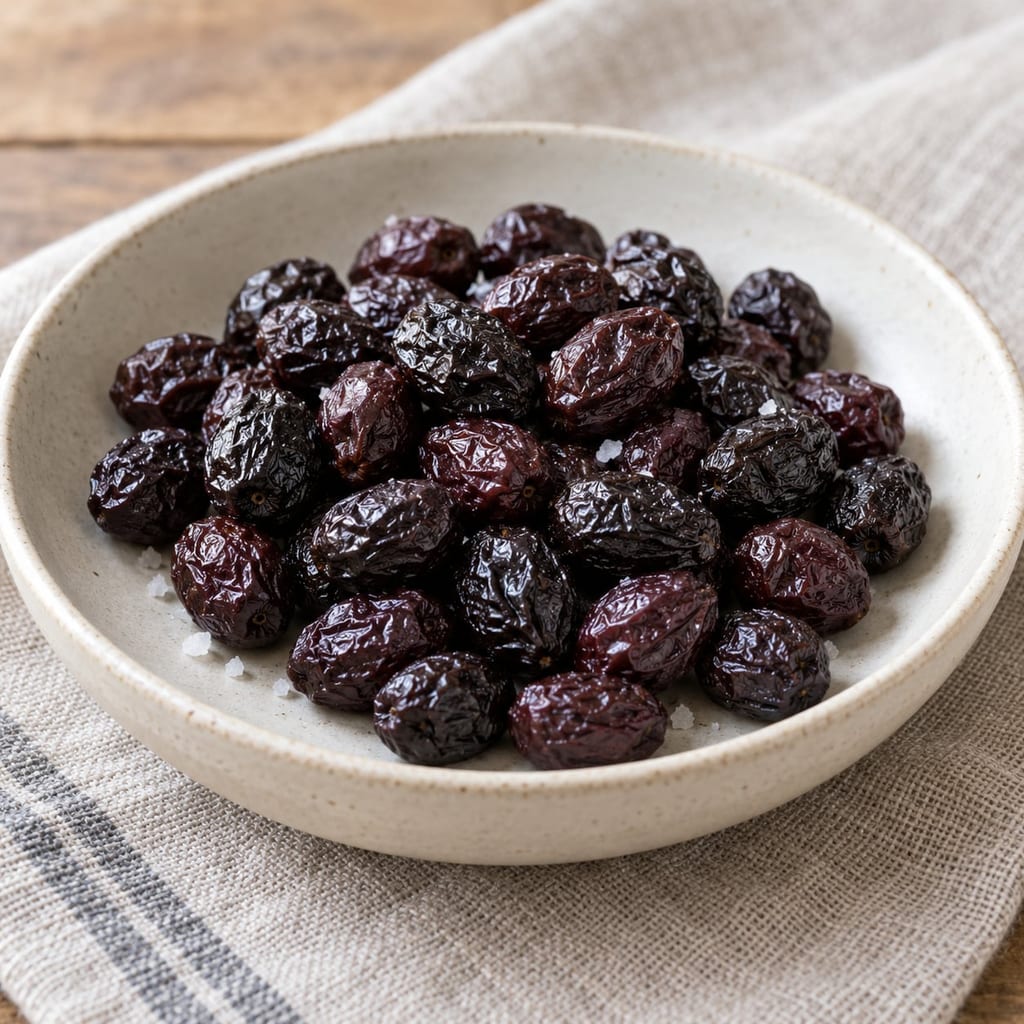
Fully ripe dark olives are mixed with salt and turned weekly as salt draws out moisture. Distinct from existing brine-fermented and lye-treated olives.
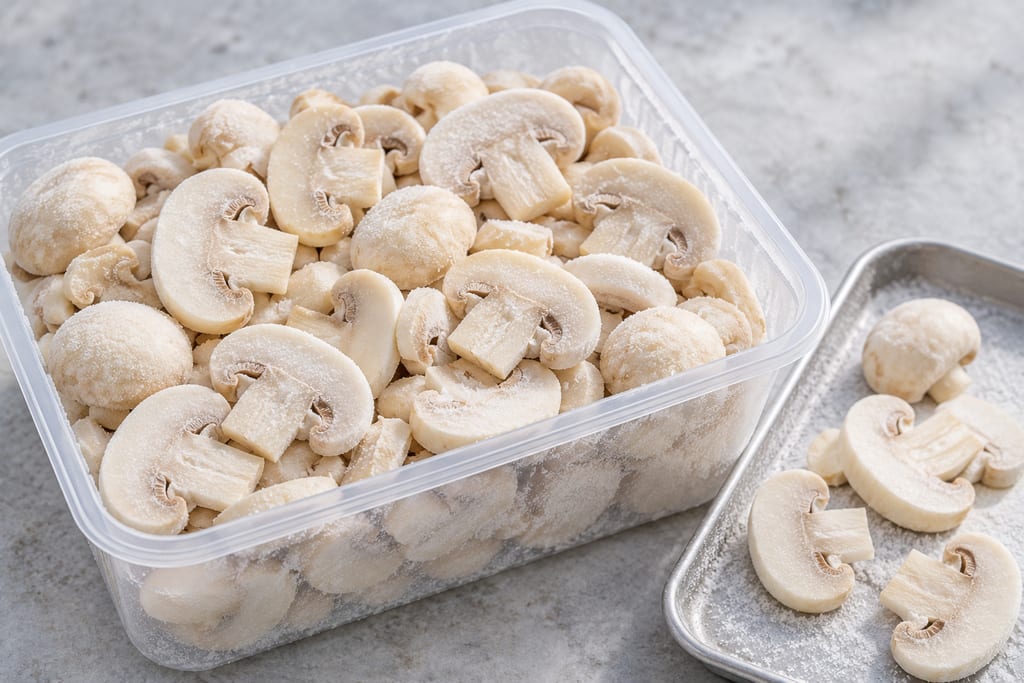
Steam-blanched frozen mushrooms are whole, button, quartered or sliced mushrooms given a short steam treatment, cooled promptly, packed with headspace and kept frozen.
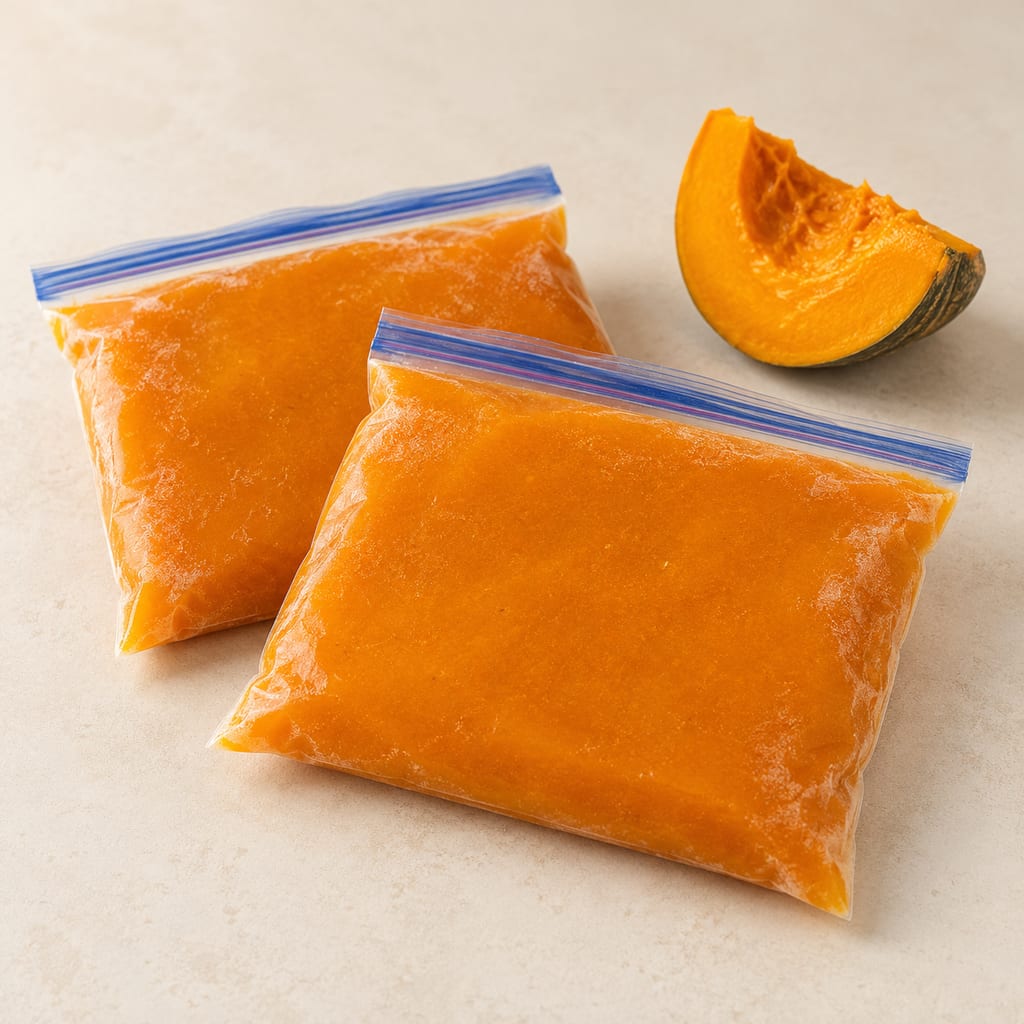
Cooked pumpkin mashed, cooled and frozen in portions: a plain base for pies, soups and baking without canning a dense purée.
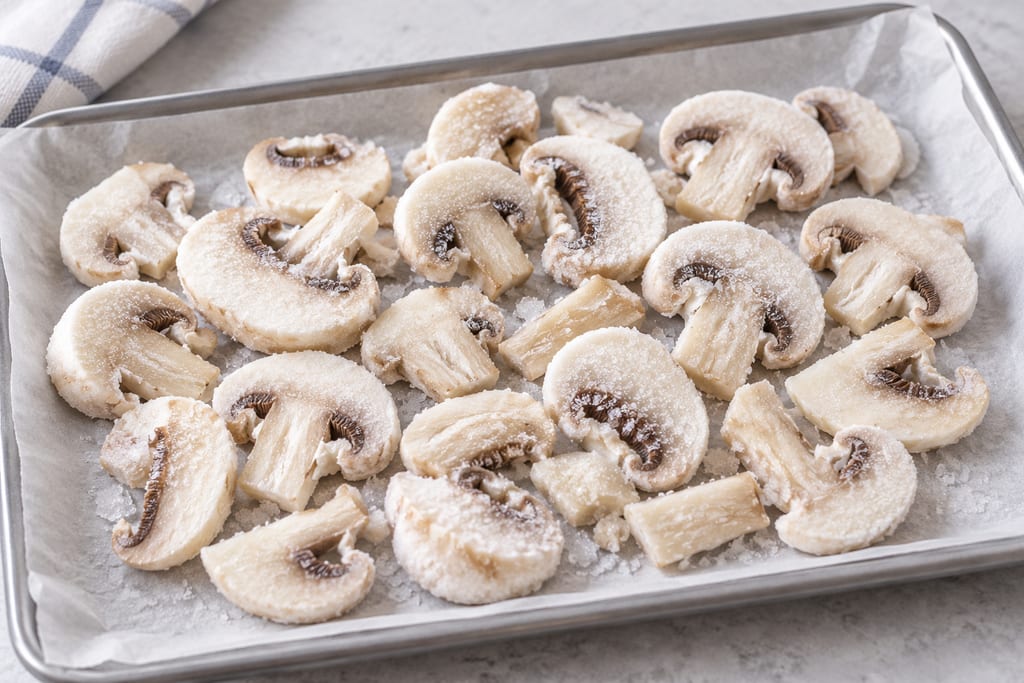
Frozen raw mushrooms are cleaned mushrooms frozen without a preheating step, the variant a Japanese forest-volunteer manual describes beside its cooked version.
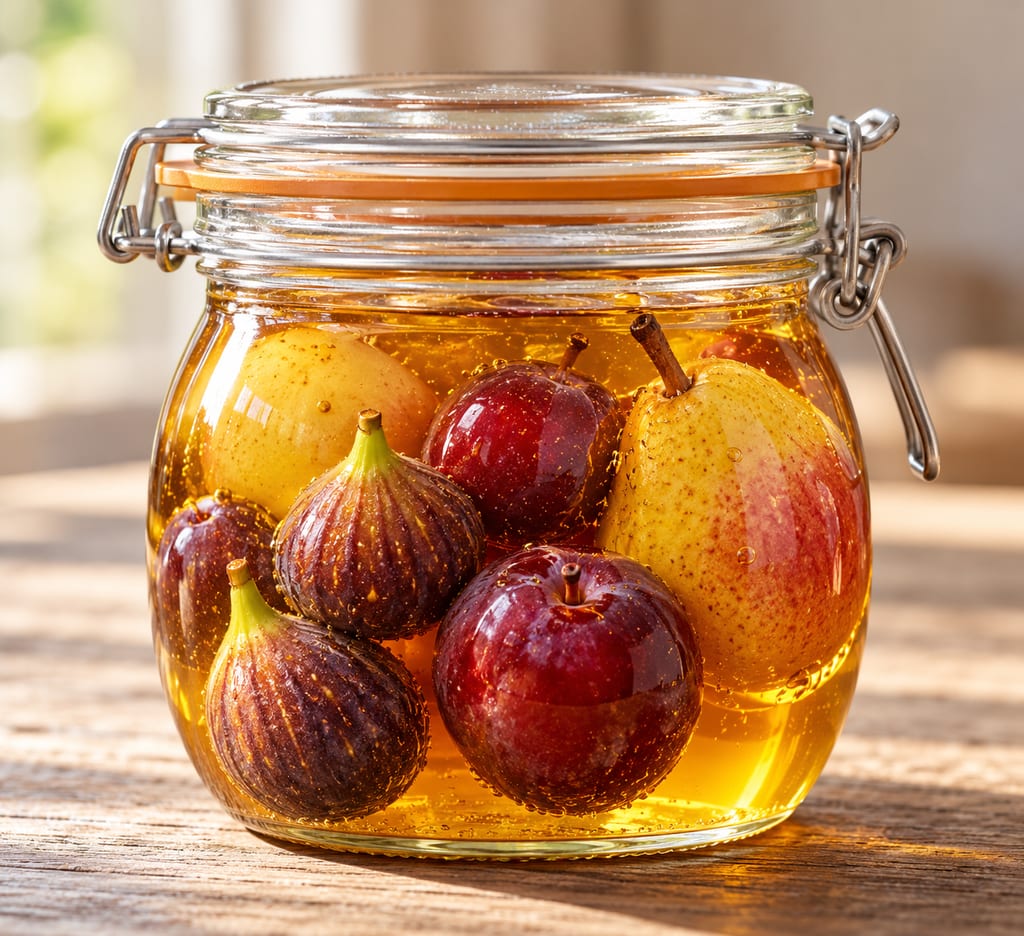
Fruit and some other foods were placed in honey in ancient Mediterranean kitchens. The honey's concentrated sugar does the preserving, and wet ingredients weaken it.
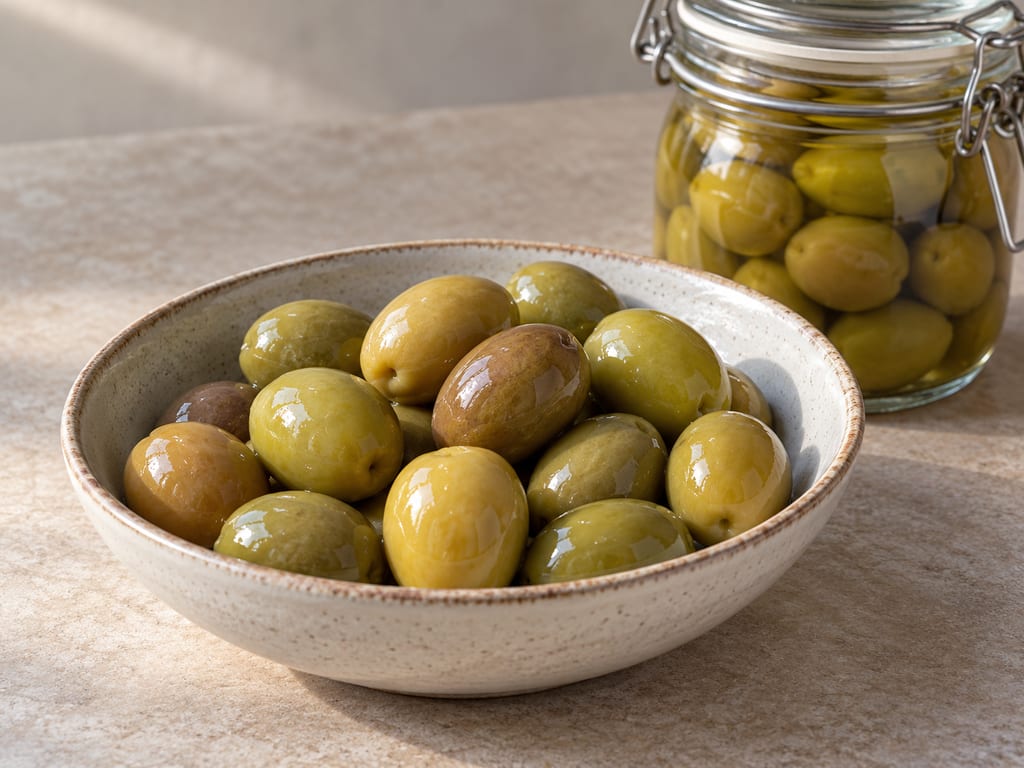
Green olives debittered in a sodium hydroxide solution, then rinsed repeatedly and held in brine, by the University of California's published home-pickling method.
An experimental sweet mushroom preserve developed in Indian food-processing research, made by cooking mushroom pulp with sugar, added pectin and citric acid until concentrated into a thick, spreadable jam.
No community contributions have been published for this entry yet.
Sign in to contribute. Published comments and photos are free to read.
National Center for Home Food PreservationMethod · Safety
Mushrooms, Whole or Sliced: Home Pressure CanningHot pack, 1 inch headspace, 45 minutes at pressure by gauge and elevation; wild mushrooms excluded
Oregon State University ExtensionMethod
Preserving Mushrooms (SP 50-919)Home-canning scope: domestically cultivated button mushrooms