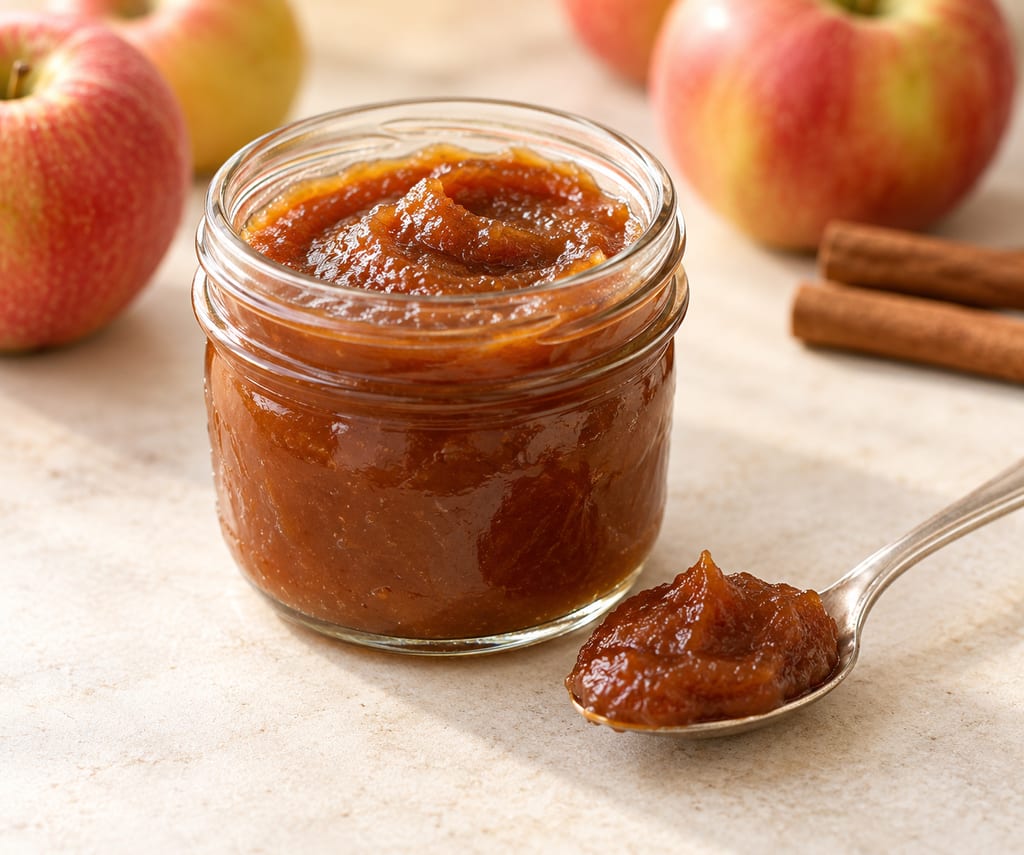
Apple butter, tested canning method
Apple butter is a smooth, concentrated apple preserve cooked with cider, vinegar, two sugars and spices, then hot-filled and processed in a boiling-water canner using the published jar-size and elevation schedule.
 FermenteaWhere food goes to change
Modern adaptation
pear butter · plum butter · microwave fruit butter · slow-cooker fruit butter
A smooth fruit pulp cooked down with sugar and spice until it holds its shape on a spoon, made by three documented routes in a slow cooker, a microwave or an electric multicooker.
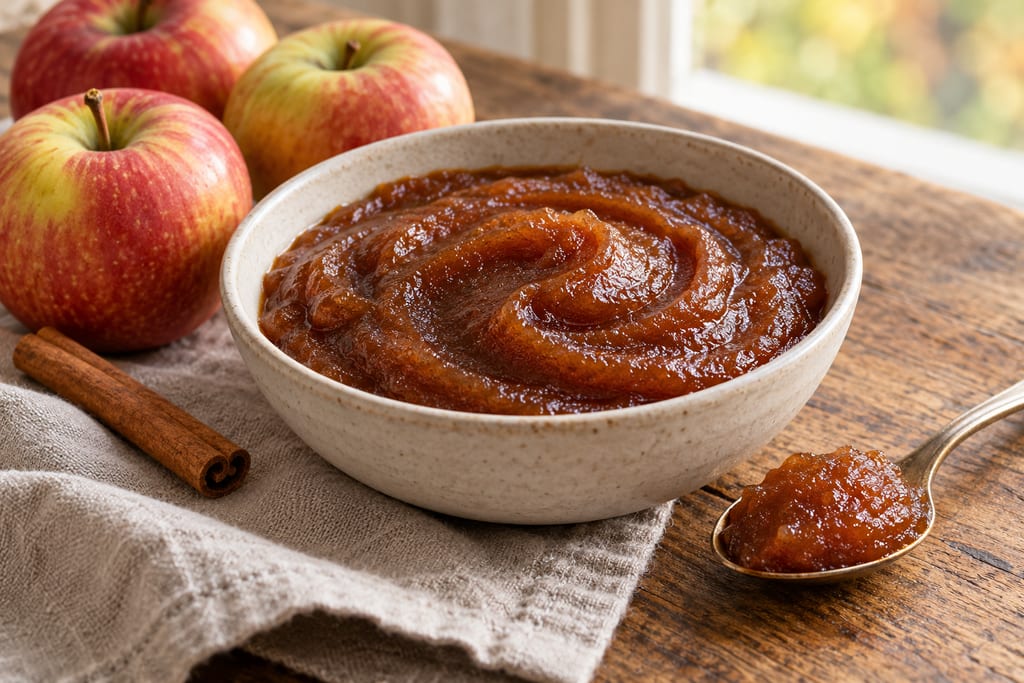
Fruit butter is a smooth spread made by cooking fruit pulp until most of its water has gone. Oregon State's extension bulletin calls it an old-fashioned spread with less sugar than jams and jellies, and its basic method is to cook fruit until tender, press it through a food mill, cone strainer or sieve, and then cook the pulp with sugar and spices.
The bulletin also says butters should be cooked in small batches. A thin pan scorches, and microwave batches boil over in small containers, so the routes below stir often and keep to the printed quantities.
Route A is a slow cooker. The N.C. Cooperative Extension recipe in Lenoir County cooks apples, brown sugar, honey, cider and spices on low for ten hours with the lid on, purées the result with an immersion blender, and then cooks it uncovered on high for about an hour and a half. The printed batch makes 4 cups, and the extension says the butter can be covered and chilled for up to a week. Oregon State gives a separate slow-cooker method for pulp: low for eight to ten hours with the lid ajar so moisture can evaporate, stirred occasionally.
Route B is a microwave. The Oregon State recipe cooks 8 quartered apples with a cup of cider, covered, for 8 to 10 minutes on high, presses the soft apples through a food mill or sieve, and then microwaves the purée with sugar and spices, uncovered, for 10 to 15 minutes, stirring often. The bulletin advises reducing power by half in high-wattage ovens and covering the dish with a paper towel to limit spatter. Times vary between microwaves, so the stated times are the starting point.
Route C is an electric pressure multicooker. The Instant Pot recipe pressure-cooks diced Gala apples with brown sugar, cinnamon, cloves, vanilla, salt and water for 20 minutes at High, releases the pressure, and then uses the Sauté setting for 20 minutes with the venting valve open, stirring every 5 minutes. The recipe gives a printed yield of 80 servings. It is a manufacturer's recipe and carries no process-validation claim.
No source gives a food temperature for any appliance route, so the end point is a test rather than a reading. Oregon State's doneness tests are the spoon test, in which the butter rounds slightly and has a sheen; the steam test, in which a spoonful held out of the steam for two minutes stays mounded; and the chilled-plate test, in which a spoonful holds its shape with no rim of liquid around it. The N.C. Cooperative Extension recipe uses the same logic when it says the butter keeps thickening as it cools.
The slow-cooker routes take most of a working day. The Crock-Pot booklet cited for Route A says to fill the slow cooker half to three-quarters full and to cook with the lid on. An uncovered stage on a slow cooker is therefore an instruction beyond the manual's own cooking mode, and the cook should check the manual before running it.
The appliance butters are stored in the refrigerator or the freezer. The N.C. Cooperative Extension says the chilled butter keeps for up to a week. Oregon State says butters can be frozen or kept for short periods in the refrigerator, and that butters of Asian pears, figs, pumpkin, melons or mangos have no research-based canning recipe and must be refrigerated for up to four weeks or frozen.
A multicooker is not a canner. The National Center for Home Food Preservation does not support USDA canning processes in electric multicookers, and no process is given for the Instant Pot recipe, which uses the phrase 'can safely'. Shelf-stable jars need the tested stovetop apple butter formulation and its boiling-water canner schedule, which are kept in a separate recipe. The appliance routes here are not canned, and the canning times do not transfer to them.
Oregon State calls fruit butter an old-fashioned spread with less sugar than jams and jellies. The appliance routes are modern writing; no dated history was researched for them.
Scaling: source batch only
Butters stick and scorch on the stove, thin kettles scorch, and microwave batches boil over in small containers.
Hazard sourceThe National Center for Home Food Preservation does not support USDA canning processes in electric multicookers, because no thermal process is established for pressure, temperature, come-up or cool-down.
Hazard sourceRefrigerate the appliance-route butter, or freeze it.
Control sourceKeep the slow cooker's fill and lid as its manual directs.
Control sourceThe appliance routes have no canning process.
A pressure multicooker is not a pressure canner.
Where the documented appliance methods were published; not a claim of origin.
Apple butter is a smooth, concentrated apple preserve cooked with cider, vinegar, two sugars and spices, then hot-filled and processed in a boiling-water canner using the published jar-size and elevation schedule.
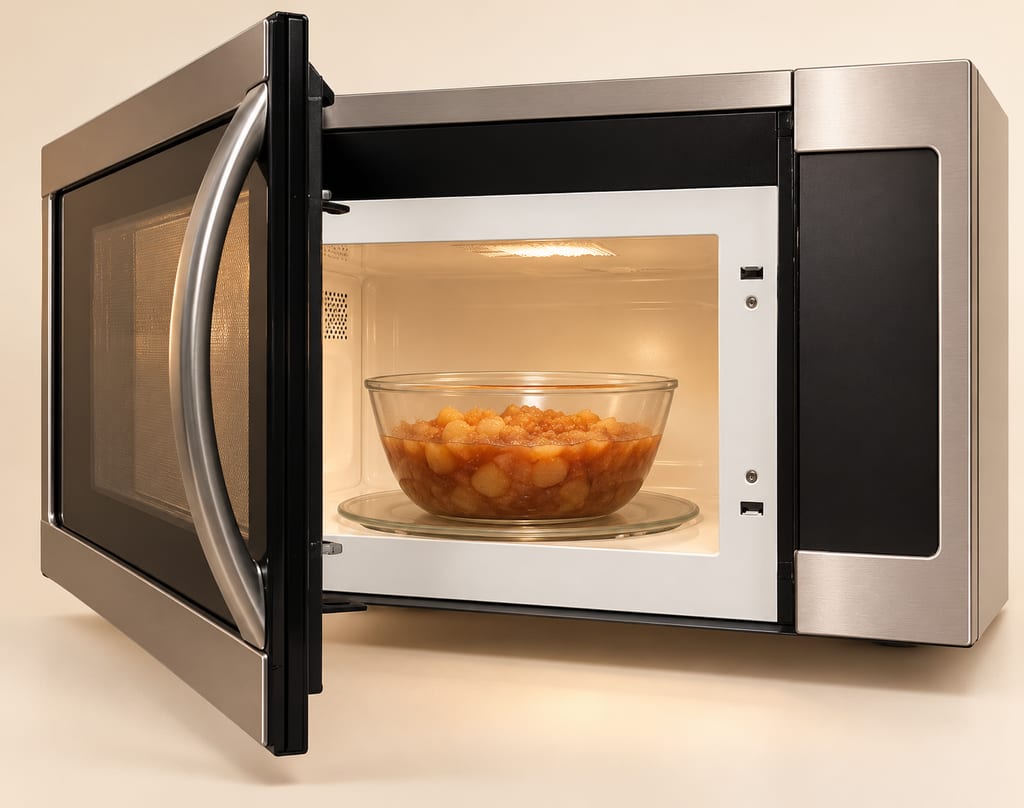
A domestic electric oven uses a magnetron to generate microwaves that heat food in the cavity. Oregon State documents it for small-batch fruit butter; it is not a home canning processor.
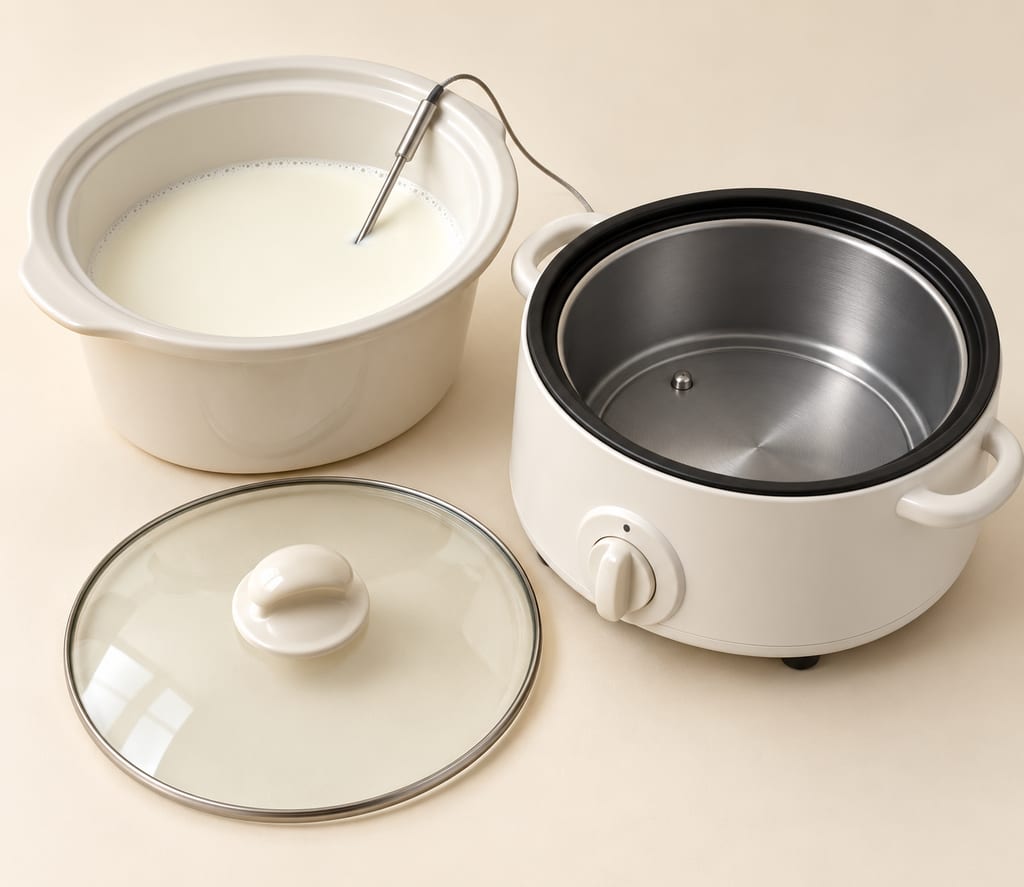
An electric slow cooker warms a removable heavy crock under a lid. Stored heat aids gradual cooking, but its settings are not a universal fermentation thermostat.
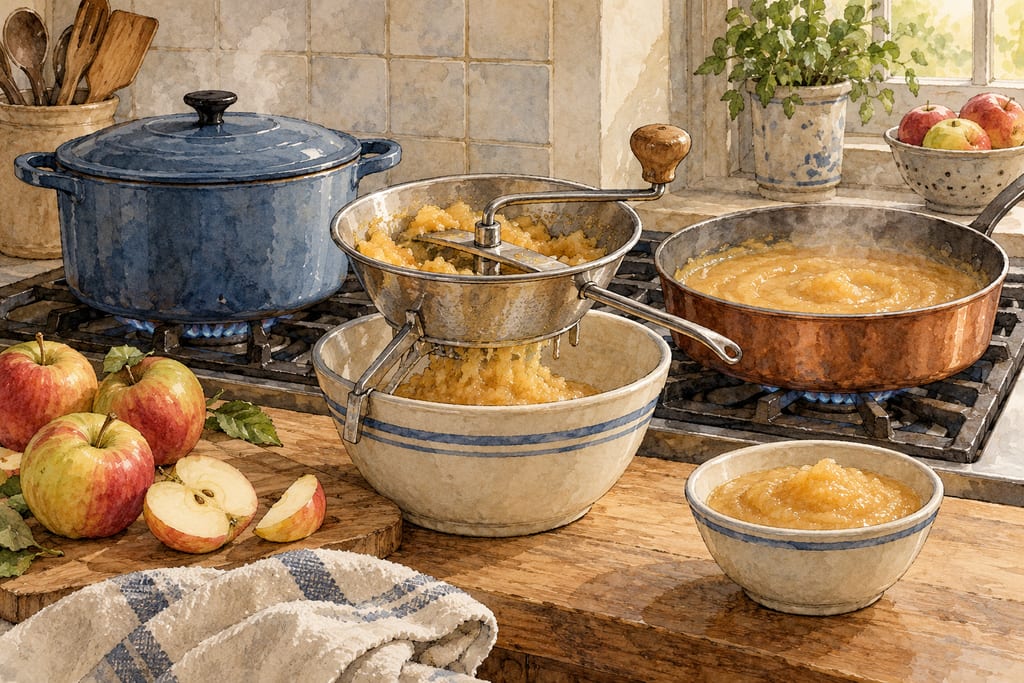
Each appliance does the stage it is good at: a closed pot to soften, a mill or cloth to separate, an open pan or freezer to concentrate or clarify.
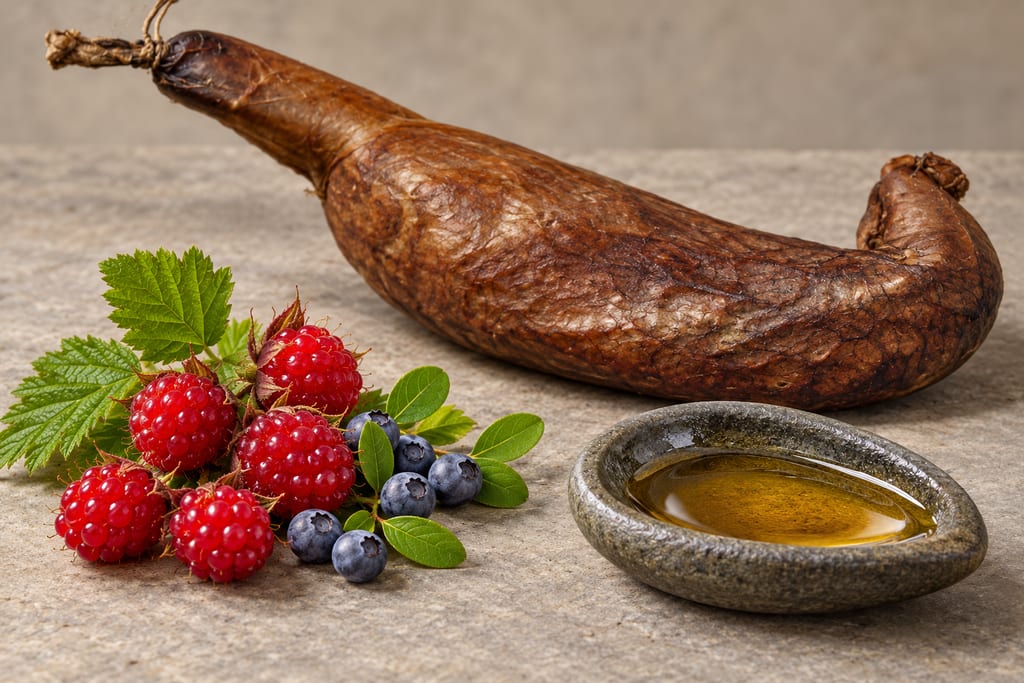
Berries, greens and fish eggs were kept in seal oil by Indigenous Alaskan communities. The oil seals the food from air, and the result depends on preparation and the surrounding conditions.
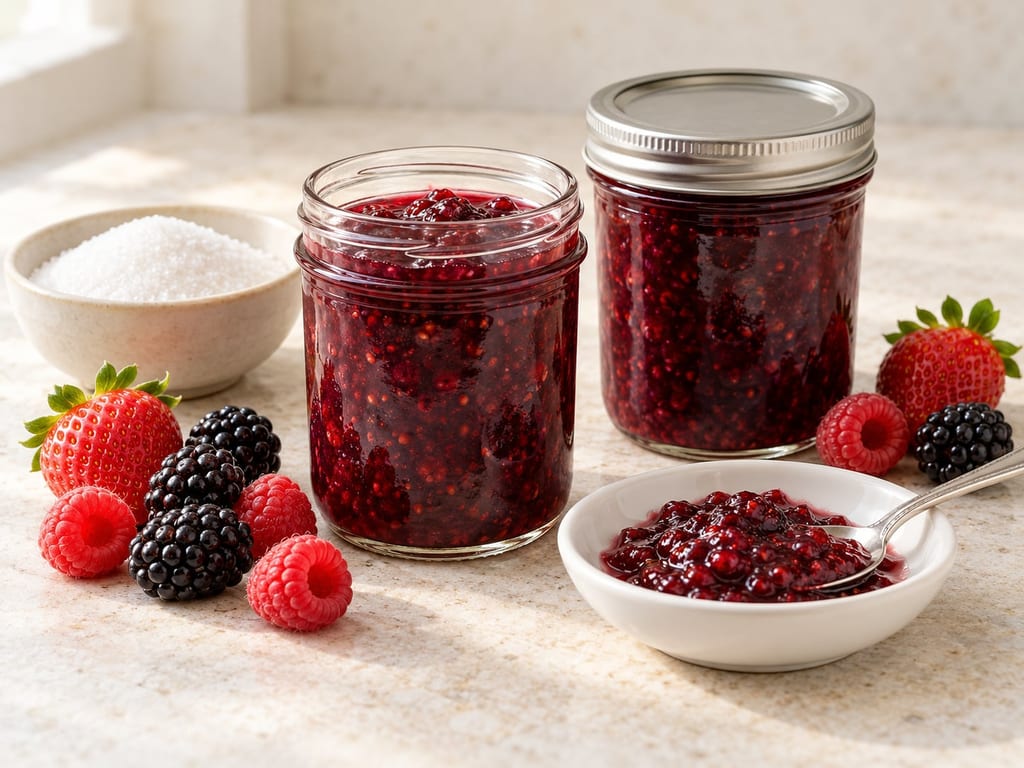
A NCHFP berry jam made without added pectin: crushed berries and sugar are cooked to the desired gel point, hot-filled into sterile half-pint or pint jars, and processed in a boiling-water canner.
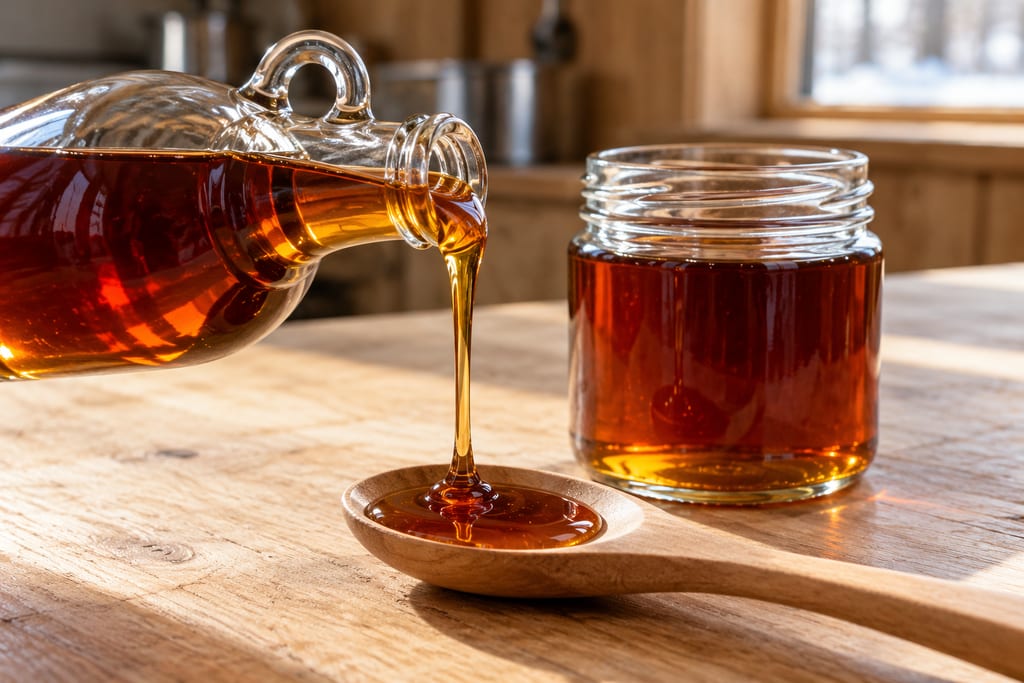
Maple sap of about two percent sugar boiled down in a shallow pan until it reaches syrup density, the sugar concentration the standard defines, then filtered hot and packed hot.
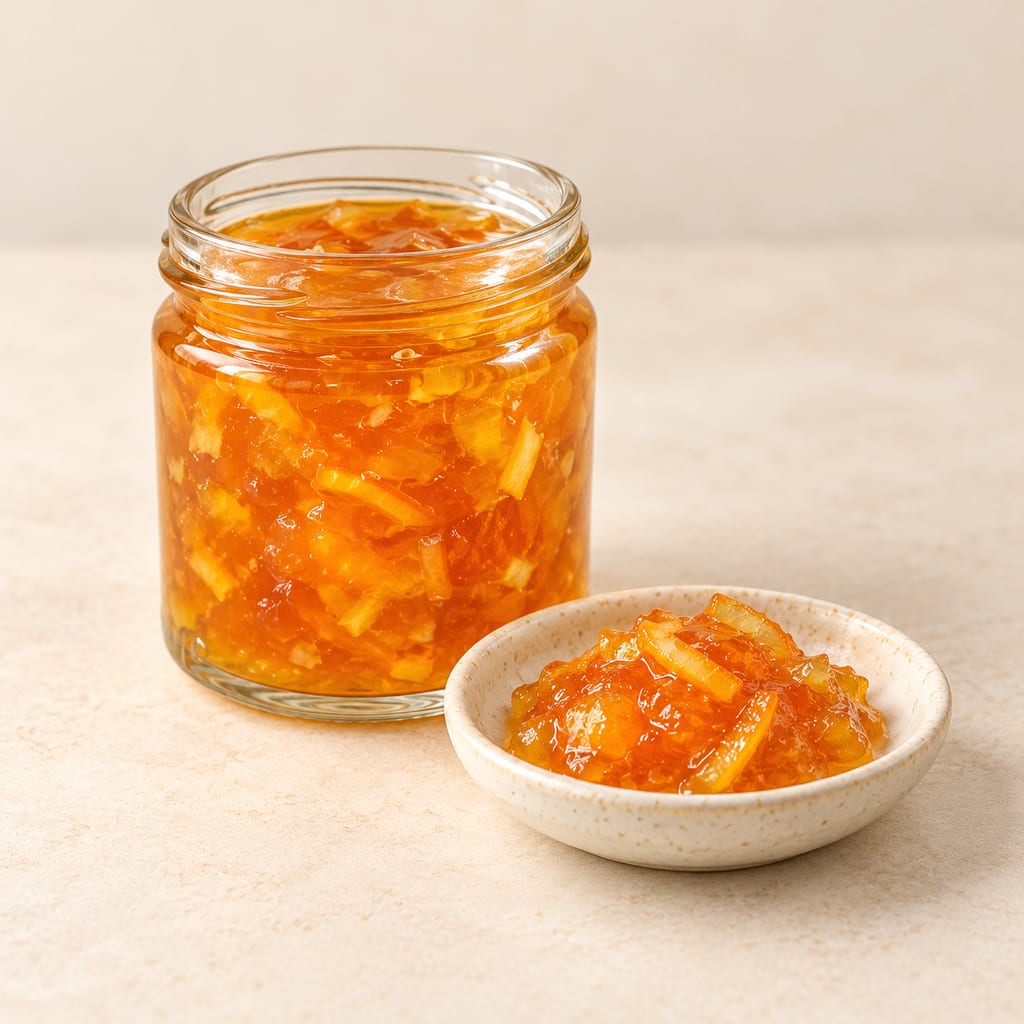
Orange marmalade suspends thin strips of citrus peel in a sweet gel. This navel-orange batch includes pulp and lemon and is preserved in a boiling-water canner.
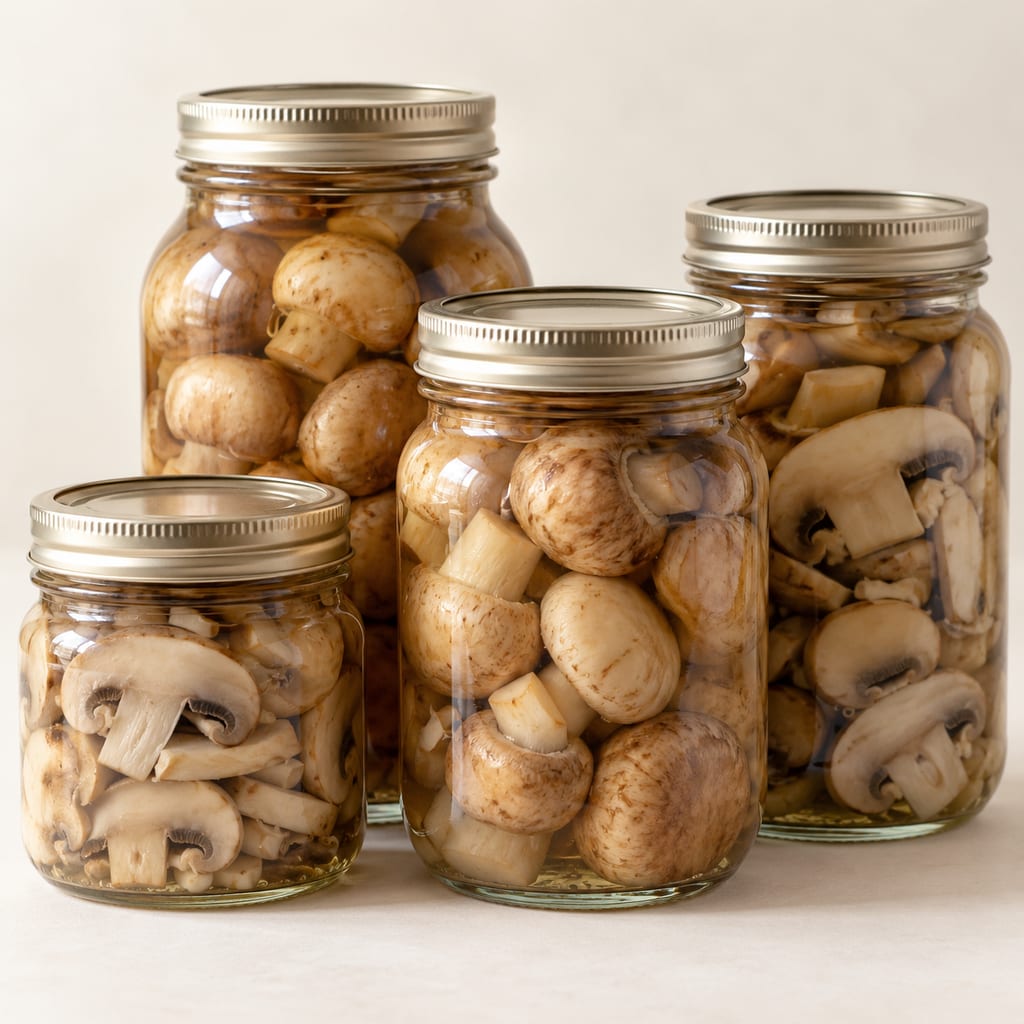
Whole or sliced domestic mushrooms packed hot in jars with fresh water and processed in a pressure canner, the tested home method for a low-acid vegetable.
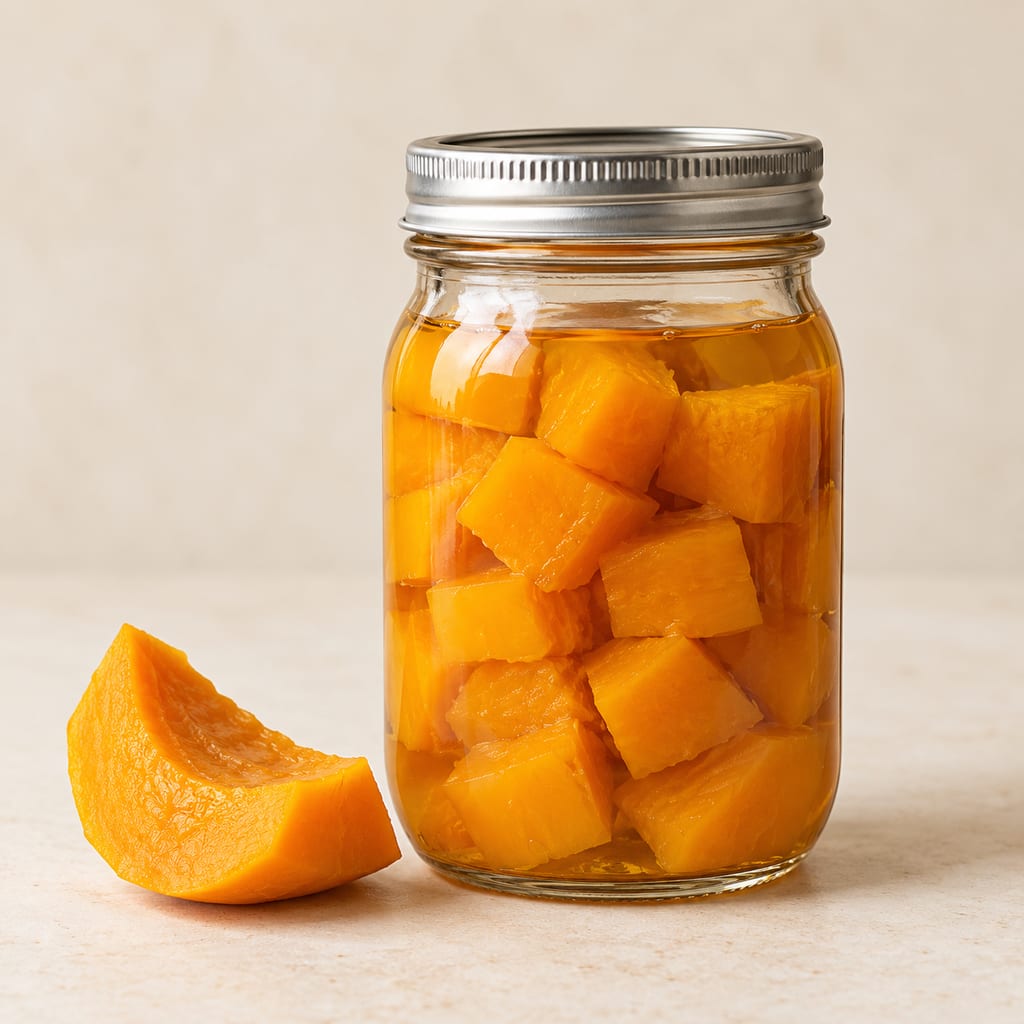
Plain pumpkin cubes hot-packed in water and pressure-canned for later cooking. The pieces stay intact during canning; mash them only after opening.
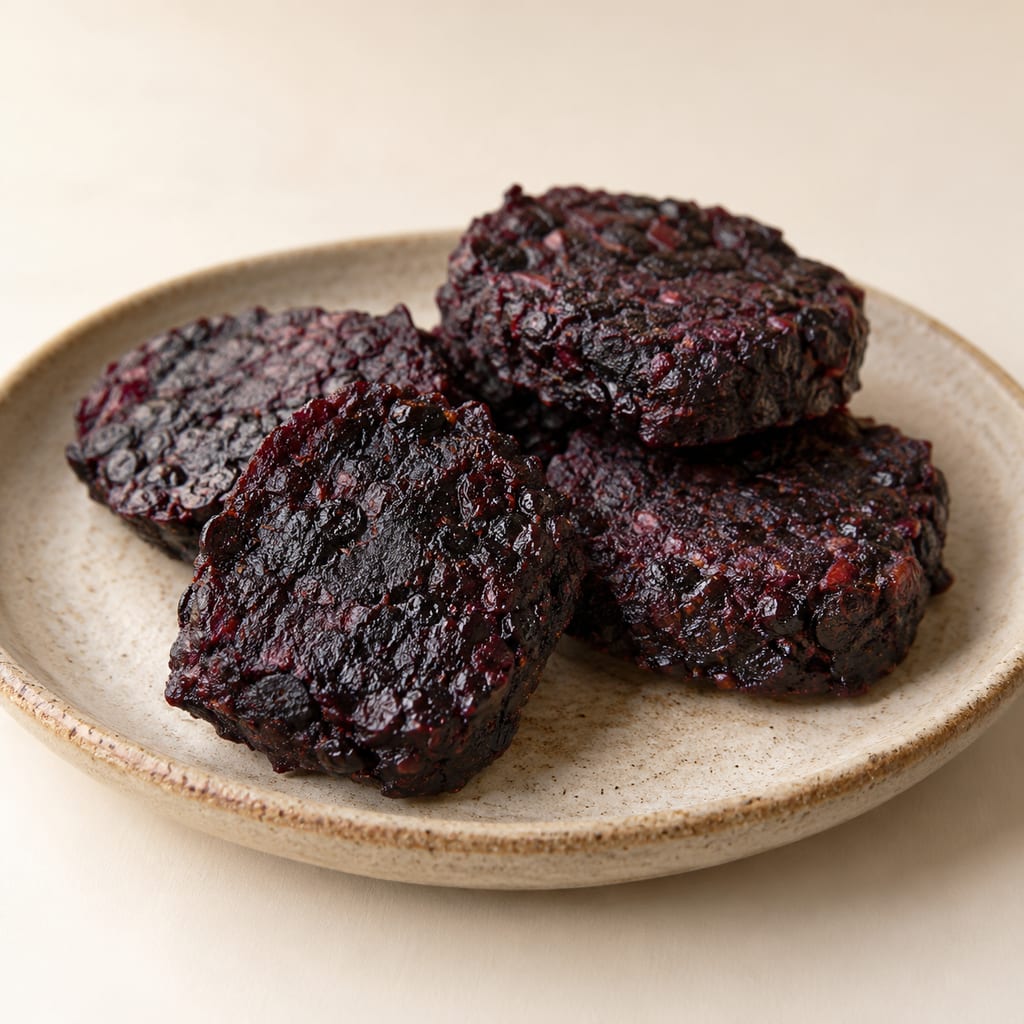
Salal berries pulped, formed into cakes and dried, a compact berry reserve of the northwestern American coast.
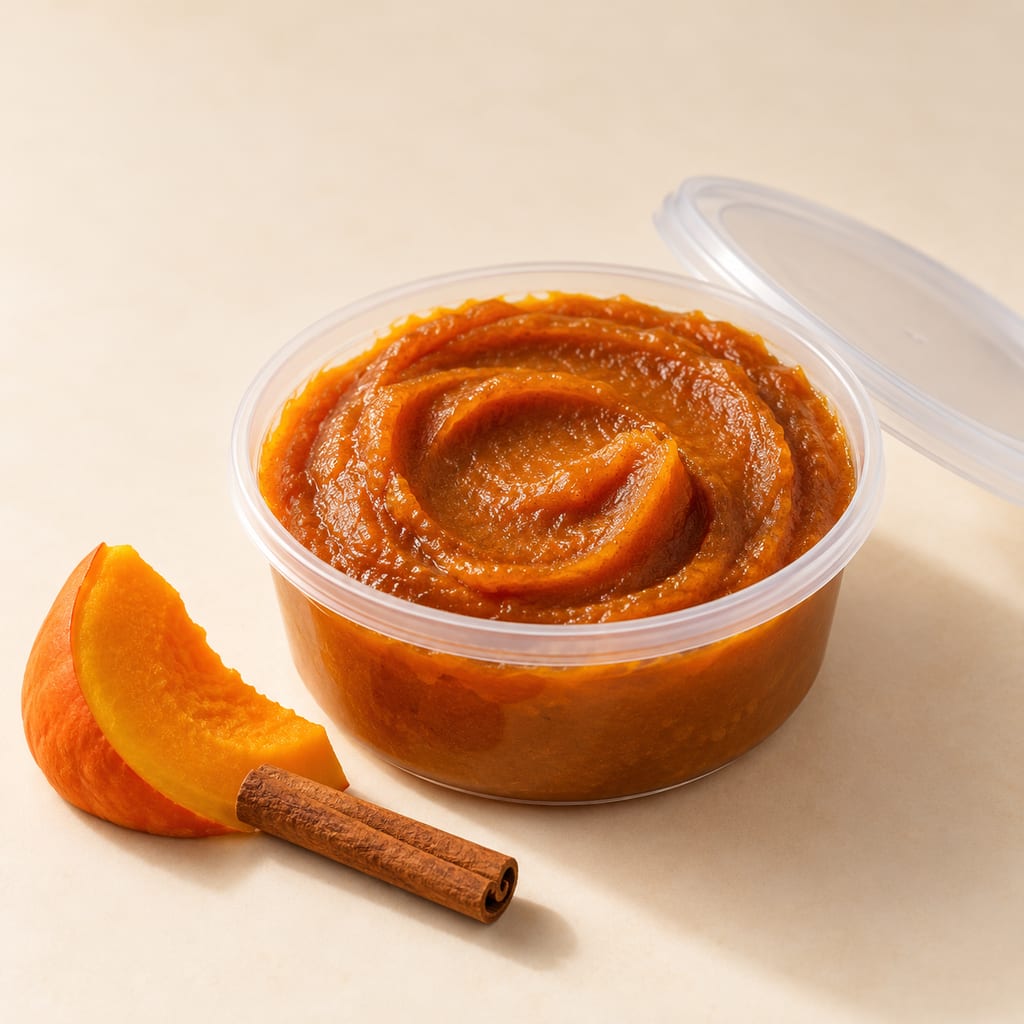
Spiced freezer pumpkin butter: Freeze for winter; small fresh portion refrigerated up to 48 hours.
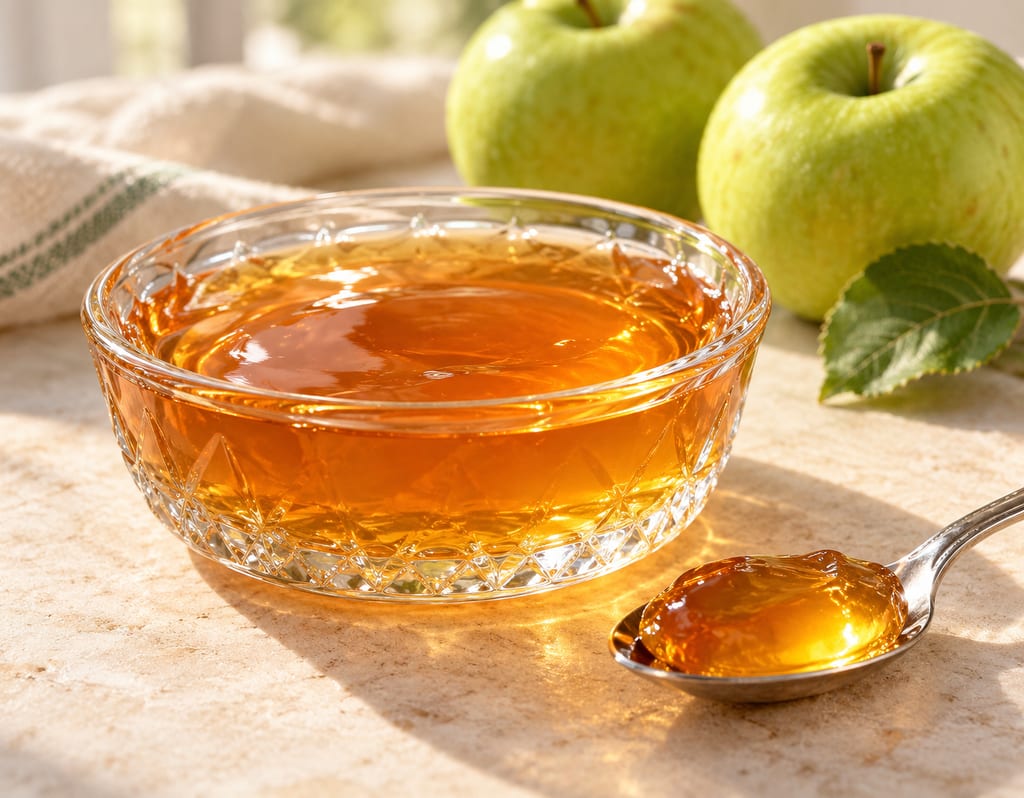
A clear jelly made from tart-apple juice, sugar and optional strained lemon juice. This batch uses a stated fruit-to-water preparation, gel endpoint, hot fill and altitude-adjusted boiling-water process.
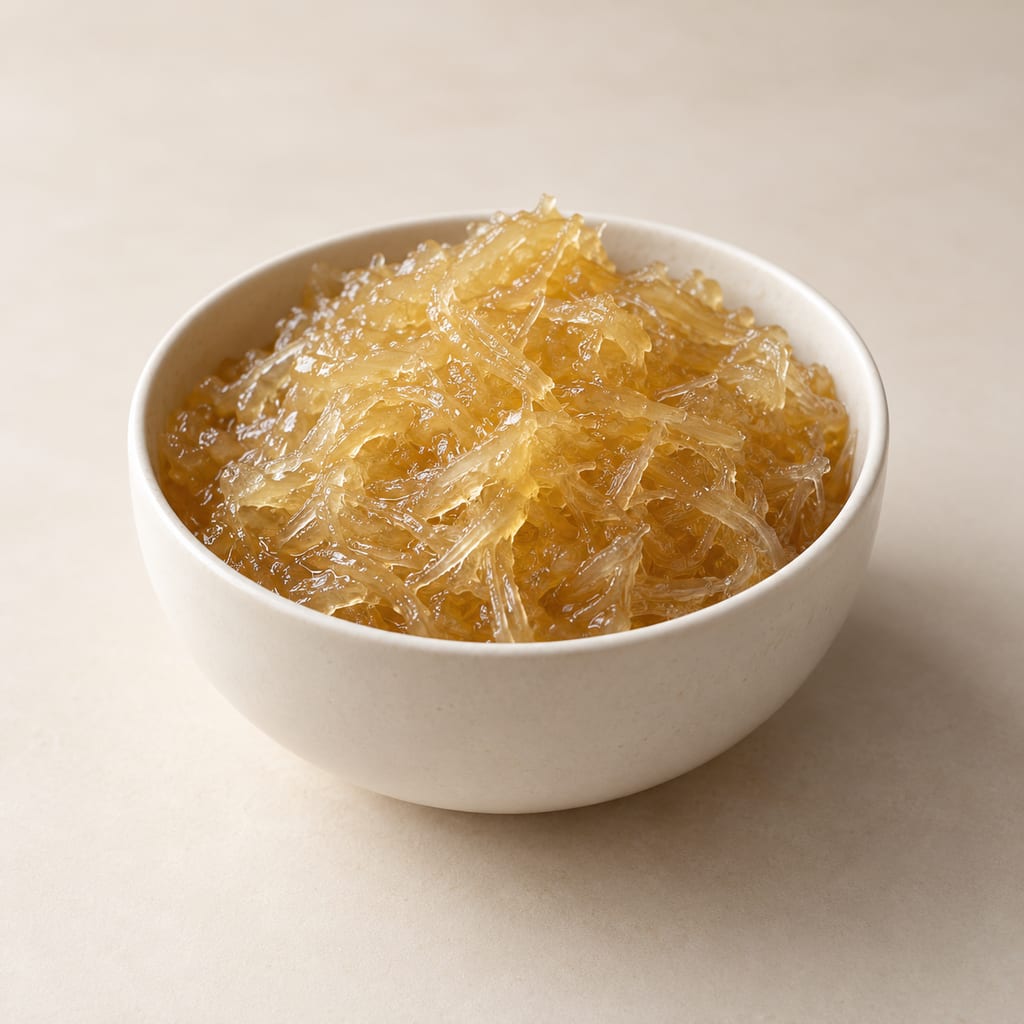
Fine strands of Cucurbita ficifolia cooked in an equal weight of sugar, then portioned for refrigerator or freezer storage. Ordinary orange pumpkin does not give the same fibres.
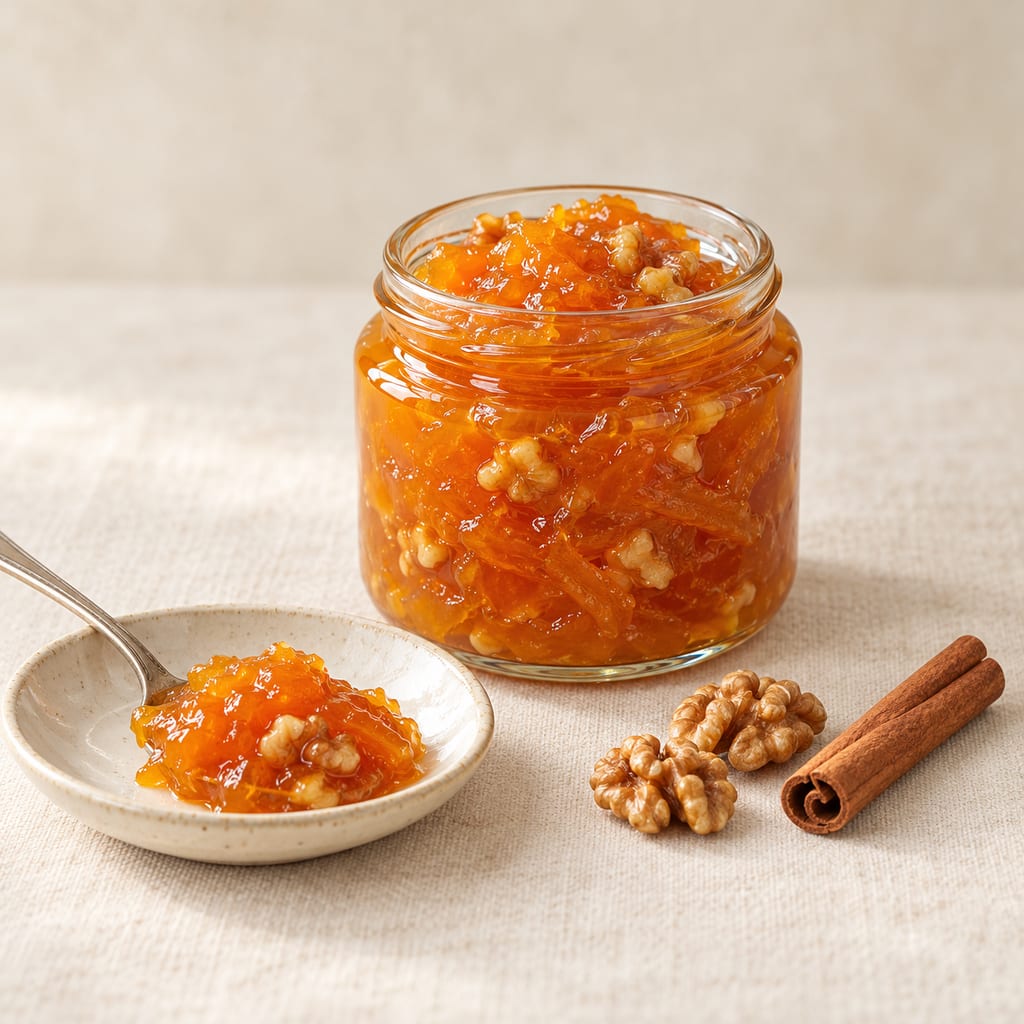
Portuguese pumpkin jam cooked with cinnamon and optional walnuts. A sweet spread to refrigerate or freeze, rather than a home-canned preserve.
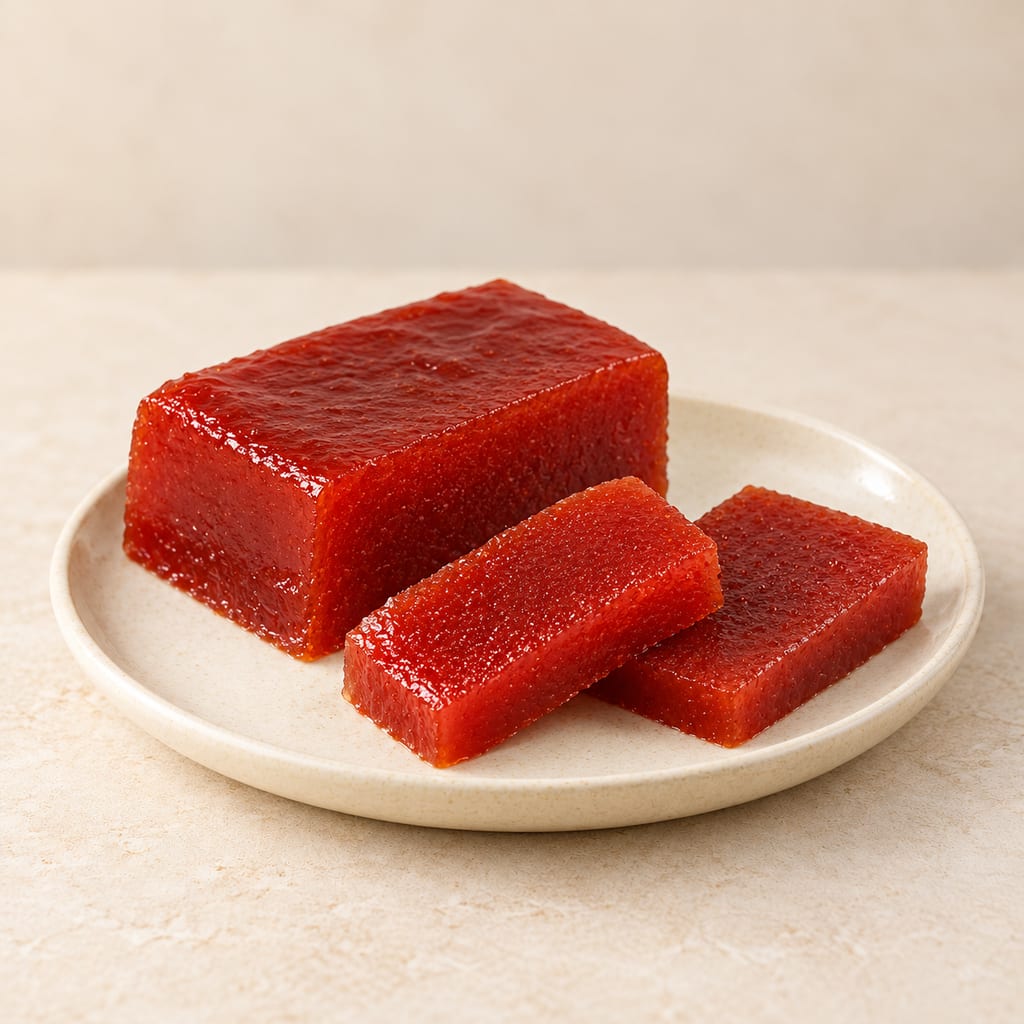
Dulce de membrillo is quince cooked with sugar into a firm paste for slicing. This family method softens the fruit in a pressure cooker, then blends it and leaves it to set.
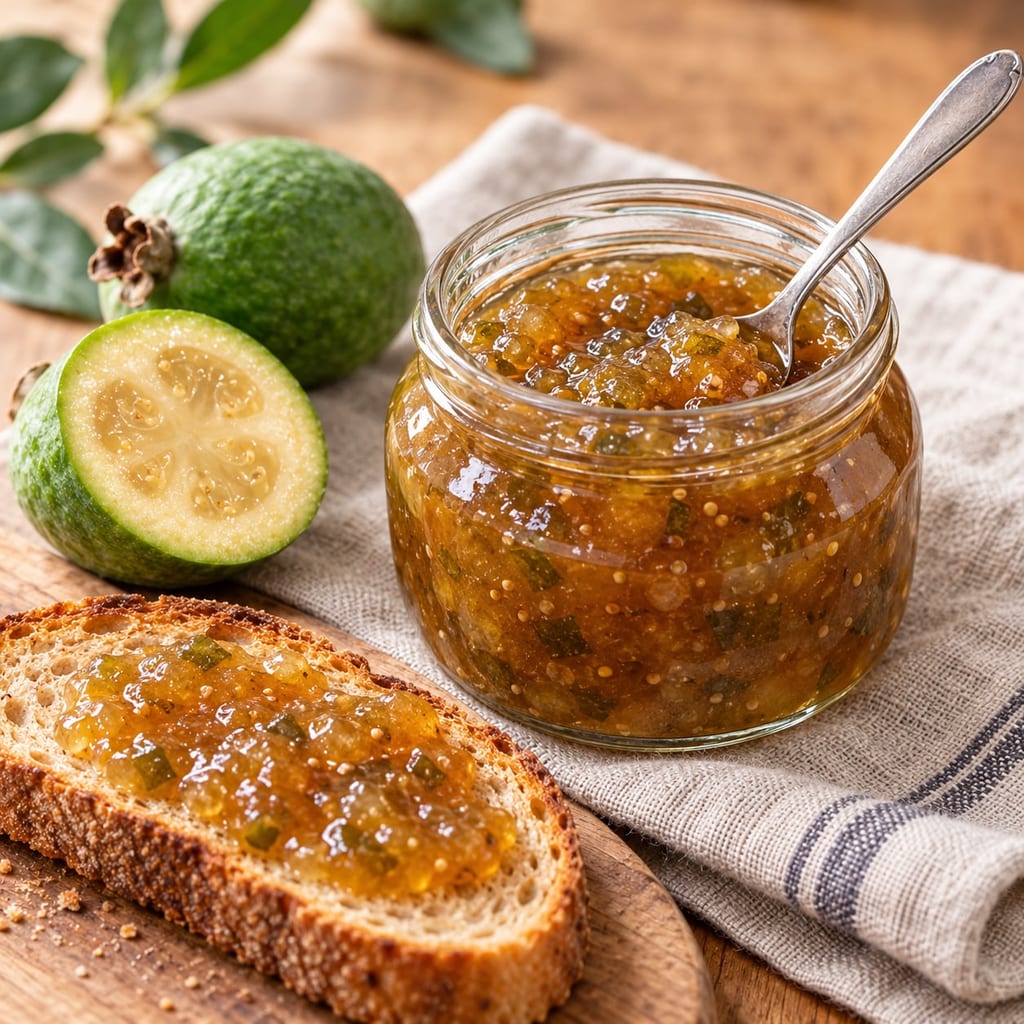
Blended whole feijoas simmer into a skin-on jam with lemon, sugar and vanilla. The skins remain for a more textured finish; keep this batch refrigerated or frozen because its method has no validated shelf-stable canning process.
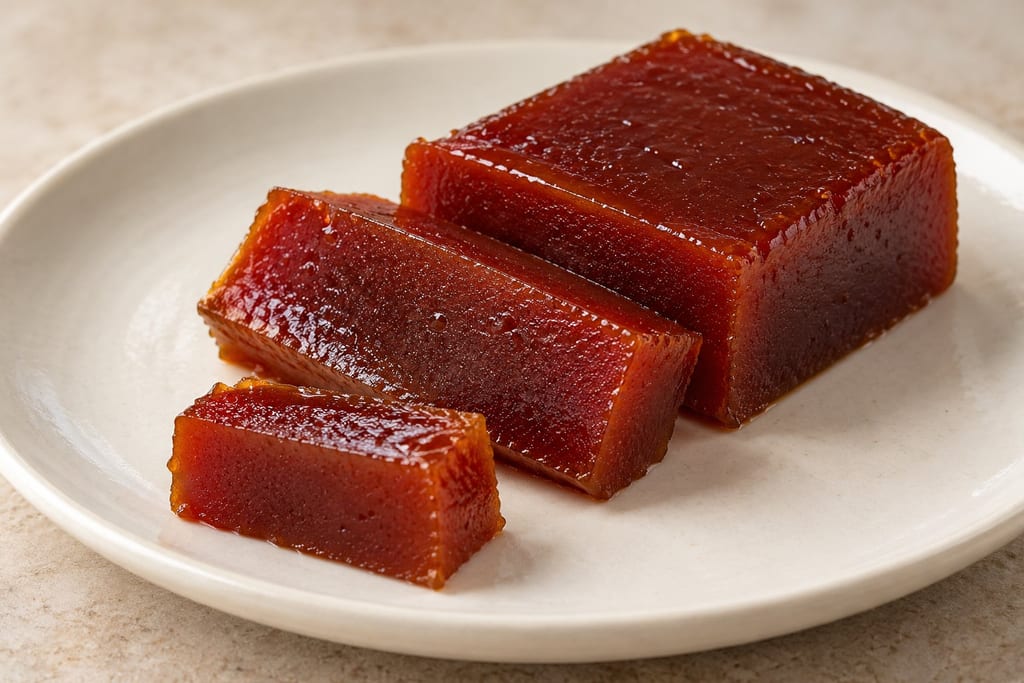
Cooked, sieved guava pulp is reduced with sugar and lime juice to a sliceable paste, then refrigerated. This adapted trial begins with prepared pulp and has no validated canning process or storage duration.

Jam is fruit cooked with enough sugar and concentration to reduce the water available to microbes. Jelly uses clarified juice and firmer fruit pastes lose still more moisture.
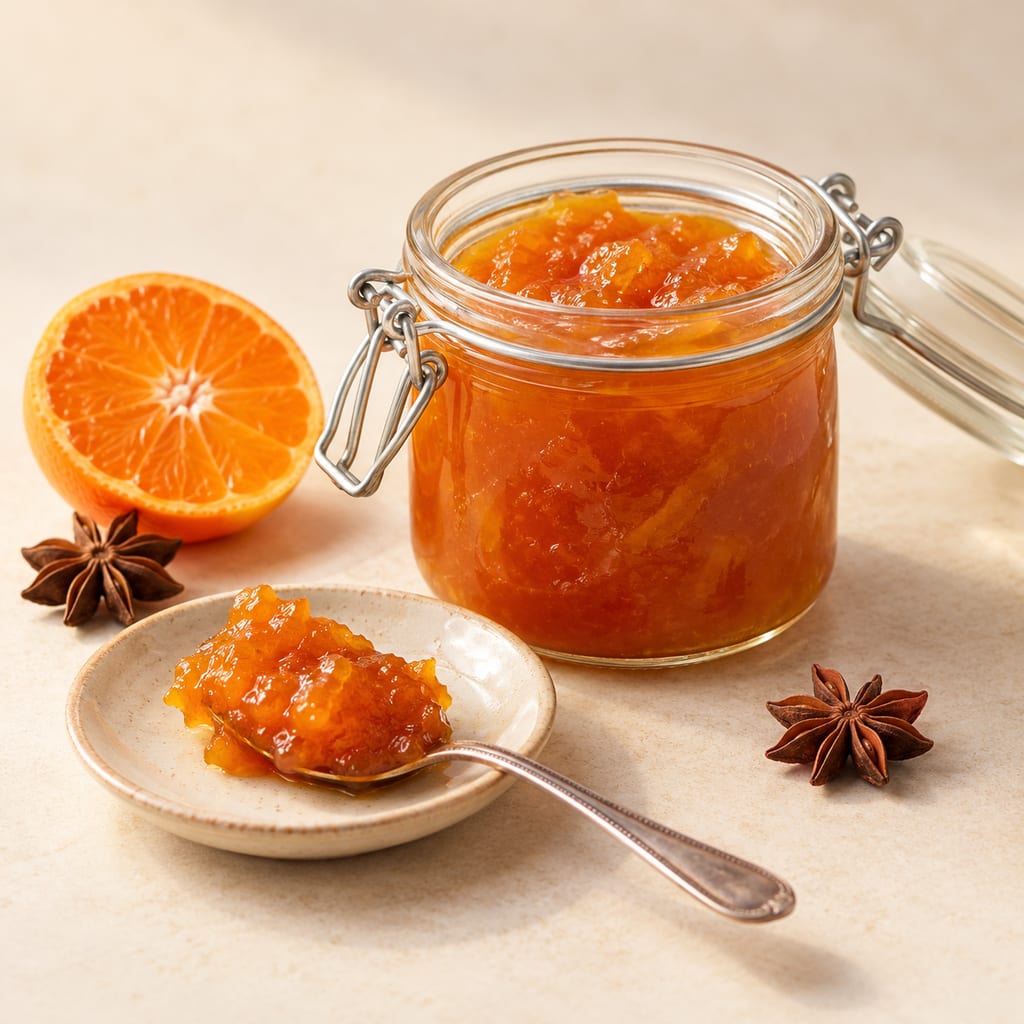
Portuguese pumpkin jam: Freeze for winter; small fresh portion refrigerated up to 48 hours.
No community contributions have been published for this entry yet.
Sign in to contribute. Published comments and photos are free to read.
Oregon State University Extension Service (revised October 2025)Method · Storage · Safety
Fruit butters (SP 50-304)Four methods; slow cooker on low for 8 to 10 hours with the lid ajar; microwave recipe; basic recipe; doneness tests; fruits without tested canning recipes
Butters are cooked in small batches
Cited in: A spread cooked down from fruit; Three appliance routes; Knowing when it is done; Storage and what the appliances cannot do
N.C. Cooperative Extension, Lenoir County CenterMethod · Storage
Fall is the Season for Apples (recipe: Slow Cooker Apple Butter)5-quart slow cooker, low for 10 hours covered, immersion blender, high for 1½ hours uncovered, 4 cups; chilled up to a week
Cited in: Three appliance routes; Storage and what the appliances cannot do
Instant PotMethod
Apple ButterPressure High 20 minutes; Sauté 20 minutes with the vent open; stir every 5 minutes; blend; printed yield of 80 servings
Cited in: Three appliance routes
National Center for Home Food Preservation, University of GeorgiaSafety
Canning in Electric Multi-CookersMulticookers are not supported for USDA canning processes
Cited in: Storage and what the appliances cannot do
National Center for Home Food Preservation, University of Georgia (adapted from the USDA Complete Guide to Home Canning)Safety
Apple ButterTested stovetop canning formulation is a separate recipe; appliance butters have no canning process
Cited in: Storage and what the appliances cannot do
Crock-Pot (Newell Brands)Equipment
Crock-Pot SCV400RD 3.5L Slow Cooker instruction bookletFill ½ to ¾ full; cook with the lid on
Cited in: Knowing when it is done