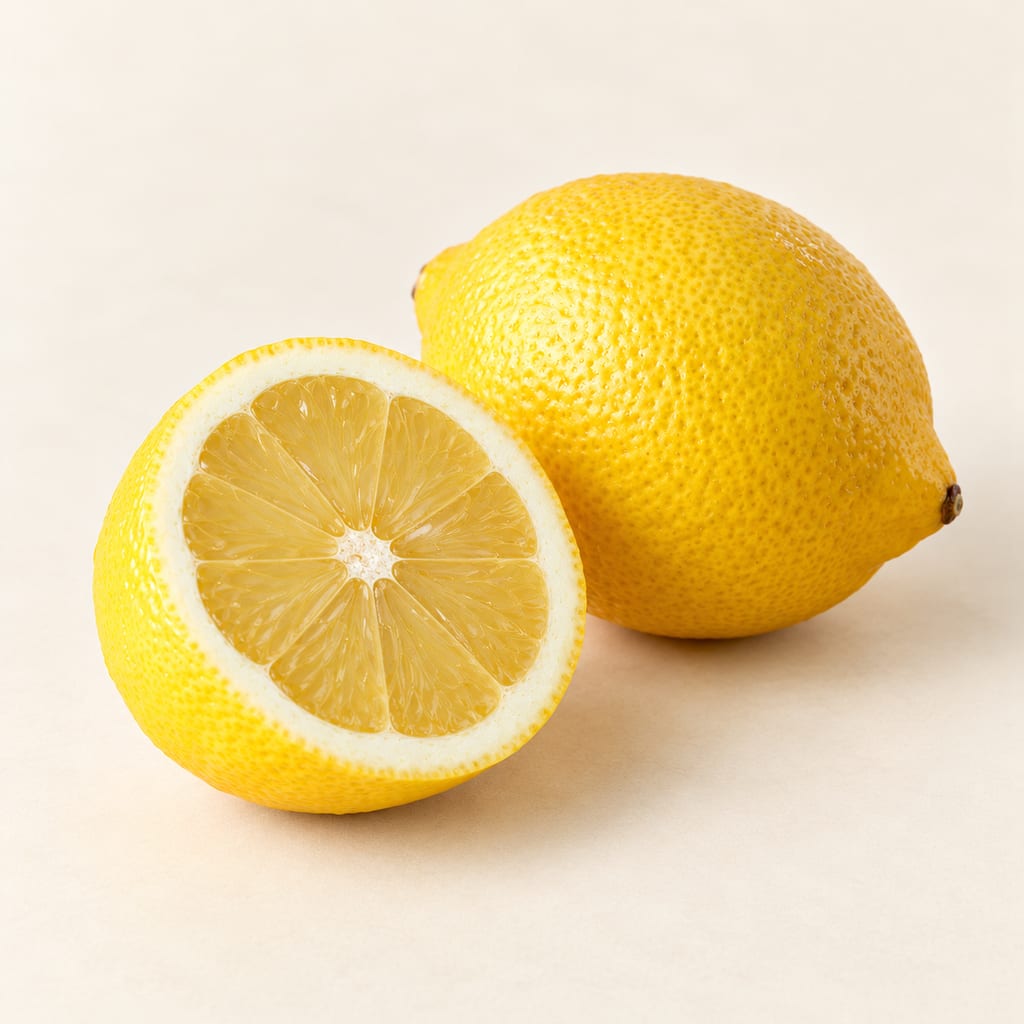
Lemons
Lemons are aromatic, acidic citrus fruits whose peel, pith and juice serve different jobs in food and drink. The fruit is a hybrid with a complex history.
 FermenteaWhere food goes to change
Modern method
Apple jelly without pectin
A clear jelly made from tart-apple juice, sugar and optional strained lemon juice. This batch uses a stated fruit-to-water preparation, gel endpoint, hot fill and altitude-adjusted boiling-water process.
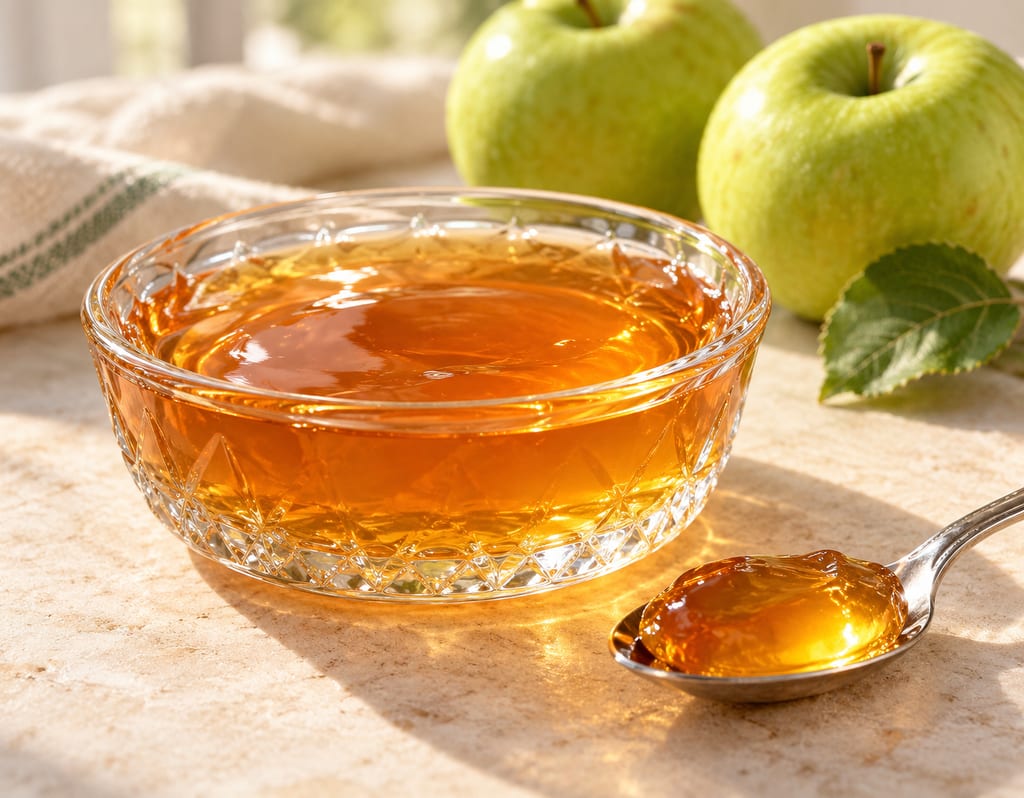
This recipe sets a measured quantity of extracted apple juice with sugar. It is a jelly rather than a preserve containing pieces of fruit: the cooked apple pieces are strained away, and the clear juice is the material measured into the final kettle. The formula uses no added commercial pectin. It depends on the fruit selected and the source's boiling endpoint, so this is a specific batch rather than a general ratio for any apple juice.
For the juice, the source calls for a mixture of about one-fourth underripe and three-fourths fully ripe tart apples. The NCHFP guidance explains that, for jelly made without added pectin, fruit skins and cores are retained because pectin is more concentrated there. The recipe therefore says not to pare or core the apples. This differs from simply using peeled fruit or substituting a ready-made juice: the measured process starts with small pieces of whole apples, simmered with water until soft.
After cooking, the juice drains through a damp jelly bag. The separate extraction guidance says unpressed dripping produces the clearest jelly. Pressing may send more pulp through and change the clarity; the source does not require squeezing the bag to reach the listed yield. The target for the jelly kettle is 4 cups of extracted juice.
The recipe uses about 3 pounds of tart apples and 3 cups water to make the 4 cups of juice. The jelly kettle then receives 3 cups sugar and, if desired, 2 tablespoons strained lemon juice. Lemon is explicitly optional. The source estimates a yield of about 4 or 5 half-pint jars. Its canning table also permits pint jars, but changing jar size does not change the stated processing schedule.
The fruit amount is approximate because the source expresses it as the amount expected to produce the measured 4 cups of juice. Once the apples have softened, measure the juice rather than assuming the starting fruit has yielded a fixed quantity. The process directions call for adding the listed sugar to that measured juice; they do not provide a reduced-sugar variation or a substitution with bottled juice. Keep this formula intact when using its canning process.
The juice, sugar and optional strained lemon juice are stirred together and boiled over high heat. The recipe describes two endpoints: 8°F above the boiling point of water, or a sheet falling from a spoon. The companion NCHFP guide calls temperature the most dependable of its jelly tests and explains how to position the thermometer so its bulb is covered without touching the pan. Because the stated endpoint is relative to water's local boiling point, the recipe does not use one universal thermometer number at every elevation.
The sheet test is a visible alternative described by the same guidance: as the syrup cooks, drops become heavier; when two drops join and fall together from the spoon as a sheet, the endpoint has been reached. Remove the kettle from the heat and skim foam quickly. This endpoint is about the jelly setting. It is separate from the later canner process, which is needed for the source's canned product.
Prepare the canner, jars and lids before the jelly reaches its endpoint so the hot product can be filled immediately. The recipe specifies hot, sterile jars, two-piece lids prepared according to their maker's directions, and ¼ inch headspace. Wipe the jar rims with a damp, clean paper towel before fitting the lids. The separate jar guidance explains sterilizing empty jars; the recipe's shortest canner schedule is five minutes, so its instruction to use sterile jars should be followed.
The hot-packed half-pint or pint jars go into a boiling-water canner. The recipe gives three elevation bands: 5 minutes from 0 through 1,000 feet, 10 minutes from 1,001 through 6,000 feet, and 15 minutes above 6,000 feet. The canner guidance says to keep at least 1 inch of water over the jars and maintain a complete boil for the full process. If the boil stops, restore it and begin the full timing again. This schedule belongs to the stated recipe, jar sizes and pack; a gel test alone does not replace it.
The NCHFP canning instructions say that jars that do not seal should be refrigerated and used first or handled through the recommended reprocessing guidance. This recipe does not supply a separate storage duration, so no shelf-life period is added here.
The source documents a home-canning formula and processing schedule for apple jelly without added pectin. It does not make this recipe a template for other fruit, bottled juice, different sugar amounts, larger jars or a scaled batch. Those changes are not specified by this formula. The page gives an approximate yield, not a guarantee that every batch will set or that every cook will obtain the same number of jars.
The cited material does not give a first historical attestation or geographic origin for apple jelly. This entry records the documented preservation method and leaves those broader claims open. It also does not add a pH target or storage duration that the source does not state.
The cited institutional recipe documents a tested home-canning formula but does not establish when or where apple jelly originated. Its publication history is not treated as the food's first attestation.
Yield 4.5 half-pint jars · Scaling: source batch only
The canning guidance requires a complete boil for the full processing time, says to restart the full timing if boiling stops, and directs unsealed jars to refrigeration and first use or tested reprocessing guidance.
Hazard sourceUse the hot-pack jar sizes and altitude-specific times stated for this recipe: half-pints or pints, 5 minutes at 0–1,000 ft, 10 minutes at 1,001–6,000 ft, and 15 minutes above 6,000 ft.
Control sourceKeep at least 1 inch of water above jar tops and maintain a complete boil for the full process time; if boiling stops, restore it and restart the full timing.
Control sourceUse hot, sterile jars, leave ¼ inch headspace, wipe the rims clean and fit two-piece lids according to the manufacturer.
Control sourceUse the stated apple, water and sugar amounts and the listed processing schedule together; no bottled-juice substitution or reduced-sugar variation is specified for this batch.
The jelly endpoint test determines when the mixture has gelled; it does not replace the altitude-adjusted boiling-water canner process.
The recipe source documents a tested home-canning method, not a geographic origin for apple jelly.
Lemons are aromatic, acidic citrus fruits whose peel, pith and juice serve different jobs in food and drink. The fruit is a hybrid with a complex history.
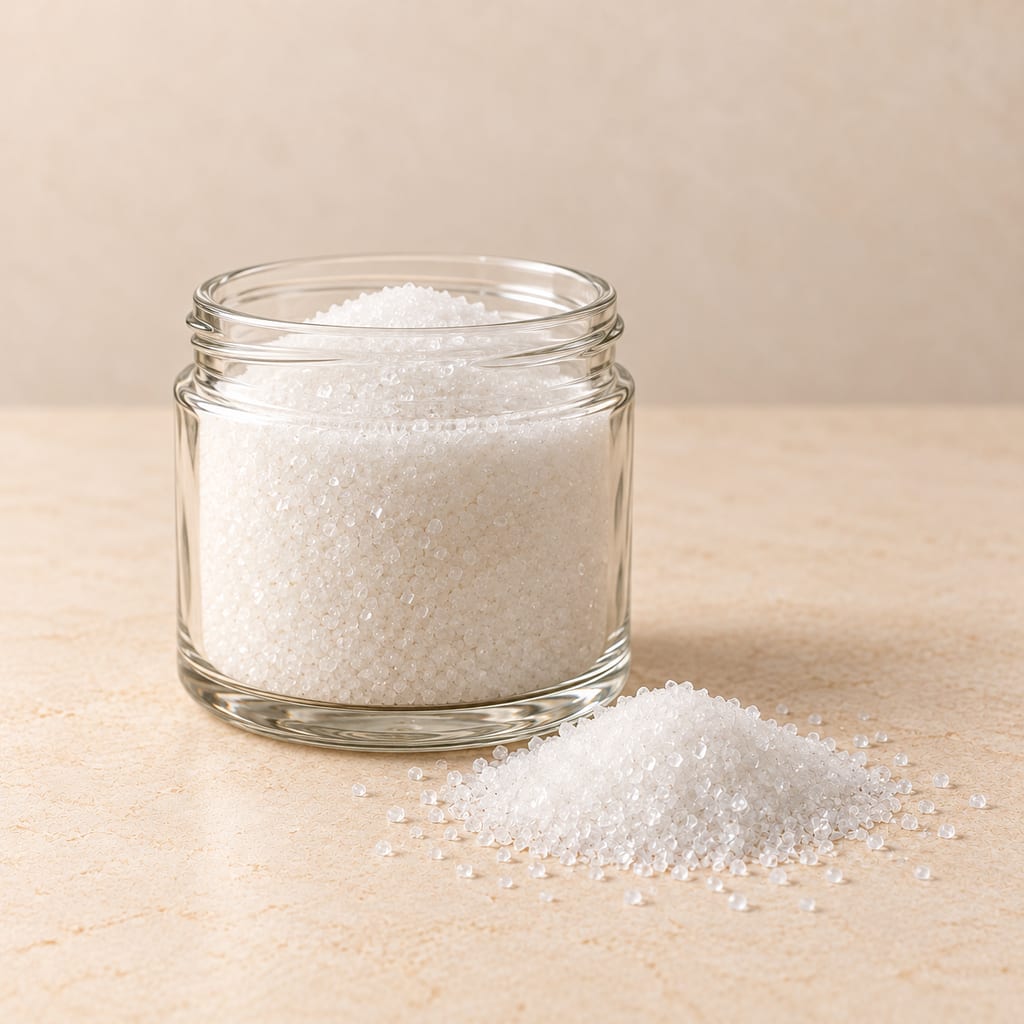
Sugar is a family of sweeteners with different forms and food roles; refined white sucrose may come from cane or beet, while less refined forms add other flavours and moisture.
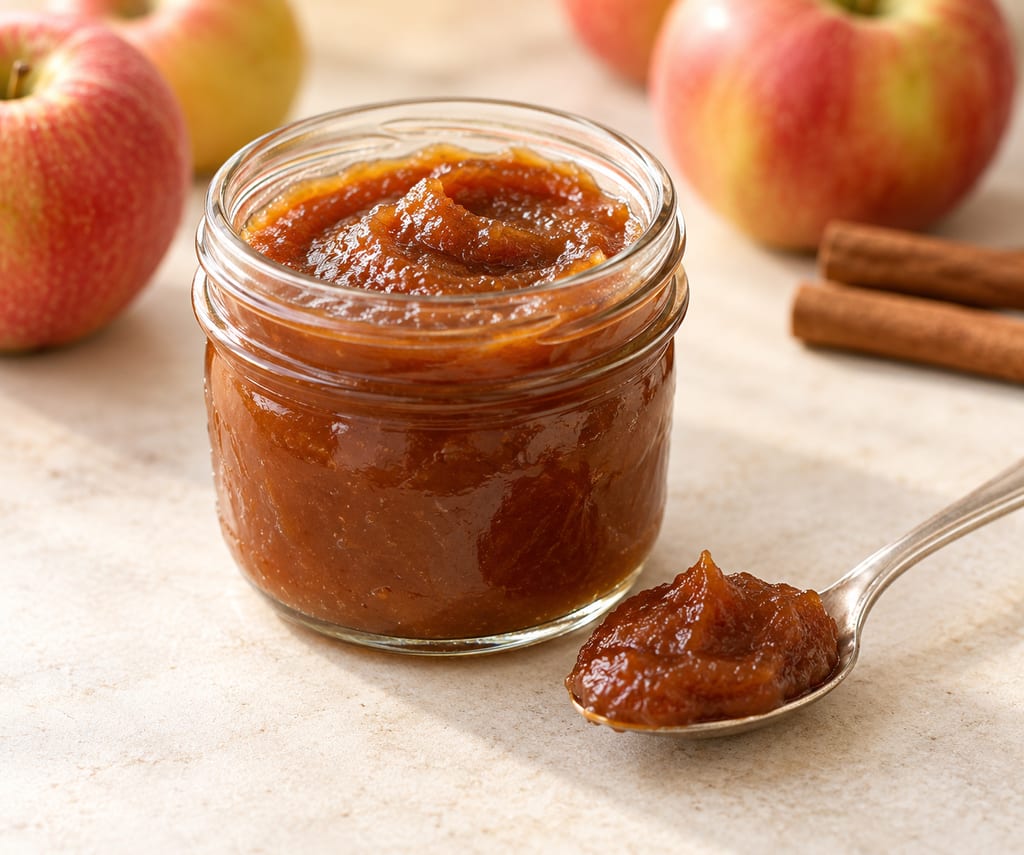
Apple butter is a smooth, concentrated apple preserve cooked with cider, vinegar, two sugars and spices, then hot-filled and processed in a boiling-water canner using the published jar-size and elevation schedule.
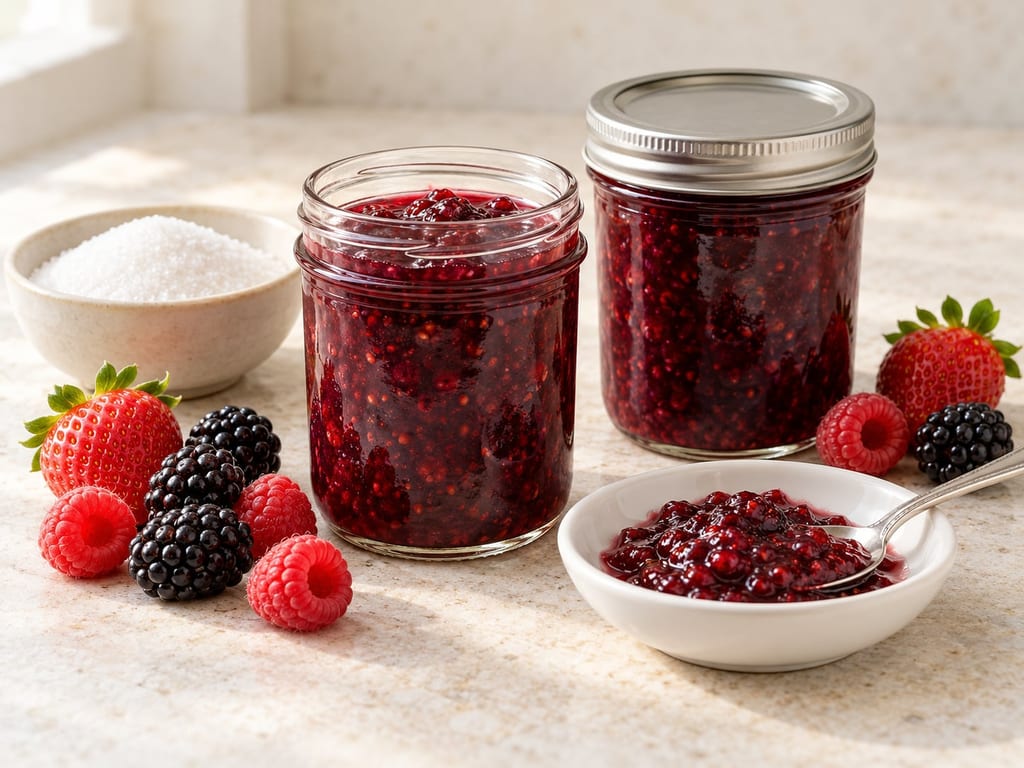
A NCHFP berry jam made without added pectin: crushed berries and sugar are cooked to the desired gel point, hot-filled into sterile half-pint or pint jars, and processed in a boiling-water canner.
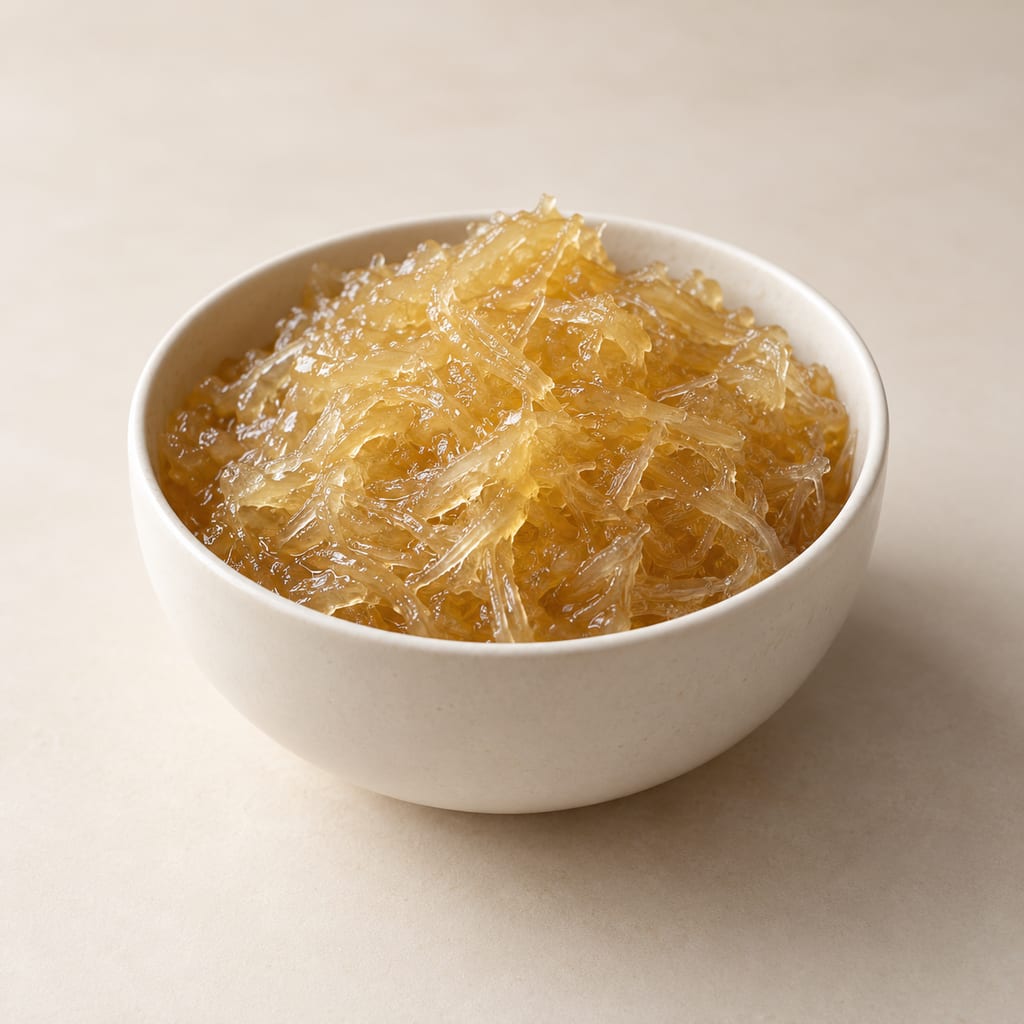
Fine strands of Cucurbita ficifolia cooked in an equal weight of sugar, then portioned for refrigerator or freezer storage. Ordinary orange pumpkin does not give the same fibres.
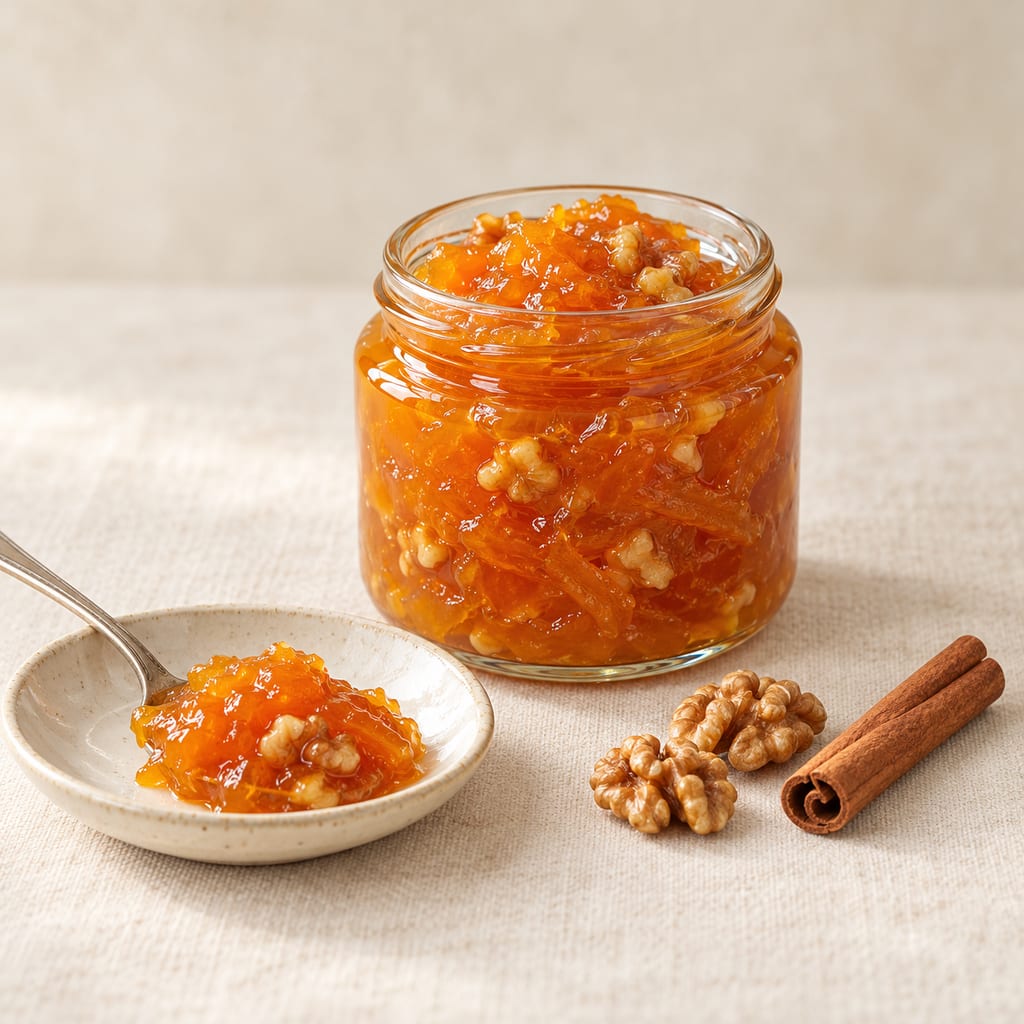
Portuguese pumpkin jam cooked with cinnamon and optional walnuts. A sweet spread to refrigerate or freeze, rather than a home-canned preserve.
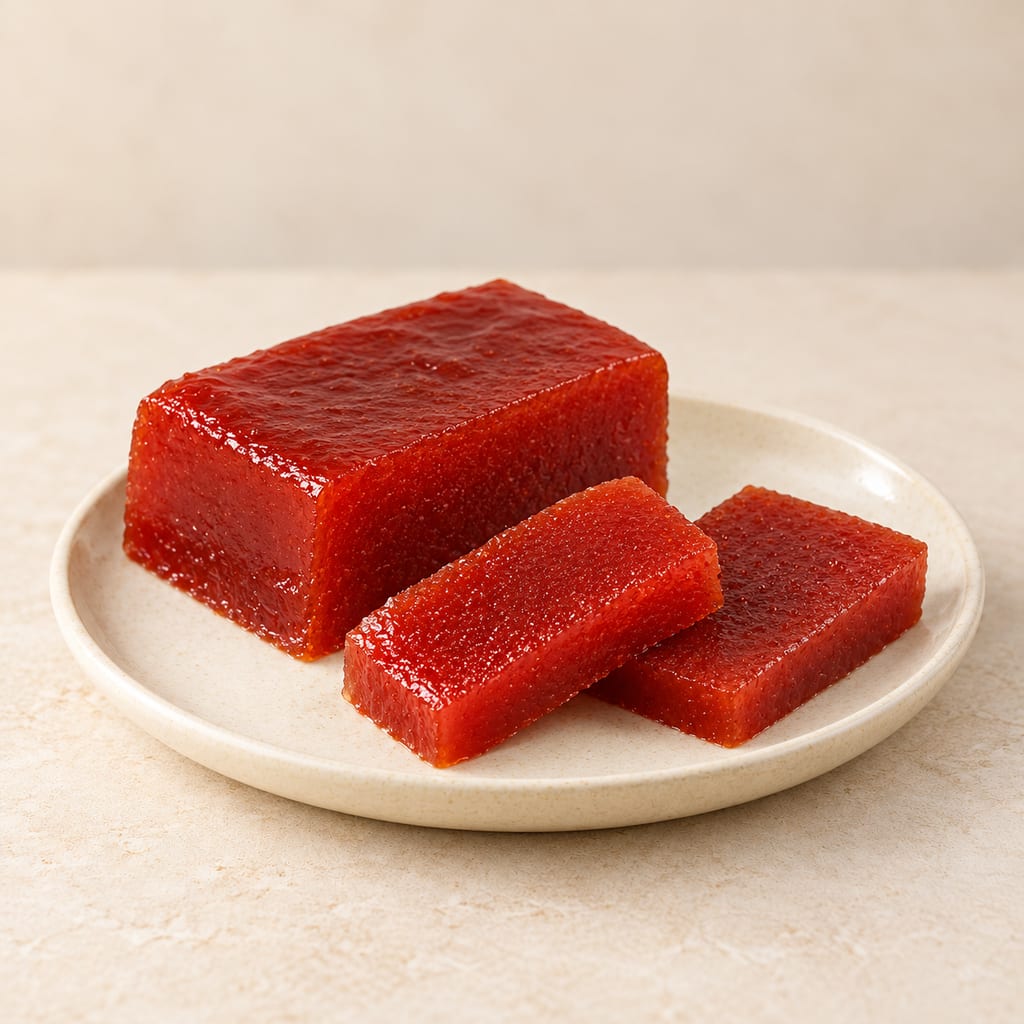
Dulce de membrillo is quince cooked with sugar into a firm paste for slicing. This family method softens the fruit in a pressure cooker, then blends it and leaves it to set.
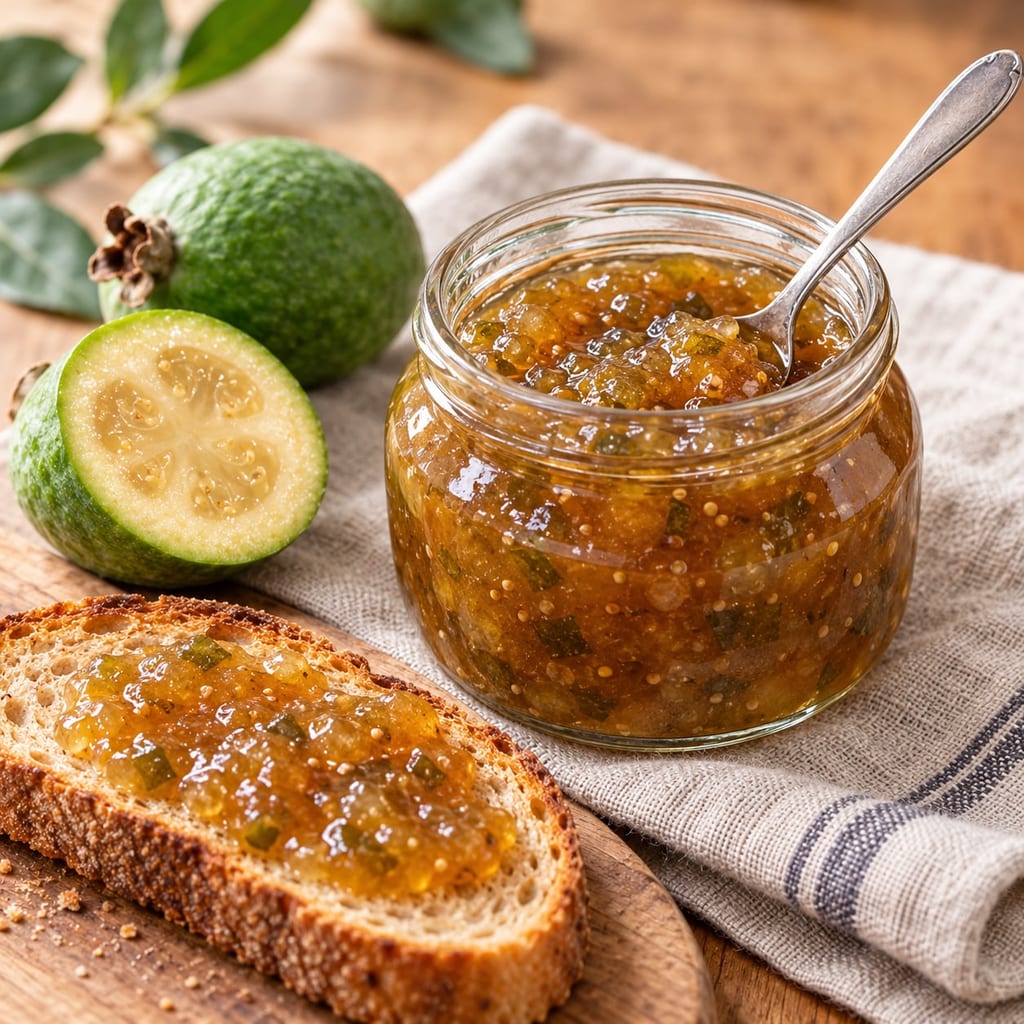
Blended whole feijoas simmer into a skin-on jam with lemon, sugar and vanilla. The skins remain for a more textured finish; keep this batch refrigerated or frozen because its method has no validated shelf-stable canning process.
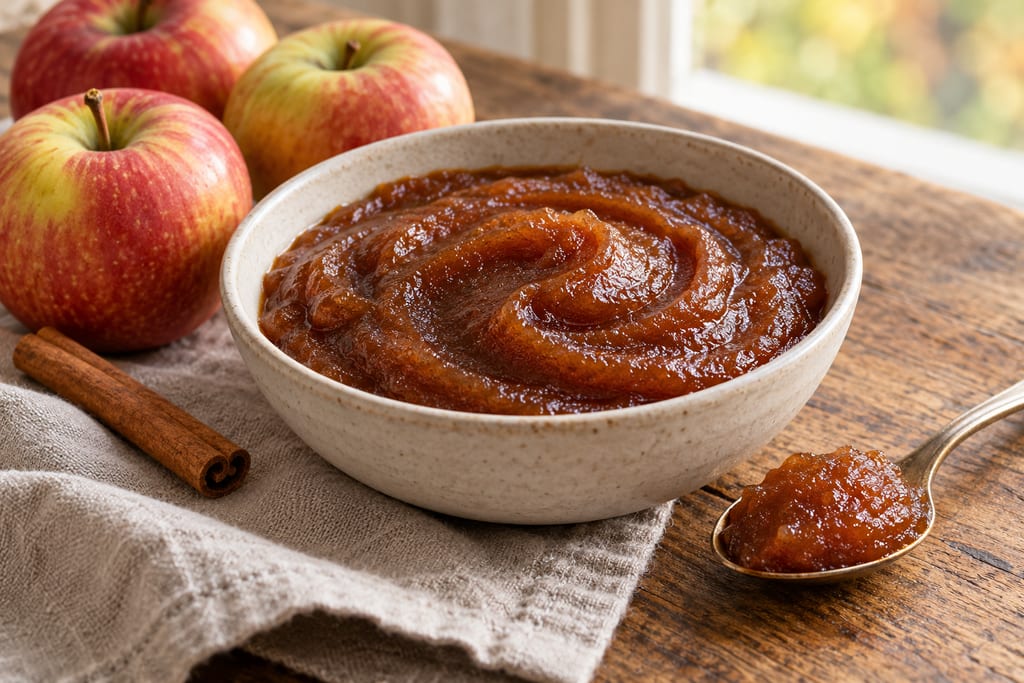
A smooth fruit pulp cooked down with sugar and spice until it holds its shape on a spoon, made by three documented routes in a slow cooker, a microwave or an electric multicooker.
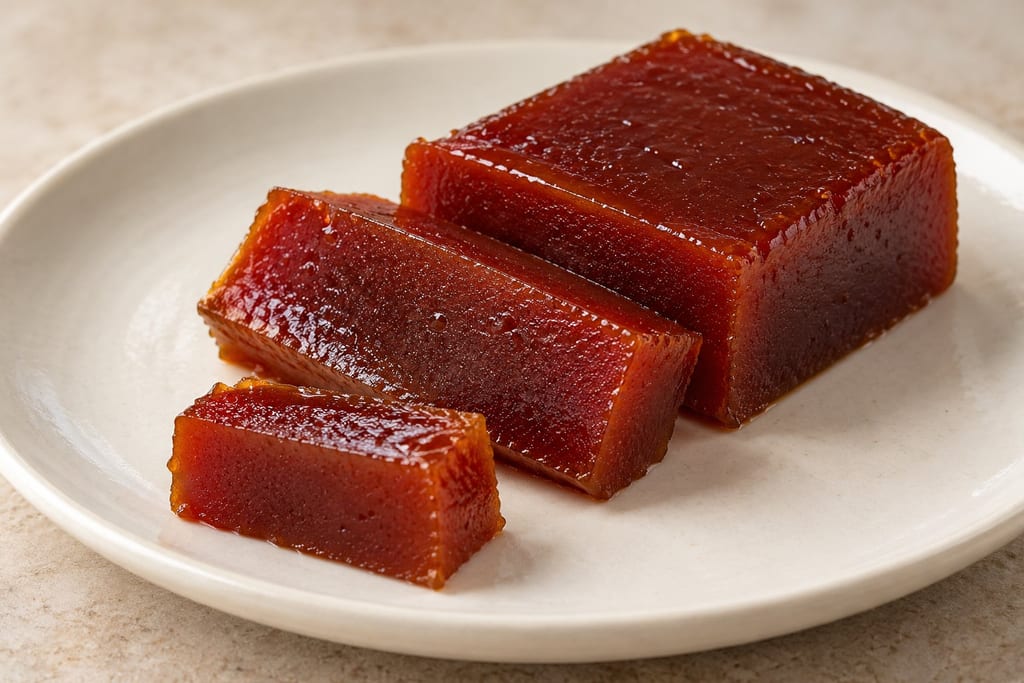
Cooked, sieved guava pulp is reduced with sugar and lime juice to a sliceable paste, then refrigerated. This adapted trial begins with prepared pulp and has no validated canning process or storage duration.
No community contributions have been published for this entry yet.
Sign in to contribute. Published comments and photos are free to read.
National Center for Home Food PreservationMethod · Ingredients · Safety
Apple Jelly without PectinFormula and approximate yield: about 3 lb tart apples and 3 cups water to provide 4 cups apple juice; optional 2 tablespoons strained lemon juice; 3 cups sugar; about 4 or 5 half-pint jars.
Fruit selection, cutting, 20–25 minute simmer, jelly endpoint, hot sterile jars, ¼-inch headspace, hot pack, jar sizes and 5/10/15 minute altitude process schedule.
Adapted from USDA Home and Garden Bulletin No. 56 (1982 reprint); NCHFP June 2005.
Cited in: A juice jelly made without added pectin; One measured batch; Cooking to the jelly endpoint; Hot filling and altitude-adjusted processing; What this formula does not establish
National Center for Home Food PreservationMethod
Extracting Juice for JellyUse about one-fourth slightly underripe and three-fourths just-ripe fruit for jelly without added pectin; do not remove skins or cores; cut fruit small.
Apples and other hard fruits may need 20–25 minutes, depending on firmness; overcooking can damage pectin, flavor and color.
Drain through a damp jelly bag; unpressed dripping gives the clearest jelly.
Cited in: A juice jelly made without added pectin
National Center for Home Food PreservationMethod
Testing Jelly without Added PectinThe temperature test is described as most dependable; the endpoint is 8°F above water's boiling point, or the sheet test.
Instructions for placing a thermometer and recognizing the sheet test.
Cited in: Cooking to the jelly endpoint
National Center for Home Food PreservationSafety · Method
Sterilization of Empty JarsJams and jellies processed less than 10 minutes should be filled into sterile jars.
Directions for sterilizing empty jars and elevation adjustment.
Cited in: Hot filling and altitude-adjusted processing
University of Georgia Cooperative Extension / National Center for Home Food PreservationSafety · Method
Using Boiling Water CannersKeep at least 1 inch of water over jar tops for the process described; keep the canner covered and a complete boil during processing.
If the water stops boiling, restore vigorous boiling and restart the full process time; unsealed jars are refrigerated for first use or handled under reprocessing guidance.
Cited in: Hot filling and altitude-adjusted processing