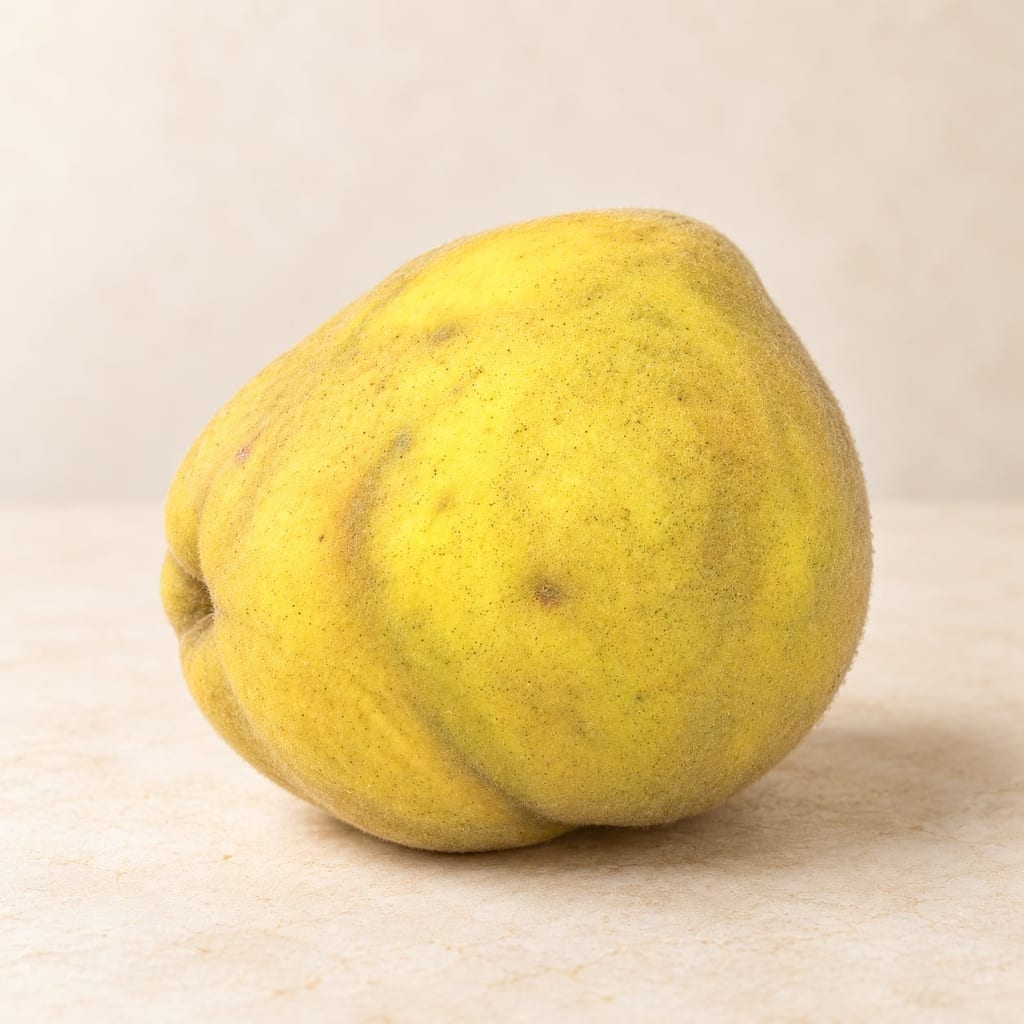
Quince
A fragrant, usually yellow pome with firm, tart and astringent flesh, cooked for tender fruit dishes, jelly and dense quince paste.
 FermenteaWhere food goes to change
Modern method
Dulce de membrillo · Quince paste · Carne de membrillo
Dulce de membrillo is quince cooked with sugar into a firm paste for slicing. This family method softens the fruit in a pressure cooker, then blends it and leaves it to set.
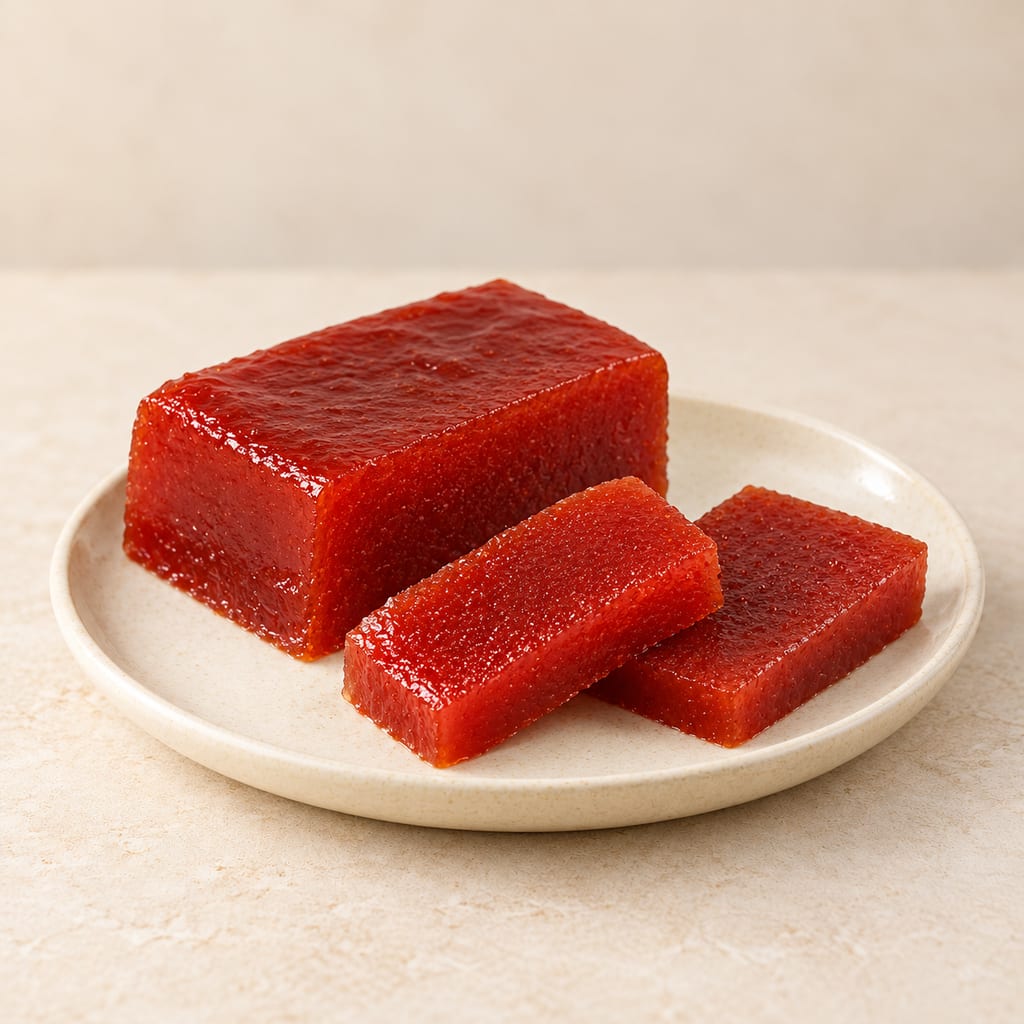
Dulce de membrillo, also called carne de membrillo, is a concentrated quince preserve that cools into a firm, sliceable paste. The Spanish name is often translated literally as “quince sweet” or “quince meat”; neither translation means that it contains meat. The form distinguishes it from quince jam, which is softer and spreadable, and quince jelly, which is made from strained juice. In membrillo, the cooked fruit remains present as smooth pulp, so the paste carries the quince’s fragrance, colour and slightly grainy fruit character.
The recipe recorded here is one modern household method shared by Julio Portero Jurado on El Club de la Cazuela. It uses a pressure cooker to soften quince with sugar and a small, unspecified glass measure of water; the fruit is then blended and allowed to set. The author attributes it to a grandmother and mother in his family. That is a meaningful account of transmission, but it does not name a town where the family made it or date the recipe’s beginning. Puente Genil’s later industrial reputation belongs to a wider quince-paste history, not proof of the origin of this family version.
Quince paste is not fermented. No culture or fermentation stage appears in the source. Heat softens and transforms the fruit, while concentration and cooling produce the dense texture. Because this is a family cooking method rather than a tested canning formula, its source gives no measured pH, final soluble-solids value, storage condition or shelf-life. Those absences matter: the paste’s appearance and firmness explain its culinary character, but do not independently establish safe room-temperature storage.
Quince is the fruit of Cydonia oblonga, a member of the rose family. It is grown across Mediterranean Europe and elsewhere in temperate regions. The Alhambra and Generalife’s horticultural account describes the fruit in southern Spanish gardens and highlights its October fragrance; Med-O-Med describes its seasonal harvest around the end of summer and beginning of autumn in the Iberian context. The fruit in this method is peeled, cored and cut, so its raw shape gives way to a smooth cooked paste rather than staying whole as it would in a syrup preserve.
Raw culinary quince is generally hard and acidic, with a strong aroma that becomes more apparent when ripe. A review of quince products describes the fruit as aromatic and acidic and notes that thermal treatment changes sensory qualities including texture, colour, smell and consistency. This combination helps explain why many cuisines cook rather than eat the fruit raw. The family source starts with 1.5 kilograms of whole quince and expects about one kilogram after peeling and coring; that ratio belongs to this recipe’s stated batch, not every cultivar or fruit size.
Quince also contains pectin, a plant cell-wall polysaccharide that helps fruit tissues hold together. Research reviews describe quince as a source of pectin and note that the amount varies by cultivar and maturity. Pectin can contribute to the set of fruit pastes, but the recipe reports no pectin measurement and does not rely on added commercial pectin. The result therefore depends on the fruit that was used, the degree of cooking and the cooling period, as well as on the sugar. A batch may not behave identically if its fruit is much riper, wetter or less firm.
The source’s formula uses one kilogram of sugar for roughly one kilogram of cleaned quince. Sugar sweetens the fruit and, in fruit spreads generally, binds some water and changes the mixture’s water activity. Water activity is a measure of water available to support microbial growth; lowering it can contribute to preservation, but the effect depends on the finished food and its full process. University of Minnesota Extension distinguishes this general role from a tested preservation process. Sugar in this recipe is not a substitute for validated canning instructions.
Pectin contributes to structure in many fruit spreads. In a jam or jelly, pectin forms a network under suitable conditions of sugar and acidity. This recipe is not a jelly: it keeps the fruit pulp, and its smooth, dense body comes from the cooked, blended fruit and the source’s equal-weight sugar formula. The family recipe adds no lemon juice and gives no pH or refractometer reading. It would be wrong to add a presumed acid requirement or promise a precise gel without evidence from this batch.
Heat changes the fruit’s cell structure and releases water into the cooking mixture; blending breaks softened tissue into a more uniform pulp. As the hot mixture cools, its viscosity rises and the paste holds its shape. These are general physical and food-chemistry explanations, not measurements reported by the family author. The recipe’s own practical evidence is the next-day result: it says the paste can be sliced after setting. If it remains soft, the source provides no correction formula; extending cooking or adding ingredients would create a new method.
The first stage is fruit preparation. The author says to peel, wash and core the quinces, then cut the flesh into pieces. He gives both the starting and cleaned weights, which helps preserve the intended fruit-to-sugar balance. The cores are discarded in this version. The source does not say to save the skins or seeds for extra pectin, so that familiar variation should not be silently folded into this household batch.
Next, sugar and half a glass of water go into the pressure cooker. The glass’s capacity is not stated; consequently, the liquid cannot be converted into a reliable millilitre amount. After a few minutes, the quince is added and the closed cooker is heated. The timer begins when steam starts, and the source gives ten minutes from that point. It does not identify cooker pressure, heat setting, model, or whether the timing assumes a weighted or spring-valve appliance. Keep those uncertainties attached to the recipe rather than inventing a pressure setting.
After heating, the cooker must lose pressure before it is opened. The Bureau of Indian Standards advises users to secure the lid, stay below the cooker’s maximum fill line and wait until pressure has released and the indicator has dropped before opening. The family recipe then blends the softened fruit, divides it among containers and leaves it to cool. It recommends slicing the next day, once the paste is firm. The stages each have a separate purpose: cut the fruit for even softening, use the cooker for the source’s short heating period, blend for a smooth texture, then allow cooling to set the paste.
The family account tells a small history: a grandmother taught the method to her daughter, who passed it to Julio Portero Jurado. It does not name their preparation place. A separate research portal records that quince-paste manufacture became prominent in Puente Genil’s food-processing industry from the late nineteenth century, while the town’s museum preserves cans, tools and factory materials associated with that industry. This evidence situates quince paste within local commerce and manufacturing; it does not make this private recipe a Puente Genil formula.
Quince itself has a much older Mediterranean history than the named paste. The Alhambra’s horticultural account connects the tree with ancient Near Eastern origins and describes quince cookery in Roman texts, including cooking it with honey or leeks. Med-O-Med documents quince cultivation and use in al-Andalus, including medieval agricultural writing and archaeobotanical finds from Cádiz dated to the eleventh and twelfth centuries. It explicitly notes that these older sources do not document the later named carne de membrillo in al-Andalus. The presence of quince in ancient or medieval diets does not establish that this exact sugar paste existed then.
That distinction avoids a common historical shortcut. A fruit can have a long regional history while a particular concentrated sweet emerges later, changes with sugar availability and takes on a new commercial identity. Puente Genil’s nineteenth-century industrial growth is well documented; the family pressure-cooker recipe is modern and undated. The local history and household account are related strands, not one continuous recipe with an invented start date.
Membrillo sits among several quince preparations. The Alhambra describes a southern Spanish approach that cooks quince pulp with equal parts sugar, close in broad proportion to the household recipe here. The family method is distinctive for using a pressure cooker and giving a short time after steam begins. Other cooks simmer quince for much longer in an open pan; that produces a different heating history and cannot be treated as a timed substitute. This record preserves the family method rather than blending it with an not validated stovetop process.
Some quince products are cooked as whole fruit in syrup, others as jam, jelly, or smooth fruit paste. Their ingredients may overlap, but their texture and cooking goals differ. A whole-fruit preserve aims to keep pieces intact; jelly removes pulp; membrillo blends it and cools it to a sliceable body. Adding lemon or spices may appear in other recipes, but this source does not include them. The family method’s recipe remains quince, sugar and a half glass of water, with no measured acid or flavouring.
Industrial membrillo is another context: in Puente Genil, factories developed dedicated equipment and packaging for a product sold beyond the household. Industrial paste and home paste can share a name and general fruit-sugar idea while differing in equipment, concentration controls, packaging and storage validation. The museum records the local industry but does not describe this family recipe’s factory equivalent. A reader comparing batches should note whether the source refers to a home method, a traditional sweet, or commercial manufacture before comparing cooking times.
Once firm, membrillo can be cut into slabs or small slices. The family source suggests serving it with cheese or honey. In Spain, quince paste is commonly paired with cheese; its sweetness and dense fruit flavour contrast with a salty or tangy cheese. The paste can sit on a cheese board, be eaten with bread, or be cut into small pieces for a sweet course. These are serving uses, not instructions for storage or a preservation process.
The paste’s firmness makes it useful in thin slices where a jam would spread or run. A small amount can fill a sandwich with cheese, accompany a simple biscuit, or be served after a meal. The quince remains the centre of the taste: floral and fruity, with sweetness from the sugar and a dense cooked texture. Honey is the family source’s alternative accompaniment, but it is not an ingredient in the cooking method.
Portion size is a matter of taste. Because the recipe uses a large quantity of sugar relative to cleaned fruit, the result is concentrated and sweet. Serve it with something plain or savoury when you want to temper that sweetness, or offer it alone in small pieces. Do not infer a nutritional or medicinal effect from historical claims about quince or from the name of a traditional food; the sources support its culinary role and regional history, not a health treatment.
The family source’s result is a paste that cools, sets and can be sliced the following day. Fruit pieces that remain firm after pressure cooking may indicate different fruit maturity, piece size, or cooker behavior, but the recipe gives no troubleshooting table or measured pressure. A paste that stays soft might reflect fruit composition or water content, but the source offers no instruction to continue cooking, add more sugar or re-pressurize. Any such adjustment would be a new batch formula and should not be presented as a proven correction.
The half-glass liquid amount is the largest reproducibility limit because a glass has no standard volume. The cooker’s pressure and final paste concentration are also unspecified. Even though the broad sugar-to-fruit ratio is given, the cleaned quince weight varies with the fruit and trimming, and the recipe has no finished yield. Keep to the stated one-batch amounts and do not scale by guesswork or claim an exact set for every quince variety.
The family page does not say whether to refrigerate the cooled paste or how long it keeps. The paste’s firmness, sugar content, colour, smell or a closed container cannot establish room-temperature stability. Follow current food-preservation guidance and use a tested process for any shelf-stable product. The pressure-cooker safety directions protect the cooking stage; they do not validate the paste’s storage method. This is a culinary family recipe whose unknown storage conditions should remain explicit.
Dulce de membrillo is made in home kitchens as well as commercially. Quince preserves helped give Puente Genil, in Córdoba, its reputation for food processing as local industry expanded in the late nineteenth century. This pressure-cooker version passed from a grandmother to her daughter and then to Julio Portero Jurado, who shared the family recipe. It sets into a sweet paste that can be sliced and served with cheese or honey.
Scaling: source batch only
Opening a pressure cooker while it is pressurized can release steam and hot contents; overfilling can obstruct pressure release.
Hazard sourceSecure the lid, stay below the cooker's maximum fill line and wait until pressure has released and the indicator has dropped before opening.
Control sourceDo not open the cooker under pressure. Keep below its maximum fill line, secure the lid and wait for the pressure indicator to drop before opening.
The family's preparation place is not stated. The blog's Córdoba context and Puente Genil industry reference do not establish where this batch was made.
Quince-paste industry association; not the origin or preparation place of this family formula.
A fragrant, usually yellow pome with firm, tart and astringent flesh, cooked for tender fruit dishes, jelly and dense quince paste.
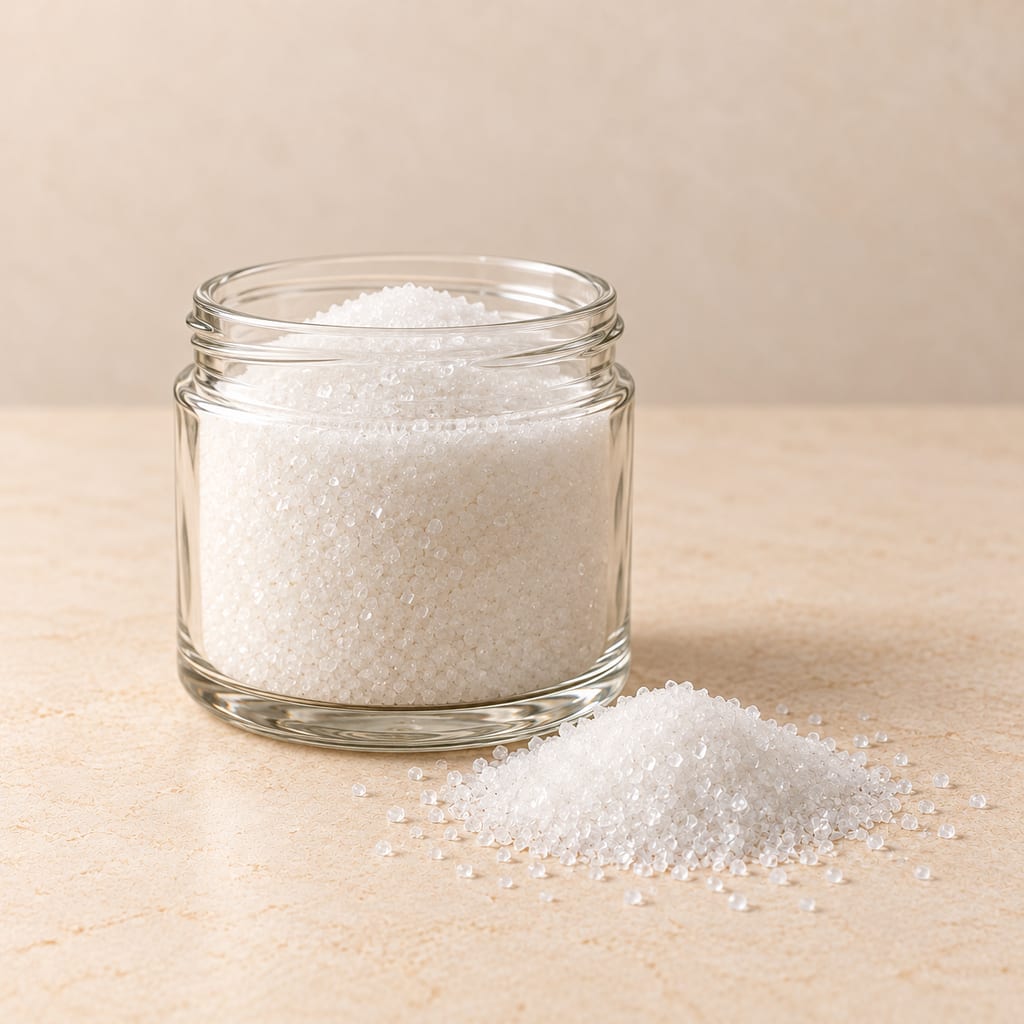
Sugar is a family of sweeteners with different forms and food roles; refined white sucrose may come from cane or beet, while less refined forms add other flavours and moisture.

Water carries dissolved ingredients, transfers heat and forms the liquid environment of many ferments; its minerals and treatment influence how it behaves.
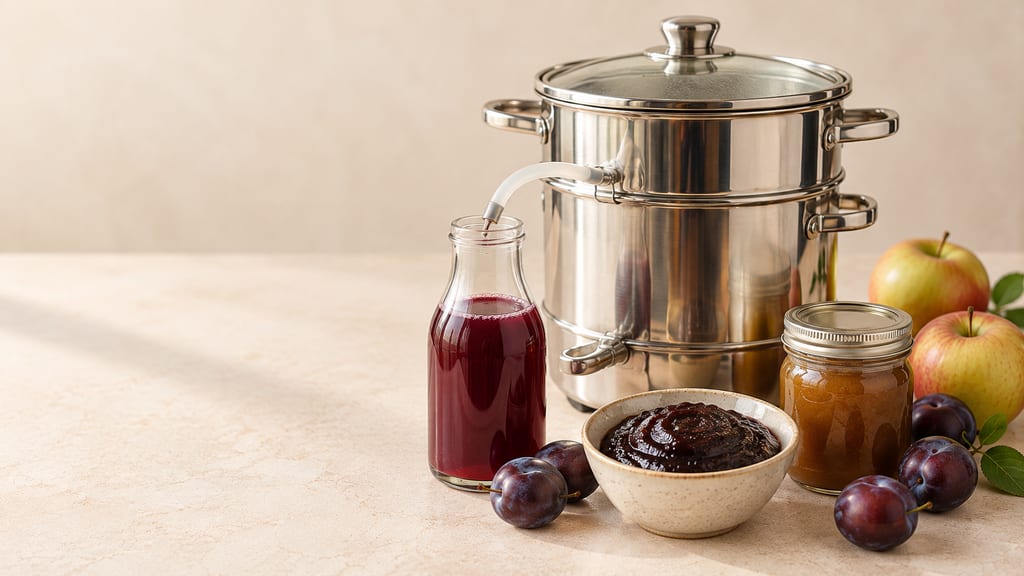
Fruit becomes juice, butter, paste or syrup in two moves: get the liquid out, then drive the water off. Steam juicers, slow cookers, microwaves and freezers each do one of those moves well, and none does both.
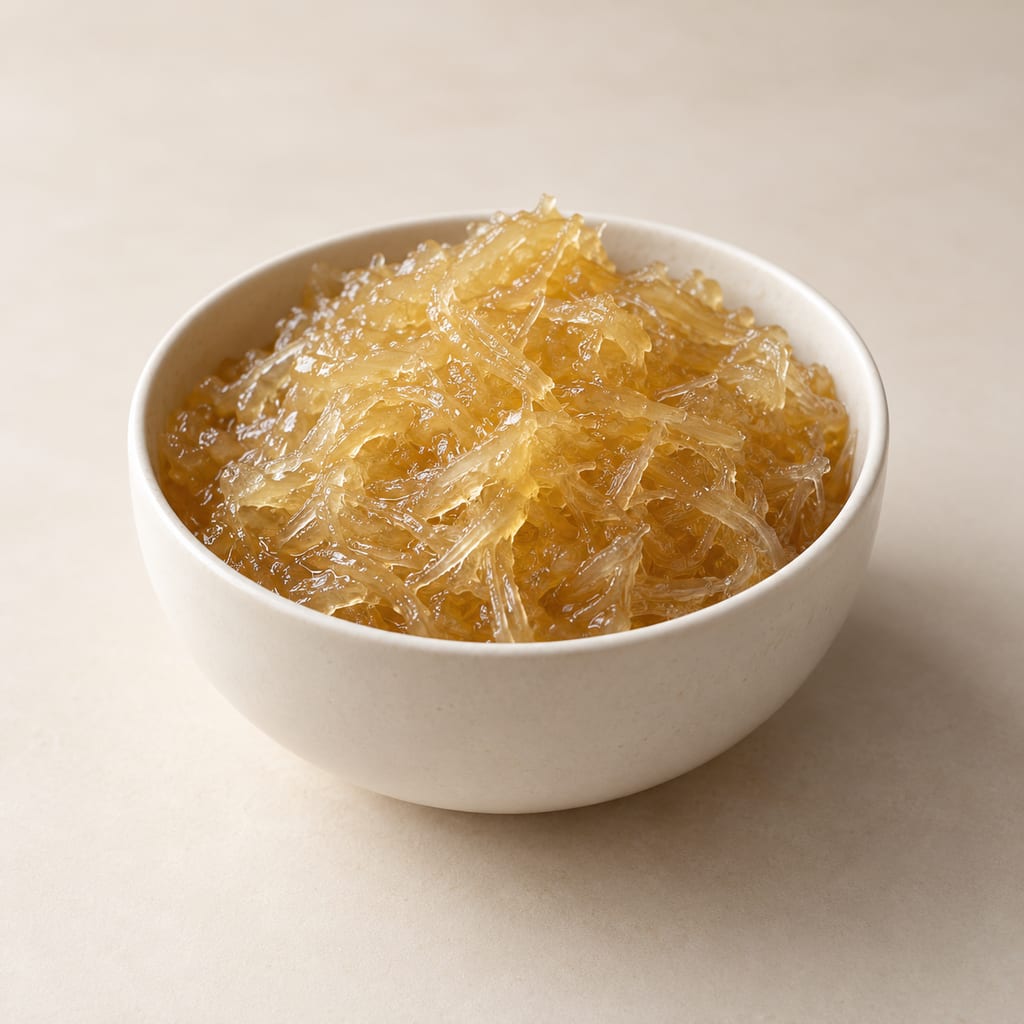
Fine strands of Cucurbita ficifolia cooked in an equal weight of sugar, then portioned for refrigerator or freezer storage. Ordinary orange pumpkin does not give the same fibres.
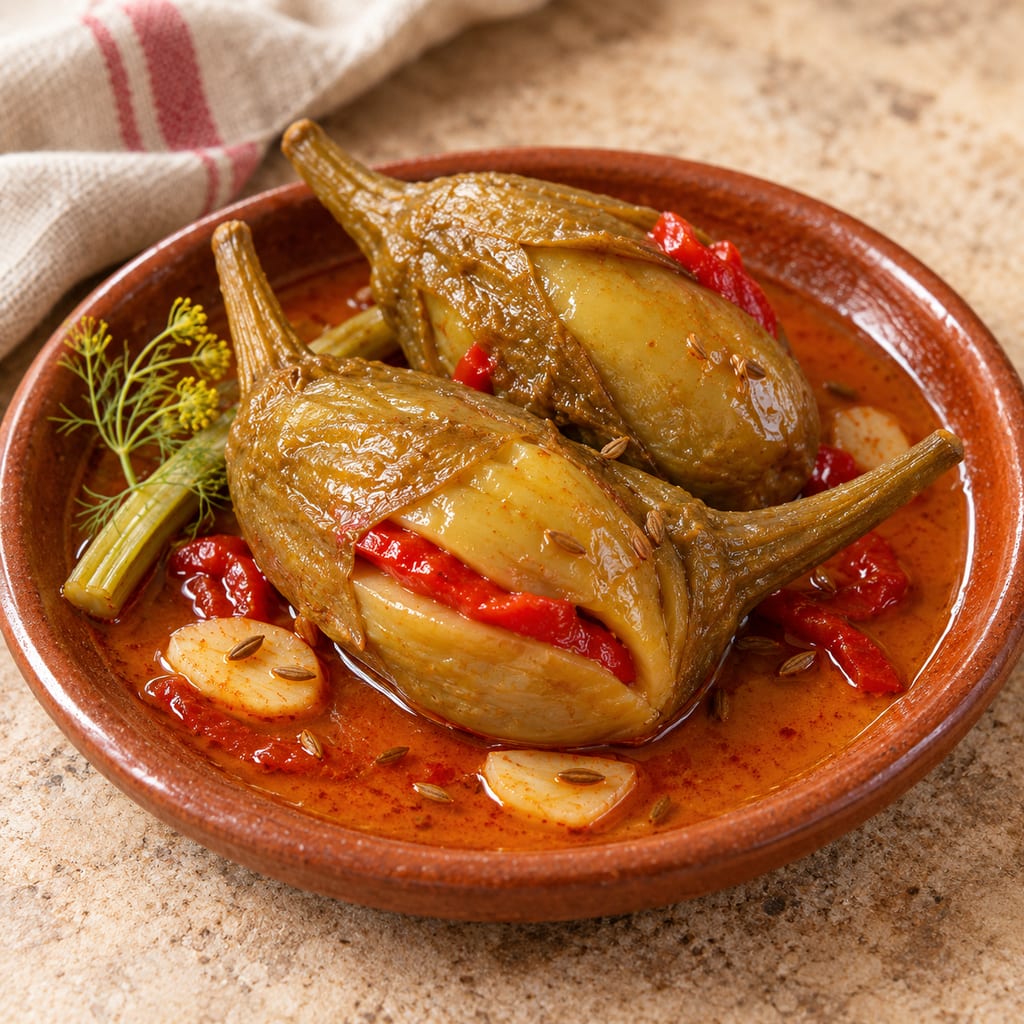
A protected aubergine preserve from Ciudad Real in Spain: tender fruit of the local Dealmagro variety, cooked briefly and then fermented in a vinegared, paprika-seasoned dressing.
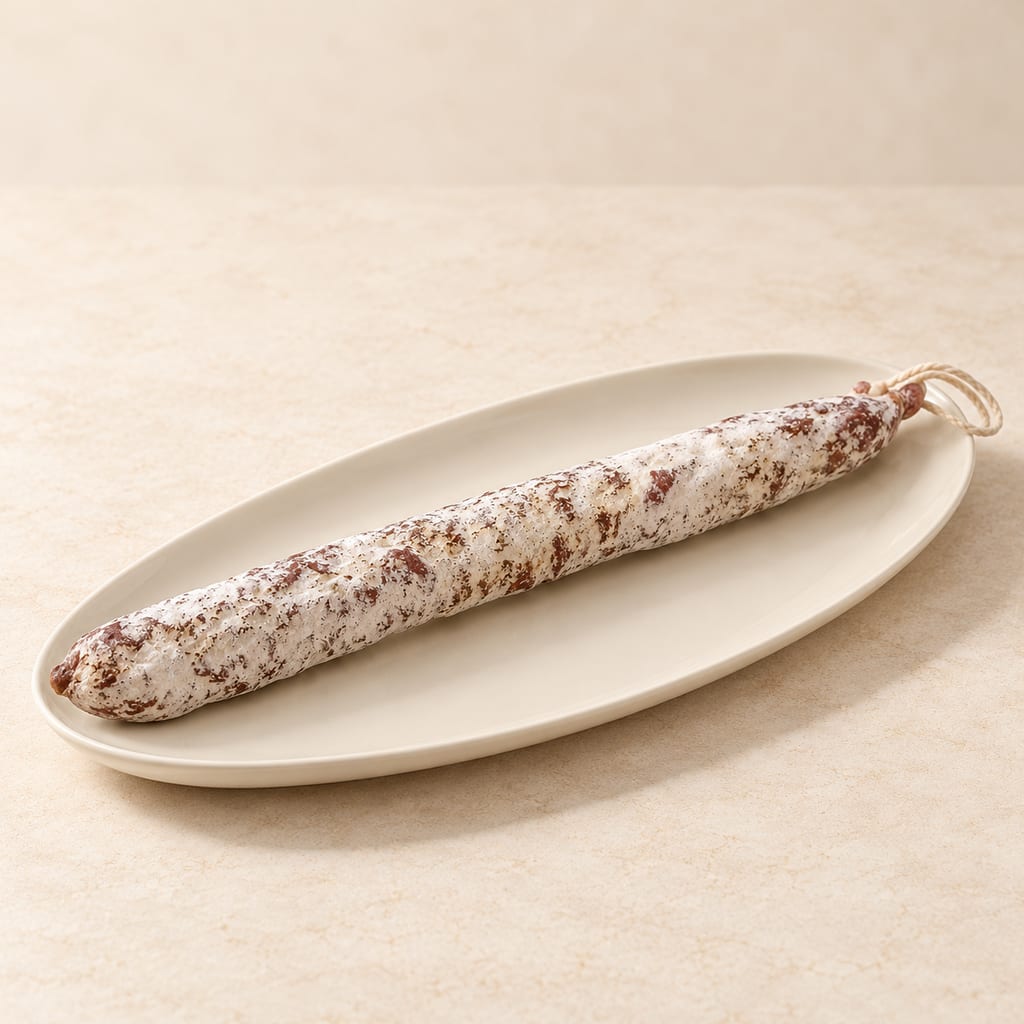
A documentary account of a modern starter-cultured Fuet formula and its place in Catalan sausage culture. The cited raw-pork process lacks matched safety validation, so this page does not present it as a household recipe.
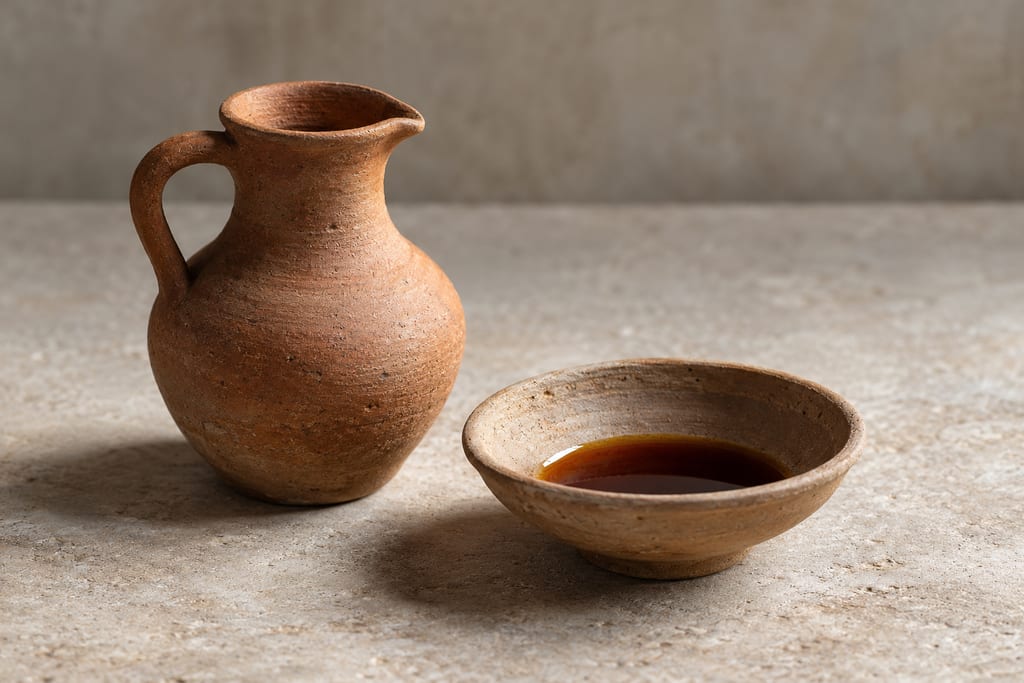
Garum, Greek garos and Latin liquamen, was the fish sauce of the ancient Mediterranean: fish and viscera salted and left in the sun, then drained off as a savoury liquid.
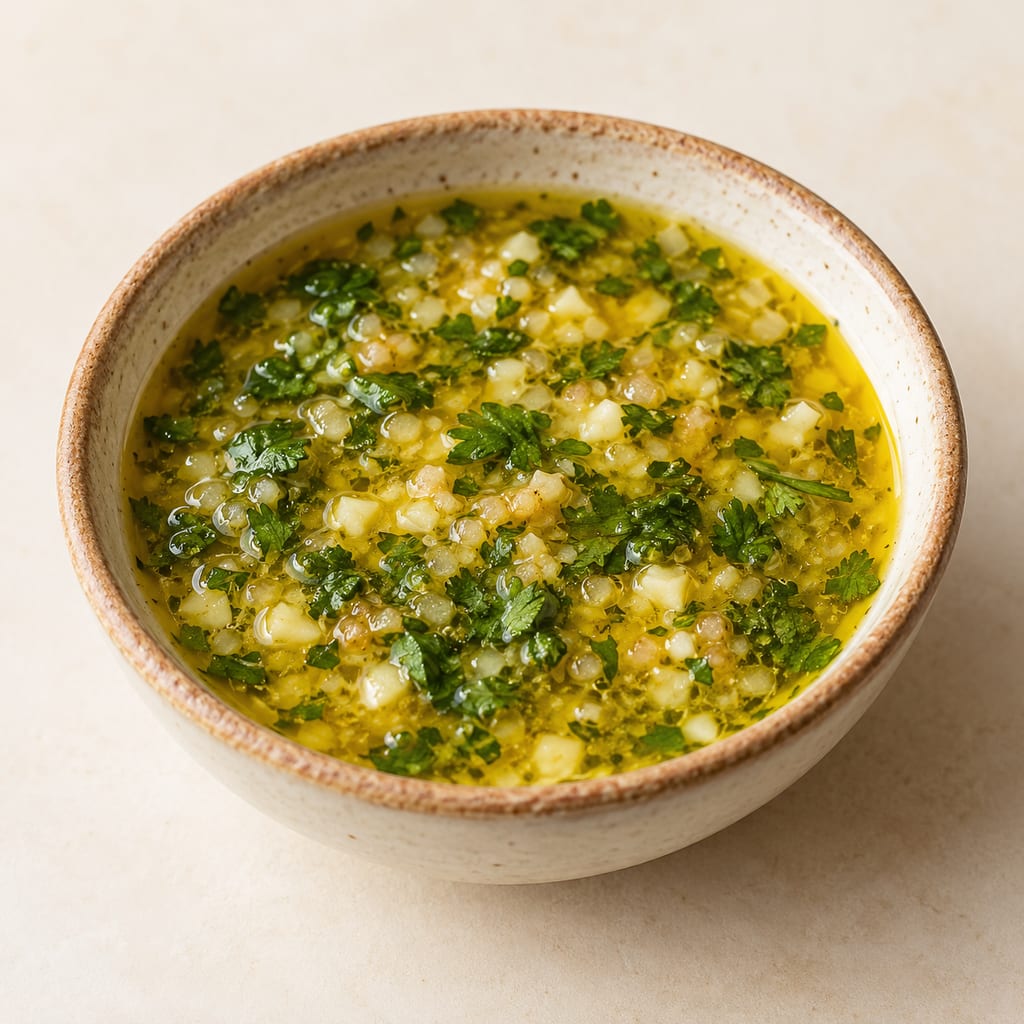
Mojo criollo is a Cuban sauce of garlic and sour orange juice with oil and herbs, used to marinate roast pork and as a dip.
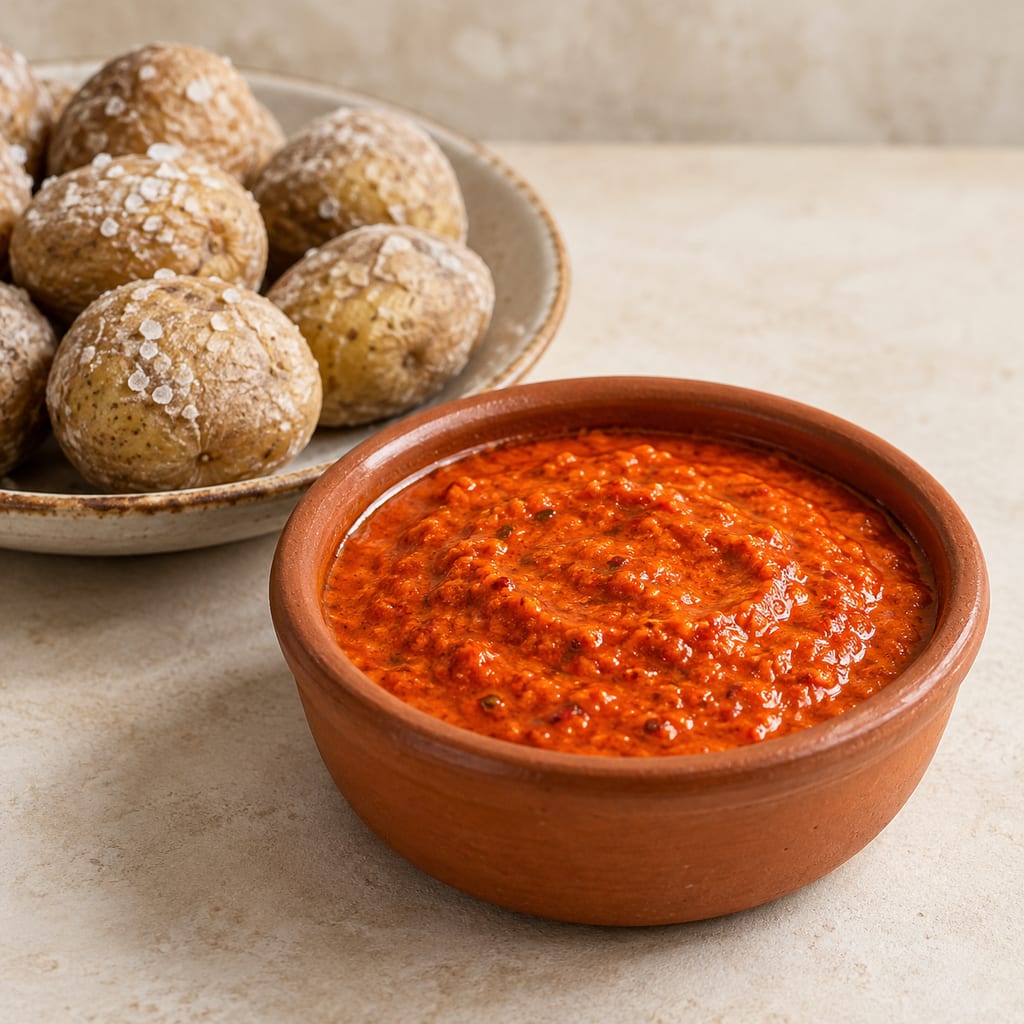
A red sauce of garlic, dried or fresh red pepper, paprika and cumin in olive oil and vinegar, served with salt-cooked potatoes across the Canary Islands.
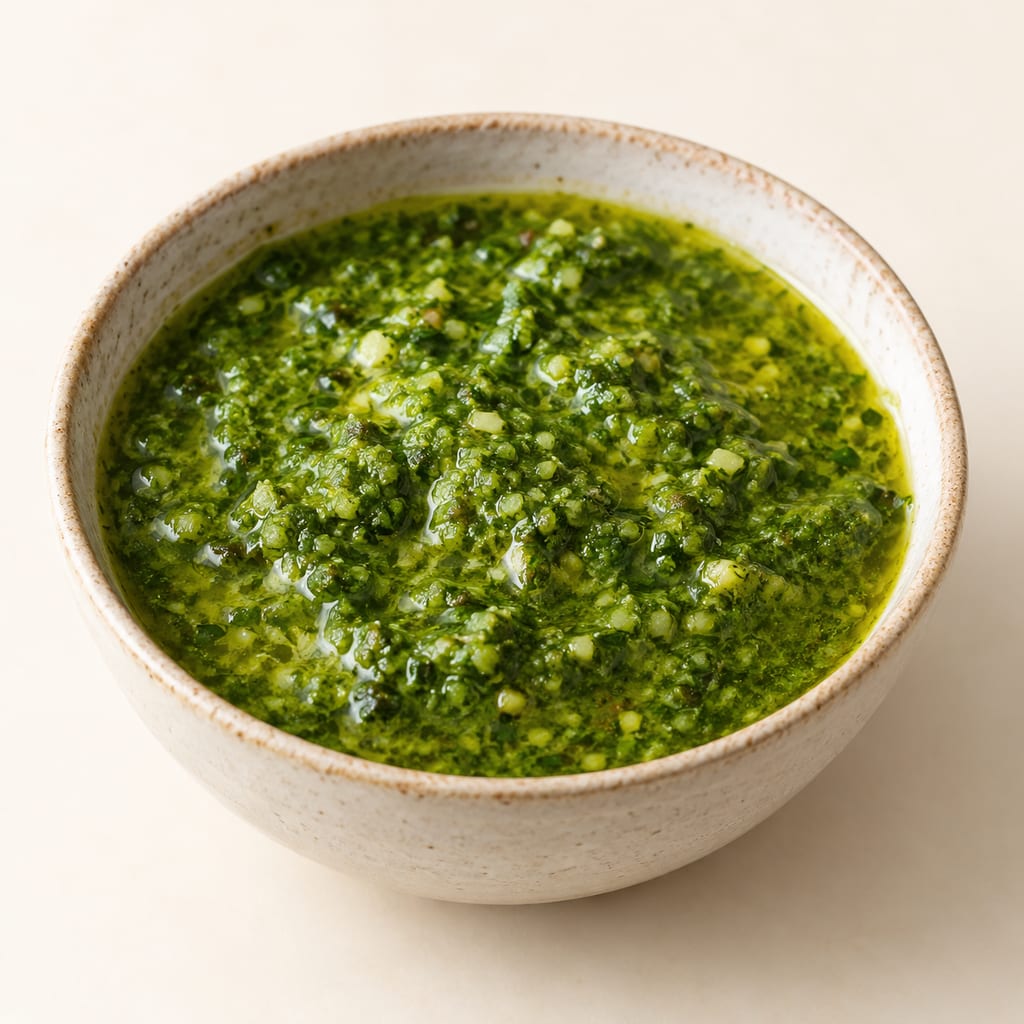
A green sauce of garlic, cumin, green chilli and fresh coriander or parsley in olive oil and vinegar, traditionally served with fish in the Canary Islands.
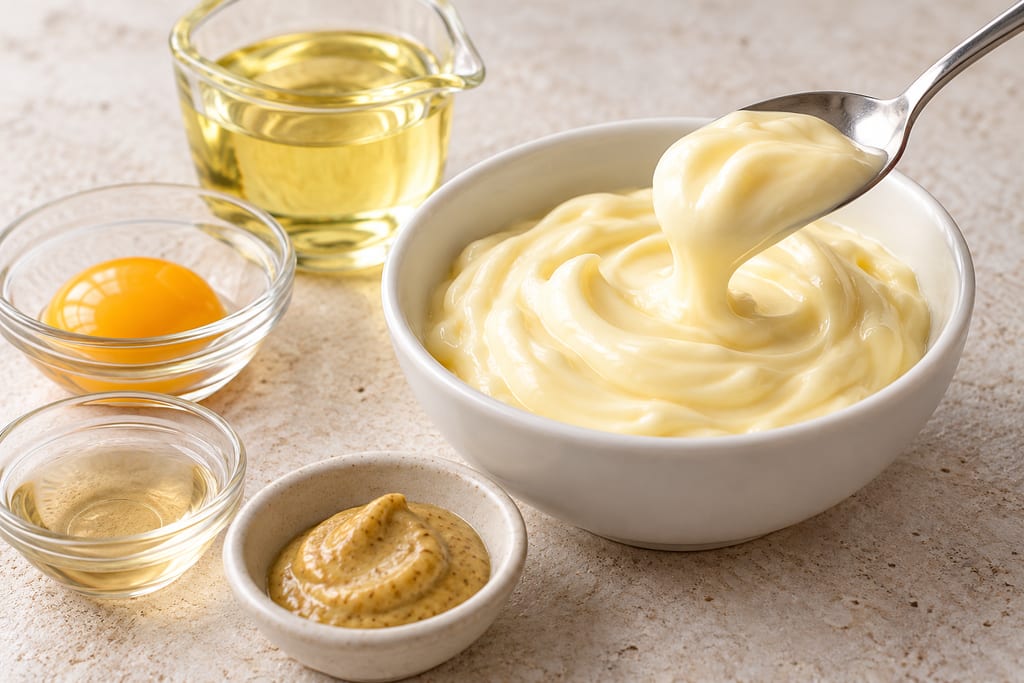
A plain mayonnaise of 200 g refined neutral oil emulsified into pasteurised yolk, vinegar, water and a little Dijon mustard: a clean base for tasting, comparing and flavouring.
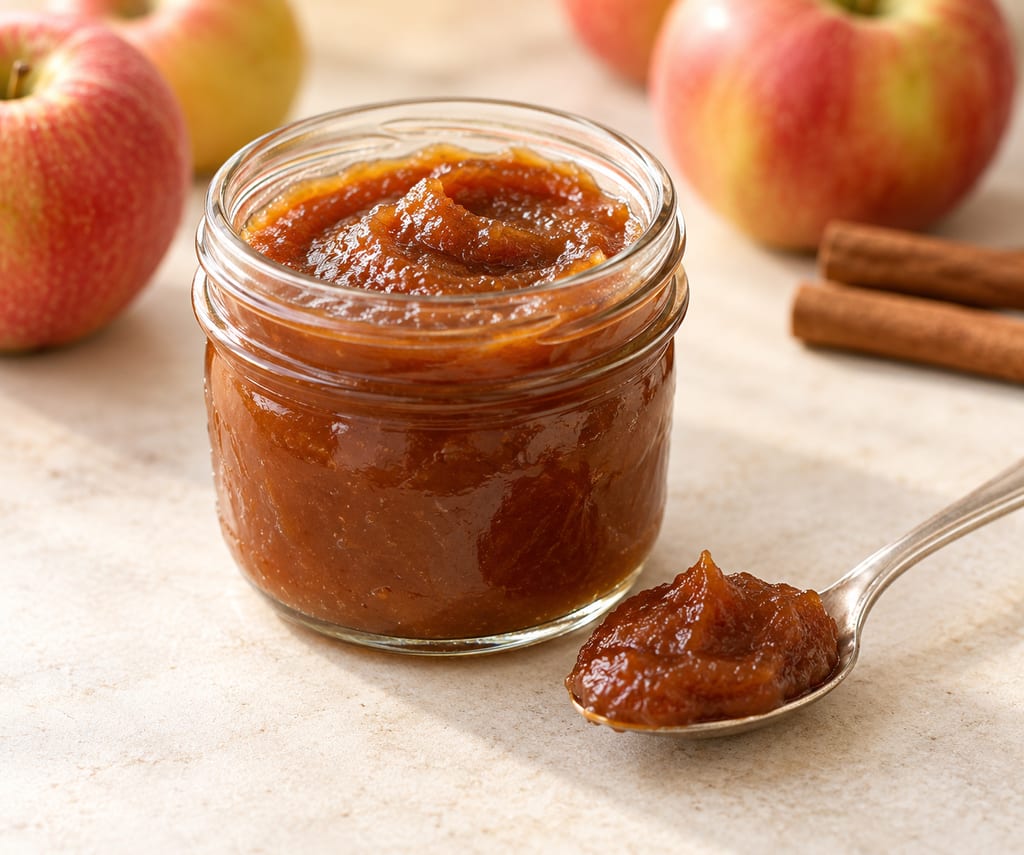
Apple butter is a smooth, concentrated apple preserve cooked with cider, vinegar, two sugars and spices, then hot-filled and processed in a boiling-water canner using the published jar-size and elevation schedule.
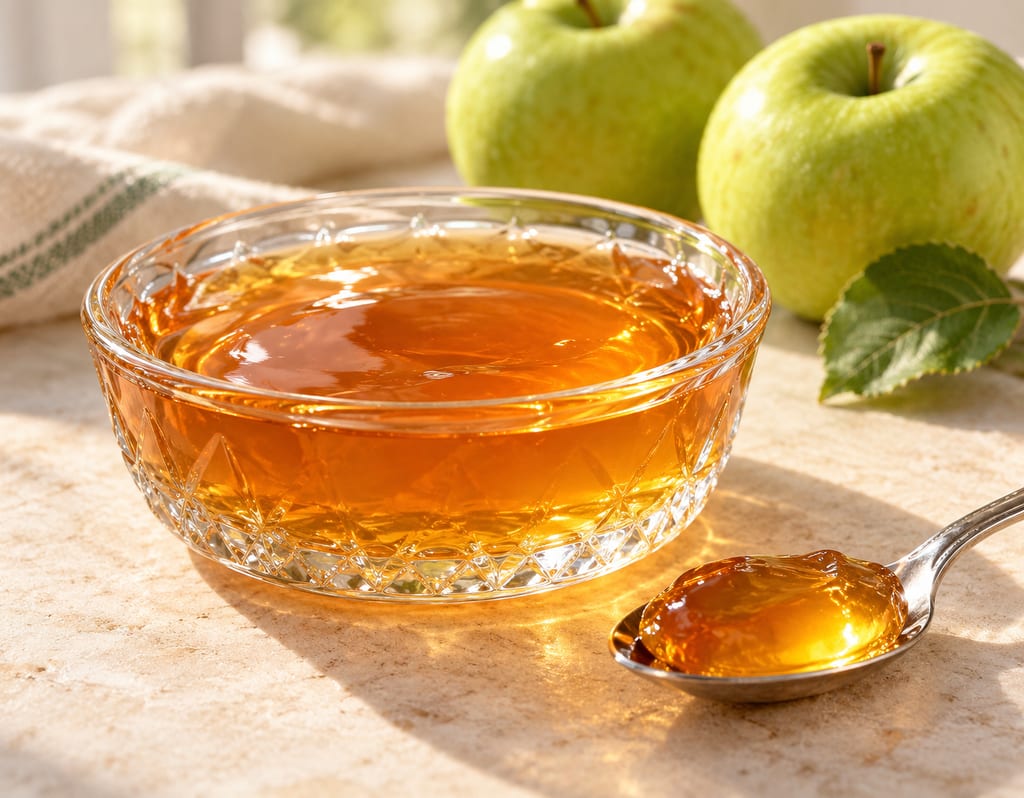
A clear jelly made from tart-apple juice, sugar and optional strained lemon juice. This batch uses a stated fruit-to-water preparation, gel endpoint, hot fill and altitude-adjusted boiling-water process.
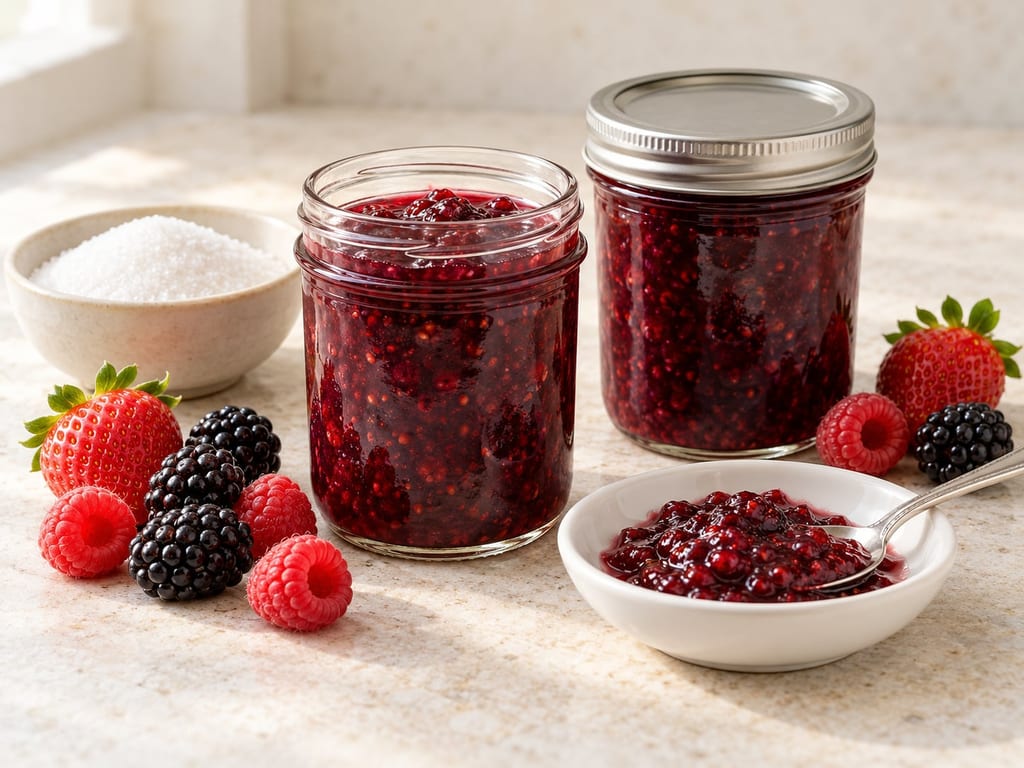
A NCHFP berry jam made without added pectin: crushed berries and sugar are cooked to the desired gel point, hot-filled into sterile half-pint or pint jars, and processed in a boiling-water canner.
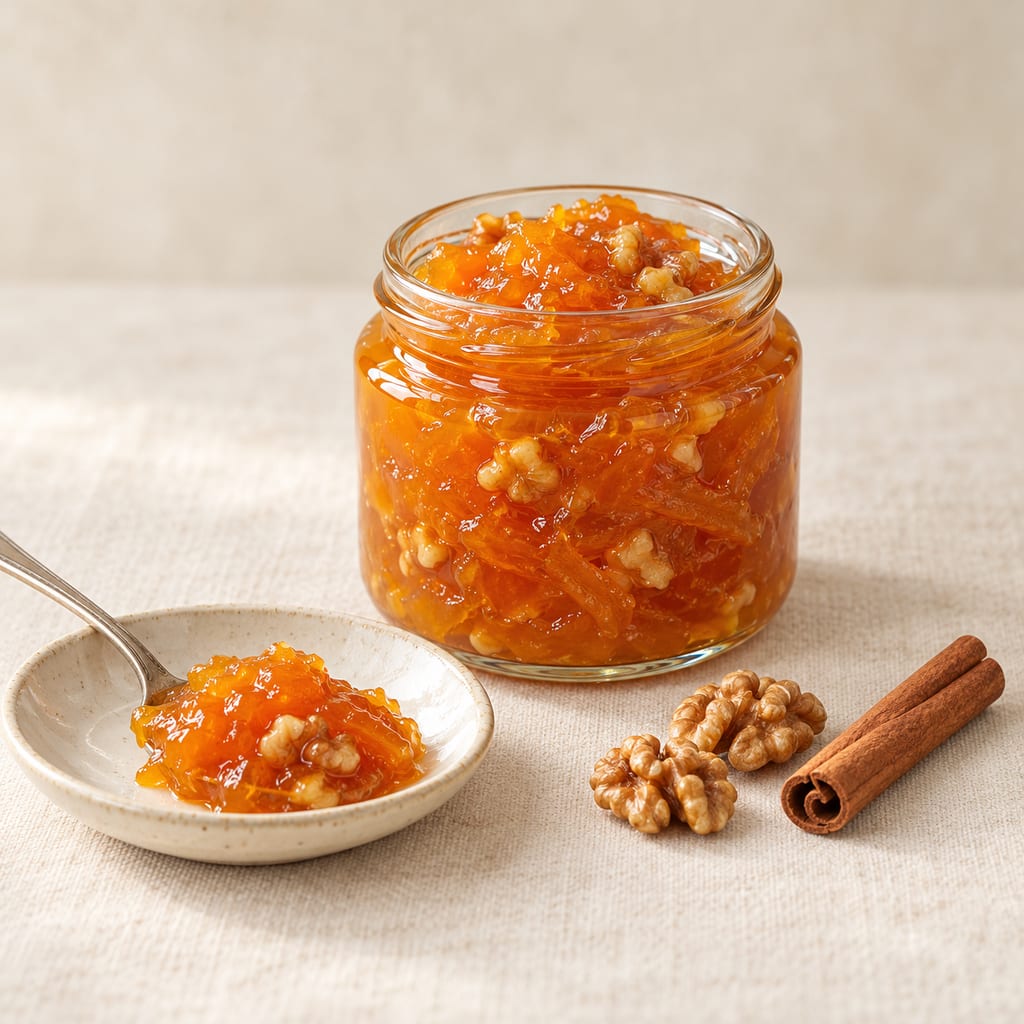
Portuguese pumpkin jam cooked with cinnamon and optional walnuts. A sweet spread to refrigerate or freeze, rather than a home-canned preserve.
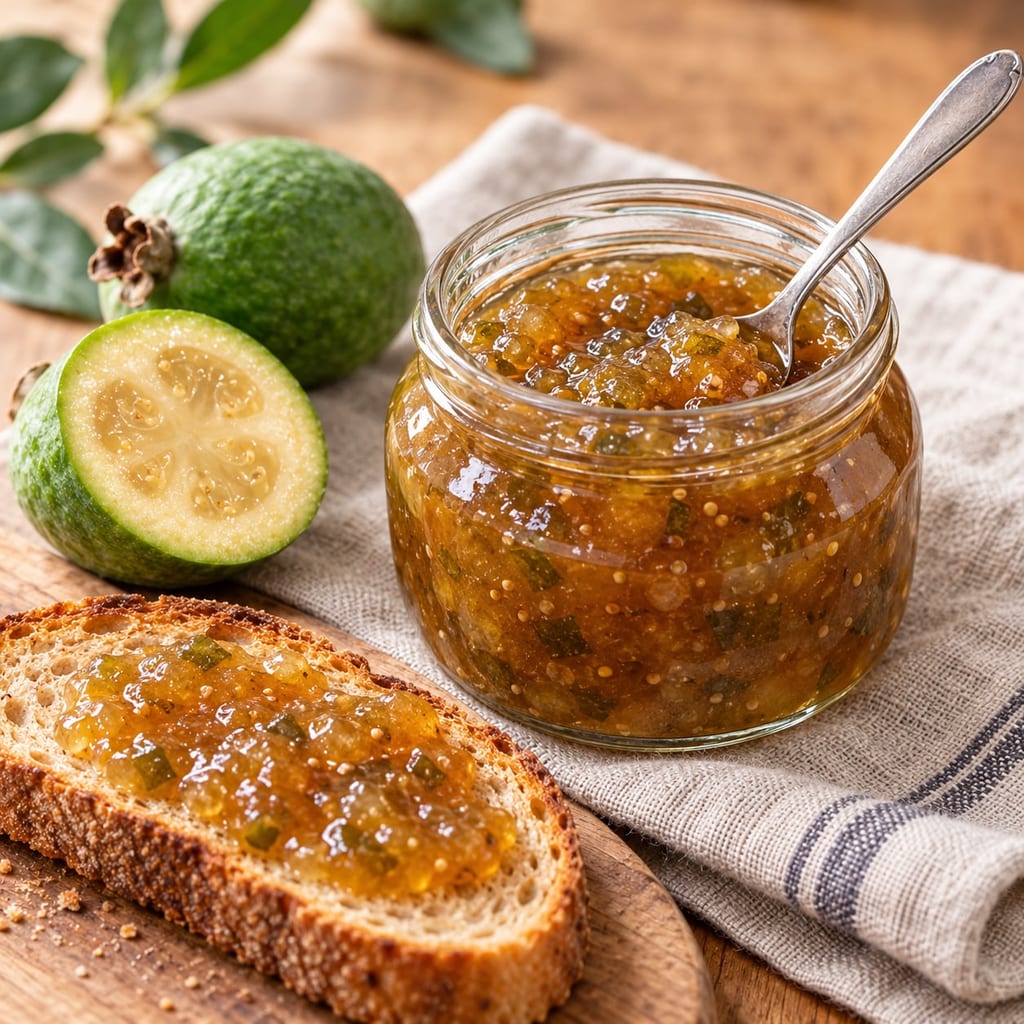
Blended whole feijoas simmer into a skin-on jam with lemon, sugar and vanilla. The skins remain for a more textured finish; keep this batch refrigerated or frozen because its method has no validated shelf-stable canning process.
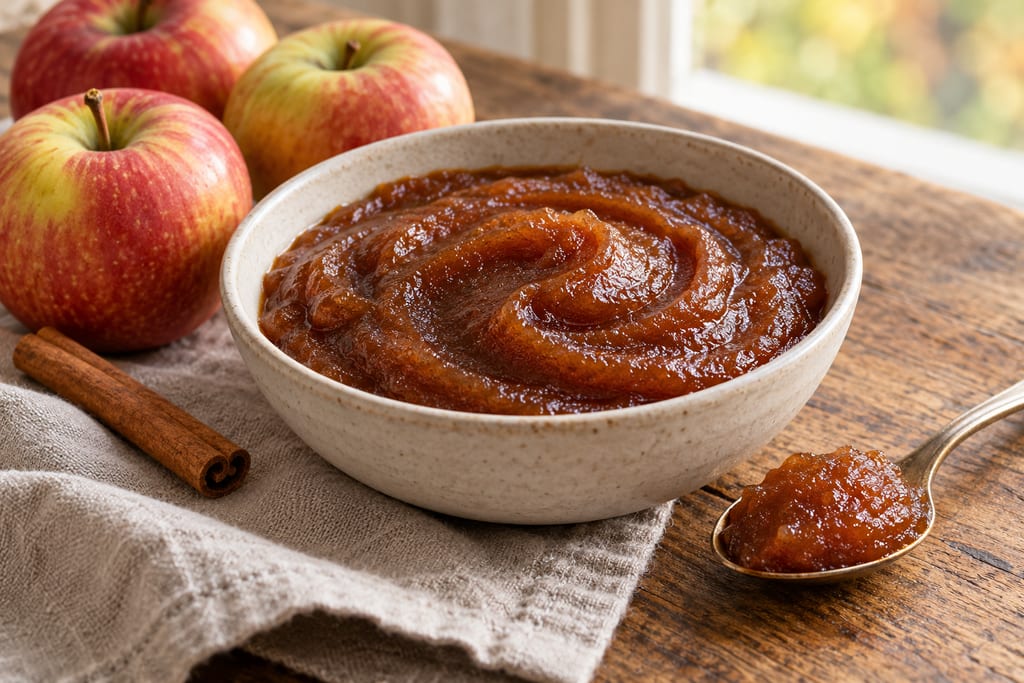
A smooth fruit pulp cooked down with sugar and spice until it holds its shape on a spoon, made by three documented routes in a slow cooker, a microwave or an electric multicooker.
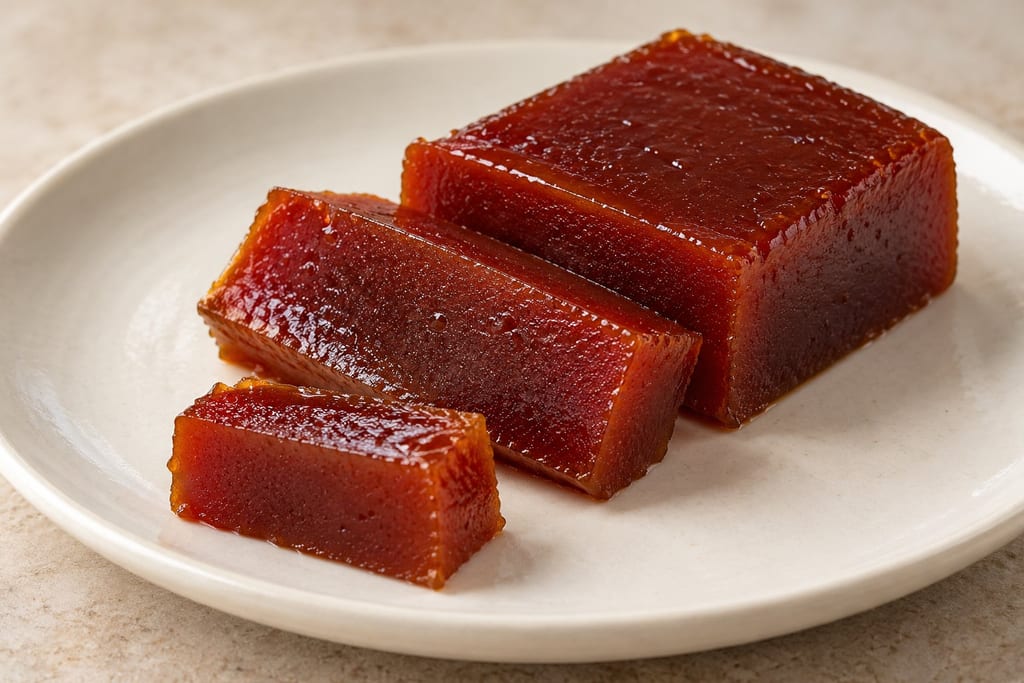
Cooked, sieved guava pulp is reduced with sugar and lime juice to a sliceable paste, then refrigerated. This adapted trial begins with prepared pulp and has no validated canning process or storage duration.

Jam is fruit cooked with enough sugar and concentration to reduce the water available to microbes. Jelly uses clarified juice and firmer fruit pastes lose still more moisture.
No community contributions have been published for this entry yet.
Sign in to contribute. Published comments and photos are free to read.
Julio Portero Jurado, El Club de la CazuelaProcess · Inspiration · History
Dulce de membrilloFull page, lines 13–30: source batch, pressure-cooker sequence, family attribution and next-day texture statement.
Cited in: A paste that can be cut; Sugar, pectin and the set; How the household method is organized; A family method in a regional industry; Variations and neighbouring quince preparations; Serving and using the paste; Interpreting the result and its storage limits
Universidad de Málaga research portal / Universidad de SevillaHistory
El patrimonio industrial de Puente GenilThesis abstract directly read: Puente Genil's food-processing industry expanded in the late nineteenth century; quince-paste production gave it wide recognition. This does not establish the family recipe's location or first date.
Cited in: A family method in a regional industry
Bureau of Indian StandardsEquipment safety
Pressure Cooker: Learning Science via StandardsPDF page15, safety precautions: lid secured, maximum fill line, no opening under pressure, wait for released pressure and dropped indicator. Not a validation of the quince cooking formula.
Cited in: How the household method is organized; Interpreting the result and its storage limits
University of Minnesota ExtensionFruit spread science · Preservation
Preserving food at home: Fruit spreadsGeneral explanation of how pectin, sugar and acid contribute to gel formation and how sugar affects water activity in fruit spreads; this is background science, not validation of this household batch.
Cited in: Sugar, pectin and the set; Variations and neighbouring quince preparations; Interpreting the result and its storage limits
Patronato de la Alhambra y GeneralifeHistory · Geography · Uses
El MembrilleroInstitutional overview identifies quince as Cydonia oblonga, describes its cultivation around the Mediterranean and southern Spain, and records Roman use of quince with honey and leeks; it also describes southern Spanish quince pulp cooked with equal sugar as dulce or carne de membrillo.
Cited in: A paste that can be cut; The fruit behind membrillo; Variations and neighbouring quince preparations; Serving and using the paste
Visit Puente Genil; Municipal Historical MuseumHistory · Industry
Municipal Historical MuseumThe museum's ethnography section treats quince paste manufacture as part of Puente Genil's late nineteenth- and early twentieth-century industrial history and displays tools, tins and factory-related materials.
Cited in: A family method in a regional industry
Med-O-Med / Fundación de Cultura IslámicaBotany · History · Geography
Membrillo · Quince · Cydonia oblongaDescribes quince cultivation and varieties in al-Andalus, twelfth-century archaeobotanical evidence in Cádiz, seasonal harvest, and quince uses; notes no evidence of the later named quince meat during the al-Andalus period.
Cited in: The fruit behind membrillo
National Library of Medicine; review article in NutrientsQuince composition · Pectin
Quinces (Cydonia oblonga, Chaenomeles sp., and Pseudocydonia sinensis) as Medicinal Fruits of the Rosaceae Family: Current State of Knowledge on Properties and UseReview describes quince as pectin-rich and explains that pectin content varies with cultivar and maturity; this supports general fruit chemistry, not a measured property of the recipe's particular fruit.
Cited in: The fruit behind membrillo; Sugar, pectin and the set
