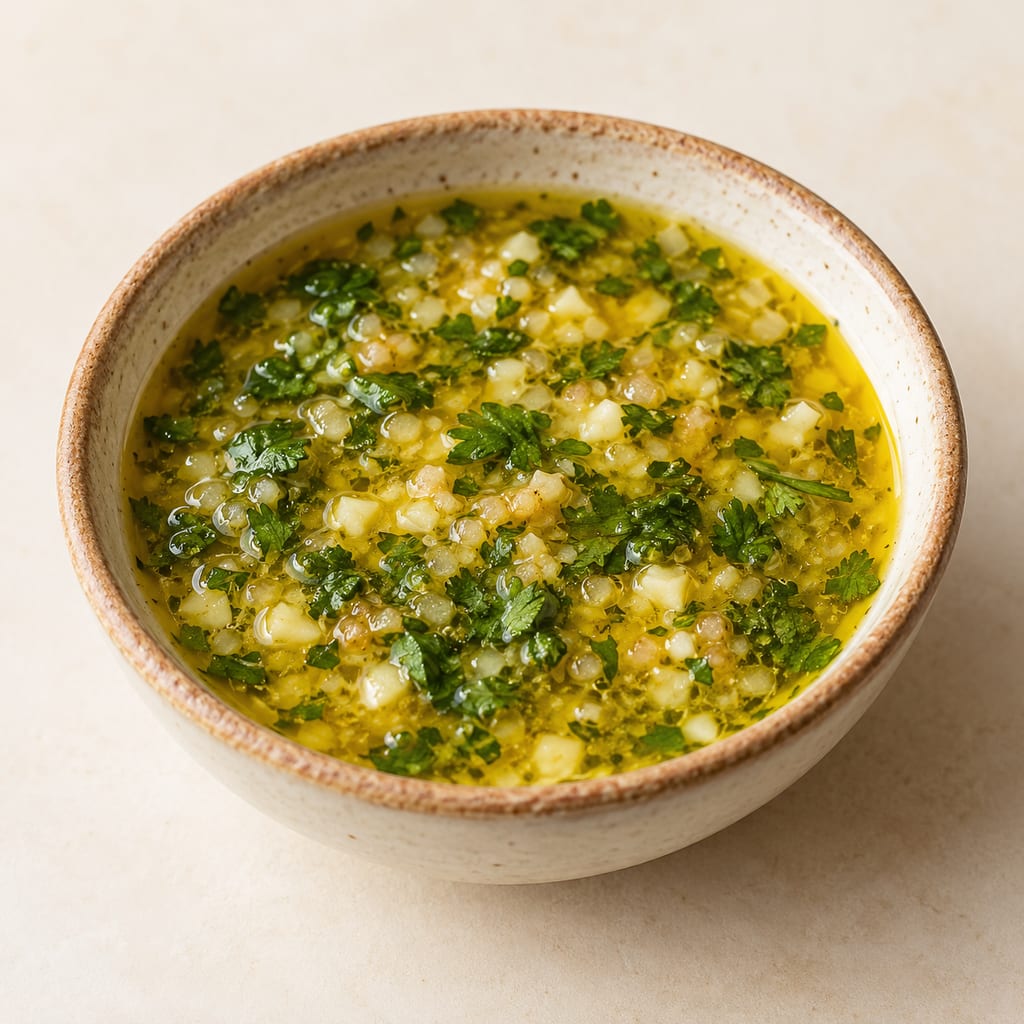
Mojo criollo (Cuban citrus-garlic sauce)
Mojo criollo is a Cuban sauce of garlic and sour orange juice with oil and herbs, used to marinate roast pork and as a dip.
 FermenteaWhere food goes to change
Red mojo · Canarian red mojo
A red sauce of garlic, dried or fresh red pepper, paprika and cumin in olive oil and vinegar, served with salt-cooked potatoes across the Canary Islands.
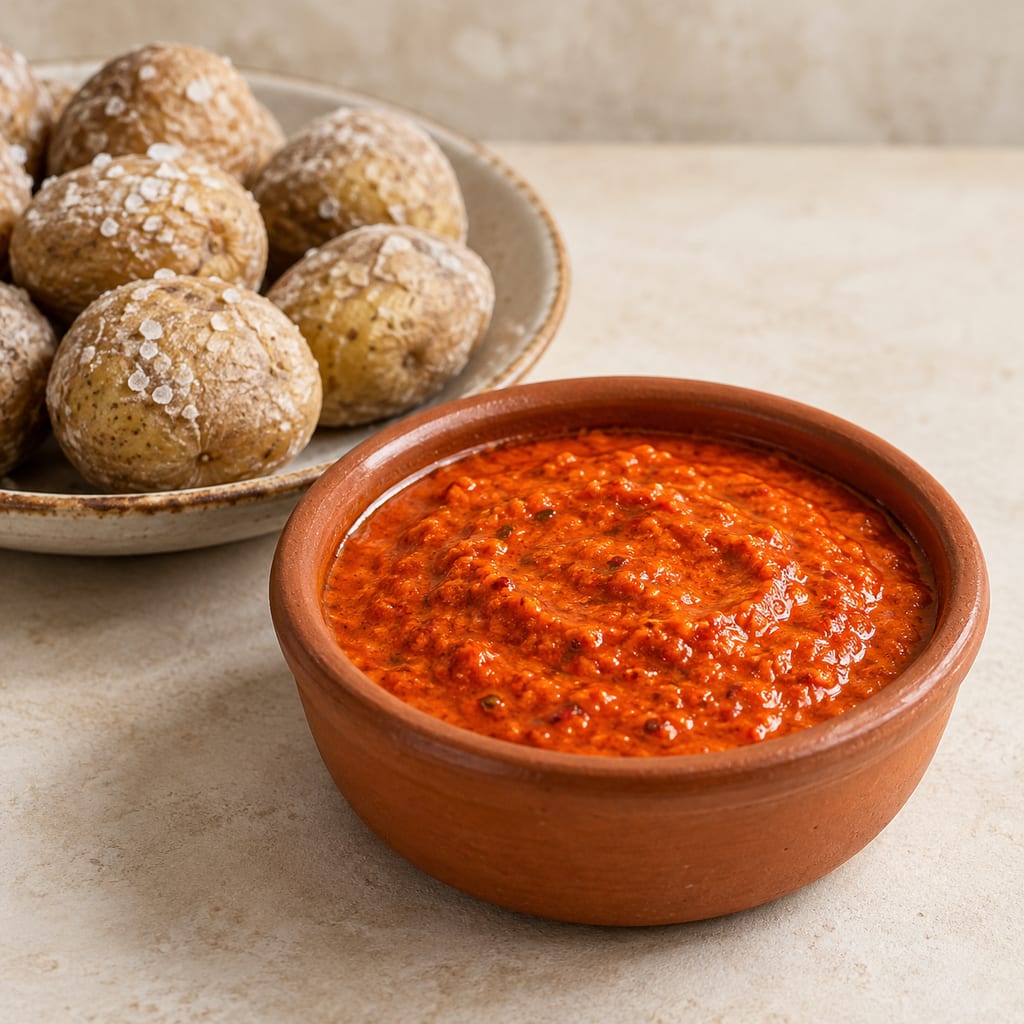
Mojo rojo is the red sauce of the Canary Islands. It is a thick, oily paste of garlic, red pepper, paprika and cumin, loosened with olive oil and sharpened with vinegar. It is pounded or blended rather than cooked, so its character comes from raw garlic and dried or fresh pepper and from the emulsion the oil makes with the paste.
It is best understood beside its green counterpart, mojo verde, which keeps the garlic and oil base but uses coriander or parsley in place of the paprika. The two are different sauces with a shared method, not one sauce in two colours.
Most sources derive the word mojo from the Portuguese molho, meaning sauce. One Gran Canaria source links this to early settlers who came from Madeira with the sugar trade and were later absorbed into the Spanish population. That is an etymology supported by the sources, not a dated record of the sauce.
The origin of the red sauce is not documented. One source says it was probably invented in the islands, where Latin American chillies, Spanish pimenton and olive oil and North African cumin came together. Others suggest North African or Spanish roots, and a Guanche contribution, all stated as possibilities. None of these is established. The sauce's first appearance in a dated record was not found in the cited pages.
Garlic and pepper form the body of the sauce. Pounding them releases their pungency into the oil and vinegar. Paprika gives the red colour and a mild sweetness. Cumin gives the earthy note that separates the red sauce from the green. Vinegar cuts the oil and adds the sharpness the sauce is known for. The sources give the oil as a mild olive oil, and the salt as coarse sea salt added to taste.
Pepper type matters more than the sources' generic wording suggests. The cited method uses picona peppers, a small local red pepper, and says it can be replaced by sweet red pepper for a milder sauce or by a chilli. Mojo picon is a hotter variant made with local bird's eye chillies.
The garlic and pepper are first broken down coarsely in a processor so that they pound easily. The mortar then does the real work. A little oil, the paprika, the cumin and the vinegar are added, and the mixture is pounded until it forms a smooth, uniform paste. The rest of the oil is then stirred in to loosen the sauce.
The mortar is a practical choice rather than a requirement, but the method depends on pounding: the paste must be worked until the paprika and cumin are evenly distributed before the oil thins it. The cited sources give no timing for this step.
Mojo rojo is traditionally served with papas arrugadas, small potatoes boiled in salted water until the skins wrinkle and a fine salt crust forms. The sauce is spooned over the potatoes, which are eaten with the skins on. The Wikipedia entry notes that red mojo is commonly eaten with meat, while the Gran Canaria source describes it as the partner of the potatoes.
The cited recipe says the sauce keeps for at least fifteen days in an airtight container in the refrigerator. That claim is not validated for this formulation and conflicts with current home-preservation guidance for garlic in oil. Use a conservative limit: refrigerate promptly at 4°C (40°F) or below and use within four days, or freeze for longer storage.
Garlic held in oil can create conditions for botulism. The recipe adds vinegar, but gives no measured acidity or validated acidification procedure, so this record does not treat the vinegar as a preservation control. Keep the sauce refrigerated, never hold it at room temperature, and follow the National Center for Home Food Preservation's four-day refrigerated limit for garlic-in-oil. That general limit is a conservative safety measure, not validation of this particular recipe.
No dated source for the red sauce, no quantified yield for the family recipe, and no comparison of island variants was found in the cited pages. The sources are tourism and recipe sites. A specialist Canarian food-history source would be the next research step.
Mojo is documented as a Canarian sauce. The name is traced by most sources to the Portuguese word for sauce, molho, which is linked to settlers from Madeira. The cited pages do not date the red sauce. The Guanche and North African connections are offered as possibilities and are not established. The paprika and cumin in the red version point to later Spanish and North African spice supply, but the sources do not tie a date to that exchange.
Scaling: source batch only
This is an uncooked garlic-and-oil sauce. The recipe contains vinegar but gives no measured acidity or validated acidification procedure; do not assume the vinegar makes it shelf-stable or extends safe refrigerated storage.
Hazard sourceRefrigerate promptly at 4°C (40°F) or below and use within four days; freeze for longer storage. Do not hold at room temperature.
Control sourceRefrigerate promptly at or below 4°C (40°F), use within four days or freeze, and do not hold at room temperature. The vinegar in this recipe is not a validated acidification step.
Documented as a Canarian sauce. Island and household recipes differ; no single recipe is authoritative.
Mojo criollo is a Cuban sauce of garlic and sour orange juice with oil and herbs, used to marinate roast pork and as a dip.
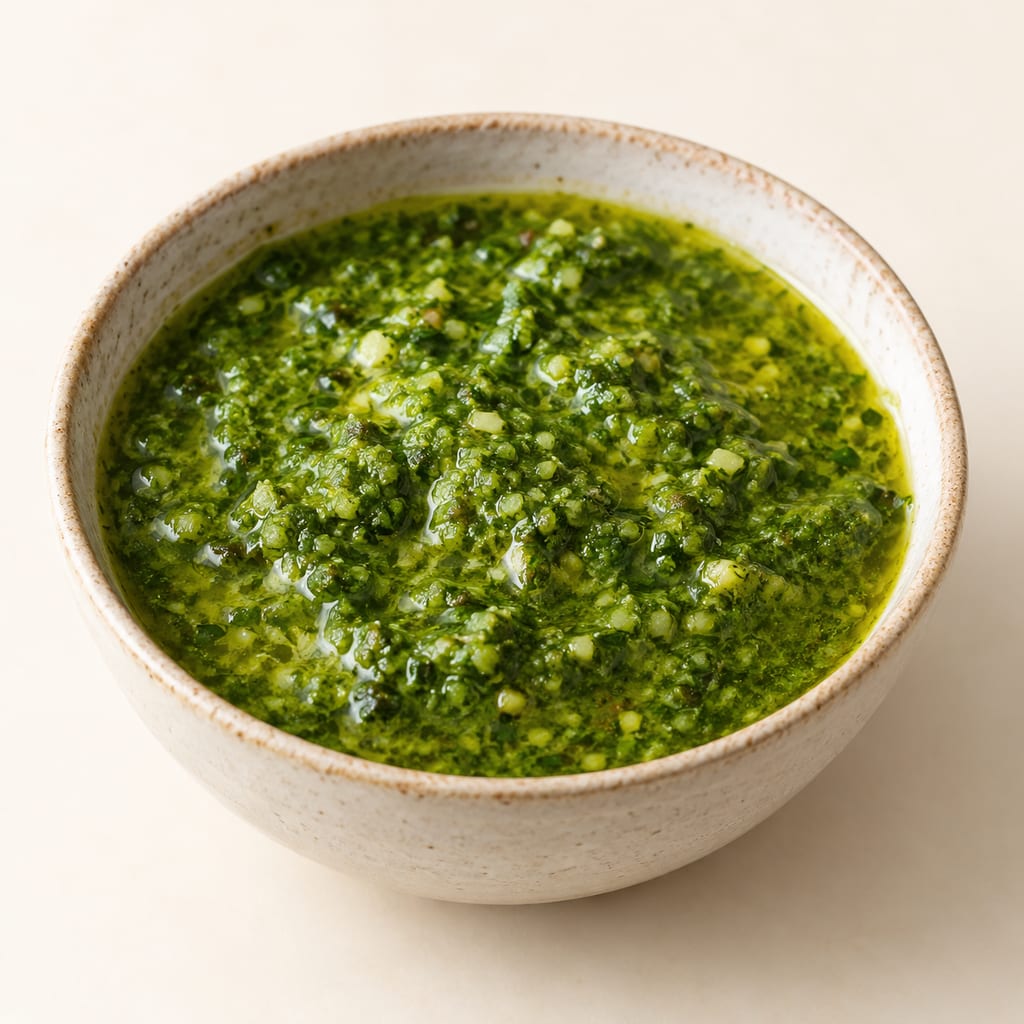
A green sauce of garlic, cumin, green chilli and fresh coriander or parsley in olive oil and vinegar, traditionally served with fish in the Canary Islands.

Ajvar is a cooked Balkan pepper preserve built around roasted red peppers, peeled, drained, ground and slowly fried with oil and seasoning. Leskovac’s protected version is a pepper specialty; regional versions vary.

Amlou is a nutty, lightly sweet Moroccan spread of roasted almonds, culinary argan oil and honey. The almonds are ground first, then loosened with oil and sweetened; the balance can range from a thick spread to a dip.

Apple sauce for goose and pork is a plain English accompaniment: cooked apples pulped with water, then sweetened with sugar and finished with a little butter.

A warm dip of garlic, anchovy and olive oil, often enriched with butter, that Piedmont serves over a flame with raw and cooked vegetables and bread.

A sweet-hot table sauce of ripe banana simmered with vinegar, sugar, onion, garlic and fresh chilli, in the manner of Philippine banana ketchup. An untested development batch of about 500 g.

A Georgian walnut sauce of ground walnuts, garlic, vinegar and spices, thinned with water or broth. It is served with poultry, vegetables and bread, and is the sauce of the dish satsivi.

A pourable dessert sauce of brown sugar, butter and cream, with a little corn syrup and salt. It is the sauce form of the butterscotch confection and is made without water, unlike caramel.

Byzantine murrī is a cooked imitation of murrī from the medieval Arabic repertoire, made from scorched honey, toasted bread, walnuts, quince, carob and spices rather than from a long grain fermentation.
No community contributions have been published for this entry yet.
Sign in to contribute. Published comments and photos are free to read.
WikipediaHistory · Method
Mojo (sauce)Red mojo uses paprika and the small red pimienta picona or pimienta palmera from La Palma; usually eaten with meat
Red and green mojo are both served with papas arrugadas
Cited in: Overview; Name and origin; Ingredients and their roles; Serving
Gran Canaria InfoHistory · Method
The history and origins of Canary Islands mojo sauceName traced to Portuguese molho, linked to Madeiran settlers
Base of olive oil, vinegar, sea salt and garlic; red flavoured with paprika, chilli and cumin
Red mojo traditionally served with papas arrugadas
Cited in: Overview; Name and origin; Ingredients and their roles; Serving
Cocina CaseraMethod · Storage
Canarian red mojo piconQuantities for four servings and the mortar method
The page claims refrigerated airtight storage for at least 15 days; this is not validated for the sauce's garlic-in-oil formula and is not followed here.
Cited in: Ingredients and their roles; Method; Storage and safety; Unknowns
National Center for Home Food PreservationSafety · Storage
Freezing Garlic-In-OilMake garlic-in-oil fresh; refrigerate at 40°F/4°C or below for no more than four days, or freeze for longer storage.
Garlic-in-oil mixtures held at room temperature can develop botulism risk.
Cited in: Storage and safety