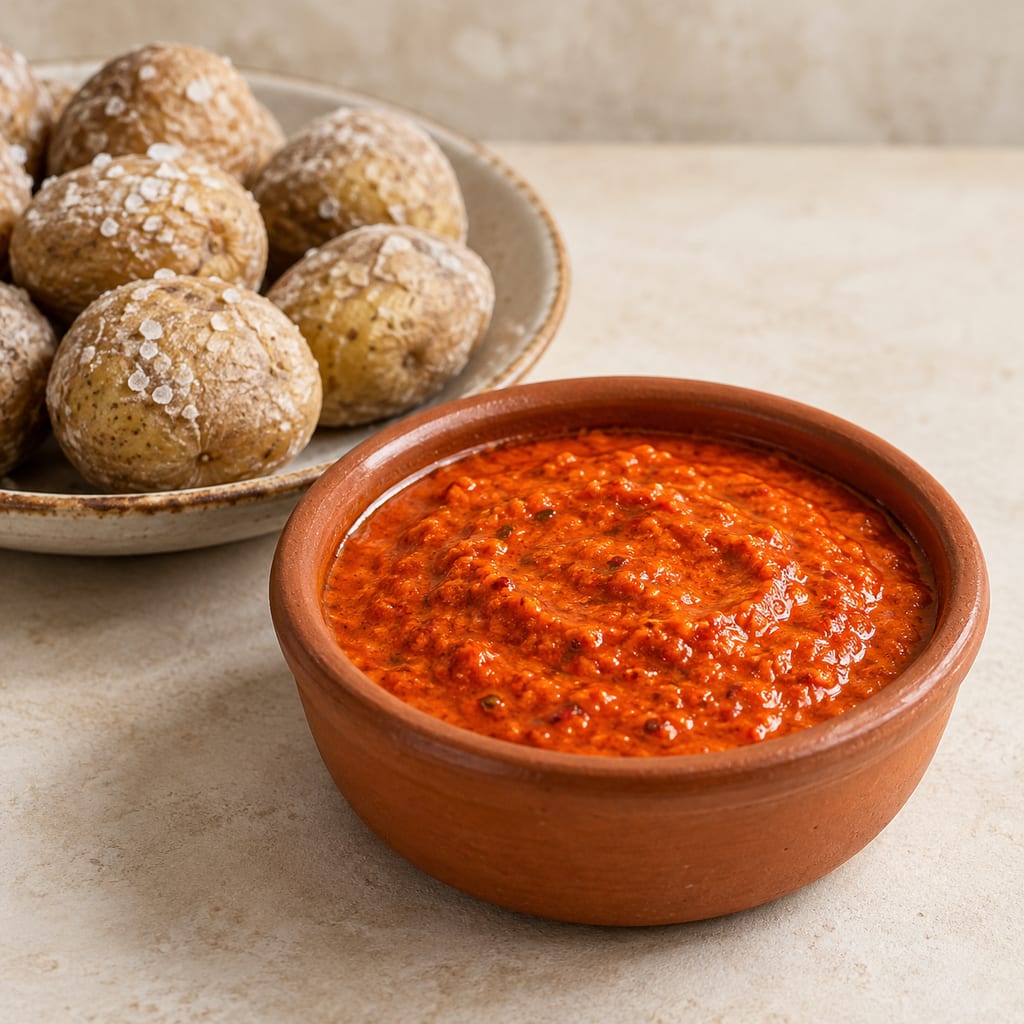
Mojo rojo
A red sauce of garlic, dried or fresh red pepper, paprika and cumin in olive oil and vinegar, served with salt-cooked potatoes across the Canary Islands.
 FermenteaWhere food goes to change
Mojo criollo · Mojo · Cuban mojo · Mojo cubano · Mojo de naranja agria
Mojo criollo is a Cuban sauce of garlic and sour orange juice with oil and herbs, used to marinate roast pork and as a dip.
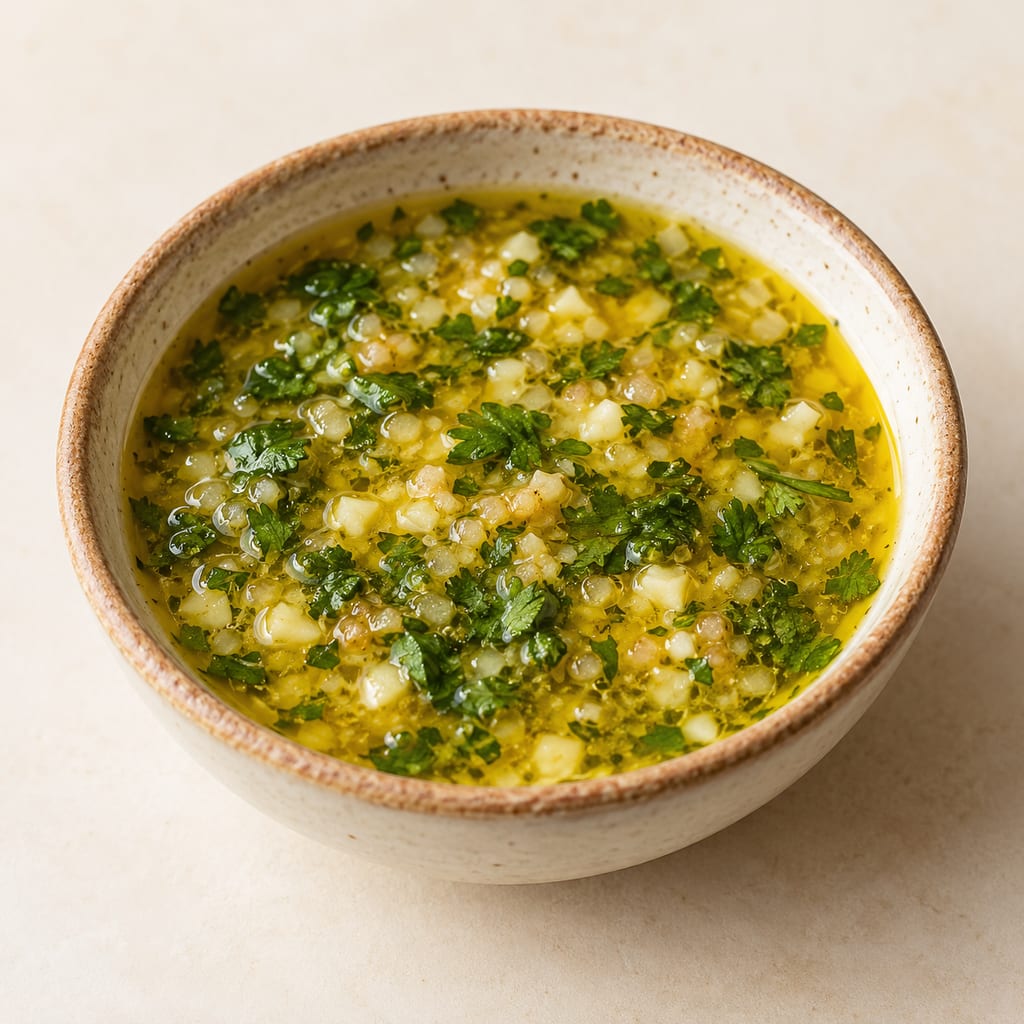
Mojo criollo is a thin, sharp Cuban sauce made from garlic, citrus juice and oil, with oregano and sometimes cumin. It is a liquid, not a paste or a cream, and its character comes from the acid of the fruit and the raw bite of the garlic. Cooks use it as a marinade for roast pork and other meats, and as a sauce served alongside.
The name criollo marks it as creole, in the sense of the Cuban version of a Spanish tradition. The word mojo itself is traced to the Portuguese molho, meaning sauce, and the word covers several sauces across the Canary Islands and Spanish-speaking America.
Canary Islands mojos are the older family. Red mojo uses small red peppers and paprika and is usually eaten with meat; green mojo uses green peppers and herbs and is typically served with fish; a hot version, mojo picón, uses more pepper. The Cuban sauce keeps the garlic and oil of that tradition and takes its acid from citrus.
Cuban mojo was made with the sour orange, a bitter orange whose juice is too sharp to eat raw. Its acid is what gives the sauce its character. Where sour orange is unavailable, cooks use a blend of lime, lemon and orange juice, as the modern recipe does.
The classic use is a marinade for roast pork, lechón asado, and other meats. The modern recipe adds lime and a hot pepper and marinates chicken, pork chops, veal or seafood for one to six hours, depending on the cut. Cooks are warned that over-marinating poultry in acid can make it mushy.
Mojo is also served as a dip for plantain chips and fried cassava, the way other Caribbean mojos are used with tostones and mofongo.
The main concern with a raw garlic and oil sauce is storage, not flavour. The sources give a refrigerator-only storage, a sealed glass jar, and a two-day window for the modern version, and warn against storing it in metal. Those are a recipe author's figures, not a validated process, so the sauce should be made in small amounts and kept cold.
Substituting citrus changes acidity, and the sources do not measure how far a lime and orange blend matches sour orange. Readers who want the traditional sauce should look for Seville or sour orange, and treat any substitution as a different sauce.
The word mojo is traced to the Portuguese molho, sauce. Canary Islands red and green mojos are the family tradition the Cuban sauce is said to descend from. Cuban mojo is garlic and citrus with sour orange, used to marinate roast pork and to dip plantain chips and fried cassava. They do not date the Cuban version.
Yield 1.5 cups · Scaling: source batch only
Garlic in oil stored without validated controls is a botulism concern. The modern recipe is raw and unheated.
Hazard sourceRefrigerate in a sealed glass jar; the source says it keeps up to two days refrigerated
Control sourceDo not store in metal; the citrus acid can react with it
Control sourceMake mojo fresh and refrigerate it. The two-day figure is one recipe site's advice and is not a validated shelf life.
Cuban and Cuban-diaspora version, made with sour orange. The sources do not date it.
The Canary Islands mojo tradition, red and green, is the family the Cuban sauce is said to descend from. Only the family, not a date, is attested here.
A red sauce of garlic, dried or fresh red pepper, paprika and cumin in olive oil and vinegar, served with salt-cooked potatoes across the Canary Islands.
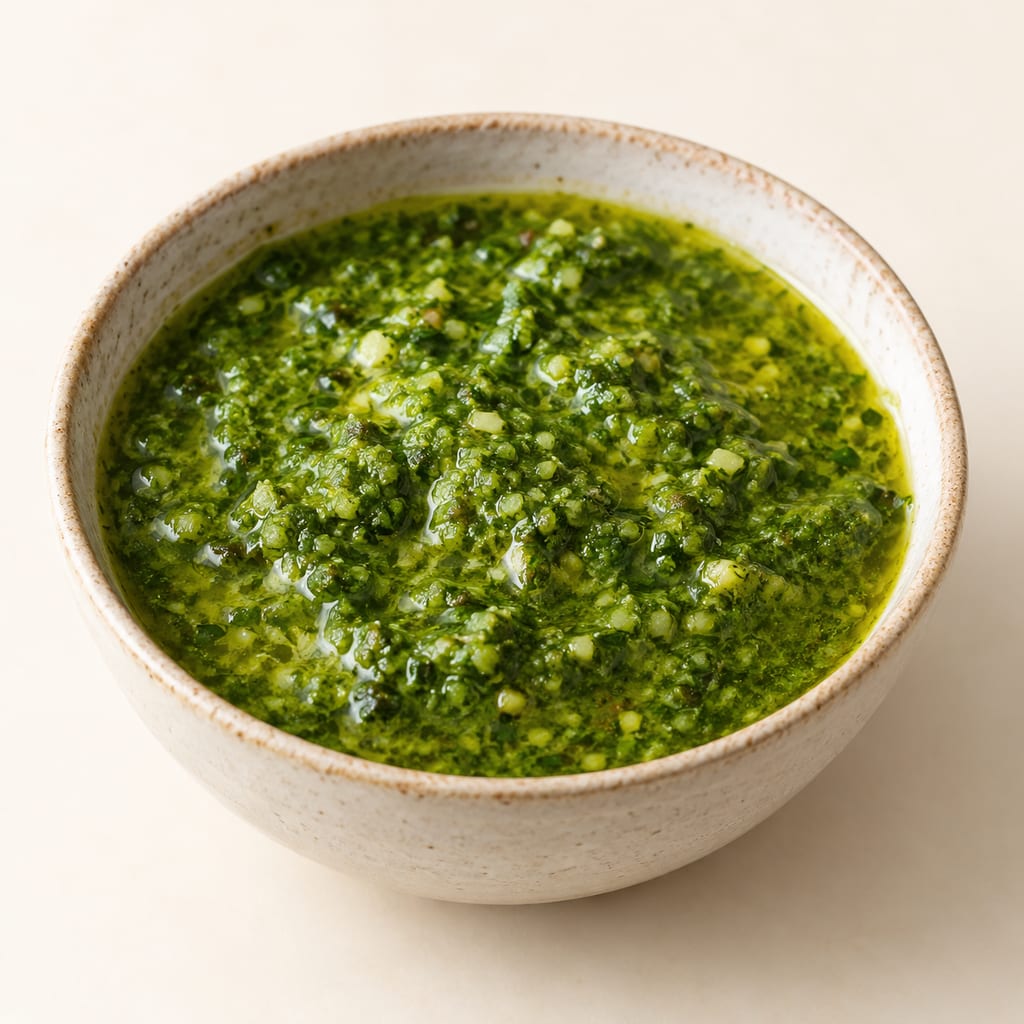
A green sauce of garlic, cumin, green chilli and fresh coriander or parsley in olive oil and vinegar, traditionally served with fish in the Canary Islands.
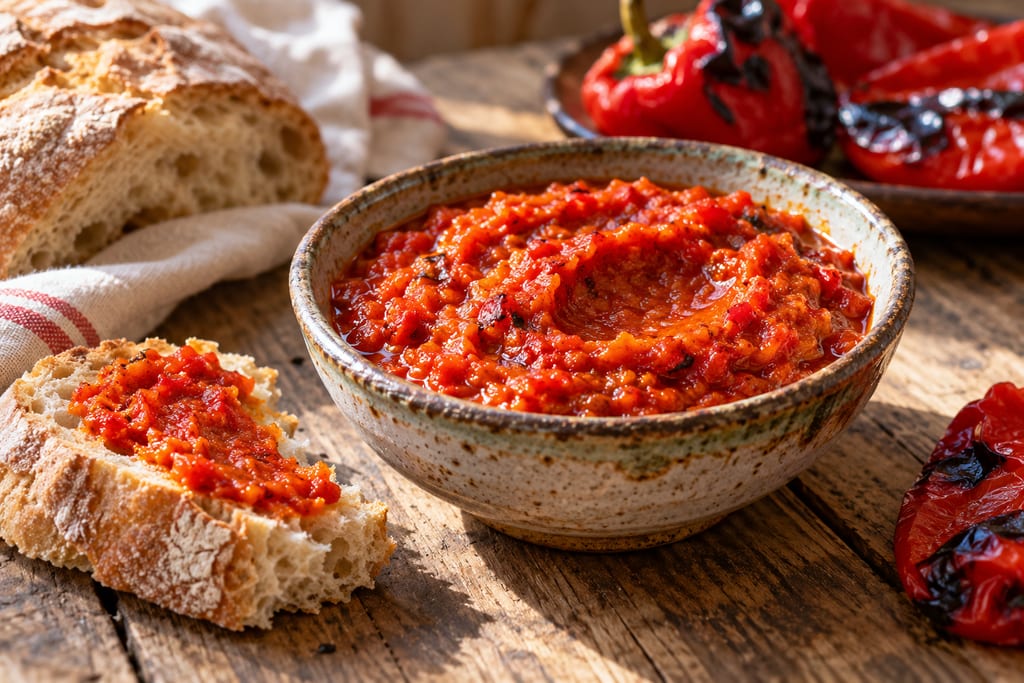
Ajvar is a cooked Balkan pepper preserve built around roasted red peppers, peeled, drained, ground and slowly fried with oil and seasoning. Leskovac’s protected version is a pepper specialty; regional versions vary.
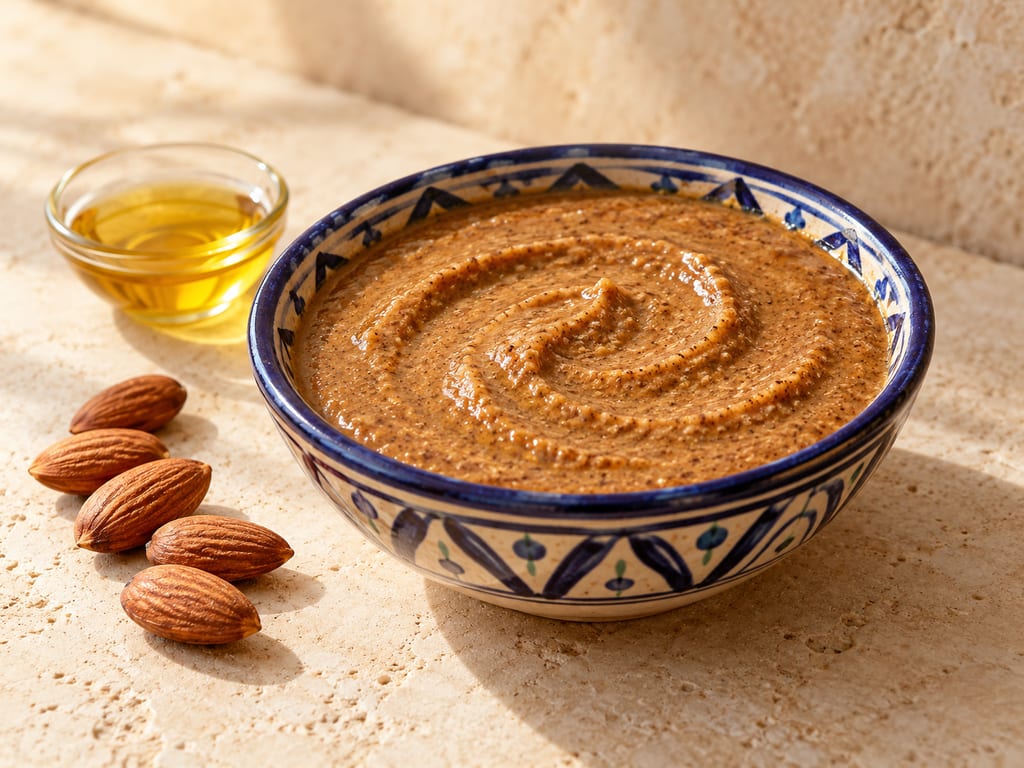
Amlou is a nutty, lightly sweet Moroccan spread of roasted almonds, culinary argan oil and honey. The almonds are ground first, then loosened with oil and sweetened; the balance can range from a thick spread to a dip.
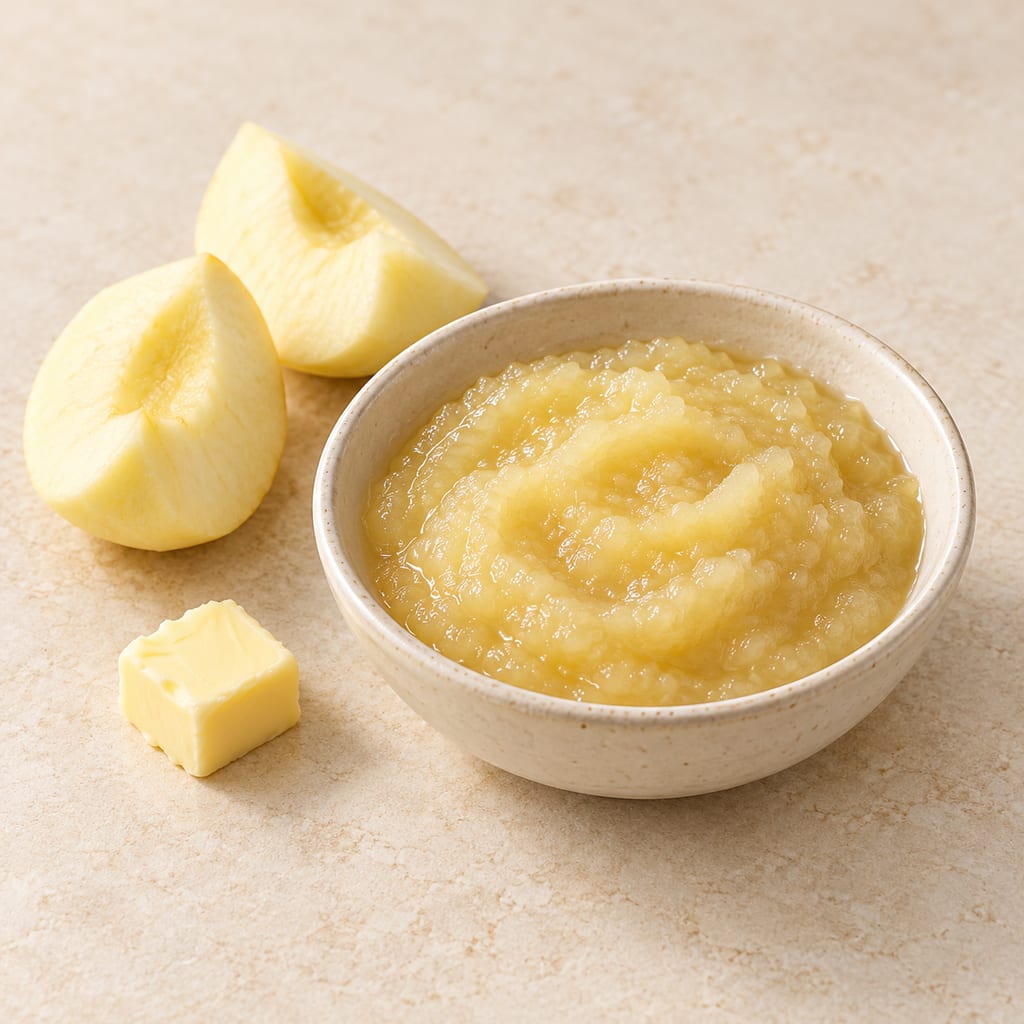
Apple sauce for goose and pork is a plain English accompaniment: cooked apples pulped with water, then sweetened with sugar and finished with a little butter.

A warm dip of garlic, anchovy and olive oil, often enriched with butter, that Piedmont serves over a flame with raw and cooked vegetables and bread.
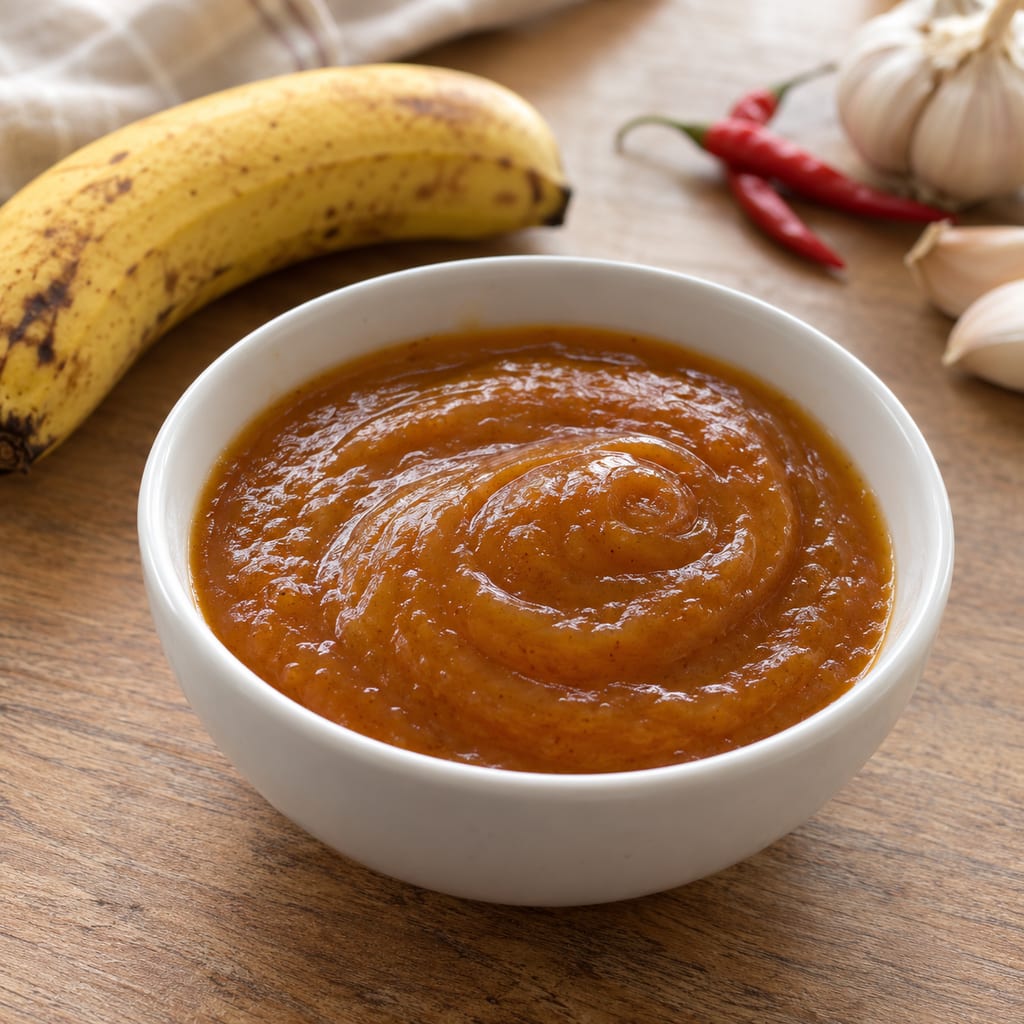
A sweet-hot table sauce of ripe banana simmered with vinegar, sugar, onion, garlic and fresh chilli, in the manner of Philippine banana ketchup. An untested development batch of about 500 g.
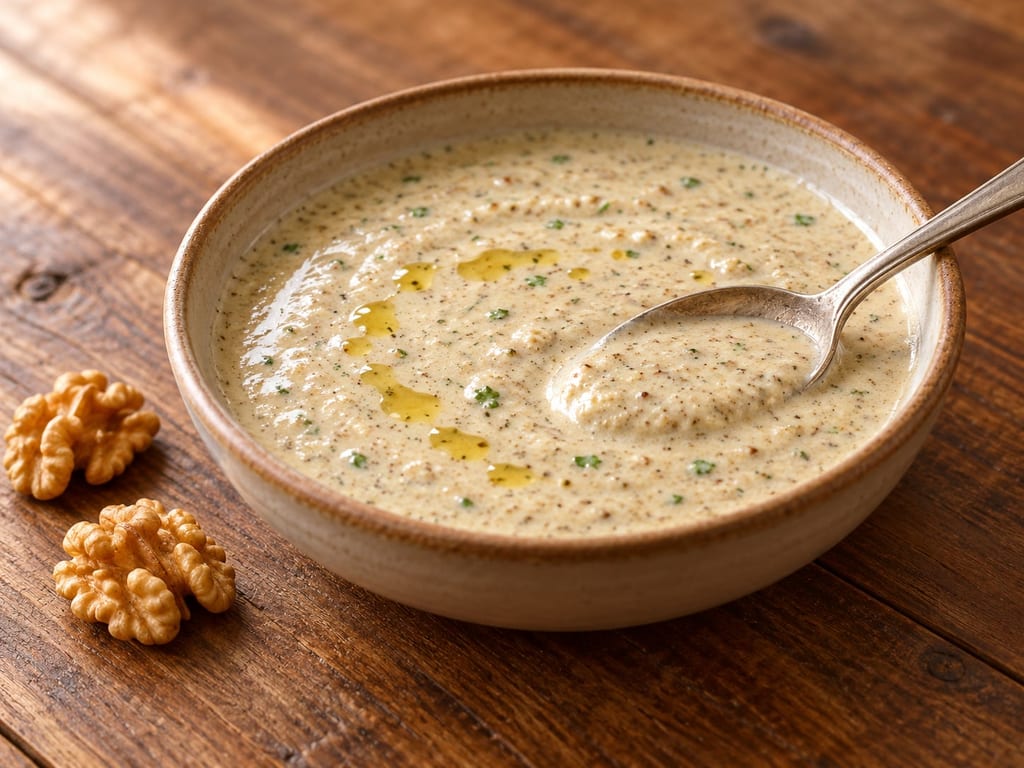
A Georgian walnut sauce of ground walnuts, garlic, vinegar and spices, thinned with water or broth. It is served with poultry, vegetables and bread, and is the sauce of the dish satsivi.
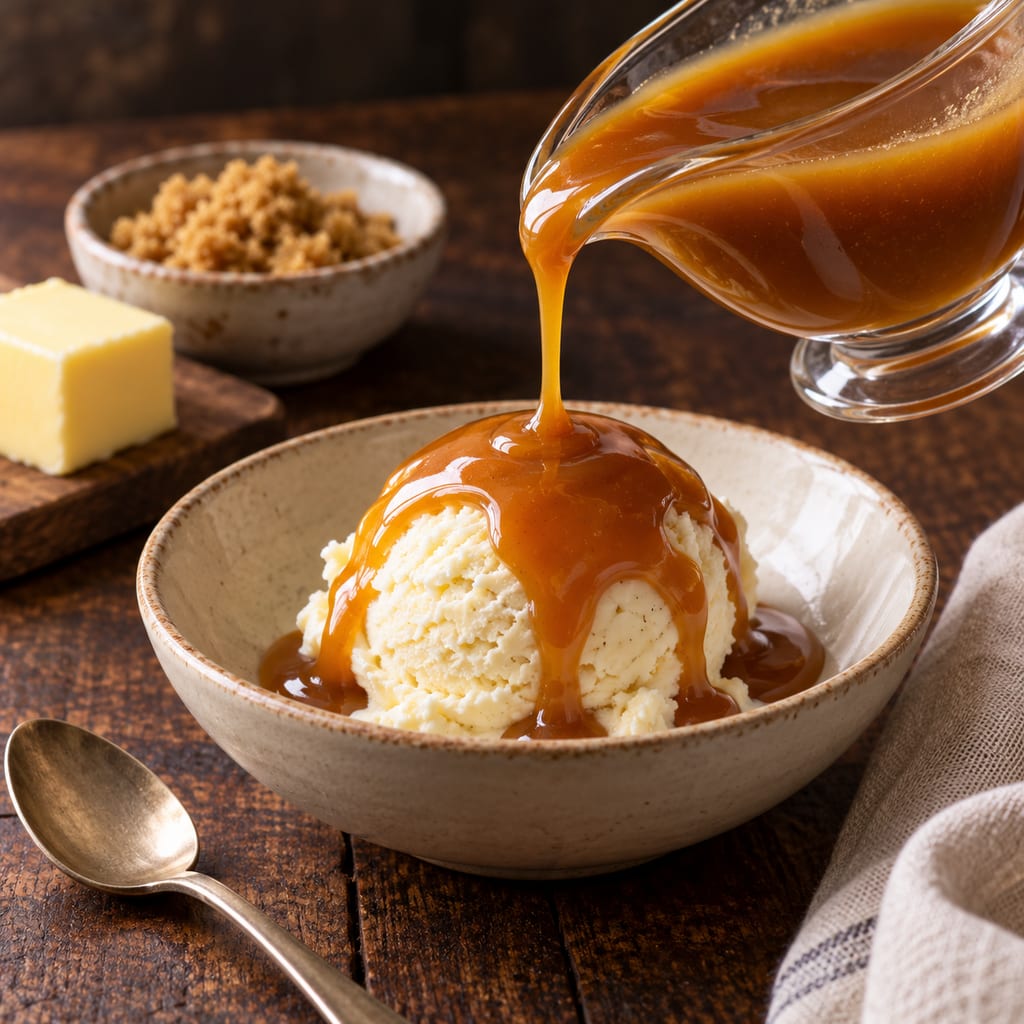
A pourable dessert sauce of brown sugar, butter and cream, with a little corn syrup and salt. It is the sauce form of the butterscotch confection and is made without water, unlike caramel.
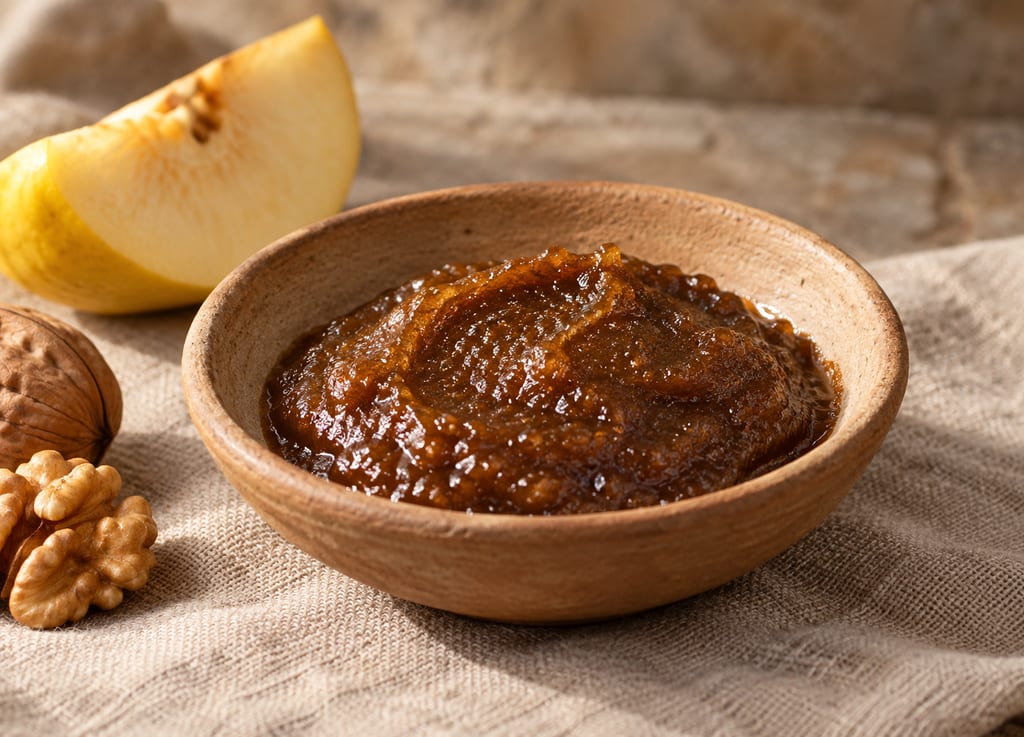
Byzantine murrī is a cooked imitation of murrī from the medieval Arabic repertoire, made from scorched honey, toasted bread, walnuts, quince, carob and spices rather than from a long grain fermentation.
No community contributions have been published for this entry yet.
Sign in to contribute. Published comments and photos are free to read.
WikipediaHistory · Variants · Culinary use
Mojo (sauce)Mojo from Portuguese molho; Canary Islands red and green mojo, mojo picón; Cuban mojo of garlic, oil, citrus, traditionally bitter orange, used for roast pork and plantain chips and fried cassava
Cited in: A sharp sauce of garlic and citrus; The Canary Islands and the Cuban version; Marinade and dip; Keeping it safe
Garlic & ZestMethod · Safety · History
Mojo Criollo MarinadeModern recipe quantities and method; refrigerate in sealed glass jar up to two days; do not store in metal; sour orange substitution with lime, lemon, tangerine; marinating times
Cited in: A sharp sauce of garlic and citrus; The Canary Islands and the Cuban version; Marinade and dip; Keeping it safe