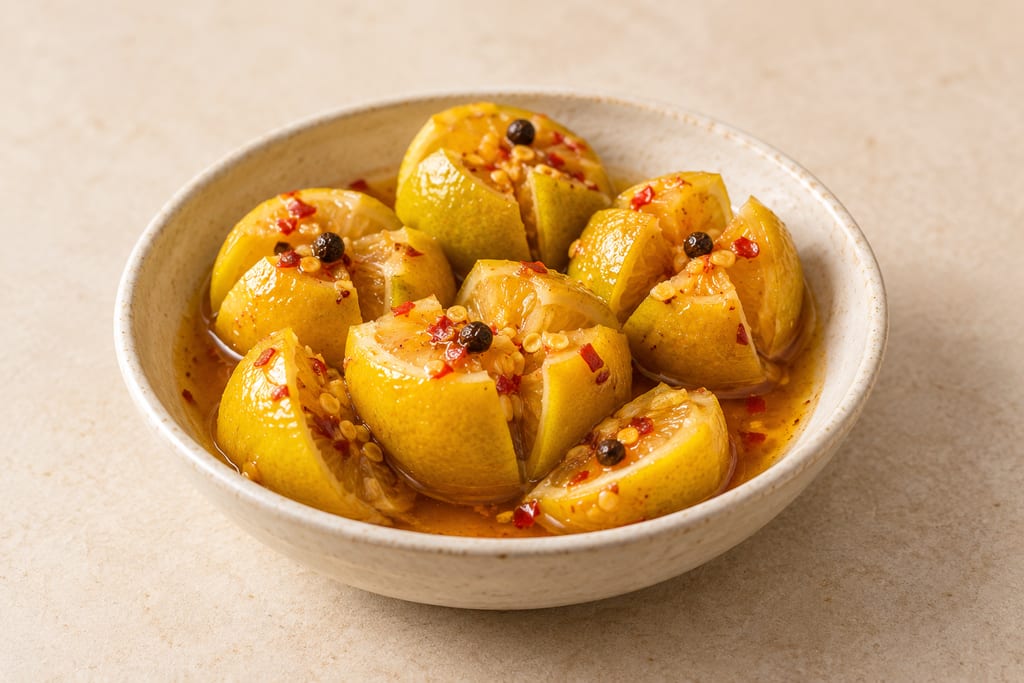
Lime pickle (Peter Kuruvita)
Peter Kuruvita’s published lime pickle stuffs 20 limes with rock salt, then simmers them in vinegar, sugar and chilli before a two-week rest.
 FermenteaWhere food goes to change
Substrates
Lime brings sour juice, fragrant peel and firm rind to fresh food and preserved condiments; the fruit named in a recipe may belong to several citrus types.
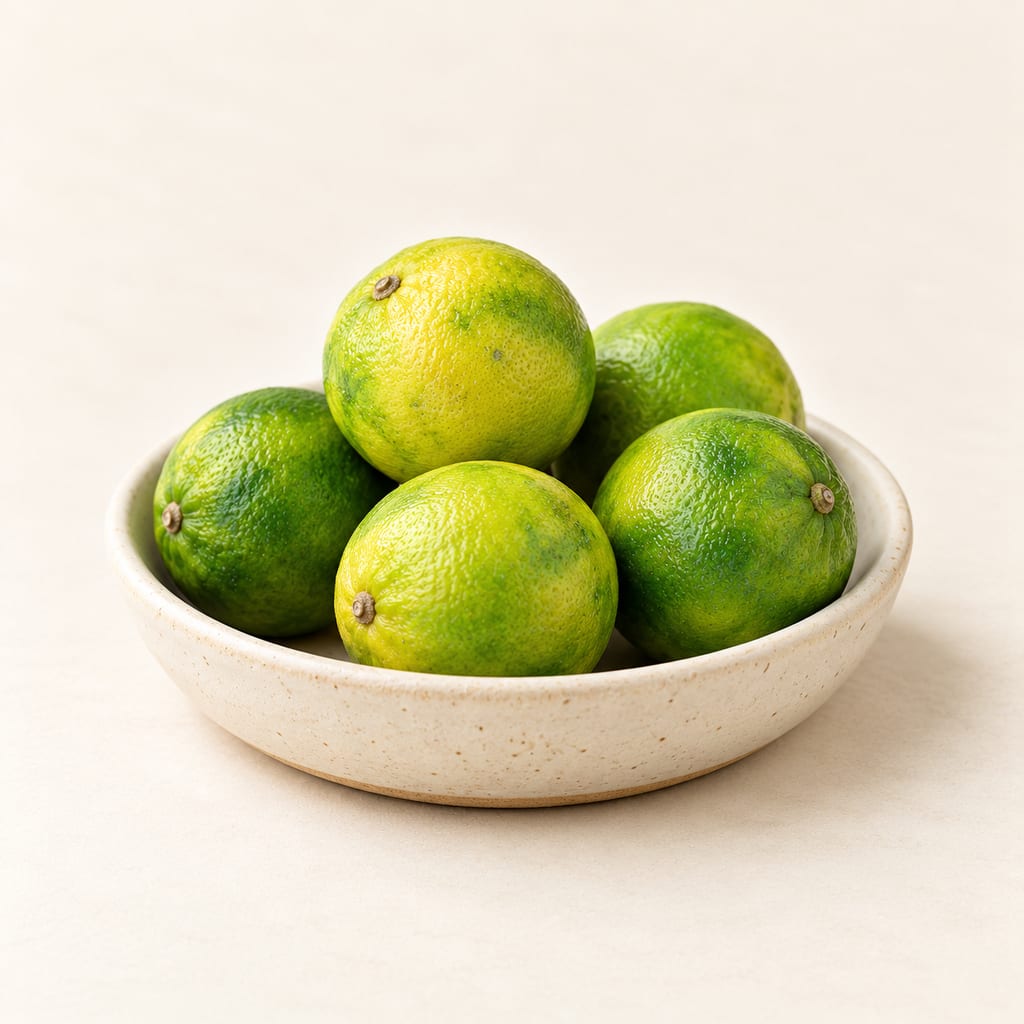
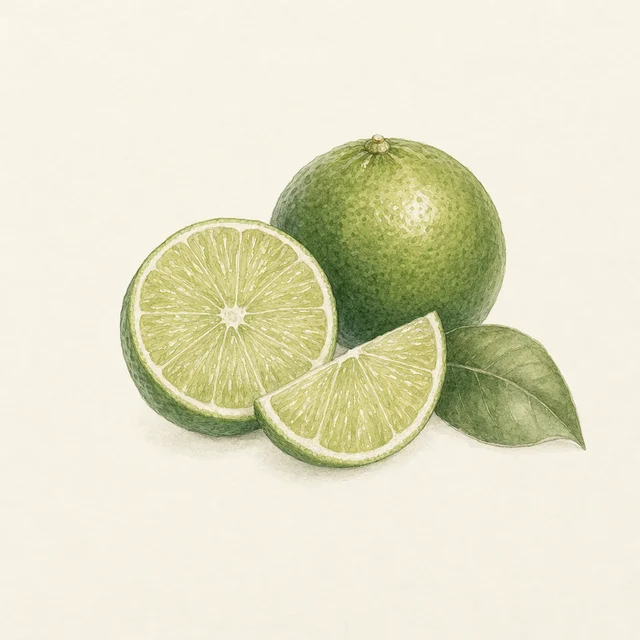
“Lime” is a useful market word and an imprecise botanical one. It can mean several citrus fruits that share acidity and a green-to-yellow peel, but differ in size, fragrance, seediness and the balance between juice and rind. That distinction matters when a recipe asks for whole fruit. A handful of small, thin-skinned limes behaves differently in a jar from a large, nearly seedless Persian lime, even when both are sold under the same label.
The small acid lime commonly called Key, Mexican, West Indian or sour lime is usually identified as Citrus aurantiifolia. Kew’s Plants of the World Online accepts it as the hybrid Citrus × aurantiifolia, gives the parentage as C. hystrix × C. medica, and describes it as a cultivated plant associated with the eastern Himalaya. PROSEA, a Southeast Asian plant-resource handbook, uses the older unmarked name C. aurantifolia and gives a more tentative origin: northern India and adjoining Burma, or northern Malesia. These are taxonomic and historical interpretations, not a settled story of a single wild ancestor. Citrus has a long history of hybridization, and authorities may print different names for what cooks and growers call the common lime.
The broad, generally larger Persian or Tahiti lime is usually listed as Citrus × latifolia. PROSEA describes it as a presumed hybrid involving lime and citron, typically seedless or nearly so, less intensely flavored and longer in shape than common lime. Makrut lime, Citrus hystrix, is another fruit altogether: its sharply aromatic leaves and bumpy rind have their own important culinary uses, especially in Southeast Asian cooking. A lemon, Citrus limon, is different again. They are related citrus, not interchangeable names for a single ingredient.
For a whole-fruit pickle, a small acid lime offers compact fruit and thin peel. Peter Kuruvita’s published recipe simply says ‘limes’; it does not identify a species or cultivar. Sri Lanka’s Department of Agriculture describes a local crop as Citrus aurantifolia and records its juice as a food flavouring and the fruit as a salted, sun-dried pickle. That local context helps explain why whole lime belongs in the cuisine without assigning Kuruvita’s unnamed fruit to a particular botanical line. A cook can still choose fruit by size, sound skin and the needs of the method.
A lime is a citrus hesperidium: a berry whose rind and interior are organized in layers. The colored outside, the flavedo, contains oil glands; beneath it lies the pale, spongier albedo, and inside are segments filled with juice sacs. This general anatomy is described for citrus, though the thickness and character of each layer vary among species and cultivars. In a whole-fruit preserve, the peel is not packaging to discard after squeezing. It is one of the main ingredients.
The juice provides familiar sharpness. Citric acid is a principal source of sourness; the amount varies by fruit, maturity and growing conditions, so a fixed acidity value should not be assigned to every lime. PROSEA reports 7–8 percent citric acid for a cited Thailand analysis of mature lime fruit. That is a regional, study-specific figure, not a kitchen guarantee. Sugar in juice and peel’s essential oils temper and complicate the acidity. Lota and colleagues compared peel and leaf oils from 43 lemon and lime taxa and found multiple oil chemotypes within lime. Their result is a reminder that “lime aroma” is not one invariant chemical signature.
Cut or twist a peel and its oil glands release volatile compounds. The first scent can seem floral or green; the taste that follows may be bitter, resinous, sharp or pleasantly perfumed. Much of lime’s distinctive identity sits in this scented outer layer. The white albedo is more neutral in aroma and can become noticeably bitter if damaged or exposed in a preparation where bitterness is unwelcome. But in salted whole-fruit pickle, pale rind is also the substantial, yielding part that absorbs salt and sourness and eventually becomes chewable.
Pectin is concentrated in the pale albedo and the membranes between citrus segments. It is a useful reminder that lime peel has structure as well as aroma: the rind can hold a fruit together while the juice sacs soften with heat. In the kitchen, firm peel tends to keep its shape longer than thin, bruised or already-soft peel, though cultivar and ripeness change the result. Citrus pectin is also used in jelly-making with acid and sugar, but a lime preserve is not automatically a set jelly. For whole-fruit pickles, choose sound fruit; for juice, choose fruit that yields readily when pressed.
Green is the color most shoppers associate with a lime, but color is not a reliable maturity label on its own. UF/IFAS says Key lime turns yellow when ripe but is usually picked green; UC Davis postharvest guidance distinguishes mature-green fruit from fruit picked yellow, noting the longer keeping life of mature-green limes and a market preference for yellow limes in some countries because they have greater juice content. In the Sri Lankan lunu dehi account below, the chosen fruits are specifically yellow and ripe. Green or yellow therefore describes a market and recipe choice as much as a botanical identity.
Choose fruit for the job rather than color alone. For juice, look for fruit that feels heavy for its size and yields slightly to gentle pressure. For preserving whole, prioritize unblemished skin, a sound stem end and consistent size so fruit can be salted or heated evenly. Small acid limes are thin-skinned and often seedy, while Persian limes are larger and usually seedless. These are tendencies, not guarantees: cultivar, harvest maturity and storage all matter.
Wash the exterior before cutting or preserving it, because the peel is eaten. A microplane or fine grater should remove only colored zest for uses where bitterness is unwelcome. Whole-fruit pickle takes a different approach: cuts are made through the peel so salt or brine can reach the flesh, and the rind is transformed rather than removed.
In Sri Lanka, lime is both an everyday source of fresh sourness and a fruit preserved for later meals. Its juice flavors food at once; whole fruit can instead be salted, dried in the sun and kept in its own juice as a pickle. These are different ways of spending the same harvest. Fresh juice gives a quick bright edge, while a preserved piece brings rind, salt and time into the flavor.
Limes are cultivated in Sri Lankan districts including Monaragala, Badulla, Puttalam and Anuradhapura. The fruit belongs to farms and seasons as well as recipes: a fresh supply can be squeezed over a meal, while sound whole fruit can be salted for later eating. Keeping rind and juice together gives a preserved condiment a different texture from a squeeze of fresh juice.
The Sinhala name is commonly written lunu dehi. One description calls it a “rice puller”: a potent pickle eaten in small amounts to make plain rice more compelling. Ripe yellow limes are packed with salt and sun-dried, sometimes repeatedly, then flavored with spices and vinegar. The seasoning can turn a quiet bowl of rice into a meal with alternating bites of plain grain and intensely sour-salty fruit.
The culinary idea is that lime remains the center of the preserve. Salt enters through cuts and draws moisture from the fruit; sun-drying changes its texture and concentrates what remains. Skin darkens and softens, while juice, salt and fragrant peel make a pungent, sour-salty condiment. Some home versions include chilli; the Explore Sri Lanka account also mentions pepper and optional cloves or cardamom. Another version in that article boils punctured fruit in a seasoned liquid for an “instant” result. It is explicitly a different method: the prolonged sun-dried preserve and quickly boiled pickle cannot be treated as one process.
The FAO’s technical chapter records two fermented lime pickles associated with Asia and Africa, especially India, Pakistan and North Africa. In its dry-salted method, ripe undamaged fruit is quartered and layered with 1 kilogram of salt per 4 kilograms of fruit. Juice drawn from the cuts forms a brine in about a day; the fruit then ferments in that liquid for one to four weeks. The separate brined method begins with a 60–65°C hot-water dip, then immerses the cut fruit in brine and allows it to ferment before sun-drying. The chapter does not give a brine ratio for that version. Salt draws out juice and shapes the fermenting environment, but salting alone is not the entire transformation. These are two distinct fermented processes, not instructions to apply their times or proportions to Sri Lankan lunu dehi or Kuruvita’s vinegar-simmered pickle.
Lime’s fresh use is broader than pickle. Sri Lanka Tourism says kiribath, rice cooked with coconut milk, is usually served with lunumiris made with red onion, chilli flakes, salt and lime; it also mentions the same condiment with green gram. Lunumiris is not lunu dehi: one is a fresh, sharp relish in this description, the other a preserved lime. Keeping the names distinct prevents a culinary muddle. Both show how acidity functions alongside rice, beans and coconut, cutting richness and giving a meal contrast.
PROSEA records other regional ways of using lime. Across Southeast Asia it describes the fruit as a household flavoring for hot and spicy food, drinks, tea, sauces and pickles. In Malaysia, it notes fruit preserved in brine and vinegar and served as an appetizer after frying with sugar. This is not Sri Lankan lunu dehi, but it demonstrates that preserving lime whole or in pieces is not one fixed national technique. A fruit with sharp juice and aromatic peel invites many solutions: salt, vinegar, drying, sugar, heat, or combinations of these.
Peter Kuruvita’s lime pickle treats whole fruit in a different way: the limes are simmered with vinegar, sugar, salt, pepper and chilli, then rested before serving. It is sweeter and more immediately cooked than the sun-salted lunu dehi described above. The fruit stays recognizable as the center of the condiment, while its rind takes on the sharp, sweet cooking liquid. Its balance of vinegar, sugar and heat belongs to this pickle, not to every preparation called lunu dehi.
The peel is central whenever a lime is preserved whole. Its coloured outer layer lends fragrance; the pale inner layer supplies a body that can soften without disappearing into juice. A cook choosing fruit for a jar can look for sound skin and a size suited to the cuts and vessel. Small fruit brings more whole pieces to a serving; larger fruit changes the ratio of rind to the sour interior. The recipe still decides whether that fruit is salted, sun-dried, brined or simmered with vinegar and sugar. Each treatment gives the same market name a different place at the table.
Select sound fruit suited to the method and treat the peel as a major flavor and texture. Fresh lime relish lifts rice with juice and aroma; salted, dried rind brings a chewy, concentrated sourness; vinegar-simmered fruit carries a sweeter, cooked sharpness. One squeeze can brighten a bowl, while one piece of preserved peel can season an entire mouthful. The fruit remains recognizably lime in each case, yet the different handling of its juice and rind makes each condiment its own food.
FAO's broad lime-pickle association, not a crop origin.
FAO's broad lime-pickle association, not a crop origin.
FAO's broad lime-pickle association, not a crop origin.
The agriculture department records salted, sun-dried lime pickle; this does not identify a particular cookbook cultivar.
Peter Kuruvita’s published lime pickle stuffs 20 limes with rock salt, then simmers them in vinegar, sugar and chilli before a two-week rest.

Lunu dehi is Sri Lankan salted lime pickle. This version sun-dries cut, salt-stuffed ripe limes, then packs them with dried lime juice, chillies, spices and vinegar.
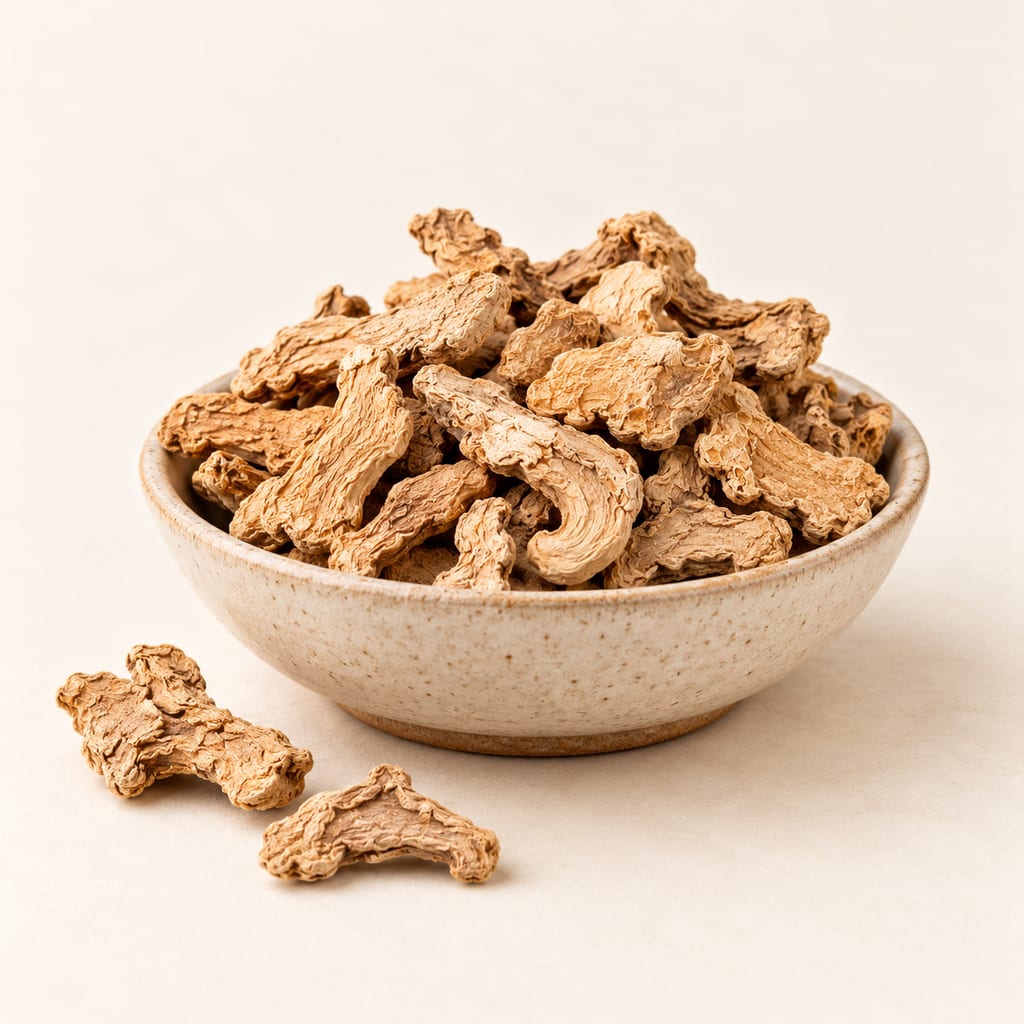
Dried ginger is the mature, dried rhizome of Zingiber officinale; its warm flavor and whole, sliced or ground forms serve different kinds of cooking.
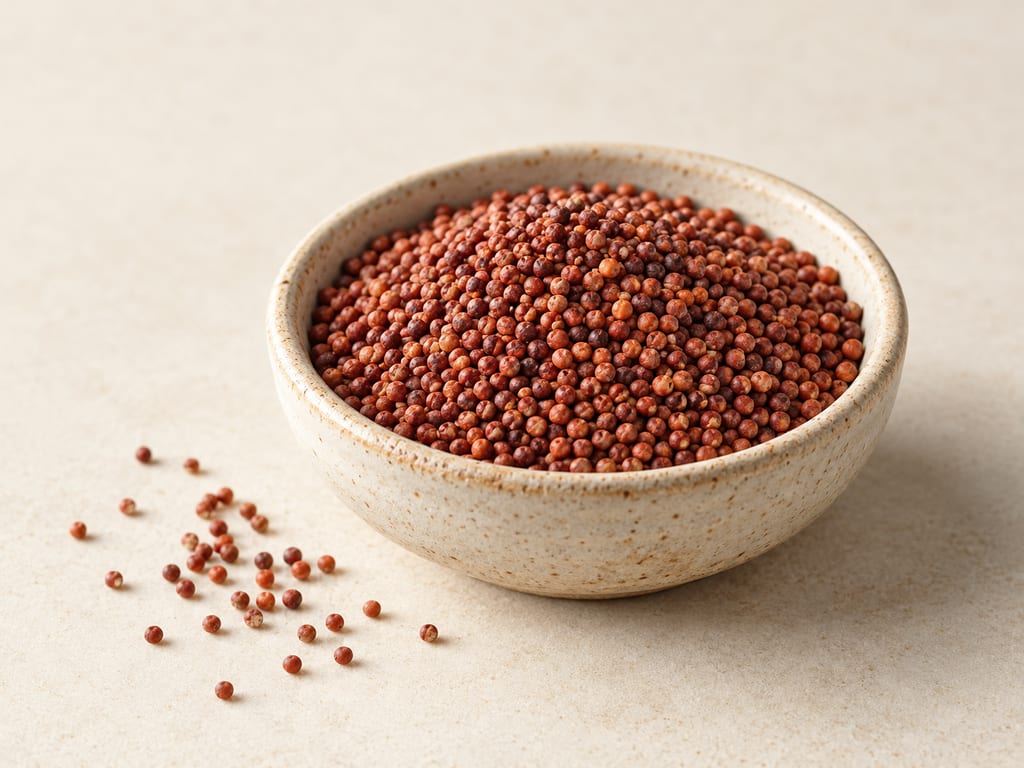
Finger millet (Eleusine coracana) is a small-grained cereal grown across parts of Africa and Asia. It is milled, cooked, malted and fermented in distinct food traditions.
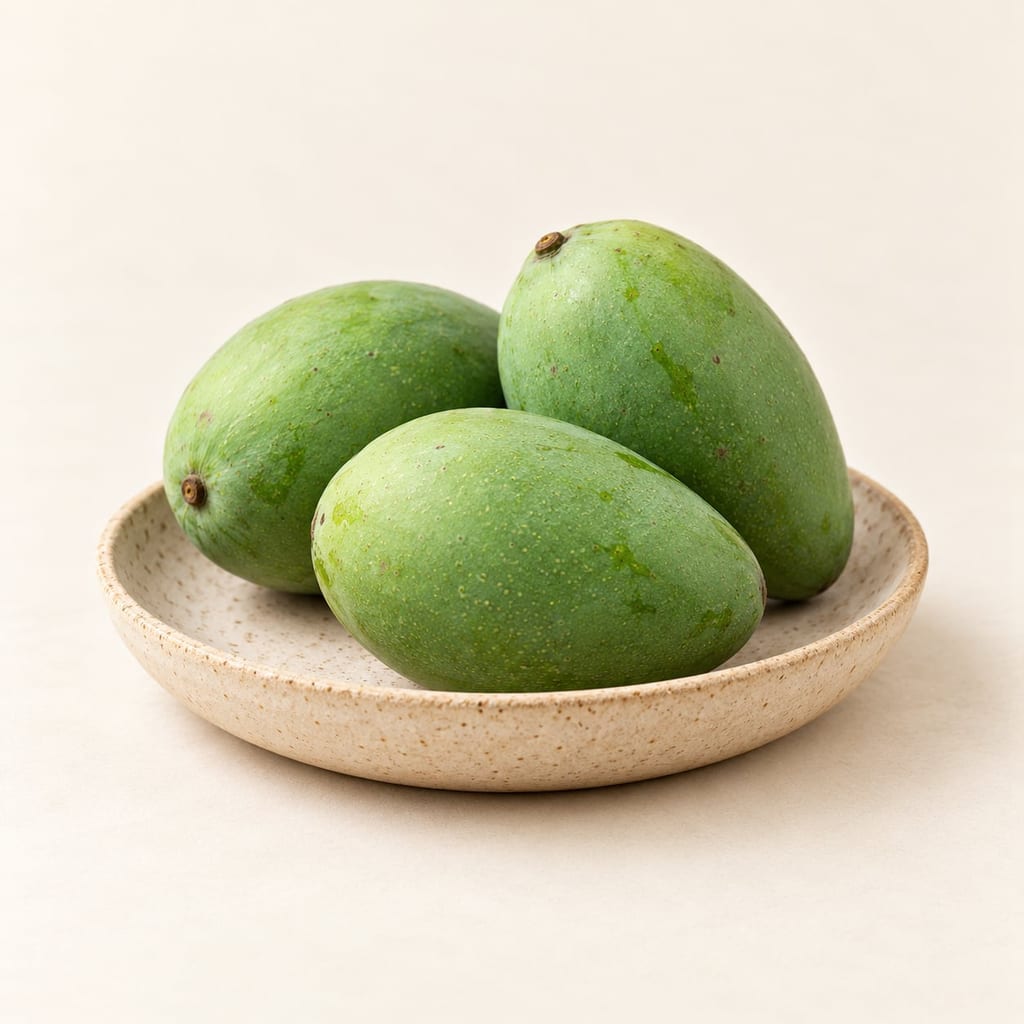
Unripe mango offers sourness and firm texture at several maturity stages, from tender whole pickle fruit to mature-green slices for cooking or drying.
No community contributions have been published for this entry yet.
Sign in to contribute. Published comments and photos are free to read.
FAOInspiration · Lunu dehi; distinct fermented lime pickles
Fermented Fruits and Vegetables: Global Perspective, Chapter 6FAO describes separate dry-salted and brined lime fermentation methods associated with India, Pakistan and North Africa.
Dry-salted method uses 1 kg salt per 4 kg ripe fruit; a brine forms in about 24 hours before one to four weeks of fermentation.
Separate brined method starts with a 60–65°C hot-water dip, then brine fermentation followed by sun-drying; the chapter gives no brine ratio.
Cited in: Lunu dehi: salt, sun and a flavor that stays in the pantry
Royal Botanic Gardens, Kew, Plants of the World OnlineTaxonomic authority · Morphology · Image rights metadata
Citrus × aurantiifolia (Christm.) SwingleAccepted hybrid taxon Citrus × aurantiifolia, with Citrus hystrix × Citrus medica parentage and a cultivated eastern-Himalaya association.
Kew’s cited Flora of Somalia description notes a thin greenish-yellow peel and very acid pulp.
Cited in: Not one lime, but a family of kitchen names; A citrus worth naming carefully
Plant Resources of South-East Asia (PROSEA)Botanical/agricultural reference · Regional food uses · Lime varieties
Citrus aurantifolia (Christm. & Panzer) Swingle (Record 1490)Older unmarked taxon name and vernacular names
Origin uncertain between northern India/adjoining Burma and northern Malesia
Lime use in foods, drinks, tea, sauces and pickles; Malaysian brined/vinegar preserved fruit
PROSEA cites a Thailand analysis reporting 7–8 percent citric acid in mature yellow fruit with thin rind.
Tahiti/Persian lime distinctions from common lime
Cited in: Not one lime, but a family of kitchen names; A segmented fruit built around peel; Green, yellow and ready for the table; Lunu dehi: salt, sun and a flavor that stays in the pantry; A citrus worth naming carefully
University of Florida IFAS Extension, Florida Master Gardener Volunteer ProgramSpecies comparison · Maturity and harvest color · Image candidate and credits
Lime, KeyKey lime is round and yellow when ripe, though it is usually picked green.
Compared with Tahiti lime, it is smaller and seedier, with thinner rind, stronger aroma and a tarter, more bitter taste.
Cited in: Not one lime, but a family of kitchen names; Green, yellow and ready for the table
Sri Lanka Department of AgricultureSri Lankan crop identity · Cultivation geography · Preservation practice · Photo candidate
Fruit CropPage 5 identifies the Sri Lankan lime crop as Citrus aurantifolia and names a local cultivar.
Suitable districts include Monaragala, Badulla, Puttalam and Anuradhapura.
The department describes lime juice as a food flavouring and the fruit as often salted, sun-dried and kept in its own juice as pickle.
Cited in: Not one lime, but a family of kitchen names; Lunu dehi: salt, sun and a flavor that stays in the pantry; A citrus worth naming carefully
University of Florida IFAS ExtensionGeneral citrus anatomy
Indian River County Citrus Tree 4-H Project Manual 2025–2026The citrus flavedo has aromatic oil glands, the albedo contains pectin and the segments hold juice sacs.
Cited in: A segmented fruit built around peel
PubMed / Journal of Agricultural and Food ChemistryPeer reviewed aroma chemistry
Volatile components of peel and leaf oils of lemon and lime speciesStudy compared peel and leaf oils from 43 lemon/lime taxa; reports four lime peel oil chemotypes and four lime leaf oil chemotypes
Cited in: A segmented fruit built around peel
UC Davis Postharvest Research and Extension CenterPostharvest maturity and color context · Usage rights metadata
LimeUC Davis distinguishes keeping behaviour of mature-green and yellow-picked limes and notes that consumer colour preferences vary by market.
Its postharvest guidance explains that ethylene exposure can unmask yellow pigments.
Cited in: Green, yellow and ready for the table
Explore Sri LankaContemporary cultural account · One lunu dehi variant
Lunu Dehi: a Friendly ZestCalls lunu dehi a rice puller and describes ripe yellow limes stuffed with salt and sun-dried.
Describes optional spices and vinegar, plus a separate quickly boiled version.
Cited in: Green, yellow and ready for the table; Lunu dehi: salt, sun and a flavor that stays in the pantry; Peter Kuruvita’s pickle and the limits of a recipe name
Sri Lanka TourismOfficial tourism culinary use context
So Rich In FlavoursKiribath and green gram described with fresh lunumiris containing lime, onion/chilli/salt; distinguished from preserved lunu dehi
Cited in: Lunu dehi: salt, sun and a flavor that stays in the pantry
Gourmet Traveller / Are MediaDirectly read published recipe adaptation
Peter Kuruvita’s lime pickleDated 23 April 2009; 20 limes, 250 g rock salt, 1/2 tsp peppercorns, 500 ml white vinegar, 500 g caster sugar, 1 tsp dried chilli flakes
Scored quarters, low simmer until yellow for ten minutes, 30–35 min cool, two 1 L jars, two-week rest
Source says minor editorial changes from Murdoch Books recipe
Cited in: Peter Kuruvita’s pickle and the limits of a recipe name
Peter Kuruvita, Murdoch Books; publisher sample hosted by BooktopiaBook recipe source, previously extracted in research pass
Serendip: My Sri Lankan Journey (publisher sample)The publisher sample, printed p. 11, gives 20 limes, 250 g rock salt, 20 whole peppercorns, 500 ml vinegar, 400 g caster sugar and 1 tsp chilli flakes.
The printed method uses two 1 L jars and a rest of at least two weeks after the vinegar-sugar simmer.
The book’s 400 g sugar differs from the later Gourmet Traveller adaptation’s 500 g; their ingredient lists remain separate.
Cited in: Peter Kuruvita’s pickle and the limits of a recipe name