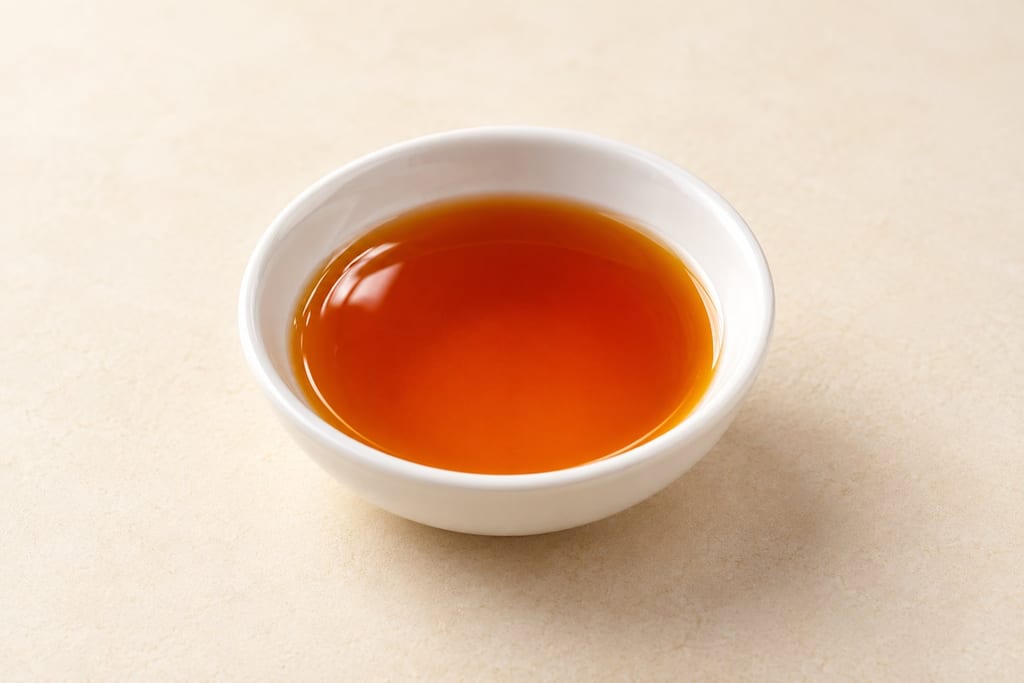
Fish sauce
Fish sauce is a clear, salty seasoning made by maturing fish with salt and drawing off the liquid. The broad family includes distinct regional sauces rather than one interchangeable method.
 FermenteaWhere food goes to change
น้ำพริกหนุ่ม · Nam phrik num · Nam phrik noom · Nam prik noom
Grilled young green chillies, shallots and garlic are pounded with salt into a coarse northern Thai dip, finished with coriander and spring onion and eaten with sticky rice and vegetables.
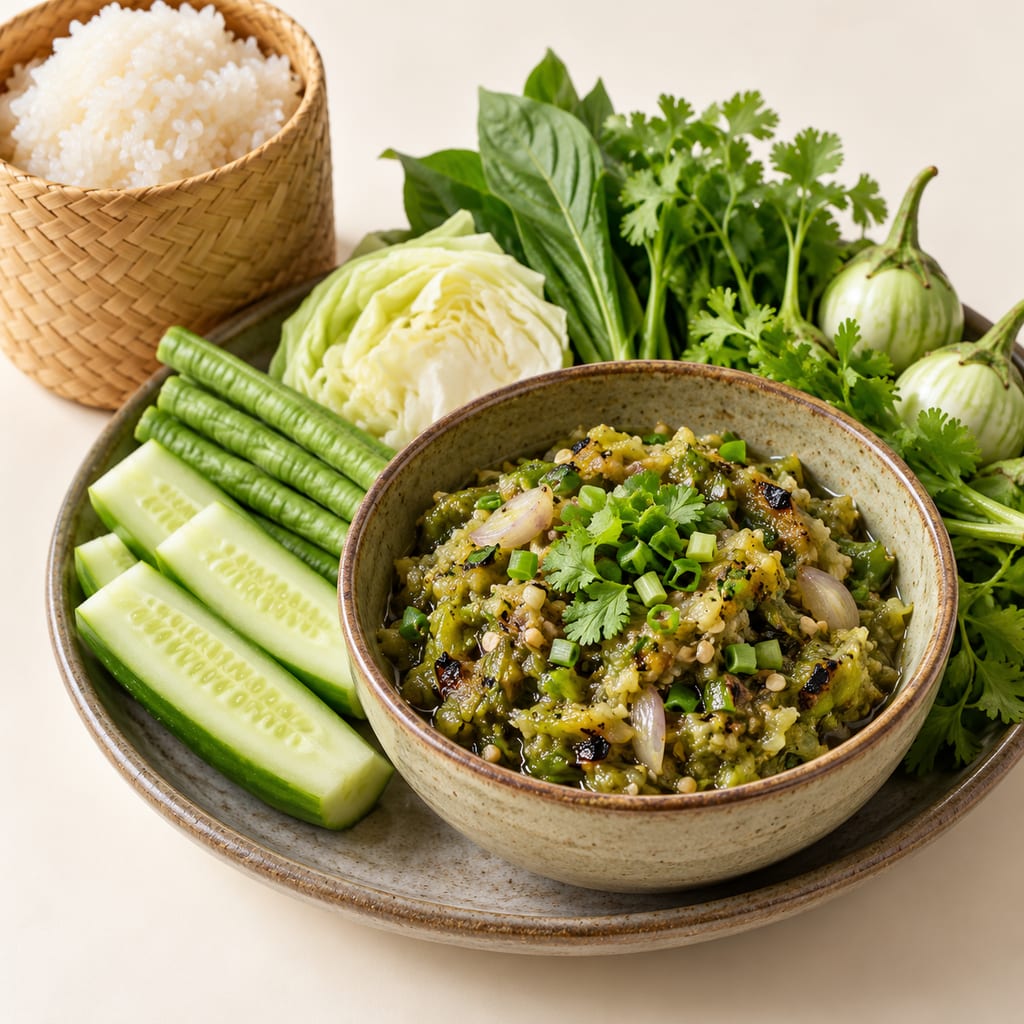
Nam prik num is a dip from northern Thailand, usually described as Lanna food. A Chiang Rai food retailer presents it as a green-chilli, shallot and garlic dip seasoned with salt and finished with coriander and spring onion. The same retailer associates it with pork crackling and vegetables, and sells it to visitors as a souvenir. The dip is therefore visible in markets and shops as much as in home kitchens, and how often households make it is not recorded.
A 2010 photograph on Wikimedia Commons, uploaded by a user named Takeaway, describes the dip as sold at almost every market in northern Thailand and eaten with sticky rice, lightly steamed vegetables, tree leaves and flowers. That is a caption by an uploader, not a survey, and it is used here only for the serving pattern.
The retailer explains phrik num as fresh peppers that are not yet fully mature. The word refers to an unripe, green stage of the chilli, not to one named variety. The retailer cites two regional works of 1995 and 1999 for this reading.
An encyclopaedia entry lists the dip as of Lao origin while placing it among Northern Thai dishes. Its references are a 1995 cookbook by Sven Krauss and a Thai government recipe page. Neither settles where the dip began, and no source read here names a cultivar. A cook who wants a particular pepper should choose by colour, heat and texture rather than follow a variety named in a secondary account.
The retailer's method roasts the chillies, shallots and garlic first, then peels the shallots and garlic and pounds the roasted material with salt until fine. Coriander and spring onion go on at the end. The Commons caption gives the same sequence, with grilled young green chillies, grilled shallots and grilled garlic pounded in a mortar and pestle. The caption adds lime juice, fish sauce and coriander to taste.
Charring does two things. It softens the flesh and skins, which is why the shallots and garlic are peeled after grilling, and it adds a smoky edge that a raw green chilli dip lacks. The retailer recommends charcoal for aroma. That is a stated preference; no source measures the effect. Pounding leaves the dip coarse, with charred pieces of shallot and chilli still visible, and no blender step appears.
Two seasoning families appear. The retailer's version uses salt alone. Its background adds that some versions include chopped fermented fish, or shrimp paste wrapped in banana leaf and grilled. Others use fish sauce and salt, depending on taste. The Commons caption instead lists lime juice and fish sauce as to-taste seasonings with no salt quantity.
The fermented fish and shrimp paste are ingredients in their own right. Their presence does not show that the finished dip ferments, and the retailer's page describes no souring or holding step for the completed dip. Treat the variants as flavour choices, not as evidence about keeping.
Serve nam prik num in a small bowl beside the rest of the meal. The retailer's shop page lists sticky rice with yardlong beans, long and pea aubergines and acacia leaves (krathin) as the usual vegetable accompaniments, and mentions pork crackling. The Commons caption adds tree leaves and flowers. Vegetables are a practical partner: the dip is pungent and coarse, and the raw or lightly steamed pieces carry it in the way the dish is usually eaten.
No source gives a holding time, a pH, a water activity or a storage temperature for nam prik num. The recipe uses no acid or fermentation to protect it, so its keeping is not established by the method. Make it in small amounts, keep it cold once made, and eat it soon. The UK Food Standards Agency's general chilling guidance, linked in the source list, is a handling convention and not a shelf-life test for this dip.
Charring for flavour is not a preservation step. Neither does sight or smell show that a made batch is safe. If a cook wants to keep the dip longer, that is a separate question that these sources do not answer.
The next research step is the 1995 and 1999 regional works cited for the name, read directly, together with Thai-language household sources that record how the dip is made at home. The current sources establish a roasted, pounded, salt- or fish-sauce-seasoned dip, not a cultivar, an origin date or a keeping method.
Doneness here is visual and tactile: the chillies, shallots and garlic should be charred on the outside and soft within, so the peel lifts away and the flesh pounds smooth. No temperature, time or colour standard is given, so the cook judges by sight and touch.
Seasoning is a matter of taste in every version that has been read. The salt quantity in the retailer version is small, half a teaspoon for the whole batch. Taste the dip after pounding and add salt, lime or fish sauce in small steps, because the seasoning is to taste in every version read.
The retailer presents nam prik num as a Lanna food, and the 2010 Commons caption describes it as sold at almost every market in northern Thailand. Neither source dates the dish. The retailer's name explanation cites two regional works of 1995 and 1999, which were not checked directly. One encyclopaedia entry places the dip's origin in Laos.
Scaling: source batch only
A freshly pounded dip with no acid or fermentation step and no stated holding period. Its keeping time is unknown.
Hazard sourceRefrigerate promptly and eat soon after making. The general chilling guidance is a handling convention, not a shelf-life test for this dip.
Control sourceNo source gives a holding time or a pH or water-activity figure for this dip.
Fermented fish and shrimp paste named as variant ingredients do not make the finished dip a fermented product.
Charring and salt are flavouring steps here, not preservation processes.
Described as a Lanna food sold at markets and to visitors in the north; trade and serving are recorded, not a survey of home cooking.
Fish sauce is a clear, salty seasoning made by maturing fish with salt and drawing off the liquid. The broad family includes distinct regional sauces rather than one interchangeable method.
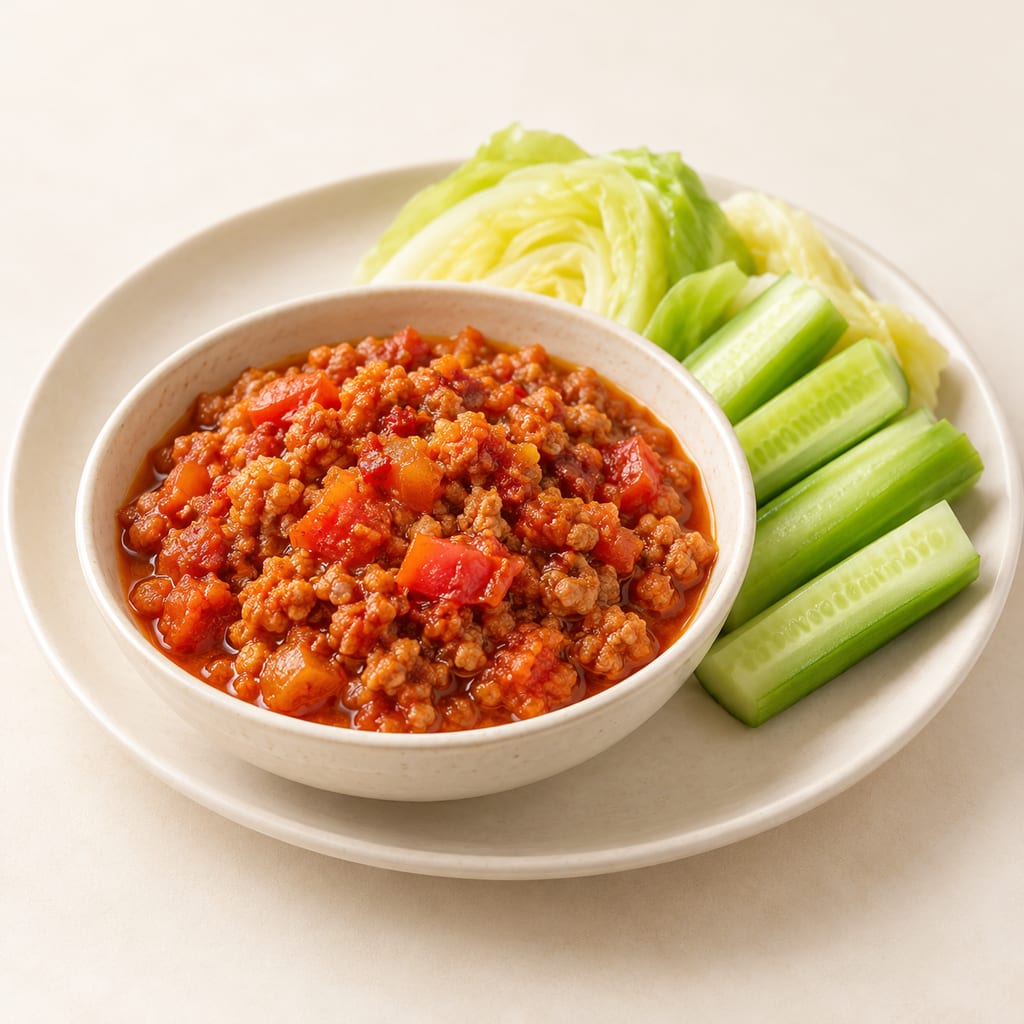
Nam prik ong is a cooked Northern Thai dip of chilli, tomato and minced pork, seasoned with fermented soybean and eaten with vegetables, pork rind and eggs.
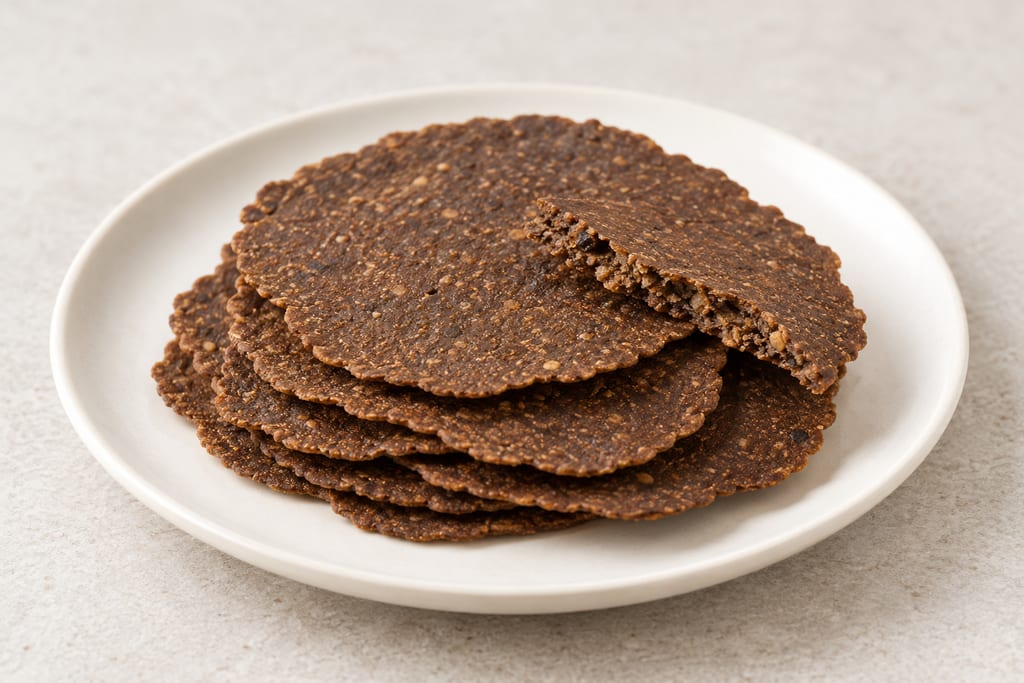
Black soybeans cooked, inoculated with a named Bacillus subtilis culture and fermented warm and humid into northern Thailand's thua nao, then optionally dried into thin discs.
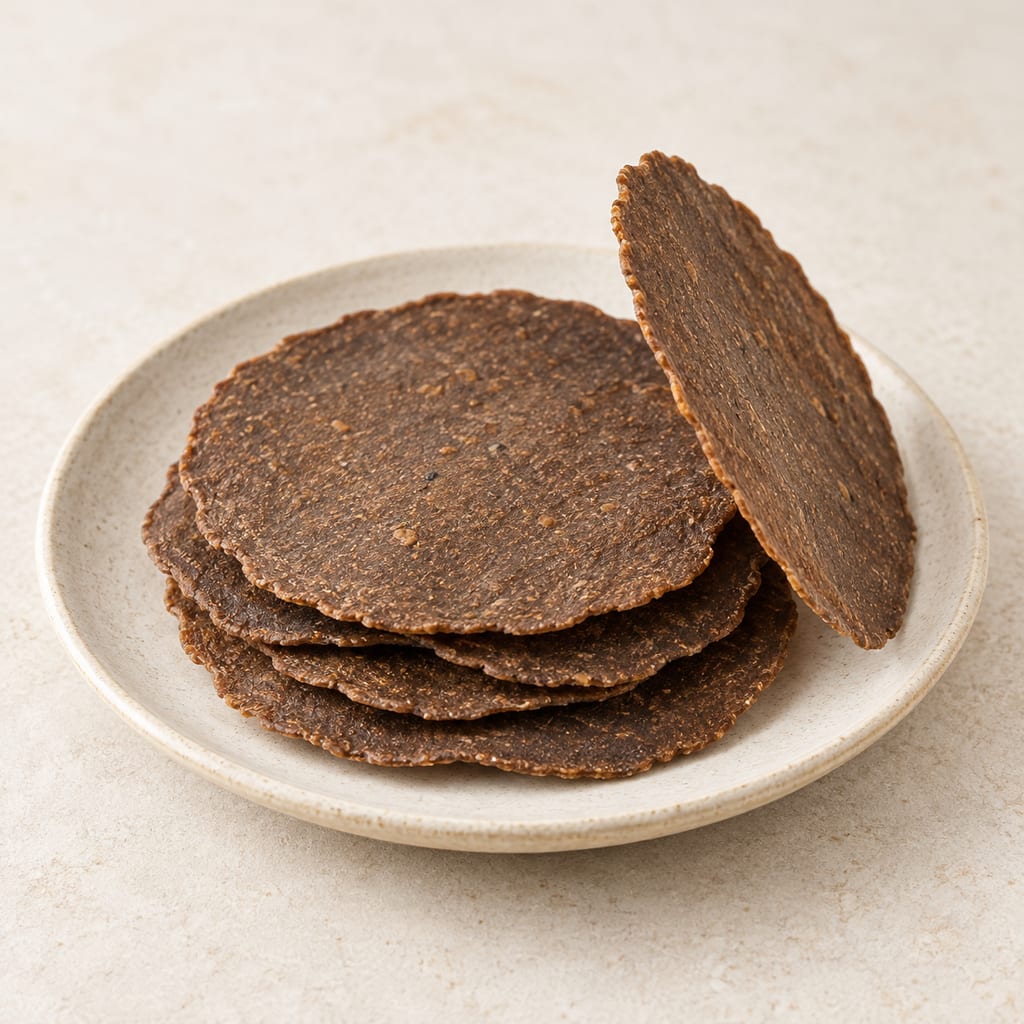
Northern Thai fermented soybean shaped while still soft into flat cakes and dried, so the bacterial soybean ferment becomes a durable, shelf-stable seasoning reserve.
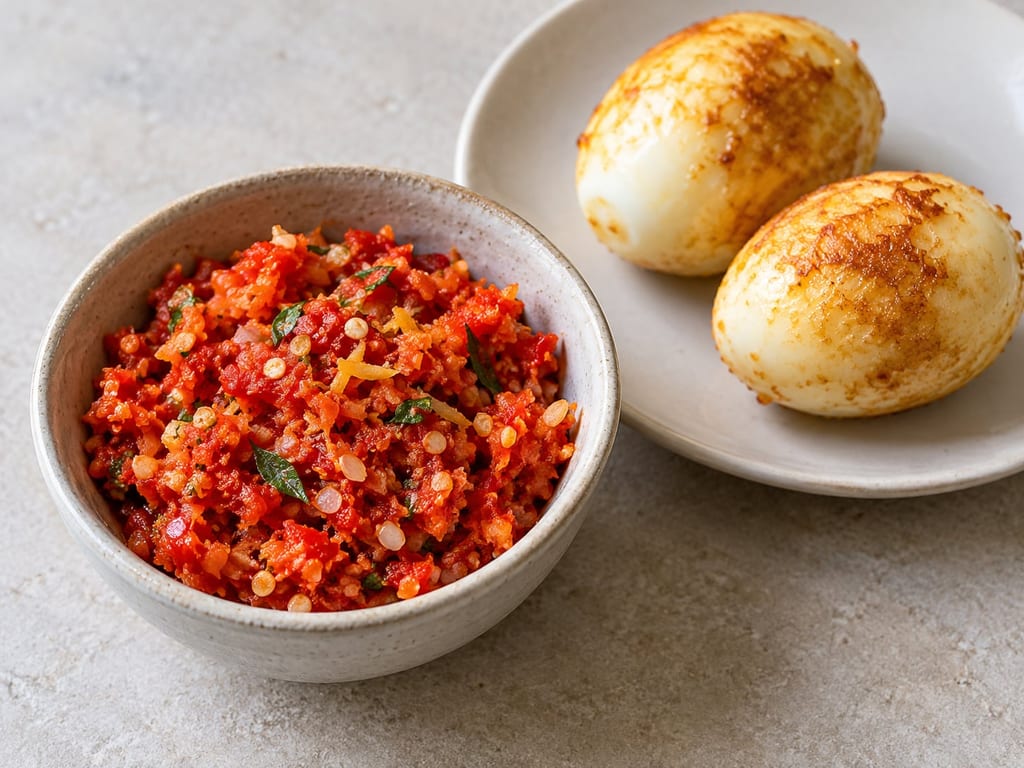
Ai-manas is described as a very hot chilli paste served with Timorese meals. One published version blends fresh chillies, shallots, garlic, Thai basil, ginger, lemon and salt, and serves it with eggs. Sources do not establish a standard formula, precise birthplace or earliest date.
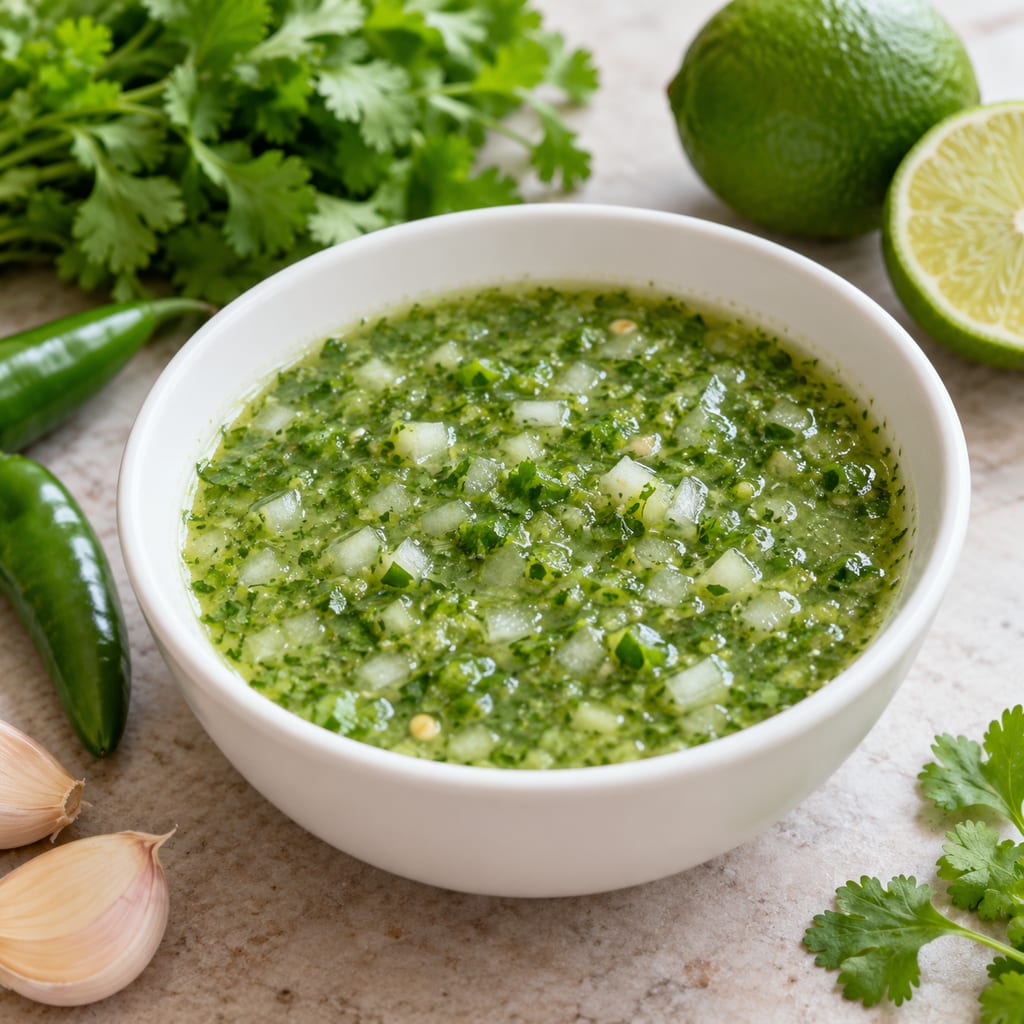
A fresh, uncooked Ecuadorian table sauce of hot pepper, cilantro, garlic and lime, served with most everyday dishes.
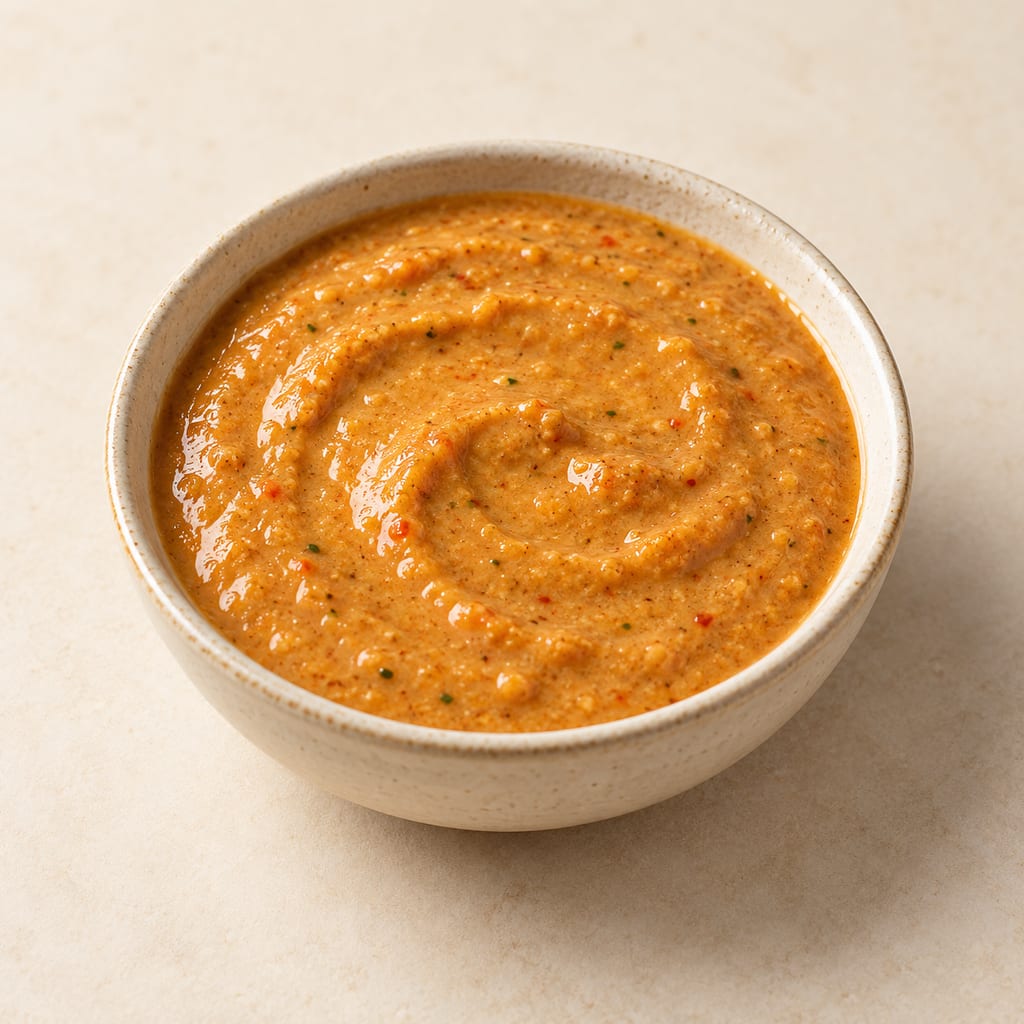
A spicy peanut hot sauce from the Popayán and Cauca region of Colombia, traditionally served with pipián empanadas and tamales.
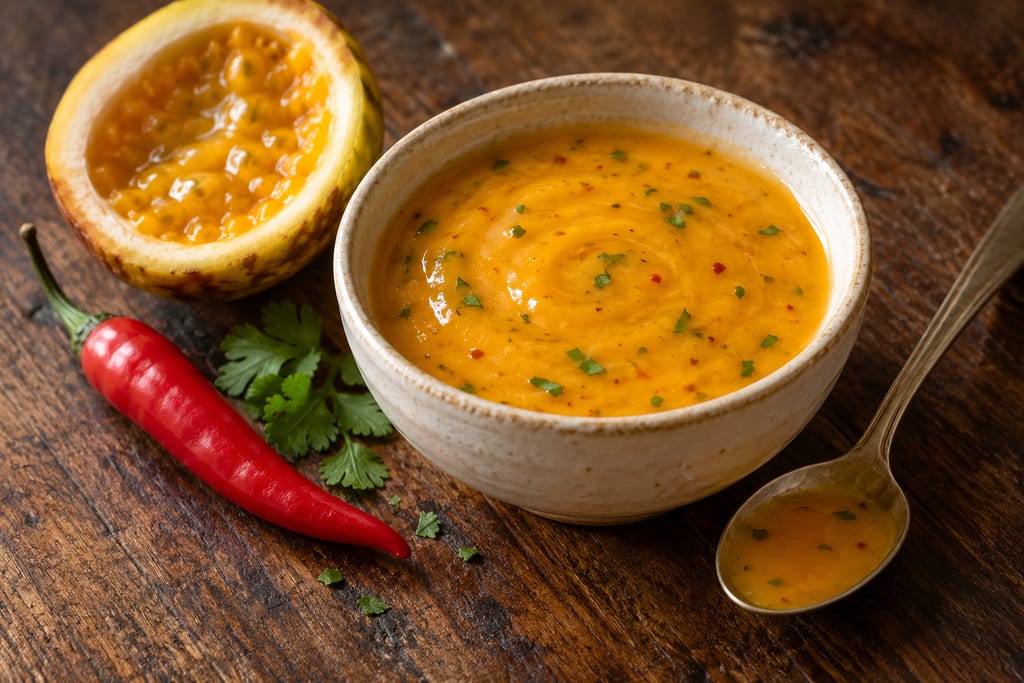
A contemporary Ecuadorian hot sauce that pairs passion fruit juice with boiled chile peppers, oil and lime.
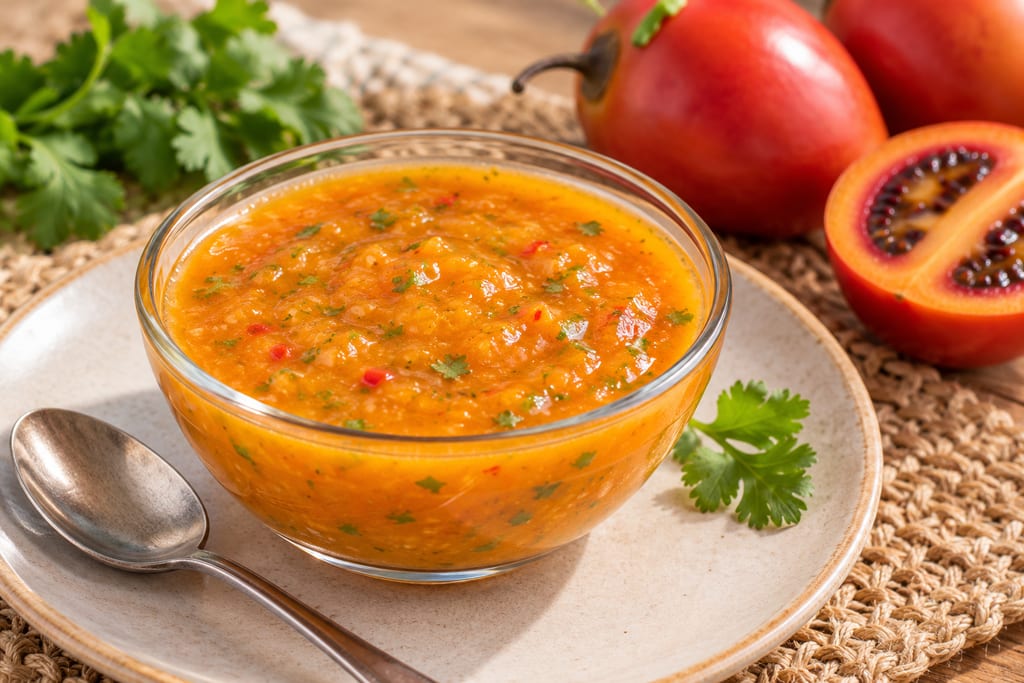
An Ecuadorian hot sauce built on tamarillo, a tart fruit that gives a sharper, fleshier base than ordinary tomato salsa.
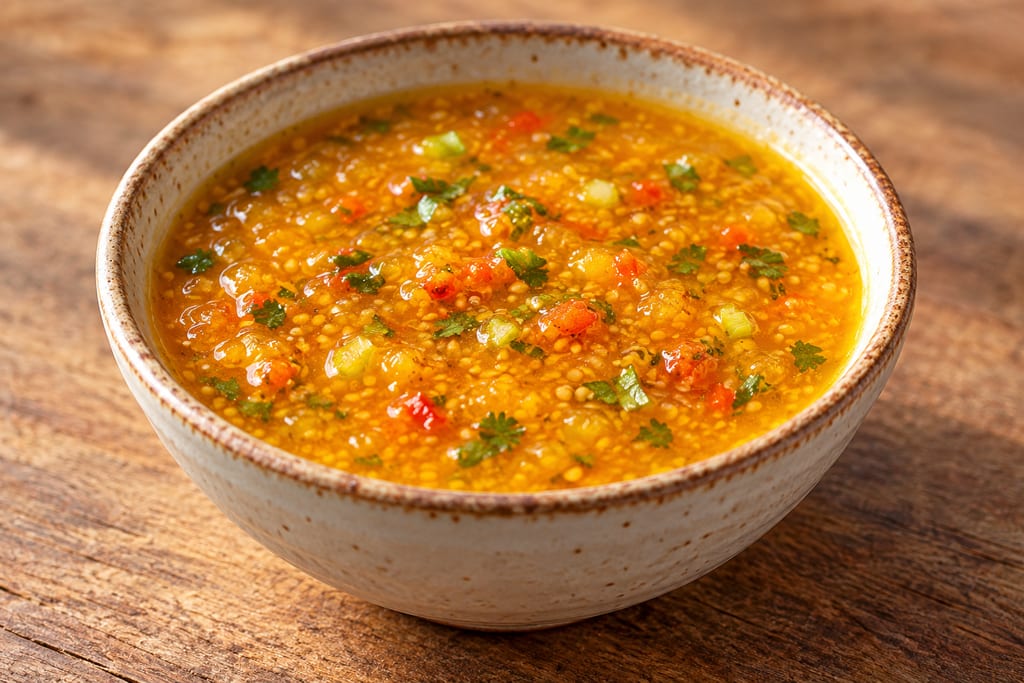
A sweet, tart and spicy Colombian sauce of uchuva, the yellow physalis fruit, with hot pepper, scallion, cilantro and lime.
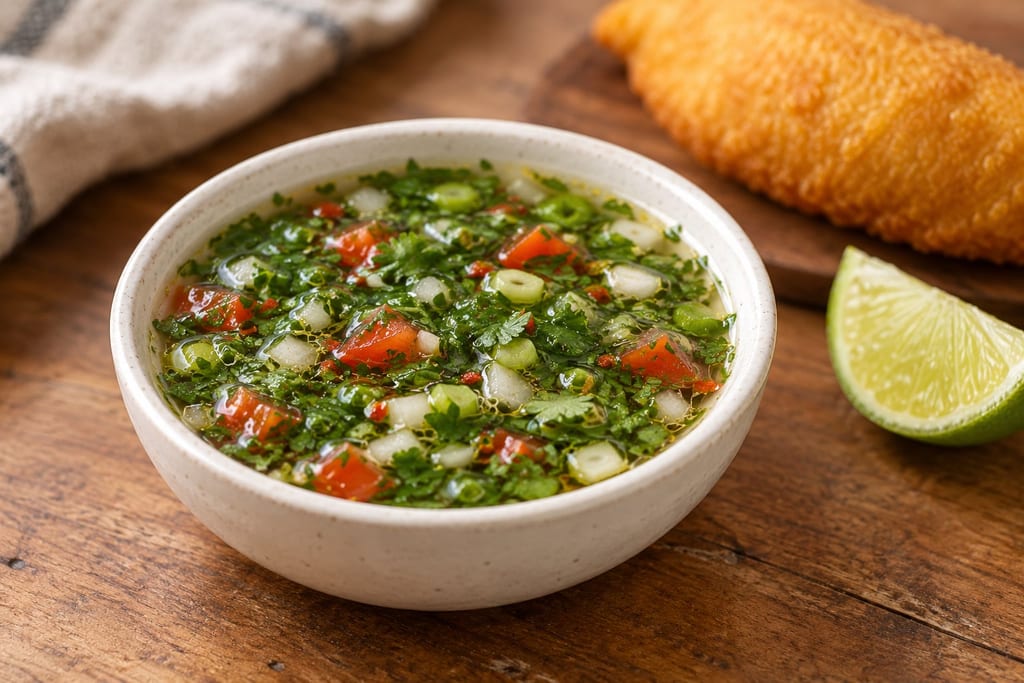
A fresh Colombian table condiment of chopped herbs, scallion and tomato in a vinegar and chile base, served beside fried and filled dishes.
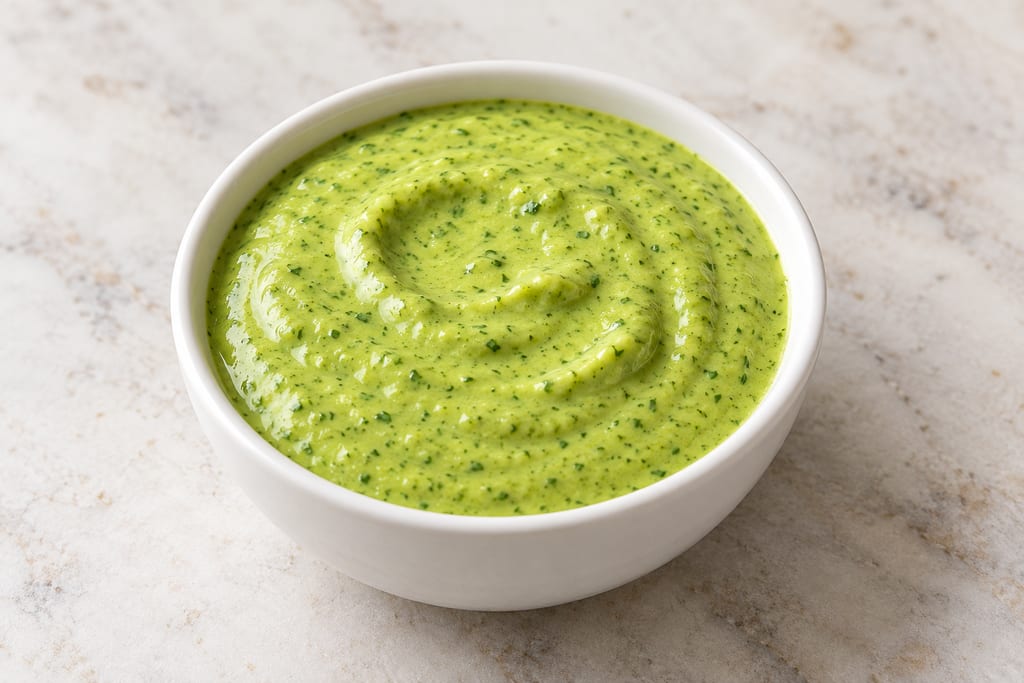
Ají verde is a Peruvian green sauce of coriander, chilli, onion and garlic in a mayonnaise or cheese base. It is best known through Peruvian restaurant cooking abroad.
No community contributions have been published for this entry yet.
Sign in to contribute. Published comments and photos are free to read.
Nam Nuntawan, Chiang Rai food retailerRecipe · History · Method · Use
น้ำพริกหนุ่ม (nam prik num recipe and background)Ingredients: 5 grilled young green chillies, 5 grilled shallots, 8 grilled garlic cloves, 1/2 tsp salt, 1/2 tbsp chopped coriander, 1/2 tbsp chopped spring onion.
Method: roast the chillies, shallots and garlic, peel the shallots and garlic, pound with salt until fine, sprinkle the herbs on top.
Phrik num defined as fresh chillies that are not fully mature, citing 1995 and 1999 regional works.
Some versions add chopped fermented fish or grilled shrimp paste wrapped in banana leaf; others use fish sauce and salt.
Served with pork crackling and a set of steamed or fresh vegetables; no yield, storage or holding time given.
Wikimedia CommonsMethod · Use · Image caption
File:Nam phrik num.jpgCaption: grilled young green chillies, grilled shallots and garlic pounded in a mortar and pestle, with lime juice, fish sauce and coriander added to taste.
Served with sticky rice and lightly steamed vegetables, tree leaves and flowers; sold at almost every market in northern Thailand (uploader's description, dated 1 February 2010).
WikipediaOrigin claim · Serving
Nam phrik numLists the dip as of Lao origin and among Northern Thai dishes; the page does not describe the preparation.
Cites Sven Krauss, The Food of Thailand (1995) and a Thai government recipe page as sources.
Food Standards Agency (published on GOV.UK)Safety
How to chill, freeze and defrost food safelyGeneral chilling and leftovers guidance; not a measured holding time for this dip.