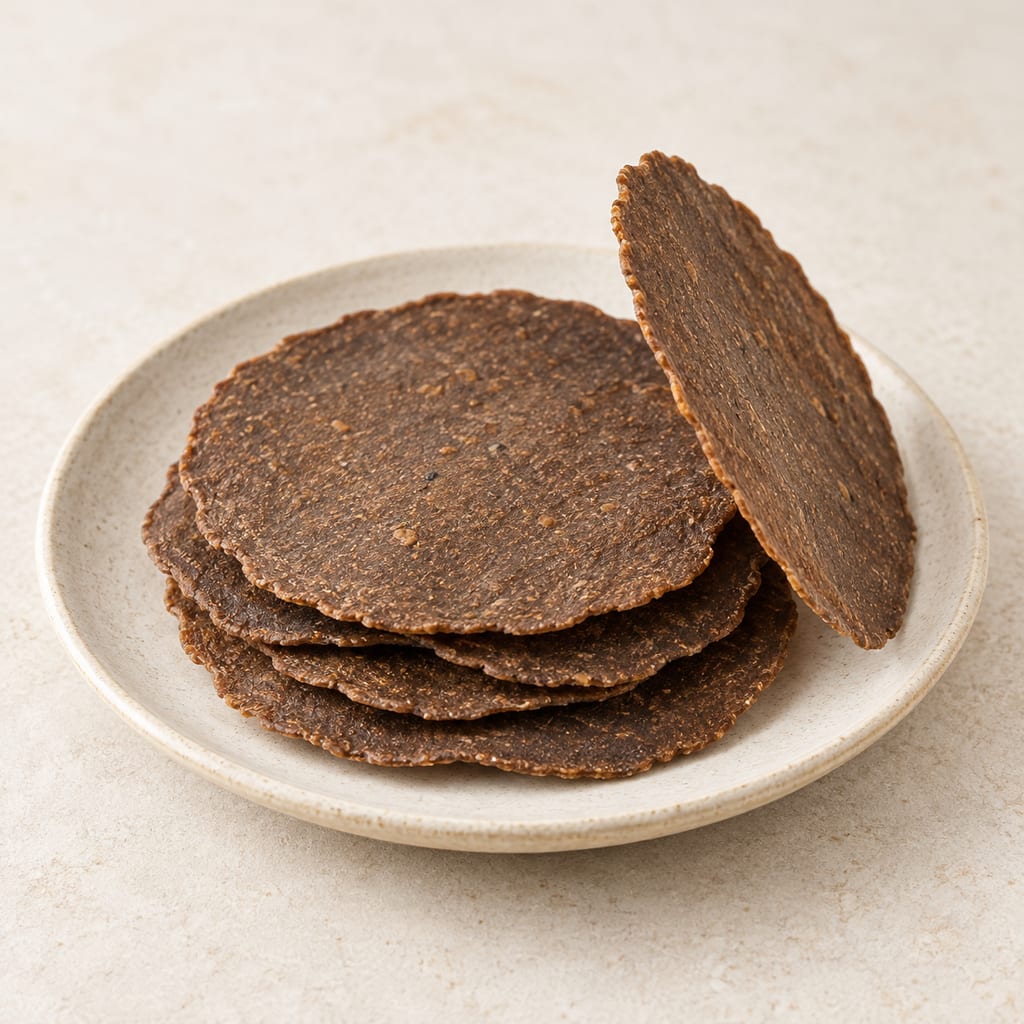
Thua nao (dried)
Northern Thai fermented soybean shaped while still soft into flat cakes and dried, so the bacterial soybean ferment becomes a durable, shelf-stable seasoning reserve.
 FermenteaWhere food goes to change
น้ำพริกอ่อง (nam phrik ong) · nam phrik ong · Northern Thai chilli and tomato dip
Nam prik ong is a cooked Northern Thai dip of chilli, tomato and minced pork, seasoned with fermented soybean and eaten with vegetables, pork rind and eggs.
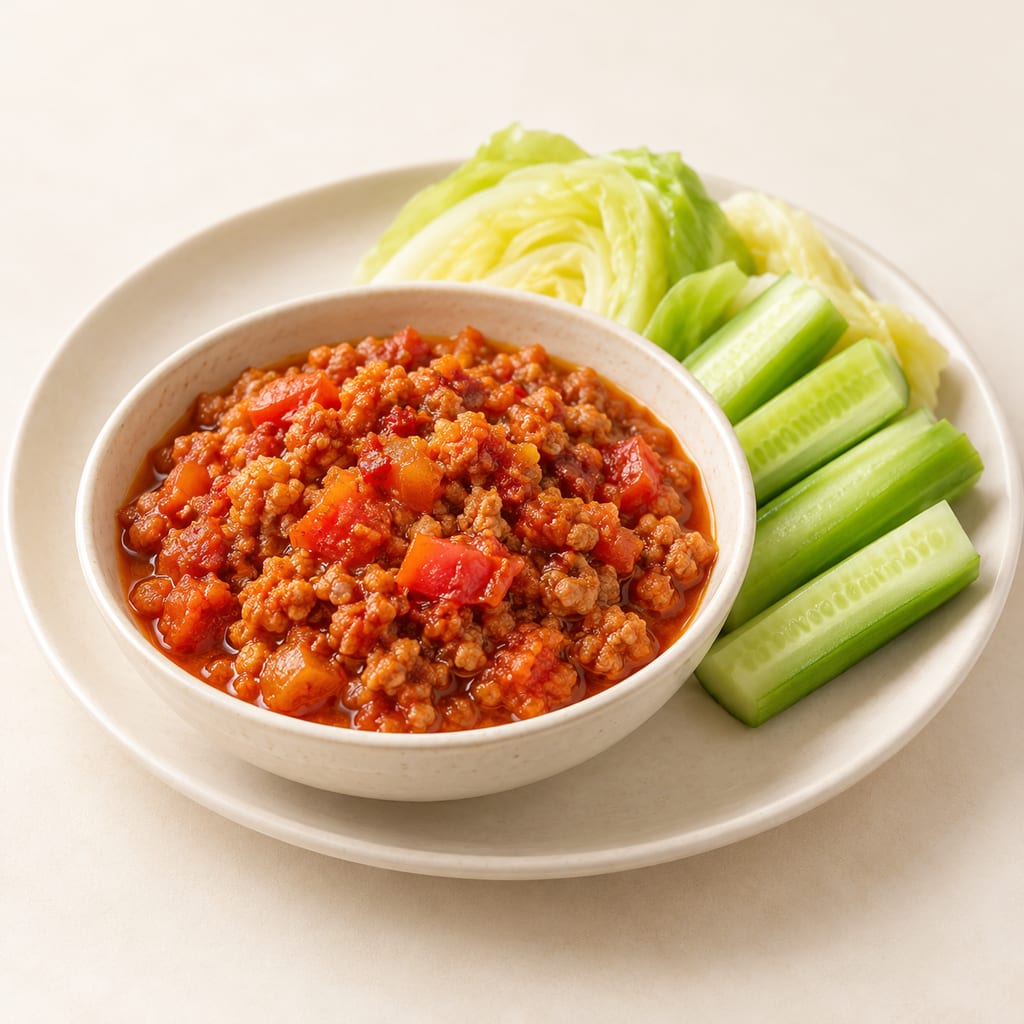
Nam prik ong (Thai: น้ำพริกอ่อง) is a Northern Thai, or Lanna, dip of chilli and tomato cooked with minced pork. It is served in a bowl with vegetables, crisp pork rind, boiled eggs and rice, and it is a cooked dish for the meal. It is not a shelf-stable chilli paste.
The tomatoes carry it. The Thai Ministry of Culture ties the dish to small sour tomatoes and the season when they are available, and the Mae Fah Luang University recipe uses 600 g of small cherry tomatoes to 120 g of pork, so it is a tomato dish with pork in it more than a meat dish.
The Chiang Rai recipe for five servings pounds soaked, seeded dried chillies with salt, then lemongrass, garlic, shallots and finally thua nao, the fermented soybean, which is pounded in as a grilled sheet. The pork and chopped tomatoes are stirred into the paste. In a pan, minced garlic is fried in oil over medium heat, the whole mixture goes in on low heat, and half a cup of water is added. After about 10 to 15 minutes of stirring the dip thickens. If it is not sour enough, tamarind juice is added.
The cooking does the main work: the tomatoes soften and release their juice, which reduces into the paste, and the pork cooks in it. The name is sometimes tied to this reducing, though that is one of several explanations.
Nothing in the pan ferments. The one fermented ingredient in the Chiang Rai recipe is thua nao, which stands in for the shrimp paste used in many Thai dips and gives the dip its savoury depth. Other northern versions recorded in a food-tourism study use kapi (shrimp paste), pla ra (fermented fish), thua nao, galangal or turmeric, and cook the paste and meat in a different order. These are interview variants, not a single formula.
The name has competing explanations. One Lamphun informant linked ong with frying or reducing; a Tai Yai informant in Mae Hong Son offered a different word meaning finished and conjectured a Tai Yai tradition. A Chiang Rai page tells a story of a man called Ong-Mong who made khanom jeen nam ngiao: a hungry child cried while he was pounding the paste, he handed over the unfinished, very spicy mixture, then added vegetables and found it good, and neighbours liked it too. People called it nam prik pu-ong, shortened over time to nam prik ong. The page presents this as a legend. No source dates the dish.
The recipe gives no storage period, no meat end-point temperature and no cooling procedure, and its 10 to 15 minute simmer is a cooking time. A 2022 journal abstract describes a retort-pouched duck version with accelerated-storage estimates, but it concerns a different product made under industrial conditions, and its figures cannot be applied to the household pork recipe.
No source dates nam prik ong or settles the meaning of its name. Interviewees in a food-tourism study offered different explanations, and a Chiang Rai page tells a local story of a man named Ong-Mong; these are transmitted accounts, not records.
Yield 5 servings · Scaling: source batch only
The recipe gives no meat end-point temperature, cooling procedure or storage period for a dip containing minced pork and tomato.
Hazard sourceCook the pork through, serve freshly made and keep cold if stored; no tested storage period exists.
Control sourceThis is a cooked serving dish, not a shelf-stable paste. No storage period has been tested, and a 2022 retort-pouch study of a duck version cannot be applied to the household pork recipe.
A regional association with Chiang Rai and other northern provinces; no source dates the dish or fixes where it began.
Northern Thai fermented soybean shaped while still soft into flat cakes and dried, so the bacterial soybean ferment becomes a durable, shelf-stable seasoning reserve.
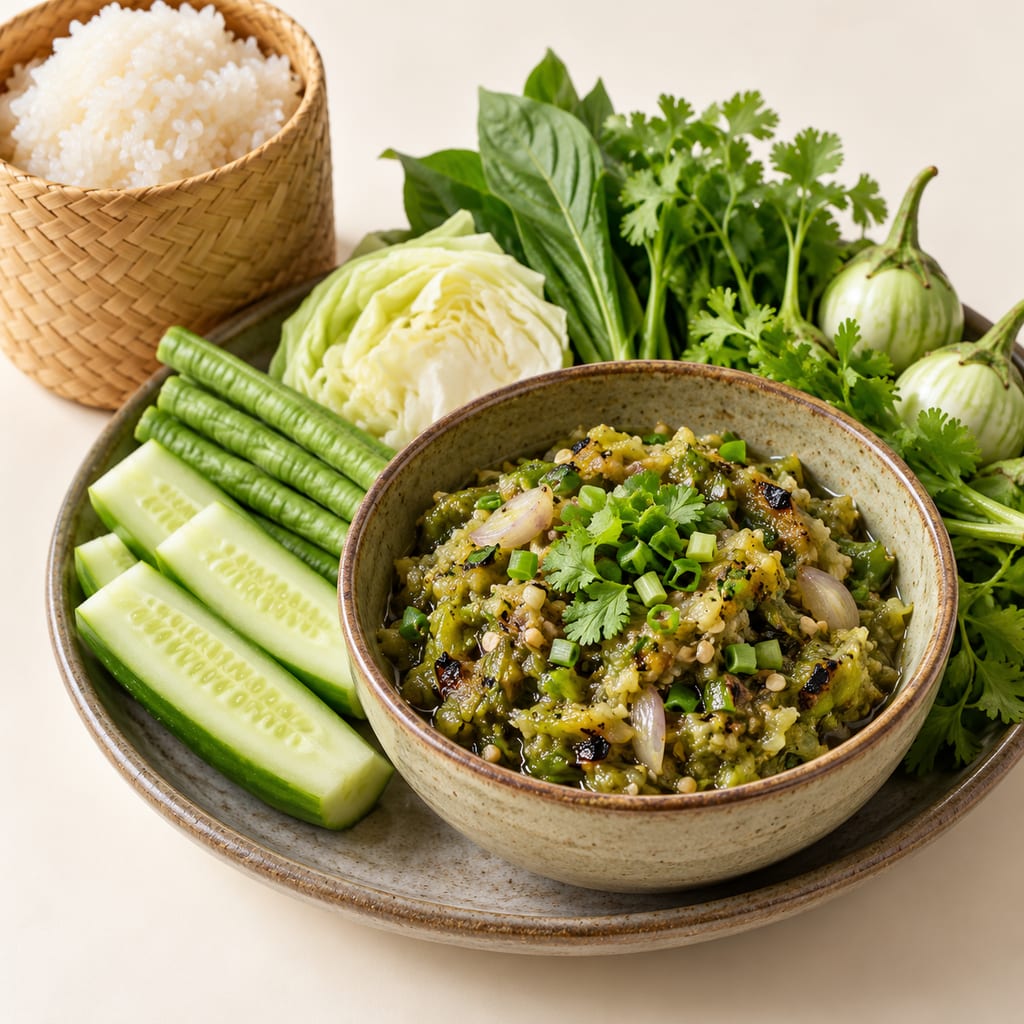
Grilled young green chillies, shallots and garlic are pounded with salt into a coarse northern Thai dip, finished with coriander and spring onion and eaten with sticky rice and vegetables.
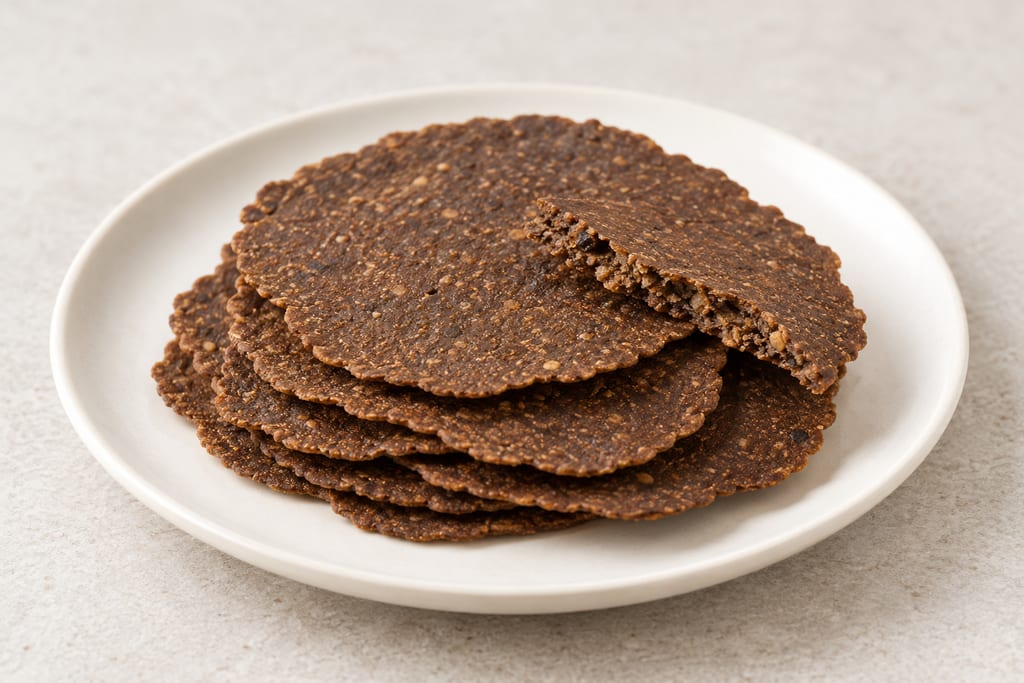
Black soybeans cooked, inoculated with a named Bacillus subtilis culture and fermented warm and humid into northern Thailand's thua nao, then optionally dried into thin discs.
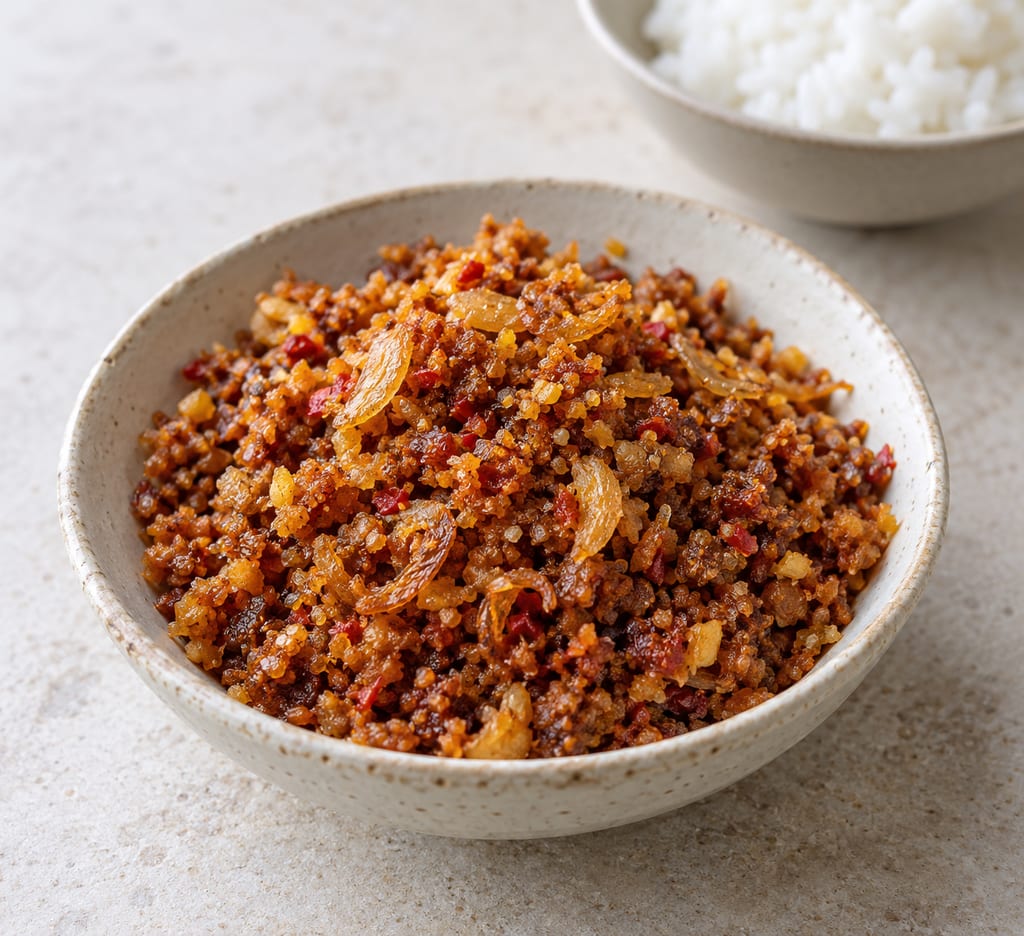
A Myanmar relish of dried shrimp, fried eschalot and garlic, chilli, turmeric, tamarind and ngapi. Naomi Duguid’s published recipe makes about 1 cup; it contains crustacean shellfish.
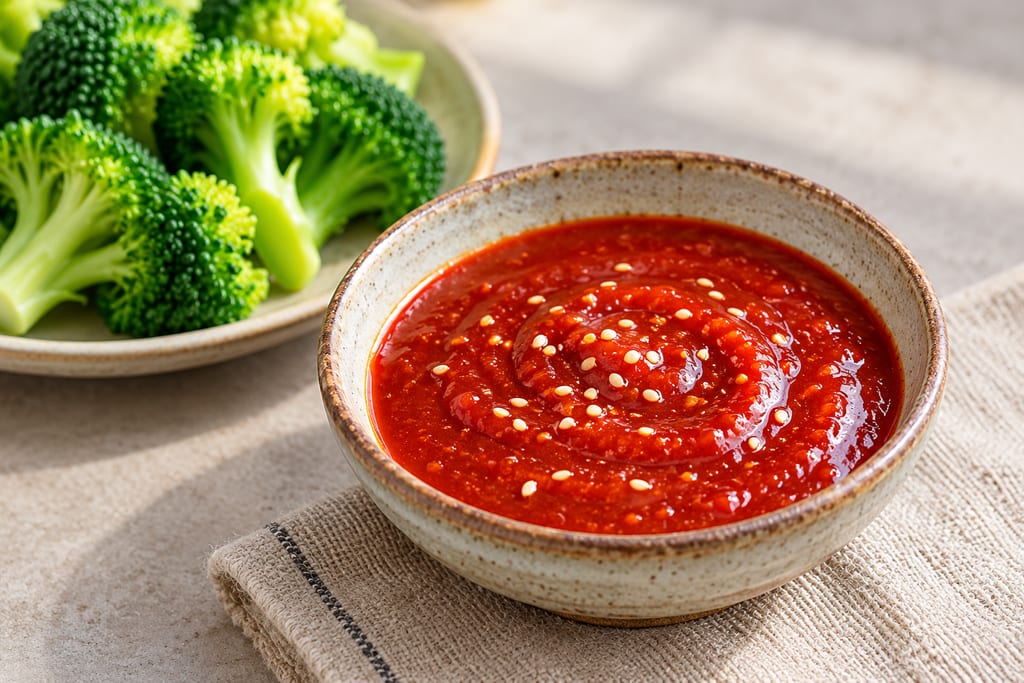
Chogochujang is a Korean sweet-sour sauce made by seasoning gochujang with vinegar and sugar. This development batch adds water and toasted sesame seeds, with optional garlic for the portion being served.
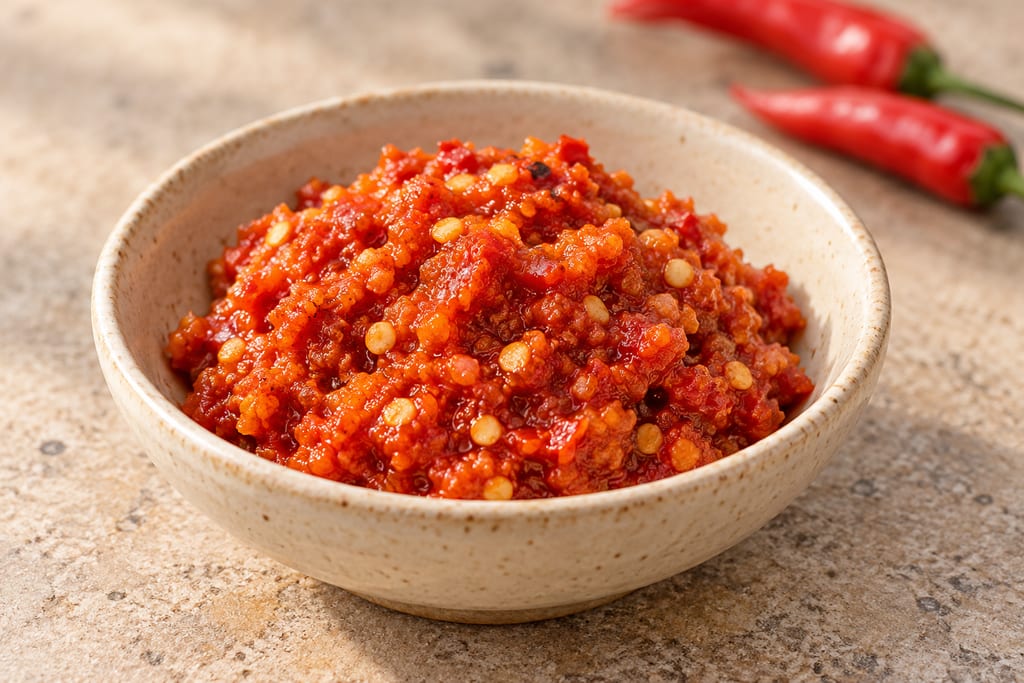
Dinanche, or donne' dinanche, is a Chamorro hot pepper paste of crushed chillies that Guam cooks use on its own or stir into fina'denne'. Its versions range from pepper alone to ones with eggplant, miso or coconut milk.
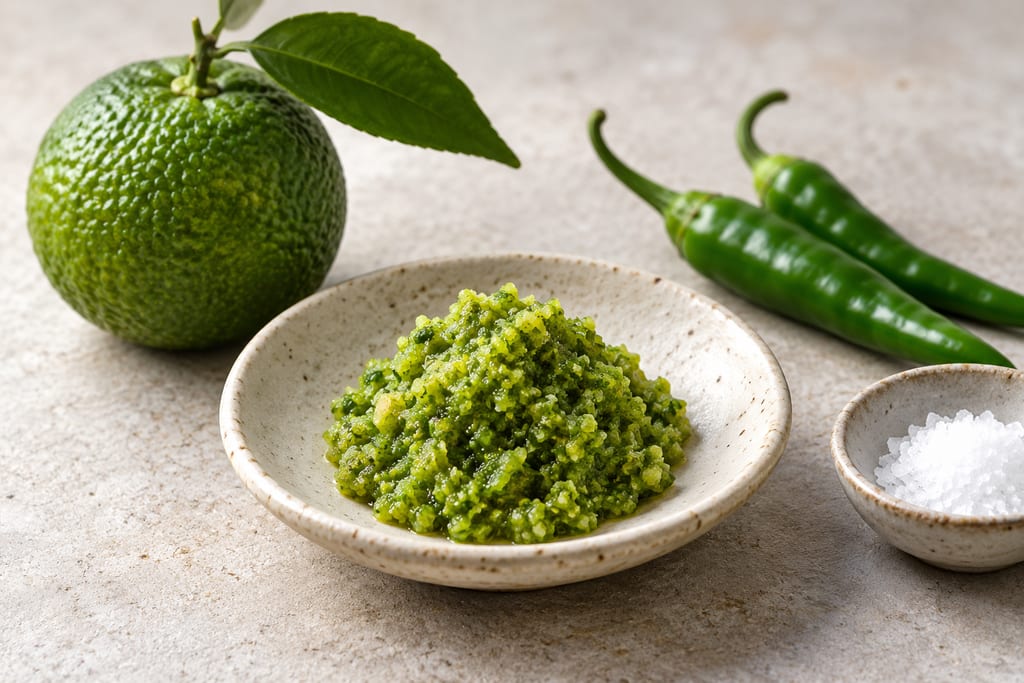
A fresh, uncooked yuzu and green chilli paste inspired by Kyushu’s yuzu kosho, made here as an untested small-batch seasoning rather than a preservation formula.
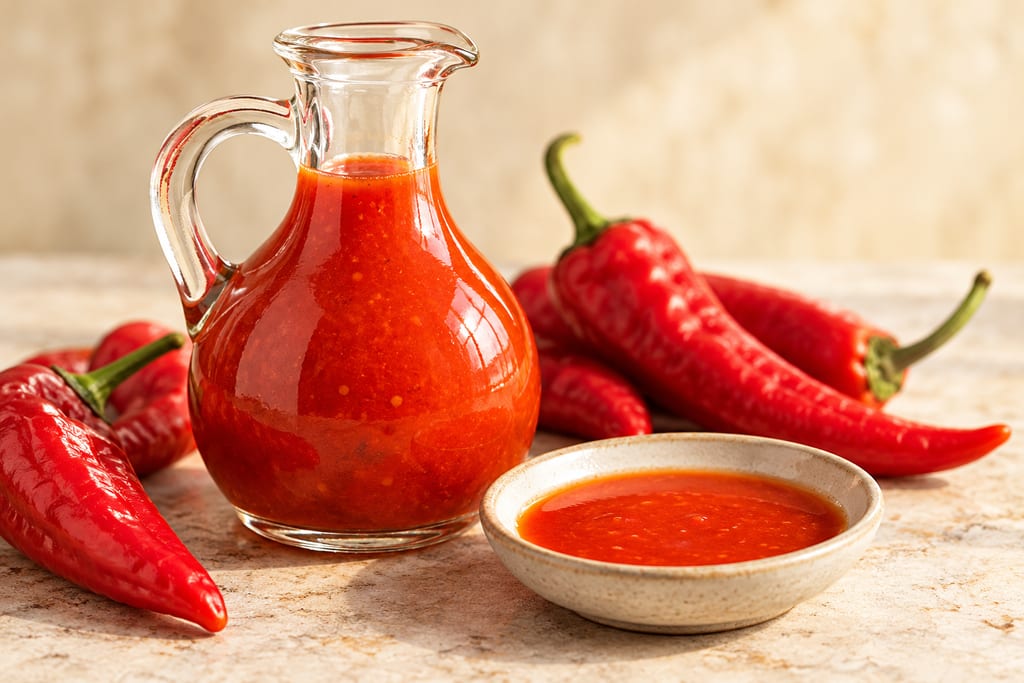
Fresh hot peppers ferment beneath a measured salt brine, then become a bright, tangy sauce blended from the peppers and their liquor.
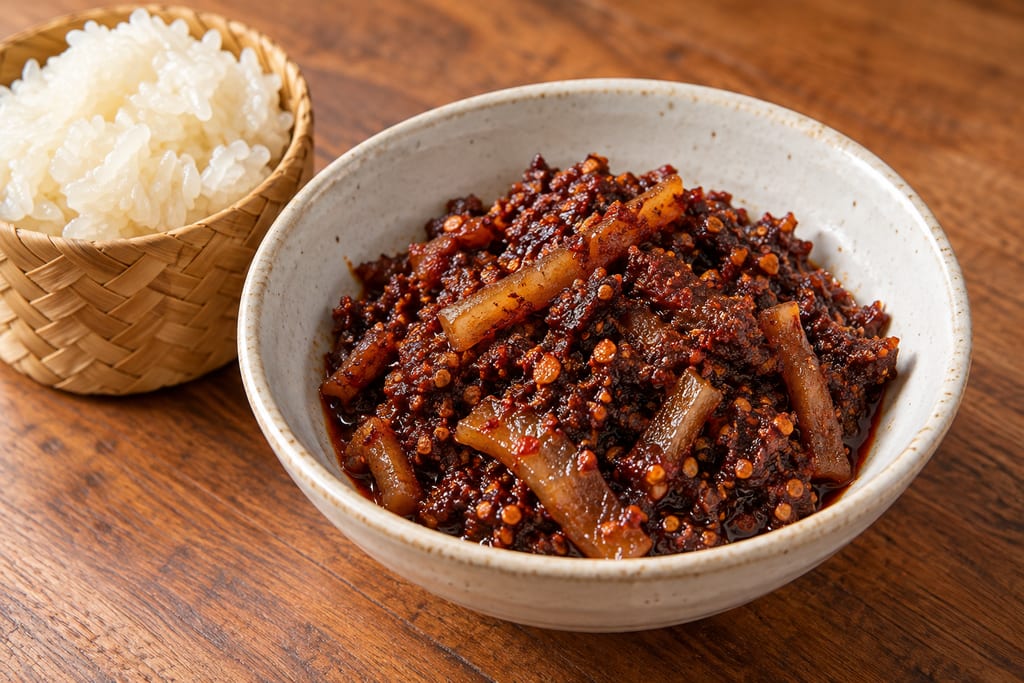
Jeow bong is a Lao paste of dried chilli, shallot, garlic and galangal cooked with buffalo or cow skin, a Luang Prabang specialty eaten with sticky rice and grilled meat.
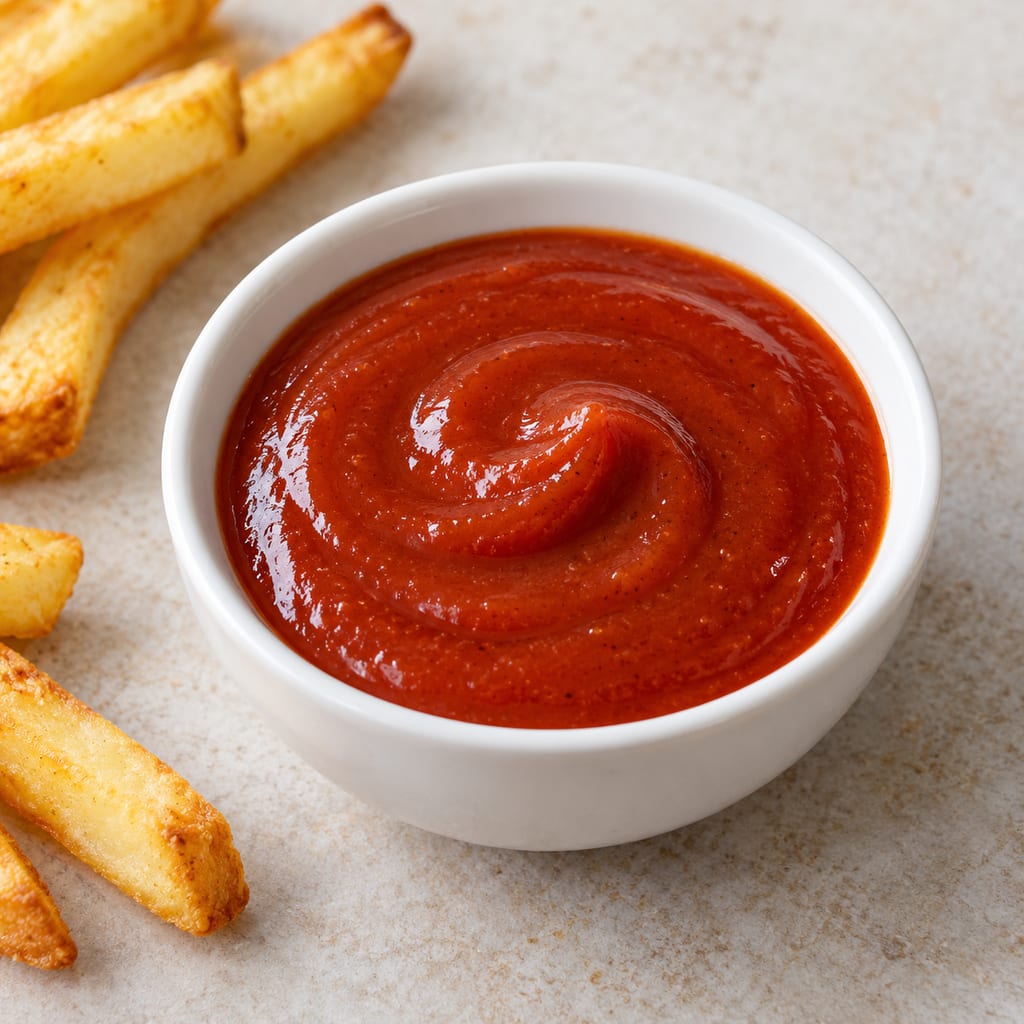
A modern tomato condiment sharpened with the spicy, savoury tang associated with kimchi; this measured version whisk-mixes prepared ketchup and commercial kimchi seasoning.
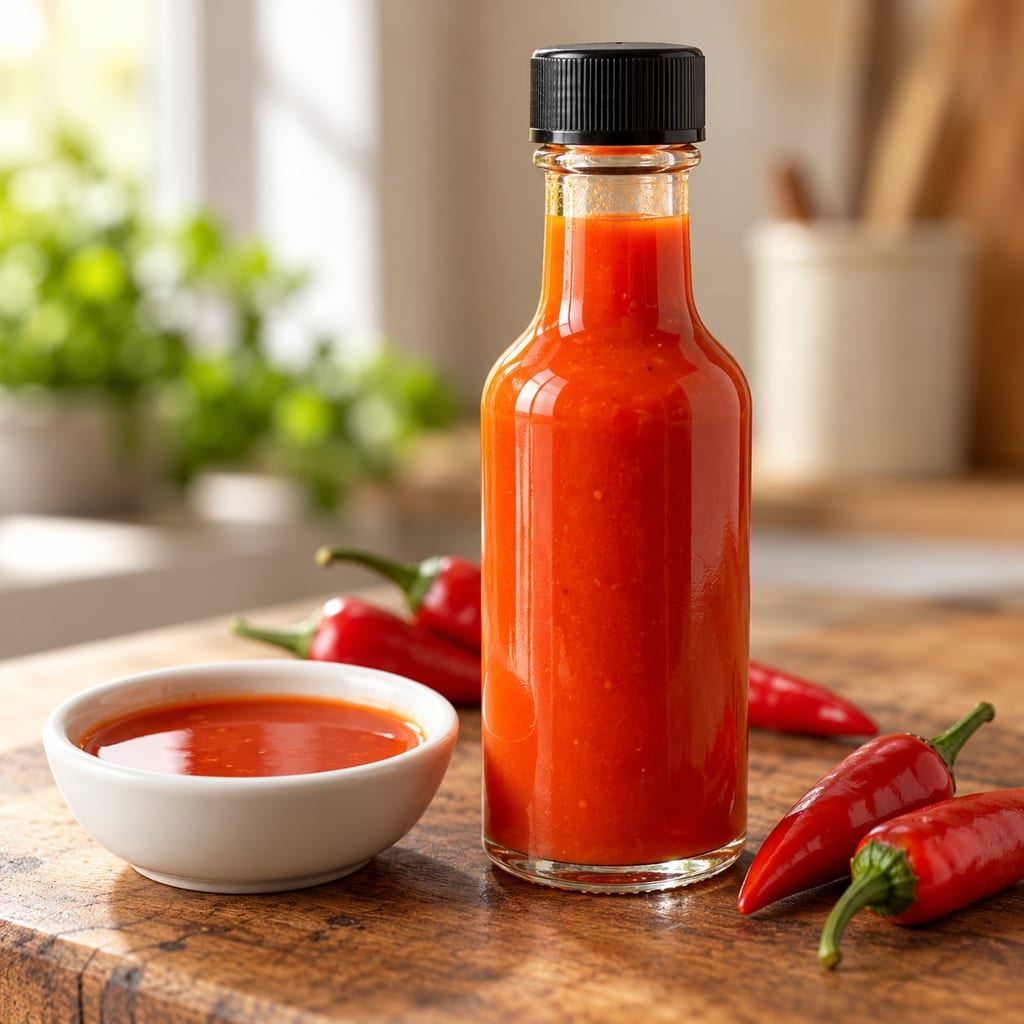
Documentary account of Louisiana pepper sauces, using TABASCO's published barrel-aged commercial process as one specific example; the source does not provide a validated home recipe.
No community contributions have been published for this entry yet.
Sign in to contribute. Published comments and photos are free to read.
Mae Fah Luang University Chiang Rai local knowledge databaseMethod · Uses · History
น้ำพริกอ่อง (Nam Prik Ong)Five-serving recipe with quantities: dried chillies, lemongrass, sea salt, garlic, shallots, grilled thua nao, minced pork, cherry tomatoes, oil, minced garlic, water.
Method: pound the paste, mix in pork and tomatoes, fry garlic, add the mixture on low heat, add water and stir-fry about 10 to 15 minutes until thick.
Served with pork rind, boiled eggs, boiled and fresh vegetables; tamarind juice if not sour enough; thua nao stands in for shrimp paste.
A story of a man named Ong-Mong explains the name; it is a local tale.
Cited in: A cooked dip from the north; Pound, mix, fry and reduce; Where fermentation comes in; What the name might mean; Keeping it
Ministry of Culture, ThailandUses · Context
Culture: Ways of Life and Wisdom, Part 2Nam prik ong is connected with small sour tomatoes and the season when they are available, and appears in a shared meal with vegetables, rice, eggs and pork rind.
Cited in: A cooked dip from the north
Thailand Research Fund / TSRI e-libraryVariations · History
Thai Tourism Promotion through Image of Northern Culinary, subproject 1An eight-province food-tourism study records different explanations of the name ong and province-specific versions with kapi, pla ra, thua nao, galangal or turmeric.
Cited in: Where fermentation comes in; What the name might mean
Journal of Agricultural Research and CommunicationsSafety
Production of retort-pouched Iliang-duck nam prik ongA 2022 abstract reports a retort-pouched duck version with processing conditions and accelerated-storage estimates; the full paper was not inspected.
Cited in: Keeping it