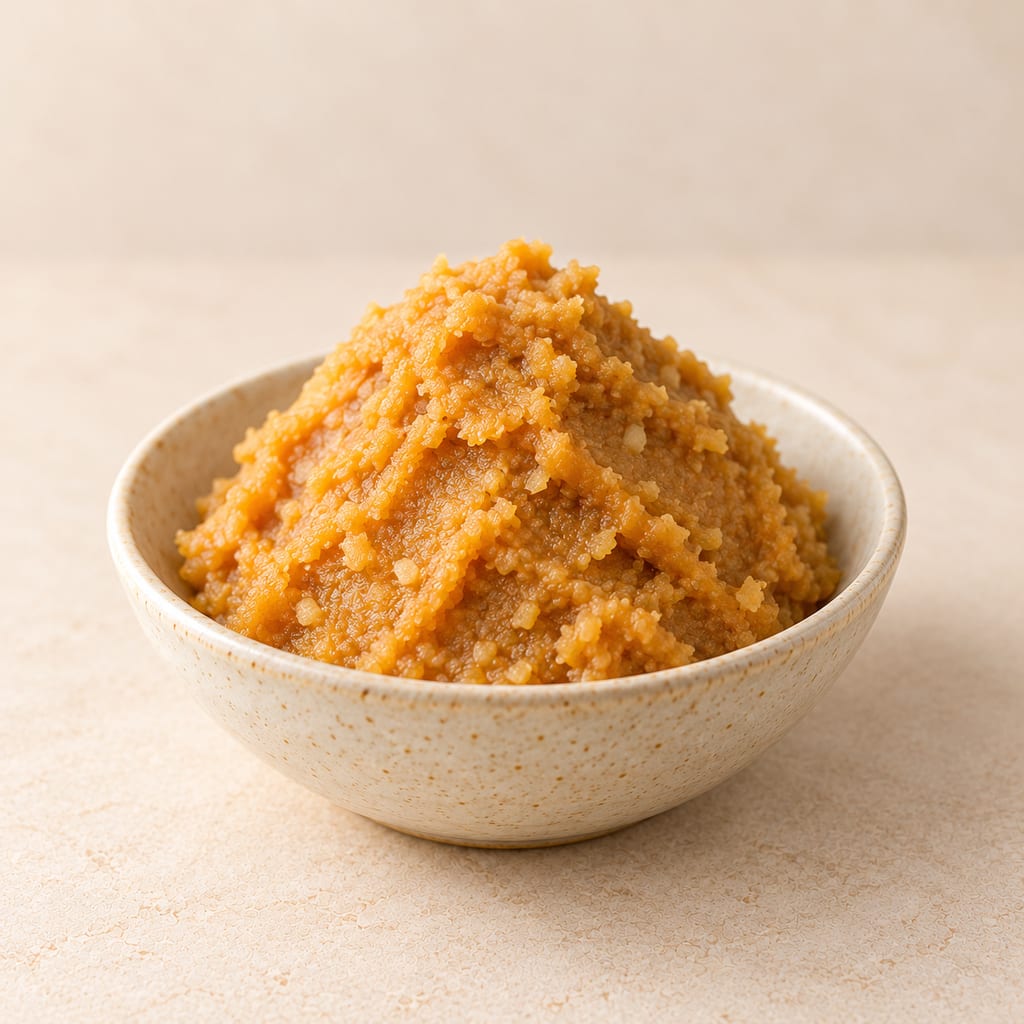
Rice-koji soybean miso
A traditional Japanese fermented paste made by mixing cooked soybeans with rice koji and salt. This guide details the ratio, the long enzymatic breakdown, and the months-long maturation required for depth.
 FermenteaWhere food goes to change
Salt
Salt recovered from seawater comes as fine grains, coarse crystals and delicate flakes. Its production, crystal form and measured use connect coastal saltworking with cooking and preservation.
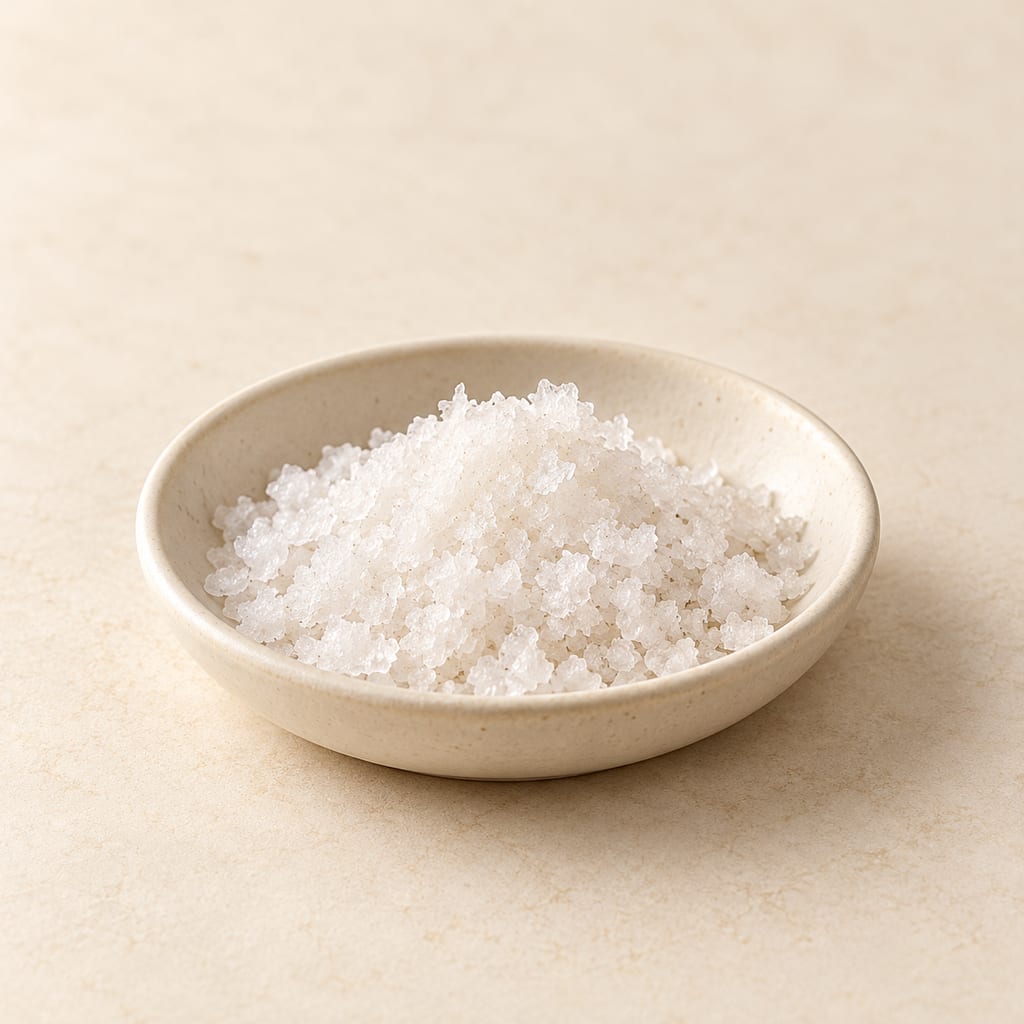
Sea salt is salt recovered from seawater, sold in forms ranging from fine grains to coarse crystals and delicate flakes. Its principal food function comes from sodium chloride, but its physical form can make the experience of using it quite different. A fine grain disappears into a sauce, while a finishing flake can remain long enough to give a brief crunch on the tongue.
The name identifies a source rather than one texture or one production method. Some sea salts are collected from outdoor salt pans; others use thermal evaporation and further processing. A packet labelled sea salt is therefore not automatically hand-harvested, unwashed or flaky. Those descriptions belong to particular products and their methods.
This variety makes sea salt both an everyday ingredient and a material with distinctive local traditions. Coastal water, managed basins, evaporation, harvesting and later milling can all leave their mark on the product. Understanding those stages helps distinguish a useful ingredient choice from a romantic image of crystals simply waiting to be scooped from the sea.
At Seasalter in Kent, medieval salt production survives in the landscape as mounds of discarded marsh material. The works occupied a boundary between coastal marsh and inland land that could supply fuel. Brine was obtained from seawater or from salt-impregnated material, then concentrated to recover salt. The waste accumulated as people repeated the work.
The remains include more than the mounds themselves. Excavations and the monument record describe evidence for pits, evaporation structures, boiling pans and temporary buildings. These were working places maintained and rebuilt as production continued. Making salt required a route for brine, a means of evaporation, fuel where heat was used, and people who could organize those resources.
The salt also had an economic life. Historical records connect Seasalter's production with salt paid as rent to Canterbury's cathedral almonry. A substance now bought casually in a grocery shop could be part of a landholding's obligations and a valued material for preserving food. The saltern tells a story of labour and exchange as well as the chemistry of evaporation.
Nearby Chislet Marshes preserves another saltworking landscape associated with the former Wantsum Channel. There, workers collected saline sludge after spring tides, extracted brine from it and boiled the brine to obtain salt. The discarded material became conspicuous mounds. Burnt earth, shells and pottery help identify the activity rather than leaving the earthworks as unexplained humps in a field.
This is a different picture from an unheated sunny salt pond. Coastal salt production could exploit the tide and then spend fuel to remove the remaining water. Local geography and available materials shaped the method. Sea-derived salt was not always the product of warm-climate solar evaporation, nor was historical production free of substantial equipment and energy needs.
Changes to the coast could end a working system. Embankment at Seasalter excluded the sea and made land more suitable for pasture, interrupting the access on which the saltworks depended. The history of a coastal ingredient is consequently also a history of land use. A place can retain the traces of salt making after its everyday landscape and economy have changed.
In outdoor saltworks, evaporation raises the concentration of the brine until crystals can form. Sun and wind help remove water, while channels and basins let workers manage its movement. The layout is part of the production method. A salt marsh is a worked landscape in which water flow and the condition of individual basins require attention.
Harvest then separates crystals from the remaining liquid. Subsequent treatment may include draining, washing, drying, sorting or milling, depending on the product. These stages help explain why the simple name sea salt covers ingredients with different moisture, grain size and handling. Salt obtained from the same broad marine source can arrive in the kitchen in very different forms.
Thermal methods provide another route to evaporation. Their use also shows why sea salt should not be equated with one climatic zone or one image of hand-raking. The source water, the concentration method and the finishing operations are separate parts of identity. A producer can document each of them more precisely than the generic category name can.
Guérande's salt pans illustrate a distinction within one production landscape. Coarse salt forms at the clay bottom of the basins, while fleur de sel forms as a delicate film of crystals at the surface. The surface crystals are skimmed with a long-handled tool. Their harvesting requires a different gesture from gathering the heavier salt below.
Those positions help explain the products' different appearances and handling. Grey coarse salt and pale, fragile fleur de sel are not simply two brand names for an identical grain. Grinding coarse salt produces another practical form for cooking, while leaving a delicate flake intact preserves a texture useful at the table.
Portugal's flor de sal offers a related named form. A documented Algarve product is sold as lightly moist, hand-collected crystals intended particularly for finishing food. It is one sea-salt subtype, not the definitive appearance of the whole category. A photograph of those pale flakes cannot establish the form, moisture or composition of every packet that says sea salt.
Crystal shape affects how salt feels between the fingers and how it occupies a measuring spoon. Large, irregular flakes leave a different amount of empty space from compact fine grains. Equal volumes of two salts can consequently contain different masses. A change of product can change what a spoonful contributes even when both ingredient lists are principally sodium chloride.
That matters especially when salt is measured as part of a fermentation or preservation formula. Preserve the recipe's units and the salt identity it specifies. A general comparison of crystal packing is an explanation of variation, not a universal conversion between all sea salts, kosher salts and table salts. A scale measures mass directly; a volume measure also reflects the geometry and packing of the grains.
At the table, that geometry can be part of the pleasure. A brittle flake crushed at the last moment gives a different initial sensation from finely dissolved salt. In a brine, the intact flake no longer remains as a visible textural feature once it has dissolved. The same ingredient can thus be chosen for physical form in one use and for its measured contribution to a liquid in another.
Salt's effect is not limited to taste. Dissolved substances change the availability of water in a food, a property described by water activity. Water activity is different from total moisture content: two foods can contain similar amounts of water while providing different conditions for microbial growth. Dissolved salt is one of the ingredients that influences that environment.
This gives a more useful explanation of preservation than saying that salt simply dries everything it touches. Water movement and the concentration of dissolved substances interact. In a dried meat product, later moisture loss also changes the relationship between salt and water. The food's developing condition is therefore connected with both the initial formulation and subsequent treatment.
The principle does not supply one concentration that suits every food. Fish, vegetables and meat have different structures and processes, and the intended microorganisms do not all respond identically. The relevant preparation provides the amount and controls for its own ingredients. Marine origin, a grey colour or an expensive finishing texture is not itself a measured preservation condition.
In a fermented food, salt helps shape the environment in which organisms act. A starter culture performs another task, converting suitable nutrients into products such as acids. Adding more salt does not automatically improve that activity; an excessive amount can impede the intended lactic bacteria in a meat fermentation. The useful balance belongs to the particular formula and culture.
Other stages do different work again. Drying removes water, while a nitrite-containing curing blend introduces compounds beyond plain sodium chloride. A recipe can specify sea salt and a curing ingredient on separate lines because they are not interchangeable. The word salt in both names does not make a marine cooking salt a substitute for a formulated cure.
Salt, sugar, culture, cure and the food itself make different contributions to a fermented preparation. Salt influences the water environment and proteins; the culture acts on suitable nutrients; a formulated cure brings its own compounds. Their amounts and sequence belong to the particular mixture. The marine origin of one ingredient does not supply a complete fermentation method for the food around it.
Salt also affects proteins in a minced meat system. It can help solubilize muscle proteins, contributing to the cohesive material that binds pieces of lean meat and fat. Mixing then develops a different structure from a bowl of loosely chopped ingredients. Seasoning and binding are separate reasons for salt to appear in the formula.
Water holding and water removal are not opposites that can be reduced to one rule. The concentration of salt and the food matrix affect protein behaviour, while the process may later be designed to lose moisture. A mixture can need enough cohesion for stuffing and slicing while also undergoing fermentation and drying. The stages address different aspects of its changing structure.
These mechanisms concern sodium chloride within the food system, rather than a unique action of marine crystals. Sea-derived salt enters the mixture with the grain form and composition of the product selected. Once dissolved, its contribution to muscle-protein solubility concerns the salt in that food, not a separate binding pathway created by harvesting it at the coast. Particular commercial products can still differ in moisture and composition.
Look for the grain or flake form, the ingredients and any product-specific description of harvesting or treatment. A named regional salt carries more information than the generic sea-salt category. A seasoning blend with herbs or other additions is another product again. The front of the packet should be read together with its ingredient statement.
Keep salt protected from dampness and steam, and follow the manufacturer's storage directions. A capped container in a cool, dry place helps preserve a free-flowing product's handling. A deliberately moist finishing salt needs its own instructions rather than an assumption that every sea salt should have the same dry appearance. Texture differences can be part of the product's identity.
For dietary needs, use the exact label and supplier information. The category name alone does not establish every additive, certification or cross-contact declaration. Nor does a general claim about minerals identify the composition of an unnamed lot. The useful practical information is the product actually being weighed or pinched into the food.
Sea salt moves between preserving, cooking and finishing. A coarse salt can be chosen for a brine or cooking water; a fine grain distributes differently through a dry mixture; a delicate flake can be reserved for food just before serving. Those are choices about form and use, while the measured formulation remains with the individual preparation.
Finishing salts also appear in sweet foods. Fleur de sel can provide a brief salty contrast in caramel and chocolate preparations as well as in savoury dishes. The effect depends on how and when it is encountered, not on a special separation between a sweet salt and a savoury one. Grain structure and placement help create the experience.
The varied uses return the ingredient to its larger story. Coastal labour produces crystals that may disappear into a food or remain briefly visible on its surface. The place and method can deserve attention without replacing the ordinary questions a cook needs answered: which form, which product and how it is specified in this preparation.
The generic item does not identify one producer, grain, moisture level or harvesting region. No universal volume conversion, fermentation dose, storage interval or nutritional superiority is assigned.
Read the exact product’s ingredients, additive and cross-contact declarations. The category name does not establish certification or an allergy-free guarantee.
Documented regional medieval saltworking, not earliest global sea-salt production.
Specific producer-documented coarse salt and fleur de sel production; not the origin of all sea salt.
Specific flor de sal product and linked photograph; the generic ingredient has no single producer or origin.
A traditional Japanese fermented paste made by mixing cooked soybeans with rice koji and salt. This guide details the ratio, the long enzymatic breakdown, and the months-long maturation required for depth.
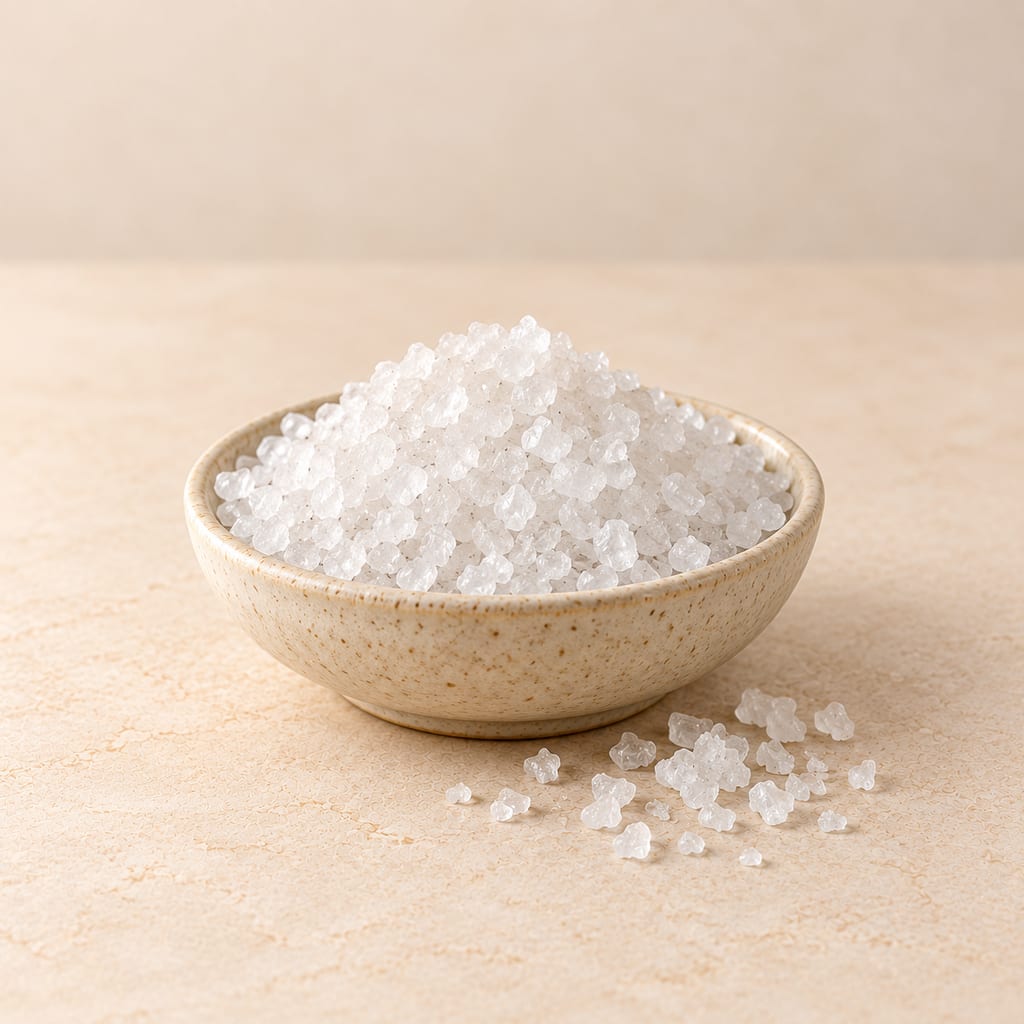
Coarse salt is food-grade salt in large grains, from sea, rock deposits or brine, used for curing, brining, pickling and packing fish.
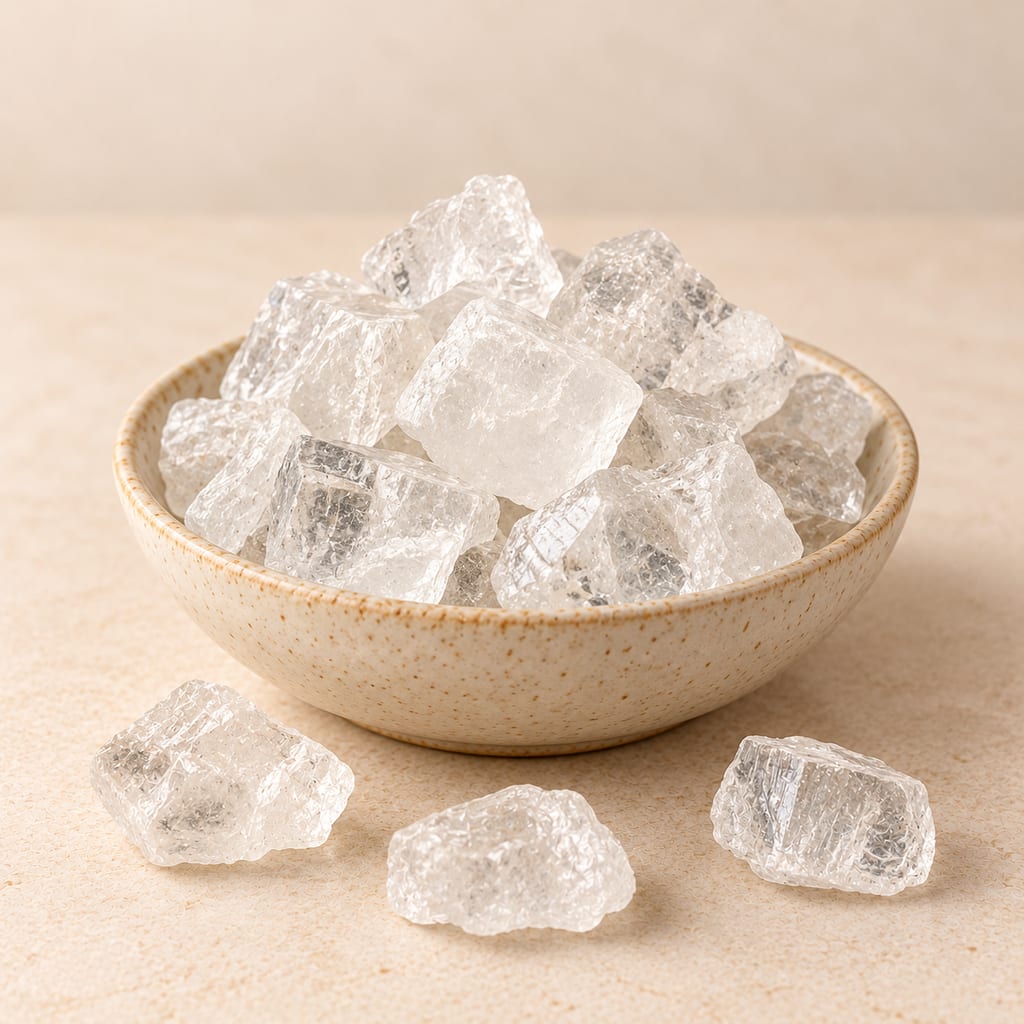
Rock salt is sodium chloride mined from ancient salt beds, sold from coarse grey chunks to pink Himalayan crystals and the fired black salt, kala namak, used in Indian cooking.
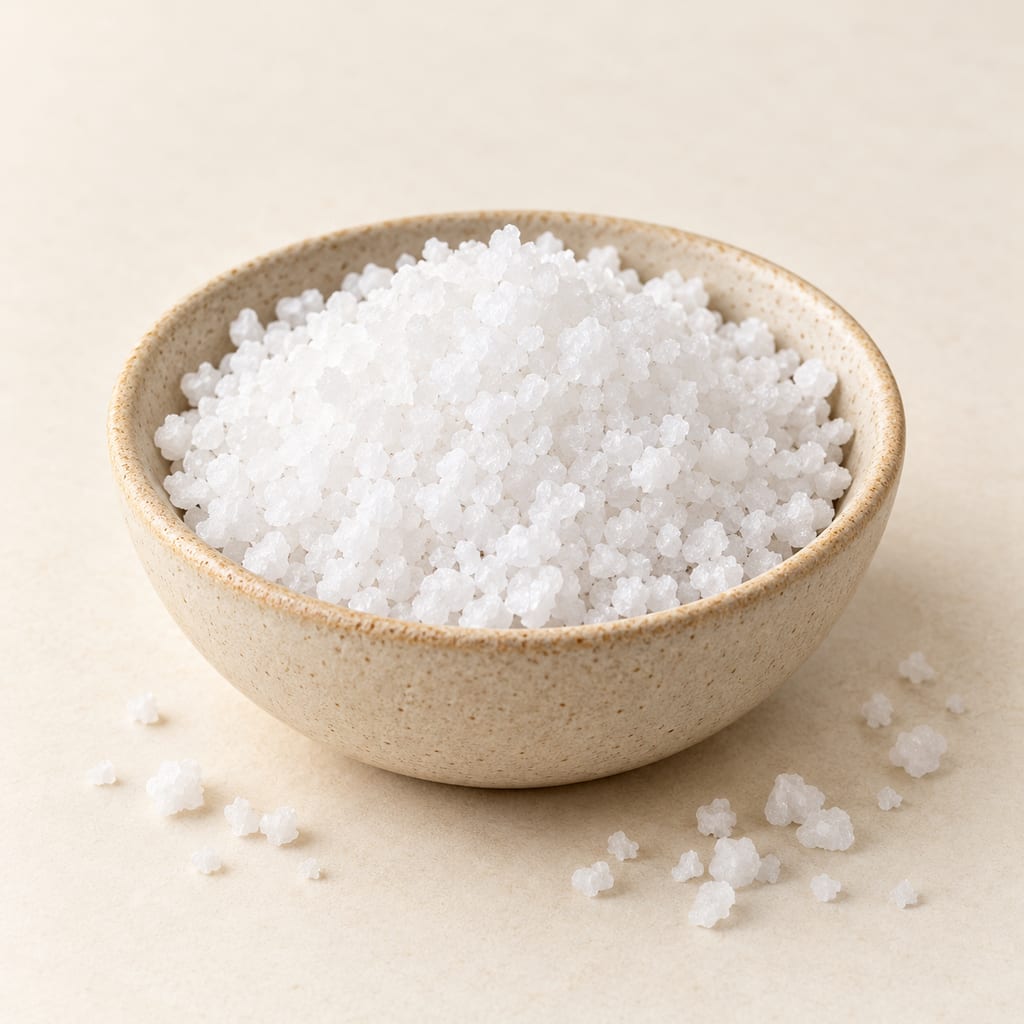
Food-grade sodium chloride seasons food and changes water movement in brines and cures; crystal size and the recipe's measurement method matter.
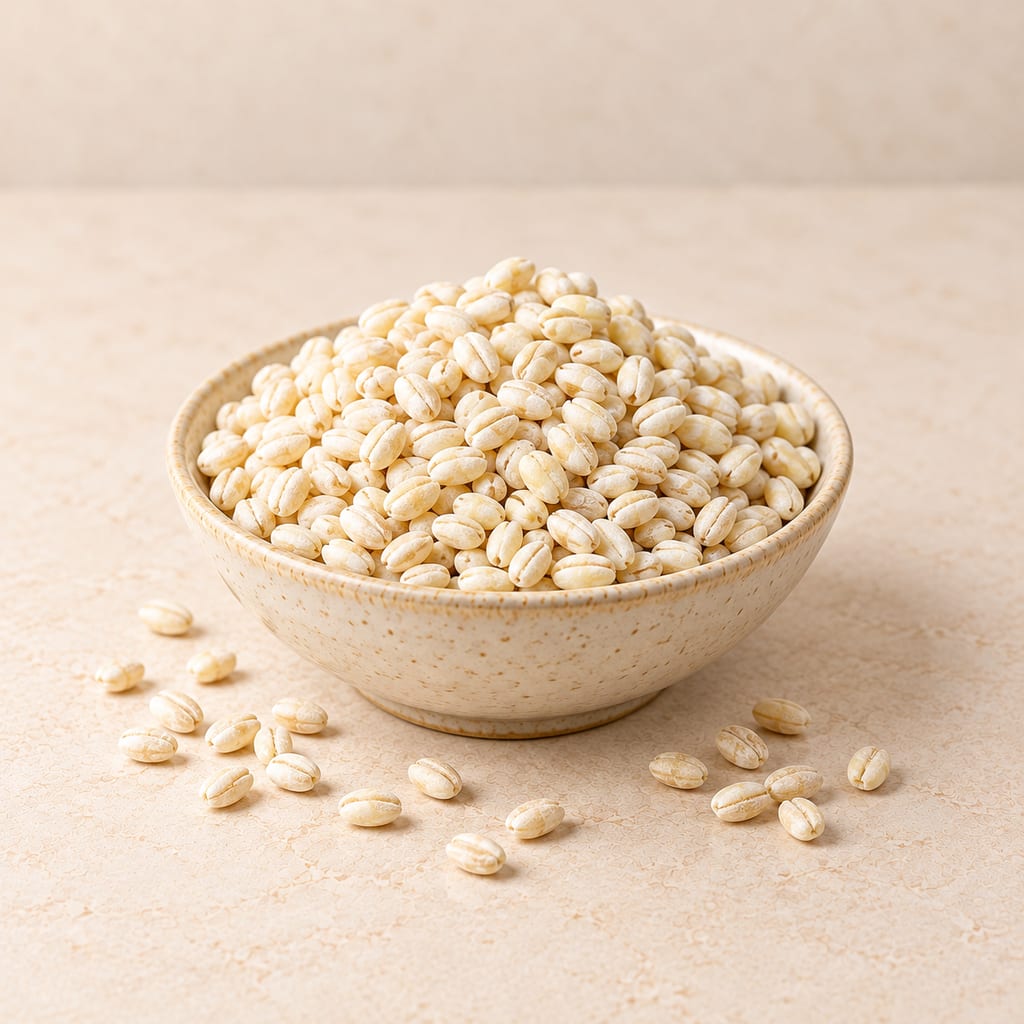
Barley is a hardy cereal, domesticated in the Middle East over 10,000 years ago, eaten whole, pearled or milled, malted for brewing, and grown with koji mold for barley miso.
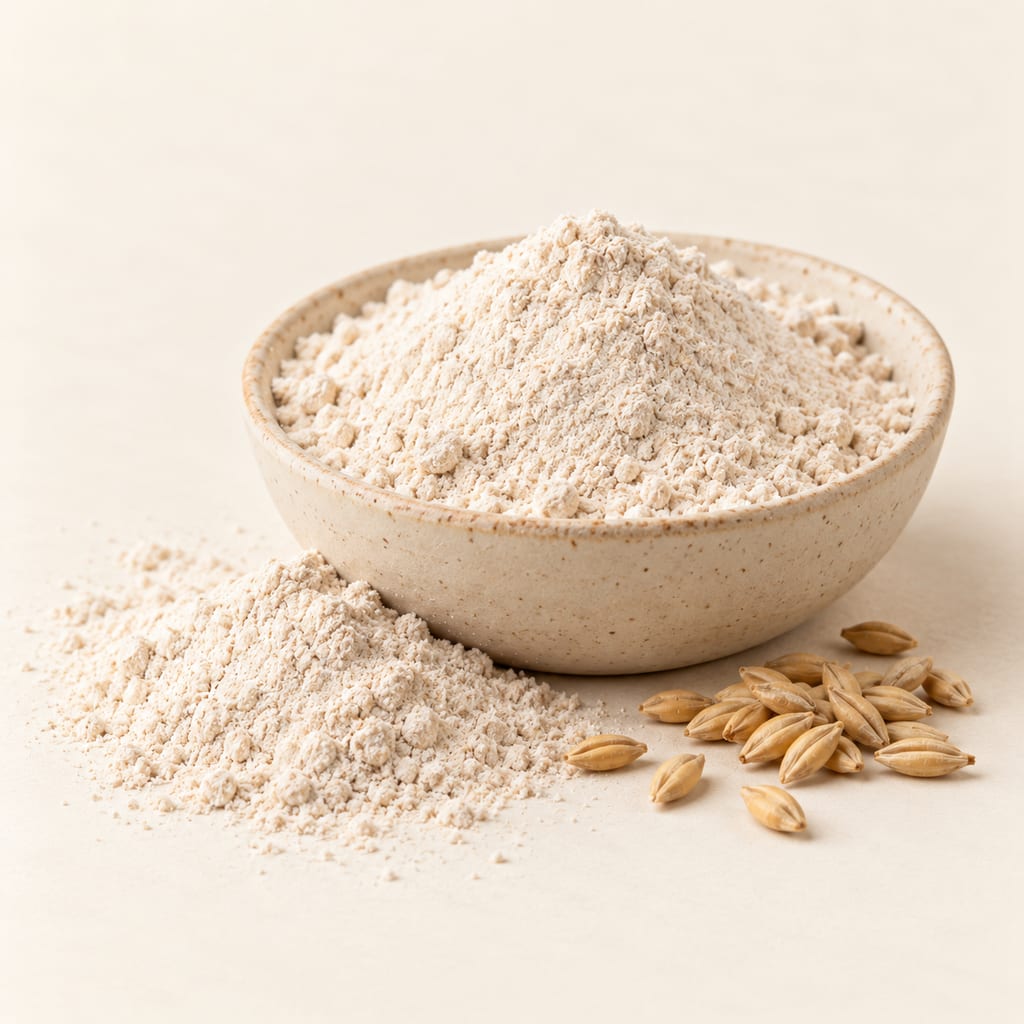
Barley flour is ground barley grain; whether it comes from pearled or hulless kernels, its milling and limited wheat-like gluten-forming ability shape the doughs and foods it can make.
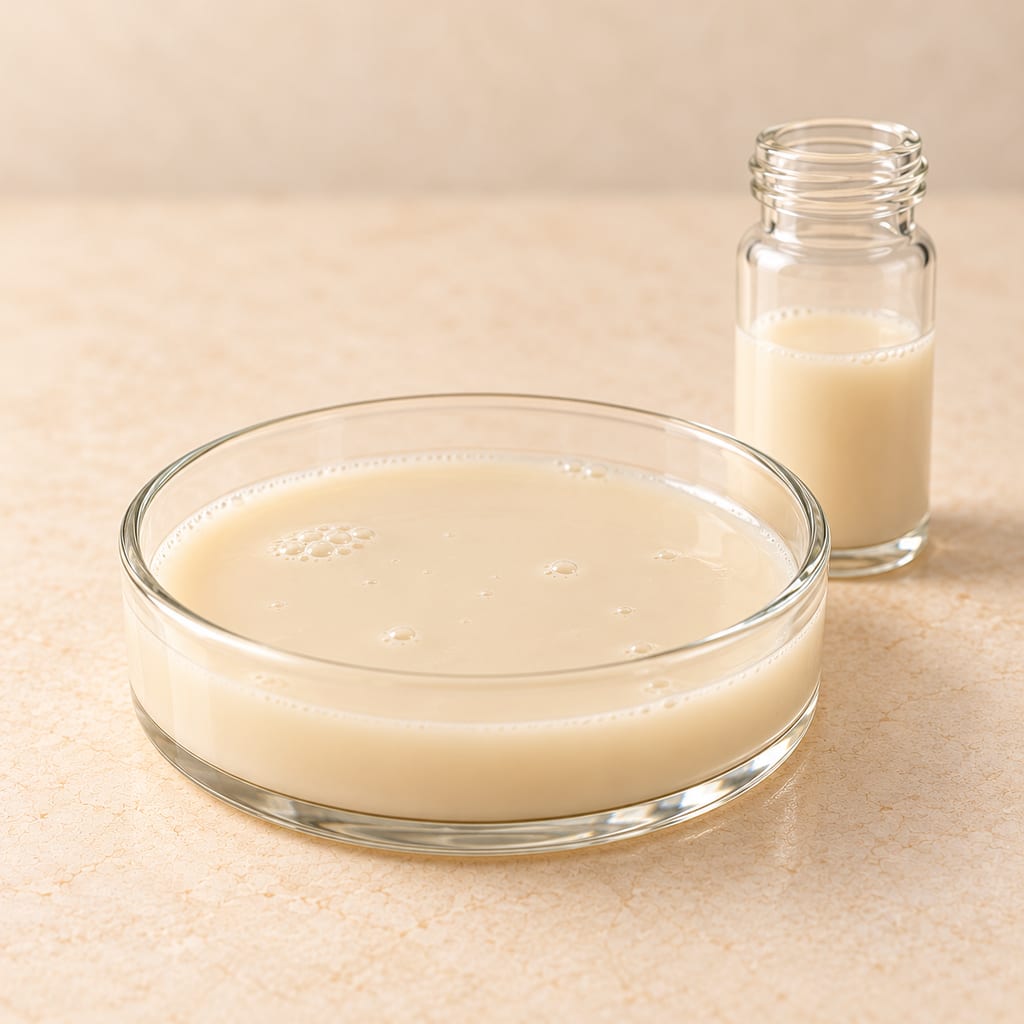
Brewer’s yeast is a working name for living cultures selected for brewing, not one strain or always one species. Ale and lager cultures differ, and older household books may use the term for foam or sediment from brewery beer.
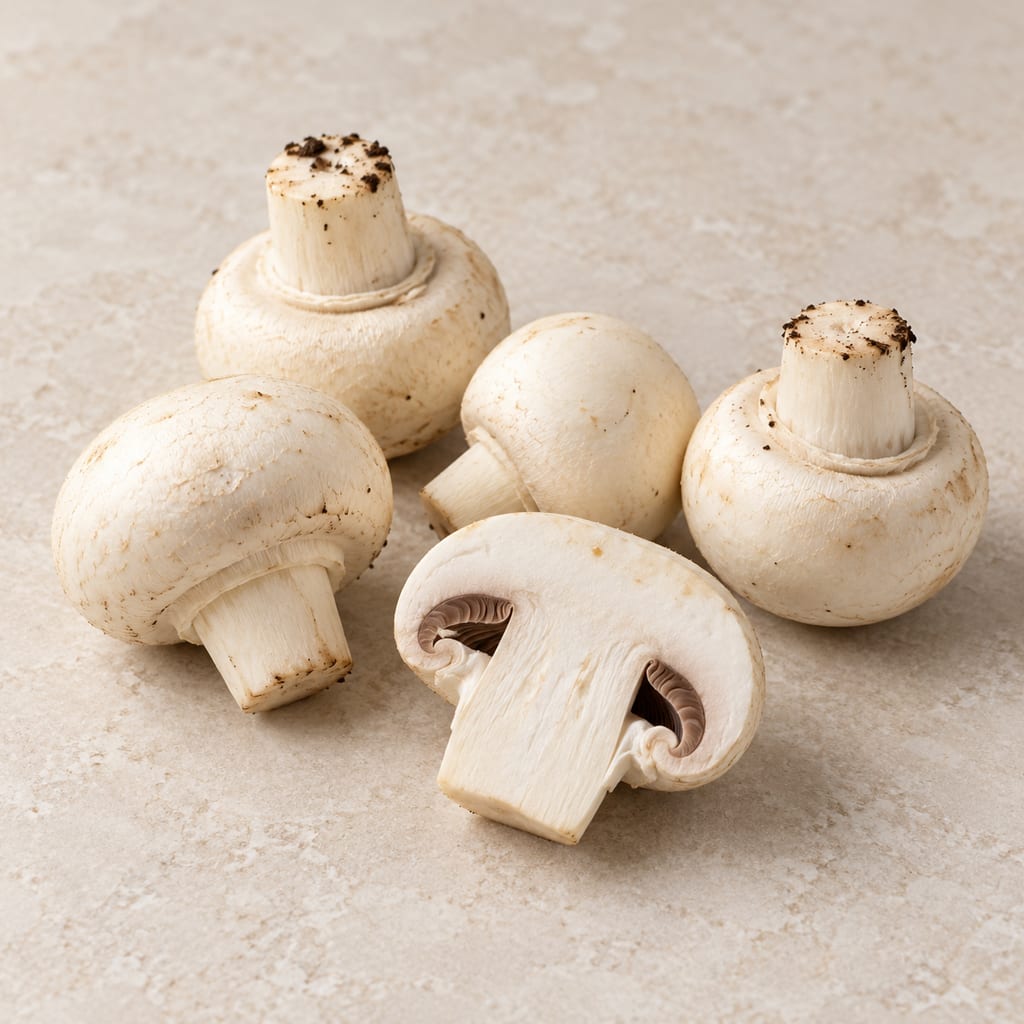
A cultivated form of Agaricus bisporus sold young as a button and at more mature stages as cremini or portobello, used fresh or preserved in everyday cooking.
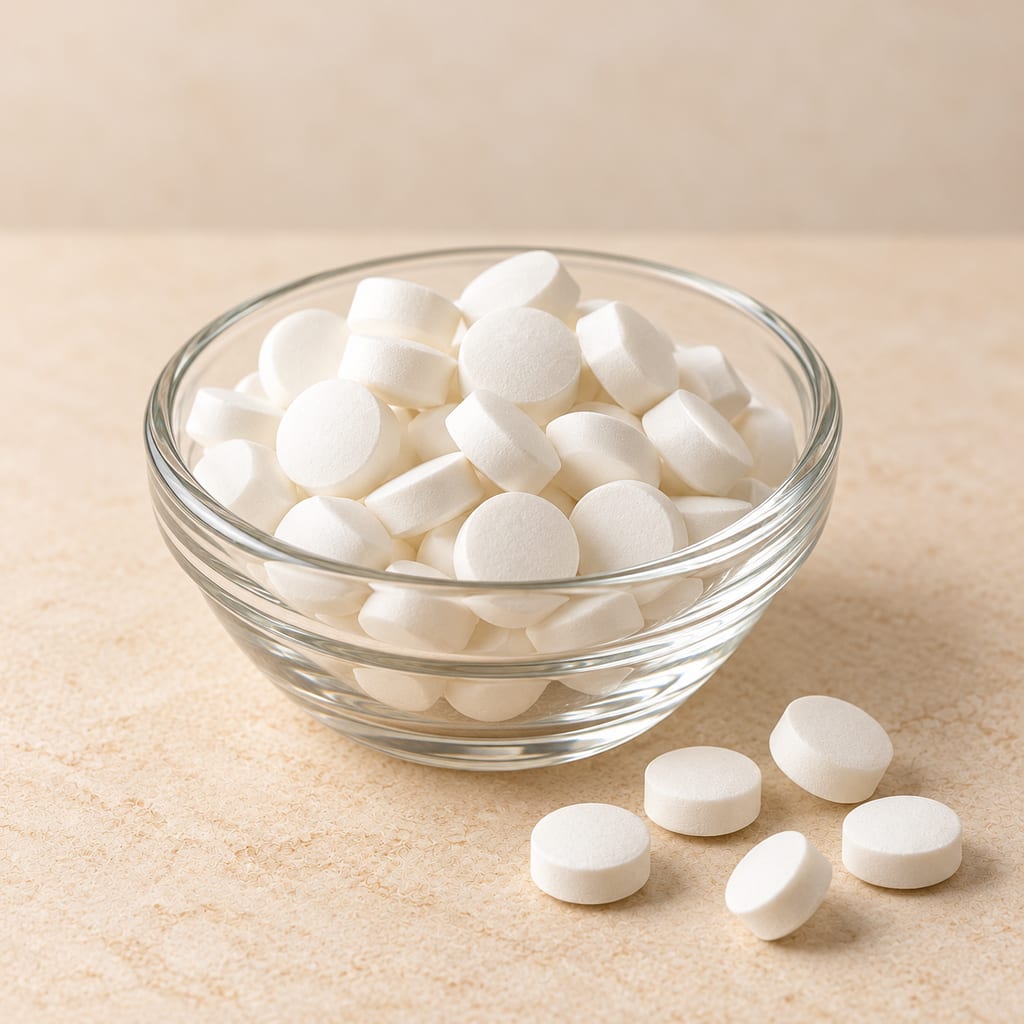
Campden tablets portion a metabisulfite salt for particular wine, cider or other fermentation uses. Tablet strength and the resulting free sulfur dioxide depend on the product and liquid.
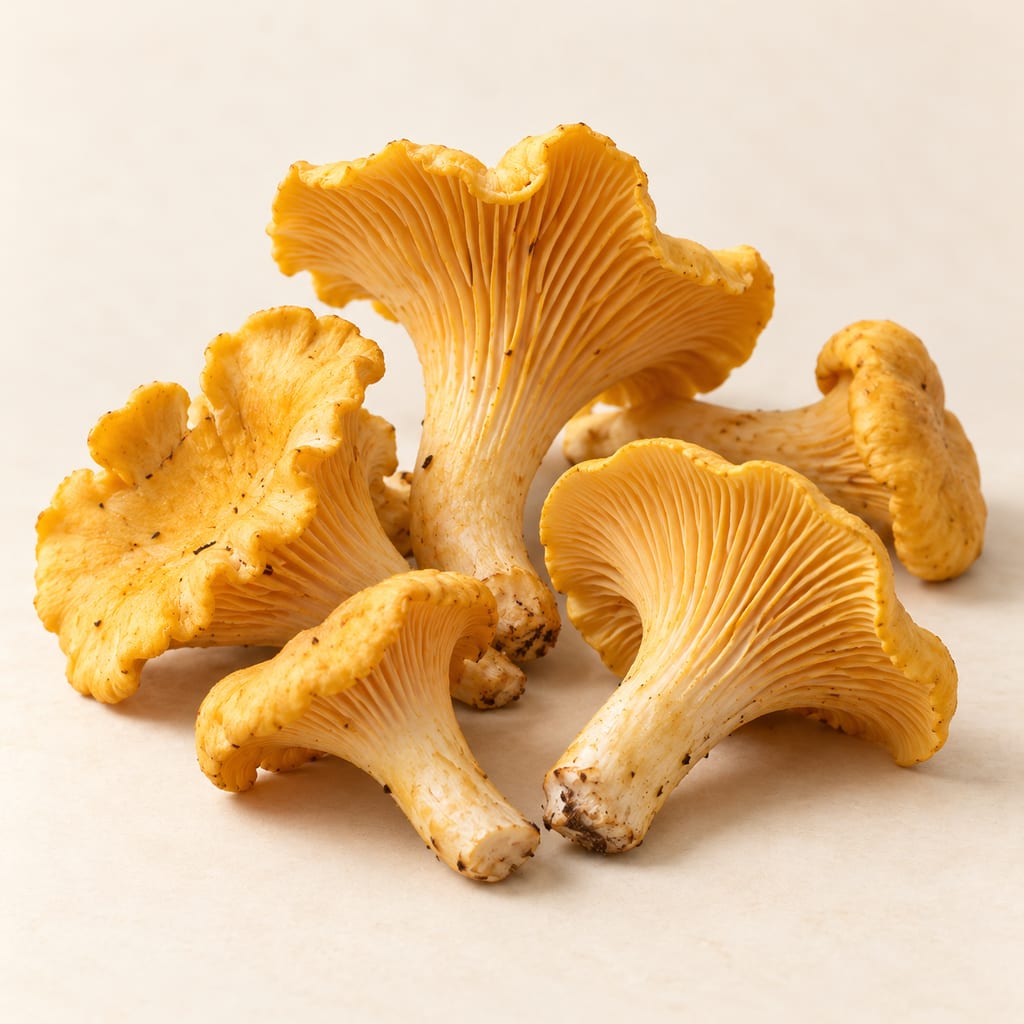
Chanterelles are wild, tree-associated edible mushrooms, particularly the European golden chanterelle Cantharellus cibarius, prized for their firm flesh, fruity aroma and use fresh, frozen, dried or pickled.
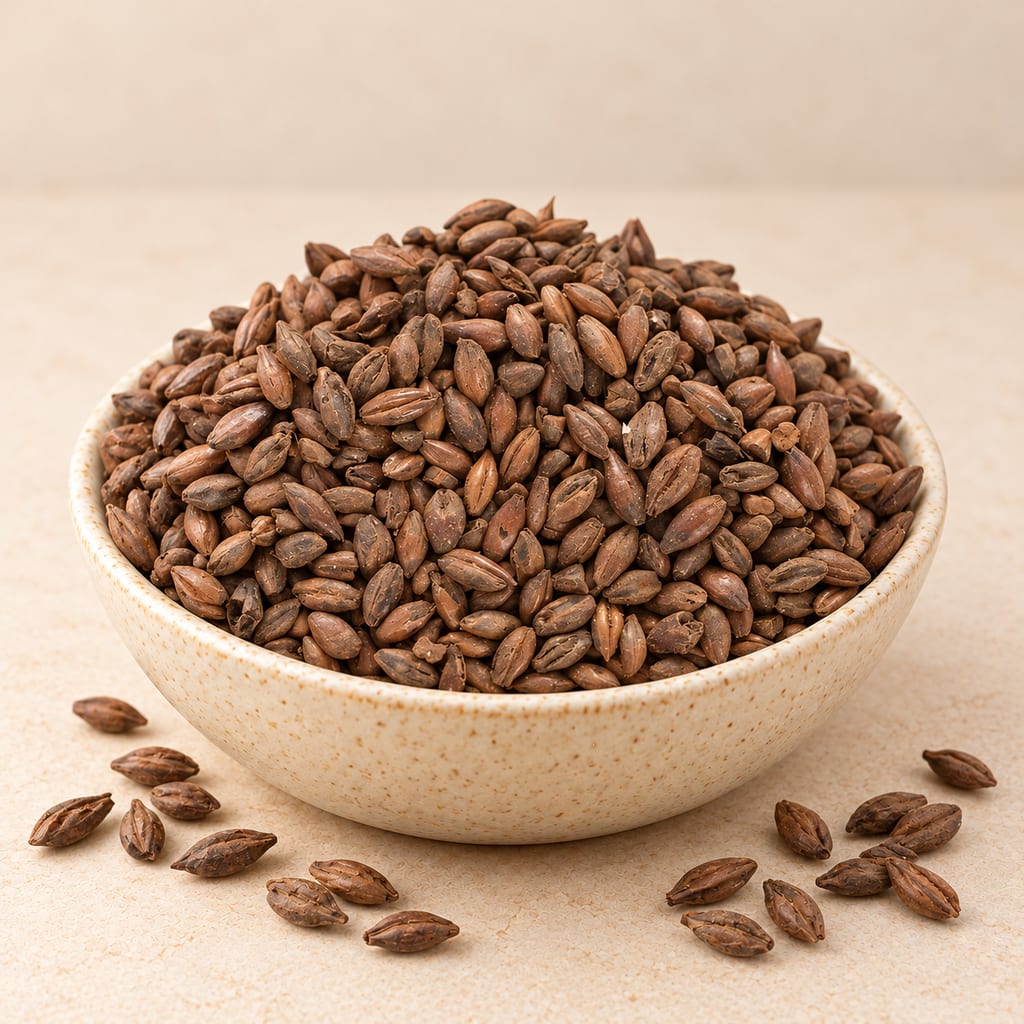
Chocolate malt is barley that has been malted and then roasted to a dark brown, used in porters, stouts and brown ales for colour and a bitter-cocoa, roasted-coffee flavour. It contains no cocoa.
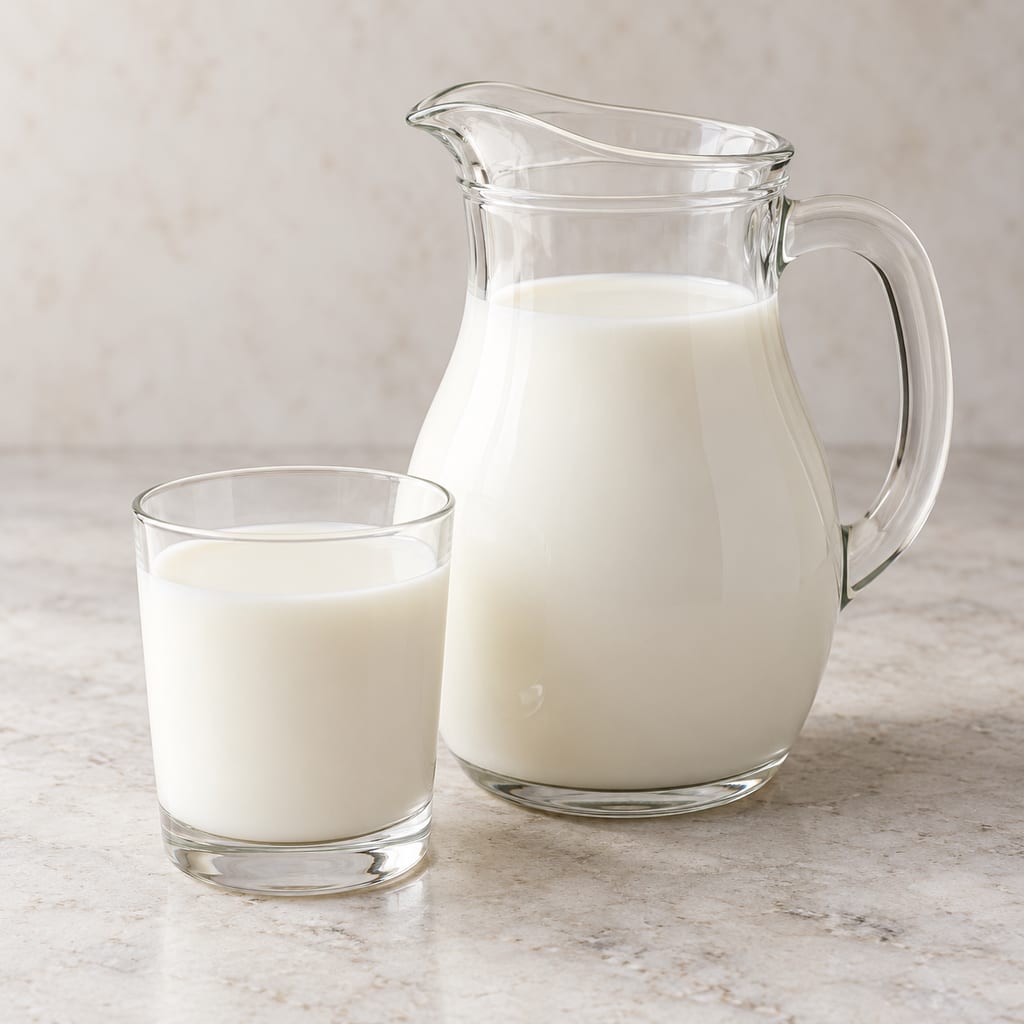
Cow milk and water-buffalo milk are distinct dairy substrates whose fat, protein and mineral balance affects cheese; this ingredient name preserves a choice rather than defining a blend.
No community contributions have been published for this entry yet.
Sign in to contribute. Published comments and photos are free to read.
Food and Agriculture Organization — Guidelines for slaughtering, meat cutting and further processingIdentity · History · Production · Science · Uses
Meat as raw material, non-meat ingredients and basic techniques in further processing of meatSodium chloride salt comes from marine and mined sources. In meat systems it contributes flavour, protein solubility, binding and water-activity changes.
Cited in: A marine source, many kinds of crystal; Dissolved salt changes the water environment; Salt and fermentation have different jobs; Its work in a meat mixture; Product details still needed
Kent County Council Historic Environment RecordIdentity · History · Production · Science · Uses
Medieval salt production site at SeasalterSeasalter preserves medieval saltworking mounds and evidence of brine extraction, pits, boiling pans and temporary buildings. Salt rent connected the works with Canterbury; embankment changed access to the sea.
Cited in: Salt making left a landscape; Tides, sludge and boiling pans
Kent County Council Historic Environment RecordIdentity · History · Production · Science · Uses
Medieval saltworking mounds at Chislet MarshesAt Chislet, saline sludge deposited after spring tides supplied brine for boiling. Discarded material formed mounds containing burnt earth, shells and pottery.
Cited in: Tides, sludge and boiling pans
Le GuérandaisIdentity · History · Production · Science · Uses
All about Fleur de Sel de GuérandeGuérande saltworks use sun and wind to concentrate brine. Coarse salt forms at the clay bottom, while surface fleur de sel is skimmed with a lousse and used as a finishing salt.
Cited in: A marine source, many kinds of crystal; Concentrating the water before the harvest; The surface and the bottom give different salts; The crystal matters before it dissolves; Reading the package and keeping the salt; From measured ingredient to finishing touch
Pfeffersack & SoehneIdentity · History · Production · Science · Uses
Flor de SalThis Algarve flor de sal is a lightly moist, hand-collected finishing salt sold as pale crystals.
Cited in: The surface and the bottom give different salts
European Commission EU Blue Economy ObservatoryIdentity · History · Production · Science · Uses
Marine non-living resources: salt extractionMarine salt extraction includes solar and thermal evaporation, with finishing operations such as washing and drying.
Cited in: A marine source, many kinds of crystal; Concentrating the water before the harvest
University of California Agriculture and Natural ResourcesIdentity · History · Production · Science · Uses
Salt: the only rock we eatDifferent crystal shapes and packing leave different spaces in a measuring spoon, so equal salt volumes can have different masses.
Cited in: The crystal matters before it dissolves; From measured ingredient to finishing touch
U.S. Food and Drug AdministrationIdentity · History · Production · Science · Uses
Water Activity (aw) in FoodsWater activity differs from total moisture content; dissolved substances affect the availability of water in food.
Cited in: Dissolved salt changes the water environment
Food Safety Authority of IrelandIdentity · History · Production · Science · Uses
Guidance Note 33: Manufacturing Fermented MeatsSalt contributes flavour, protein solubility and water-activity changes in fermented meat. Excess salt can inhibit the intended lactic bacteria and acid production.
Cited in: Dissolved salt changes the water environment; Salt and fermentation have different jobs; Its work in a meat mixture
The Sausage MakerIdentity · History · Production · Science · Uses
Insta Cure #2 Naturally Colored — No Red DyeThis formulated curing salt contains nitrite and nitrate as well as salt; plain marine cooking salt is a different ingredient.
Cited in: Salt and fermentation have different jobs
Maldon SaltIdentity · History · Production · Science · Uses
Sea Salt Flakes 55g MillThe sea-salt-flake mill label recommends keeping the cap tightly closed and storing it in a cool, dry place.
Cited in: Reading the package and keeping the salt
U.S. Food and Drug AdministrationIdentity · History · Production · Science · Uses
Food Allergies: What You Need to KnowIngredient labels and supplier declarations describe the actual purchased product and its relevant dietary information.
Cited in: Reading the package and keeping the salt