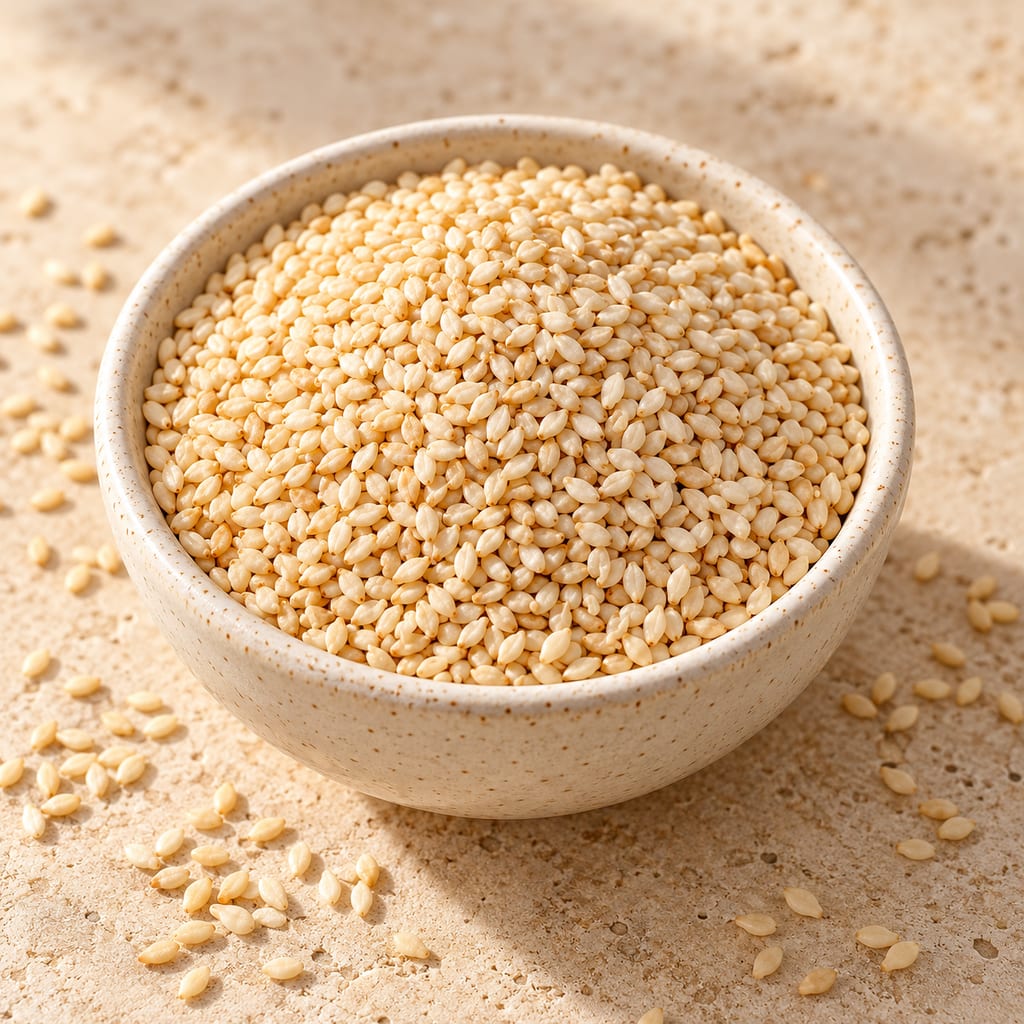
Sesame seeds
Sesame seed, from Sesamum indicum, is about half oil and is eaten whole, ground into paste or pressed into oil. It was a crop of South Asia by the Harappan period and reached Mesopotamia before 2000 BC.
 FermenteaWhere food goes to change
Modern method
ごま塩 · gomashio · gomasio
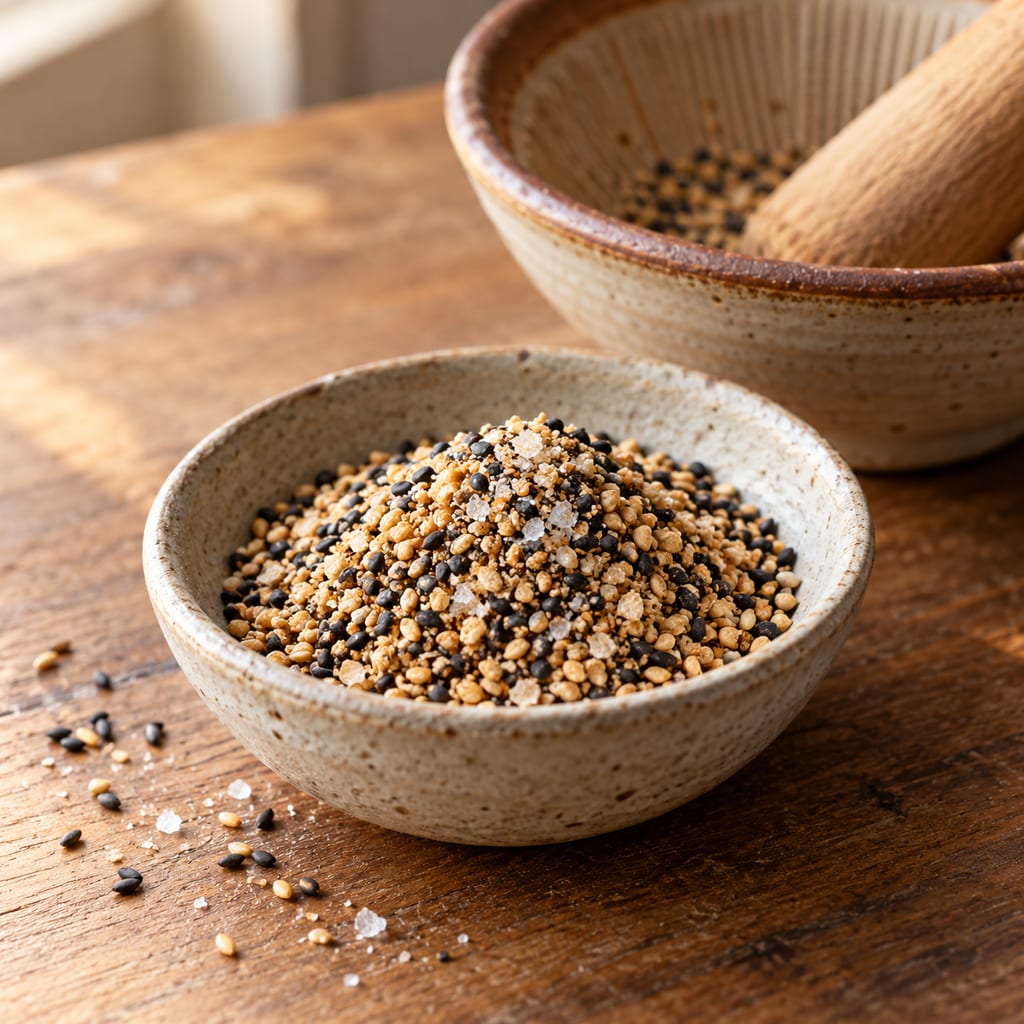
Toasted sesame seeds and sea salt are ground together into a coarse seasoning for rice. This small pan-roasted batch keeps most of the seed texture.
The opened Japanese agriculture source documents sesame salt as a sekihan topping and notes regional variation; Tanaka Foods lists warm rice, rice balls and bento as uses for its distinct packaged formula. Sesame is an allergen under U.S. FDA rules. Do not imply this batch matches every retail gomashio or lowers salt intake. **Mechanism and evidence limits:** Pan heat dries the ingredients and toasts sesame; mortar grinding breaks some seeds and combines their released oil with the salt. This is not fermentation. The recipe source gives no yield or measured storage endpoint, only the short refrigerated use period above. It does not establish a universal ratio or first-use date. **Sources:** [Eating for your Health, “Gomasio”](https://recipes.eatingforyourhealth.org/content/gomasio) (formula and method); [Japan MAFF, “Sekihan (Red rice)”](https://www.maff.go.jp/e/policies/market/k_ryouri/search_menu/1072/index.html) (regional rice use); [Tanaka Foods](https://www.tanaka-foods.co.jp/en/product_line/sesame_and_salt.html) (one commercial formula and uses); [U.S. FDA, “Food Allergies”](https://www.fda.gov/food/nutrition-food-labeling-and-critical-foods/food-allergies) (allergen context).
Heavy pan, heatproof plate, suribachi or mortar and pestle, capped jar. **Method:** Wash and drain the seeds. Over medium heat, stir the salt constantly for about 5 minutes, then remove it. Stir the sesame in the same pan over medium heat for about 5 minutes, until seeds begin to pop; avoid scorching and cool until comfortable to handle. Grind the salt fine. Add sesame and grind with light pressure until about 80% of seeds are broken and the salt is coated. Refrigerate in a tightly capped jar; the source says to use within one or two weeks. **Difficulty (1–5; maximum dimension sets overall):** temperature 2; monitoring 2; equipment 2; timing 2; scaling 2; **overall 2**. These are preparation-skill ratings, not safety ratings. **Food and use:** The opened Japanese agriculture source documents sesame salt as a sekihan topping and notes regional variation; Tanaka Foods lists warm rice, rice balls and bento as uses for its distinct packaged formula. Sesame is an allergen under U.S. FDA rules. Do not imply this batch matches every retail gomashio or lowers salt intake. **Mechanism and evidence limits:** Pan heat dries the ingredients and toasts sesame; mortar grinding breaks some seeds and combines their released oil with the salt. This is not fermentation. The recipe source gives no yield or measured storage endpoint, only the short refrigerated use period above. It does not establish a universal ratio or first-use date. **Sources:** [Eating for your Health, “Gomasio”](https://recipes.eatingforyourhealth.org/content/gomasio) (formula and method); [Japan MAFF, “Sekihan (Red rice)”](https://www.maff.go.jp/e/policies/market/k_ryouri/search_menu/1072/index.html) (regional rice use); [Tanaka Foods](https://www.tanaka-foods.co.jp/en/product_line/sesame_and_salt.html) (one commercial formula and uses); [U.S. FDA, “Food Allergies”](https://www.fda.gov/food/nutrition-food-labeling-and-critical-foods/food-allergies) (allergen context).
Pan heat dries the ingredients and toasts sesame; mortar grinding breaks some seeds and combines their released oil with the salt. This is not fermentation. The recipe source gives no yield or measured storage endpoint, only the short refrigerated use period above. It does not establish a universal ratio or first-use date. **Sources:** [Eating for your Health, “Gomasio”](https://recipes.eatingforyourhealth.org/content/gomasio) (formula and method); [Japan MAFF, “Sekihan (Red rice)”](https://www.maff.go.jp/e/policies/market/k_ryouri/search_menu/1072/index.html) (regional rice use); [Tanaka Foods](https://www.tanaka-foods.co.jp/en/product_line/sesame_and_salt.html) (one commercial formula and uses); [U.S. FDA, “Food Allergies”](https://www.fda.gov/food/nutrition-food-labeling-and-critical-foods/food-allergies) (allergen context).
Japanese sources document sesame salt with sekihan, rice balls and bento; they do not establish a first-use date or single birthplace.
Scaling: source batch only
Sesame is a major food allergen; this seasoning contains sesame seeds.
Hazard sourceContains sesame; avoid this seasoning if you have a sesame allergy.
A documented rice-seasoning association, not a claim that the selected teaching formula originated here.
Sesame seed, from Sesamum indicum, is about half oil and is eaten whole, ground into paste or pressed into oil. It was a crop of South Asia by the Harappan period and reached Mesopotamia before 2000 BC.
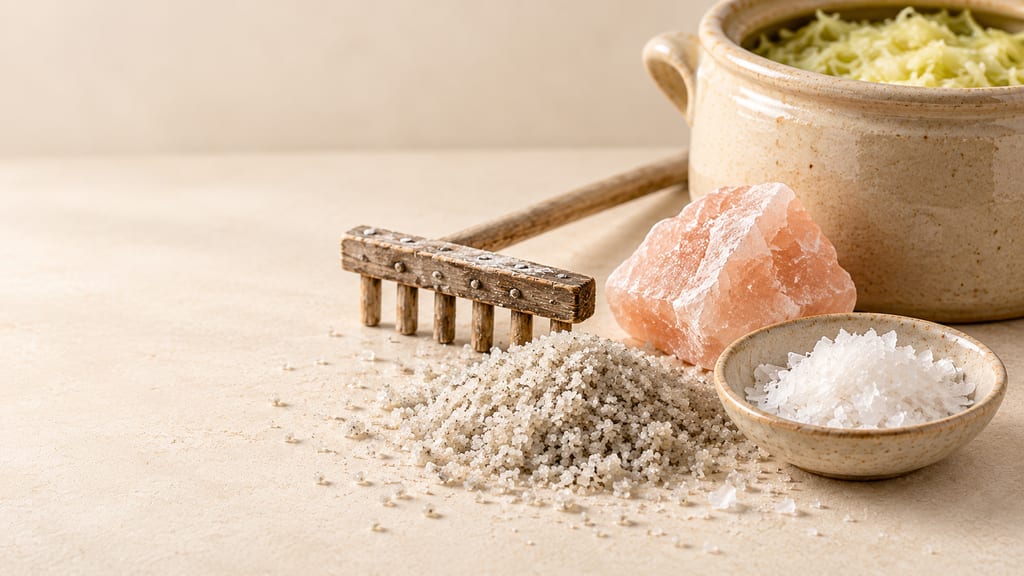
Salt seasons a meal, shapes fermentation and preserves food. Its history follows the people who mine, harvest, trade and transform it, and the choices hidden inside an ordinary packet.

Japanese reddish-brown vinegar from sake lees matured about three years, turned to vinegar by acetic bacteria; the vinegar of Handa and Edomae sushi rice.
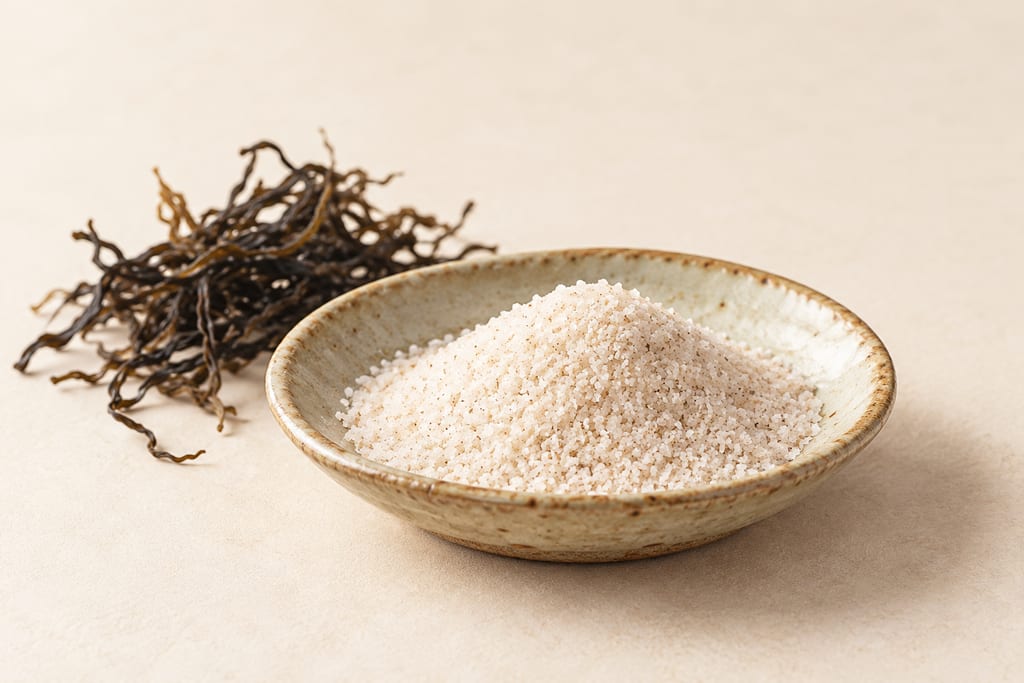
Amabito no Moshio is a modern, pale beige Japanese seaweed salt made from Seto Inland Sea water and hondawara seaweed. Its documented factory method concentrates filtered brine in kettles, then separates and dries the salt.
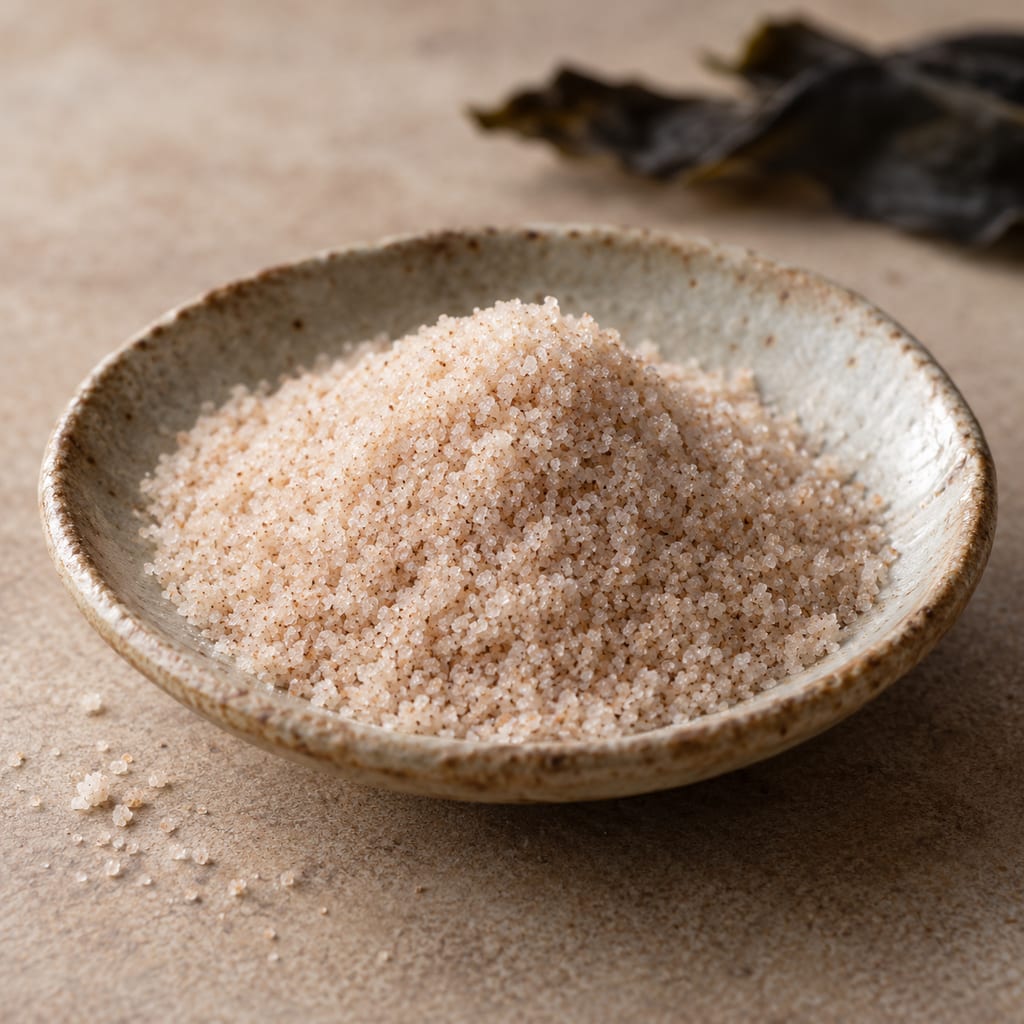
Awaji moshio is a modern Japanese seaweed salt made by TaDa PHILOSOPHY from Awaji Island seawater and seaweed. Its premium process concentrates brine, extracts seaweed flavor, then crystallizes, separates, dries and grades the salt.
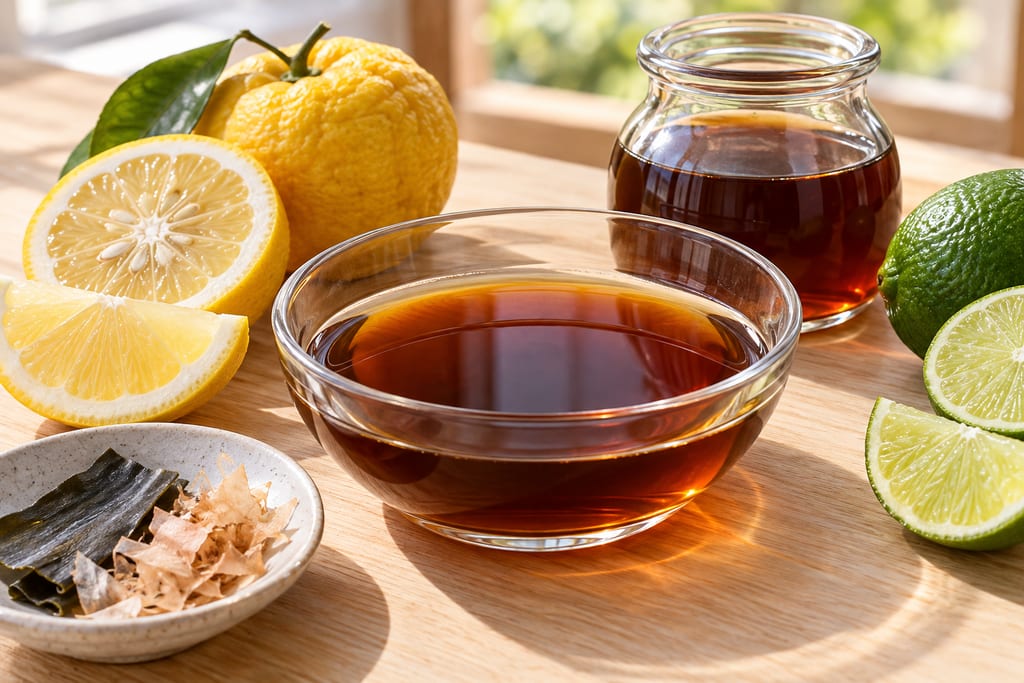
This fresh ponzu-shoyu mixes Japanese koikuchi soy sauce with yuzu or a lemon-lime blend, rice vinegar, water and sugar; optional kombu and bonito give a short chilled infusion.
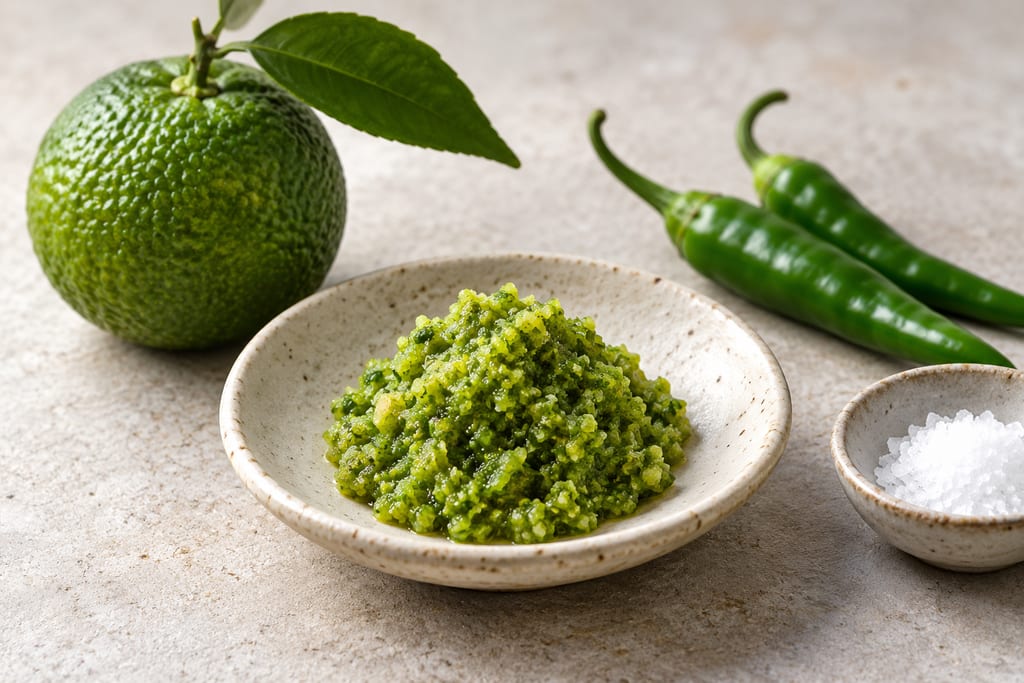
A fresh, uncooked yuzu and green chilli paste inspired by Kyushu’s yuzu kosho, made here as an untested small-batch seasoning rather than a preservation formula.
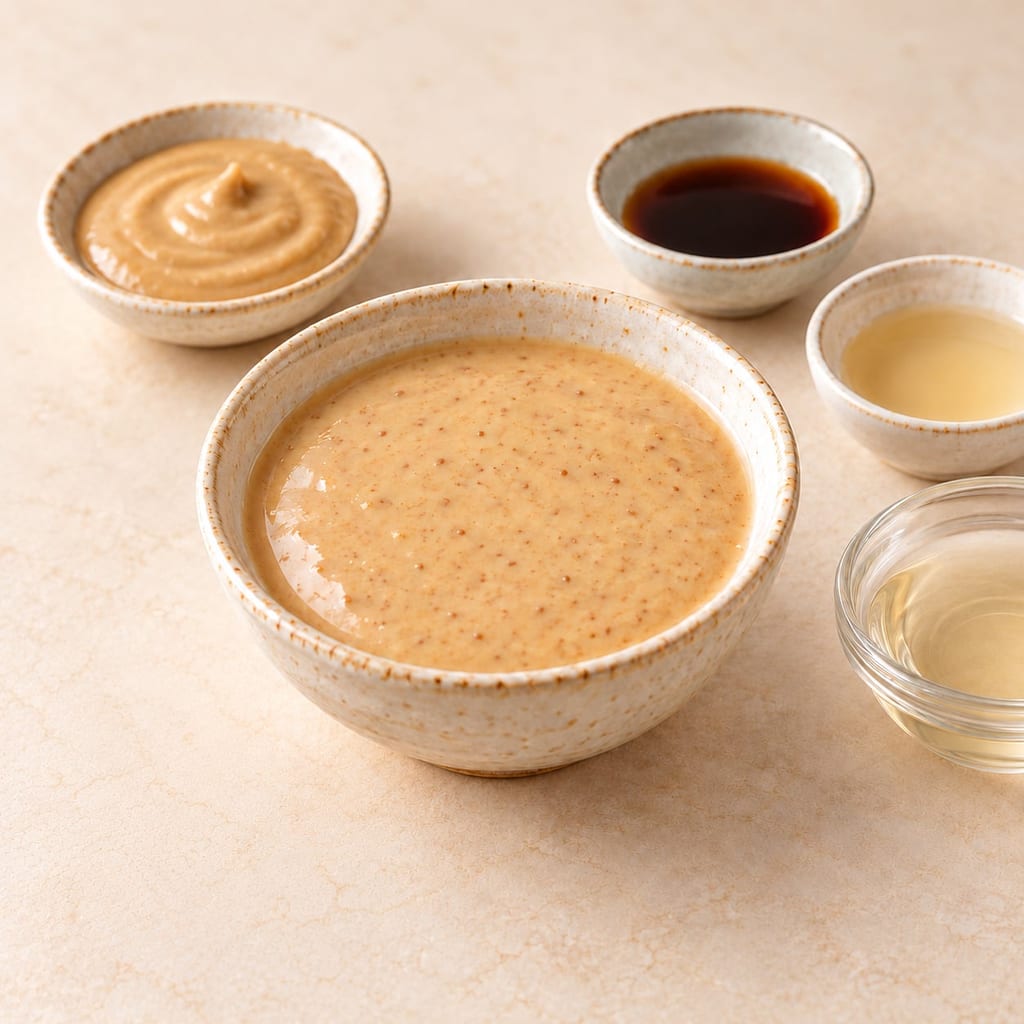
A creamy Japanese sesame dipping sauce with soy, rice vinegar and dashi. Gradual mixing turns the thick sesame paste into a smooth sauce.
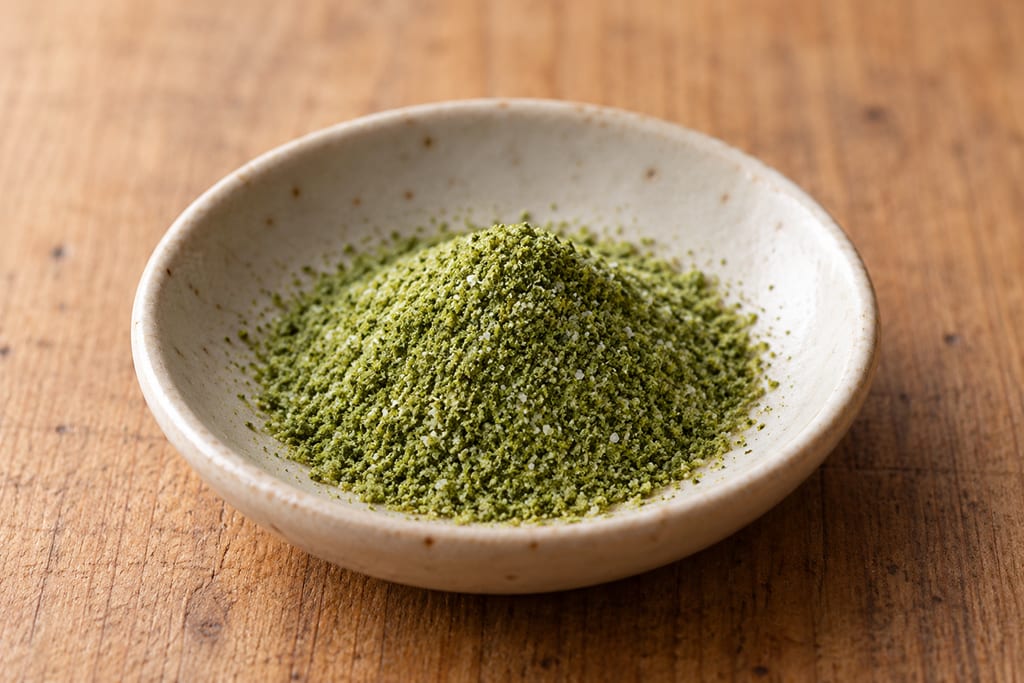
Green tea leaf salt is a dry seasoning made by grinding tea leaves, sieving them and mixing the powder with fine salt. This Japanese-style version follows a documented equal-parts method.
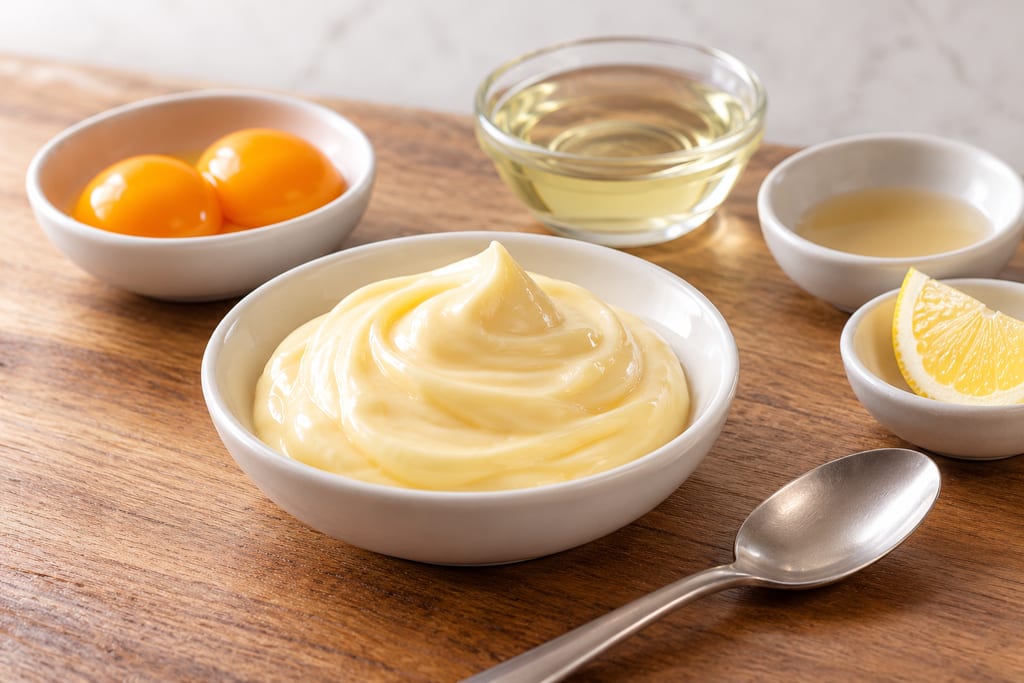
A one-cup Japanese mayonnaise batch made in a small food processor with pasteurized room-temperature egg yolks and oil added in three stages around the seasonings and acids.
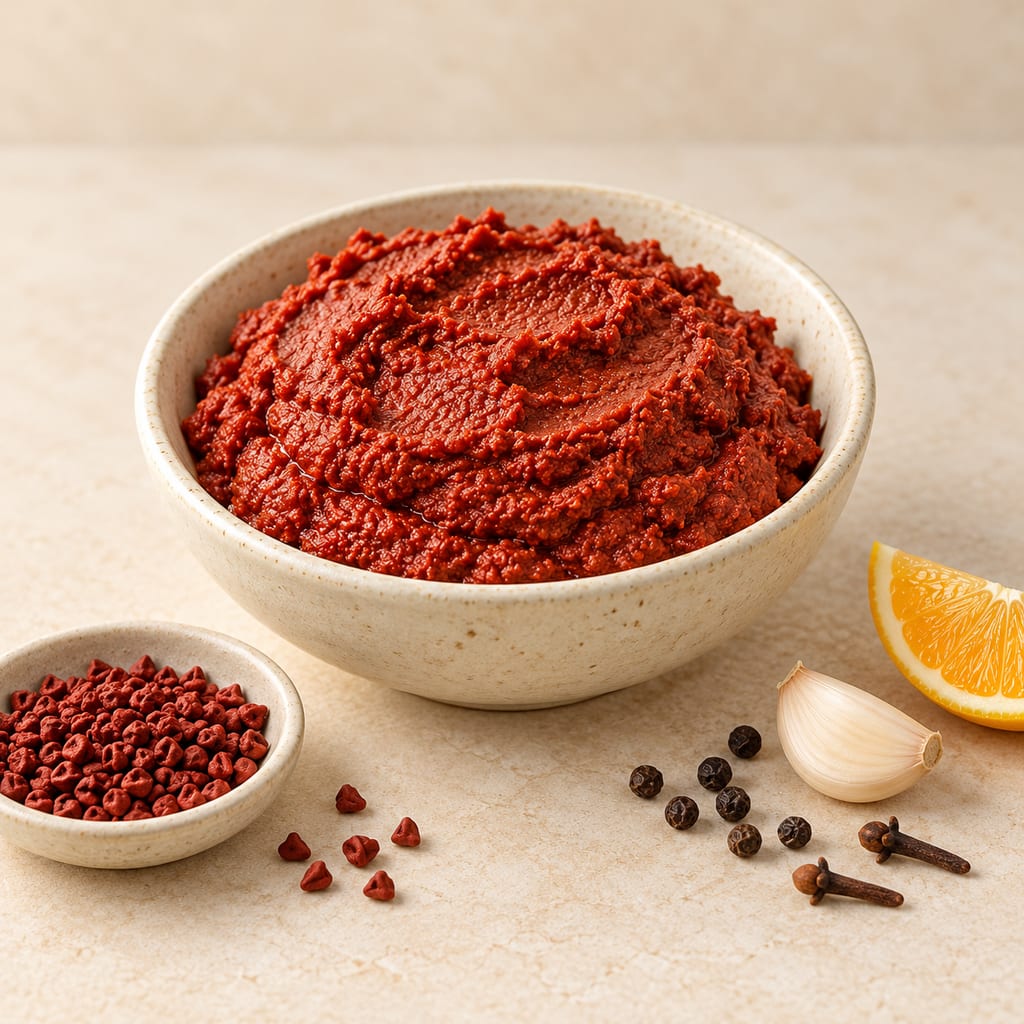
A Yucatecan recado rojo is a brick-red seasoning paste built on annatto seed, garlic and sour orange. This measured home version shows one route into a much wider family of market and household recados.
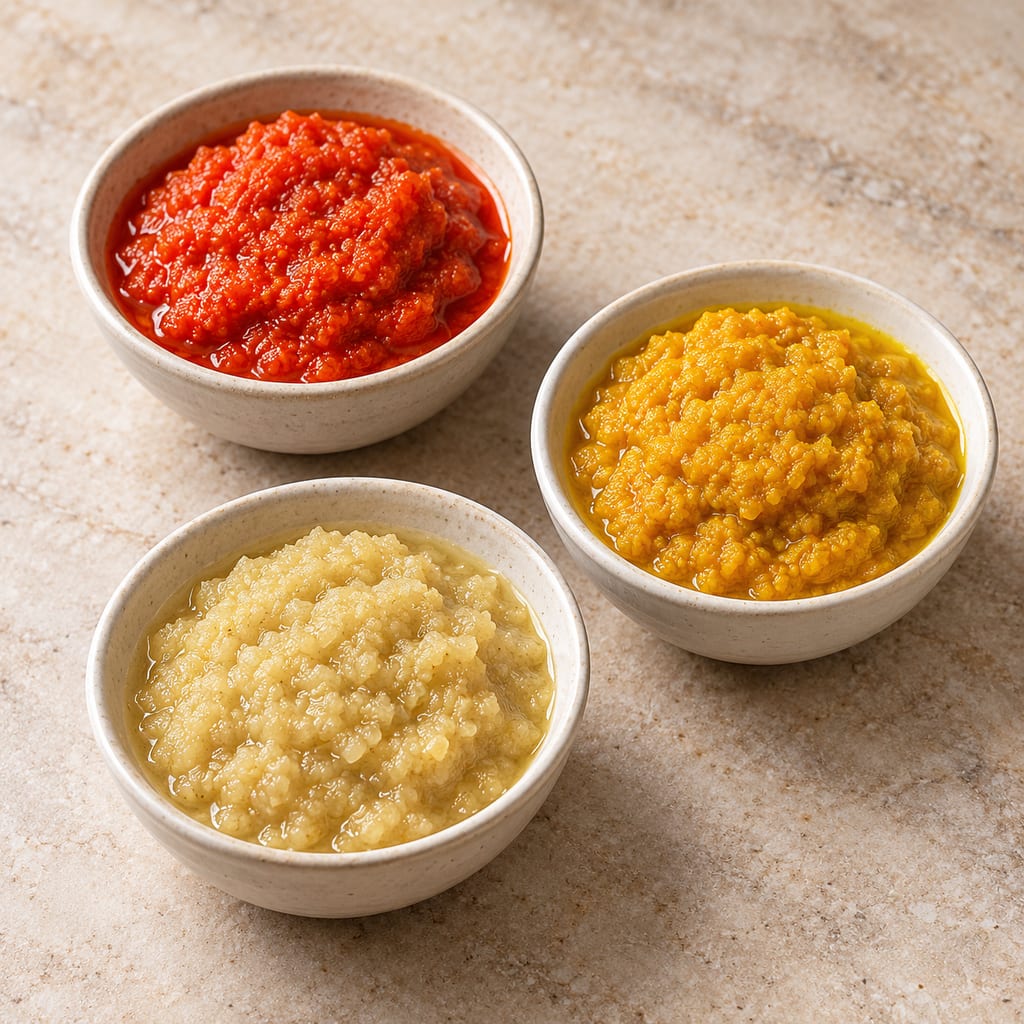
Bumbu dasar are the ground spice bases of Indonesian cooking: a white paste of shallot, garlic and salt, with chile added for red and turmeric for yellow, cooked into dishes.
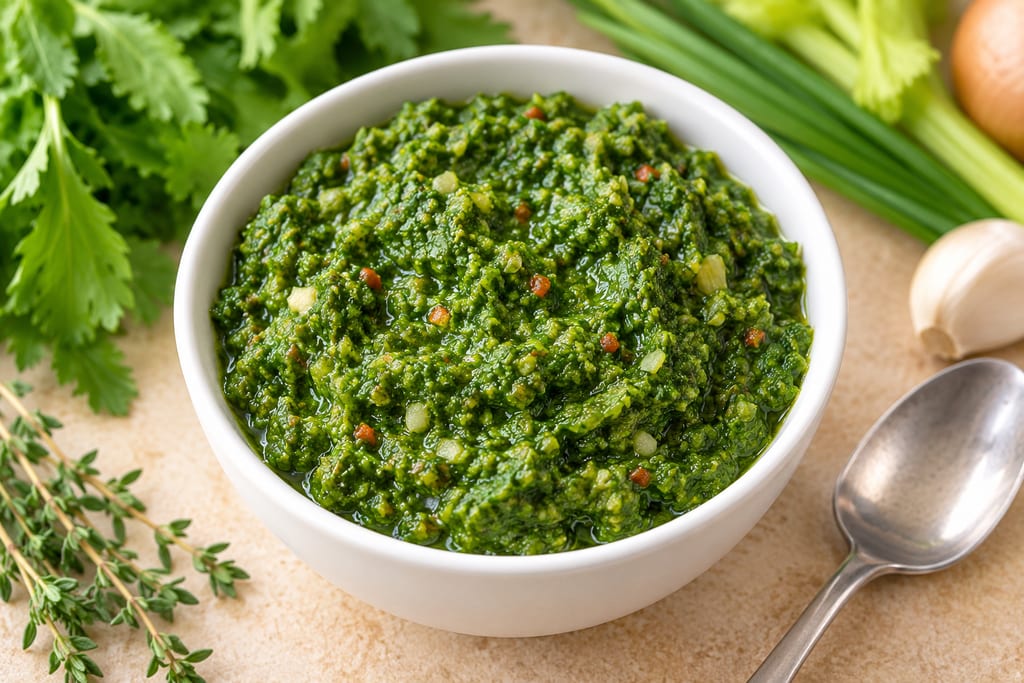
A fresh herb and aromatic paste of chadon beni (culantro), thyme, chives, celery, onion, garlic and peppers, blended with vinegar and water and used as the base for Trinidadian cooking.
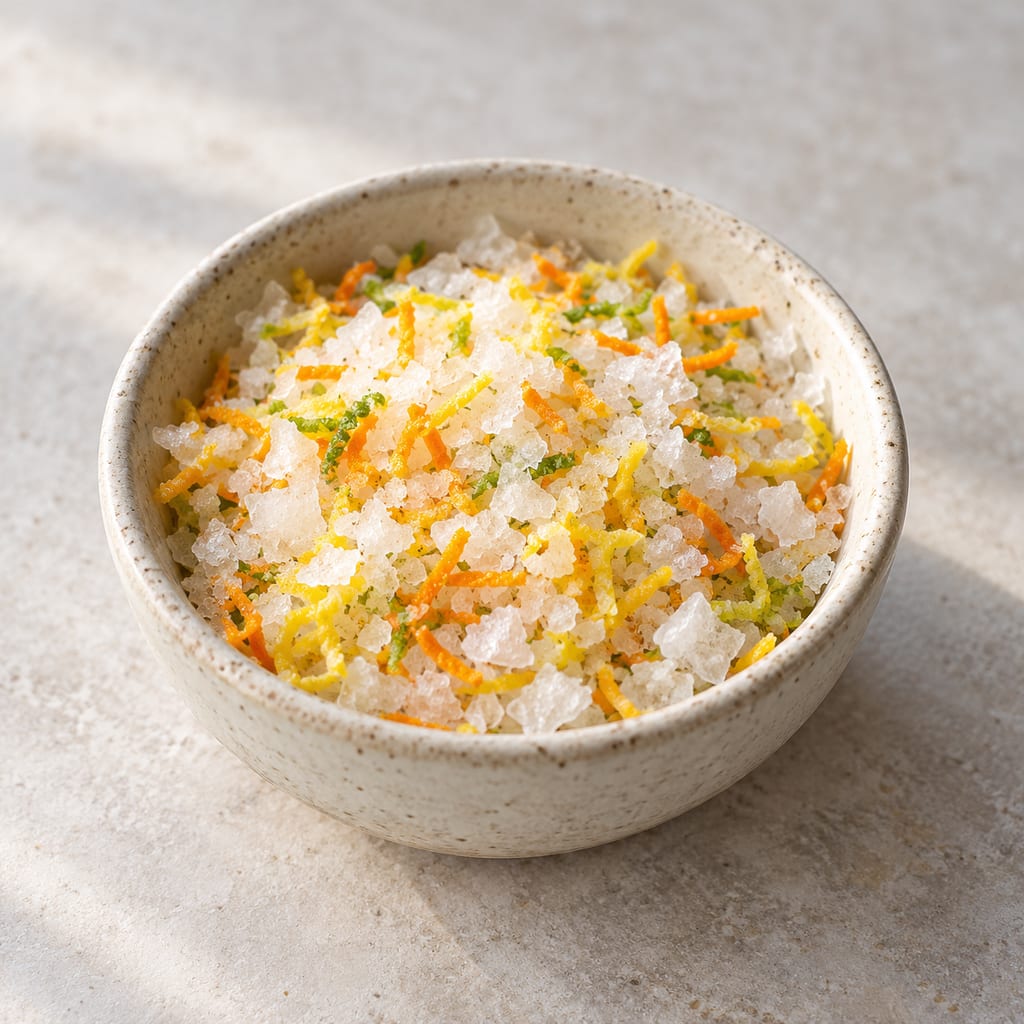
Citrus zest is rubbed into coarse or flake salt and dried on a tray. This peel-based seasoning preserves the chosen citrus aroma without adding juice.
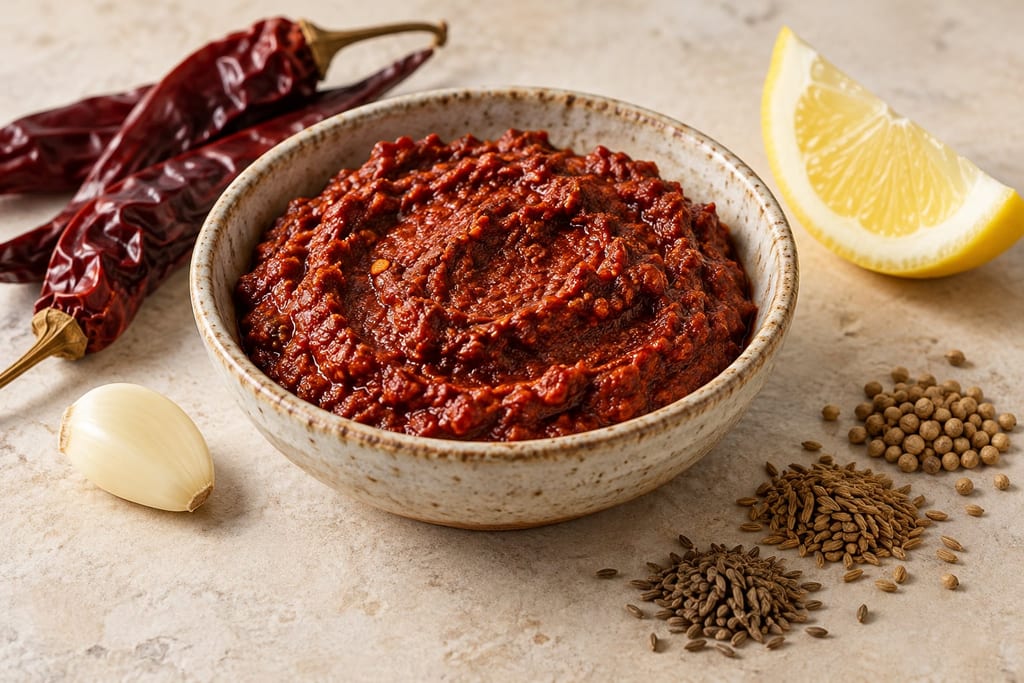
A fresh chilli paste made from rehydrated dried red peppers, garlic, olive oil, lemon and warm spices; this small-batch formula adapts the harissa family rather than reproducing a tested Tunisian method.
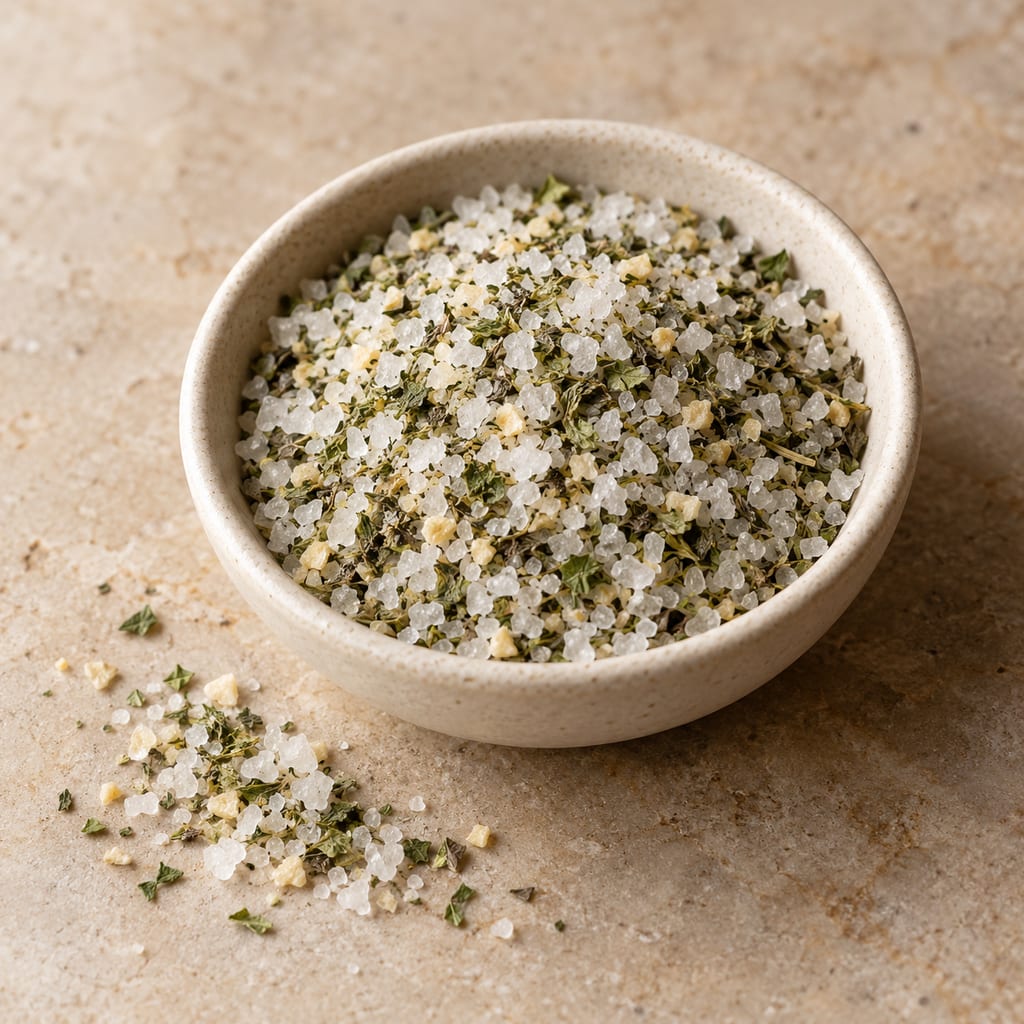
Fresh garlic and pungent herbs are chopped with kosher salt, then dried in the warmth of a switched-off oven. The blend keeps the selected herbs together in one seasoning.
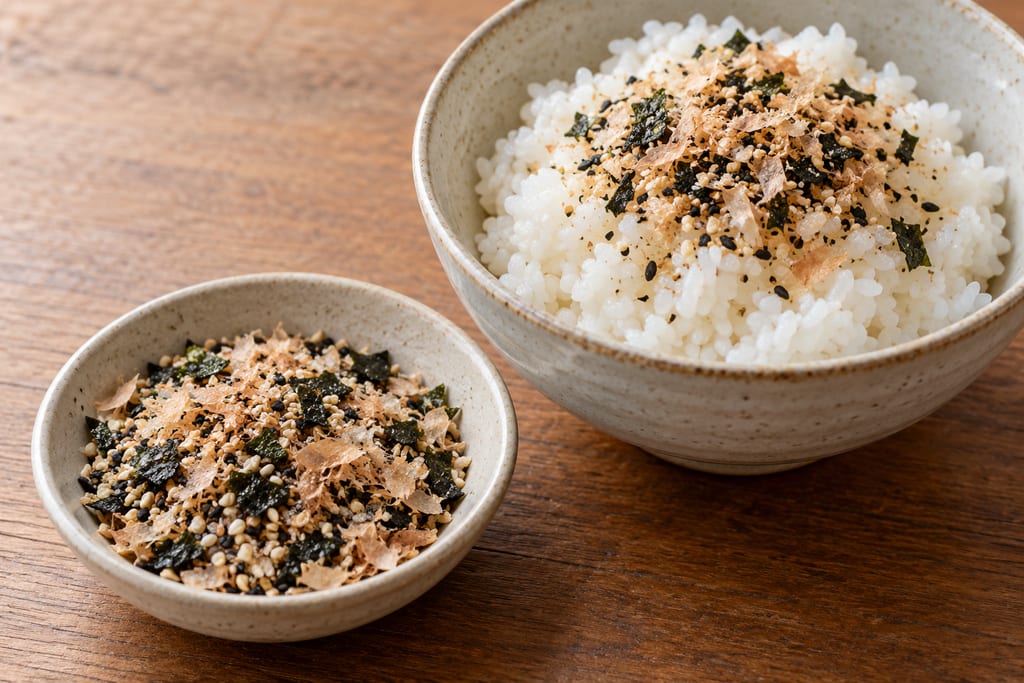
A dry Japanese rice seasoning of sesame, bonito, nori, sugar and salt. This documented home blend is one specific formula within a varied category with several early product histories.
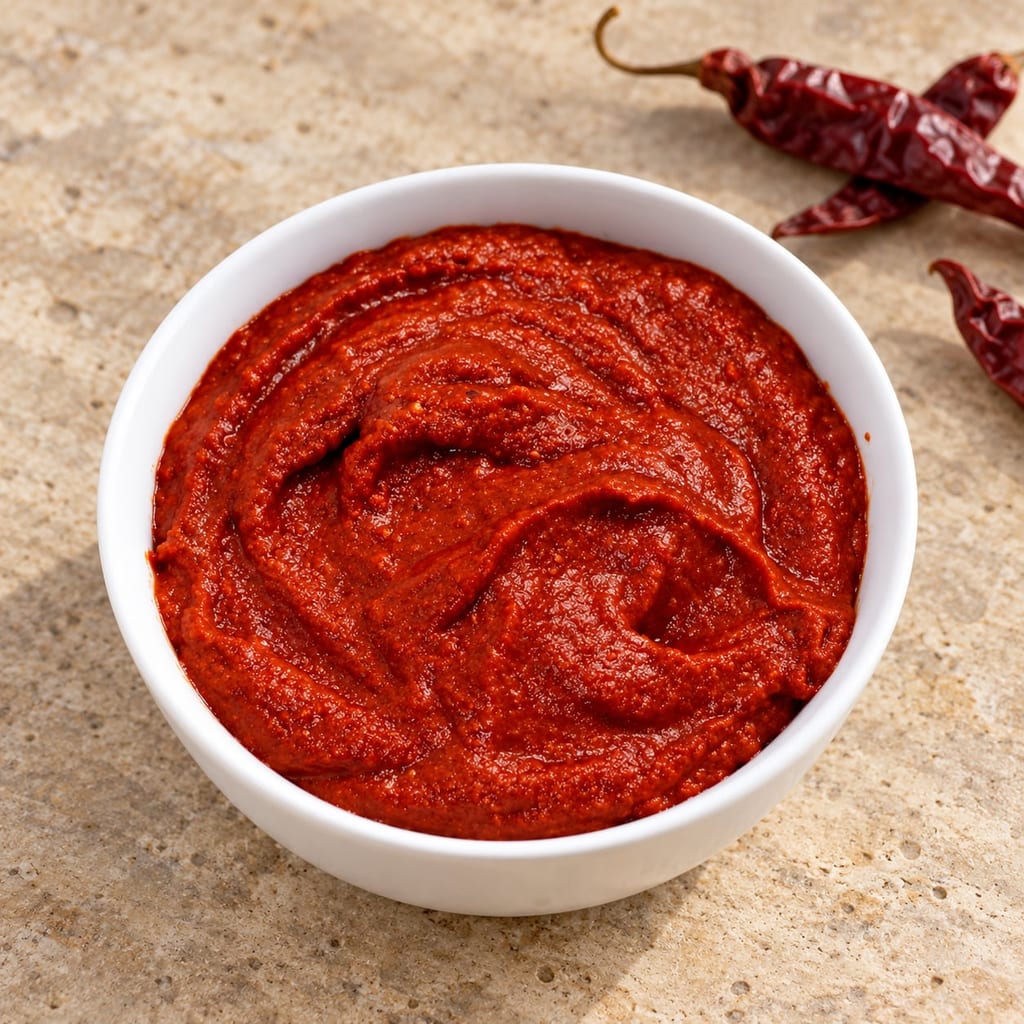
Recheado is a red Goan spice paste of Kashmiri chillies, garlic and spices ground in vinegar, best known as the stuffing for fried fish such as mackerel.
No community contributions have been published for this entry yet.
Sign in to contribute. Published comments and photos are free to read.
Eating for your HealthInspiration · Method
Gomasio4 tablespoons whole sesame seeds and 3/4 teaspoon sea salt; roasting and suribachi method; approximate stages; refrigerated storage for one or two weeks.
Cited in: The seasoning and its use; Equipment and preparation; What the process changes
Ministry of Agriculture, Forestry and Fisheries, JapanContext
Sekihan (Red rice)Use of sesame salt with sekihan and documented regional and household variation.
Cited in: The seasoning and its use
Tanaka FoodsContext
Gomashio (Sesame and Salt Rice seasoning)Commercial ingredient variation and uses with warm rice, rice balls and bento.
Cited in: The seasoning and its use
U.S. Food and Drug AdministrationContext
Food AllergiesSesame is a major food allergen in U.S. federal labelling rules.
Cited in: The seasoning and its use