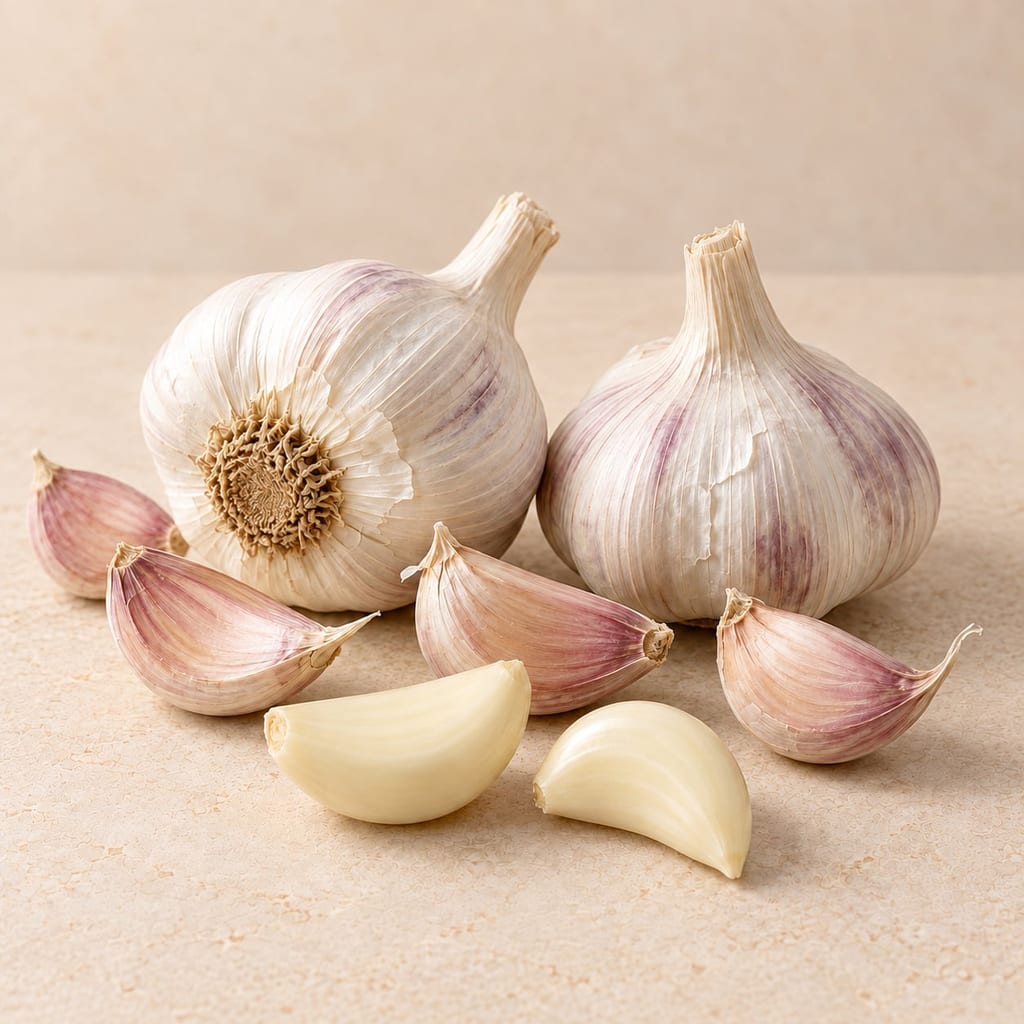
Garlic cloves
Garlic cloves are the separate bulblets of Allium sativum, pungent only once cut. They flavour herb salts, ferments such as Thai som-fak, and countless cooked dishes.
 FermenteaWhere food goes to change
Modern method
herb salt · garlic herb salt
Fresh garlic and pungent herbs are chopped with kosher salt, then dried in the warmth of a switched-off oven. The blend keeps the selected herbs together in one seasoning.
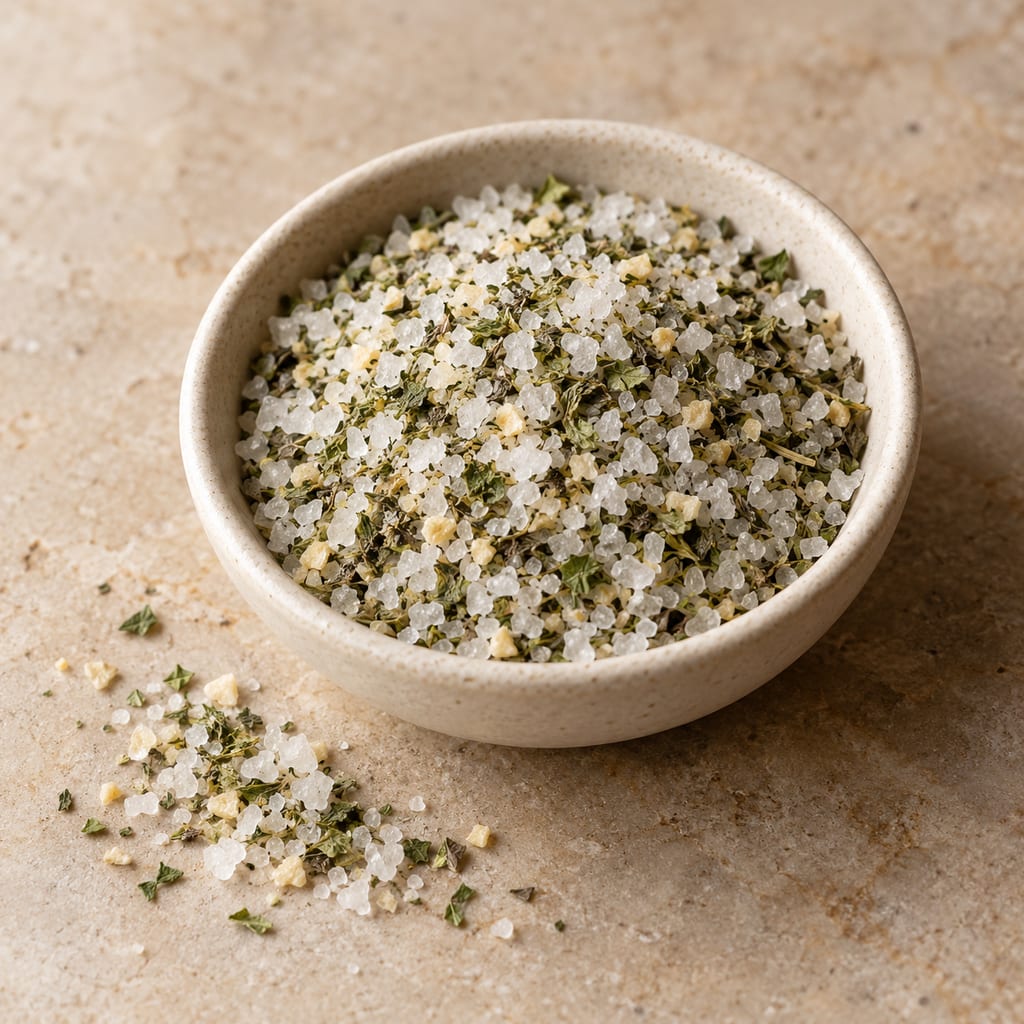
The handout supports this as a culinary herb seasoning, but supplies no specific dish. It lists pungent fresh herbs and identifies sage, rosemary, thyme, savory and basil, with lavender only in small amounts. Keep the selected herbs in any eventual ingredient list; “herbs” alone is not reproducible. **Mechanism and evidence limits:** Chopping distributes fresh plant material through salt; the residual oven warmth dries the mixture. No fermentation occurs. Because fresh garlic and herbs are involved, the handout’s clean, dry jar instruction does not establish a validated shelf life, storage temperature or microbiological safety. Do not use smell, taste or appearance as a safety test. **Sources:** [UC ANR, “Fragrant Herb Salt”](https://ucanr.edu/sites/default/files/2020-09/335100.pdf) (quantities, yield, sequence and jar instruction).
Knife, cutting board, baking sheet, oven, clean dry jars. **Method:** On the cutting board, halve each garlic clove lengthwise and remove any central sprout. Finely chop the garlic with the salt. Coarsely chop the herbs separately, then chop them into the garlic mixture until it resembles coarse sand. Spread on a baking sheet. Heat the oven to 200°F (93°C), switch it off, place the sheet inside and leave the oven door closed overnight. Transfer to clean, dry jars. The source gives no storage duration or storage temperature; do not add one. **Difficulty (1–5):** temperature 1; monitoring 2; equipment 2; timing 3; scaling 3; **overall 3**. The source provides no measured drying endpoint, and its overnight schedule and small-batch directions limit process certainty at larger scale. **Food and use:** The handout supports this as a culinary herb seasoning, but supplies no specific dish. It lists pungent fresh herbs and identifies sage, rosemary, thyme, savory and basil, with lavender only in small amounts. Keep the selected herbs in any eventual ingredient list; “herbs” alone is not reproducible. **Mechanism and evidence limits:** Chopping distributes fresh plant material through salt; the residual oven warmth dries the mixture. No fermentation occurs. Because fresh garlic and herbs are involved, the handout’s clean, dry jar instruction does not establish a validated shelf life, storage temperature or microbiological safety. Do not use smell, taste or appearance as a safety test. **Sources:** [UC ANR, “Fragrant Herb Salt”](https://ucanr.edu/sites/default/files/2020-09/335100.pdf) (quantities, yield, sequence and jar instruction).
Chopping distributes fresh plant material through salt; the residual oven warmth dries the mixture. No fermentation occurs. Because fresh garlic and herbs are involved, the handout’s clean, dry jar instruction does not establish a validated shelf life, storage temperature or microbiological safety. Do not use smell, taste or appearance as a safety test. **Sources:** [UC ANR, “Fragrant Herb Salt”](https://ucanr.edu/sites/default/files/2020-09/335100.pdf) (quantities, yield, sequence and jar instruction).
The institutional handout documents this garlic-and-herb formula without assigning an origin, historical period or customary serving dish.
Yield 0.75 cup · Scaling: source batch only
The inspected method does not establish a traditional place of origin; a publisher address is not an origin.
Garlic cloves are the separate bulblets of Allium sativum, pungent only once cut. They flavour herb salts, ferments such as Thai som-fak, and countless cooked dishes.
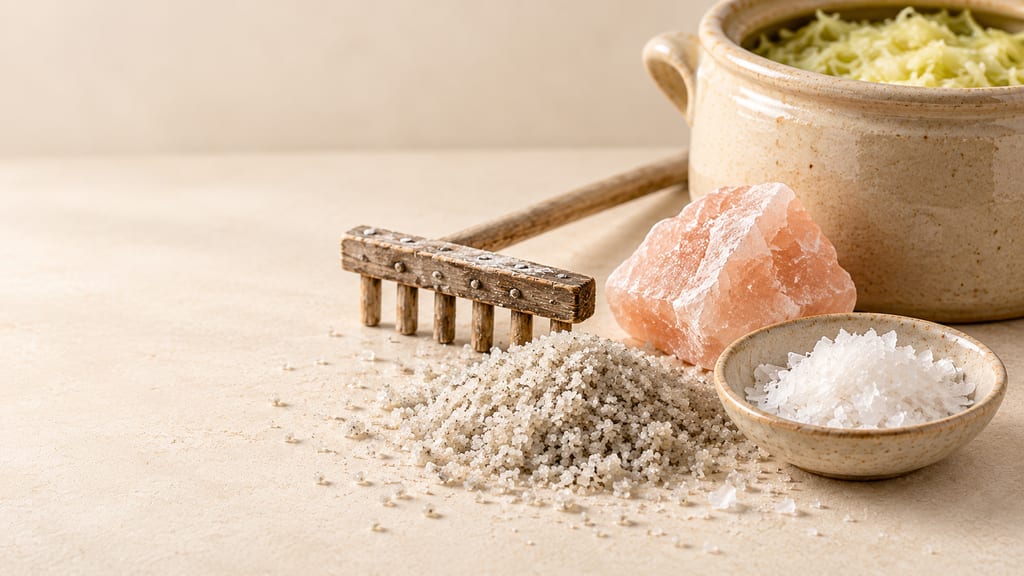
Salt seasons a meal, shapes fermentation and preserves food. Its history follows the people who mine, harvest, trade and transform it, and the choices hidden inside an ordinary packet.
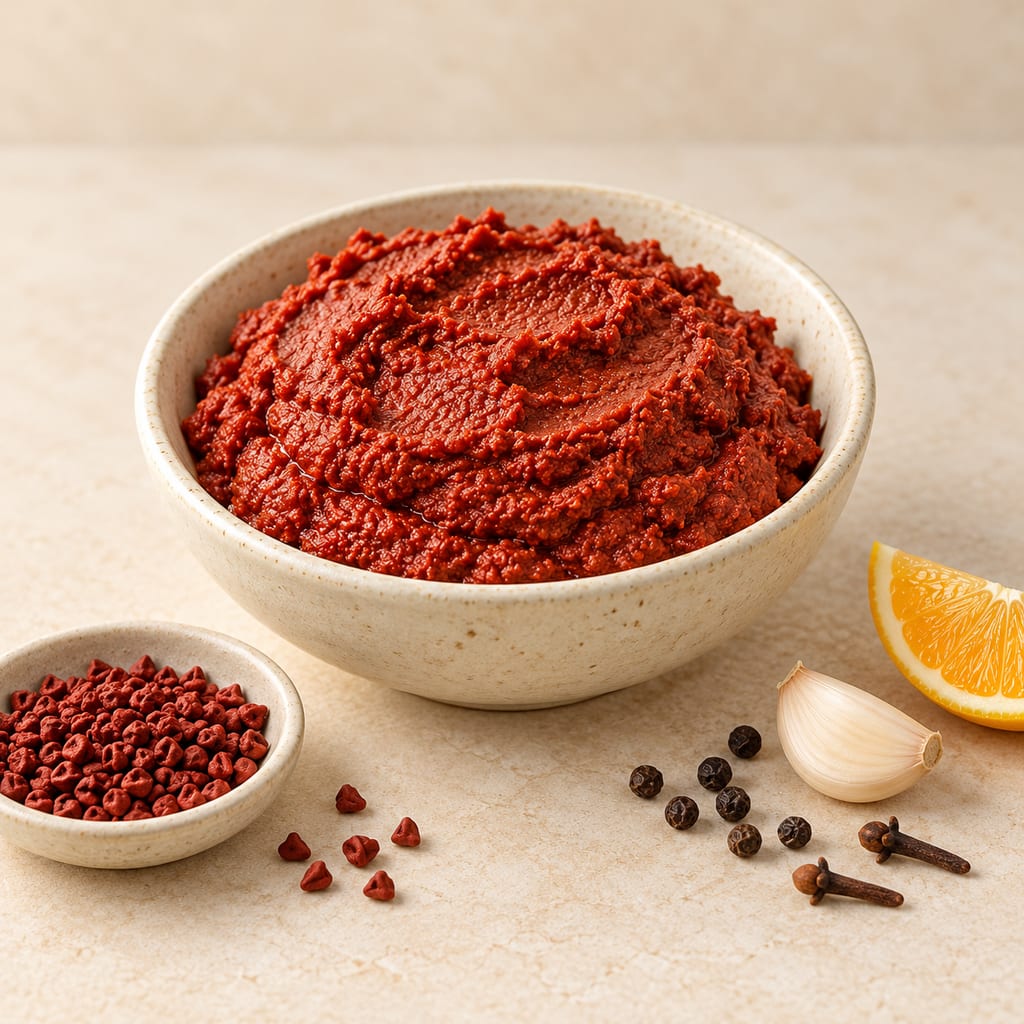
A Yucatecan recado rojo is a brick-red seasoning paste built on annatto seed, garlic and sour orange. This measured home version shows one route into a much wider family of market and household recados.
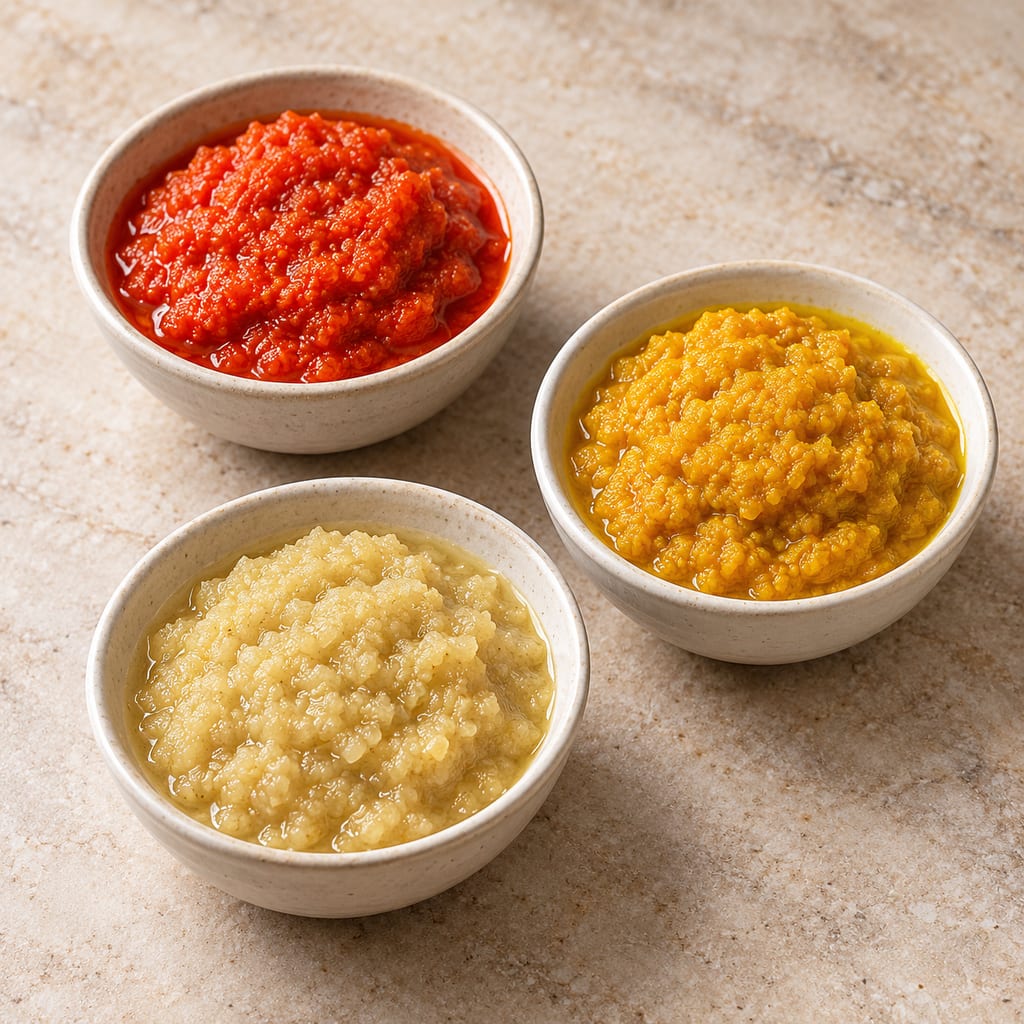
Bumbu dasar are the ground spice bases of Indonesian cooking: a white paste of shallot, garlic and salt, with chile added for red and turmeric for yellow, cooked into dishes.
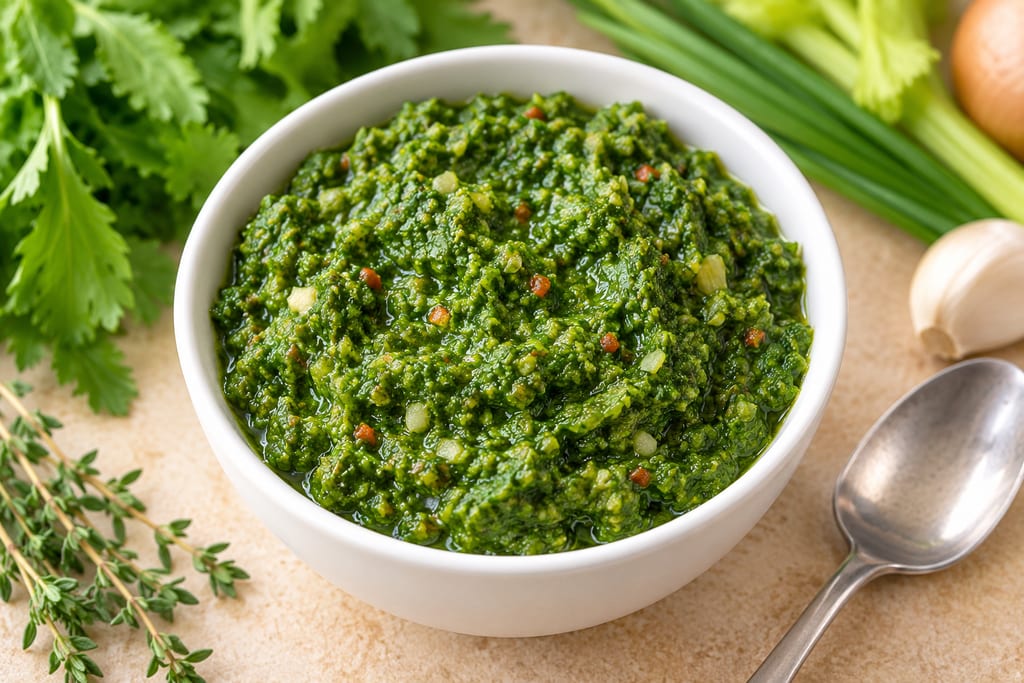
A fresh herb and aromatic paste of chadon beni (culantro), thyme, chives, celery, onion, garlic and peppers, blended with vinegar and water and used as the base for Trinidadian cooking.
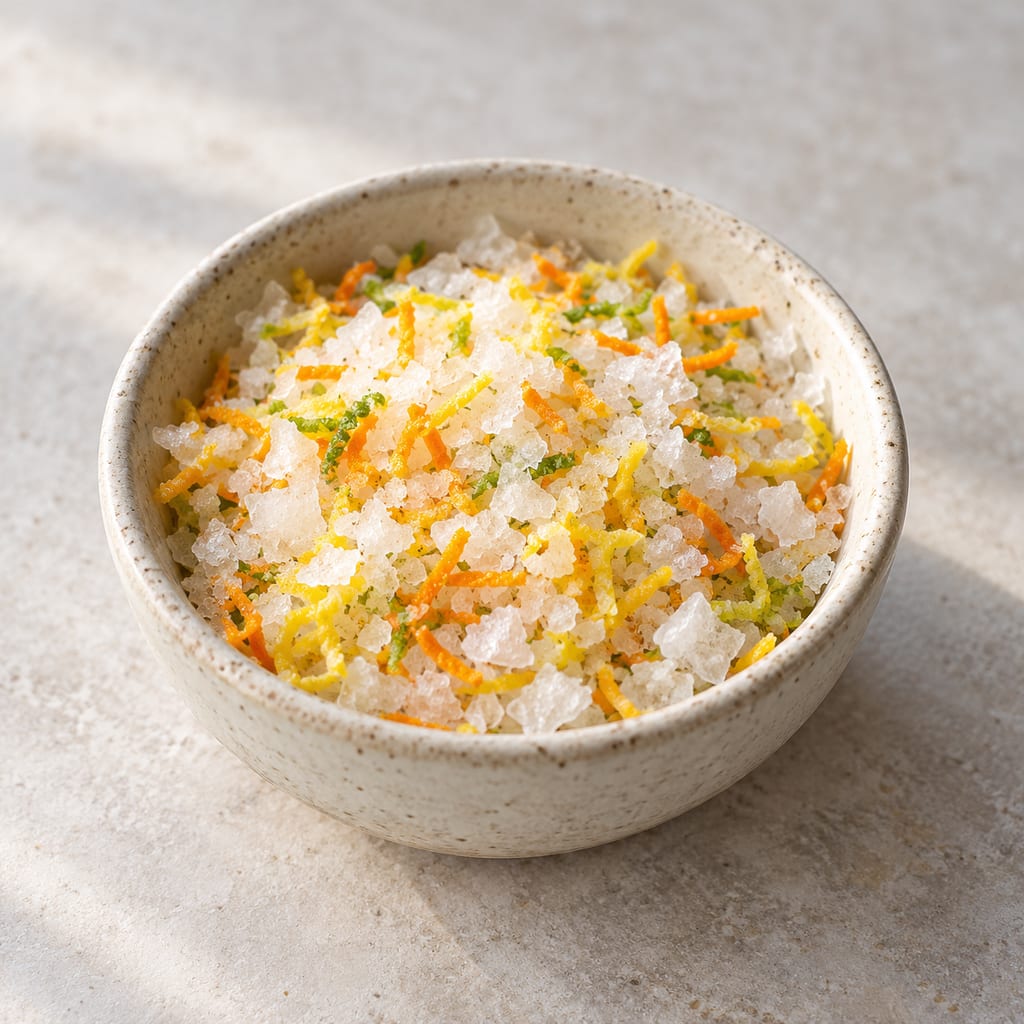
Citrus zest is rubbed into coarse or flake salt and dried on a tray. This peel-based seasoning preserves the chosen citrus aroma without adding juice.
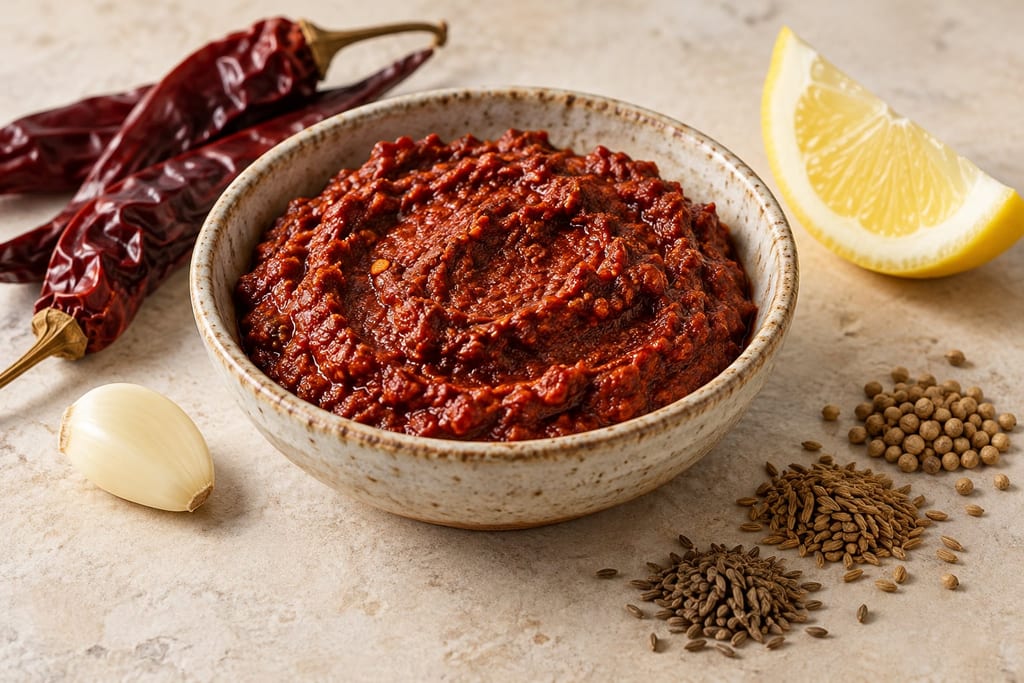
A fresh chilli paste made from rehydrated dried red peppers, garlic, olive oil, lemon and warm spices; this small-batch formula adapts the harissa family rather than reproducing a tested Tunisian method.
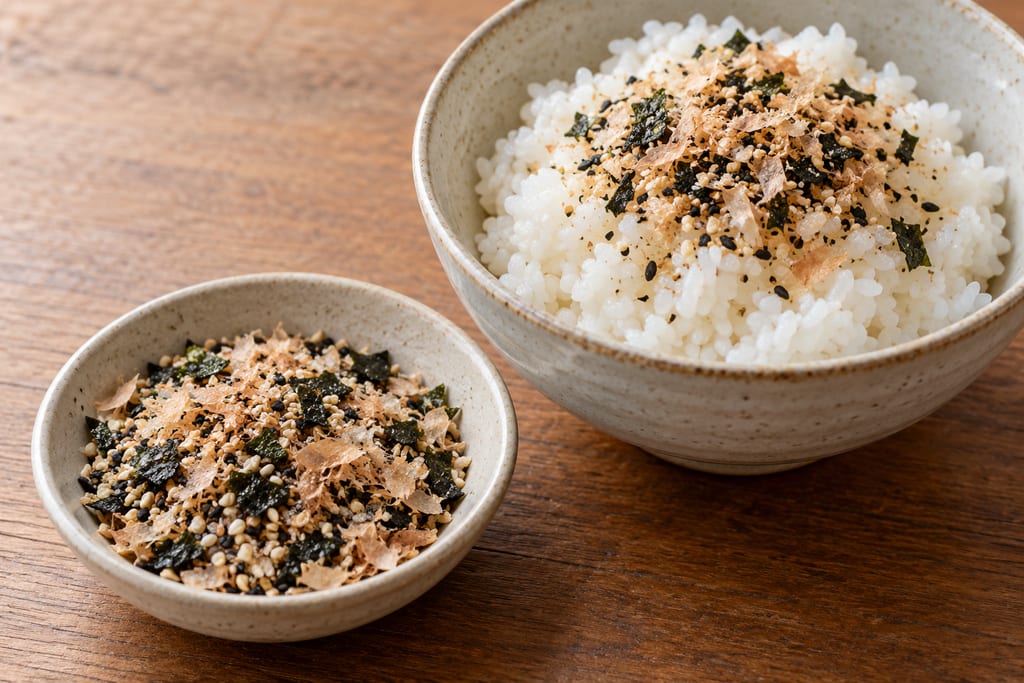
A dry Japanese rice seasoning of sesame, bonito, nori, sugar and salt. This documented home blend is one specific formula within a varied category with several early product histories.
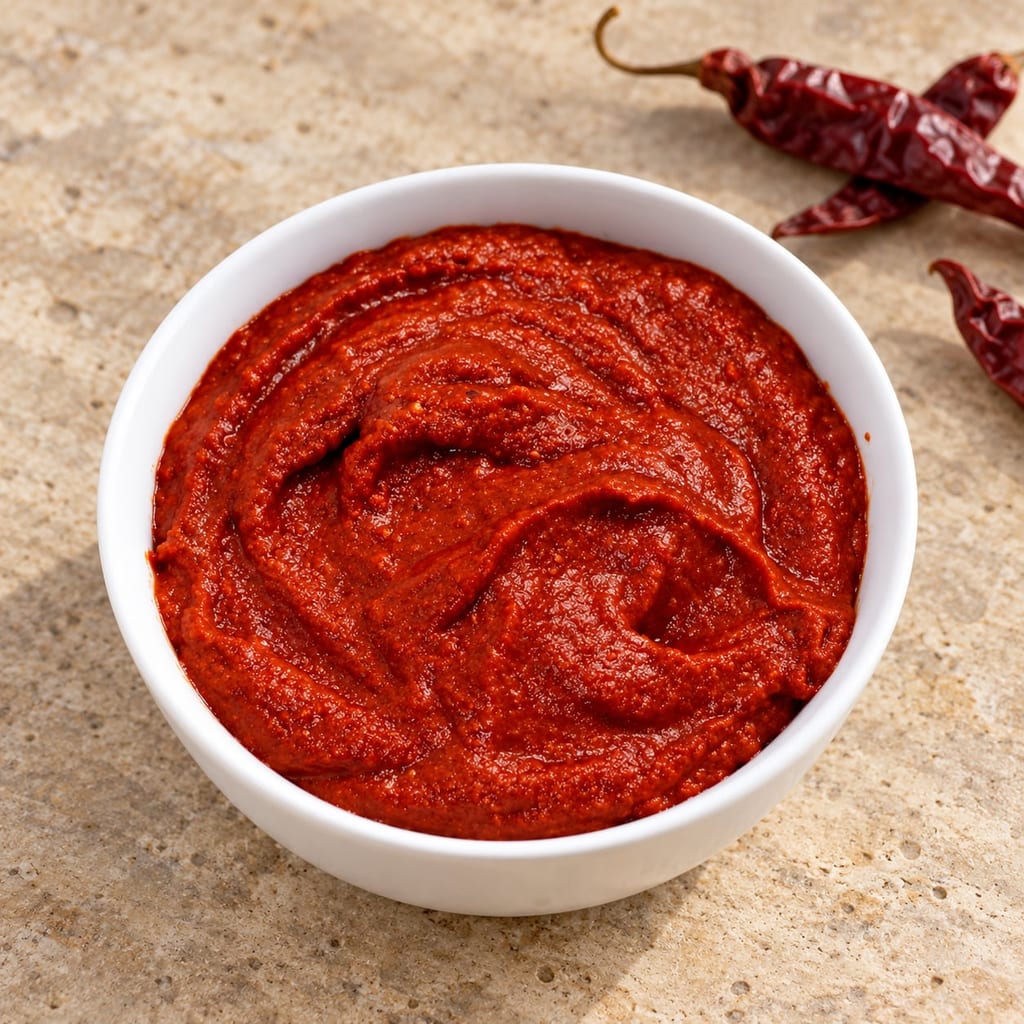
Recheado is a red Goan spice paste of Kashmiri chillies, garlic and spices ground in vinegar, best known as the stuffing for fried fish such as mackerel.
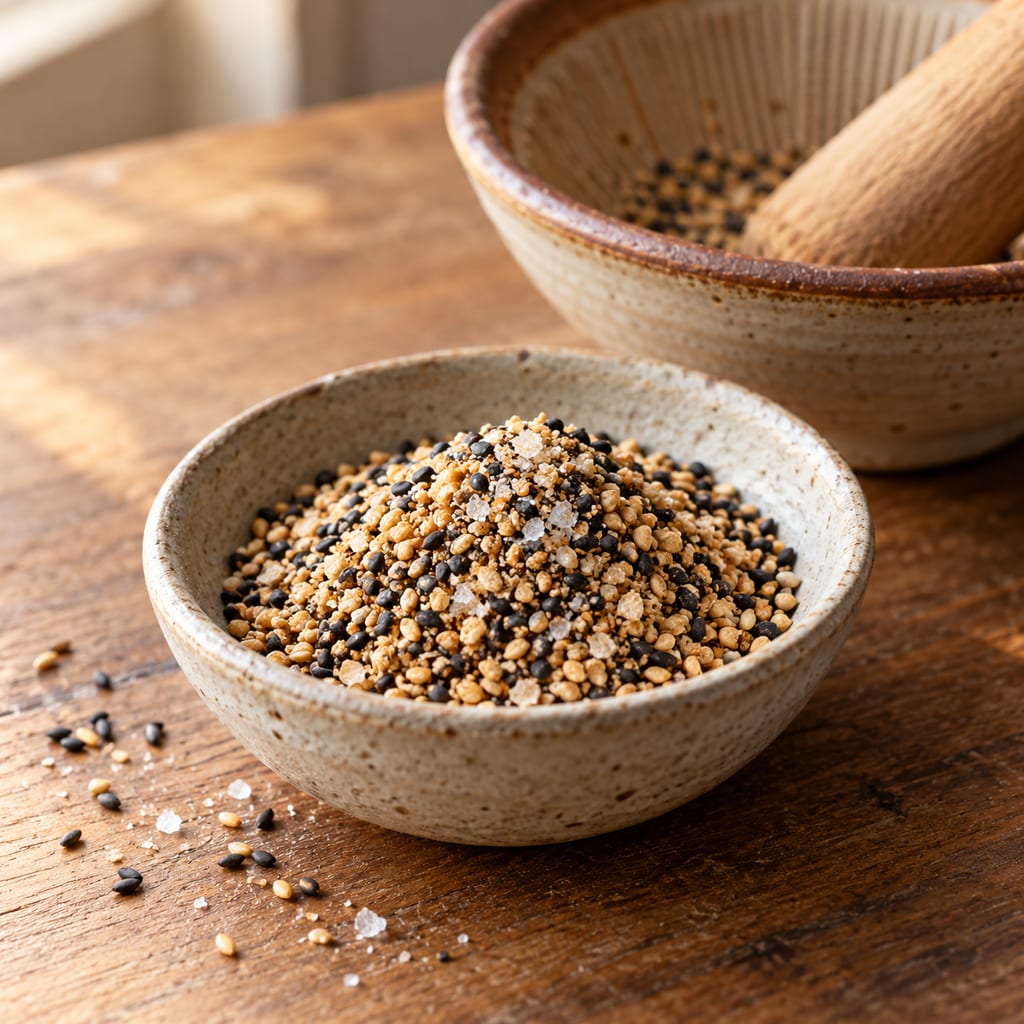
Toasted sesame seeds and sea salt are ground together into a coarse seasoning for rice. This small pan-roasted batch keeps most of the seed texture.
No community contributions have been published for this entry yet.
Sign in to contribute. Published comments and photos are free to read.
UC Master Food Preserver Program, UC Agriculture and Natural ResourcesInspiration · Method
Fragrant Herb Salt4–5 garlic cloves, scant 1/2 cup kosher salt, about 2 cups fresh herbs, 3/4-cup yield, chopping and 200°F then off overnight drying method, clean dry jars.
Cited in: The seasoning and its use; Equipment and preparation; What the process changes