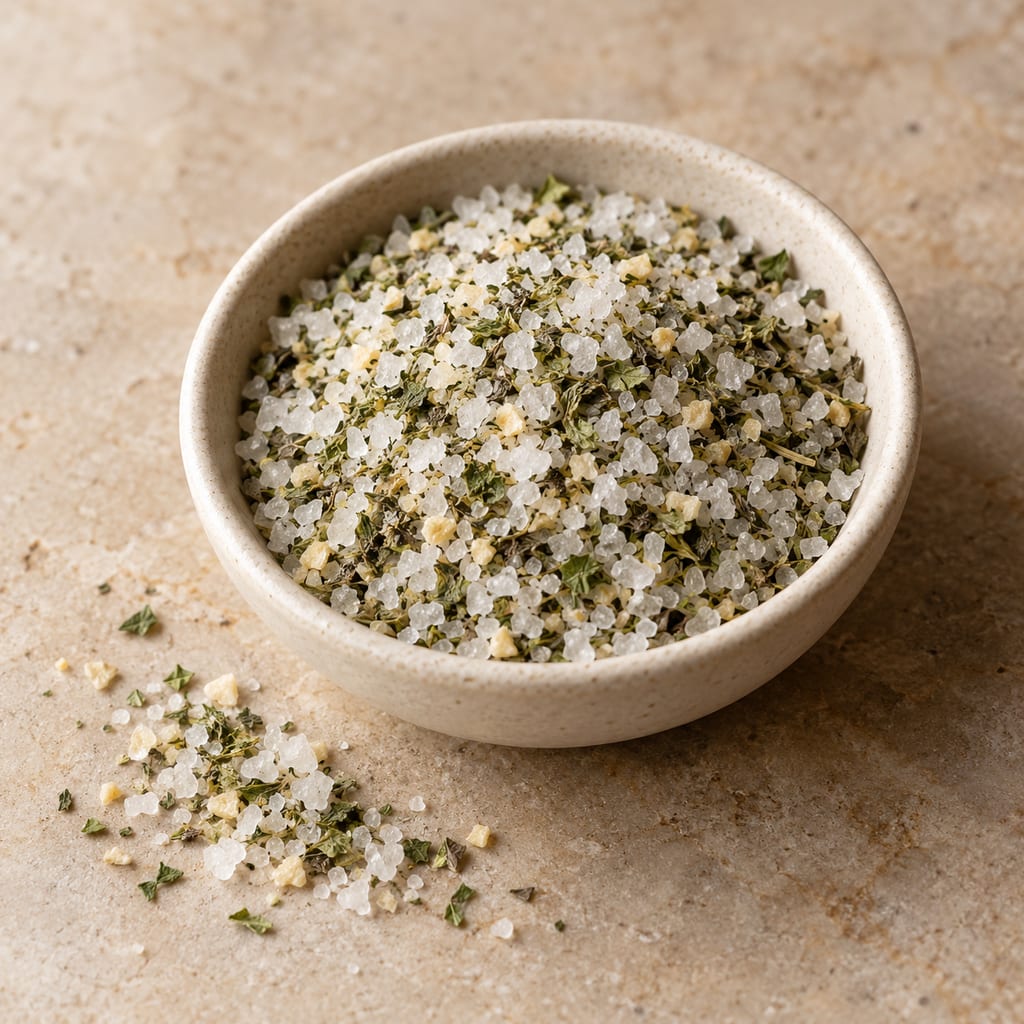
Fragrant herb salt
Fresh garlic and pungent herbs are chopped with kosher salt, then dried in the warmth of a switched-off oven. The blend keeps the selected herbs together in one seasoning.
 FermenteaWhere food goes to change
Spices and aromatics
Garlic cloves are the separate bulblets of Allium sativum, pungent only once cut. They flavour herb salts, ferments such as Thai som-fak, and countless cooked dishes.
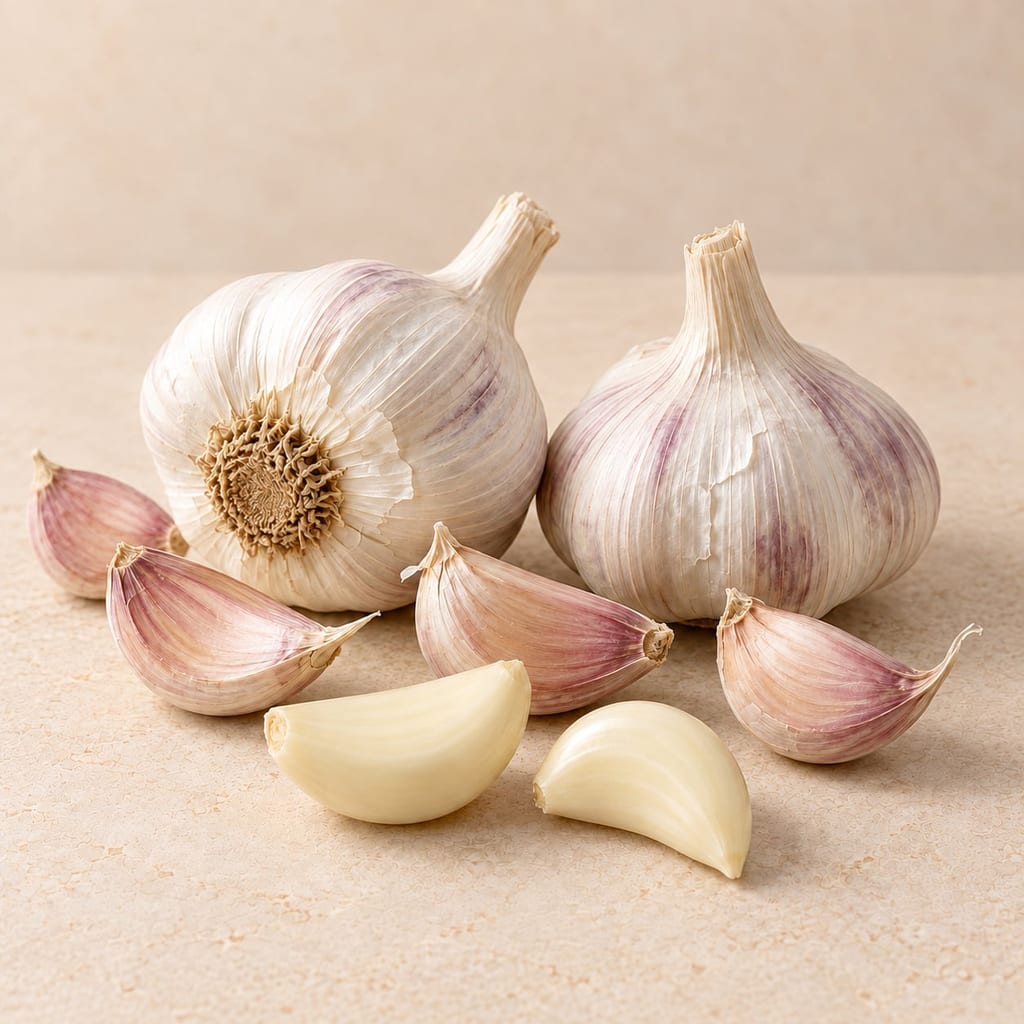
Garlic is Allium sativum, a bulbous plant of the amaryllis family, Amaryllidaceae, which also holds onions, leeks and shallots. A head, or bulb, is made of 4 to 20 pungent bulblets called cloves, each wrapped in its own papery skin, with further dry layers around the whole cluster. The clove is the part cooks use and the part gardeners plant.
Two main types are grown. Softneck garlic, Allium sativum var. sativum, has numerous smaller cloves and is the type most commercial crops use. Hardneck garlic, var. ophioscorodon, sends up a green flowering stalk called a scape in spring and has fewer, larger cloves. University extension lists Rocambole, Purple Stripe and Porcelain among hardnecks and Artichoke and Silverskin among softnecks. Elephant garlic, which has very large, mild cloves, is not true garlic but a close relative of the leek.
Garlic has old and well-attested names. It is česnek in Czech, lahsun (लहसुन) in Hindi, from Sanskrit laśuna; ṯūm (ثوم) in Arabic; skórdo (σκόρδο) in Greek; maneul (마늘) in Korean; and dàsuàn (大蒜) in Chinese. The Latin allium names the whole genus.
Garlic's native range, as Kew records it, runs from Central Asia to north-eastern Iran. The wild ancestor and the place of domestication remain unsettled in the sources read. The archaeological record is spotty. Garlic finds at Late Bronze Age Akrotiri on the Aegean island of Thera have been reassessed, and an archaeological review argues that the vegetable's importance is best documented in historical periods, especially Roman times, when its use spread across Europe and beyond, while the finds from prehistory show how it was regarded, how it may have been used and how its status changed.
A famous ancient mention is a report in Herodotus. Describing the Great Pyramid, he says that an inscription in Egyptian characters recorded the sum spent on radishes, onions and garlic, and that the interpreter read it to him as 1,600 talents of silver. It is a fifth-century BCE report of an inscription, not an archaeobotanical find, and it says nothing about where garlic was first grown.
Garlic is grown from cloves. A grower splits a head and plants the cloves in autumn, so that roots establish before winter and the plant resumes growth in spring as the days lengthen. California supplies over 90 percent of the garlic grown commercially in the United States, mainly in two varieties: California Early, white-skinned and planted in November for harvest in June, and California Late, light purple, planted in December for harvest in July and August.
The crop is ready when the bottom leaves on the stalk have turned brown while the upper ones are still green. The grower lifts the bulbs with a garden tool instead of pulling them by the stem and then cures them, which means drying them in a ventilated place sheltered from sun and rain, spread on racks or hung in bunches of about ten plants. The outer skins become papery after two to three weeks, depending on the temperature and the humidity. Curing prevents rot in storage; it is a drying step and not a fermentation. Hardneck types also give a second harvest in the scape: removing the flower stalks lets larger bulbs develop, and scapes cut before they straighten are tender enough to cook.
University of Illinois Extension adds the details that decide a good crop. Garlic needs a cold period to form a proper bulb, so it is planted in autumn, usually one to two weeks after the first killing frost, at a depth of two to three inches; larger cloves generally make larger bulbs. Supermarket garlic is often from varieties adapted to milder climates, so seed garlic from a grower suited to the region is a better choice. The roots are shallow and sensitive to dry soil, and the critical moment for water is bulbing in May and June; watering stops about two weeks before harvest. Harvest comes when the lower leaves begin to brown, with half or slightly more than half the leaves still green. Harvest too early and the bulbs are small and store poorly; too late and the cloves pop out of their skins. Illinois cures garlic for three to four weeks in a dry, airy place, then trims the tops to about an inch, and gives softneck garlic six to eight months of storage against three to four for hardneck, a shorter figure than the commercial storage times quoted below.
Garlic's pungency forms when the cells are broken and the enzyme alliinase meets alliin, a sulphur-containing compound stored separately in the clove. The enzyme converts alliin to allicin, the compound mainly responsible for garlic's distinct flavour. Allicin is unstable and quickly breaks into other compounds, so the flavour is most intense soon after cutting or chopping. Cooking destroys the enzyme, which is why roasted garlic is sweet instead of pungent.
The practical consequence is that timing and the cut matter: the flavour peaks soon after chopping and fades as allicin breaks down. In a herb salt, halved cloves with any green sprout in the middle removed are minced together with salt, so the garlic ends up spread through the seasoning as an aromatic and not as pieces.
Roasting turns garlic sweet. Leave the head whole, cut off the tip to expose the cloves, sprinkle with olive oil or pat with butter, season, cover and bake at 180 °C (350 °F) for about 45 minutes to an hour, until the cloves are very soft and squeeze easily from their skins. In recipes that call for a medium clove, 1/8 teaspoon of garlic powder or 1/4 teaspoon of dried garlic stands in for it.
Garlic can also change colour. Its anthocyanins, water-soluble pigments, can turn blue or purple in acidic surroundings such as vinegar or a pickling brine, and the garlic is still safe to eat. The change is variable, is more likely with immature garlic and can differ among the cloves of a single head; curing home-grown garlic at room temperature for a couple of weeks before use reduces the risk. This blue colour is a separate matter from the green pigment that appeared in the unblanched garlic of the fermentation experiment described below.
In a few ferments, garlic is not only a flavouring but the source of food for the microbes. Som-fak is a Thai fermented fish made from fish, salt, rice, sucrose and garlic. In a study of it, the mixture reached pH 4.5 within two days, and batches made without garlic did not acidify at all. Lactic acid bacteria dominated, and about one third of the 234 strains isolated could ferment both garlic and inulin, a fructan that is garlic's reserve carbohydrate; they were identified as Lactobacillus pentosus and Lactobacillus plantarum. The conclusion of the work is that garlic was essential for acidifying som-fak and that fructans from garlic fed the bacteria.
The behaviour of raw garlic is a different matter, as a Spanish study of garlic fermented with a Lactobacillus plantarum starter shows. Peeled garlic that was first blanched in 90 °C water for 15 minutes fermented well: the starter grew, produced mainly lactic acid and brought the pH down to 3.8 after seven days. In unblanched garlic the starter's growth was inhibited, and the garlic developed ethanol, fructose released by its own enzymes and a green pigment, none of which appeared in the blanched batch. The fermented blanched garlic stayed microbiologically stable at 30 °C in acidified brine of about 3 percent salt and pH 3.5, but its fructans had been broken down. The green pigment appeared only in the unblanched garlic. The experiment is laboratory work, not a household instruction.
Choose clean, firm bulbs with tight, unbroken skins and no sign of mould or sprouting, and pick up bulbs that feel heavy for their size, since light ones may have shrivelled or decayed cloves. Purple, purple-striped or reddish skins are natural to some varieties, which often have a rich, robust flavour. Softneck garlic stores longer than hardneck: up to nine months in commercial storage near 0 °C, or one to two months at ambient temperatures between 20 and 30 °C, against up to six months for hardneck. At home the best place is a cool, dry, well-ventilated spot in mesh bags, where it keeps three to five months at about 16 °C. The refrigerator is a poor place for whole bulbs because the 4 °C of a household fridge stimulates sprouting. Shrivelling and sprouting are harmless and only show that the garlic is past its best; a sprouted clove can be cut in half and the centre green sprout discarded.
Garlic is a low-acid vegetable, and preserving it calls for care. University of California guidance does not recommend home canning, because garlic needs pressure canning and loses most of its flavour when heated that way, so no adequate processing times have been established. Peeled cloves can be kept submerged in undiluted wine or vinegar in the refrigerator, where the acid, below pH 4.6, prevents Clostridium botulinum from growing; the mixture keeps about four months. Garlic can also be dried in a dehydrator at 60 °C for two hours and then at 55 °C for another four to six hours until the halved cloves are brittle, and ground with salt, four parts salt to one of garlic powder, into garlic salt.
Garlic in oil is a special hazard, and the history shows why: at least four outbreaks of botulism linked to garlic-in-oil mixtures were reported in North America in the late 1980s and 1990s, among them outbreaks in California in 1991 and Florida in 1999 that came from garlic in oil prepared at home. Commercial garlic-in-oil products must contain citric or phosphoric acid and are made to strict guidelines. The National Center for Home Food Preservation found that mixtures of garlic in oil stored at room temperature are at risk of botulism. Fresh garlic in oil should be refrigerated at 40 °F (4 °C) or below for no more than four days, or frozen for storage of up to several months, and never left at room temperature. The reason is the combination of low-acid garlic, the exclusion of air by the oil and warmth, which together can support Clostridium botulinum.
Two routes to garlic-flavoured oil are documented. Fully dried garlic, brittle enough to snap, can flavour oil as long as it has not been rehydrated and no moisture is added. Chopped garlic can be acidified, according to University of Idaho research from 2014 that the University of California guide cites: pieces no larger than 6 millimetres, held for 24 hours at room temperature in 3 percent citric acid at one part garlic to three parts solution by weight, then drained and added to oil at about one part garlic to ten of oil. Oil made this way can be stored at room temperature, though it keeps its quality better cold. Whole cloves cannot be handled this way at home: a clove covered in vinegar takes from 3 days to more than a week to acidify, so there is no home guideline for it, and lemon juice and vinegar were not tested as substitutes for citric acid.
Garlic can cause food allergy, though Allergy UK describes allergy to garlic and the other alliums as rare. Food allergy is an immune reaction and differs from intolerance, and neither the long culinary use of garlic nor the small amount in a seasoning establishes that it is suitable for someone with a diagnosed allergy. Handling cut garlic can also cause contact dermatitis, with fingertip reactions associated with holding cloves during preparation, and garlic applied to the skin as a poultice can burn it.
The wild ancestor and domestication place of garlic, the date of its first use as food, and the reasons garlic worked in som-fak but not in unblanched garlic with a starter all remain open in the sources read. Production statistics are not given here.
garlic
Native range of the species as recorded by Kew; not a domestication site.
Archaeological garlic finds; not a claim of origin.
Som-fak, a fermented fish acidified by garlic-fermenting bacteria.
California grows over 90 percent of US commercial garlic; California Early and California Late are the main varieties.
Fresh garlic and pungent herbs are chopped with kosher salt, then dried in the warmth of a switched-off oven. The blend keeps the selected herbs together in one seasoning.

Ripe avocado flesh is the soft, buttery, fat-rich pulp of Persea americana, eaten raw. It is low in acid, so it is a fresh ingredient that needs care in chilled dishes.
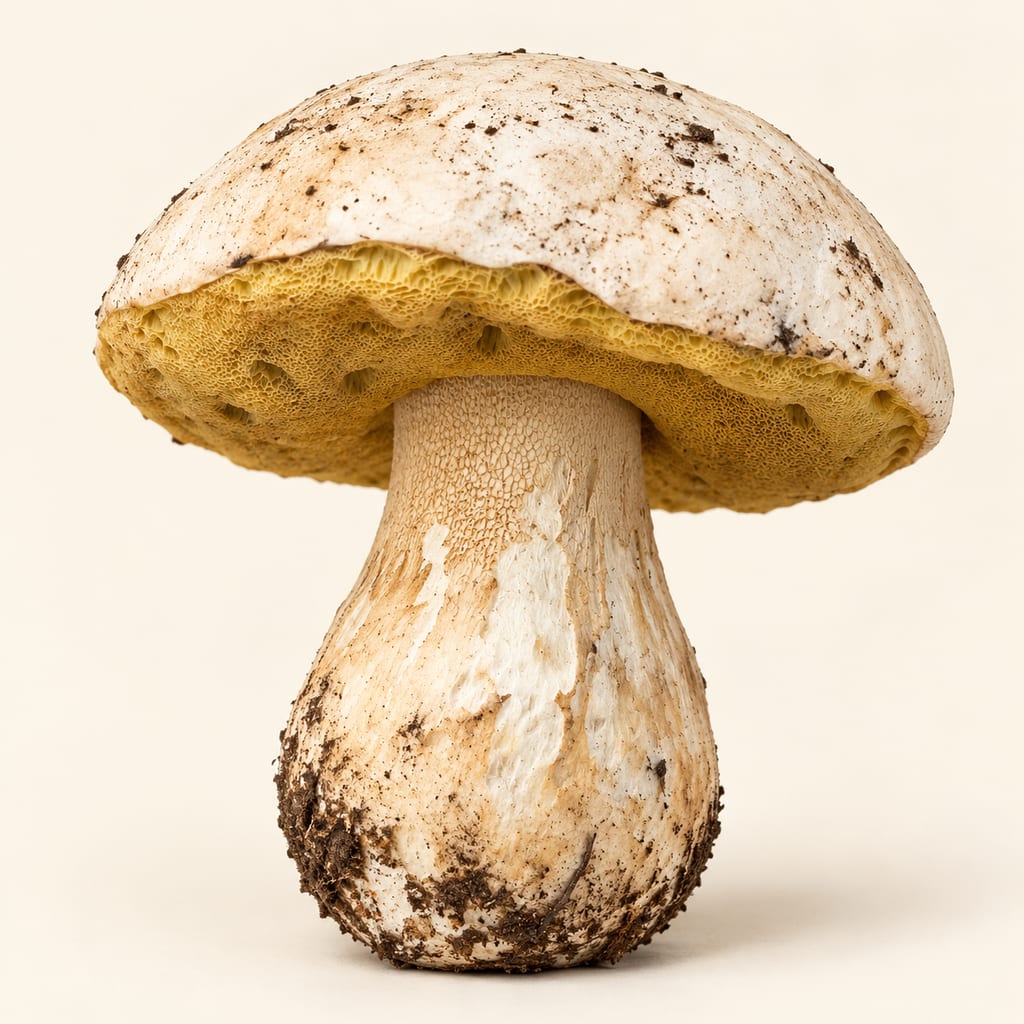
Boletus barrowsii, the white king bolete, is a western porcini relative with documented local food use in Mexico. Its pale cap and netted stem are not enough for field identification.
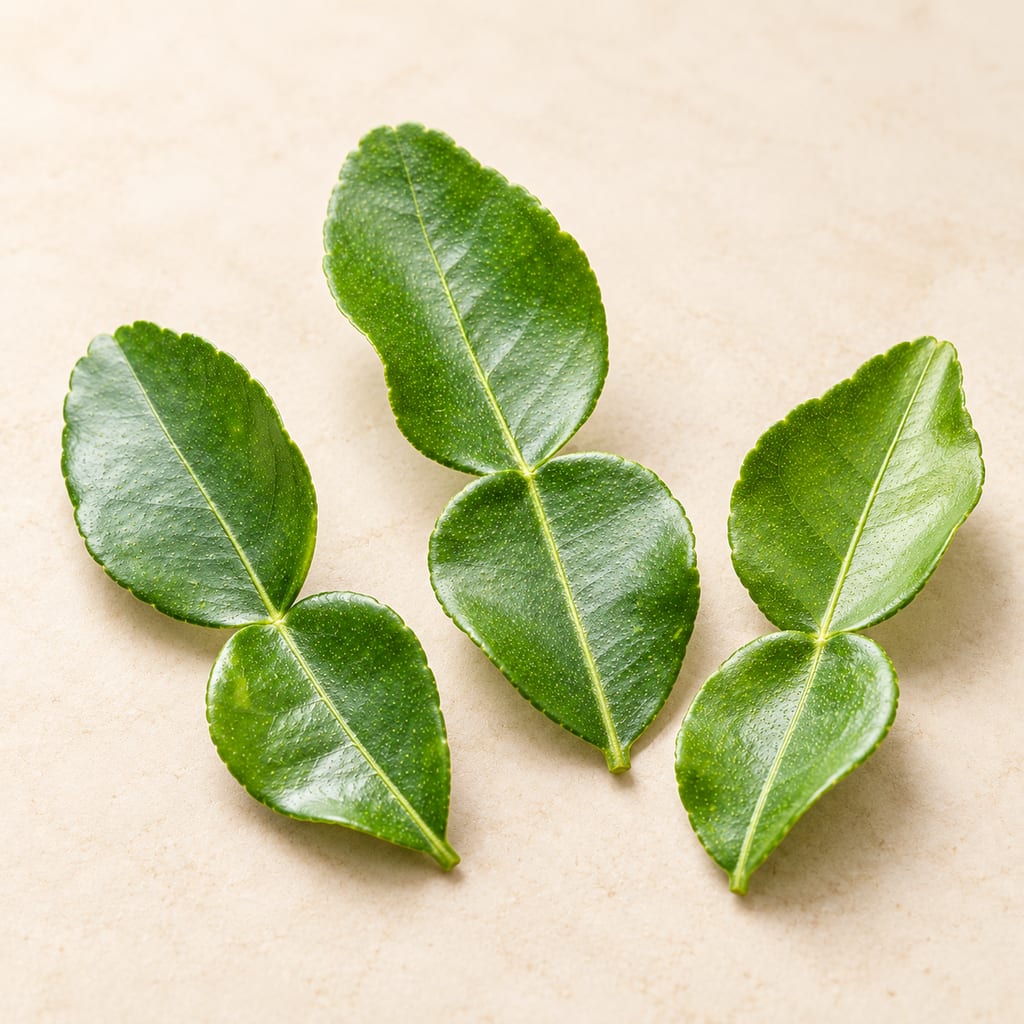
Kaffir or makrut lime leaves are the aromatic foliage of Citrus hystrix, used whole for infusion or finely cut in soups, curries and seasonings.
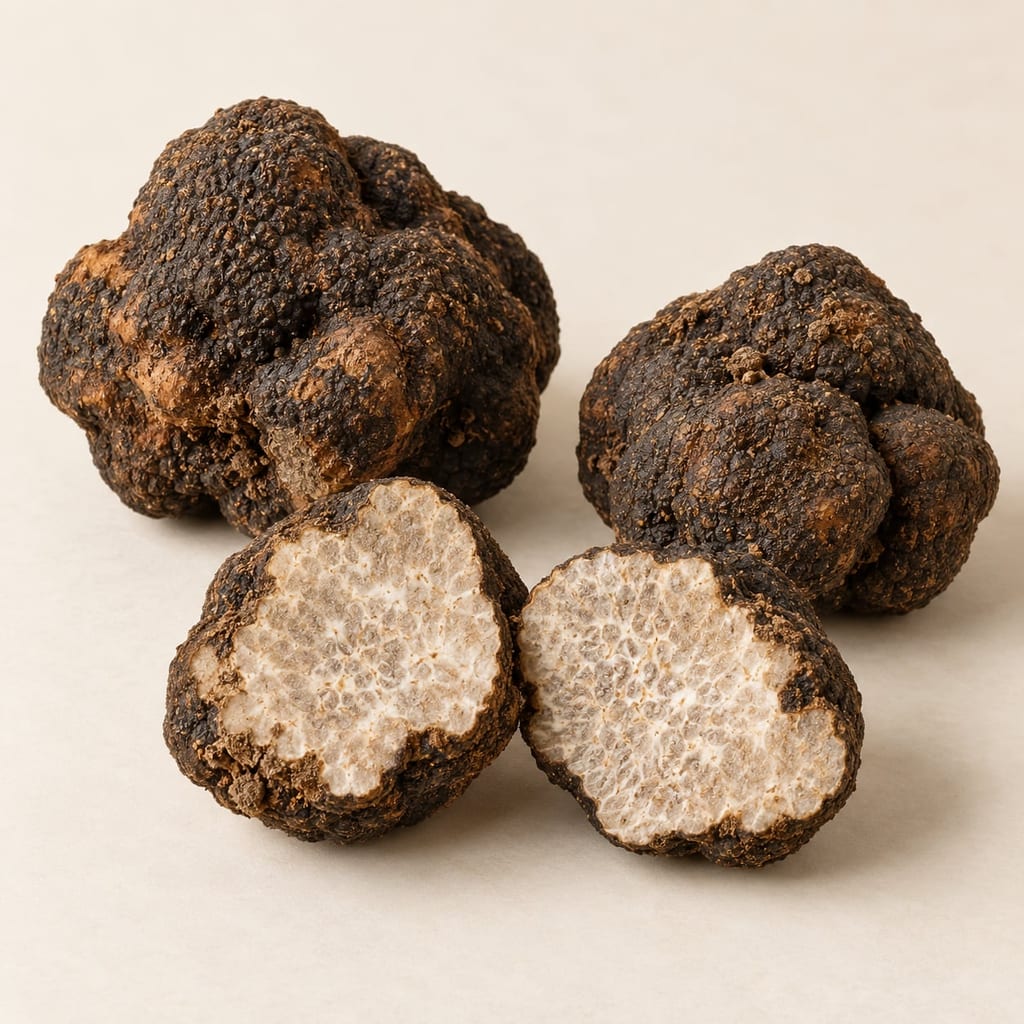
Kalapuya brunnea, the Oregon brown truffle, is a native truffle of the Pacific Northwest that is shaved raw over warm food. Sources describe it as a gourmet edible, and its safe identification needs an expert.
Heat-treated milk from domestic goats supplies lactose, proteins and fat for cultured dairy and cheese; its heat treatment and composition affect how it behaves in the vat.
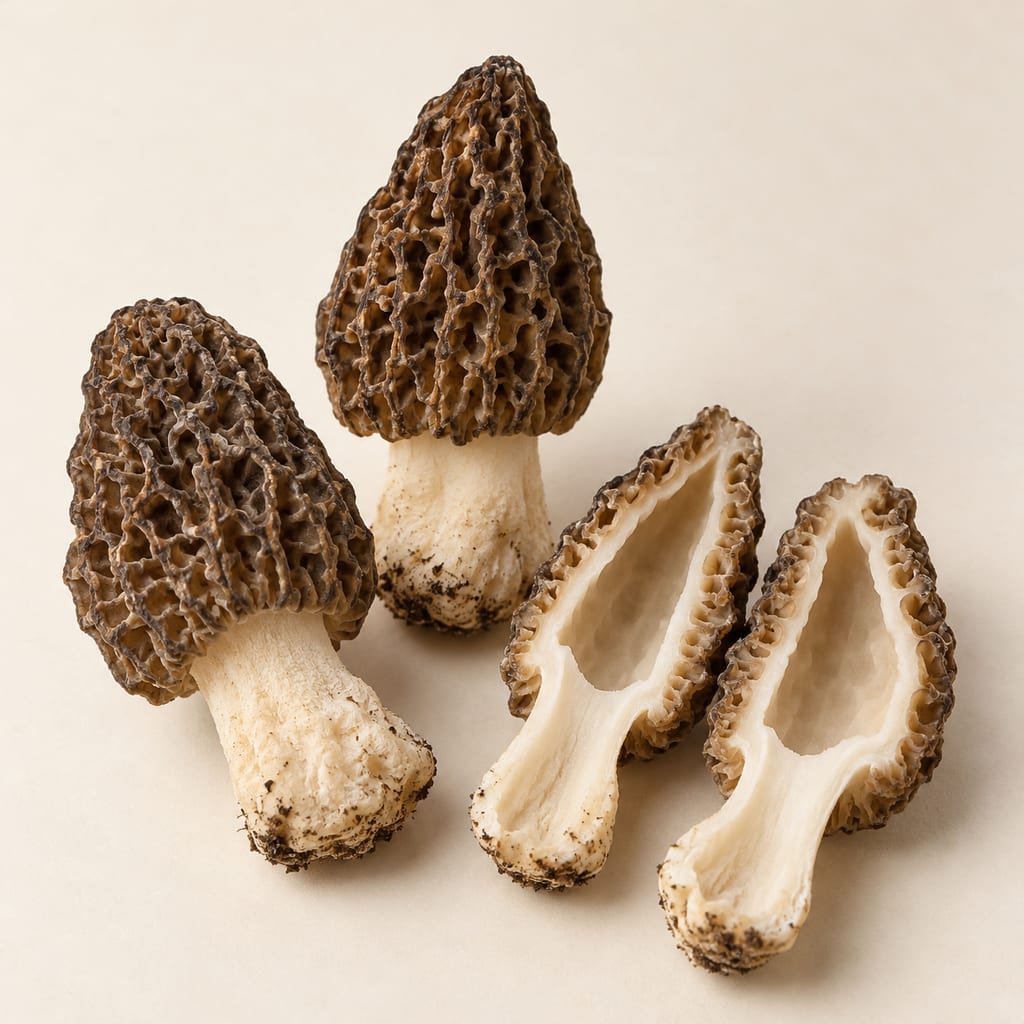
Morchella snyderi, Snyder's morel, is a true morel found under conifers in western North America in spring. It is eaten only well cooked, because raw or undercooked morels can cause serious illness.
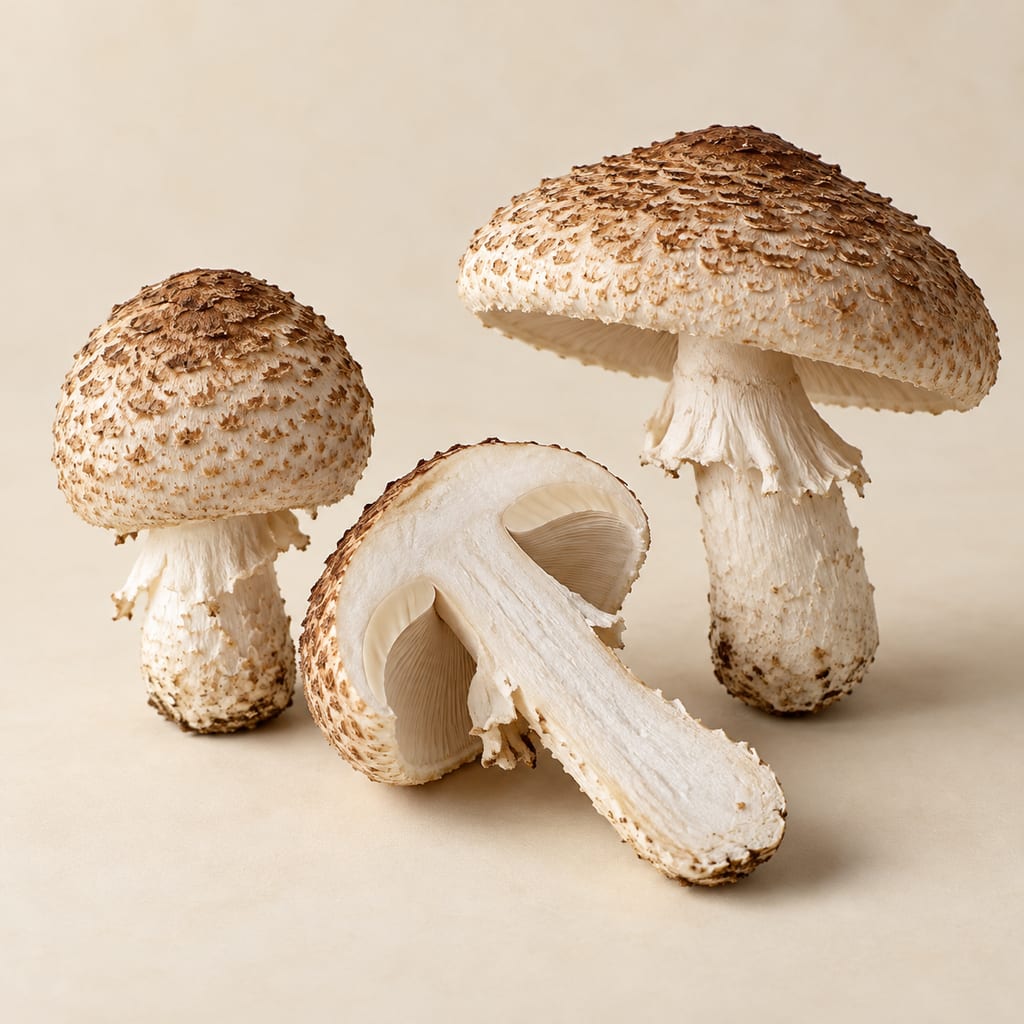
The prince (Agaricus augustus) is a large wild mushroom with a pale, brown-scaled cap and sweet almond-like aroma. Field guides describe it as edible, with species-specific contaminant cautions.
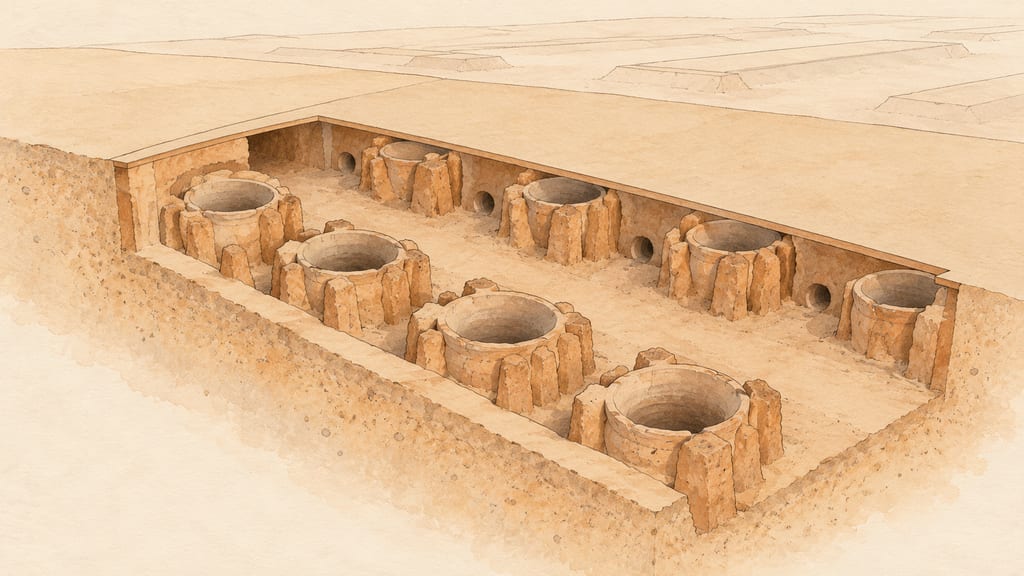
At North Abydos in Egypt, a fixed early Dynastic brewery comprised parallel semi-subterranean installations with rows of ceramic mash vats; excavation reports revise their number, scale and estimated batch capacity.
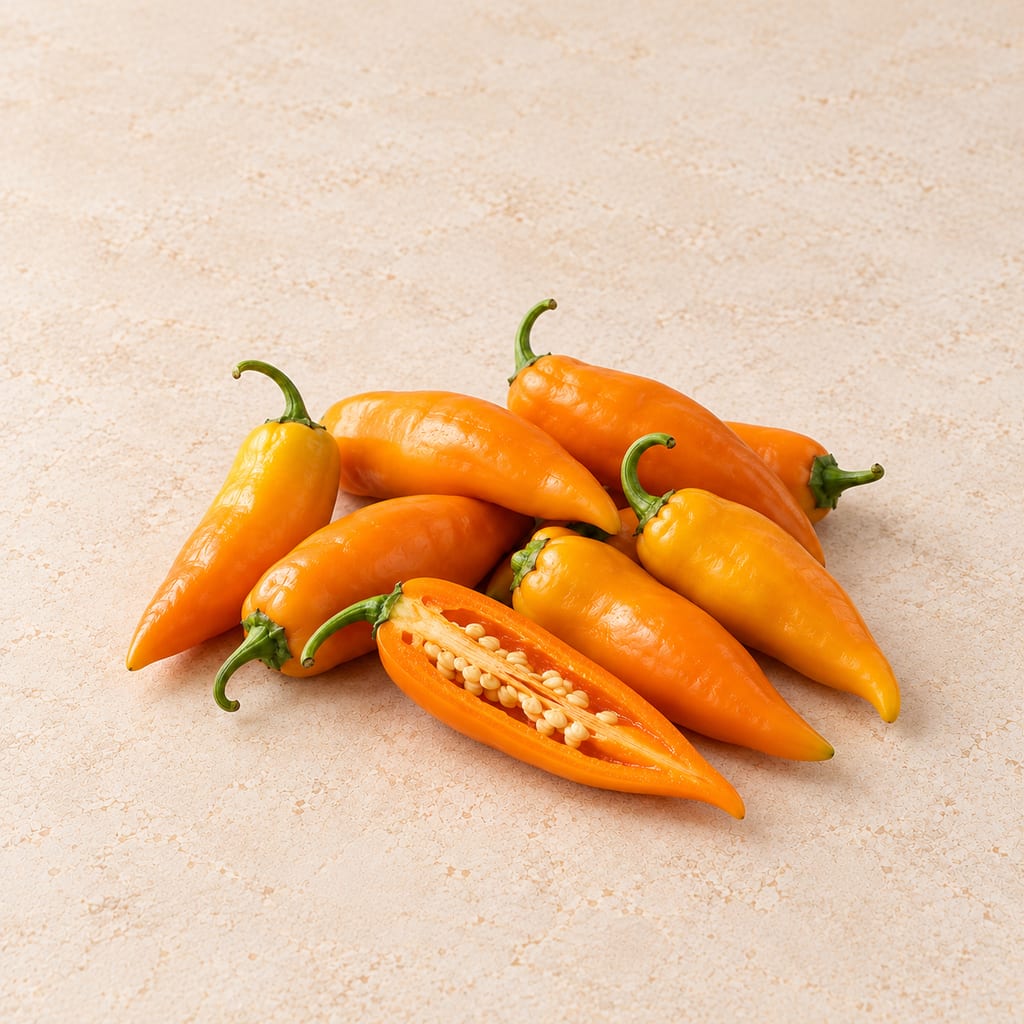
Ají amarillo is the orange-yellow Peruvian chilli cultivar group of Capsicum baccatum, used to colour and season huancaína sauce and ají de gallina. Published heat estimates do not establish one range for the named cultivar.

Toasted almonds are whole sweet almond kernels dry-roasted until golden to brown. Heat replaces their marzipan note with a roasted, nutty one; they thicken and flavour romesco.

Kodiak salmon, halibut and cod cut as seg'aq and hung on an initaq rack to become tamuuq, with kac'amaasaq and kupcuunaq named as different results.

Aniseed is the dried ripe fruit of Pimpinella anisum, an aromatic Apiaceae spice commonly called a seed. It adds a sweet, warm aroma to breads such as Moroccan krachel and South African mosbolletjies, and is distinct from star anise.
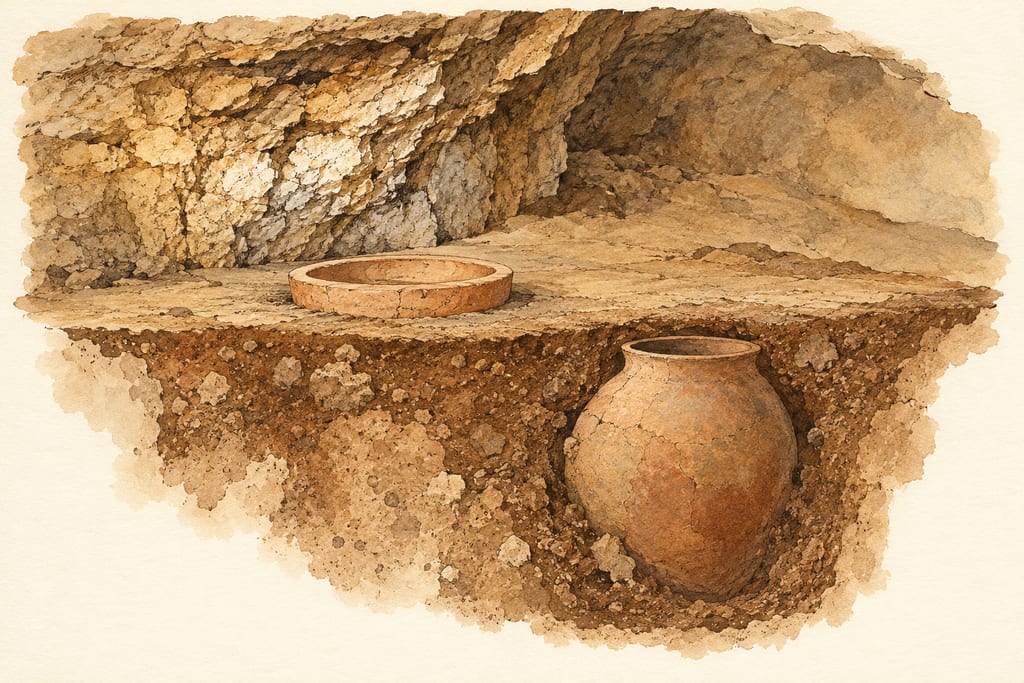
A fixed Late Chalcolithic installation in Areni-1 cave combined a shallow clay pressing basin with a large jar set into the cave floor and storage vessels nearby.
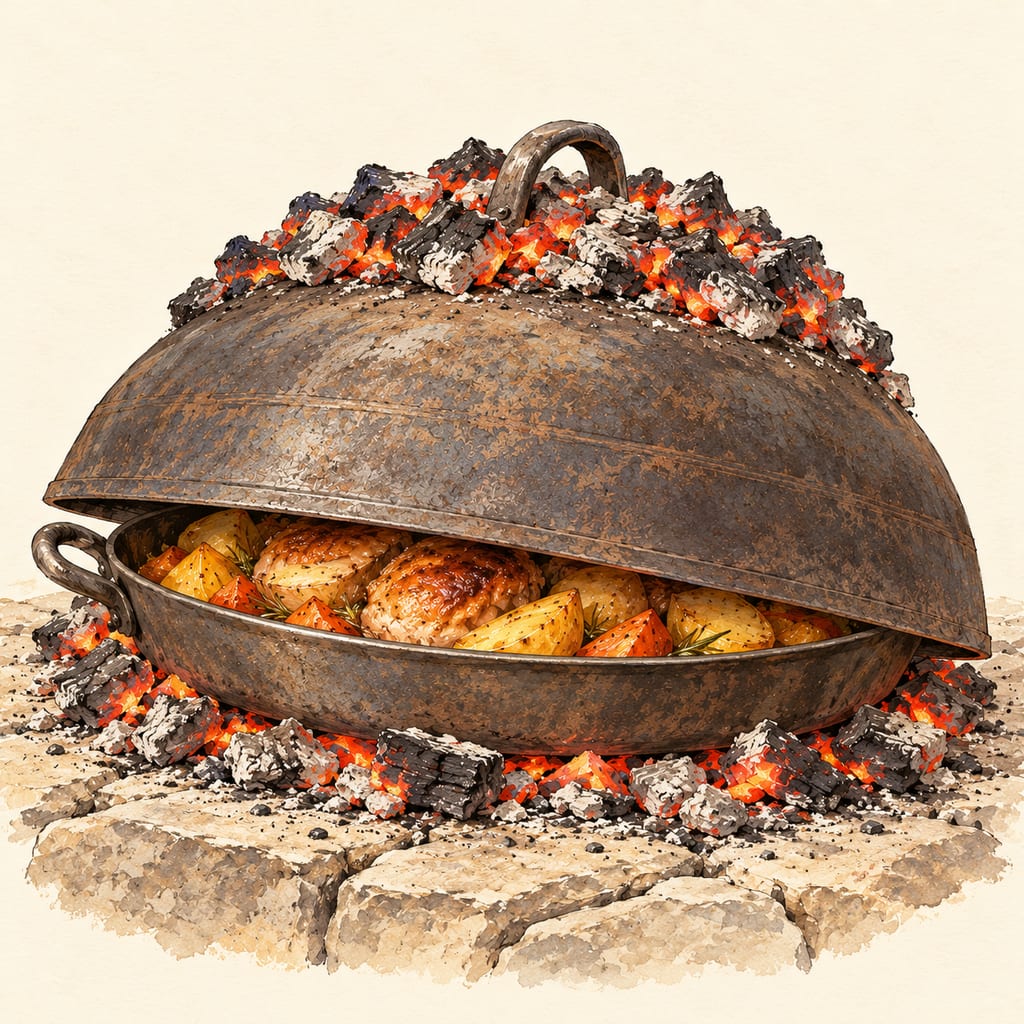
A portable dome and pan used over a hearth, with embers on the lid and heat from below. Regional peka and saç forms share this principle while differing in materials, pan shape and how the food is cooked.
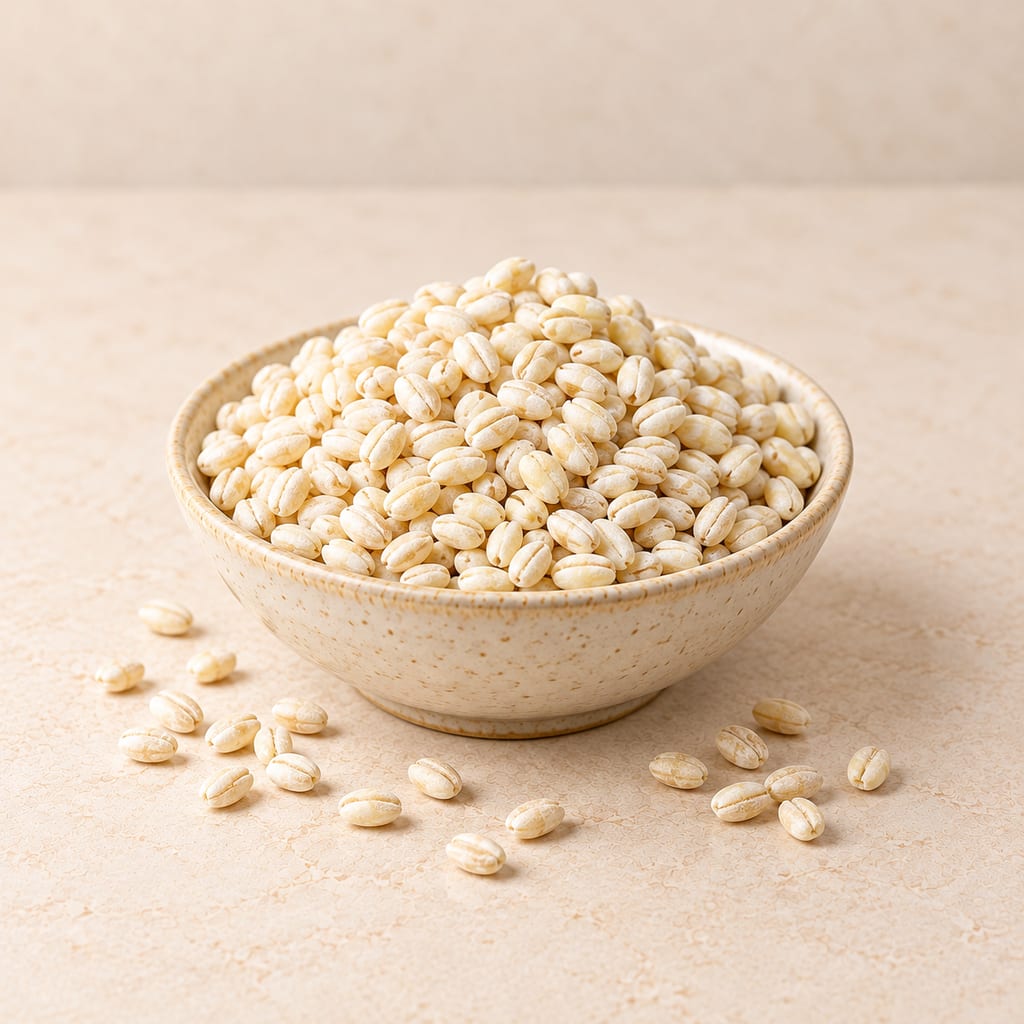
Barley is a hardy cereal, domesticated in the Middle East over 10,000 years ago, eaten whole, pearled or milled, malted for brewing, and grown with koji mold for barley miso.
No community contributions have been published for this entry yet.
Sign in to contribute. Published comments and photos are free to read.
UC Master Food Preserver ProgramIngredient identity · Ingredient use
Spices: Preserve It — Fragrant Herb Salt, File 4-0009Peeled cloves are halved, any central sprout removed, and minced with salt in a herb salt
Royal Botanic Gardens, Kew; Plants of the World OnlineIngredient identity · Ingredient use
Allium sativum L.Accepted name Allium sativum L., Amaryllidaceae; native range Central Asia to northeastern Iran
Cited in: The clove and the head; An old crop without a known birthplace
University of California Agriculture and Natural ResourcesIngredient identity · Ingredient use
Garlic: Safe Methods to Store, Preserve, and Enjoy, ANR Publication 8568Head of 4 to 20 cloves; softneck var. sativum and hardneck var. ophioscorodon; elephant garlic is a leek relative; California over 90 percent of US commercial garlic; alliin, alliinase and allicin; curing; storage times and temperatures; wine or vinegar storage; garlic in oil; canning not recommended; drying and garlic salt
Cited in: The clove and the head; Growing and curing garlic; Why cut garlic bites; Roasting, colour change and the garlic equivalent; Choosing, storing and preserving garlic
University of Illinois ExtensionIngredient identity · Ingredient use
GarlicCloves are planted; fall planting lets roots establish before winter and growth resumes in spring
Cited in: Growing and curing garlic
University of Minnesota ExtensionIngredient identity · Ingredient use
Growing garlic in home gardensHardneck types Rocambole, Purple Stripe and Porcelain; softneck Artichoke and Silverskin; scapes
Cited in: The clove and the head; Growing and curing garlic
Documenta Praehistorica 48, 432–445Ingredient identity · Ingredient use
The archaeology of garlic (Allium sativum): the find at Akrotiri, Thera, GreeceLate Bronze Age garlic finds at Akrotiri on Thera; the importance of garlic is best documented in historical periods, especially Roman times, with prehistoric finds showing earlier regard and use
Cited in: An old crop without a known birthplace; What is not settled
Journal of Applied Microbiology 92(2), 307–314Ingredient identity · Ingredient use
Genotypic and phenotypic characterization of garlic-fermenting lactic acid bacteria isolated from som-fak, a Thai low-salt fermented fish productSom-fak from fish, salt, rice, sucrose and garlic reached pH 4.5 in 2 days; without garlic it did not acidify; about one third of 234 isolates fermented garlic and inulin (L. pentosus and L. plantarum)
Cited in: Garlic in fermented foods; What is not settled
International Journal of Food Microbiology 39(3), 205–211Ingredient identity · Ingredient use
Lactic acid fermentation and storage of blanched garlicBlanching at 90 C for 15 min; L. plantarum starter grew and reached pH 3.8 after 7 days in blanched garlic; growth inhibited in unblanched garlic, which also produced ethanol, fructose and a green pigment; stable at 30 C in acidified brine of about 3 percent salt and pH 3.5
Cited in: Garlic in fermented foods
National Center for Home Food Preservation, University of GeorgiaIngredient identity · Ingredient use
Freezing Garlic-In-OilGarlic in oil at room temperature risks botulism; make fresh and refrigerate at 40 F or lower for no more than 4 days; freeze for long storage
Cited in: Choosing, storing and preserving garlic
Allergy UK incorporating Anaphylaxis UKIngredient identity · Ingredient use
Onion and garlicGarlic food allergy is possible and rare; distinct from intolerance; handling cut garlic can cause contact dermatitis
Cited in: Allergy and skin contact
DermNetIngredient identity · Ingredient use
GarlicFingertip contact dermatitis from handling garlic; burns from garlic poultices
Cited in: Allergy and skin contact
Perseus Digital LibraryHistory
Herodotus, Histories 2.125 (Godley translation)An inscription on the pyramid recorded money spent on radishes, onions and garlic; the interpreter read the sum as 1,600 talents of silver
Cited in: An old crop without a known birthplace