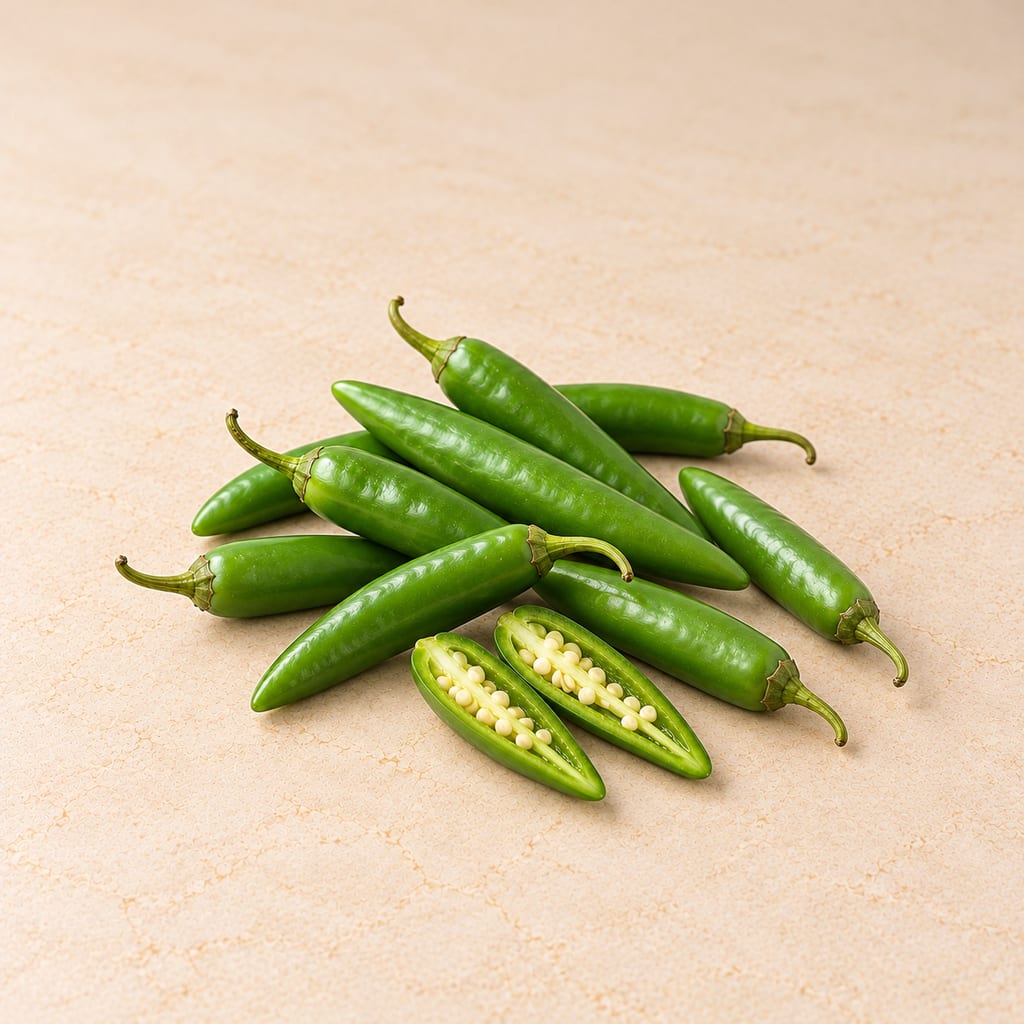
Chilli
Chilli is the pungent fruit of Capsicum plants, native to the Americas and eaten fresh, dried, ground or fermented in cuisines around the world.
 FermenteaWhere food goes to change
Modern method
Mutton masala sausage · Dhania sausage · Dhania beef sausage · Dhanya griller · Punjab mutton sausage · Mutton banger
South Africa's spiced fresh sausage family, sold as masala, dhania or Punjab wors: cumin, ginger, garlic and chilli in place of the mild coriander-and-clove seasoning of boerewors.
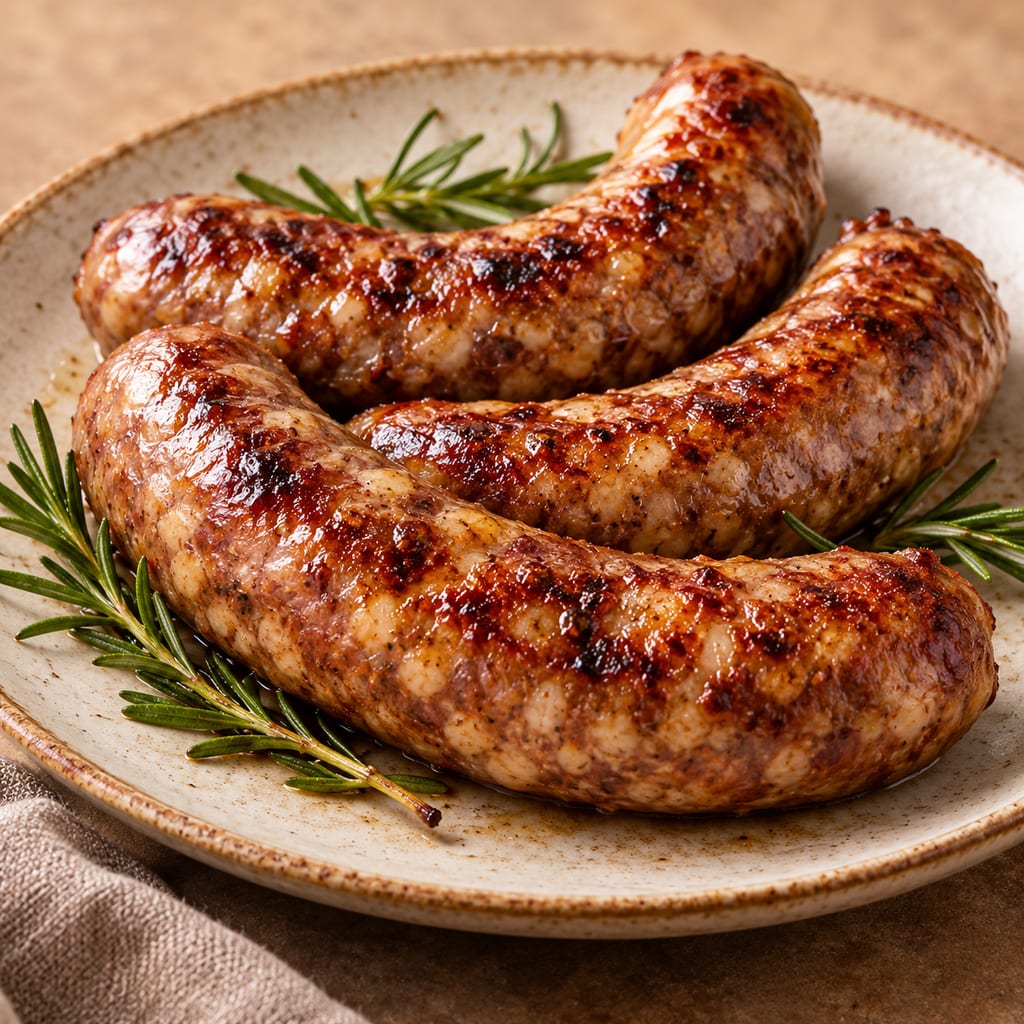
South African sausage-making is not confined to the spice combinations usually associated with boerewors. Butchers and commercial suppliers offer a much broader range of fresh sausages, including mutton masala sausage, dhania beef sausage, dhania lamb sausage and highly spiced products sold under names such as Punjab sausage.
These preparations demonstrate how sausage manufacture can accommodate flavour traditions associated with South African Indian cooking.
Cumin, coriander, ginger, garlic and chilli create a notably different result from a mild farmhouse sausage flavoured chiefly with roasted coriander, clove and nutmeg.
The difference is not necessarily the meat itself. Lamb, mutton or beef can be used in either family. The characteristic distinction lies in seasoning, heat, the proportions of fat and water, and the intended texture.
The names need careful handling. Masala is a broad word referring to a spice mixture; it is not one fixed recipe. Dhania identifies coriander in South Asian culinary vocabulary but does not automatically tell the reader whether a particular sausage contains fresh leaves, dried seeds or both.
Punjab sausage, as encountered in the current South African manufacturer's catalogue, is a commercial product description. Its name alone is not evidence of a historically established sausage from the Punjab region of India or Pakistan.
Masala appears in several South Asian languages.
Dhania or dhanya refers to coriander.
The coriander plant is Coriandrum sativum L.
In South African retail terminology, these words are used alongside English and Afrikaans terms such as sausage, wors and griller.
The resulting names may be hybrid descriptions: dhania beef sausage, mutton masala wors or Punjab mutton griller.
For meat species, mutton and lamb come from domestic sheep (Ovis aries), while beef comes from cattle.
A manufacturer's use of the word mutton does not establish the age of the animal or its regulatory classification without examining the product specification.
Indian communities have played a significant part in the development of South African food culture, particularly in KwaZulu-Natal and Durban.
Indian indentured labourers arrived in Natal from 1860, and the indenture system continued into the early twentieth century. Their descendants and other Indian migrants developed distinctive South African food traditions, including curry preparations, breads and a varied use of spices.
These traditions interacted with local ingredients, commercial food production and the wider South African market.
It is therefore reasonable to understand modern masala-flavoured sausages within a living culinary environment that includes South African Indian cooking.
However, the historical evidence currently available does not establish an invention date for mutton masala sausage or dhania sausage.
It does not justify an assertion that a particular Durban butcher invented the modern product, or that every sausage carrying an Indian regional name descends directly from an old recipe from that region.
What can be documented is their present-day manufacture and sale.
Deli Spices publishes meat-block formulations for mutton masala, Punjab mutton and dhanya grillers.
Woolworths South Africa sells uncooked halaal dhania beef and lamb sausages, specifically describing the products as flavoured with dhania, paprika and chilli.
These examples demonstrate an identifiable current market rather than a merely theoretical recipe idea.
Butchery in Durban and other South African communities also provides a commercial setting for fresh spiced meat products. The history of individual family butchers requires specific interviews or archival records if it is to be presented as historical fact.
The advantage of manufacturer's formulation sheets is that they show actual batch structures.
The disadvantage is that the spice mixture itself may be proprietary.
For that reason, the following examples establish the proportions of meat, water and ready pack, but they do not reveal a complete reproducible recipe from individual spices.
A Deli Spices mutton sausage ready pack is described as an aromatic masala with cumin, ginger and garlic, followed by medium chilli heat.
Its published formula is:
The 70/30 description identifies the raw meat/fat blend used by the supplier. It should not be mistaken for the analysed fat percentage of the finished product.
The water contributes to processing behaviour and texture. The ready pack supplies seasoning and potentially other functional ingredients, depending on its undisclosed composition.
Mutton, described as 70/30 — 13.500 kg
Cold water — 3.300 kg
Mutton sausage ready pack — 1.200 kg
Total — 18.000 kg
The same manufacturer describes its Punjab sausage as a spicy mutton griller with a particularly strong capsicum burn.
The published quantities are:
The formulation differs from the general mutton masala version in both meat-block proportions and spice-pack weight.
More importantly, the flavour description identifies a different intended heat level.
The manufacturer does not disclose the exact quantity or variety of chilli inside its ready pack.
Consequently, a specific Scoville value or chilli percentage cannot be established from the published product description.
Mutton trimmings, described as 70/30 — 13.800 kg
Water — 3.200 kg
Hot Punjab mutton ready pack — 1.350 kg
Total — 18.350 kg
The manufacturer's dhanya griller is described as containing cumin, garlic, ginger and dhanya, with lingering chilli heat.
Its published formula is:
This is a general meat formulation rather than a recipe limited to one named animal species.
The exact botanical form of dhanya used in the spice pack is not stated in the public formulation.
That omission matters because fresh coriander leaf and dried coriander seed produce strikingly different flavour profiles.
Meat blend, described as 70/30 — 15.000 kg
Ice water — 3.800 kg
Dhanya griller ready pack — 1.200 kg
Total — 20.000 kg
Cumin, Cuminum cyminum, contributes a distinctive earthy and warm aroma.
Its essential oil includes compounds such as cuminaldehyde, which strongly influence the perception of cumin spice.
In a sausage mixture, ground cumin disperses through the fat and meat, contributing flavour throughout the filling.
It does not, at ordinary culinary levels, provide an independently validated raw-meat preservation process.
Coriander may appear as dried seed, ground seed or fresh leaf.
The seed is dominated by a sweet, citrus-like aroma associated with linalool and related volatile compounds.
Fresh leaves have a different aroma profile, with a notable contribution from aldehydes.
This difference explains why the simple product name dhania is not enough to reconstruct a recipe.
A sausage flavoured with roasted coriander seed will not taste the same as one containing chopped fresh leaves, even if both use the same plant.
Ginger is derived from the rhizome of Zingiber officinale.
Fresh and dried ginger differ in aroma and pungency. Compounds associated with the pungent character include gingerols and, in differently processed ginger, shogaols.
Ginger provides a warm, sharp quality that pairs well with cumin and chilli.
Garlic, Allium sativum, develops much of its characteristic aroma when damaged tissue allows enzymatic reactions between previously separated constituents.
The resulting sulphur compounds supply pungent and savoury notes.
Finely crushed fresh garlic behaves differently from dried garlic powder, particularly in the quantity of water it introduces and the speed with which its flavour is distributed.
The pungency of chilli is principally associated with capsaicinoids.
Chilli varieties and processing methods can change the amount and character of heat.
A manufacturer's description of medium or very strong heat is a sensory category, not a precise chemical measurement.
There is no defensible conversion from the words very hot to a universal Scoville rating without analytical or properly conducted sensory data.
These products follow the same core meat-processing principles as other uncooked sausages.
Muscle proteins provide structural binding. Salt helps extract proteins, including myosin, during mixing.
Cold processing keeps fat particles distinct and limits unwanted smearing.
Water contributes to tenderness and influences the movement of salt and seasonings through the meat block.
Spices introduce flavour, but they do not change the fact that the product is raw minced meat.
A highly seasoned sausage can smell of cumin, garlic and chilli even when the underlying meat is beginning to spoil. Aroma intensity must never be used to conceal or justify questionable raw material.
The presence of vinegar, if included in a particular version, likewise does not make a fresh sausage a preserved dried product.
The exact legal product classification depends on composition and jurisdiction. A sausage marketed informally as dhania wors should not automatically be presumed to meet the South African compositional requirements for boerewors.
Specify the meat-fat ratio and whether any additional water, vegetable protein or binder is permitted.
For commercial manufacture, identify the legally appropriate product category.
Remove bone fragments, excessive sinew and other unwanted material.
Keep the meat chilled before and throughout processing.
The precise cold-chain critical limits should follow the applicable food-business requirements.
A coarse sausage retains distinct pieces. A finer griller may have a more integrated texture.
Neither result can be assumed authentic for every masala sausage.
Avoid overheating the meat block, which can increase smearing and weaken product structure.
A commercial ready pack is not necessarily a mixture of spices alone; it may contain functional ingredients that materially affect texture.
Replacing such a pack with the same weight of ground cumin, coriander and chilli would not reproduce the published product.
Introduce chilled water or ice where the formulation specifies it.
Mix sufficiently to establish the necessary binding and distribute spices, without unnecessary warming.
Bright chilli or paprika colour should be evenly distributed if the recipe calls for it.
Hog, sheep or collagen casings may be suitable depending on the product and dietary requirements.
A sausage sold as halaal needs appropriate verification of the casing and the complete process.
They should be packed and stored according to a validated shelf-life procedure.
Neither chilli nor garlic provides a reliable substitute for refrigeration.
For minced-meat products, follow the relevant safe core-cooking guidance rather than relying on the outer colour.
Intense chilli seasoning can make visual assessment particularly unreliable.
A cook trying to reproduce a favourite dhania sausage faces an important ingredient question.
Does the product owe its aroma mainly to coriander seed, or does it contain the fresh leaves?
The retail description may simply say dhania, without specifying the plant part.
If chopped leaves are included, they introduce moisture and a green, fresh aroma. Their appearance may also be visible as green flecks in the cut surface.
If ground seed is used, the flavour tends to be warmer and more citrus-like, while the filling may show few obvious plant fragments.
A mixture of both is also possible.
Without the full ingredient specification or a named maker's explanation, the precise choice cannot be established.
Dhania beef sausage is a commercially documented product using ground beef with dhania, paprika and chilli.
Dhania lamb sausage uses lamb instead of beef and offers a different base flavour.
Mutton masala sausage may emphasise cumin, ginger and garlic with moderate chilli heat.
Punjab mutton sausage is a modern product name associated with stronger capsicum pungency.
Mutton bangers may use cumin, coriander and ginger without following an especially hot flavour profile.
Chilli mutton sausage describes a broad family of preparations and should not be given one universal seasoning ratio.
The use of the word halaal in product marketing is also significant. It reflects a separate set of sourcing and process requirements rather than one compulsory seasoning tradition.
Masala sausages can be served at a braai with pap and vegetable relishes.
They may also be eaten in bread rolls, alongside potatoes, with rice or in tomato-based preparations.
Their assertive seasonings make them suitable for dishes in which the sausage is sliced after cooking and combined with vegetables.
Dhania sausage can be accompanied by chutney, a fresh onion relish or a cooling yoghurt-based side dish.
These are culinary possibilities; not every combination should be claimed as a historically documented ceremonial or regional meal.
Where a sausage is used in a stew, the cooking process must still bring the meat to a safe temperature.
A heavily spiced sausage is not necessarily already cooked simply because its colour is dark or red.
A good fresh sausage should have sound casing integrity and a cohesive filling.
Its spice distribution should be reasonably uniform, and the level of heat should match the intended recipe.
Bitter or harsh flavour: Excessive spice roasting, inappropriate chilli quantities or poor spice quality can contribute.
Uneven chilli intensity: Incomplete seasoning distribution.
Greasy texture: Excessive fat, fat smearing or inadequate binding.
Crumbly filling: Insufficient protein extraction, poor mixing or an unsuitable meat block.
Split casings: Overfilling or excessively aggressive heating.
Abnormal slime, decay odour or unexpected sourness: Reject the product.
Spices are not a reliable method for diagnosing spoilage because they can mask ordinary sensory cues.
The product is raw unless explicitly marked otherwise.
It requires hygienic handling, refrigeration and thorough cooking.
Allergens may be present in seasoning ready packs, binders, sauces or other additions, even where the meat itself contains no such ingredients.
A supplier's claim that a ready pack is halaal does not automatically establish that sausage made with it is certified halaal. Meat source, slaughter, casings, processing equipment and cross-contact controls must also be considered.
If the full seasoning-pack ingredient list is unavailable, the finished product's allergen or dietary status cannot safely be inferred.
The historical existence of South African Indian cuisine is well established, but the specific origins of these named modern sausage products remain insufficiently documented. A detailed history of an individual sausage would require producer archives or direct oral-history work.
Indian communities have played a significant part in South African food culture, particularly in KwaZulu-Natal and Durban. Indian indentured labourers arrived in Natal from 1860 and the indenture system continued into the early twentieth century; their descendants and other Indian migrants developed distinctive South African food traditions, including curry preparations, breads and a varied use of spices, which interacted with local ingredients, commercial food production and the wider market. Modern masala-flavoured sausages are reasonably understood within that living culinary environment. The evidence does not justify saying that a particular Durban butcher invented the modern product, or that every sausage carrying an Indian regional name descends from an old recipe from that region: Punjab sausage, as it appears in the current manufacturer's catalogue, is a commercial product description.
Scaling: source batch only
A sausage can smell strongly of cumin, garlic and chilli even when the underlying meat is beginning to spoil, and spices mask the ordinary sensory cues.
Hazard sourceIntense chilli and paprika seasoning makes visual assessment of cooking particularly unreliable, and a dark or red sausage is not necessarily cooked.
Hazard sourceAllergens may be present in seasoning ready packs, binders or sauces even where the meat itself contains none, and without the full pack ingredient list the finished product's allergen status cannot be inferred.
Hazard sourceCook to the relevant safe core temperature rather than judging by outer colour
Control sourceKeep the meat chilled before and throughout grinding, mixing and stuffing
Control sourceNeither chilli nor garlic is a substitute for refrigeration: these are raw perishable sausages unless the label says otherwise.
A sausage marketed informally as dhania wors should not be presumed to meet the South African compositional requirements for boerewors.
A supplier's claim that a ready pack is halaal does not establish that the finished sausage is certified halaal; meat source, slaughter, casings, equipment and cross-contact controls all matter.
Reject abnormal slime, decay odour or unexpected sourness rather than trusting that strong spicing has preserved the sausage.
A regional association with South African Indian food culture, particularly in KwaZulu-Natal and Durban, supported by historical context and current manufacture. It is not a claim that any named product was invented at a particular place, and the history of individual family butchers would need interviews or archival records.
Chilli is the pungent fruit of Capsicum plants, native to the Americas and eaten fresh, dried, ground or fermented in cuisines around the world.
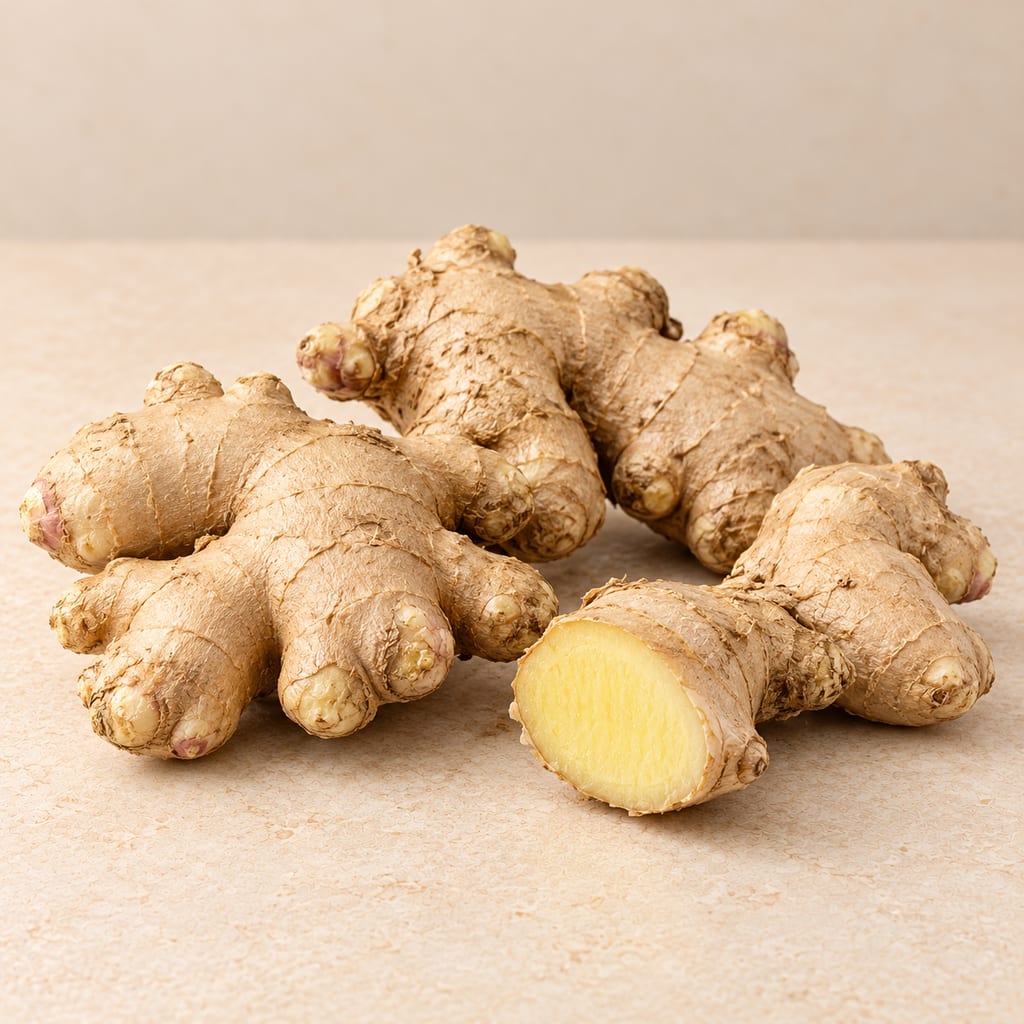
Ginger is the aromatic rhizome of Zingiber officinale, used fresh, dried and preserved. Historical ginger wines sliced or bruised it to flavour a sugar-based ferment.
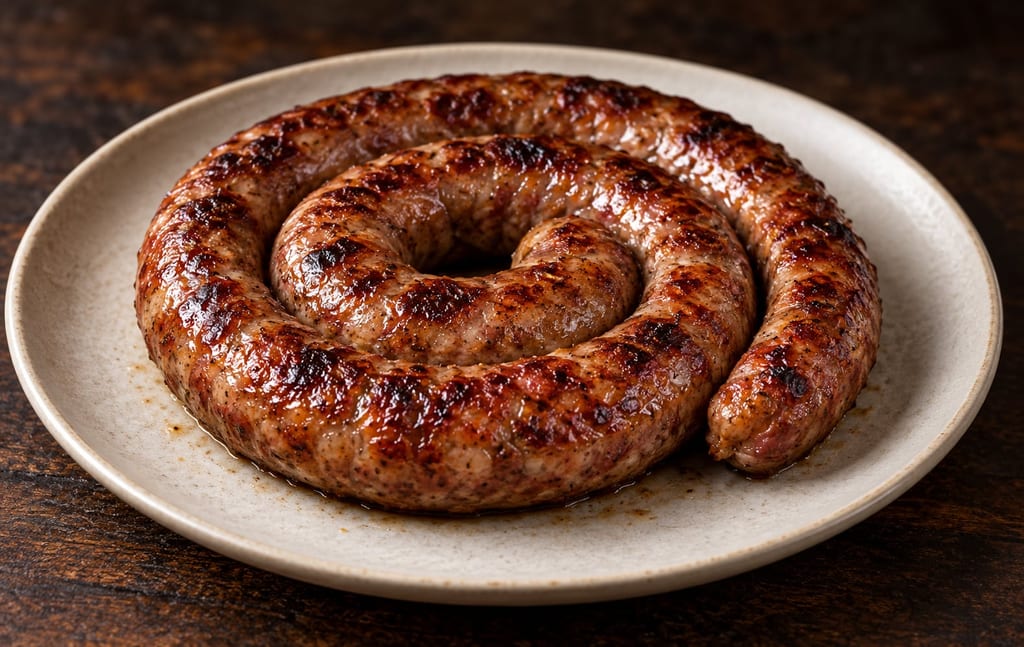
A coarse South African farmhouse sausage of beef with pork or mutton fat, defined by its coriander seasoning and cooked fresh over coals rather than preserved.
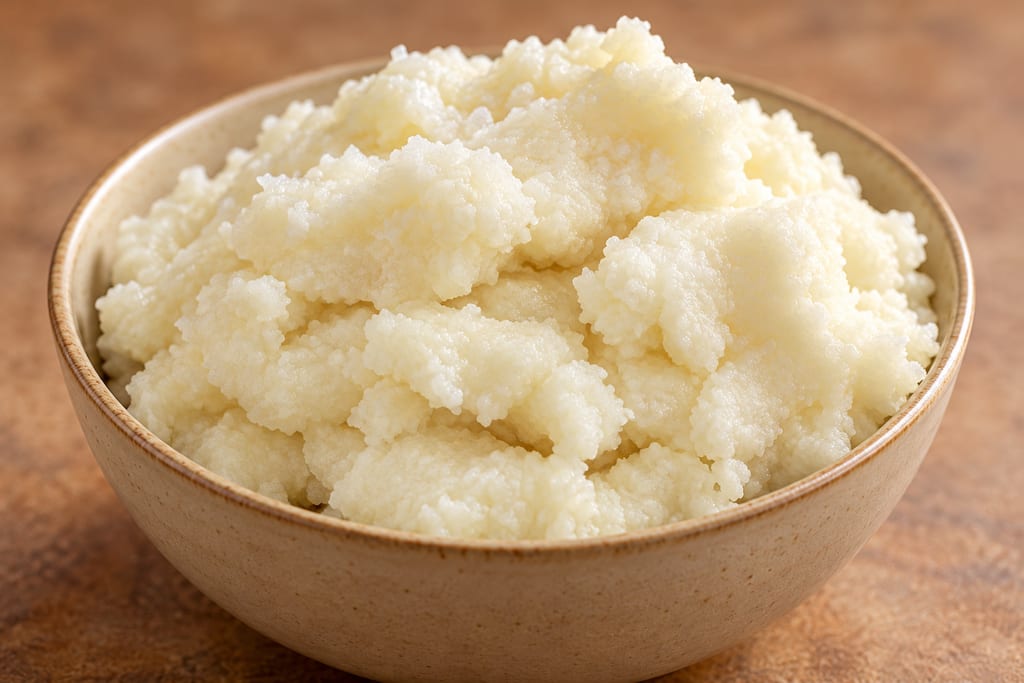
South Africa's maize-meal porridge, which the same white meal turns into a soft breakfast pap, a firm sliceable mound or the separate moist granules of phuthu depending only on water and handling.
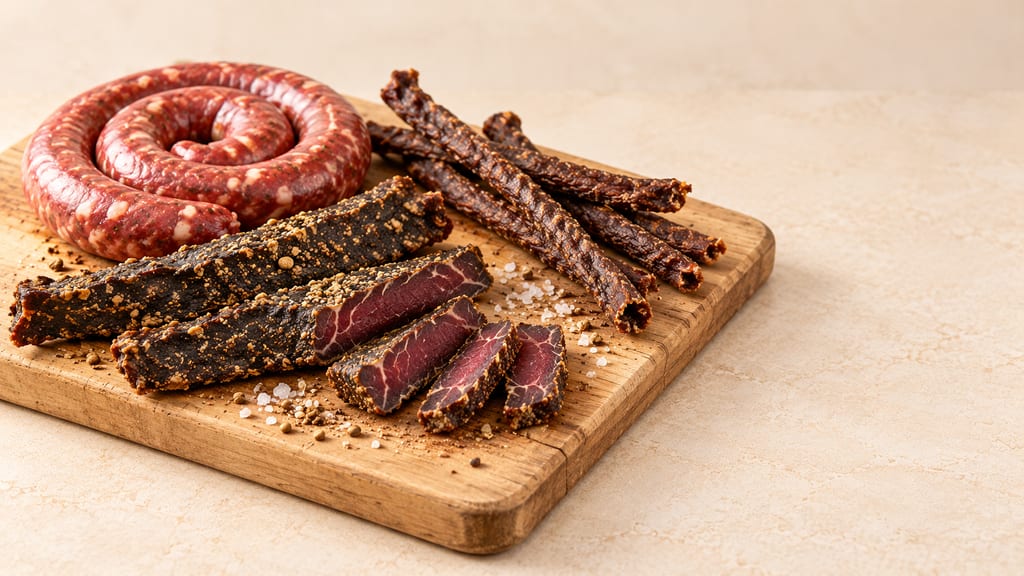
Boerewors, biltong and droëwors share a table but follow different paths from meat to meal. Their histories lead from the braai and butcher's counter to drying lines, household pots and the science of keeping food.
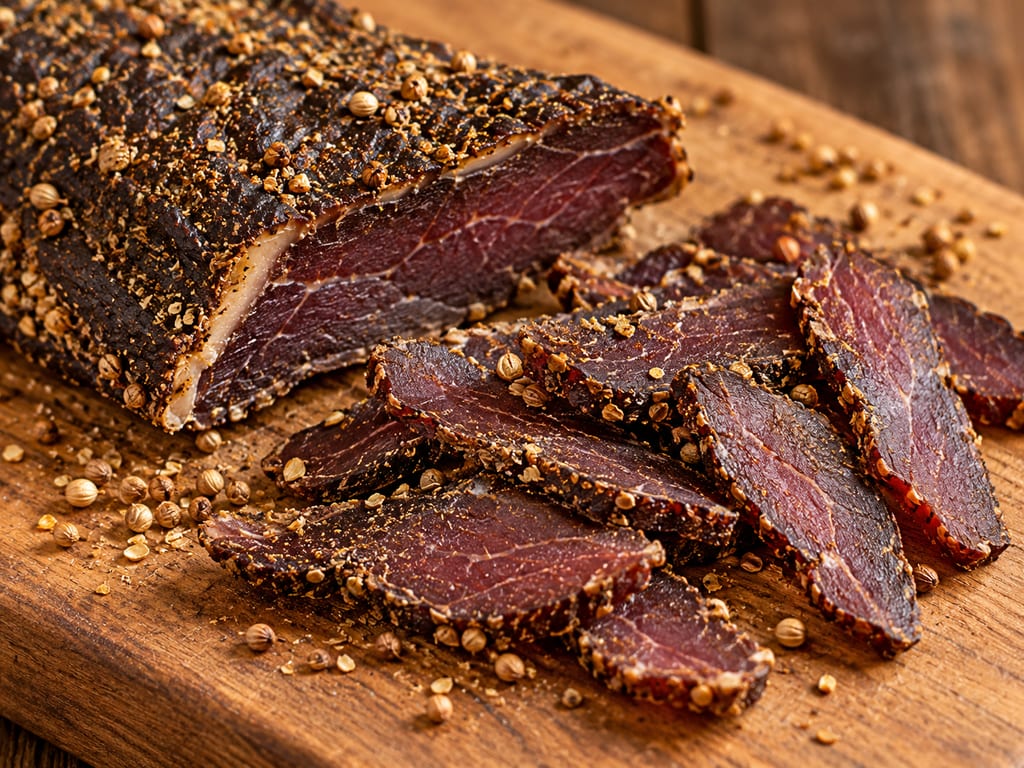
Strips of whole-muscle beef or game seasoned with salt, vinegar, roasted coriander and pepper and air-dried without cooking, sold anywhere from soft and moist to hard and very salty.
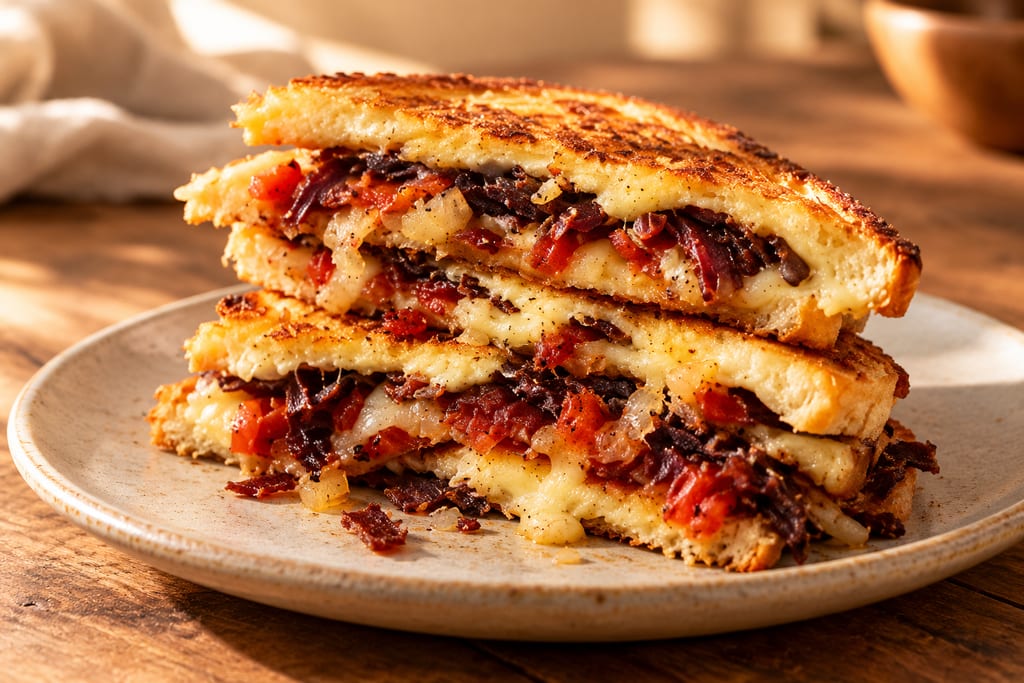
Chopped biltong, sweet onion, cream cheese and Cheddar fill bread toasted in a hinged grid over gentle coals, then finished with biltong dust.
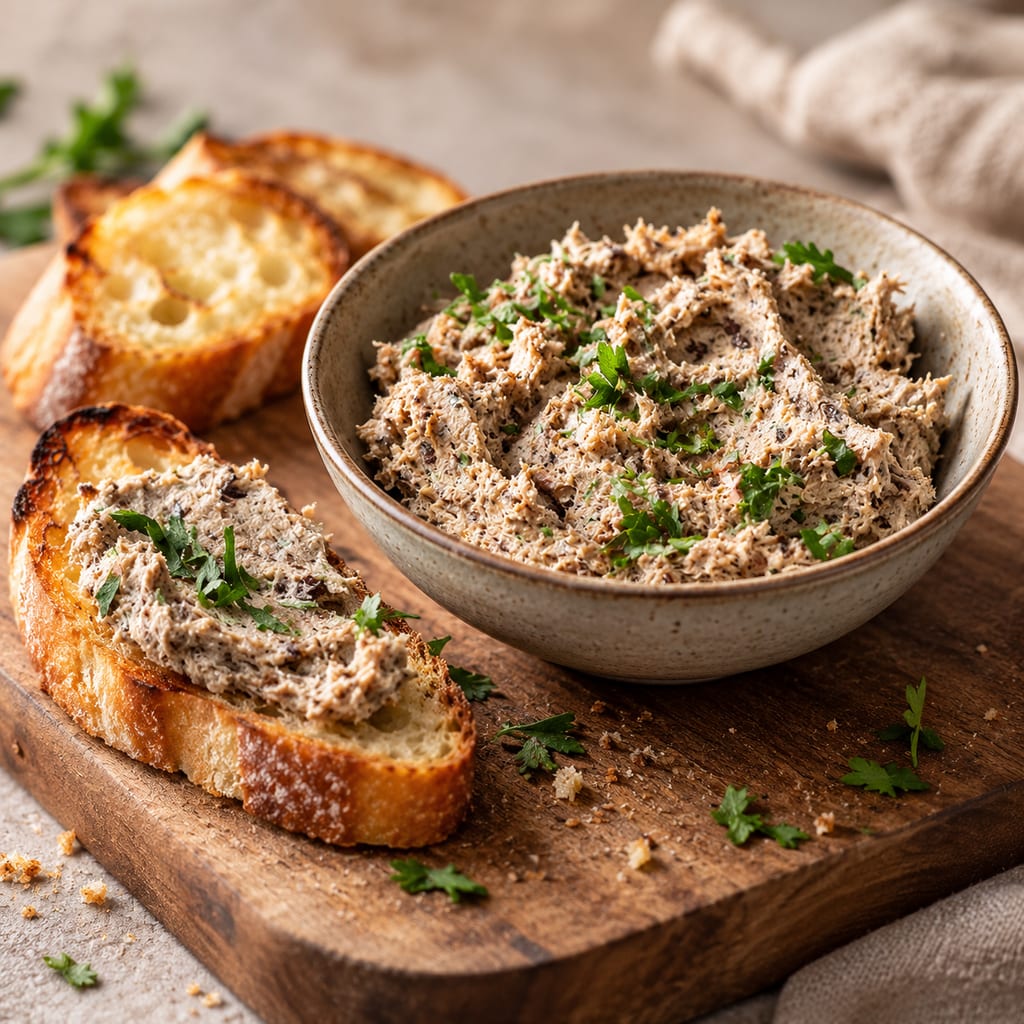
A cold biltong spread with sour cream, mayonnaise, mustard, lemon and herbs; serve it with crackers, crostini or bread.
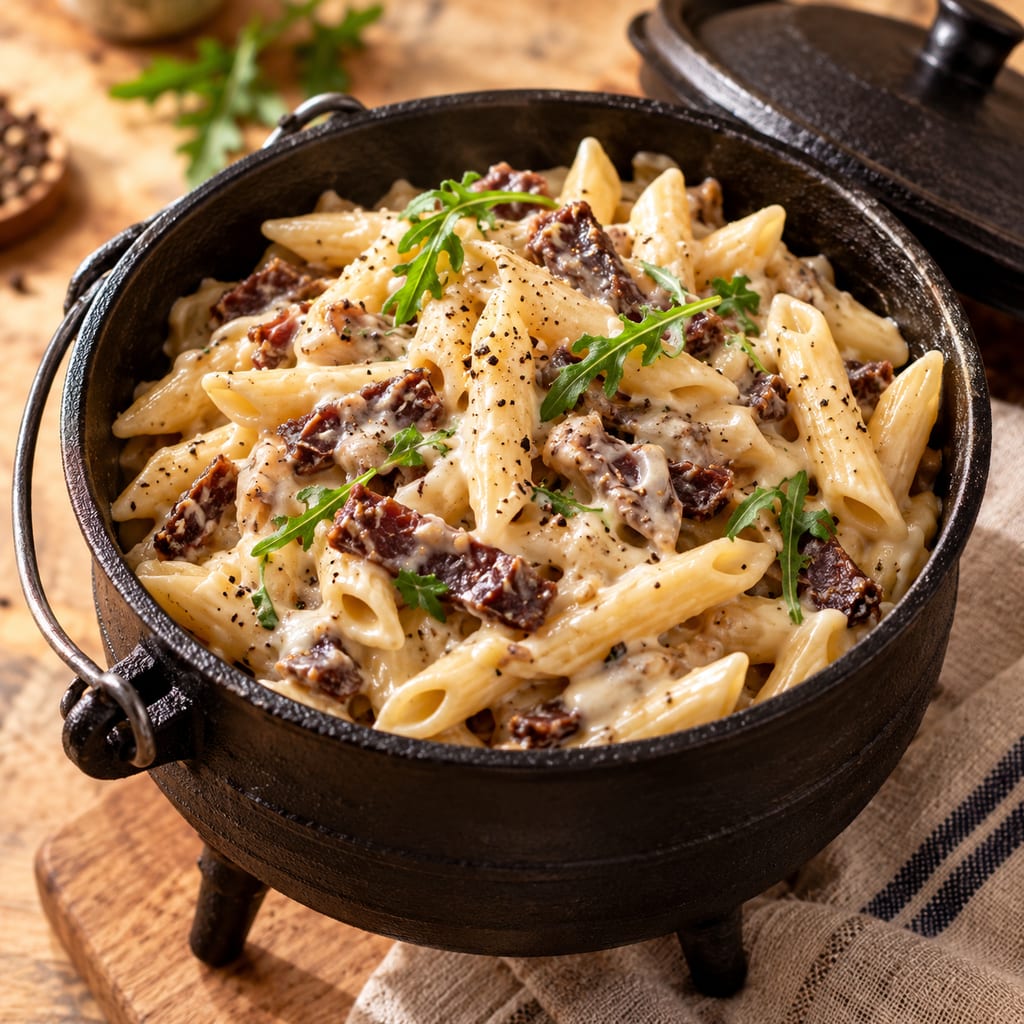
Biltong, bacon and vegetables simmer in tomato-herb stock, then join cooked pasta, milk, cream and Cheddar in this outdoor potjie.
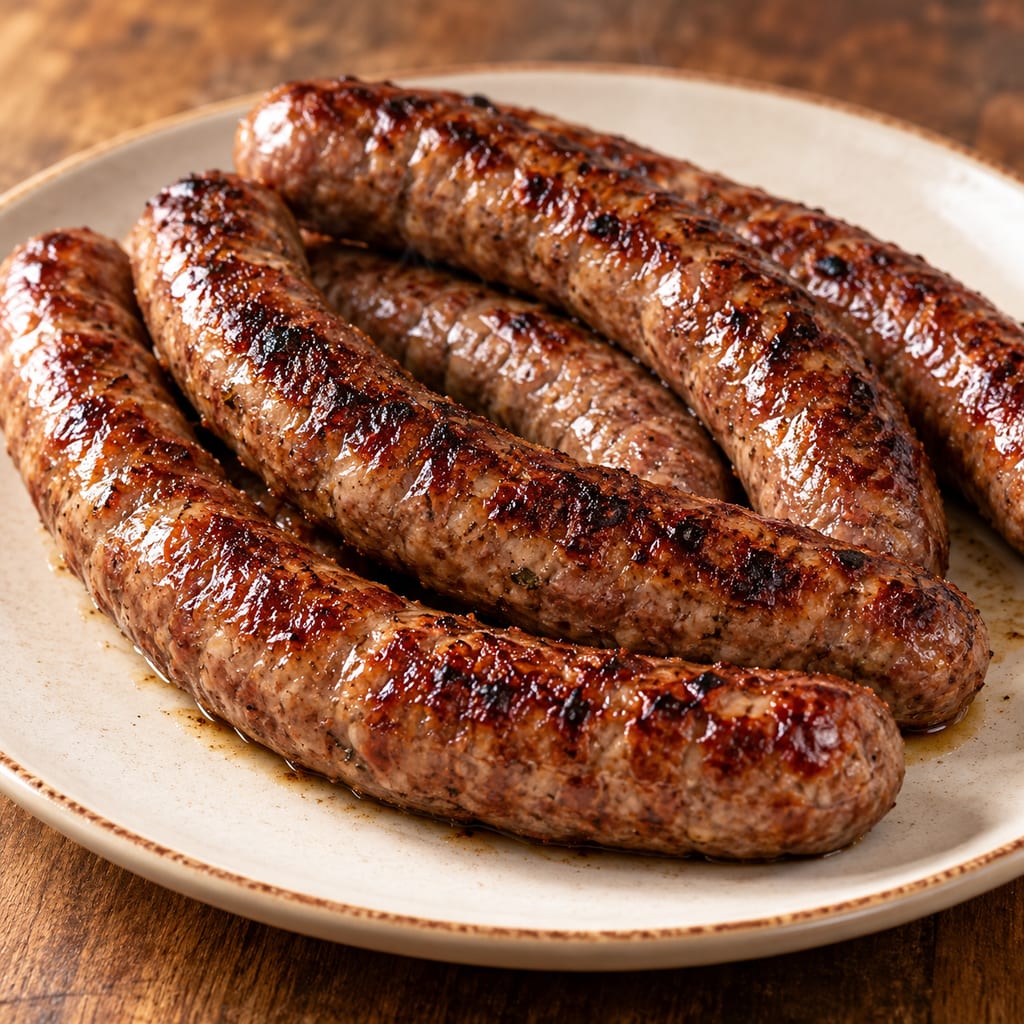
South Africa's regulated grilling-sausage class, looser than boerewors: a minimum of 40% meat, vegetable protein and mechanically recovered meat allowed, and sold raw.
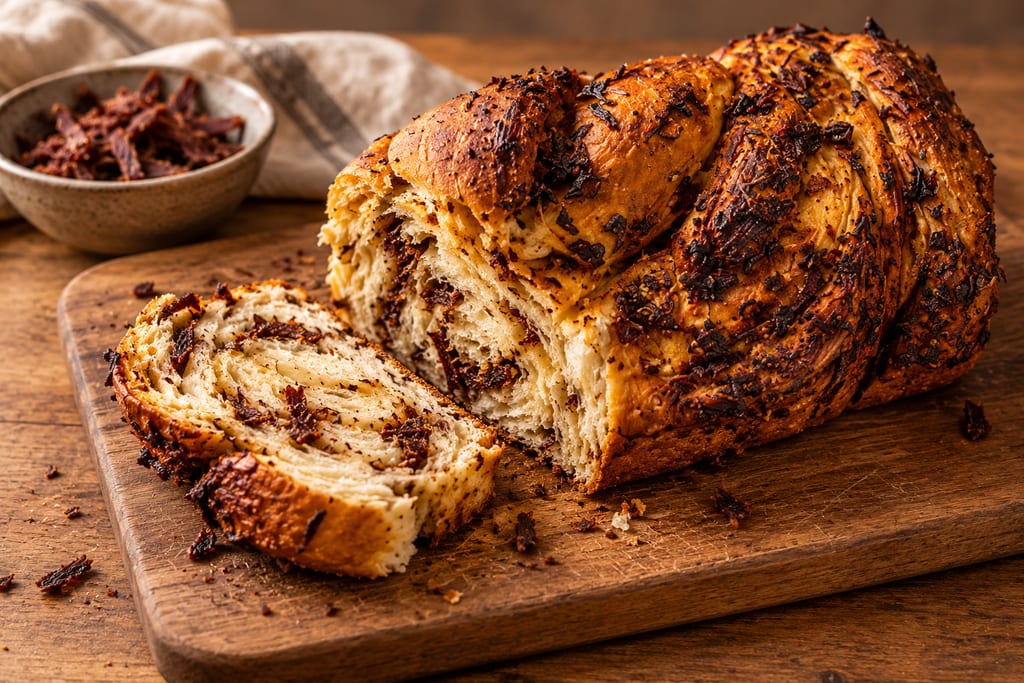
Yeasted bread wrapped around biltong, tomato pesto, Cheddar and feta, split lengthwise into a braid and baked; served with chilli-biltong butter.
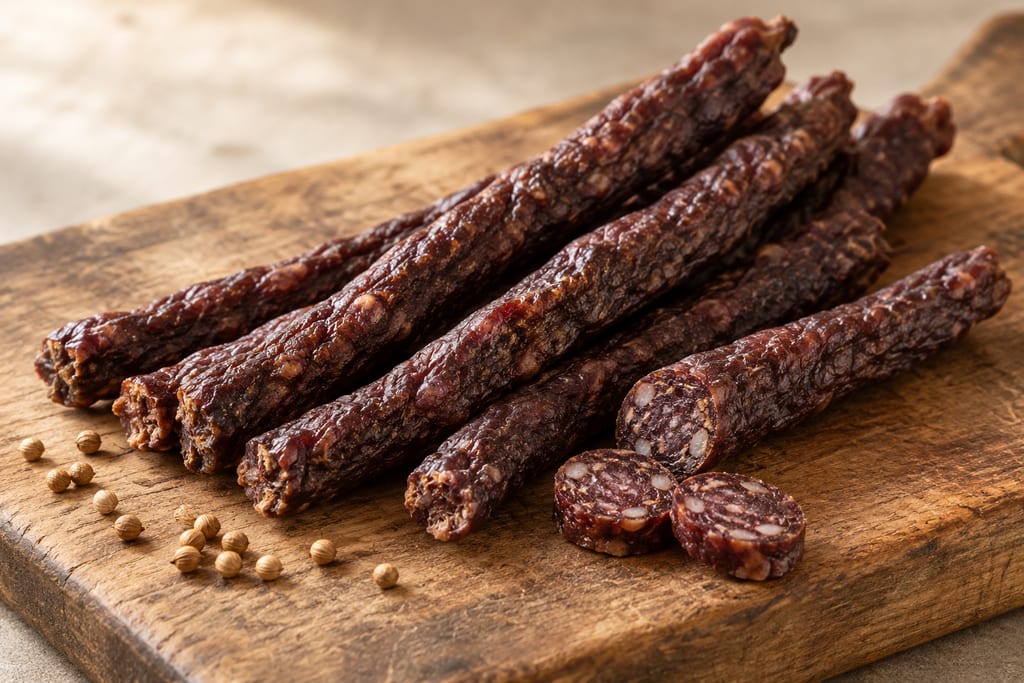
South Africa's dried sausage: seasoned minced meat in narrow casings, dried until it can be eaten without cooking, which makes it a far more demanding product than fresh boerewors.
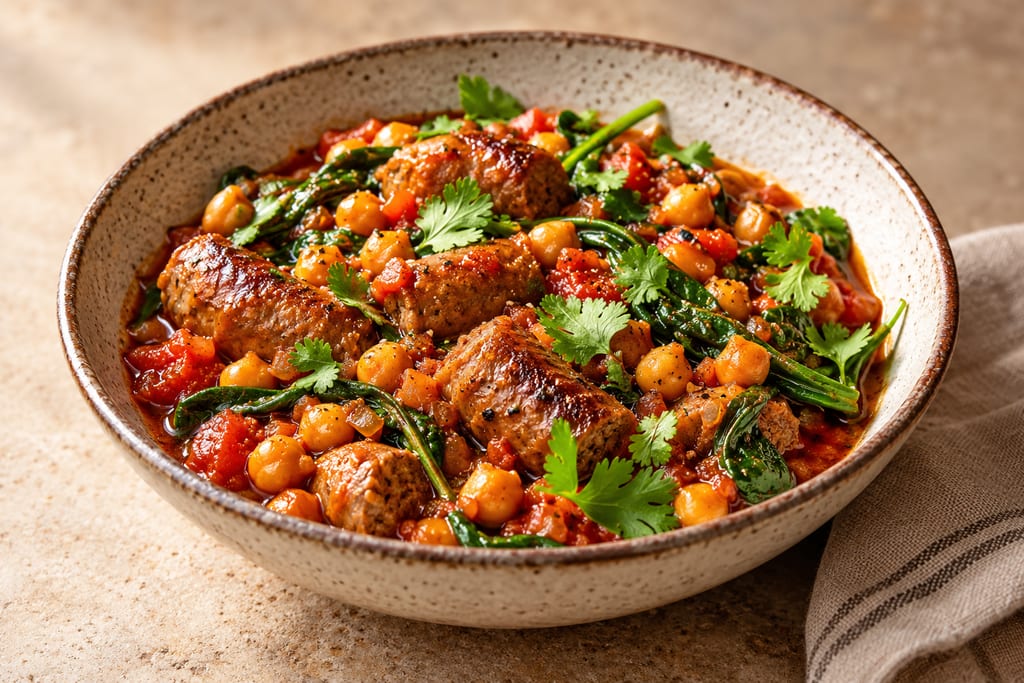
Lesego Semenya’s contemporary South African stew combines browned boerewors, chickpeas, tomato, spinach and warm spices.
No community contributions have been published for this entry yet.
Sign in to contribute. Published comments and photos are free to read.
Deli SpicesMethod
Deli Spices — Mutton masala and Punjab mutton sausage formulationsMutton masala sausage: 13.500 kg mutton described as 70/30, 3.300 kg cold water and 1.200 kg mutton sausage ready pack, total 18.000 kg, the pack described as an aromatic masala with cumin, ginger and garlic followed by medium chilli heat.
Punjab mutton sausage: 13.800 kg mutton trimmings described as 70/30, 3.200 kg water and 1.350 kg hot Punjab mutton ready pack, total 18.350 kg, described as a spicy mutton griller with a particularly strong capsicum burn.
The 70/30 description identifies the supplier's raw meat and fat blend and is not the analysed fat percentage of the finished product.
Cited in: Beyond the coriander-led farmhouse sausage; Names and languages; Three documented commercial formulations; Mutton masala sausage; Punjab mutton sausage; Cumin; Coriander; Ginger; Garlic; Chilli; Establish the formulation; Inspect and chill raw materials; Grind the meat and fat; Prepare the spices; Mix; Stuff; Chill or freeze under a controlled process; Cook thoroughly; Fresh coriander versus seed: a practical variation; Serving and cooking uses; Quality assessment
Deli SpicesMethod
Deli Spices — Dhanya griller and mutton banger formulationsDhanya griller: 15.000 kg meat blend described as 70/30, 3.800 kg ice water and 1.200 kg dhanya griller ready pack, total 20.000 kg, the pack described as containing cumin, garlic, ginger and dhanya with lingering chilli heat. The botanical form of the dhanya in the pack is not stated.
Cited in: Three documented commercial formulations; Dhanya griller; Other contemporary variants
Woolworths South AfricaInspiration
Woolworths South Africa — Halaal dhania beef sausageAn uncooked halaal dhania beef sausage, described as flavoured with dhania, paprika and chilli.
Cited in: Historical context and documentary limits; Other contemporary variants
Woolworths South AfricaInspiration
Woolworths South Africa — Halaal dhania lamb sausageAn uncooked halaal dhania lamb sausage, the lamb counterpart of the beef product.
Cited in: Other contemporary variants
South African TourismHistory
South African Tourism — Historical context for Durban Indian cuisineHistorical context for Durban Indian cuisine: Indian indentured labourers arrived in Natal from 1860 and the indenture system continued into the early twentieth century, and their descendants and other Indian migrants developed distinctive South African food traditions including curry preparations, breads and a varied use of spices.
Cited in: Historical context and documentary limits
Food and Agriculture Organization of the United NationsMethod · Science
FAO — Fresh sausage formulations and processingFresh sausage processing: muscle proteins provide structural binding, salt helps extract proteins including myosin during mixing, cold processing keeps fat particles distinct and limits smearing, and water influences the movement of salt and seasonings through the meat block.
Cited in: Beyond the coriander-led farmhouse sausage; Names and languages; Cumin; Coriander; Ginger; Garlic; Chilli; The science of a spiced fresh sausage; Establish the formulation; Inspect and chill raw materials; Grind the meat and fat; Prepare the spices; Mix; Stuff; Chill or freeze under a controlled process; Cook thoroughly; Fresh coriander versus seed: a practical variation; Serving and cooking uses; Quality assessment
Government of the United KingdomSafety
UK Government — Cooking food safelySafe core-cooking guidance for minced-meat products, to be followed rather than relying on the outer colour, which intense chilli seasoning makes particularly unreliable.
Cited in: Safety, allergens and dietary verification