Alina's Oondhingu
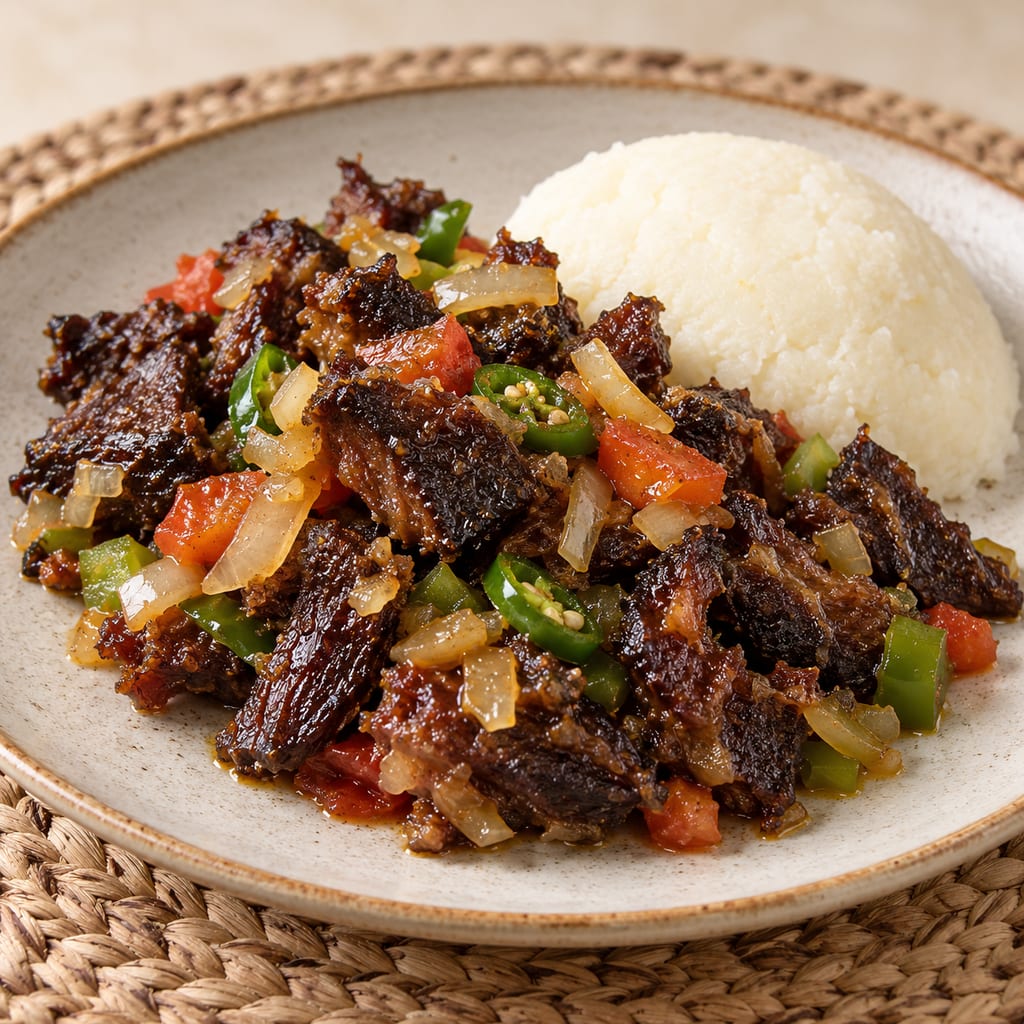
Alina Magano Johannes’s Oondhingu is a family dish from Onyaanya, Oshikoto, in northern Namibia: softened dried beef fried with vegetables and served with pap.
 FermenteaWhere food goes to change
Traditional method
Pap · Mealiepap · Stywe pap · Stywepap · Slap pap · Krummelpap · Phuthu · Uphuthu · Putu · Putu pap
South Africa's maize-meal porridge, which the same white meal turns into a soft breakfast pap, a firm sliceable mound or the separate moist granules of phuthu depending only on water and handling.
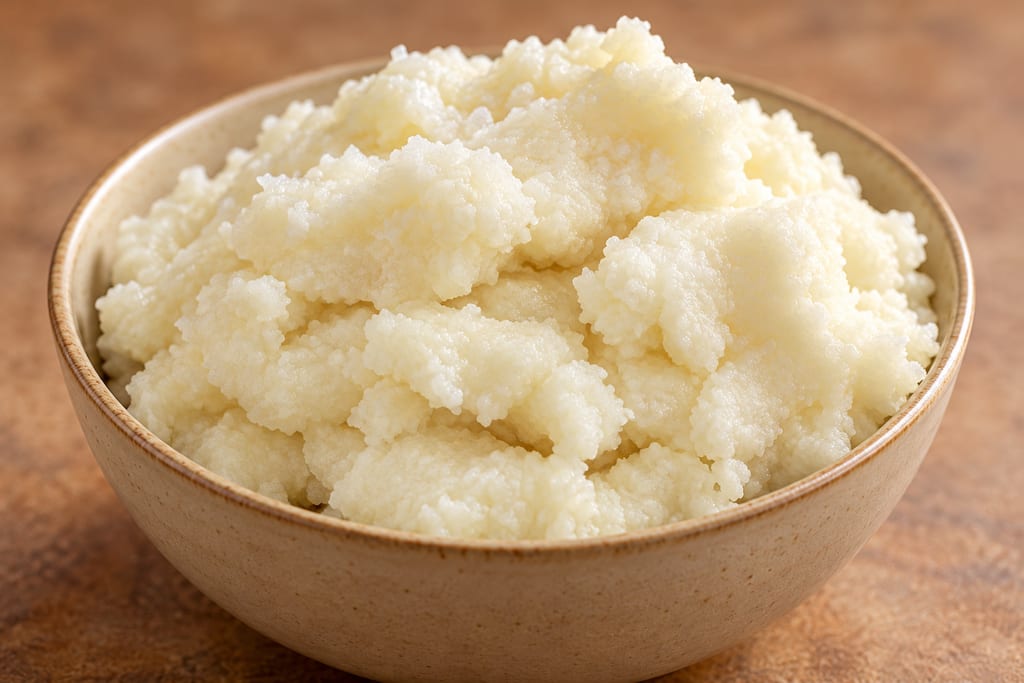
Pap is a staple of South African cooking, made by combining maize meal with water and heating it until the starch thickens.
It can be a soft porridge eaten with milk, a firm mound served with grilled meat, or a crumbly preparation whose granules separate into tender pieces.
The ingredient list is short, but the method makes an enormous difference.
A soft breakfast pap and a dry, crumbly phuthu may both begin with the same white maize meal, yet they do not behave the same way in a pot or on a plate.
Pap is also central to the way South African sausages are eaten. Boerewors with pap and tomato relish is a familiar combination. So is pap with chakalaka, stewed meat or other vegetable accompaniments.
The word describes more than a single recipe, and the variety is worth understanding rather than reducing everything to the English label maize porridge.
Pap is used in Afrikaans and South African English.
Mealiepap or mieliepap identifies porridge made from maize meal; mielie is the familiar South African term for maize.
Stywe pap means firm or stiff pap.
Slap pap refers to a softer, more fluid preparation.
Krummelpap describes a crumbly style.
Phuthu or uphuthu is particularly associated with isiZulu usage, although spellings and descriptions vary. The Dictionary of South African English also records putu and putu pap.
The dictionary documents the term in published sources from at least 1952 and notes that it can refer to very stiff pap or a dry, crumbly preparation.
The variation in names reflects actual culinary differences, but it does not always map cleanly onto fixed water-to-meal ratios.
The botanical species is maize, Zea mays L., a grass in the family Poaceae.
Maize originated in the Americas and spread to other parts of the world after transatlantic contact.
It therefore cannot have been used in pre-Columbian southern African cookery, even though cereal porridges and cooked grain foods have much older histories on the continent.
Before maize became a major staple, southern African communities cultivated and consumed other grains, including sorghum and millets.
Maize gradually became increasingly important because it was adaptable to many agricultural systems and could be milled into products suitable for everyday cooking.
The precise adoption history varied by community, region and agricultural circumstances.
It would be inaccurate to assign one date when every household in southern Africa changed from sorghum to maize.
The later establishment of maize milling and commercial meal production also affected the texture, availability and convenience of pap.
Coarse and finely milled maize products behave differently under heat.
South African pap today belongs to household, rural, urban and commercial food culture. It is prepared for breakfast, eaten as an accompaniment to grilled meat, and used as a substantial base for stews and relishes.
The history is therefore not confined to braais. Pap is an everyday staple that acquired an additional public identity through its association with sausage and grilled meat.
Maize kernels contain starch-rich endosperm, a germ containing fat and other nutrients, an outer bran-like layer and structural tissues.
Milling changes how these components are represented in the final product.
Finely milled meal generally hydrates more rapidly and can form a smoother porridge.
Coarser particles take longer to hydrate and may produce a more textured result.
White and yellow maize varieties also differ in pigment composition.
A University of KwaZulu-Natal doctoral study investigated the processing of white maize and provitamin-A-biofortified maize into foods including phuthu and thin porridge.
The work demonstrates that pap preparation is not only a question of cooking technique: grain variety, milling and heating can affect nutritional properties and consumer acceptance.
It would be misleading, however, to claim that a yellow colour by itself guarantees a particular provitamin A content.
Most of maize meal's thickening behaviour comes from starch.
Starch is organised into granules composed principally of two glucose polymers: amylose and amylopectin.
When the granules are heated in water, they absorb moisture and swell.
As gelatinisation proceeds, the granules lose some of their original ordered structure, and amylose can move into the surrounding water.
The result is a thickened mixture whose texture depends on the amount of available water, the concentration of starch, the particle size and the heating process.
A high proportion of water generally allows a smoother, more fluid porridge.
A lower proportion of water results in a firmer mass or, when handled appropriately, separate moist granules and clumps.
Stirring is important because it distributes water and heat. It can also affect the mechanical structure of the finished porridge.
The cooking vessel influences the process. A thick pot provides a different pattern of heat transfer from a thin pan over intense direct heat.
After cooking, starch begins to reorganise as the food cools. This process, commonly termed retrogradation, contributes to firming and can change the eating texture of leftovers.
Pap is not necessarily a fermented food. Its normal transformation is physical and chemical, driven by hydration and heat.
Some maize products are intentionally fermented before cooking, but those should be distinguished from ordinary pap made directly from dry meal.
Phuthu is particularly distinctive because the finished product consists of separate moist particles or granules rather than one smooth mass.
A University of KwaZulu-Natal study documented a standardised research preparation developed with experienced cooks from rural KwaZulu-Natal.
Its measured recipe used:
The research preparation did not add salt or sugar for that particular nutritional comparison.
The unusually low water-to-meal ratio is central to the crumbly texture.
The mixture is not prepared like a thin porridge. Instead of suspending a small amount of meal in abundant water, the cook introduces a relatively large amount of meal into a limited amount of boiling water.
Stirring helps break up the hydrated material. Gentle, covered heating then allows moisture to move through the granules.
The study's timing is a documented research method. It is not proof that all phuthu requires precisely the same cooking time.
A household cook using a different maize meal, stove or vessel may obtain a different result.
Water — 280 ml
Maize meal — 2 cups, measured as 268 g
Cooking period — Approximately 75 minutes
Heat — Low, covered, with occasional stirring
If the water is distributed unevenly, dry flour can remain trapped inside larger clumps.
If the heat is too aggressive, the bottom may scorch before the rest has cooked.
If too much water is added, the mixture becomes more like stiff pap.
If the meal is not allowed to hydrate adequately, the product may retain an unpleasant raw or gritty texture.
The successful result is not completely dry. It is cooked maize meal organised into soft, separated particles.
The University of the Free State published a soft-pap recipe in a 2024 nutrition and recipe booklet.
Its ingredients are:
The method is explicit about adding the maize meal in stages.
First bring the water to a boil, add the salt and slowly introduce 1 cup of the maize meal, stirring to prevent lumps.
Cover the pot, lower the heat and cook for 5 minutes.
Add the remaining ¼ cup of maize meal and stir well.
Cover again and continue cooking on low heat for 15 minutes.
The booklet separately describes the overall cooking time as 30 minutes, which is longer than the specifically enumerated covered stages. That discrepancy should be retained rather than hidden by inventing another stage.
The ratio and method describe this particular recipe.
They should not be treated as the official definition of all South African soft pap.
Water — 1½ cups
Maize meal — 1¼ cups, added in two stages: 1 cup, then ¼ cup
Salt — ½ teaspoon
The KwaZulu-Natal study also documented a much more fluid preparation.
The process used 2,000 ml water brought to the boil.
The researchers then mixed 268 g maize meal with 500 ml cold water to make a paste before adding it to the boiling water.
The porridge was cooked for 25 minutes on medium heat with occasional stirring.
Making a cold slurry before adding starch to hot water can reduce clumping.
This method distributes the particles before they gelatinise.
It therefore differs from phuthu, where the low water proportion and handling aim to maintain a crumbly structure.
Thin pap can be used as a breakfast porridge or eaten with milk or other accompaniments.
The exact degree of sweetness, richness or seasoning depends on the household.
Firm pap occupies another part of the texture range.
It is thick enough to hold its shape on the plate, and it can be cut or divided into portions.
A published Thermomix recipe for stywe pap specifies 200 g maize meal, 600 g hot water and ½ teaspoon sea salt, with a total preparation time of 40 minutes.
This is one appliance-specific formulation, not a legal or historical standard.
Its existence also shows that texture is not predicted by water ratio alone. Mixing, heating, evaporation, meal properties and standing time matter.
A household pot with a loose lid may lose more water than a tightly controlled cooking system.
For editorial accuracy, the preparation method and ingredient measurements must remain associated with the source that published them.
Pap is frequently served with boerewors, braaiwors, grilled chops or meat stew.
It provides a mild starch base against which salty, fatty or highly seasoned foods become more pronounced.
Tomato-and-onion sauce, often called sheba, is a familiar accompaniment.
Chakalaka adds more assertive vegetable, curry and chilli flavours.
Pap also goes with beans, leafy vegetables, stews and milk.
The texture chosen often reflects the intended meal.
A crumbly phuthu can absorb or carry sauce between its granules.
A firm pap can be served as a substantial portion beside grilled meat.
A soft porridge can be eaten from a bowl with a spoon.
These uses show why pap is a central food in its own right rather than merely a neutral side dish for sausage.
Large dry lumps usually indicate inadequate initial distribution of water.
Gradual addition and deliberate stirring help prevent them in smooth-pap preparations.
Phuthu deliberately has small clumps, but they should be properly hydrated rather than dry inside.
High heat, insufficient movement or an unsuitable pan can cause burning.
A thick-bottomed pot and controlled heat reduce the problem.
The meal may not have been cooked or hydrated sufficiently.
This is particularly likely with coarser particles or a mixture that has lost too much water before the starch is cooked.
Very fine meal combined with prolonged vigorous mixing can produce a dense, sticky mass.
This is not necessarily a safety problem, but it may be undesirable for a preparation intended to be crumbly.
The result becomes too soft to hold the expected form.
Adding more dry meal late in cooking can alter texture and requires additional cooking to eliminate raw flour.
A very large pot or a batch with irregular heat distribution may develop sections with different consistency.
Pap supplies carbohydrate and energy, but its nutritional composition depends on maize variety, milling and any added ingredients.
Plain maize pap should not be presented as nutritionally equivalent to a complete meal containing vegetables, legumes and protein foods.
Research into biofortified maize indicates that grain selection and cooking can influence nutrient retention.
Food safety becomes important after preparation. Cooked starchy foods can support microbial growth if held improperly.
A large pot of cooked pap should not be left at an uncontrolled temperature for extended periods.
Cool leftovers promptly using safe food-handling practices, refrigerate appropriately and reheat thoroughly when required.
The exact safe holding limits depend on the applicable food-service rules; the university recipes cited here do not establish a validated shelf-life for stored pap.
Pap is best understood as a family of maize preparations in which water, starch, heat and stirring create distinctly different textures. That technical diversity is part of its cultural importance.
Cereal porridges and cooked grain foods have much older histories in Africa than maize does. Before maize became a major staple, southern African communities cultivated and consumed other grains, including sorghum and millets, and maize gradually became more important because it suited many agricultural systems and could be milled into products for everyday cooking. The adoption history varied by community, region and agricultural circumstance, and no single date can be assigned at which every household changed from sorghum to maize. The later establishment of maize milling and commercial meal production affected the texture, availability and convenience of pap, since coarse and finely milled products behave differently under heat. Pap is an everyday staple that acquired an additional public identity through its association with sausage and grilled meat, so its history is not confined to the braai.
Scaling: source batch only
Cooked starchy foods can support microbial growth if held improperly, and a large pot of pap cools slowly.
Hazard sourceMeal that has not hydrated or cooked sufficiently retains a raw or gritty texture, which is particularly likely with coarser particles or a mixture that has lost too much water before the starch is cooked.
Hazard sourceCool leftovers promptly, refrigerate appropriately and reheat thoroughly
Control sourceA large pot of cooked pap should not be left at an uncontrolled temperature for extended periods.
Unexpected bubbling or sourness in stored pap is not a sign of intended fermentation: ordinary pap is made directly from dry meal and is not a fermented food.
Plain maize pap is not nutritionally equivalent to a complete meal containing vegetables, legumes and protein foods.
A yellow colour does not by itself establish a particular provitamin A content.
A regional association: phuthu is particularly associated with isiZulu usage and the documented research preparation was developed with cooks from rural KwaZulu-Natal. Pap itself belongs to household, rural, urban and commercial food culture across the country.
Alina Magano Johannes’s Oondhingu is a family dish from Onyaanya, Oshikoto, in northern Namibia: softened dried beef fried with vegetables and served with pap.
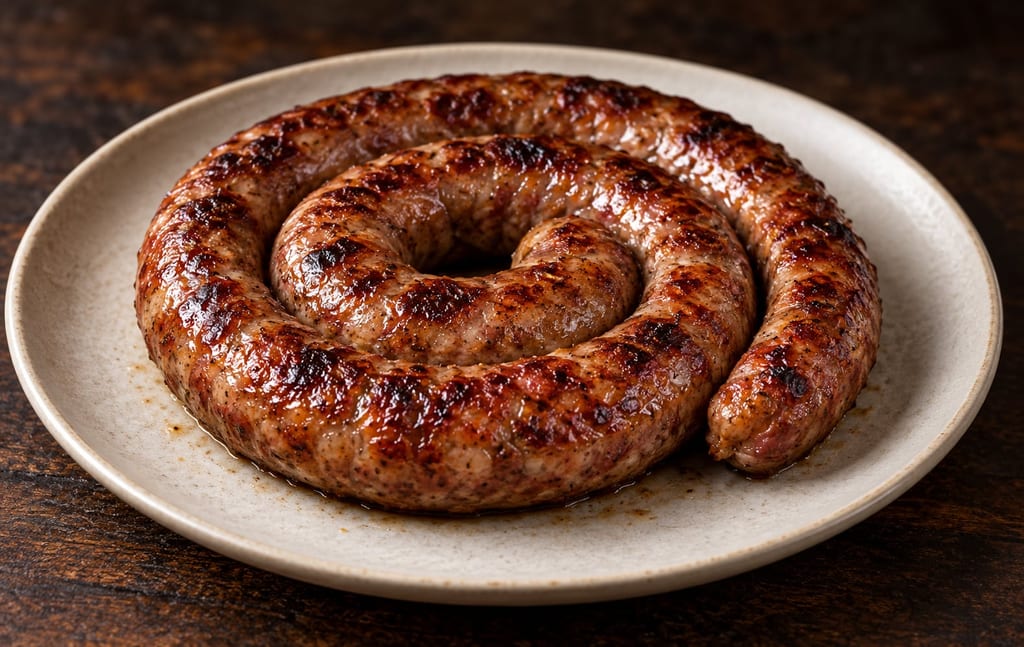
A coarse South African farmhouse sausage of beef with pork or mutton fat, defined by its coriander seasoning and cooked fresh over coals rather than preserved.
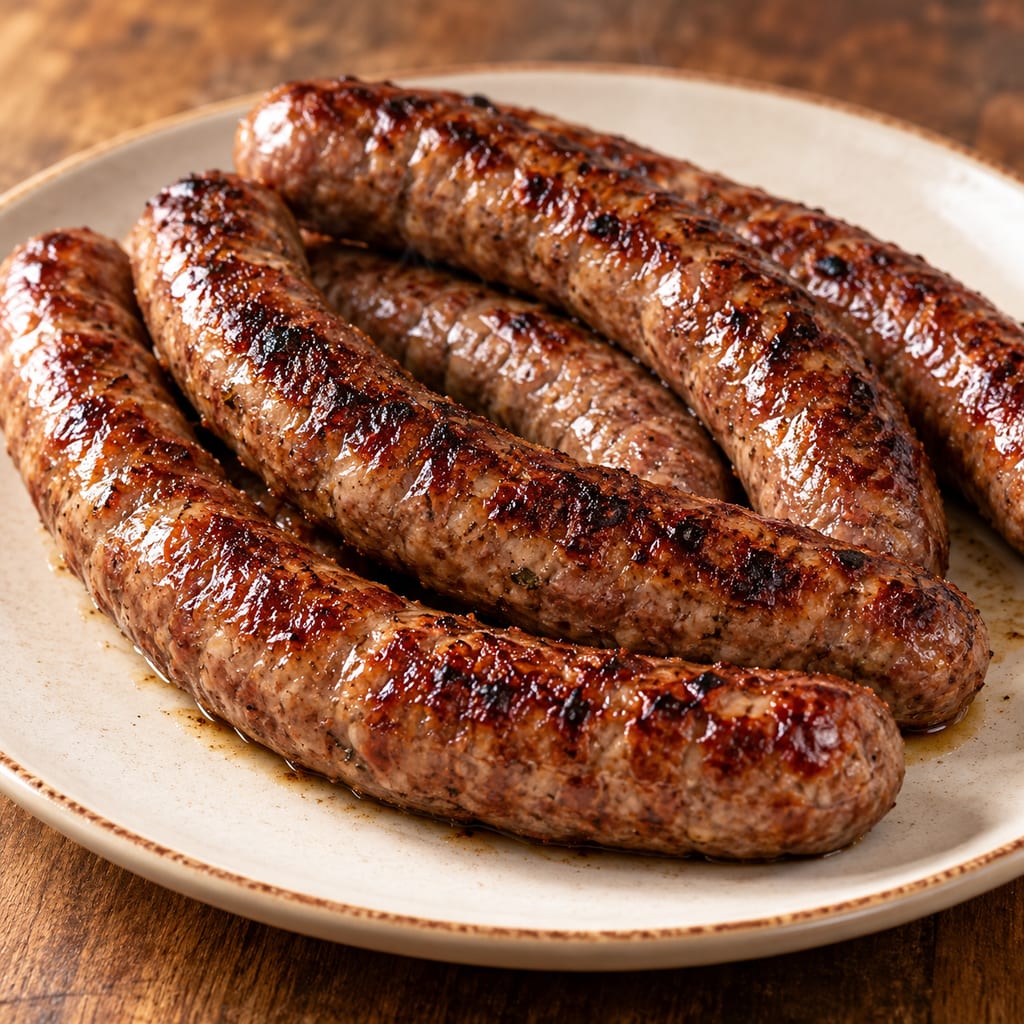
South Africa's regulated grilling-sausage class, looser than boerewors: a minimum of 40% meat, vegetable protein and mechanically recovered meat allowed, and sold raw.

A spicy South African vegetable relish of onion, carrot, pepper, tomato, curry seasoning and beans, cooked briefly and served warm or cold beside pap and grilled meat.
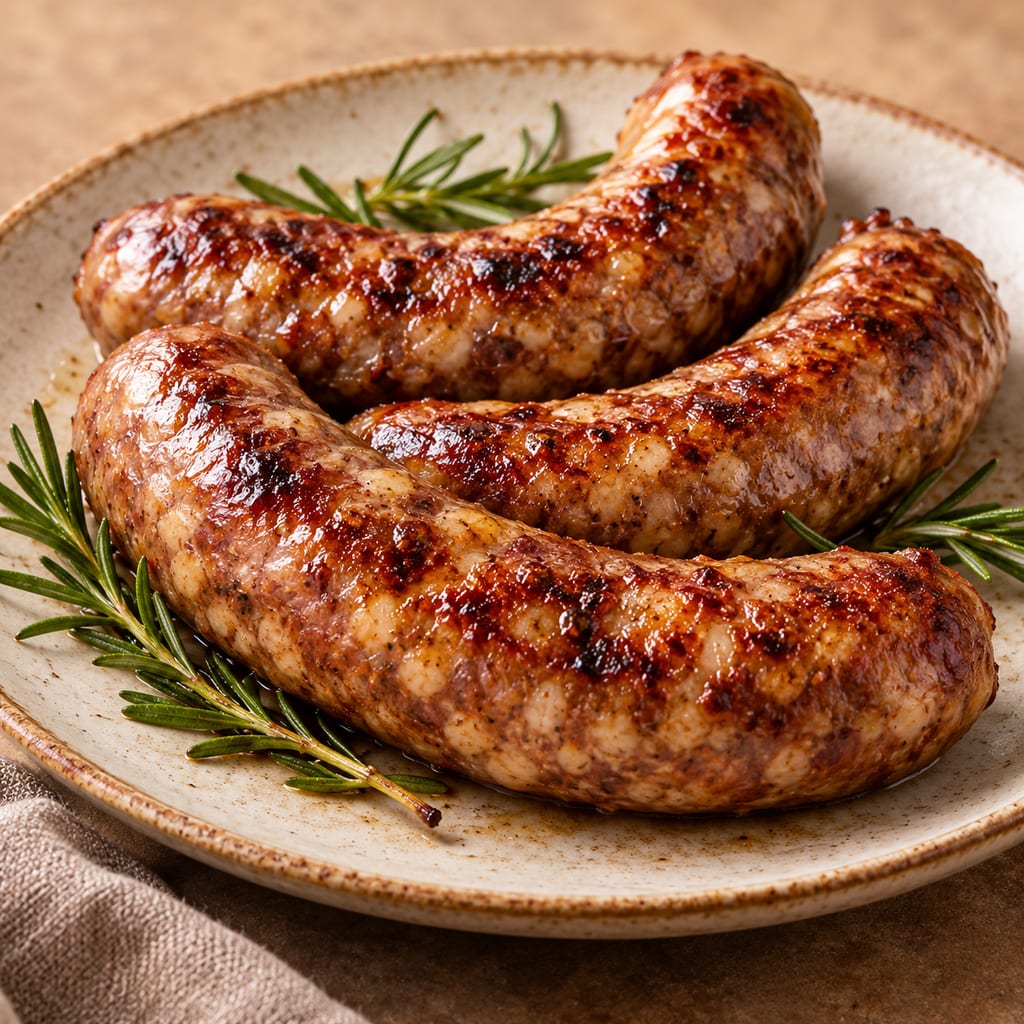
South Africa's spiced fresh sausage family, sold as masala, dhania or Punjab wors: cumin, ginger, garlic and chilli in place of the mild coriander-and-clove seasoning of boerewors.
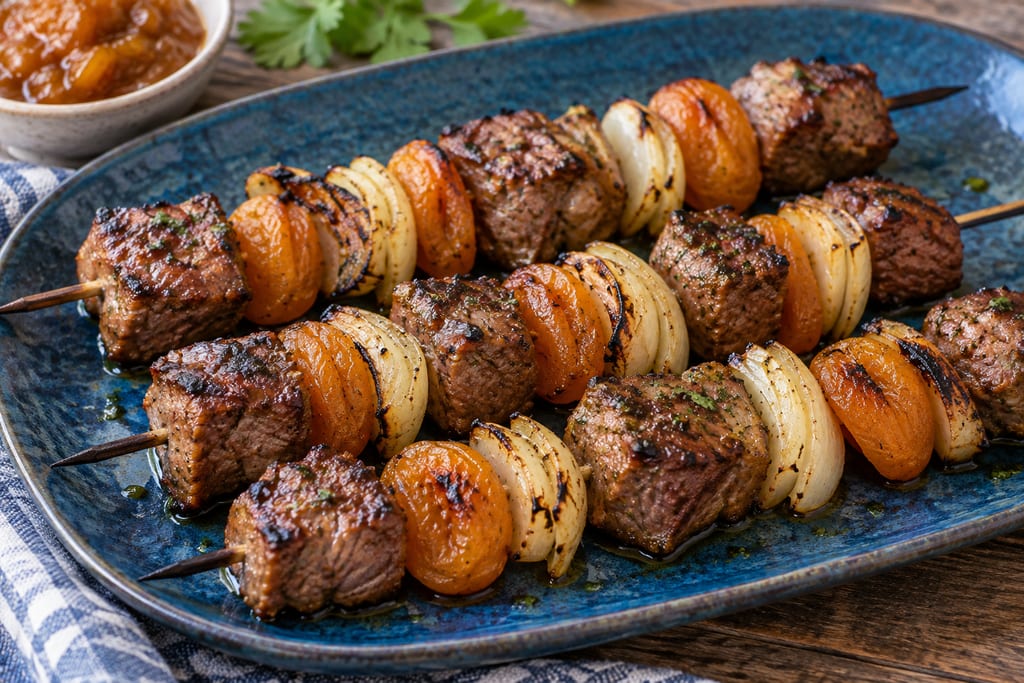
Cape skewers of marinated lamb or mutton threaded with onion, fat or dried fruit and grilled, their marinade balancing curry spice against vinegar or tamarind and something sweet.
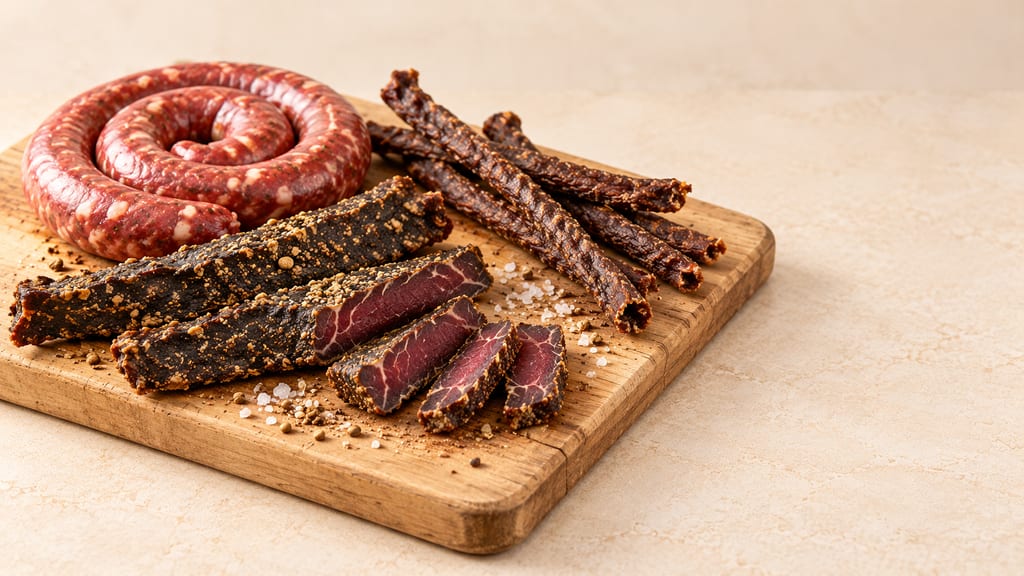
Boerewors, biltong and droëwors share a table but follow different paths from meat to meal. Their histories lead from the braai and butcher's counter to drying lines, household pots and the science of keeping food.
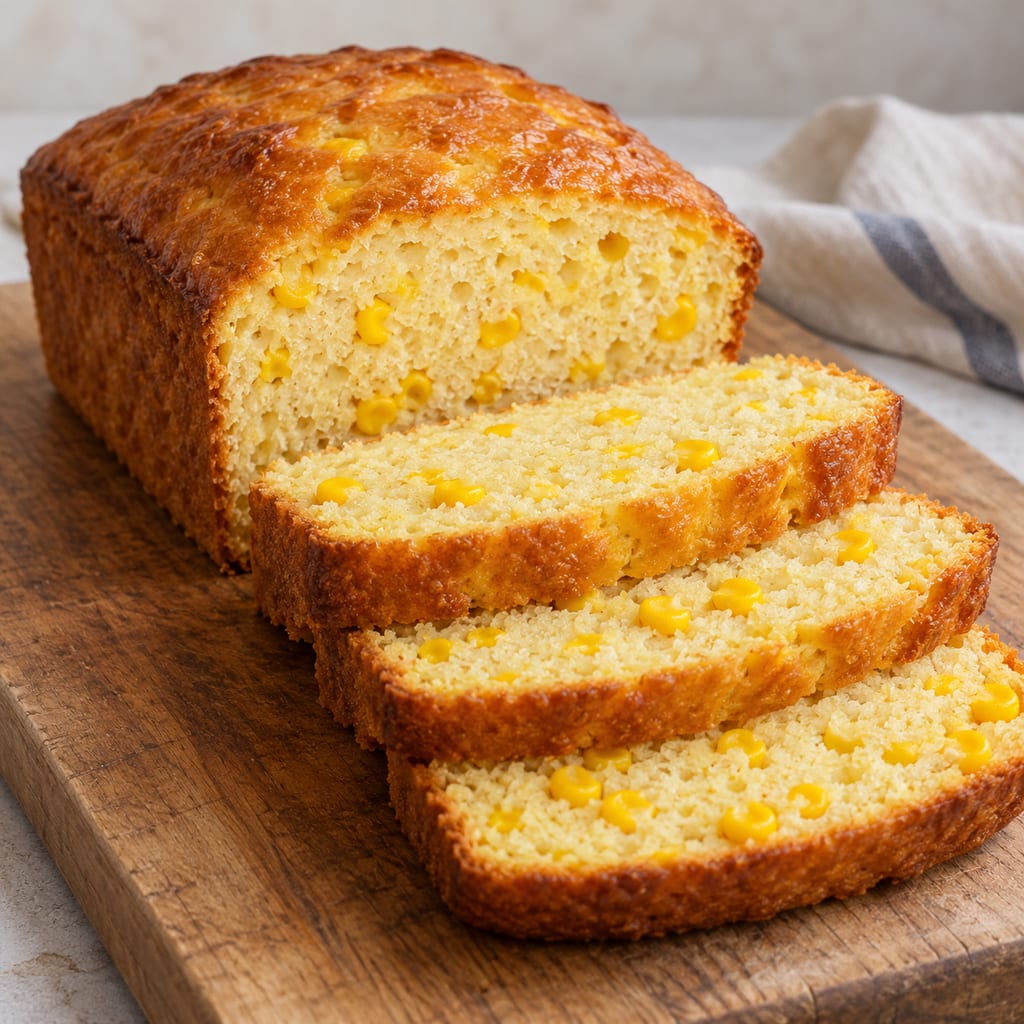
A South African sweetcorn loaf made from a rich, yeast-raised batter with both creamed sweetcorn and drained kernels. This version is baked in a loaf tin; it is distinct from steamed mielie breads and from maize-meal quick breads.
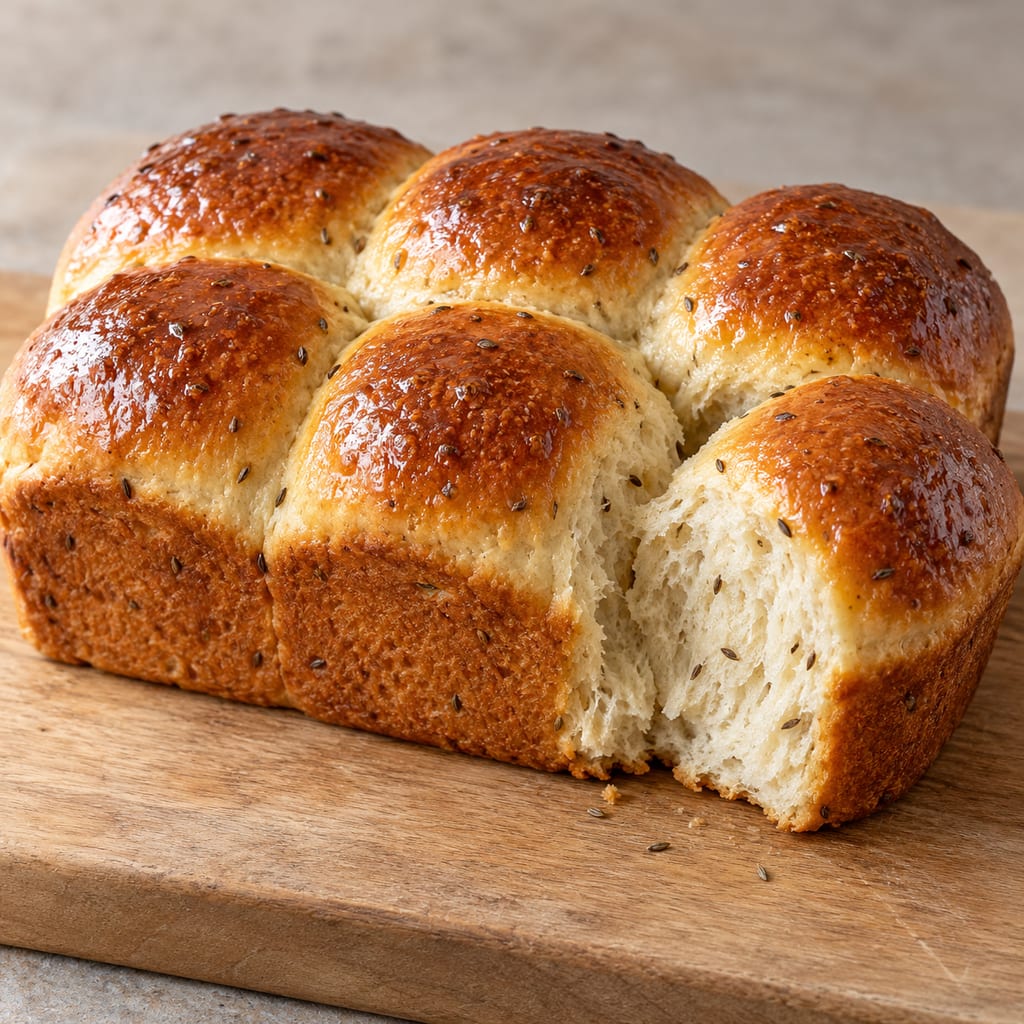
This modern South African mosbolletjies recipe uses white grape juice and instant yeast in an anise-scented enriched dough. It makes two pull-apart loaves; grape juice with commercial yeast is not the traditional fermenting-must leaven.
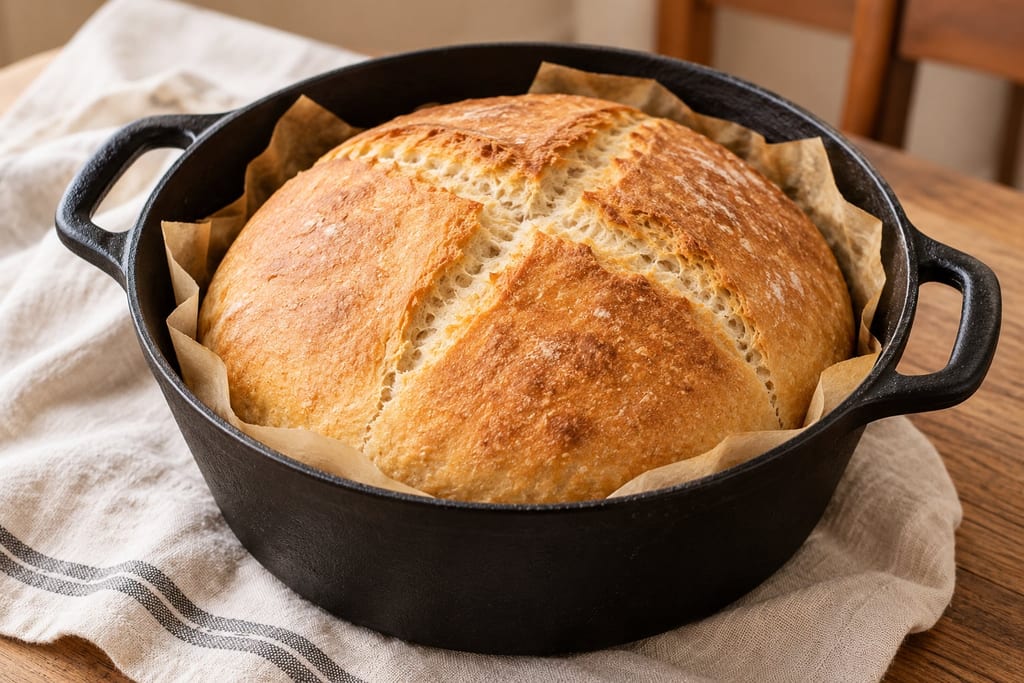
A modern South African potbrood home method: a yeast dough proofs in a 4 L cast-iron pot and bakes covered, then uncovered, in a domestic oven.
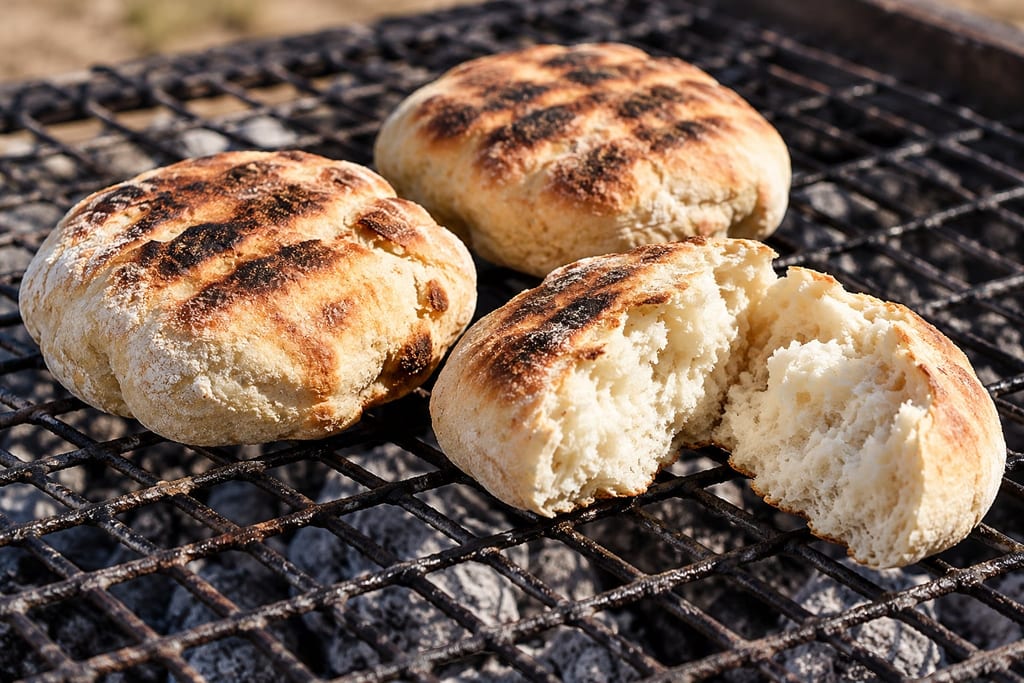
Roosterkoek is a small yeast-raised South African bread cooked over gentle braai coals. This enriched dough rises twice and is turned on the grid until browned and cooked through.
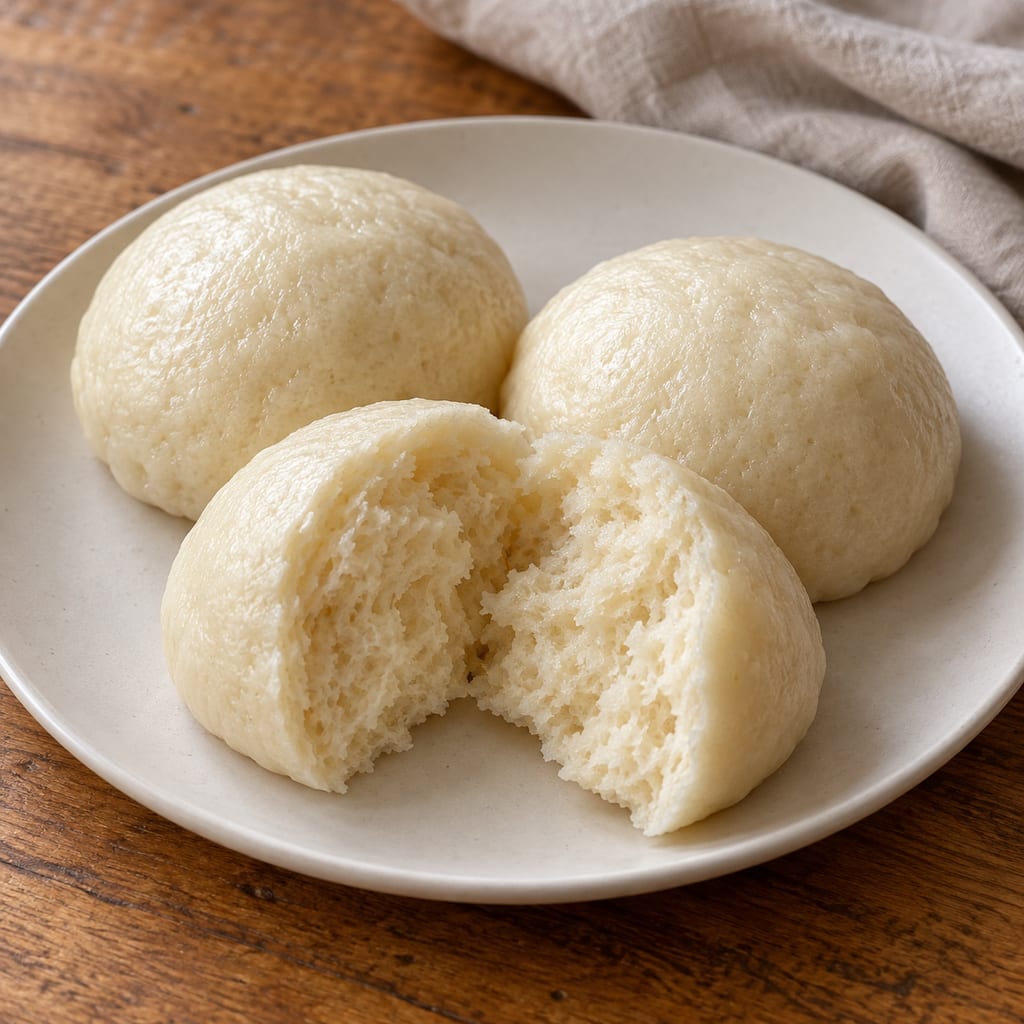
This tin-steamed South African dombolo uses yeast dough with bread flour and olive oil. It rises twice, steams for about an hour, and is checked with a clean skewer.
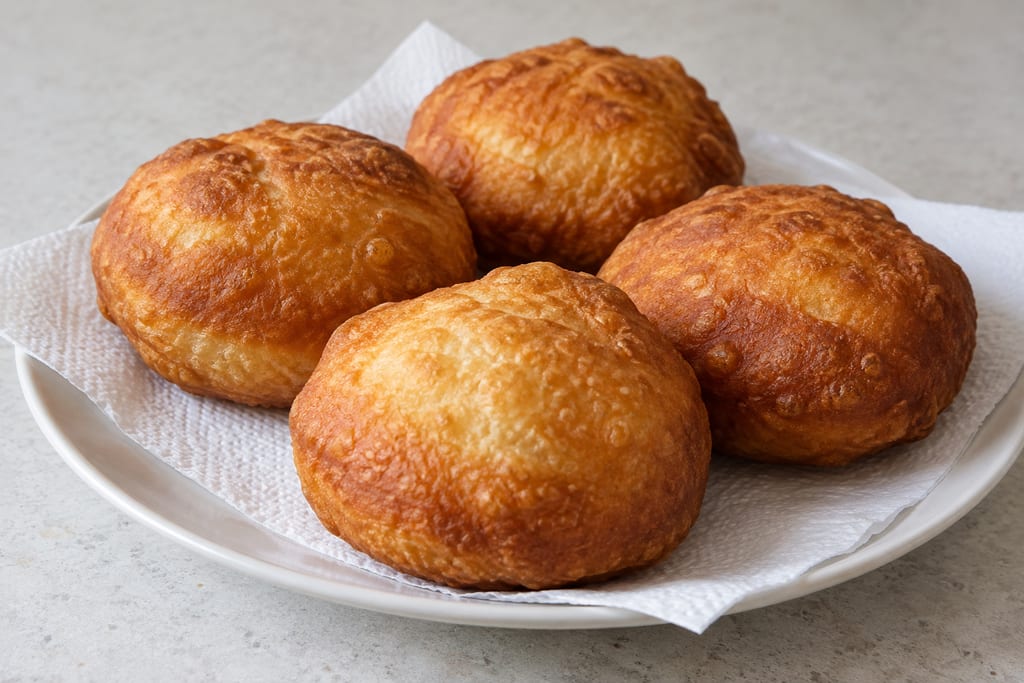
This South African vetkoek batch uses margarine-enriched wheat dough with instant yeast, shaped into 24 portions and deep-fried until golden.
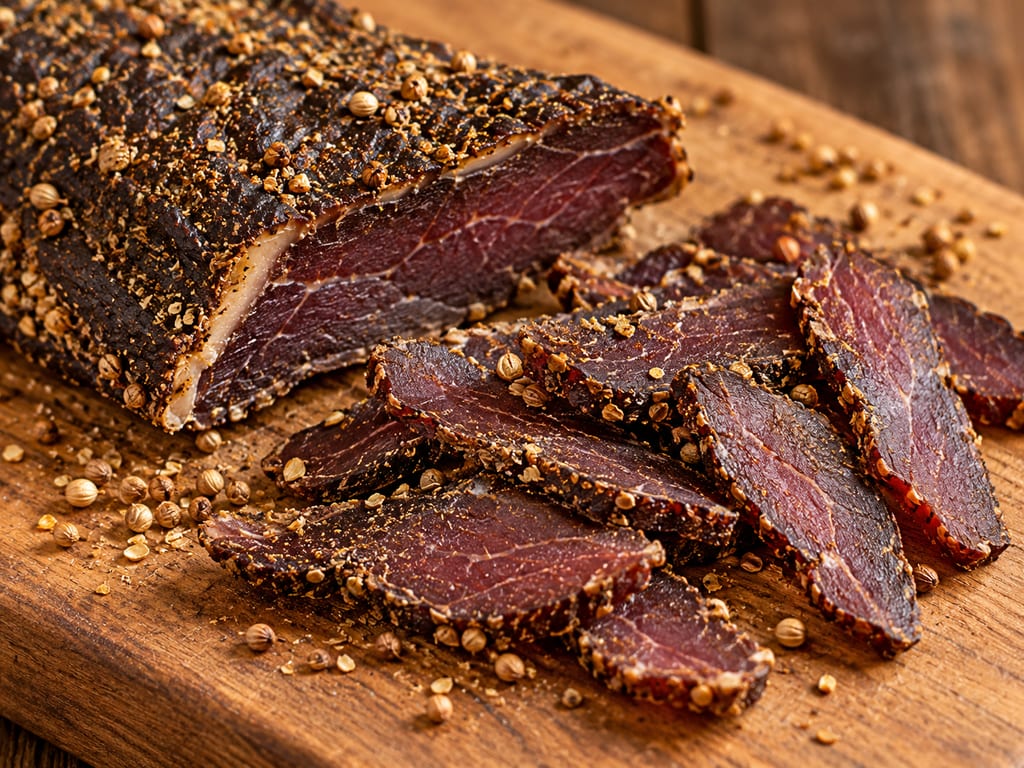
Strips of whole-muscle beef or game seasoned with salt, vinegar, roasted coriander and pepper and air-dried without cooking, sold anywhere from soft and moist to hard and very salty.
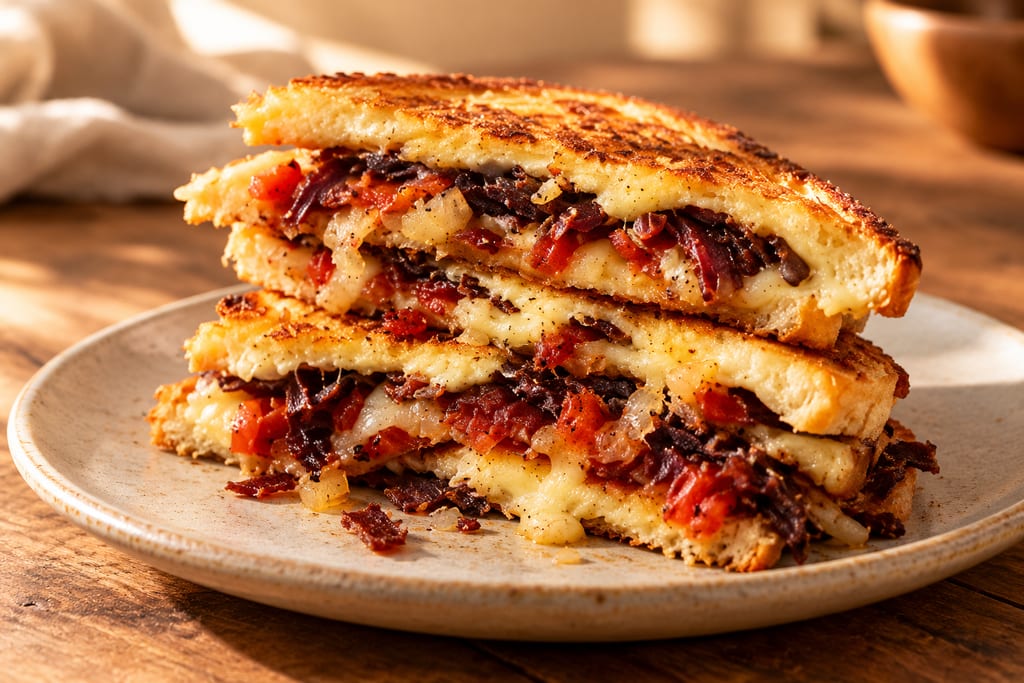
Chopped biltong, sweet onion, cream cheese and Cheddar fill bread toasted in a hinged grid over gentle coals, then finished with biltong dust.
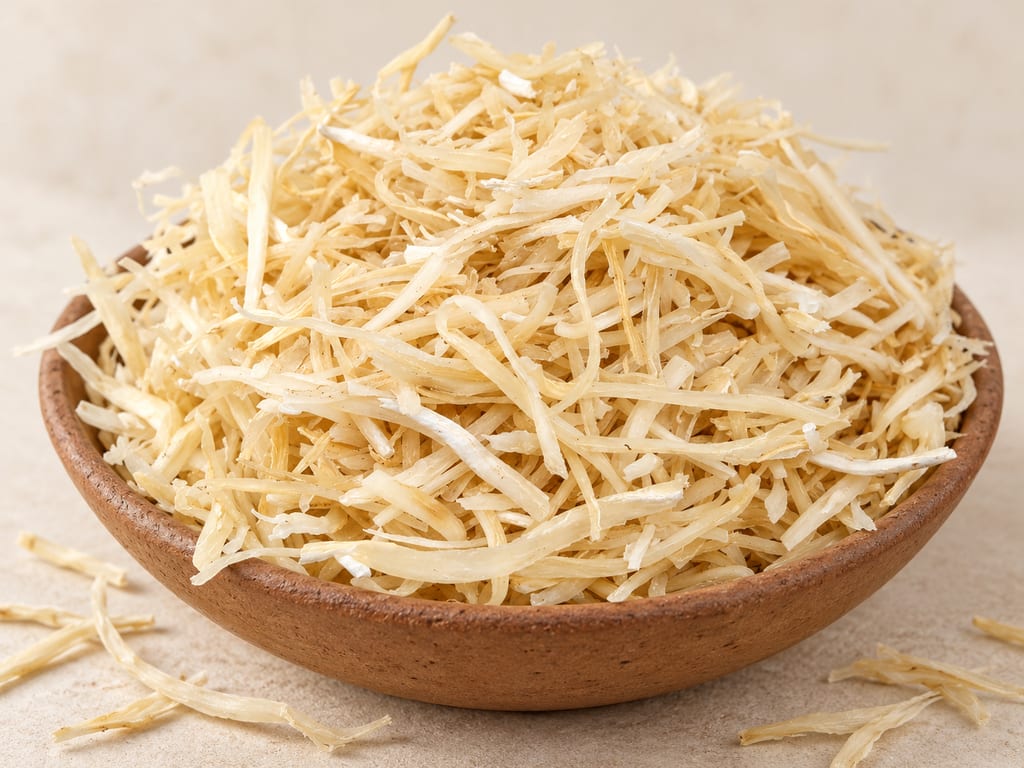
Abacha is a fermented cassava-strip preparation from southeastern Nigeria, sold wet or dried and later rehydrated for meals such as African salad.
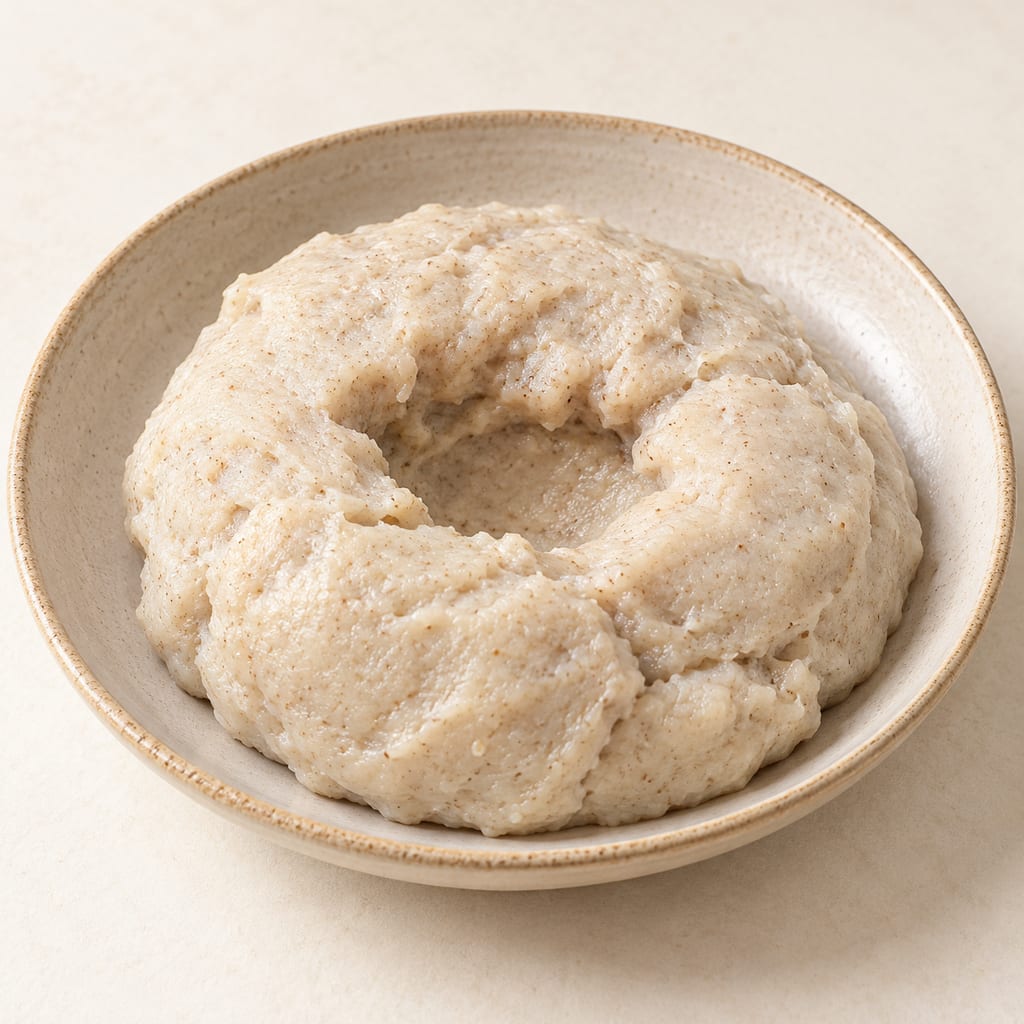
Aceda is Sudan’s firm cereal porridge, commonly made from sorghum and shaped into a smooth mound. Some versions use fermented dough; fermentation is not universal.

Ghanaian sour cassava dough fermented with traditional inoculum and drained during fermentation. It is used as a base for cooked foods such as banku and akple; process variants and safety outcomes differ.

Appam, or hoppers, are South Indian and Sri Lankan rice pancakes made from a fermented coconut-and-rice batter and cooked in a curved pan to a crisp lacy rim and a soft, spongy centre.
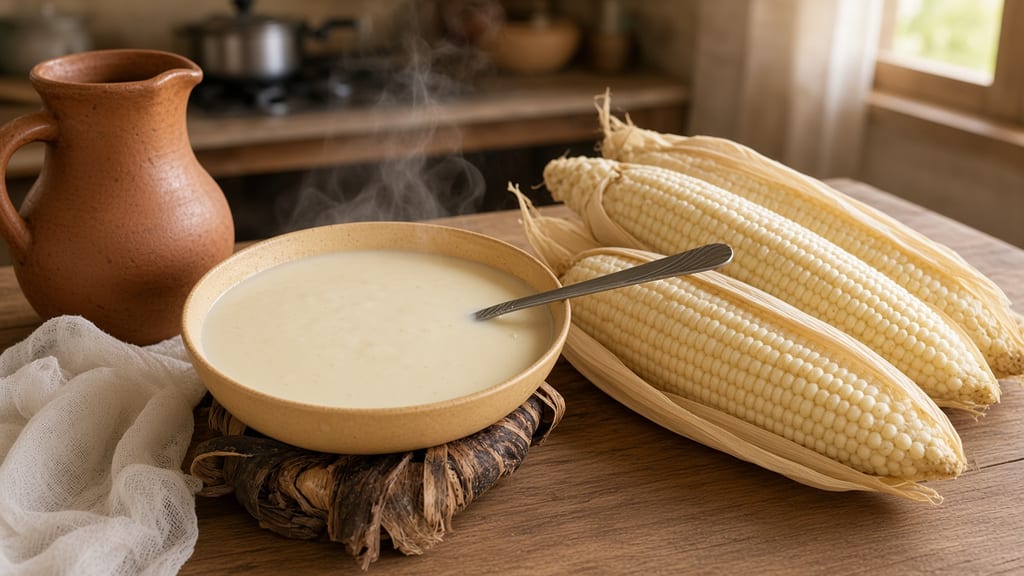
A hot, sour maize drink from Tabasco made from maize that is not lime-cooked. The ground grain sours for half a day, then makers strain it and boil it until thick.
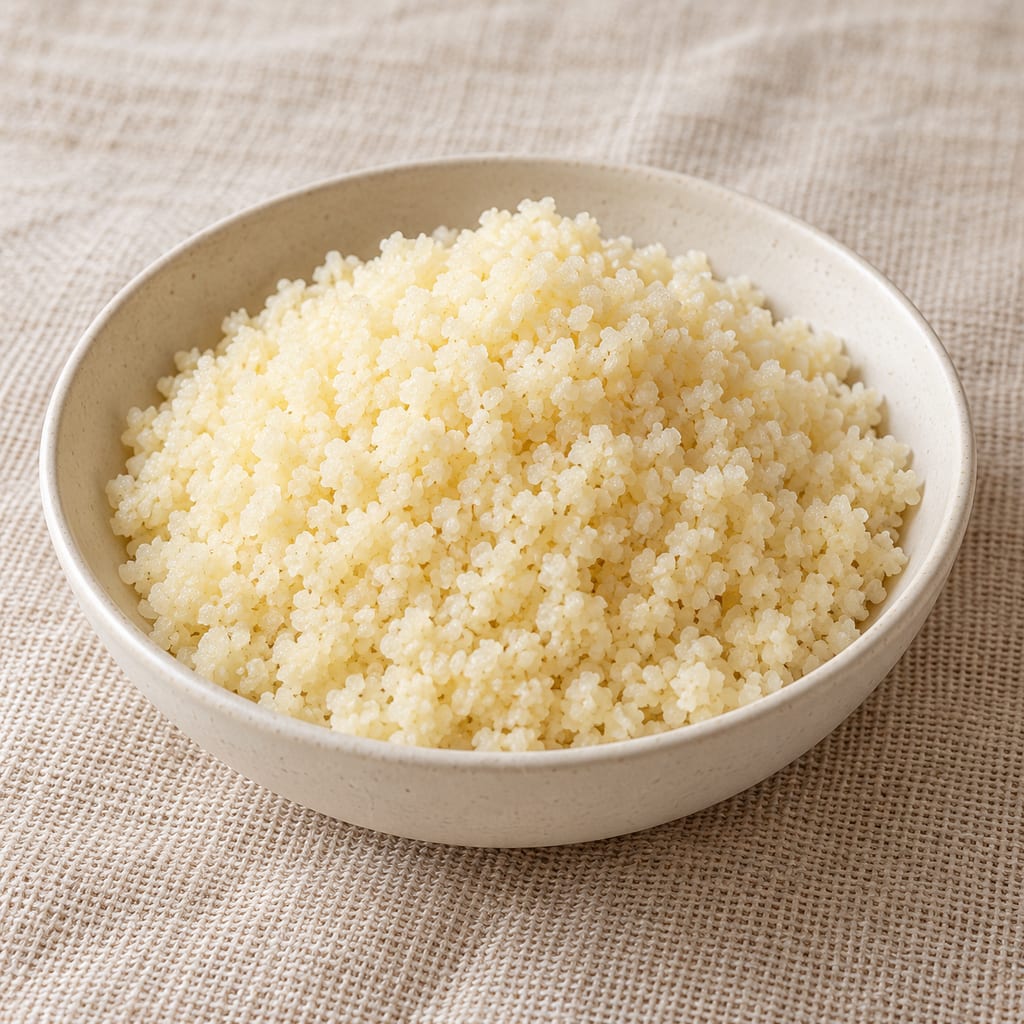
Ivorian cassava semolina: grated cassava is fermented overnight with a traditional inoculum, pressed, sieved into granules, dried and steamed. Documented in a 2006 field study; no sole original process is established.
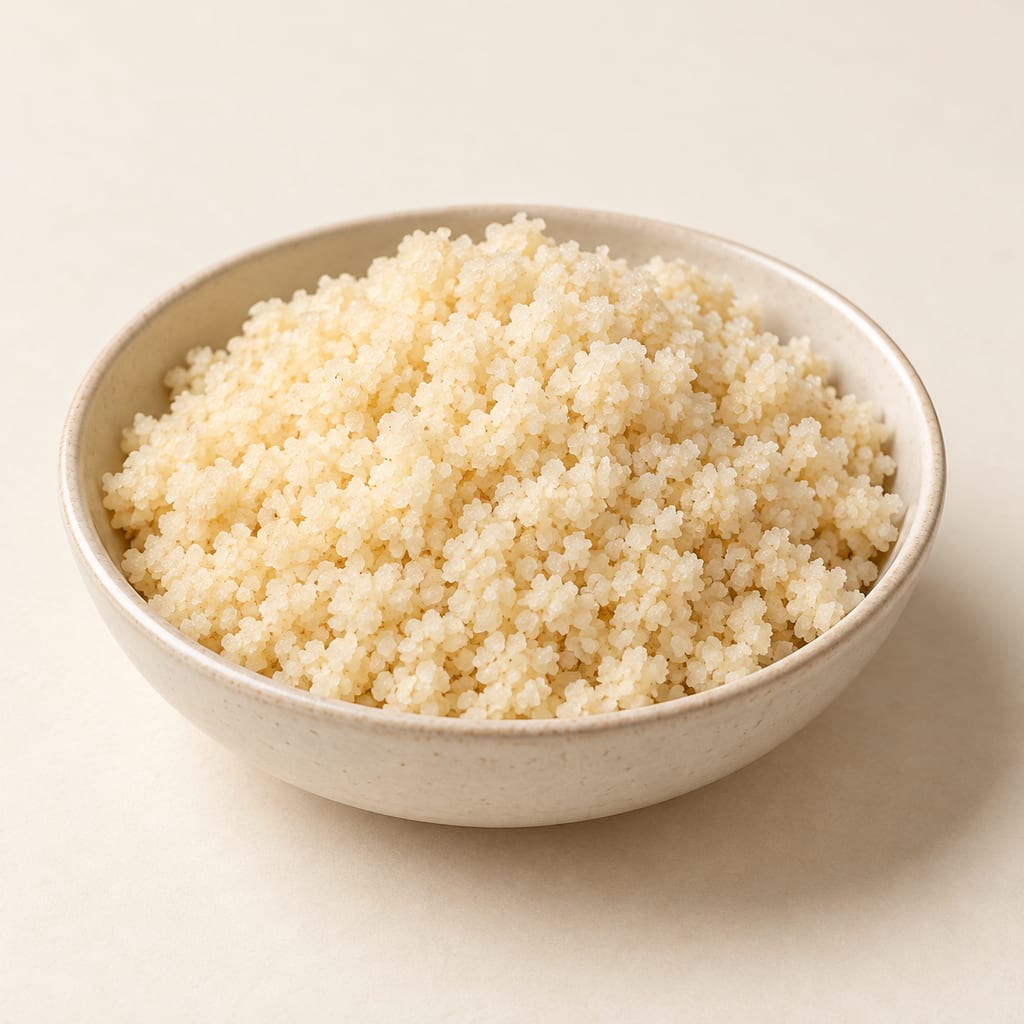
Attiéké is an Ivorian staple of grated cassava fermented with a traditional inoculum, then pressed, sieved, granulated, dried and steamed into fine couscous-like grains.

Crushed or milled barley cooked in water until the starch softens and the mixture thickens, the plainest way a northern household turned stored grain into a meal, here with apple and hazelnut.

A Cap-Pelé boucanière is an Acadian herring-smoking building. The documented Willie Niles example is a one-storey wood-frame structure with a ridge smoke vent and interior bays for hanging fish-bearing cannes.

Achcharu is a family of Sri Lankan vinegar pickles made with mixed vegetables or seasonal fruit and a piquant spice dressing. This version is a quick, refrigerated, non-fermented mixed-vegetable pickle.

The acocote is a long, hollowed and dried gourd used to draw aguamiel from a mature maguey. It is a harvesting tool: the sap is transferred to a separate vessel before it ferments into pulque.

Adrak murabba preserves young ginger in sugar syrup, a sweet South Asian preparation recorded in Indian cookery and food-processing sources.

Parkia biglobosa seeds are fermented into regional West African seasonings, including nététou, iru, dawadawa and soumbala. The yellow fruit pulp is a separate food, and names and methods vary by place.

Japanese reddish-brown vinegar from sake lees matured about three years, turned to vinegar by acetic bacteria; the vinegar of Handa and Edomae sushi rice.

A refined common-wheat flour blended for a broad range of baking; its protein and behavior vary with wheat, milling and market.

The almond mushroom, Agaricus subrufescens, was cultivated in eastern North America in the 1800s, lost its market, and returned as a cultivated mushroom from Brazil, where it is grown under several names.
No community contributions have been published for this entry yet.
Sign in to contribute. Published comments and photos are free to read.
Dictionary of South African EnglishHistory
Dictionary of South African English — Putu and phuthu, historical quotationsPutu and phuthu documented in published sources from at least 1952, recorded as referring to very stiff pap or a dry, crumbly preparation, with putu and putu pap among the recorded forms.
Cited in: Names and language; History: a maize dish in a longer grain tradition
University of KwaZulu-NatalMethod · Science
Kirthee Pillay, University of KwaZulu-Natal (2011) — Nutritional quality and consumer acceptability of provitamin A-biofortified maize, section 5.2.3A standardised phuthu preparation developed with experienced cooks from rural KwaZulu-Natal: 280 ml water, 2 cups of maize meal measured as 268 g, approximately 75 minutes, low covered heat with occasional stirring, and no salt or sugar added for that nutritional comparison.
A thin maize porridge: 2,000 ml water brought to the boil, with 268 g maize meal first mixed into 500 ml cold water to make a paste, then cooked 25 minutes on medium heat with occasional stirring.
A doctoral study of the processing of white maize and provitamin-A-biofortified maize into foods including phuthu and thin porridge, showing that grain variety, milling and heating affect nutritional properties and consumer acceptance.
Cited in: One ingredient, several very different foods; History: a maize dish in a longer grain tradition; The maize kernel and milling; The chemistry: what happens when pap cooks; Phuthu: the crumbly style; Why phuthu can fail; Thin maize porridge; Serving pap with meat and vegetables; Lumps; Scorched bottom; Raw or gritty texture; Glue-like texture; Excessive water; Uneven cooking; Nutrition and food safety
ufs.ac.zaMethod
University of the Free State (2024) — Heritage Day recipes, Pap (soft porridge)A 2024 University of the Free State soft-pap recipe specifies 1½ cups water, 1¼ cups maize meal, and ½ teaspoon salt; the method adds 1 cup of meal first and then the remaining ¼ cup.
The method says to bring the water to a boil, add salt, gradually stir in 1 cup of maize meal, cover and cook on low heat for 5 minutes, then add ¼ cup meal, stir, cover, and cook for a further 15 minutes.
The booklet separately states a 30-minute cooking time, which is longer than the 20 minutes described in its enumerated 5-minute and 15-minute stages; the source does not explain the difference.
Cited in: Soft pap: a documented university recipe
CookidooMethod
Cookidoo — Stywe pap, measured recipeA Thermomix stywe pap recipe specifies 200 g maize meal, 600 g hot water and ½ teaspoon sea salt, with a total preparation time of 40 minutes. This is one appliance-specific formulation, not a legal or historical standard.
Cited in: Firm pap or stywepap
Royal Botanic Gardens, KewScience
Royal Botanic Gardens, Kew — Botanical taxonomy of Zea maysThe botanical identity of maize, Zea mays L., a grass in the family Poaceae.
Cited in: Names and language