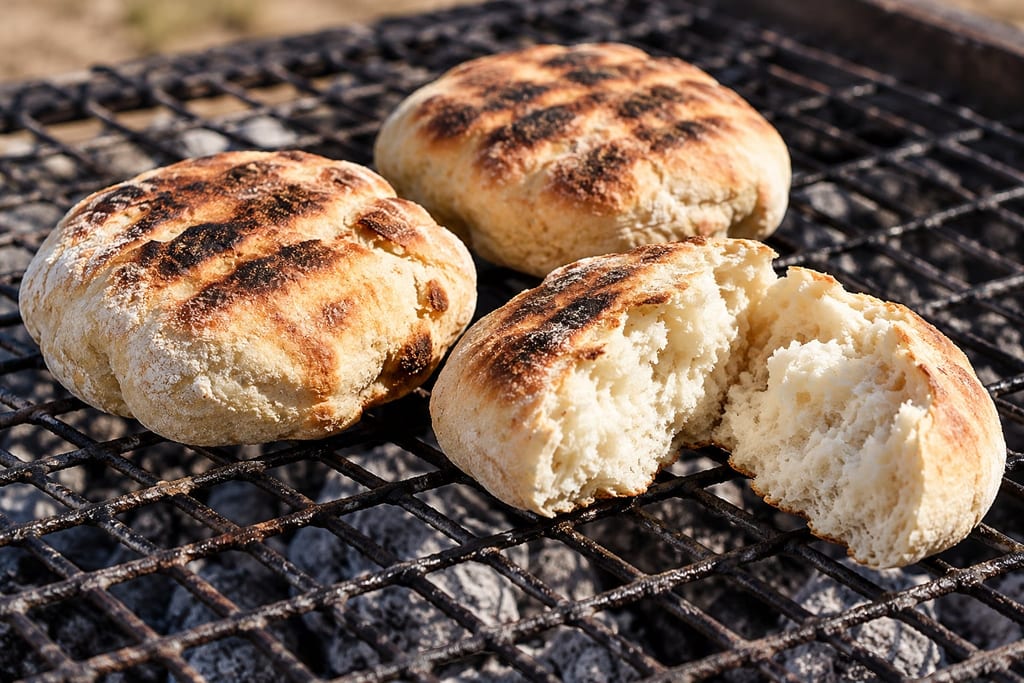
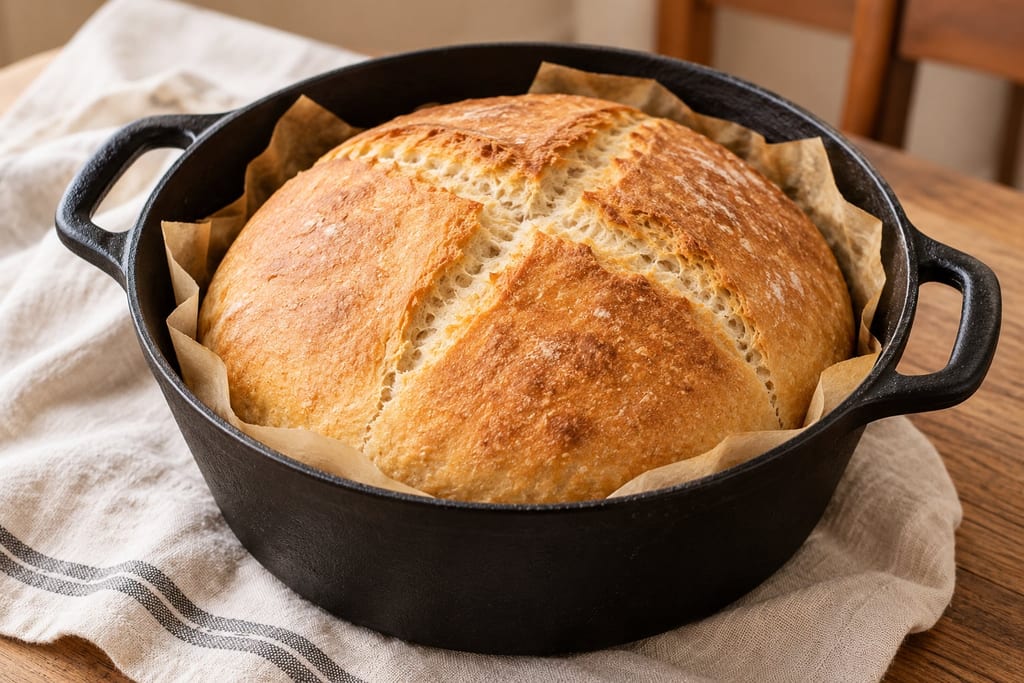
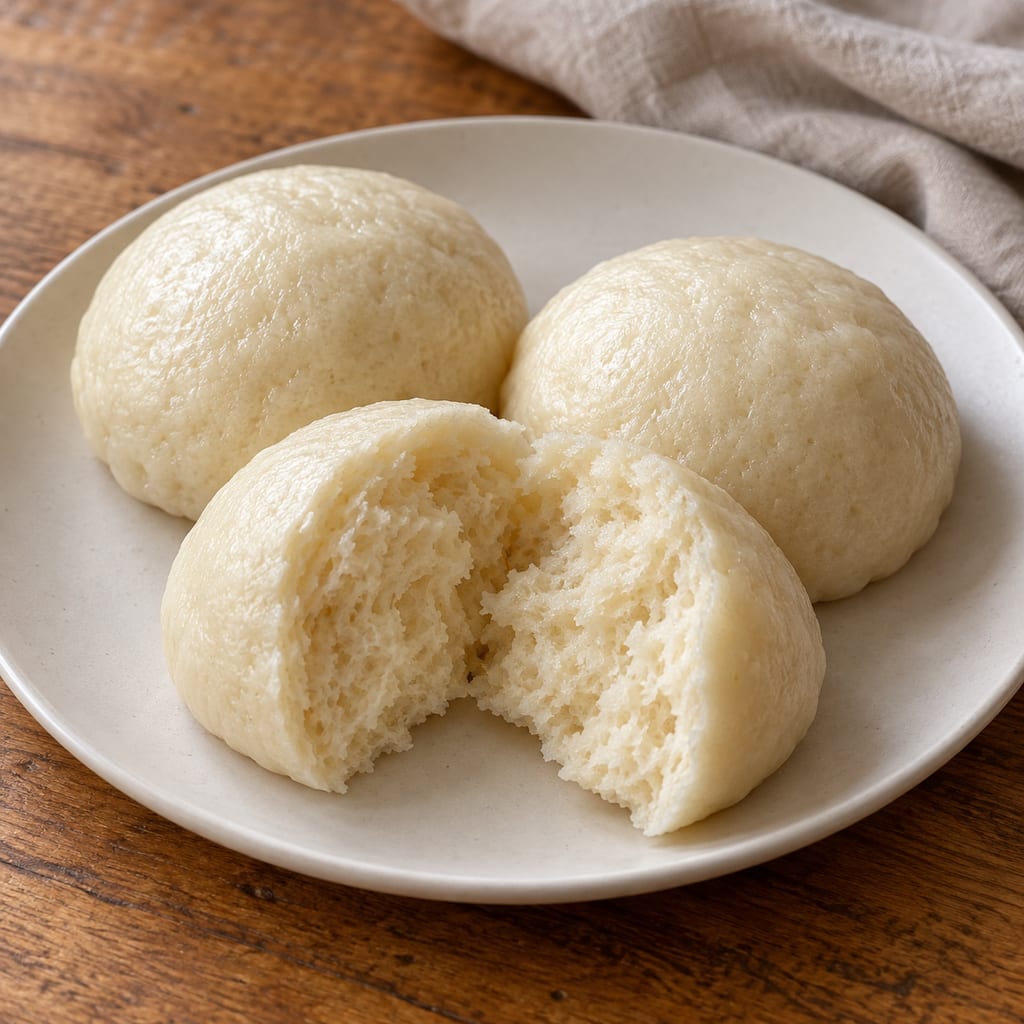
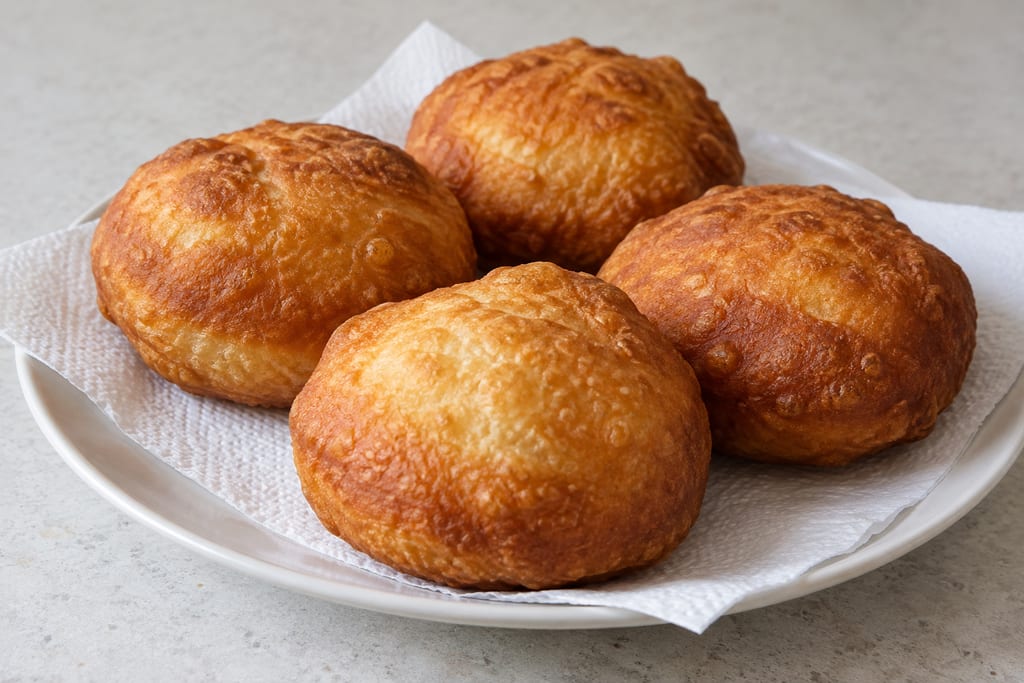
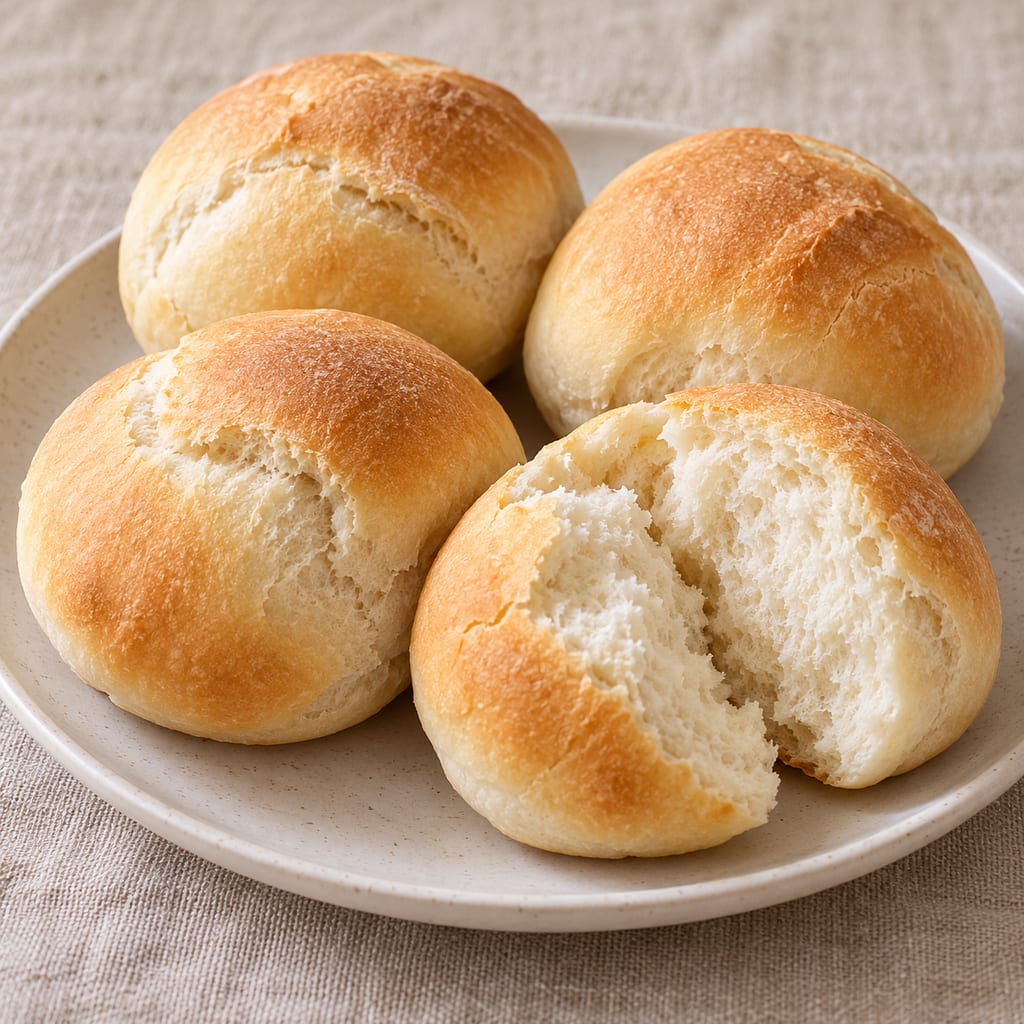
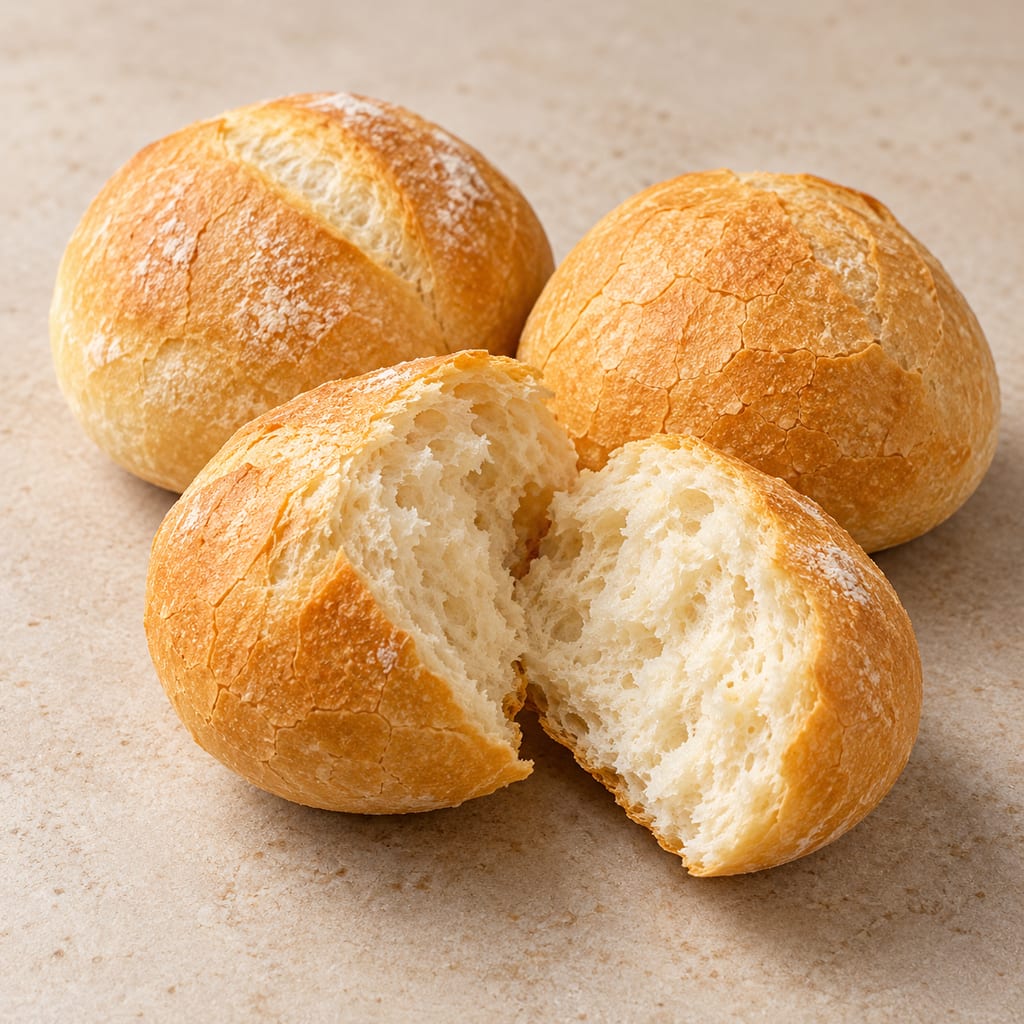
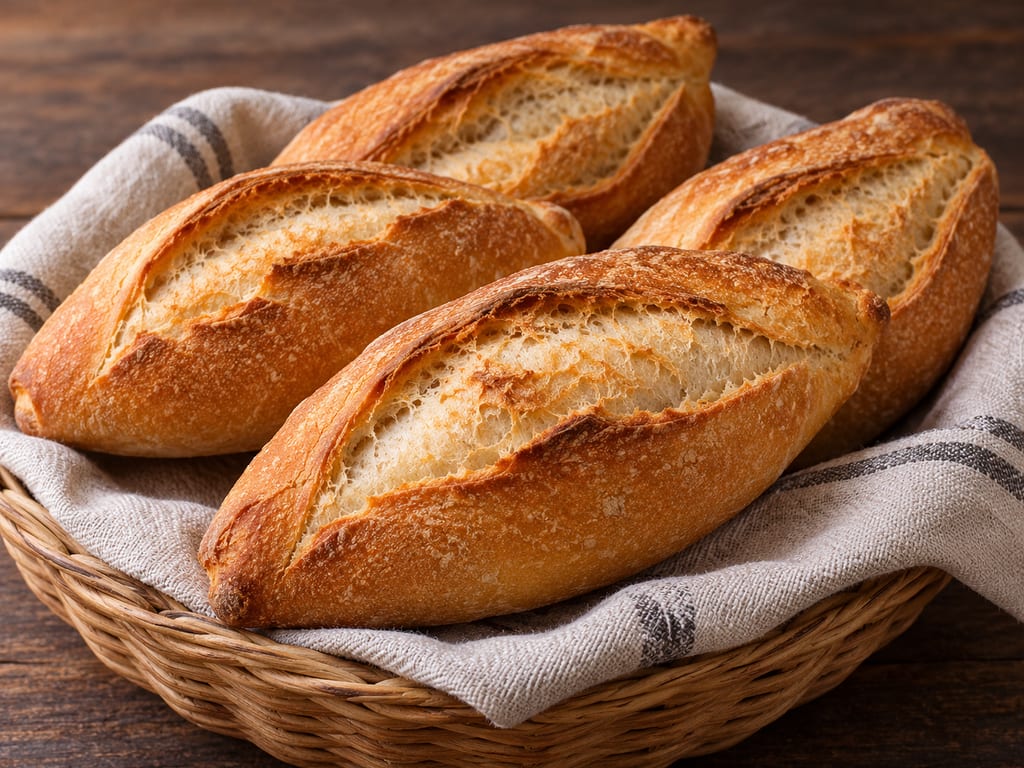
Roosterkoek is a small yeast-raised South African bread cooked over gentle braai coals. This enriched dough rises twice and is turned on the grid until browned and cooked through.
South African sources identify roosterbrood/roosterkoek as bread cooked over the braai. The inspected sources do not establish a first attestation date.
Ingredients
Yield 8 to 10 pieces · Scaling: source batch only
White bread wheat flour
1000 g
SUPREME brand in source
Instant dried yeast
10 g
Sugar
25 g
Salt
10 mL
WaterWarm
375 mL
MilkWarm
375 mL
ButterWarmed with the water and milk
50 g
Method
Risks and precautions · Standard risk
Raw flour in dough
Uncooked flour can carry germs; do not taste raw dough and clean hands, bowls, tools and work surfaces after handling.
Hazard source
Open fire and hot grill
The grill and its contents can cause contact burns; hot coals that are too close can also burn the exterior before the bread center cooks.
Hazard source
Do not eat raw dough. Cook the bread over gentle coals, turning it regularly until browned and cooked through on both sides.
Control source
Keep the braai outdoors and use long-handled grilling tools; do not touch the hot grid, bread or coals with bare hands. Do not leave a hot grill unattended.
Control source
Do not use high or uneven heat: the outside can burn while the center remains raw. Use long-handled tools to turn and remove the bread; do not handle the hot grid or bread with bare hands.
Mix the flour, yeast, sugar and salt in a large bowl.
Warm the water, milk and butter together on the stove, then pour them into the dry ingredients. Mix until combined and knead for about 10 minutes, until the dough is smooth and elastic. Add a little more flour if needed.
Put the dough in a lightly oiled bowl. Cover loosely with lightly oiled cling wrap and a damp cloth. Leave it in a warm place until doubled, about 20–40 minutes.
Knead the dough back down. On a floured board, divide it into 8–10 balls and flatten them. Dust lightly with flour and leave to rise again until roughly doubled; the source gives no time for this second rise.
Prepare an outdoor braai and let the wood fire burn down to a bed of gentle, even coals. Do not cook over high flames or place the bread close to very hot coals: the outside can burn while the inside remains raw.
Place the portions on the braai grid. Turn them regularly with long-handled tongs or a grill turner, cooking until both sides are golden brown and the centers are cooked through. The source gives no per-piece cooking time.
Lift the bread off the grid with the long-handled tool and serve warm with butter, syrup, grated cheese or apricot jam.
Conditions
Yield8 to 10 pieces
Fermentation0.33–0.67 h
Temperature controlAmbient, monitored
Places
South Africa
Traditional preparation · Country evidence
South African sources identify roosterbrood/roosterkoek as bread cooked over the braai; no precise birthplace is established.
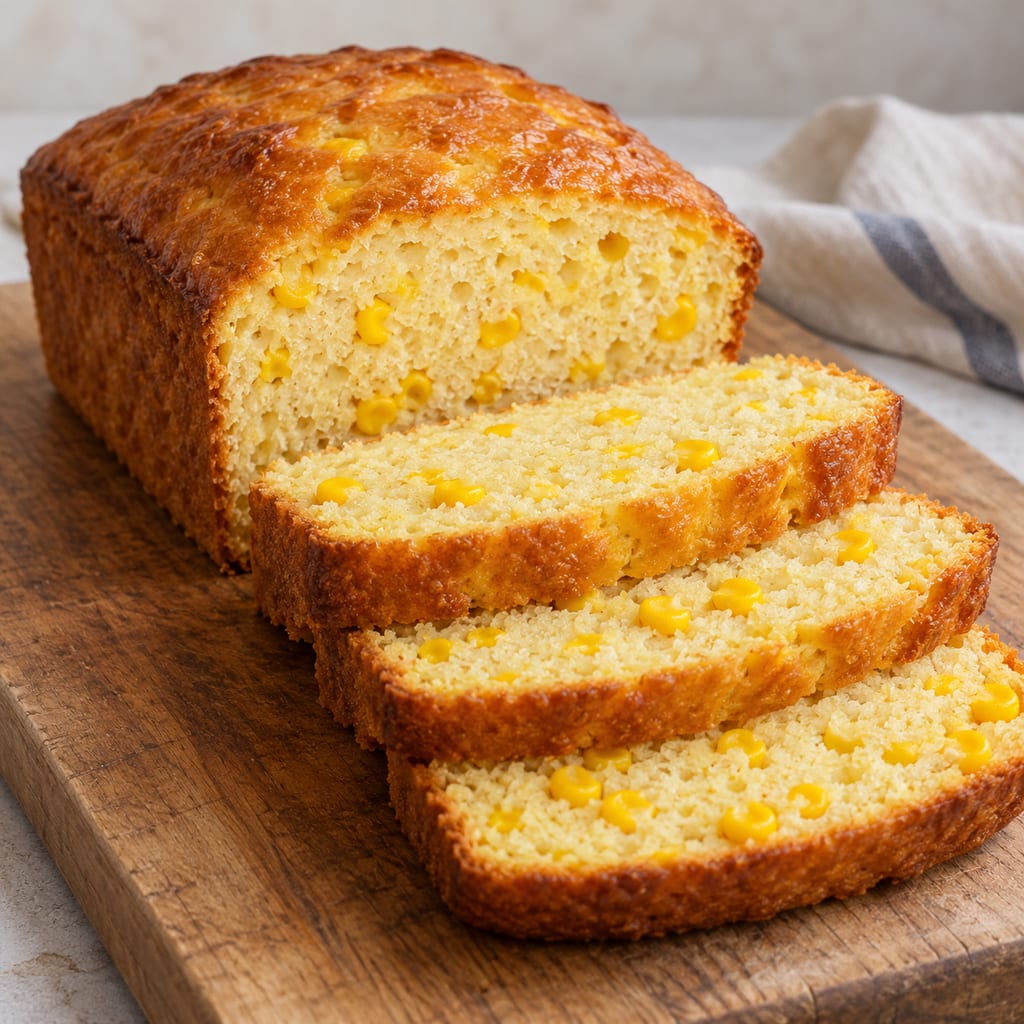
A South African sweetcorn loaf made from a rich, yeast-raised batter with both creamed sweetcorn and drained kernels. This version is baked in a loaf tin; it is distinct from steamed mielie breads and from maize-meal quick breads.
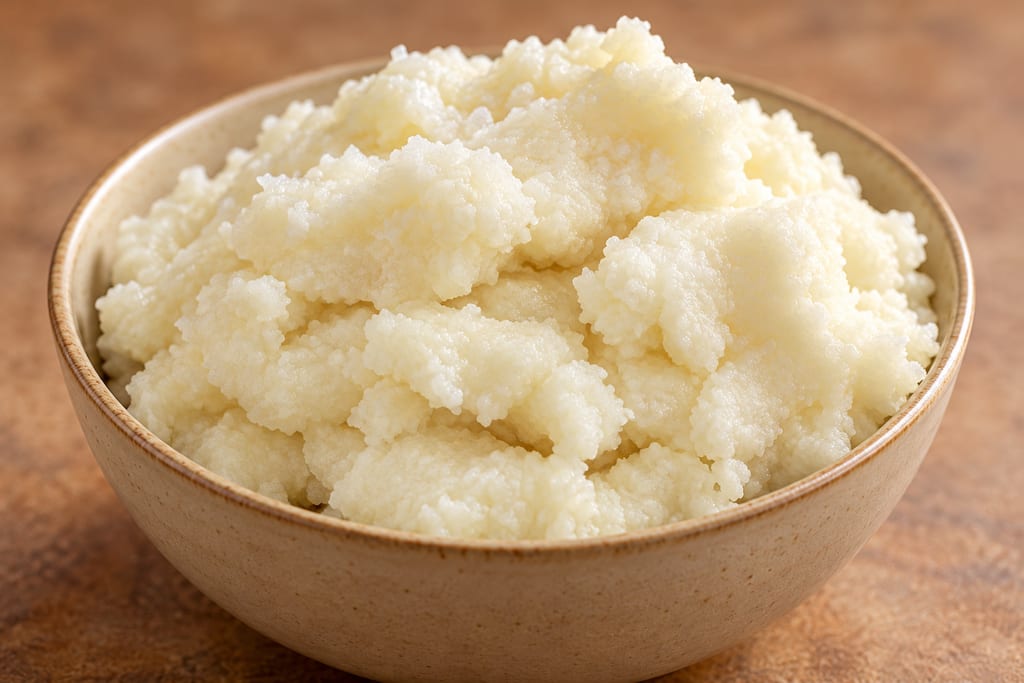
South Africa's maize-meal porridge, which the same white meal turns into a soft breakfast pap, a firm sliceable mound or the separate moist granules of phuthu depending only on water and handling.
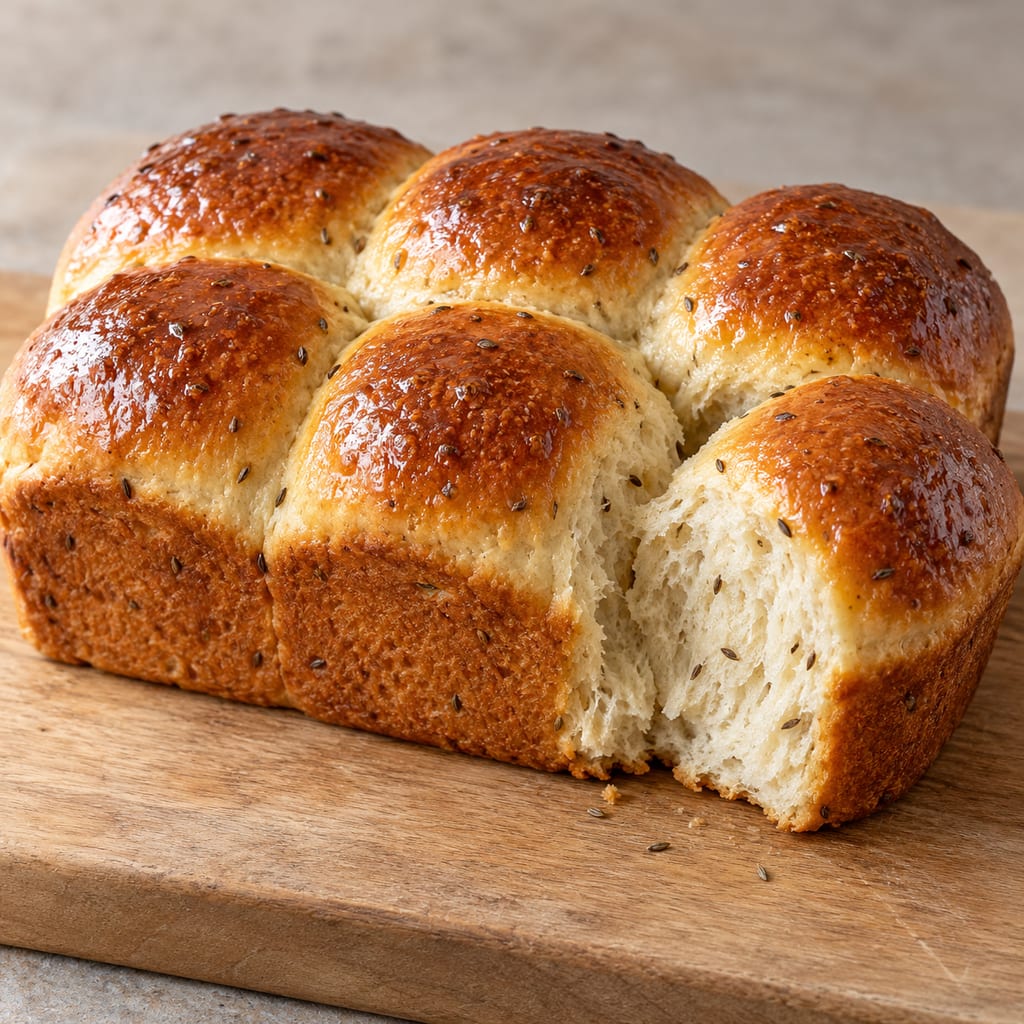
This modern South African mosbolletjies recipe uses white grape juice and instant yeast in an anise-scented enriched dough. It makes two pull-apart loaves; grape juice with commercial yeast is not the traditional fermenting-must leaven.
This tin-steamed South African dombolo uses yeast dough with bread flour and olive oil. It rises twice, steams for about an hour, and is checked with a clean skewer.
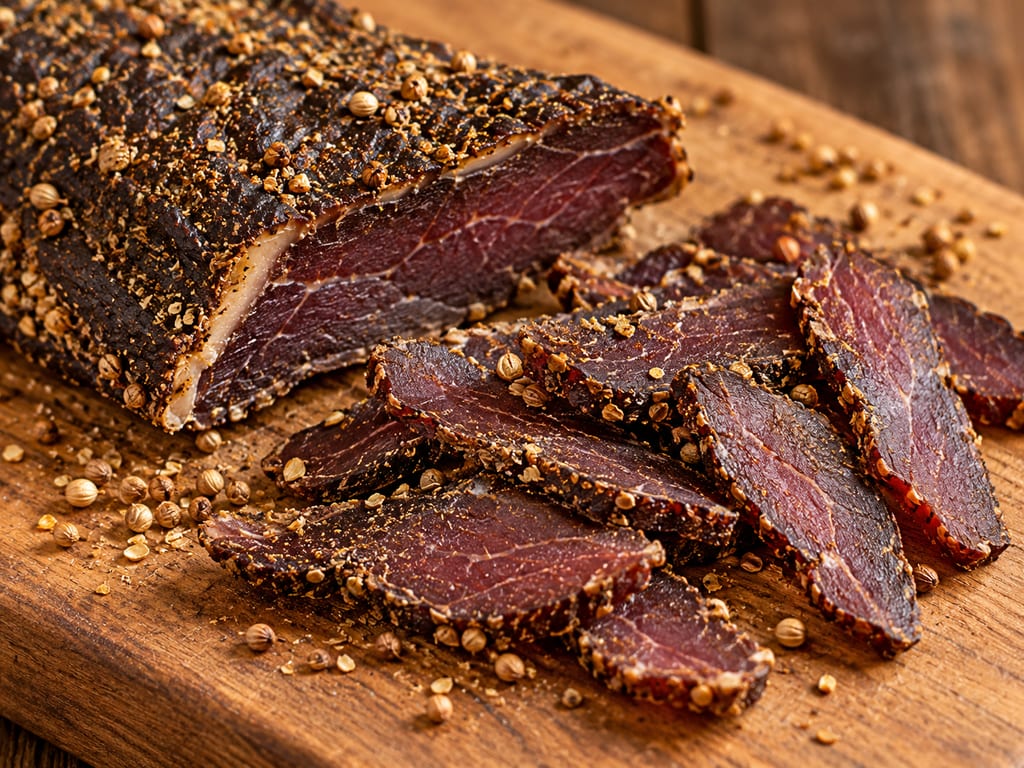
Strips of whole-muscle beef or game seasoned with salt, vinegar, roasted coriander and pepper and air-dried without cooking, sold anywhere from soft and moist to hard and very salty.
Anadama is a New England yeast loaf made with wheat flour, cornmeal and molasses. Scalded cornmeal enriches the dough, while molasses lends sweetness and a dark crust; it is especially good toasted or beside soup and baked beans.
A measured, commercial-yeast home method for Guadalajara-style birote salado, with a six-hour preferment, shaped rolls and a two-temperature steam bake. This formula contains no egg.
Community
No community contributions have been published for this entry yet.
Share what you made
Sign in to contribute. Published comments and photos are free to read.
Measured dough: 1 kg white bread wheat flour, 10 g instant yeast, 25 g sugar, 10 ml salt, 375 ml water, 375 ml milk and 50 g butter; 8–10 dough balls, 10–12 servings.
Warm water, milk and butter; knead about 10 minutes, rise until doubled (about 20–40 minutes), divide and flatten, rise again until doubled, then braai over gentle coals, turning regularly until cooked and golden on both sides. Recipe lists 30–45 minutes baking.
Identifies roosterbrood, also called roosterkoek, as South African bread cooked over a braai; describes the practice of letting a wood fire burn down to hot coals.
Warns that coals too hot or too close can burn the outside while leaving the center raw; recommends turning the bread and says a hollow sound when tapped indicates readiness. Its ingredient amounts are not used here.