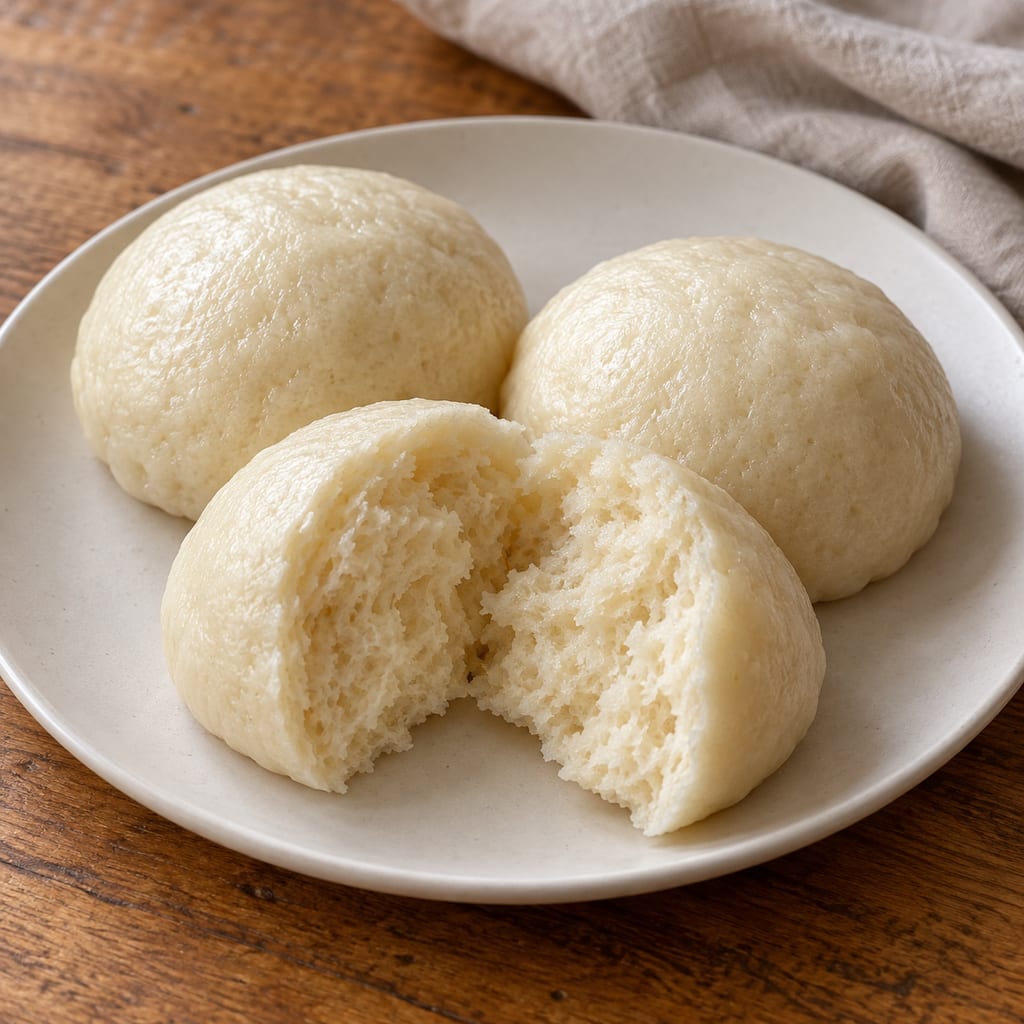
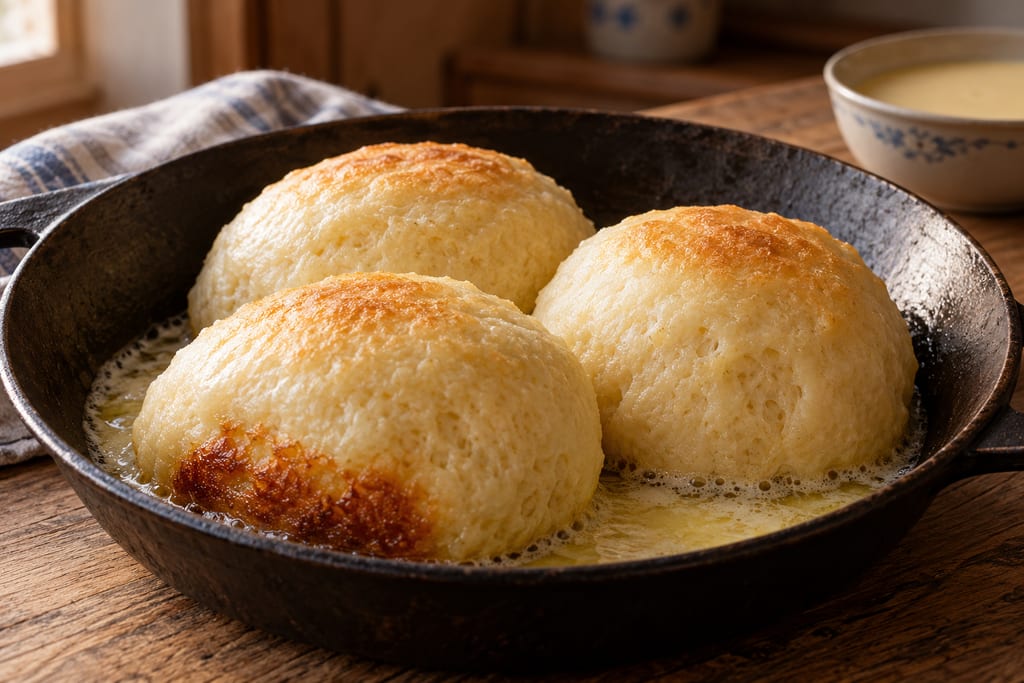
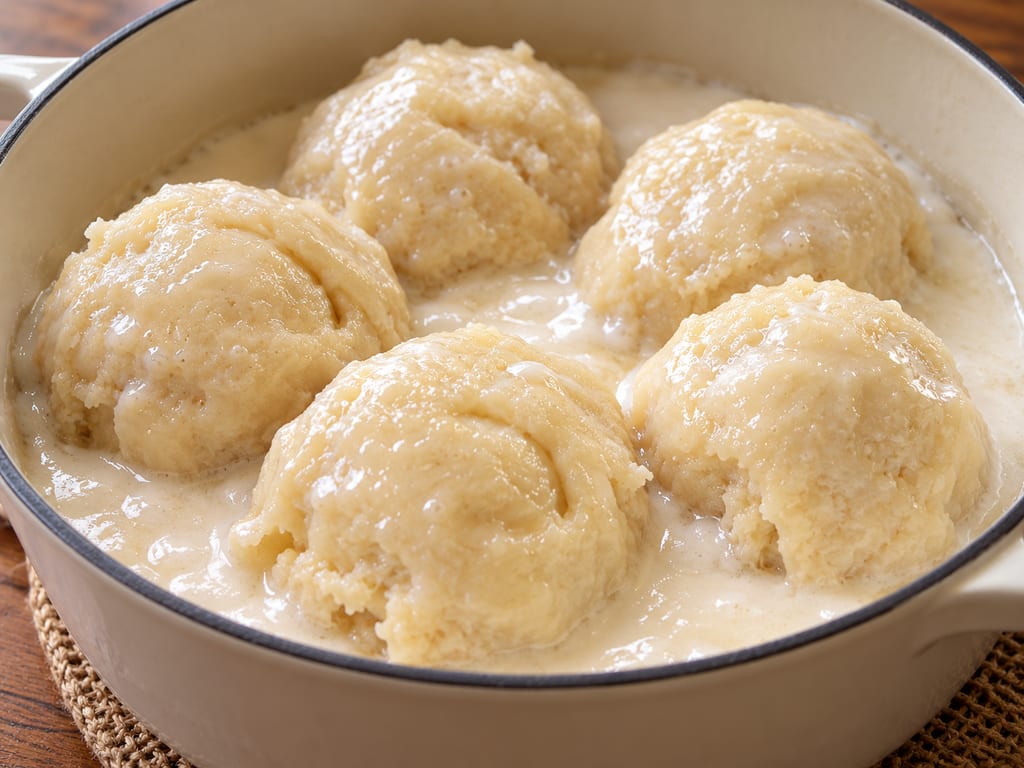
This tin-steamed South African dombolo uses yeast dough with bread flour and olive oil. It rises twice, steams for about an hour, and is checked with a clean skewer.
This version follows Livhuwani's measured dombolo recipe published by The Vegan Society. Its dough uses bread flour, olive oil, instant yeast, water, sugar and a pinch of salt. The author divides the dough into portions, places them in oiled tins or other heatproof containers, and steams them apart from the pot water.
The dough rises twice. After the first rise, punch it down, divide and shape portions, then cover them in the tins for a second rise. The source does not specify a portion count, tin size or duration for that second rise. It gives a first rise of about 30 minutes to 1 hour.
The covered tins steam for about an hour over low heat. Keep the water below the dough, at a simmer that produces steam without a rolling boil. A clean toothpick or skewer inserted into a portion is the source's doneness check. The 375 mL water amount is stated, but pot dimensions and a refill schedule are not.
The atlas describes a broader South African steamed-bread family and notes that related names and cooking forms vary across communities. Livhuwani's recipe documents one modern dombolo prepared in tins; neither source establishes a first attestation.
Instant yeastUse half a sachet; the source does not state the sachet's weight.
½ sachet
WaterUse 250 mL in the dough and reserve 375 mL for steaming; keep steaming water below the dough tins.
625 mL
source divides 250 mL for dough and 375 mL for steaming
Method
Risks and precautions · Standard risk
Raw flour and dough
The uncooked dough contains wheat flour; raw flour can carry germs.
Hazard source
Boiling water and steam
The recipe uses a covered pot of simmering water and requires lifting hot tins from it.
Hazard source
Do not taste raw dough. Wash hands, bowls, utensils and work surfaces after handling flour or dough.
Control source
Keep the water below the tins and lift the covered tins carefully to avoid hot water and steam.
Control source
The source gives 375 mL steaming water but no pot dimensions or refill schedule. Do not let water touch the dough; handle the hot pot, tins and steam carefully.
Mix the flour, sugar, salt and instant yeast in a large bowl. Add the olive oil and 250 mL water. Knead for about 10–15 minutes until smooth and elastic.
Cover the dough with a clean cloth or plastic wrap and leave it in a warm, draft-free place until doubled in size; the source gives about 30 minutes to 1 hour.
Punch down the dough and knead for 1–2 minutes. Divide it into even portions and shape them into rounds. The source does not specify a count or weight per portion.
Oil the tins or other heatproof containers. Put the portions in them, cover with cloth or plastic wrap and leave for a second rise until they have risen again; the source gives no fixed duration.
Pour 375 mL water into a pot and heat it until steaming at a low boil, not a rolling boil. Arrange the tins so the water remains below the dough and does not touch it. The source does not specify pot dimensions or a water top-up schedule.
Cover the pot and steam for about 1 hour at a low simmer. Check a portion by inserting a clean toothpick or skewer; a clean result marks the endpoint in this recipe.
Carefully lift the tins from the pot and let the bread cool slightly before serving with stew or another topping.
Conditions
Yield4 servings
Fermentation0.5–1 h
Places
South Africa
Documented preparation · Country evidence
Livhuwani's recipe on The Vegan Society's site presents a tin-steamed dombolo alongside a South African stew; this documents one preparation, not a single origin or uniform dombolo method.
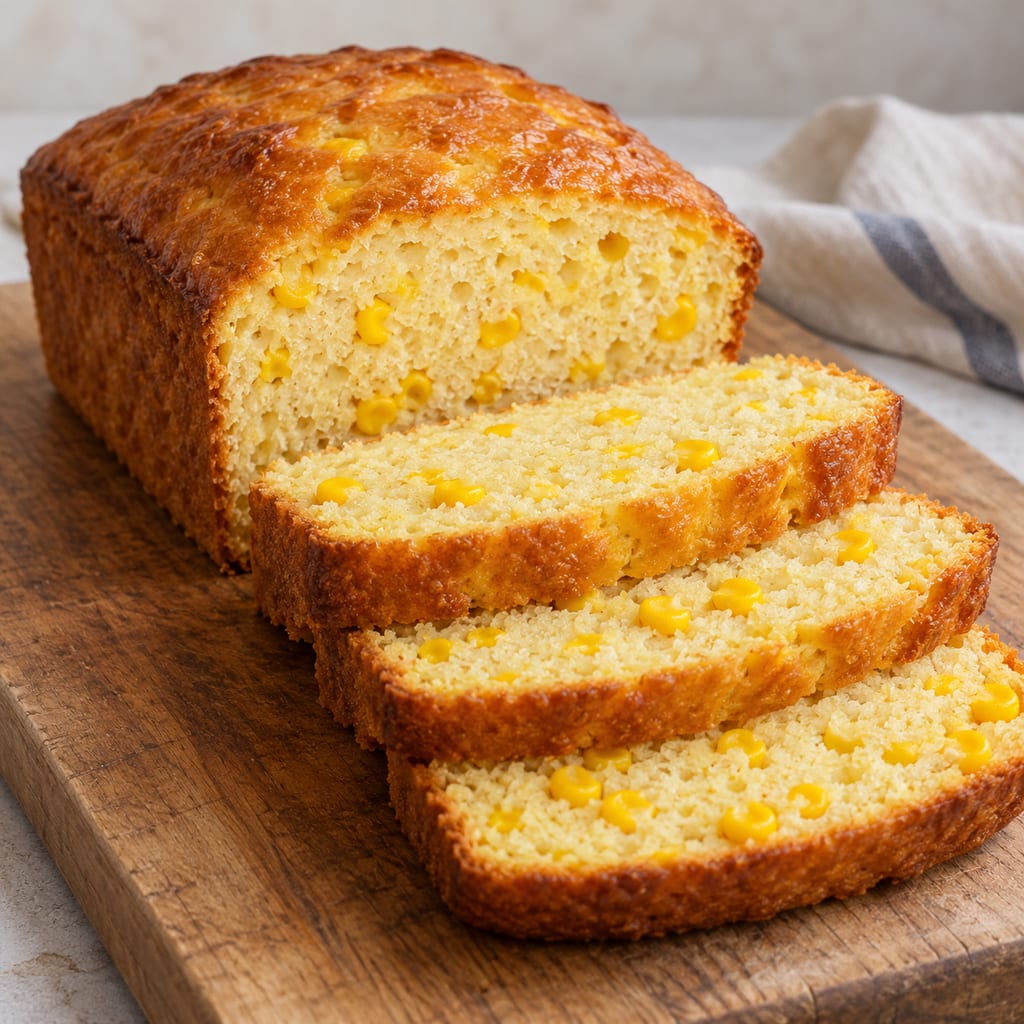
A South African sweetcorn loaf made from a rich, yeast-raised batter with both creamed sweetcorn and drained kernels. This version is baked in a loaf tin; it is distinct from steamed mielie breads and from maize-meal quick breads.
South Africa's maize-meal porridge, which the same white meal turns into a soft breakfast pap, a firm sliceable mound or the separate moist granules of phuthu depending only on water and handling.
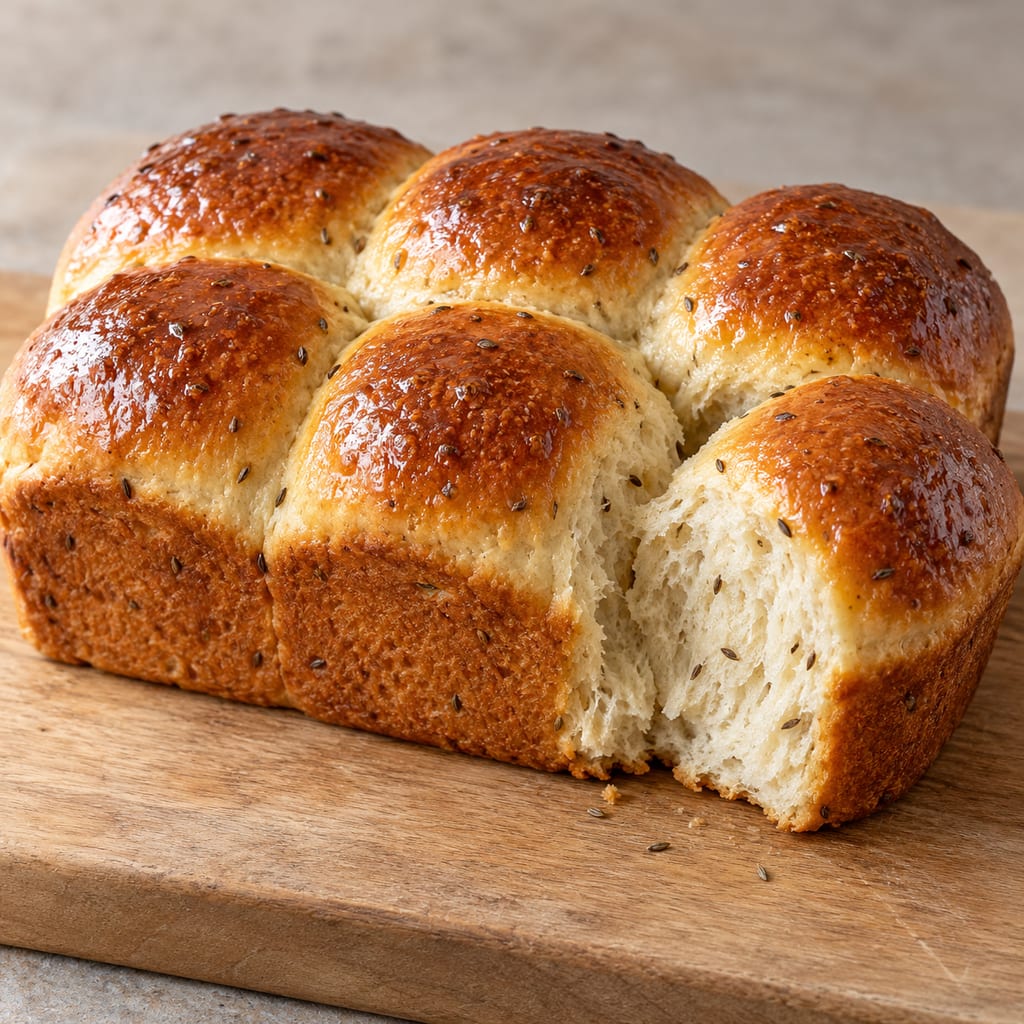
This modern South African mosbolletjies recipe uses white grape juice and instant yeast in an anise-scented enriched dough. It makes two pull-apart loaves; grape juice with commercial yeast is not the traditional fermenting-must leaven.
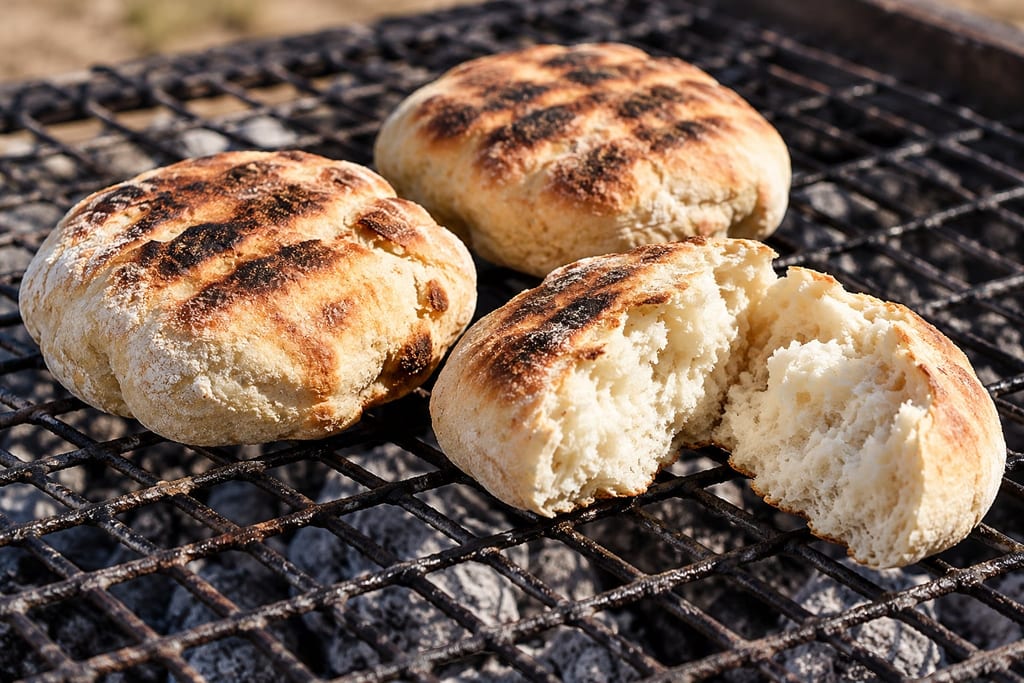
Roosterkoek is a small yeast-raised South African bread cooked over gentle braai coals. This enriched dough rises twice and is turned on the grid until browned and cooked through.
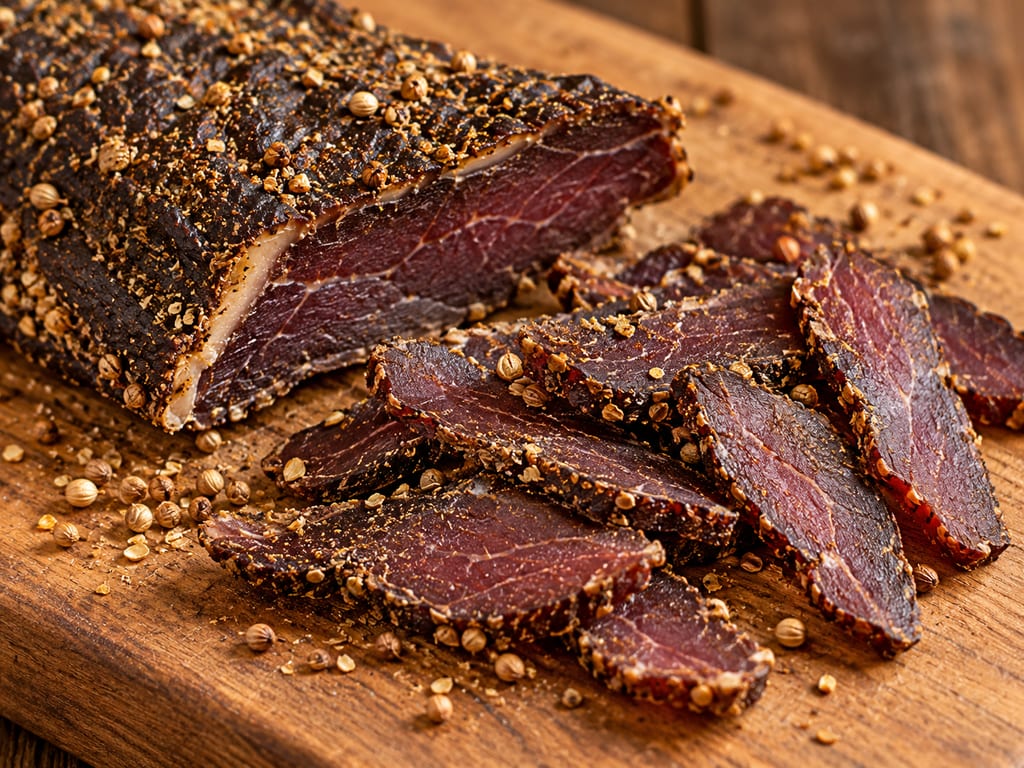
Strips of whole-muscle beef or game seasoned with salt, vinegar, roasted coriander and pepper and air-dried without cooking, sold anywhere from soft and moist to hard and very salty.
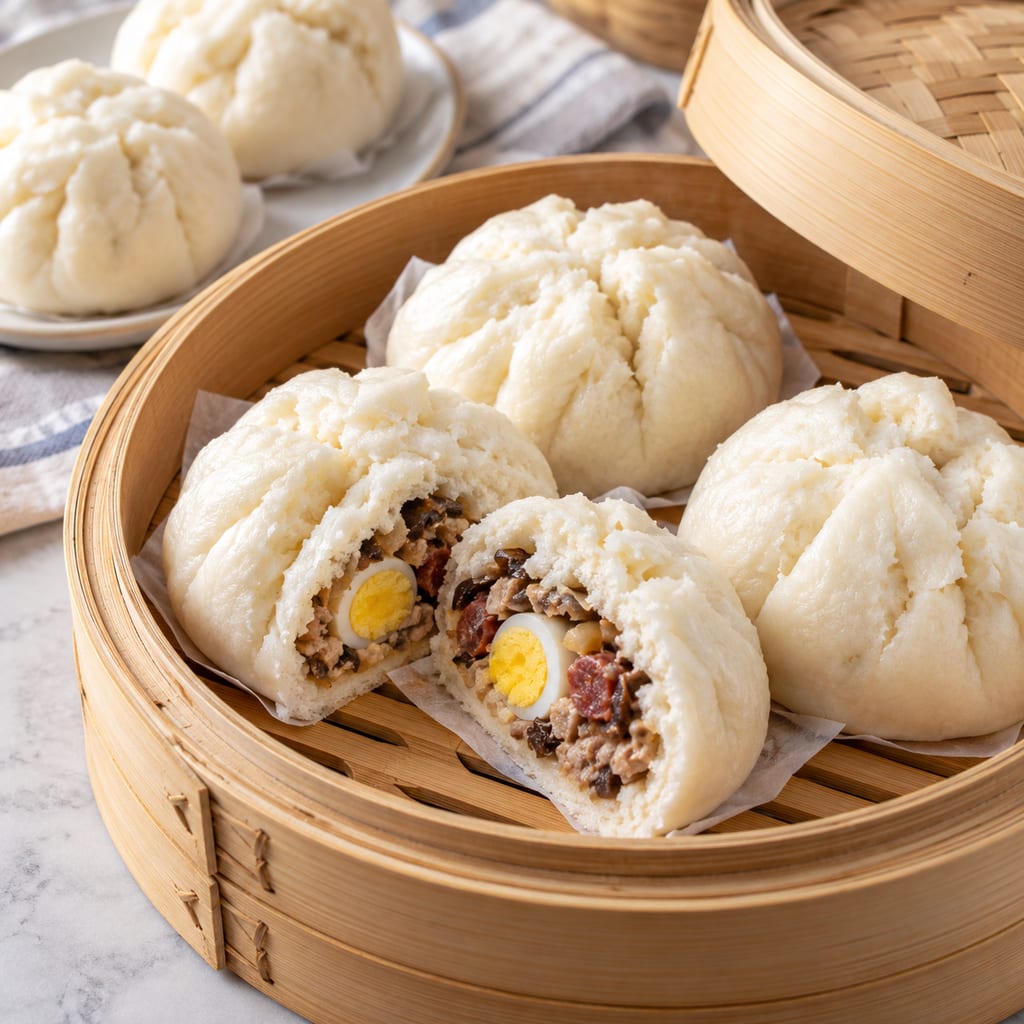
Vietnamese steamed wheat buns wrapped around seasoned pork, mushrooms, Chinese sausage and hard-boiled quail eggs. This from-scratch version uses yeast and self-rising flour.
Bánh tiêu is a lightly sweet Vietnamese fried bread coated with sesame. A yeast-raised dough with baking powder is rolled into small rounds and fried until puffed and golden.
Soft yeast buns shaped by hand and simmered covered in coconut cream diluted with water in a deep pot. This Fijian home version uses a clean knife or fork inserted into the center as its doneness cue.
This Emilia-Romagna home version uses a measured flour-and-milk dough with yeast, shapes it into small diamonds or squares, and fries them in peanut oil.
Provides a complete tin-steamed dombolo formula using 500 g bread flour, a pinch of salt, sugar, olive oil, half a sachet of instant yeast, 250 mL dough water and 375 mL steaming water.
Describes two rises, portions placed in tins or containers, water held below the dough, low simmering steam for about one hour, and a clean toothpick or skewer as the doneness check.
Says the recipe serves 4–6 and identifies the author as a food photographer and recipe creator; tin size, portion count and a water top-up schedule are not supplied.
The prior tin recipe uses a different dough formula and conflicts on duration: one hour in the header versus 30 minutes or until cooked in the numbered method.
It provides no objective doneness check; the new body uses Livhuwani's separate formula and endpoint instead.