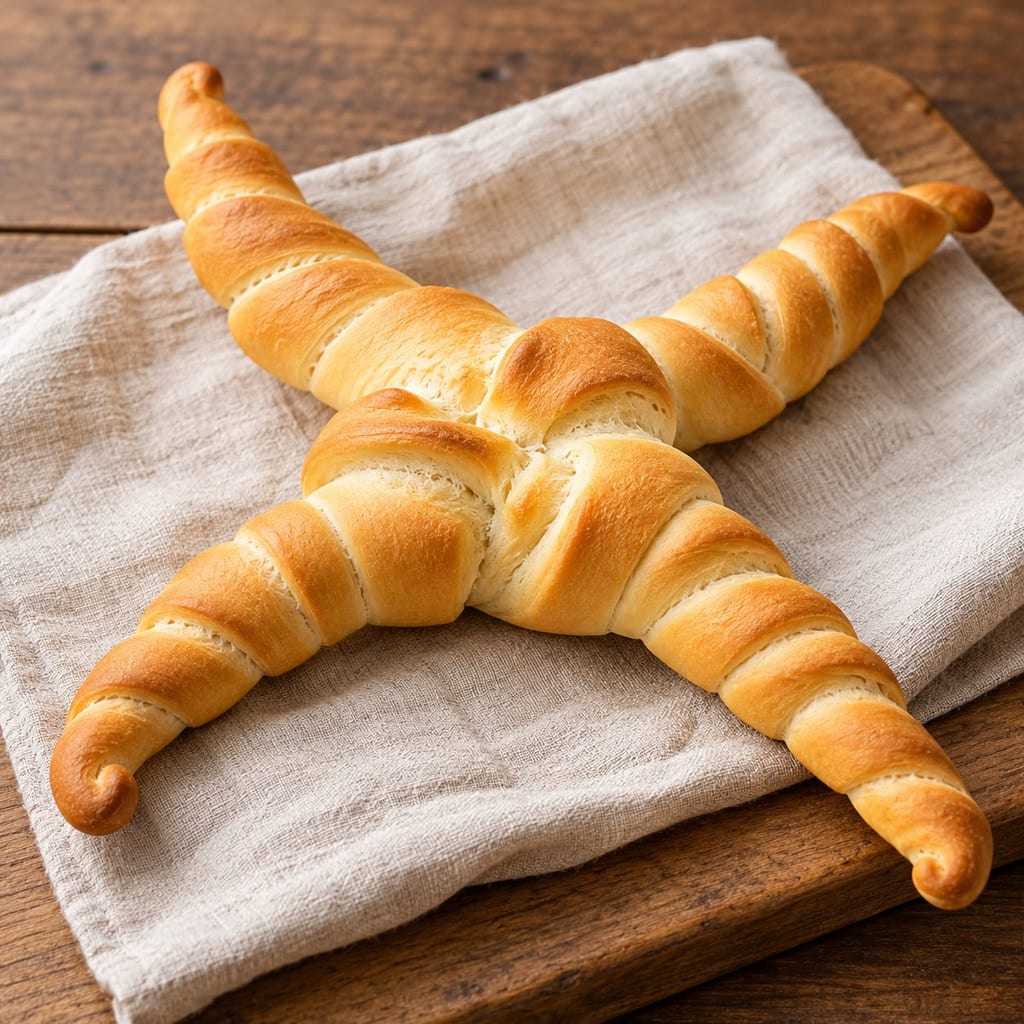
Coppia ferrarese (VisitFerrara home recipe)
Ferrara’s paired bread twists have four pointed horns joined at a soft centre. This VisitFerrara home recipe uses type 0 flour, water, oil, lard, malt and a choice of sourdough or yeast.
 FermenteaWhere food goes to change
Modern adaptation
Gnocco fritto · Il gnocco fritto · Lo gnocco fritto
This Emilia-Romagna home version uses a measured flour-and-milk dough with yeast, shapes it into small diamonds or squares, and fries them in peanut oil.
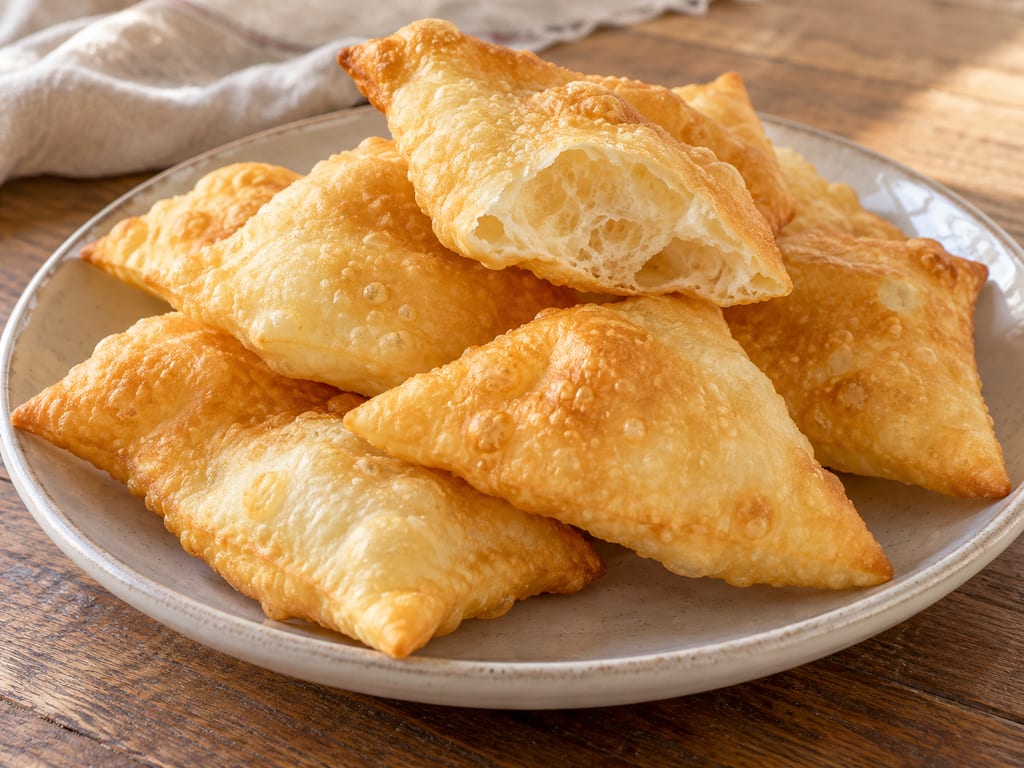
Gnocco fritto is a traditional fried dough associated with the provinces of Modena and Reggio Emilia. The regional authority also records an unleavened flour, water and salt method, rolled to about 3 mm, and notes that rural households also fried leavened bread dough. These traditions contain more than one formula; the method below follows a measured modern home recipe, not the authority's quantity-free PAT description.
La Cucina Italiana's article calls yeast optional in the Modena classic and identifies milk as another optional ingredient. Its own home version adds both, along with a small amount of sugar. This recipe therefore represents that leavened home adaptation rather than a universal or protected specification.
Names change across Emilia. In much of Bologna province, crescentina refers to the fried dough; in the Modena area, crescentina can instead mean a round bread cooked between plates, often called tigella. Parma uses the name torta fritta for its related fried preparation, and Ferrara has pinzino. These names describe neighboring regional forms, not a claim that every local dough is identical.
Gnocco fritto is a traditional preparation associated with Modena and Reggio Emilia. This recipe is La Cucina Italiana's leavened home version: the article says yeast is optional in the Modena tradition and that this version adds yeast and milk. It is a documented modern adaptation, not the only regional formula.
Yield 6 servings · Scaling: source batch only
The recipe heats 1 L of oil to 175°C; splashes can burn and overheated oil can ignite.
Hazard sourceUse a high-sided, heavy-bottomed pan, monitor the oil temperature, stay beside the pan, and switch off the burner if leaving or if the oil smokes. Keep a lid or baking sheet nearby. If the oil catches fire, turn off the burner and cover the pan without moving it; never use water.
Control sourceHot oil can cause severe burns or fires. Fry only while attended and keep water away from a pan fire.
The authority identifies Reggio Emilia and Modena provinces; this row records the documented regional association, not a birthplace.
Ferrara’s paired bread twists have four pointed horns joined at a soft centre. This VisitFerrara home recipe uses type 0 flour, water, oil, lard, malt and a choice of sourdough or yeast.
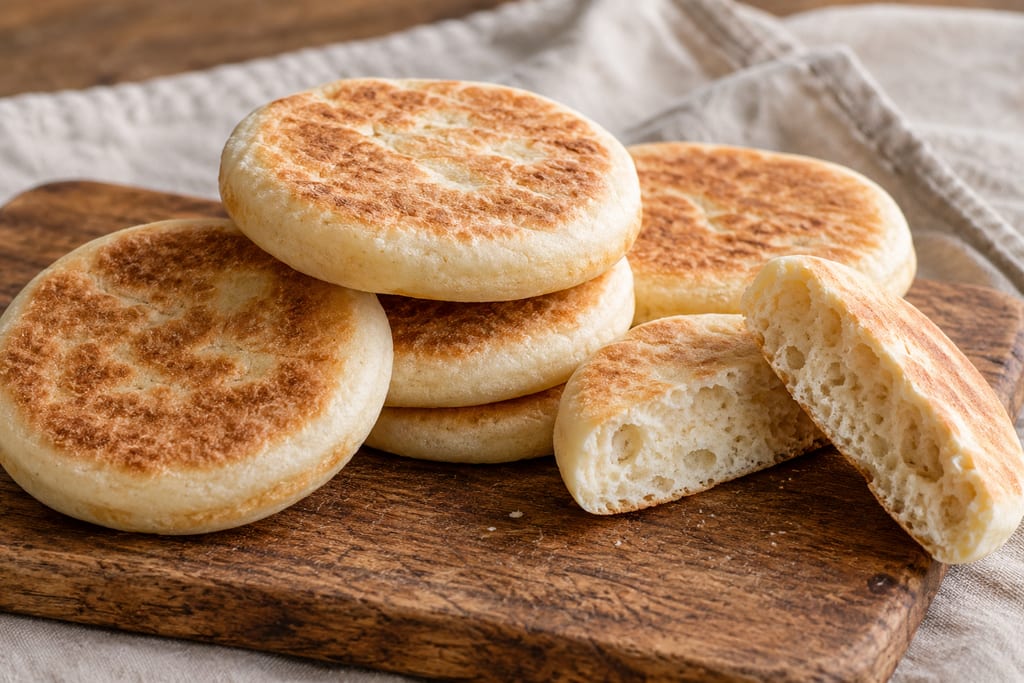
Small Modenese yeast breads cooked between hot plates and served warm.
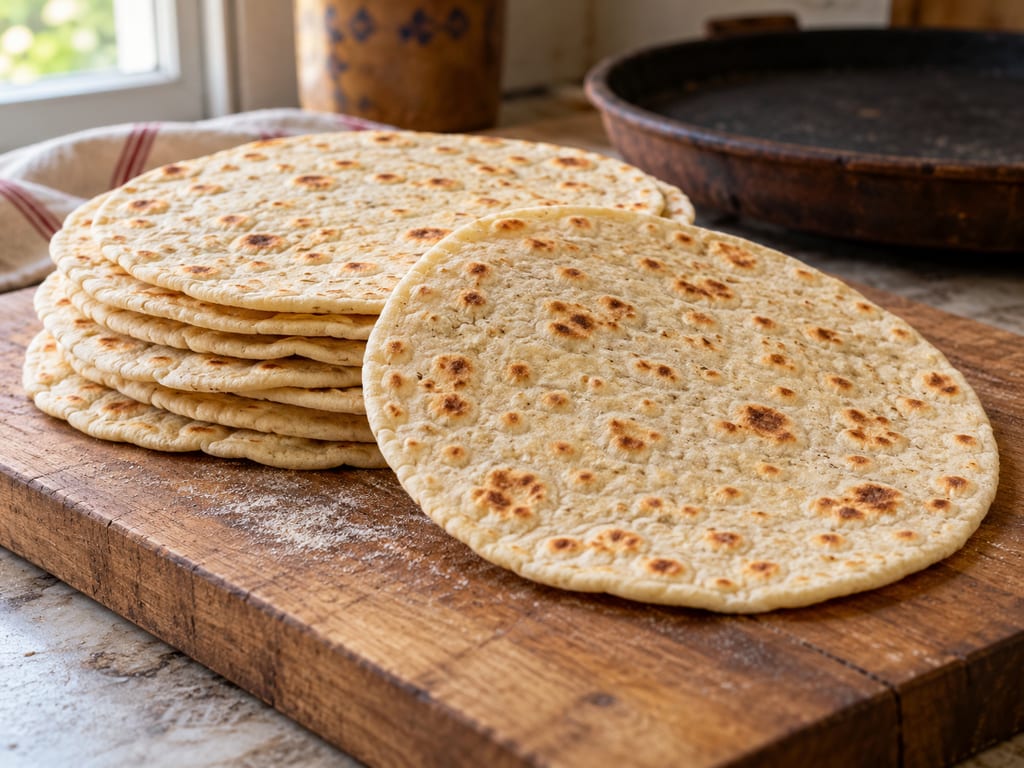
Eight soft Romagna-style flatbreads made from type 00 wheat flour, lard, honey, baker's yeast, milk and salt. Rest the dough for an hour, roll 3–4 mm rounds and cook them quickly on a hot griddle or heavy pan.

A dark, balanced vinegar from Emilia-Romagna made by combining cooked or concentrated grape must with wine vinegar, then acetifying and refining it in wood under a protected specification.

Protected Italian vinegar made only from cooked grape must, fermented and aged in a battery of wooden barrels for at least 12 years: sweet, sharp and syrupy.
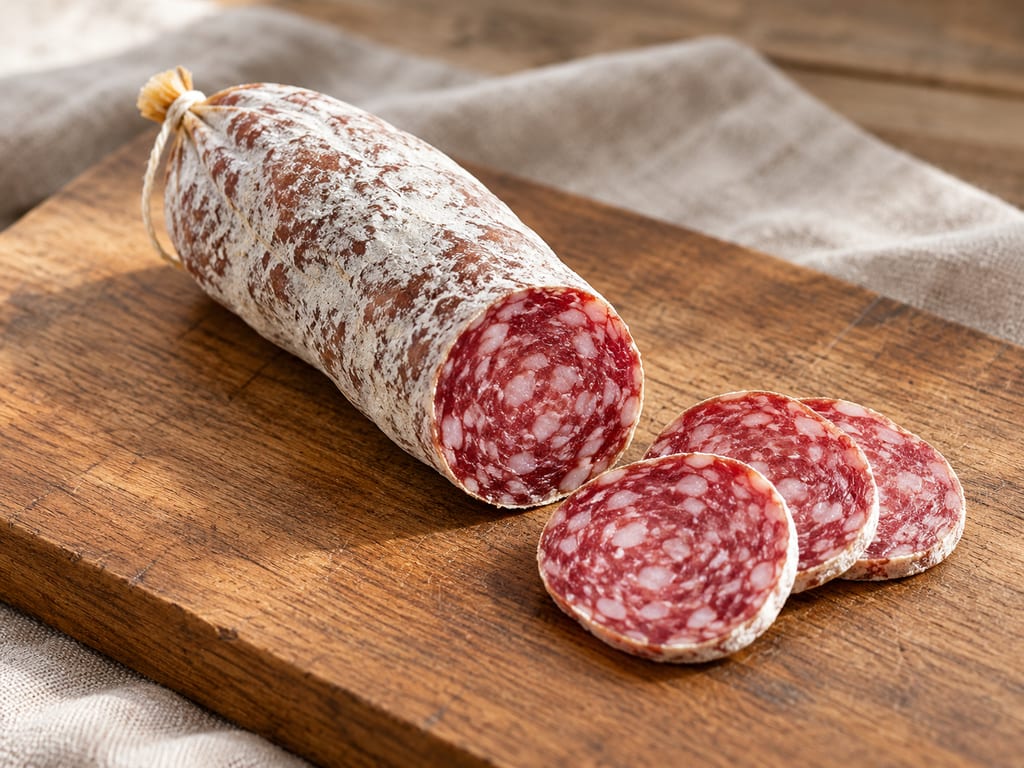
Small Italian hunter-style salami of lean pork, firm fat, salt, pepper and garlic, mildly acidified and dry-matured; protected as Salamini Italiani alla Cacciatora DOP.
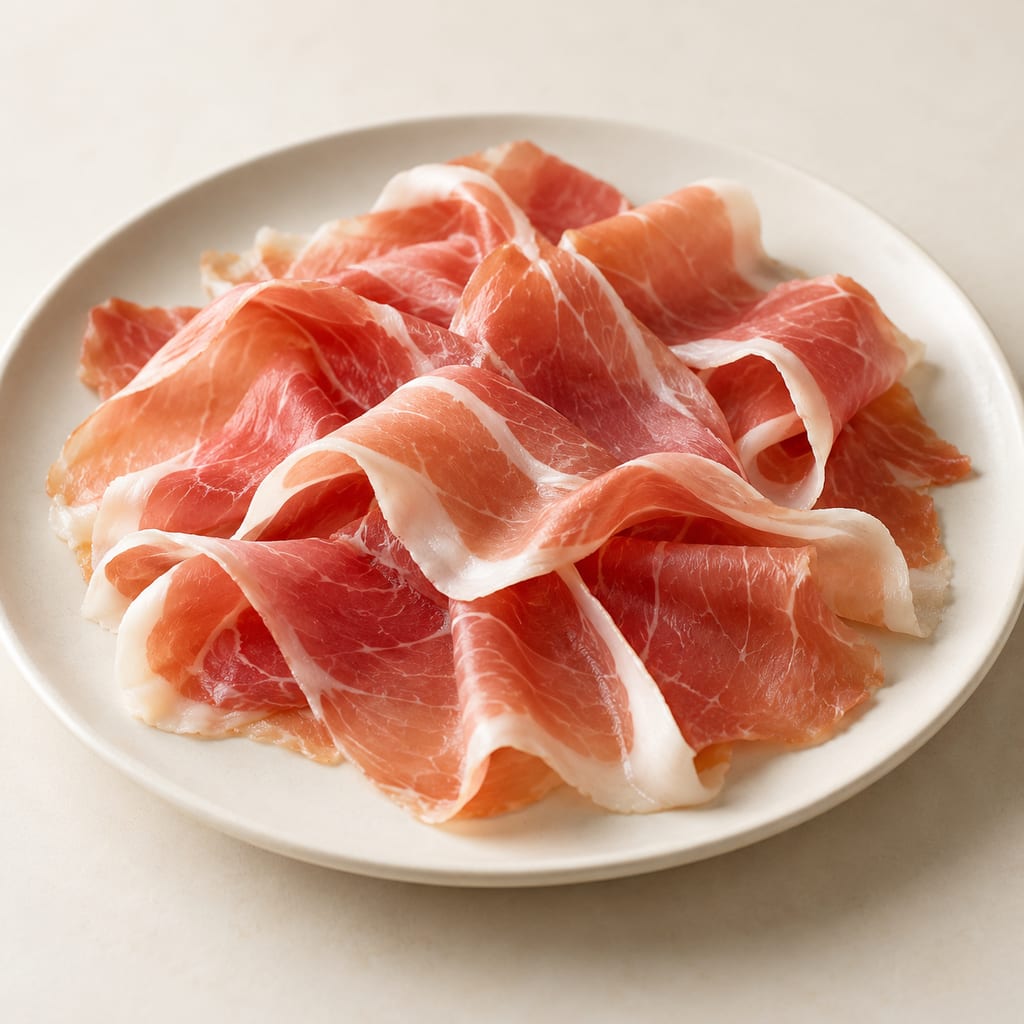
Prosciutto di Parma is a dry-cured, unsmoked ham from the Province of Parma, made from fresh pork legs salted with sea salt and matured for at least 14 months under the protected designation.
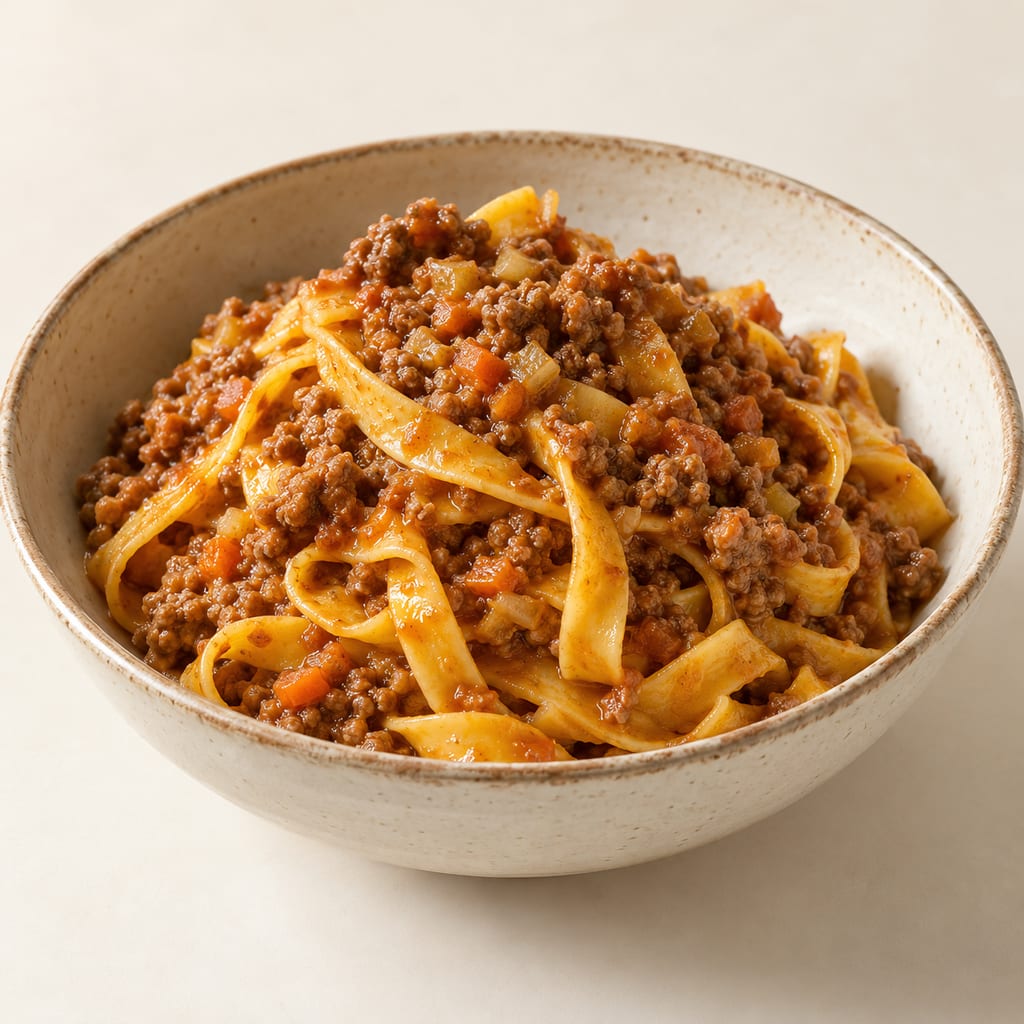
Ragu alla bolognese is a slow-cooked meat sauce of minced beef and a little pork, cooked with soffritto, white wine, milk and a little tomato, served with fresh tagliatelle in Bologna.
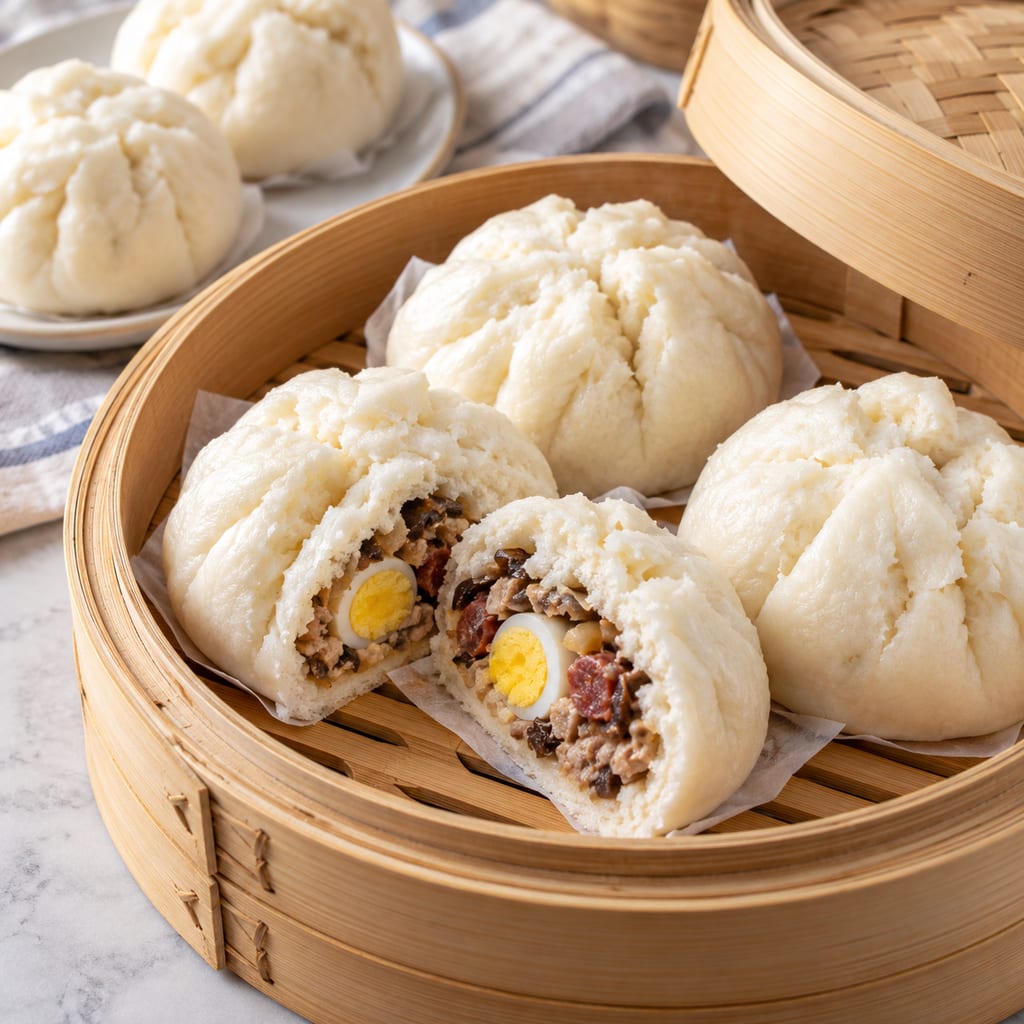
Vietnamese steamed wheat buns wrapped around seasoned pork, mushrooms, Chinese sausage and hard-boiled quail eggs. This from-scratch version uses yeast and self-rising flour.
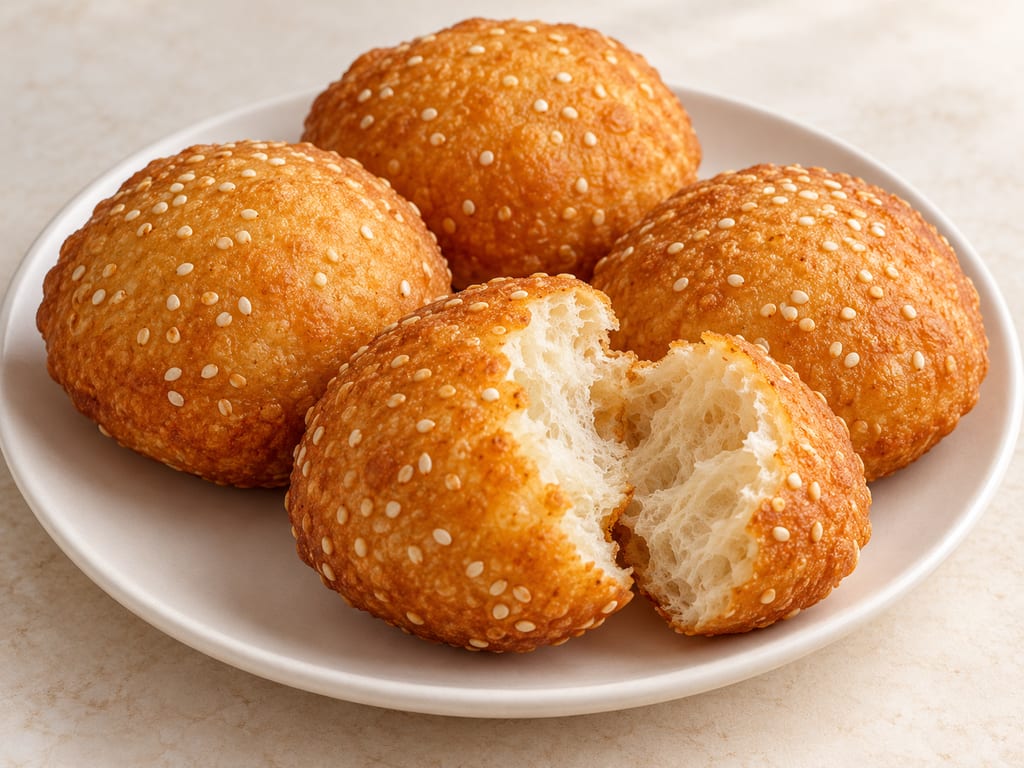
Bánh tiêu is a lightly sweet Vietnamese fried bread coated with sesame. A yeast-raised dough with baking powder is rolled into small rounds and fried until puffed and golden.
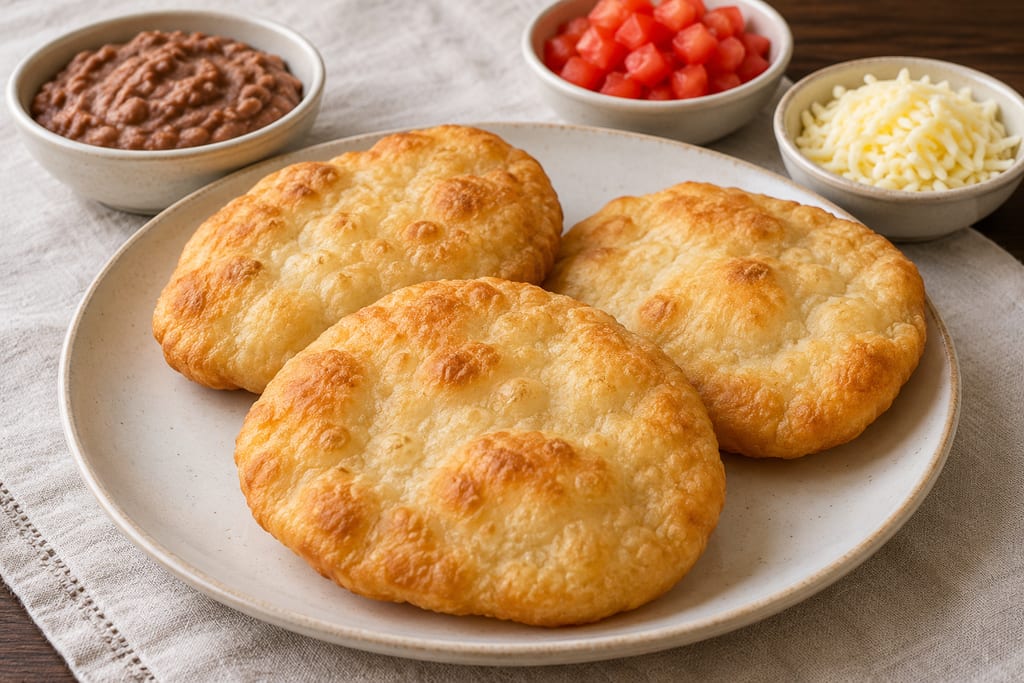
A Belizean fried breakfast bread made from baking-powder dough with evaporated milk, shaped into rounds and fried until golden.
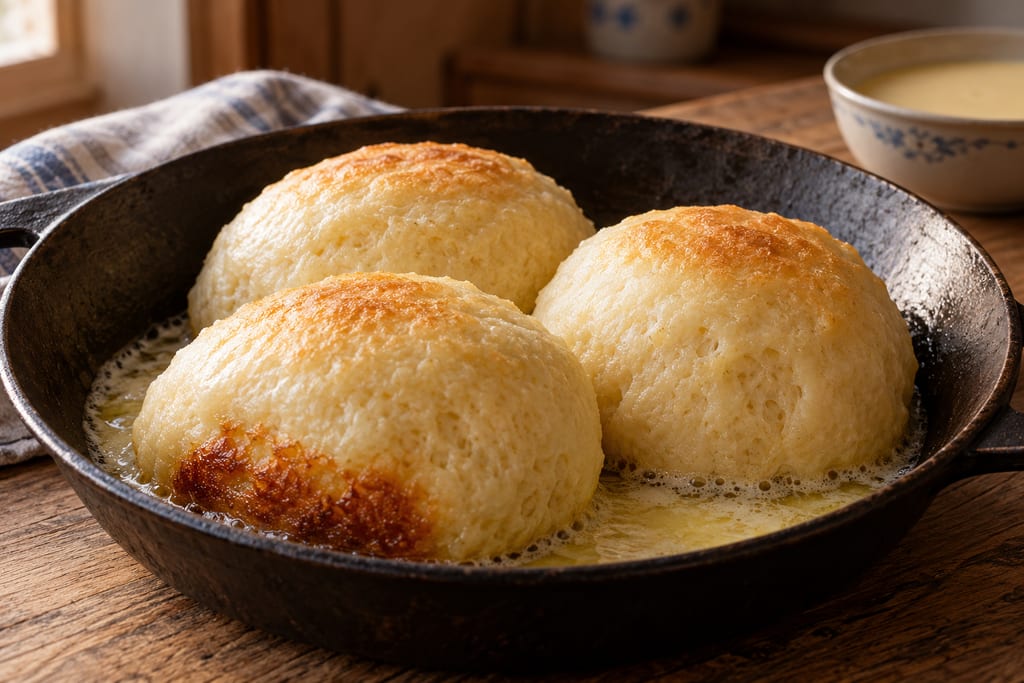
Allgäu Dampfnudeln are enriched wheat buns proofed in a covered casserole and cooked in milk and butter until the liquid nearly cooks away.
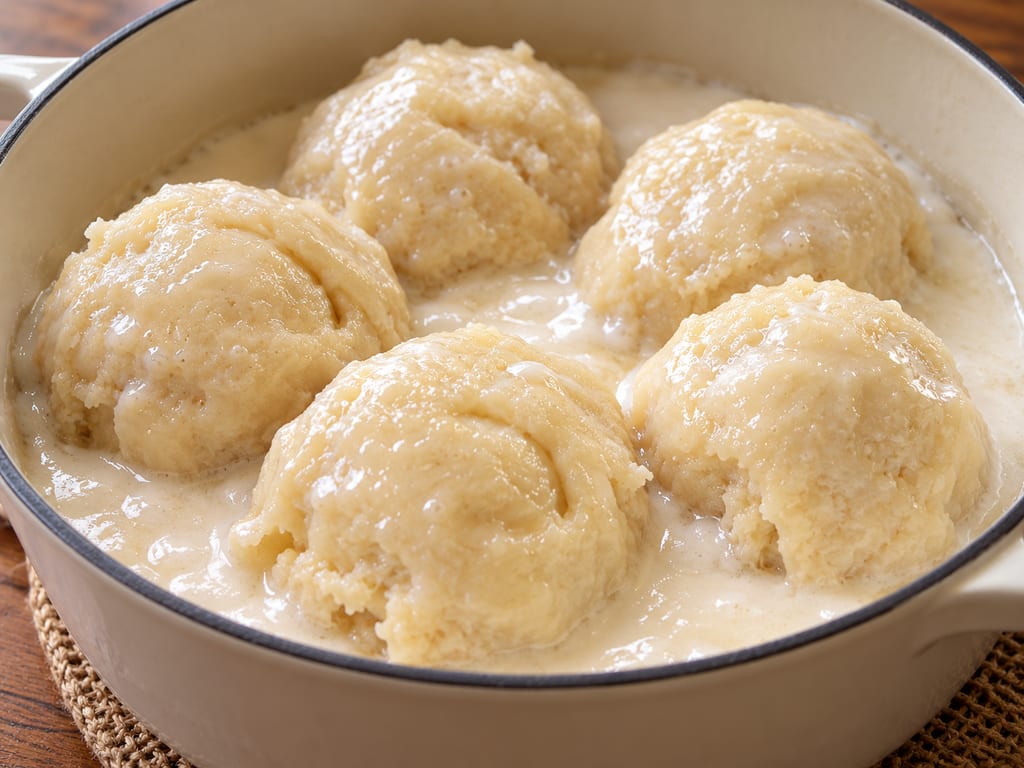
Soft yeast buns shaped by hand and simmered covered in coconut cream diluted with water in a deep pot. This Fijian home version uses a clean knife or fork inserted into the center as its doneness cue.
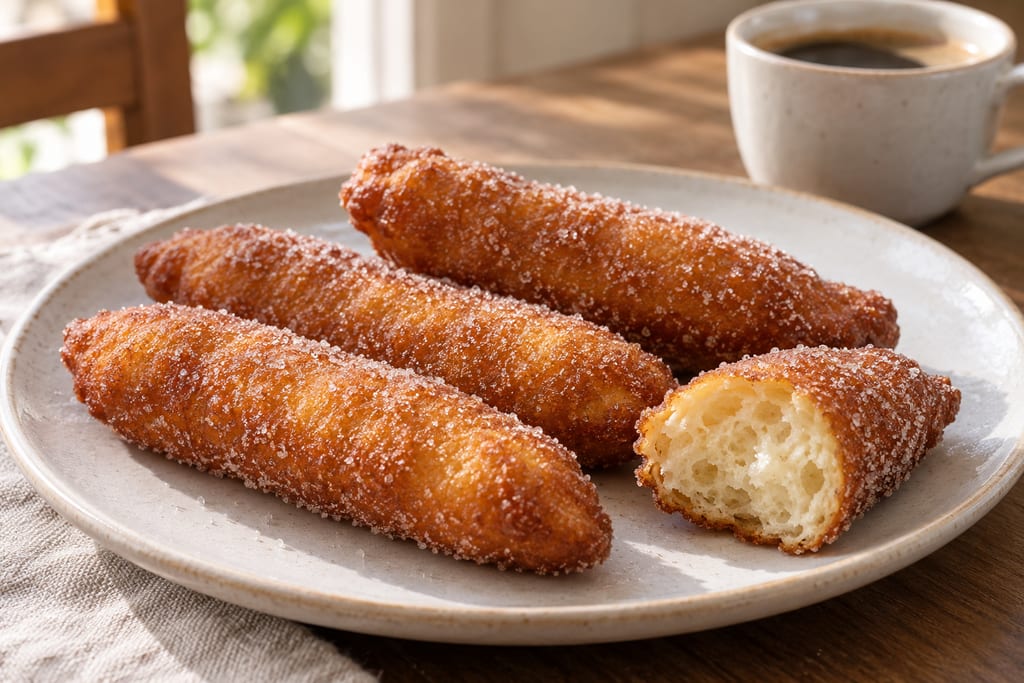
Firi firi is a yeast-raised coconut doughnut piped into long pieces and deep-fried at 170°C, traditionally eaten for breakfast or dessert in Tahiti.
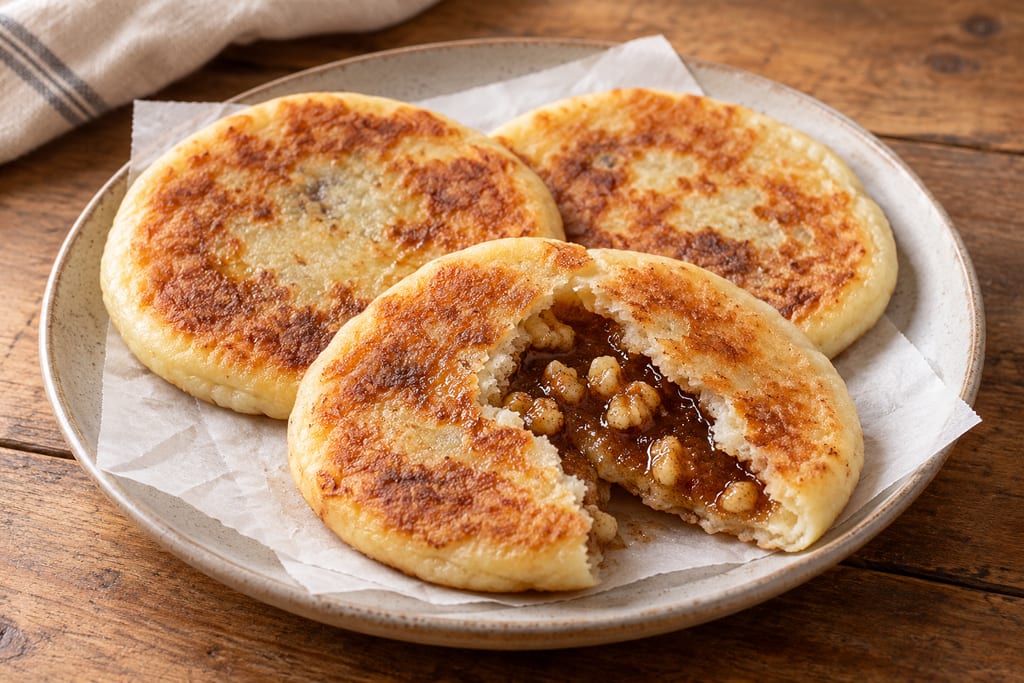
Maangchi’s eight-piece hotteok wraps a brown-sugar, cinnamon and walnut filling in yeast dough, then fries and presses the parcels in a pan.
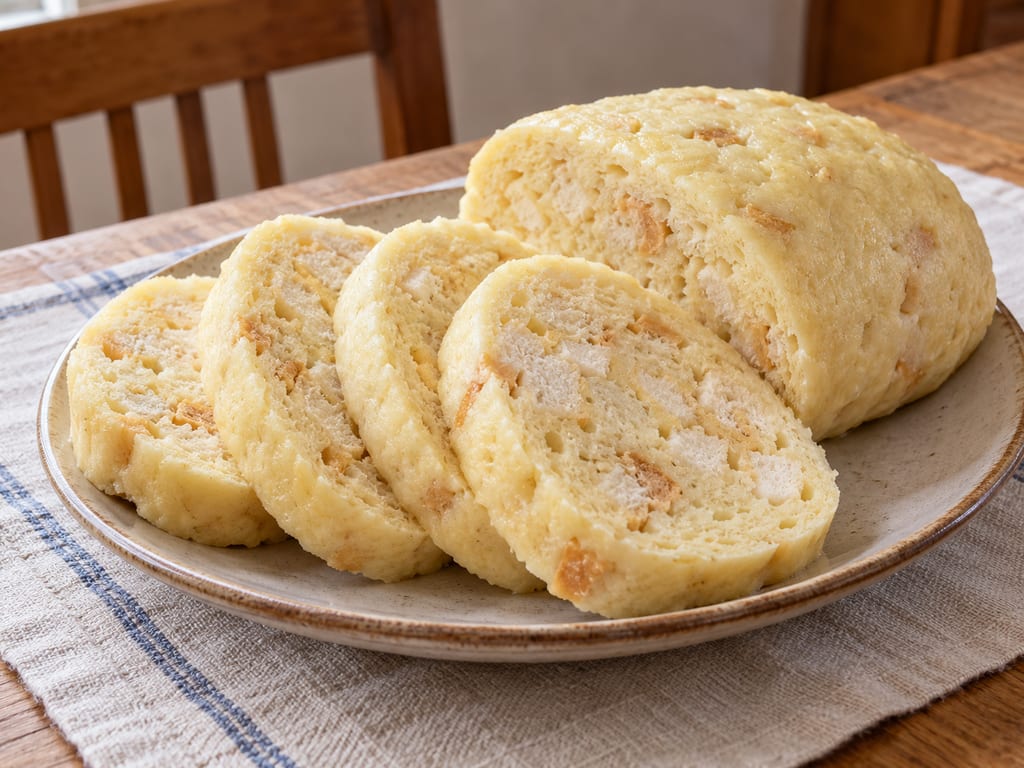
Czech houskové knedlíky are yeast-raised flour dumplings studded with stale white roll cubes, shaped as logs and steamed until tender for serving with sauce.
No community contributions have been published for this entry yet.
Sign in to contribute. Published comments and photos are free to read.
Regione Emilia-Romagna, Agricoltura, caccia e pescaMethod · History · Geography
Gnocco fritto, gnocc frett o gnocc, al gnoc frètt, ‘l gnocProduction territory includes provinces such as Reggio Emilia and Modena.
The method uses flour, a large pinch of salt and lukewarm water as needed for a firm dough; roll to about 3 mm, cut squares or diamonds, and fry in abundant hot lard or oil.
It describes serving hot and notes a historical rural use of leavened bread dough.
Cited in: Modena and Reggio Emilia
Assemblea legislativa Regione Emilia-Romagna, Consulta degli emiliano-romagnoli nel mondoHistory · Geography
Il gnocco frittoThe page distinguishes naming by province: crescentina in much of Bologna, gnocco fritto in Modena and Reggio Emilia, torta fritta in Parma, chisola or chisulen in Piacenza, and pinzino in Ferrara.
It describes gnocco fritto as a traditional Emilian preparation and notes its historical rural role.
Cited in: Modena and Reggio Emilia
Accademia della CruscaHistory
Crescentine o tigelle, questo è il dilemmaThe article explains the different meanings of crescentina: a fried morsel in Bologna and a griddle bread in the Modenese Apennines.
Cited in: Modena and Reggio Emilia
U.S. Fire AdministrationSafety
Cooking Fire SafetyDo not leave frying unattended; turn off the burner if leaving or if oil smokes.
Keep a lid or baking sheet nearby for a pan fire; turn off the burner and cover the pan, and do not move the pan.
La Cucina ItalianaMethod · Geography · Inspiration
Come fare lo gnocco fritto e sentirsi in EmiliaThe article identifies gnocco fritto as traditional in Modena and Reggio Emilia, notes that yeast is optional in the Modena classic, and presents its recipe with yeast and milk as a home version.
The measured batch for six uses 500 g flour, 150 g milk, 110 g water, 45 g lard, 12 g salt, 8 g fresh yeast, 5 g sugar and 1 L peanut oil.
It directs one-hour room-temperature rest, rolling to at most 6 mm, cutting 5–15 cm shapes, and frying at 175°C for about two minutes until golden.
Cited in: Modena and Reggio Emilia