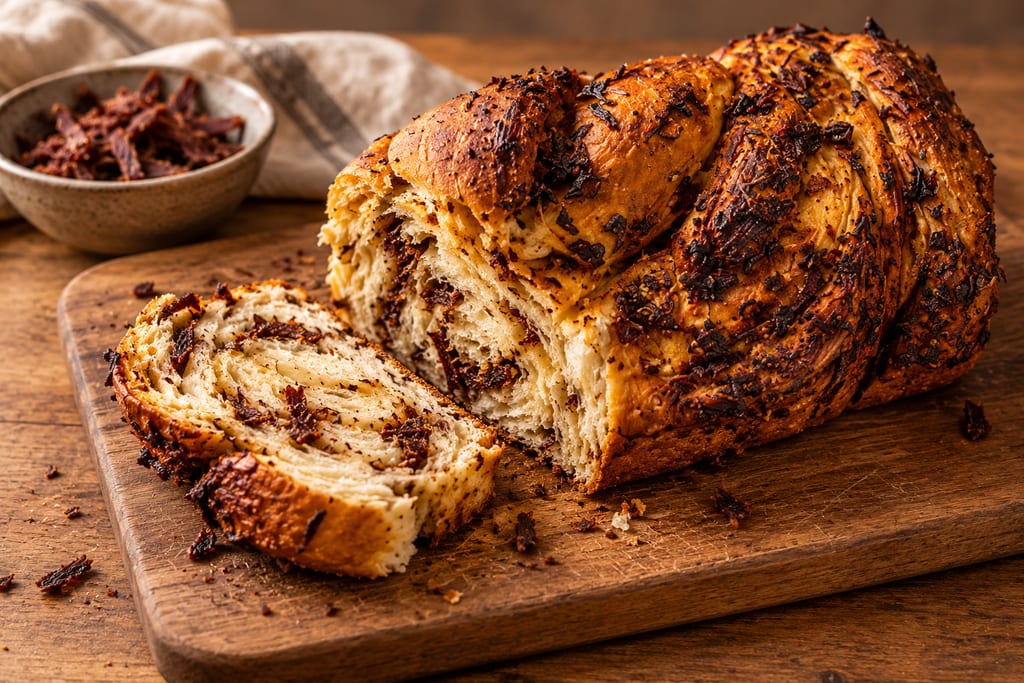
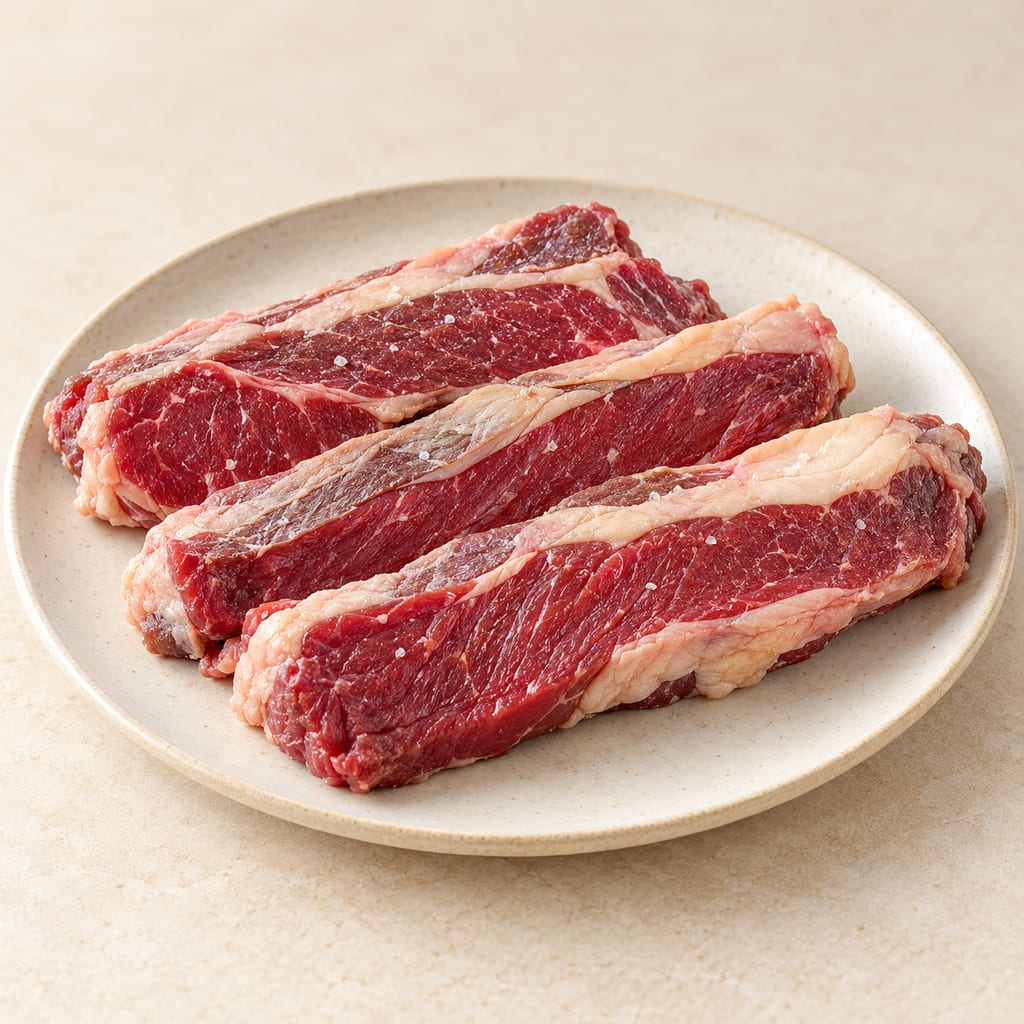
Prosciutto di Parma is a dry-cured, unsmoked ham from the Province of Parma, made from fresh pork legs salted with sea salt and matured for at least 14 months under the protected designation.
Prosciutto di Parma is a whole pork hind leg that is salted, rested, dried and matured until the muscle is firm and the flavour is developed. It is not smoked, and in the protected version no nitrites or nitrates are used: salt is the only preservative. The Consortium says that, and that the process takes at least 14 months from the first salting.
The changes that matter are salt diffusion and water loss, followed by slow enzymatic change in the muscle during maturation. The sources reviewed for this page describe the process and the protected conditions, not the microbiology. Nothing in them shows a starter culture, so this record does not classify the ham as a fermented food.
The European Commission’s summary of the protected name sets out the production rules. The traditional breeds are Large White, Landrace or Duroc, with other breeds allowed if they are compatible with the Italian Herd Book. The pigs must be at least nine months old and weigh about 160 kg live weight. The legs are salted, rested for 15 to 18 days after the second salting, and hung for about 80 days in a ventilated, temperature-controlled room, and the curing lasts a minimum of 14 months.
Production, packaging and slicing must take place in the Province of Parma. The raw legs may come from a wider list of regions, which the EC summary names. The Consortium’s own page gives the day counts differently in places, so the legal specification should be checked for any commercial claim.
The salting stage is the core of the method. The consortium describes a humid sea salt on the pigskin and a dry salt on the muscle, followed by about a week at 1 to 4 C and about 80 per cent humidity. A second, thinner salt coating then rests for 15 to 18 days, depending on the weight of the leg. The cold keeps the meat from spoiling while salt moves into it.
Resting follows at about 75 per cent humidity for 60 to 90 days in the consortium’s account. The meat darkens during this time and returns to a rosy colour in the last days. The ham is then washed in warm water, brushed to remove excess salt, and hung to dry for a few days before the first long cure.
The initial cure lasts about three months in well-ventilated rooms with large windows, opened when the outside air is suitable. The exposed surface dries and hardens. A paste of minced lard and salt is then applied to the exposed surfaces to slow the outside drying.
From about the seventh month the hams move to low-air, low-light cellars to finish. Weight falls by about 5 per cent during curing, and a trimmed ham loses more than a quarter of its weight in total. The ham is tested after at least 14 months with a horse-bone needle that shows the aroma; some hams age up to three years.
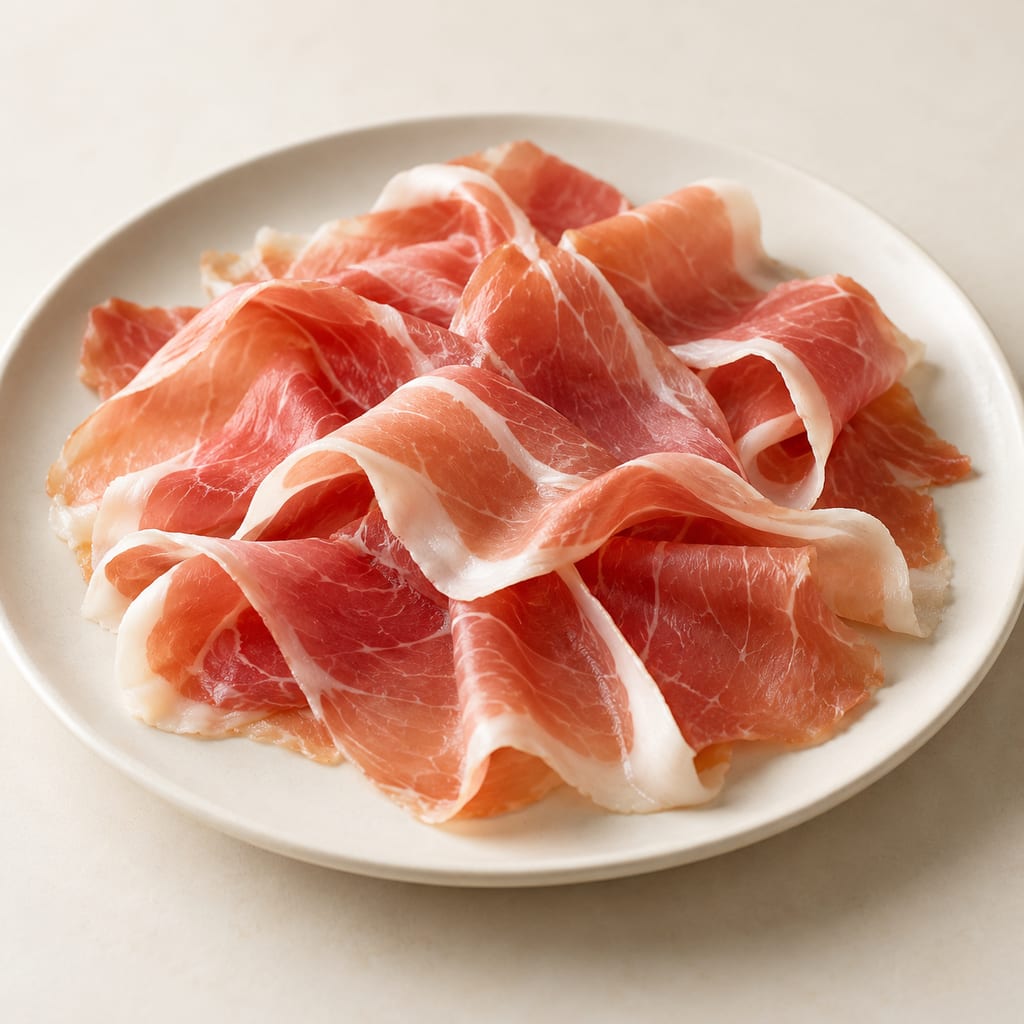
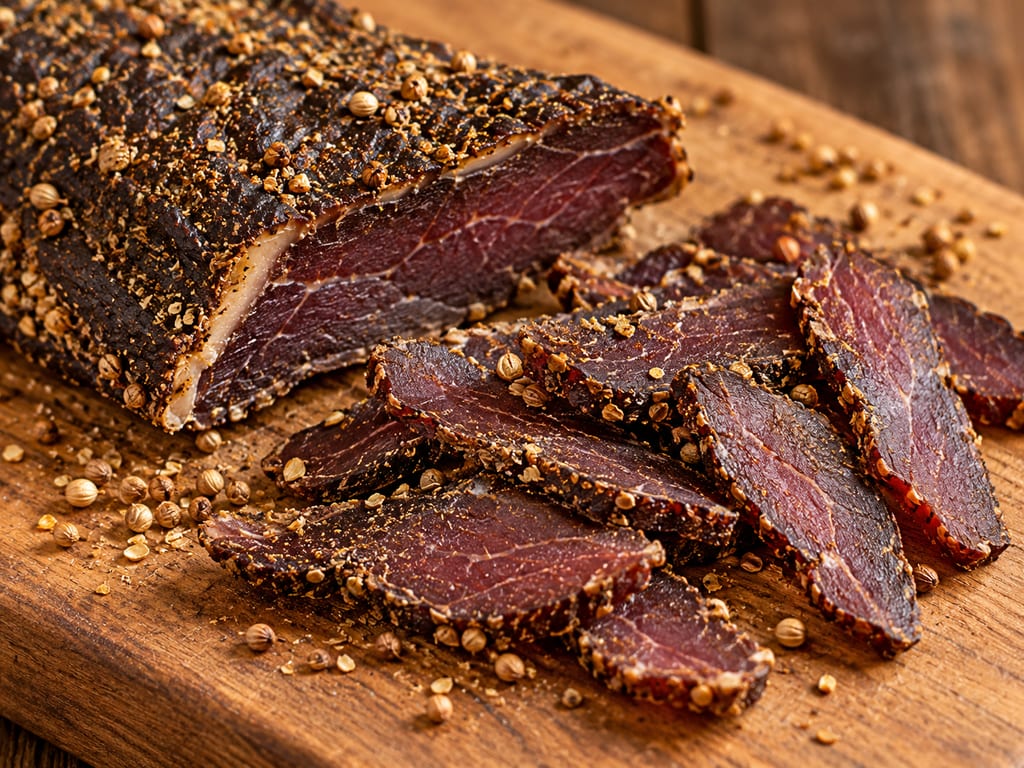
Prosciutto is served uncooked and thinly sliced, as the image of a board of slices shows. The sources reviewed do not give pairings or serving temperatures, so none are recorded here.
No source reviewed gives a home method that meets the protected specification. The sources also do not give a salt quantity, a room size, a safe hanging humidity for a small cabinet or a parasite control step. The Wikipedia article describes the pork history of Friuli and the Romans, but it does not date Parma ham itself, so that history is not used here as the origin of this product.
Curing a leg in a domestic cabinet is a different process from the protected one. This page keeps the specification as the reference and does not present a home version as Prosciutto di Parma.
The EC summary describes the protected name and its production conditions. The Consortium describes the process. Neither dates the first production of the ham.
Ingredients
Scaling: source batch only
Fresh pork hind leg (about 15 kg average fresh leg; pigs about 160 kg live weight)Legs from authorised slaughterhouses, arriving weekly at the producer.
Amount not stated
The consortium gives an average fresh leg of about 15 kg; the EC summary gives a live weight of about 160 kg for the pigs.
Sea saltHumid sea salt on the skin and dry salt on the muscle; a second thin coating later.
Amount not stated
No salt quantity is given in the sources.
Minced lard and salt pasteSpread on exposed surfaces during the cellar stage to slow surface drying.
Amount not stated
Method
Risks and precautions · High risk
Raw pork and parasites
The product is uncooked; the sources reviewed do not describe a parasite control step beyond the specification's raw-material and curing requirements.
Hazard source
The protected process is industrial and regulated. A cabinet or room alone does not establish compliance with the specification.
Receive fresh legs weekly. The consortium gives an average leg of about 15 kg.
Apply humid sea salt to the skin and dry salt to the muscle. Refrigerate at 1 to 4 C and about 80 per cent humidity for roughly one week.
Remove the first salt and apply a second thin layer of salt. Rest for 15 to 18 days, depending on weight.
Rest the hams for about 60 to 90 days in refrigerated, humidity-controlled rooms at about 75 per cent humidity. The meat darkens and returns to a rosy colour in the final days.
Wash the hams in warm water and brush off excess salt and impurities. Hang them in drying rooms for a few days.
Begin the initial cure in well-ventilated rooms with large windows, for about three months, opening them when the outside air is suitable. The exposed surface dries and hardens.
Coat exposed surfaces with a paste of minced lard and salt to slow surface drying.
From about the seventh month, move the hams to low-air, low-light cellars until curing is complete. Weight loss in curing is about 5 per cent; a trimmed ham loses more than a quarter of its weight overall.
Age for at least 14 months from the first salting. Test the ham with a horse-bone needle, then fire-brand the Ducal Crown.
Conditions
Temperature1–4°C
Temperature controlRefrigerated
Places
Parma
Documented preparation · Region evidence
The protected production area. The sources do not date the origin of the product in this place.
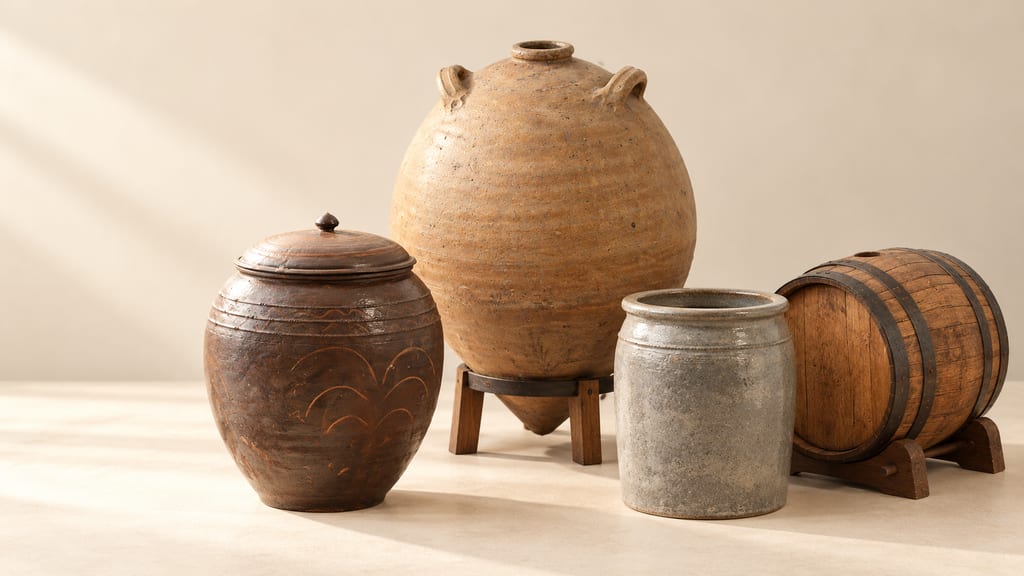
Jars, barrels, skins, leaves, pits and whole rooms decide much of what happens to fermented and cured food. This is how a container works on its contents, and how people in different places chose theirs.
A dark, balanced vinegar from Emilia-Romagna made by combining cooked or concentrated grape must with wine vinegar, then acetifying and refining it in wood under a protected specification.
Protected Italian vinegar made only from cooked grape must, fermented and aged in a battery of wooden barrels for at least 12 years: sweet, sharp and syrupy.
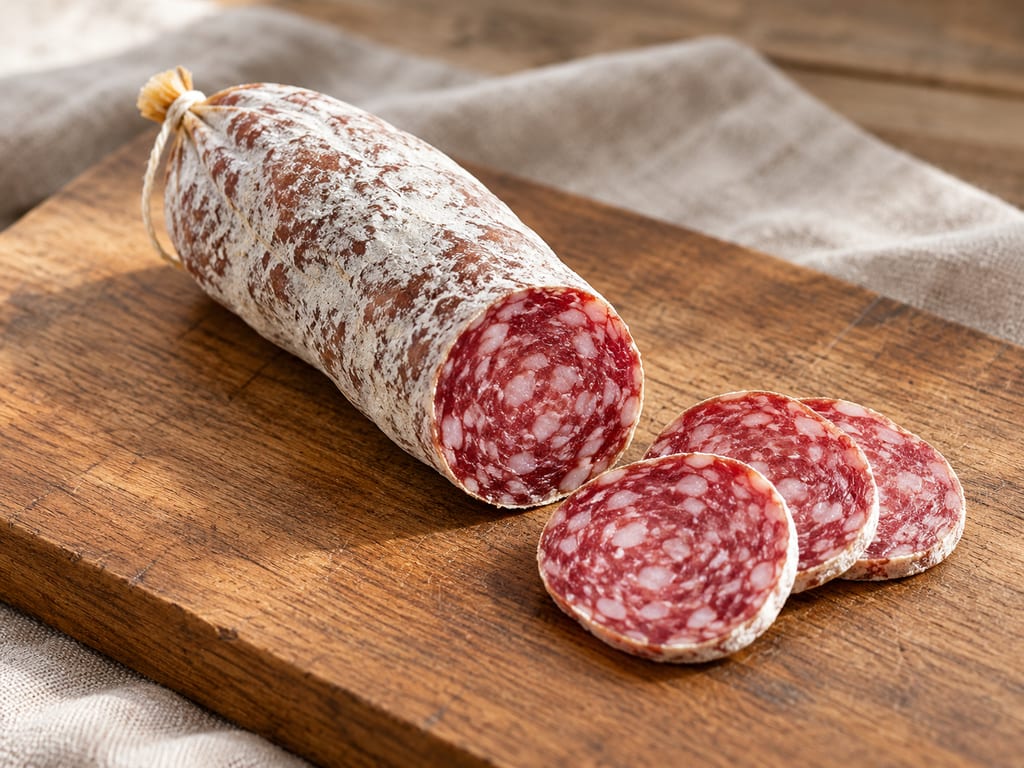
Small Italian hunter-style salami of lean pork, firm fat, salt, pepper and garlic, mildly acidified and dry-matured; protected as Salamini Italiani alla Cacciatora DOP.
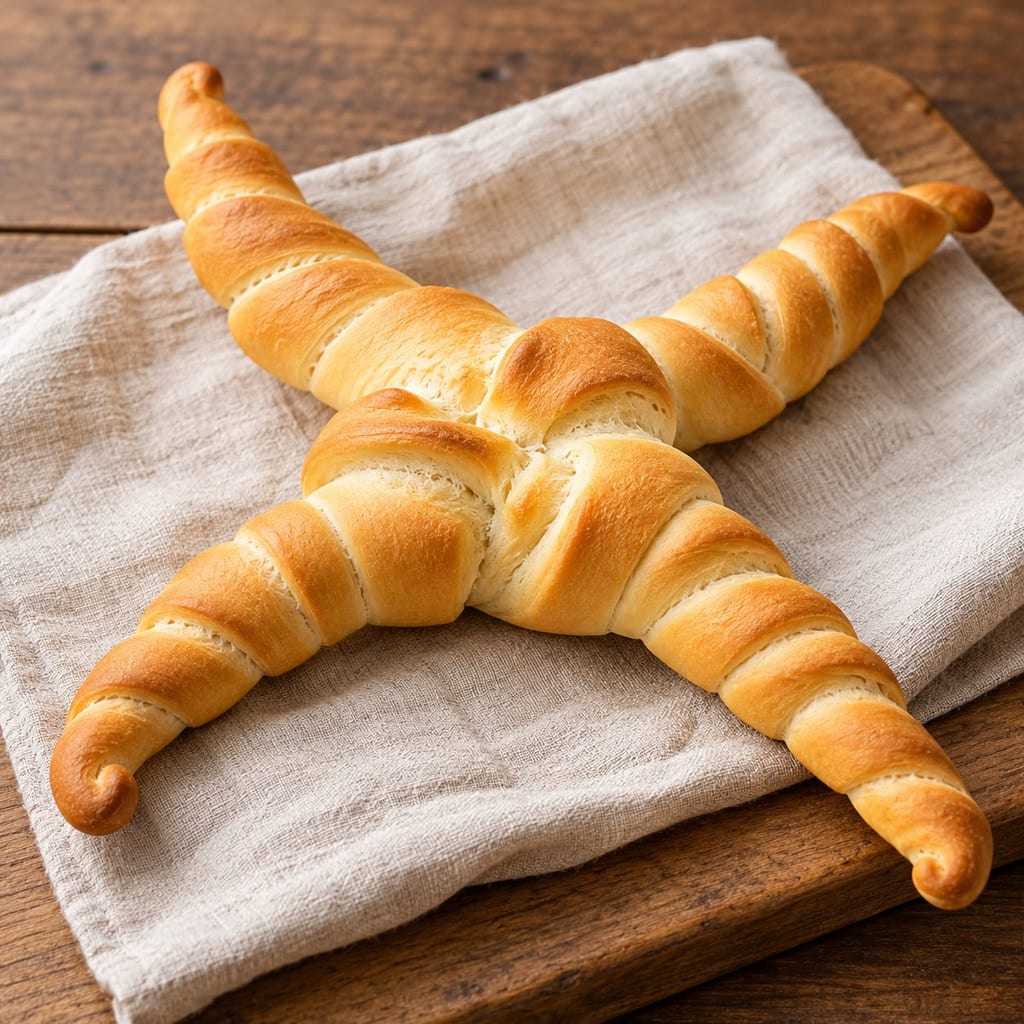
Ferrara’s paired bread twists have four pointed horns joined at a soft centre. This VisitFerrara home recipe uses type 0 flour, water, oil, lard, malt and a choice of sourdough or yeast.
This Emilia-Romagna home version uses a measured flour-and-milk dough with yeast, shapes it into small diamonds or squares, and fries them in peanut oil.
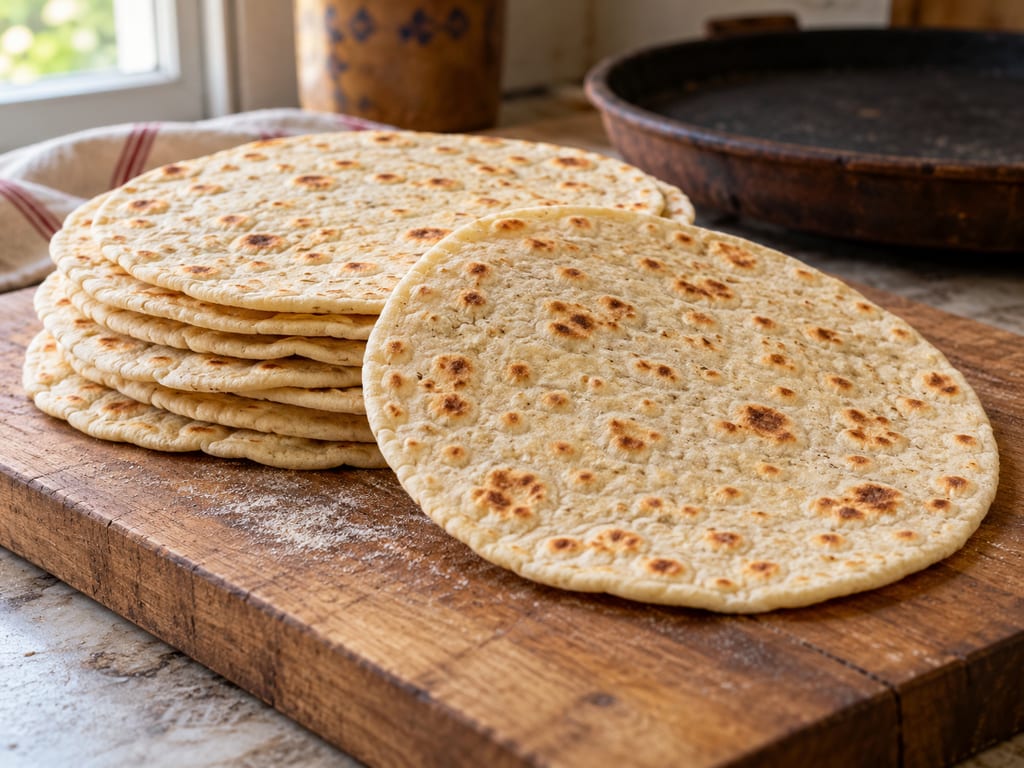
Eight soft Romagna-style flatbreads made from type 00 wheat flour, lard, honey, baker's yeast, milk and salt. Rest the dough for an hour, roll 3–4 mm rounds and cook them quickly on a hot griddle or heavy pan.
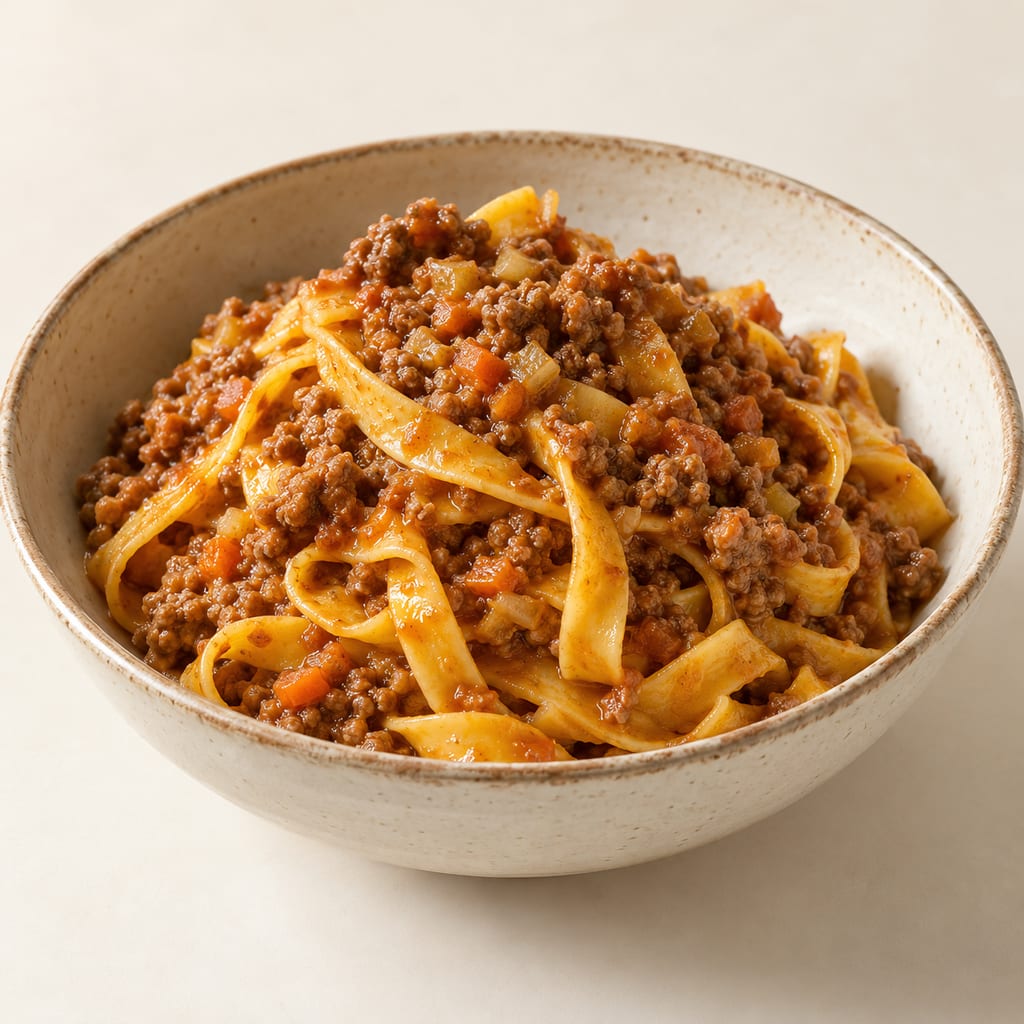
Ragu alla bolognese is a slow-cooked meat sauce of minced beef and a little pork, cooked with soffritto, white wine, milk and a little tomato, served with fresh tagliatelle in Bologna.
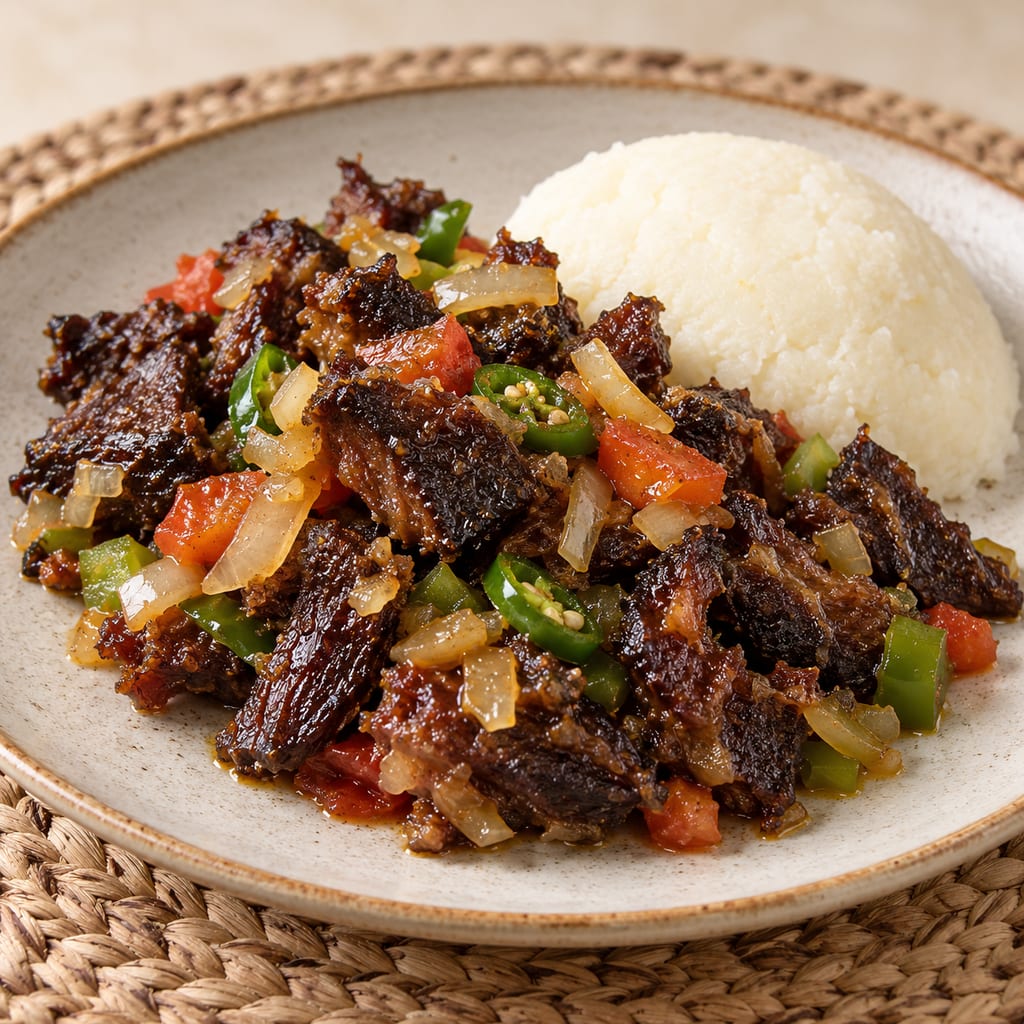
Alina Magano Johannes’s Oondhingu is a family dish from Onyaanya, Oshikoto, in northern Namibia: softened dried beef fried with vegetables and served with pap.
Alpaca charqui is Andean dried meat, made from camelid meat exposed to hot sun by day and frost by night at high altitude, the ancestor of the modern word jerky.
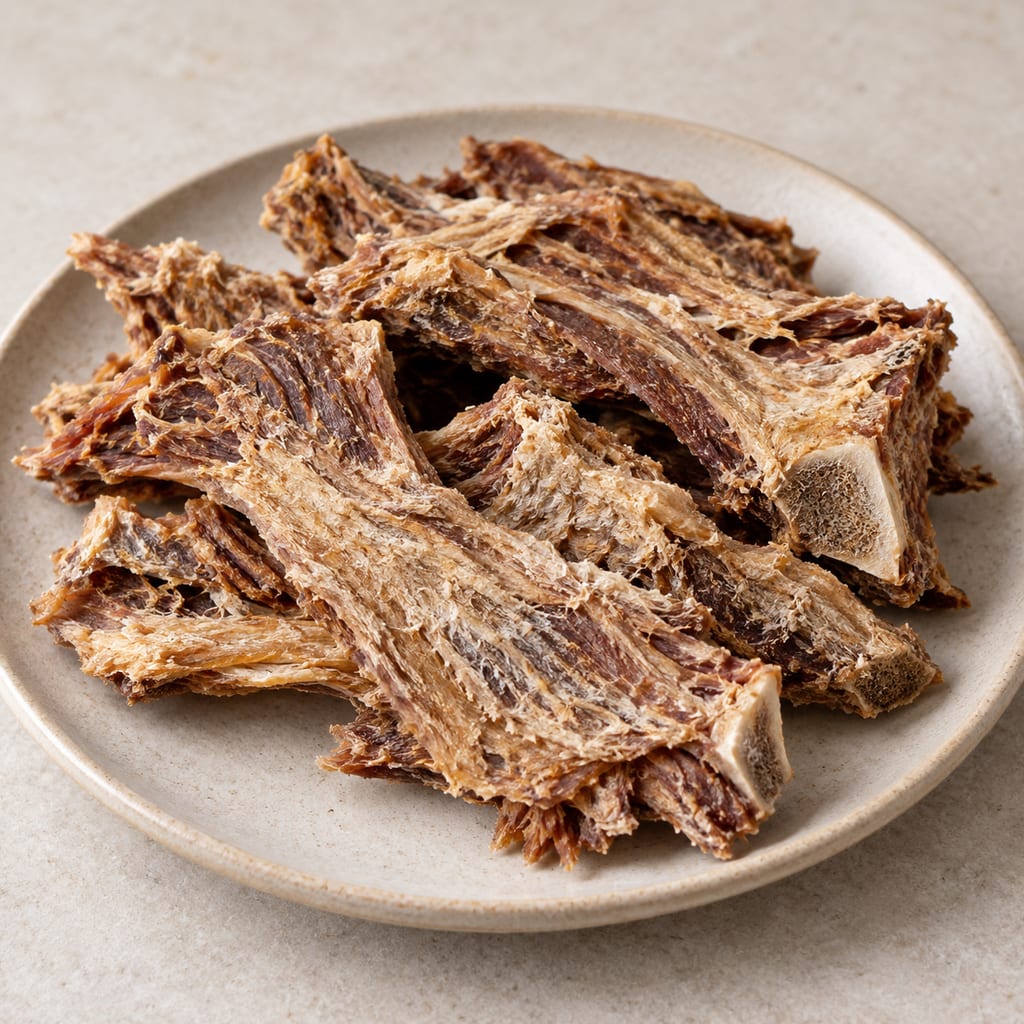
Strips of whole-muscle beef or game seasoned with salt, vinegar, roasted coriander and pepper and air-dried without cooking, sold anywhere from soft and moist to hard and very salty.
Beef given limited salt and partial surface drying, a short-keeping Brazilian meat that is much less durable than fully dried charque and is treated as a cold-chain product.
Community
No community contributions have been published for this entry yet.
Share what you made
Sign in to contribute. Published comments and photos are free to read.