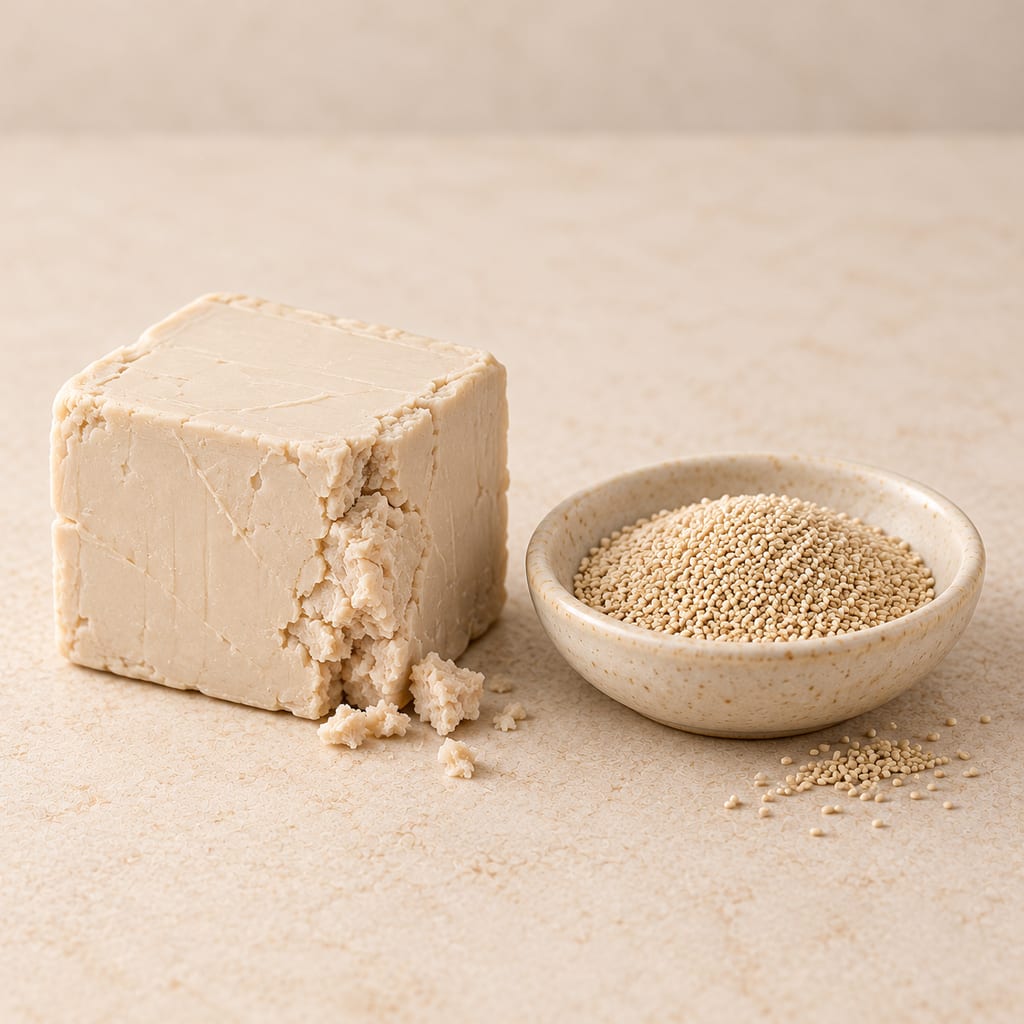
Baker's yeast
Baker's yeast is a cultivated living leavener, commonly sold fresh or dried. In dough, selected Saccharomyces cerevisiae cells make gas that can raise bread.
 FermenteaWhere food goes to change
Yeasted bread wrapped around biltong, tomato pesto, Cheddar and feta, split lengthwise into a braid and baked; served with chilli-biltong butter.
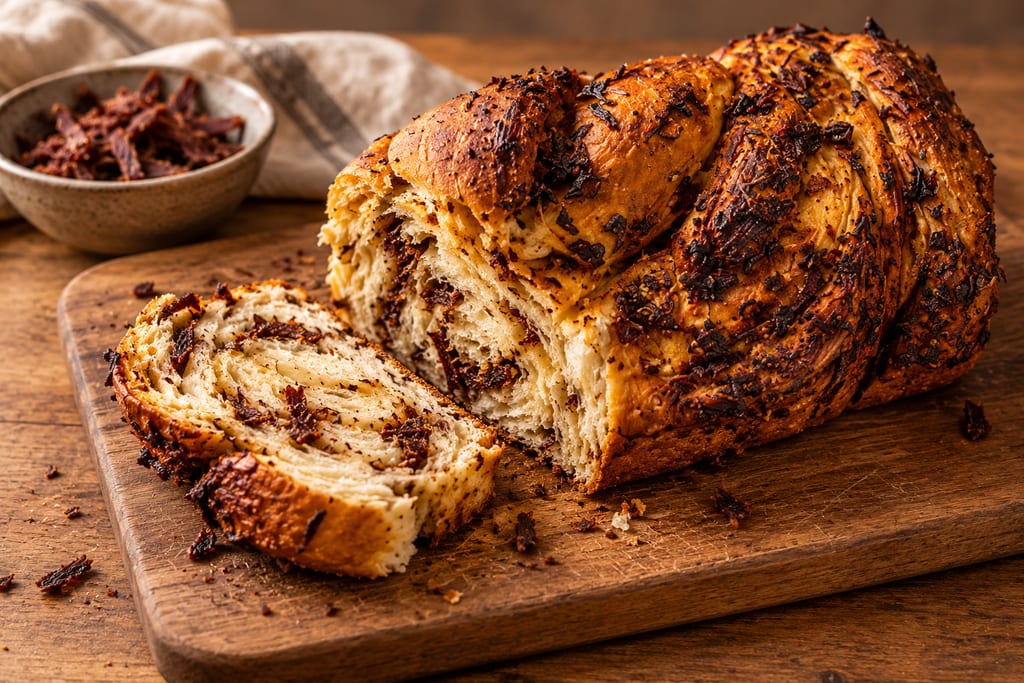
Brita du Plessis’s Woolworths TASTE recipe makes one yeasted loaf filled with sundried-tomato pesto, Cheddar, feta and finely chopped beef biltong. The dough is rolled around the filling, cut lengthwise into two strands and braided before its final rise. It is a modern published recipe, dated 4 July 2023, and the page credits Du Plessis for the recipe and Sadiqah Assur-Ismail for the photographs and video.
The braid exposes part of the filling and creates a striking loaf to slice and share. The dough’s rise provides the structure: gas produced by the active dry yeast expands the gluten network in the flour, while the filled shaping traps cheese, pesto and biltong between the strands. The loaf is therefore both a bread and a composed savoury bake, rather than a cured-meat recipe.
For the dough, the published list gives 10 g active dry yeast, 4 tablespoons sugar, 2 tablespoons salt, 3 cups flour, 1½ cups lukewarm water and 4 tablespoons milk. The filling is 250 ml sundried-tomato pesto, 120 g Cheddar, 80 g feta and 180 g finely chopped Woolworths beef biltong. The chilli-biltong butter uses 50 g softened butter, 10 g chilli flakes and 25 g biltong powder.
The 2 tablespoons of salt against 3 cups of flour is conspicuously high for a yeast dough. It is exactly what the published page prints, but the research source flags it for verification before republication. This record preserves the source quantity and does not invent a correction. If the publisher confirms an erratum, the record can be updated with that evidence; until then it is a published figure requiring caution, not an independently tested formulation.
The filling combines salty, crumbly cheeses with savoury dried meat, while the tomato pesto supplies a concentrated, oily and acidic component. The chilli-biltong butter is served alongside rather than worked into the loaf, so it adds a separate hot, fatty accompaniment.
The recipe starts by mixing the yeast with one tablespoon of the total listed sugar and some of the lukewarm water. It rests for five minutes or until bubbling. The source does not state an exact water temperature; lukewarm is its descriptive cue, so no numeric range is supplied here.
Mix the dry ingredients, then gradually pour in the wet ingredients while stirring with a wooden spoon. Once the dough comes together, knead it on a lightly floured surface for ten minutes. Move it to a lightly oiled bowl and prove for one hour. Kneading develops the elastic dough; proving allows the yeast to produce gas and the dough to expand. It lists one hour for this first rise but not the room temperature or a final dough volume.
After the first prove, knock down the dough and roll it into a rectangle. Spread on the sundried-tomato pesto, Cheddar, feta and finally the chopped biltong. Roll the rectangle into a cylinder, cut the roll lengthwise into two strands and braid or knot the strands together. Set the loaf into a tin and allow the second rise to continue until the dough has doubled. This visual endpoint is specified, but the time is not.
Bake at 180°C for 25–30 minutes. The recipe metadata separately lists 30 minutes cooking time; the method’s range is preserved. Its method is intentionally brief about tin dimensions, dough thickness and oven variation, so those details are not expanded into false precision. It says to serve the loaf with the chilli-biltong butter.
The loaf can be served as a shared savoury bake, with the butter offered alongside. Its combination of pesto, two cheeses and biltong is specific to this recipe. Changing the cheeses, adding a different sauce or using a different dough ratio might work as a kitchen adaptation, but those would no longer be Du Plessis’s measured formula.
The recipe uses finished biltong and says nothing about curing or drying it. It makes no shelf-life claim. Its only quantified preparation controls are the two dough rises as described, the kneading time and the oven temperature and bake range. The record retains the source’s unusually high salt amount for verification rather than creating an untested alternative.
Woolworths TASTE published Brita du Plessis’s sponsored braided loaf recipe on 4 July 2023. The page gives an explicit creator and photograph credits. This documents one contemporary recipe, not a historic South African loaf tradition.
Yield 1 loaf · Scaling: source batch only
The source lists 2 tbsp salt for 3 cups of flour, an unusually high ratio that should be checked with the publisher before baking; this page retains the published amount rather than substituting an untested correction.
Hazard sourceVerify the source’s printed salt measure before preparing the recipe.
Control sourceNo shelf-life claim is made. This dish uses finished biltong and does not describe how to make or validate it.
The recipe documents a contemporary loaf, not a historical regional preparation.
Baker's yeast is a cultivated living leavener, commonly sold fresh or dried. In dough, selected Saccharomyces cerevisiae cells make gas that can raise bread.
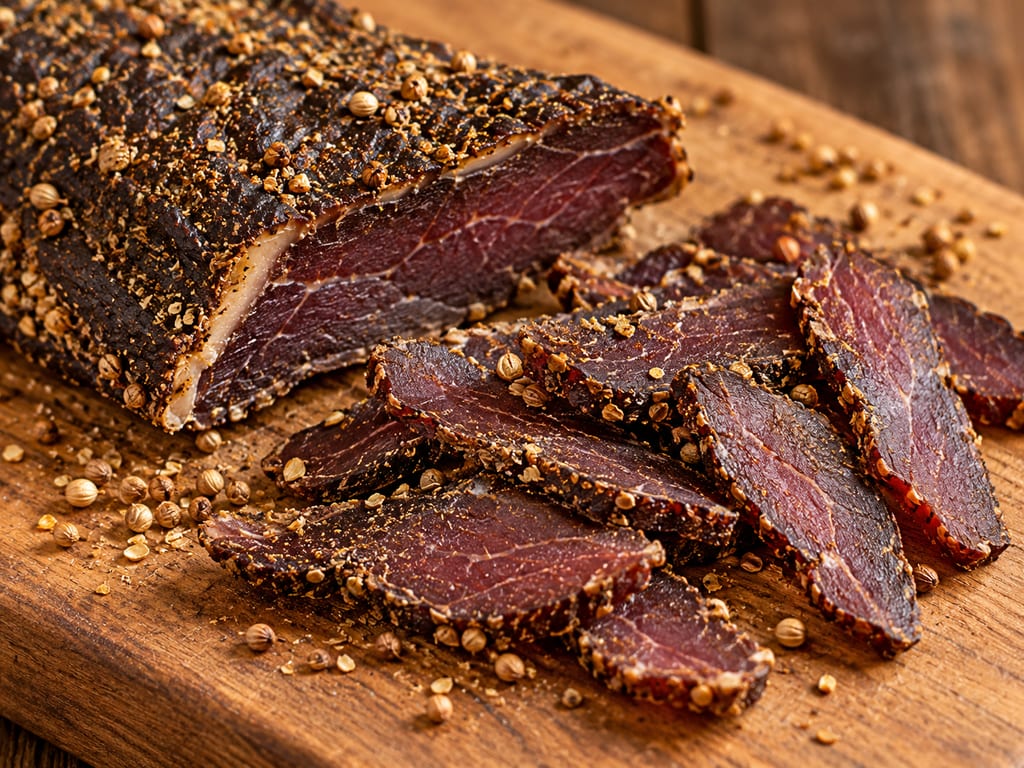
Strips of whole-muscle beef or game seasoned with salt, vinegar, roasted coriander and pepper and air-dried without cooking, sold anywhere from soft and moist to hard and very salty.
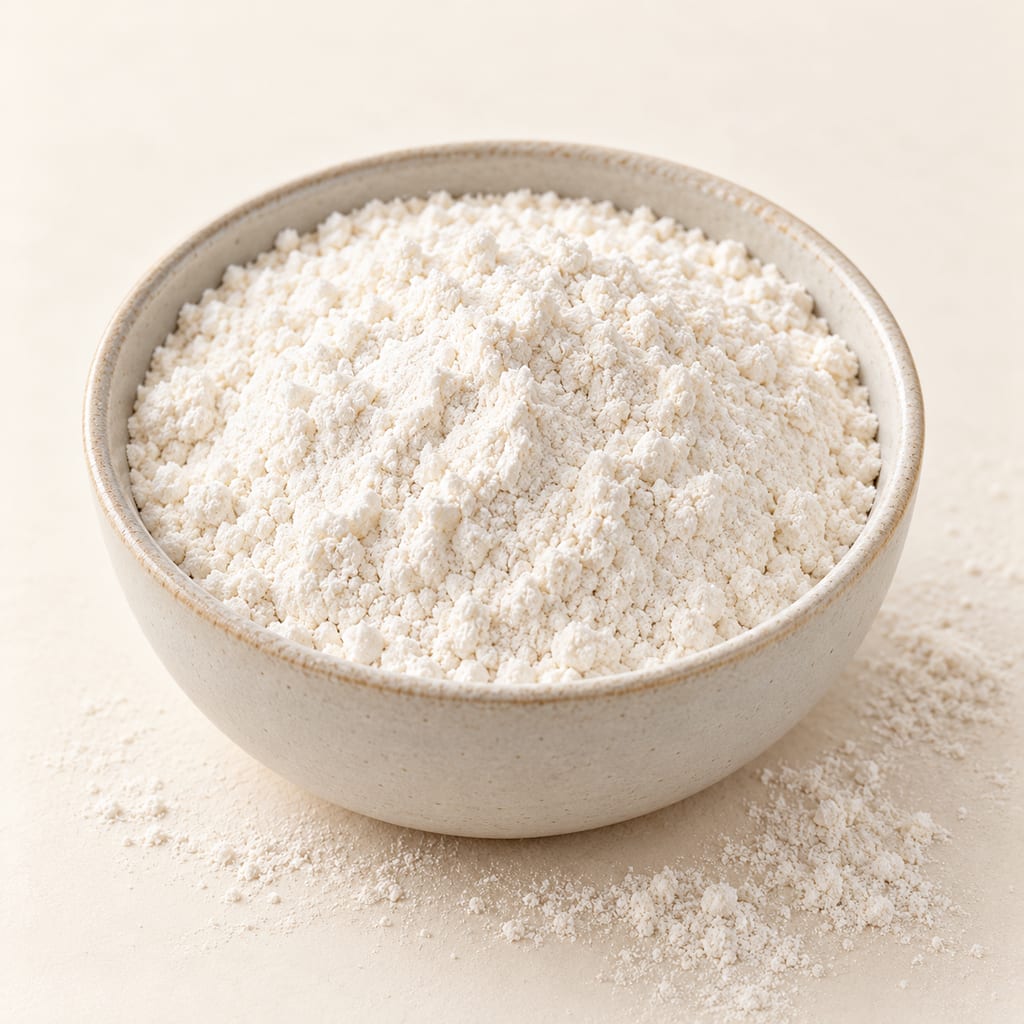
Bread flour is wheat flour chosen for dough strength and gas retention. Its protein level and baking performance vary by wheat, mill and product.

Oil extracted from olive fruit serves as cooking fat, flavouring and, in some cheese methods, an exterior treatment. Grade, cultivar, processing and storage shape its character.
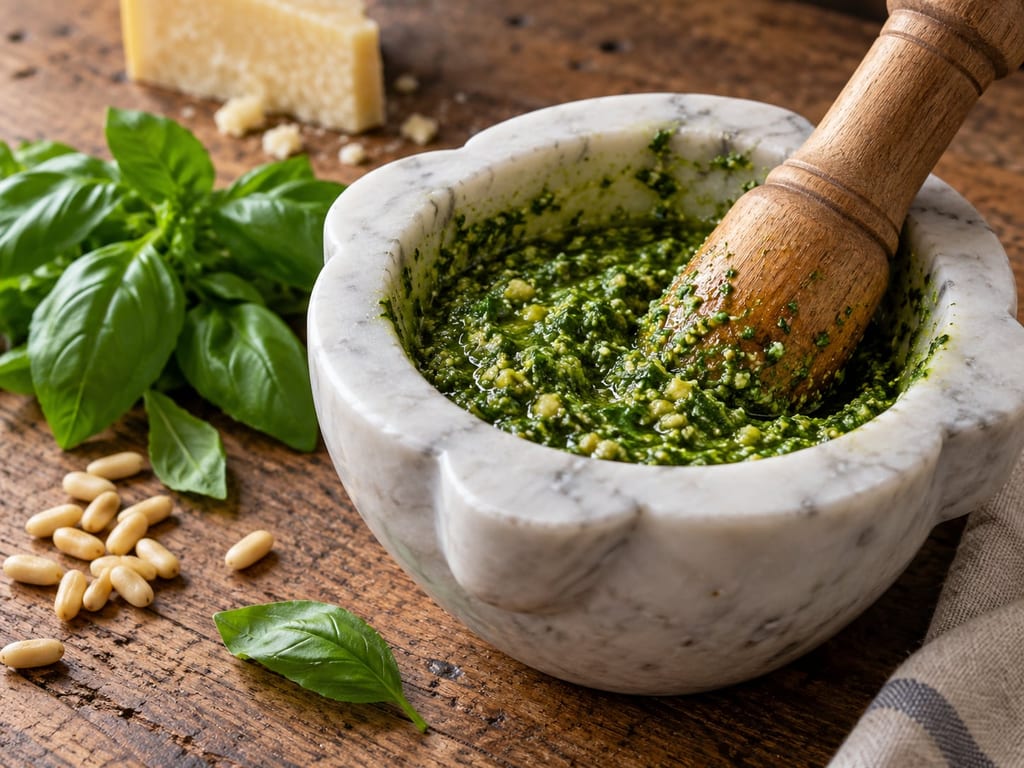
Pesto Genovese is a Ligurian uncooked basil sauce pounded with garlic, pine nuts, salt, hard cheeses and olive oil, traditionally made in a mortar.

Food-grade sodium chloride seasons food and changes water movement in brines and cures; crystal size and the recipe's measurement method matter.

Water carries dissolved ingredients, transfers heat and forms the liquid environment of many ferments; its minerals and treatment influence how it behaves.
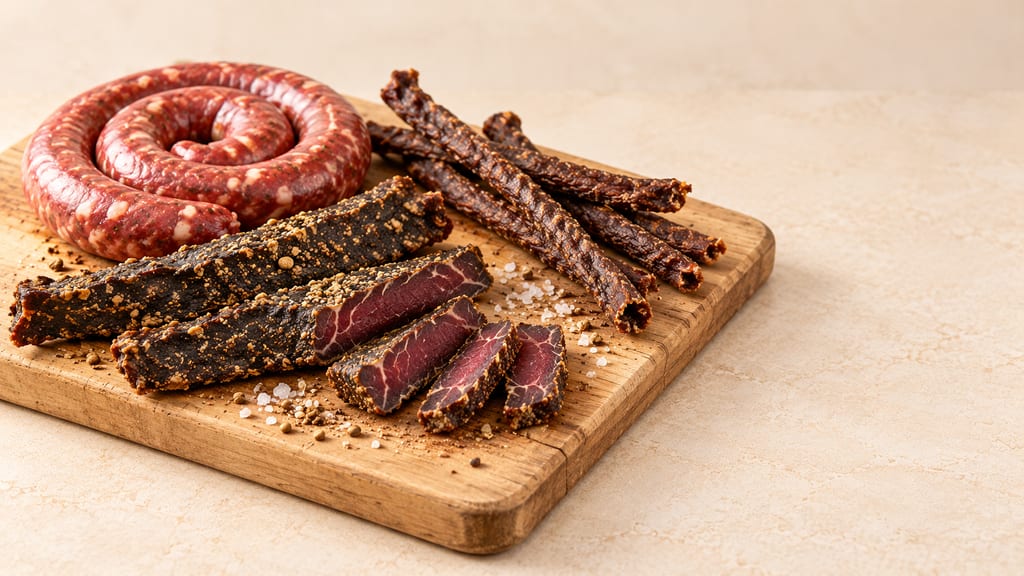
Boerewors, biltong and droëwors share a table but follow different paths from meat to meal. Their histories lead from the braai and butcher's counter to drying lines, household pots and the science of keeping food.
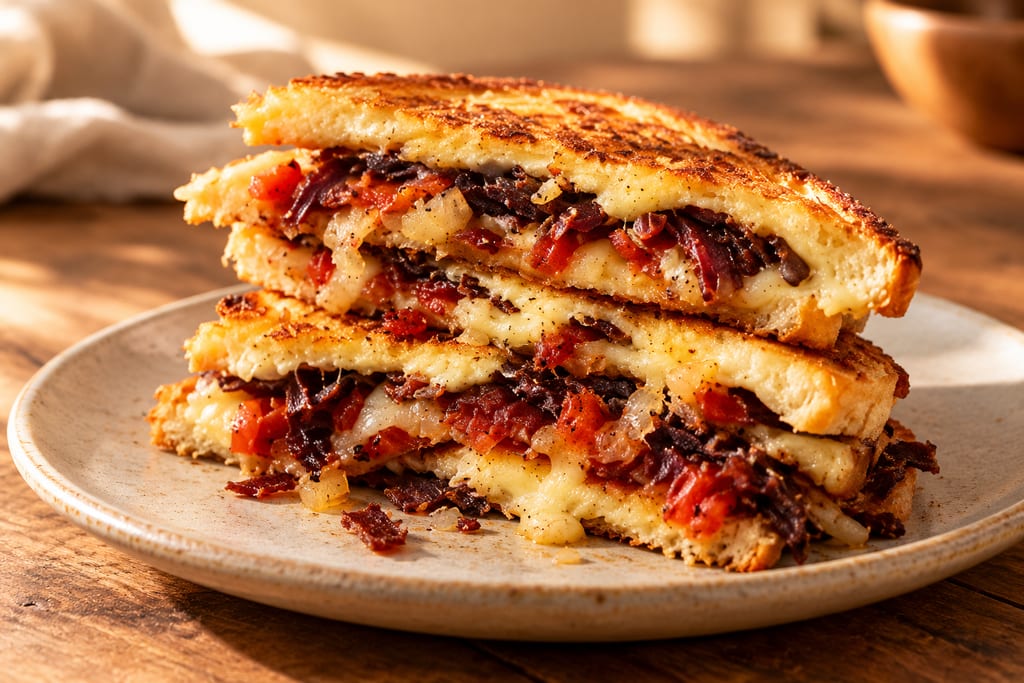
Chopped biltong, sweet onion, cream cheese and Cheddar fill bread toasted in a hinged grid over gentle coals, then finished with biltong dust.
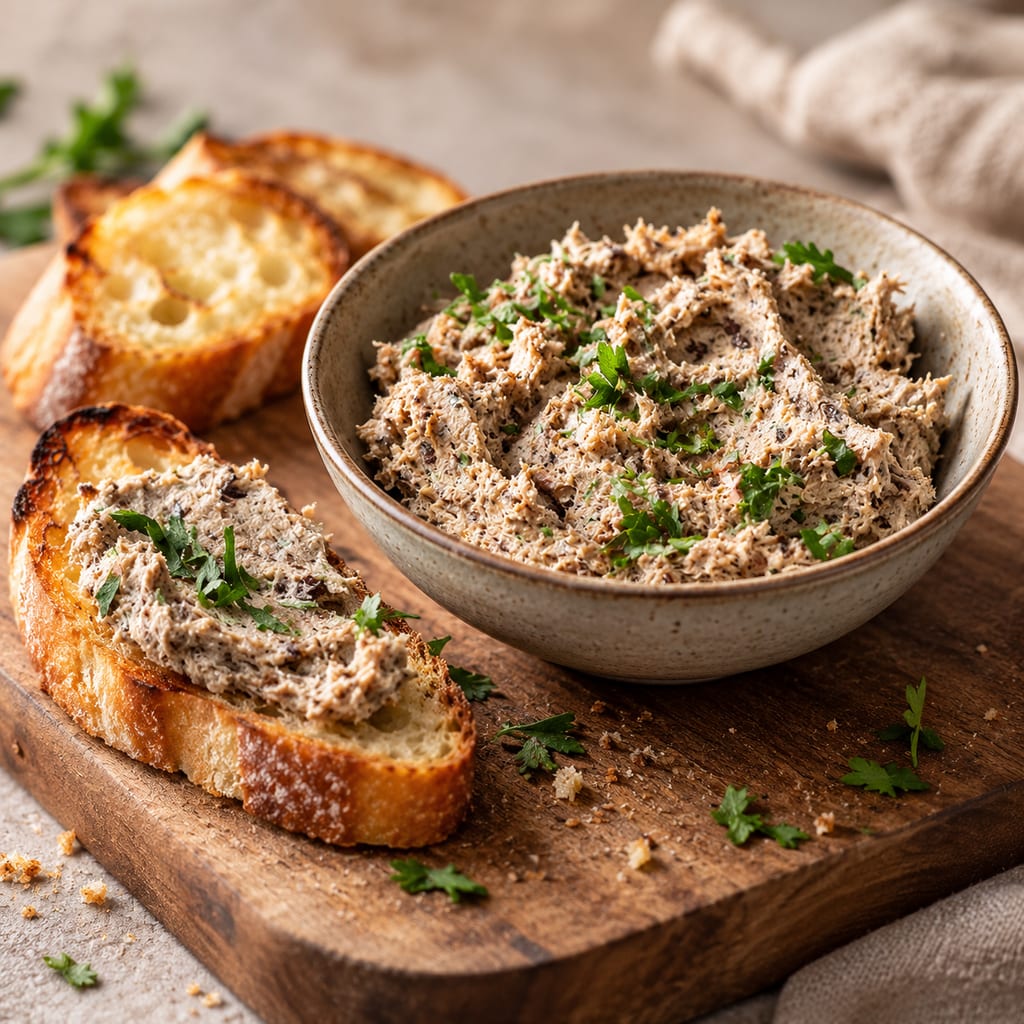
A cold biltong spread with sour cream, mayonnaise, mustard, lemon and herbs; serve it with crackers, crostini or bread.
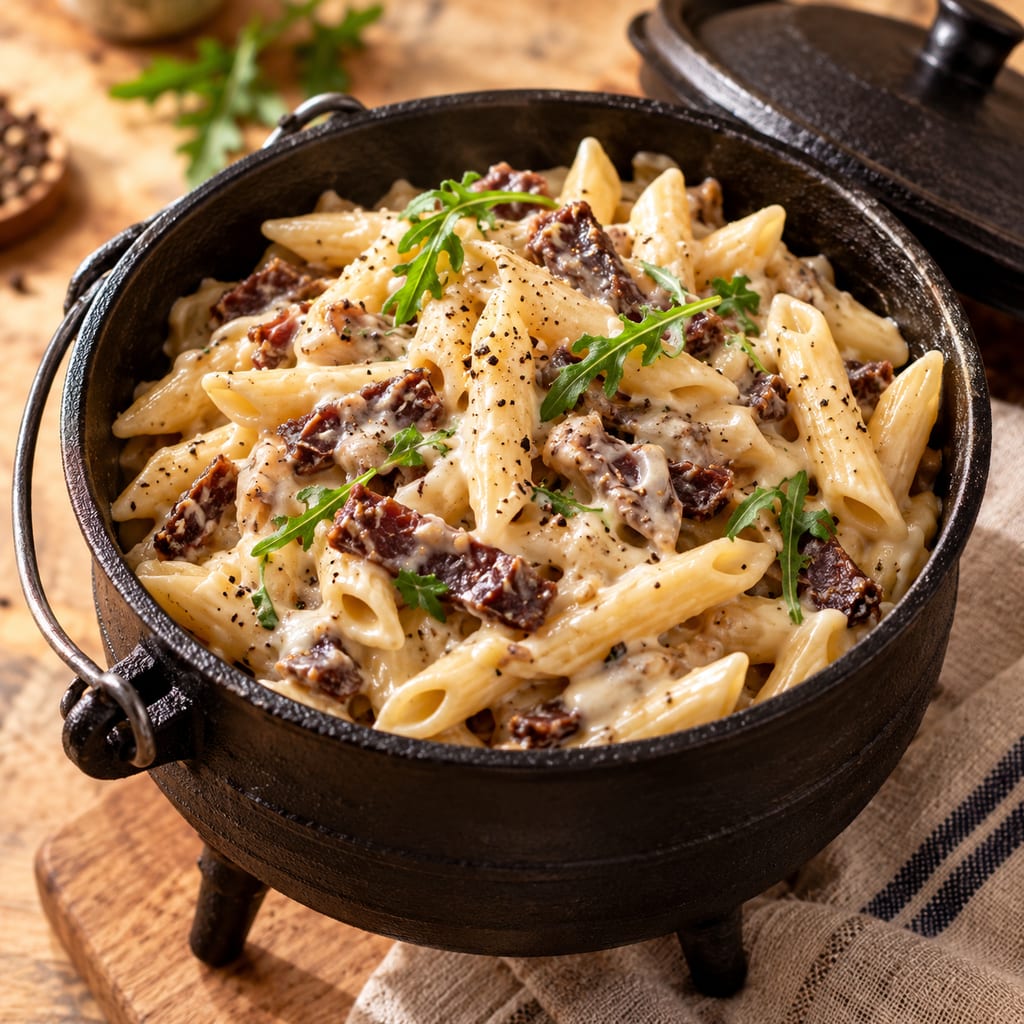
Biltong, bacon and vegetables simmer in tomato-herb stock, then join cooked pasta, milk, cream and Cheddar in this outdoor potjie.
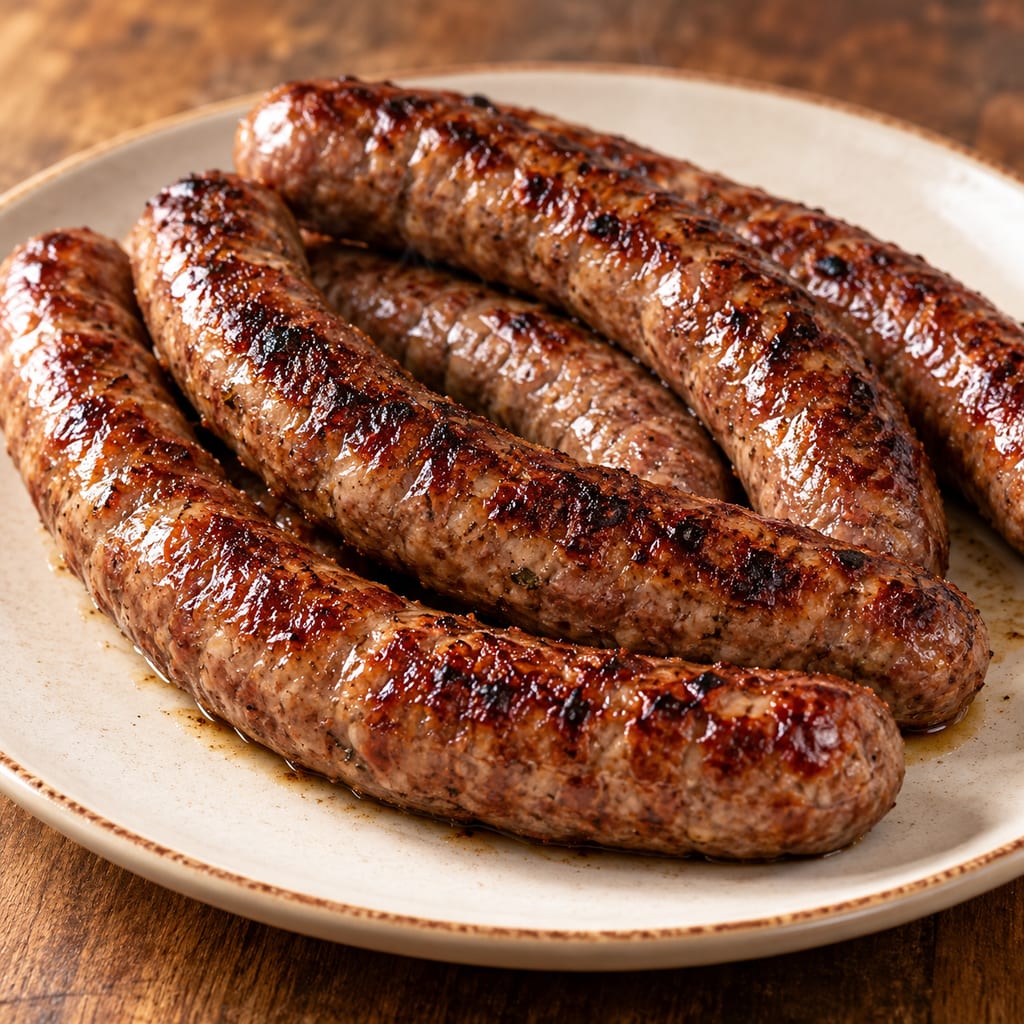
South Africa's regulated grilling-sausage class, looser than boerewors: a minimum of 40% meat, vegetable protein and mechanically recovered meat allowed, and sold raw.
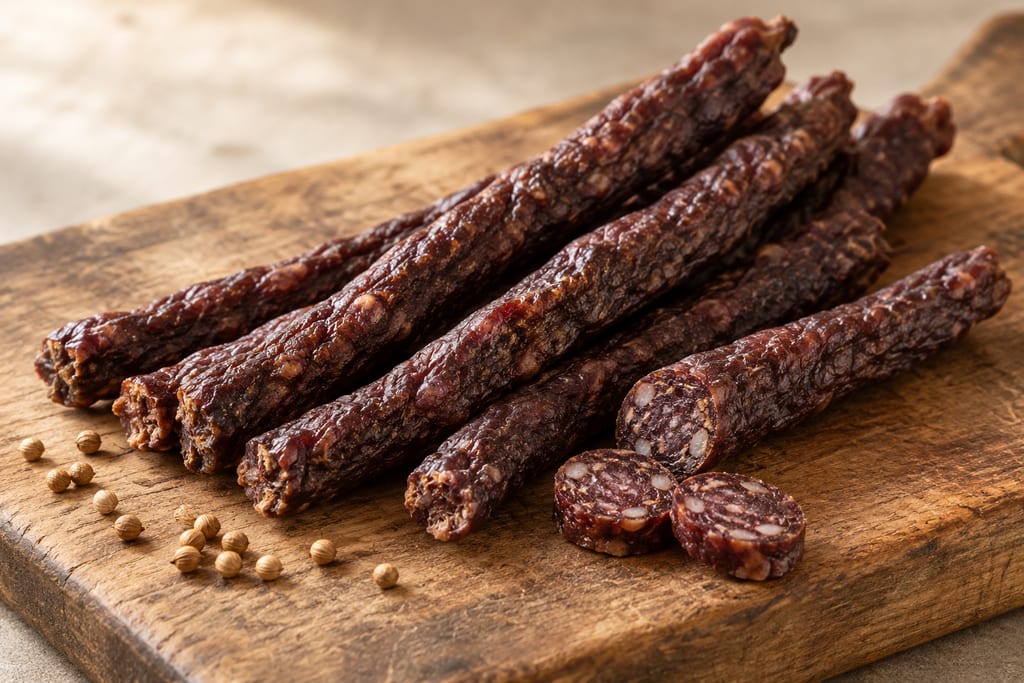
South Africa's dried sausage: seasoned minced meat in narrow casings, dried until it can be eaten without cooking, which makes it a far more demanding product than fresh boerewors.
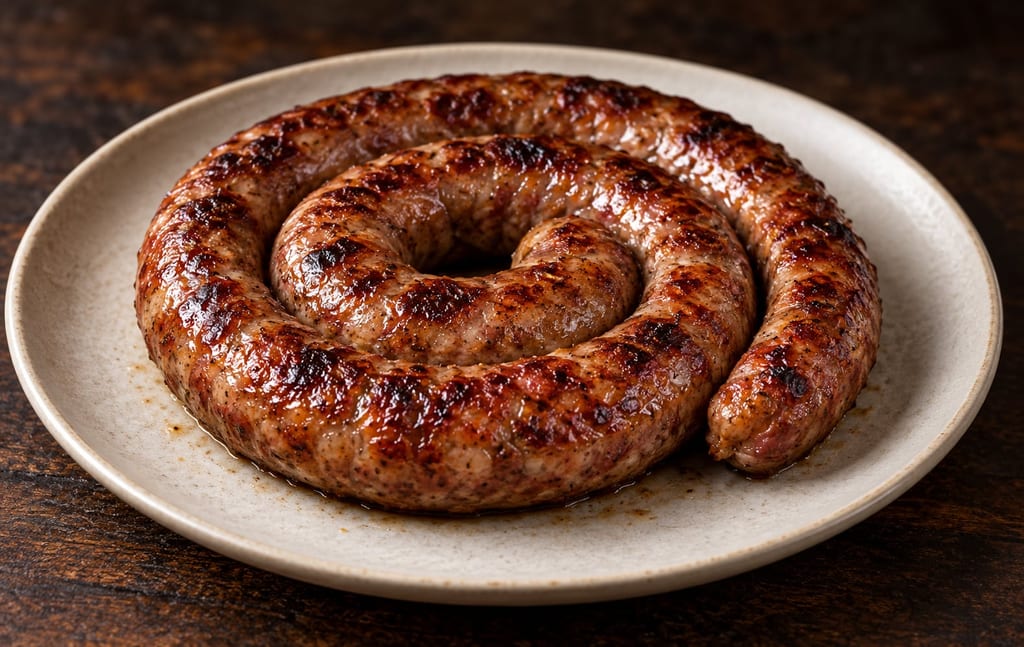
A coarse South African farmhouse sausage of beef with pork or mutton fat, defined by its coriander seasoning and cooked fresh over coals rather than preserved.
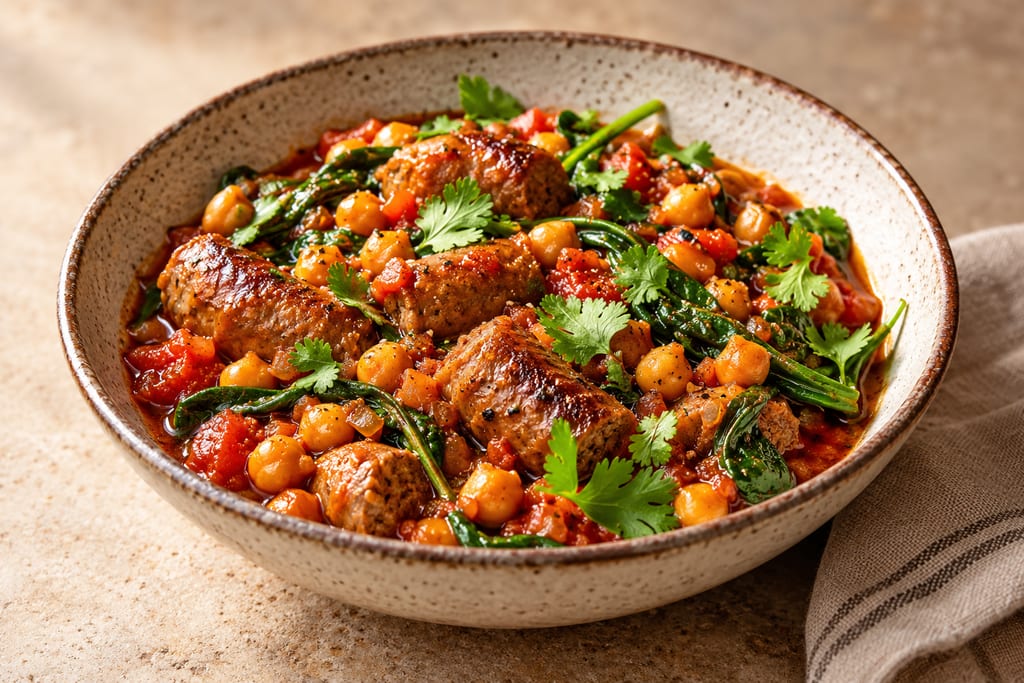
Lesego Semenya’s contemporary South African stew combines browned boerewors, chickpeas, tomato, spinach and warm spices.
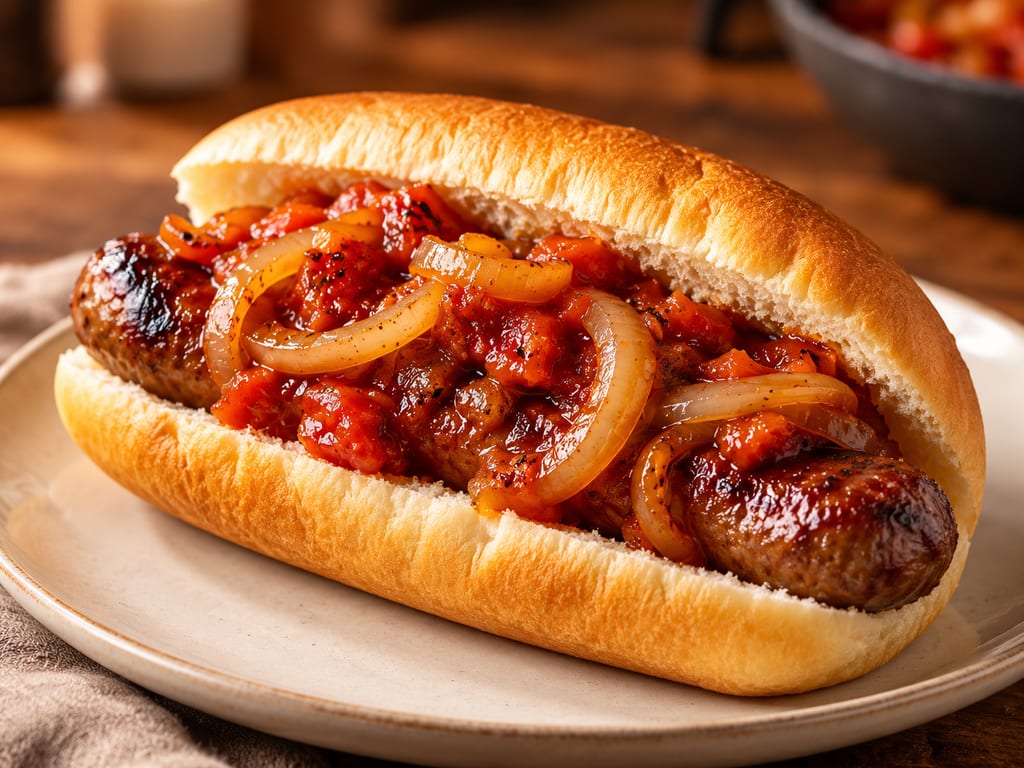
A South African boerie roll puts fully cooked boerewors in a soft bread roll and tops it with warm tomato-and-onion smoor.
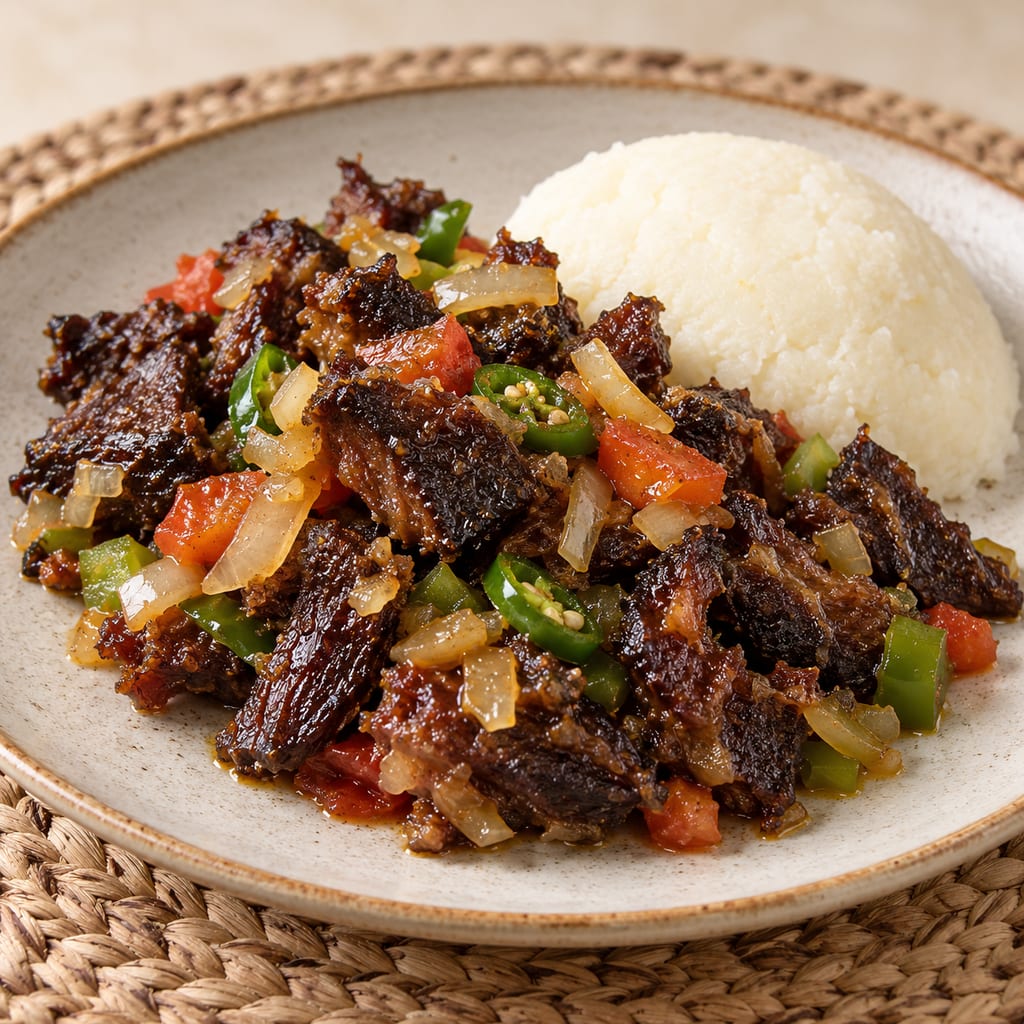
Alina Magano Johannes’s Oondhingu is a family dish from Onyaanya, Oshikoto, in northern Namibia: softened dried beef fried with vegetables and served with pap.
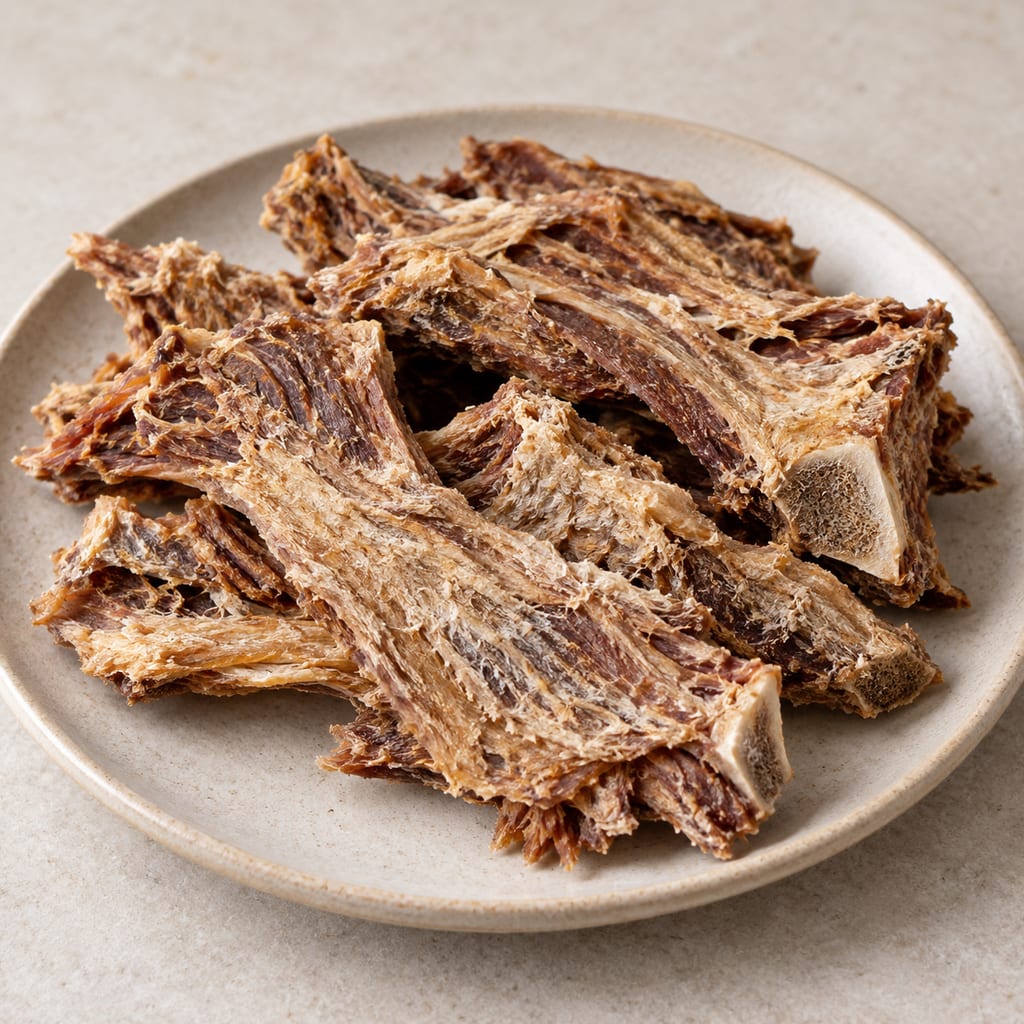
Alpaca charqui is Andean dried meat, made from camelid meat exposed to hot sun by day and frost by night at high altitude, the ancestor of the modern word jerky.
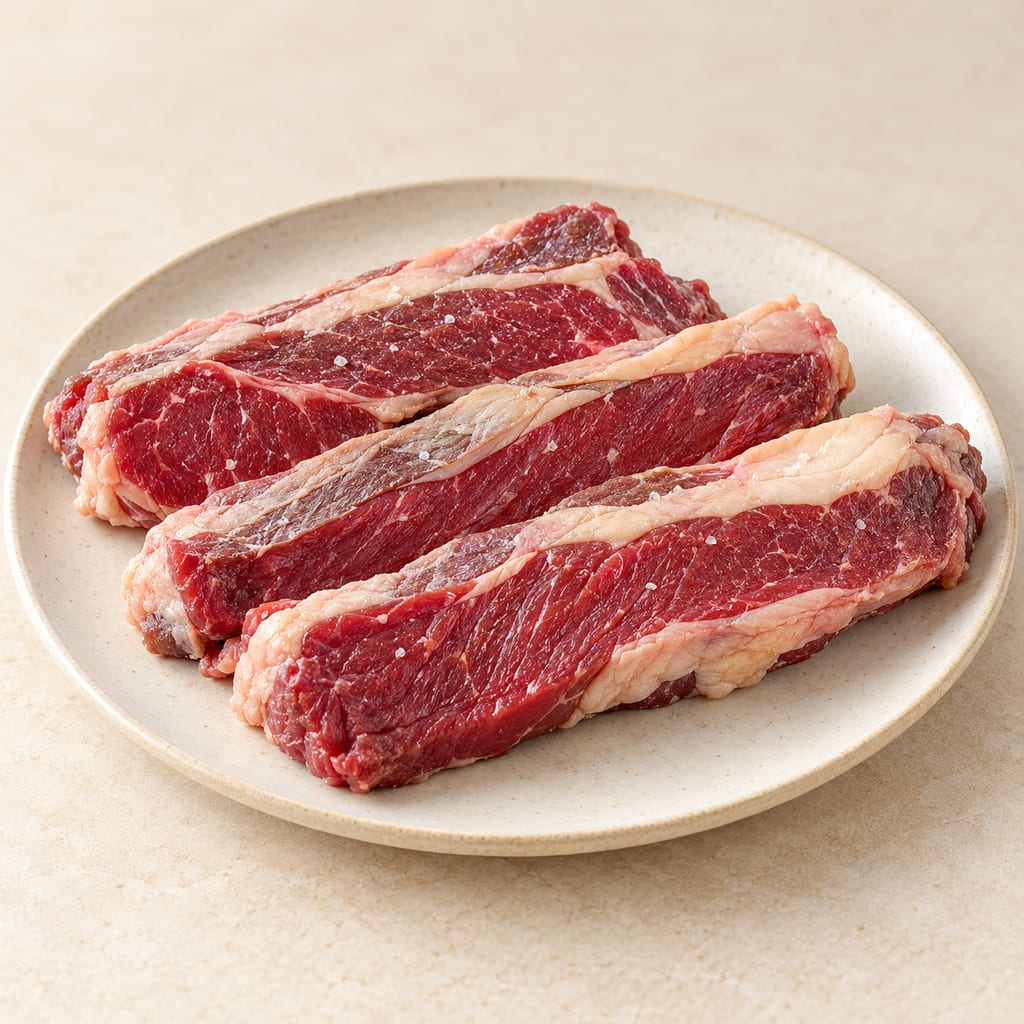
Beef given limited salt and partial surface drying, a short-keeping Brazilian meat that is much less durable than fully dried charque and is treated as a cold-chain product.
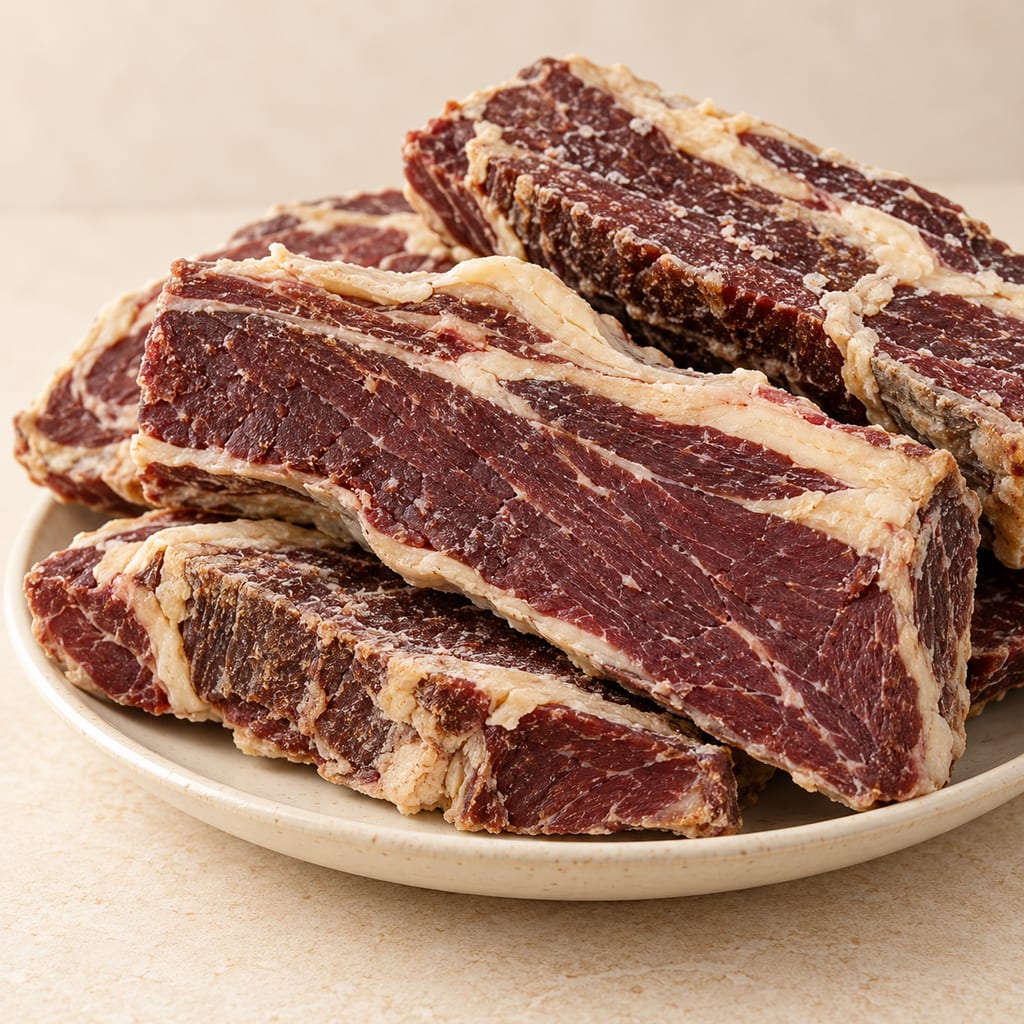
Beef salted heavily and dried into a strongly preserved ingredient that is desalted before it is cooked in stews; a Brazilian form of salt-dried meat that keeps far longer than the lightly salted carne-de-sol.

A documentary account of dried meat strips and their historical uses. It does not provide an operational home method for making shelf-stable jerky at home.
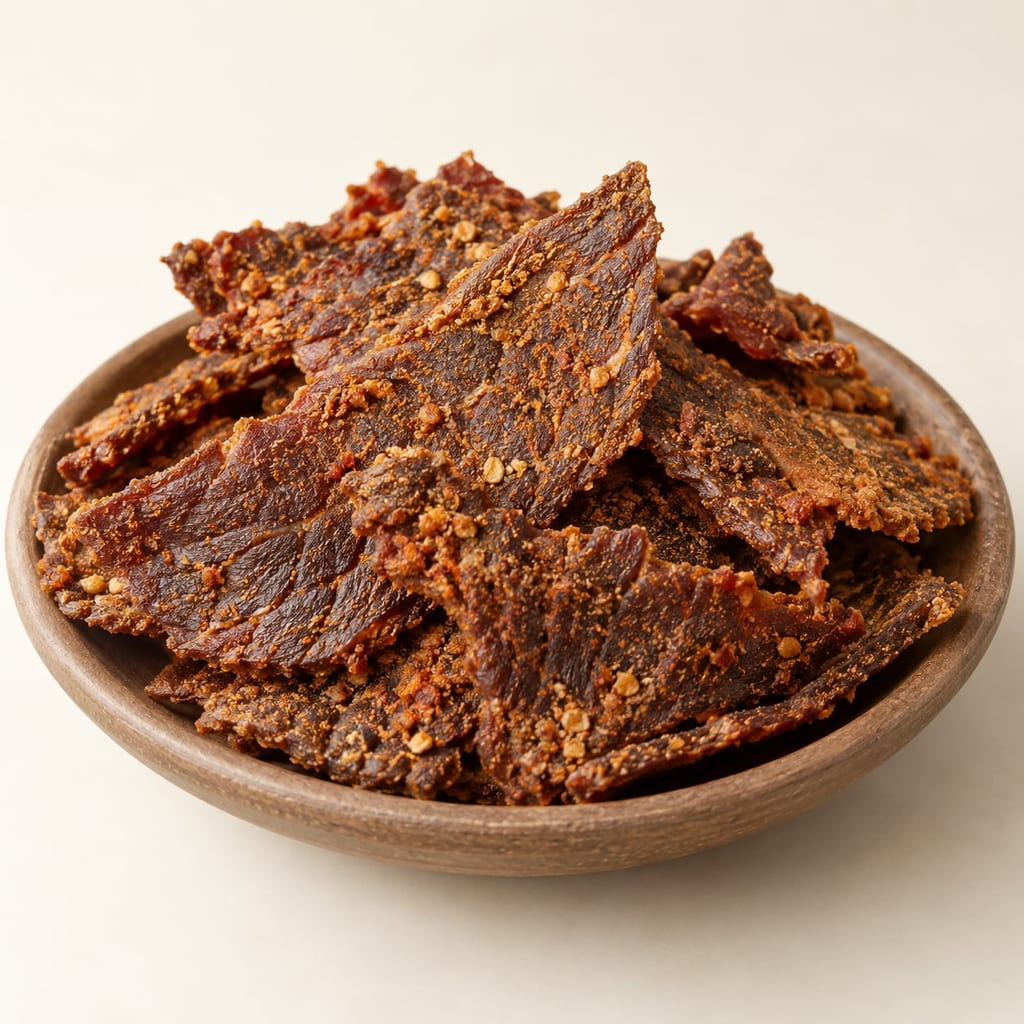
Kilishi is a Hausa-land dried meat from northern Nigeria and southern Niger: thin slices of beef or other meat, dried, coated in a spiced groundnut paste and dried again.
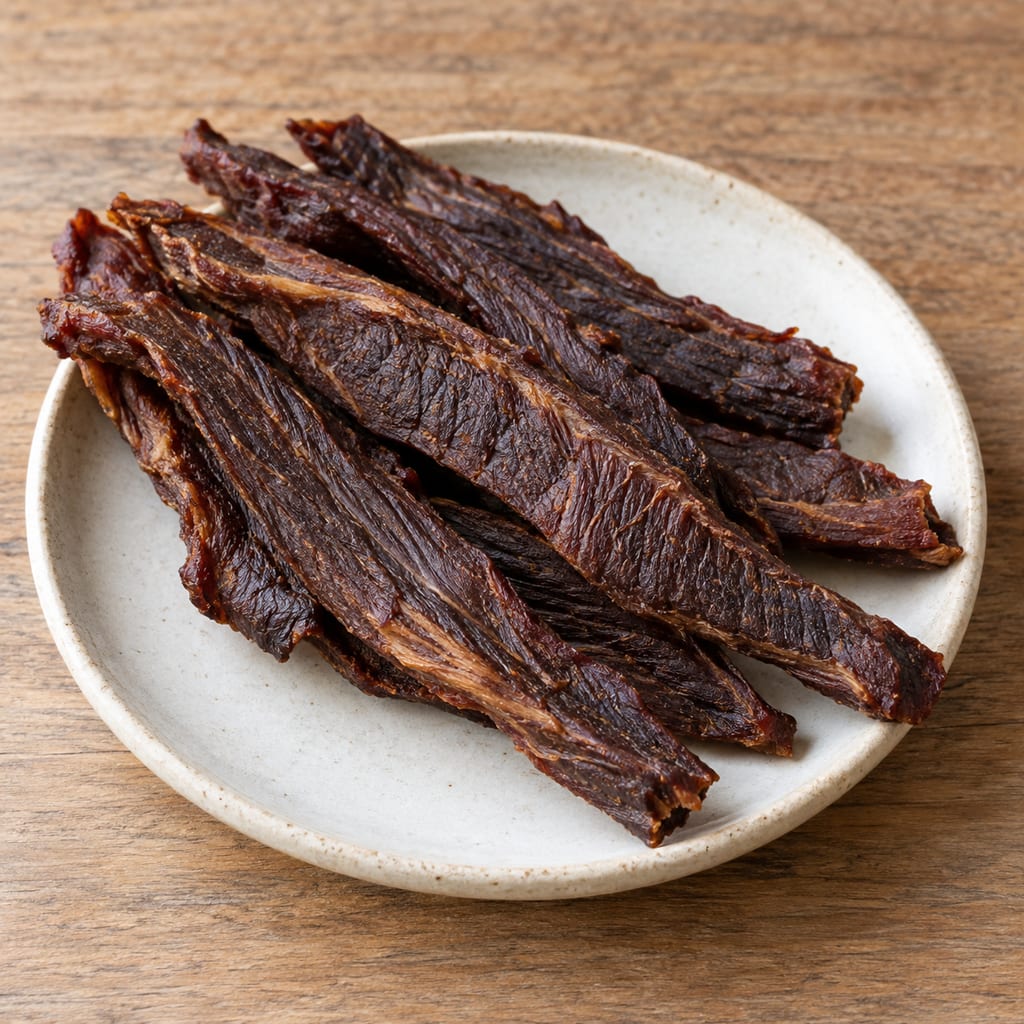
A documentary account of Malagasy salted meat strips, commonly dried, smoked or both; it does not provide a validated home-preservation recipe.
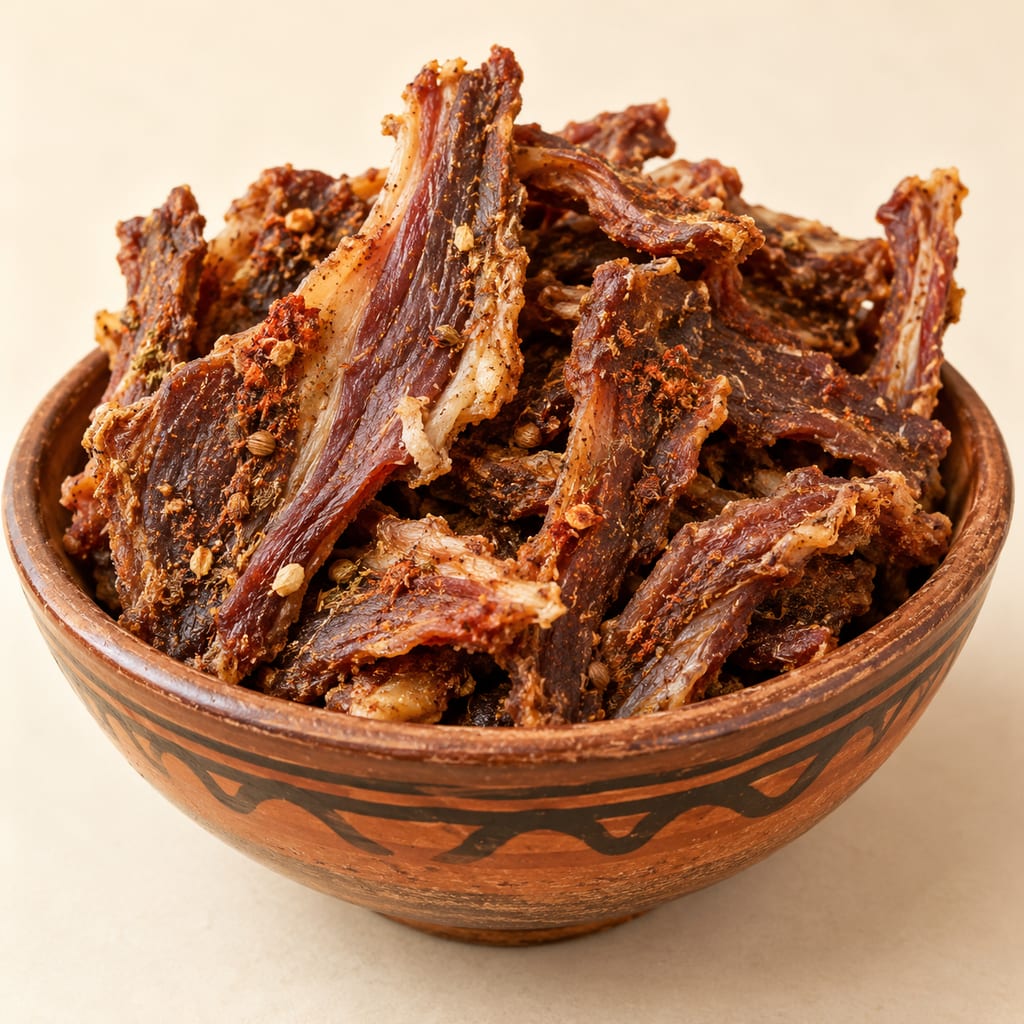
Moroccan kaddid is a traditional salted, dried meat. The measured batch here is from a 2023 Tunisian experiment and is included only as a non-instructional comparison.

Soft, spreadable Calabrian pork sausage made with a great deal of red chilli and fatty pork, stuffed into natural casings, sometimes smoked and matured while staying soft.

A way to add independent temperature logging to an existing food dehydrator without changing its built-in controls or protections. It is a monitoring method, not a rewiring plan.

Pleurotus cystidiosus is the abalone mushroom, a cultivated oyster-type fungus with dark brown caps that grows more slowly and is more demanding than other Pleurotus species.

A dark, balanced vinegar from Emilia-Romagna made by combining cooked or concentrated grape must with wine vinegar, then acetifying and refining it in wood under a protected specification.

A living dairy inoculum that starts controlled cream fermentation, developing acidity and aroma before sour cream or cultured butter is finished.

A small electric incubator holds jars at a selected temperature for yogurt and other documented warm food preparations. Controls, capacity and vessel arrangement vary by model.

Adygean salt is a seasoned table salt associated with Adygea and the wider North Caucasian culinary tradition. Salt is blended with garlic and a variable selection of herbs and spices; the exact mix depends on the named style and maker.

The African Caesar-group mushroom, Amanita masasiensis, is a wild ectomycorrhizal species of central and southern African woodlands, eaten locally. The genus contains deadly poisonous species, so identification needs care.
No community contributions have been published for this entry yet.
Sign in to contribute. Published comments and photos are free to read.
Woolworths TASTERecipe · Method · Serving · Image
Braided biltong loafPublished 4 July 2023; makes one loaf; preparation 1 hour 30 minutes and cooking 30 minutes.
Dough: 10 g active dry yeast, 4 tbsp sugar, 2 tbsp salt, 3 cups flour, 1½ cups lukewarm water, 4 tbsp milk. Filling: 250 ml sundried tomato pesto, 120 g Cheddar, 80 g feta, 180 g finely chopped beef biltong. Chilli-biltong butter: 50 g softened butter, 10 g chilli flakes, 25 g biltong powder.
Activate yeast with 1 tbsp sugar and some water for 5 minutes or until bubbling; knead dough for 10 minutes and prove for 1 hour; fill, roll, split lengthwise and braid; rise until doubled; bake at 180°C for 25–30 minutes.
The published formula’s 2 tbsp salt for 3 cups flour is flagged here for verification without substituting another amount.
Cited in: A filled loaf with a braided seam; Ingredients, including a quantity to verify; Mix and prove the dough; Fill, split, braid and bake; Serving and what this recipe does not establish