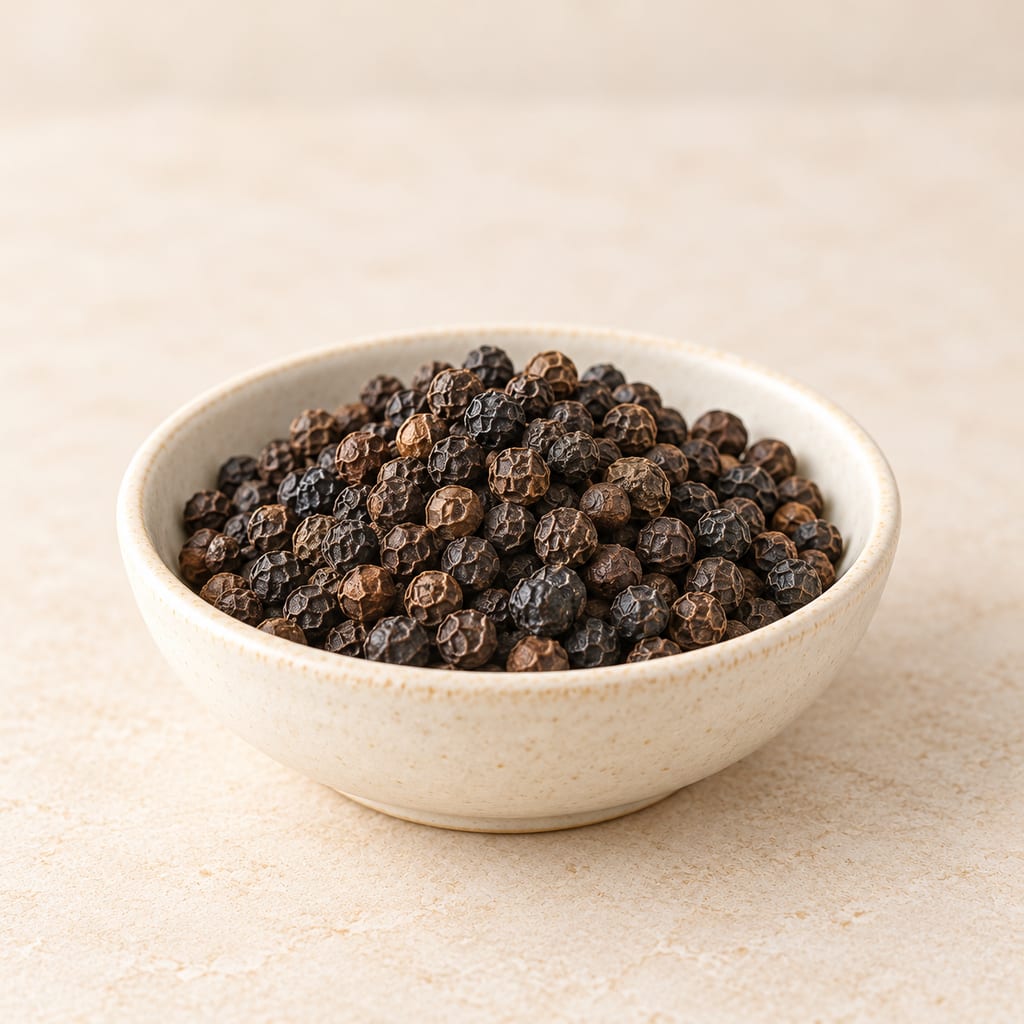
Black pepper
Black pepper is the dried fruit of Piper nigrum, a tropical climbing vine, used whole, cracked or ground for its pungency and aromatic oils.
 FermenteaWhere food goes to change
Traditional method
Droewors · Drywors · Dunwors · Dikwors
South Africa's dried sausage: seasoned minced meat in narrow casings, dried until it can be eaten without cooking, which makes it a far more demanding product than fresh boerewors.
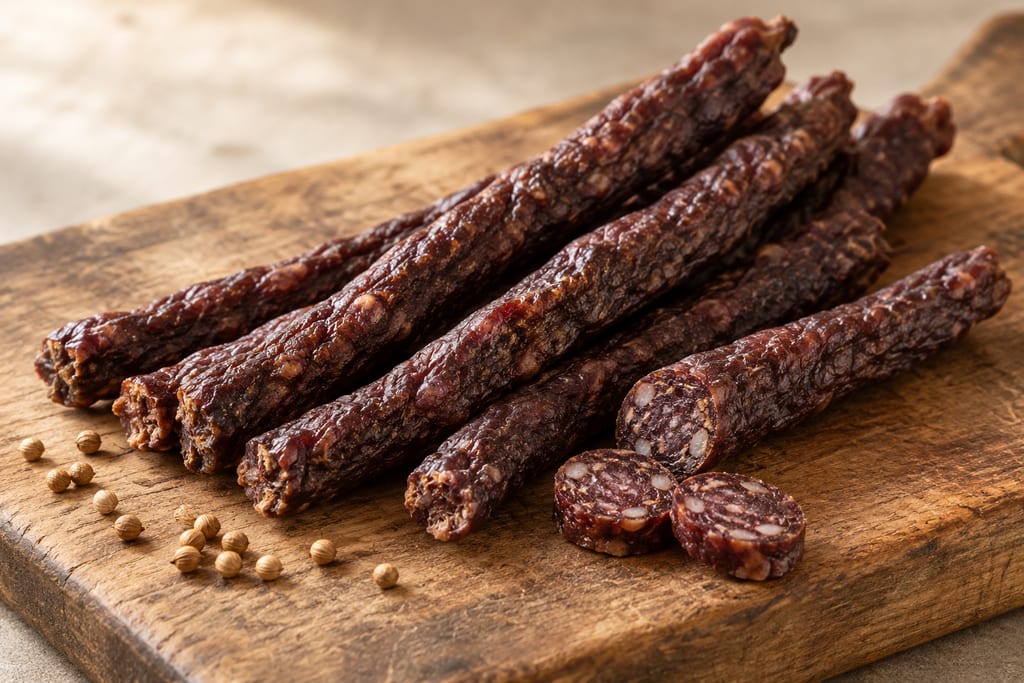
Droëwors is one of the most recognisable South African dried-meat snacks. It is made from seasoned minced meat packed into comparatively narrow casings and dried until a substantial proportion of its original moisture has been removed.
Its flavour often resembles boerewors, particularly through the use of coriander and pepper. Its texture, manufacturing method and safety requirements, however, are fundamentally different.
Fresh boerewors is cooked before consumption. Droëwors is manufactured to be eaten without a final cooking step, relying on a deliberately controlled preservation process.
This distinction explains why a fresh sausage cannot simply be hung in a warm room and assumed to become safe droëwors.
The method must account for microorganisms introduced with raw meat, contamination during mincing, moisture movement, salt concentration, casing diameter, processing temperature and the final properties of the finished product.
Good droëwors has a concentrated meat flavour and a firm, sometimes chewy texture. It can be eaten in sticks, broken into short pieces or sliced.
It is common as a snack, packed food or accompaniment to informal gatherings.
The Afrikaans name droëwors combines droë, meaning dry, with wors, sausage.
Spellings without the diacritic, especially droewors and drywors, are common in English-language commerce.
Two descriptive Afrikaans terms are particularly useful:
Dunwors means thin sausage, while dikwors means thick sausage.
Thin sausage is preferable for many drying systems because its smaller diameter shortens the distance water must travel from the centre to the surface.
There is no botanical or zoological scientific name for the finished food. Beef commonly comes from Bos taurus, while mutton and sheep fat come from Ovis aries. Some versions use venison from specifically identified game species.
A label should name the relevant species accurately rather than treating all game meats as interchangeable.
Droëwors belongs to a wider tradition of preserving animal foods through dehydration, salting and other techniques.
Meat drying has a long history in southern Africa, including practices predating European colonisation. But evidence of Indigenous dried-meat processing does not, by itself, establish the date when minced, coriander-seasoned sausage in an intestinal casing became known as droëwors.
The history of sausage-making at the Cape involved European techniques, livestock husbandry and the work of households whose cooks and labourers came from different communities.
By the nineteenth century, Cape household recipe books documented an established variety of sausages.
A particularly useful later source is C. Louis Leipoldt's Wors essay from 1945. He describes his aunt's sausage and praises a wind-dried form as food for hunting.
That provides direct documentary evidence of drying seasoned sausages in the mid-twentieth century.
It does not prove that this was the first droëwors or that the historical procedure is microbiologically safe by present standards.
The modern dry-sausage trade developed alongside biltong production, commercial butchery and specialised equipment for drying meat.
One practical connection is especially important: pieces of meat unsuitable for sale as attractive whole-muscle biltong strips may be used as minced raw material for droëwors, provided they meet the relevant quality and safety requirements.
Scientific studies now distinguish droëwors according to meat species, fat content, drying procedure, oxidation behaviour and storage stability.
These studies offer a much stronger foundation for technical discussion than claims that a specific traditional drying period is invariably safe.
Droëwors typically uses beef, mutton or game meat.
The meat must be suitable for food manufacture and prepared under hygienic conditions.
Mincing creates a large collective surface area and can redistribute contamination throughout the filling. This makes the microbiological challenge different from that of an intact muscle strip.
Fat supplies flavour and a less brittle texture.
However, fat does not dry in the same way as lean muscle. It also introduces the possibility of oxidative rancidity during storage.
Scientific research on zebra-meat droëwors compared formulations containing 10%, 15% and 20% sheep fat.
The samples containing lower fat levels lost more weight during drying and had lower measured water activity than the higher-fat formulation.
This is a useful demonstration that the meat-to-fat balance changes the final product. It is not proof that one universal fat percentage applies to every recipe.
Pork fat appears in some historical and contemporary sausage traditions, but its use in dried products requires attention to oxidative stability. Absolute claims that pork fat is never used, or that it always makes drying impossible, are not supported by the historical record.
Salt lowers the availability of water to microorganisms and changes the behaviour of muscle proteins.
As moisture leaves the sausage, the concentration of salt in the remaining product rises.
The safety contribution depends on the complete formulation and its final measured properties, not simply the mass of salt added at the beginning.
Vinegar introduces acetic acid and may lower the initial pH.
It can contribute flavour and assist microbial control within a properly validated process.
It cannot be assumed to kill all relevant pathogens merely because the mixture tastes sour.
Roasted coriander, black pepper, clove and nutmeg are frequently used.
These provide the recognisable flavour profile, but culinary spice concentrations are not a substitute for an established lethality or preservation system.
Droëwors generally uses comparatively narrow casings, often sheep intestine or a suitable manufactured alternative.
Diameter matters because drying is a mass-transfer process.
The external surface loses moisture first. Water inside the sausage must migrate toward the surface before it can evaporate.
A thick sausage can develop a dry exterior while retaining a wet centre.
The preservation mechanism is best understood through water activity, written as \(a_w\).
Water activity measures the availability of water for biological and chemical processes. It is not the same thing as total moisture content.
Two meat products can contain similar percentages of water while having different water activities because salt and other dissolved substances change how strongly water is associated with the food matrix.
As droëwors dries, its moisture content decreases and dissolved ingredients become more concentrated.
The falling water activity progressively restricts microbial growth, but it does not necessarily kill microorganisms already present.
Drying can also change pH, texture, protein organisation and fat oxidation.
A 2018 study of South African beef, game, ostrich and pork droëwors reviewed production systems using:
- 15°C and 75–82% relative humidity for 15 days, in one published research system. - 25–30°C and approximately 30% relative humidity for 2–3 days, in another research system.
The review notes that producers commonly target 45–50% moisture-related weight loss.
Those are documented research or production conditions, not interchangeable household instructions. Differences in raw-material composition, casing size, airflow and processing validation affect their suitability.
A separate zebra droëwors study measured products dried at 30°C and 40% relative humidity for two days.
The existence of these diverse methods is important: traditional dried sausage does not have one fixed time-and-temperature formula.
Nor does a stated percentage of weight loss alone demonstrate safety. Final water activity, microbial contamination and the validated manufacturing procedure remain crucial.
Remove bones, unsuitable connective tissue and damaged portions.
Keep the meat chilled during preparation.
Where using game meat, the animal species and appropriate meat-inspection requirements must be established.
The final fat proportion should follow a tested formulation. The source research demonstrates substantial variation, not one universally safe percentage.
Excessive fat smearing can interfere with drying behaviour and finished texture.
Roasted coriander provides a familiar aroma. Pepper, nutmeg, clove and vinegar may be included.
A published commercial-equipment supplier's recipe gives, per kilogram of meat and fat, 22 g salt, 15 g roasted ground coriander, 5 g black pepper, 5 g brown sugar, 0.5 g cloves, 0.5 g nutmeg, 40 ml brown grape vinegar and 50 ml cold water.
These are exact published recipe quantities, not a microbiologically validated formulation endorsed here for producing ready-to-eat raw dried sausage.
The grind should produce the intended texture without warming the fat excessively.
Distribute the seasoning uniformly.
Air incorporation should be minimised, particularly where it might create voids within the filling.
One commercial-equipment recipe specifies 22 mm sheep casings.
The narrower diameter reduces drying distance compared with a thick fresh boerewors casing.
The product may be formed into long lengths or shorter portions.
The casing should remain intact and permit the required moisture transfer.
Temperature, relative humidity, airflow, product dimensions and time interact.
If airflow is excessive or surface humidity too low, the outside can harden too rapidly.
That condition, known as case hardening, can restrict further moisture movement and leave an undesirably moist interior.
If drying is too slow, the meat may spend excessive time under conditions that permit microbial growth.
The manufacturer's critical limits must come from a validated process, not estimates based on a recipe's appearance.
Weight loss provides useful process information but does not replace water-activity or microbiological verification.
A dry exterior does not establish that the centre has reached the necessary properties.
Packaging conditions must be matched to its verified shelf-life.
Fat oxidation can continue even when the water activity is sufficiently low to inhibit many microorganisms.
Beef droëwors is a familiar standard with a coriander-led seasoning profile.
Game droëwors uses species such as kudu, springbok or other approved game meat, often requiring attention to the fat balance because game meat may be relatively lean.
Mutton or lamb droëwors has a stronger meat flavour and different fat characteristics.
Ostrich droëwors uses a distinctive lean raw material and requires its own formulation.
Spicy droëwors introduces greater chilli heat or alternative spice profiles.
These versions differ in more than naming. Fatty-acid composition, protein content and oxidative stability can change substantially with species.
A game sausage cannot automatically inherit the validated drying process of a beef formulation merely because it has the same diameter.
Droëwors is generally eaten as a ready-to-eat snack.
It is sold in long sticks, shorter lengths or bite-sized pieces.
The texture varies from firm and chewy to relatively brittle, depending on the meat block and degree of drying.
A cut surface should show a reasonably uniform dried structure with discrete fat particles where the formulation calls for them.
A stale, rancid aroma indicates undesirable lipid oxidation.
Excessively hard surfaces surrounding a soft centre suggest uneven moisture transfer.
Visible mould, unexplained sliminess or putrefactive odours are rejection signs.
However, the absence of these signs cannot prove that a raw dried-meat product is free from pathogens.
Droëwors is a particularly demanding food from a safety perspective because its raw material is minced meat and the finished product may be consumed without further cooking.
Microbial reduction during drying depends on the complete process.
Published scientific drying conditions are not general permission to reproduce them with untested equipment.
For a product intended for sale, the manufacturer needs an appropriate food-safety system, verified raw materials, a validated process, moisture and water-activity controls, hygienic packaging and shelf-life evidence.
There is no single safe salt percentage, drying duration or room temperature established for every droëwors formulation by the sources examined.
A modern food reference should document historical methods and published research without representing an unvalidated homemade version as safe to eat.
Droëwors belongs to a wider southern African tradition of preserving animal foods by dehydration and salting, including practices that predate European colonisation. Evidence of Indigenous dried-meat processing does not by itself date the point at which minced, coriander-seasoned sausage in an intestinal casing became known as droëwors. Sausage-making at the Cape drew on European techniques, livestock husbandry and the work of households whose cooks and labourers came from different communities, and by the nineteenth century Cape household recipe books documented an established variety of sausages. The modern dry-sausage trade grew up alongside biltong production, commercial butchery and specialised drying equipment, and one practical link matters: pieces of meat unsuitable for sale as whole-muscle biltong strips may be used as minced raw material for droëwors where they meet the relevant quality and safety requirements.
Scaling: source batch only
The raw material is minced, so mincing redistributes surface contamination through the whole filling, and the finished product may be eaten with no cooking step.
Hazard sourceExcessive airflow or too low a surface humidity hardens the outside and restricts further moisture movement, so a dry exterior can enclose a centre that has not reached the necessary properties.
Hazard sourceFat does not dry as lean muscle does and introduces oxidative rancidity, which continues even when water activity is low enough to inhibit many microorganisms.
Hazard sourceDry under a validated combination of temperature, relative humidity and airflow for the product's dimensions
Control sourceVerify the finished product by water-activity and microbiological testing rather than by weight loss or appearance
Control sourceUse narrow casings so interior water has a short path to the surface
Control sourceA fresh sausage hung in a warm room does not become safe droëwors: the product is designed to be eaten without cooking and depends on a deliberately controlled process.
No single safe salt percentage, drying duration or room temperature is established for every droëwors formulation by these sources.
Weight loss of 45-50% is a process observation, not a safety criterion; final water activity and microbiological verification are what establish readiness.
A game or ostrich formulation cannot inherit a beef formulation's validated drying process merely because the casing diameter is the same.
The absence of mould, slime or putrid odour cannot prove that a raw dried-meat product is free from pathogens.
A country-level association from a primary Afrikaans account and South African product research. Evidence of Indigenous dried-meat processing in southern Africa is older but does not date this named sausage.
Black pepper is the dried fruit of Piper nigrum, a tropical climbing vine, used whole, cracked or ground for its pungency and aromatic oils.
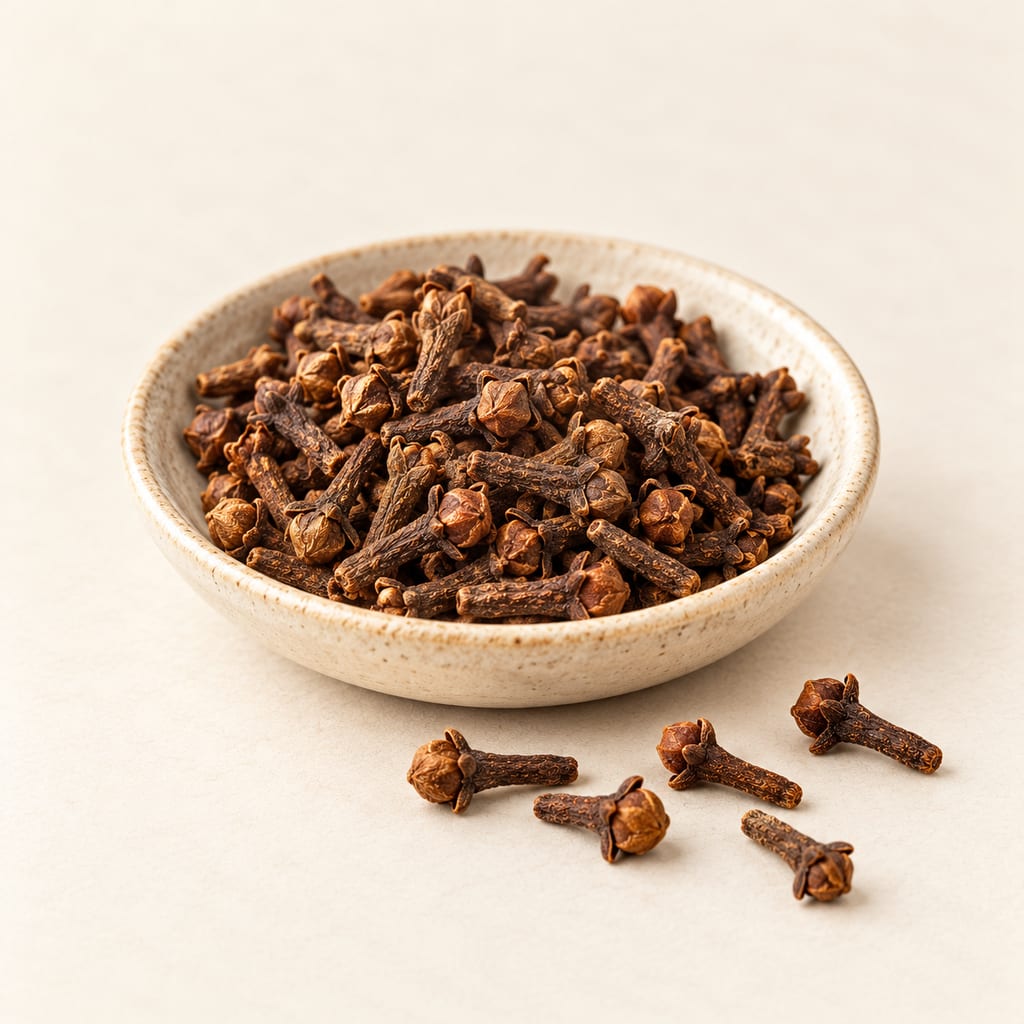
Cloves are the dried unopened flower buds of Syzygium aromaticum. Whole buds infuse liquids and can be removed; ground clove disperses its intense aroma through food.
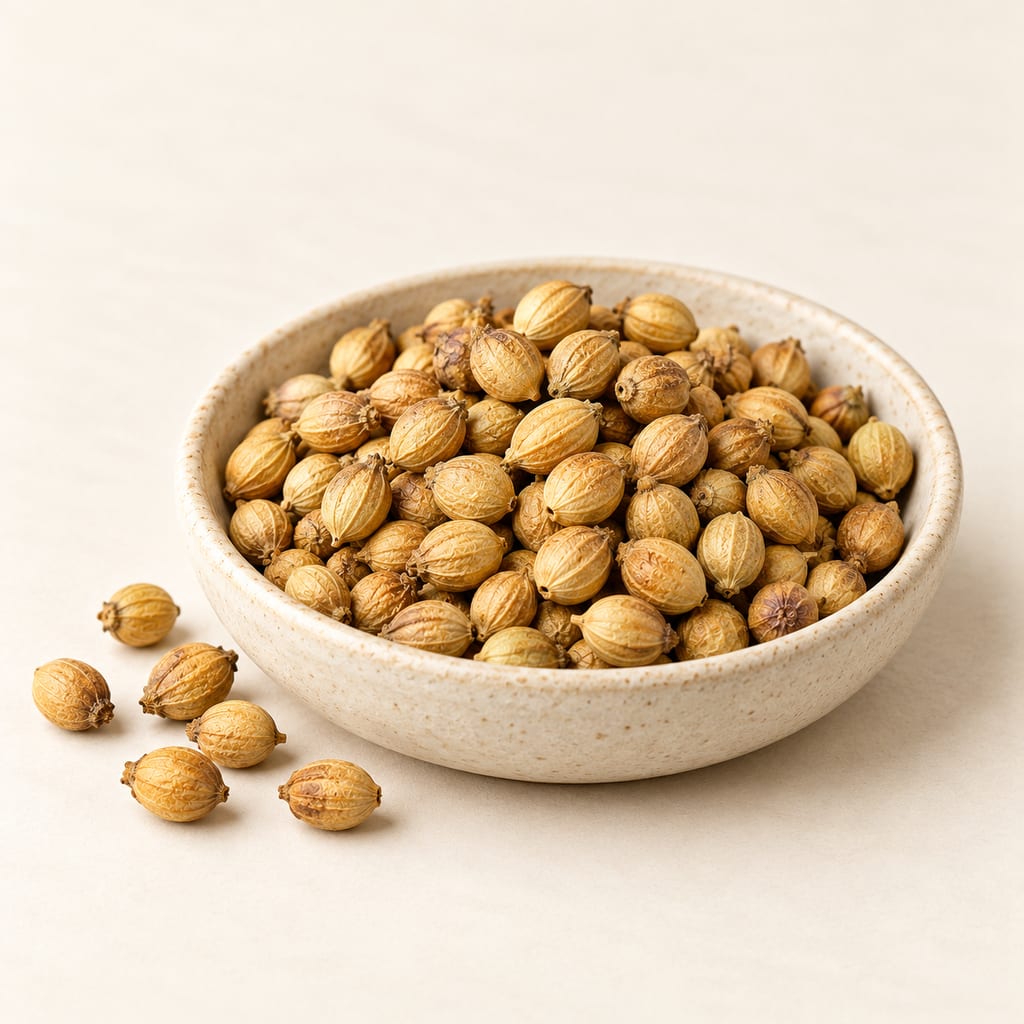
Coriander seed is the dried, aromatic fruit of Coriandrum sativum, used whole, cracked or ground in spice blends, pickles and cooked dishes.
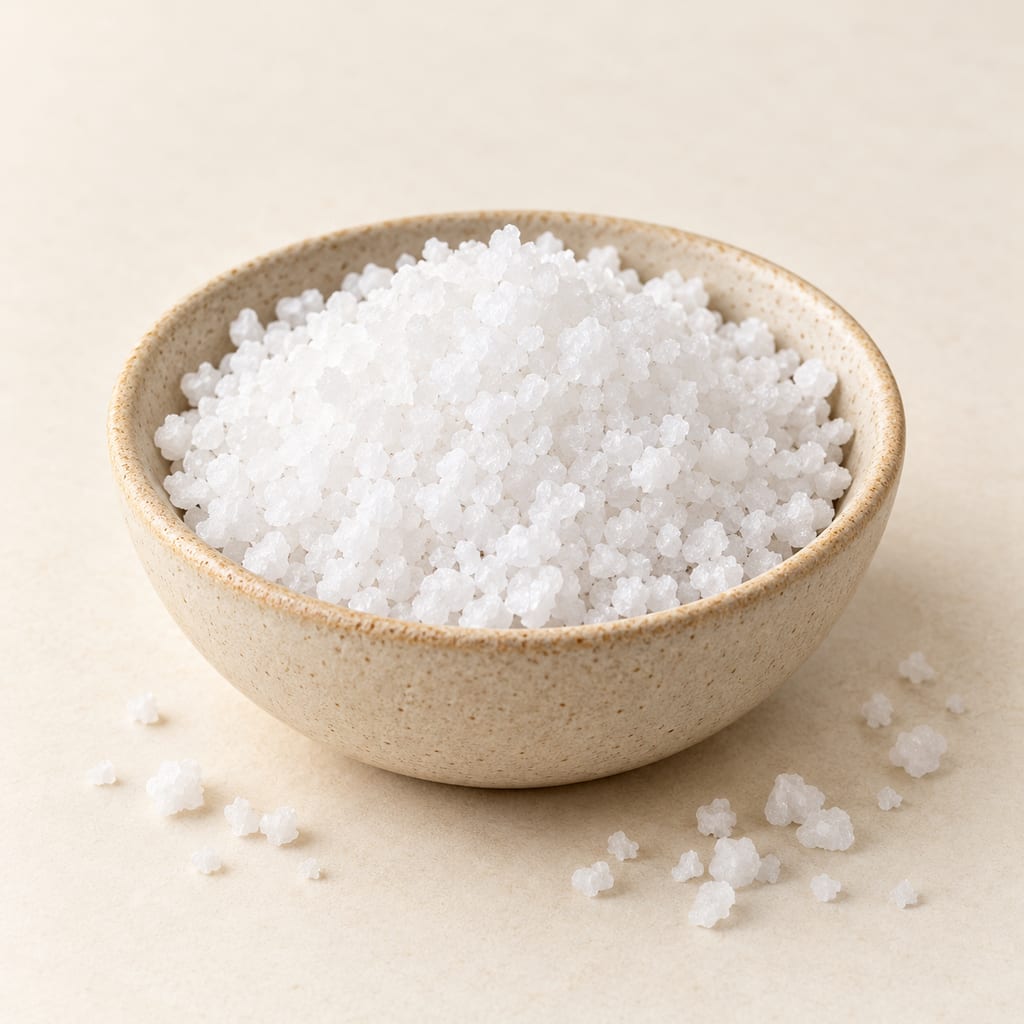
Food-grade sodium chloride seasons food and changes water movement in brines and cures; crystal size and the recipe's measurement method matter.
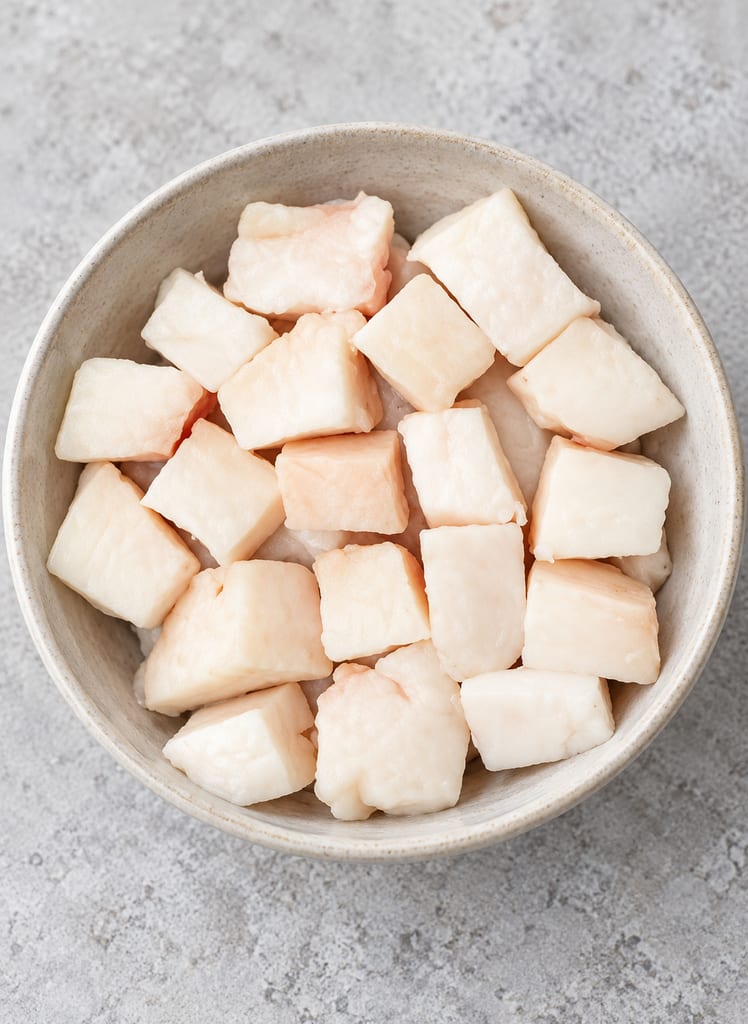
Sheep fat is edible adipose tissue from sheep, including back and tail depots. A South African zebra-droëwors experiment compared several fat levels; its findings are specific to that formulation.
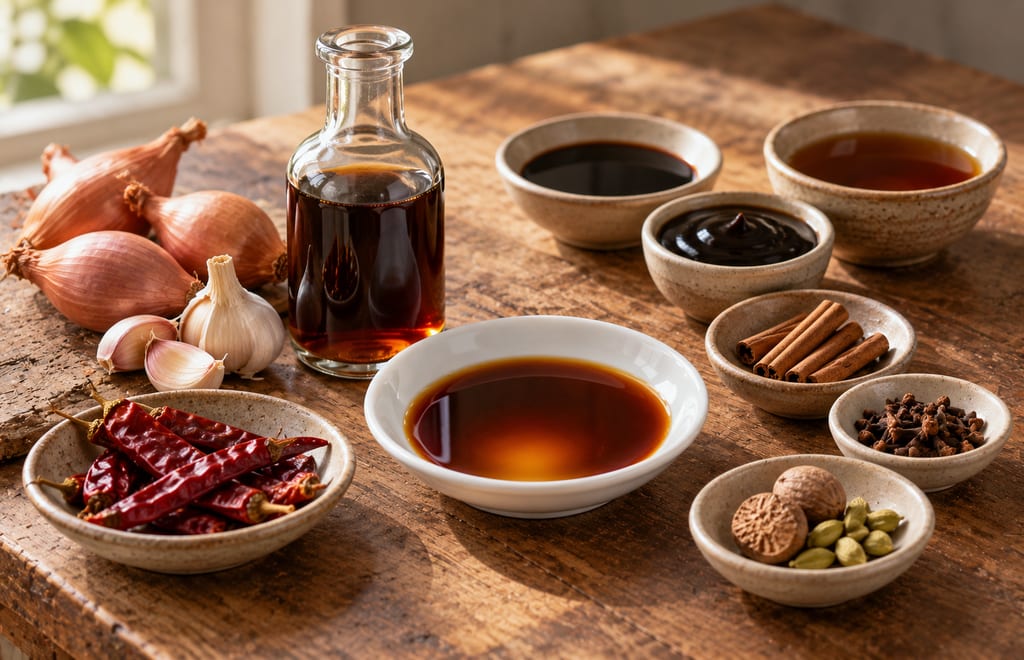
A thin, dark, sharply savoury table sauce associated with Worcester, England. This recipe preserves one historical formula printed in 1932 and distinguishes it from modern proprietary Worcestershire sauces.
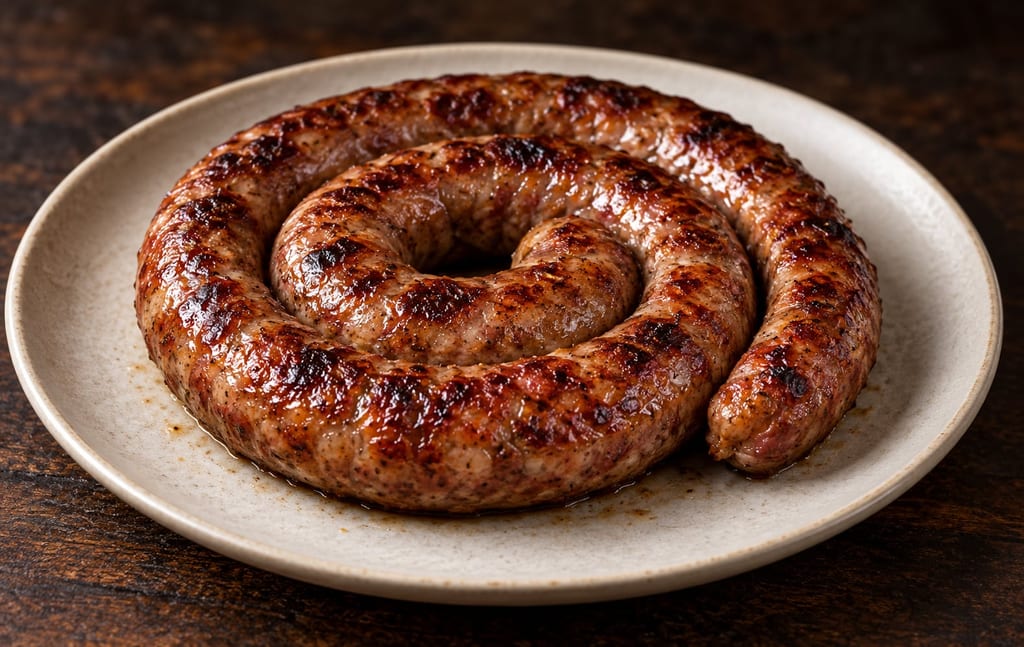
A coarse South African farmhouse sausage of beef with pork or mutton fat, defined by its coriander seasoning and cooked fresh over coals rather than preserved.
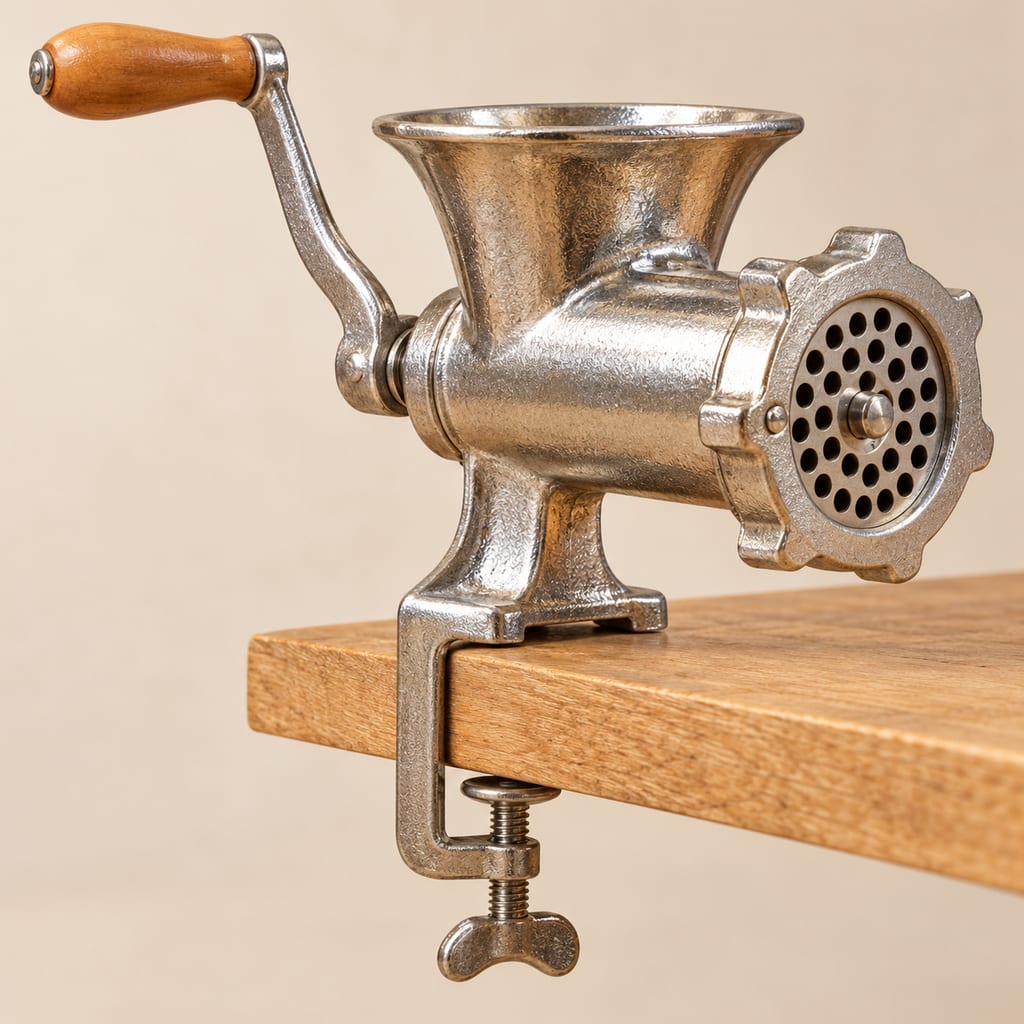
A meat mincer forces meat through a perforated plate to produce a chosen texture. South African sausage sources record plate size as a process choice, not a single defining standard.
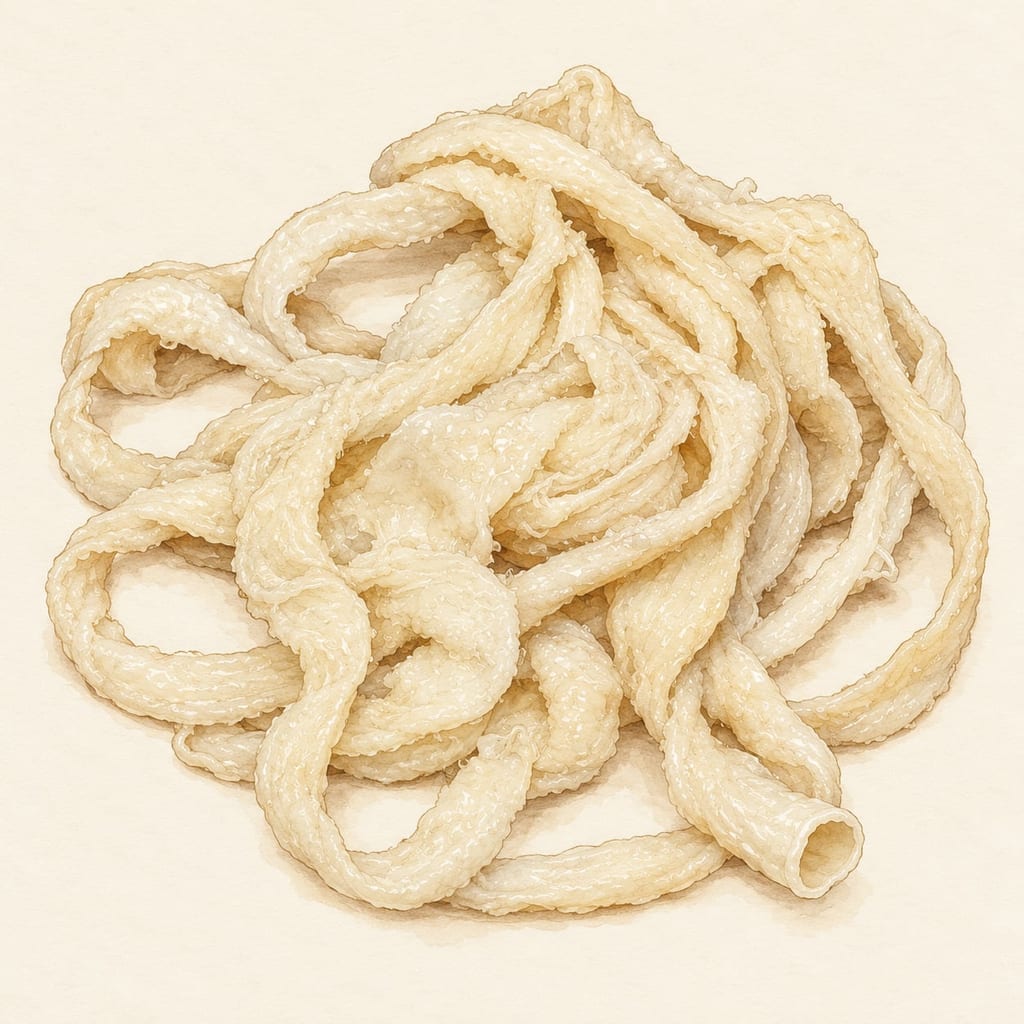
A natural sausage casing is a cleaned animal intestine or, for some products, another prepared organ used as an edible envelope. Its anatomy shapes the sausage, while diameter and material affect stuffing and drying.
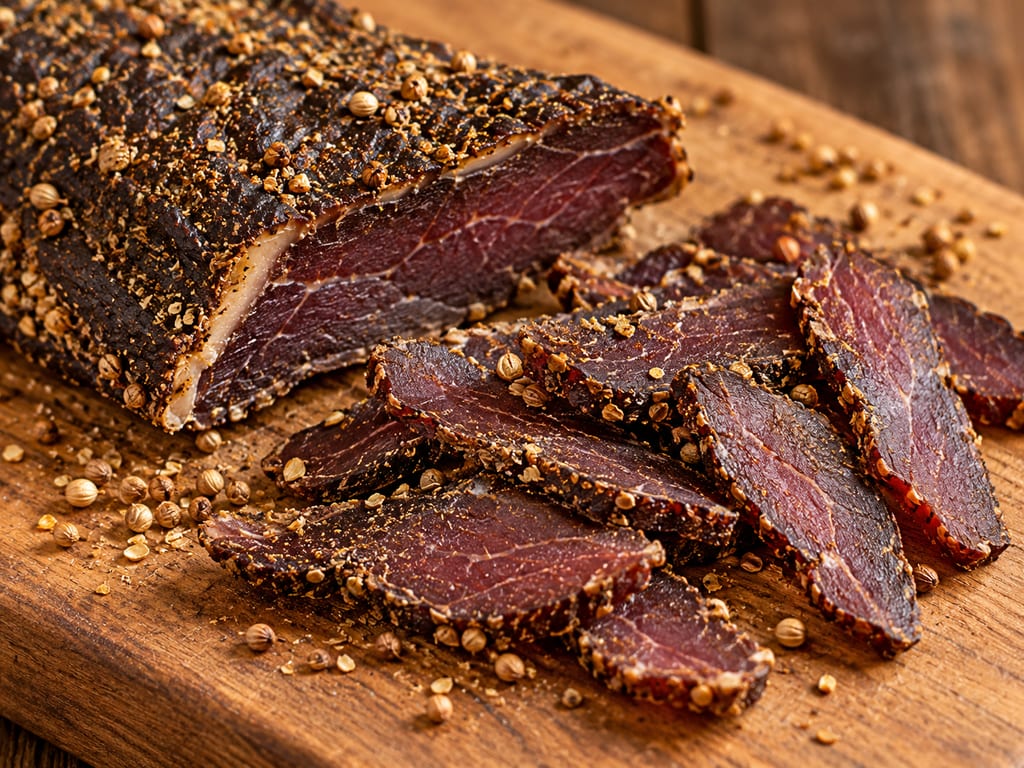
Strips of whole-muscle beef or game seasoned with salt, vinegar, roasted coriander and pepper and air-dried without cooking, sold anywhere from soft and moist to hard and very salty.
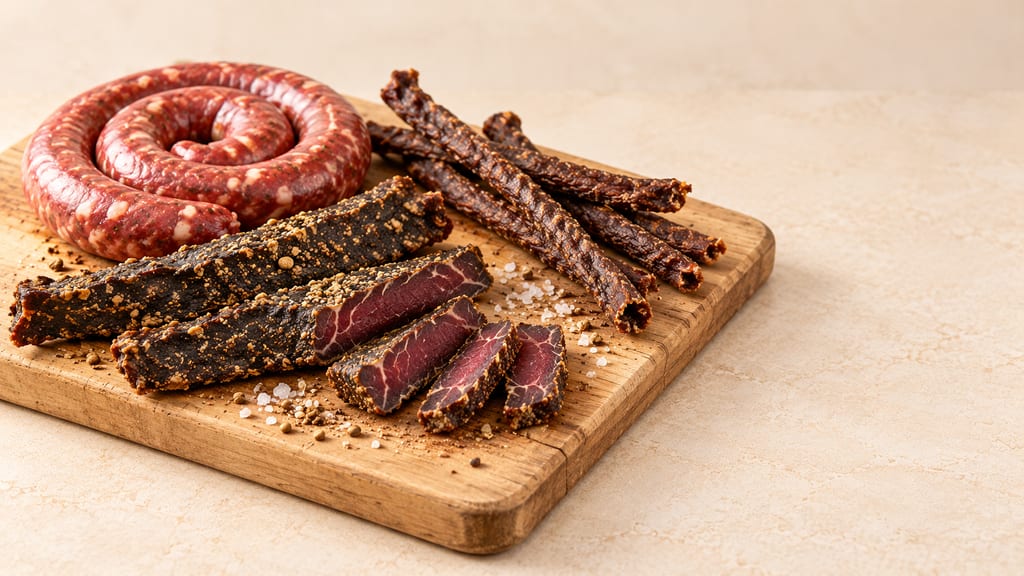
Boerewors, biltong and droëwors share a table but follow different paths from meat to meal. Their histories lead from the braai and butcher's counter to drying lines, household pots and the science of keeping food.
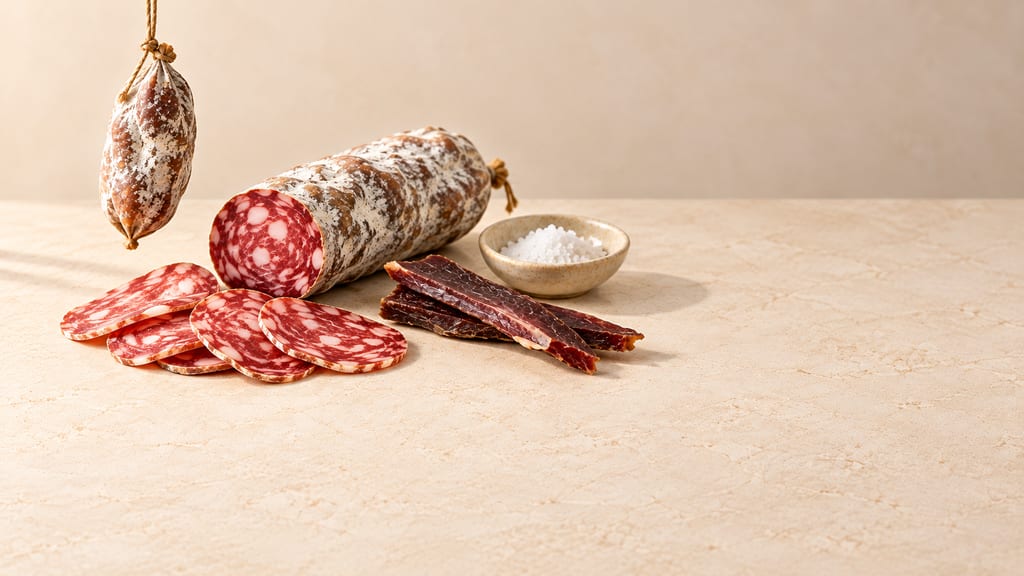
Dry salami, sour pork with rice, matured sheep and aged blubber follow different paths from animal to food. Their stories connect microbes with climate, slaughter, migration and the meals people share.
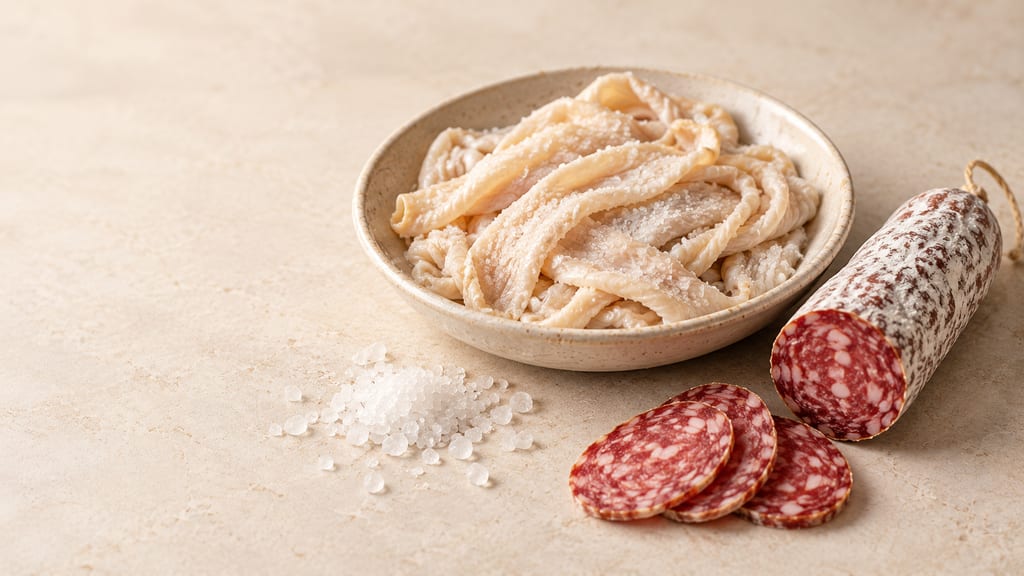
Gut, stomach, bladder, caul and skin have held food for as long as recipes have been written down. Which part of the animal a cook chose still decides a food's shape, how it dries and smokes, and how it is eaten.
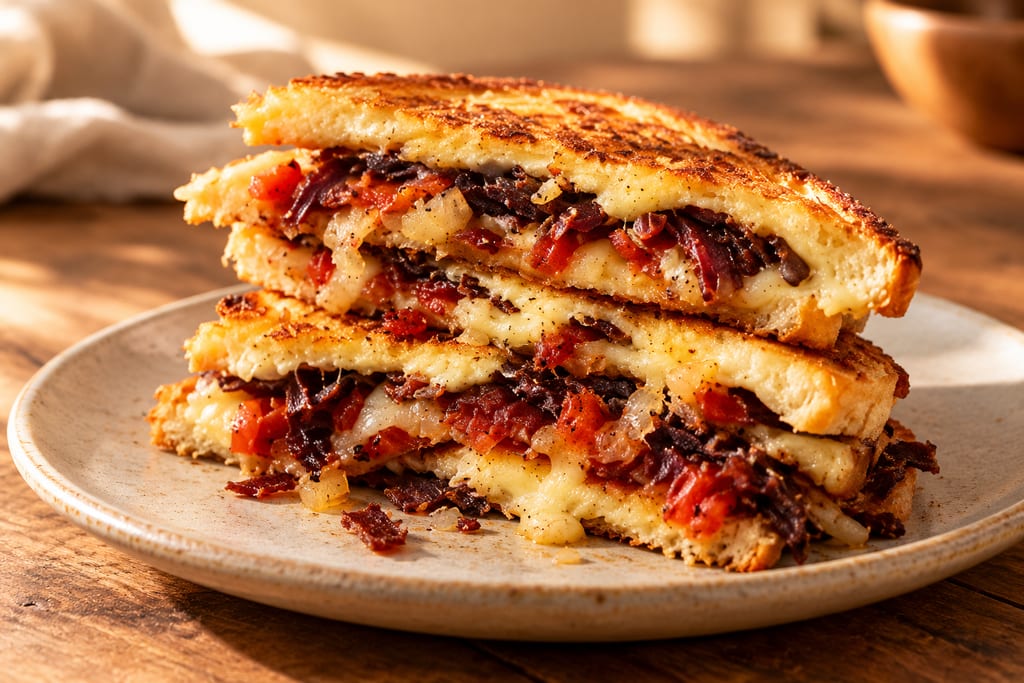
Chopped biltong, sweet onion, cream cheese and Cheddar fill bread toasted in a hinged grid over gentle coals, then finished with biltong dust.
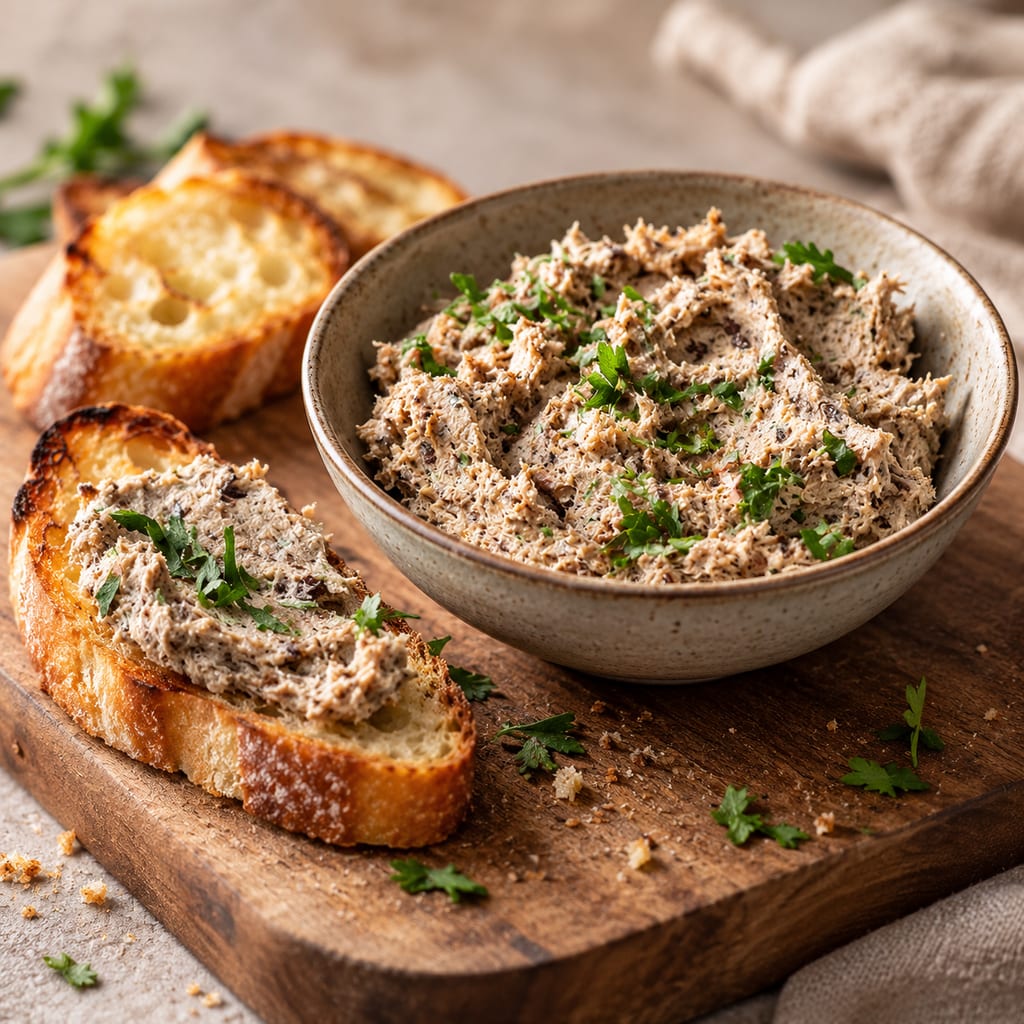
A cold biltong spread with sour cream, mayonnaise, mustard, lemon and herbs; serve it with crackers, crostini or bread.
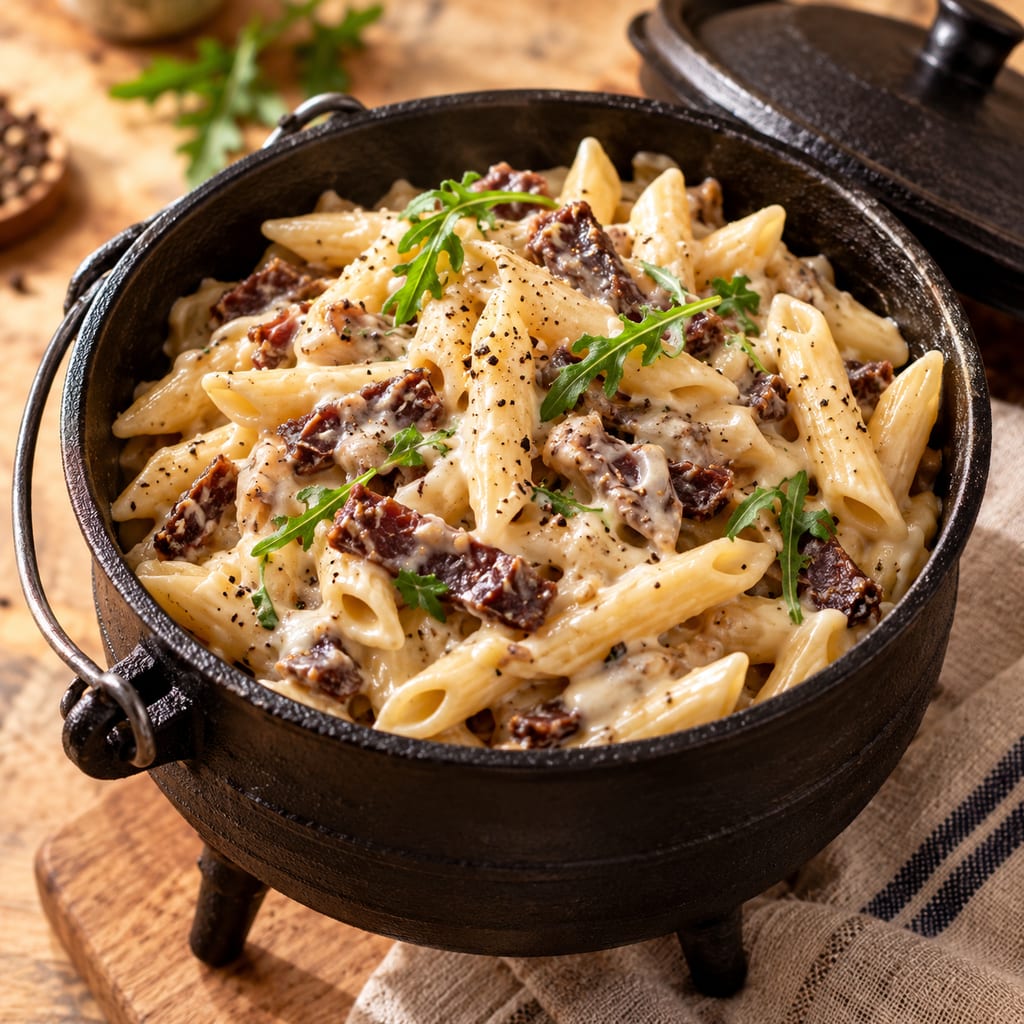
Biltong, bacon and vegetables simmer in tomato-herb stock, then join cooked pasta, milk, cream and Cheddar in this outdoor potjie.
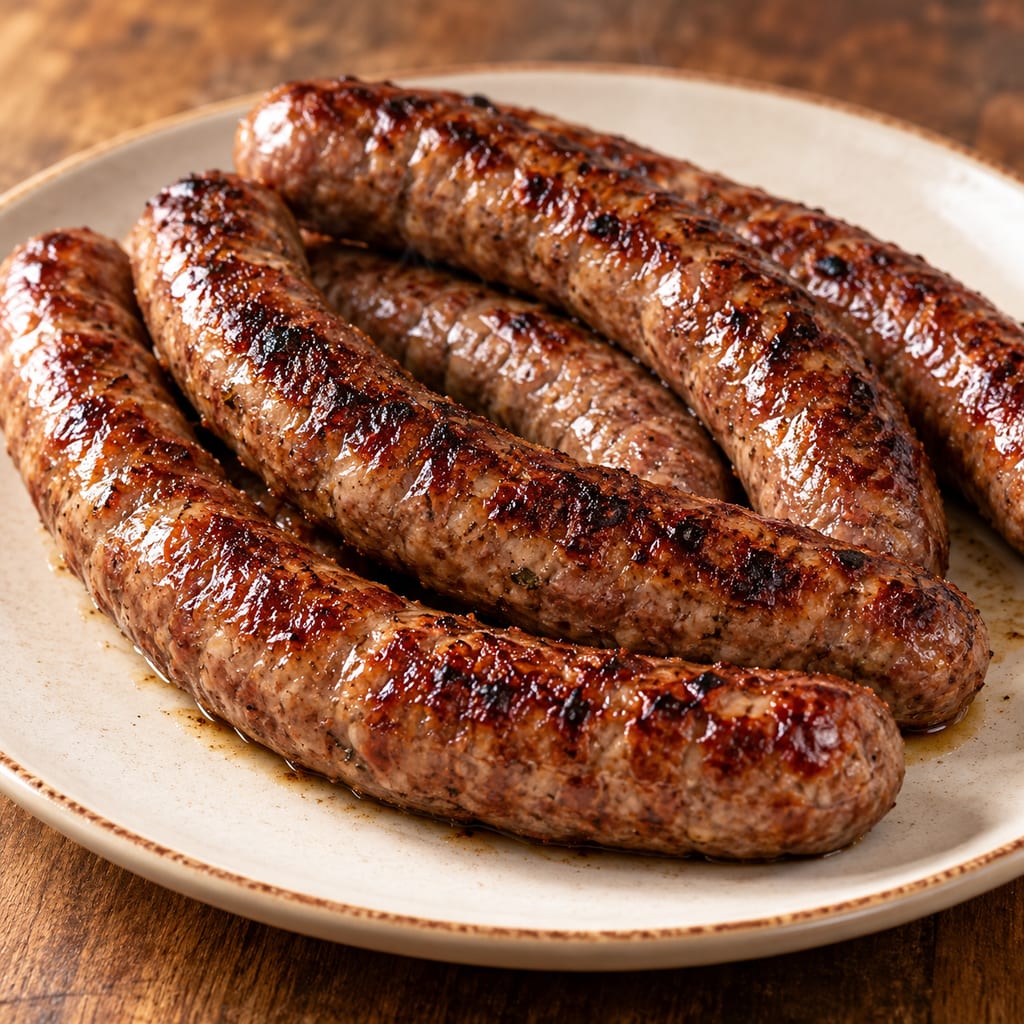
South Africa's regulated grilling-sausage class, looser than boerewors: a minimum of 40% meat, vegetable protein and mechanically recovered meat allowed, and sold raw.
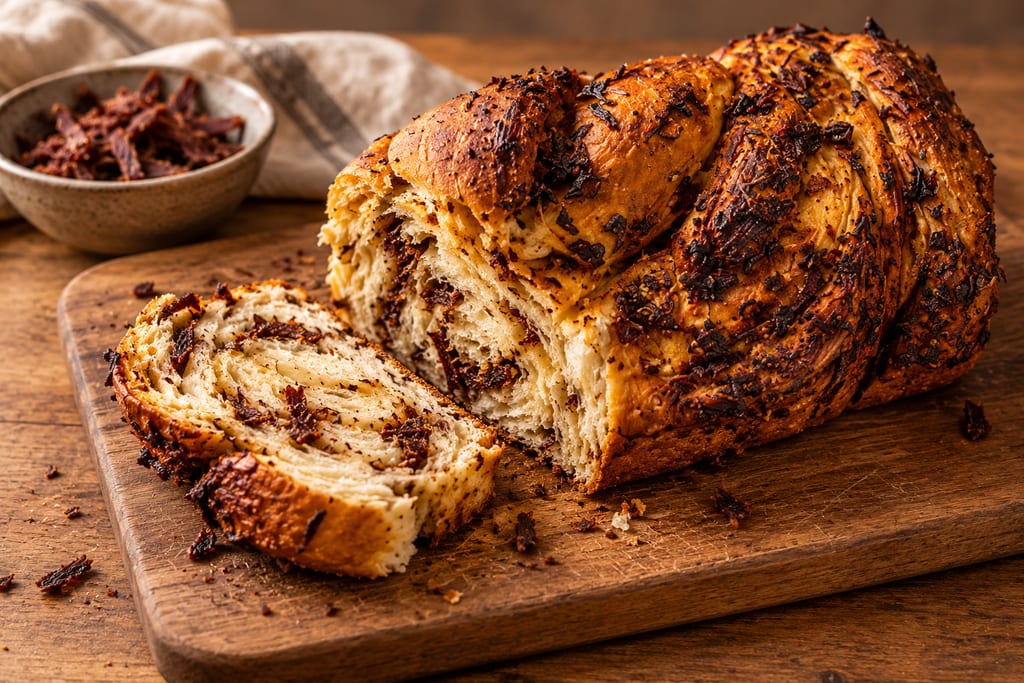
Yeasted bread wrapped around biltong, tomato pesto, Cheddar and feta, split lengthwise into a braid and baked; served with chilli-biltong butter.
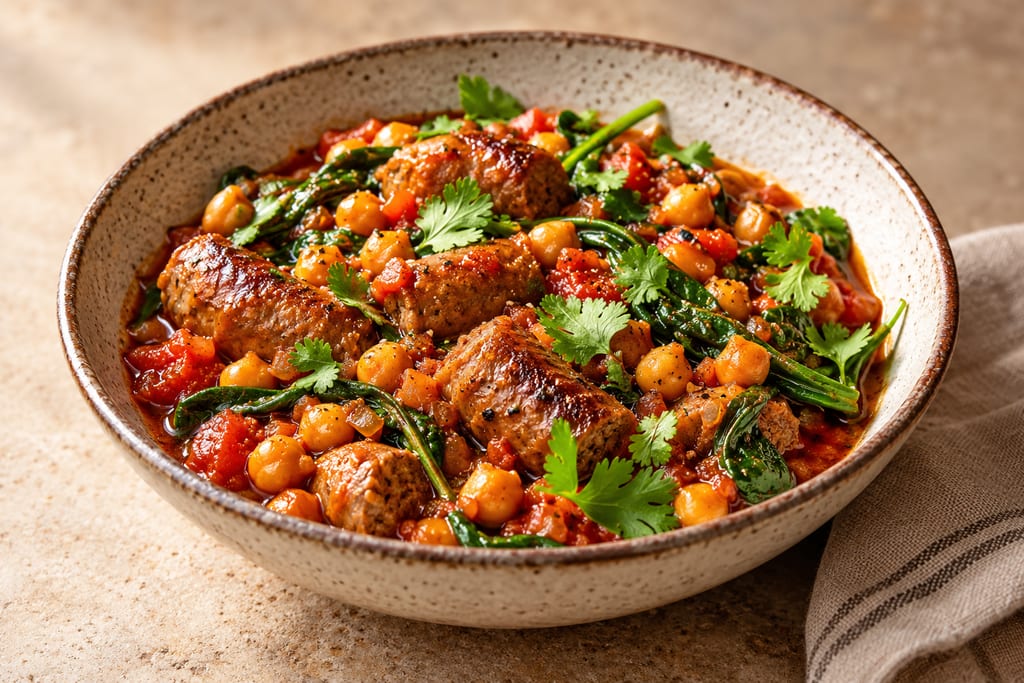
Lesego Semenya’s contemporary South African stew combines browned boerewors, chickpeas, tomato, spinach and warm spices.
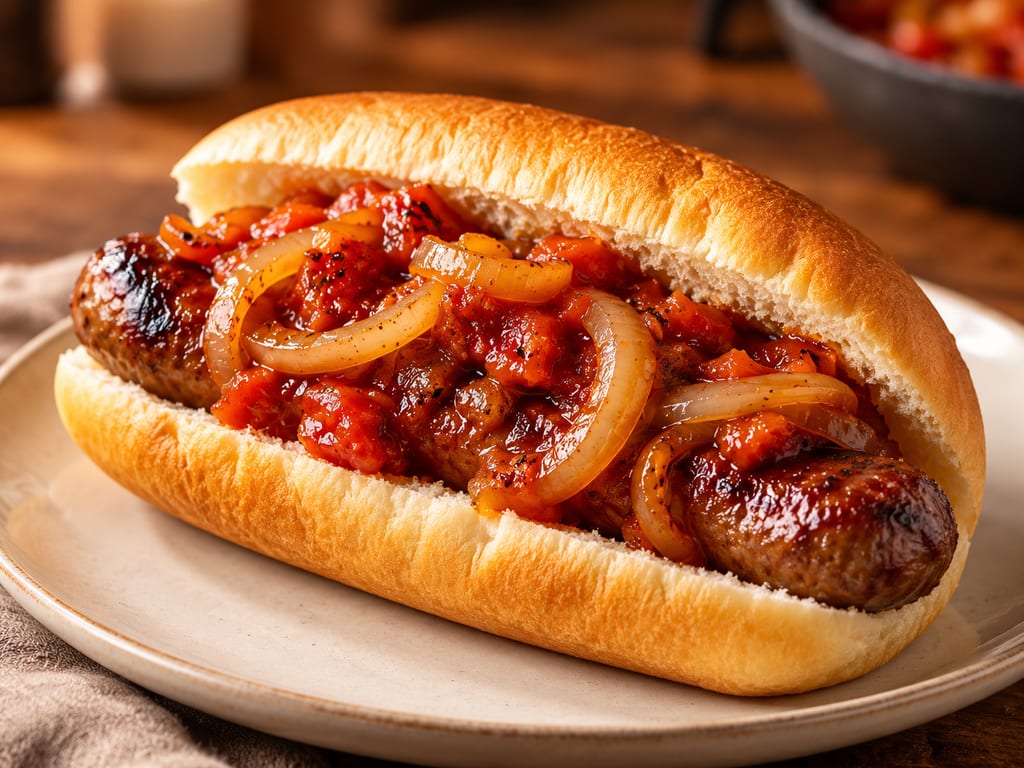
A South African boerie roll puts fully cooked boerewors in a soft bread roll and tops it with warm tomato-and-onion smoor.

A spicy South African vegetable relish of onion, carrot, pepper, tomato, curry seasoning and beans, cooked briefly and served warm or cold beside pap and grilled meat.
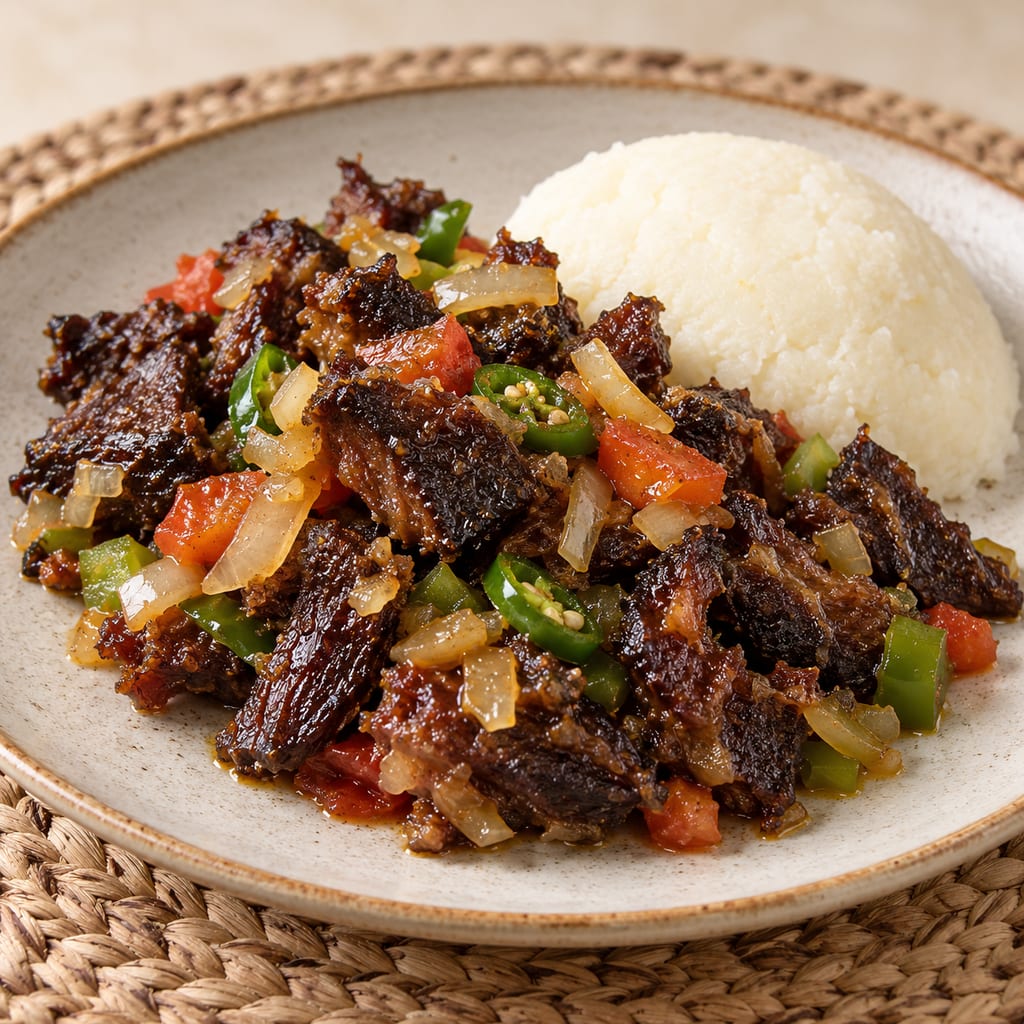
Alina Magano Johannes’s Oondhingu is a family dish from Onyaanya, Oshikoto, in northern Namibia: softened dried beef fried with vegetables and served with pap.
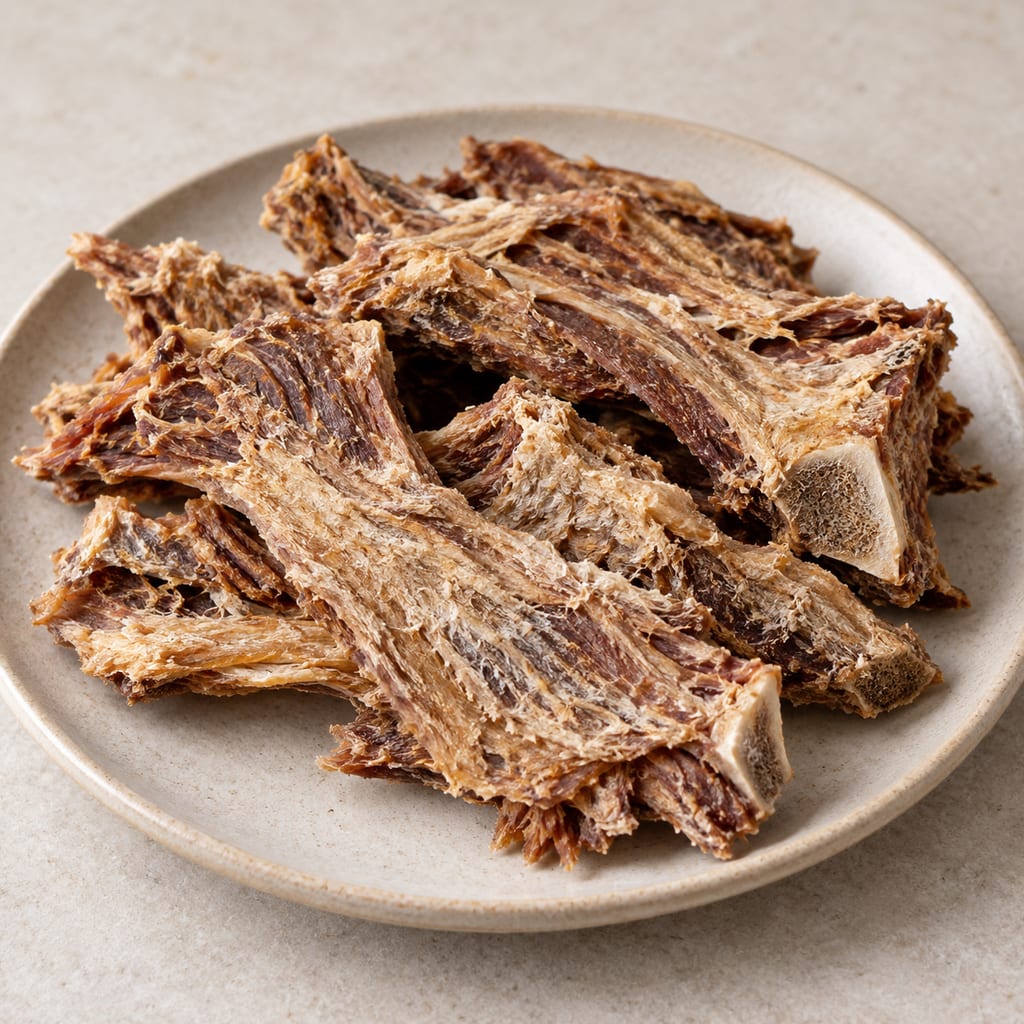
Alpaca charqui is Andean dried meat, made from camelid meat exposed to hot sun by day and frost by night at high altitude, the ancestor of the modern word jerky.
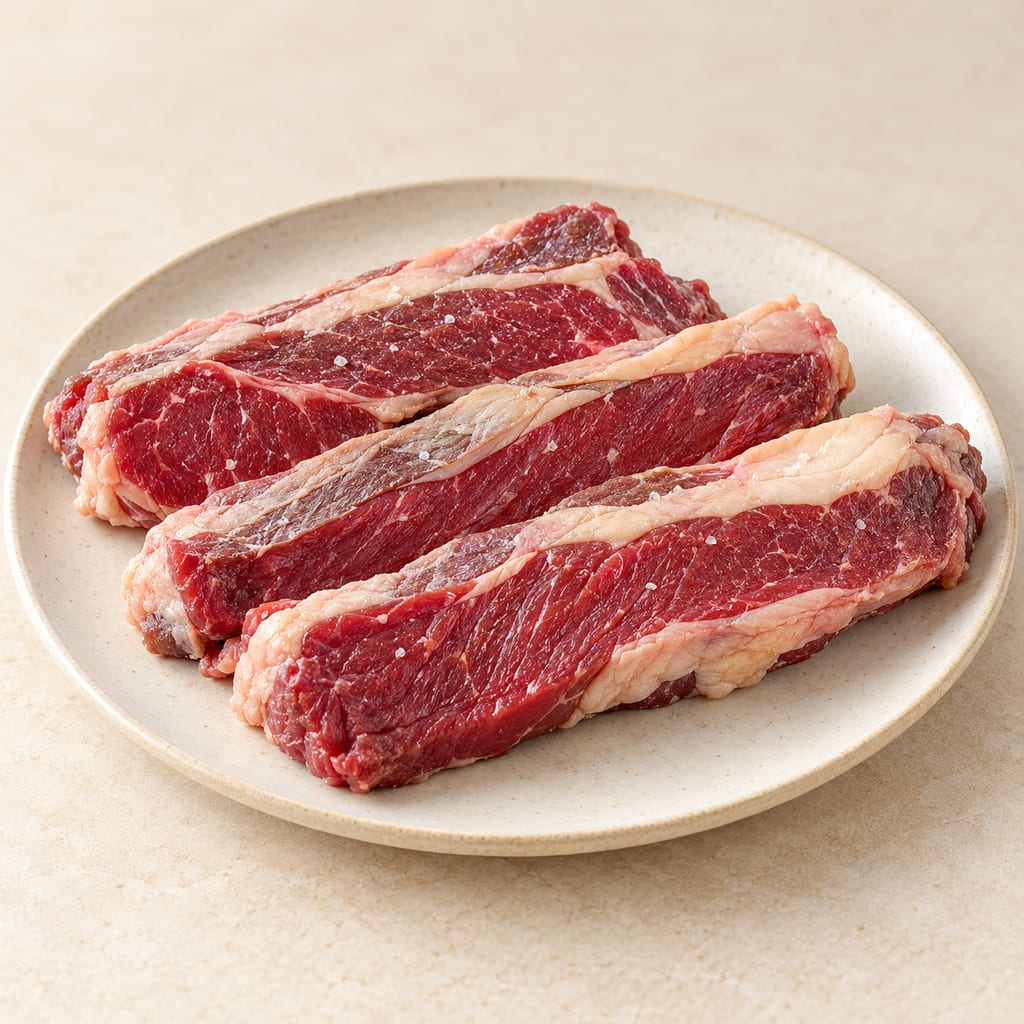
Beef given limited salt and partial surface drying, a short-keeping Brazilian meat that is much less durable than fully dried charque and is treated as a cold-chain product.
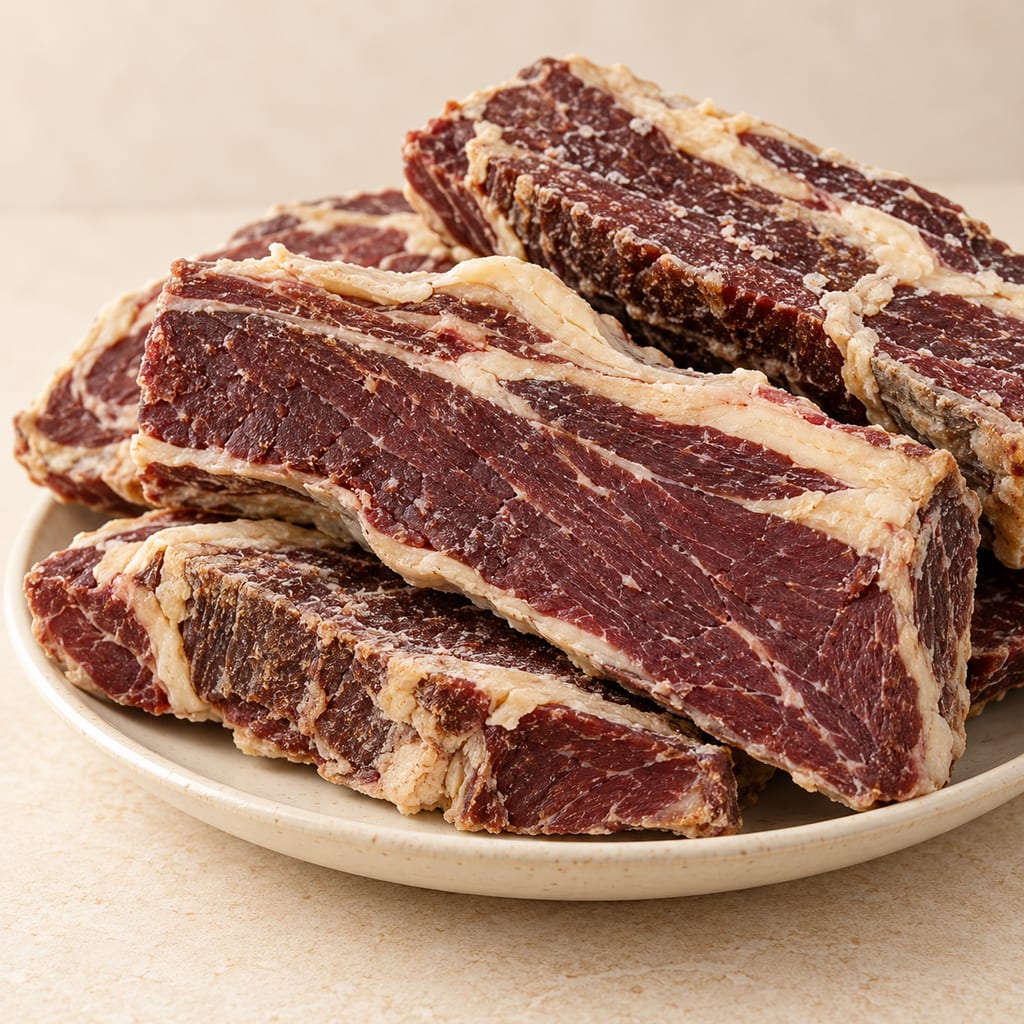
Beef salted heavily and dried into a strongly preserved ingredient that is desalted before it is cooked in stews; a Brazilian form of salt-dried meat that keeps far longer than the lightly salted carne-de-sol.

A documentary account of dried meat strips and their historical uses. It does not provide an operational home method for making shelf-stable jerky at home.
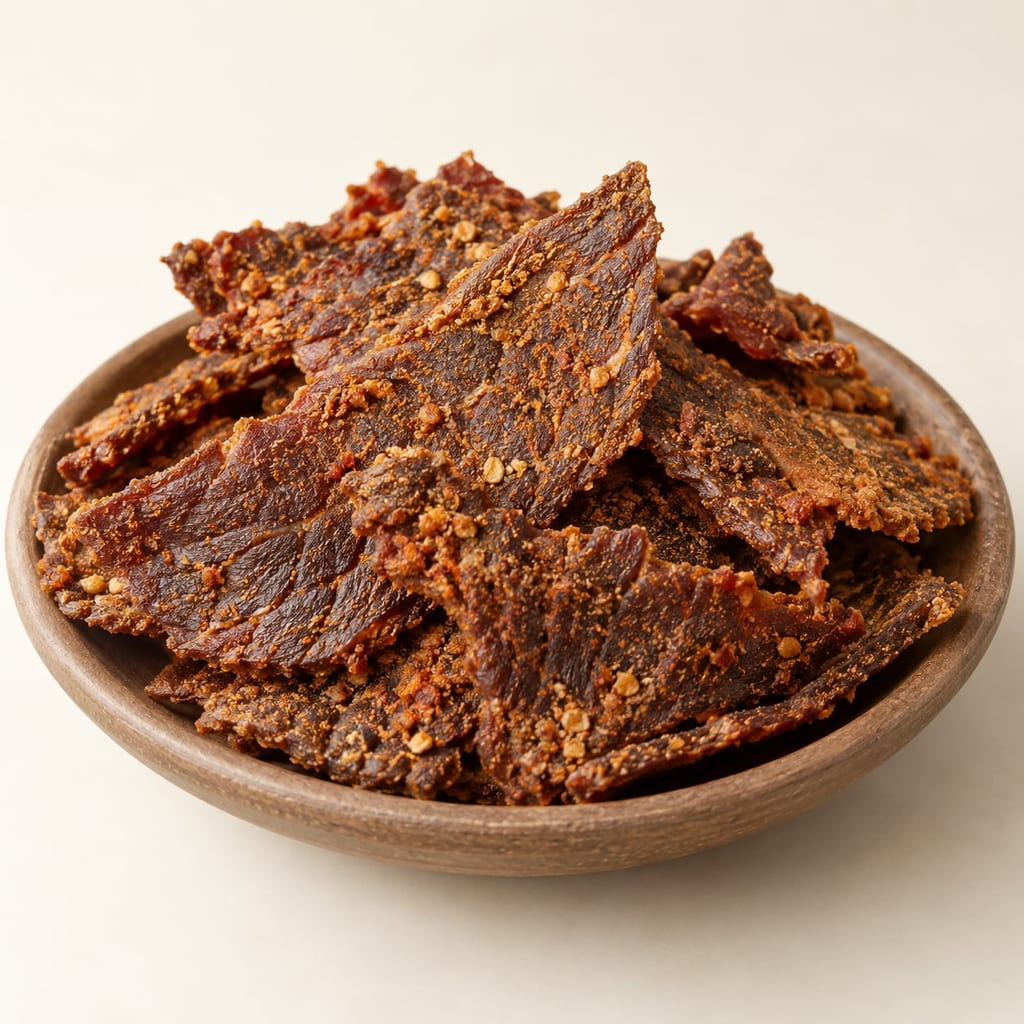
Kilishi is a Hausa-land dried meat from northern Nigeria and southern Niger: thin slices of beef or other meat, dried, coated in a spiced groundnut paste and dried again.
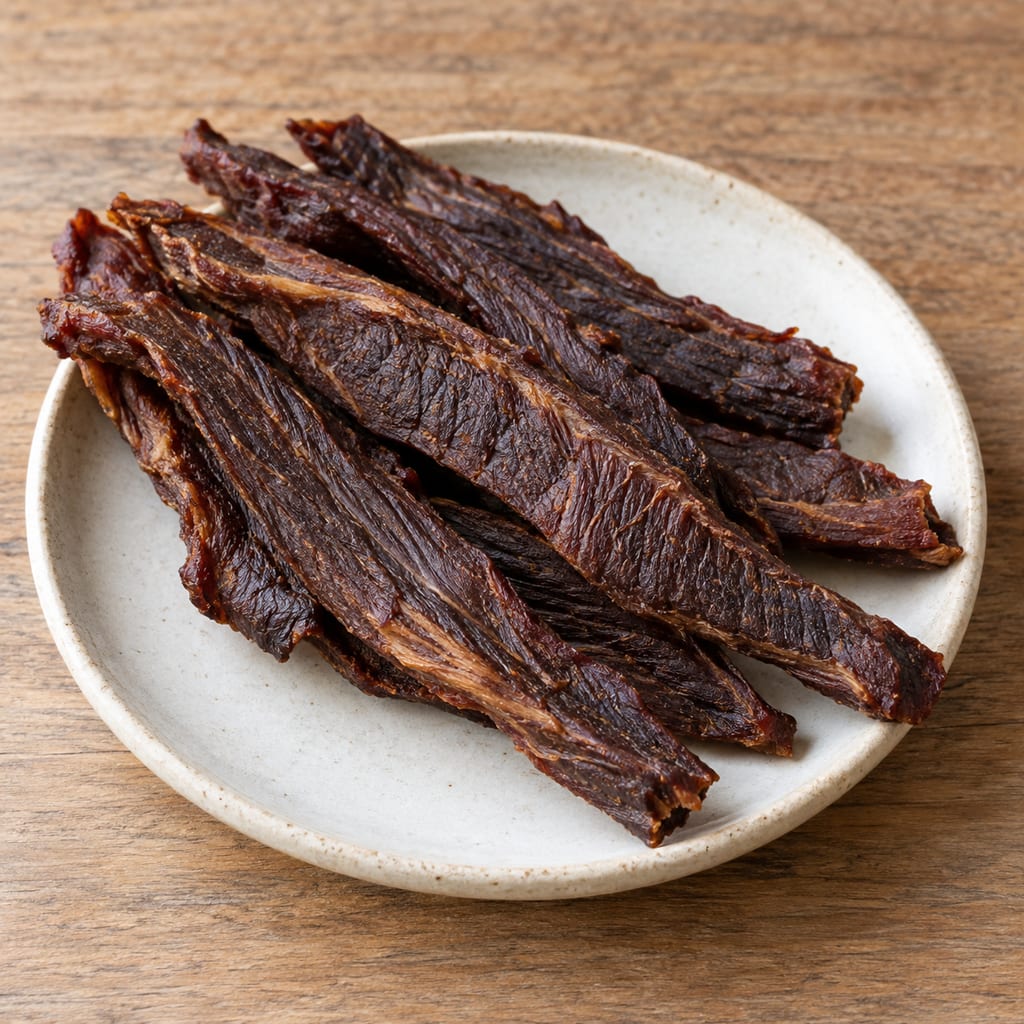
A documentary account of Malagasy salted meat strips, commonly dried, smoked or both; it does not provide a validated home-preservation recipe.
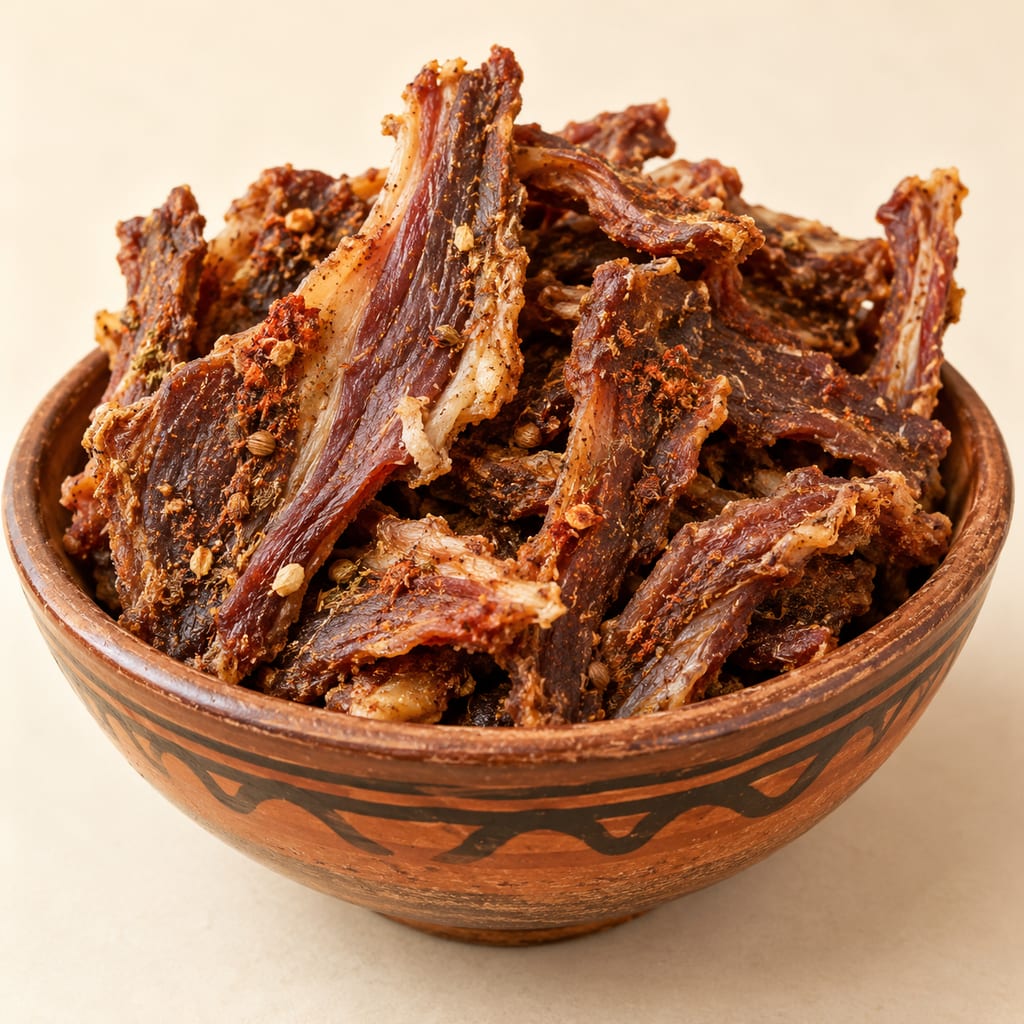
Moroccan kaddid is a traditional salted, dried meat. The measured batch here is from a 2023 Tunisian experiment and is included only as a non-instructional comparison.

A Cap-Pelé boucanière is an Acadian herring-smoking building. The documented Willie Niles example is a one-storey wood-frame structure with a ridge smoke vent and interior bays for hanging fish-bearing cannes.

Achcharu is a family of Sri Lankan vinegar pickles made with mixed vegetables or seasonal fruit and a piquant spice dressing. This version is a quick, refrigerated, non-fermented mixed-vegetable pickle.

The acocote is a long, hollowed and dried gourd used to draw aguamiel from a mature maguey. It is a harvesting tool: the sap is transferred to a separate vessel before it ferments into pulque.

Adrak murabba preserves young ginger in sugar syrup, a sweet South Asian preparation recorded in Indian cookery and food-processing sources.

Parkia biglobosa seeds are fermented into regional West African seasonings, including nététou, iru, dawadawa and soumbala. The yellow fruit pulp is a separate food, and names and methods vary by place.

Japanese reddish-brown vinegar from sake lees matured about three years, turned to vinegar by acetic bacteria; the vinegar of Handa and Edomae sushi rice.

A refined common-wheat flour blended for a broad range of baking; its protein and behavior vary with wheat, milling and market.

The almond mushroom, Agaricus subrufescens, was cultivated in eastern North America in the 1800s, lost its market, and returned as a cultivated mushroom from Brazil, where it is grown under several names.
No community contributions have been published for this entry yet.
Sign in to contribute. Published comments and photos are free to read.
PubMed CentralScience
Physico-chemical composition and oxidative stability of South African droëwors (2018)A 2018 review of South African beef, game, ostrich and pork droëwors records one published research system drying at 15°C and 75-82% relative humidity for 15 days, and another at 25-30°C and approximately 30% relative humidity for 2-3 days.
Producers commonly target 45-50% moisture-related weight loss.
Droëwors is distinguished by meat species, fat content, drying procedure, oxidation behaviour and storage stability.
Cited in: The dried relative of boerewors; Names and terminology; Historical relationship with southern African meat preservation; Meat; Fat; Salt; Vinegar; Coriander and spices; Casing; The science of drying; What controlled studies have measured; Select and prepare the meat; Prepare the fat; Grind and mix; Stuff; Dry under controlled conditions; Package and store; Product variations; Eating and sensory quality; Safety: why this is not ordinary fresh sausage
PubMedScience
Zebra droëwors with different sheep-fat levels (2021)A 2021 study of zebra-meat droëwors compared formulations containing 10%, 15% and 20% sheep fat, dried at 30°C and 40% relative humidity for two days. The lower-fat samples lost more weight during drying and had lower measured water activity than the higher-fat formulation.
Cited in: Fat; What controlled studies have measured; Product variations
ClaasensMethod
Claasens — Droëwors recipe and manufacturing processA commercial-equipment supplier's published recipe gives, per kilogram of meat and fat: 22 g salt, 15 g roasted ground coriander, 5 g black pepper, 5 g brown sugar, 0.5 g cloves, 0.5 g nutmeg, 40 ml brown grape vinegar and 50 ml cold water, stuffed into 22 mm sheep casings.
Cited in: Prepare the seasoning; Prepare the casing
Digitale Bibliotheek voor de Nederlandse LetterenHistory
C. Louis Leipoldt — WorsThe Wors essay of 1945 describes a wind-dried form of seasoned sausage praised as food for hunting, which is direct documentary evidence of drying seasoned sausages in the mid-twentieth century without establishing that the historical procedure is safe by present standards.
Cited in: Historical relationship with southern African meat preservation
Food and Agriculture Organization of the United NationsMethod · Science
FAO — Small-scale production of dry and semi-dry sausagesSmall-scale production of dry and semi-dry sausages: drying is a mass-transfer process in which the surface loses moisture first and interior water must migrate outward, so an over-rapid surface dry causes case hardening that restricts further moisture movement.
Cited in: The dried relative of boerewors; Names and terminology; Meat; Salt; Vinegar; Coriander and spices; Casing; The science of drying; Select and prepare the meat; Prepare the fat; Grind and mix; Stuff; Dry under controlled conditions; Package and store; Eating and sensory quality
Food Standards AgencySafety
Food Standards Agency — Microbiological hazards in biltong and related dried meatsA literature review of microbiological hazards in biltong and related dried meats, used here for the hazards of ready-to-eat raw dried meat and the need for a validated process rather than an assumed drying period.
Cited in: Verify the finished product; Safety: why this is not ordinary fresh sausage