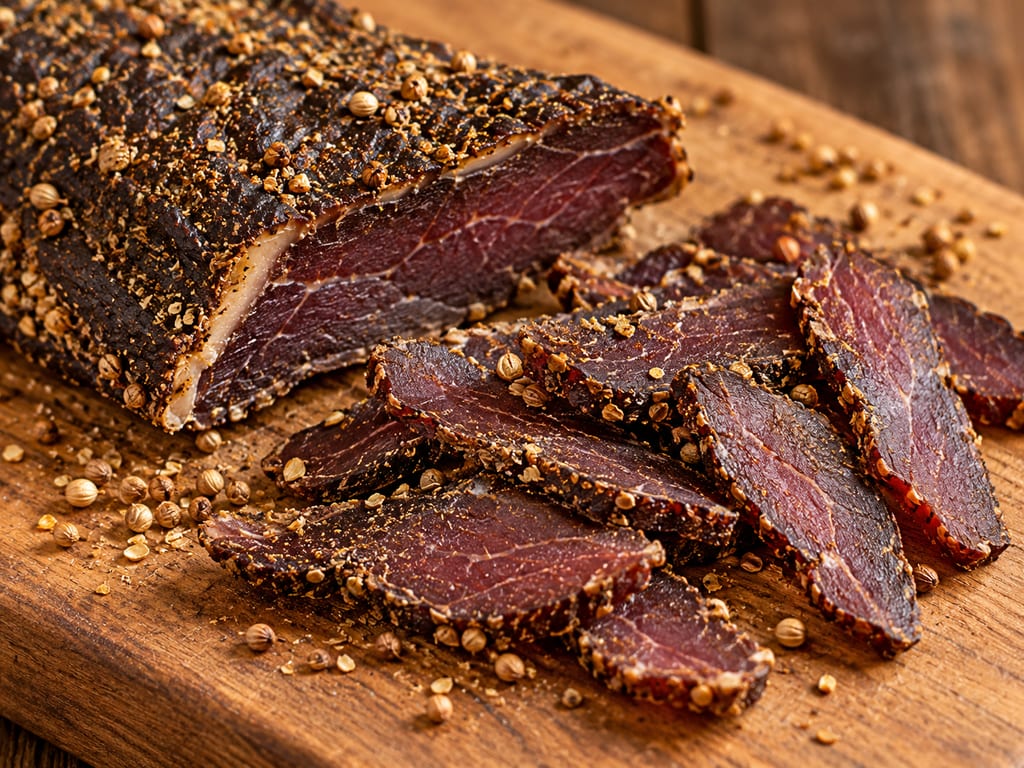
Biltong
Strips of whole-muscle beef or game seasoned with salt, vinegar, roasted coriander and pepper and air-dried without cooking, sold anywhere from soft and moist to hard and very salty.
 FermenteaWhere food goes to change
Worcester sauce
A thin, dark, sharply savoury table sauce associated with Worcester, England. This recipe preserves one historical formula printed in 1932 and distinguishes it from modern proprietary Worcestershire sauces.
Worcestershire sauce is a family of thin, dark, sharply savoury seasonings rather than one universal formula. Lea & Perrins made the name familiar: its company history dates its first commercial launch in Worcester to 1837. The recipe in this record is a different object. Florence White's 1932 book prints a formula under the heading “Lord Sandys' Sauce” and says it was among the recipes given by an anonymous friend. The ingredients and method are valuable evidence of a Worcestershire-style sauce in print, but they do not prove that the formula was used by Lea & Perrins or that it reproduces the firm's product.
The distinction matters because the best-known commercial sauce is still proprietary. The UK Intellectual Property Office describes the exact Lea & Perrins recipe as a trade secret; a famous account of a failed batch being left to mature is commonly repeated, but its details should remain attributed. The brand dates its launch to 1837 and says the mixture matured for 18 months. The government case study likewise describes an 18-month maturation before blending and bottling. These public sources support a long maturation tradition, not a public recipe or a disclosed account of the organisms, chemistry and manufacturing steps involved.
Lea & Perrins' Worcester story belongs to the nineteenth-century expansion of bottled table sauces. Their bottled format made a strongly seasoned condiment available to cooks at home, hotels and restaurants, where it could be shaken over a finished plate or stirred into gravies, soups, marinades and other sauces. The company's account says exports had spread widely by the end of the 1840s and that a Worcester factory opened in 1897. An 1878 bottle preserved by Flagstaff Hill Maritime Museum, recovered from the Loch Ard wreck off Victoria, is a material trace of the sauce's circulation through maritime trade.
The old recipe's “Lord Sandys” title comes with a story that the formula had been brought from India. White presents that story as received history, not as a documented chain of custody. The book does not give a date for the anonymous friend's recipe, nor identify the person, manuscript or provenance. It is therefore safer to call it a 1932 printed formula with an earlier origin claimed by its editor than to state that it is the original commercial recipe or a verified Indian preparation. That careful wording keeps the printed evidence useful without turning legend into certainty.
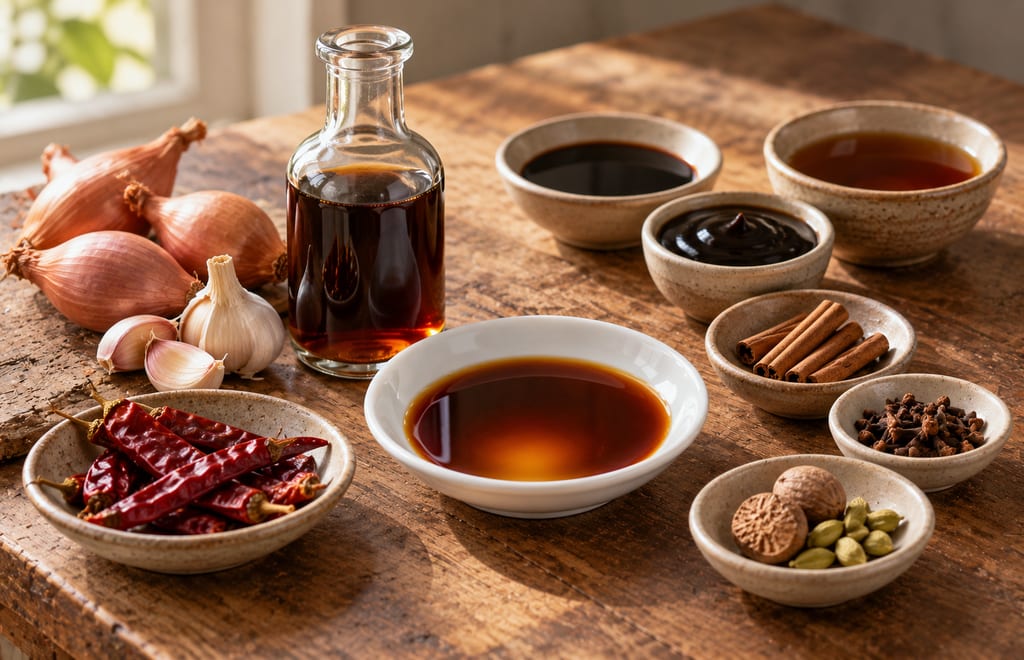
White's formula combines ten lines: one ounce of capsicum, eight ounces of shallots, four drams of cinnamon, six ounces of garlic, two ounces each of cloves and nutmegs, one dram of cardamom, one pint of soy, two pints of mushroom ketchup and one gallon of brown vinegar. The book explains that it uses sixteen ounces to the pint, but does not define the volume standard for its gallon, identify the variety of capsicum or specify whether spices are whole or ground. It gives no yield. The recipe is therefore kept in its original units and not scaled by guesswork.
The list suggests a layered seasoning: allium pungency from shallot and garlic, heat from capsicum, warm aromatic spice from cinnamon, cloves, nutmeg and cardamom, and a deep savoury base from soy and mushroom ketchup. Brown vinegar supplies most of the liquid and contributes acidity. The source does not provide a sensory description or exact ingredient grades, so it cannot support a confident claim about final sweetness, saltiness, colour or texture. These are interpretations of the listed ingredients, not a substitute for tasting or a guarantee of the finished result.
The source separates the aromatics from the rest of the mixture for the first stage: bruise the shallots and garlic, then boil them for half an hour. It next adds all remaining ingredients and calls for a further half-hour boil in a covered vessel. Heating softens the alliums and exposes their flavour to the vinegar; spices and savoury ingredients then steep together in the liquid. White gives no measured temperature, vessel dimensions or evaporation allowance, so modern equipment cannot be mapped precisely onto the printed directions.
After heating, the text says to cover the sauce and leave it for one month, then strain through a fine sieve and bottle. It does not describe a controlled fermentation, report microbial measurements or explain whether the month is at cellar, room or another temperature. A long rest can allow flavours to move between ingredients and liquid, but that physical extraction is not proof that microbes are driving the change. This page therefore does not classify the historical formula as a fermentation just because branded Worcestershire is sometimes described as fermented or matured.
White's directions are preserved because they document historical cookery; they are not a validated modern home-preservation process. The book says to boil, cover, stand, strain and bottle, but gives no measured acidity, sanitation procedure, hermetic seal, storage temperature or shelf life. The large base quantity also makes casual scaling risky: changing proportions changes the balance of ingredients, and the text gives no tested batch-size rule. Nothing in the page establishes that a bottle made this way can safely be kept at room temperature.
For those reasons, this recipe is best read as a transcription and historical object. It records exactly what the 1932 source says while flagging the gaps it leaves. It does not add a contemporary canning method, invent a pH target or convert a month-long rest into a modern fermentation schedule. Cooks seeking the familiar seasoning for a present-day dish can use a commercial product labelled for their market rather than treating an old printed recipe as a preservation guarantee.
Worcestershire sauce is often used in small amounts because its pungency can season a whole dish. The 1932 book does not give serving uses for its formula in the cited passage, but a historical bottle label on a Victorian-era container advertises it for roasts, steaks, chops, fish, curries, gravies, game and soup. The US Lea & Perrins product page recommends it for marinades and meat or fish. In contemporary kitchens, that broad seasoning role also appears in dressings, soups and cocktails, where its acidity and savoury notes are mixed with other ingredients rather than served as a main sauce.
The label should guide substitutions and dietary decisions. The US product declaration names molasses, tamarind extract, white vinegar, chilli-pepper extract and sugar, whereas White's 1932 formula names soy and mushroom ketchup and does not list tamarind. Products and labels vary by producer and country, so one market's ingredient list cannot be transferred to every bottle. Many familiar formulas contain fish; soy or other allergens may also be present. Read the exact package, particularly when cooking for someone with an allergy or dietary restriction.
A Worcestershire-style sauce can be recreated in many ways, but a quick kitchen blend is a functional seasoning rather than the historic formula or the proprietary Lea & Perrins process. The 1932 text uses brown vinegar, soy and mushroom ketchup with a particular spice list. Contemporary labels describe different combinations. Their shared dark colour and sharp-savoury role do not establish that they are made by the same route or taste identical.
Japanese Worcester-style sauces are another related family. They include fruit-and-vegetable sauces and distinct consistencies and uses, such as thinner Worcestershire-style products and thicker tonkatsu or okonomiyaki sauces. The shared word “Worcester” reflects a naming relationship, not a single formula. Keeping these preparations separate lets a reader understand what the 1932 English recipe says, what modern manufacturers disclose and how neighbouring sauce families differ without blending them into an invented universal recipe.
To follow White's printed method, bruise the eight ounces of shallots and six ounces of garlic and boil them for half an hour. The text does not say what liquid, if any, is present during this first stage, so this transcription leaves that ambiguity visible rather than supplying an invented instruction. Add the capsicum, cinnamon, cloves, nutmegs, cardamom, soy, mushroom ketchup and brown vinegar as the source lists them; boil for a further half hour in a covered vessel. Leave covered for one month, strain through a fine sieve and bottle. The quantities and wording above are the source's, not a tested reduction or modern adaptation.
No storage instructions beyond bottling appear in the source, and none are added here. In particular, this text does not establish a safe room-temperature shelf life. The historical directions should be read with their limitations visible: they preserve a printed method, but omit modern measurements and validation needed to treat it as a dependable household preservation process.
Commercial labels can be compared for broad ingredient families, but ingredient order and exact percentages are not a full manufacturing description. The UK brand history emphasizes maturation and the proprietary process; the US product page discloses some ingredients but not the complete formula or processing sequence. The 1932 book gives a separate list and a short household method. These three kinds of evidence answer different questions: a label identifies declared ingredients, a company account supplies selected process history, and a cookery book preserves a printed recipe. None should be used as a substitute for the others.
Nor does a list alone prove equivalence. Similar names such as vinegar, soy and spice can cover very different raw materials and preparations. The old formula does not identify whether its soy was a Chinese-style fermented seasoning, a British commercial sauce or something else, and it does not describe how its mushroom ketchup was made. Without those details, readers cannot infer identical salinity, texture or savoury intensity from the names. The recipe preserves the wording rather than modernizing ingredient identities the source leaves open.
Lea & Perrins and the UK Intellectual Property Office both describe an 18-month maturation for the commercial product. Maturation is a process period, not a complete recipe: the public accounts do not say which ingredients are aged together, what vessels are used, whether the mixture is stirred, how it is monitored, or how its maturation chemistry is controlled. A cook cannot reconstruct those decisions from the duration alone. This is why the one-month covered rest in White's household formula should not be presented as a scaled-down version of the commercial process.
Likewise, the word “fermented” should be used only when a source describes a microbial process. The historical method names heating, standing, straining and bottling. It supplies no culture, inoculation, controlled conditions or evidence that microbes cause the changes. Vinegar may itself be the product of fermentation, and soy sauce or mushroom ketchup may also have their own production histories, but their presence does not turn this particular sauce recipe into a demonstrated fermentation. Those component processes belong to the histories of those ingredients.
The thin texture is useful in the kitchen because a small pour can spread through a larger dish. It lends a sharp, dark savoury note to liquid preparations such as soups and gravies and can become part of a marinade or dressing. A label from the late nineteenth-century bottle collection lists a similarly broad range, including roast meat, steaks, chops, fish, curries, gravies, game and soup. Later cooks have carried the flavour into cocktails and other table sauces. These are uses of the commercial seasoning family; the historic formula's exact flavour and strength are not documented well enough to promise that it performs identically.
An ingredient swap should be judged by the dish rather than by the bottle's name. A fish-free version may suit vegetarian cooking, while a soy-free version may be necessary for an allergy, but the producer's label must confirm that choice. An alternative seasoning can contribute acidity or savouriness while changing salt, sweetness and texture. Adding a homemade substitute directly to a preservation recipe would change the recipe itself, so it should not be assumed safe or equivalent without process-specific validation.
Lea & Perrins says its sauce launched in Worcester in 1837 and matured for 18 months. A different formula under “Lord Sandys' Sauce” in White's 1932 collection is attributed to an anonymous friend. The book repeats an origin story but does not independently establish it. This recipe transcribes the printed formula and does not claim to reproduce the proprietary commercial sauce.
Scaling: source batch only
A month-long covered rest and bottling instruction do not validate a safe modern room-temperature process or shelf life.
Hazard sourceThe formula contains soy.
Hazard sourceThis is an archival transcription, not a tested modern home-preservation recipe. The source does not establish safe storage after bottling.
The 1932 formula is not established as the proprietary Lea & Perrins recipe.
Soy is an ingredient; read the actual ingredient labels for allergies and other market-specific differences.
This association is for the commercial Lea & Perrins sauce, not evidence that Florence White's anonymous-friend formula originated in Worcester.
Strips of whole-muscle beef or game seasoned with salt, vinegar, roasted coriander and pepper and air-dried without cooking, sold anywhere from soft and moist to hard and very salty.
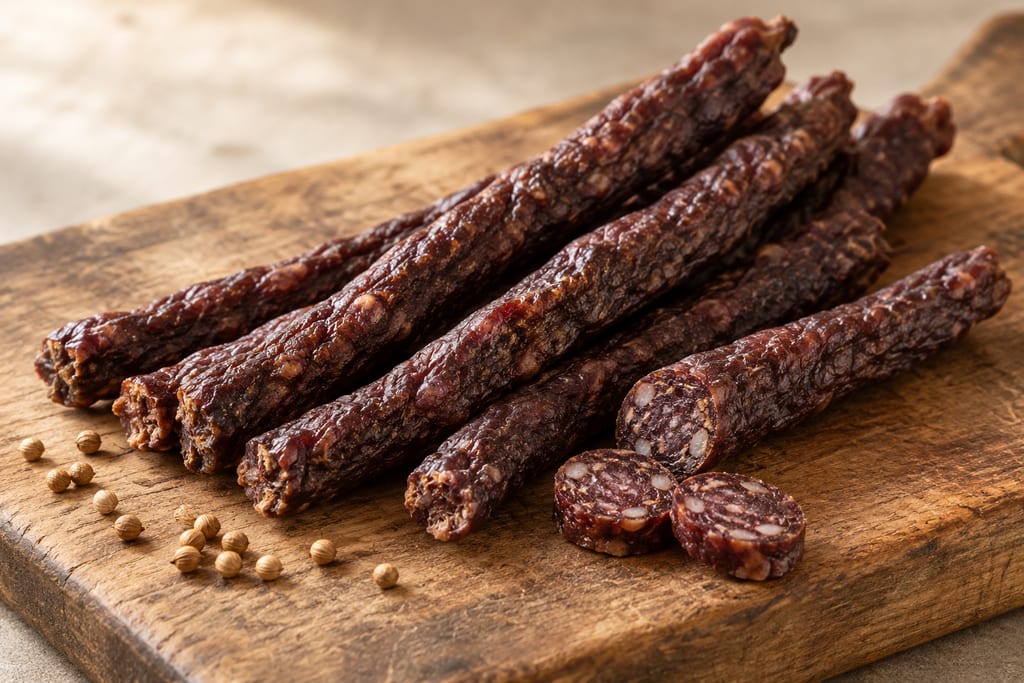
South Africa's dried sausage: seasoned minced meat in narrow casings, dried until it can be eaten without cooking, which makes it a far more demanding product than fresh boerewors.
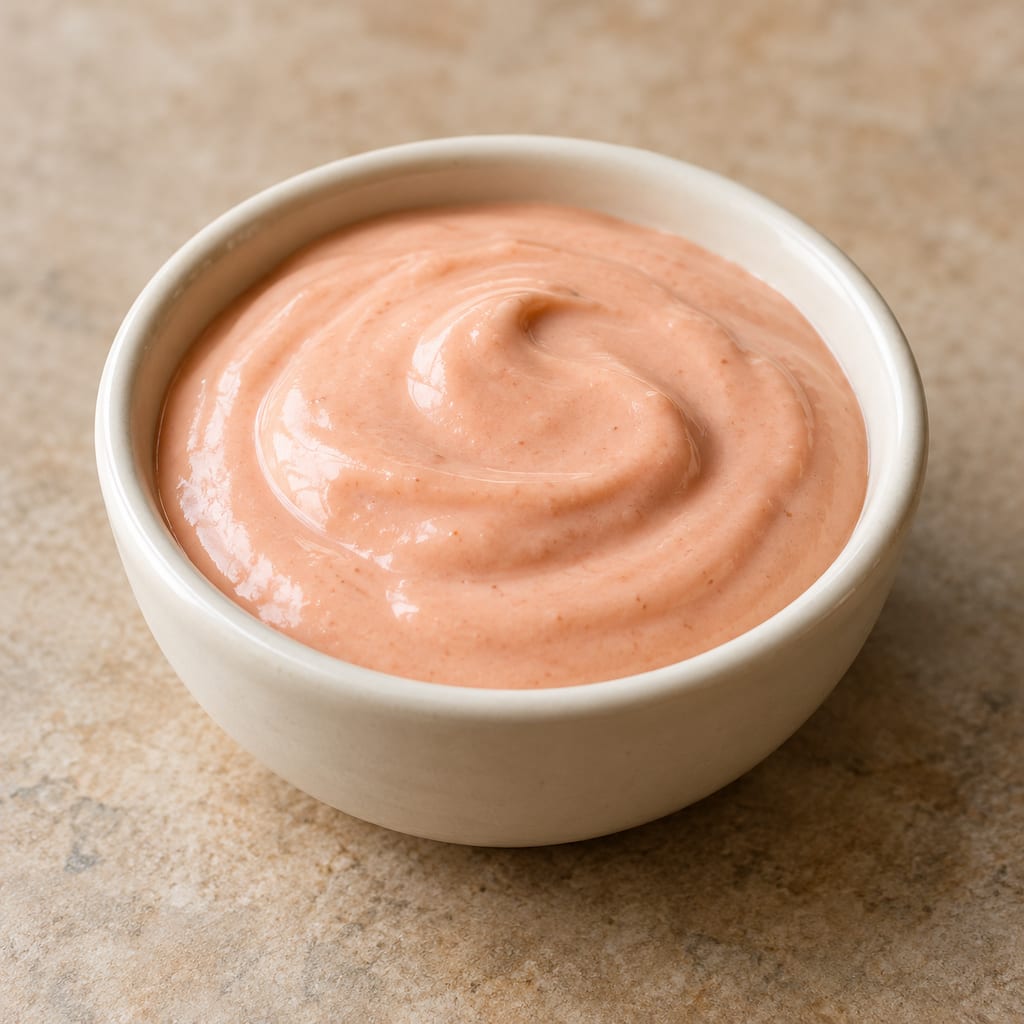
Mayonnaise and ketchup form a pale pink sauce sharpened with Worcestershire; a little citrus may be added at serving, while the proportions remain an untested starting point.
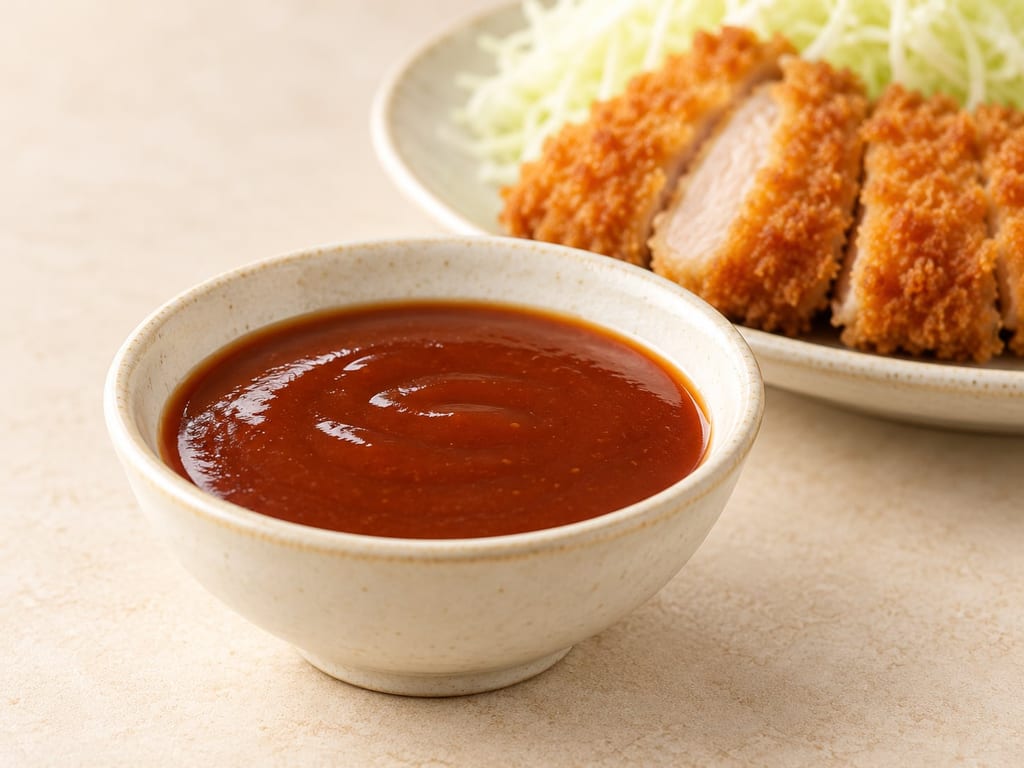
A small-batch, non-fermented tomato, fruit and savoury sauce assembled for crisp tonkatsu and cabbage, inspired by Japanese yoshoku serving traditions.
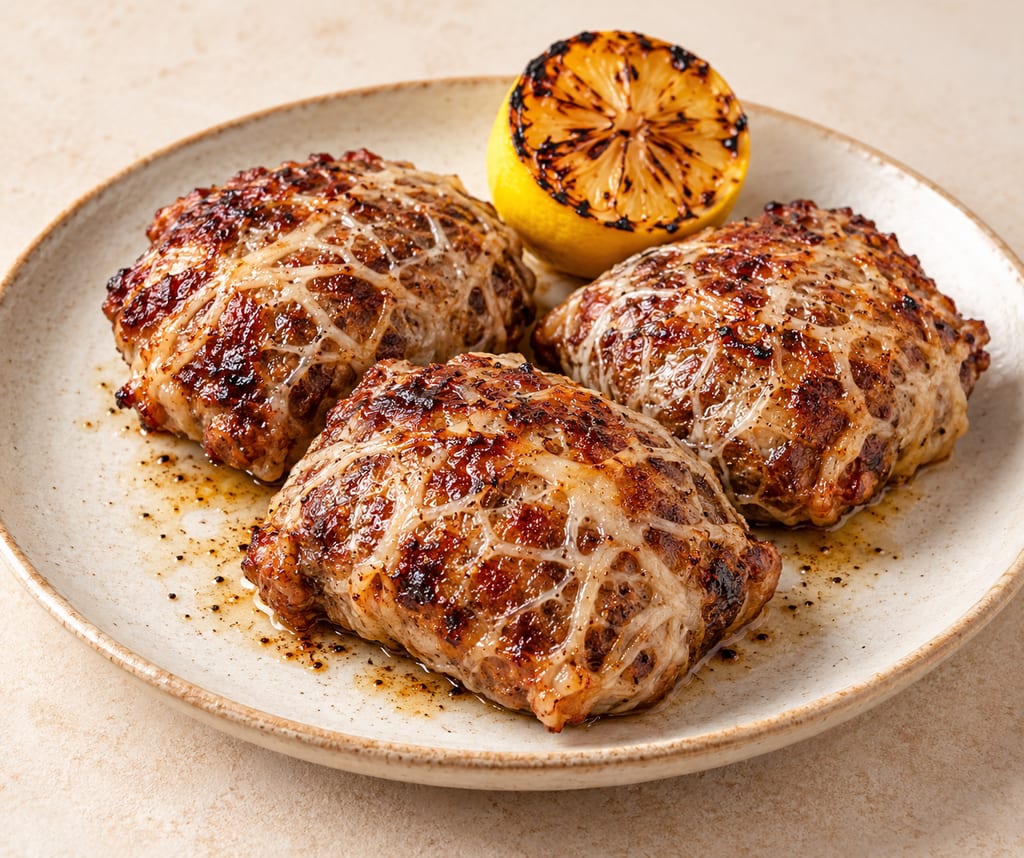
South African braai parcels of seasoned lamb liver wrapped in caul fat (netvet), which crisps and renders as the filling cooks.
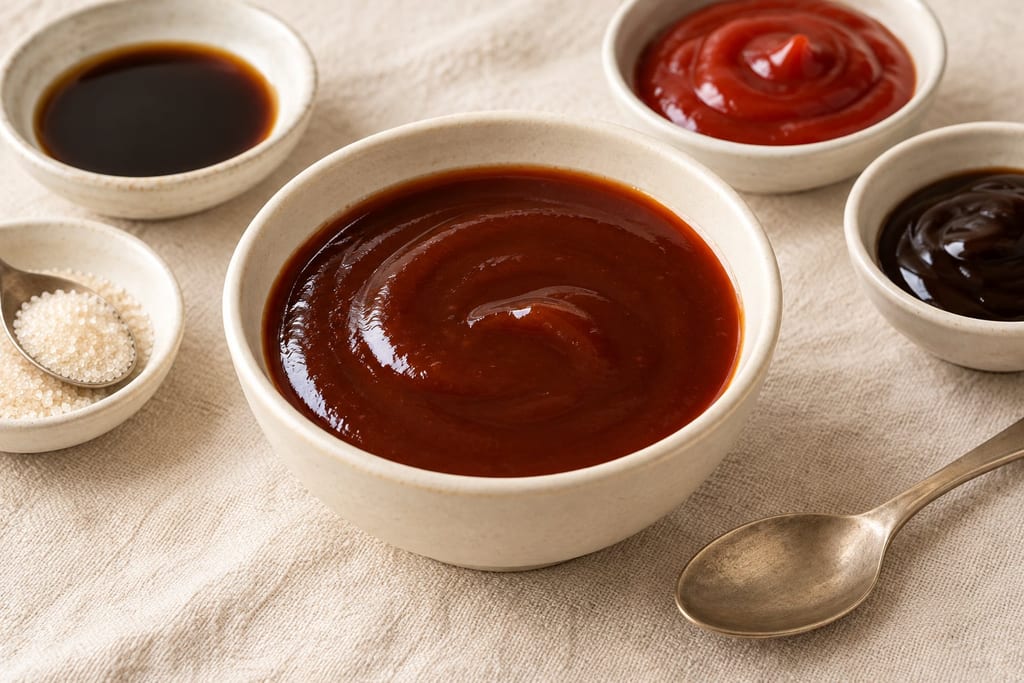
A sweet, tangy Japanese sauce mixed from Worcestershire sauce, ketchup, oyster sauce and sugar. Serve with breaded cutlets or croquettes.
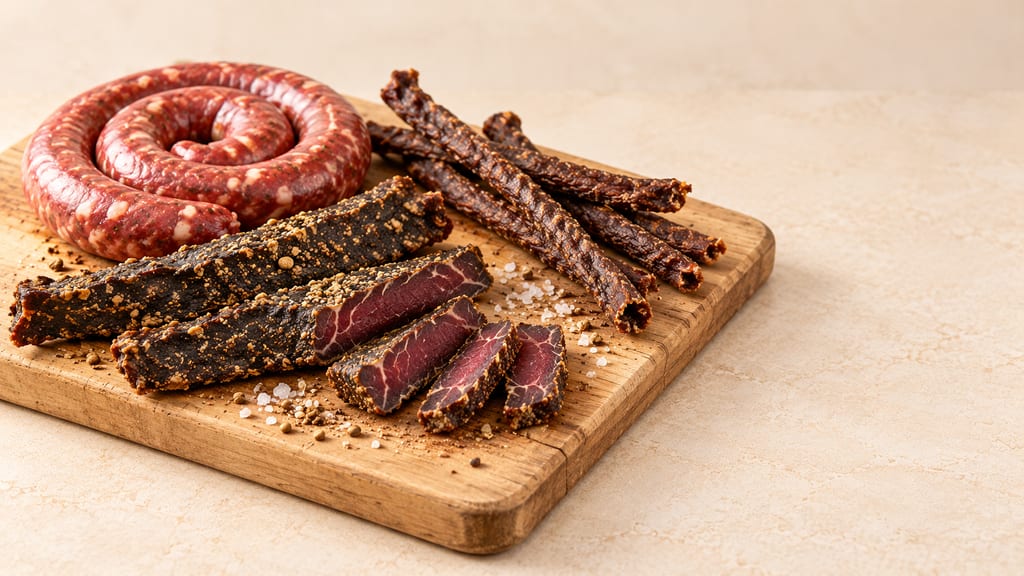
Boerewors, biltong and droëwors share a table but follow different paths from meat to meal. Their histories lead from the braai and butcher's counter to drying lines, household pots and the science of keeping food.
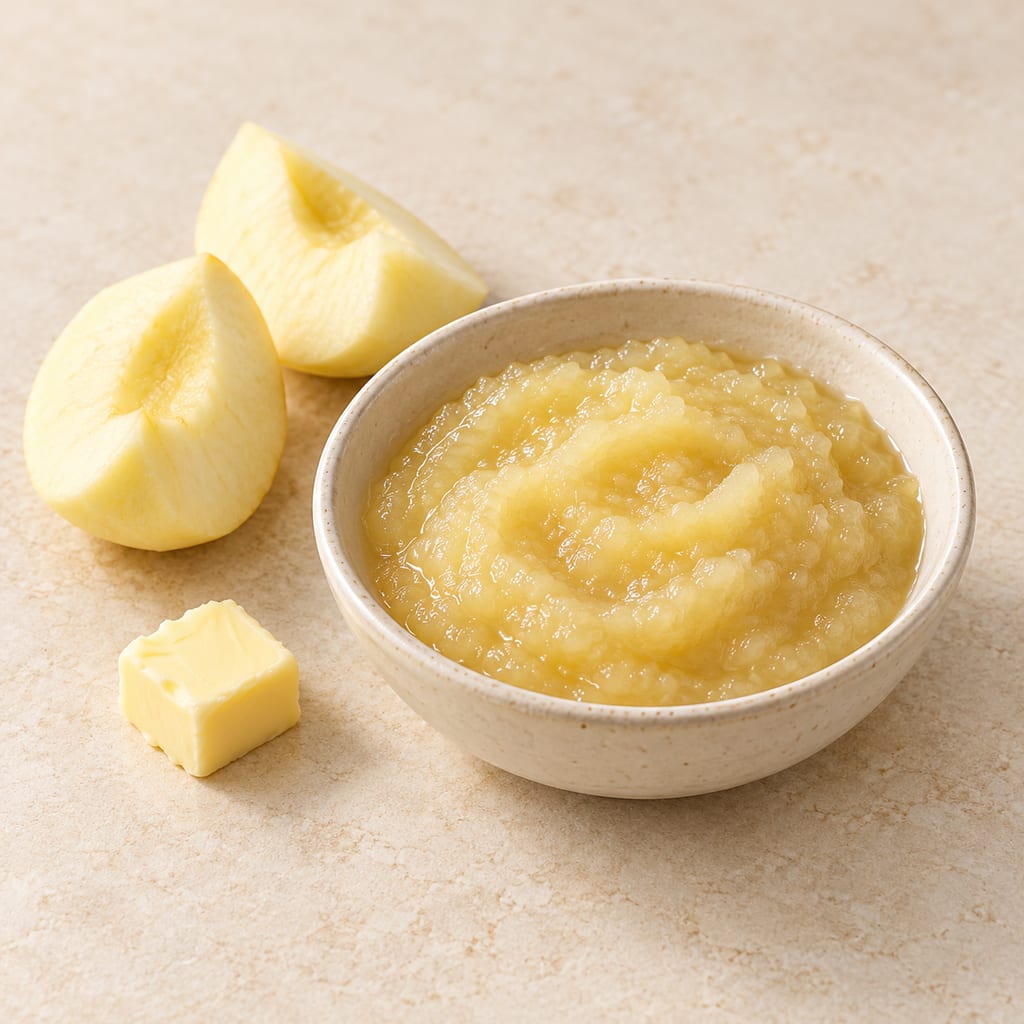
Apple sauce for goose and pork is a plain English accompaniment: cooked apples pulped with water, then sweetened with sugar and finished with a little butter.
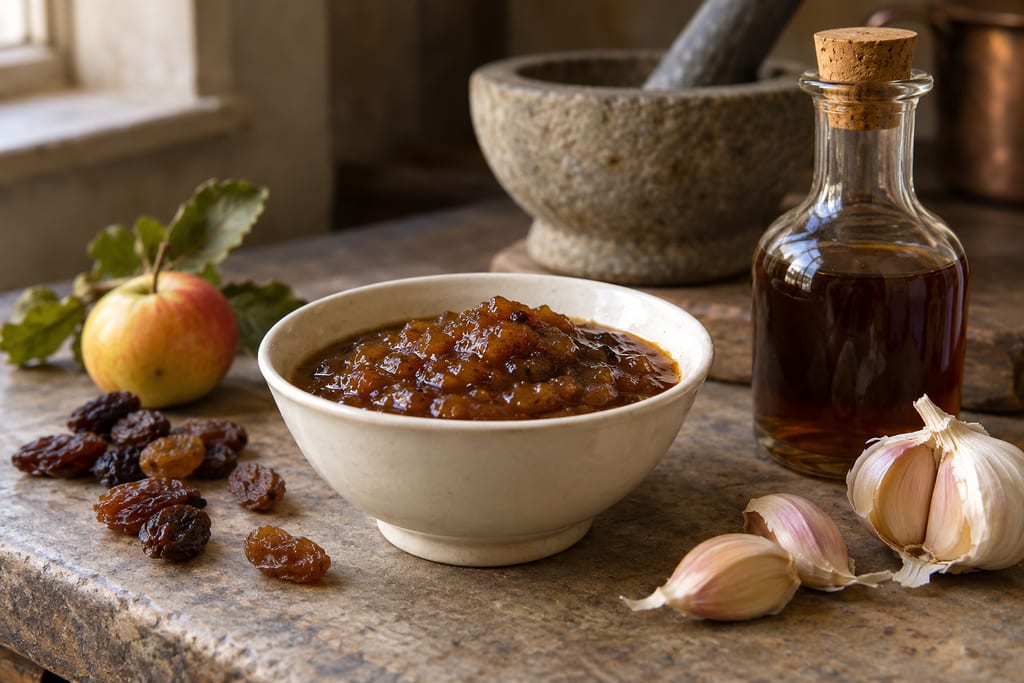
Eliza Acton's Bengal receipt for chetney sauce: stoned raisins and a hard acid fruit pounded with brown sugar, ginger, salt, cayenne and garlic, then thinned with vinegar to the consistence of thick cream.
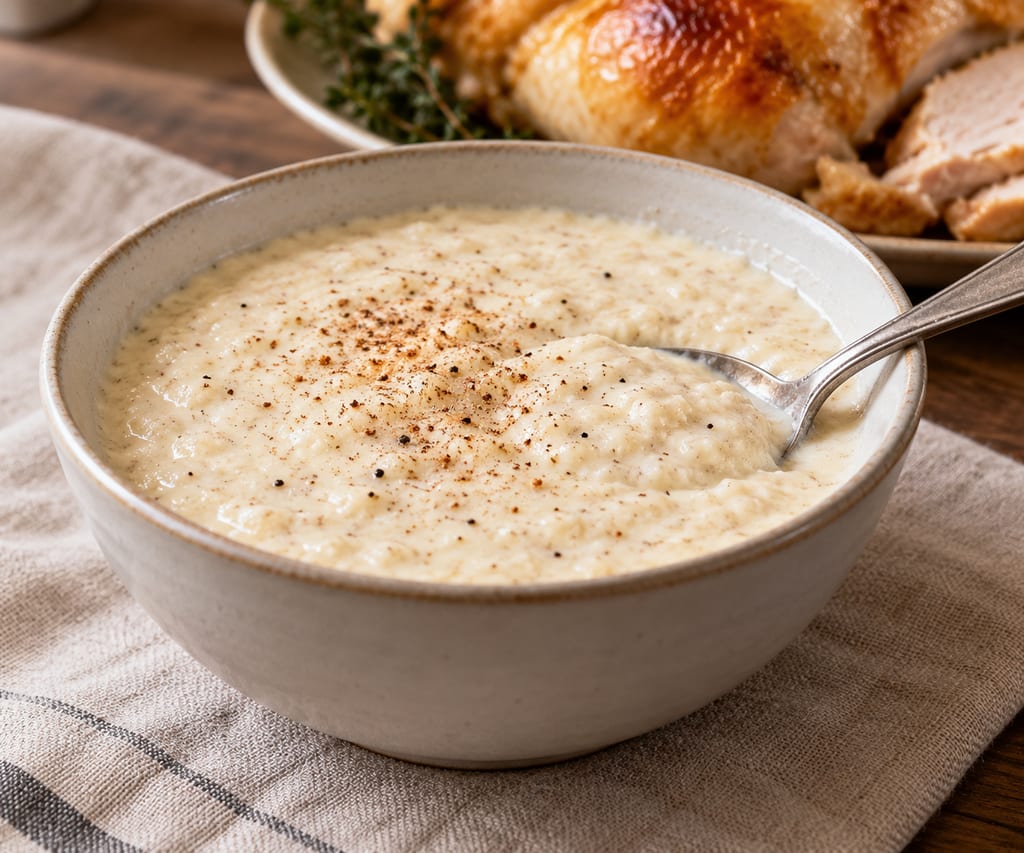
Bread sauce is a British sauce of milk infused with onion, clove and bay, thickened with stale breadcrumbs and finished with butter, served with roast chicken or turkey.
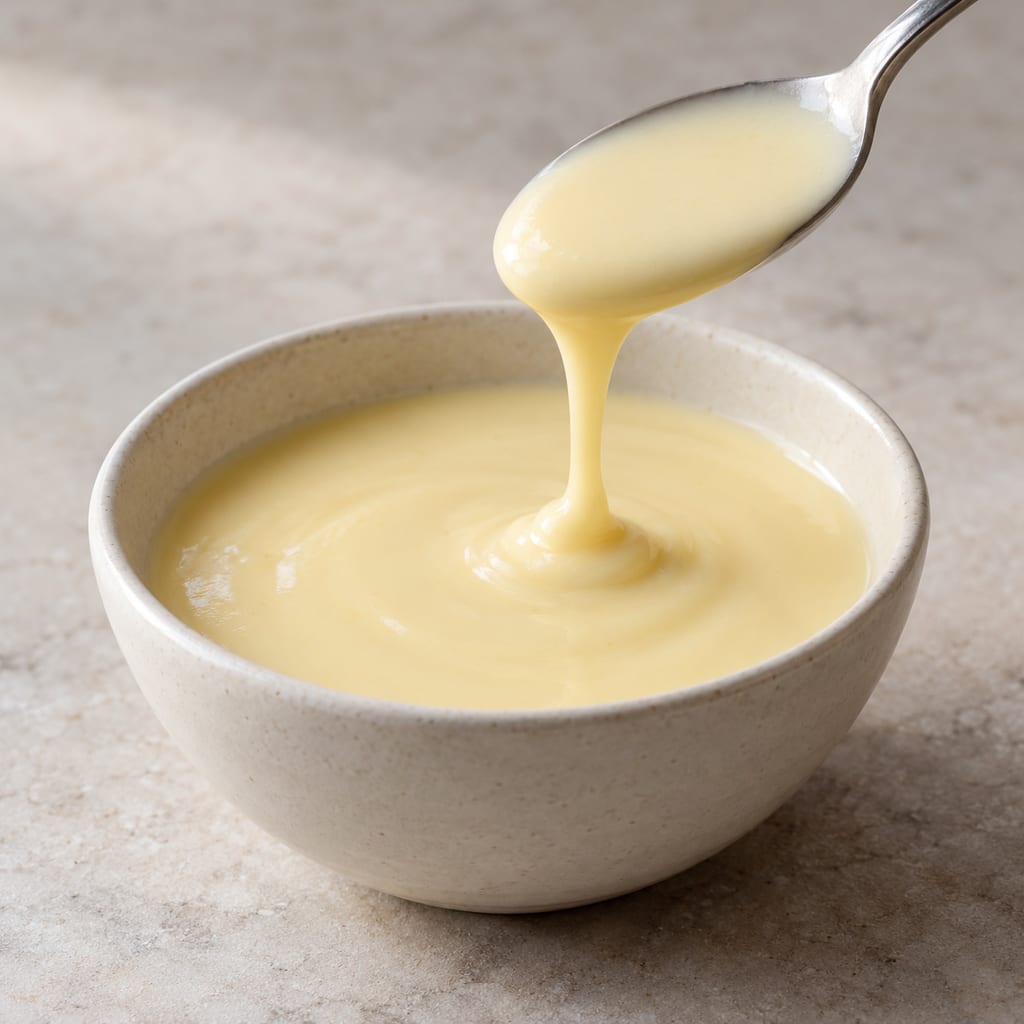
Starch-thickened salad-cream prototype with pasteurised yolk added after cooling; not a Heinz copy. Approximate yield 300 g.
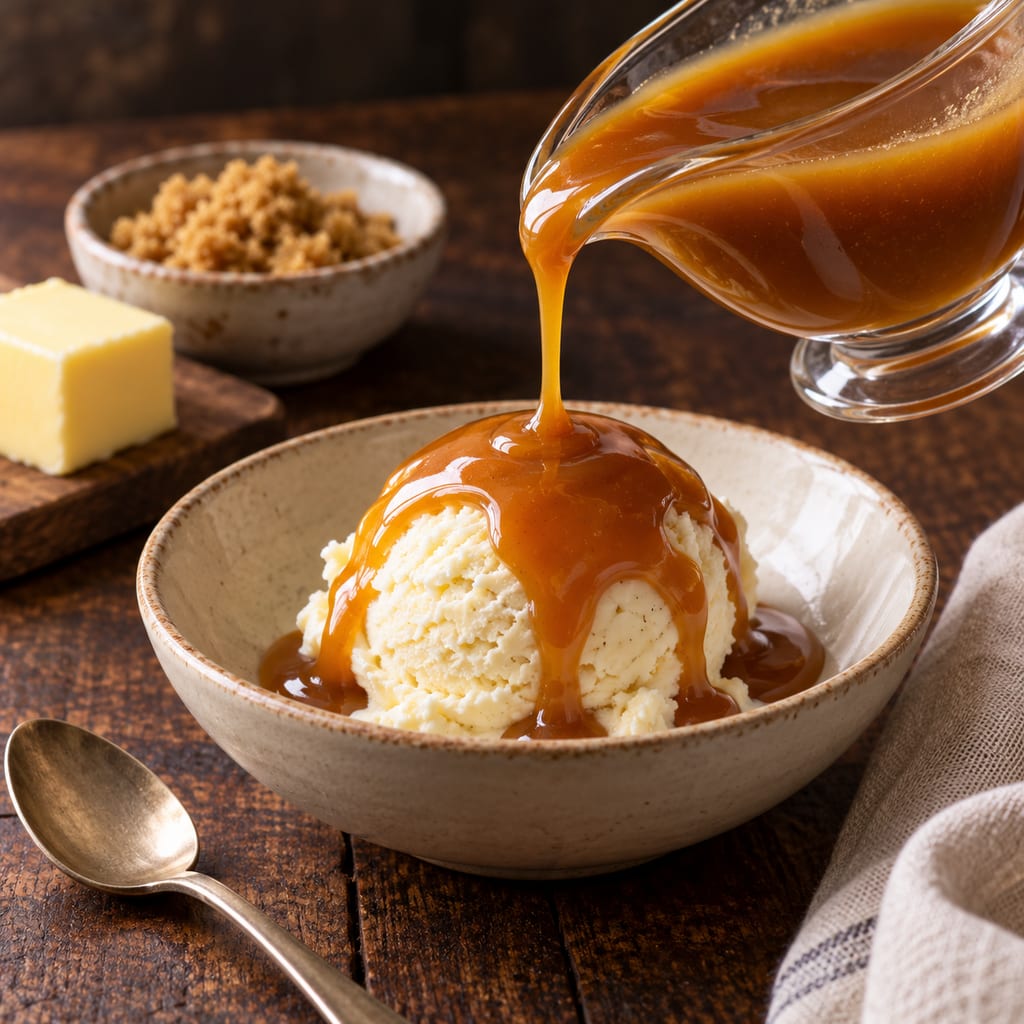
A pourable dessert sauce of brown sugar, butter and cream, with a little corn syrup and salt. It is the sauce form of the butterscotch confection and is made without water, unlike caramel.
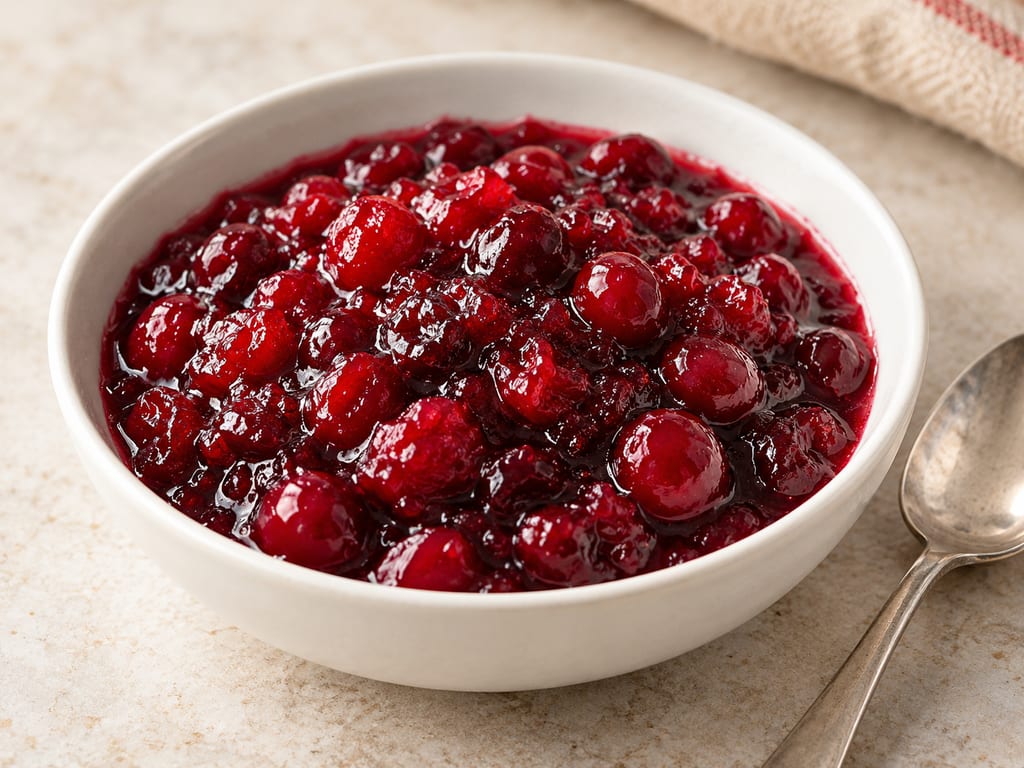
Cranberry sauce is a sauce of cranberries cooked in sugar syrup until the berries burst and thicken, served with roast turkey, pork, chicken and ham.
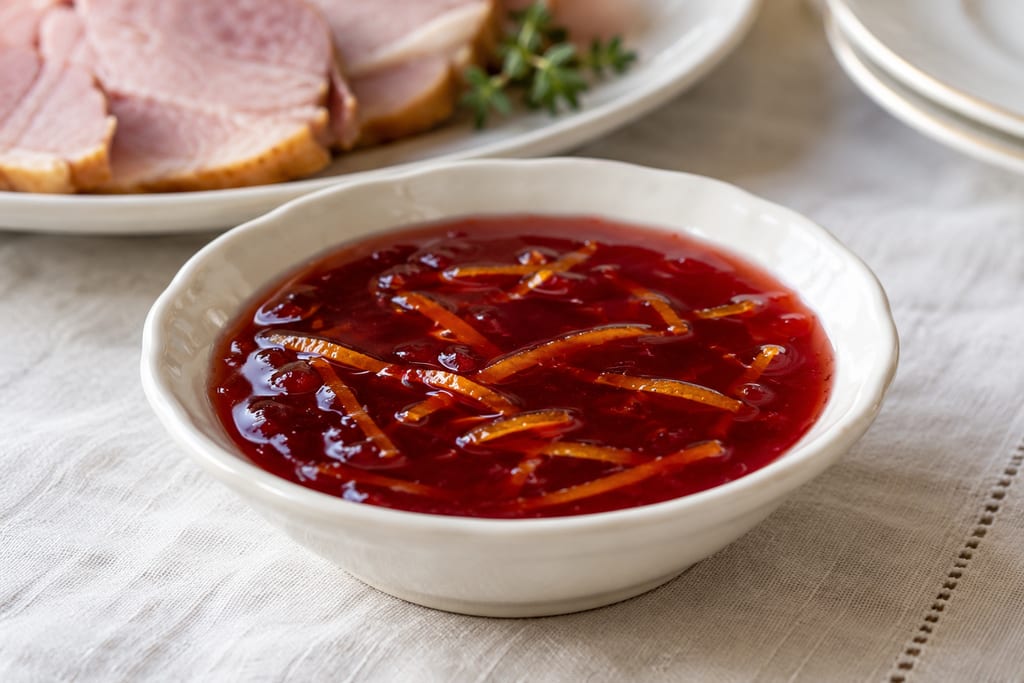
Cumberland sauce is a British condiment of redcurrant jelly, mustard, blanched orange peel and port, traditionally served cold with ham, game and cold meats.
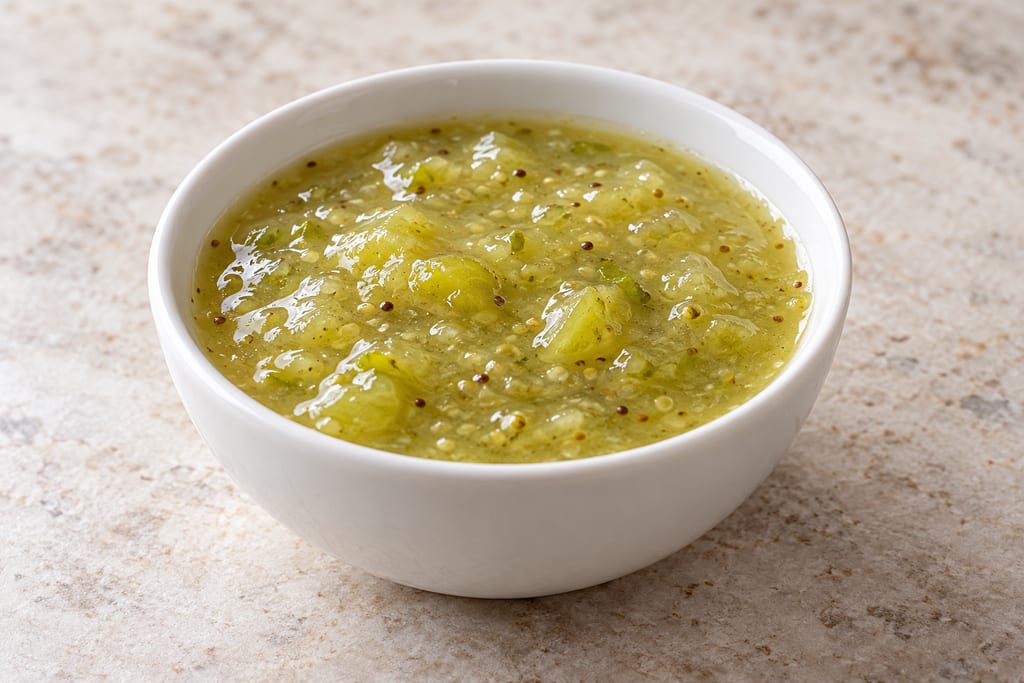
Gooseberry sauce is a soft, tart sauce of cooked green gooseberries, sharpened with wine or vinegar and lightly sweetened, traditionally served with mackerel.
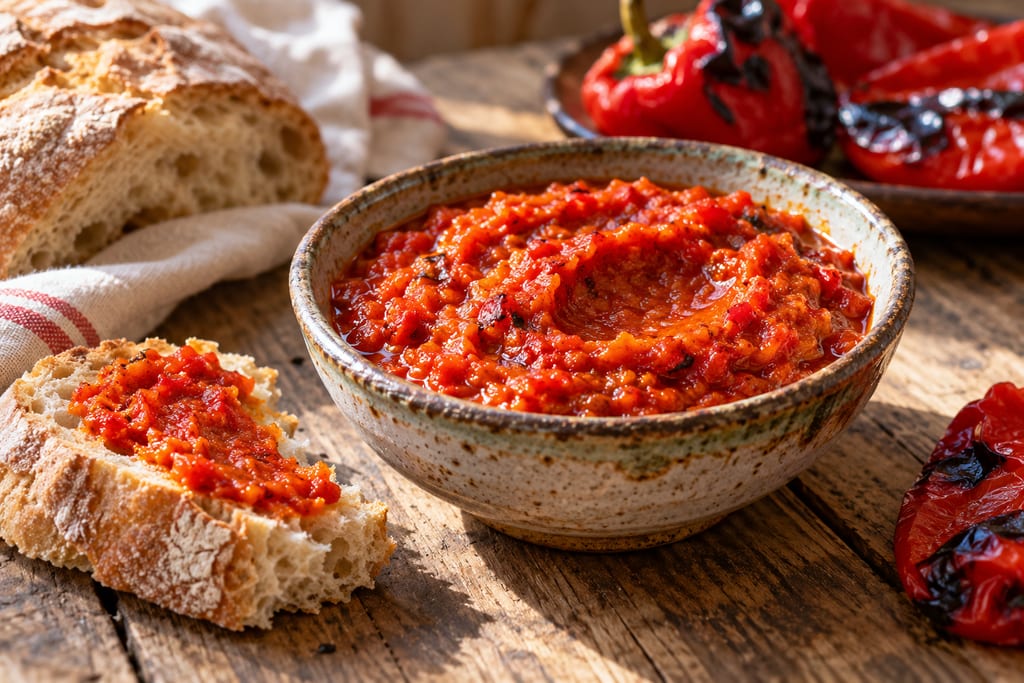
Ajvar is a cooked Balkan pepper preserve built around roasted red peppers, peeled, drained, ground and slowly fried with oil and seasoning. Leskovac’s protected version is a pepper specialty; regional versions vary.
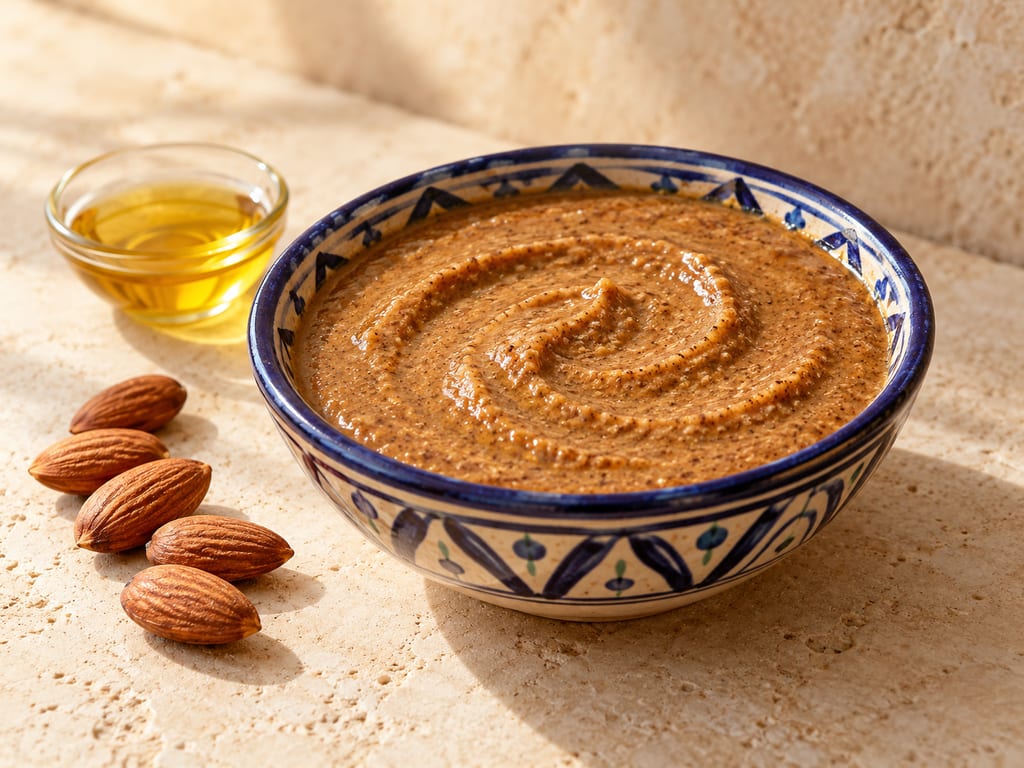
Amlou is a nutty, lightly sweet Moroccan spread of roasted almonds, culinary argan oil and honey. The almonds are ground first, then loosened with oil and sweetened; the balance can range from a thick spread to a dip.

A warm dip of garlic, anchovy and olive oil, often enriched with butter, that Piedmont serves over a flame with raw and cooked vegetables and bread.
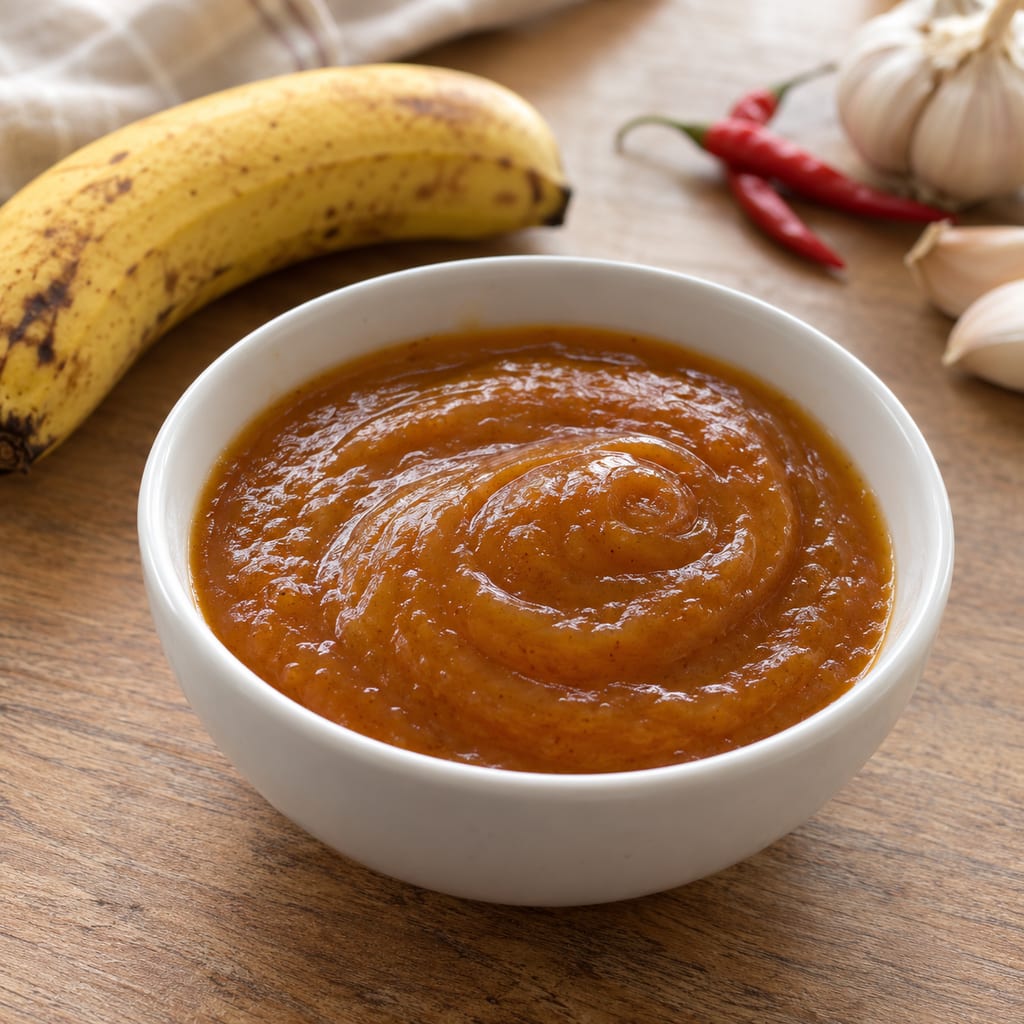
A sweet-hot table sauce of ripe banana simmered with vinegar, sugar, onion, garlic and fresh chilli, in the manner of Philippine banana ketchup. An untested development batch of about 500 g.
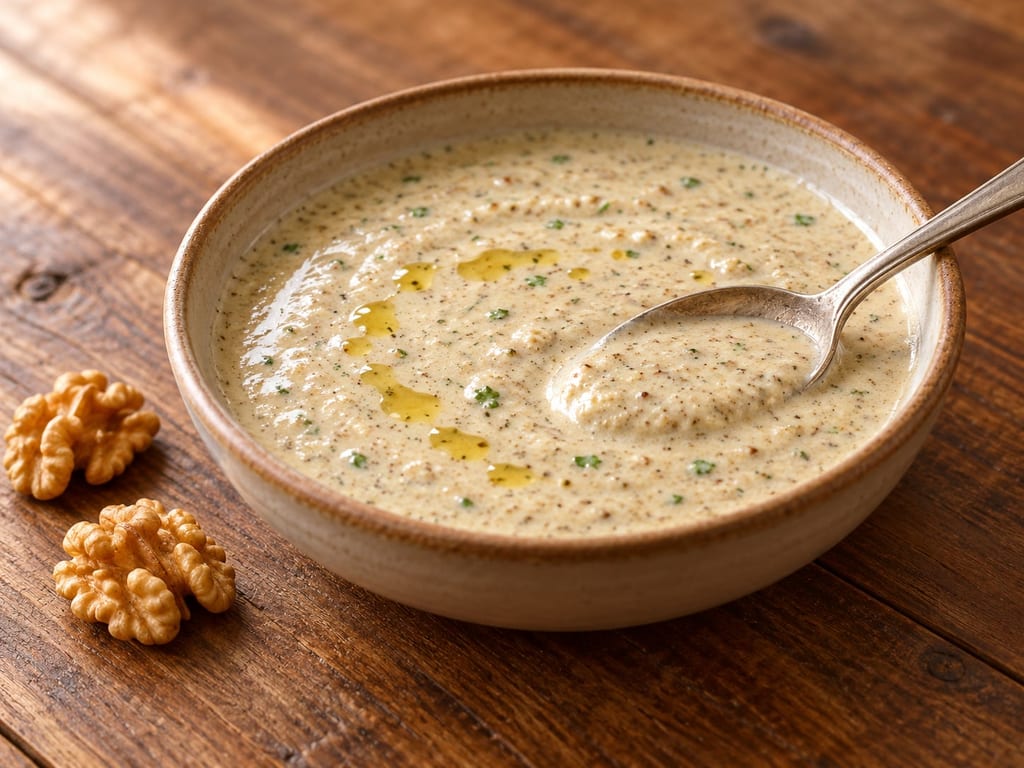
A Georgian walnut sauce of ground walnuts, garlic, vinegar and spices, thinned with water or broth. It is served with poultry, vegetables and bread, and is the sauce of the dish satsivi.
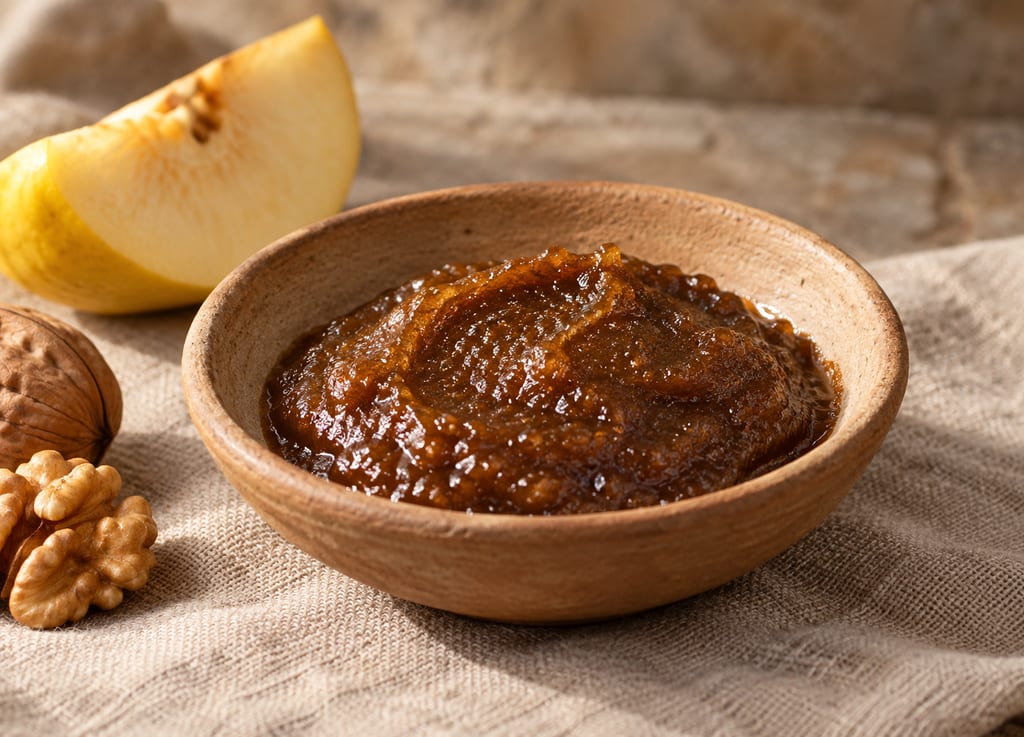
Byzantine murrī is a cooked imitation of murrī from the medieval Arabic repertoire, made from scorched honey, toasted bread, walnuts, quince, carob and spices rather than from a long grain fermentation.
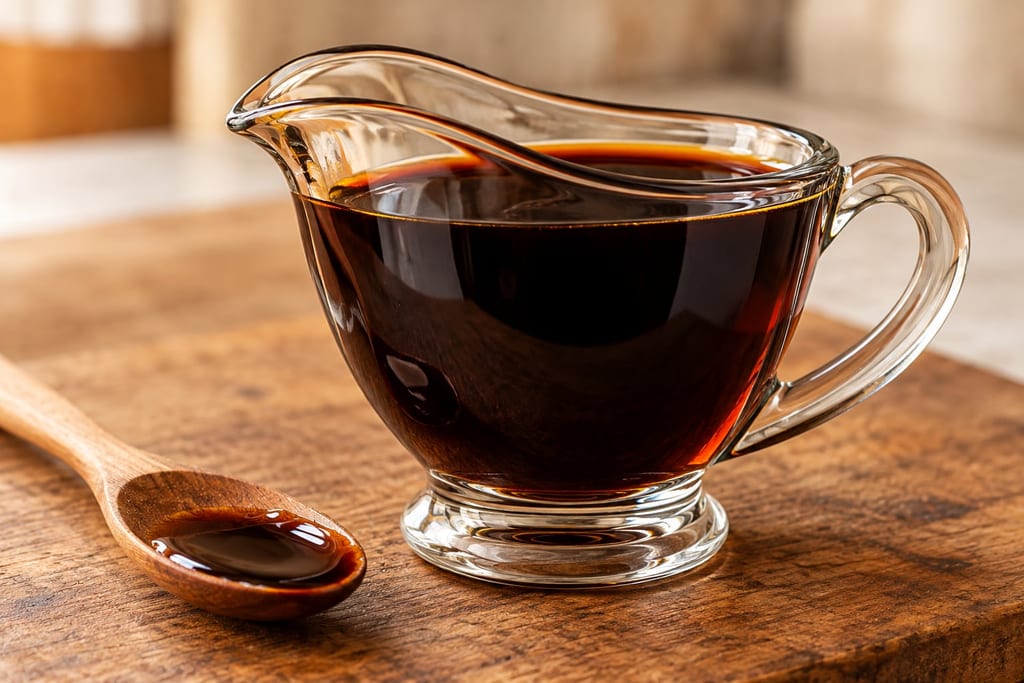
Caribbean browning is a dark liquid of deeply caramelised sugar, used in small amounts for colour and a smoky, bitter-sweet flavour in stews and black cake.
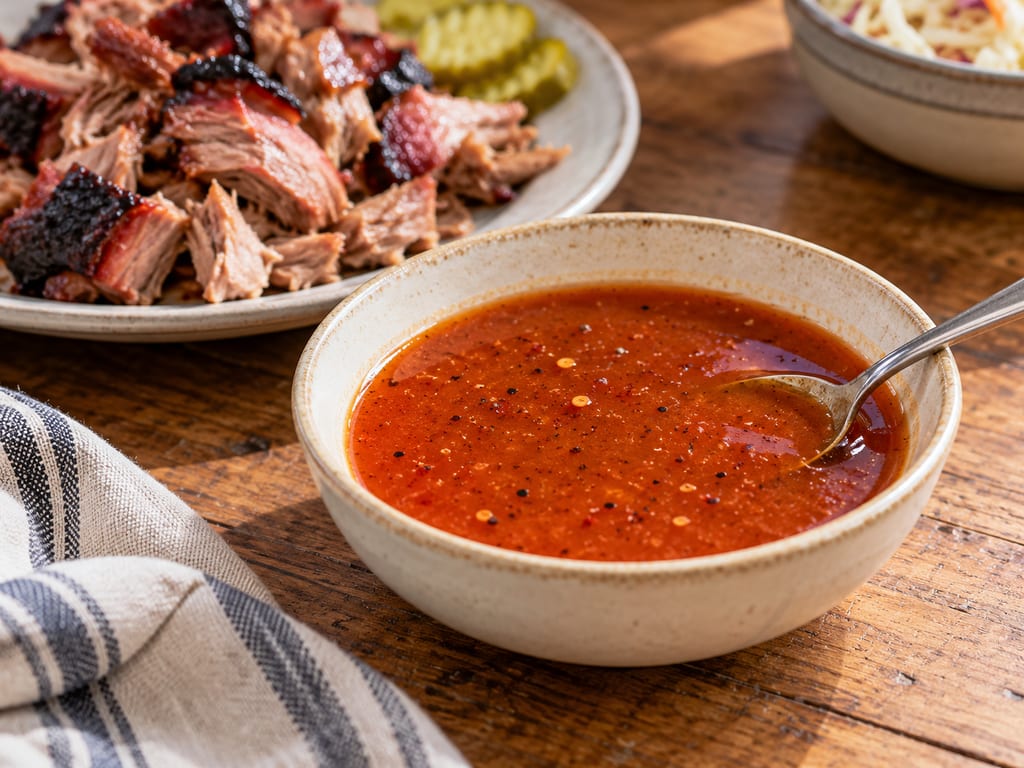
Light tomato barbecue sauce is a thin, sharp South Carolina sauce: a vinegar and pepper base with a small amount of ketchup, sitting between the clear vinegar sauce and the sweeter tomato sauces.

Soft, spreadable Calabrian pork sausage made with a great deal of red chilli and fatty pork, stuffed into natural casings, sometimes smoked and matured while staying soft.

A way to add independent temperature logging to an existing food dehydrator without changing its built-in controls or protections. It is a monitoring method, not a rewiring plan.

Pleurotus cystidiosus is the abalone mushroom, a cultivated oyster-type fungus with dark brown caps that grows more slowly and is more demanding than other Pleurotus species.

A dark, balanced vinegar from Emilia-Romagna made by combining cooked or concentrated grape must with wine vinegar, then acetifying and refining it in wood under a protected specification.

A living dairy inoculum that starts controlled cream fermentation, developing acidity and aroma before sour cream or cultured butter is finished.

A small electric incubator holds jars at a selected temperature for yogurt and other documented warm food preparations. Controls, capacity and vessel arrangement vary by model.

Adygean salt is a seasoned table salt associated with Adygea and the wider North Caucasian culinary tradition. Salt is blended with garlic and a variable selection of herbs and spices; the exact mix depends on the named style and maker.

The African Caesar-group mushroom, Amanita masasiensis, is a wild ectomycorrhizal species of central and southern African woodlands, eaten locally. The genus contains deadly poisonous species, so identification needs care.
No community contributions have been published for this entry yet.
Sign in to contribute. Published comments and photos are free to read.
Jonathan Cape; digitized by McGill University LibraryHistorical recipe · History
Good Things in England: A Practical Cookery Book for Everyday UseFirst published in 1932; the section under Lord Sandys' Sauce presents a formula attributed to an anonymous friend.
The formula lists the exact ingredients and directs two half-hour boils, a month covered, then straining and bottling.
The book repeats an origin story but does not independently establish it.
Cited in: A sauce name, several histories; Worcester and the nineteenth-century table; What the printed formula contains; Boiling, standing and straining; A record, not a tested preserving formula; How cooks use the commercial sauce; Related sauces are not interchangeable histories; The 1932 formula in sequence; How to compare versions; What maturation can and cannot tell us; The sauce as seasoning
Kraft Heinz / Lea & PerrinsHistory · Manufacture
Our StoryThe company dates the Worcester launch to 1837 and says the sauce matured for 18 months.
The company describes exports in the 1840s and a factory opening in Worcester in 1897.
Cited in: A sauce name, several histories; Worcester and the nineteenth-century table; How to compare versions
UK Intellectual Property OfficeHistory · Process · Trade secret
Intellectual Property: Lea & PerrinsThe exact formula is kept as a trade secret.
The sauce matures for 18 months before blending and bottling.
Cited in: A sauce name, several histories; Boiling, standing and straining; What maturation can and cannot tell us
Kraft HeinzIngredients · Uses
The Original Worcestershire SauceThe US product page lists molasses, tamarind extract, white vinegar, chilli-pepper extract and sugar.
The brand recommends it for marinades and meat and fish.
Cited in: How cooks use the commercial sauce; Related sauces are not interchangeable histories; How to compare versions; The sauce as seasoning
Victorian Collections / Flagstaff Hill Maritime MuseumMaterial culture · History
Container – Sauce Bottle, 1878The collection identifies an 1878 Lea & Perrins bottle recovered from the Loch Ard wreck off Victoria.
Cited in: Worcester and the nineteenth-century table; How cooks use the commercial sauce; The sauce as seasoning