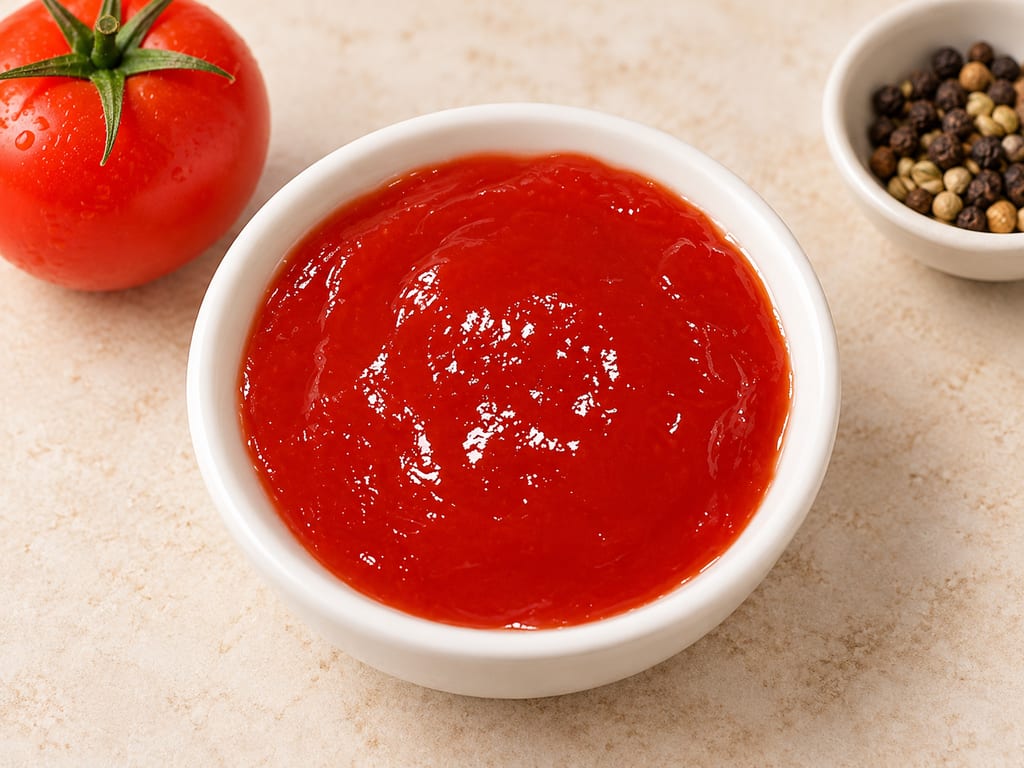
Tomato ketchup
Tomato ketchup is a smooth, sweet-sour tomato sauce whose modern form grew from an older family of savoury ketchups; this version follows a tested home-canning recipe.
 FermenteaWhere food goes to change
Modern method
とんかつソース · Katsu sauce
A sweet, tangy Japanese sauce mixed from Worcestershire sauce, ketchup, oyster sauce and sugar. Serve with breaded cutlets or croquettes.
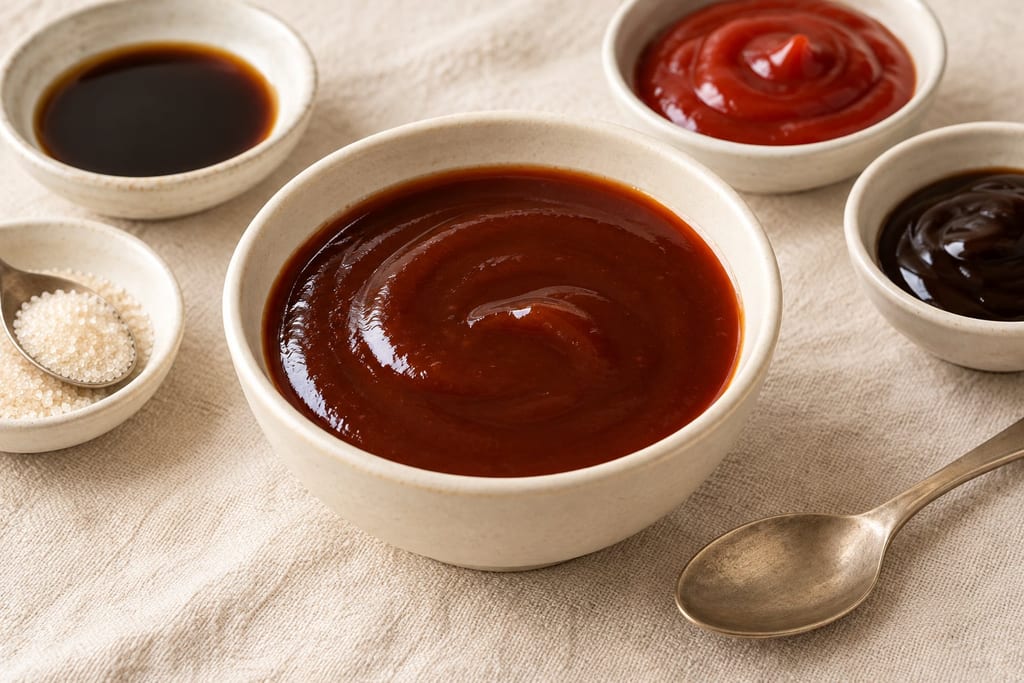
Tonkatsu sauce is a thick, sweet, tangy Japanese brown sauce associated primarily with breaded pork cutlets, or tonkatsu (とんかつ). It is also eaten with croquettes, chicken cutlets, sandwiches and other fried foods.
The sauce belongs to Japan's wider family of sōsu (ソース), Western-influenced sauces that developed into distinctive Japanese condiments.
Commercial tonkatsu sauces typically combine fruits, vegetables, spices, vinegar, sugar and other seasonings. Their flavour can be fruity, acidic, savoury and mildly spicy.
The recipe here is a quick household approximation rather than an attempt to manufacture a commercial sauce from raw fruit and vegetables. It combines four prepared ingredients—Worcestershire sauce, ketchup, oyster sauce and sugar—to reproduce the familiar sweet-savoury balance without a separate cooking stage.
The sauce is dark brown, smooth and pourable, with enough viscosity to coat a fried cutlet rather than immediately running off its surface.
It is not newly fermented after mixing. Some of its component sauces may contain ingredients produced through fermentation, but the final preparation is simply blended.
The emergence of Japanese brown sauces is connected with the introduction and adaptation of Western foods during the Meiji period, beginning in 1868.
Imported Worcestershire-style sauces helped establish a new category of bottled condiments. Japanese manufacturers subsequently adapted sweetness, acidity, fruit content and viscosity to local preferences.
Tonkatsu itself developed from Western-style cutlet cookery adapted to Japanese ingredients and dining customs.
As breaded cutlets became popular, thicker sauces offered a practical way to season their crisp surfaces.
Japanese sauce terminology now distinguishes several broad consistencies: thin usutā sōsu (ウスターソース), medium-thick chūnō sōsu (中濃ソース), and thick tonkatsu sauce.
These are overlapping commercial categories, not merely different names for one liquid.
Bull-Dog is among the best-known Japanese manufacturers of fruit-and-vegetable sauces. Its bottled tonkatsu sauce is a useful point of comparison, but the four-ingredient version here is not its proprietary formulation.
The exact historical origin of this particular household ratio is not established. The recipe was first published in January 2014 and updated with its current presentation on 13 May 2026.
Ingredient — Quantity — Role
Worcestershire sauce — 4½ tablespoons — Acidity, spice and savoury depth
Granulated sugar — 2 tablespoons — Sweetness and balance
Ketchup — 5 tablespoons — Tomato flavour, sweetness and body
Oyster sauce — 2 tablespoons — Umami, salinity and richness
Yield: Approximately ¾ cup (180 ml).
Active preparation: Approximately 3 minutes.
Optional chilling: At least 30 minutes.
The formula does not require water, additional salt, garlic or a thickening starch.
Worcestershire sauce supplies acidity, spice, sweetness and umami. Traditional versions can include anchovies, vinegar, tamarind, molasses and other flavouring ingredients.
Its composition varies by manufacturer.
Some sauces use fermented anchovies. Others are vegetarian.
The recipe uses a commercial Worcestershire sauce as a ready-made flavour base, rather than reconstructing its complex ingredient mixture.
Ketchup contributes tomato solids, acidity, sugar and viscosity.
Its pectin and other suspended plant materials help give the finished sauce body.
Different brands vary in sweetness, acidity and spice content, which explains why the final flavour may require adjustment despite the measured recipe.
Oyster sauce provides a concentrated savoury taste.
Its ingredients and manufacturing process differ by brand. A commercial oyster sauce may contain oyster extract, sugar, salt and thickeners.
It should not automatically be described as a live fermented product.
For a vegetarian alternative, the recipe permits replacing it with a suitable mushroom- or vegetable-based stir-fry sauce.
Granulated sugar balances the acidity and salinity of the prepared sauces.
It also changes perceived thickness and mouthfeel.
Brown sugar is an optional variation, contributing deeper molasses-like notes.
No additional sugar is required beyond the documented two tablespoons unless adjusting the finished taste.
Use a small non-reactive bowl or a clean jar large enough to accommodate the mixture.
Have a whisk or spoon ready.
There is no required heating stage.
Measure 4½ tablespoons Worcestershire sauce.
Add 2 tablespoons sugar.
Whisk until the sugar dissolves.
This first stage helps prevent undissolved sugar crystals from remaining in the thicker final sauce.
Measure 5 tablespoons ketchup.
Whisk it into the sweetened Worcestershire mixture until uniform.
The sauce should begin taking on a thicker tomato-brown appearance.
Add 2 tablespoons oyster sauce.
Whisk thoroughly.
Scrape the sides and bottom of the container so the denser ingredients are incorporated.
The sauce should be smooth, dark and pourable.
Taste and adjust sweetness if desired.
The original measured formulation should remain the default recipe; any adjustment is a serving preference rather than a new historical formula.
Refrigerate for at least 30 minutes if a slightly thicker consistency is preferred.
The sauce may also be served immediately.
No numerical chilling temperature is supplied by the recipe.
Spoon the sauce over freshly cooked tonkatsu, or offer it separately as a dip.
The full batch is suitable for several small servings, although the source defines its yield as one ¾-cup portion rather than providing a fixed number of cutlets.
Tonkatsu sauce is an example of flavour balancing through ingredients that already contain complex mixtures of dissolved and suspended substances.
The Worcestershire and oyster sauces supply glutamate and other savoury components.
Ketchup supplies acidity and tomato-derived flavour.
Sugar reduces the perceived sharpness of the acidic ingredients.
Aroma compounds from the Worcestershire sauce add spicy complexity.
These properties interact in perception. The sauce does not need to undergo a new chemical fermentation to taste layered or developed.
Its thickness depends largely on the commercially prepared sauces, rather than on starch gelatinisation during cooking.
This is why a quick no-heat mixture can resemble a much more elaborate cooked condiment.
Tonkatsu has a rich interior surrounded by a crisp panko coating.
The sauce supplies moisture and contrast.
Its acidity balances the fat associated with frying, while its sweetness and savouriness complement the pork.
The sauce is thick enough to cling to the breadcrumb surface.
A thinner sauce would penetrate the coating differently and could make the crust soften more rapidly.
The same principle applies to croquettes and other breaded foods.
The sauce can also be served separately to preserve the crispness until the moment of eating.
The principal commercial distinction is between thin Worcestershire-style sauces, medium-thick sauces and the thicker tonkatsu category.
The household recipe also permits small variations: brown sugar instead of white, vegetarian Worcestershire sauce, or a vegetarian replacement for oyster sauce.
Garlic or ginger can be added for a different aromatic profile.
These variations should remain attached to the same recipe page rather than becoming separate records merely because one seasoning changes.
A commercial fruit-and-vegetable tonkatsu sauce made from raw ingredients is a materially different manufacturing process and deserves a separate technical recipe if documented.
Serve with tonkatsu, chicken katsu, korokke (Japanese croquettes), katsu sandwiches or other breaded dishes.
The sauce can also provide flavour in Japanese-style hamburger steak or curry preparations.
Its original publisher suggests storing it in an airtight container in the refrigerator for 2–3 weeks, or freezing for 3–4 months. Those are recipe-publisher recommendations, not independently validated shelf-life limits.
Because the finished mixture contains several commercially prepared products, its storage stability cannot be inferred simply from the shelf life of any one unopened ingredient.
Refrigerate promptly and use clean utensils.
A correctly mixed sauce should be smooth and glossy.
Undissolved sugar indicates insufficient mixing.
Unexpected clumps may come from an incompletely incorporated prepared sauce.
If the mixture tastes excessively acidic, the Worcestershire or ketchup may be sharper than expected.
If it is too sweet, the ketchup and sugar combination may dominate.
These are flavour issues, not fermentation failures.
Visible mould, unusual gas production or obvious spoilage after storage are reasons to discard the sauce.
Oyster sauce ordinarily contains molluscs, and some Worcestershire sauces contain fish. Products may also contain wheat or soya.
Read the actual ingredient labels.
A vegetarian version must use appropriate alternatives for both oyster and Worcestershire sauces.
This recipe does not produce a shelf-stable canned product and must not be classified as a fermentation process in itself.
A contemporary shortcut for the Japanese sauce served with breaded cutlets; this batch does not reproduce a manufacturer’s formula.
Yield 0.75 cup · Scaling: source batch only
Worcestershire and oyster sauce ingredients vary by product; check their labels for your dietary needs.
Keep refrigerated in an airtight container. The author’s 2–3 week storage suggestion is not independently tested here.
Culinary association of this preparation; no exact birthplace is established.
Tomato ketchup is a smooth, sweet-sour tomato sauce whose modern form grew from an older family of savoury ketchups; this version follows a tested home-canning recipe.
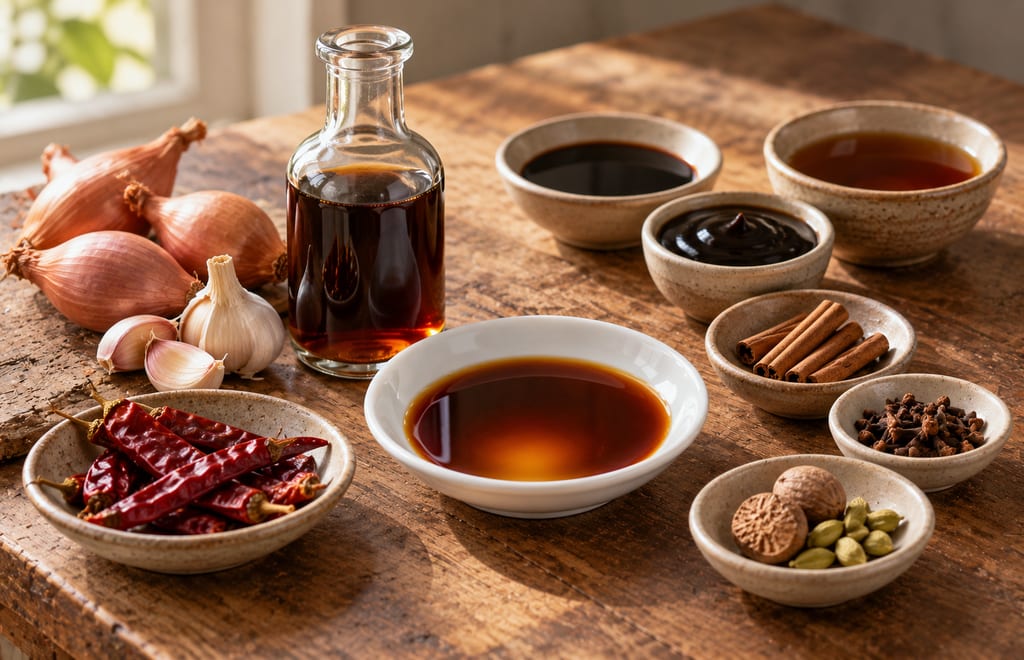
A thin, dark, sharply savoury table sauce associated with Worcester, England. This recipe preserves one historical formula printed in 1932 and distinguishes it from modern proprietary Worcestershire sauces.
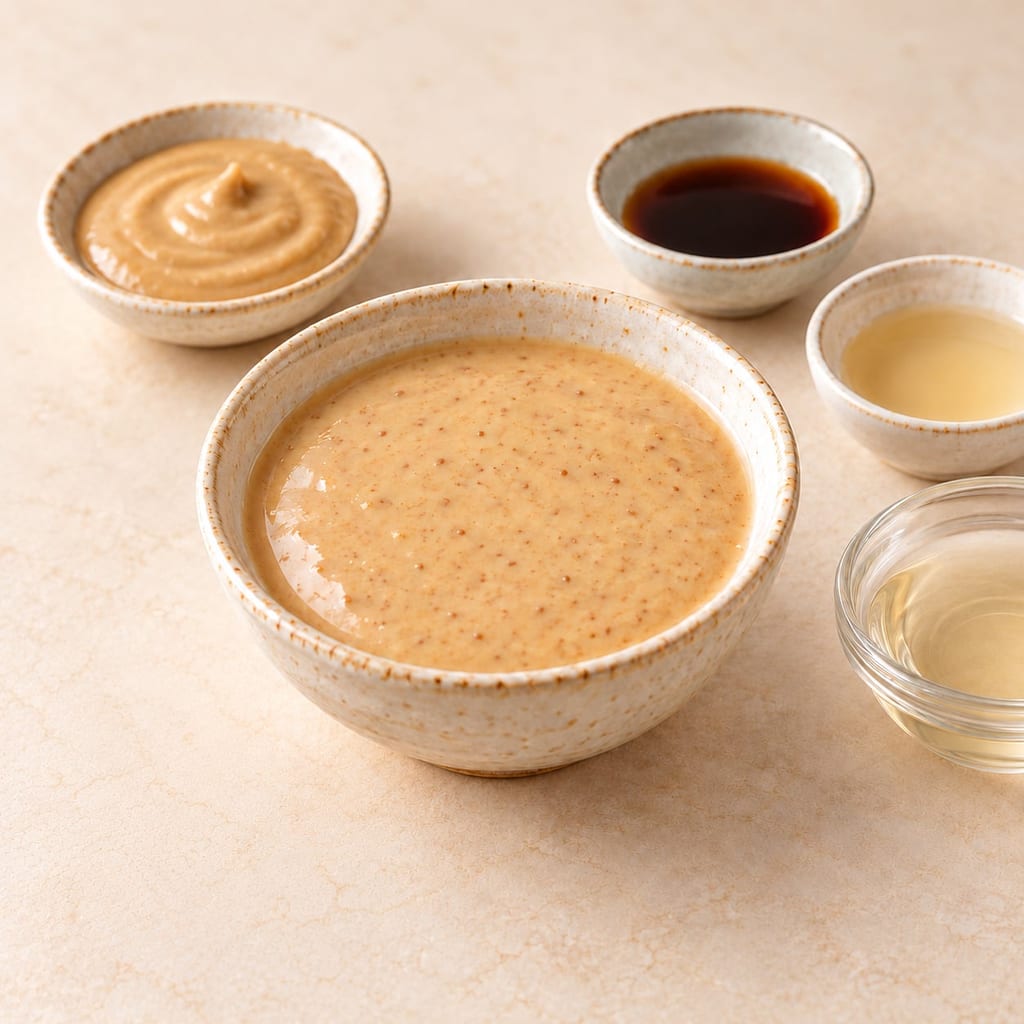
A creamy Japanese sesame dipping sauce with soy, rice vinegar and dashi. Gradual mixing turns the thick sesame paste into a smooth sauce.
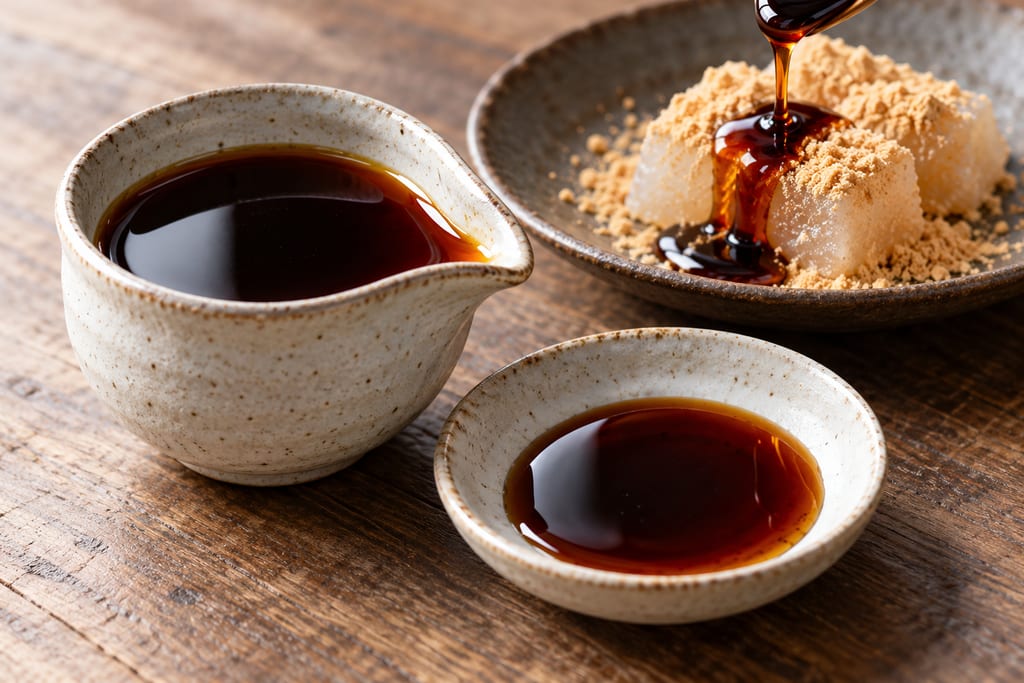
A dark Japanese syrup made by simmering black sugar with water and optional extra sugar. Drizzle it over mochi, ice cream or other desserts.
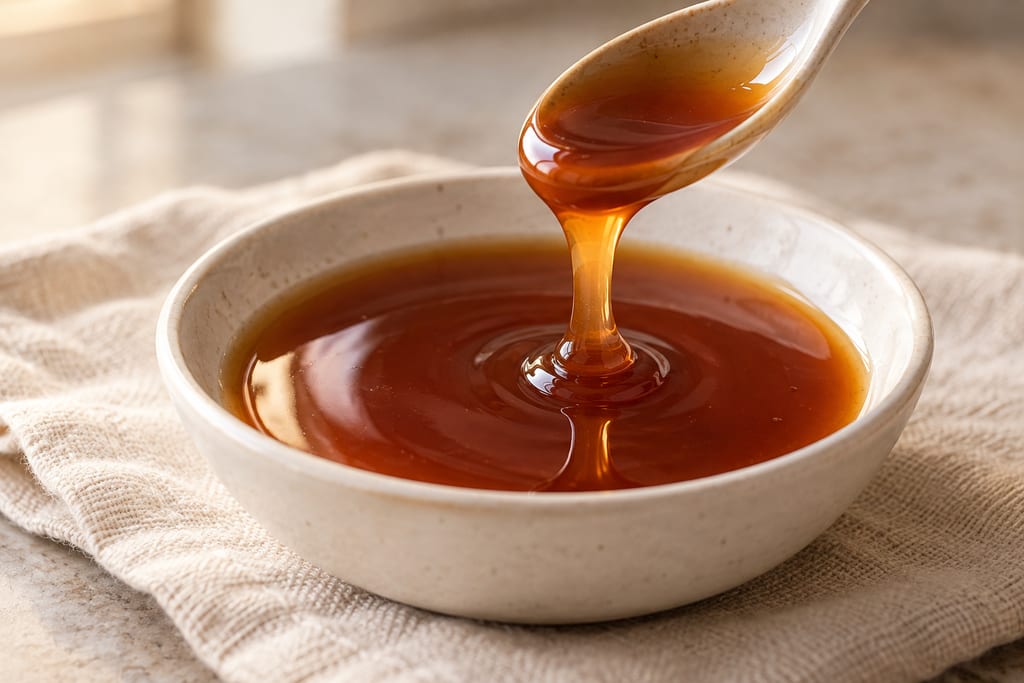
A glossy Japanese glaze thickened with starch, sugar, soy sauce and mirin. Spoon it over cooked rice dumplings while the glaze is still fluid.
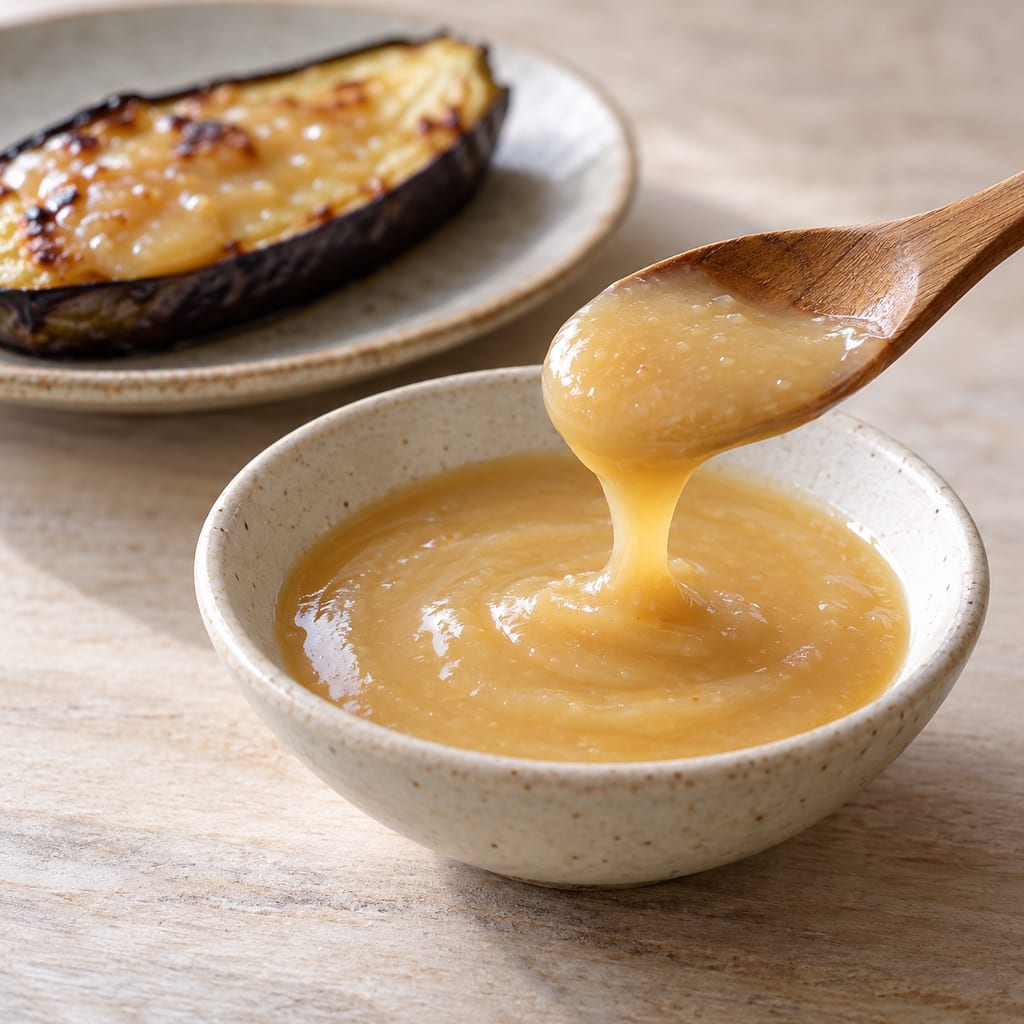
A Japanese-style glaze of pale rice miso, water, sugar and rice vinegar, heated gently until it coats a spoon and spread over cooked aubergine, tofu or vegetables.
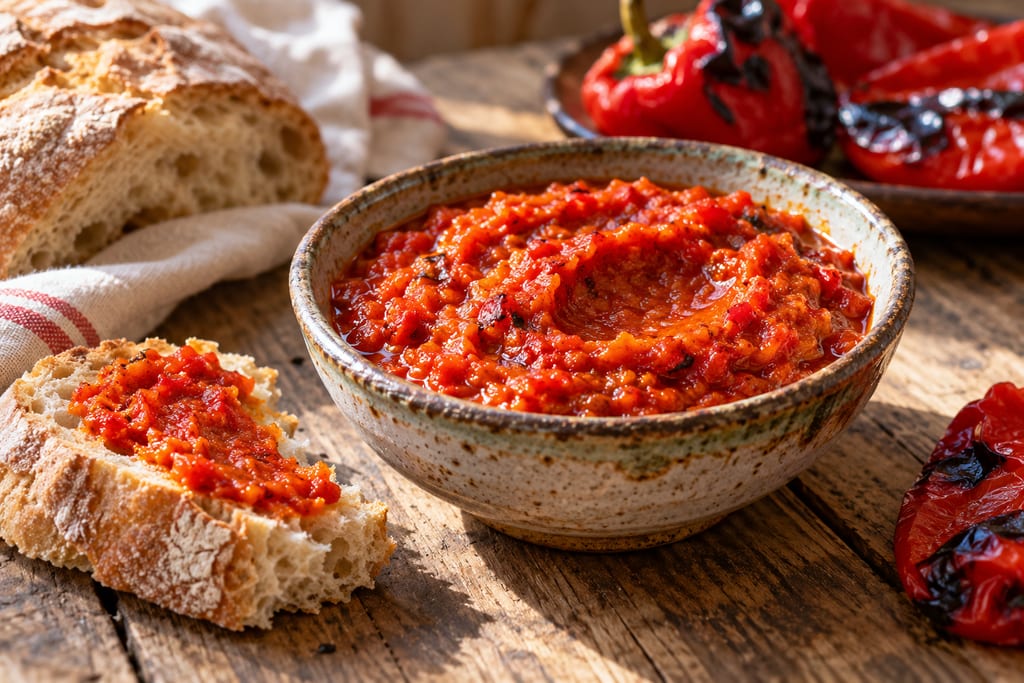
Ajvar is a cooked Balkan pepper preserve built around roasted red peppers, peeled, drained, ground and slowly fried with oil and seasoning. Leskovac’s protected version is a pepper specialty; regional versions vary.
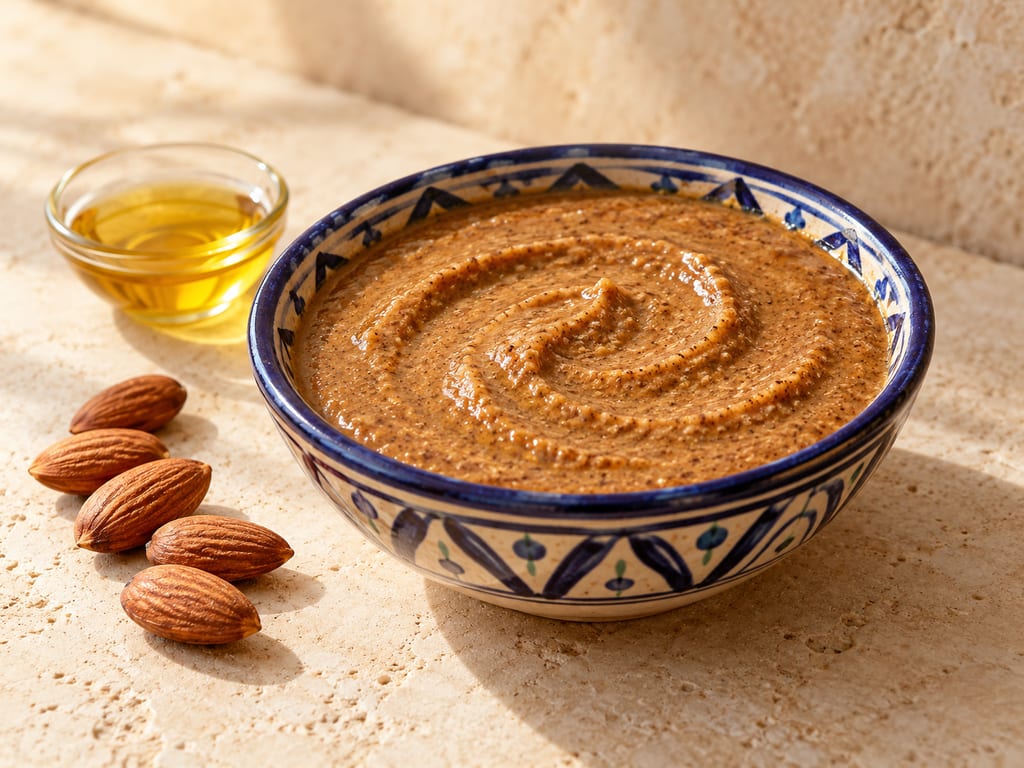
Amlou is a nutty, lightly sweet Moroccan spread of roasted almonds, culinary argan oil and honey. The almonds are ground first, then loosened with oil and sweetened; the balance can range from a thick spread to a dip.
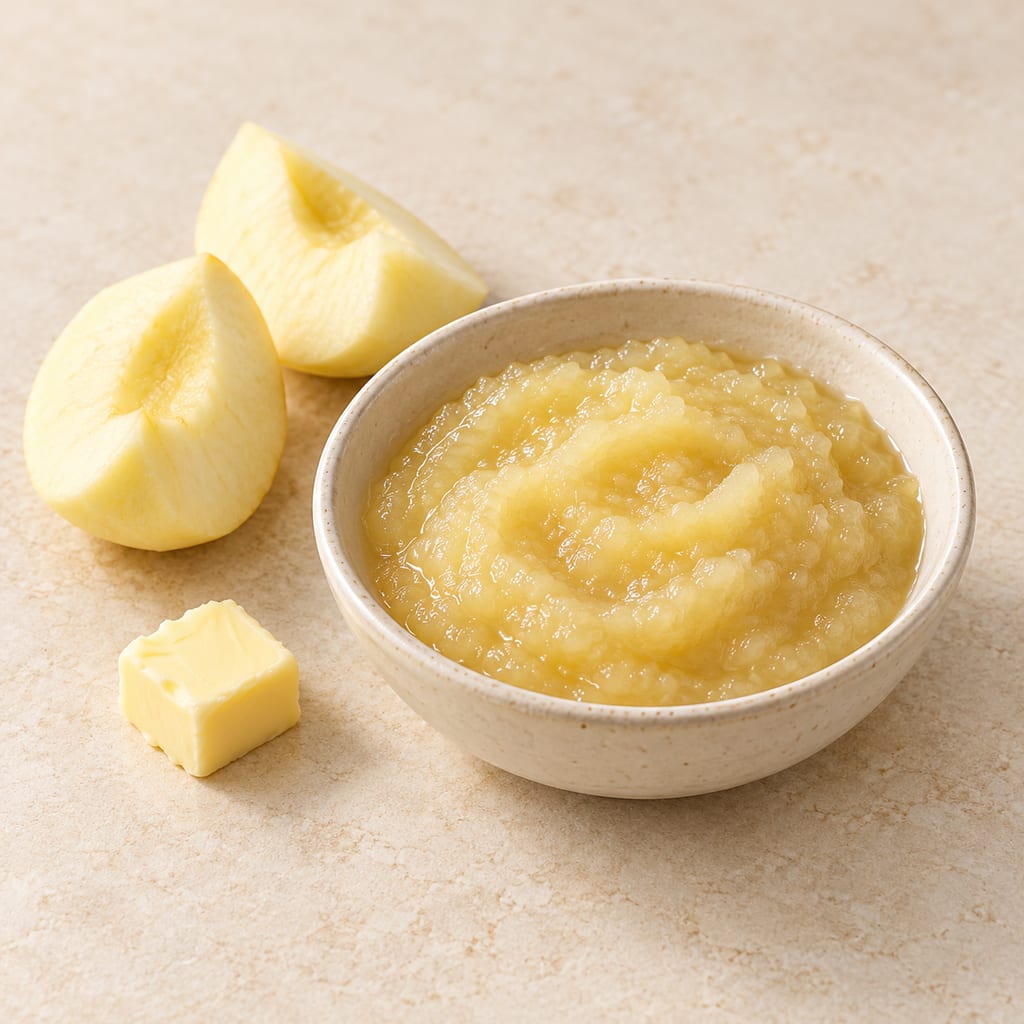
Apple sauce for goose and pork is a plain English accompaniment: cooked apples pulped with water, then sweetened with sugar and finished with a little butter.

A warm dip of garlic, anchovy and olive oil, often enriched with butter, that Piedmont serves over a flame with raw and cooked vegetables and bread.
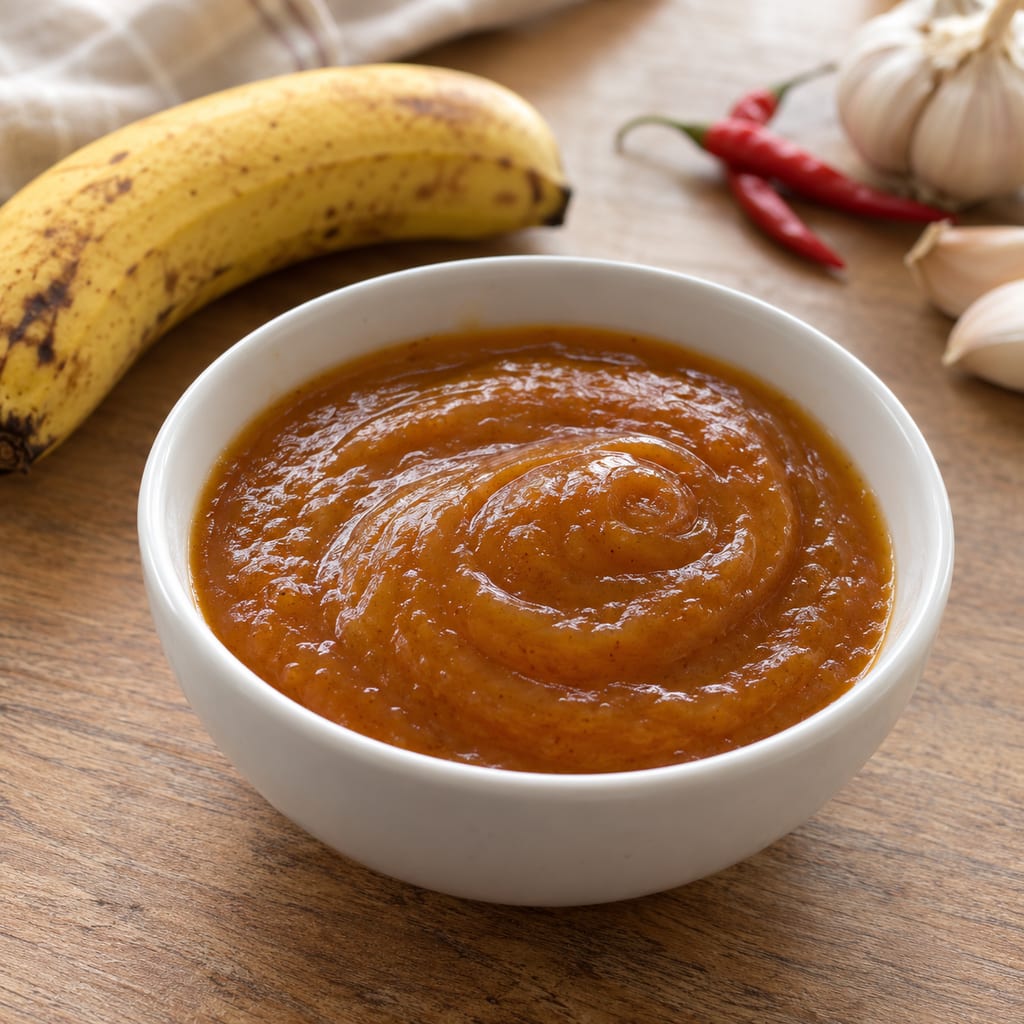
A sweet-hot table sauce of ripe banana simmered with vinegar, sugar, onion, garlic and fresh chilli, in the manner of Philippine banana ketchup. An untested development batch of about 500 g.
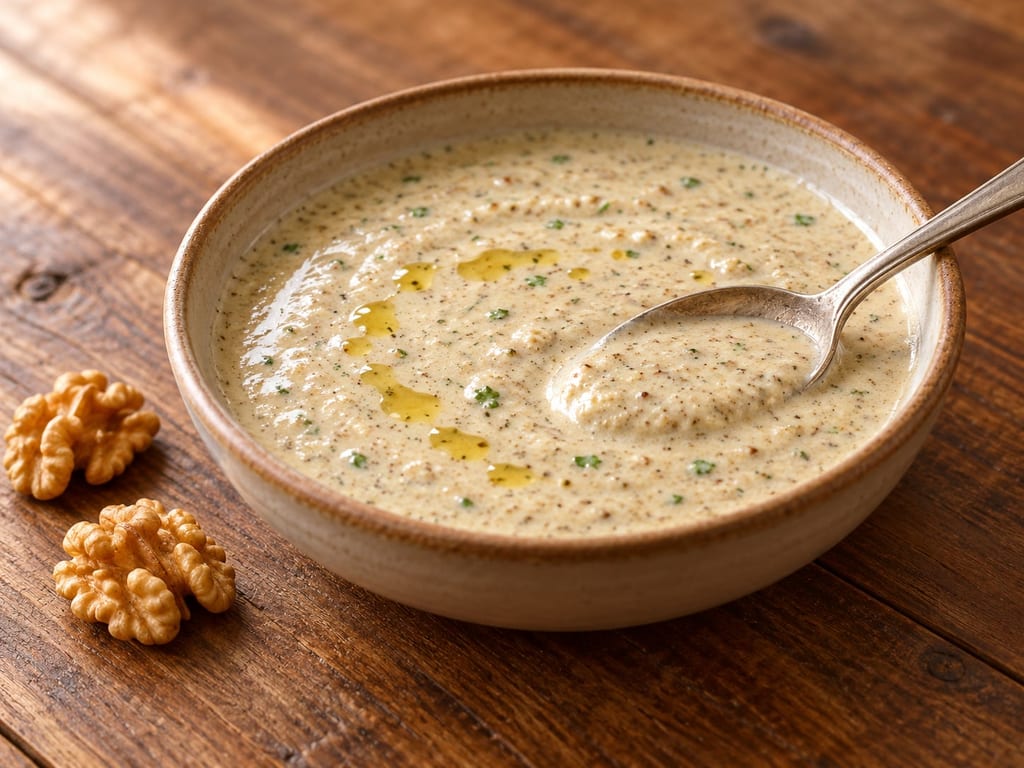
A Georgian walnut sauce of ground walnuts, garlic, vinegar and spices, thinned with water or broth. It is served with poultry, vegetables and bread, and is the sauce of the dish satsivi.
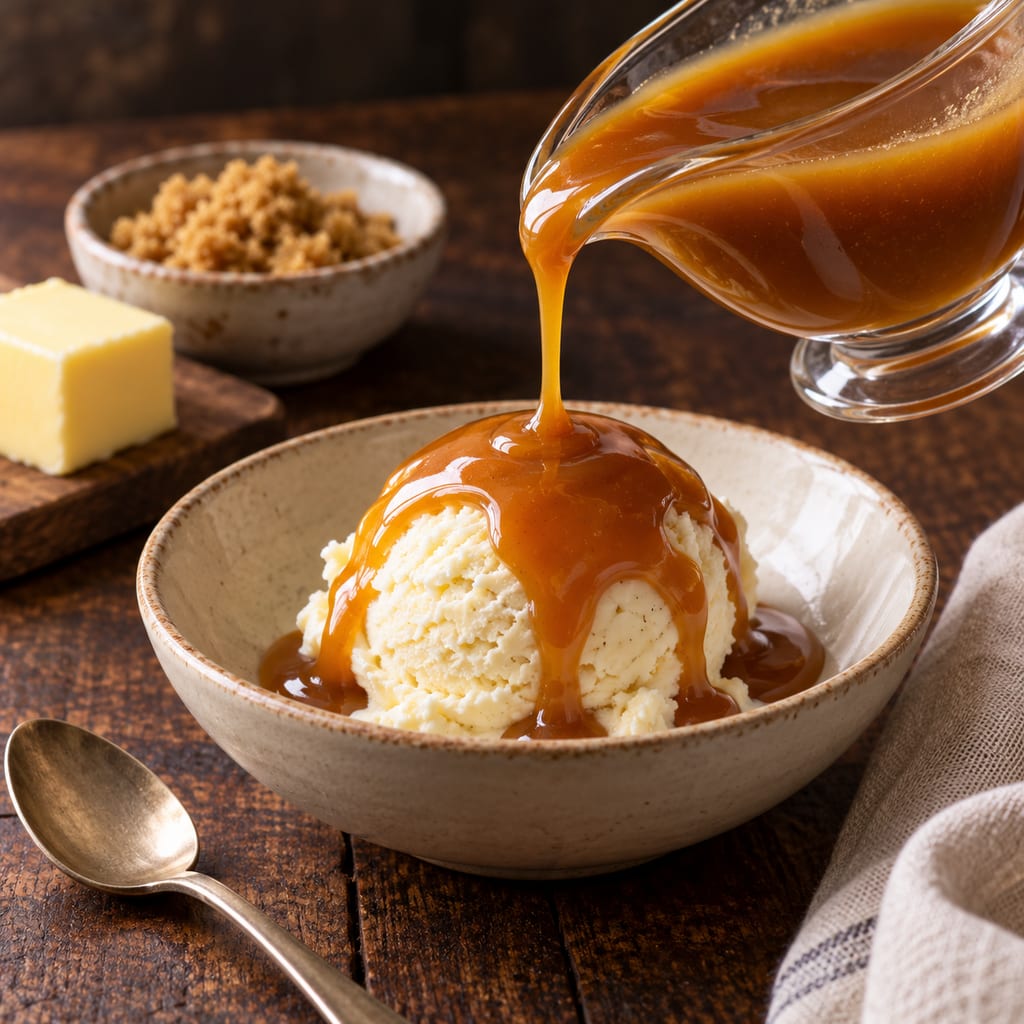
A pourable dessert sauce of brown sugar, butter and cream, with a little corn syrup and salt. It is the sauce form of the butterscotch confection and is made without water, unlike caramel.
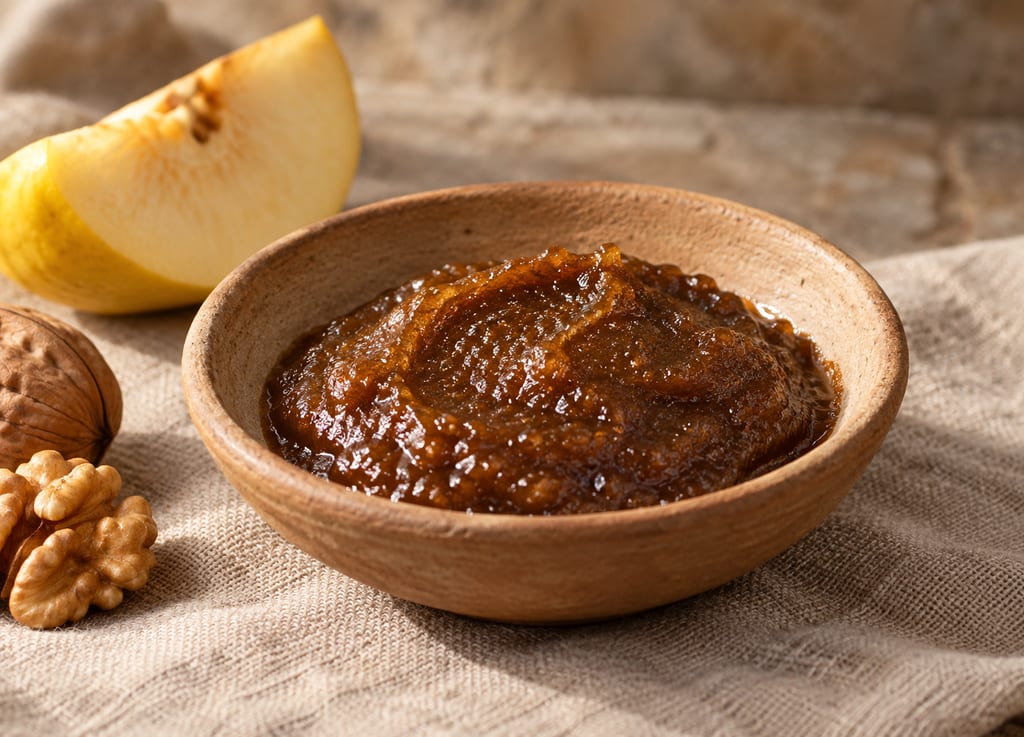
Byzantine murrī is a cooked imitation of murrī from the medieval Arabic repertoire, made from scorched honey, toasted bread, walnuts, quince, carob and spices rather than from a long grain fermentation.
No community contributions have been published for this entry yet.
Sign in to contribute. Published comments and photos are free to read.
Just One Cookbook; Namiko Hirasawa ChenInspiration · Process · Geography
Tonkatsu Sauce Recipe とんかつソースRecipe card: 4½ tbsp Worcestershire sauce, 2 tbsp sugar, 5 tbsp ketchup and 2 tbsp oyster sauce; stated batch ¾ cup. Mix sugar into Worcestershire, then add remaining sauces. Optional 30-minute chilling.
Author suggests refrigerated storage for 2–3 weeks; no tested storage claim is adopted here.
Cited in: What is tonkatsu sauce?; History and development in Japan; Ingredients; Worcestershire sauce; Ketchup; Oyster sauce; Sugar; 1. Prepare a clean bowl or jar; 2. Combine Worcestershire sauce and sugar; 3. Add ketchup; 4. Add oyster sauce; 5. Check consistency and flavour; 6. Optional chilling; 7. Serve; How the flavour works; Why it works with breaded cutlets; Variations; Serving and storage; Quality and troubleshooting; Dietary and safety notes
Context
Just One Cookbook — Japanese Tonkatsu Sauce CategoriesSupporting account in the written batch for this record.
Cited in: What is tonkatsu sauce?; History and development in Japan; Ingredients; Worcestershire sauce; Ketchup; Oyster sauce; 2. Combine Worcestershire sauce and sugar; 3. Add ketchup; 4. Add oyster sauce; 5. Check consistency and flavour; 6. Optional chilling; 7. Serve; How the flavour works; Why it works with breaded cutlets; Variations; Serving and storage; Quality and troubleshooting; Dietary and safety notes
Context
Just One Cookbook — Tonkatsu and Its UsesSupporting account in the written batch for this record.
Cited in: What is tonkatsu sauce?; History and development in Japan; Worcestershire sauce; 7. Serve; How the flavour works; Why it works with breaded cutlets; Variations; Serving and storage