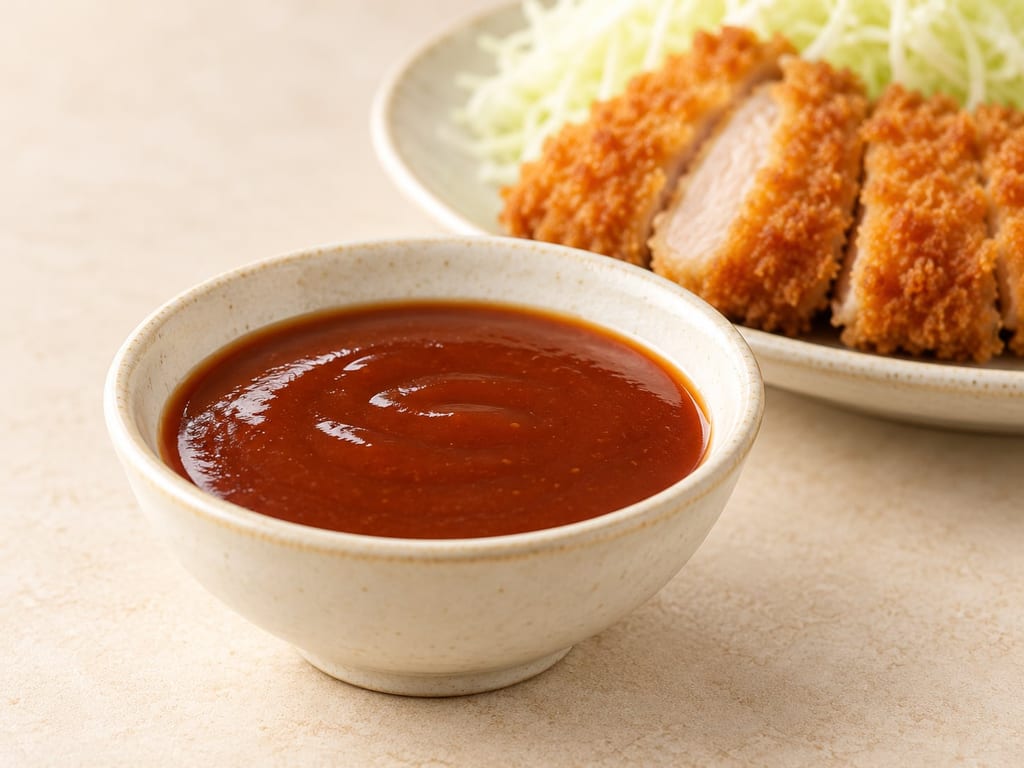
Quick tonkatsu-style serving sauce
A small-batch, non-fermented tomato, fruit and savoury sauce assembled for crisp tonkatsu and cabbage, inspired by Japanese yoshoku serving traditions.
 FermenteaWhere food goes to change
catsup · tomato sauce (Australia/NZ)
Tomato ketchup is a smooth, sweet-sour tomato sauce whose modern form grew from an older family of savoury ketchups; this version follows a tested home-canning recipe.
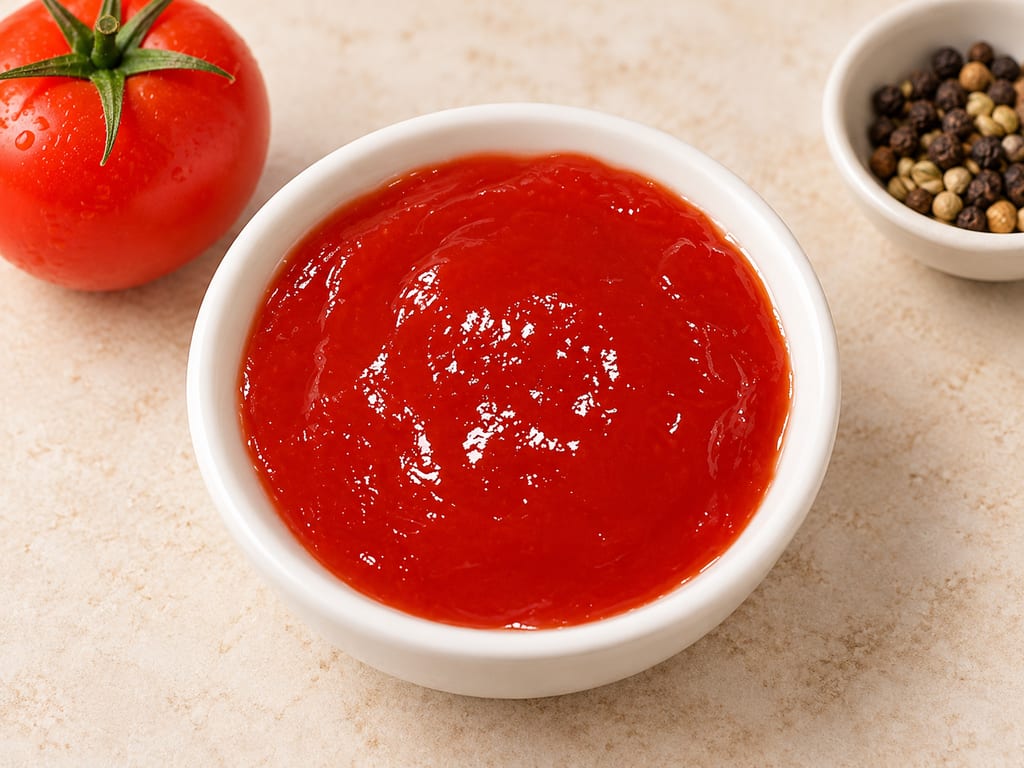
Tomato ketchup is a thick, smooth, sweet-sour sauce used at the table and in cooking. In the familiar red form, tomato supplies colour, body and cooked fruit flavour; vinegar lends sharpness, sugar rounds that impression, salt and spices deepen the savoury balance, and cooking removes water until the sauce clings to food. This recipe is one documented, tested route to a pantry-stable product. It is not a universal formula: ketchup has changed ingredients and purpose as it travelled, and contemporary bottles differ by maker and market.
The word is older than the tomato sauce. Food historians commonly connect it, cautiously, with Southeast Asian savoury sauces whose names included forms such as kê-chiap. British seafarers and traders encountered related sauces in the region, then carried the word and taste home. The exact line of transmission is not settled by the surviving spellings alone. The early ketchup family was diverse: anchovies, mushrooms, walnuts and other ingredients appeared in British cookbooks as cooks sought a concentrated salty seasoning for gravies, meat, fish and other dishes.
In 1821, Friedrich Accum's Culinary Chemistry printed separate recipes for mushroom, walnut and tomato catsup, a useful reminder that “ketchup” then described a family rather than one standard red sauce. His tomato preparation mashed ripe fruit with salt and pressed out the juice. That salted seasoning liquid belongs to its period; its holding directions are not current home-preservation instructions. A historical recipe records what a cook once did, not a safe process to borrow today.
A tomato ketchup recipe appeared in print in the United States in 1812, attributed to Philadelphia physician and horticulturalist James Mease. Tomato preparations spread through the nineteenth century alongside older mushroom, walnut and fish catsups. Early tomato recipes varied in their use of salt, spices, alcohol and vinegar. Later cooks increasingly made a sweeter, sharper sauce by concentrating tomato with vinegar and sugar, bringing the family closer to today's table condiment while retaining regional differences.
Commercial bottling changed what many people expected ketchup to be. H. J. Heinz began selling bottled tomato ketchup in 1876. Factory production could deliver a consistent, smooth sauce throughout the year and over long distances. The bottle became a reference point, but household and regional preparations did not disappear. The current family still ranges from cooked whole-tomato recipes to smooth paste-based sauces, hot curry ketchups and formulations built for distinct national markets.
This page uses a tested home-canning recipe from the National Center for Home Food Preservation as its practical method. It is a modern US preservation formulation, not a reconstruction of Mease's 1812 dish or Accum's salted juice. Keeping those preparations separate matters: their ingredients, texture, purpose and preservation method differ.
The word on a shelf changes with language and market. In the United States, “catsup” remains a spelling variant alongside “ketchup.” In Australia, a major packaged example is sold as tomato sauce; the phrase elsewhere can mean a different sauce. The name identifies a product in its own commercial setting, not a recipe shared by every household or a national preference.
Ingredient labels make some variation visible. Heinz's British page lists tomatoes, spirit vinegar, sugar, salt, spice and herb extracts, and says that 148 g of tomatoes go into 100 g of finished ketchup. That figure is consistent with concentration: water leaves while the sauce cooks. Kagome's Japanese product lists tomato, several sugars, brewed vinegar, salt, onion and spices; its published nutrition panel gives carbohydrate and salt-equivalent figures, not a separate sugars figure. Those values should not be reinterpreted as sugar or used to infer an undisclosed recipe.
A US label can list a different sweetener blend from the British product, while declared sugar values may appear closer after they are put on the same weight basis. A label does not disclose the full spice mixture, acidity or manufacturing process. These differences are useful for understanding products, but they cannot be reverse-engineered into a canning process. In this recipe, the tested ingredient list and processing directions remain together as one complete method.
The NCHFP recipe begins with 24 lb of ripe tomatoes, 3 cups chopped onions and ¾ teaspoon ground red pepper. It uses 3 cups of cider vinegar labelled 5 percent acidity, together with whole cloves, crushed cinnamon, whole allspice, celery seeds, 1½ cups sugar and ¼ cup salt. The source gives a yield of 6 to 7 pints. The scale is a large batch, so assemble a suitable stock pot or kettle, a saucepan for the vinegar and spices, a spice bag, a food mill or sieve, pint jars and a boiling-water canner before starting.
Wash the tomatoes. Dip them in boiling water for 30 to 60 seconds, or until their skins split, then cool them in cold water. Slip off the skins and remove the cores. Quarter the tomatoes into a 4-gallon stock pot or large kettle, add the chopped onions and ground red pepper, bring the mixture to a boil and simmer uncovered for 20 minutes. Cover the pot, turn off the heat and let it stand for 20 minutes.
Tie the cloves, crushed cinnamon, allspice and celery seeds in a spice bag. Add it to the cider vinegar in a 2-quart saucepan and bring the vinegar to a boil. Remove the bag and combine the vinegar with the tomato mixture. Boil for about 30 minutes, then pass the mixture through a food mill or sieve. Return the sieved sauce to the pot, add sugar and salt, and boil gently, stirring often, until the volume is reduced by half or the ketchup rounds on a spoon without separating.
Peeling and coring prepare the fruit for a smooth sauce. Brief boiling loosens tomato skins; cooling makes them easier to slip off. The first simmer softens the tomatoes and onions and blends their juices. The covered rest is part of the source's stated sequence, not an invitation to leave the mixture unattended for a different duration. The recipe then concentrates the seasoned liquid through boiling, reducing water and thickening the tomato solids.
The spice bag lets whole aromatics flavour the vinegar and tomato base without leaving hard seeds, cloves or cinnamon fragments throughout the finished sauce. Heating the vinegar with the spices draws their flavour into the liquid; removing the bag gives the cook a consistent, smooth result before sieving. The mill or sieve separates skins, seeds and fibrous pieces from the pulp. The sugar and salt go in after this separation, and the last reduction brings the sauce to the concentration the source specifies.
There is no fermentation in this method. Its transformations are physical and culinary: heat softens the plant tissues, evaporation concentrates solids, and sieving changes texture. The vinegar contributes acidity and the sugar and salt affect taste, but none of those observations supplies a new preservation schedule. The safety of the shelf-stable result comes from following the exact tested formula and canning directions as a unit.
Ripe tomatoes provide the base and the solids that remain as water evaporates. Onion adds a savoury aromatic note. Ground red pepper supplies heat, while cloves, cinnamon, allspice and celery seeds make a layered spice profile. In the NCHFP recipe those aromatics are whole and enclosed in a bag, so their flavour infuses the vinegar and sauce without requiring them to be ground into the final texture.
Cider vinegar labelled 5 percent acidity is not interchangeable with an unlabelled homemade vinegar for this tested canning recipe. The specified vinegar amount and strength belong to the complete method. Sugar tempers the sharp, sour impression and adds sweetness; salt reinforces savoury flavour. Their amounts are fixed by the tested source. Reducing sugar, swapping vinegar, changing tomato proportions or thickening with another ingredient may produce a sauce that tastes plausible, but it is no longer this tested formula.
Because the source's quantity is large, the expected yield is a useful practical check: 6 to 7 pints. The reduction endpoint is also given as an observable kitchen criterion, half the starting volume or a sauce that rounds on a spoon without separating. Use the exact source directions rather than inventing a new time to reach that point. A wide pot, a different batch size or a different tomato can change how quickly the sauce reduces.
After reduction, fill hot pint jars and leave ⅛ inch of headspace. Remove air bubbles, adjust the headspace if needed and wipe each rim with a clean damp paper towel. Apply lids and process the jars in a boiling-water canner for the time specified at the canner's elevation: 15 minutes from 0 to 1,000 feet, 20 minutes from 1,001 to 6,000 feet, and 25 minutes above 6,000 feet. Use the complete page's jar preparation, canner loading and cooling directions as well; these time values are not a stand-alone recipe.
Those process times belong to this exact tomato ketchup formula and pint jar size. They cannot be transferred to a ketchup made from tomato paste, a fresh prototype with different ratios, a larger jar or a batch altered with extra vegetables or starch. A similar colour, thickness, sour taste, sealed lid or single acidity reading does not establish an equivalent process. For another formula, choose a separately tested preservation recipe and follow its complete instructions without unsourced changes.
This distinction is why the page gives a source-backed canning method rather than treating all ketchup as shelf-stable. The same word covers products with different proportions, textures and manufacturing routes. Readers who want a refrigerator sauce can use a separately labelled refrigerator recipe; this canning process should not be used to make one.
Ketchup is served with chips, burgers, sausages and other everyday foods, but it also works as a cooked seasoning. Kagome's omurice recipe cooks ketchup with a Worcestershire-style sauce, water and butter before spooning it over an omelette. Cooking it briefly in a pan concentrates the tomato flavour and changes how it coats the rice and egg compared with ketchup poured straight from a bottle. In Japanese home cooking, ketchup also appears in Napolitan spaghetti, where the sauce is cooked with the other ingredients.
German curry ketchup adds a warm spice direction and is served with currywurst. It is a related prepared sauce, not simply a universal ketchup with a fixed curry powder ratio. Filipino banana ketchup is another distinct style, using banana as its base and commonly coloured red; it should not be confused with a tomato recipe. Mushroom ketchup, historically common in Britain, is older than the modern red table sauce and belongs to the wider condiment family. Each deserves its own ingredients and process.
The familiar bottled form is only one use. A little ketchup can enrich a pan sauce or act as a concentrated tomato seasoning, but added liquid, prolonged heating or further ingredients make a new preparation. The flavour depends on the product and the dish: sweetness, vinegar sharpness, salt and spices may need to be balanced against the food around them. Taste in context rather than assuming every ketchup performs identically.
One family includes concentrated paste-based sauces aimed at a smooth commercial texture, whole-tomato house ketchup with more variable fruit character, and the tested whole-fruit canning version on this page. Some manufacturers use multiple sugars; others list sugar directly. Vinegar type, onion, spice extracts and salt levels also vary. The products' labels and the research archive show that these differences exist, while keeping exact factory ratios and procedures private.
Variations may be described inside one family page when they change only the flavour direction; a separate preparation record is appropriate when the base or method changes substantially. Curry ketchup, mushroom catsup and banana ketchup are not interchangeable with this tomato-canning formula. A homemade paste-style sauce and a whole-tomato reduction also behave differently because one starts concentrated and one removes water from the fruit. For preserving, keep each recipe paired with its own tested process.
The recipe here is deliberately specific. It offers a documented way to make tomato ketchup for shelf storage, while the sauce's broader history explains why a reader may encounter names and flavours that depart from this version. The family is held together by use and resemblance, not by a single ingredient ratio or one process shared across all makers.
Tomato ketchup belongs to a much older, changing family of savoury sauces called ketchup or catsup. A tomato-based version appeared in print in the United States in 1812; this record's canning method is the tested modern recipe published by the National Center for Home Food Preservation.
Scaling: follow the complete tested source formula and process; do not scale or alter it for canning.
Use the complete tested formula, fill hot pint jars to the specified headspace, and process for the time matching the canner's elevation.
Control sourceThis canning process applies only to the formula and directions on the cited National Center for Home Food Preservation page. Do not substitute ingredients, alter proportions or borrow its process time for another ketchup formulation.
This is the documented location of the tested home-canning method, not a claim that tomato ketchup originated in one place.
A small-batch, non-fermented tomato, fruit and savoury sauce assembled for crisp tonkatsu and cabbage, inspired by Japanese yoshoku serving traditions.
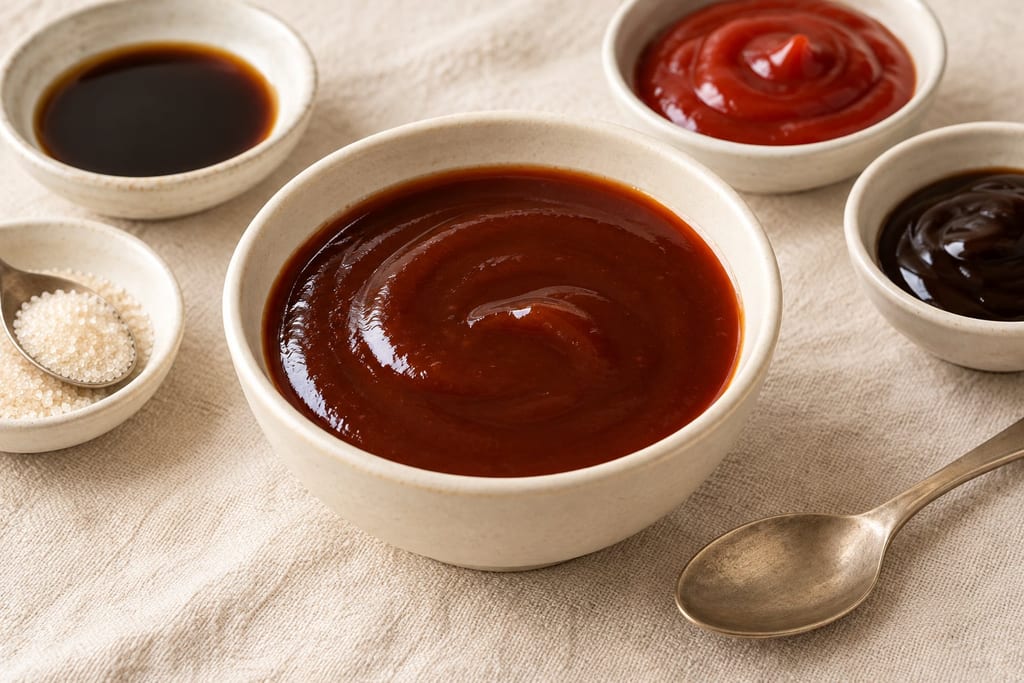
A sweet, tangy Japanese sauce mixed from Worcestershire sauce, ketchup, oyster sauce and sugar. Serve with breaded cutlets or croquettes.
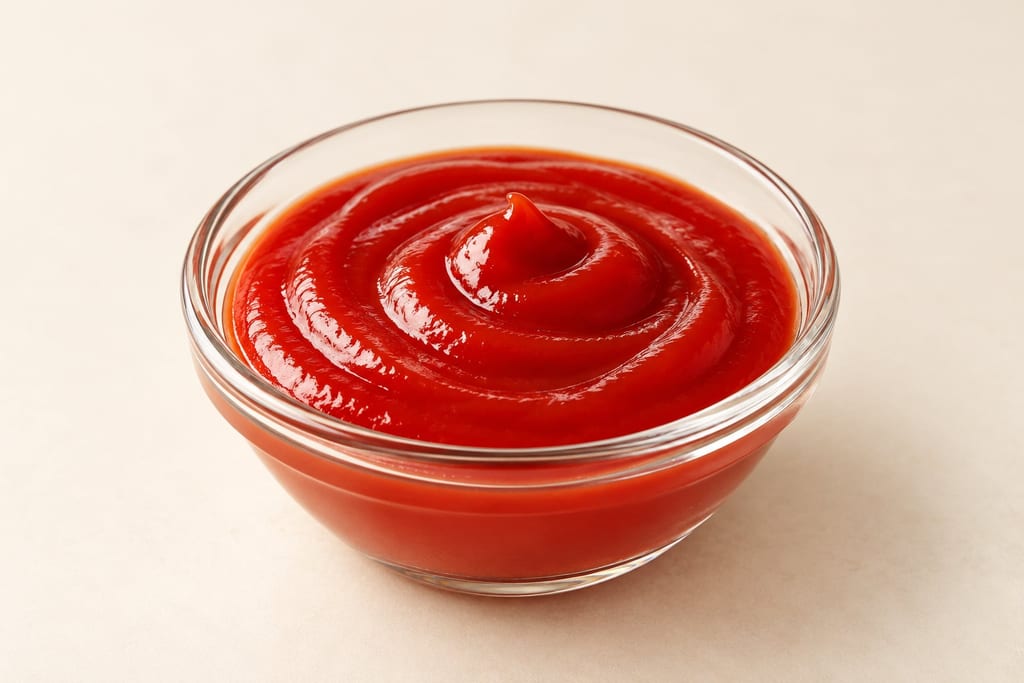
A smooth tomato ketchup formulated as a 500 g comparison batch using a UK Heinz product label as its target. This original home formula is untested and is not the company recipe or a preserving process.
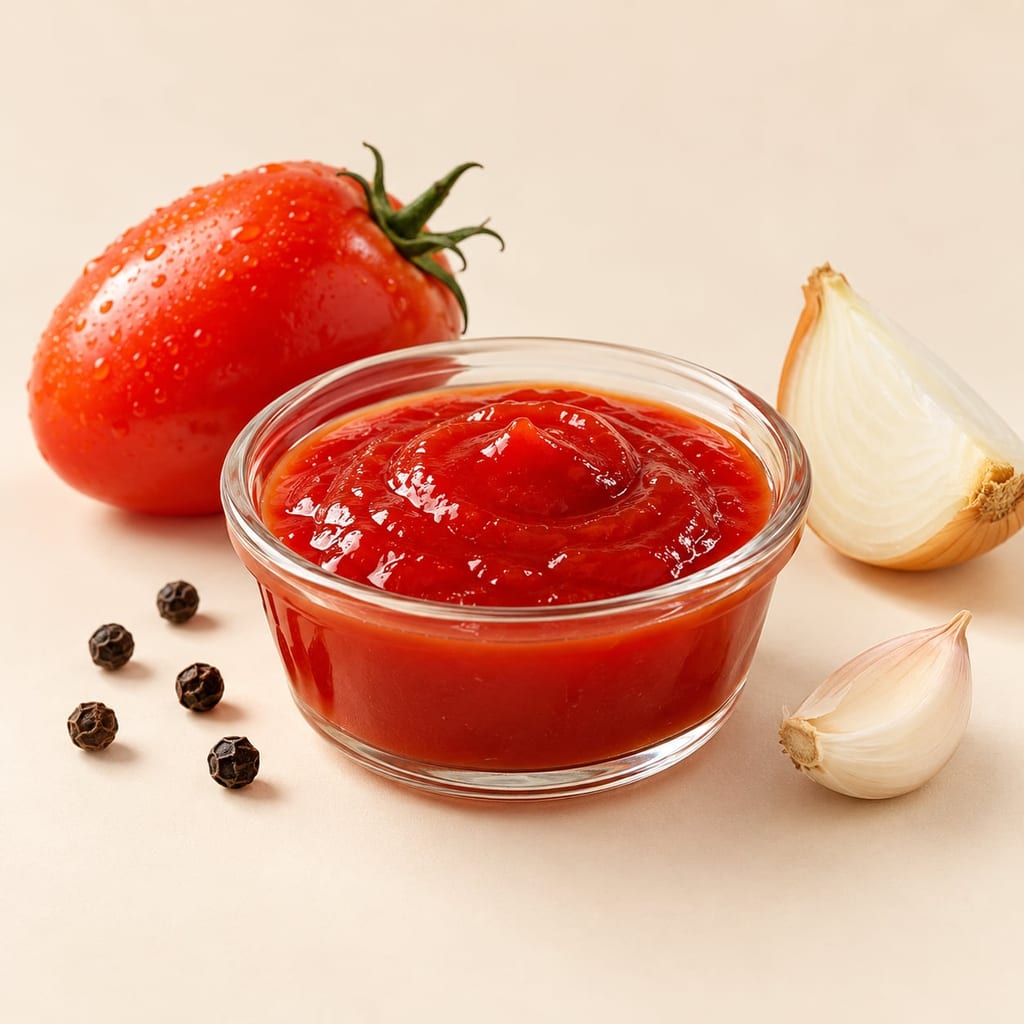
A rounded house ketchup cooked from tinned plum tomatoes, onion, vinegar, sugar and a little warm spice, then blended, sieved and reduced to about 600 g.
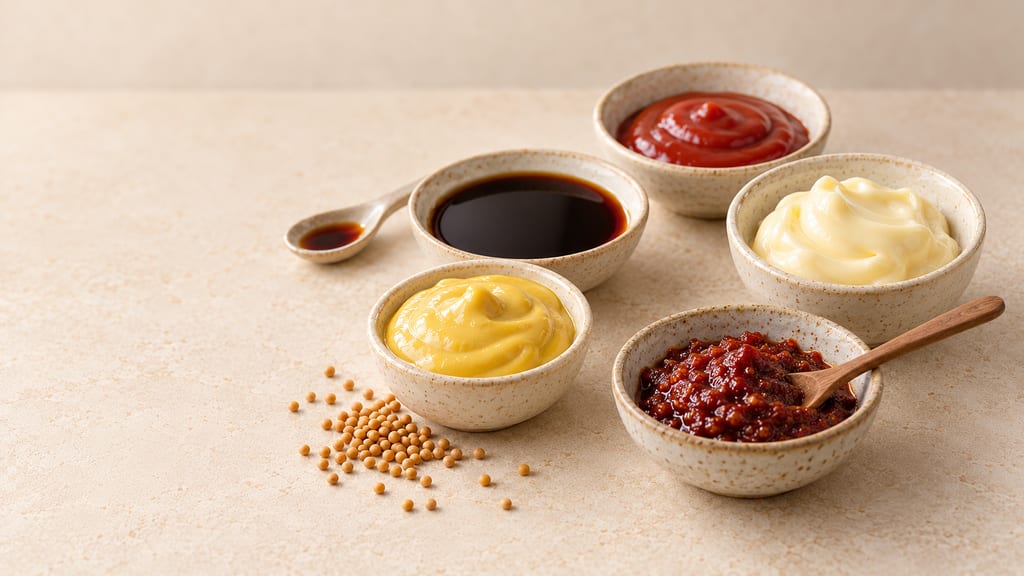
Ketchup, mayonnaise and mustard are three kinds of kitchen engineering. This guide shows how each works, compares real bottles instead of national clichés, then follows the sauces of Asia, the Caucasus, Europe, the Americas and Africa.
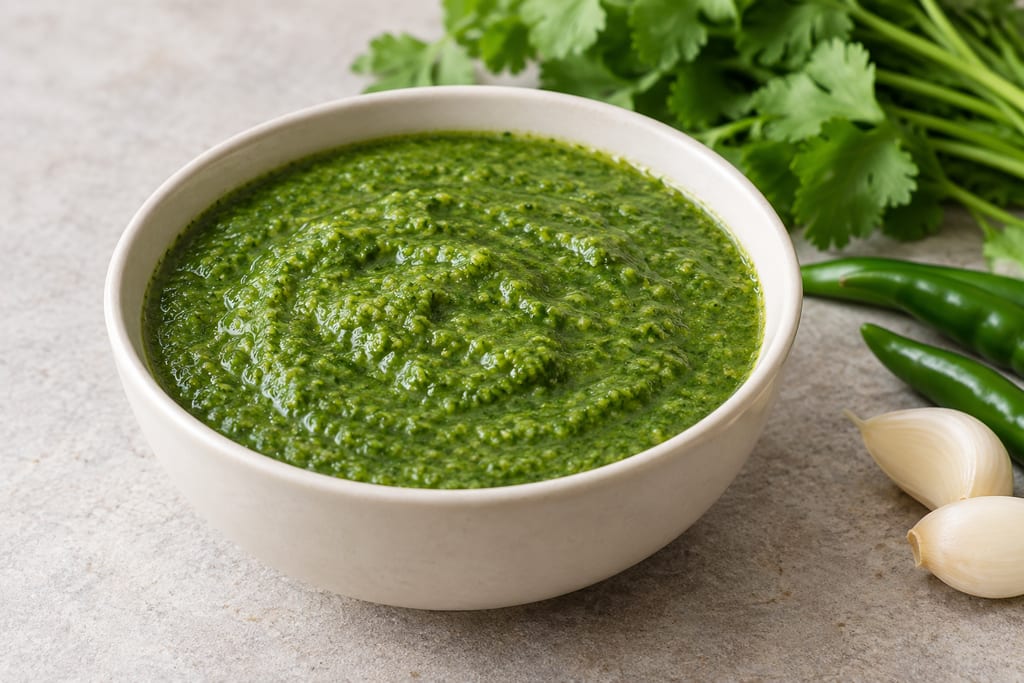
Afghan coriander chatni is a sharp, hot herb sauce with garlic and vinegar. A 2008 Afghanistan manual records green or red pepper and optional walnut; heat and household versions vary.
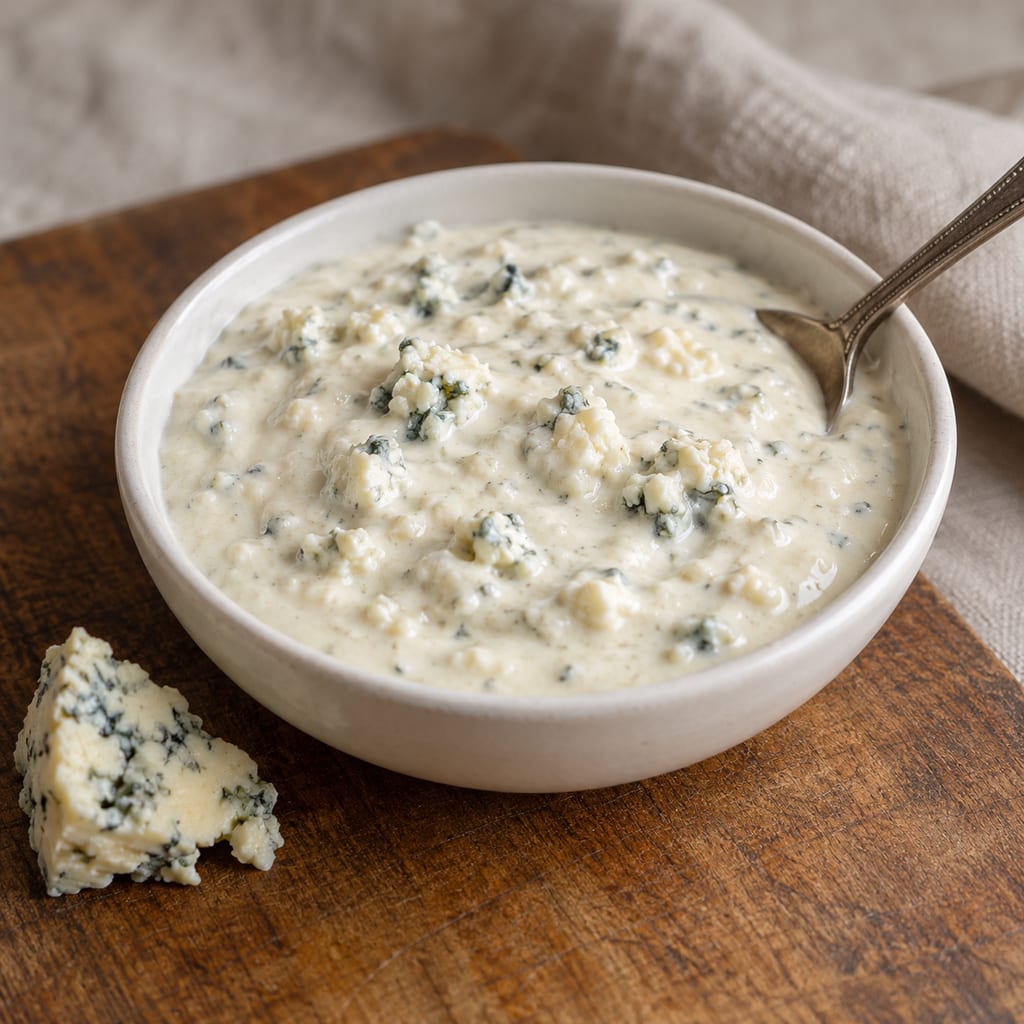
Blue cheese dressing is a creamy dressing built on crumbled blue cheese mashed into buttermilk, with sour cream, mayonnaise, vinegar and seasoning, and kept cold for up to two weeks.
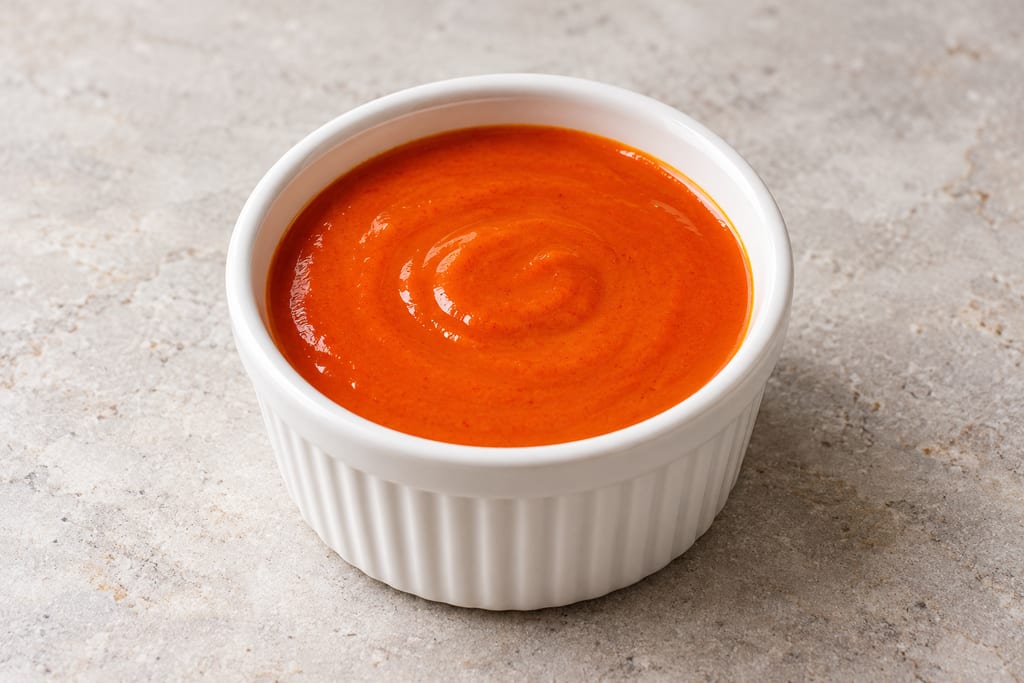
A warm, buttery cayenne sauce made by melting butter into a hot pepper sauce, first tossed onto fried chicken wings in Buffalo, New York.

A pourable dessert sauce of brown sugar, butter and cream, with a little corn syrup and salt. It is the sauce form of the butterscotch confection and is made without water, unlike caramel.
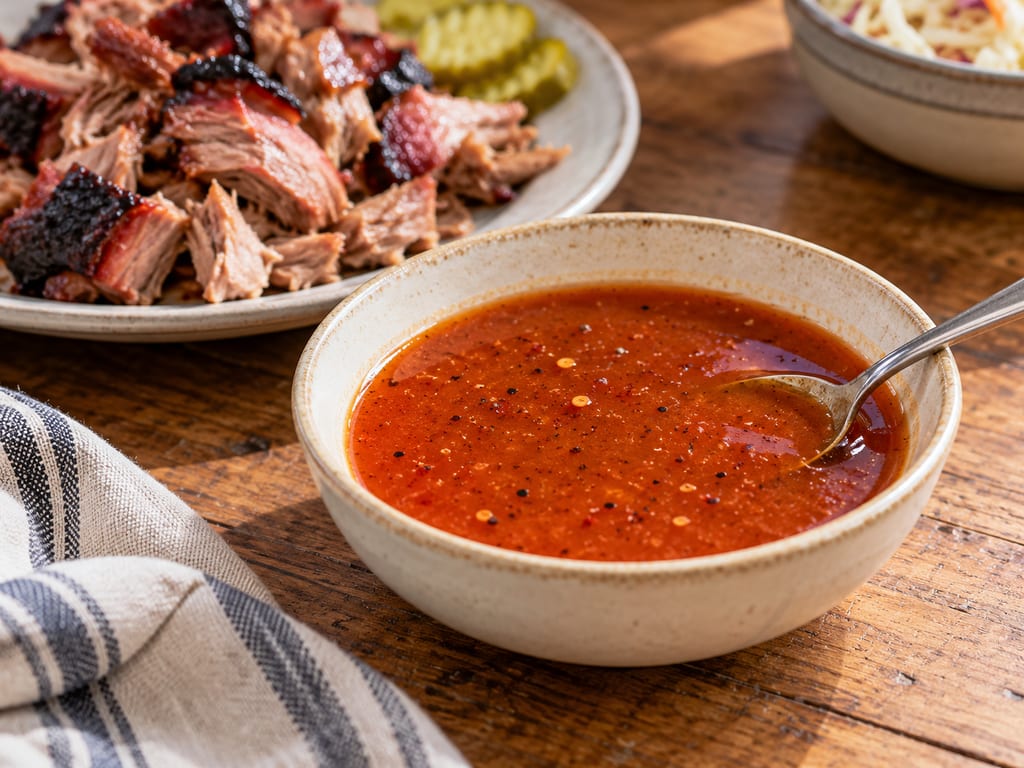
Light tomato barbecue sauce is a thin, sharp South Carolina sauce: a vinegar and pepper base with a small amount of ketchup, sitting between the clear vinegar sauce and the sweeter tomato sauces.
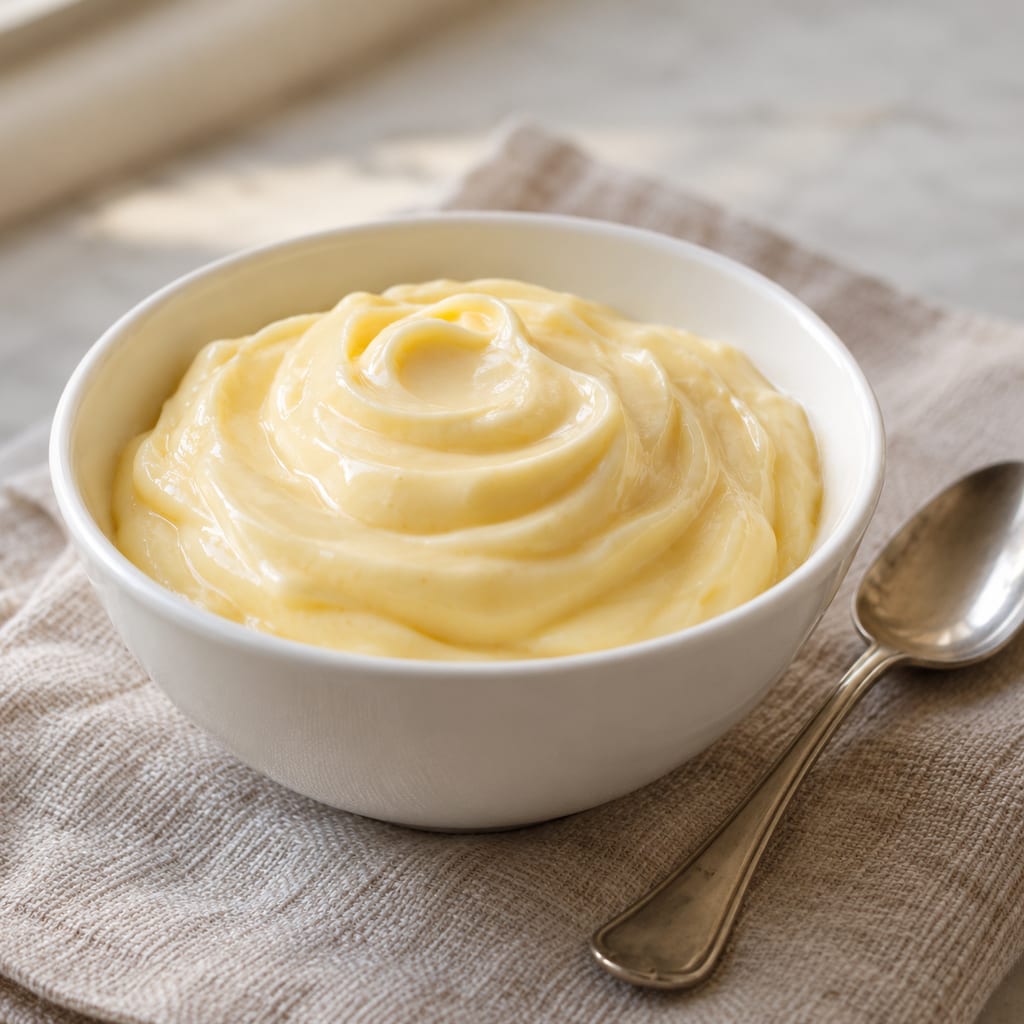
A cooked-yolk mayonnaise documented in the University of Tennessee Extension’s 2007 Egg University Handbook. The egg mixture is heated before oil is emulsified into it.
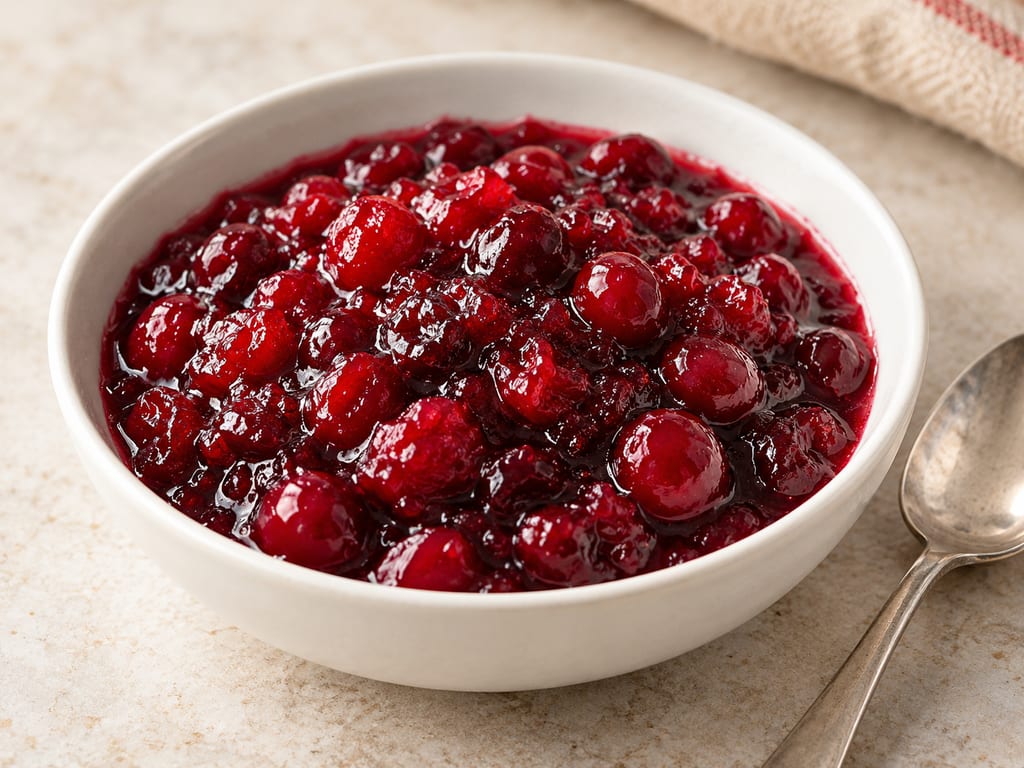
Cranberry sauce is a sauce of cranberries cooked in sugar syrup until the berries burst and thicken, served with roast turkey, pork, chicken and ham.

A liquid set with a little gelatin, frozen solid, then thawed through cloth in the refrigerator so that clear liquid drips out and the cloudy gel stays behind.

Ajvar is a cooked Balkan pepper preserve built around roasted red peppers, peeled, drained, ground and slowly fried with oil and seasoning. Leskovac’s protected version is a pepper specialty; regional versions vary.

Amlou is a nutty, lightly sweet Moroccan spread of roasted almonds, culinary argan oil and honey. The almonds are ground first, then loosened with oil and sweetened; the balance can range from a thick spread to a dip.

Apple sauce for goose and pork is a plain English accompaniment: cooked apples pulped with water, then sweetened with sugar and finished with a little butter.

A warm dip of garlic, anchovy and olive oil, often enriched with butter, that Piedmont serves over a flame with raw and cooked vegetables and bread.

A sweet-hot table sauce of ripe banana simmered with vinegar, sugar, onion, garlic and fresh chilli, in the manner of Philippine banana ketchup. An untested development batch of about 500 g.

A Georgian walnut sauce of ground walnuts, garlic, vinegar and spices, thinned with water or broth. It is served with poultry, vegetables and bread, and is the sauce of the dish satsivi.

Byzantine murrī is a cooked imitation of murrī from the medieval Arabic repertoire, made from scorched honey, toasted bread, walnuts, quince, carob and spices rather than from a long grain fermentation.

Caribbean browning is a dark liquid of deeply caramelised sugar, used in small amounts for colour and a smoky, bitter-sweet flavour in stews and black cake.

A Cap-Pelé boucanière is an Acadian herring-smoking building. The documented Willie Niles example is a one-storey wood-frame structure with a ridge smoke vent and interior bays for hanging fish-bearing cannes.

Achcharu is a family of Sri Lankan vinegar pickles made with mixed vegetables or seasonal fruit and a piquant spice dressing. This version is a quick, refrigerated, non-fermented mixed-vegetable pickle.

The acocote is a long, hollowed and dried gourd used to draw aguamiel from a mature maguey. It is a harvesting tool: the sap is transferred to a separate vessel before it ferments into pulque.

Adrak murabba preserves young ginger in sugar syrup, a sweet South Asian preparation recorded in Indian cookery and food-processing sources.

Parkia biglobosa seeds are fermented into regional West African seasonings, including nététou, iru, dawadawa and soumbala. The yellow fruit pulp is a separate food, and names and methods vary by place.

Japanese reddish-brown vinegar from sake lees matured about three years, turned to vinegar by acetic bacteria; the vinegar of Handa and Edomae sushi rice.

A refined common-wheat flour blended for a broad range of baking; its protein and behavior vary with wheat, milling and market.

The almond mushroom, Agaricus subrufescens, was cultivated in eastern North America in the 1800s, lost its market, and returned as a cultivated mushroom from Brazil, where it is grown under several names.
No community contributions have been published for this entry yet.
Sign in to contribute. Published comments and photos are free to read.
National Center for Home Food Preservation, University of GeorgiaMethod · Safety · Yield
Tomato KetchupThe exact tested ingredients, ordered preparation, 6–7 pint yield, 1/8-inch headspace and altitude-specific boiling-water process times.
Cited in: The tested home method; Why the stages work in this order; Ingredients and the balance they create; Canning the finished sauce
Smithsonian MagazineHistory
A Brief (But Global) History of KetchupThe uncertain Southeast Asian ancestry of early ketchup; British use and adaptation of the name; 18th-century mushroom and other catsups; the 1812 tomato-ketchup recipe; Heinz's entry in 1876.
Cited in: A name that outgrew its first sauce; Tomato ketchup takes shape
Project GutenbergHistory
Culinary Chemistry (1821)Accum's 1821 book presents mushroom, walnut and tomato catsups as distinct recipes and documents a salted tomato-juice preparation.
Cited in: A name that outgrew its first sauce; Tomato ketchup takes shape
Heinz, Kraft Heinz UKModern variation
Tomato Ketchup 460 gThe contemporary UK product's listed ingredients and its statement that 148 g tomatoes are used per 100 g ketchup.
Cited in: What labels show, and what they leave out; Ingredients and the balance they create; Variations without a single universal formula
Kagome Co., Ltd.Modern variation
カゴメトマトケチャップ|カゴメ株式会社The Japanese product's ingredients and nutrition declaration, which reports carbohydrates and salt equivalent rather than a separate sugars figure.
Cited in: What labels show, and what they leave out; Variations without a single universal formula
KagomeUse
ケチャップとソースで!デミオムライスA documented use of ketchup cooked into a sauce for omurice.
Cited in: From the bottle to the plate
MasterFoods AustraliaModern variation · Use
MasterFoods Tomato Sauce 500mLThe Australian product is named tomato sauce, lists tomato paste, sugar, salt, acetic acid, onion and spice extract, and recommends it for burgers, sausages, hot dogs and pies.
Cited in: What labels show, and what they leave out; From the bottle to the plate; Variations without a single universal formula