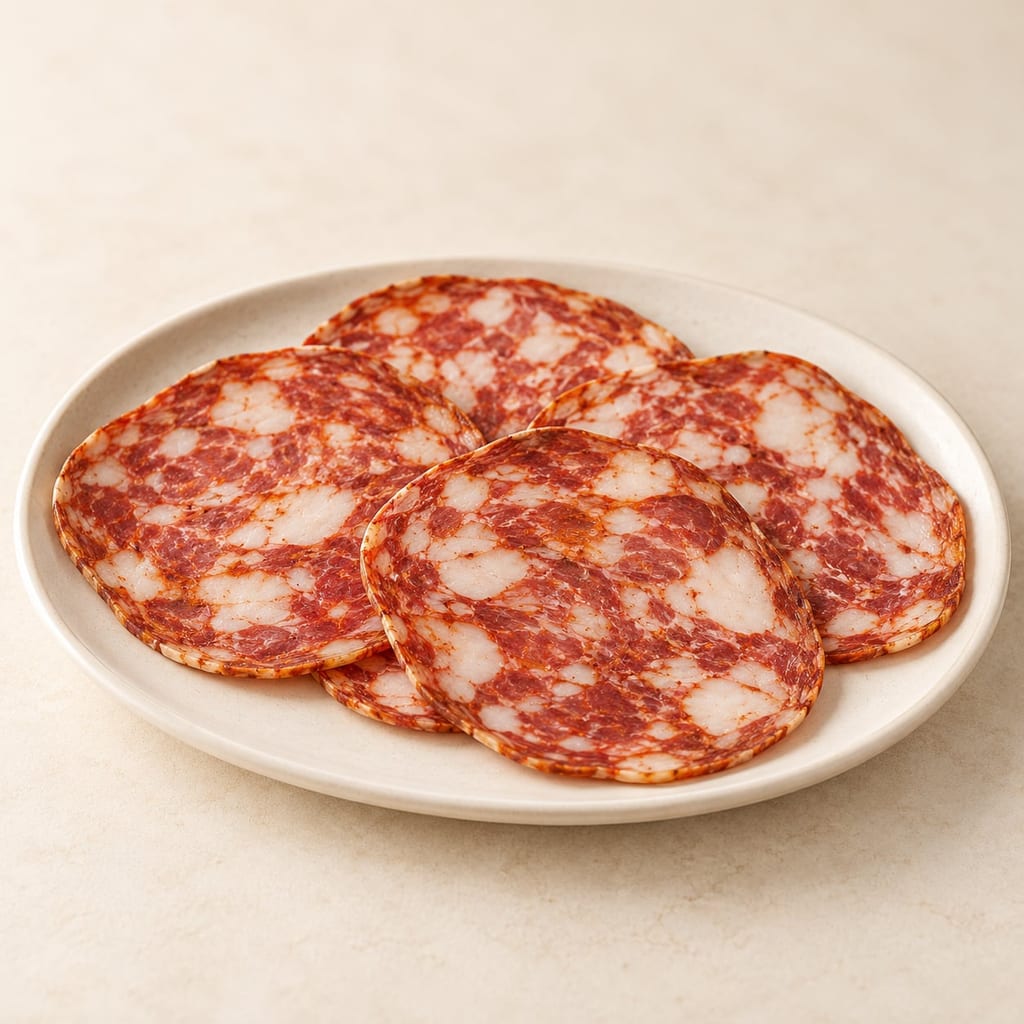
Ventricina, starter-cultured
A documentary account of a modern ventricina-style salami source and its Abruzzese context. This page provides no preparation directions or validated home process.
 FermenteaWhere food goes to change
Spices and aromatics
Cayenne is a very pungent red powder from dried, ground hot chilli pods, mostly Capsicum annuum, and the name of the long red peppers it comes from.
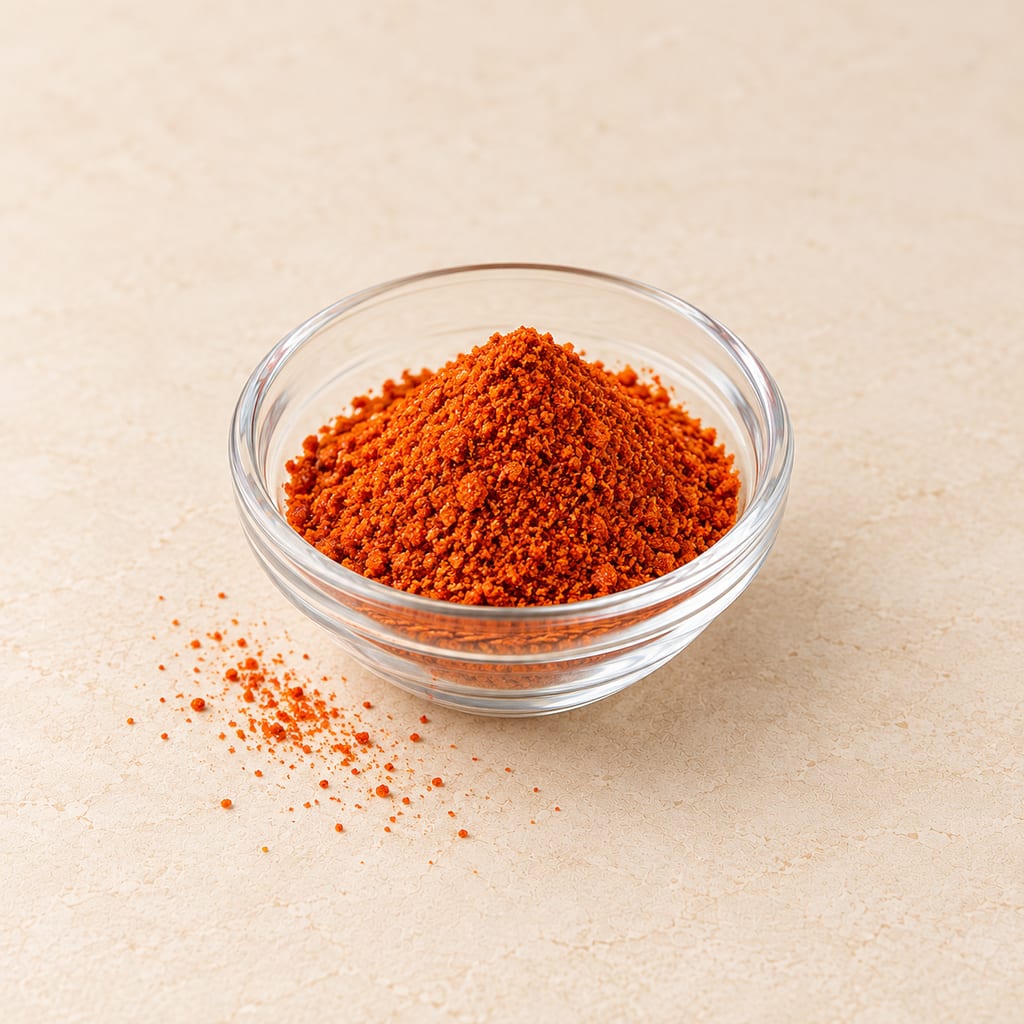
Cayenne is a very pungent red powder made from the dried, ground pods of hot chilli peppers. In practice the pods come mostly from Capsicum annuum, the species of most chillies, bell peppers and paprika, and the name covers whole pods and flakes as well as the fine powder. The trade distinguishes cayenne from paprika, which is the name for nonpungent red Capsicum annuum powder.
The name is a puzzle. Cayenne is also the chief town of French Guiana, founded in 1634, and the spelling invites the thought that the pepper came from there. The historical dictionary treats that as a popular etymology: the older English forms, cayan, kayan, kian and chian, sit closer to the Tupi word for pepper, given as kyynha or quiya, and the name cayenne pepper is unknown in French. The earliest citation is Patrick Browne's account of Jamaica in 1756, which calls it the cayan pepper or butter of the West Indies. The dictionary adds that it was formerly called Guinea pepper. By 1796 it appears as a seasoning in an English cookery book, Mrs Glasse's Cookery.
Whatever the name, the plant is an American one. Capsicum annuum was domesticated in Mexico. Species distribution modelling, historical linguistics, genetics and archaeological remains together indicate that it could have been domesticated in northeastern Mexico, in central-east Mexico, or in both; the combined evidence favours central-east Mexico, where preceramic chilli remains have been found in the Valley of Tehuacán, close to where a word for chilli can be reconstructed in Proto-Otomanguean, the oldest language for which such a word is known.
A later reconstruction from ecological suitability, seeds and archaeological site distribution complicates the picture. It proposes a geographically diffuse, prolonged domestication with at least two separate events across Mexico, beginning in lowland regions such as the Yucatán Peninsula and the coast of southern Guerrero rather than in highland caves. None of this dates or places the cayenne type; it establishes the pepper, not the product.
English has no clean words for the spice forms of Capsicum. Cayenne, chilli and red pepper are the most used names for the dried fruit, and English uses them as synonyms. Paprika is the exception: it is associated with the milder C. annuum cultivars adapted to cooler climates. Other species reach the market under their own names, among them Tabasco, a cultivar of C. frutescens, and habanero, a cultivar of C. chinense.
Dried powdered and flaked chillies are the prevailing way the spice is used. Oleoresins, the solvent extracts of the fruit, are sometimes used instead, but they are an industrial material and not a form of the household spice. India accounts for about half of all global chilli exports, so a large share of the chilli in world trade is Indian.
Peppers are warm-season plants. They need sun, a long growing season and fertile, well-drained soil, and are transplanted once the soil reaches 60 °F (16 °C). Fruit takes 35 to 45 days from flowering to full colour and is picked fully coloured but still firm; the same plant can also be harvested green. Fruit set can fail when nights fall below 55 °F (13 °C) or days rise above 90 °F (32 °C). Long Thin Cayenne is a variety recommended for hot-pepper growers in Utah.
The figures in this section and the next describe red chile in the United States dehydration trade, mostly New Mexican types, a group in which cayenne is one of the dehydrated types; they are not measurements made on cayenne alone. Fresh red chillies hold 65 to 80 per cent water, and for storage that has to come down to 8 to 12 per cent. Chile was traditionally dried in the sun, spread on roofs or on the ground, which exposed it to birds and rodents; nearly all commercial processors in the United States now dry it in controlled dryers. The pods arrive at the plant, pass a sorting line and a chlorinated wash, a rock tank and a rinse, and are sliced before they go into a tunnel or continuous-belt dryer at 140 to 150 °F (60 to 65 °C). Magnets at several points remove any metal. Five parts of fresh fruit make about one part of dried product.
The dried product is sold as whole pods, flakes or powder. Colour is the most important quality criterion in the trade, because red chilli and paprika are used mainly as colouring agents and the price follows the extractable colour, measured by the American Spice Trade Association's method. The colour comes from carotenoid pigments, and holding on to it means stopping them from oxidising. Ground chile loses colour faster than whole pods, so processors commonly store chile as flakes and grind it only at the end. Seeds in the grind lower the initial colour of the powder but slow its colour loss in storage. The scale of colour is the ASTA unit: New Mexican red chile ranges from about 120 to 220 units, and no figure is given for cayenne; paprika cultivars are usually higher than pungent chile cultivars, and the price difference between high-colour and low-colour chile is an incentive for growers to produce colour. Antioxidants such as tocopherols and ascorbic acid can be added during grinding and blending to help the pigment last.
In New Mexico, where the American red chile crop is grown, the fruit is picked for maximum colour once the pods have begun to dry on the plant, because succulent red pods have not yet developed their full colour. Yields are highest in late October and early November, before the first freeze; fruit picked after a freeze is more often diseased and more of it drops to the ground. About 85 per cent of the New Mexico red chile crop is picked by machine and 15 per cent by hand. Hand pickers can choose pods by maturity, make successive passes and handle the fruit gently; machines cannot tell a good pod from a diseased or unripe one, so leaves, stems and damaged pods come in with the crop and lower the extractable colour.
Stress and damage open the way for fungi. Sunburn on pods leads to black mould, caused by Alternaria alternata, and other fruit rots are caused by species of Rhizopus, Colletotrichum, Fusarium, Phytophthora and Aspergillus. They increase under plant stress, excess irrigation or rain and mechanical damage. Some of these fungi can produce mycotoxins, so processors work to cull diseased fruit from the harvested crop, and the low microbial counts and low extraneous matter that buyers specify are not cosmetic.
Dried powder is only one of the things a cayenne pepper becomes. In the United States the fruit is also used fresh, or chopped, mixed with about 20 per cent salt and left to ferment. The result is a mash, the key ingredient of Louisiana-style hot sauces. New Mexico leads American production of cayenne for hot sauce, with two large mash processors near Las Cruces, which at the time of one 2010 breeding report bought twice as much fruit as New Mexico growers supplied. Retail sales of hot sauce in the United States topped two billion dollars in 2006. The mash is a separate preparation from the dried spice, with its own salt and its own fermentation, and the sauce made from it is a further step; ground cayenne is not a substitute for it, and a fresh pod, a dried powder and a salted mash are three different ingredients that happen to share a plant.
A cayenne pod is long and slim: the pods of the cultivar 'NuMex Las Cruces' average 17.2 cm in length and 25.4 g, and ripen to scarlet. Cayenne varieties also differ in heat. In New Mexico trials, the cultivars Large Red Thick and Mesilla measured 12,900 and 13,200 Scoville heat units, and a newer selection, bred for mash processing, 17,400. These are figures for fruit of named cultivars. A jar of unnamed ground cayenne has no heat figure unless the supplier measured it.
Heat comes from capsaicinoids, of which capsaicin is the main one, and its strength is stated in Scoville heat units. The fruit makes them in the placenta, the tissue that carries the seeds, by joining two precursors, vanillylamine and a branched-chain fatty acid derivative, with an enzyme encoded by a gene called Pun1. Some nonpungent cultivars hold the precursor but cannot finish the reaction, which is why a pepper's heat depends on its genetics and not only on the raw materials. Because capsaicin is concentrated in the membranes and seeds, cutting them out lowers the heat of a dish.
Colour, aroma and heat are separate properties with separate chemistry. Carotenoid pigments give cayenne-type chillies their bright red, volatile compounds give aroma, and capsaicinoids give pungency, so a deep red powder says nothing about how hot it is, and a hot one can be dull in colour. Breeding and processing aim for combinations of the three rather than for the hottest fruit.
The burn is a nerve response. Capsaicin activates a cation channel in sensory neurons that also opens in response to noxious heat, which is why it registers as burning. The same oil irritates skin and eyes, so wear gloves and eye protection when working with hot peppers and wash hands with soap and water before touching the face.
A good powder smells strongly, tastes potent and looks a vibrant red, not dull. Those are the three checks used for any spice, and they track what processors measure: extractable colour, pungency, flavour, low microbial counts and little extraneous matter such as stems and leaves.
Ground spices do not spoil quickly; they fade. Ground cayenne is usually given as good for two to three years, and some extension guidance gives three to four years if it is properly kept, after which it stays safe but may lose quality. Storage temperature has more effect on colour than any other factor, and light and oxygen bleach the pigment. Commercial storage is at 0 to 5 °C in the dark. At home, a sealed jar in a cool, dark place away from heat and sunlight is the standard advice. Powder taken out of cold storage can lose colour quickly, which is one reason retail shelf life is shorter than the figures suggest.
Cayenne is used by the pinch: start with one eighth of a teaspoon and go up to a quarter. Powdered cayenne is also a source of vitamin A. It is not only for savoury cooking. It can lift chocolate cake, brownies, ice cream and Mexican hot chocolate, ginger cookies, lemonade and mango smoothies, and it can add flavour to lower-sodium dishes that would otherwise rely on salt. Louisiana-style hot sauce, made from fermented cayenne mash, is the best-known industrial use.
In cured meat cayenne is a seasoning. A modern starter-cultured ventricina, a coarse pork salami, weighs 2 g of cayenne separately from 6 g of Calabrian pepper powder into the batch. The pepper seasons the meat; it does not run the fermentation, which is done by the starter culture, and its heat does not make the sausage safe.
Capsicum annuum was domesticated in Mexico; this is the origin of the species, not of cayenne as a spice.
Leading US source of cayenne grown for hot-sauce mash, around Las Cruces; not a claim that cayenne originated there.
Louisiana-style hot sauces are made from fermented cayenne mash; the source names the style, not a place of production.
The earliest English citation of the cayan pepper is from Browne's account of Jamaica; it does not show where the pepper was first grown.
A documentary account of a modern ventricina-style salami source and its Abruzzese context. This page provides no preparation directions or validated home process.
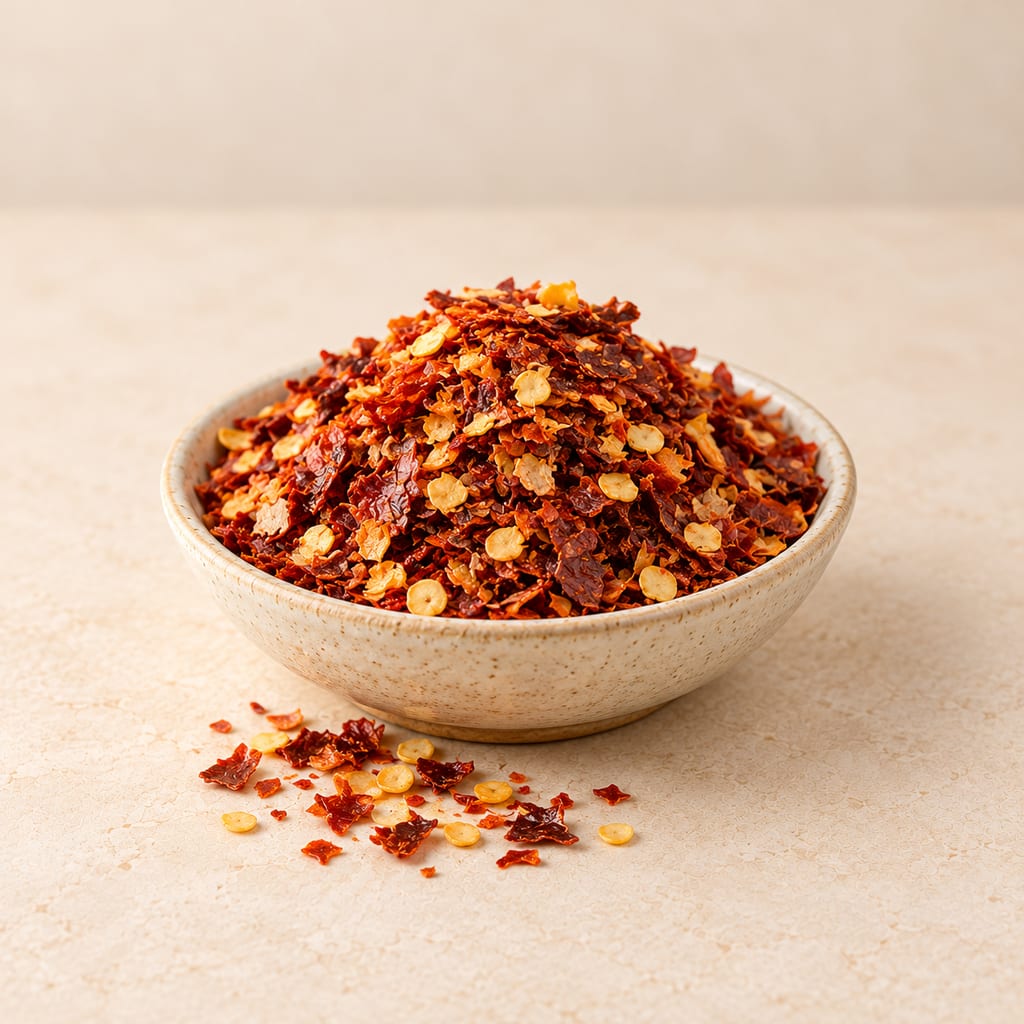
Calabrian pepper flakes are dried red Capsicum annuum from Calabria, crushed into coarse pieces; Peperoncino di Calabria is a protected geographical indication.
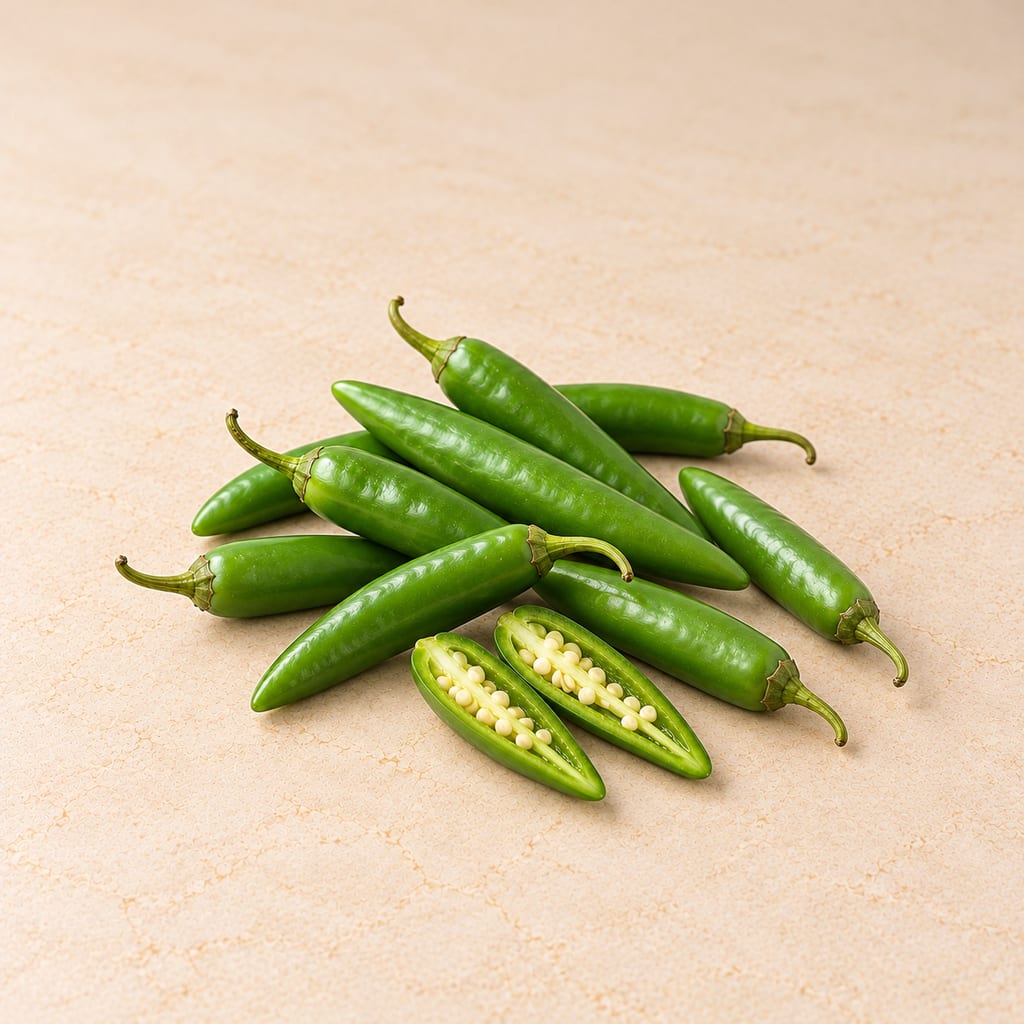
Chilli is the pungent fruit of Capsicum plants, native to the Americas and eaten fresh, dried, ground or fermented in cuisines around the world.
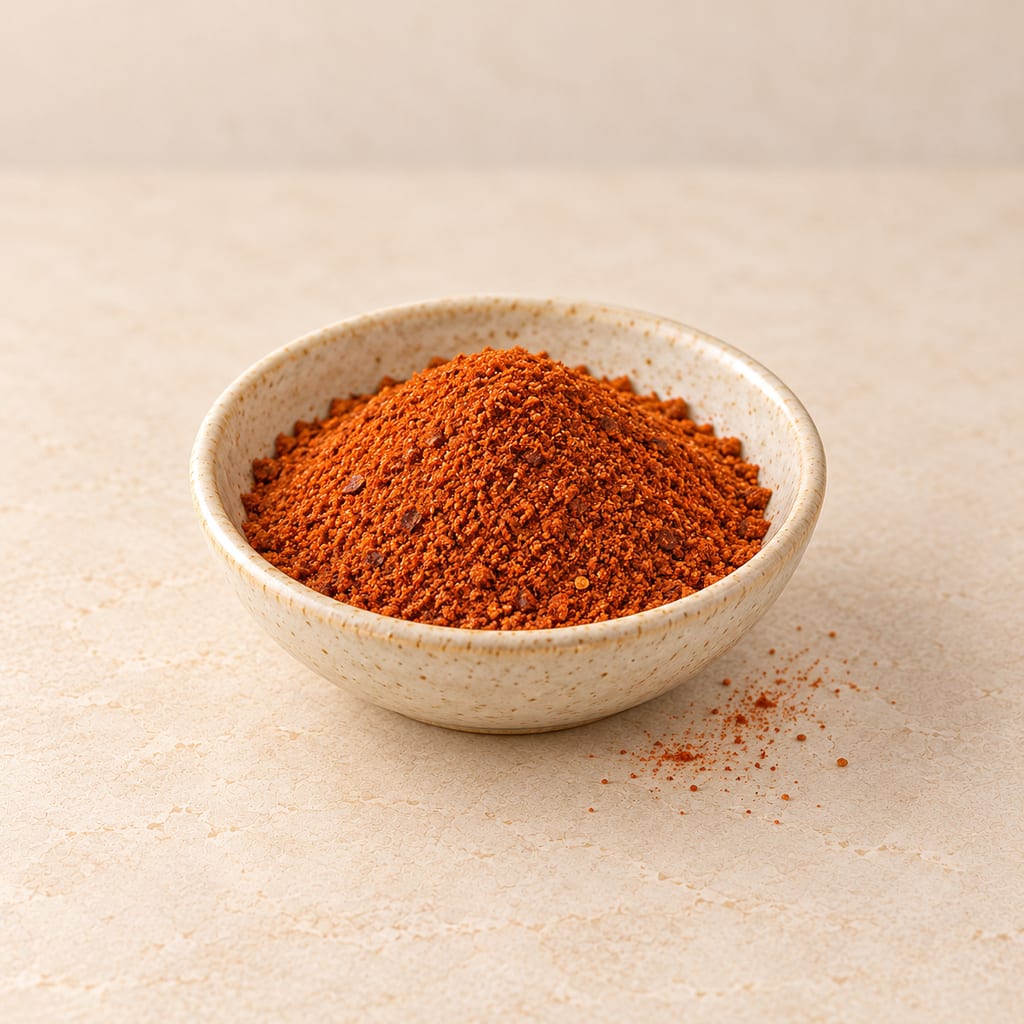
Chilli powder is dried chilli fruit ground fine, sold either as plain ground chillies or, in the United States, as a seasoning blend with salt, garlic and cumin.
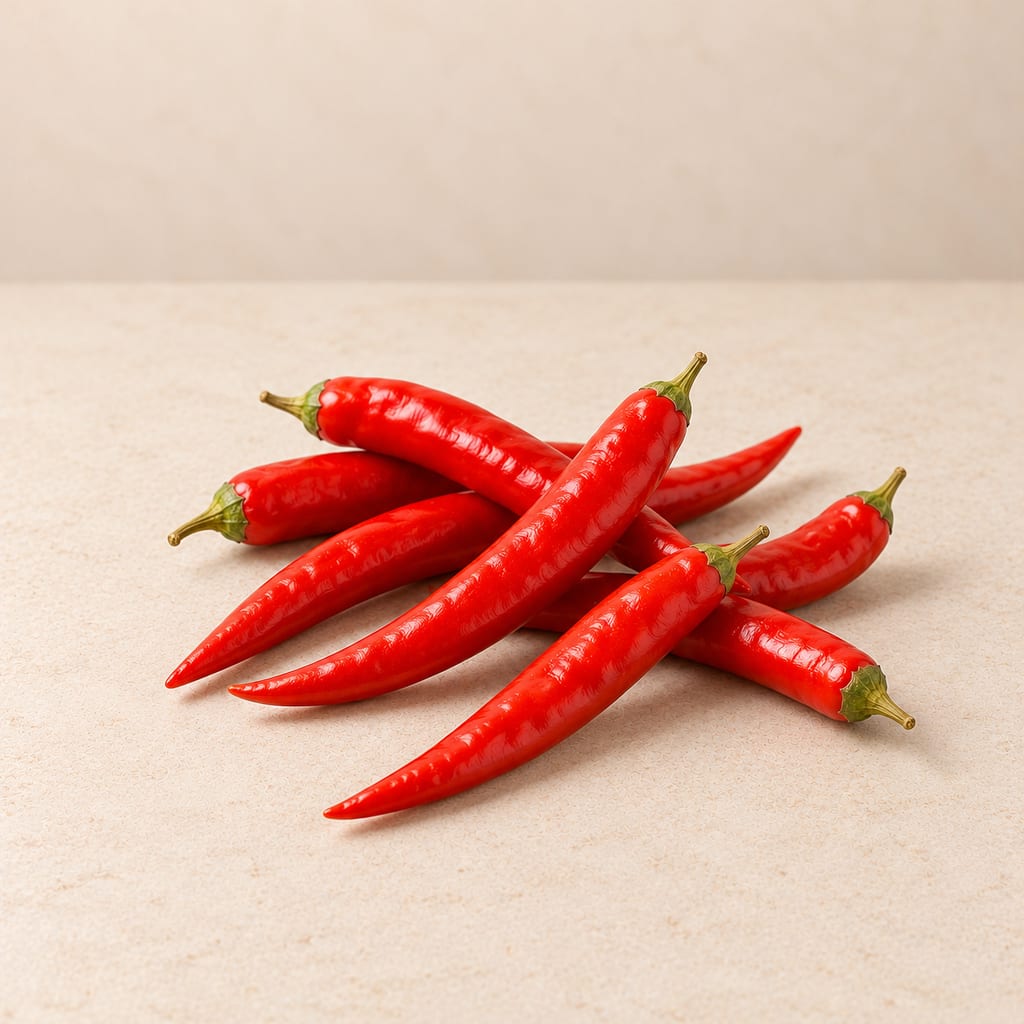
Red chilli is the ripe, red fruit of a Capsicum pepper plant, used fresh, dried, as flakes or as powder to add heat, colour and flavour to pickles, ferments, sauces and stews.
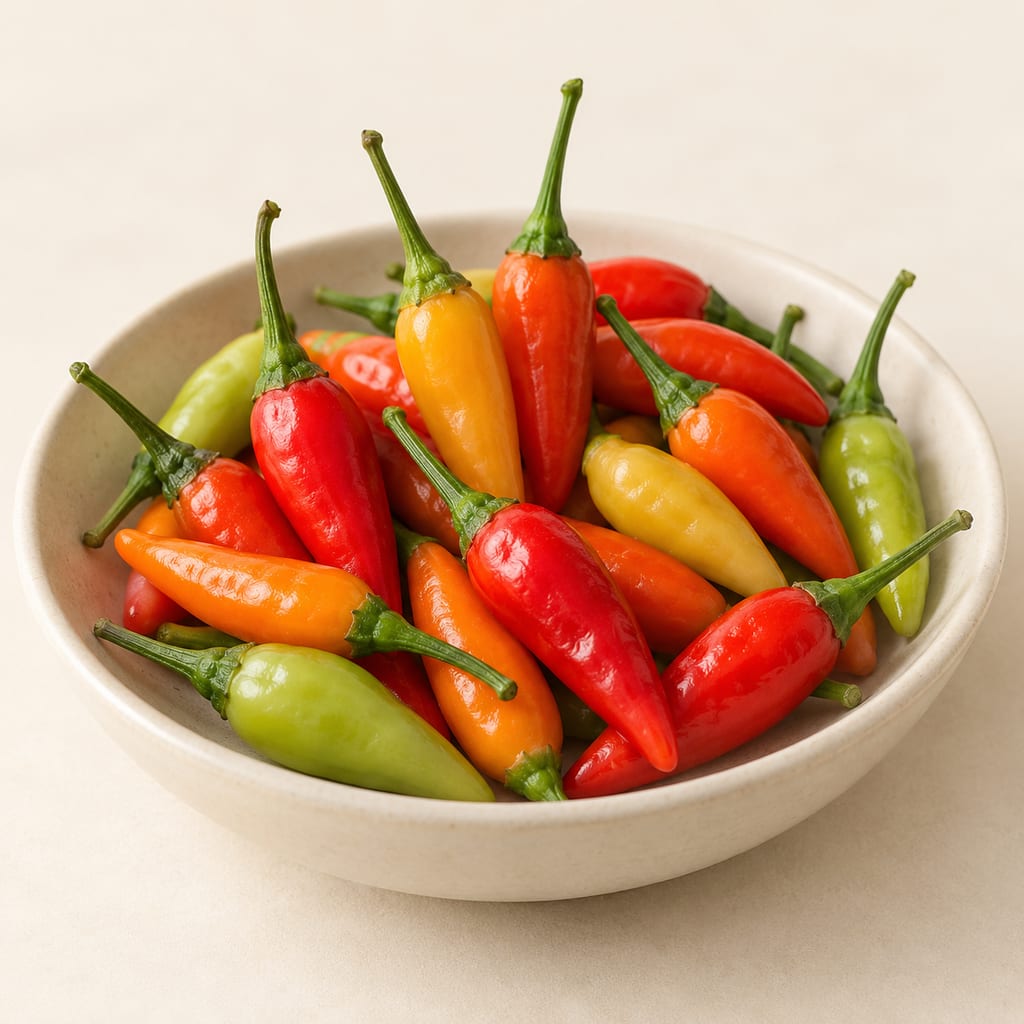
Tabasco chile is the small, upright, pungent fruit of Capsicum frutescens 'Tabasco', a cultivar long used in Louisiana pepper sauce.
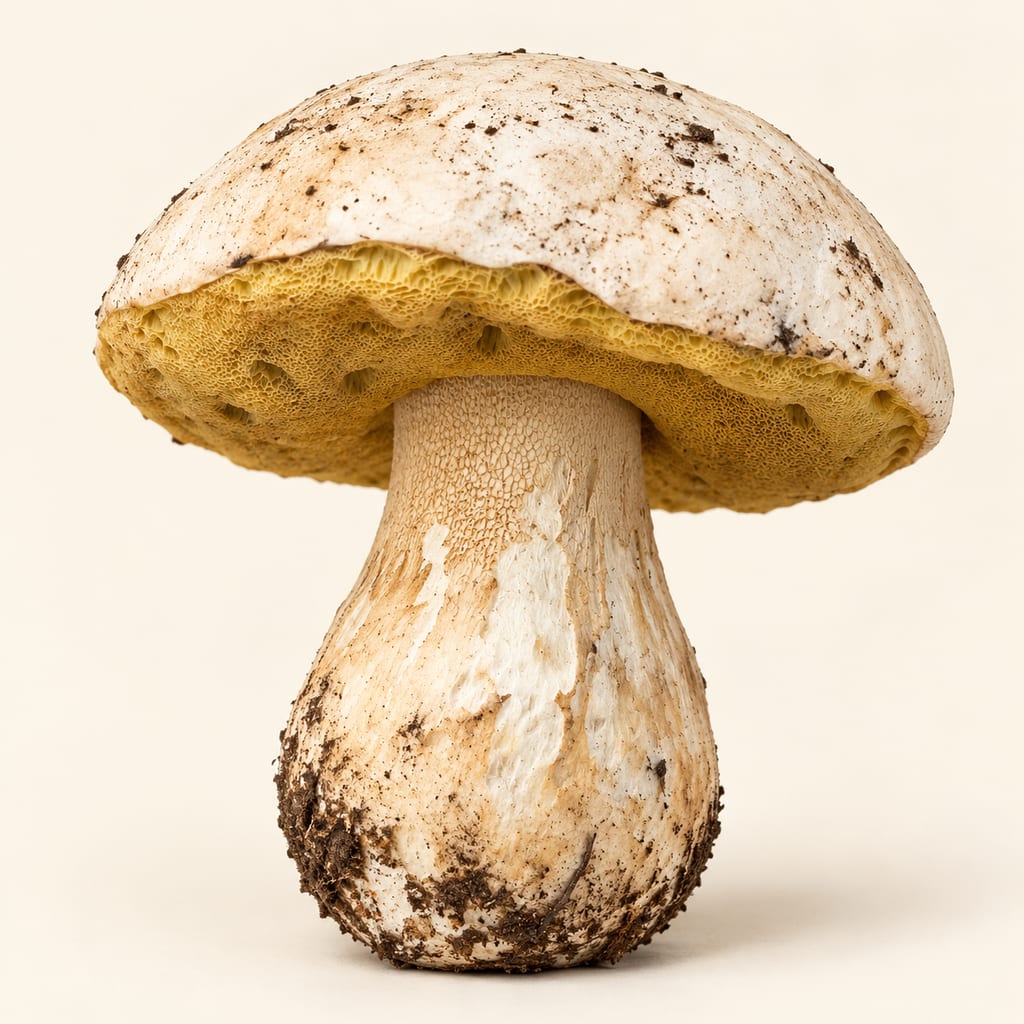
Boletus barrowsii, the white king bolete, is a western porcini relative with documented local food use in Mexico. Its pale cap and netted stem are not enough for field identification.
Gypsum is calcium sulfate dihydrate, a mineral salt that brewers dissolve in water for its calcium and sulfate and that tofu makers use to set soy curd.

A gelling polysaccharide extracted from red seaweeds, sold as kanten strips or powder; it sets firm at a low concentration and stays solid until about 85 °C.

A Dominican table and seasoning condiment of sour orange juice, mixed with lime and salt and bottled raw; garlic, oregano or a hot pepper may be added for meat or a spicier bottle.

Cicerbita alpina is an alpine perennial whose tender shoots and leaves have been eaten raw or cooked. Sámi milk preparations and modern Carnian dishes are distinct uses, with serious identification and preservation limits.

Japanese skipjack tuna cooked, then repeatedly smoked and dried over a wood fire by the hand-fired tebiyama method into a hard block for shaving into dashi: the first stage of katsuobushi.

A Swedish-style spirit vinegar made by fermenting neutral alcohol with live vinegar bacteria, with a separate guide to commercial ättika strengths.

A yeast-raised wheat ring shaped from a firm dough, briefly boiled and baked. This source-batch formula gives a gently malted crust and a chewy crumb.

A warm dip of garlic, anchovy and olive oil, often enriched with butter, that Piedmont serves over a flame with raw and cooked vegetables and bread.

Bechamel is a white sauce of milk thickened with a butter and flour roux, one of the French mother sauces, and the base from which Mornay and other cheese and cream sauces are made.
No community contributions have been published for this entry yet.
Sign in to contribute. Published comments and photos are free to read.
New Mexico State University Cooperative Extension ServiceMethod · Quality · Storage
Postharvest Handling of Dehydrated Chiles (Guide H-236)Dehydrated capsicum types include New Mexican, cayenne, ancho, pasilla, mirasol, piquin and de arbol; paprika is the trade term for nonpungent red Capsicum annuum powder.
Colour is the most important quality criterion; field pods hold 65 to 80 per cent moisture and are dried to 8 to 12 per cent; dehydration at 140 to 150 F (60 to 65 C); fresh-to-dry weight about 5 to 1; chiles pass a dry-reel, sorting line, chlorinated wash, rock tank, rinse and slicer, with magnets to remove metal.
Ground chile loses colour faster than whole pods, so red chile is stored as flakes before final grinding; seeds lower initial colour but slow colour loss; storage temperature has the most effect, light and oxygen bleach pigment; 32 to 41 F (0 to 5 C) in the dark recommended; other quality criteria are low microbial counts and low extraneous matter.
Cited in: A hot red powder with a borrowed name; Growing the pepper; From pod to powder; Picking for colour, and the moulds that follow; Choosing and keeping ground cayenne
HortScience 45(11):1751-1752 / New Mexico State UniversityUse · Method · Geography
'NuMex Las Cruces' Cayenne PepperIn the United States cayenne is used fresh, dried, or chopped fresh and mixed with about 20 per cent salt and fermented into a mash, the key ingredient of Louisiana-style hot sauces; New Mexico leads US commercial cayenne production for hot sauce, with two large processors near Las Cruces; measured heat of three cayenne cultivars was 12,900 to 17,400 Scoville heat units.
Cited in: Cayenne mash and hot sauce
University of Illinois ExtensionUse · Storage
Add spice to your life with cayenne pepperCayenne gets its heat from capsaicin; start with one eighth teaspoon; can lift chocolate desserts, ginger cookies, lemonade and mango smoothies and add flavour in lower-sodium cooking; store powder in a cool dark place away from heat and sunlight; properly stored ground cayenne lasts 3 to 4 years and remains safe after that but may lose quality.
Cited in: Choosing and keeping ground cayenne; Cayenne in the kitchen and in sausage
Iowa State University Extension and OutreachStorage
Herbs and Spices Have an Expiration DateSpices lose flavour and potency rather than spoil; ground cayenne about 2 to 3 years; fresh test: strong aroma, potent flavour, vibrant colour.
Cited in: Choosing and keeping ground cayenne
World English Historical Dictionary (Murray's New English Dictionary)History · Name
CayenneForms cayan, kayan, kian, chian; the link to Cayenne in French Guiana is a popular etymology, the Tupi name being kyynha or quiya; defined as a very pungent powder of the dried pods and seeds of Capsicum species, formerly called Guinea pepper; citation 1756 from Patrick Browne, Jamaica; cayenne pepper unknown as a name in French.
Cited in: A hot red powder with a borrowed name
Proceedings of the National Academy of SciencesHistory
Multiple lines of evidence for the origin of domesticated chili pepper, Capsicum annuum, in MexicoFour lines of evidence indicate domestication in northeastern or central-east Mexico, with preceramic chili remains from the Valley of Tehuacan and a chili word reconstructed in Proto-Otomanguean.
Cited in: Where the pepper came from
Proceedings of the National Academy of Sciences (PubMed Central)History
Interdisciplinary insights into the cultural and chronological context of chili pepper (Capsicum annuum var. annuum L.) domestication in MexicoProposes a geographically diffuse and protracted domestication with at least two asynchronous events across Mexico, early in lowland regions such as the Yucatan Peninsula and southern coastal Guerrero.
Cited in: Where the pepper came from
BMC Plant Biology 15:93Science
Evidence of capsaicin synthase activity of the Pun1-encoded protein and its role as a determinant of capsaicinoid accumulation in pepperCapsaicinoids are made in the placental tissue; the Pun1 protein catalyses the joining of vanillylamine and a branched-chain fatty acid derivative; nonpungent cultivars can hold precursors without making capsaicin.
Cited in: What makes it hot, and why that matters
Nature 389:816-824Science
The capsaicin receptor: a heat-activated ion channel in the pain pathwayCapsaicin activates a sensory-neuron cation channel that is also activated by noxious heat.
Cited in: What makes it hot, and why that matters
Critical Reviews in Food Science and Nutrition 24(3):245-355Science
Capsicum--production, technology, chemistry, and quality. Part III. Chemistry of the color, aroma, and pungency stimuliColour, aroma and pungency of capsicum come from different compounds: carotenoids give the bright red of paprika and cayenne-type chillies, volatiles the aroma (methoxypyrazine in green bell pepper, esters in ripe tabasco), capsaicinoids the pungency.
Cited in: What makes it hot, and why that matters
USDA Agricultural Marketing ServiceIdentity · Trade
Limited Scope Technical Evaluation Report: Flavors - Handling/ProcessingCayenne, chili and red pepper are the most used English names for Capsicum spice fruits; paprika is associated with milder C. annuum cultivars adapted to cooler climates; C. frutescens includes Tabasco and C. chinense habanero; dried powdered and flaked chillies are the prevailing form of use, oleoresins are sometimes used and are extracted with solvents; India accounts for about half of global chilli exports.
Cited in: Cayenne, chilli and red pepper
Utah State University ExtensionGrowing
How to Grow Peppers in Your GardenPeppers need sun, a long growing season and fertile, well-drained soil; transplant when soil reaches 60 F; fruit take 35 to 45 days from flowering to full colour; pick when fully coloured but still firm, or green; fruit set can fail when nights fall below 55 F or days exceed 90 F; Long Thin Cayenne is a suggested hot variety.
Cited in: Growing the pepper
2 Guys & A CoolerUse
Ventricina SalamiA starter-cultured ventricina formula lists 2 g cayenne pepper separately from 6 g Calabrian pepper powder.
Cited in: Cayenne in the kitchen and in sausage
Penn State ExtensionSafety
Hot Peppers: Preserving the Heat!Capsaicin is concentrated in the membranes and seeds; wear gloves and glasses when working with hot peppers; wash hands with soap and water before touching the face.
Cited in: What makes it hot, and why that matters