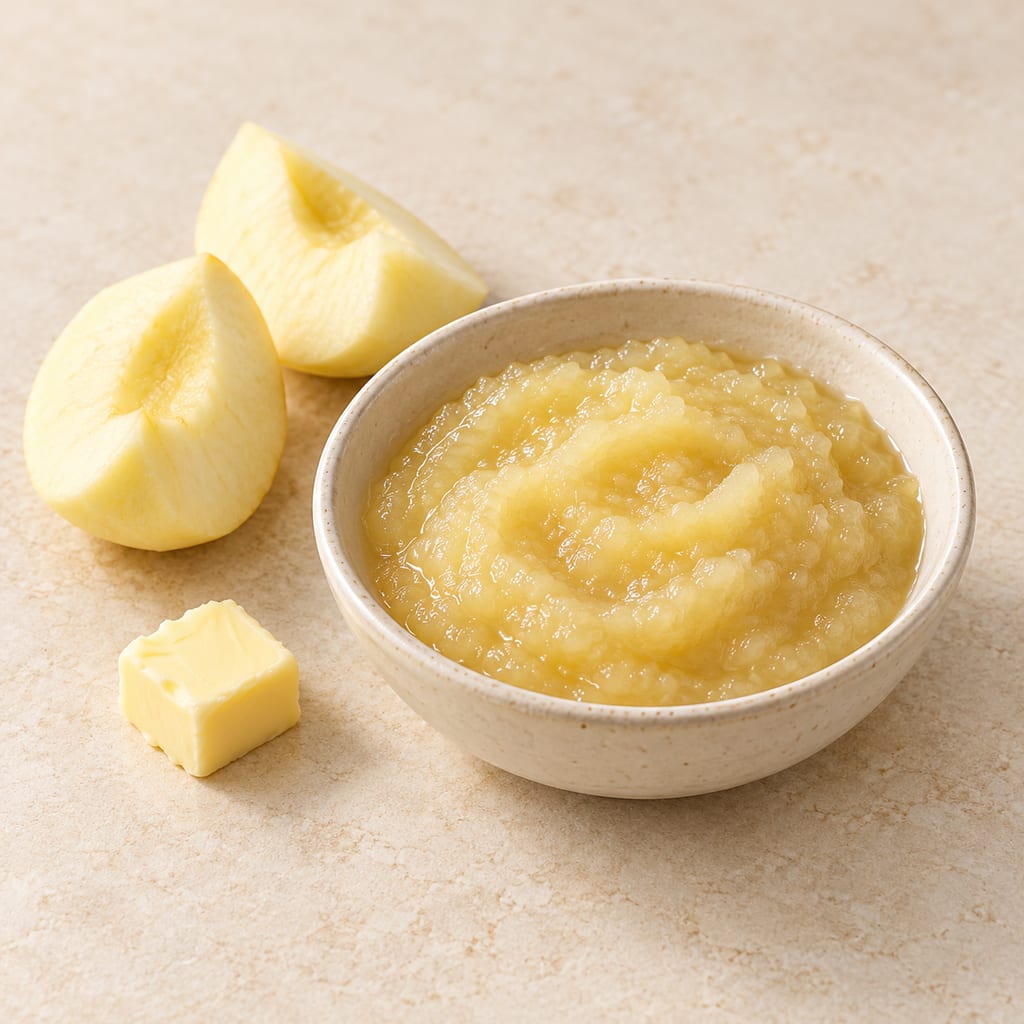
Apple sauce for goose and pork
Apple sauce for goose and pork is a plain English accompaniment: cooked apples pulped with water, then sweetened with sugar and finished with a little butter.
 FermenteaWhere food goes to change
Oyster catsup
Oyster ketchup is a Victorian English shellfish seasoning documented in Mrs Beeton’s 1861 household manual. The page records the historical formula and serving role as evidence, not as a safe modern recipe.
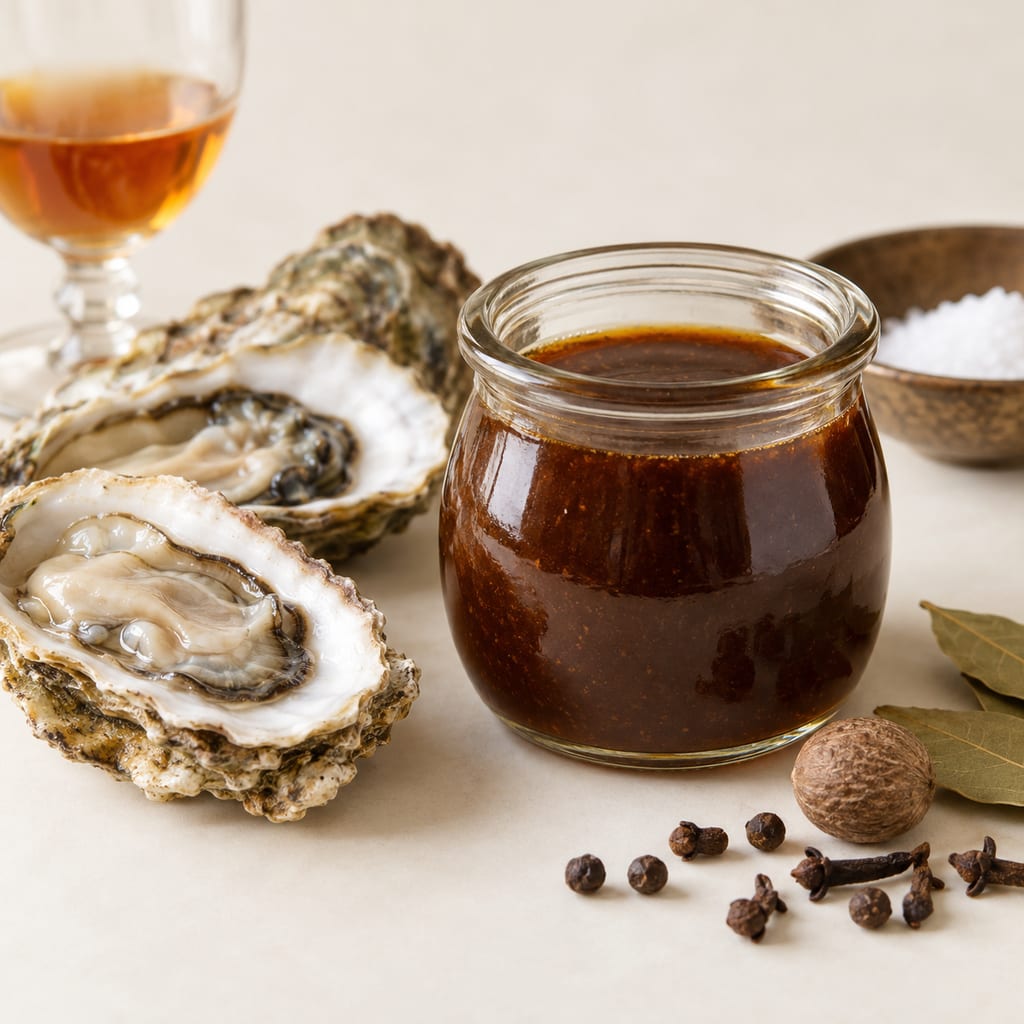
Oyster ketchup was a concentrated oyster seasoning described in Victorian English household cookery. Mrs Beeton’s 1861 book placed it among sauces and gravies. Its recorded ingredients combine oysters and their liquor with sherry (or cider), salt, cayenne and mace; the intended role was to add savoury shellfish flavour to other sauces.
This page treats the formula as a historical record. It does not provide a modern preparation method.
The Book of Household Management was first issued in monthly parts from 1859 to 1861 and appeared in bound form in 1861. In its preface, Isabella Beeton says she drew on formulas supplied by correspondents of the Englishwoman’s Domestic Magazine. The oyster-ketchup entry itself is numbered 490 and gives a seasonality note of September to April, with cider offered as an alternative to sherry.
The primary text records a five-minute second boil, followed by bottling and sealing after cooling. That is evidence of what the nineteenth-century book printed, not proof that the process made a safe or shelf-stable product.
The 1861 formula lists oysters measured to a pint, a pint of sherry, three ounces of salt, one drachm of cayenne, and two drachms of pounded mace. These are historical quantities. The source does not validate them as modern preservation controls, and this page does not scale or adapt them.
The book’s own note allows cider in place of sherry. It does not provide a tested modern process or evidence that either liquid, the salt, or the brief boil can make a sealed seafood product shelf stable.
Beeton’s entry describes scalding the oysters in their liquor with the sherry, straining them, pounding the solids with the seasonings, returning the pulp to the liquor for a further short boil, and sieving the mixture. It then says to bottle and seal after cooling.
The sequence is summarized solely to document the historical account. Do not follow it to make, bottle, seal, or store shellfish. No validated process was found for this formula.
The 1861 instruction to bottle, cork and seal is not a validated home-canning process. The National Center for Home Food Preservation says pressure canning is the only recommended method for canning low-acid foods such as seafood, and only a tested process supplies safe time-and-pressure directions. This recipe has no such validated process.
Do not store this preparation sealed at room temperature, and do not treat the five-minute boil, salt quantity, alcohol, or a sealed cork as proof of safety. The historical source supplies no safe shelf life. Current seafood guidance advises prompt refrigeration of perishable seafood; no duration for keeping this particular preparation is established here.
The primary text checked here is Mrs Beeton’s 1861 Book of Household Management, not a modern oyster-sauce recipe. Its recipe notes are retained with their historical context, while its preservation advice is explicitly not endorsed. Modern Cantonese oyster sauce is a different product and is not an equivalent historical method.
Oyster ketchup is a shellfish concentrate in the same family as the mushroom and walnut ketchups. Mrs Beeton printed it in 1861 with a note that it came from a reader and that she had not tested it herself. The same quantities appear in her later Dictionary of Every-day Cookery.
Scaling: source batch only
Oysters are a perishable seafood; the historical text's freshness language does not establish a modern safety control.
Hazard sourceThe 1861 source instructs bottling and sealing, but gives no validated thermal process or shelf-life control. Modern home-preservation guidance identifies pressure canning as the only recommended method for low-acid seafood; this historical formula is not a tested canning recipe.
Hazard sourceContains oysters (shellfish).
Historical, non-instructional account only. Do not use the 1861 bottling, corking, or sealing directions to make or store this product.
This formula has no validated shelf-stable preservation process; do not store it sealed at room temperature or infer safety from the five-minute boil or salt quantity.
Official seafood guidance says perishable seafood should be refrigerated promptly; the historical source does not provide a safe storage time for this preparation.
Printed in Mrs Beeton's 1861 Book of Household Management; a country-level attribution.
Apple sauce for goose and pork is a plain English accompaniment: cooked apples pulped with water, then sweetened with sugar and finished with a little butter.
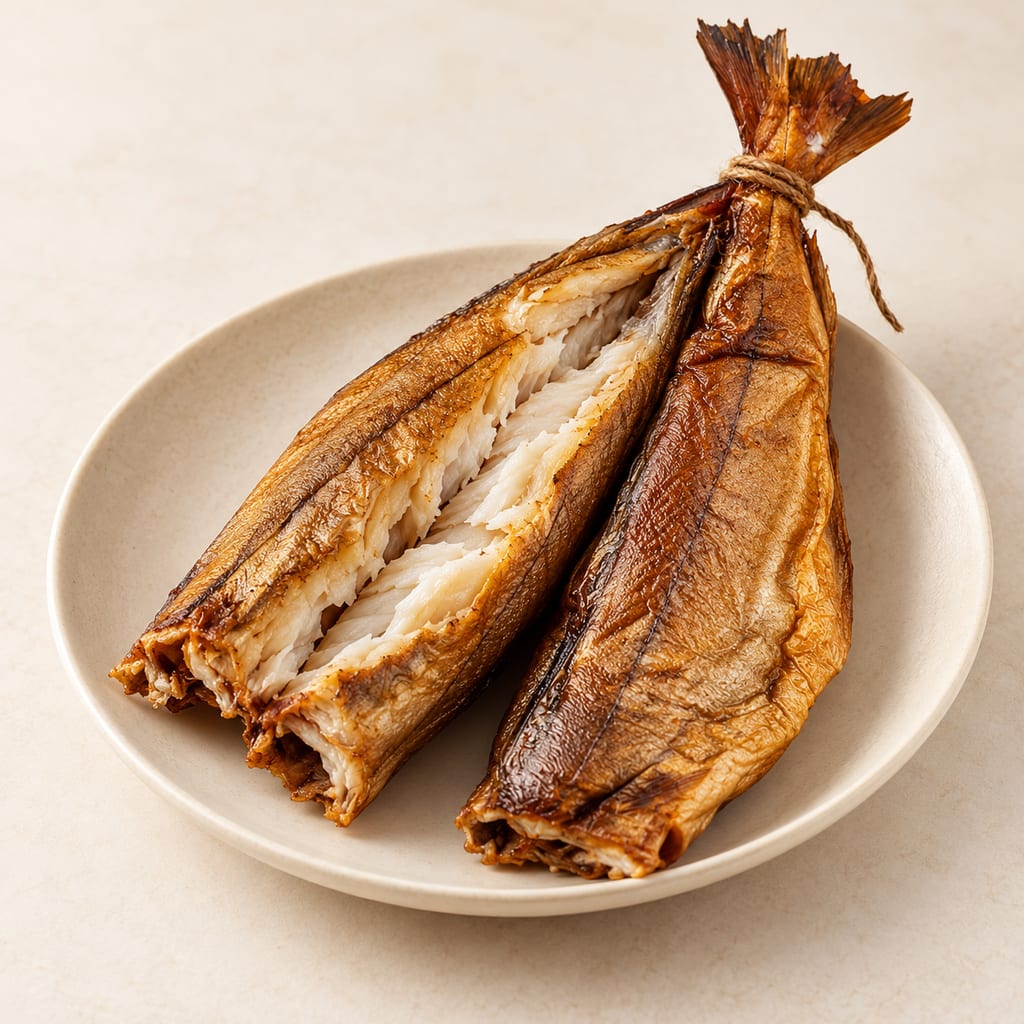
Arbroath smokies are whole haddock dry-salted, paired by the tail and hot-smoked in a protected coastal area. Their recorded history links Auchmithie and Arbroath, though the exact origin is unsettled.
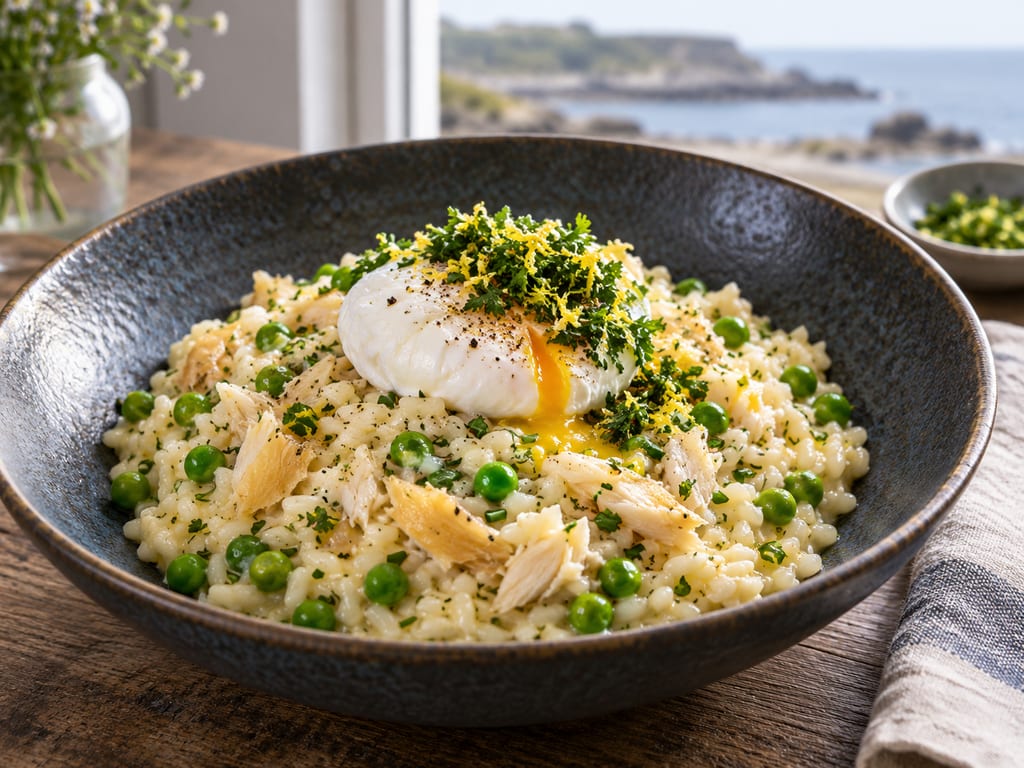
A four-serving risotto published in the 2014 Arbroath Smokie Trail booklet and credited to Hayley Wilkes. It cooks with finished Arbroath smokies; it does not describe smoking fish.
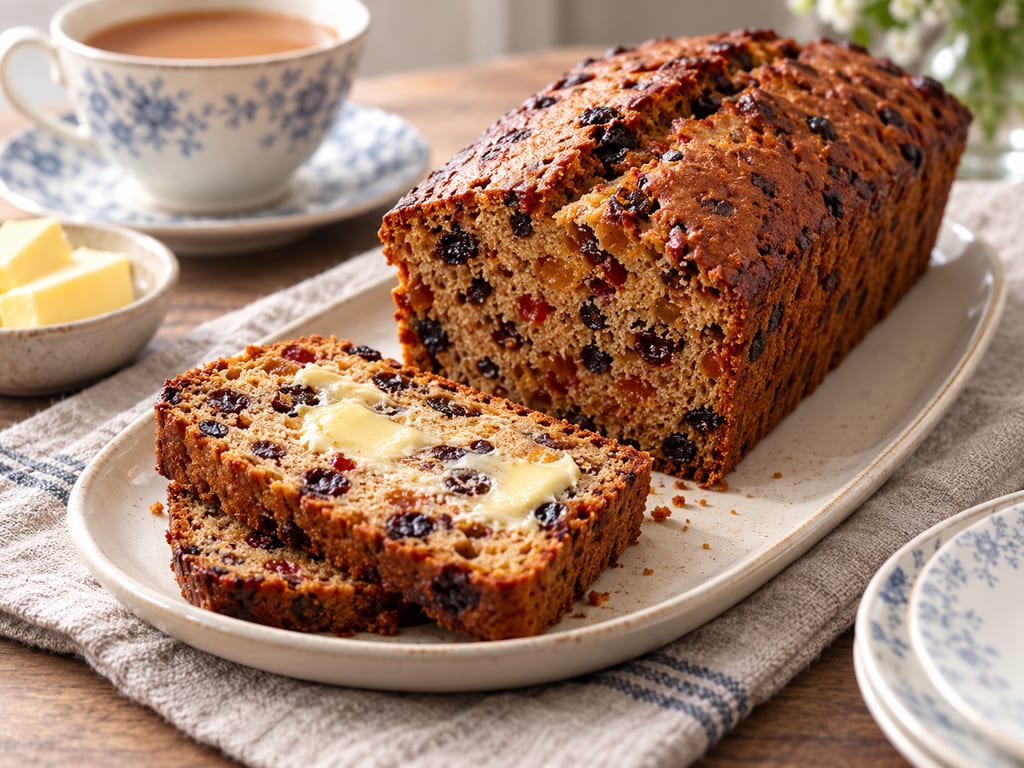
Bara brith is Wales’s speckled fruit loaf, made in both yeasted bread forms and the widely served modern tea-loaf style. This version soaks dried fruit in strong tea before mixing it with self-raising flour, spice, sugar and egg.
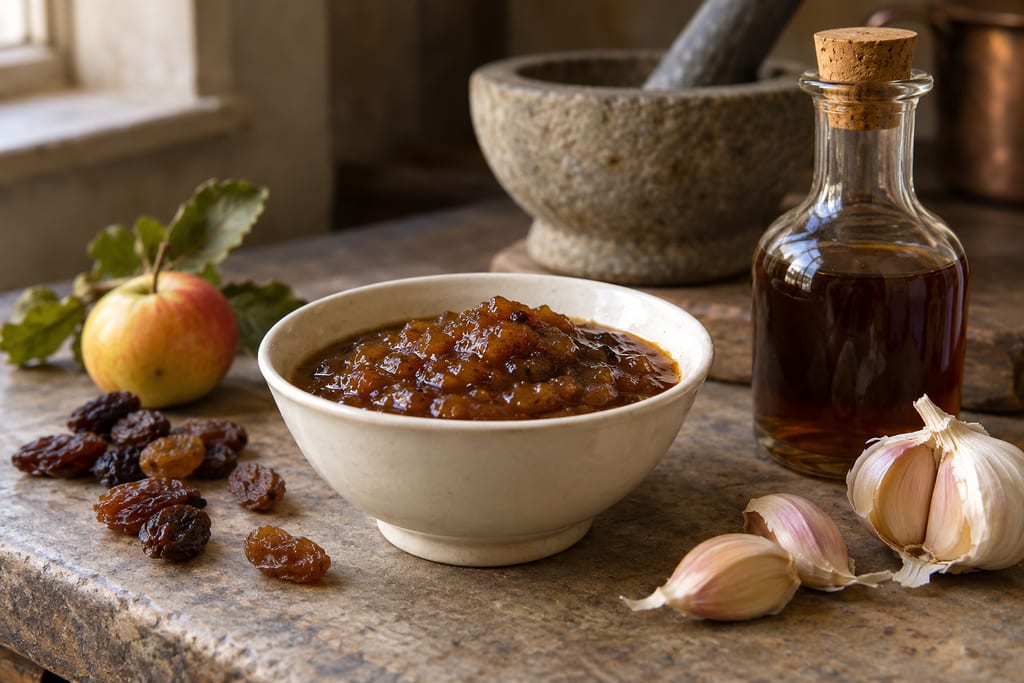
Eliza Acton's Bengal receipt for chetney sauce: stoned raisins and a hard acid fruit pounded with brown sugar, ginger, salt, cayenne and garlic, then thinned with vinegar to the consistence of thick cream.
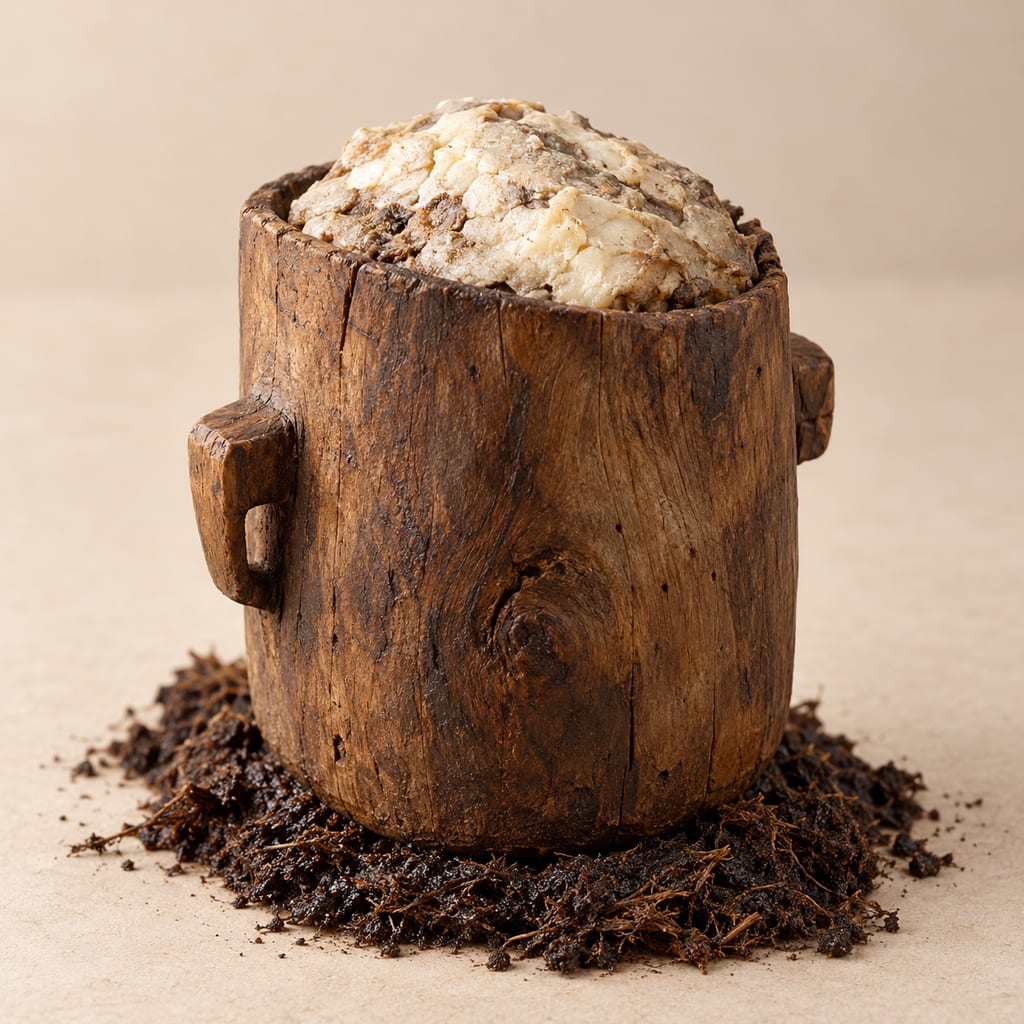
Butter packed into wooden containers and buried in cool, wet peat in Ireland and Scotland, a practice known from finds that may reflect storage, concealment or ritual.
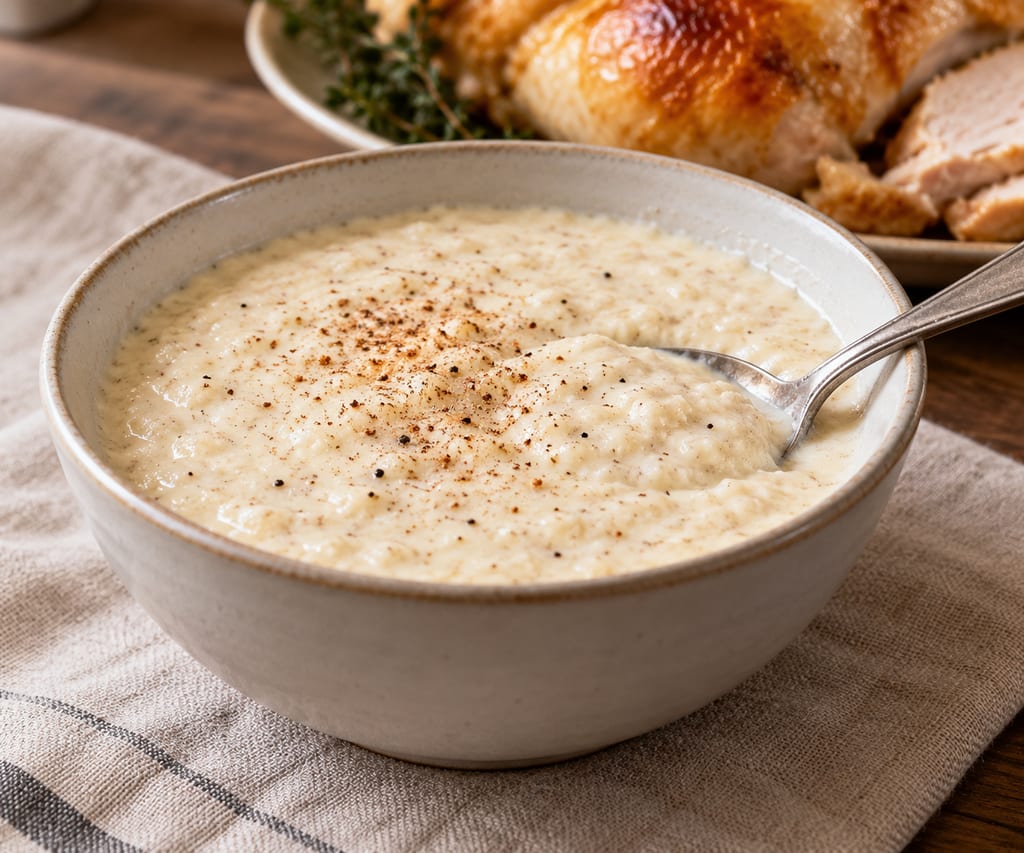
Bread sauce is a British sauce of milk infused with onion, clove and bay, thickened with stale breadcrumbs and finished with butter, served with roast chicken or turkey.
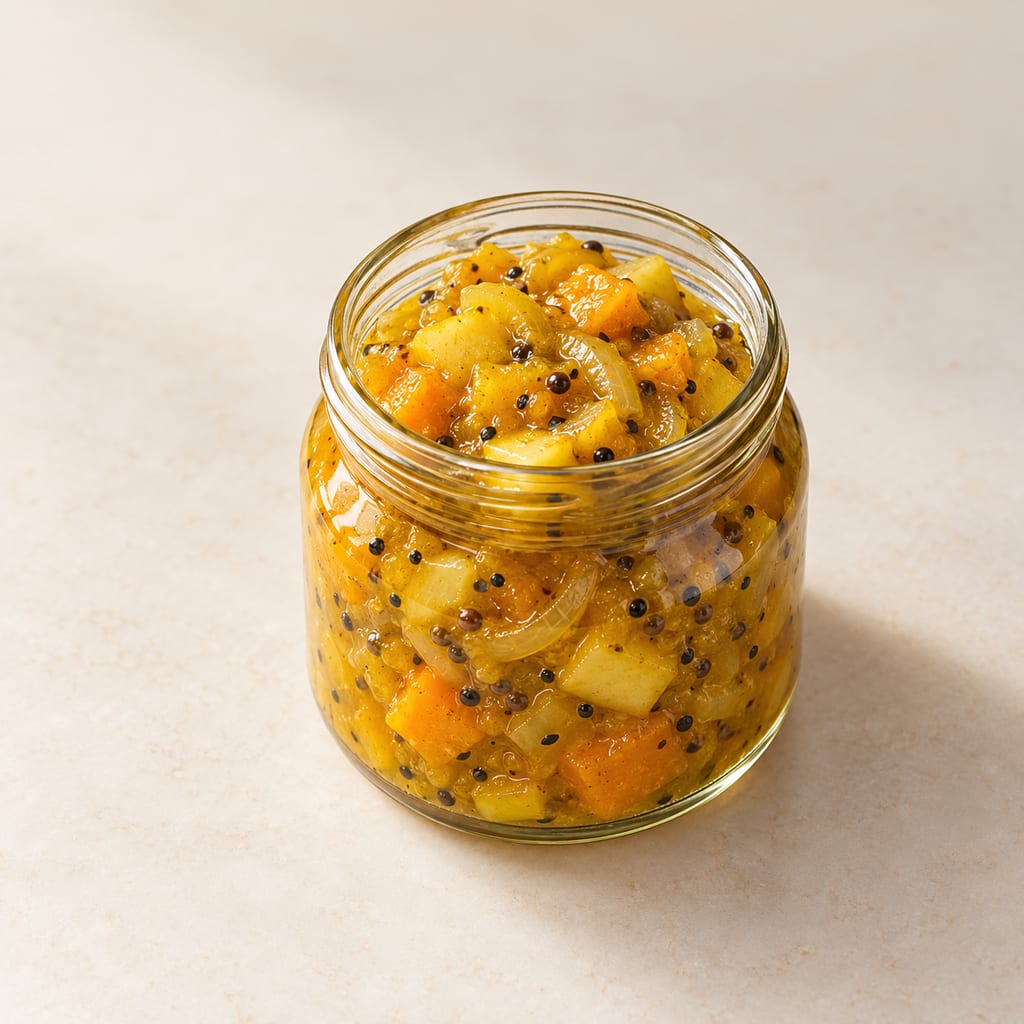
British pumpkin, apple and mustard pickle: Freeze for winter; small fresh portion refrigerated up to 48 hours.
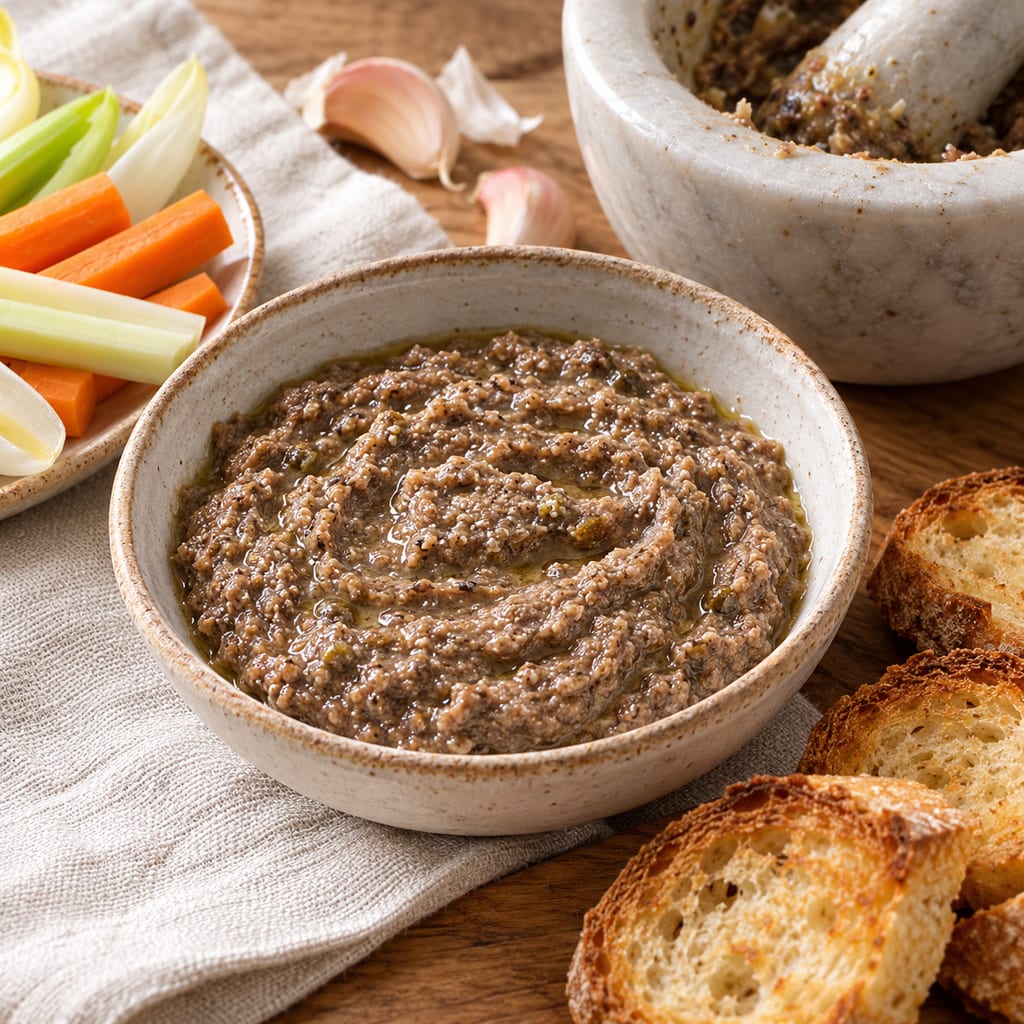
A Provencal dip of anchovies, garlic, capers and olive oil, pounded or blended to a creamy paste and served with raw vegetables, bread and eggs.
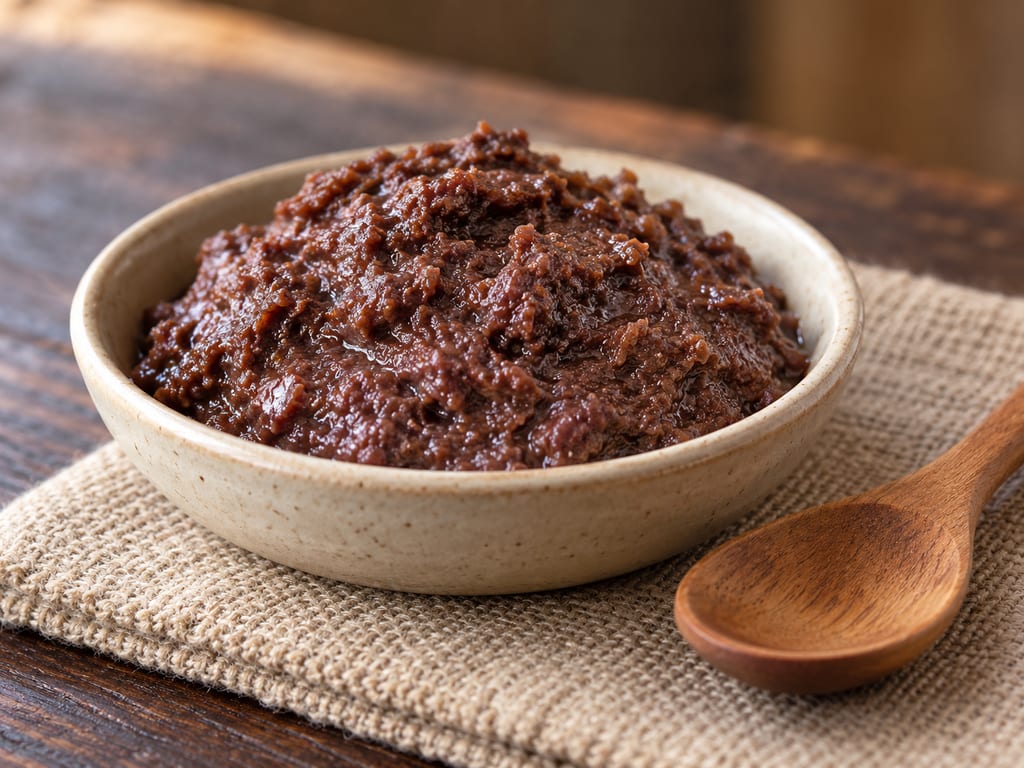
Bagoong isda is a Philippine fish paste: whole small fish salted and left to ferment for a month or more in earthen jars. It is the fish counterpart of bagoong alamang.
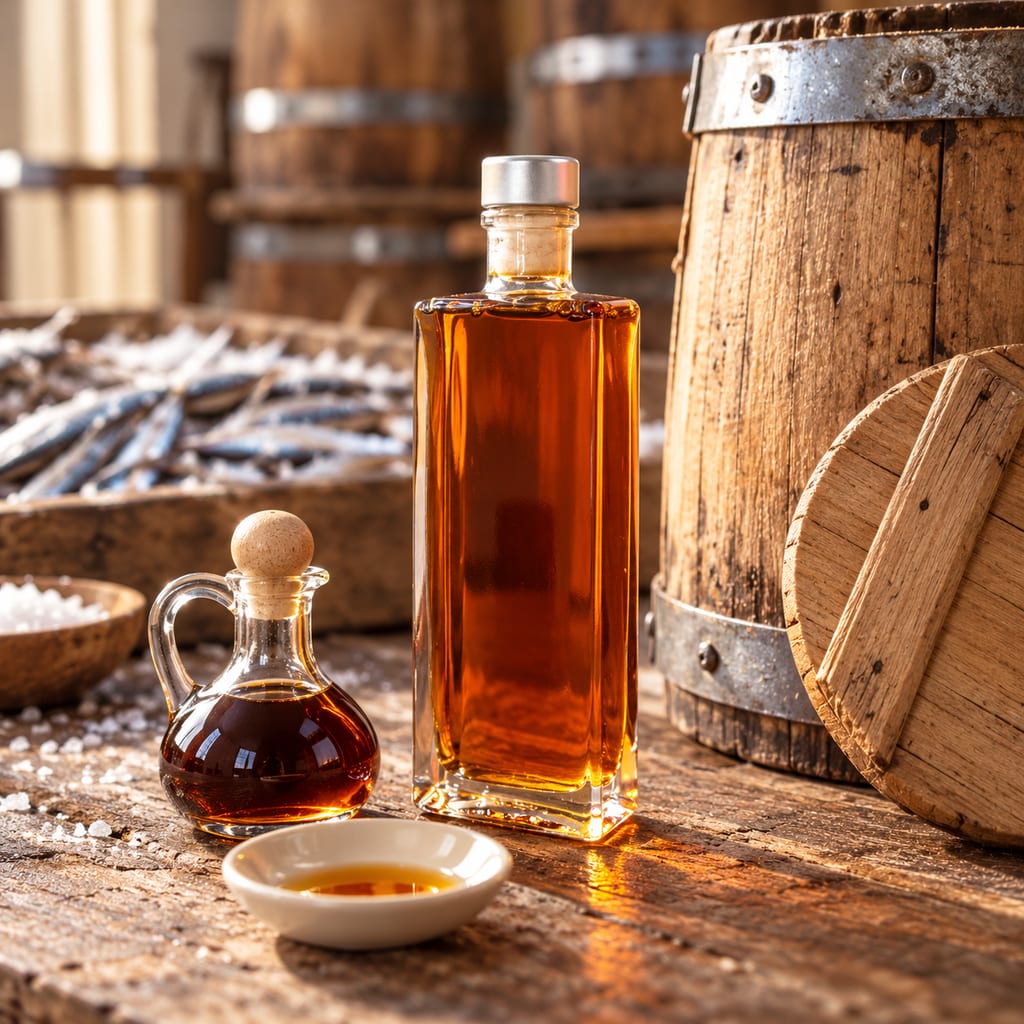
Colatura di alici is the amber liquid drained from salted anchovies matured in wooden containers in Cetara, on the Amalfi coast of Campania, and sold under a protected designation of origin.
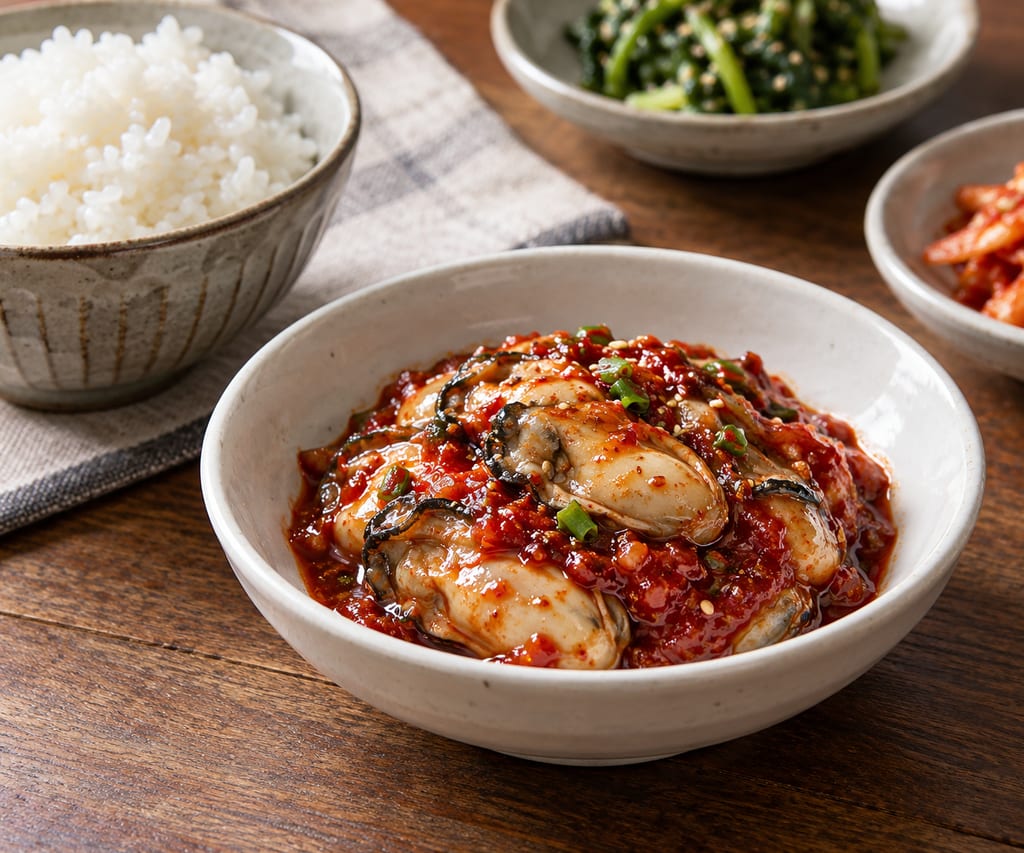
A Korean salted-oyster jeotgal seasoned with chili, associated especially with Seosan and Ganwoldo. This page records its food culture, not a household preparation method.
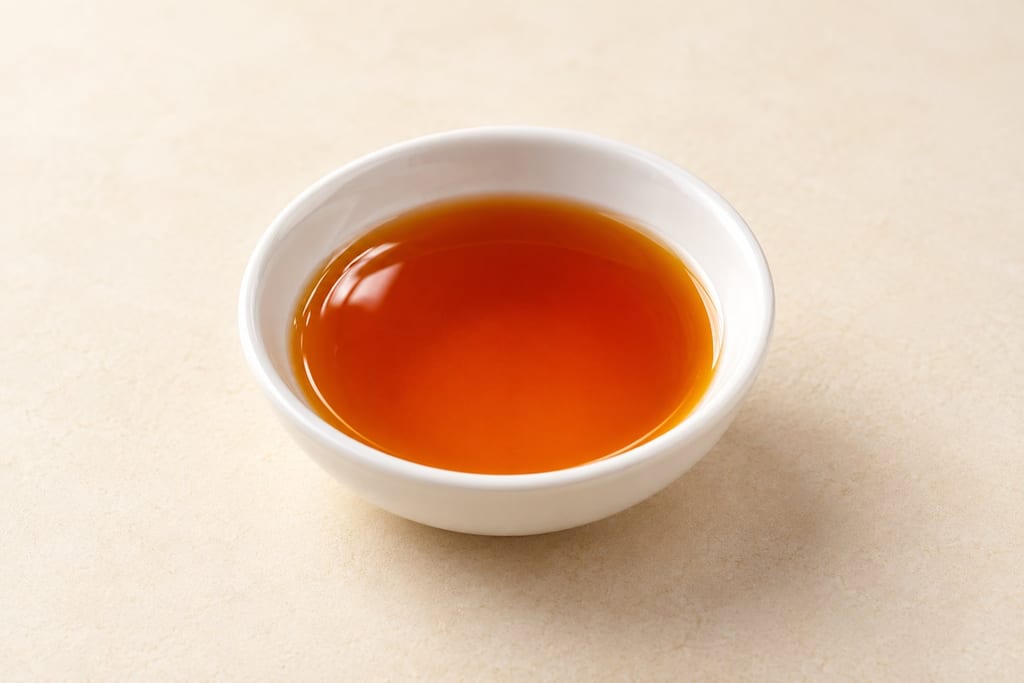
Fish sauce is a clear, salty seasoning made by maturing fish with salt and drawing off the liquid. The broad family includes distinct regional sauces rather than one interchangeable method.
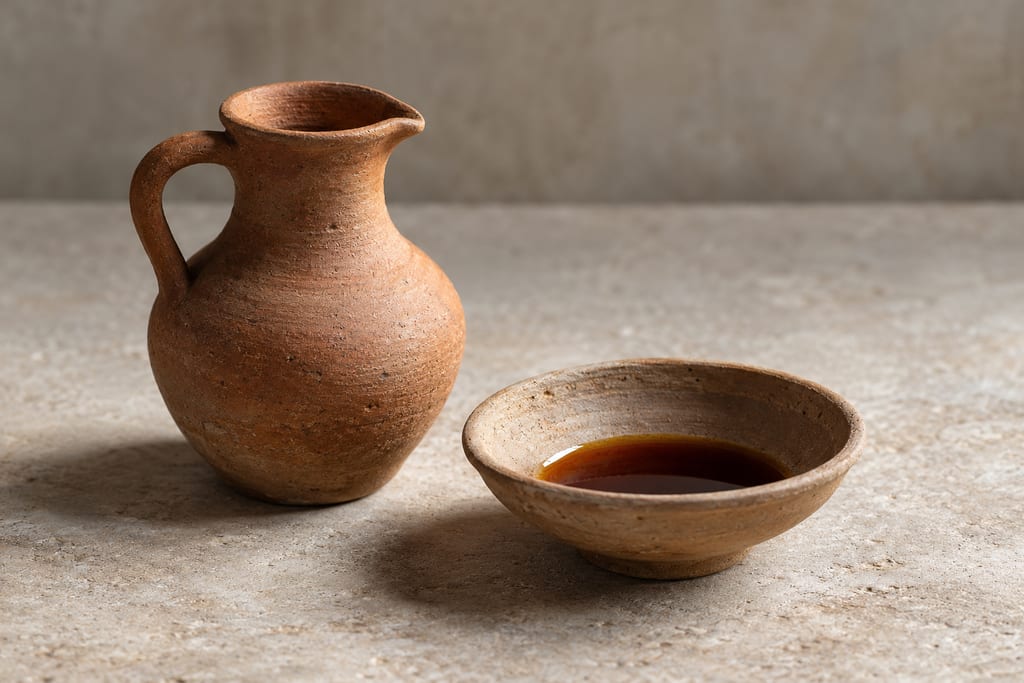
Garum, Greek garos and Latin liquamen, was the fish sauce of the ancient Mediterranean: fish and viscera salted and left in the sun, then drained off as a savoury liquid.
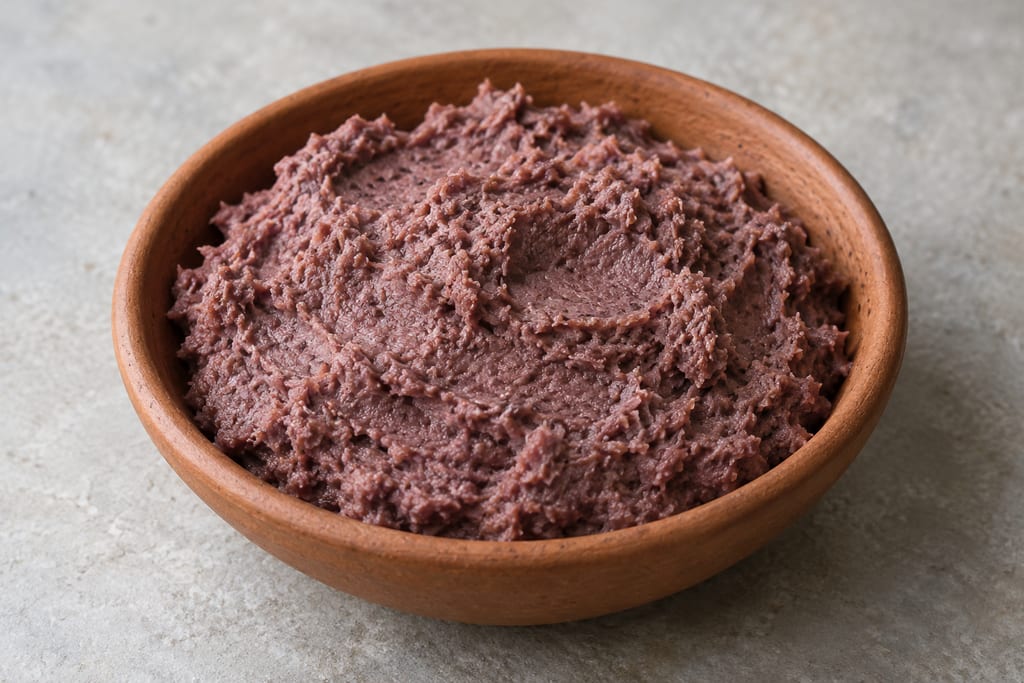
Guinamos is a shrimp paste made on Guimaras in the Philippines: small shrimp salted by hand, sun-dried and trodden by foot until it turns smooth.
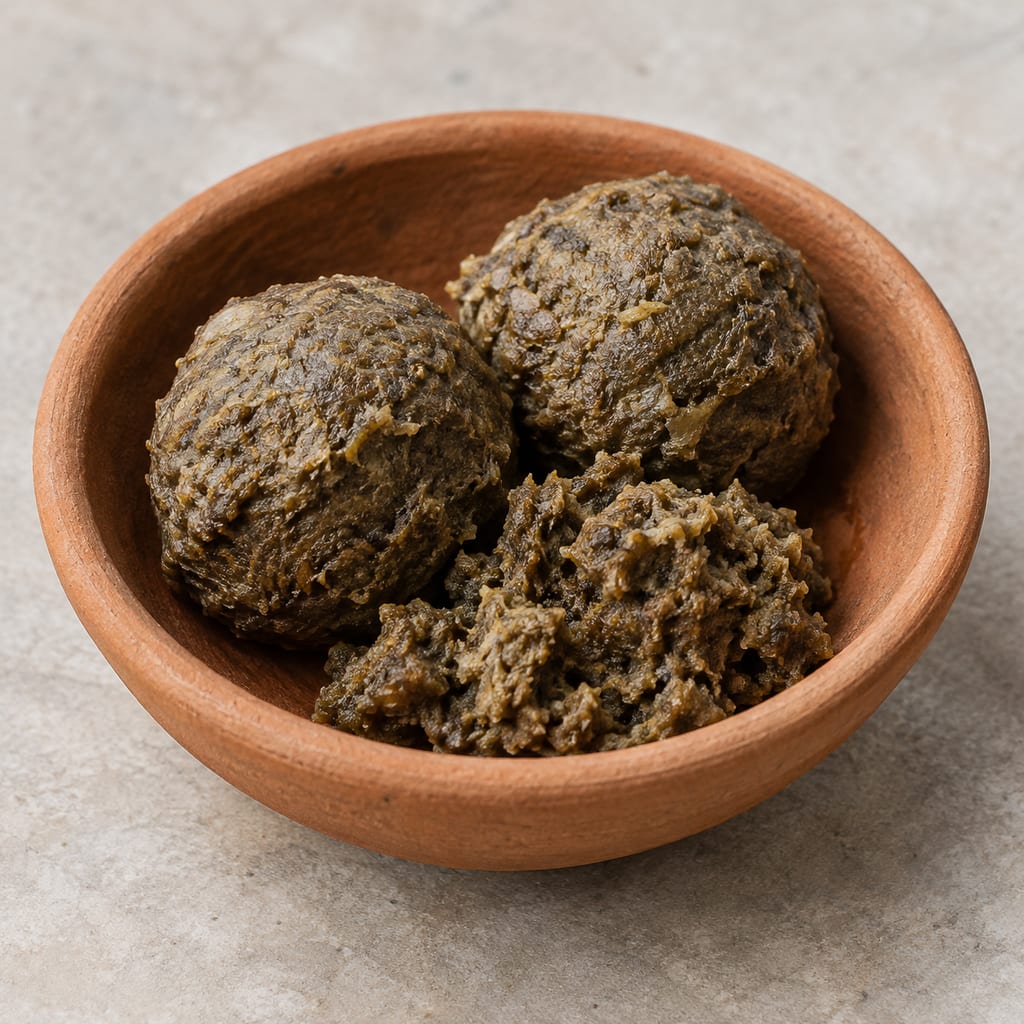
Manipuri fermented fish-and-aroid paste, formed into balls or kept in an earthen pot, used to season Manipuri dishes. Its method is documented in outline only.

A Cap-Pelé boucanière is an Acadian herring-smoking building. The documented Willie Niles example is a one-storey wood-frame structure with a ridge smoke vent and interior bays for hanging fish-bearing cannes.

Achcharu is a family of Sri Lankan vinegar pickles made with mixed vegetables or seasonal fruit and a piquant spice dressing. This version is a quick, refrigerated, non-fermented mixed-vegetable pickle.

The acocote is a long, hollowed and dried gourd used to draw aguamiel from a mature maguey. It is a harvesting tool: the sap is transferred to a separate vessel before it ferments into pulque.

Adrak murabba preserves young ginger in sugar syrup, a sweet South Asian preparation recorded in Indian cookery and food-processing sources.

Parkia biglobosa seeds are fermented into regional West African seasonings, including nététou, iru, dawadawa and soumbala. The yellow fruit pulp is a separate food, and names and methods vary by place.

Japanese reddish-brown vinegar from sake lees matured about three years, turned to vinegar by acetic bacteria; the vinegar of Handa and Edomae sushi rice.

A refined common-wheat flour blended for a broad range of baking; its protein and behavior vary with wheat, milling and market.

The almond mushroom, Agaricus subrufescens, was cultivated in eastern North America in the 1800s, lost its market, and returned as a cultivated mushroom from Brazil, where it is grown under several names.
No community contributions have been published for this entry yet.
Sign in to contribute. Published comments and photos are free to read.
Project GutenbergHistory · Method
The Book of Household ManagementOyster ketchup recipe, ingredients and method, 1861
Attribution to a subscriber to the Englishwoman's Domestic Magazine
Seasonable September to April
Victorian LondonHistory
Mrs. Beeton's Book of Household Management, Chapter 10: Sauces, Pickles, Gravies, and ForcemeatsSauces chapter location of the ketchup recipes in the 1861 book
National Center for Home Food Preservation, University of GeorgiaSafety
Home Canning Videos: Pressure CanningThe National Center for Home Food Preservation states pressure canning is the only recommended method for canning low-acid foods including seafood; safe storage requires tested processing directions.
FoodSafety.govSafety
Safe Selection and Handling of Fish and ShellfishPerishable seafood should be refrigerated or frozen promptly; general seafood safety guidance does not establish a shelf life for this historical formula.