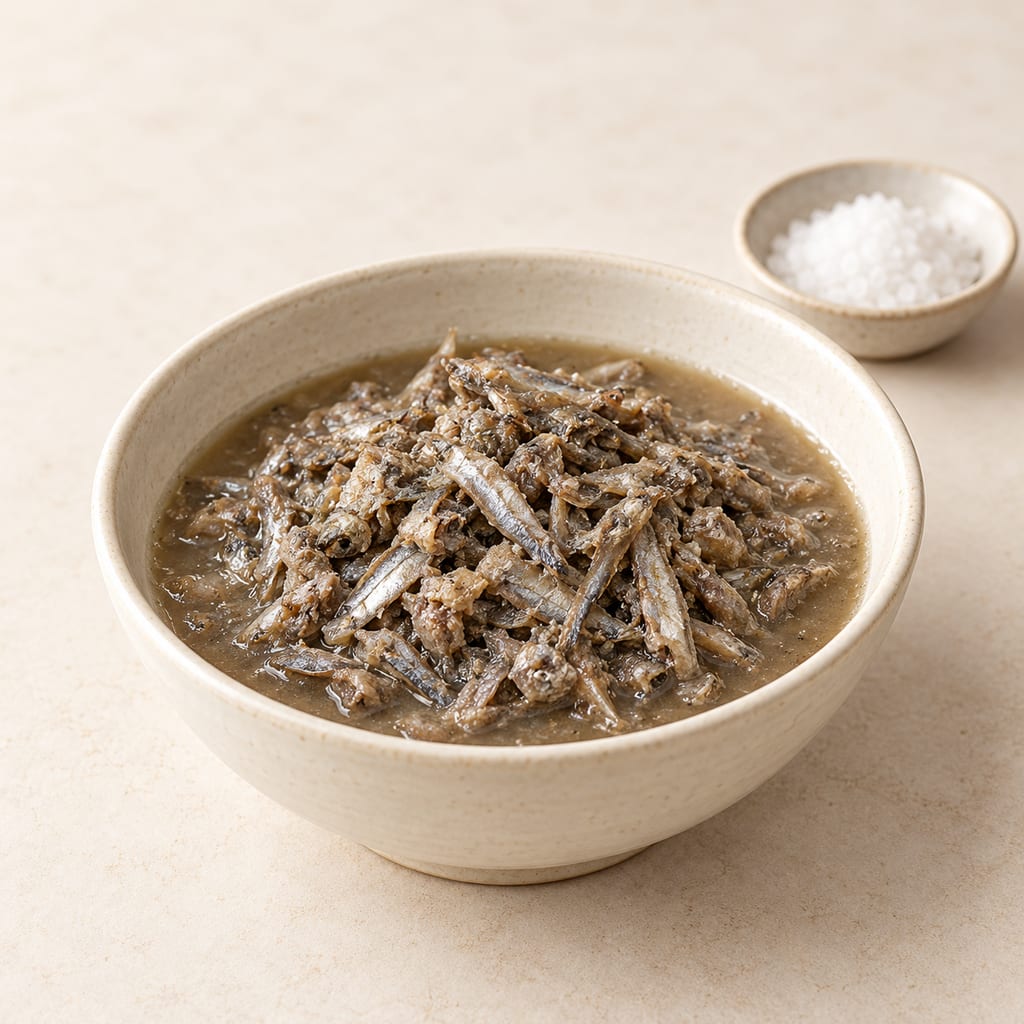
Myeolchi jeot
Salted anchovies mature in a covered jar with brine. The fish can be seasoned for a meal, while the expressed liquid seasons kimchi and other dishes.
 FermenteaWhere food goes to change
어리굴젓 · Oyster jeotgal · Salted oyster in chili
A Korean salted-oyster jeotgal seasoned with chili, associated especially with Seosan and Ganwoldo. This page records its food culture, not a household preparation method.
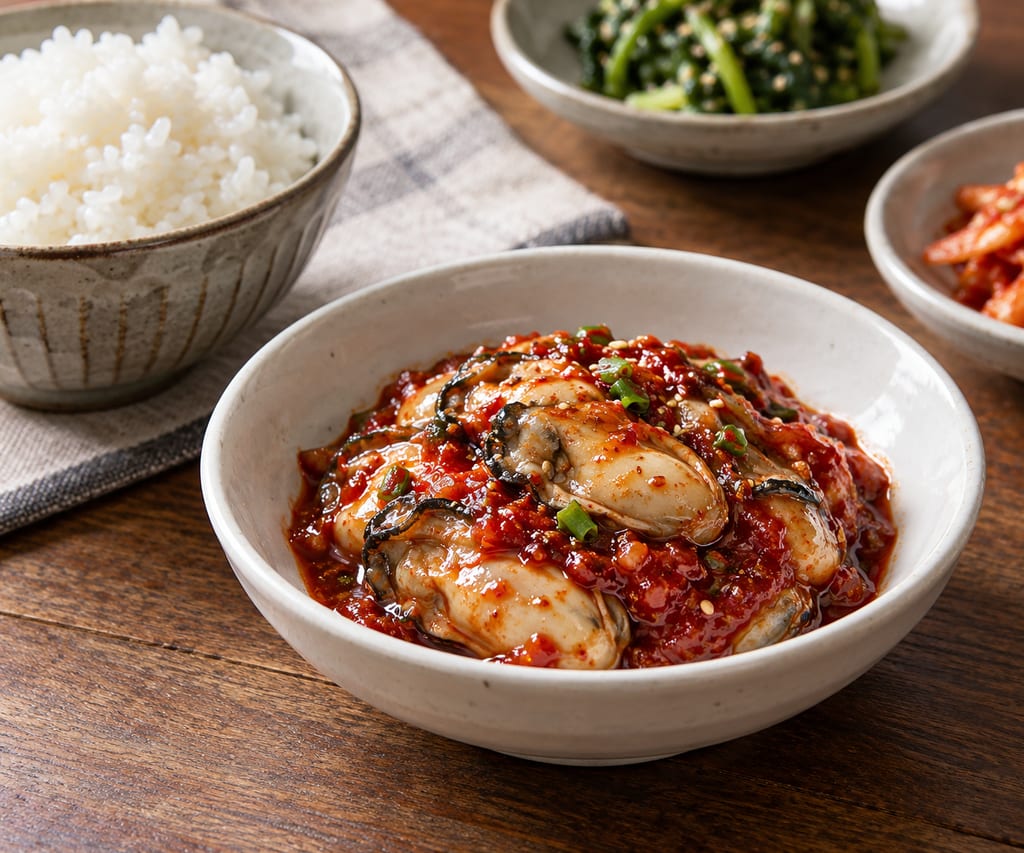
Eoriguljeot (어리굴젓) is a Korean oyster jeotgal, the seasoned form of salted seafood traditionally matured through fermentation. The Academy of Korean Studies’ Encyclopedia of Korean Culture defines it as fresh oysters with salt and chili powder. The chili seasoning is a useful distinction from other guljeot, the broader family of oyster jeotgal. The Korea Tourism Organization also describes it as a Korean folk dish, commonly known in English as spicy salted oysters.
These names identify a food and its place in a wider Korean food category; they do not point to a single universally standardized formula. Korea’s food-safety standards describe jeotgal as seafood with salt that is fermented and matured, and distinguish plain jeotgal from seasoned jeotgal. That regulatory definition helps explain why eoriguljeot is discussed alongside other preserved seafood, but it does not establish a household recipe or certify any particular product.
This page has been corrected into a non-instructional food account. It retains cultural description, place associations and research context, while omitting procedure, ratios, time, temperature and storage directions for raw oysters.
Jeotgal is not only a preservation category. Korean tourism material describes salted seafood as both a side dish and a seasoning, and the Korean literature on fermented foods records its use across meals and culinary preparations. A small amount can make a rice meal more savory; other jeotgal forms are incorporated into foods such as kimchi. Those broad roles help place eoriguljeot in the everyday structure of a meal without implying that all jeotgal tastes alike or that one method fits them all.
Food historians have used a mix of written records, archaeological materials and later culinary descriptions to understand jeotgal. A 2026 article in the Journal of the Korean Society of Food Culture studies evidence from Baekje and Silla sites, including vessels and administrative records, to discuss the broader category’s production, distribution and ritual roles. It also stresses how limited early written evidence can be. That research concerns jeotgal generally; it does not show that the specific oyster-and-chili food called eoriguljeot existed in those ancient contexts.
Keeping the distinction matters. A long history for a broad food family is not proof that every named regional subtype has the same age. Here, the food’s documented regional history is presented separately from research on the wider category.
The Academy of Korean Studies encyclopedia entry on eoriguljeot was written by food-studies scholar Seo Hye-gyeong in 1995 and updated in 2023. Its bibliography points to a 1958 Korean cookbook and a 1984 national folk-cuisine survey. This makes it a useful secondary account of regional descriptions and remembered practice, but it is not itself a dated primary record of the dish’s origin.
The entry reports that Ganwoldo eoriguljeot was once presented as a tribute food, while giving no date or underlying documentary citation for that detail. The careful reading is therefore that a Korean cultural reference records this association, not that a particular dynasty, ruler or century has been established. The broader history of jeotgal can be traced through separate written and archaeological evidence, but those sources do not identify ancient products as eoriguljeot.
Older culinary references also preserve procedural directions. This corrected account does not repeat them: historical documentation is valuable evidence about food culture, but it is not a substitute for a validated modern safety process for raw shellfish. The historical discussion and the public-safety discussion answer different questions and should not be collapsed.
The Academy of Korean Studies encyclopedia names Seosan, Dangjin, Yesan and Ganwoldo among the notable Chungcheong locations associated with eoriguljeot, with Ganwoldo singled out. These are place associations recorded by the source, rather than a claim that the dish belongs exclusively to one town. Korea Tourism’s regional food pages also connect eoriguljeot with Chungcheong and identify Seosan as especially well known for it.
Seosan’s municipal tourism material presents eoriguljeot as part of local seafood identity and describes a festival centered at Ganwoldo Port, with tastings and other seafood activities. That is evidence of contemporary civic and tourism recognition. It should not be treated as proof that a modern festival continues unchanged from an earlier period, nor as a guarantee that every locally sold product shares one preparation.
The name’s first element has more than one proposed explanation in the Academy of Korean Studies entry. The article records suggestions linked with the peppery sensation, small oysters or a milder saltiness, but does not establish a single etymology. This account therefore preserves the Korean name and transliteration while leaving the origin of the word unresolved.
The encyclopedia describes differences among regional versions. It notes that Seosan examples have been associated with chili powder and millet, while contemporary versions may use less millet; its Yesan account lists sweet, fruit and aromatic seasonings; and it characterizes Dangjin’s version as a faster-maturing local style. These reports are a record of variation, not instructions to reproduce the ingredient combinations or timing.
Variation also cautions against treating a video, restaurant serving or packaged product as the canonical version. A current creator may use ingredients or sequences that another cook does not. In the three modern demonstrations recorded by modern home cooks, salt treatment and handling differed, and their captions did not provide a shared, measured process. Their recipe directions have therefore been removed. They are not used here to define a safe preparation.
The available accounts support a few stable descriptive points: oysters, salt, chili seasoning and a place in Korean food culture. They do not support a single batch size, set of proportions, maturation endpoint or storage promise. Keeping the distinctions visible is more faithful to the sources than smoothing them into a synthetic recipe.
Korea’s Ministry of Food and Drug Safety standards distinguish several product forms within the jeotgal category. Whole or partial fish, crustaceans, molluscs and echinoderms salted and matured are classified as jeotgal; adding chili powder or other seasonings places a product in the seasoned-jeotgal category. Separate definitions cover aekjeot, the liquid separated from jeotgal, and seasoned liquid fish sauce. These regulatory distinctions help readers understand why a whole-oyster side dish is not the same food as a clear fish sauce, even though both come from salted seafood.
Eoriguljeot is described by the cultural encyclopedia and tourism source as seasoned oysters, rather than a liquid sauce. A short ingredient list in this account names oysters, salt and chili powder as its defining components. Garlic and radish are retained only as optional examples in contemporary creator demonstrations, not as universal ingredients. No quantity or mixing order is shown.
The formal categories provide useful vocabulary for product identity, but they should not be mistaken for a complete safety specification. A food standard may name a category and certain requirements without establishing that every home preparation is safe. This entry uses the Korean standard to describe terminology only and offers no processing directions.
The Academy of Korean Studies account places eoriguljeot within a group of notable Chungcheong regional foods and gives Ganwoldo particular prominence. Seosan City’s tourism page presents a contemporary festival dedicated to eoriguljeot at Ganwoldo Port, alongside local seafood events. Together, these sources show that the dish carries a place-based identity in both a cultural reference work and current local promotion.
Place-based food names can carry several layers at once: a familiar ingredient, a season or fishing landscape, household knowledge, restaurant practice and public celebration. The sources used here support the association with Seosan and Ganwoldo; they do not prove that the food began there, that all oysters come from one bay, or that each local family makes the same version. The page therefore treats the place as documented cultural association, not an exclusive origin or a guarantee of provenance for every product.
The tourism and municipal sources also describe use in present-day dining and local events. That makes eoriguljeot a living food rather than only an archival subject. A festival page, however, is evidence of civic recognition at the time it was written, not proof that an event takes place every year or that modern forms have remained unchanged.
The Korea Tourism Organization describes eoriguljeot as a side dish with steamed rice and mentions mung-bean pancakes as a restaurant pairing. The Academy of Korean Studies entry also records its use as a side dish and an accompaniment to alcoholic drinks. These are serving contexts, not requirements; different households and restaurants may place the condiment in different meals.
Chili gives the food a visible red seasoning and distinguishes it in the encyclopedia’s description from other oyster jeotgal. Oysters contribute their own marine savoriness. The tourism account describes a sweet-and-savory character when it is eaten with rice. These broad sensory notes help explain its appeal without making claims about a specific batch, age, salt level or fermentation outcome.
In the Korean meal setting, banchan are shared dishes that accompany rice, so a preserved seafood side can be part of a broader table rather than a stand-alone entrée. Eoriguljeot’s pairing with rice illustrates that role. The public account avoids invented service quantities or nutrition claims: the sources identify serving contexts but do not establish a universal portion.
A 2024 study examined ten commercial seasoned Eorigul-jeot products identified as salt-fermented oysters. It reported a range of measured salinity and acidity among those products. Fecal coliform was detected in one sample; Bacillus cereus and Clostridium perfringens were each detected in two. All tested samples were negative for Staphylococcus aureus and Vibrio parahaemolyticus. The authors nevertheless concluded that monitoring food-poisoning bacteria matters for consumer health.
The study is product-specific evidence that commercial samples can vary and merit monitoring. It is not a comparison of every regional style, a survey of home kitchens, or a validation of the salt holds found in internet videos. Its negative results for two organisms do not prove that other batches are safe, and its findings for some organisms do not mean that all Eorigul-jeot is contaminated.
That distinction is central to this page’s scope. Research on commercial products can inform a careful account of identity and public-health context, but it cannot be converted into a household control without qualified process design and validation. No numbers from the study are offered here as targets for home use.
The Centers for Disease Control and Prevention warns that raw or undercooked oysters can carry germs, including Vibrio, and cause infection. Its public guidance says proper cooking kills harmful germs. The guidance does not evaluate eoriguljeot fermentation or establish that salting, seasoning, refrigeration or sensory changes provide the same control.
Because the sources reviewed for this record do not establish a validated household process for raw oyster jeotgal, this page contains no preparation or storage directions. It gives no salt concentration, fermentation duration, refrigerator temperature, shelf life or sensory endpoint. The disclaimer is deliberate: a cultural description should not be mistaken for practical permission to process raw shellfish.
Readers seeking the food can use these sources to understand its Korean identity, regional associations and table context. They should not use this account to make a raw-oyster product. This page does not make a safety claim about any specific commercial product; the product study itself recommends continued monitoring.
The Academy of Korean Studies encyclopedia describes eoriguljeot as salted oysters seasoned with chili and records it as a Chungcheong regional food, especially associated with Seosan and Ganwoldo. It reports an old tribute association but gives no date or primary attestation. Archaeological research documents the much broader Korean jeotgal category in Baekje and Silla contexts, but does not identify those finds as eoriguljeot. The subtype's earliest attestation therefore remains unknown.
Scaling: source batch only
Raw or undercooked oysters can carry germs including Vibrio; this account does not provide a validated salt-fermentation control.
Hazard sourceCDC states that proper cooking kills harmful germs in oysters. No raw-oyster salting or storage process is recommended or validated by this account.
Control sourceThis is a non-instructional cultural account, not a household recipe or food-safety process.
A 2024 study of ten commercial Eorigul-jeot products found Bacillus cereus and Clostridium perfringens in two samples each and recommended monitoring; those findings do not describe every product or home method.
The Academy of Korean Studies lists Seosan, Dangjin, Yesan and Ganwoldo among notable Chungcheong locations for eoriguljeot. This is a regional association, not a claim of one exclusive origin.
Salted anchovies mature in a covered jar with brine. The fish can be seasoned for a meal, while the expressed liquid seasons kimchi and other dishes.
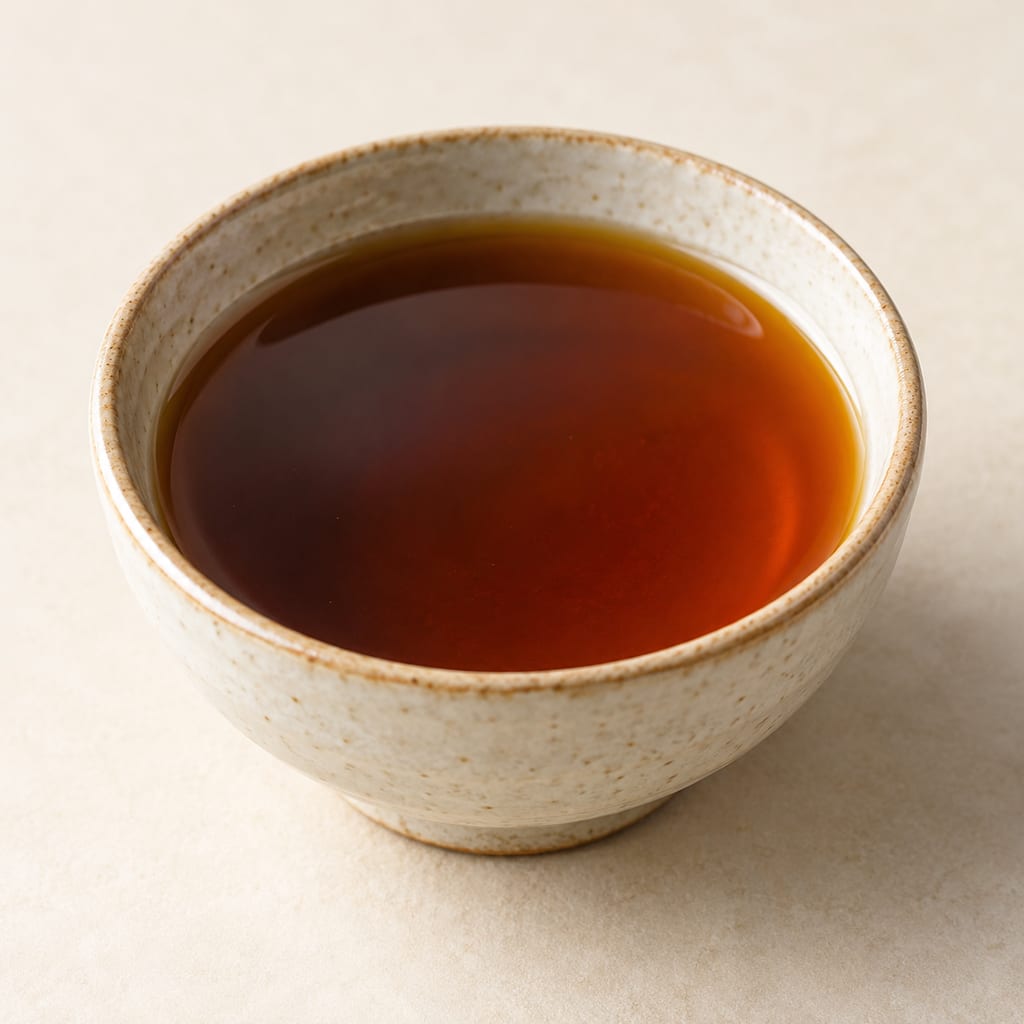
Myeolchi-aekjeot is Korean anchovy sauce: whole anchovies salted to about 25 percent brine, fermented for months to years and filtered; its main use is as a kimchi seasoning.
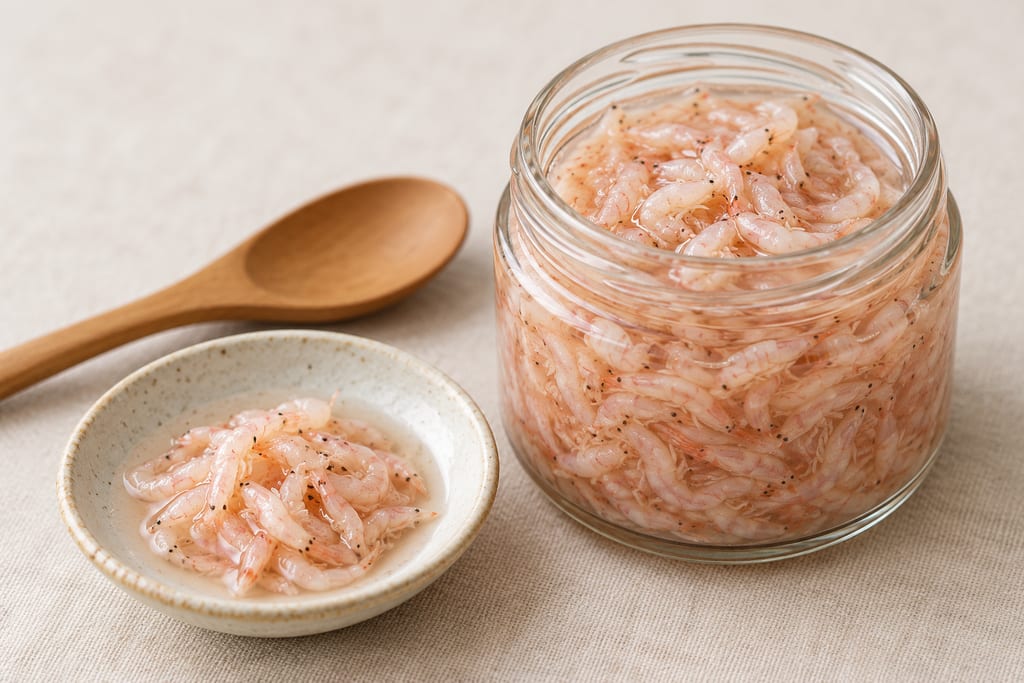
Korean fermented seafood made by salting whole small shrimp and maturing them in their own brine, used as a seasoning, in kimchi and with pork.
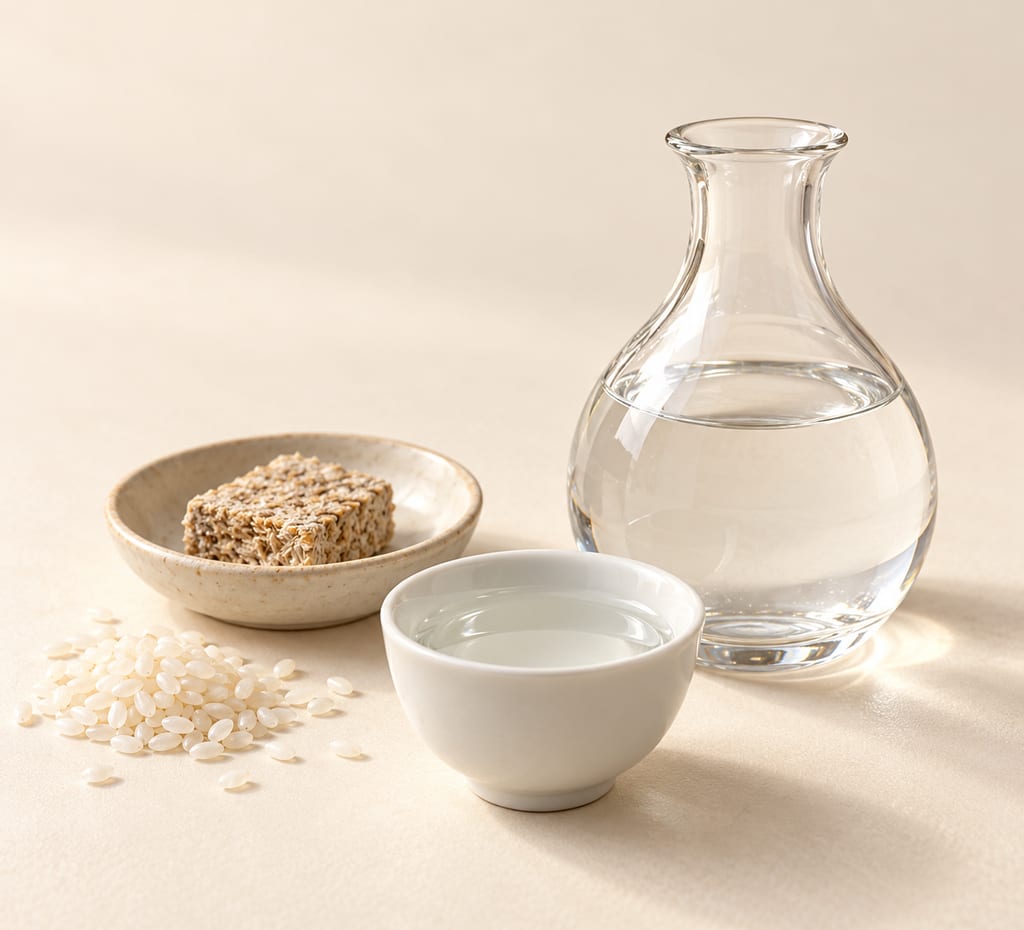
Andong soju is a rice spirit from North Gyeongsang, distilled from steamed rice and wheat nuruk. This method makes the starter before fermenting the rice mash in a jar.
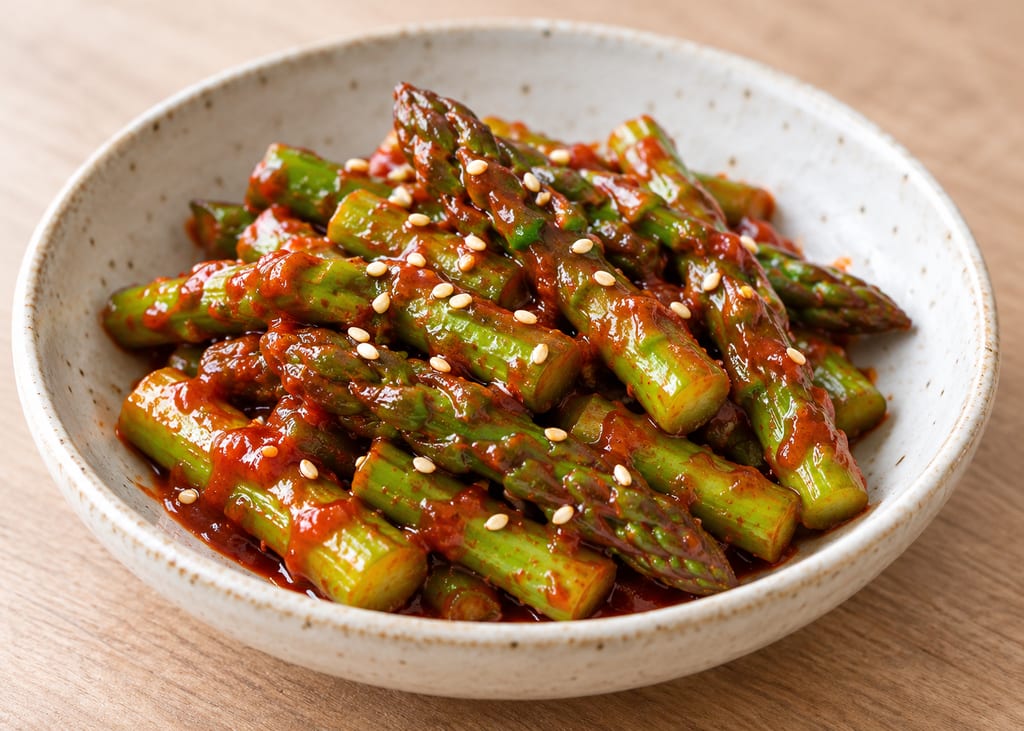
A Korean banchan of blanched asparagus dressed with a sweet-sour cho-gochujang sauce; Hyosun's version cools the spears in ice water before tossing.
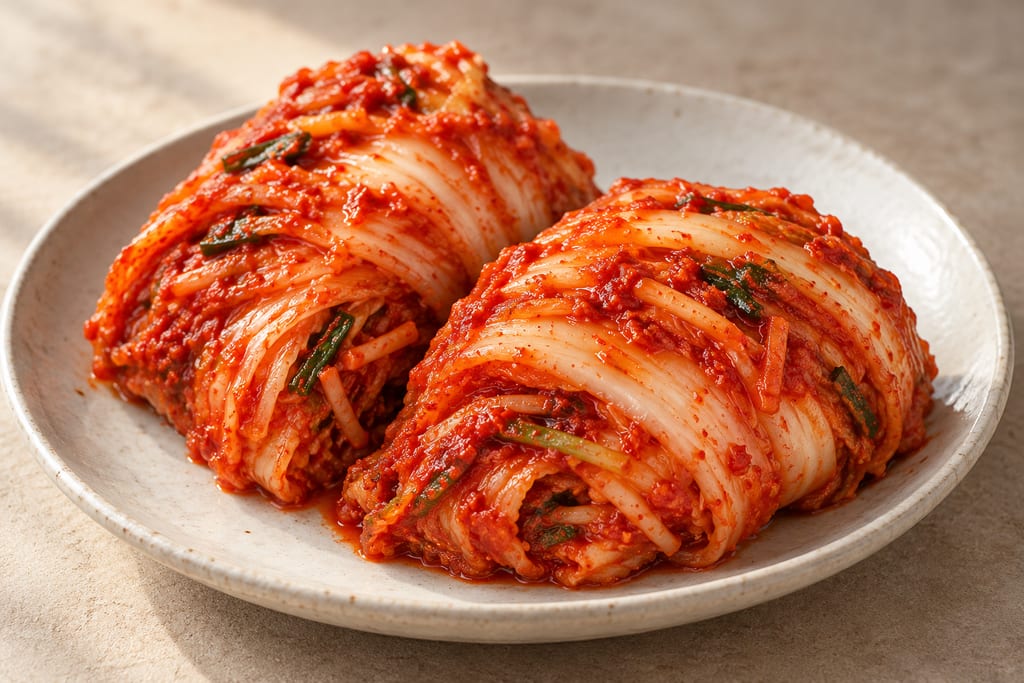
Napa cabbage salted, seasoned with a paste of gochugaru, garlic, ginger and salted seafood, and left to sour through lactic fermentation; Korea's everyday winter preserve.
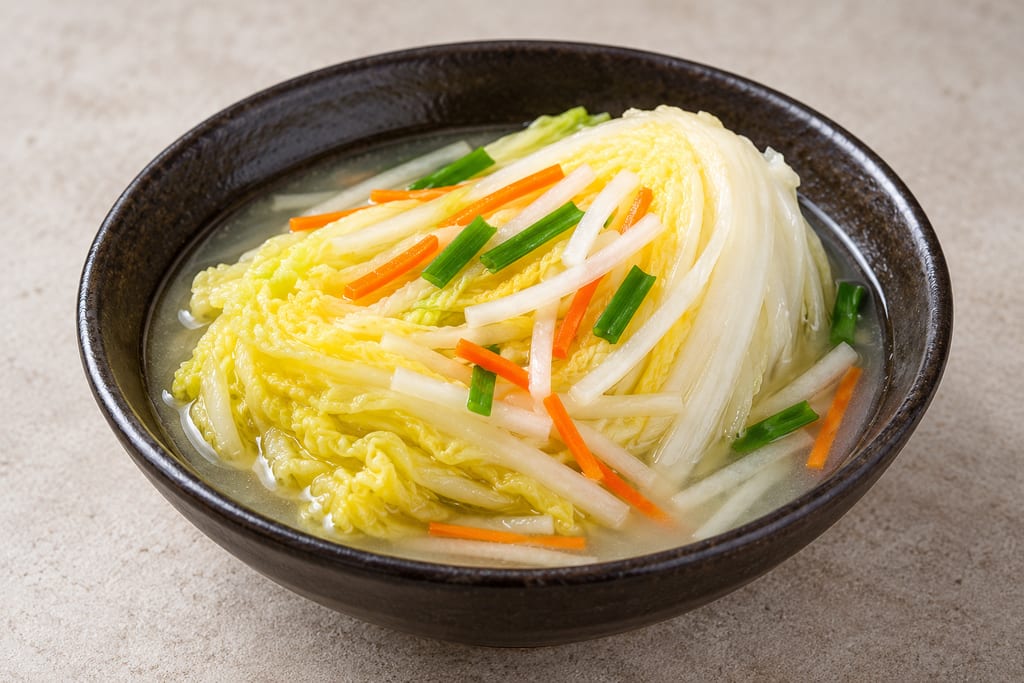
Napa cabbage is brined and filled with pear, radish, alliums, chives and fruit; this Korean kimchi omits red pepper flakes.
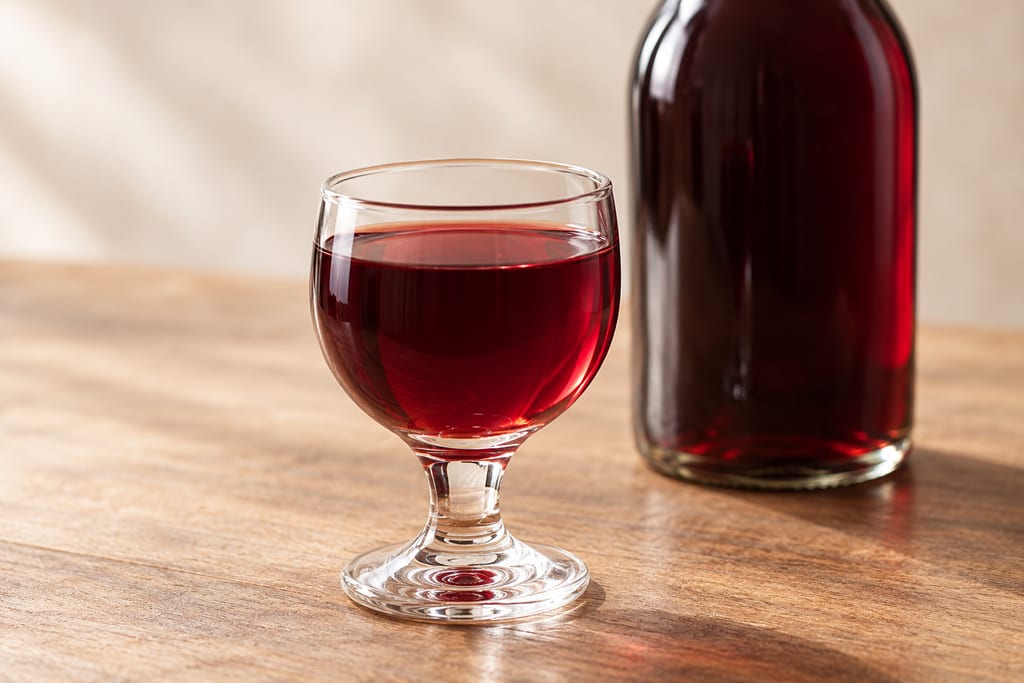
Korean black raspberry wine: crushed bokbunja berries with their seeds, sweetened to 20 °Brix, fermented 15 days at 25 °C with wine yeast, filtered and matured three months.
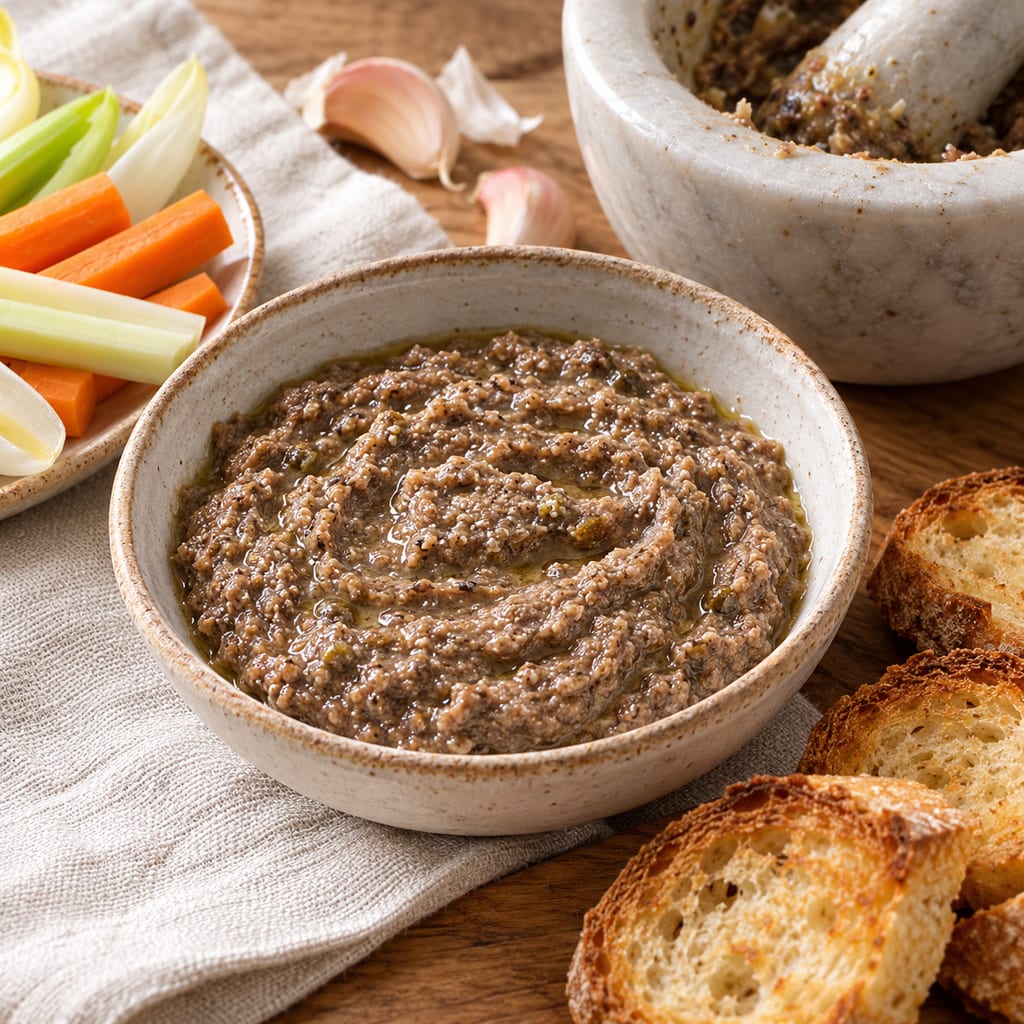
A Provencal dip of anchovies, garlic, capers and olive oil, pounded or blended to a creamy paste and served with raw vegetables, bread and eggs.
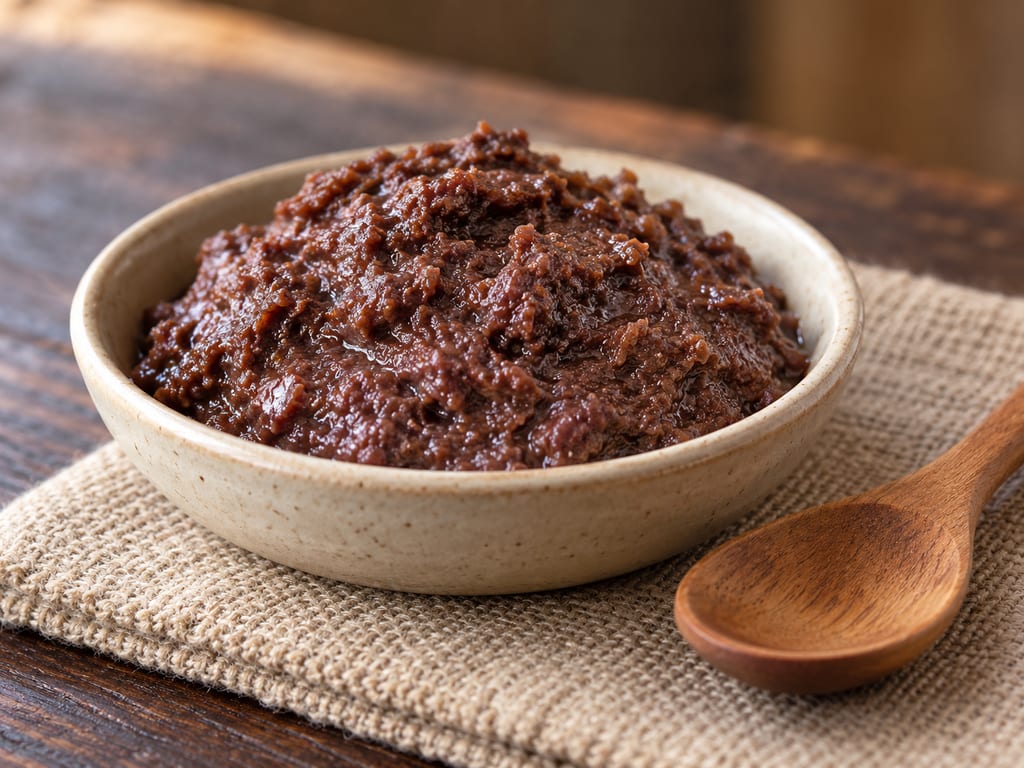
Bagoong isda is a Philippine fish paste: whole small fish salted and left to ferment for a month or more in earthen jars. It is the fish counterpart of bagoong alamang.
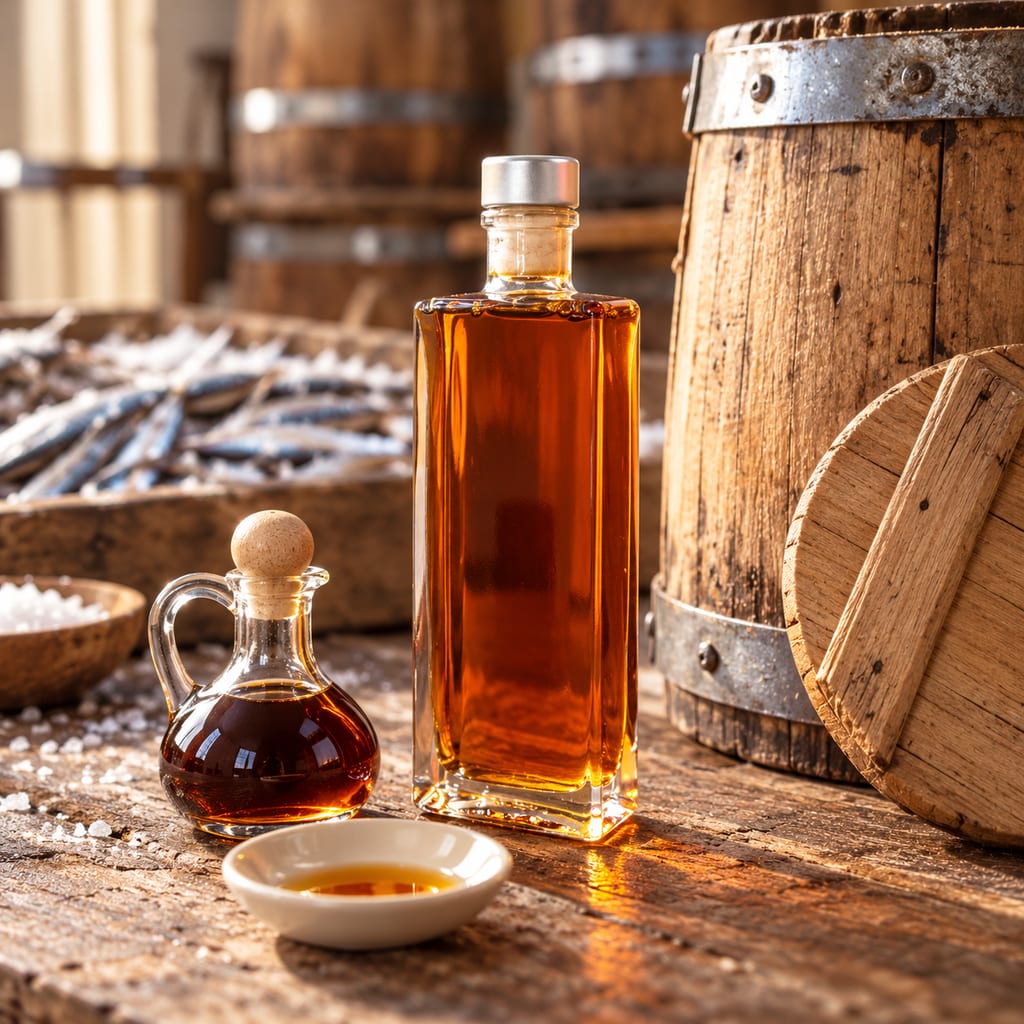
Colatura di alici is the amber liquid drained from salted anchovies matured in wooden containers in Cetara, on the Amalfi coast of Campania, and sold under a protected designation of origin.
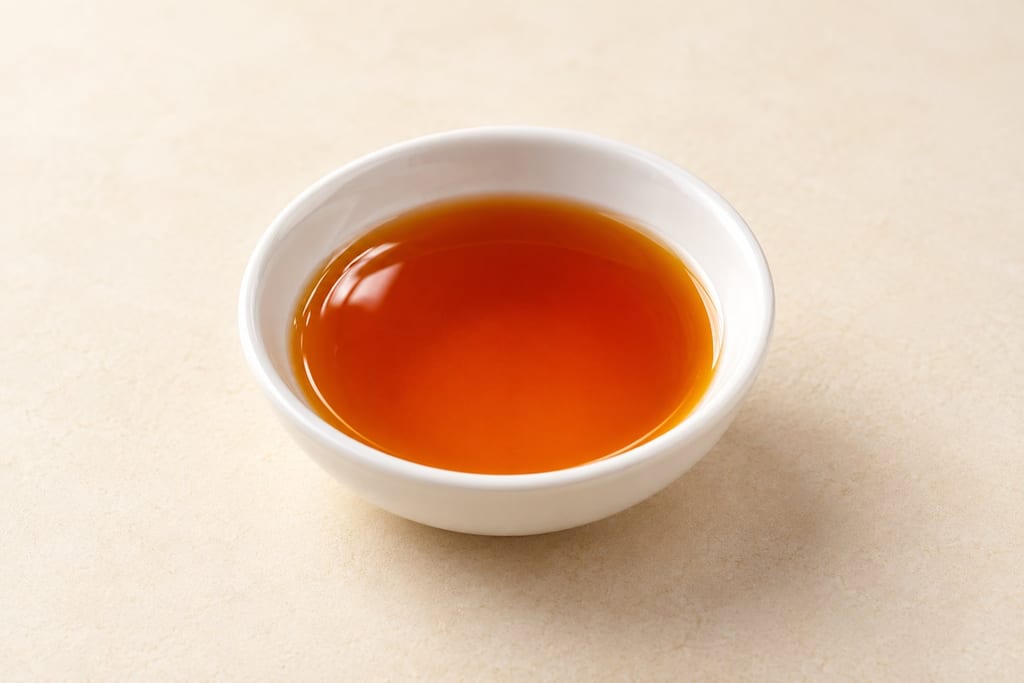
Fish sauce is a clear, salty seasoning made by maturing fish with salt and drawing off the liquid. The broad family includes distinct regional sauces rather than one interchangeable method.
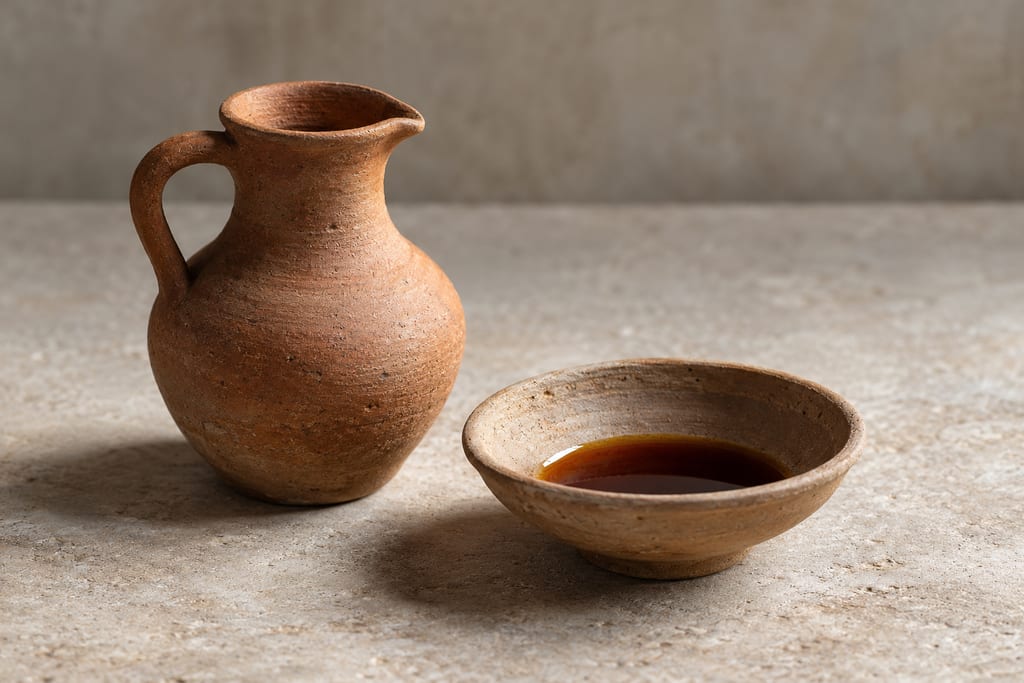
Garum, Greek garos and Latin liquamen, was the fish sauce of the ancient Mediterranean: fish and viscera salted and left in the sun, then drained off as a savoury liquid.
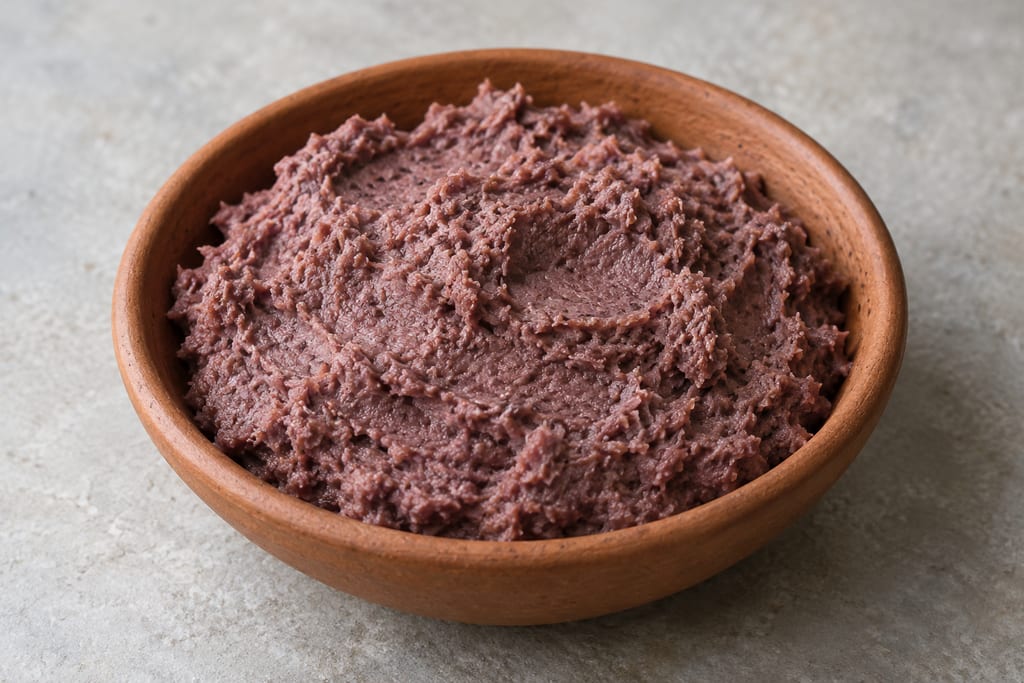
Guinamos is a shrimp paste made on Guimaras in the Philippines: small shrimp salted by hand, sun-dried and trodden by foot until it turns smooth.
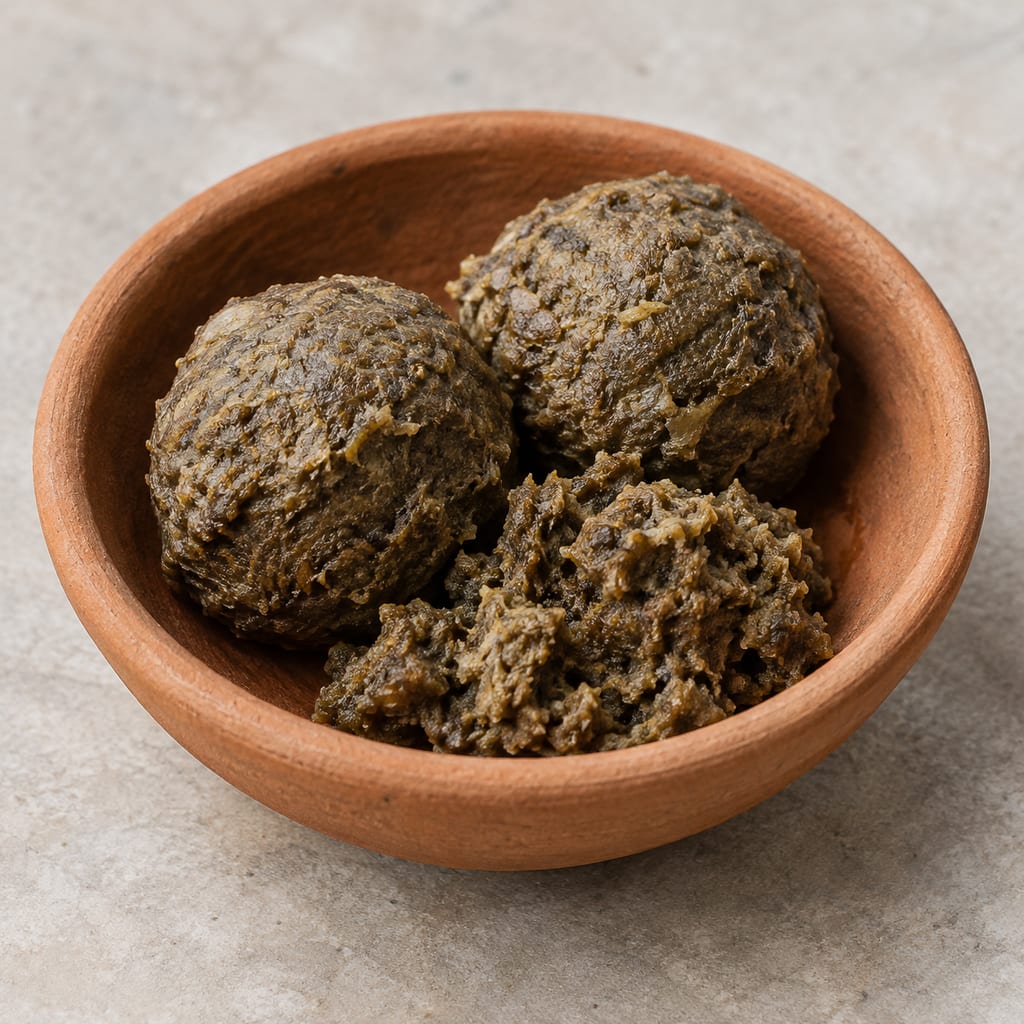
Manipuri fermented fish-and-aroid paste, formed into balls or kept in an earthen pot, used to season Manipuri dishes. Its method is documented in outline only.
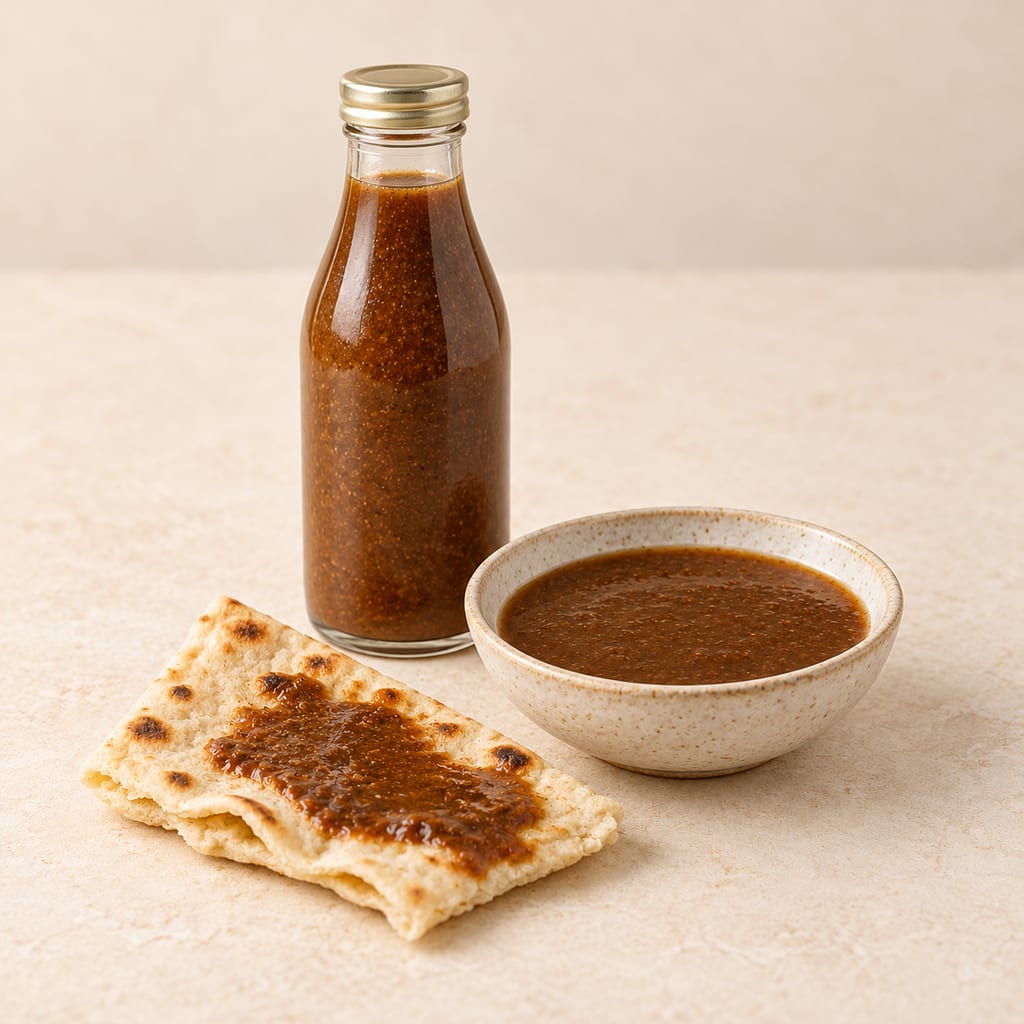
Mahyawa, also written mahyaveh, is a traditional fish sauce from southern Iran, made by salting small sardines or anchovies in water, maturing them in jars and seasoning the filtered liquid with mustard and spices.
No community contributions have been published for this entry yet.
Sign in to contribute. Published comments and photos are free to read.
Korea Tourism Organization / VisitKoreaCulture · Use
Spicy Salted Oysters (어리굴젓 / Eoriguljeot)Identifies eoriguljeot as a Korean folk dish of seasoned salted oysters.
Describes rice and mung-bean pancake as serving contexts.
Academy of Korean Studies, Encyclopedia of Korean CultureIdentity · Culture · History
어리굴젓 (Eoriguljeot)Defines eoriguljeot as oyster jeotgal seasoned with salt and chili powder.
Names Seosan, Dangjin, Yesan and Ganwoldo as Chungcheong areas associated with the food, and reports an undated tribute association for Ganwoldo.
Records regional differences in seasoning and leaves the name etymology uncertain.
The entry is by Seo Hye-gyeong, written in 1995 and updated in 2023; it cites a 1958 cookbook and a 1984 national folk-cuisine survey.
Ministry of Food and Drug Safety, Republic of Korea / Food Safety KoreaClassification
Food standards: seafood processed products, jeotgal categoryDefines jeotgal as seafood with salt matured through fermentation and distinguishes seasoned jeotgal.
Korean Journal of Fisheries and Aquatic Sciences, Korean Society of Fisheries and Aquatic ScienceSafety · Research
Microbiological Evaluation of Commercial Eorigul-jeot, Salt-fermented Oyster Crassostrea gigas with Seasoning, Produced in KoreaStudy measured ten commercial samples and reported variable chemistry; detected fecal coliform in one sample and Bacillus cereus and Clostridium perfringens in two samples each; the authors recommend monitoring.
All sampled products were negative for Staphylococcus aureus and Vibrio parahaemolyticus; this limited sample does not establish safety of all products or home methods.
Centers for Disease Control and PreventionSafety
Vibrio and OystersRaw or undercooked oysters can cause infection; proper cooking kills harmful germs. The CDC page does not evaluate eoriguljeot fermentation.
Journal of The Korean Society of Food CultureHistory
Jeotgal Culture in Baekje and Silla from Archaeological EvidenceArchaeological and documentary study of the broad jeotgal category in Baekje and Silla; discusses production, distribution and ritual roles, while noting limited early historical records. It does not identify these as eoriguljeot.
Seosan City TourismPlace · Culture
Seosan Eoriguljeot Festival (서산어리굴젓축제)Presents a municipal festival centered at Ganwoldo Port as contemporary recognition of Seosan eoriguljeot and local seafood; not used as proof of uninterrupted historical continuity.