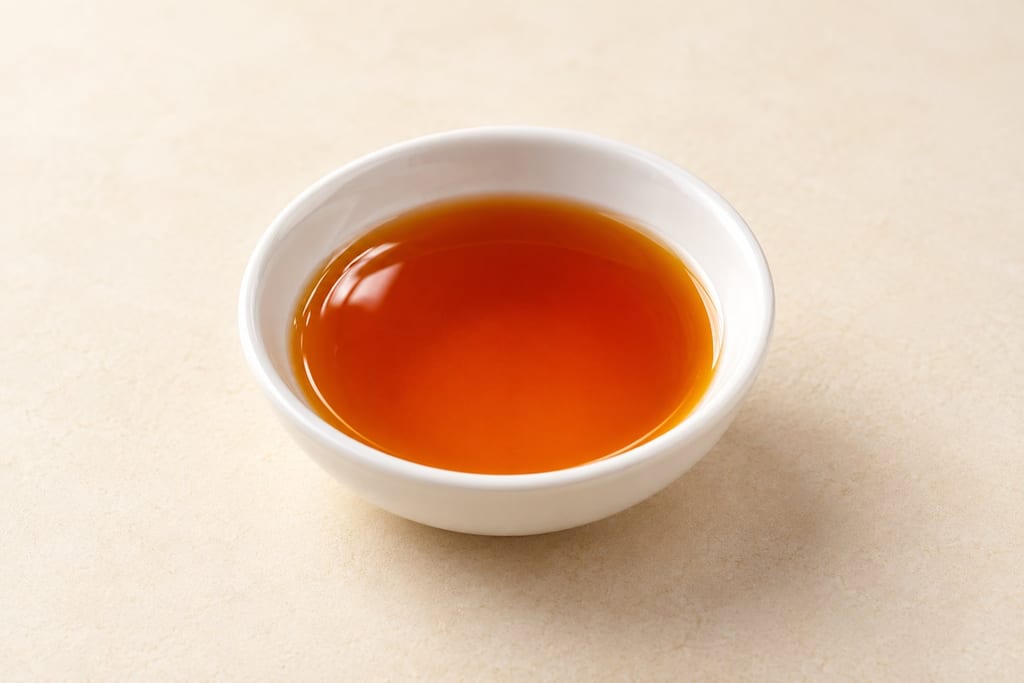
Fish sauce
Fish sauce is a clear, salty seasoning made by maturing fish with salt and drawing off the liquid. The broad family includes distinct regional sauces rather than one interchangeable method.
 FermenteaWhere food goes to change
Traditional method
Kimchi
Napa cabbage salted, seasoned with a paste of gochugaru, garlic, ginger and salted seafood, and left to sour through lactic fermentation; Korea's everyday winter preserve.
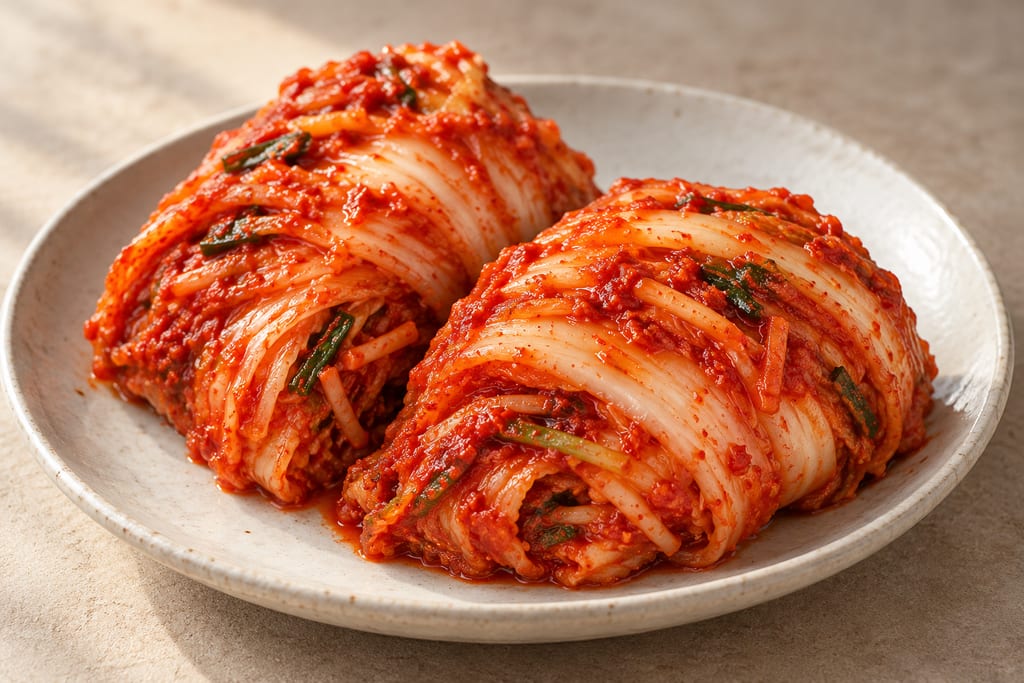
Baechu kimchi (배추김치) is a Korean fermented vegetable preparation made principally from napa cabbage.
A common whole-leaf form is called tongbaechu-kimchi (통배추김치), while pogi-kimchi (포기김치) also refers to cabbage kimchi prepared in substantial sections.
The principal vegetable is napa cabbage, Brassica rapa subsp. pekinensis.
The process involves salting the cabbage, preparing a seasoning mixture and allowing the assembled food to develop through lactic-acid fermentation.
Garlic, ginger, chilli powder, radish, scallions, fish sauce and fermented seafood may all contribute.
Kimchi is a broad food category, not a single recipe. Cucumber, radish, mustard greens and many other vegetables also become kimchi.
This entry specifically concerns napa-cabbage kimchi.
Korean preserved-vegetable traditions predate the modern bright-red cabbage kimchi familiar internationally.
Earlier Korean pickles used salting and other preservation methods.
Written records show how much kimchi changed over time. The National Institute of Korean History presents a poem by the Goryeo writer Yi Gyubo (1168–1241) as the earliest recorded kimchi reference: it describes turnips prepared in sauce for summer and preserved with salt for winter. This is evidence of older turnip pickles, not modern napa-cabbage baechu kimchi.
The Academy of Korean Studies describes a wider range of cabbage and other kimchi preparations in later records, including pepper-seasoned forms in the 1766 cookbook Jeungbo Sanlim Gyeongje and several process categories in the nineteenth-century Imwon Gyeongjeji. Its entry says tightly headed cabbage became common much later, while semi-heading Seoul and Gaeseong cabbage remained in household use into the 1960s. This broad chronology does not establish the first date of the exact formula recorded here.
Red chilli peppers reached East Asia after the Columbian exchange, so present-day gochugaru-rich kimchi cannot be assumed to have existed unchanged in antiquity.
Napa cabbage itself became especially important in later Korean kimchi history.
The tradition of preparing large quantities for winter is called kimjang (김장).
Kimjang involves household cooperation, preparation of ingredients, salting, seasoning and sharing the finished food.
The practice was inscribed on UNESCO's Intangible Cultural Heritage list for the Republic of Korea in 2013.
A separate entry recognising the kimchi-making tradition in the Democratic People's Republic of Korea was inscribed in 2015.
The two entries demonstrate the importance of kimchi across the Korean peninsula, while also recognising differences in local practice and household tradition.
The original Fermentea record contains no usable ingredient quantities. A contemporary traditional whole-cabbage formula provides a concrete, separately attributable preparation.
Ingredient — Quantity
Napa cabbage — 6 lb / approximately 2.7 kg
Kosher salt for cabbage — ½ cup / 72 g
Water for rice porridge — 2 cups
Sweet rice flour — 2 tbsp
Sugar — 2 tbsp
Korean radish — 2 cups matchsticks
Carrot — 1 cup matchsticks
Scallions — 7–8
Asian chives, optional — 1 cup
Minari, optional — 1 cup
Garlic — ½ cup, approximately 24 cloves
Ginger — 2 tsp
Onion — 1 medium
Fish sauce — ½ cup
Salted fermented shrimp — ¼ cup
Korean chilli flakes — 2 cups
The batch yields approximately 3.6 kg finished kimchi.
This is a whole-cabbage recipe, not a universal kimchi formulation.
Cabbage supplies water, structural fibre and fermentable carbohydrates.
Salt draws moisture from the leaves, changes texture and influences microbial selection.
Sweet rice flour makes a paste that helps distribute the seasonings, while sugar contributes sweetness and fermentable carbohydrate.
Radish, carrot and scallions add texture and further plant compounds.
Garlic and ginger provide characteristic aromatic chemistry.
Gochugaru contributes chilli flavour, heat and colour.
Fish sauce and salted shrimp provide salt, amino acids and fermentation-derived savouriness.
They also introduce allergens and change the recipe's suitability for vegetarian diets.
A vegan version requires a separately documented seasoning formulation, not merely deletion of all salty seafood ingredients without considering the resulting salt balance.
Minari here means the Korean herb Oenanthe javanica. The English common name water dropwort is also used for other plants; hemlock water-dropwort (Oenanthe crocata) is toxic if eaten. Use food-identified minari rather than a wild plant chosen by the common name alone.
Prepare the cabbage. Remove unsuitable leaves and divide the heads while preserving substantial leaf sections.
Salt the leaves. Work the documented 72 g kosher salt between the cabbage leaves. The published preparation describes approximately two hours of salting, turning the cabbage during that period.
Rinse and drain. Remove excess salt and allow water to drain. This step affects final salinity and texture.
Prepare the rice paste. Mix 2 cups water and 2 tbsp sweet rice flour. Cook for approximately 10 minutes until bubbling, then add 2 tbsp sugar and cook for another minute. Cool fully.
Prepare the seasoning. Combine the cooled paste with garlic, ginger, onion, fish sauce, salted shrimp and gochugaru.
Add the cut vegetables. Incorporate radish, carrot, scallions and any chosen optional greens.
Season between the leaves. Spread the mixture through each cabbage quarter, making sure the leaves receive seasoning throughout.
Pack. Place the seasoned quarters in an appropriate food-grade fermentation container.
Allow fermentation to begin. Noticeable activity appears after approximately one or two days at room temperature, depending on conditions; no validated universal temperature or pH endpoint is established.
Refrigerate for continuing maturation. Refrigeration after fermentation begins allows slower development of acidity and flavour.
Kimchi is a mixed natural lactic-acid fermentation.
Fresh vegetables carry microbial populations, including bacteria capable of producing lactic acid.
The salting, ingredients and temperature influence which organisms become important.
Leuconostoc, Weissella and members of the former broad Lactobacillus group are repeatedly identified in kimchi research.
Early fermentation may be associated with organisms such as Leuconostoc mesenteroides.
More acid-tolerant species can become increasingly important as acidity rises, including Lactiplantibacillus plantarum in some processes.
The succession is not identical in every recipe.
Temperature, salt concentration, seafood additions and vegetable varieties affect the community.
A metagenomic investigation of kimchi fermentation identified lactate, acetate, ethanol and mannitol among relevant fermentation products, demonstrating that the chemistry is more complicated than simply producing lactic acid.
Freshly made kimchi can be eaten before substantial fermentation has occurred.
At this stage, cabbage crispness, chilli, garlic and the seasoning paste dominate.
As fermentation progresses, acidity increases.
The flavour becomes sharper, and the cabbage gradually softens.
Older kimchi is particularly useful in cooked preparations because its acidity can contribute substantially to soups and stir-fries.
This means there is not one universally correct flavour endpoint for every culinary use.
Young kimchi and mature sour kimchi can both be desirable.
Northern Korean kimchi traditions are often associated with somewhat milder seasoning and less chilli than certain southern variations, although no simple rule describes every household.
Warmer regions historically used different seasoning and preservation practices from colder ones.
Some recipes include oysters or other seafood.
Others use salted shrimp or fish sauce.
Baek-kimchi is a white kimchi made without red chilli powder.
Mak-kimchi uses cabbage cut into bite-sized pieces before seasoning.
These are related preparations, but the whole-cabbage method has its own recognisable handling and serving characteristics.
Kimchi is served as banchan, a side dish accompanying rice and other parts of a meal.
It can accompany grilled meat, soups, stews, noodles and tofu.
Mature kimchi is especially useful in kimchi-jjigae, a sour, savoury stew.
Kimchi-bokkeumbap, or kimchi fried rice, also benefits from developed acidity.
Whole-leaf kimchi may be cut before serving.
Its combination of salt, acid, chilli and savoury seafood seasoning makes it a concentrated accompaniment rather than a mild cooked vegetable.
Successful kimchi develops measurable acidity and the expected flavour for its chosen stage.
Gas can form during fermentation, and liquid may collect around the cabbage.
These observations are compatible with fermentation but do not independently prove safety.
Visible mould, abnormal slime or putrefaction are warning signs.
A calibrated pH meter provides more objective information than smell or bubbles.
The original record lacks a professionally validated process specification for the formula. The contemporary recipe supplies practical quantities and timings, but these should not be converted into a guaranteed shelf life.
The cited extension guidance is general produce-fermentation advice, not validation of this whole-leaf formula. It gives its dry-brining amount for finely chopped or shredded vegetables and describes separate wet-brining guidance for whole or large pieces. This recipe instead salts and rinses leaf quarters, coats them with paste and does not specify a submersion setup or a measured endpoint. Its time estimate, sourness and bubbles cannot establish safety.
Kimchi has a long history of changing vegetable preparations: a Goryeo poem describes turnips preserved with salt, while later Joseon records include diverse cabbage kimchi. Modern tightly headed cabbage is a much later substrate, and no source dates the first appearance of this exact household formula.
Yield 8 lb · Scaling: source batch only
The culinary source gives no validated endpoint for this whole-leaf batch. General produce-fermentation guidance calls for acidity monitoring, but does not validate this formula.
Hazard sourceThe recipe identifies minari as Oenanthe javanica, while the common English name water dropwort is also used for other plants; the Royal Horticultural Society identifies Oenanthe crocata as toxic if eaten.
Hazard sourceUse clean, food-grade fermentation equipment and a research-based tested process; the cited guidance does not validate this whole-leaf formula or give it a recipe-specific endpoint.
Control sourceUse only food-identified Korean minari (Oenanthe javanica); do not choose a wild plant solely by the common name water dropwort.
Control sourceThe optional herb is food-identified minari (Oenanthe javanica); do not use a wild plant identified only as water dropwort.
The source supports this broad area and no precise location.
Fish sauce is a clear, salty seasoning made by maturing fish with salt and drawing off the liquid. The broad family includes distinct regional sauces rather than one interchangeable method.

A Korean kimchi refrigerator uses separate cooled compartments and removable lidded bins to ferment or hold kimchi. Models vary; it is a modern appliance, not an onggi or buried crock.
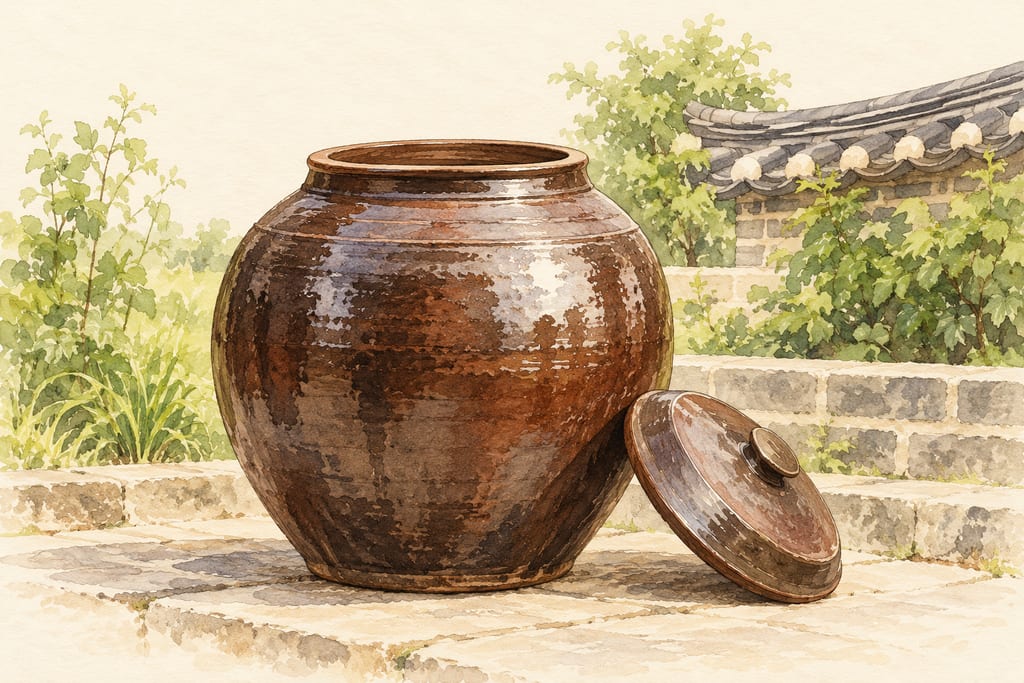
Korean earthenware jars, glazed or unglazed, used to ferment and store kimchi, soy sauces and pastes. Their form and wall properties vary with the potter, firing and intended use.
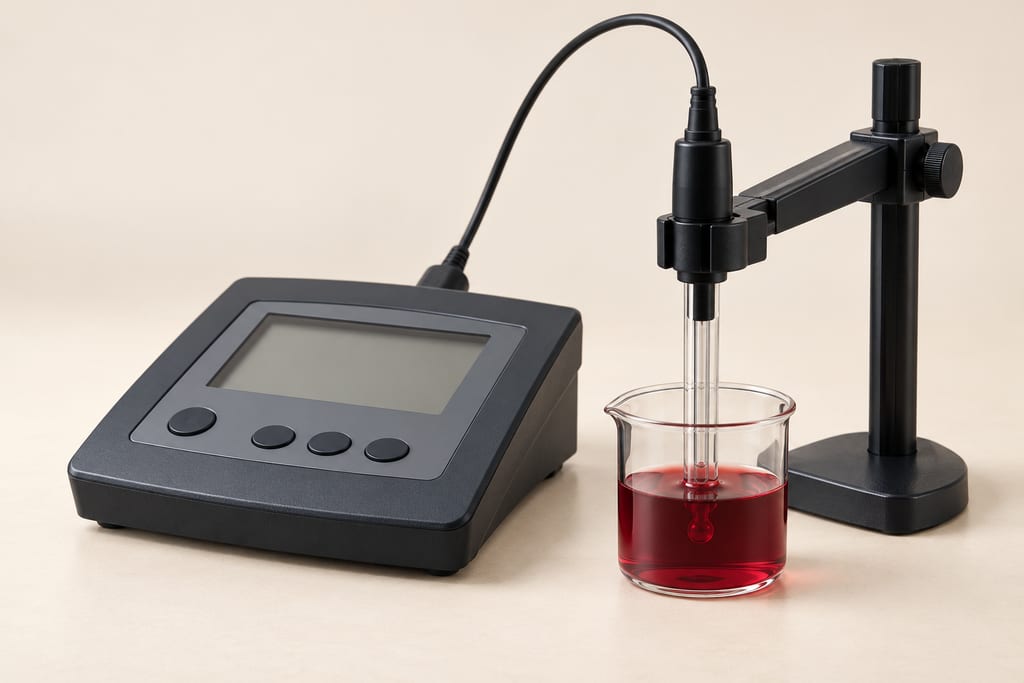
A pH meter pairs an electronic readout with a probe to measure a prepared sample. Probe choice, calibration and representative sampling affect the reading, so the model and method must fit the food.
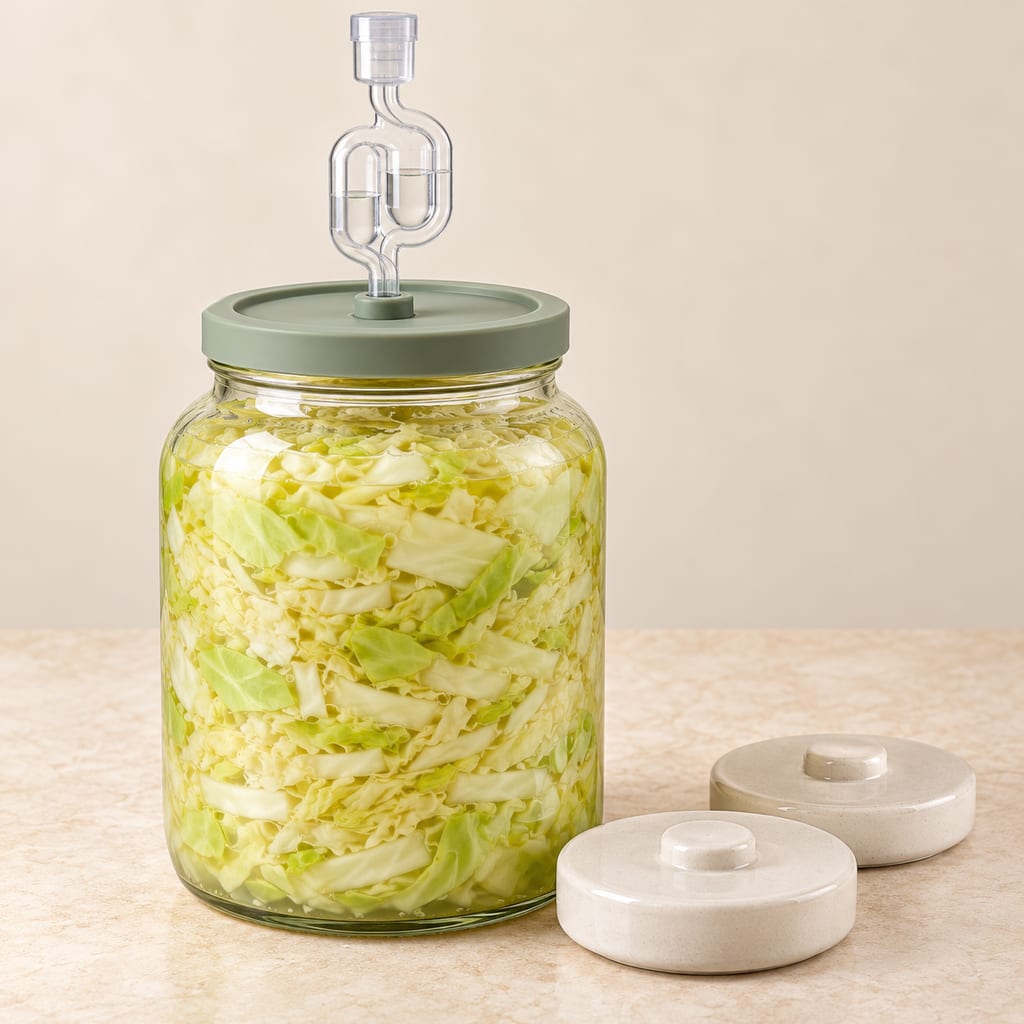
A modern wide-mouth glass jar for vegetable fermentation, often paired with a gas-release lid or airlock and follower weights. This accessory arrangement distinguishes it from general preserving jars and stoneware crocks.
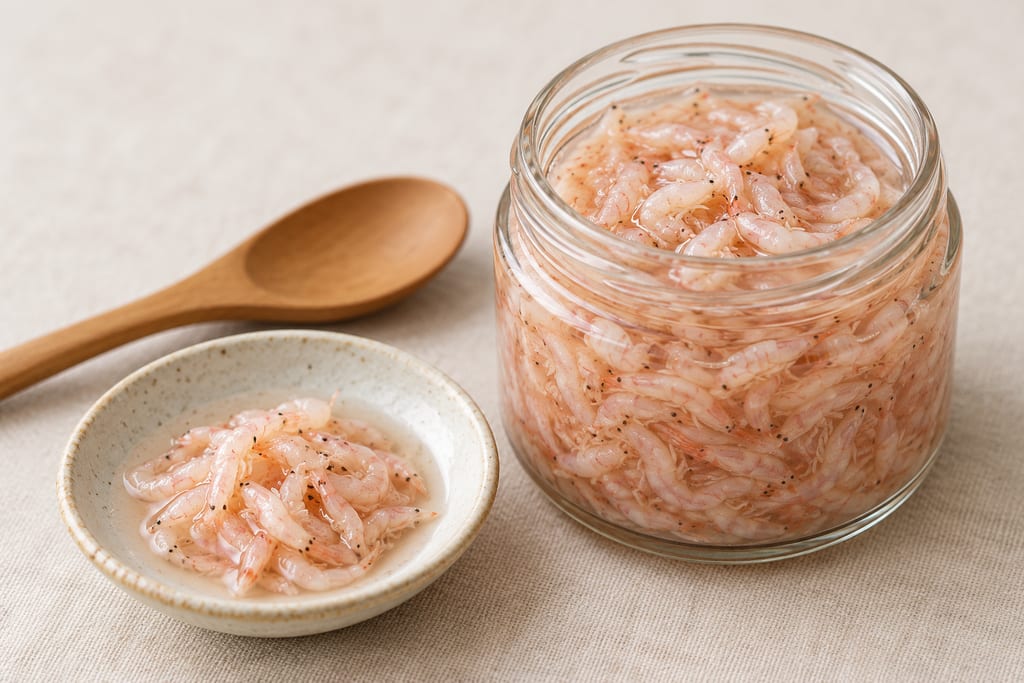
Korean fermented seafood made by salting whole small shrimp and maturing them in their own brine, used as a seasoning, in kimchi and with pork.
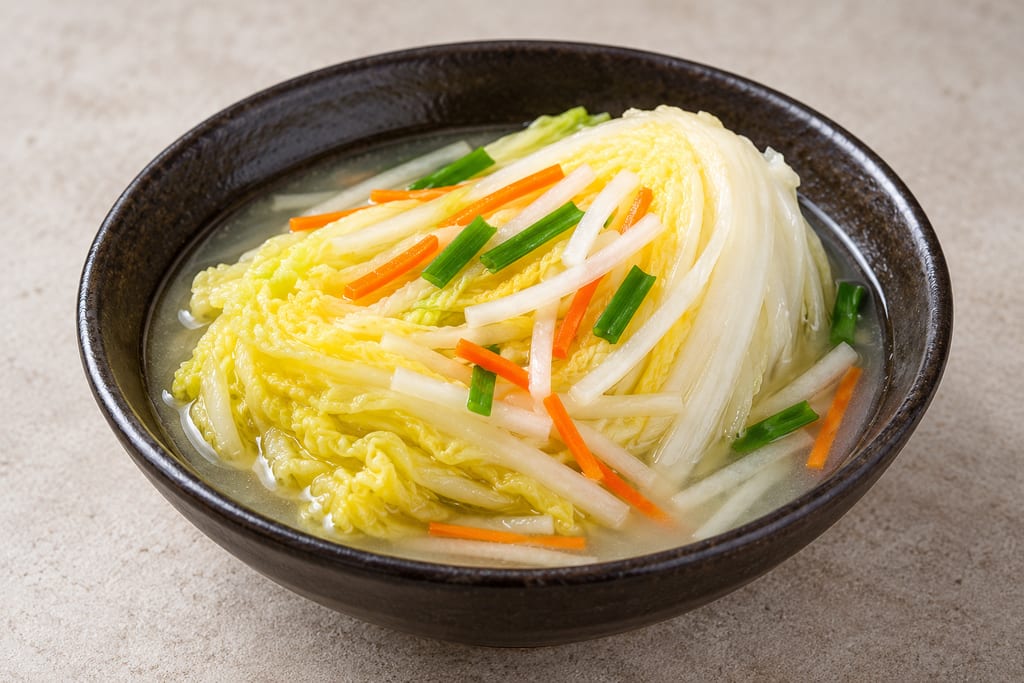
Napa cabbage is brined and filled with pear, radish, alliums, chives and fruit; this Korean kimchi omits red pepper flakes.
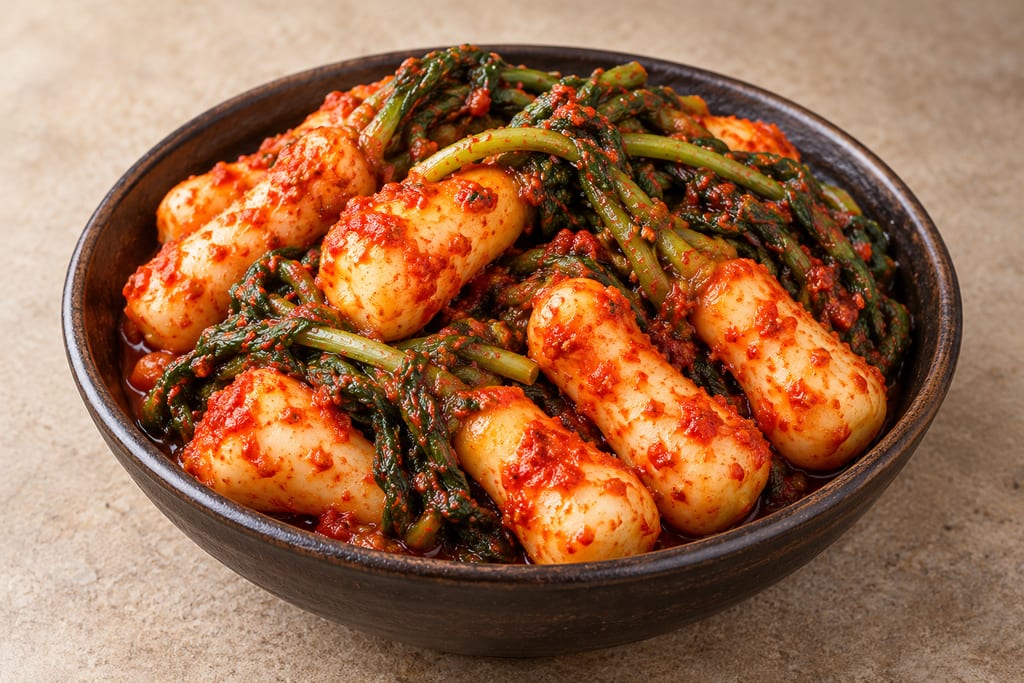
Small ponytail radishes keep their greens attached and ferment in a flour-and-chile seasoning paste.
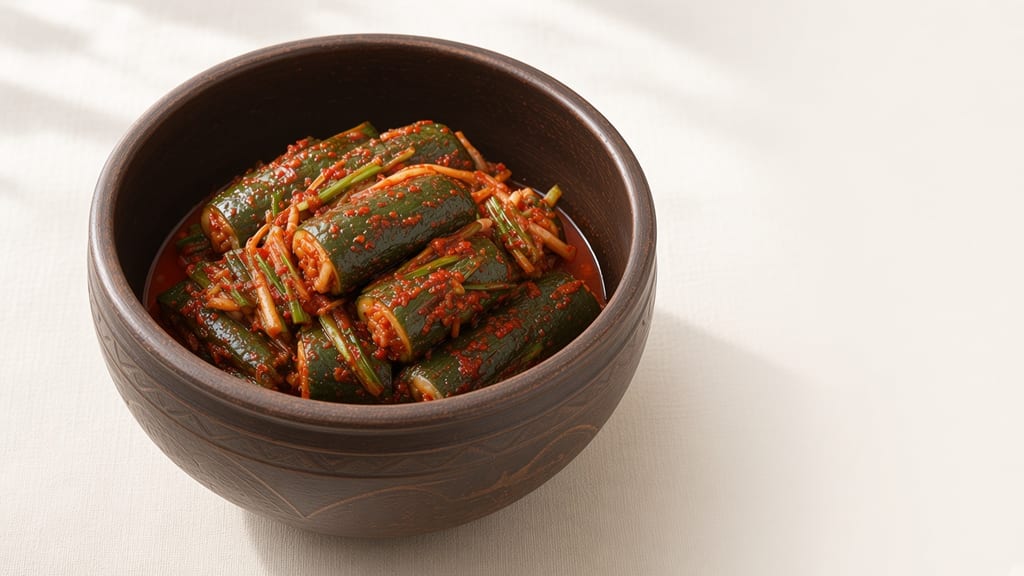
Hwanggwa damjeo is a cucumber kimchi from Yu Jung-rim's Jeungbo sallim gyeongje of 1766. Slit cucumbers are packed with chilli powder and garlic, scalded with hot salted water and sealed overnight.
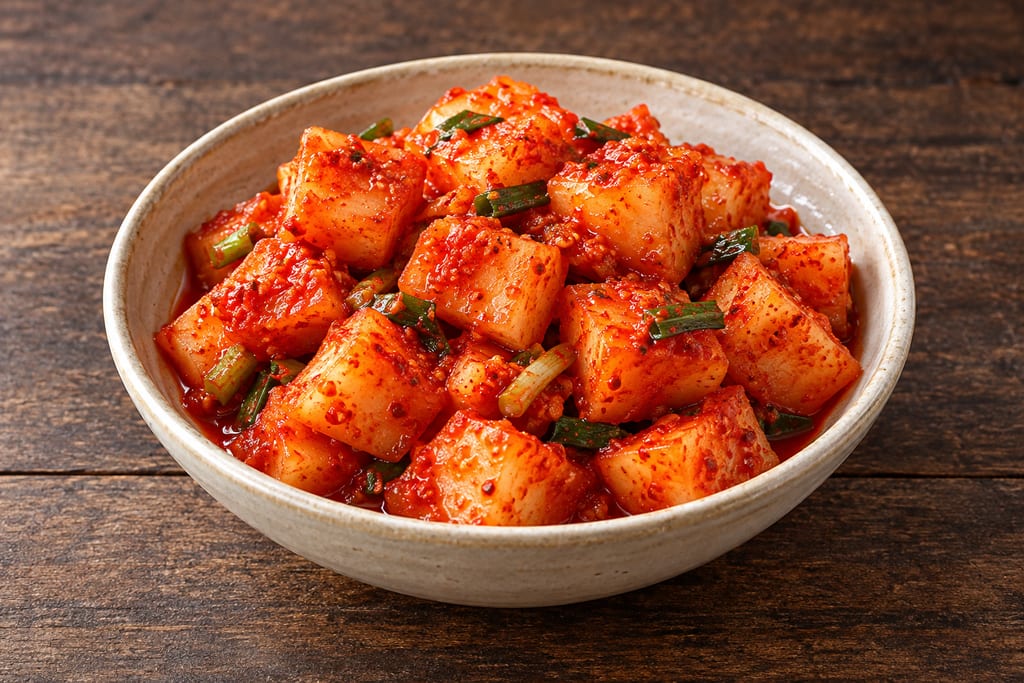
A radish kimchi cut into cubes and seasoned with gochugaru, fish sauce, garlic and ginger, eaten fresh or fermented a few days at room temperature.
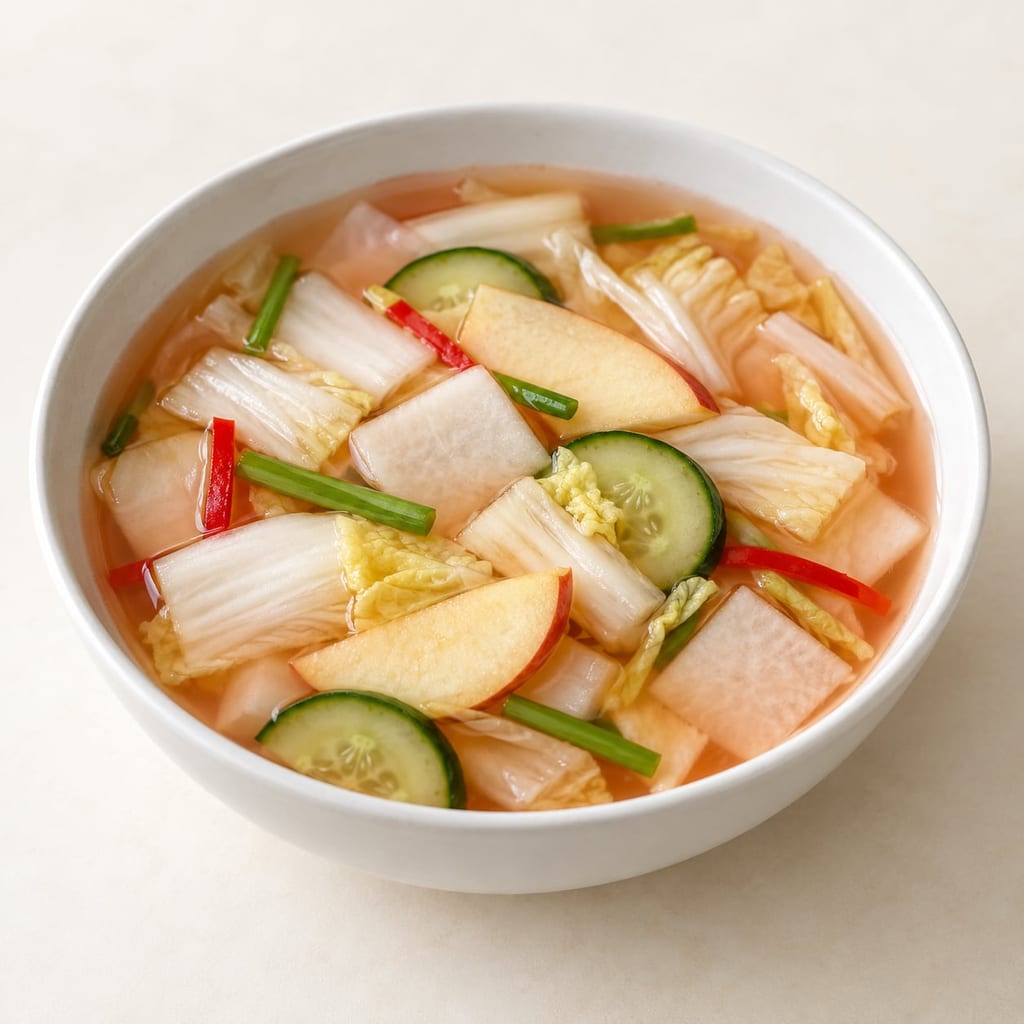
Napa cabbage and radish ferment in a rose-coloured broth with cucumber, apple, pear, alliums and chile.
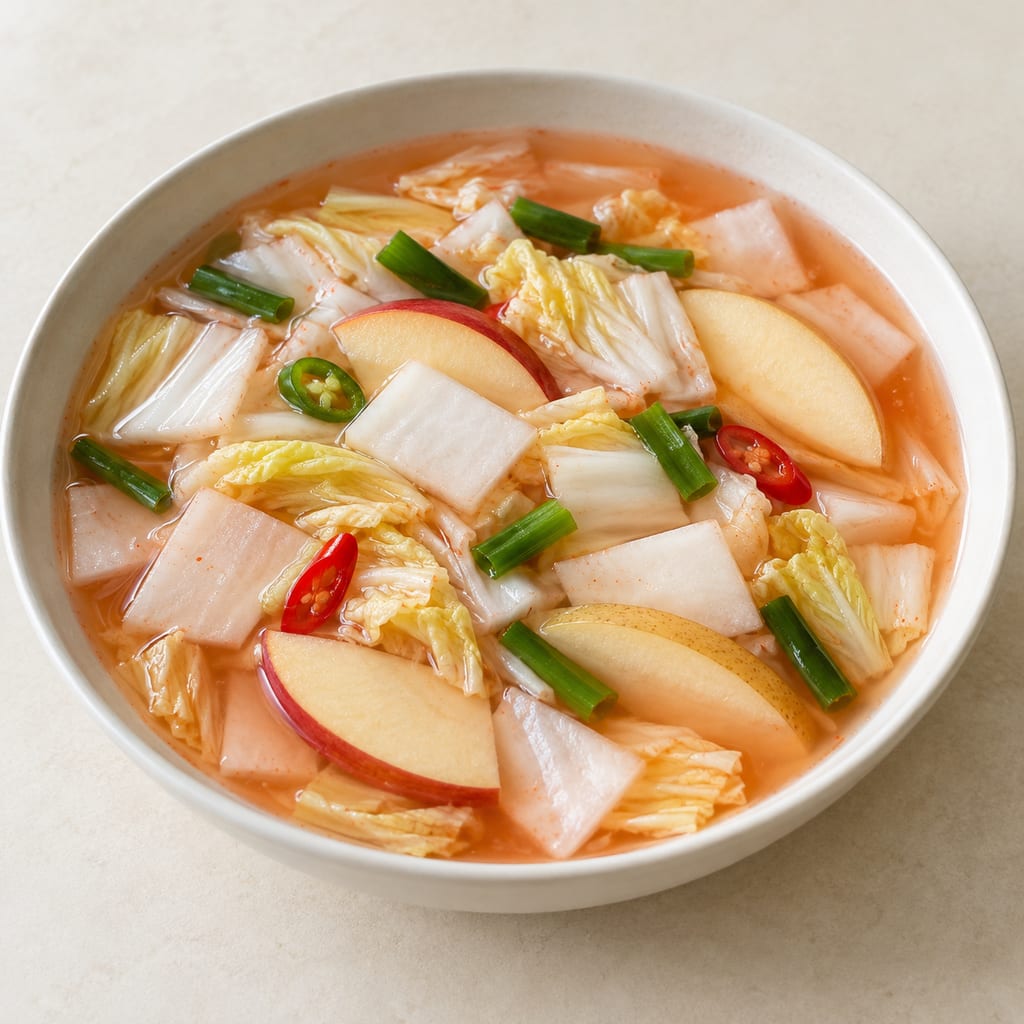
Cabbage-and-radish water kimchi with pear, apple and strained chili broth, following one Korean creator’s batch.
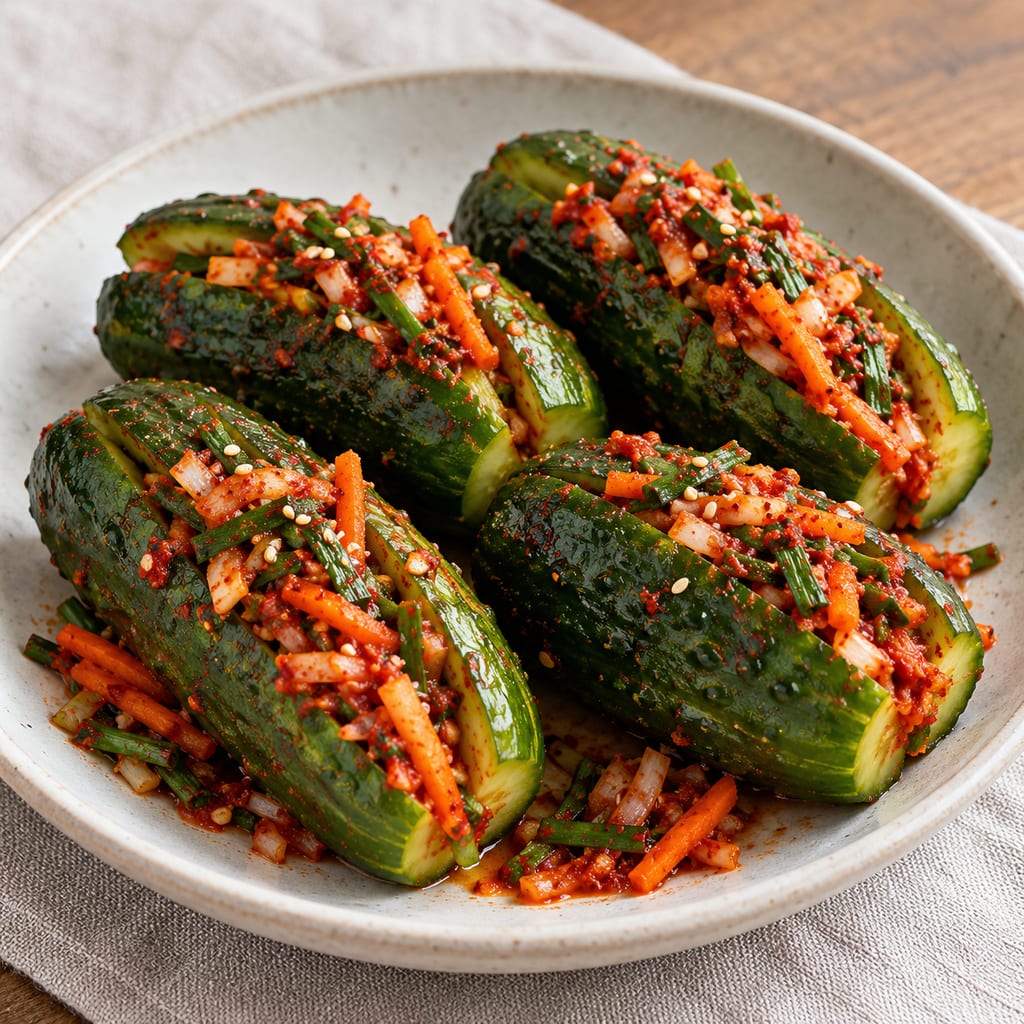
Oi-sobagi is a Korean stuffed cucumber kimchi: salted cucumbers slit and filled with a chive-and-chilli seasoning, eaten fresh or left to ferment.
Kimchi of salted napa cabbage and daikon with garlic, green onion and red pepper, kept at room temperature one to four days, then refrigerated.
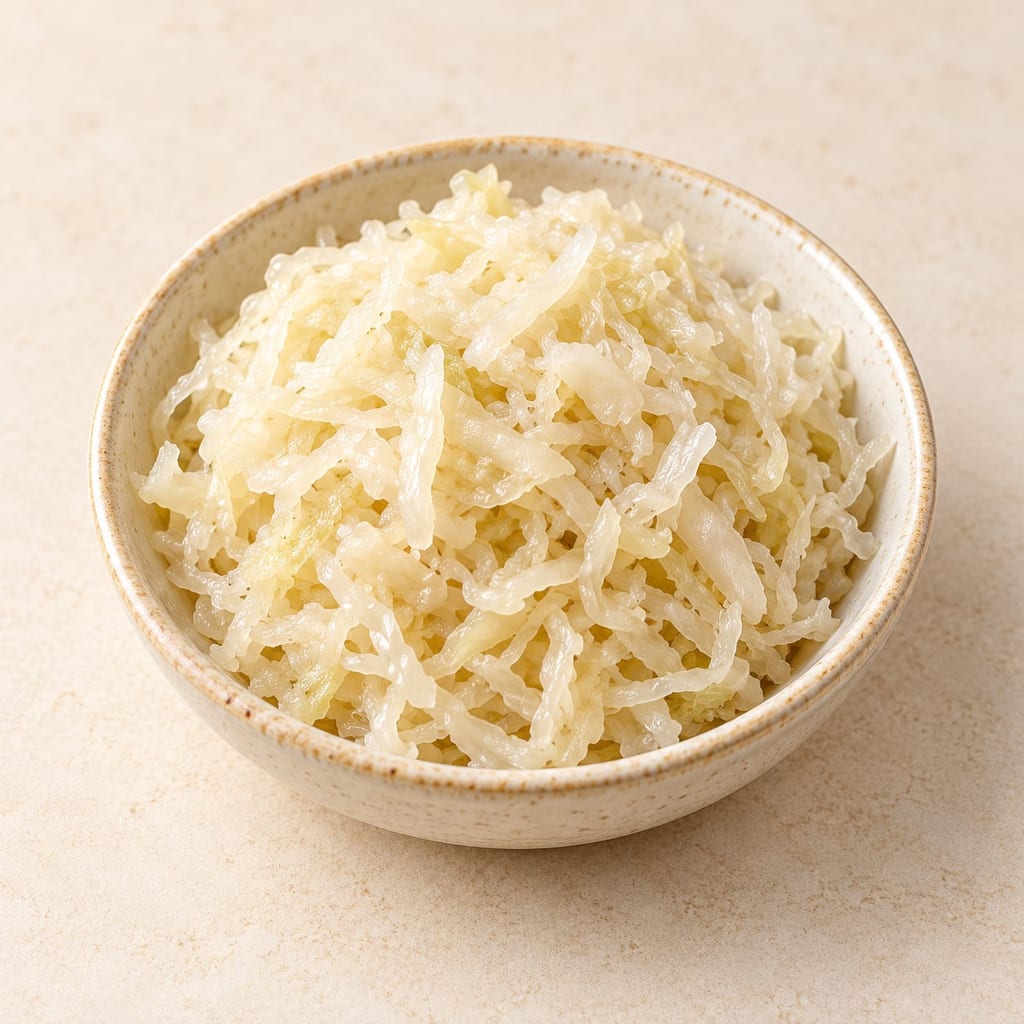
Finely cut cabbage fermented with salt in vats by natural lactic fermentation, a protected Alsatian product sold raw or cooked after fermentation.
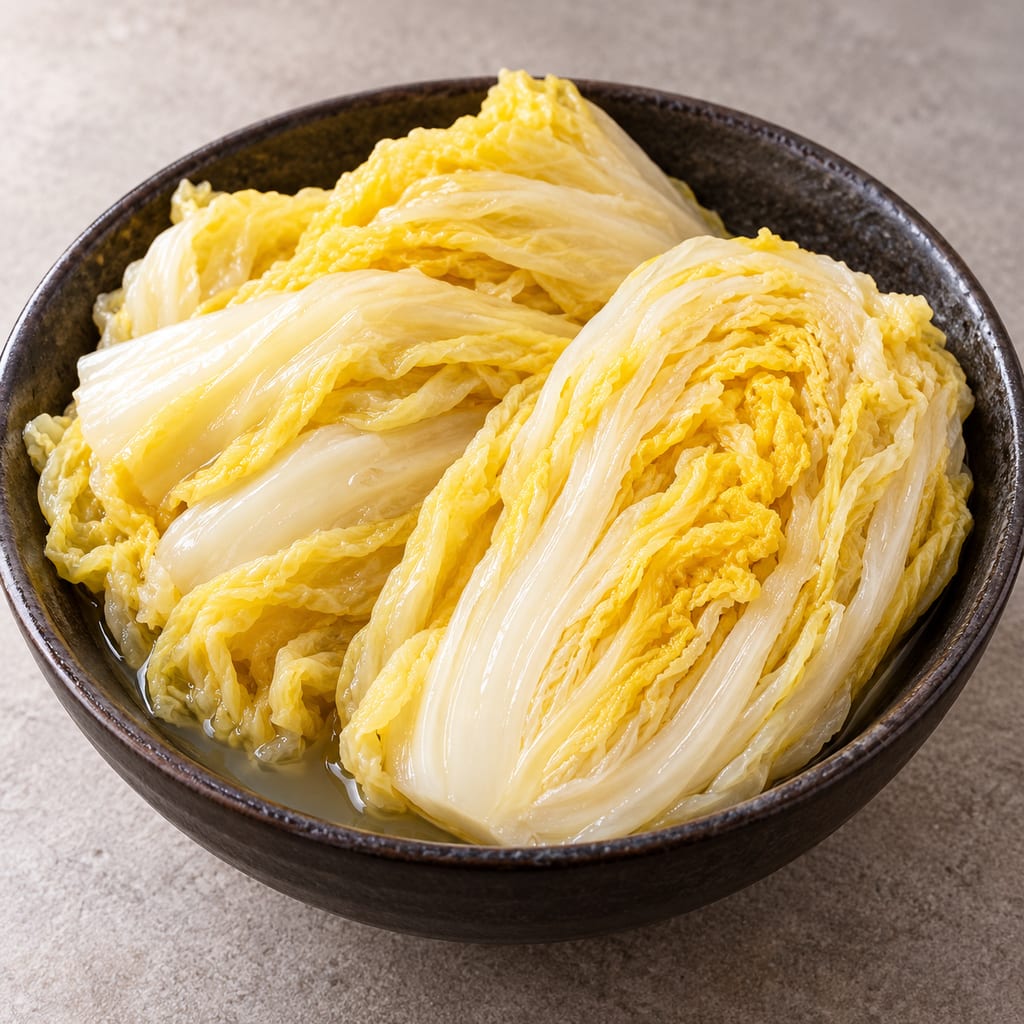
Napa cabbage fermented in a salt brine in Northeast China, traditionally in large ceramic or glass jars, until it turns sour.
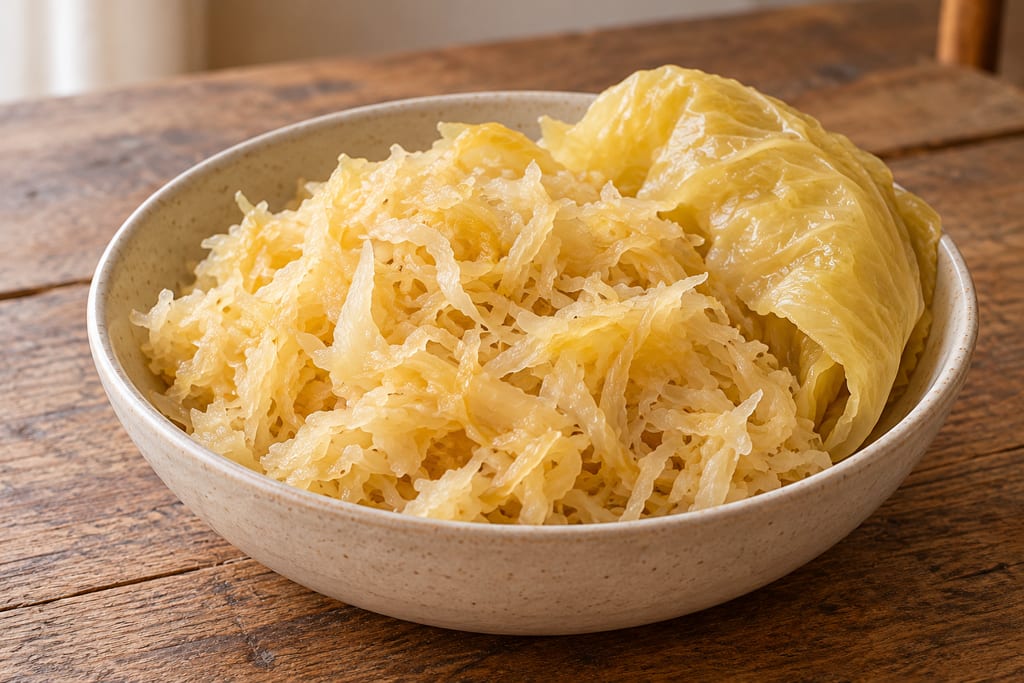
Serbian sour cabbage from the Futog area, made from the autochthonous Futoški cabbage population and registered as a protected product in 2008. It is a subset of general Serbian kiseli kupus.
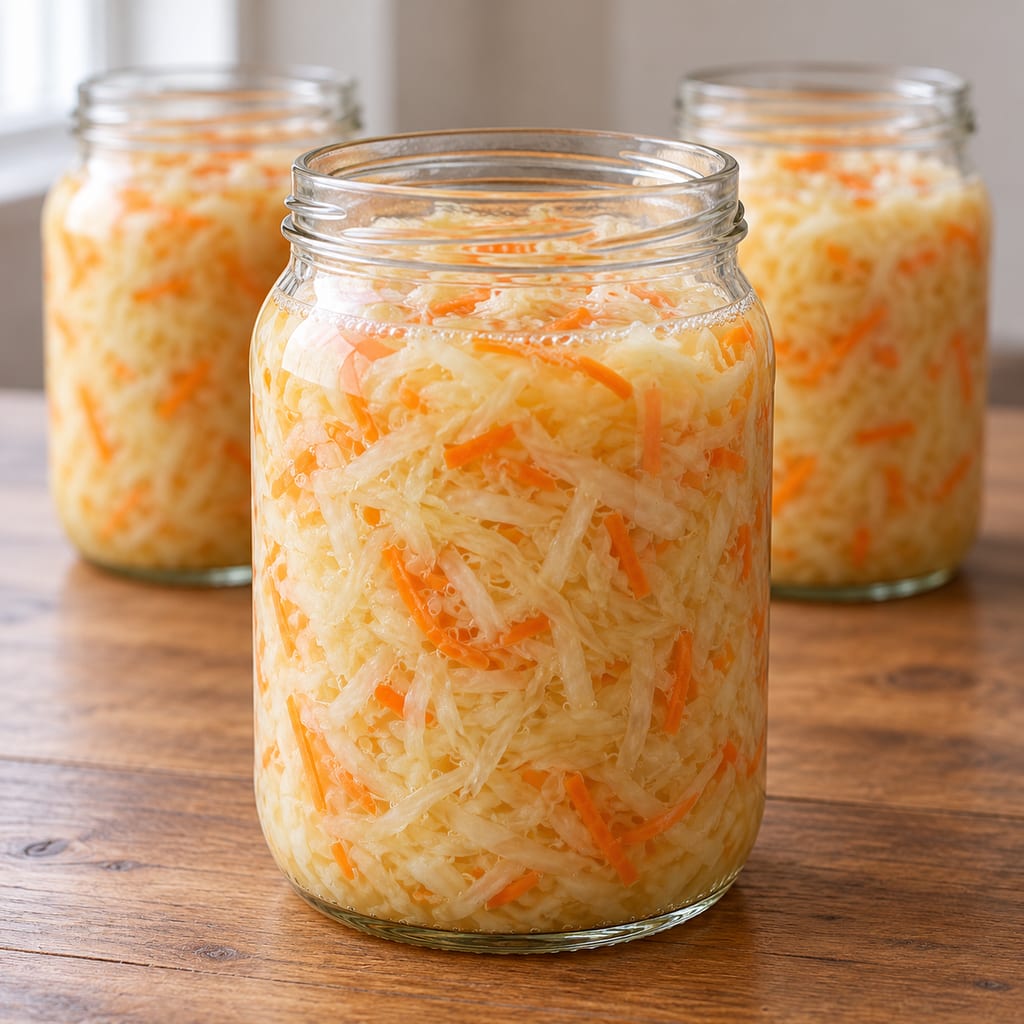
Shredded cabbage and grated carrot are salted to 20 g/kg, rested, packed into three jars and monitored during a creator-reported eight-day fermentation; measured temperature is not given.
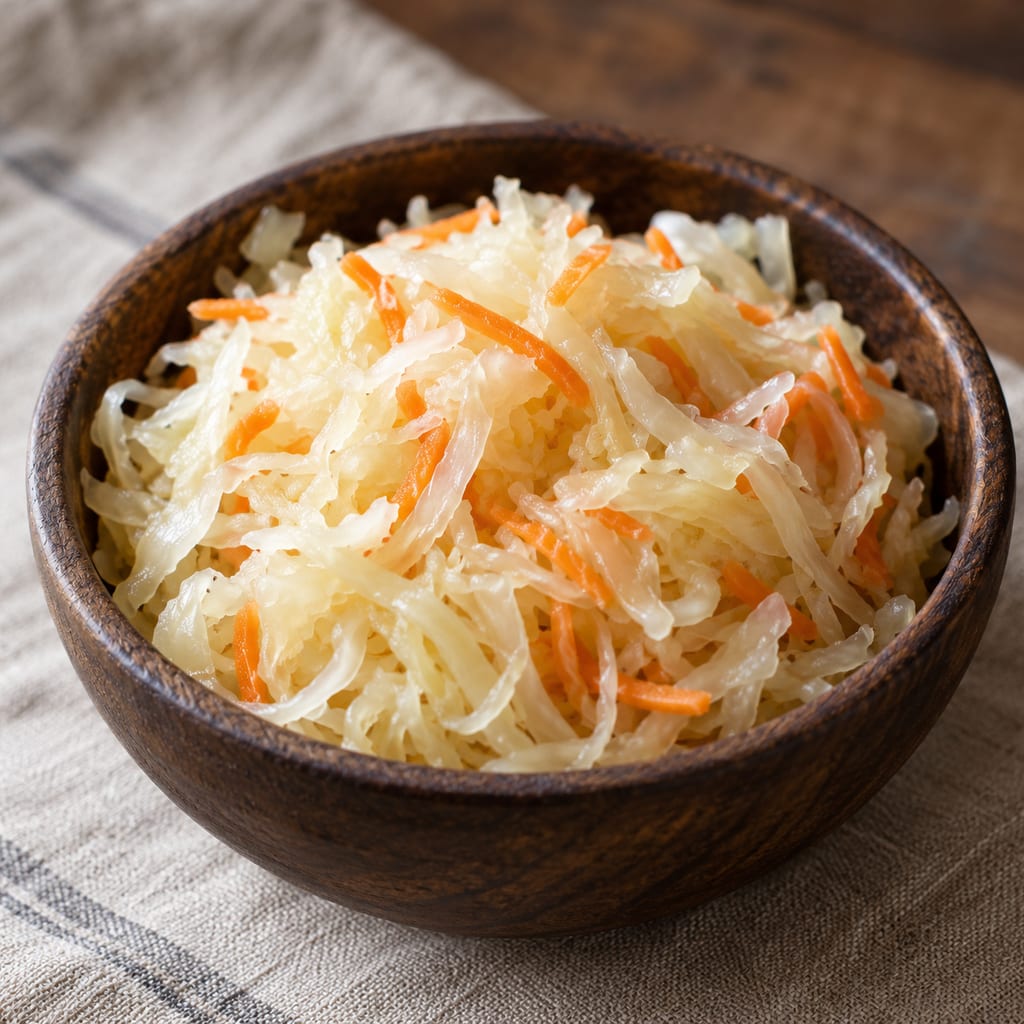
Kapusta kiszona z beczki is barrel-fermented cabbage from the Kołobrzeg area, entered on Poland’s List of Traditional Products in 2008. It is salted and fermented, with raw grated carrot added after souring.
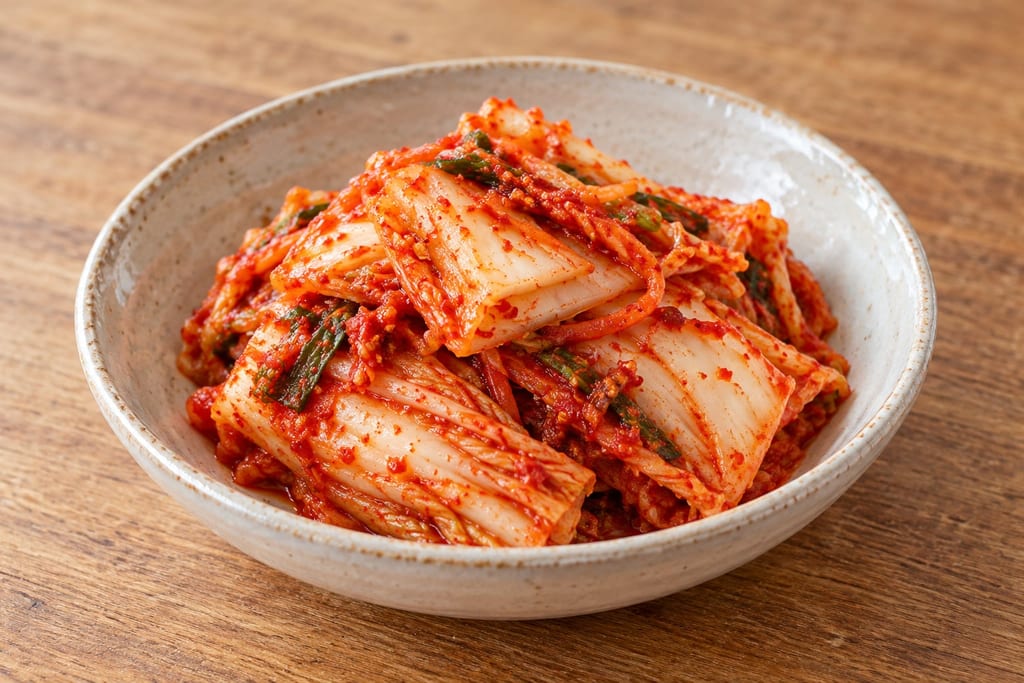
Kimchi is a Korean preserved vegetable food, most often cabbage, salted and seasoned, then fermented by the lactic acid bacteria that arrive with the vegetables. Some studies test added starter cultures, but a home jar is usually spontaneous.
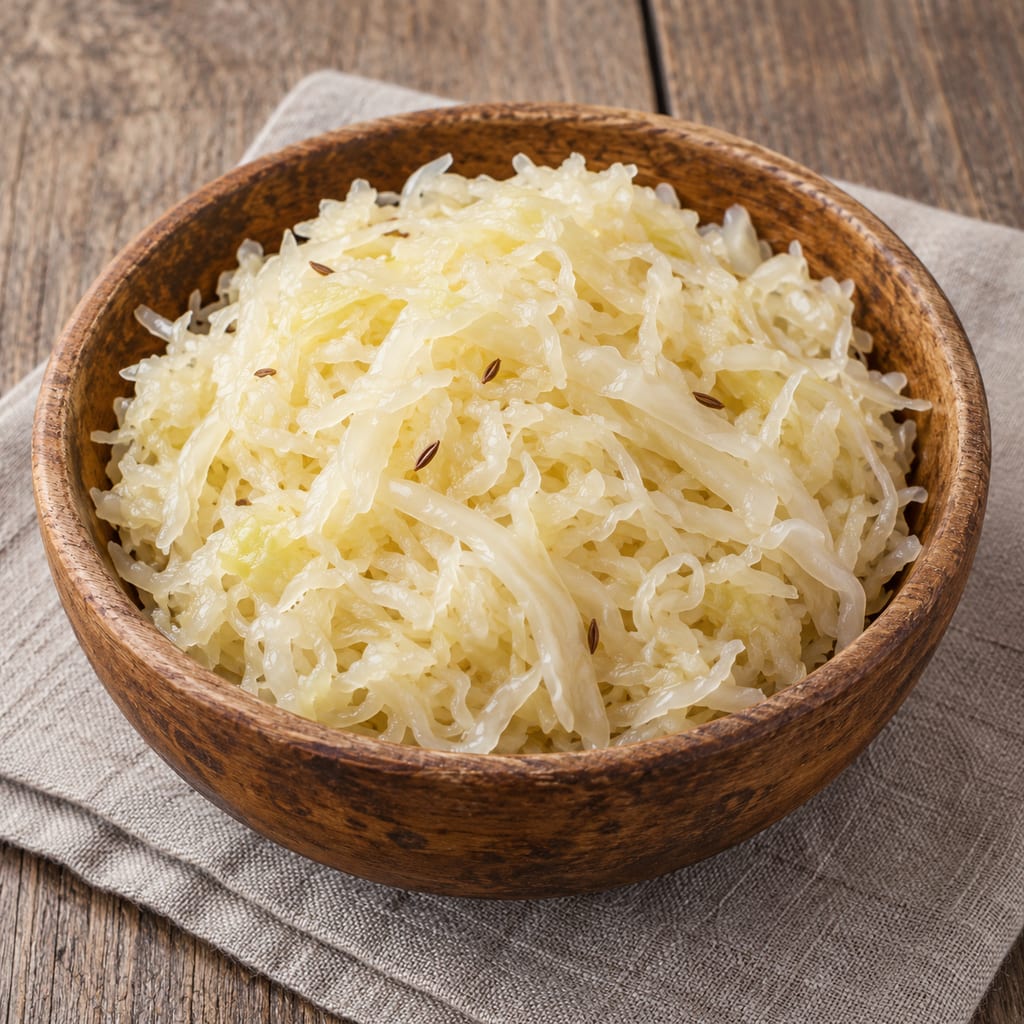
Kysané zeľí is Czech sour cabbage: shredded cabbage layered with salt and caraway and pressed in a wooden barrel. The regional account is descriptive and gives no validated salt ratio or endpoint.
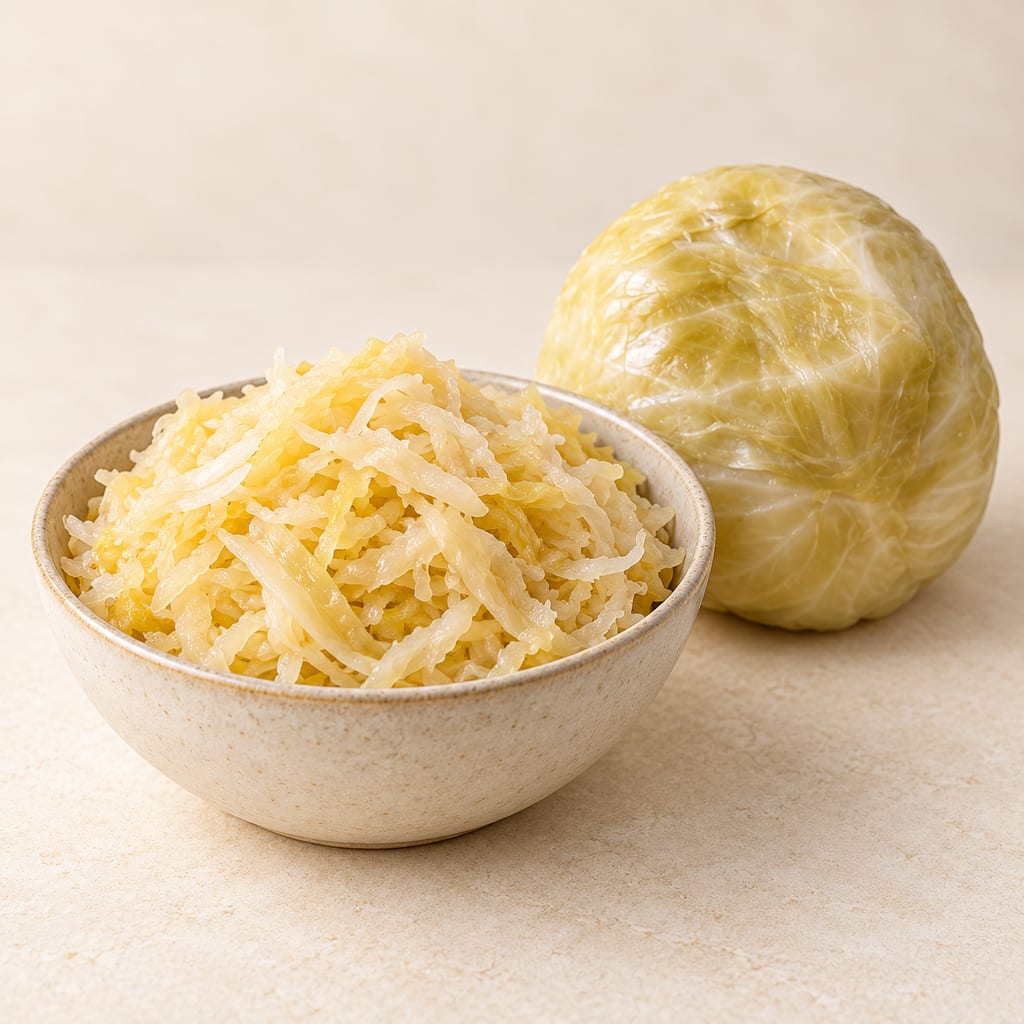
Protected Croatian sauerkraut from the Ogulin area: fresh white cabbage naturally lactic-fermented without preservatives, sold whole or shredded, from registered establishments.
No community contributions have been published for this entry yet.
Sign in to contribute. Published comments and photos are free to read.
FAOInspiration
Fermented Fruits and Vegetables: A Global Perspective, Chapter 6traditional processes, quantities and timings
University of Minnesota ExtensionSafety
Preserving food at home: FermentationProduce fermentation equipment, acidity monitoring and submersion controls.
Cited in: Quality and safety
GoodlokResearch intake · Producer description
Goodlok Play — KimchiProducer describes fermented cabbage with spices; no precise cabbage variety,ingredient quantities or full process are supplied.
Producer declares soybeans6.
Attach as an incomplete cabbage-kimchi producer lead to the existing canonical cabbage-kimchi research item. Goodlok does not establish napa/baechu cultivar, formula or exact equivalence; further identity work required. No maker-only clone.
MaangchiIngredients · Method · Use
Traditional Napa Cabbage KimchiSupports this record's account of: What is baechu kimchi?; Ingredients — a fully documented cabbage batch; The purpose of each ingredient group; Preparation method; How baechu kimchi is eaten.
Cited in: What is baechu kimchi?; Ingredients — a fully documented cabbage batch; The purpose of each ingredient group; Preparation method; How baechu kimchi is eaten
UNESCOHistory · Use
Kimjang in the Republic of KoreaSupports this record's account of: What is baechu kimchi?; Historical development; Regional variations; How baechu kimchi is eaten.
Cited in: What is baechu kimchi?; Historical development; Regional variations; How baechu kimchi is eaten
UNESCOHistory
Kimchi-Making in the Democratic People's Republic of KoreaSupports this record's account of: Historical development; Regional variations.
Cited in: Historical development; Regional variations
Process science
Metagenomic Analysis of KimchiSupports this record's account of: The microbiology of kimchi; Flavour development.
Cited in: The microbiology of kimchi; Flavour development
Process science
Asian Fermented Plant Foods: Microbial EcologySupports this record's account of: The microbiology of kimchi; Flavour development.
Cited in: The microbiology of kimchi; Flavour development
National Institute of Korean HistoryHistory
Kimchi: The Story of Culture and Arts from Korean HistoryThe institutional account presents Yi Gyubo's poem as an early recorded kimchi reference, describing turnips prepared in sauce for summer and preserved with salt for winter; it also describes early Joseon vegetable and seasoning variety.
Cited in: Historical development
Academy of Korean StudiesHistory · Identity
Kimchi (김치), Encyclopedia of Korean CultureThe entry discusses the 1766 Jeungbo Sanlim Gyeongje and nineteenth-century Imwon Gyeongjeji records, later cabbage preparations, the development of tightly headed cabbage and continued use of semi-heading Seoul and Gaeseong cabbage into the 1960s. These broad chronology claims do not date this exact formula.
Cited in: Historical development
Maangchi LLCIngredients · Identity · Safety
Minari (Water dropwort)The recipe author's linked ingredient page identifies Korean minari (미나리) as Oenanthe javanica and says that multiple plants called water dropwort in English exist, some poisonous.
Cited in: The purpose of each ingredient group
Royal Horticultural SocietySafety
Oenanthe crocata | hemlock water dropwortIdentifies hemlock water-dropwort as Oenanthe crocata and labels it toxic if eaten; supports distinguishing the species from the recipe's named Korean minari.
Cited in: The purpose of each ingredient group